In a valuable milestone for the conservation of the Sumatran tiger subspecies, 3 cubs born to a UK zoo have grown old enough to venture out from the maternity den into the enclosure.
It’s thought there are less than 400 Sumatran tigers remaining in the wilds of Indonesia, and they are considered Critically-Endangered by the IUCN.
Tipah and her litter of cubs – credit Tony Kershaw via SWNS
Howletts Wild Animal Park, in Canterbury, Kent, said the cubs’ births represent an important step forward for the conservation of this cat beyond its natural habitat.
The 3 cubs, 2 girls and 1 boy, were born to first-time mom Tipah and dad Nakal and are just 2 months old.
They were born on April 9th and spent their first few weeks with mom Tipah in their den—but in recent weeks have begun to venture outside to the delight of a photographer there to capture their sensory overload.
“Tipah has taken every step of this journey with calmness, patience and a natural ability to be a fantastic mom,” said Head of Carnivores at Howletts Richard Langston said.
“She spends most of her time up on a platform keeping a watchful eye on them while enjoying a little respite from all the jumping, biting and playing that comes with raising energetic tiger cubs.”
GNN has reported on this cat being born in zoos before—at the Wroclaw and San Diego zoos. It’s considered an important priority animal for captive breeding programs, which have saved many species from extinction in the past.
The park added the cubs were becoming increasingly bold and playful, exploring more of their surroundings and beginning to show their individual personalities.
One cub has already developed an independent streak, often choosing to spend time away from its siblings.
– credit Tony Kershaw via SWNS– credit Tony Kershaw via SWNS– credit Tony Kershaw via SWNS
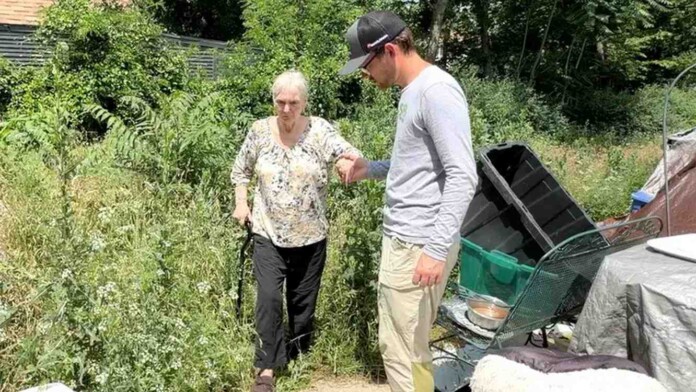
Debbie and Spencer in the overgrown lawn - credit, SB Mowing, via GoFundMe
Debbie and Spencer in the overgrown lawn – credit, SB Mowing, via GoFundMe
Who knew so much power lay behind the simple act of mowing the lawn.
That’s what Spencer from SB Mowing, the prolific social media account, has shown us before, and is now showing us again as his yardwork channels $685,000 to a woman who had no money for rent or groceries.
In a video posted on his YouTube channel on Friday, Spencer introduced his followers to Debbie. She, like most of his beneficiaries, has a terribly overgrown lawn and no money to hire anyone to take care of it.
“Debbie has had one of the hardest stretches of life imaginable, and she’s been carrying most of it alone,” SB Mowing said in a GoFundMe.
It started when her husband was diagnosed with stage 4 cancer and given 90 days to live. Debbie had to be his caregiver until he passed away. During her grief, a contractor she’d hired for tree work took a $2,000 deposit and never showed up.
“A neighbor wrecked her car and didn’t pay for it. She fell 3 months behind on rent, put off dental and health care she genuinely needs, and there were days when she and her dogs went without food because she simply couldn’t afford it,” the GoFundMe page continued.
According to KAKE News in Wichita, an Uber driver who took Debbie home from the grocery store reached out to Spencer and explained the elderly woman’s situation.
Spencer and his father then came out with their kit and spent two whole days battling back the years of overgrowth and carting it off to the landfill. Afterwards, they took a war chest of things she had prepared to sell in a yard sale to Habitat for Humanity and brought back the cash without the work.
MORE OF SB MOWING:
Spencer’s nonprofit SB Mow it Forward took care of Debbie’s three-months of back rent. Then he set up a GoFundMe that went viral.
It raised $685,000 from more than 22,000 donations—all of which has gone to a trust of which Debbie is the sole beneficiary.
It’s the kind of story that makes you pause in the face of someone saying that social media is all political arguments and cat videos.
WATCH the whole story below…
SHARE This Incredible Convocation Of Kindness On Behalf Of A Fate-Battered Woman…
An opencast mine in Wales - credit, Coal Action Network, supplied to the BBC
An opencast mine in Wales – credit, Coal Action Network, supplied to the BBC
After a Welsh council rejected plans to dig for 85,000 tons of coal, the UK has no outstanding proposals for coal mining anywhere in the country.
Carmarthenshire council turned down the second application for expanding the open-pit Glan Lash mine near Llandybie in Wales, citing impacts on the local environment.
Bryn Bach Coal Ltd. had wanted to extend the site over 10.3 hectares, but the council found that doing so would imperil habitat and species, including one of the UK’s rarest butterflies.
The Glan Lash mine opened in 2012 on a plan to excavate 92,500 tons over 4-and-a-half years.
Because of the technical challenges and upfront capital involved in building a mine—of any kind—developers often opt to start small and concentrate their footprint around the richest targets in the deposit.
Companies will then often fund expansions with the revenue from the first stage of mining, but Bryn Bach’s first proposal was rejected in 2019, and this latest rebuff is the second.
In a decision notice, Rhodri Griffiths, the council’s head of place and sustainability, listed nearby protected woodland and hedgerows as habitat that would be threatened by the coal mine, as well as “the unacceptable disturbance, degradation and loss” of “irreplaceable peatland.”
Llandybie also hosts a population of the marsh fritillary, one of the UK’s most threatened butterfly species.
In their planning application, Bryn Bach presented that the coal the company was mining is non-thermal, meaning demand didn’t come from power plants but from manufacturing, including water filtration systems and battery production. It will have 6 months to appeal the decision.
BBC quoted Coal Action Network as saying there were now “no live applications for new coal mines” in the UK and that the decision reflected “a clear, strategic commitment to climate leadership, rare habitat protection, and safeguarding the health of surrounding communities.”
The largest open-pit coal mine in the UK was also in Wales, and it too has been setback—potentially forever—by a rejection of an expansion proposal. There is now just one underground coal mine left in Wales.
SHARE This Power Progress With Your Friends On Social Media…
The Southern Lights - credit, Jessica Meir, screengrab via X
The Southern Lights – credit, Jessica Meir, screengrab via X
From the SpaceX Dragon capsule high above the Earth, astronaut Jessica Meir was left stunned and moved by what she was witnessing.
As our own blue marble spun around to show its white underbelly, a blast of solar wind had ignited the Southern Lights, or Aurora Australis, which spread out from Antarctica before snaking and scintillating its way across the South Pole.
“As opposed to the previous aurora I’ve seen, this one danced and snaked its way directly below us, putting on quite a show,” Meir wrote on X. “I am in awe of this ethereal and emotionally evocative phenomenon.”
As with all aurorae, the Aurora Australis occurs when large amounts of charged particles expelled by our Sun strike the Earth’s magnetosphere. The particles move to the magnetic poles where they concentrate, energizing endemic elements in the atmosphere. The result is a discharge of energy that turn the oxygen and nitrogen into plasma that glows and glitters in the night sky.
Though the Earth is constantly being bombarded by solar radiation, occasional large bursts, such as from solar events like coronal mass ejections, cause more dramatic and wider aurorae at the north and south poles.
“The auroras’ colors give clues to which gases are involved and where the interactions are taking place,” writes Sara Hashemi at Smithsonian Magazine.
“Green lights, for instance, come from interactions with oxygen at lower altitudes, around 60 to 180 miles above the surface, while red lights can indicate oxygen at higher altitudes.”
Meir was in the Dragon capsule after arriving at the International Space Station in February for an 8-month mission to conduct experiments related to human biology and medicine in space, including the effects of pneumonia-causing bacteria, and how to make IV fluid from scratch.
On June 5th, she and NASA astronaut Chris Williams took shelter in the capsule on the Agency’s orders while their Roscosmos colleagues worked to find and fix an air leak on their side of the station.
“There is a lot going on right now on the @Space_Station,” Meir wrote in a social media post on June 6. “But fortunately, we are all safe and witnessed a spectacular southern aurora show yesterday thanks to a recent solar event.”
WATCH the video below…
A timelapse view from our @SpaceX Dragon of the spectacular southern aurora seen in yesterday’s post, a result of a recent solar event. As opposed to the previous aurora I’ve seen, this one danced and snaked its way directly below us, putting on quite a show. I am in awe of this… pic.twitter.com/ReztjH3x9H
Quote of the Day: “What is happening in your innermost self is worthy of your entire love.” – Rainer Maria Rilke
Photo by: Thomas Grams (cropped)
With a new inspirational quote every day, atop the perfect photo—collected and archived on our Quotes page—why not bookmark GNN.org for a daily uplift?
78 years ago today, Columbia Records introduced the long-playing record album in a public demonstration at the Waldorf-Astoria Hotel in New York City, characterized by a speed of 33+1⁄3 rpm a 12- or 10-inch, diameter, and a vinyl composite disk, it instantly became the most popular and beloved analog storage medium in history. READ just how big its impact was… (1948)
Apelöga Harbour in Kullaberg - credit, Apelöga/imagebank.sweden.se
Apelöga Harbour in Kullaberg – credit, Apelöga/imagebank.sweden.se
It’s easy to be romantic about train travel, and hard not to when you’re onboard Sweden’s latest new route to Oslo.
On June 15th, Swedish rail operator Snälltåget launched a new direct rail service stretching nearly 360 miles across some of the country’s most diverse landscapes.
The 6.5-hour journey connects Malmö in southern Sweden with Oslo, the capital of Norway, taking travelers from sandy coastlines and medieval landmarks to vast inland lakes and deep Nordic forests—all without changing trains.
The route offers one of Scandinavia’s most varied rail experiences, providing a unique window into Sweden’s nature, culture, and regional food traditions, and showcasing agricultural plains and seaside towns to vast lakes and remote wilderness.
The route unfolds across 3 dramatically different regions, offering a visual guide to southern Sweden’s changing geography.
Departing Malmö, the train journey’s first stage travels through the open landscapes of Skåne before reaching Halland’s coastline of sandy beaches, wetlands, and seaside towns.
Snälltåget passes through Sweden´s forest – credit, Snälltåget
Highlights of this part include Apelviken Bay, a popular destination for windsurfing and beach life; Varberg Fortress, dramatically positioned above the Kattegat Sea; and the Lund Cathedral, one of Scandinavia’s oldest stone churches and featured in GNN’s “On this Day in History” column.
North of Gothenburg, the journey’s second stage sees the train turn inland to follow the Göta Älv Valley toward Lake Vänern, the centerpiece of Sweden’s Great Lake Region and Europe’s third-largest lake.
This time the windows offer views onto Gothenburg’s skyline and iconic Liseberg amusement park, the Bohus Fortress, a medieval stronghold dating back to the 1300s, and the town of Trollhättan with its historic canal system and locks.
Hiking in the Göta Älv Valley – credit, Jonas Ingman, supplied.
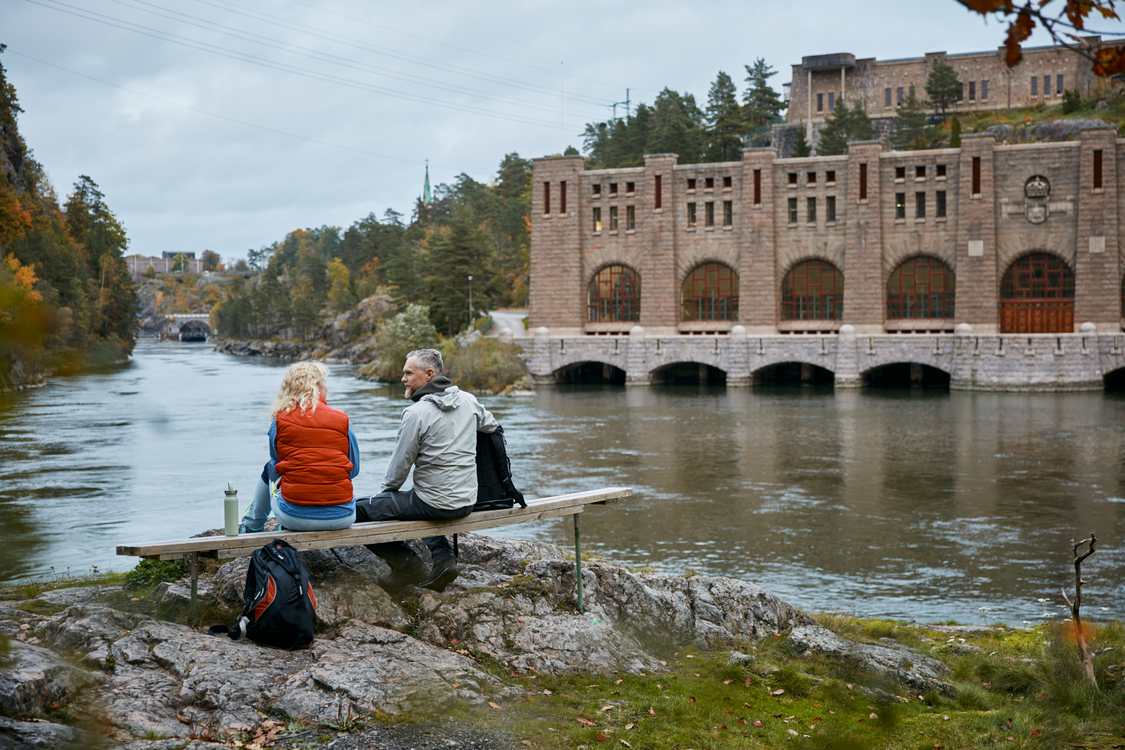
The final stage enters Dalsland, a region known for its vast forests, crystal-clear lakes, and extensive network of hiking trails and outdoor experiences.
Here, the railway cuts through granite formations, ancient pine forests, and glacial waterways before continuing into Norway and onward to Oslo.
– Credit, Julia Trygg/imagebank.sweden.se
Onboard the Malmö to Oslo route is a special Nordic dining experience inside a dedicated restaurant car called Krogen, with dishes made from ingredients and culinary traditions sourced from places along the line.
Travelers need not only fly to Malmö to begin their journey, but can also connect to the city from continental Europe via Hamburg.
A ‘Glashus’ in Steneby – credit, Jonas Ingman, supplied
SHARE This Perfect Excuse To Plan A Summer Vacation In Sweden This Year…
It’s the sign of a good house guest or well-raised children, but what about when “yourself” is thousands of screaming sports fans, and “cleaning up” is half of a soccer stadium?
Well then it’s a sign of something much deeper—plain to see for attending supporters and spectators alike in the FIFA World Cup Match in Dallas between The Netherlands and Japan on June 14th.
The first half was a drab affair, with the rigors of a long regular season plain to see in the legs of many of the Dutch players who play at the highest levels of the European club game. Though the contest came alive in the second half, finishing 2-2 with goals from Premier League stars Virgil Van Dijk and Daichi Kamada, it was what happened after the final whistle that made headlines.
Hundreds of the Japanese traveling fans—famous for adding color and character to the FIFA World Cup—began to clean their end of the stadium. Someone pulled out some trash bags, and soon they were picking up cups, wrappers, and anything else left among the seats.
Further still, the Japanese national team players even left their locker room spotless—with no one telling or asking them to do so. For all that a player representing their country on the biggest stage has to worry about, they didn’t allow themselves to forget their manners.
“It’s kind of a habit or natural, I guess,” said Nina Shimaguchi, with the Japan American Society of Dallas-Fort Worth, told CBS News 11. “The Japanese education system, we don’t have custodians from elementary to high school, so we have to take care of hallways, restrooms.
“Through the game, probably many people see, ‘Oh that’s the culture,'” she said. “And that’s the next step of people trying to learn, trying to know…That kind of positivity remains.”
Japan will play Mexico this Saturday before returning to Dallas for their final group-stage match in a bid to qualify for the first of the knock-out rounds.
WATCH the story below from CBS…
SHARE These Sports Fans Being Awesome With Your Friends…
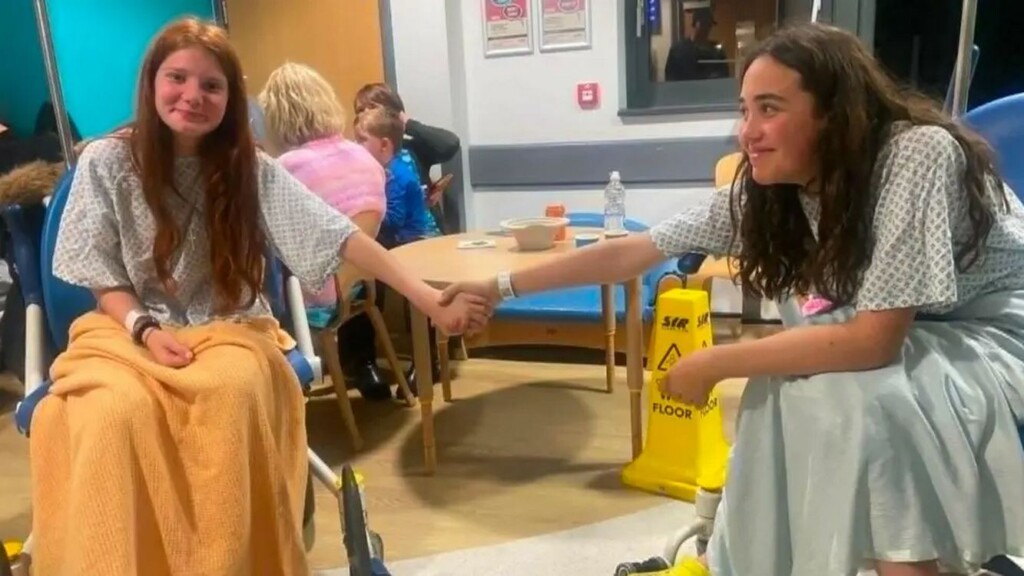
Tamika (right) and her friend Sofia-Ann (left) whom she saved from drowning - credit, Jade McKenna, supplied to the BBC
Tamika (right) and her friend Sofia-Ann (left) whom she saved from drowning – credit, Jade McKenna, supplied to the BBC
A 12-year-old was labeled a hero after saving her friend from drowning with nothing more than a fistful of her hair to hang onto.
The harrowing close call with Davy Jones comes to us now from Conwy, Wales, where Tamika and her friend Sofia-Ann were swimming off Pensarn beach during a late-May heat wave.
The BBC reported that the coastguard were alerted of three-teenagers cut-off from the beach by the tide. Rescue personnel were mobilized and were on their way when the worst seemingly happened.
Whether by the tide or a current, the girls lost their footing and were “dragged under.”
The reaper wasn’t kidding around that day in Wales, for at the exact moment that Sofia-Ann’s head went below the water, she appears to have had an epileptic seizure.
Quick thinking Tamika reached out and grabbed Sofia-Ann’s hair—the only part of her friend in reach—and dragged the unresponsive 14-year-old out of the water and back to the beach.
She was rushed to a hospital where her lungs had to be drained of seawater. Yet despite this, she survived.
“I’m so grateful for Tamika. She put herself in more danger to save Sofia-Ann, she’s my little hero,” said Sofia-Ann’s mother, Jade McKenna.
The cause of the seizures, which continued in the ambulance, are being investigated.
“It was quite a shock,” said Tamika’s mother Shantika, who admitted her biggest fear is drowning. “Tamika got dragged under as well but she still focused on Sofia and getting her out of the water.”
SHARE This Incredible Rescue Story From Wales With Your Friends…
Angiography images of the right knee joint of a 62-year-old participant with predominantly medial knee osteoarthritis - credit, the Radiological Society of North America / SWNS
Angiography images of the right knee joint of a 62-year-old participant with predominantly medial knee osteoarthritis – credit, the Radiological Society of North America / SWNS
For millions of people suffering with knee pain, a new, non-surgical procedure offers the promise of easing it away for at least 12 months with a single injection.
Genicular artery embolization, or GAE, is an emerging, minimally invasive treatment that targets abnormal blood vessels in osteoarthritis patients.
In an osteoarthritic knee, abnormal vessels build up around the joint and drive inflammation and pain. During GAE, a radiologist guides a thin catheter directly to each affected vessel and injects tiny particles to block it, calming the inflammation and easing the pain without surgery.
The injection consists of rapidly resorbable, gelatin-based microspheres designed to dissolve within hours.
“For the right patient, it can mean lasting relief from a single, minimally invasive procedure—a meaningful new option between injections and joint replacement,” said Dr. Florian Fleckenstein who lead a major trial into GAE from his research hub in Berlin, Germany.
“By reducing both inflammation and pain, GAE with resorbable microspheres may be the first procedure that alters the course of the disease, slowing its progression.”
Osteoarthritis, the most common form of arthritis, causes inflammation, stiffness, reduced mobility, and sensory nerve pain. Knee osteoarthritis affects more than 365 million adults worldwide and is one of the leading contributors to disability, according to the World Health Organization.
“For many patients with knee osteoarthritis, there is a real treatment gap today,” Dr. Fleckenstein said, explaining that for many patients joint replacement is not an option for medical or personal reasons.
“GAE is a whole new treatment regimen that targets abnormal hypervascularity around the joint and, in turn, modulates the pathological neurovascular environment.”
The study which Dr. Fleckenstein led included 114 women and 80 men with an average age of 69, all with osteoarthritis-related knee pain who did not respond to at least 3 months of regular treatment, including physiotherapy, anti-inflammatory drugs, and intra-articular injections.
“We believe these results carry real weight because they come from real-world data. With this broad, inclusive study design, our participants are exactly the patients that physicians encounter every day in their practices.”
All participants underwent GAE with the resorbable microspheres between July and November 2024.
Around 1 in 4 participants (23%) underwent 2 GAE procedures for bilateral knee osteoarthritis, with the second GAE conducted within 4 weeks of the first procedure. In total, the patients underwent 239 GAE procedures using the resorbable microspheres.
All the procedures were technically successful with no moderate or severe adverse events and only mild, self-limited reactions in 6.7% of the study group. A six-month follow-up was performed in person by an orthopedic surgeon.
Linda Knicely
The case cohort, saw a significant drop in pain and a significant increase in function, including sports and recreation and daily activity
“Most importantly, their quality of life significantly increased,” said Fleckenstein.
Pain scores fell quickly and kept improving, according to the findings published in the journal Radiology. Osteoarthritis-related symptoms also improved. At the 12-month follow-up point, 80% of the participants achieved improvements exceeding the minimum clinically important difference.
“Our study demonstrates that GAE using rapidly resorbable gelatin-based microspheres is a safe, minimally invasive therapy that provides meaningful pain relief and functional improvement in participants with osteoarthritis-related knee symptoms for at least 12 months,” said Dr. Fleckenstein.
“By embolizing the pathological vessels, we’re able to normalize the vessel structure—and, in turn, the neuronal structure of the knee.”
He noted that with almost 200 patients, the study is the largest body of evidence yet for GAE using rapidly resorbable microspheres – “this lets us speak about safety and efficacy with real confidence.”
SHARE This Cutting Edge New Treatment With Your Friends With Arthritis…
Quote of the Day: “A great work is made out of a combination of obedience and liberty.” – Nadia Boulanger
Photo by: Adam Walker
With a new inspirational quote every day, atop the perfect photo—collected and archived on our Quotes page—why not bookmark GNN.org for a daily uplift?
141 years ago, the Statue of Liberty arrived in New York packed in 241 crates, as a gift from France. The steel skeleton and copper skin were assembled on Bedloe’s Island, later called Liberty Island, and placed on a pedestal to be aligned so that it would face southeast, greeting ships entering the harbor from the Atlantic Ocean. READ more… (1885)
Artist Vincent Serritella painted portraits of Dr. Akanksha Sharma and other employees of Sutter Health who helped him heal (Courtesy photos edited by GNN)
Artist Vincent Serritella painted portraits of Dr. Akanksha Sharma and other employees of Sutter Health who helped him heal (Courtesy photos edited by GNN)
Vincent Serritella was only a little concerned about the flashing bright spots in his lower-left vision field; he wasn’t expecting anything serious.
The former Pixar animator and San Francisco Bay area artist was in for a surprise—going from waking up with the bright spots to making a decision to go into open-brain surgery.
At Sutter Health, his CT and MRI scans made for grim viewing: stage 4 glioblastoma, an aggressive brain cancer of which only 5-7% of people survive. It spread rapidly into healthy brain tissue, and the visible tumor is almost never the whole malignancy.
Yet against the odds, following a brain resection, radiation, and chemotherapy, Vincent is now cancer-free and recently had his second clean MRI scan on June 2nd, after being diagnosed in December.
In the midst of treatment, he returned to painting as a way to process his diagnosis and repay the people who supported him through it.
His consulting neuro-oncologist Dr. Akanksha Sharma, advised him to tap into his creativity, because it helps increase brain elasticity and may improve treatment outcomes.
Dr. Sharma arrived at Sutter three years ago, and Serritella is grateful. He appreciates Dr. Sharma’s approach and method—of allowing oneself to be happy, alongside honesty about the future.
He’s now painted 30 portraits of the people who cared for and supported him through his illness, including many of his Sutter doctors, nurses, and caregivers.
Marissa and Vincent Serritella with Dr. Michael Zhang (see his portrait here) – Courtesy of Sutter Health
“100% I’m alive today because of them,” Vincent says in a video below, shot by Sutter Health and showing many of the paintings.
“Art is always something that’s been a constant since I was 5. The highest form of gratitude from me is to let me paint your portrait.”
Each portrait is more than a painting. It’s a tribute to the compassion, connection and care that carried him forward through the latest chapter of a creative life.
- credit, LeRoy Police Department NY, retrieved from Facebook
– credit, LeRoy Police Department NY, retrieved from Facebook
Going from a small town to the big city, a police detective went far beyond the call of duty to retrieve a woman’s stolen wedding ring.
In LeRoy, New York, an elderly nursing home resident suffering from dementia—unable to care or speak for herself—had a wedding ring stolen from her hand.
The theft was noticed by the victim’s family, who reported it to police after realizing the ring was missing, according to a statement from the LeRoy Police Department.
Enter Kaden Vangalio, a police detective whose outstanding diligence and persistence resulted in getting the valuable heirloom back—after months of dead-end investigations.
During those months, Vangalio conducted interviews and database checks with no immediate leads. The case eventually brought him to Buffalo, the nearest major city, where he went from pawn shop to pawn shop looking for the stolen wedding ring himself.
His persistence paid off when he located the victim’s ring at a Buffalo pawn shop, where he was able to secure both the ring and the bill of sale with the signature of the suspect, who is now charged with larceny for taking the victim’s ring while working at the nursing home.
“During the investigation, Clark was evasive and avoided contact with investigators for months,” the department wrote. “Through persistent follow-up and continued investigative work, she ultimately turned herself in to face the charges.”
“This may not be the crime of the century, but you cannot put a price on the sentimental value of a wedding ring. We are proud to help bring closure to this family and grateful for the excellent work of Detective Vangalio in making that happen,.”
CELEBRATE This Dedicated Detective Work With Your Friends On Socials…
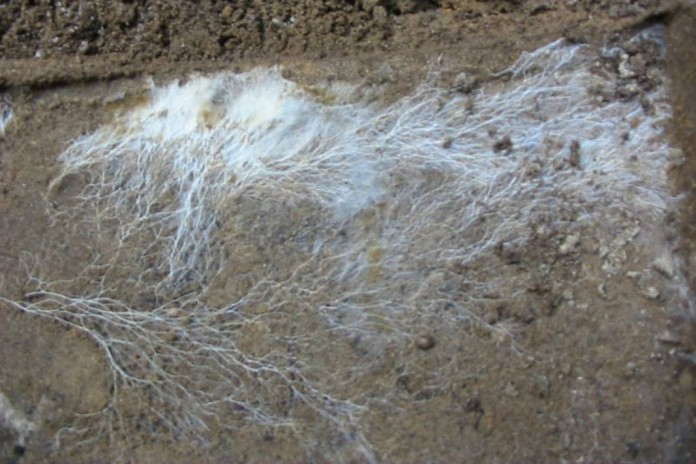
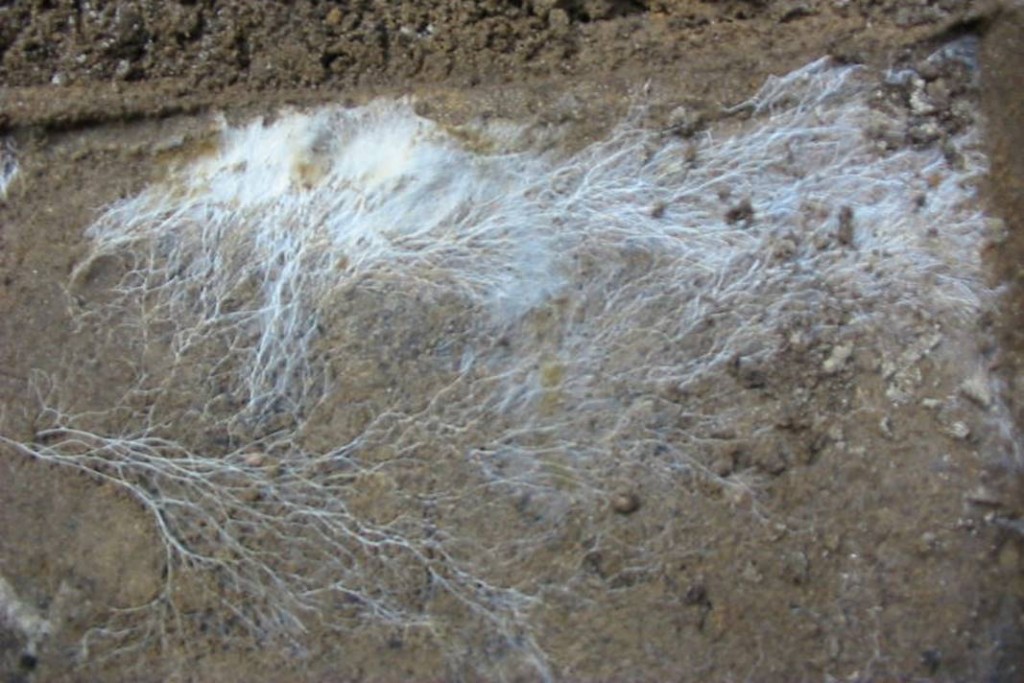
Some years ago, scientists dedicated to including the kingdom Fungi into modern conservation set out to measure the total length of fungal networks under the soil.
These networks form the fabled “wood wide web,” an interconnected, biological framework of cooperation between plants, fungi, and probably microorganisms.
Their research, published last July, found that just within the top 15 centimeters of soil, the fungal filaments stretched approximately 62 quadrillion miles long, and that if they were spun into a single yarn it would reach from the Earth to the Sun and back 1 billion times.
They translated that research into an interactive map of the globe where the user can see for themselves the density of biological compute around the world’s ecosystems.
Though making for a fun curiosity, it’s also part of the scientists’ mission: to advocate for greater protections for fungi amid the global effort to conserve 30% of the land in perpetuity for ecosystem integrity.
The scientists believe the new map will help identify areas where fungal networks need greater protection and restoration, and indeed argued in a peer-reviewed paper on their method that a little less than 10% of all the densest clusters of these fungal networks are currently located within protected areas.
Though it’s been styled the “wood wide web,” the greatest density is observed in grasslands and wetlands. Hotspots include the Anatolian steppe, Tibetan plateau, intact parts of the North American Prairie, the Everglades, and the Sudd wetlands in Africa.
The reason has to do with what services this vast network of arbuscular mycorrhizal fungi provide to the plants plugged into it. Each lifeform provides a service to the other to make up for inabilities. The plants can produce sugars from sunlight through photosynthesis and exchange that sugar with the fungi which cannot.
In return, the fungi provide not only water, but important nutrients like phosphorous and nitrogen. The mycorrhizal network can reach much further into the earth than the average grass or forb species, which is probably why their networks are denser in grasslands than in forests, where tree roots reach much deeper.
This partnership is vital for maximizing any plant’s carbon storage potential—of particular interest these days for obvious reasons.
The dataset and map also reveal that where human agriculture is intensive, the density of fungal network filaments, called hyphae, are much reduced.
In addition to being outside of existing protected areas, of the more than 8,000 species known to participate in the wood wide web, virtually none have been assessed for endangered status by the global conservation authority the International Union for the Conservation of Nature.
The scientists and their Society for the Protection of Underground Networks (SPUN) argue that this is a blind spot in global conservation, and that both fungal populations and network density, should be taken into account when designating conservation areas.
SHARE These Incredible Facts About The World’s Famous Wood Wide Web…
Colorado’s government has restored the freedom of its people to prepare and sell homecooked food to one another.
Provided they take a food safety course, the “Tamale Act” is expected to be a boost to the informal economy by unlocking the commercial power of mama’s and grandma’s home-cooking.
House Majority Leader Monica Dura said exactly that—the Tamale Act gives people a chance to turn family recipes and cooking skills into a business opportunity.
“In the times that we are in, people can take that talent and that gift they have of these special foods that they make around their family table and share them.”
Previously, Colorado legislation prohibited the cooking and sale of any food that required temperature control, including meat and dairy products. Room temperature safe foods like coffee beans or pickles were allowed to be sold.
Consumers, said Dura, have all the agency and awareness needed to decide for themselves whether they want to buy informally cooked food.
CBC News Colorado spoke to a woman whose homemade food helped keep her income afloat after receiving a kidney disease diagnosis in 2021.
“I’m not going to just lay there. I will find a way, and I did,” remembered Arta Montoya.
SHARE This Good News For Talented Home Cooks On Social Media…
Quote of the Day: “I think in terms of the day’s resolutions, not the year’s.” – Henry Moore
Photo by: Nick Fewings, jannerboy62
With a new inspirational quote every day, atop the perfect photo—collected and archived on our Quotes page—why not bookmark GNN.org for a daily uplift?
Liu Yang Women in Space: The Next 50 Years - CC 4.0. and Valentina TereshkovaRIA Novosti archive, image #612748 / Alexander Mokletsov / CC-BY-SA 3.0
14 years and 63 years ago today, two ladies became the first women to enter space for their respective nations. 63 years ago it was the first female Russian, Valentina Tereshkova, who was also the first woman ever to fly into space, while 14 years ago it was the first female Chinese astronaut aka a “taikonaut” Liu Yang. READ more about their respective flights… (1963/2012)
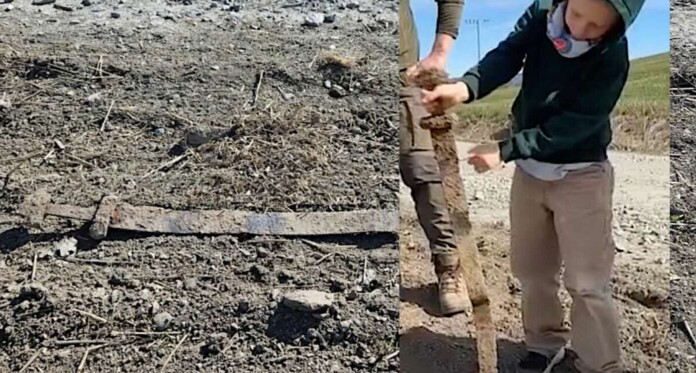
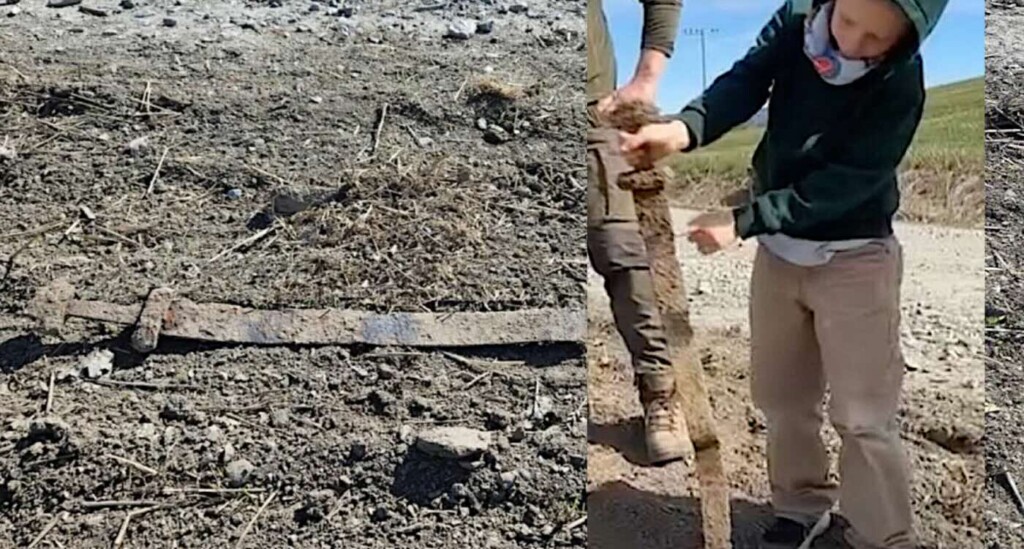
Henrik, 6, finds ancient viking sword - Courtesy of Kulturarv Innlandet (Cultural Heritage agency of Innlandet County Norway)
Henrik, 6, finds ancient Viking sword – Courtesy of Kulturarv Innlandet (Cultural Heritage agency of Innlandet County Norway)
Imagine you’re 6 years old, it wouldn’t get much better than finding a dinosaur bone or a sword—and that’s exactly when young Henrik turned up on a school field trip.
If there were teachers close at hand, they may have told Henrik not to touch the “rusty piece of metal” he saw sticking out of the ground—tetanus and all that.
If they had, he wouldn’t have found this sword which given it was Norway would have likely belonged to a warrior of the early Viking Age.
Henrik and his class were visiting Gran which is in Hadeland, a region of Norway that translates to “warrior land” and where many important archaeological discoveries have been made.
After he showed the teachers and chaperons the rusty piece of metal, they rather quickly contacted the cultural authorities, who confirmed it was historic.
The weapon is a single-sided iron sword known at the time as a scramseax, also spelled scramasax, and was meant to be sharp on only one side to increase the weight behind its cutting ability.
While it could have been of Norwegian origin, it might also have been forged in France as the earliest date falls before the Viking Age and in the middle of the Merovingian Period.
The sword has now been transferred to the Museum of Cultural History (Kulturhistorisk Museum) in Oslo for preservation.
In medieval Scandinavia, the word Viking was sort of both a noun and a verb that described the act of sailing abroad with the intention to raid, trade, or both. A warrior at home and not on the sea wasn’t referred to as a Viking, and in the Icelandic family sagas, the characters are sometimes described as “going Viking.”
In that sense, the sword, though undoubtedly belonging to someone familiar with battle, may not necessarily have belonged to a Viking.
SHARE This Child’s Amazing Story With Your Friends Who Love Vikings..
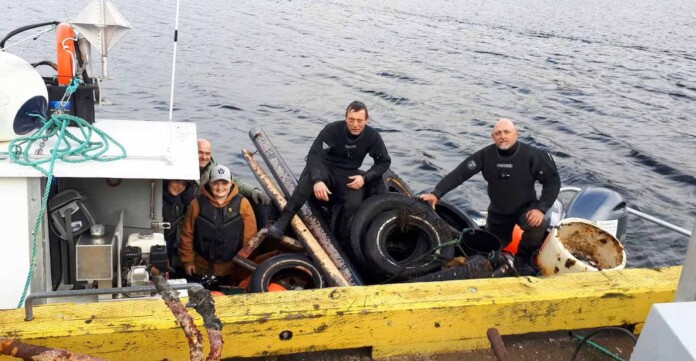
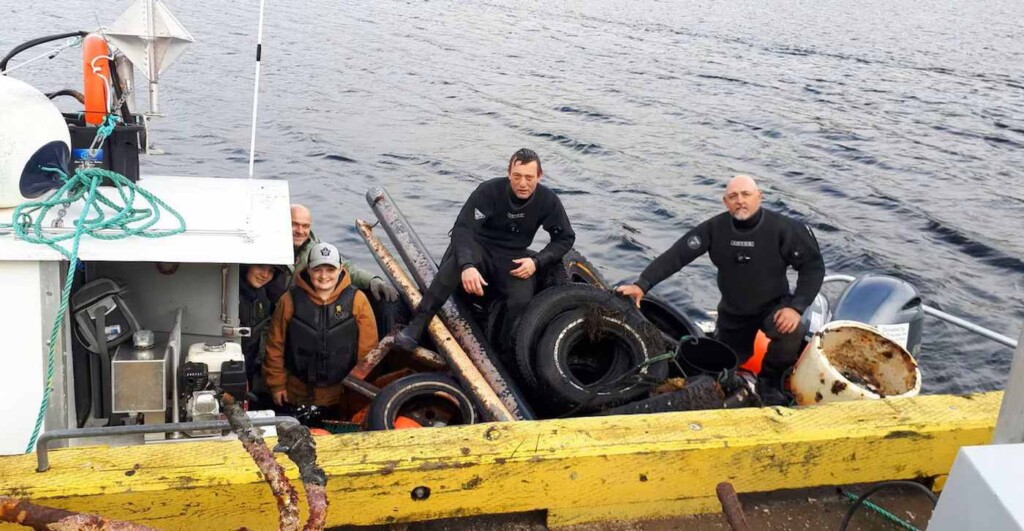
Sean Bath (right) and his team pulling trash out of the ocean- credit, supplied to CBC by Sean Bath
Sean Bath (right) and his team pulling trash out of the ocean- credit, supplied to CBC by Sean Bath
From being part of the problem to being part of the solution, a reformed litterer and fisherman now spends his days diving to the bottom of Canada’s harbors on trash clearing missions.
Sean Bath used to seek the coveted spiny sea urchin: now it’s often car tires that come loose from the bows of ships and the sides of wharfs.
That used to irk him, seeming them down there, yet he didn’t connect his own fishing habits to the problem of all the trash he’d find on the seabed.
These days, however, Bath runs the Clean Harbors Initiative, where he fundraises money to sponsor diving expeditions to the bottom of harbors in order to clean them up.
He started back in 2018, pulling 15,000 pounds of trash out of the Bay Roberts harbor in an effort to alert the public—in particular those with money to donate—to the danger of “ghost gear,” a colloquial term for lost or abandoned fishing equipment which contributes millions of pounds to the total tonnage of plastic entering the ocean every year.
Not only that, but it’s responsible for the deaths of millions of sea creatures who get snagged, hooked, or strung up among the abandoned nets, lines, and traps.
Bath had long struggled to finance his Clean Harbors Initiative, but things changed for the better after he allowed a documentary crew to follow him around for a year to produce Hell or Clean Water, which premiered at Toronto’s Hot Docs festival in spring, 2021.
Personal donations dramatically increased, and soon Bath could hire another boat and diver, while putting the fear of bankruptcy out of his mind for the time being.
Along with expanding the dive operations, he’s excited to start a new chapter in his Initiative: beach cleaning, a far cheaper and safer operation than diving.
“We went to Long Harbor with the intention of diving, but the visibility was poor and it just wasn’t safe,” Bath told CBC News, reporting on his story.
“So we decided to expand into cleaning the beaches at St. Croix. Each day we were out there, we were able to collect about three boatloads full of plastics. It’s a sustainable way to do cleanups because it doesn’t require any fuel.”
SHARE This Solitary Figure And His Attempt To Clean Canada’s Harbors…