Typhoons have historically only been known to cause destruction – but now they could bring a new level of green energy to Japan.
Japanese engineer Atsushi Shimizu has just invented the world’s first typhoon turbine that could not only withstand the power of the disastrous storm, but also harness it. The sheer wind force of a single storm would supposedly be enough to power Japan for 50 years.
Shimizu quit his job in 2013 and created Challenergy, the green tech firm responsible for the turbine’s prototype.
The engineers started by making the wind blades vertical so they could withstand the wind. Then they used the Magnus effect – spin that is added to force – to control the turbine’s speed. When it was first tested in 2015, it showed 30% efficiency.
Though the generator has been installed in Okinawa, the only way to test it for real is to wait for an actual typhoon.
Spread The Power Of Positivity: Click To Share – Photo by NASA’s Marshall Space Flight Center, CC
Though the golden eagle population of the UK was dangerously dwindling, a recent survey has reported that the bird’s numbers have bounced back to historic new levels.
RSPB Scotland says that when the last survey was taken in 2003, there had been a huge jump since 1992, from 20 breeding pairs to 442. Now there has been a 15% increase to 508, making Scotland the home of the UK’s entire population of golden eagles.
The RSPB and the Scottish National heritage have given the species a “favorable conservation status”.
“The golden eagle is a magnificent bird and it is extremely heartening to see a rise in the number of this iconic species in our skies,” said Environment Secretary Roseanna Cunningham. “The successes have been down to partnership work and this is continuing with the South of Scotland Golden Eagle project, which aims to boost populations even further.”
Fly This Sweet Story Over To Your Friends: Click To Share –Photo by Ahisgett, CC
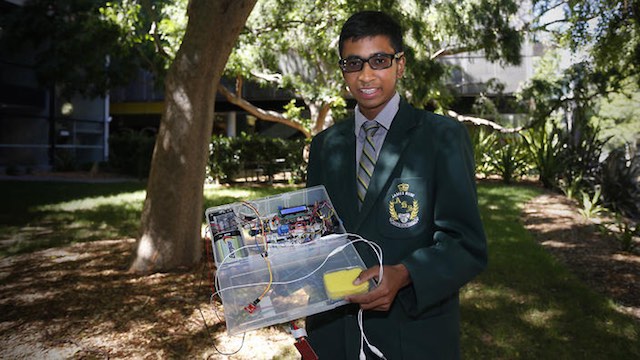
This Australian teen was awarded top prize for his revolutionary sprinkler device that will no longer waste water on overly-hydrated plants.
15-year-old Sabiqul Hoque from James Ruse Agricultural High won the national Made By Me engineering competition for youth. Participants could either design an experiment or develop an invention – Sabiqul was reportedly one of the only teens did the latter.
The device has built-in sensors that moderate soil moisture, weather conditions, and rain intensity. Though the original prototype only took 2 months to develop, Sabiqul is hoping to improve the pump before taking it anywhere further.
“I came up with the idea after watching the sprinkler system at school, which is timer-based and not very good – it sprinkles water even when the plants don’t need it,” Sabiqul told UNSW. “So we mostly run it on manual, and turn it on when water is needed. But if we forget, plants can go for days without being watered.”
“Basically, what it does is look at the average temperature, and if it is above 20˚C, it counts this as a high, so it knows to turn on the pump – unless the soil is already wet from rain,” said Sabiqul. “The light detector indicates if it’s day or night; if it’s night and it’s hotter than 20˚C and humid, the sprinkler will come on because the plant needs it.”
Plant Some Positivity: Click To Share – Photo by UNSW
Election Day in the United States finally came to a long-awaited close last night as Americans chose who would be the 45th president.
Some of the other names on ballots across the country, however, will be recorded in the history books as “firsts” in their fields.
For starters, 52-year-old Democrat Catherine Cortez Masto became the nation’s first Latina Senator after beating Representative Joe Heck. A granddaughter of a Mexican immigrant and a former Nevada attorney general, Catherine will replace Democratic minority leader Senator Harry Reid.
Meanwhile in California, State Atty. Gen. Kamala Harris was elected as the state’s first freshman Senator in 24 years. Harris is the first black politician to represent California, the second black woman ever to join the Senate, and the first woman ever elected as California attorney general. The Democratic daughter of Indian and Jamaican immigrants will be replacing the retiring Democrat Barbara Boxer.
48 year-old Tammy Duckworth, a congresswoman from Illinois and the first disabled woman to be elected to the U.S. House of Representatives, won the race for US Senate. An Iraq War veteran, Duckworth served as a U.S. Army helicopter pilot and suffered severe combat wounds, losing both of her legs. She defeated incumbent Republican Senator Mark Kirk.
Ilhan Omar became the nation’s first Somali-American legislator after she won a House seat in Minnesota. The 34-year-old succeeded with 80% of the vote, making her an important representative of the largest Somali immigrant population in America.
Finally, Kate Brown was elected as the nation’s first openly LGBT governor in Oregon. Former New Jersey Gov. Jim McGreevey came out as gay in 2004, but he had already been elected – Brown, however, has made history as an outed bisexual woman.
Celebrate The Good In The World: Click To Share –Photo by InSapphoWeTrust, CC
U.K. branches of American retailer Toys R Us opened their stores one hour early so kids and adults on the autism spectrum could enjoy browsing the shelves without the distraction of bright lights or loud noises.
Since there are over 700,000 U.K. citizens who have autism, the quiet hour has been hailed as a great victory for their demographic.
The pre-Christmas event was already tested at their Leeds location in 2014, but this was the first time more of their stores were included.
“Holding such events has given our teams extreme pride in reaching out to autism groups within their community,” said Mike Coogan, the chain’s marketing director. “Making slight adjustments to stores and creating a ‘quiet’ shopping period allows children and young adults to experience the fun in a toy shop regardless of their disability.”
After receiving overwhelmingly positive feedback from American parents on Facebook, Toys R Us’s Louisiana store plans on opening early as a trial run next Tuesday.
“Autistic children and adults can become overwhelmed with too much information inside a busy store,” said Daniel Cadey, autism access manager for the National Autistic Society. “Things like artificial lighting and loud announcements can increase their anxiety and be completely overwhelming, even causing them physical pain. Simple changes like this can make a huge difference. We hope that many more major retailers will follow the great example set by Toys R Us.”
The Emerald Isle is about to get a whole lot greener.
The Birr Castle Gardens in County Offaly, Ireland will become the home to the largest grove of redwoods (aside from California) in Spring 2017.
Spearheaded by Lord Rosse – the seventh Earl of Rosse – and environmental organization Trees For Ireland, the grove will help breed and protect the species during the next 1,000 years.
Lord Rosse described the project as “very close to my heart. Our grandchildren, their grandchildren, Birr, Ireland and the world will benefit from this magnificent forest grove. These will be the biggest trees in Ireland and the largest collection outside of California.”
While thousands of tourists visit the gardens every year, they are also a home to dozens of different tree species from around the world. As a thriving example of biodiversity and environmental conservation, the Birr Castle Gardens will hopefully protect the precious forestry despite the threat of climate change.
Sow The Seeds Of Positivity: Click To Share –Photo by Allie Caulfield, CC
On this morning after election day, we know that you may be hurting over the prospect of an uncertain future. Abrupt change is always difficult.
But if there is one thing that has been–and will always be–true, it’s that you’re not alone.
Terrible things have happened since Good News Network was first published 19 years ago — 9/11, the Wall Street crash and the terrible recession that followed, bombings in the world’s greatest cities—but neighbors in communities always found strength and comfort.
America is essentially the same today, as it was yesterday: the caretaker of 400 National Parks brimming with magnificence; the engine for lively cities that are bustling hubs of cultural engagement and exchange; the historic land for which heroes fought for independence and freedom; the home of beloved and talented artists, poets, musicians, thinkers, engineers, and philanthropists who love this country like you do.
It may feel impossible to have faith in the future. It may feel like you’re going to continue waking up to disappointment and despair, but remember there is always renewal—as sure as spring follows winter.
Every day, Good News Network will labor to bring you positive stories about people working to eliminate poverty and cruelty, making a difference with their kindness and love. Some of the stories may seem small and insignificant against a backdrop of global unrest, but it’s these small deeds, these grains of sand that make up a beach.
It’s your mindset that will create your world.
We are with you. And we are going to work harder than ever, every day, to remind you that you are a part of a community that chooses positivity over negativity—to remind you that even though things may look bleak, people are waking up all over the world and doing good.
Today can be seen as a rebirth, on many levels. Let’s lay down our judgement and adversarial attitudes for two minutes and allow for the possibility of hope. Let’s try to stay open to the fact that history’s arc always bends toward the good.
– With affection, from McKinley Corbley, Managing Editor, and Geri, the Founder of Good News Network… (You can support the Good News Network with a Membership Donation, here)
If I had one wish today for my country on the day of our presidential election, it would be to infuse every citizen with a strong dose of mindfulness.
Mindfulness is the practice of focusing our attention and awareness on what is happening in the present moment, without getting carried away by past stories or future imagined scenarios since the present is the only place we can take action.
As a former international economist whose life path led unexpectedly to mindfulness advocacy, I am a big fan of the work of Rasmus Hougaard, who wrote the book One Second Ahead: Enhance Your Performance at Work with Mindfulness. Hougaard incorporates the types of matrices, graphs, and equations that were the norm in my former life, but are less common in the mindfulness literature that now fills my bookshelves.
Here’s the equation in One Second Ahead that will make or break our national post-election experience.
P X R = S
P = pain. R = resistance. S = suffering.
Half the country will be in pain after the election. The degree of their suffering, however, will depend on the volume of their resistance to the outcome that will by that point be totally out of their control.
Regardless of where we stand on the political spectrum as individuals, we have power to influence the outcome by our actions up until the election (donating to campaigns, get out the vote efforts, casting our vote, etc.). After the results are in, however, it will be time to accept the outcome and refocus on what we actually have control over.
Outrage, indignation, anger, fear-mongering… all of it creates suffering individually and collectively. You can resist the election outcome and insist on being “right,” which multiplies the pain, or you can accept the reality of the situation and choose to not suffer.
Accepting an outcome doesn’t mean we are happy with it, or that we’re giving up on our principles. Acceptance doesn’t make us a doormat. Acceptance does, however, keep our higher level thinking online, rather than sinking into our reactive, fight or flight-driven reptilian brain.
Mindfulness allows us to choose productive action as we move forward from the election. The practice enables us to recognize the lessons in difficult situations and embrace the truth that the only constant in life is change.
So once this difficult campaign season is over, my hope is that we’ll choose to let go of resistance and the suffering it causes. We’re all so much more effective when we take emotion and reactivity out of the mix and move forward with measured, intentional action.
Though it feeds our ego to view ourselves as victims, we have a choice to say no to that whiney voice. Our shared humanity, the essence that connects all of us, is what has always sustained us and carried us forward. We all have a choice in whether to give the power to our ego or our essence.
Be Mindful About Clicking To Share This Story With Your Friends
A forthcoming study in the INFORMS journal Marketing Science, based on the psychology of sympathy, shows that small changes in the wording of a fundraising letter can increase donations by over 300 percent.
With over a million registered public charities in the United States, fundraising for good causes has become more difficult than ever. Annual events like Giving Tuesday increase overall giving, but also increase the competition for funds around those events. For their research, the authors of the study, K. Sudhir of Yale University, Subroto Roy of the University of New Haven, and Mathew Cherian of HelpAge, India, found that leveraging psychological theories on sympathy when drafting a fundraising letter can increase donations enormously.
To test their hypotheses, the authors conducted a large scale direct mail fundraising experiment on a cold list of about 200,000 potential donors across India and a warm list of over 100,000 past donors on behalf of one of India’s most well-respected charities that serve the elderly. The authors systematically varied the content of their fundraising letter, leveraging ideas from the psychology of sympathy, randomly among recipients, and measured the number of donors and the amount of donations in response to the different letters.
The main findings were surprising. Donations changed dramatically based on key characteristics of the target of the donation and the appeal. On the cold list, donations went up by 110 percent if the target was a named individual versus an unnamed group, by 55 percent if the target belonged to the same religion as the donor versus a different religion, by 33 percent if the target fell into poverty versus being poor with an undescribed past, and 66 percent if the annual donation was framed as monthly versus daily amounts. Combining all these tactics led to a 300 percent increase in donations.
For past donors from the warm list, the percentage increase in donations was smaller, but the incremental dollar amounts raised were equally impressive. As Roy notes, “This likely means the right choice of words can increase emotion just as much for new and past donors. The percentage increase though is large for new donors because their baseline sympathy for the elderly cause is much lower.”
Sudhir noted, “It is gratifying that many of the psychology theories relevant for charitable giving identified in the lab are replicated with such large effects in a real world fundraising setting, even though the changes in appeals were minor changes in wording. But the bigger takeaway is that these simple changes in messaging dwarf the effects previously obtained by costly changes such as donation matches, tax rebates, etc.”
Cherian, CEO of HelpAge India and co-author stated, “At HelpAge, we regularly debate how to design our fundraising appeals but our decisions ultimately were based on intuition. We learned that our intuitions did not all pan out in the experiment. But the substantial increase in donations, at no additional cost, have made us true believers in the value of theory-based experiments to increase our fundraising efficiency.”
Legal systems and court proceedings can be nerve-wracking enough for adults, let alone children – that’s why Merel the service dog is there to help.
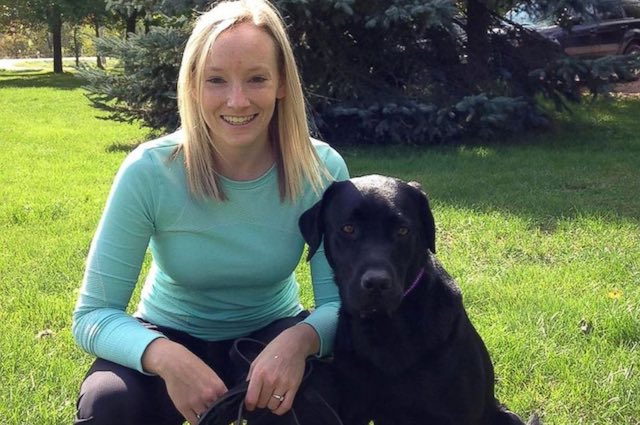
This 18-month-old Labrador Bernese Mountain Dog mix works for the Child Witness Program at the London Courthouse in London, Ontario. Merel is the first dog of her kind to be brought on board solely for the comfort and support of youth testifying in court.
Since Merel took the job with her handler Rachel Crawford 3 weeks ago, she has already assisted 6 young victims with amazing results.
“It’s sort of hard to know how I ever did my work without her,” Rachel told ABC News. “She helps build an instant rapport. They can walk in and it’s an instant conversation starter and allows us to have those happy conversations and talk about court preparation.”
Click To Share This Pawesome Story With Your Friends – Photo by London Family Court Clinic
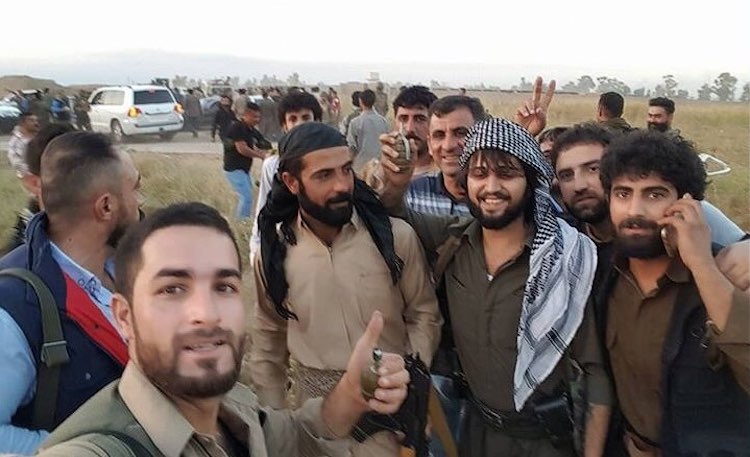
Ako and his friends enjoyed driving around the city without worry of the terrorists shooting at them from afar – but on October 21st, however, the soldiers launched a series of attacks on the city, injuring dozens.
Since city officials were scared of going near the fallen in fear of nearby snipers, Ako jumped into his trusty automobile and started transporting the hurt civilians to safety.
“I told myself, this is the right time to help people, this is the right moment to do it. I am a fighter and I have a bulletproof car, shame on me if I can’t help,” Ako told CNN. “In my car, I carried Sunni, Shiite, Kurds, Turkmen and Christians. I felt like I am truly Iraq and this is who everyone should be.”
Despite snipers continuously firing at his car, Ako ended up rescuing over 70 city residents and carrying fallen comrades back to safety for proper funeral treatment.
Kirkuk Gov. Dr. Najmaldin Karim honored the hero with a certificate of bravery and an envelope containing $385, however Ako felt insulted over being given money “for something every Iraqi should do”. He had not noticed the package of cash included with the certificate until after he had left the governor’s office and it was too late to return it.
The courageous driver also turned down an offer from the German automobile company to replace his car with a new model. He plans on keeping and repairing his trusty steed for further use in the future instead of it going on display in the BMW manufacturing headquarters.
Click To Share This Heroic Story With Your Friends – Photo by Ako Abdulrahman
Scientists from Children’s Health Research Institute, a program of Lawson Health Research Institute, and Western University have developed a new blood test that identifies with greater than 90 per cent certainty whether or not an adolescent athlete has suffered a concussion.
Diagnosis of a clinically significant concussion, or a mild traumatic brain injury, can be difficult as it currently relies on a combination of patient symptom assessment and clinician judgement. Equally problematic are the decisions to stop play or activities, or when patients who have suffered a concussion can safely return to normal activities without risking further injury.
In the new study, researchers have demonstrated that a blood test can now accurately diagnose a concussion using a form of blood profiling known as metabolomics. Dr. Douglas Fraser, a physician in the Paediatric Critical Care Unit at Children’s Hospital, London Health Sciences Centre and Lawson scientist, led the study with his co-investigator Mark Daley, a professor in the Departments of Computer Science, Biology and Statistics & Actuarial Sciences at Western University.
In the relatively inexpensive test, blood is drawn from an individual that may have suffered a concussion as the result of a sudden blow to the head (or from transmitted forces from a sudden blow to the body) within 72 hours of the incident. The scientists measure a panel of metabolites – small molecules that are the products of the body’s metabolism – in the blood to search for distinct patterns that indicate a concussion has occurred.
“This novel approach, to use blood testing of metabolites as a diagnostic tool for concussions, was exploratory and we were extremely pleased with the robustness of our initial results,” says Dr. Fraser, also an Associate Professor in Western’s Departments of Paediatrics, Physiology & Pharmacology and Clinical Neurological Sciences at the Schulich School of Medicine & Dentistry. “We looked at a host of patterns and it appears that those who suffered a concussion have a very different pattern than those who have not had a concussion.”
This new method, fully funded by the Children’s Health Foundation and conducted by the Western Concussion Study Group, is unique in that previous attempts have looked unsuccessfully for a single highly accurate protein biomarker that can distinguish concussed from non-concussed adolescent patients.
In this latest successful attempt, the researchers took a different approach and investigated a full spectrum of 174 metabolites.
“We looked at all of these metabolites in concussed male adolescent patients and in non-concussed male adolescent patients and it turns out that the spectrum is really different,” explains Daley, who is also Western’s Associate Vice-President (Research) and a principal investigator at Western’s renowned Brain & Mind Institute. “There is no one metabolite that we can put a finger on but when we looked at all of them, those profiles are different enough that we could easily distinguish concussed patients from non-concussed. In fact, with fine tuning we can now look at sets of as few as 20-40 specific metabolites and maintain the diagnostic accuracy level of the test over 90 per cent.”
Concussion is a major public health concern, often resulting in significant acute symptoms and in some individuals, long-term neurological dysfunction.
“The discovery of a blood test that can aid in concussion diagnosis is very important,” says Dr. Fraser. “With further research, we anticipate that our blood test will also aid clinicians in predicting concussion outcome, as well as aid rehabilitation after concussion.”
The findings were recently published in the international journal Metabolomics.
The technology is subject to a patent application filed through WORLDiscoveries®, the joint technology transfer office of Lawson and Western.
“This relatively quick and inexpensive blood test for concussion is by far the most accurate reported with tremendous potential for clinical management and commercialization,” says Kirk Brown, Manager of Business Development for Lawson.
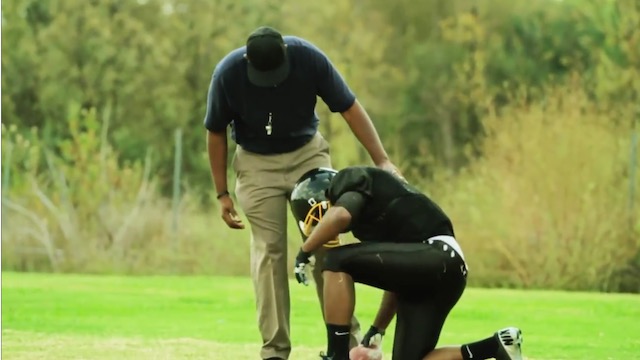
Malcolm was born in Valdosta, Georgia and graduated from the University of Georgia finishing third in the school’s history with 174 receptions for 2,350 yards and 16 touchdowns. He was also recently drafted to play for the New England Patriots during the 2016 NFL draft.
Follow Mitchell’s creative endeavors via his website or click here to purchase his new book yourself.
Since this college student was robbed of his beloved candy bar, the Kit Kat head honchos decided to give him a break.
Hunter Jobbins, a freshman at Kansas State University, took to Twitter last week when he returned to his parked car only to find that someone had stolen his Kit Kat candy bar from his cup holder.
The thief left an apology note which Hunter posted to social media with the caption “Left my car for maybe 15 minutes in front of the dorms and I come back to this. College, man.”
The note was written on a napkin in a hurried scrawl reading “Saw Kit Kat in your cup holder. I love Kit Kats so I checked your door and it was unlocked. Did not take anything other than the Kit Kat. I am sorry and hungry.”
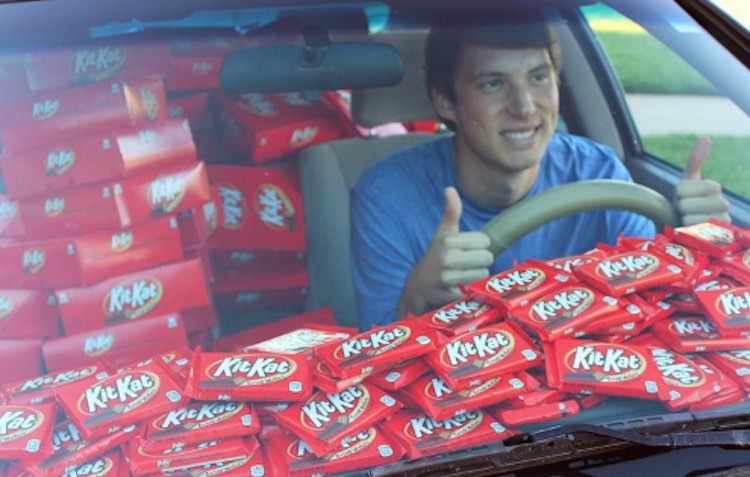
“Keep your Kit Kat, thief. Jobbins now has ALL the candy #KitKatThief,” tweeted the candy company with a photo of Hunter reveling in a car full of Kit Kat bars.
Hunter, however, understands the joy of simple sweets and decided to pay his gift forward to his fellow classmates under the hashtag #KitKatsForEveryone.
“Thanks to everyone who came by today!!” Hunter wrote on Twitter. “And a special thanks to Devon Horowitz and KitKat_US for making today happen! #KitKatsForEveryone”
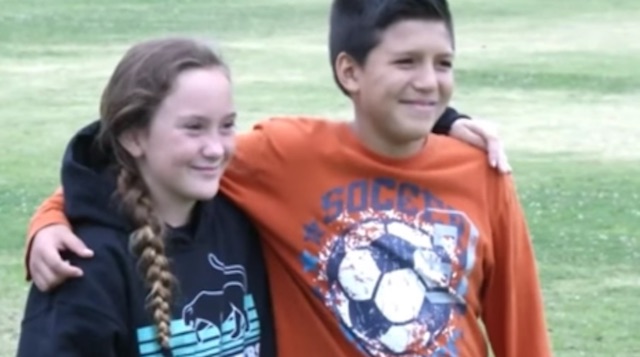
Even though she didn’t speak Spanish, however, she used Google Translate to write a note to the boy saying “Would you like to sit with me today? Look for me and I will show you where I sit. We can color or simply tell scary stories. Thank you for your time, signed Amanda.”
Not only have the two become buddies through the phone app, but the school honored Amanda as Student of the Month for her spontaneous act of kindness.
Tennis champions Venus and Serena Williams are opening a resource center for those affected by violence in their hometown of Compton, California.
The Yetunde Price Resource Center, named after their eldest sister who died as a result of gunfire, will provide valuable therapeutic and community benefits for affected families.
“The Resource Center will serve as vital support to existing non-profits and organizations that provide critical services to our community,” says Compton Mayor, Aja Brown, in a statement. “I understand first hand the power of partnership and I am confident that the Resource Center will play a major role in breaking down silos in our community by facilitating key partnerships to increase asset leveraging and expanding the impact of services.”
Though there is already an abundance of resources in the district, it can be overwhelming for grief-stricken citizens not knowing where to start. The Williams sisters’ center, however, is to be massively more accessible.
“The Resource Center will be able to map all of the resources in and around the Compton community while providing customized assistance that will be a vital asset to improving our ability to service our youth, adults and families.”
The establishment is just the start of the athletes’ efforts to help the community following their debut of the William Sisters Fund for philanthropic endeavors.
The center will be unveiled along with two new tennis courts on November 12th for the Healthy Compton Community Festival.
Score Big With Your Friends: Click To Share The Positivity
The seed for HandUp, a crowdfunding site that solicits donations to help the homeless, was planted in early 2012 when Rose Broome passed a shivering woman huddling in the doorway of a real estate office in San Francisco.
“On a cold night, I was walking down the street and saw a woman sleeping on the sidewalk,” recalls Broome. “She didn’t have a jacket, she didn’t have a sweater — just a thin blanket protecting her from the cold ground.” That night, Broome says, “I made a commitment to myself to do one thing to make a difference, and that one thing turned into HandUp.”
The platform for HandUp allows those battling homelessness to appeal directly to donors to fund their particular needs. Since 2013, more than 2,000 people have raised nearly $1.6 million. By sharing their stories on the site, those in need are able to fundraise for housing assistance — security deposits, moving costs, help paying back rent, and so on — as well as for food, education, medical care and technological access. “Having a phone, the Internet, the ability to text is extremely important for everyone, especially for the most vulnerable people,” says Broome, who, besides cofounding HandUp, acts as its CEO.
The need for funding is enormous. Nationwide, 3.5 million people struggle with homelessness every year, and 50 million people live below the poverty line. But there’s a misconception about what being homeless looks like, says Broome, pointing out that the image of a person sleeping on the street, wrestling with mental health issues or drug addictions (or both), tends to capture the public’s imagination. In reality, however, 30 percent of those who are homeless are part of families. As Broome puts it, “You could walk right past 80 percent of people experiencing homelessness and not know any different.”
HandUp works by partnering with organizations that serve homeless populations. These organizations help their clients sign up and create profiles on the site (to date, they’ve launched more than 5,800 campaigns in 29 cities). When donors give, the money goes to the organization, which will pay for the items requested. Donors get an email update when their money has been put to use. HandUp also helps homeless people create donation request cards, which they can hand out to people they meet on the street, and donors in San Francisco can buy HandUp gift cards in $25 increments and distribute them when they meet someone in need (the cards can be used for groceries, clothes and other goods at HandUp’s nonprofit partners).
Broome and her cofounder, Sammie Rayner, are passionate about using technology to solve problems and create change. “It’s surprising, but right now, only 8 percent of charitable giving happens online,” Broome says. And unfortunately, the nonprofit sector tends to lag far behind the private sector in adopting new technologies. “So often, nonprofits are the last to get some of the best technology to do their work,” adds Rayner.
For the nonprofits that work with HandUp, the platform allows them to fund needs that wouldn’t otherwise be met, filling in the gaps left by restrictive government and foundation grant funding. SF Cares, a collaborative project of several Lutheran churches working to serve low-income and homeless individuals in San Francisco, has used HandUp to raise $18,000 for the needy they work with, plus another $20,000 toward their general operating costs. “They’re funds our organization never would have gotten before,” says the Rev. Dr. Megan Rohrer, the executive director of SF Cares and pastor at Grace Evangelical Lutheran Church. And the people doing the giving through HandUp are new donors that SF Cares might not have reached on its own, she adds.
Rohrer says she loves the way HandUp lets people combatting homelessness “speak in their own voice.” And she likes that the site lets people decide for themselves what they need to improve their lives. “Plus,” she says, “any time that I don’t have to spend fundraising means I get to eat with the homeless, and I get to sing songs with them too.”
Creating human connections is as much a part of HandUp’s purpose as developing innovative technological solutions. “On HandUp, you can read the stories of thousands of people who need help with very specific goals,” Rayner says. “As soon as people read the human story and have that connection through our platform, it’s harder to have the same stereotypes, and it’s harder to judge.” When donors give on HandUp, they can also post words of encouragement. The people who receive money through the site often say those kind words mean more than the donation, adds Broome. “A lot of people who are homeless feel invisible,” she says. HandUp helps them feel seen.
(WATCH the video below)
The 2016 AllStars program is produced in partnership with Comcast NBCUniversal and celebrates social entrepreneurs who are powering solutions with innovative technology. Visit NationSwell.com/AllStars from November 1 to 15 to vote for your favorite AllStar. The winner will receive the Tech Impact Award, a $10,000 grant to help further his or her work advocating for change.
Starting on November 1st, Denver, Colorado will be offering homeless citizens employment on day shifts for a full year.
The program known as Denver Day Works will allow participants living in poverty to choose a three to six hour shift with starting pay at $12.59. None of the workers have to participate in a background check or contract – they just have to show up.
Even if a prospective laborer doesn’t have proper identification, there are supportive services at the ready for special arrangements.
The city has budgeted $400,000 for the Day Works program with the goal of paying up to 300 people throughout its pilot year from November 2016 to October 2017. Since the labor is as simple as planting trees or plowing snow, the project will hopefully lead to full-time employment for some of Denver’s homeless population.
When participants finish their shifts, the program’s administrator will even offer financial planning services at no additional cost.
Not all the of the laborers will likely be connected with full time jobs once the program concludes, but the city hopes to engage at least 300 people, connect 150 to a work experience, retain at least 70 of the participants for more than one day of work at either city or established contract sites, and connect at least 49 of the participants to permanent work.
Work Against Negativity: Click To Share – Photo by las – initially, CC
Two teens, 13 and 17 years-old, in jail for crimes in Brazil, are now actually believing it’s possible to make plans for a better future—having made it to the national math olympic games.
Their dedicated and passionate math teacher, Hugo Tortorelli, wondered if he could enroll any of his students in the competition this year. He works at a facility where inmates normally don’t show an interest, and if they do, they don’t have much success. To his delight, thirteen of his 550 students wanted to try.
“I was blown away to know I had students actually interested,” says Tortorelli. But that wasn’t the most inspiring change.
The math teacher tailors story examples so the kids will understand. “I rarely mention words like ‘fraction’. What I do is show them how big a portion of their medicine is, or how an angle of a soccer field influences a match.”
The final results of the Obmep competition, an acronym for the olympic games of math and science, will be known on November 30th.
(Research by GNN Latin America correspondent, Joao Freitas)
Click To Share The Good News With Your Friends – Photo by EPTV
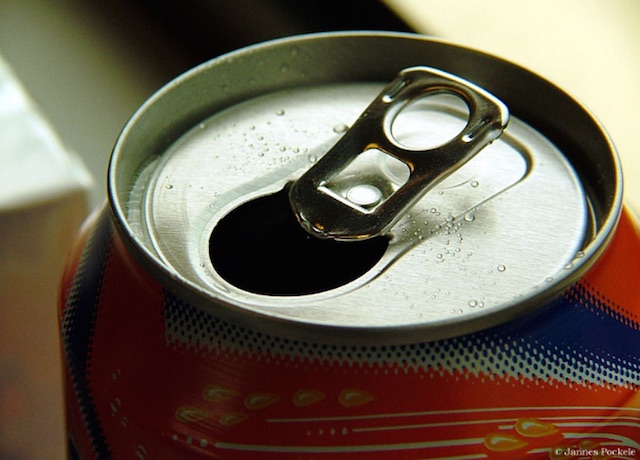
The national 10% tax on sugar-sweetened beverages (SSBs) in Mexico is projected to have a substantial impact on the burden of diabetes, cardiovascular diseases, and mortality over the next 10 years, according to a modeling study published in PLOS Medicine. The study, conducted by Kirsten Bibbins-Domingo of the University of California San Francisco, and colleagues, indicates that 983 million international dollars in healthcare costs may be saved from the prevention of diabetes cases alone.
The prevalence of obesity and diabetes in Mexico has risen dramatically in recent years, and the rate of diabetes in Mexico currently ranks among the highest in the world. In order to address the obesity and diabetes epidemic, the Mexican government implemented a 10% excise tax on SSBs in 2014.
In this study, the researchers developed a Mexico version of an established model of cardiovascular disease in the US and used survey data on household consumption in Mexico since the tax implementation to project health and healthcare cost impact in the next 10 years. The researchers found that the 10% tax will likely prevent approximately 189,300 new cases of type 2 diabetes, 20,400 incident strokes and heart attacks, and 18,900 deaths over 10 years among adults 35-94 years of age, and is expected to result in 983 million dollars in savings for healthcare costs due to prevention of diabetes cases.
“The SSB tax may be an important component in a multifaceted strategy by the Mexican government to curb the obesity and diabetes epidemic in Mexico,” said the study’s author.
The conclusions are limited by the assumptions in the model, and some epidemiologic parameters were drawn from populations outside Mexico. However, the findings suggest that, if consumption trends continue, the tax may confer significant benefits to people living in Mexico.