Unlike Anakin Skywalker who lost his limb in a lightsaber battle, Alvin Garcia Flores has lived his whole life since birth without having the lower half of his right arm.
Recently, thanks to Alvin’s school principal, the Dark Lord showed up to surprise the young Star Wars fan in front of his entire school, to give him a new arm — and a “New Hope.”
Gateway Elementary principal Terry Burton reached out to the Florida nonprofit Limbitless Solutions, which specializes in 3D-printed prosthetics, asking them to fashion one especially for the second grader.
He could have stopped there, but Burton went the extra parsec and asked the Star Wars fan group 501st Legion, known for doing charitable work dressed as Sith lords and storm troopers, to present the surprise in front of all of Alvin’s classmates–and his mother.
(WATCH the galactic surprise in the video above from WOWT-6 News)
A dear friend of mine told me that her New Years Resolution was to remove the clutter from her home. I found this to be an admirable goal that I could help her with. Then I realized it was something I could share with everyone here!
What you need to know about clutter is… The biggest hurdle in clutter removal is the misconception that clutter is an entity. Clutter is not something you can pick up and throw out.
Clutter is the result of a series of habits that create upheaval throughout your space. Therefore, clutter is not easily removed.
The most successful way to rid your life of clutter is to change your habits. This is much more challenging than clearing the house out once every couple of months, but much more effective in making your home a stress-free environment.
I have a system that can lead you toward living in a clutter-free environment…
Try it for yourself:
1. See the clutter. What don’t you like dealing with or putting away? (Receipts? Papers? Cards? Random objects?
2. See where you pile up that particular clutter. Where do certain things tend to land? (Receipts on the bedroom dresser, junk mail on the kitchen island, cards on the coffee table?)
3. Strategize a convenient organizational system in the spots that you naturally want to throw the clutter. What could be an easy alternative to this? (Receipt folder in the top drawer of the dresser, a paper shredder in a pull out cabinet in the kitchen, a “card album” on your coffee table?)
Thanks to more stringent safety procedures governing the dangerous commercial fishing industry, zero commercial fishing deaths were recorded for the 2015 season. (Alaska Dispatch News)
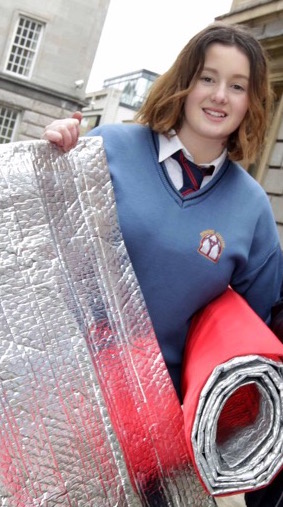
Emily Duffy (Photos by TheJournal.ie video; Desmond College)
Emily Duffy came up with the idea after “living rough” for a day on Dublin’s streets, experiencing life as the homeless do to raise money for a charity that helps them.
The 15-year-old Desmond College student thought cloth bags were too impractical — dirty, dangerous, and hard to keep dry.
Duffy’s invention, dubbed “Duffily Bags,” have a highly reflective, fire retardant and waterproof shell. Velcro straps replace the usual zippers, allowing the user to get in and out more easily.
She recently showed off her invention at the BT Young Scientist and Technology Exhibition in Dublin, which showcased some of the brightest ideas of the country’s young people.
The bags are already being produced by former homeless people now earning $10 an hour at the Mendicity Institution — a homeless service center in Dublin.
(WATCH the video below by the TheJournal.ie, or READ more at the Irish Times)
When a Siberian husky took in a stray kitten as her own, the little cat grew up thinking she was part of the pack.
The scrawny stray ignited Lilo’s maternal instincts and she began treating the little kitten as if it were her own puppy—and the cat grew up with the heart of a sled dog.
Seven months later, Rosie the cat goes everywhere that Lilo and the family’s two other huskies go. The cat also features prominently in photos alongside Infinity and Miko on Lilo’s Facebook, Twitter, and Instagram accounts.
A new report credits the Affordable Care Act (ACA) with reducing the number of uninsured Latino children in America to an all-time low.
The study only looked at the first year the ACA was in effect, but found the percentage of uninsured Hispanic kids dropped from 11.5% to 9.7% between 2013 and 2014.
Roughly 300,000 more Latino kids had insurance over the year, reducing the number who are without insurance to 1.7 million.
The largest decline came in Nevada, where the uninsured rate among Hispanic children fell nearly seven percentage points — form 20% to 13.3 percent in one year.
Researchers say the vast majority of those Latino children who remain uninsured are American citizens eligible for Medicaid and CHIP health coverage.
“This report points to the need to remove more barriers to coverage, and find ways to get the whole family covered so that Hispanic children can grow up healthy and more financially secure,” report co-author Sonya Schwartz said.
Georgetown University Center for Children and Families and the National Council of La Raza collaborated on the report.
The motorized monster, with tank treads instead of wheels, was supposed to be for off-road adventure but Anderson decided last year to turn it into a machine of goodwill.
He added a snow blade that he can adjust to different levels and he says it only takes a couple of hours after a typical Omaha snowfall to blaze a trail along the sidewalks to the local elementary school.
The easy-going vet, with a personalized license plate on his pick-up reading “HOPALONG,” brushes aside the praise as easily as his snowplow-wheelchair clears the slush.
He calls the chore “very gratifying,” because it gives him a chance to pay it forward to a community that supported him as a wounded warrior coming home.
(WATCH the video below from WOWT News) — Photo: WOWT News
A medical treatment intended for cancer patients appears to be able to reverse the effects of multiple sclerosis (MS), as well–and some people paralyzed by the condition have been able to walk again.
About 20 patients suffering from MS in Sheffield, England were given bone marrow transplants using their own stem cells.
The treatment — haematopoietic stem cell transplant (HSCT) — first destroys a faulty immune system in cancer patients, then uses the stem cell transplant to rebuild it.
It effectively “reboots” the immune system in patients.
MS is a neurological disorder that causes the immune system to attack the linings of nerves and the spinal cord. Doctors thought if HSCT could rebuild the immune system in cancer patients, it might also work with MS.
One of the patients, Steven Storey went from a marathon runner to needing a wheelchair and 24-hour nursing care within a year of being diagnosed with MS. Four days after the HSCT treatment, Storey was able to move his toes and was able to stand on his own four months later.
“It’s been incredible. I was in a dire place, but now I can swim and cycle and I am determined to walk,” Storey told the BBC.
Hospitals in the UK, U.S., Sweden, and Brazil are taking part in international trials gauging the long-term benefits of the procedure on MS patients.
As with cancer patients, those with MS would need to endure multiple rounds of chemotherapy to effectively destroy their faulty immune system before the transplant can reboot it.
The one time cost of the stem-cell transplant — $43,000 — is about the same as the yearly cost of standard MS treatments.
Seattle Seahawks fans didn’t have much to smile about after seeing their team lose to the Carolina Panthers Sunday.
But a five-year-old fan did have a grin with a gap after his own personal loss during halftime of the National Football League play-off game. He lost a tooth.
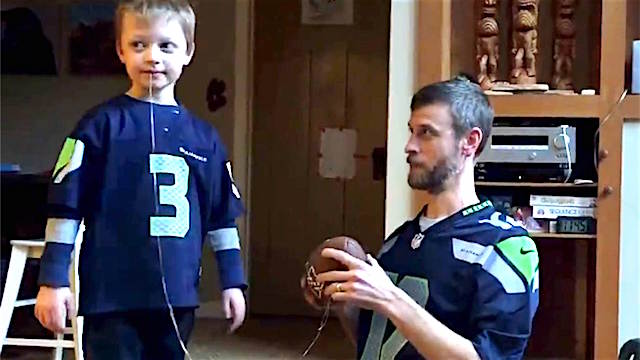
Leo Deveraux’s loose tooth had been bothering him while watching the game on television at home.
During the break, his dad tied one end of a string to Leo’s tooth and the other end around a football. Dad then crossed the room and told him to make a pass just like his hero quarterback, Russell Wilson.
“To to add some excitement to a tough first half, Seahawks vs. Panthers, we decided to do a tooth extraction,” dad Jim Deveraux wrote on his Facebook page, calling it “12th Man Dentistry.”
The play worked — yanking Leo’s tooth out and sending it for a one or two-yard gain.
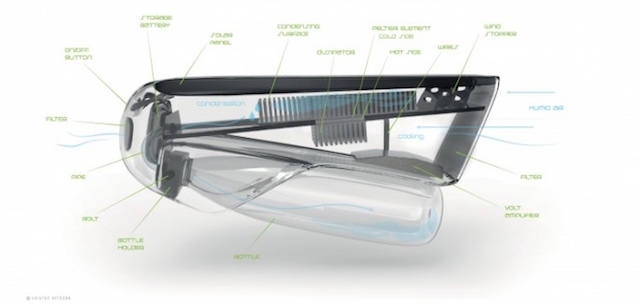
It collects humidity in the air and under ideal conditions — 86-to-100 degree temperatures and 80-to-90 percent humidity — it can produce a half-liter of water every hour.
Fontus is solar powered and uses water repelling surfaces to direct water particles in the air through filters and into a condenser that cools it into liquid water.
Retezár points out that by 2030, nearly half the people in the world will be facing water shortages. He says his idea simply uses modern technology to update 2,000-year-old methods of water harvesting in a way that could one day address global water scarcity.
Retezár’s invention is a candidate for the James Dyson Award for innovations by product or industrial design engineering students.
He plans a crowdfunding campaign in March to bring his idea to market. He wants to keep the price below $100 and hopes to start delivering Fontus nine months later.
This dog was so overwhelmed by a family reunion, she passed right out.
Casey the schnauzer hadn’t seen Rebecca Sventina for two years, ever since the woman left Pennsylvania to work in Slovenia.
When Rebecca first arrived back home, the dog couldn’t stop barking and jumping, until she eventually rolls over on her side, dizzy from all the excitement.
The 25-year-old Pennsylvania man doesn’t remember much after leaving a bar on an icy night last year –and wasn’t conscious when his father found him the next day lying in the snow on the side of the road with no pulse.
Paramedics responding to the call thought Justin was dead. He’d spent 12 hours outside with temperatures that plunged to five below zero.
A coroner was already on the way, but Dr. Gerald Coleman, who was in contact with the first responders told them to start CPR.
Coleman knew if a person freezes slowly, at just the right speed, it lowers metabolism through the body. This means the person won’t always suffer the other effects of exposure that can destroy the brain and other organs. The freezing temperatures can actually keep people alive and, in some cases with the right medical care, those people can make a full recovery.
Justin was one of the lucky ones — and a record-setting one. Coleman says with his upper body actually frozen solid when he was found, Justin is the coldest person to have ever lived through hypothermia caused by exposure.
At Lehigh Valley Hospital, Dr. Coleman and a 15 person medical team began the work of warming Justin up and getting his heart beating again.
They hooked him up to an extracorporeal membrane oxygenation — or ECMO — machine. A frozen person’s blood is pumped into the ECMO which warms and restores oxygen to it, before pumping it back into the patient.
Later in the day, Justin’s heart started beating on its own.
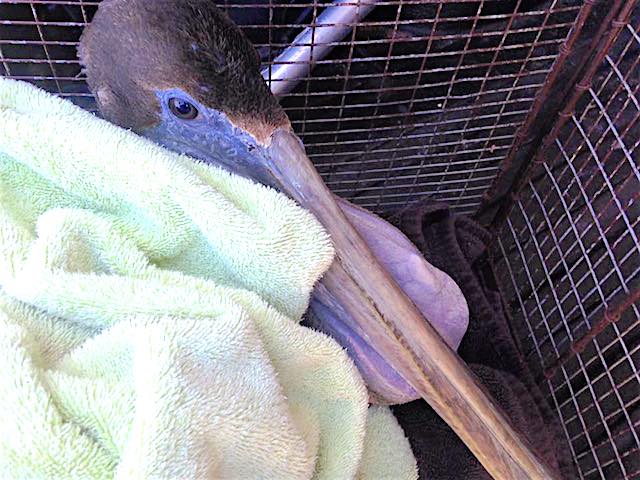
Sheriff deputies in Florida came to the rescue of an ailing pelican after it bit off more than it could chew.
Animal Services Officer Heather Belknap was able to catch the bird, and right away realized it wasn’t sick – it just had something stuck in its throat and needed help.
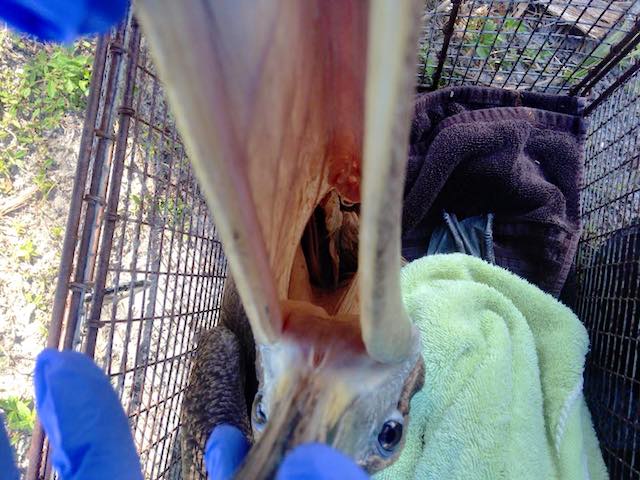
Partner Kimberly Guile held the bird while Belknap pried open its beak, and discovered the pelican had been a bit too ambitious with its lunch plans.
A huge fish head – bigger than the officer’s hand and far too big for the bird to swallow – was causing the pelican to choke.
Belknap reached into the bird’s mouth and quickly pulled out the super-sized sushi.
“The pelican immediately displayed signs of relief,” reported the Martin County Sheriff’s Office, which posted photos of the rescue effort to its Facebook page, including happy bird’s release.
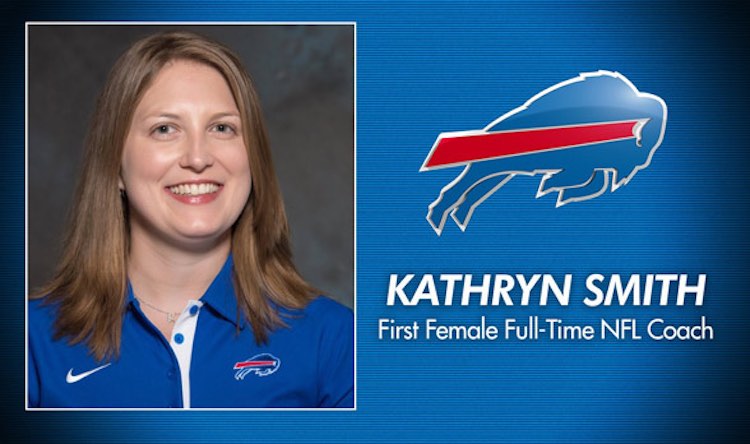
In an historic first, the Buffalo Bills have hired the first woman to be a full-time coach in the National Football League.
Kathryn Smith will take the job as quality control coach for special teams, which is increasingly seen as a key role in the NFL–especially after the Minnesota Vikings lost their play-off bid by missing a simple kick.
Smith has worked in administrative roles and supported assistant coaches in the NFL for 13 years.
Prior to joining the Bills in upstate New York in 2015, Smith spent 12 seasons working for the New York Jets, scouting college players and later as assistant to the head coach.
Special teams coaching involves the players at the heart of the kicking game in the NFL — punters, field-goal kickers, and punt and kick-off return runners.
Quality control coaches spend long hours breaking down the science, strategy, and mechanics of plays. They study films and statistics to provide ideas before games and instant assessments ahead of each play on the field to give a team advantages over opponents. It is considered a position in a natural line to becoming a head coach.
The Arizona Cardinals hired Jennifer Welter back in July as a training camp and preseason intern coach for inside linebackers. She became the first woman to ever hold any coaching job in the NFL, but her internship ended after a perfect 3-0 preseason for the Cards.
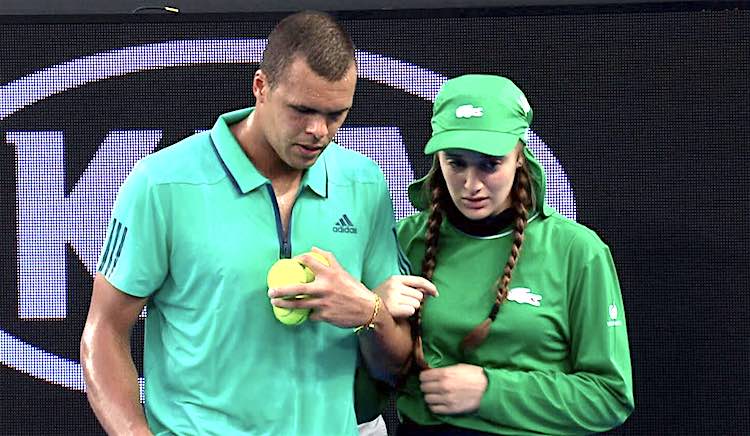
When a powerful serve veered toward the ball girl and hit the young woman square in the face at the Australian Open tennis tournament, one of the star players came to her aid.
French tennis great Jo-Wilfried Tsonga stopped play and walked over to the unnamed girl. She had taken a fast moving tennis ball straight to the nose and was stunned and in pain, though trying to be stoic.
Go ahead. Hug someone close to you. It’s National Hugging Day.
You should really ask first, though — that’s the advice of the people who launched the effort 30 years ago today on January 21. Founded by a minister and social services worker in Michigan, the day has since become internationally embraced.
Did you know the health benefits of hugs? Psychology Today reports they have been shown to bolster your feelings of security, positivity, and freedom, while improving your overall health.
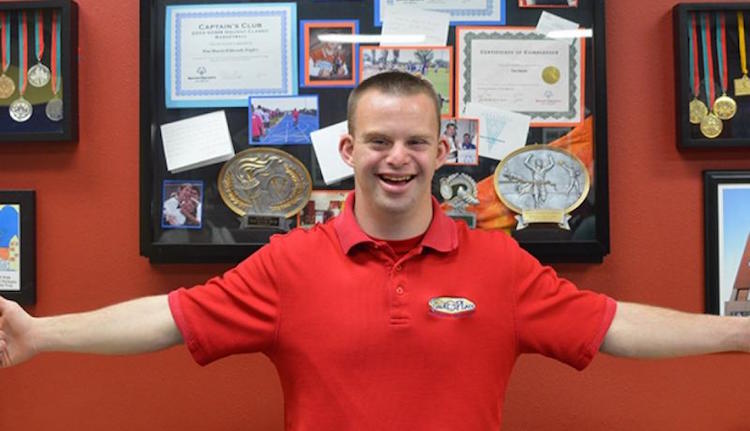
Every year the National Hugging Day website names a new “Most Huggable” person. This year they are honoring Tim Harris, a man with Down syndrome and founder of Tim’s Place, an Albuquerque, New Mexico restaurant that has officially offered a free hug with every meal.
Even more perfect is the fact that Tim’s birthday is today. For each of the last two National Hugging Days, Tim has held a two-day “Hugathon” to raise money for Firefighters Random Acts, a local charity letting first responders pay for random acts of kindness around Albuquerque. His hugs have brought in $19,000 for the charity.
The Albuquerque diner is now moving to Denver, Colorado where he and his girlfriend are relocating to open a new Tim’s Place.
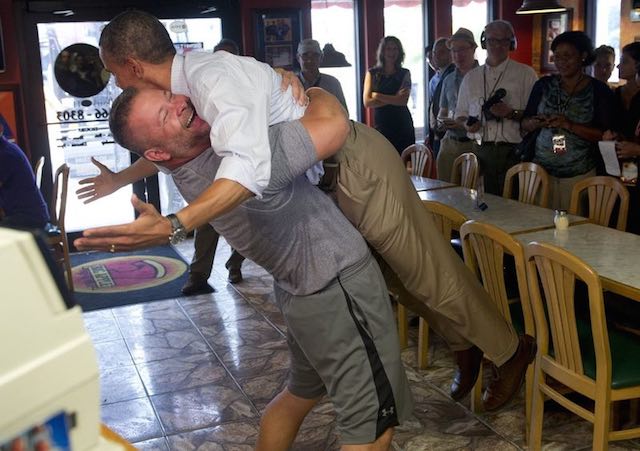
In 2013, Scott Van Duzer, owner of the Big Apple Pizza & Pasta Italian Restaurant, won the award for an extremely daring hug.
Months earlier, his shop in Fort Pierce, Florida was visited by a campaigning President Obama and to everyone’s surprise, including the Secret Service, Scott actually picked up the President for an impromptu bear hug that made the news nationwide.
In 2006 an Australian Free Hugs video launched a movement that especially appealed to young people–hold signs and offer “Free Hugs” in public squares. With 70 million YouTube views, this inspiring story about Juan, the hugger became one of the most popular videos ever presented on the Good News Network.
(WATCH the video below about Tim’s charitable hug-a-thon)
Share A Hug And This Story With Your Friends Today…[icopyright_one_button_toolbar]
A little village of tiny houses for the homeless is taking shape on a plot of land owned by a Lutheran church in Seattle, Washington.
Volunteers gathered in a weekend to build 14 homes. Each one is insulated and has electricity and oil heat. More importantly, a central building houses restrooms and running water–with showers being installed soon.
Lutheran Church of the Good Shepherd put up the land for the village — the first of its kind in Seattle.
Each house cost about $2,200 to build and residents will pay $90 a month for utilities.
They will serve as a model for more tiny house villages, and as an alternative to the Nicklelsville encampment, organized by the city for homeless camping.
The houses will provide temporary housing, until occupants can be housed in permanent homes.
It’s a game of cat and mosque as a Turkish house of worship welcomes some unexpected guests for the winter — whole families of stray cats.
The Iman at the historic Aziz Mahmud Hüdayi Mosque in Istanbul opened its doors to the strays — to the apparent delight of visitors and many of its members.
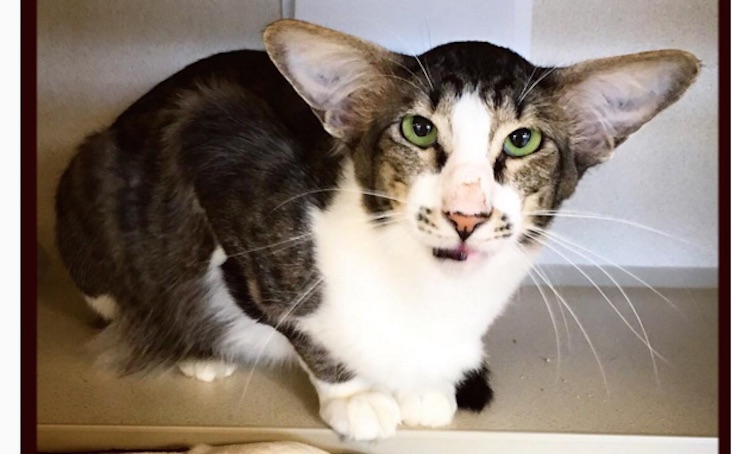
It’s no Jedi mind trick that this shelter cat, which was recently tagged the #KyloRenCat, bears a weirdly striking resemblance to actor Adam Driver of Star Wars: The Force Awakens.
Adopted a few days after the Monmouth County SPCA of the Jersey Shore posted a photo of the sith feline to Instagram, the 2-year-old Balinese mix will keep the name he was fondly dubbed– Kylo Ren.
His new owner Emily McCombs said that his personality is far from villainous and you can follow Kylo Ren’s adventures in force-napping and dark side shenanigans on his Instagram page that has already scored over 3,000 followers.