








A coat once placed over the shoulders of a young girl whose traditional Korean uniform had been slashed in a racial incident 30 years ago has now been returned to the ‘good Samaritan’ who offered it.
Norihisa Koyama was a Japanese high school student at the time of the notorious “hanbok slashing incidents” when he saw a girl whose clothes were torn.
“A female student was crouching down and crying. I knew something was seriously wrong.”
The teen then gave her his brand new winter coat, just bought for him by his parents, to the Korean school student whose hanbok jacket (the traditional national attire of Korea) had been intentionally sliced open in public with a knife or scissors.
After he handed her his coat so she could cover herself and return home safely, he didn’t think much of it, but the girl carefully preserved the coat, which had his full name written on it, and never forgot his kindness.
Earlier this year, after three decades, the young woman was able to return the cherished black coat to Mr. Koyama, when she saw a newspaper article about his charity work and recognized his name.
Now age 50, he works with a Japanese nonprofit that supports single mothers and disadvantaged families
Mr. Koyama’s willingness to help others during his student days, seems to have been a precursor to his life’s work supporting single-parent and struggling families. Since the incident, he also has fostered close relationships with Korean residents in Japan.
Inspired artist captured the events 30 years ago
In the 1980s and 1990s, there were dozens of occurrence of verbal abuse, assault, and injury against female middle and high school students of Korean schools who wore the traditional Korean dress (chima jeogori) as their uniform.
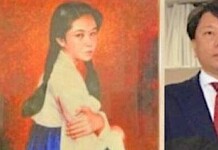
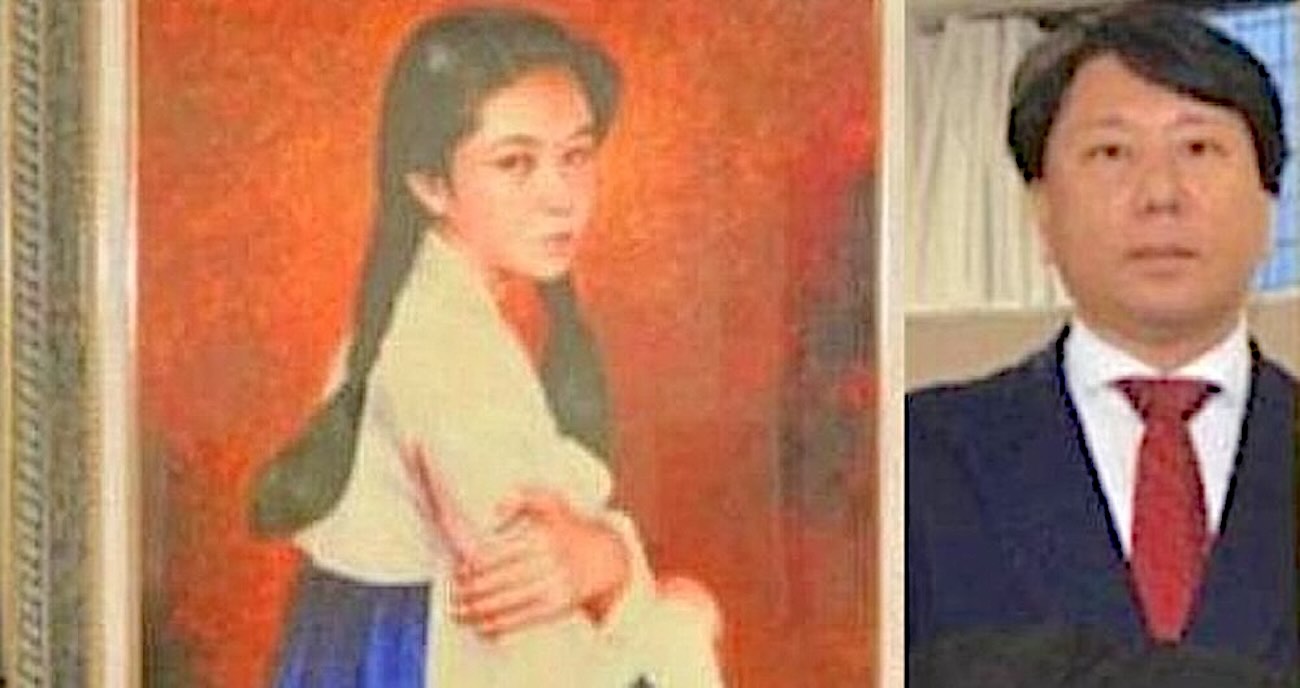
A Korean artist who resides in Japan painted a canvas at the time based on the “Chima Chogori slashing incidents” targeting ethnic Korean students in Japan during a time of military flare-ups involving N. Korea (much like the prejudice against Japanese-Americans during World War II).
It was an attempt to reinterpret the torn garment not as a memory of the suffering, but as an effort to mend and move on from the wounds he memorialized.
The artist, Park Chung-moon, heard about the reunion and invited Koyama to his Tokyo office in June to commemorate the return of the coat. He brought the wool garment to their meeting and together they spoke about the 1990s painting, and a new art project based on their inspiring story.
“He is like a treasure to us Koreans, a representative of the Japanese people,” the 80-year-old artist told the Japan-based newspaper Choson Sinbo.
“I am so grateful that he warmly extended a helping hand to the students of the Korean school.”
MORE ASIAN KINDNESS: 14 Years After Receiving Christmas Shoebox Gift, Filipino Girl Marries Idaho Boy Who Sent it
Park’s highly acclaimed work of art, Chogori, which has hung in the Korean Art Museum, depicts a young girl wearing her traditional dress, its sleeve torn, yet still looking forward.
(See the coat and the full painting in this photo.)
Park Jung-moon’s studio has since launched a new collaborative art project to turn this shared memory into a symbol of modern cultural solidarity and healing.
After more than 30 years, this new encounter will pass on the memory of the ‘hanbok’ to the next generation, after it was carefully remembered and preserved by an anonymous girl for three decades.
POINT THE WORLD to Some Kindness By Sharing On Social Media…