












All News - Good News Network
Home Blog

Canada’s Newest Nickel Mine Will Store 1.5 Millions Tons of Carbon Every Year During Operation

The Nickel Rim Mine in Ontario, the only other Western source for Nickel - credit, P199 via Wikimedia, CC 3.0.
The Nickel Rim Mine in Ontario, the only other Western source for Nickel – credit, P199 via Wikimedia, CC 3.0.

On July 31st, mine developer Canada Nickel Company announced it had received final permitting approval from the Ontario government for its gargantuan nickel mining/carbon capture project

The approval is the first issued under Canada’s amended Impact Assessment Act, a reform of extractive industry regulations designed to allow the highest-quality projects to be permitted fast.

Financing for the project will come in part through the sale of carbon credits, as Canada Nickel develop what is now a proprietary carbon storage method that allows it to store atmospheric carbon within the milled stone out of which the nickel is separated.

Needed for stainless steel, plating, high-quality allows, and emerging as a must-have for next-generation EV batteries, the market for nickel as a globally-traded commodity is sequestered almost entirely within Indonesia, where poor tropical soils make mining nickel easy.

Some 67% of nickel is mined in the country, a greater share of market control than OPEC has over global oil production. Additionally, in 2024, nickel mining was identified as a primary national cause of deforestation on the islands of Sulawesi and Halmahera.

Yet for decades there has been just one Western-based source of nickel. Many manufacturers have had to source from Indonesia, the Philippines, and China, where environmental and social effects of rural nickel mining can rarely be scrutinized, and even more rarely influenced.

Canada Nickel’s Crawford Project aims to be not only the largest nickel source accessible to Western markets, but one of the largest in the world; one where deforestation, erosion, and pollution can be properly prevented.

Indeed the Prime Minister of Canada himself believes that Crawford will set a new a worldwide standard for responsible mining.

Located in Ontario’s legendary Timmins mining district, the Crawford Project is estimated to contain 3.8 million tons of nickel, set within a total land package that could contain as much as 12 million tons according to published resource estimates. It holds a byproduct credit of chromium, and will be the only significant Western source of this metal as well.

Canada Nickel CEO Mark Selby alerted shareholders to the news of permitting success on the last trading day of the week.

CARBON CAPTURE PROJECTS: World-First South Korean Natural Gas Project Paves a Route to More Power and Cheaper Carbon Capture

“Today’s decision recognizes the strategic importance of responsibly developing Canada’s critical mineral resources in partnership with all levels of government and Indigenous Nations while maintaining rigorous environmental standards,” said Selby.

“We look forward to continuing to advance Crawford towards a construction decision in 2027.”

Building the Crawford operation will require some $1.9 billion. The projected return on this capital is expected to benefit from the company receiving as much as 50% in tax credits for incentivizing carbon storage.

CLEANING UP MINING: Scientists Develop Enzyme to Limit Environmental Impact of Mine Waste, Testing Underway

Canada Nickel’s In-Process Tailings (IPT) Carbonization technology involves injecting a concentrated source of CO2 into tailings generated by milling for a brief period, fixing the carbon geologically while the material is still in the processing circuit rather than after final deposition.

Lab-scale tests have demonstrated that this method is 8 to 12-times faster than passive carbon capture approaches, achieving net-zero carbon capture targets in less than 36 hours and gross capture rates of at least 26 tons of CO2 per ton of nickel in 6 days.

MODERN MINING: Quebec Firm Pioneers Cyanide-Free Gold Extraction and Arsenic-Capture to Clean up Mining Industry

That translates to an expected storage of 1.5 million tons of CO2 per year of operations.

To put this into perspective, that equates, according to the US Environmental Protection Agency to removing 350,000 gas-powered cars from the roads for a whole year, or around 200,000 average family homes’ electricity use, or, perhaps the most eye-opening equivalent, the carbon-savings from a whopping 450 wind turbines running for a year.

Given the quantity of mine tailings that will be generated by the 48,000 tons of material running through the mill every day, Canada Nickel estimates that the carbon storage potential across the 41-year mine life of Crawford could extend to 15 million tons per annum. At that point one is talking about a generational opportunity to remove carbon from the atmosphere.

SHARE This Story Of A Mine Becoming A Carbon Storage Powerhouse… 


Editor’s Note: This story should not be construed as investment advice, always perform due diligence and consult with your financial advisor before making any investment decision. 

Okefenokee Swamp Clinches World Heritage Status, Joining Ranks of Top Natural Wonders

Okefenokee terrain - credit, public domain, via UNESCO
Okefenokee terrain – credit, public domain, via UNESCO

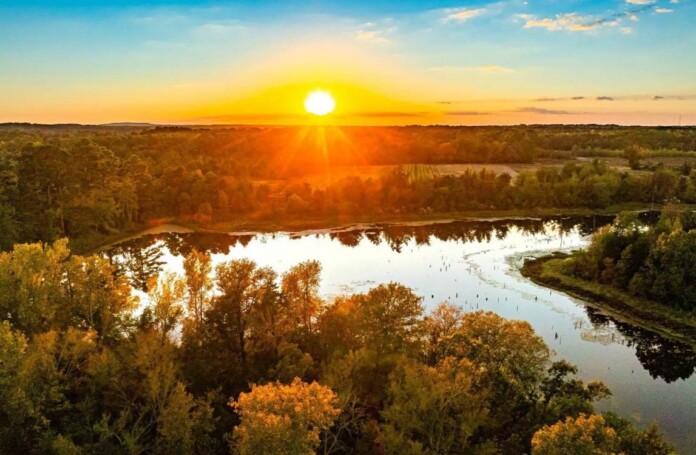
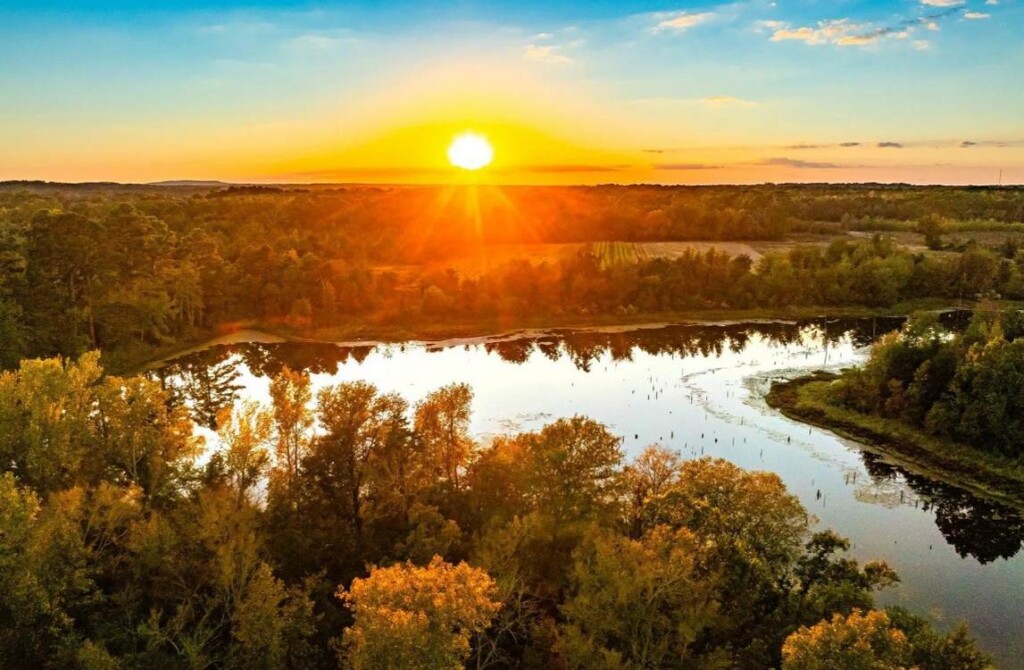
Georgia’s Okefenokee Swamp is the latest wild wonder of the USA to make UNESCO’s hallowed World Heritage Site list.

It joins the Grand Canyon, Sequoia, Everglades, and Yellowstone national Parks on the same list, and reflects the stunning biodiversity of American “blackwater” swamps.

Most of the Okefenokee Swamp is included in the 403,000-acre (163,000 hectare) Okefenokee National Wildlife Refuge, the most-visited NWR east of the Mississippi.

Conservation in the swamp dates all the way back to 1918, by which time 1 million cubic meters of timber had already been logged. The federal government acquired most of the swamp for refuge purposes in 1936, and designated it an NWR a year later.

It would go on to collect the designations of Federal Wilderness and Wetland of International Importance under RAMSAR, before the Georgia organ of the National Parks Service announced in 2023 it would be nominated to be the state’s first ever prospective entry on UNESCO’s World Heritage List.

Okefenokee Swamp is the largest, lowland, freshwater peatland in the subtropical zone worldwide, and one of the largest and most intact ecosystems within the North American Coastal Plain global biodiversity hotspot.

The UNESCO Natural Heritage Site area comprises a diverse mosaic of wetlands, savannahs, and forests, including significant areas of endangered longleaf pine (Pinus palustris) of which less than 3% remains, supporting high concentrations of plant species endemic to the region.

An American alligator in Okefenokee – credit, public domain, via UNESCO

Its extensive peat deposits provide an important archive of paleo-environmental history and critical carbon storage. The property supports exceptional biodiversity as well, including at least 856 plant species, 48 mammal species, 238 bird species, 39 fish species, and 90 reptile and amphibian species, and provides important habitat for migratory birds, threatened species, a significant population of American alligators, and a truly noteworthy diversity of carnivorous plants.

OTHER NEW UNESCO HERITAGE SITES: Little Known Ancient Site in Ohio Crowned by UNESCO–for Incredible Alignment with Moon and Sun

Shaped by the ongoing interaction of water, fire, vegetation, and wildlife, with alternating fire and rainfall processes driving peat formation, vegetation structure, and biodiversity, a 20-to-30-year cycle of drought and fire has allowed the Okefenokee to exist as the unique wetland it is.

SHARE This International Recognition Of America’s Beautiful Swamps…

“Happy is the man who finds a true friend, and far happier is he who finds that true friend in his wife.” – Franz Schubert, who remained a bachelor

Getty Images for Unsplash+

Quote of the Day: “Happy is the man who finds a true friend, and far happier is he who finds that true friend in his wife.” – Franz Schubert, who remained a bachelor his entire life. 

Photo by: Getty Images for Unsplash+

With a new inspirational quote every day, atop the perfect photo—collected and archived on our Quotes page—why not bookmark GNN.org for a daily uplift?

Getty Images for Unsplash+

Good News in History, August 3

On this day 100 years ago, Tony Bennett, the famed jazz and pop singer, who passed away just last year, was born. Winner of 19 Grammys, he grew up in a poor family of Italian immigrants, but his uncle was a vaudeville tap dancer, giving Tony an early window into show business.

After singing in restaurants for money at age 13, he had three No.1 pop hits in the 50s—Because of You, Cold, Cold Heart, and Rags to Riches—but moved on to jazz and became the first male pop vocalist to sing with Count Basie. His 1962 cover, I Left My Heart in San Francisco, won two Grammys and became Bennett’s signature song—along with If I Ruled the World. WATCH a spine-tingling song recorded in his home during lockdowns… (1926)

Chihuahua Won’t Stop Pawing at Her Until Owner Finds the Breast Cancer She Smelled

Kristine Richards and her dog Flag – SWNS

A dog owner says her pooch saved her life, by repeatedly pawing at her armpit, which eventually alerted her to breast cancer.

The 61-year-old says her chihuahua Flag started the odd behavior years ago, constantly hitting the underside of her arm with his paw.

She originally dismissed the behavior, until she spotted a small lump under her breast and started to suspect her pup was trying to tell her something.

Kristine Richards, the retiree from Wellington, Somerset, went to an oncologist and was diagnosed with an aggressive form of hormone sensitive lobular breast cancer, which had already spread to her lymph nodes.

But, after a year of intense treatments, Kristine is now cancer free, and says that this is down to Flag’s detecting skills – because there were no other symptoms, even though the disease was advanced at the time.

“It was very annoying, I must say, at the time, but then I started to wonder… I had heard that dogs could tell if there was cancer.

Kristine finally went to the oncologist, who said it is quite common for dogs to sniff these issues out.

“You can’t underestimate the shock. I couldn’t take it in. I just started crying.”

“He saved my life. I owe my dog everything.”

Kristine Richards / SWNS

Following her diagnosis, Kristine underwent surgical, radiotherapy, chemotherapy, and drug therapy treatment.

But, one year later she heard the news that the cancer was in remission. Best of all, it has not come back in the years since.

Kristine reports that Flag stopped pawing at her arm after her first round of chemotherapy—and hasn’t done it again since.

“I am now in remission. I cried with relief when they told me. It was like getting to the end of a very long journey where you don’t quite know where you are going.”

DOGGIE GOOD NEWSGrandmother Gets Help From Her Dog While Gardening: She Points and He Digs

Flag is now her trained assistance dog, and gets lots of hugs and treats – especially the lamb ones which are his favorite.

Flag is a local celebrity, and was once even named the honorary town mayor of St Marychurch, in Torquay (the charming coast located in Devon, England).

Kristine recalled, “When I got him, he wanted to chew everything. My sister said he was useless and trouble—little did she know.“

MAN’S BEST FRIENDLoyal Dog Who Lived by Owner’s Grave Inspires New Law Allowing Pets a Place in Family Plots

“He is very popular, my dog. He is a little community champion and super intelligent.”

CONSIDER SHARING THE CANCER TIP With Dog Lovers On Social Media…

16-yo Rookie Lifeguard Leads Heroic Ocean Rescue–With Viral Video of Harrowing Effort

Lifeguard rescue in Santa Cruz surf - Courtesy of Scott Vander Dussen / @santacruznow on Instagram
Lifeguard rescue in Santa Cruz surf – Courtesy of Scott Vander Dussen / @santacruznow on Instagram

The rookie lifeguard didn’t flinch.

A giant wave slammed into the California shore and a 10-year-old boy was instantly swept up.

Luckily, a 16-year-old lifeguard ran to help, rushing toward a rescue that would go viral on social media, earning Ryder Williams praise across the internet.

It’s Ryder’s first summer working as a lifeguard, scanning the shores at Seabright Beach in Santa Cruz, California, where the surf often pounds.

Last week, a sudden sneaker wave surged up the shore, knocking over the little boy and pulling him into the surprising surf. But, Ryder arrived in seconds.

“That’s when I turned the camera on and started to document it,” California photographer Scott Vander Dussen, who happened to be nearby, told the Los Angeles Times. “I had no idea it was going to be that intense…I’ve seen lots of interventions and rescues. I have never seen something like this.”

Tropical cyclones in the eastern Pacific Ocean were producing unpredictable powerful waves and dangerous currents all over the California coast. The massive 8-10 foot wave that knocked the boy over was soon followed by another.

And another.

“After the first wave, I was unable to pull him out because he was limp and the waves were pushing so hard,” Ryder said in a statement sent to the L.A. Times.

But Ryder has been comfortable and courageous in the water his entire life—through boogie boarding, surfing, and water polo (usually playing the center forward position that requires fending off defenders while treading water and trying to score).

The rookie lifeguard calmly ducked underneath the wave and simply tightened his grip even more.

The boy was not going to drown on Ryder’s watch.

“He told me: ‘I just was not going to let that happen,’” Ryder’s dad, Shane Williams said in an interview with The Guardian. “I almost started crying because how determined he was to save that boy’s life makes me so proud.”

The waves continued. Other adults ran to help, but even they were scattered by the surf. Ryder held strong, ducking under the onslaught and re-emerging every time.

Finally, another lifeguard arrived to help and the pair pulled the boy to safety. In the end, no one sustained any serious injuries—and beachgoers gave them all a round of applause.

Ryder, however, remained humble.

“This is my job and I love what I do. I’m thankful to my fellow lifeguards who perform rescues just like this every day.”

HERE’S ANOTHER TEEN HERO:  Montana Teen Uses Rodeo Lasso to Rescue Drowning Man on Yellowstone River

Lifeguards across California have made thousands of rescues in recent weeks amid the Pacific storms and powerful surf.

HELP THIS HERO Catch a Wave By Sharing on Social Media…

Stranger Gives His Truck to Rock Band to Finish Their Tour, Driving 500 Miles and Back Again (WATCH)

Credit: Michele Kaunitz via Autumn Kings Facebook Page

A touring heavy metal band almost met disaster in the middle of nowhere, until a 60-year-old stranger reminded them that there’s still a magical thing called ‘Midwest Nice’.

The Autumn Kings trio had just finished performing at the annual Rock Fest Wisconsin in Chippewa Valley when their van broke down on a rural highway.

They called every mechanic in the area but it required two days to fix the engine—yet they only had ten hours to make it to their next gig, the Upheaval Festival in Grand Rapids, Michigan, 500 miles away.

Just then, the band witnessed “one of the biggest acts of kindness of their lives,” according to their agent, Brandy Robidoux.

A complete stranger, Ernie, stopped to see if he could help, and ended up giving the band the keys to his Ford Explorer to use for several days—to drive over a thousand miles—so they could finish out their tour.

“The kindness of this one man restored our faith in humanity,” said the band on Facebook.

“With all the things you hear, about how the world is always going to hell, there are truly generous human beings—beyond comprehension,” exclaimed Jake Diab, guitarist and vocalist of the Detroit-based band.

“If it weren’t for Ernie, we wouldn’t have been able to get to Upheaval Festival.

“And Heaven was looking down on us (because) we had what I believe to be the greatest show of our career.”

Ernie talks to Autumn Kings (from video below)

“Without you (Ernie), it would NOT have been possible!”

When the Autumn Kings returned the red truck to Ernie’s house, they asked him why he wanted to help. It wasn’t just because he had a spare vehicle at home.

“I’ve never met a live band before,” quipped the Wisconsin man in his 60s, “but I just (did it) to help three strangers on the side of the road.”

A fan of the band, Brooke Murray, summed up the Ernie encounter perfectly: “This is the best and most Midwest story I’ve ever heard!”

WATCH the band tell the story below—and learn more about the Autumn Kings’ four LPs on Hopeless Records.

SHARE THE ERNIE–LOVE On Social Media…

MORE ROCK NEWS: The Couple From Woodstock LP Cover is Still Married 46 Years After Concert

World’s Oldest Cat Drinks Only Spring Water as She Celebrates 31 Years Old

Millie the cat is 31 – Leslie Greenhough / SWNS

An Englishman says he lives with the world’s oldest cat—a tortoiseshell born in 1995, making her 31 years-old.

The puss named Millie was first owned by Leslie Greenhough’s late wife, who took her in as a 3-month-old kitten.

Leslie told SWNS news agency that Millie’s long lifespan is a result of giving her only natural mineral water for the past decade—alongside “lots of treats” and “cuddles on the sofa”.

The family from Greater Manchester celebrated her birthday earlier this year, treating her to a bowl full of chicken.

“I am very proud she has made it to 31,” said the 71-year-old owner. “She is a real trooper.”

Guinness needs more proof

Leslie says his ‘life ambition’ is to get her in the Guinness Book of records, but sadly he can’t prove her age.

“Unfortunately, the only person who can do that is my late wife.”

And the only item of proof he has is an image taken in 1995 of Millie eating out of a food bowl his wife took.

A unique story explains how spring water became the cat’s drink of choice.

Millie drinking Buxton spring water – SWNS

“Near to our house, work was being done to the water pipes, and because I am old and classified as a vulnerable person—so they began dropping off Buxton bottled water at my doorstep, which I also gave to Millie.

“When I turned my taps back on afterwards, dirty water came out, so I chose to stick with the Buxton, which I have stuck with ever since.

“She only drinks Buxton water—and has a daily diet of salmon, prawns, chicken and tuna.

“Millie is around 146—in human years. I think that says it all really. Imagine being 146 years-old—I can’t.”

“She’s developed a cautious attitude; she’s very shy. I think that’s helped her live longer.”

Millie’s personality has also mellowed with her age, becoming more “relaxed” and “chilled out” around the house.

“My wife would be amazed with how well she is doing.”

Leslie Greenhough at Millie’s birthday party – SWNS

She’s needed extra care lately, however, due to the heatwave engulfing the UK.

Millie now has two fans blowing on her, at all times, and ice cubes in her water bowl to keep her cool.

The oldest cat ever confirmed in the world was named Creme Puff, and lived to be 38 years and 3 days old. The oldest feline currently verified living today cat is Flossie from the UK, who is currently 30 years old.

CELEBRATE SILVER-HAIRED CATS By Polling Your Friends to See Who Has the Oldest Cat…

“To love is to admire with the heart; to admire is to love with the mind.” – Theophile Gautier

Credit: Moritz Knöringer

Quote of the Day: “To love is to admire with the heart; to admire is to love with the mind.” – Theophile Gautier

Photo by: Moritz Knöringer

With a new inspirational quote every day, atop the perfect photo—collected and archived on our Quotes page—why not bookmark GNN.org for a daily uplift?

Credit: Moritz Knöringer

Good News in History, August 2

Lt John F. Kennedy as skipper aboard PT-109 - public domain

83 years ago today, in combat with the Japanese during the Solomon Islands Campaign in World War II, Patrol torpedo boat PT-109 was rammed by the Japanese Destroyer Amagiri. Its commanding officer, a certain Lieutenant John F. Kennedy, undertook almost single-handedly to rescued his crew of 12 men, saving all but two in the process, while being seriously injured. The event won Kennedy multiple decorations for bravery, and made him a bona fide war hero. READ how the event unfolded… (1943)

Mars Rover Discovers Mysterious Field of Honeycomb Textures on Red Planet: ‘Took Our Breath Away’

Honeycomb pattern on Mars – Curiosity rover / NASA

As NASA’s Curiosity rover ascended the Martian valley named Valle Grande back in June, it sent back images of a landscape covered in honeycomb-like textures.

“We’ve seen a lot of fascinating landscapes through Curiosity’s eyes, but this sea of polygons took our breath away,” said the mission’s project scientist, Ashwin Vasavada of NASA’s Jet Propulsion Laboratory in California.

Called polygonal fractures, small patches of these geometric shapes have been spotted several times before, but nothing at the scale discovered in Valle Grande.

In a 360-degree panorama that the rover captured on June 19-20, the polygonal shapes spread in all directions for as far as the rover can see. They even wrap around the sides of a nearby butte nicknamed “Miraflores,” which stands 20 feet tall (6 meters) and is topped with a thick cap of sand.

“We measured their shapes and chemistry carefully and are hopeful there are clues in the data as to how these features formed.”

A variety of processes can contribute to these honeycomb textures. Some of the polygons the rover has spotted in the past clearly formed as mud cracks. Other possibilities include cycles of warm and cold temperatures or compression that squeezed water out of the sediment when the surface was buried.

These newly discovered polygons are among the many surprises Curiosity has trundled across since landing on Mars fourteen years ago, in 2012. Besides sulfur crystals, shiny meteorites, and other interesting geologic features, the rover has made major discoveries about the ancient Martian environment — most importantly, that it had the water, chemistry, and nutrients to support microbial life.

MORE MARS NEWS:
Perseverance Rover Stumbles Upon Mars Rock Bonanza: ‘It has been all we had hoped for and more’
Strange Rock Found on Mars with Zebra Markings Has NASA Scientists ‘Excited’

Billions of years ago, lakes and streams dappled the lower foothills of Mount Sharp, a 3-mile-tall (5-kilometer-tall) mountain that Curiosity has been ascending since 2014.

The rover has previously uncovered chemistry left over from Mars’ watery history—a discovery that reconfirmed ancient Mars had the right chemistry to support life.

Mars discoveries also included carbon-based molecules believed to be precursors to RNA and DNA, two nucleic acids that carry genetic information.

SHARE YOUR SPECULATION By Posting the News On Social Media…

Lynx Rescued in War-torn Ukraine Walks on Grass for the First Time (WATCH)

Ursa’s first steps – Credit: Big Cat Sanctuary / SWNS

A Eurasian lynx rescued from misery in Ukraine took her first steps on grass —and soon rolled over onto her back—after being rescued by a UK animal sanctuary.

The big cat named Ursa was found seriously ill in January after being illegally kept as a private pet in Kyiv.

She was moved to a wild animal rescue centre in the Ukrainian capital while the war raged and bombs continued to fall in the surrounding area.

The effort was supported in England by the Big Cat Sanctuary near Ashford, Kent, which raised the required $180,000 (£134,000) needed to evacuate Ursa to a new home in Britain.

Staff called it a “high risk” mission that included navigating complex border crossings, and an active war zone.

After flying her back to safety in February she was then moved into a temporary enclosure while a specially-built new one could be constructed.

This week she got to go outdoors and feel the grass under her paws for the first time as the nature-filled enclosure was finally completed.

Eurasian lynx rescued from Ukraine gets new home in Big Cat Sanctuary – SWNS

“To see Ursa take her first steps here in Kent was an incredibly emotional moment for the whole team,” said Cam Whitnall, wildlife expert and managing director of The Big Cat Sanctuary.

“This mission was fraught with unpredictability, navigating a war zone with a vulnerable apex predator, but seeing her safe makes every risk worthwhile.

MORE BIG-CAT GOOD NEWS:
Endangered Persian Leopards Mount Comeback in Asia’s Most Reclusive Nation
Kazakhstan Plants 37,000 Seedlings to Prepare for Imminent Return of Tigers

Ursa was moved into the new home alongside other wild cats previously rescued in the UK—including another Eurasian lynx called Rhys, a Bobcat called Blob, and a Fishing cat named Boson.

“Today represents a huge milestone not only for our sanctuary, but for the future conservation of smaller wild cat species globally.

“By combining world-class welfare with cutting-edge technology, we are securing a sustainable future population (for them).”

“Ursa has spent her life under the shadow of conflict and neglect; now, that story has changed… She is finally in her forever home.”

SHARE THIS PRECIOUS ROLL IN THE GRASS On Social Media—>

Blowing Bubbles Allows Sperm Whales to Sleep Soundly Beneath the Waves, Reveals Study

Resting sperm whales – Credit: Stéphane Granzotto / SWNS

New research shows that blowing bubbles helps sperm whales to sleep soundly, hidden beneath the waves.

It actually stops them from floating to the surface during nap time.

While little is known about how sperm whales sleep, researchers believe that the ocean giants doze underwater for 10 to 15 minutes at a time with their heads facing upwards.

They keep away from the choppy waters of the surface while still remaining close enough to get a breath of fresh air if the need arises.

However, one issue has puzzled scientists. A sperm whale’s head is massive—taking up nearly a third of its body—and filled with oil, wax and air.

Those materials float, so how does the species stay underwater without popping to the surface like a cork while they sleep?

Now we know, after researchers from the University of St. Andrews, Scotland, and the University of Neuchâtel, Switzerland, dug into the question with high tech underwater equipment.

Resting sperm whales blowing bubbles Credit: Stéphane Granzotto / SWNS

They used devices that would allow them to tell whether the whales were asleep and also record the bubbles.

Suctioned to each whale, the equipment recorded the sound of the bubbles as they were released from the blowhole while also telling researchers how deep the whales were and whether their heads were facing up or down.

After affixing the recorders on 42 sperm whales in the Loften Islands off the coast of Norway, the research team recovered the devices.

Sperm whales can rest in three different ways. One is to put their head down and dive a bit, before their buoyant heads turn up towards the surface. They can also sink gently, tail-first about eight meters down, or they can rest as they ascend from deep dives over 200 meters.

The findings, published in the Journal of Experimental Biology, showed that those whales dozing closer to the surface blew more bubbles in their sleep, releasing bubbles around 11 times per power nap.

However, those drifting up from the depths only blew bubbles three or four times during their restful ascent.

Different resting depths require the whales to carry different amounts of oxygen—and last different lengths of time.

Deep diving means the whales need a lot of oxygen, explained study co-author Professor Patrick Miller, of the University of St. Andrews. But the pressure of the water compresses the air in their lungs causing the whales to be less buoyant.

“This means they need to blow fewer bubbles to stop themselves from floating upwards.

“However, when the whales rest closer to the surface, the air in their lungs will slowly cause them to rise to the surface. Blowing bubbles releases some of the air, making them less buoyant in the process.”

GOOD NEWS FOR WHALES:
4 Beluga Whales from Shuttered Canadian Park Arrive at Chicago’s Shedd Aquarium After Rescue (LOOK)
Orcas Returning to UK Coast in Numbers Rarely Seen–With Acrobatic Flips
Record Number of Humpbacks Seen in ‘Supergroup’ Near South Africa

But it was still not clear if blowing bubbles is a conscious decision by the whales to release some air as they sleep.

Study lead author Noémie Freymond, from the University of Neuchâtel, admits no one knows whether sperm whales sleep as we do—or if they sleep like dolphins and keep one half of their brain awake while the other snoozes.

“Blowing bubbles to make sure they don’t come too near the surface requires the whales to sense their environment and realize that they are coming too close to the surface.”

“Whether they turn out to be partially awake or fully asleep, sperm whales have definitely come up with a creative solution to ensure a restful slumber beneath the waves.”

CONSIDER SHARING AS NIGHTTIME READING On Social Media…

Your Weekly Horoscope – ‘Free Will Astrology’ by Rob Brezsny

Our partner Rob Brezsny, whose latest book is Astrology Is Real: Revelations from My Life as an Oracle, provides his weekly wisdom to enlighten our thinking and motivate our mood. Rob’s Free Will Astrology, is a syndicated weekly column appearing in over a hundred publications. He is also the author of Pronoia Is the Antidote for Paranoia: How All of Creation Is Conspiring To Shower You with Blessings. (A free preview of the book is available here.)

Here is your weekly horoscope…

FREE WILL ASTROLOGY – Week of August 1, 2026
Copyright by Rob Brezsny, FreeWillAstrology.com


LEO (July 23-Aug. 22):
Neurologists say that when you vividly imagine performing an action like shooting a basketball or playing piano, your brain activates many of the same networks it uses in real practice. In other words, mental rehearsal can measurably improve your actual performance. Many athletes use this trick. But here’s an interesting twist: Such visualizations work for emotional and social skills too. We can enhance our resilience and better regulate our moods if we practice doing so in the privacy of our imaginations. I bring this to your attention, Leo, because you’re in a period when your fantasy life has extra-robust practical power. I invite you to rehearse being who you want to be in the theater of your mind.

VIRGO (Aug. 23-Sept. 22):
Your assignment: Compose a vigorous prayer in which you ask life for something you fear you don’t deserve or are not supposed to want. What is the blessing, healing, or freedom that feels “too much,” “too selfish,” “too late,” or “too impossible” for you to yearn for? Name this prize and how you imagine it might allow you to give more, love more, or live more honestly. You could begin your appeal with these words: “Dear Great Mystery, I’m nervous about asking for this, but I will ask anyway,” and then let your heart speak without editing. Do this at least once every day for ten days.

LIBRA (Sept. 23-Oct. 22):
In 1848, a Libra-born carpenter named James Marshall discovered a few glittering flakes of gold floating on the American River in California. His find ignited the Gold Rush, drawing hundreds of thousands of people westward. Alas, Marshall himself never became rich from the discovery, though many other people did. I’m hoping and predicting a different outcome when you locate treasure in the coming weeks, Libra. In this instance, you will share in the spoils.

SCORPIO (Oct. 23-Nov. 21):
The lyrebird can imitate almost any sound, including chainsaws, car alarms, camera shutters, and other birds’ songs. But they don’t just mimic sounds randomly. They compose elaborate performances, weaving a variety of imitations into complex acoustic tapestries. In a sense, they are remix artists. During the coming weeks, Scorpio, I hope you give yourself permission to resemble a lyrebird. Sample freely from everything you’ve absorbed. Weave your influences into new configurations. Express your imaginative concoctions of repurposed ideas and enchantments. The voice isn’t less yours because it borrows from other voices. Originality is in part about arrangement, not just source material.

SAGITTARIUS (Nov. 22-Dec. 21):
Astronauts who have orbited Earth describe the “overview effect.” Viewing the entire globe from high above triggers rich epiphanies and cognitive shifts, providing a visceral sense of the planet’s fragility and unity. Borders dissolve. Conflicts seem absurd. I surmise you are ripe for a similar blessing, Sagittarius. You’ll be able to see your current dramas from expansive vantage points that make their true scale and significance obvious. Armed with these perspectives, you will naturally clarify your priorities and allow petty concerns to fade away.

CAPRICORN (Dec. 22-Jan. 19):
You are the result of an ancestral crowd: two parents, four grandparents, and eight great-grandparents. Without these 14 lives weaving together in the precise ways they did, your unique destiny would never have taken shape. Their choices and challenges helped sculpt your gifts and your rough edges, your cravings and your turn-offs. The coming weeks will be a ripe astrological moment to get more intimate with this lineage. As you delve into your family’s stories, you may uncover vital clues for refreshing your views on dilemmas that have dragged on for a while. Are you daring enough to let your sense of “where I come from” evolve—and, with it, your sense of what kind of future you want to create?

AQUARIUS (Jan. 20-Feb. 18):
According to my investigations, there’s a place you need to go, but fear or timidity is holding you back. Where is it? Is it a physical location, a creative risk, a complicated conversation, or a spiritual threshold? Visualize it. Who would you be if you appeared there in your full glory? What do you worry might happen if you do? What interesting future might never bloom if you don’t? I hope you formulate a feisty plan. To begin, write these words: “If I decide to go there anyway, acknowledging my fear but not being controlled by it, what first step will I take and what help will I seek?”

PISCES (Feb. 19-March 20):
Professional athletes sometimes talk about “winning ugly.” That’s when they achieve a victory even though they haven’t played their very best. I foresee you using that phrase for yourself soon, after you notch a less-than-pretty but undeniably real success. There’s another expression you might also exemplify, too: “ugly ripe.” Officially, it’s the name of luscious heirloom tomatoes whose lumpy, offbeat forms contrast with the smooth, bland specimens stacked in most supermarket bins. In the coming weeks, it will describe the nonstandard yet succulent flavor of your life.

ARIES (March 21-April 19):
Aries artist Vincent van Gogh lived in Arles, France, for 15 months in 1888 and 1889. It was the most prolific time of his career. His buoyant genius overflowed, pouring out over 200 paintings, including the lavish Sunflowers series. I suspect you will enjoy your own surge of splashy productivity in the coming months. It may not be as manically generative as van Gogh, though. I think your creativity will be rather relaxed and deeply healing. Start planning now for how you want to channel all this imaginative exuberance.

TAURUS (April 20-May 20):
I invite you to clear out every fixed idea your mind carries about where you are “supposed” to be. Once you have made that inner space wide and uncluttered, begin a fresh inquiry into the nature of your real home. Use questions like these to navigate: 1. What’s the first place you think of when you come across the word “sanctuary”? 2. Which environments reliably bring out your brightest, truest qualities? 3. Do you have what you would call power spots? If so, how do they make you feel in your body and psyche? 4. Which locations on Earth fascinate you, even if you have never visited them? 5. Could there be a future dwelling that offers a more peak-level experience of home than the familiar place where tradition now soothes you?

GEMINI (May 21-June 20):
The brain doesn’t literally multitask. It rapidly shifts attention between tasks, creating the illusion of simultaneity. For many people, each interchange costs mental energy and reduces efficiency. But some brains can switch faster with a lower energy cost, making them better at sustained task-switching. I’m sure you can guess the identity of the zodiac’s number one task-switcher: you, of course! And the good news is that in the coming weeks, you will be even more adept than usual in wielding your superpower. One implication is that you will know when not to overdo it and when not to use it trivially. You will be a master of seamless, effective, and meaningful transitions.

CANCER (June 21-July 22):
Astronomers know that many stars don’t travel alone. Binary stars orbit each other for eons, their mutual gravity shaping each partner’s destiny. I propose we make this your featured metaphor in the coming months. It will be a favorable time to de-emphasize the notion that strength and creative power require complete autonomy. I suspect that flexible, spirited interdependence will generate far better results than lonely self-sufficiency. Which alliances and relationships will expand your orbit rather than shrink it? Invest in them.

WANT MORE? Listen to Rob’s EXPANDED AUDIO HOROSCOPES, 4-5 minute meditations on the current state of your destiny — or subscribe to his unique daily text message service at: RealAstrology.com

(Zodiac images by Numerologysign.com, CC license)

SHARE The Wisdom With Friends Who Are Stars in Your Life on Social Media…

“Water, air, and cleanness are the chief articles in my pharmacy.” – Napoleon Bonaparte

Credit: Steven Depolo (CC license)

Quote of the Day: “Water, air, and cleanness are the chief articles in my pharmacy.” – Napoleon Bonaparte

Photo by: Steven Depolo (CC license)

With a new inspirational quote every day, atop the perfect photo—collected and archived on our Quotes page—why not bookmark GNN.org for a daily uplift?

Credit: Steven Depolo (CC license)

Good News in History, August 1

Dune first edition cover (Copy)

61 years ago today, Frank Herbert’s epic science-fiction novel Dune was published. Set in the distant future amidst a feudal interstellar society in which various noble houses control planetary fiefdoms, it tells the story of young Paul Atreides, whose family accepts the stewardship of the planet Arrakis. While the planet is an inhospitable and sparsely populated desert wasteland, it is the only source of melange, or “spice,” a drug that extends life and enhances mental abilities. Dune is a landmark in science fiction; a Hugo Award winner that has sold 20 million copies in dozens of languages. And was recently made into two incredible films. READ more… (1965)

Organizations Rally to Reunite Lost Pets with Owners Following Earthquake in Japan

- credit Kyushu Animal Academy
– credit Kyushu Animal Academy

An inspiring story of solidarity between pet owners comes from Japan, recently rattled by a magnitude 7.1 earthquake.

In the wake of the disaster that destroyed homes and claimed over 3 dozen lives, an organization that acts as a digital hub for lost pet notices has amplified the signal of these notices, and worked to help reunite owners with their animals.

Maigo Ken no Keijiban or the Lost Dog Bulletin Board, has 150,000 members on social media, and is a registered equivalent to an American 501(c)3.

On Tuesday, a lost Chihuahua named Leo was successfully identified, located, and returned to his owner a mile away from where he was found, all through social media—a testament to how effective methods like this can be.

Japan Times, reporting on the aid movement, added that another dog—a Shiba Innu named Go—has been sighted by members of Bulletin Board’s Kyushu island chapter. His owner, Yosuke Matsuda, is waiting eagerly for more news.

“We adopted him less than a year ago. We think he was abused before, so he’s very easily frightened,” Matsuda told the Times, adding that the earthquake likely terrified him into running away.

As organizations like Maigo Ken no Keijiban and the local government work to disseminate notices of lost animals, others like the Kyushu Animal Academy, a vocational school specializing in animal care in the city closest to the epicenter of the earthquake, has transformed several of its classrooms into makeshift pet shelters where animals can safely stay while displaced owners address the state of their houses.

MORE DISASTER RESPONSE: Thousands Donate to Help Nebraska Ranchers Who Couldn’t Feed Their Herds After Wildfires Burn Every Acre

About 20 pets and evacuees are currently housed at the school, which during an earthquake in the same city in 2016, managed to take in 1,500 people.

“Most public evacuation centers aren’t set up to house animals indoors… I think having animals with us helps keep spirits up,” said headmaster of the school, Ryunosuke Tokuda. “Pets are family, and having them close makes a huge difference.”

PET OWNERS UNITED: Community Spares No Effort to Reunite Lost Dog with Owner After Their Car Was Rolled in a Crash

“We can’t use the school as an evacuation center forever, so we’ll see how things go over the next few days until the local government takes over,” he added. “We welcome foreigners, too. Even if you don’t speak Japanese, if you and your pet need help, please feel free to reach out.”

SHARE This Solidarity Between Pet Owners With Your Friends… 

Scientists Develop Enzyme to Limit Environmental Impact of Mine Waste, Testing Underway

A research team member applies the enzyme solution on a mine waste deposit at the abandoned Cash Mine - credit, courtesy of Hamed
A research team member applies the enzyme solution on a mine waste deposit at the abandoned Cash Mine – credit, courtesy of Hamed

Arizona State University researchers are testing ways to neutralize mining’s biggest environmental liabilities.

At present the mining sector is experiencing a surge in interest and investment, as America has seemingly woken up to the dearth of Western supply for various minerals critical to a modern economy.

At the same time, soaring precious metals prices have rapidly increased operating margins on gold and silver mines beyond 100%, turning dozens of tight operations into some of the most profitable businesses in the country.

As part of the ASU Mining Innovation Initiative, scientists and innovators are looking for ways to stabilize mine waste and reduce environmental contamination resulting from them as America prepares to enter a new mining boom.

The largest source of mine waste in the industry is known as tailings, or tails. Consisting of crushed and milled stone mixed with water from the process of separating the stone from the valuable mineralized ore, tailings often contain deleterious elements like arsenic and lead, or even residues from the process of using cyanide in the case of gold extraction.

Often stored as a slurry in ponds or dams, tailings are the most hazardous aspect of mine infrastructure. Tailings can also be dry stacked: the ubiquitous mine-site image of a long conveyor belt depositing fine gravel onto the top of a conical mound is the visual behind this very method. Today, dry stack facilities are sophisticated, engineered sites with contingencies built in to prevent environmental contamination.

They weren’t always built this way though, and many American and Canadian mining towns are still ringed with free-standing stacks of dry tailings that exist as a constant, low-level environmental hazard.

One ASU team has created an enzyme-based treatment to stabilize these tailings and reduce the erosion that could carry contaminants into nearby waterways. The process can immobilize environmentally harmful substances, preventing them from reaching nearby rivers and groundwater. It also has more flexibility compared with other solutions.

The work is led by Hamed Khodadadi Tirkolaei, an assistant professor of civil, environmental and sustainable engineering. He and his team are collaborating with ASU professors to develop nature-inspired methods to achieve these goals.

CLEANING UP MINING: Quebec Firm Pioneers Cyanide-Free Gold Extraction and Arsenic-Capture to Clean up Mining Industry

“By using an enzyme-based process to form natural mineral bonds within the soil, we can create a protective crust that helps limit erosion and dust generation while avoiding more chemically intensive treatments,” said Khodadadi Tirkolaei, who leads the ASU Mining Innovation Initiative.

Supported by the Arizona Department of Environmental Quality, the project is testing the enzyme treatment at Cash Mine, an abandoned mining site near Prescott, Arizona.

A WORLD OF LESS POLLUTION: ‘Mushroom Mining’ Could Be Cheap Way to Recover Rare Earth Minerals from Industrial Waste

“The treatment solution can be prepared on site and implemented without the need for specialized equipment or heavy machinery, making it readily deployable in remote areas, including many abandoned mine sites, where conventional solutions may be difficult or impractical to implement,” said Tirkolaei.

“We have also developed a plant-based biopolymer technology that can be used in situations where enzyme-based treatment may be limited, such as mine wastes with high concentrations of the heavy metals that could suppress enzyme activity.”

SHARE This Important Research Step Towards Resolving Environmental Contamination… 

Miracle as All 11 Onboard Survive Harrowing Seaplane Crash and Fire in Puget Sound’s Frigid Water

The seaplane's wreckage - US Coastguard Northwest
The seaplane’s wreckage – US Coastguard Northwest

Miraculously, all 11 souls walked away with their lives after a seaplane both crashed and caught fire in the Puget Sound.

Operator Kenmore Air said in a statement that one of its planes, a de Havilland DHC-3 Otter, was on route out of Seattle with 10 passengers and a pilot when “an accident” saw the seaplane go down at 5:15 p.m. local time last Thursday.

Going down on the water, the plane also caught fire, and had already sunk in the frigid water by the time the US Coast Guard first responders arrived on scene.

Again, as if by a miracle, all 11 souls on board were rescued alive; some having sustained injuries like broken bones, lacerations, and head injuries.

“The pilot probably did a really good job to set it down gently enough to give everybody a chance,” Coast Guard Lt. Commander Marshall Burtt told CBS Evening News. “A lot of things went right to get everybody out of the plane.”

3 air ambulances arrived to rush the injured, including one who was in critical condition, to safety.

MORE MIRACULOUS SURVIVAL STORIES: 

The cause of the incident is yet unknown. Recovery of the plane was undertaken in the days after the crash for a full investigation. Flight radar shows the seaplane making a 180 degree turn toward Sucia Island in the Puget Sound after passing it, perhaps seeking to make an emergency landing.

“Out of respect for those involved, we will not speculate regarding the cause of the accident.” Kenmore Air CEO, David Gudgel, said, adding that the carrier is “fully cooperating with the investigating authorities, and we will continue providing verified information as it becomes available.”

Eyewitnesses report the plane wobbling in the air not far from the surface of the water before making impact. The fire ignited afterwards.

SHARE The Story Of This Harrowing Brush With Death, Avoided… 

Climate-Friendly Heat Pumps Are Becoming Dominant Home HVAC System in America

Heat pump installation – Efficiency Maine

The rapid adoption of heat pumps in the United States is becoming little short of a revolution, such that these clever HVAC devices in a few years will effectively replace previous systems.

Indeed of all new homes built last year, 46% were completed with heat pumps, just 1% below other more recognizable systems like water boilers, gas furnaces, and air conditioners.

Heat pumps use the process of changing a liquid to a gas and back again to cool and heat air that’s pumped into the house or building they service. They generate substantially fewer greenhouse gas emissions than a gas furnace or burning heating oil, and because they rely on electricity, can take advantage of renewable energy.

Previous generations relied on the kinds of refrigerants that were 2,000-times more capable of creating a greenhouse effect than CO2, but modern EPA regulations are seeing that previous fluid exchanged for ones with lower global warming potential, or even propane.

In the first quarter of this year, there were 32% more heat pump sales in the US than older home heating systems, according to a new report from the nonprofit Building Decarbonization Coalition.

That report also showed that sales of heat pumps have doubled in the last 15 years, and the heat pumps, which can both heat and cool homes, narrowly failed to overtake sales of A/C units.

“All the trends are pointing towards increased heat pump adoption, not only versus gas, but also versus just traditional one-way air conditioning,” said Kevin Carbonnier, associate director of analytics at the coalition, told Grist.

HOMEBUILDING IN AMERICA: 

“It’s not just that heat pumps are better, more comfortable, more efficient than furnaces. But also, you get the two-in-one appliance.”

A combination of climate goals, higher energy prices, and high home prices mean that both consumers and builders look to cut costs whenever possible. One method now almost universally used is electric stove tops, which when paired with an electric heat pump, means that the home builder doesn’t even need to worry about gas lines.

That can help keep energy costs (as electric burners are more efficient than gas ones) and final home prices down.

PUMP This Great Decarbonizing News Out Into Social Media…