










Just in time for Mother’s Day, the Dian Fossey Gorilla Fund announced the birth of an endangered mountain gorilla in the Virunga Mountains of Rwanda.
There are less than 900 of these primates in existence worldwide, so each birth is a precious gift.
The video below shows the new baby and describes how gorillas make great mothers: They sleep with their babies every night for four years and nurse the infants during their first three years of life. They also carry their offspring everywhere for the first eight months.
Four men trapped under 10 feet of bricks, mud and other debris were rescued in Nepal thanks to a heartbeat detection device developed by NASA and the Department of Homeland Security. The search-and-rescue technology called FINDER (Finding Individuals for Disaster and Emergency Response) uses a microwave-radar detector the size of a suitcase.
Following the April 25 earthquake, two prototype FINDERs were deployed to Nepal.
“The true test of any technology is how well it works in a real-life operational setting,” said DHS Under Secretary for Science and Technology Dr. Reginald Brothers.
The men had been trapped beneath the rubble for days in the hard-hit village of Chautara when the FINDER was turned over to a team of international rescuers from China, the Netherlands, Belgium and members of the Nepali Army. Using FINDER, they were able to detect two heartbeats beneath each of two different collapsed structures, allowing the rescue workers to find and save the men.
“FINDER exemplifies how technology designed for space exploration has profound impacts to life on Earth,” said Dr. David Miller, NASA’s chief technologist in Washington, DC.
It has previously demonstrated capabilities of detecting people buried under up to 30 feet of rubble, hidden behind 20 feet of solid concrete, and from a distant of 100 feet in open spaces. A new “locator” feature has since been added to not only provide search and rescue responders with confirmation of a heartbeat, but also the approximate location of trapped individuals within about five feet, depending on the type of rubble.
Source: Jet Propulsion Lab / Story tip from carilyn
Roger Brown knew death was coming, which gave him time to arrange a special surprise for seven of his longtime friends.
A week after he died, Brown’s closest friends in the town of Sketty, Wales, discovered they had each been given $5,400 and one specific rule — they had to spend it on a weekend holiday in Europe.
Brown was the common thread tying the group of mates together. As retirees, they all hung out in the same local pub, remaining friends for over forty years. When he was diagnosed with prostate cancer, he decided he didn’t want the party to end.
It took almost three years to make the arrangements, but the band of buddies has just returned from Berlin, where they saw the sites and toasted his memory in frequent “comfort stops,” as one of his friends described their pub crawl.
“We would like to formally apologize to Roger’s two sons, Sam and Jack, for taking away some of their inheritance,” Roger Rees told the Swansea Evening Post. “We spent most of it on beer, the rest we wasted.”
Roger Brown would probably think it was money well spent.
Reconciling new-age social media with old-school tradition, a new service turns Tweets into snail mail for American Military service members around the world.
Since smartphones are now our primary form of communication, one tech start up called Bond has built a robot that will do all of the work for you. Send a tweet or update your Facebook status, tag it with the hashtag #thankskindly, and that robot will automatically choose from one of a thousand handwriting styles to translate your Twitter and Facebook messages into old-fashioned ink on paper notes.
Bond teamed up with snack-maker Kind for the campaign, which runs through the end of May, Military Appreciation Month. The campaign will also donate a dollar for every #thankskindly tagged post to Cellphones for Soldiers, a charity supplying service members with phones or phone cards to stay in touch with the folks at home. The campaign has a goal of raising $10,000 by May 31.
Check out the video below to see how the robot works.
Knowing what to say to someone suffering from a serious illness isn’t always easy.
Card companies do their best to try to find the perfect words, but according to Emily McDowell, those cards don’t always keep it real.
That’s why she created Empathy Cards, with messages that are honest, compassionate, and even quite funny.
“I hope these cards can help people with cancer feel loved, heard, and understood,” McDowell, who is an illustrator, told Good News Network. “If they can help open the door to real, heartfelt exchanges, they’re a success in my book
McDowell, who was diagnosed with Stage 3 Hodgkin’s lymphoma at age 24, said that the most difficult part of her illness, wasn’t losing her hair or sickness from chemo, but the loneliness and isolation she felt when many of her close friends and family members disappeared because they didn’t know what to say, or said the absolute wrong thing without realizing it.
“Sympathy cards can make people feel like you think they’re already dead, and I never personally connected with jokes about being bald or getting a free boob job, which is what most cancer cards focus on,” McDowell said. “I believe we need some better, more authentic ways to communicate about sickness and suffering.”
Above all, she wants to connect people through truth and insight, and for the recipients of these cards to feel seen, understood, and loved.
Instead of buying a whole new outfit for a wedding or graduation, fashionistas in the Netherlands can visit a fashion library and take home their favorite threads on loan.
This fashion library known as Lena is based in Amsterdam. Suzanne Smulders who co-founded it with three other young entrepreneurs said they believe we have an “over-consuming society,” especially when it comes to clothing.
“In Holland, we throw away 240 million kilos of textiles a year, while there are very bad circumstances in the whole chain, she told Fast Company. “Time for a change, we thought.”
The team said they believe the entire fashion industry should shift to a sharing model, like Rent the Runway.
When it comes to detecting prostate cancer, these canines win by a nose.
A pair of three-year-old German shepherds named Zoe and Liu were more than 90% accurate in identifying cases of the disease, successfully outperforming the best lab machines in the world.
Currently, the PSA test that most hospitals use is only accurate 25% of the time– meaning that three of every four men diagnosed with prostate cancer don’t actually have the disease.
Italian scientists thought dogs would return fewer false-positive results, so they trained the two shepherds to sniff out very specific compounds that only turn up in urine samples from prostate cancer patients. Their hypothesis was right–they turned out far fewer false positives.
The results, which bolstered earlier tests by the UK group, Medical Detection Dogs (MDD), were published in the Journal of Urology.
“If our detection dogs were a machine, there would be huge demand for them,” Claire Guest, chief executive at MDD told WebMD.
As far back as 2006, Good News Network has featured stories about how dogs –and cats–were believed to have “smelled” cancer. A dog’s sense of smell is thousands of times more precise than humans, allowing them to detect scents diluted to just one in a thousand parts of a solution. Zoe and Liu were originally trained to sniff out explosives for the Italian military. The new study suggests they and other dogs could have valuable peacetime jobs as well.
(READ more at WebMD) – Photo by It’sGreg, CC license
When tragedy touched Jeanie Baltz’s family a half century ago, she did something that would touch the lives of hundreds of others — she started donating blood. Fifty years later, those donations are credited with saving 550 lives.
The 71-year-old Baltz says she always “felt the need to give back” ever since her younger sister nearly died and needed a transfusion.
“I would donate blood to try to save people like her,” Baltz told KFSM in the video below. She’s donated 23.5 gallons of blood in the last 50 years.
You have to wait 56 days between donations, and Baltz has already made an appointment for her next one — on May 25.
New Yorkers did a double take this week when they spotted Bono beneath a cowboy hat singing with U2 on a subway platform, along with Tonight Show host Jimmy Fallon.
A video posted by U2 italian fans (@u2italianfans) on
According to reports, The renowned group has been taping music and comedy bits all over the city for their guest appearance on NBC’s Tonight Show Friday night.
The video above shows the rockers from Ireland singing Angel of Harlem at the Grand Central station stop. Check out more photos below. Good times!
A grandmother who recently graduated from a Florida college says she hopes her achievement will show others that it’s not too late to further their education.
At nearly 80-years-old, Rosa Salgado not only earned her Associate of Arts degree in education with honors (having a 3.8 average) from Miami-Dade College, but also graduated alongside her two grandsons.
One of them, David Salgado, graduated with the same Associate of Arts degree and said his grandmother has really inspired him.
“For me and my family, for her to take this one step graduating, it fills my heart,” he told WTVJ-TV.
Salgado, an immigrant from Colombia, faced various challenges, including the language barrier and the hospitalization of her youngest daughter, but through it all, she never gave up on her dream of earning a college degree. She hopes she can inspire others to realize that they are never too old to learn and to fulfill their life-long dreams.
A disease that can cause birth defects, including blindness, deafness, and congenital heart defects, has been wiped out in the Americas.
After more than 250 million teens and adults received shots in an aggressive, ten year campaign, vaccination programs using the MMR vaccine in 32 countries have officially been credited with eliminating Rubella in the region that includes North and South America and the Caribbean.
Rubella, also called “German measles,” usually causes only mild symptoms, but pregnant women who catch it can miscarry, and their children may suffer a wide range of birth defects.
Aside from travelers coming in from outside the 32 countries, there have been no cases of rubella reported in the Americas since 2009. That led the Pan American Health Organization (PAHO) and World Health Organization (WHO) to declare the disease eradicated in the region stretching from Greenland to the edges of Antarctica.
Rubella is only the third vaccine-preventable disease eliminated from the Americas. Smallpox was eradicated in 1971 and polio in 1994.
Measles, mumps and rubella are all preventable with the same MMR vaccine. Each shot costs a little over a dollar. PAHO’s next target is eliminating measles.
“The fight against rubella has taken more than 15 years, but it has paid off with what I believe will be one of the most important Pan American public health achievements of the 21st century,” said PAHO/WHO Director Carissa Etienne. “Now it’s time to roll up our sleeves and finish the job of eliminating measles as well.”
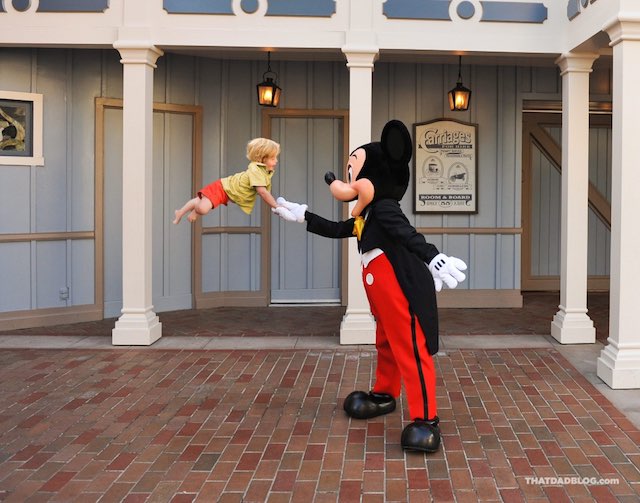
Three babies are alive and happy, thanks to doctors who literally printed out the framework for new windpipes. All three were born with the same rare, life-threatening disease and none were expected to live very long. But three years after the first implant was tried, the first patient, Kaiba Gionfriddo, is now a curious, active 3-year-old who runs and plays with his family. He even got to meet his favorite cartoon character, Mickey Mouse, at Disney World recently, thanks to the Make-a-Wish Foundation.
The other two children are showing the same kinds of improvements as Kaiba, leading the doctors behind the breakthrough treatment to say it worked “better than we could have ever imagined.”
All three babies were born with a disease called tracheobronchomalacia, which causes the windpipe to collapse and makes normal breathing impossible. In the video above, doctors explain how they created and implanted implanted 3D printed splints around the babies’ airways, creating a framework to hold the windpipe open and allow it to grow normally.
Three years after the first device was implanted in Kaiba, pictured here, the splint is dissolving just as it’s supposed to and doctors expect the child’s trachea will eventually show no signs of the disease that nearly killed him as a newborn.
“It’s wonderful and beyond anything I could have hoped for,” Dr. Glenn Green, one of the two doctors behind the procedure said in the University of Michigan video. “It’s so exciting to see.”
Green and Dr. Scott Hollister carried out the procedure at C.S. Mott Children’s Hospital in Ann Arbor, Michigan, have published an article about 3D printed implants in the journal Science Translational Medicine. Following up on the three children over three years, they determined the devices saved all three lives and hold great promise for other children born with the disease.
The messages appeared literally out of the blue–or should we say, across it.
For two days, a plane had been skywriting positive messages such as “love,” “hope,” and “coexist” for the people of New Orleans. The ‘illustrator’ has both baffled and delighted folks on the ground, signing his messages in the air with hearts and smiley faces.
After two days of anonymity, Nathan Hammond came forward as the sky writer– one of only five such pilots left in America.
Local Louisiana businessman, Frank Scurlock, hired him to spread the words of encouragement because of recent violence across the U.S. Scurlock has even set up a GoFundMe page geared at keeping the messages coming.
The skywriting looks almost magical as it happens, and like any good magician, Hammond, using his small airplane named “Sky Magic,” won’t give away the tricks of his trade. They don’t teach penmanship in flight school, and he isn’t talking about how he honed his unique skill. But in the video above, he does admit the key to success for any aspiring skywriter.
“The last thing you want to do is spell something wrong,” Hammond told WWL.
Are you wondering about all the pictures of bare feet suddenly showing up on your Instagram feed? It’s because your friends are helping put shoes on the feet of needy kids.
TOMS Shoes is well known for donating a pair of shoes to someone in need every time a pair is purchased from the footwear company, but now, they are donating up to a million pairs based solely on your participation.
Through May 21, every time someone posts a photo of their bare feet to Instagram with the hashtag #withoutshoes, TOMS will donate shoes to a child living in poverty.
The company’s video below explains why they’re doing it, and exactly how their “One Day Without Shoes” campaign works.
According to founder Blake Mycoskie, providing shoes to needy kids can improve health, protect against disease and increase school attendance by 62%.
Check out TOMS website May 21 for the final tally.
Photo on homepage by Lorenz Kerscher, CC
Kick your shoes off and share the good with your friends…
It’s not uncommon to hear about celebrities lending their voice to a good cause at an event or gala. But recently, we’ve noticed Hollywood stars singling out regular folks on social media to offer kind words of support.
1. Ryan Gosling Raises Bowl of Cereal In Tribute to Filmmaking Fan
Actor Ryan Gosling recently demonstrated a way to eat breakfast cereal as a sign of respect. After pouring himself a bowl of Corn Flakes, the Canadian actor raised his spoon in honor of the late filmmaker Ryan McHenry, 27, the creator of a Ryan Gosling Won’t Eat His Cereal viral video. According to reports, the Scottish video editor died after a two-year battle with cancer. In addition, to posting his tribute video on Vine, Gosling tweeted, “My heart goes out to all of Ryan McHenry’s family and friends. Feel very lucky to have been a part of his life in some small way.”
2. Robert Downey Jr. Takes Time To Chat With Bruised Young Fan on Twitter
It seems that actor Robert Downey Jr. is not only a larger-than-life hero in movies like The Avengers, but he also helps out the “little guy” when given the opportunity. Using the powers of tweeting, he recently made an impact on a young fan after chatting back and forth with him about a photo showing his scuffed-up face. Downey wrote to the young boy named, Aidan, after his mom reached out, stating he had a “rough day.” Downey wrote back:
@RobertDowneyJr I was racing with my bro. I was slowing down and he pushed me into the house. Not on purpose. You are the best actor. Aid
After getting advice from Hollywood’s biggest star, Aidan tweeted, “You made my day and my year. Thanks for talking to me.”
3. J.K. Rowling Urges Fan, “Don’t Ever Give Up”
Even superstar author J.K. Rowling still takes time to use her life and wisdom to inspire others. On Twitter she answered an important question posed by a fan who sounded in need of comfort: “What would you say to someone who has failed to find meaning and wants to finally give up?” Rowling’s response? Tweeting a series of beautiful photos, like this:
The Harry Potter author concluded, “I’d say, the world is full of wonderful things you haven’t seen yet. Don’t ever give up on the chance of seeing them.” The fan tweeted back, “I’m tearing up over here! Humans can truly be amazing to one another. Thank you @jk_rowling and everyone replying.”
4. NFL Player Helps Teen Have Unforgettable Prom Night
Khameyea Jennings recently got the prom date of a lifetime. NFL player Sen’Derrick Marks visited the eighteen-year-old at a Florida hospital and said he wanted to take her to her senior high school dance. A defensive tackle for the Jacksonville Jaguars, Marks connected with the girl, who has been battling liver cancer, after partnering with the Dreams Come True – a program that fulfills the wishes of Florida youth with life-threatening illnesses. He said he wanted to be a part of the program to fulfill his goal of “do[ing] something where you actually make someone’s day, to make a difference in someone’s life.” Thanks to Marks, it looks like Jennings had an unforgettable prom night.
Fear, insecurity, and self-doubt can be the biggest obstacles many of us face in life. In order to overcome that negativity, many people turn to unhealthy behaviors, such as overeating, compulsive shopping or alcohol abuse.
“Compulsive or addictive behavior may temporarily numb that negativity, but it won’t put you on a healthy and wholesome path,” says Darlene Hunter, author of Win-Ability: Navigating Through Life’s Challenges With A Winning Attitude.
Positive thinking gained scientific credibility in 1985 when Michael F. Scheier and Charles S. Carver published their seminal study, Optimism, Coping, and Health: Assessment and Implications of Generalized Outcome Expectancies. Since then, hundreds of academic papers have been published in support of positive thinking.
“Confidence starts with your attitude– and finding a path that supports living with confidence,” says Hunter.
• Pursue your passion.
What is the activity you love doing the most? You get a great sense of accomplishment and joy when you do that which you were born to do. It could be baking, taking care of children, writing, drawing, dancing, anything at all that makes you happy in life. If you could never do it again, would you miss doing? …You need to do more of that.
• Be true to yourself.
Do not set your career path in a certain direction based on what your friends or family members want for you. If you dream it, you can live it. Do not let fear turn you around. It is also important for you to be honest about your resources, skills, and what is needed to help you move forward. Do not think that you have all of the answers. Be open to suggestions and advice from others who are already doing what you are trying to do.
• Stay the course; be resilient; never give up.
No matter what you might be facing at the current time or the challenges that are ahead of you, as you move forward in your quest to accomplish your goals and dreams, you must stay the course. As you set forth to achieve your goals and your dreams, you cannot be thin-skinned. You must be durable, strong with a determination that you will get to where you want to go. Quitting is not an option and failure is not a word that you should use when you are seeking to reach your goals and dreams.
Thanks to “Fospice” (think foster + hospice), a program run by Foster Dogs, a lucky select few elderly or terminally ill dogs like Biscuit are given comfort, love, and care in their final months, a service usually reserved for humans.
Even with tumors covering his body, Biscuit, a hefty 13-year-old pitbull was able to experience a happy end to his life. Through the Fospice program, he was able to land in a loving home with a woman named Marie, and receive some much-needed veterinary attention. The vet’s prognosis gave him just three weeks, which he spent in the comforting presence of his new friend.
“Too many old and sick dogs die in shelters, instead of living out their golden years in loving homes and with proper medical treatment,” said Sarah Brasky, who founded Foster Dogs in July 2013, and runs The Dog Matchmaker, which helps place rescue animals with new adoptive families.
“While I would not want any animal to be stuck in a shelter, it can be particularly difficult for seniors who miss their lifelong families, and need quiet and comfort during their final years/months.”
Inspired by a similar program run by the ASPCA, Foster Dogs will search for a foster home and sponsor the dog’s basic needs for the remainder of their life. Fospice parents receive a generous sponsorship package, including a dog bed from Harry Barker, a custom portrait by My Animal Art, a 6-month subscription to BarkBox, and a handmade orange “rescue leash”.
A Fospice mom and pup, by Samantha Cheirif
Fospice mom Chelsea Massimin first saw 13-year-old Lucy, a black Chihuahua that suffered from cancer and kidney problems, caged in a nearby shelter. The pup had been at the pound for 7 long months after being seized from a hoarding situation with approximately 30 other dogs. Prior to that, she had lived in another dog shelter.
“What a hard life, I thought, just to die in the pound,” said Massimin, who bundled Lucy up in a towel and brought her home to join the other family dogs. She gained 3 pounds after arriving and began looking remarkably well.
“We will continue to cater to her every whim, cook for food, and carry her in and out every 2 hours until Lucy is officially ready to cross the rainbow bridge,” said Massimin. “No animal should ever cross that bridge without knowing love.”
While the Fospice program can only help five dogs with full adoption packages each year, they pitch in to help other rescues as well.
Lauren Hirata certainly appreciated the help. She saw Lily Bean’s picture popping up on the Friends with Four Paws Facebook page day after day, week after week, but there were never any takers. She was the first to finally reach out and inquire about her.
After Lauren took Lily Bean to the vet, a checkup confirmed that she was older than originally thought and had slight heart murmur. The Fospice program helped her pay the bills needed to support Lily Bean, who is now happy and healthy, yet very hard of hearing.
Lily Bean, by her Fospice mom, Lauren
“She has learned some sign language for basic commands like sit and shake,” Lauren said. “Her days are now filled with napping on the couch, napping on my bed, napping in the sun–and she loves riding the subway in her oversized tote bag.”
All rescue groups are encouraged to contact Foster Dogs if they have, or will soon rescue, an elderly dog that has a very limited amount of time left. While they can only help a select few, they will be able to provide more donations in the form of mini grants, thanks to a new 501(c)(3) status.
Tourists are drawn to the stunning beauty of fjords, but you may be surprised, like scientists were, to discover the role these coastal regions play in clearing carbon dioxide from Earth’s air.
Fjords, those long, slender inlets surrounded by looming, giant cliffs, were created by climate change — carved by retreating glaciers at the end of the ice age. Now, they’re helping to slow another round of climate change by soaking up an amazing amount of carbon dioxide that would otherwise wind up in the atmosphere.
Writing in the journal Nature Geoscience, researchers said that while fjords account for only one-tenth of one percent of the total surface area of oceans, they remove 11% of all the world’s organic carbon — about 18 million tons.
Scientists now know that rivers flowing into fjords are rich in carbon from plants, trees and other organic sources. Normally, this carbon might be released into the air, but if it’s washed into a fjord, it hits a wall of chemistry and physics, becoming trapped underwater.
The water in fjords lacks oxygen, so there’s no bacteria to break down the carbon and turn it into CO2. Instead of being released into the air, the carbon simply sinks to the bottom of the fjords’ deep channels. The process is aptly named a “carbon sink.”
Studying how nature absorbs carbon gives scientists a better idea of how to create technology that can reduce or redirect man-made carbon emissions from cars, factories and power plants.
Since he can’t actually fly, this Texas Superman drove 11 hours to Illinois to surprise a seven-year-old cancer patient.
Senior Corporal Damon Cole of the Dallas Police Department is a member of Heroes, Cops and Kids, a group of officers who dress as super heroes to lift the spirits of children in their community.
Cole felt compelled to make the long trip to little Bryce Schottel’s home after checking out his Facebook page; Schottel has been fighting lymphatic cancer since February, and only super heroes have been able to bring a smile to his face before each round of chemotherapy.
The officer gave the boy a Superman cape, action figure, and a ride in his Superman-mobile. Cole said the child’s reaction was “the best ever.”
Before leaving, Cole pulled a second costume change, dressing up as Iron Man to blow bubbles, play cards and battle it out in video games.
“There’s not a lot of people in this world that do anything like this anymore, who are so selfless and generous,” mom Regina Carlton told ABC News. “It was a complete stranger who made that trip to make my son smile.
(WATCH the heartwarming video below or READ more, w/ photos, at KDAF)
SHARE the Good (below) and Show Support for Bryce on Facebook