Female inmates in Fairfax, New Zealand have been learning how to make the perfect coffee behind bars during barista training, which coffee company Peoples Coffee was running to help them gain job skills and avoid reoffending once freed.
Prison director Chris Burns said she knew from the “vibe in the room,” when the first four women received their certificates, that it proved to be an uplifting course for participating inmates.
(READ the full story from Stuff.nz) – Photo by GoToVan, CC; Story tip from Jess in New Zealand
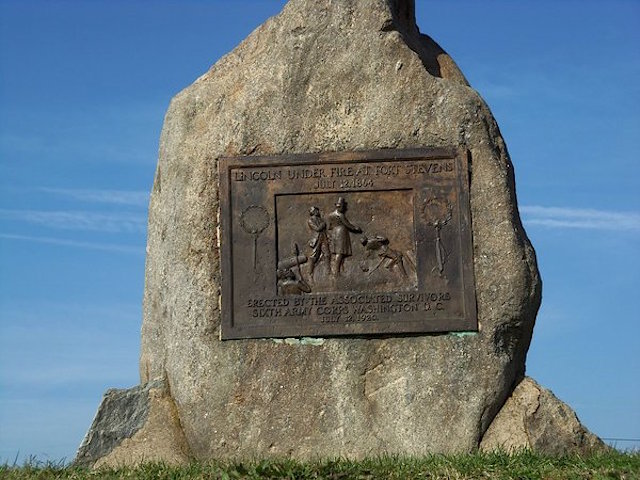
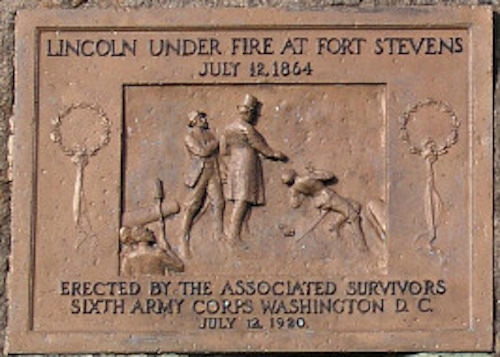
151 years ago this weekend marks the only time a U.S. president ever came under enemy fire. It was in Washington, DC, during the Civil War and happened around 100 days before Abraham Lincoln would be reelected.
Confederate forces under General Jubal Early advanced upon Washington, DC, (from the NORTH!) actually entering the outskirts of the city on both sides of the valley formed by the Rock Creek, on July 11, 1864, They got as far as Fort Reno, which guarded the Rockville Pike approach on the west side, and Fort Stevens, which guarded the Piney Branch Road approach on the east side.
The city was in a state of mild panic. Ulysses S. Grant had ignored President Lincoln’s concerns about defending the capital in order to repeatedly hurl as many able-bodied men as he could at Robert E. Lee in battle after battle in the inexorable Overland Campaign. Thus despite having an abundance of defenses surrounding the capital, those defenses were not abundantly manned.
As Confederate skirmishers advanced from the farms of nearby Kensington, the Fort Reno garrison was hastily bolstered with wounded soldiers from the nearby veterans’ hospital and a bunch of very nervous civilian government workers from down town. But one thing Fort Reno did have was an array of Parrott rifles – cannons – with at least one capable of firing a shot more than three miles. And it had the advantage of altitude. Fort Reno is the highest geographic point in the city.
The battle lasted two days, most of it swirling around Fort Stevens, as the Parrott rifles at Fort Reno apparently were considered more of a threat. Casualties on both sides are estimated to have totalled about 600, with the number of Confederate casualties outnumbering those of the Union defenders by a factor of 10 – 1.
The battle does not have the notoriety that Gettysburg has, or Antietam, or Chancellorsville, or even nearby First and Second Manassas, but perhaps it should have, at least, a little more. While less an attempt to capture the capital, and more an attempt to draw troops away from Grant’s forces harassing Richmond, it is also legendarily considered to be the only time in US history that a sitting president came under enemy fire.
President Lincoln, along with his wife Mary, was personally reviewing the defenses at Fort Stevens as the Confederates closed on the little fort and bullets began flying, even wounding a Union surgeon standing next to Lincoln on the Fort Stevens parapet. The future Chief Justice Oliver Wendell Holmes, then the President’s aide-de-camp, reportedly shouted at Lincoln, ”Get down, you fool!”
Had Lincoln been killed or captured, little more than 100 days before the upcoming election, who knows how American history would have turned out?
Fort Reno was dismantled shortly after the war, and little if anything remains to indicate its existence. But Fort Stevens has been partially restored and is maintained by the National Park Service.
At noon on Sunday, July 12, New York City’s first ever Disability Pride parade will commence at Madison Square Park, traveling down Broadway to Union Square Park to celebrate the 25th anniversary of the signing of the Americans with Disabilities Act.
The all-volunteer nonprofit group Disability Pride NYC worked with the Mayor’s Office of People with Disabilities to establish the event.
Expect an “extravaganza” on the big stage featuring performances from disabled musicians, dancers, comedians and stars of TV, stage and screen. Elected officials will also be in the wings.
We were alerted to the event by Dustin Jones, advocate and board member of Disabled in Action, a civil rights organization working to end discrimination against disabled New Yorkers in multiple arenas, including education, employment, health care, housing, and public accommodations.
The founder and president of the Disability Pride movement is world renowned jazz pianist Mike LeDonne, whose daughter, Mary, was born with a very rare syndrome called Prader-Willi and another condition called hydrocephalus. In 2012 Mike started the wheels in motion to create a Disability Pride Day, an annual event like any other ethnic parade in the New York City.
People of all abilities are welcome.
Proudly Send The News To Your Friends And Followers (below) – Photo by Feggy Art, CC
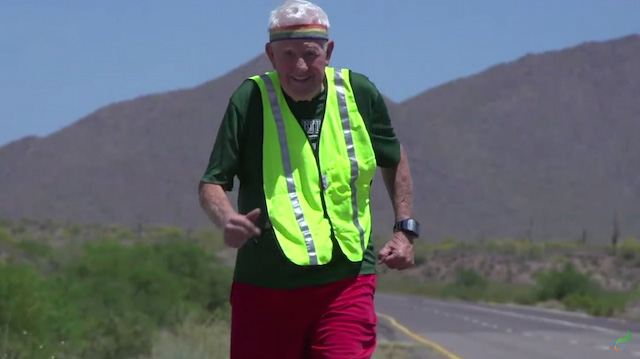
What motivates a 91-year-old to run 3,000 miles cross-country?
The love of his former ship, which he wants to see sail one more time to the beaches where it once helped liberate Europe.
Ernest Andrus hopes to raise enough money to have the ship he served on in World War II sailed back to Normandy, France for the 75th anniversary of D-Day, and he’s running across America to help make it happen.
Right now, he’s 1,500 miles into the trip, a little over halfway on his jog from California to Georgia. Most of the running so far has been in the Desert Southwest.
“I love to run on the desert. I always did,” he said in an interview on the HooplaHa YouTube channel.
He runs about six-and-a-half miles per day, three days every week. Sometimes, local runners join him for a leg of his trip—he had 51 people run alongside him this year on the D-Day anniversary.
The ship itself, known as the LST 325, was a massive landing ship that could drop dozens of men or tons of supplies and equipment right on a beach. Allied leaders called the fleet of 1000 LSTs, “the ships that won the war.”
Andrus joined a group of aging veterans who acquired and repaired it, the last remaining ship of its kind, and sailed it back to America from Greece in 2001.
Andrus figures he’ll be 94 by the time he finishes his run. That should give him about a year to rest up before the ceremonies begin in Normandy.
He’s raising money through a donation page at Coast2Coast Runs to fund one more voyage across the Atlantic for the 75th D-Day anniversary in June, 2019.
Andrus is the oldest person by 20 years to make the coast-to-coast run. Check out his progress here.
(WATCH the video and READ more at TODAY) – Photo: HooplaHa video; Ernest Andrus, Facebook
High school seniors in Oregon are getting a graduation present from their state leaders that’s just too big to fit into an envelope.
Oregon is currently poised to become the second state to offer two years of free community college by providing a minimum $1,000 grant for each student, which can be used for books and other expenses in addition to tuition. Tennessee was the first state to launch a similar plan last year.
Going forward, Oregon will begin calculating each student’s grants and scholarships and paying the remainder of the cost that state and federal aid won’t cover.
Officials hope that the bill will increase both high school graduation rates and college enrollment rates.
“This bill will benefit low and moderate-income students in real and measurable ways,” Sara Robb, a professor of sociology and education policy studies, said in testimony for the bill. “It will boost their persistence and may also increase their graduation rates.”
Pennsylvania, Illinois, Minnesota and Washington, DC, are also considering pilot projects at some of their community colleges. But so far, only Tennessee and Oregon have expanded two years of free higher education to their statewide community college systems.
Governor Kate Brown plans to sign the bill lawmakers passed this week.
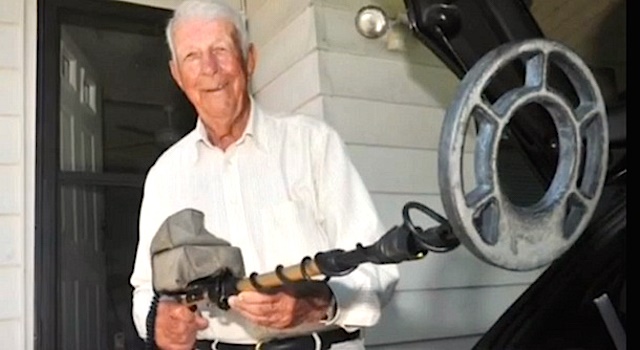
“It’s hard to explain,” Neilan told Florida Today. “The reward is so great. You could say I’m really a selfish person, because I really get so much pleasure out of it.”
Neilan says he’s unearthed rings, chains, watches, coins and even debris from the shuttle Challenger disaster, which he has turned over to police.
There’s one item he’s still hoping to deliver: a 1969 West Virginia University class ring he found on a beach in his town of Indialantic back in 1985.
(WATCH the video or READ more at Florida Today) Photo: Florida Today video – Story tip from Dick Baumbach
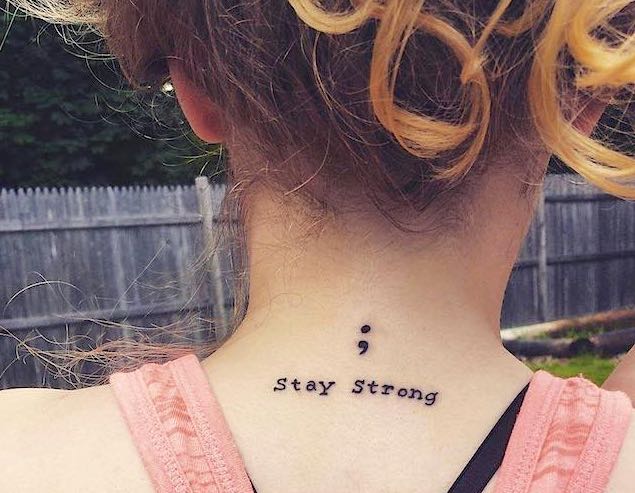
One young woman has literally punctuated the need for mental health care by starting a tattoo movement to serve as a symbol of hope.
Project Semicolon, a trending initiative geared at raising awareness for those struggling with mental health issues, signifies the fact that a “break in a sentence,” is not the end, and that people can carry on.
Amy Bleuel launched the Semicolon Project to honor her father who passed away in 2003, creating an almost cryptic tattoo as a conversation starter to get people talking about their own experiences.
The project encourages people to draw the punctuation mark on their bodies — or to tattoo it on permanently — to support people living with mental illness.
Two years after launching the movement, conversations are really starting to take off. Semicolon tattoos and drawings are popping up on social media and giving people cause to pause and learn about the project’s mission of hope and love.
“A semicolon is used when an author could’ve chosen to end their sentence, but chose not to,” Bleuel wrote on the Semicolon Project’s website. “The author is you and the sentence is your life.”
Bleuel’s goal is to make sure people dealing with mental health can write many more chapters in their lives.
(READ more at USA Today) – Photo: ATTN via Twitter
Fair Trade Jewelry has become a popular movement in recent years, but one group of women is doing something especially delicious–with a twist.
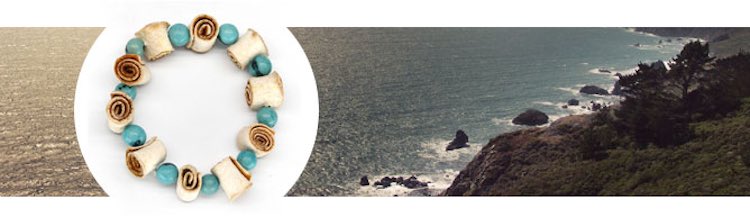
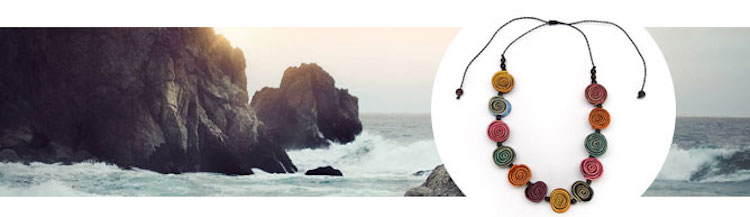
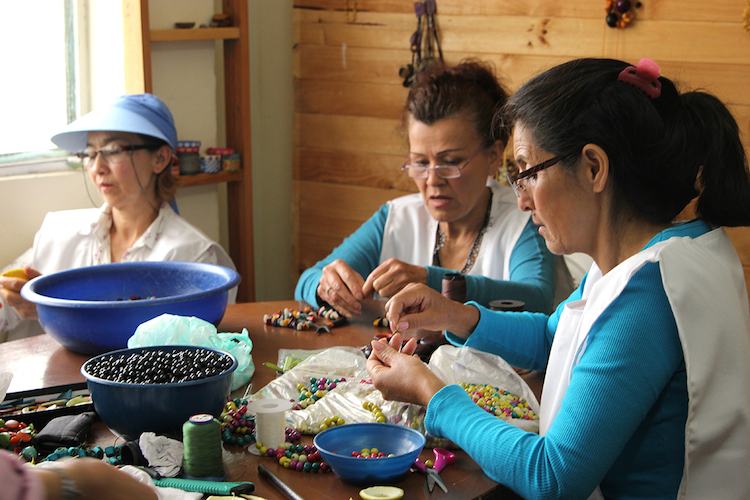
A collection of necklaces and bracelets made from dried fruit, nuts, berries, and beans, is providing fruitful income opportunities for women in South America.
The delightful line of accessories might have stayed a secret had not Mandy Nagel from America stumbled upon the seller on a trip to Colombia. Inspiration struck and she founded I Thought of You, as a way to help give this beautiful woman selling jewelry a better life.
Elizabeth was a South American mother faced with limited work options after her husband passed away. Her son, Sebastian, was still very young and needed to be cared for when he wasn’t in school. Another woman in town, Floralba, invited her and Sebastian to work at her home making the hand-crafted jewelry.
When Nagel arrived, she offered them something even better: a huge, reoccurring purchase order as a featured merchant in Nagel’s new online shop.
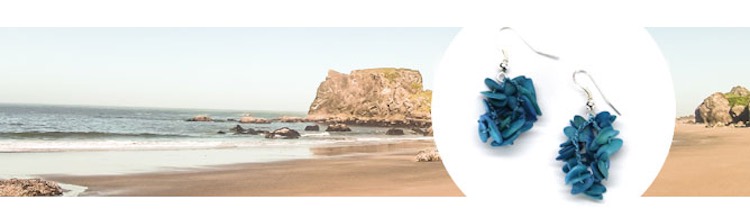
One especially interesting techniques behind the Made From Fruit line is the use of orange peels. They are collected from street juice vendors and dried in the sun for seven days. After that time, they harden to a texture similar to stiff leather while retaining the natural oils for a light citrus scent. All three pieces above feature the orange peels, died with fruit juices. The earrings below are crocheted from cantaloupe seeds.
The 28-year-old’s businesswoman’s background is in digital design and traditional marketing—she’s worked for Apple, Dunkin Donuts, Microsoft, Warner Brothers Pictures, and Xbox—but at age 26, she found herself wanting to influence the world for the better, so she decided to start her own business in 2013.
As for Elizabeth, she now employs several women in her community to complete the orders the company sends in. Nagel recently traveled from Ohio, where she currently resides, back to Colombia to spend time with Elizabeth and her group, and found that they have started a new endeavor to bring opportunity to other young women in her town by teaching trade skills along with business skills.
“She not only employs some of the women she’s taught, but she has continued to mentor the women who decided go start their own small businesses in the community,” Nagel told Good News Network. “Her story is a great example of how opportunities ripple throughout the towns of our artisan communities that we work with.”
To support the women with a purchase, visit I Thought of You, and Share their designs on Facebook.
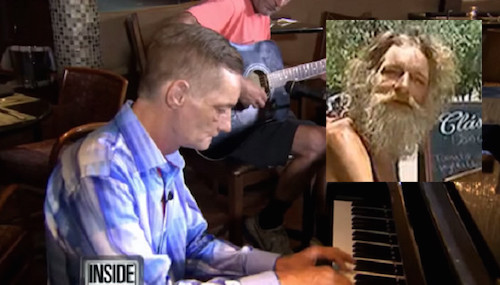
A lot has happened since the world was introduced to Donald Gould, the homeless man who sat down at a street piano and was so darn good that he became an overnight sensation. (Watch the video here)
Within the past week, he was given a makeover, landed a paying gig at a restaurant, and, finally, on Tuesday reunited with his son, whom he chatted with on Facetime.
“I’m so happy to see you! You’re a good looking young man,” Gould told his son.
From the moment that initial video of his piano playing was spread nationwide, he said he just hoped his son would see it.
It’s been a string of scoring goals and breaking records for these American athletes.
The World Cup-winning U.S. Women’s Soccer Team is set to make history once again today as the first women’s team in any sport honored with a ticker tape parade through New York City’s “Canyon of Heroes.”
On Sunday, in the international finals against Japan, Midfielder Carlie Lloyd became the first World Cup player — man or woman — to score three goals in less than 16 minutes.
The 5-2 victory also marked the first time that any country has won three Women’s World Cups
Private donations have raised $450,000 for the parade, and the city will pay the rest of the $2 million cost — including the 400 people hired to clean up all that paper dropped along the route.
The campaign to give the women’s team a parade kicked off even before the championship game began in Vancouver, British Columbia, starting with a phone call from an aide to former New York City Mayor Michael Bloomberg to current Mayor Bill de Blasio. Manhattan Borough President Gale Brewer also campaigned for the parade in an open letter to the mayor and New York City’s First Lady, Chirlane McCray chimed in with a tweet saying “The people have spoken.”
The name “ticker tape” comes from old stock tickers, which printed out market information on long, paper tapes. It was an easy source of scrap paper to shower on parade participants from windows high above the route inNew York’s Financial District.
Since the tickers have been obsolete for more than 50 years, the Women’s Soccer Team will be showered with paper from shredders and confetti handed out by the city along the mile-and-a-half route to city hall.
The fun kicks off at 11:00 this morning.
(WATCH the ABC News video) — Photos: ABC News
Kick This Story Along To Your Friends And Followers…
The most renowned global beverage company is pushing for a world without labels – by dropping its own.
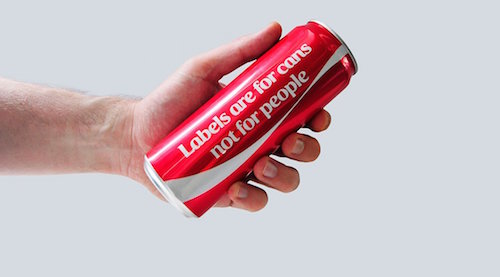
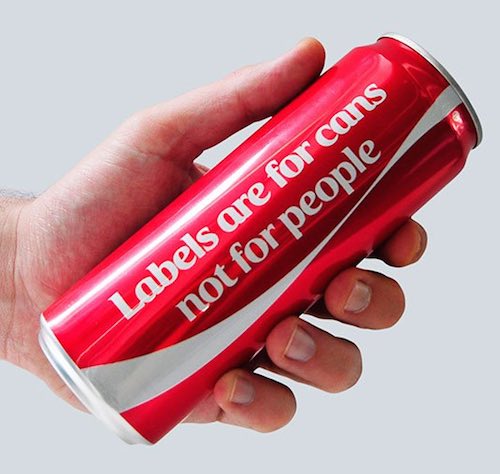
Coca-Cola is temporarily removing its name from soda cans in the Middle East to encourage people not to judge each other. Instead of their logo, the iconic red and white cans contain the message, “Labels are for cans, not people.”
The centerpiece of the advertising campaign is a film depicting a diverse group of men sitting in the dark, discussing their lives and backgrounds, with only their voices and words as cues to each one’s outer appearance. While still in the dark, the men share their preconceived notions about what the others must look like, only to have those images shattered when they see the group – including a facially-tattooed psychologist and wheelchair-bound adventure athlete – with the lights on.
The campaign runs in the Middle East during Ramadan, the Muslim holiday that ends July 17th, and ties in with Coke’s global “Let’s take an extra second” campaign– with another poignant video– that discourages stereotypes based on looks alone.
The ad team, FP7/DXB and Memac Ogilvy, explained the concept behind the campaign:
“In the Middle East, a region with over 200 nationalities and a larger number of labels dividing people, Coca-Cola has set out to remind us that while it takes just 7 seconds to build prejudices based on someone’s appearance, nationality or culture, it takes just 1 extra second to overcome them.”
Because the holy weeks of Ramadan call for a focus on charity, in addition to their tolerance campaign, Coca-Cola announced that, instead of advertising on television, it would only post its video ads on social media.
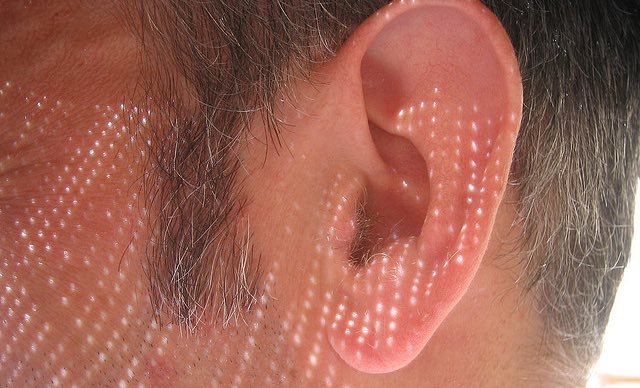
You heard right: two new studies show serious promise in the use of gene therapy to prevent deafness in infants and restore hearing in older people.
The first experiment, conducted in both the U.S. and Switzerland, was carried out by researchers replacing faulty hearing genes in mice and surprising them with loud noises. Their reactions—jumping when they were surprised—demonstrated that their hearing had been restored. Those findings were published in the journal Science Translational Medicine.
Currently, pharmaceutical company Novartis is experimenting with a new drug containing a gene called Atoh1 that they believe will improve hearing lost through age or disease or listening to too much loud music over a lifetime.
Their experiment focused on a gene that causes hair cells in the inner ear — essential to the sense of hearing — to grow, restoring the ability to hear.
Using gene therapy to treat hereditary hearing loss may still be a long way off, with clinical trials not expected for another ten years, but the Novartis study is more advanced. The Swiss company’s early trial is underway with results expected in 2017.
(READ more at NBC) — Photo: Simon James, CC — Story Tip: carolyn
Send A Shout Out To Your Friends And Followers, Share This Story…
While most of us see a squash or a pumpkin the Canto sisters see an epic story, a great adventure — and ultimately, an $800 work of art worthy of a museum.
Katya and Blanca Canto are masters of the disappearing art of gourd decoration, a longtime Peruvian craft, and are showing off their work this summer at the annual Smithsonian Folklife Festival on the National Mall in Washington, DC.
The gourd itself serves as a canvas for incredibly detailed art that requires a very skilled hand. By using carving tools and a heated stick to color the designs, intricate details are shaped right on the gourd’s surface. In some cases, the design requires so much detail that one gourd can take up to two months to complete.
The sisters use carving tools to create the images and a heated stick to burn in colors.
Some feature animal sculptures, while others create what the girls call a “world view” — a series of images that tell a story.
In order to tell that story, certain skills must be mastered, and the process can take years to learn
The sisters confirmed that one of their their next objets d’art will depict their adventures in Washington.
Mary Nelson may be confined to a wheelchair, but she can feel the breeze in her hair now, too–since her father built a roll-on swing set for her.
Mary, who has a type of muscular atrophy and needs the wheelchair and a breathing tube to get around, couldn’t climb into a regular playground swing, and the nearest wheelchair accessible playground was more than 10 miles away.
Her dad, Ryan, who has a background in mechanical engineering, drew up plans for a swing that could hold her and her 450 pound wheelchair. (In the photo, he hasn’t attached the latch yet that will hold the ramp in place.)
Ryan Nelson won a Fatherly Fund grant from a parenting website, after getting the most votes in Fatherly’s competition last fall. He used the $1,000 to buy a quarter ton of lumber, bolts and other hardware to build the giant swing in a single day.
Mary’s wheelchair can be rolled up the ramp and, with a little push, is gliding back and forth. Siblings and friends can even glide with her.
“This is awesome!” Mary said her first time on the swing.
It’ll be even more awesome when Mr. Nelson finishes the playhouse and slide to complete the playground.
(WATCH the video and READ more at Fatherly) – Photo from Facebook video
LOOK AT WHAT YOU DID! A while back I asked you guys to vote on a project that would enable a buddy of mine to build a wheelchair swing set for his daughter. You voted in force and he won the competition. He used the money to buy the hardware, and yesterday he let me come
over and help build the main structure. Check out the video! (If you're interested, the original post was here https://www.facebook.com/SmarterEveryDay/photos/a.280459888654850.82955.216515601715946/851269094907257/)
It’s now perfectly legal to break into a car in Tennessee — as long as you’re trying to save a pet.
A new state law protects people from being sued if they free an animal from a hot car.
Even though 16 other states have some protections for animals left in parked cars, Tennessee is the first to extend its “Good Samaritan Law” to protect people trying to help animals.
The law in Tennessee was passed after a Georgia man was arrested in that state for breaking a car window to save a dog in distress. The car’s owner later dropped charges against him.
Hopefully, the law will make people think twice before leaving their pets locked in hot cars while they run errands.
On an 85-degree day, the temperature in a parked car can reach 120 degrees in a half hour — even with the windows cracked.
Michigan State University tracks all the state laws protecting animals left in parked vehicles. Most have penalties for people who leave animals in hot cars, but Tennessee is the first to offer protections for people who come to their rescue.
(WATCH the video below from WATE News) – Photo by emdot, CC
Break This Story To Your Friends And Followers, Share It…
Wayne Eubanks was very confused when he opened the front door and found dozens of packages stacked on the porch.
It was the day of his son’s tenth birthday. The family, which homeschools the boy because of his speech disorder, wasn’t expecting many kids to show up for the party– or gifts piled on the doorstep.
“I called my wife and said, ‘I don’t know what’s going on. There’s 50 or 75 packages at the garage door,’” Wayne told WDBJ News.
As it turned out, those gifts for Camden had poured in from as far away as China and Brazil–and toy company Mattel sent a box full of fun, too.
All Camden wished for was a birthday party with few friends and a water balloon fight, but his mother didn’t want him to be disappointed if no one showed up, so she put an open invitation on Facebook with the family’s address, for anyone who wanted to come.
I know all kids should learn disappointment in life- but sometimes other kids are so cruel. Camden is turning 10 on...
Someone—the Eubanks don’t know who—had posted the invitation to Reddit, and by the day of the party, Facebook post had logged 5,000 ‘Likes’.
Nearly 300 people showed up in rural Troutville, Virginia for the party — many of them strangers who drove for hours just to do something nice for Camden.
The boy and his friends, old and new, dined on hot dogs and a six-tier birthday cake, and they stayed cool thanks to the local fire department that provided a shower of water over the party.
And Camden got his water balloon fight — with hundreds of people and 2,000 water balloons.
“He was just beside himself,” Camden’s grandmother, Kathryn Sowers said. “He had the best time.”
(WATCH the WDBJ News video) — Photo: Camden’s 10th Birthday Party, Facebook — Story Tip: Jim Kelly
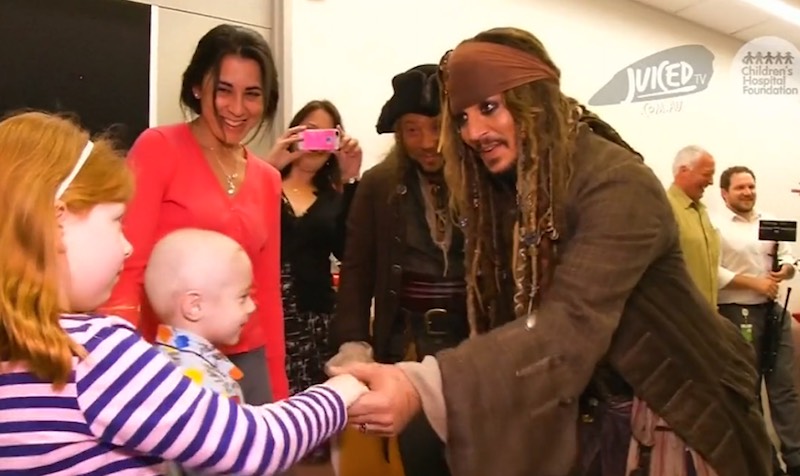
Johnny Depp—er, we mean, Pirate Captain Jack Sparrow—stole the hearts of many kids receiving treatment in Australia when he showed up dressed as his famous alter ego to surprise patients at Lady Cilentro Children’s Hospital in Brisbane.
The 52-year-old actor and his co-star, Stephen Graham, who plays Scrum, took a break from filming their latest “Pirates of the Caribbean” movie to spend hours chatting with patients in the oncology and neurology wards, taking photos and giving out gold coins.
We should point out the characters did not arrive by pirate ship – they flew in from the Gold Coast by helicopter and landed on the hospital’s rooftop.
This isn’t Depp’s first surprise visit as Jack Sparrow. He’s shown kindness in many ways, including visiting London’s Great Ormond Street Hospital, where his daughter, Lily-Rose, was treated for kidney failure. He also showed up in character at a London school a year later at the request of a student there.
“Pirates of the Caribbean: Dead Men Tell No Tales” is expected to be released in 2017.
(WATCH video below) – Photo: Juiced TV/Children’s Hospital Foundation video
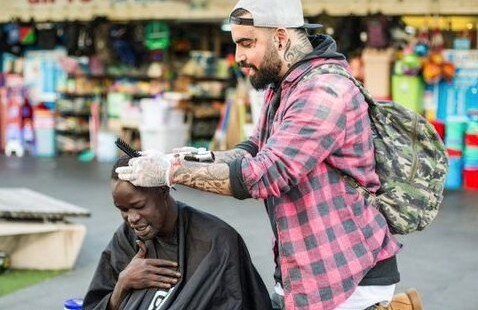
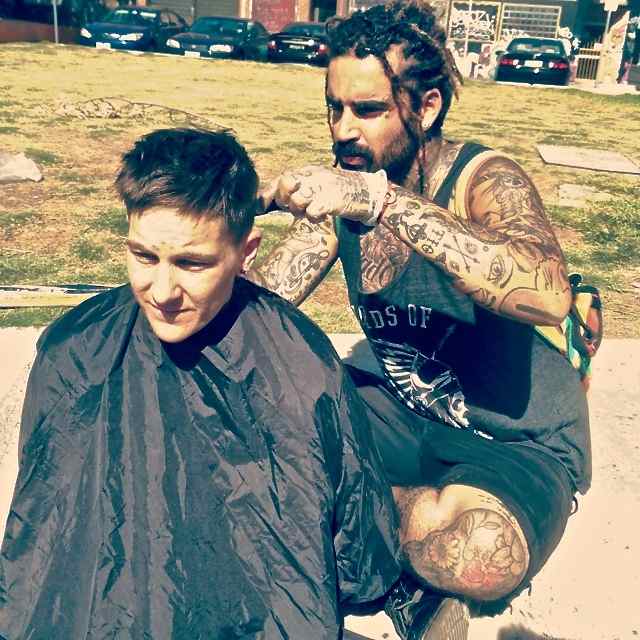
Six days a week, Nasir Sobhani cuts hair in a barber shop. On the seventh day, he hops on his long skateboard, packs up his barber kit, and approaches homeless people in some of Melbourne, Australia’s roughest neighborhoods to ask them if they’d like a free haircut.
When he finds a taker, he’s able to offer just a few moments of normalcy to someone who hasn’t had something as simple as a haircut in a very long time.
“They need actual human contact, some stimulus to help engage them in a form of intimacy with a human being that cares for them,” said Sobhani, a 26-year-old Canadian native now widely known as the “Streets Barber” thanks to a popular YouTube documentary.
At 3 a.m. Australia time, he sat down for a Skype session with Good News Network and showed us around his studio.
The fact that he was once a cocaine and opiate addict, he explains, helps him relate with many of his street “clients” who struggle with addiction and alcoholism, and opens the door for meaningful conversations.
“What I’m doing is my way of giving back. I remember when I used to hate myself and not look in the mirror without crying because I would be so disgusted with who I was,” he said. “I find embedded within a lot of my street clients that they feel so ashamed of how they are.”
Sobhani made it to rehab and, after he got out, his family sat him down and said, “You should do what you love doing: cutting hair.”
It was a passion he found early on while hiding from his combative older brother in their family’s bathroom.
“I locked my seven-year-old self in there for two hours. I was bored, so I laid some towels down, grabbed my dad’s shaver, and got rid of my peach fuzz mustache,” he explained.
While his customers may not be able to afford tips, they thank him in other ways.
As he searches his shelves for trinkets, Sobhani finds a bracelet, some drawings, and glass heart, given to him by a woman who’s hair he cut recently.
“I want you to have my heart,” is what she told him. But to him, the most rewarding part of all is making a connecting with someone, and, sometimes, planting a seed. He may ask them why they drink, why they use, what it would take for them to stop—but that’s all he can do, since he usually never sees them again.
When his clients do stick around, that’s when his other favorite form of gratitude comes into play.
“To me, the biggest thank you is when someone comes up to me and says, ‘Nas, I’m not letting anyone else cut my hair!’ The client loyalty, like I’m their barber, means the most,” he said.
Above all, he says, his faith is what drives his mission to help others like himself find reason to look in the mirror again.
“In the Bahai faith, serving the community and helping others is really the way we worship what we believe ” he says. “It’s through acts of service, not sitting in a church or mosque or synagogue or praying to the wall. The faith encourages action.”
Even though nine out of ten people turn him down when he first approaches them, he’ll keep trying, one seventh day at a time.
(WATCH the video below to see more) Photos via Nasir’s Instagram, Copyright Scott Bradshaw —Story Tip from Nicole Hoss
Credit: University of Michigan School for Environment and Sustainability – CC BY 2.0
Credit: University of Michigan School for Environment and Sustainability – CC BY 2.0 on Flickr
A new, experimental HIV vaccine is being tested in humans after it completely prevented the disease in half the monkeys it was given to.
Drug company Johnson & Johnson is now testing the vaccine on 400 healthy human volunteers in the U.S., South Africa, Eastern Africa and Thailand.
The company believes the vaccine will work even better on humans than on animals.
The vaccine works in two steps, similar to an Ebola vaccine the company is also developing.
The first dose given to the monkeys included a weakened cold virus and genetic bits of an animal version of HIV — simian immunodeficiency virus (SIV). Once doctors saw an immune system response, they gave the primates a second shot that contained an SIV protein that triggered the immune system to fight off the virus.
These contractors are taking the term “going green” quite literally.
As part of an emerging trend here in the U.S., many buildings are incorporating the use of a hemp-based material to provide insulation.
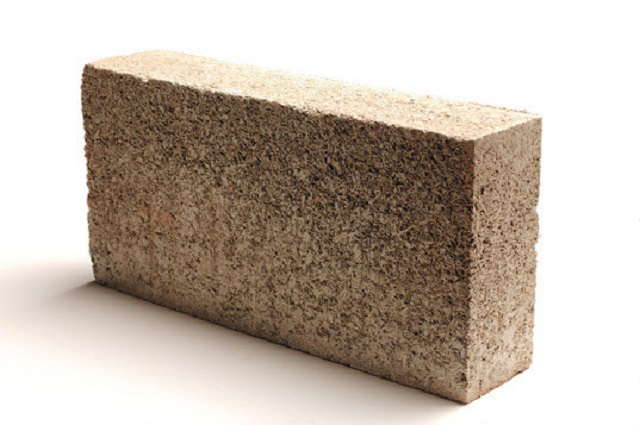
The brick, which is known as “hempcrete,” is made by mixing the wood-like interior of the Cannabis sativa plant with lime and water to form a block that serves as a flexible, breathable, and fireproof insulation that is impervious to mold and pests.
For decades, because the plant contains trace amounts (.3%) of THC, the chemical found in marijuana, it has not been legal to grow in the US. Though it can be imported from Canada, builders might soon be able to use ‘Made in the USA’ plants, since the farm bill passed last year allowed a few hemp-farming pilot projects to launch.
So far, 20 states have removed barriers to industrial hemp production.
It could become even more widely applied if Congress passes the Industrial Hemp Farming Act, introduced early this year, which would amend the Controlled Substances Act to exclude industrial hemp from the definition of marijuana. This would allow American farmers in any state to grow the crop.
The New York Times reported that hempcrete has been used as a building material in Europe for decades, where hemp cultivation was never criminalized.
Hemp proponents say they’re just following in the footsteps of the American founding fathers — Thomas Jefferson and George Washington – who both cultivated the sturdy weed themselves in Virginia.