All News - Page 1050 of 1703 - Good News Network
Home Blog Page 1050

Tattoo Shop Owner Dedicates Years to Helping the Homeless and Addicted

Billy Pfaff-tattoo-artist-dogooder-FBprofile

The owner of Inkslinger’s Tattoo Shop in Billerica, Massachusetts has quietly become an inspiration to his community.

Billy Pfaff’s shop is often filled with donations he has collected for the homeless — coats, blankets, sleeping bags, tents and gift cards. He personally delivers them to shelters or directly to people on the streets.

Why does he care?

In 2010 he was in their shoes –- living on the streets, and taking drugs — but now it is not unusual for him to invite homeless people and addicts to sleep on the floor of his shop or at his house until they are able to get back on their feet. During the holiday he provided meals and gifts for 14 families in three different shelters.

Now in his fourth year as a successful tattoo artist he shares his proceeds and spreads his motto, ‘Pay it Forward’, on the sleeves of Inkslinger sweatshirts that he gives away and sells. In 2013, he gave away more than $13,600 worth of cash and items to people in need.

His Facebook group has thousands of followers who donate to his mission of helping the homeless. His latest crusade is to raise awareness and legislative action to address the deadly problem of heroin in his state.

(READ the story from Wicked Local)

Photos from Billy’s Facebook page

Dutch Company Powers Streetlights and Phones With Living Plants

shutterstock-green-plug-world-750

In November, more than 300 LED lights were illuminated by a Dutch company that makes electricity from harnessing the power of living plants.

This was the first commercial installation for Plant-e, a company that also sells mobile chargers, and rooftop electricity modules fueled by the byproduct of photosynthesis in plants.

Plant-e’s co-founder and CEO, Marjolein Helder, believes that this technology could be revolutionary, especially if implemented on a larger scale. Capturing the energy in wetlands and rice paddies could bring power to some of the world’s poorest places.

The company founders also envision a world where people can use their lawn or garden to charge their electric vehicles.

Here’s how Plant-e says it works:

Via photosynthesis a plant produces organic matter. Part of this organic matter is used for plant-growth, but a large part can’t be used by the plant and is excreted into the soil via the roots. Around the roots naturally occurring micro-organisms break down the organic compounds to gain energy from. In this process, electrons are released as a waste product. By providing an electrode for the micro-organisms to donate their electrons to, the electrons can be harvested as electricity. Research has shown that plant-growth isn’t compromised by harvesting electricity, so plants keep on growing while electricity is concurrently produced.

(READ more in Yes magazine)

Panhandler Thanks Community After Securing a Job

Panhandler thanks community after securing a job

No matter this man’s back story, we just loved this photo

On Christmas Eve in Worcester, Massachusetts, Thomas Joseph Bennett told a reporter “I just want to say, ‘Thank you.'”

A former addict and criminal, he was out on the street holding up a different kind of panhandling sign, and thanking those who’ve helped him in the past:

“My miracle is you. I got a job. To the people who felt my pain, Thank You! My love and respect to u all.”

Judges Saw Bob Marley Reincarnated On Stage in ‘The Voice of Holland’ 2013

Mitchell Brunings-Marley-song-TheVoice-Youtube
During The Voice of Holland auditions season 4, the ghost of Bob Marley appeared on stage in the form of Mitchell Brunings.

The leader of the band Rootsriders who sang alone on the TV show, Brunings decided to perform the Bob Marley classic, “Redemption Song.”

From the first stanza, the judges were instantly amazed at the vocal resemblance to the great reggae singer. All four vied to be his coach on the show.

Originally from Surinam, South America, he placed second overall in 2013, but tallied an amazing 32 million views on Youtube with this initial audition. He has toured internationally since then.

(WATCH the video below – Learn more at www.mitchell-brunings.com)

Muslim Man Hailed a Hero for Actions in Kosher Store Attack

Muslim-shopkeeper-Lassana Bathily-BFMTV

A Muslim employee of the Paris kosher grocery store attacked by a terrorist Friday is being hailed as a hero for saving multiple customers from the gunman by ushering them into a freezer to hide them.

“I went down to the freezer, I opened the door, there were several people who went in with me.” 24-year-old Lassana Bathily told French network BFMTV. “I turned off the light and the freezer.”

(READ the story from Time magazine or WATCH the interview in French)

Dollar-a-Slice Pizza Shop in Philly Becomes Pay-it-Forward Mecca

Rosas Pizza Giveaway wall-FBphoto

In the year since Rosa’s Fresh Pizza started selling dollar slices in downtown Philadelphia something wonderful has happened.

After witnessing the success of the dollar pizza stores in Manhattan, 27-year-old Mason Wartman left his job on Wall Street to move back home to open one of his own. What he didn’t know at the time is that his pizza joint would become a bastion of kindness for customers paying it forward by buying slices for others.

In March 2014, a customer asked he could buy a slice for someone in need.

“I ran out and got a Post-It and wrote a smiley face on it and stuck it up,” Wartman told WPVI News.

Today, hanging all over the walls of Rosa’s, which was named after his mother, are neon post-it notes from people who have bought slices of the handmade pizza to be given to the hungry.

The shop on 11th Street gives away an average of more than 40 slices of pizza every day now, and warmly welcomes any homeless person to sit down, enjoy the music and dine for free. More than 8,000 of the cheese slices, which have been lauded as delicious, have been donated in the nine months since the program was born.

Wartman started selling t-shirts and donates seven slices for every sale. The apparel company, Rush Order Tees, gave him a special deal and donated items, too. For every sweatshirt purchased, another sweatshirt is donated to help keep folks warm. Most impressive, RushOrderTees.com printed a large tag sewn on the inside that details homeless resources in the city, such as free shelter, food, and a free computer lab.

(WATCH the video below or READ the story from ABC-6, WPVI)

Photo from Rosa’s Facebook Page – Story tip from Wil Reynolds

Albuquerque Residents Recycle Big in 2014

Albuquerque residents smashed their recycling record in 2014, collecting 70 percent more than they did in 2013. (KOAT)

Muslim Groups Give $100K To Help Detroit Residents Without Water

Muslims in Detroit-IslamicReliefUSA

The Muslim community of Michigan has stepped forward this week with a contribution of $100,000 to support Detroit residents who are facing hardship from water shut offs.

More than 60,000 households in Detroit have faced the risk of water shut off or are struggling to recover from water damage due to recent floods. The grant from the Michigan Muslim Community Council in partnership with Islamic Relief USA – the largest Muslim charity organization in the United States – will be used in direct assistance to disadvantaged Detroit families struggling to maintain their water utilities. The groups hope that this grant will encourage others to come forward with assistance since there is still great need.

“We are hoping this is going to be contagious,” said Islamic Relief CEO, Anwar Khan. “It is important to us in our faith to help our neighbors. It is a part of our faith to help our friends.”

Islamic Relief USA had provided disaster relief teams to metro-Detroit to help with recent Detroit flooding, and has partnered with local groups to offer Disaster Assistance Response Training to residents in order to have a group of trained individuals who can help if future disasters strike this area.

Detroit Mayor Mike Duggan led an effort to provide water relief to disadvantaged families by setting up the Detroit Water Fund and a plan for residents to receive help. Other major donors to this effort include Ford and GM who each donated $50,000, and the United Way which donated $100,000.

The grant is part of a concerted effort by metro-Detroit Muslims to contribute to the city’s revitalization because Detroit has been an important part of American Muslim history and is recovering from difficult economic times. Other initiatives include the Huda clinic, which provides free medical and dental clinic to all; Zaman International, which provides food and material assistance to at risk-women and children; DREAM (Detroit Revitalization Engaging American Muslim), which reclaims and renovates homes for disadvantaged families; and the Ramadan Fight Against Hunger Food Drive and Oedhiya project, which distributes several tons of food and meat annually to local food banks and community centers.

Learn more at www.mimuslimcouncil.com.

100-Year-old Leads Exercise Classes, Checks in On Facebook


Lauretta leads an exercise class and says she doesn’t allow age to slow her down. 

She insists that the key to longevity is a positive attitude.

The Minnesota woman who turned 100 on Tuesday also stays current, connecting with family and friends on Facebook and ordering new books on Amazon.

(WATCH the video above or READ the AP story via Philly.com)

A Chick-fil-A Owner’s Act of Kindness On a Cold Night

Chick-fil-a-owner-gives gloves-Andrea Stoker

A photo of a man in need getting some help at a Chick-fil-A restaurant alongside a highway in Birmingham, Alabama is inspiring viewers far and wide.

Andrea Stoker posted the photo on the Chick-fil-A website explaining that a man had come in to the restaurant “to escape the 35 degree temps and strong winds”.

He asked the cashier if he could “work for food.” That’s when store owner Mark Meadows showed his telltale generosity, and without meaning to, landed in the media spotlight once again. Meadows is the same Chick-fil-A owner who handed out hundreds of chicken sandwiches for free to stranded motorists along the highway after a January blizzard surprised Southerners and led to havoc last year.

This time, Mr. Meadows asked the cold traveler if he had a pair of gloves.

Andrea reported on Facebook: “He walked to the table at which he’d been sitting and picked up his own. As he handed the man his gloves, he asked another employee to get him something to eat.”

Her surreptitious photo posted on Facebook has warmed hearts and garnered thousands of Shares.

A local server, Lisa Lawrence, commented on the photo, “He ate at my work (Applebee’s) not long ago, left me a $35 tip and paid for the table’s bill beside me. Said he did it once a month — and leaves them a chick-fil-a card in place of their bill. Amazing man!”

(WATCH the video and READ the story from WBRC)


Share the Good with Buttons below… (Photo by Andrea Stoker -cropped)

Tow Truck Driver Spends Tip Money on Cold Weather Items for the Needy

A towing company near Winston-Salem, North Carolina is servicing a lot of people now that the cold weather is stranding motorists whose car batteries have died.

But one of the employees at All Over Towing, Daniel Sadler, started thinking about people who had no homes or vehicles and who would be outdoors in the freezing temperatures.

He took his tip money and headed to a local Dollar Store to buy cold weather items to hand out to the needy, reports WGHP-TV.

He hit the city streets and handed out free hats, gloves, scarves, blankets and socks. He was filled with such satisfaction that he decided to go out again later in the week.

“I felt great, you know,” Sadler said. “These folks were crying.”

(WATCH the video above or READ the story from WGHP)

Story tip from Kelly Harrington

Optimistic People Have Healthier Hearts, Study Finds

People who have upbeat outlooks on life have significantly better cardiovascular health, suggests a new study that examined associations between optimism and heart health in more than 5,100 adults with different backgrounds and lifestyles.

“Individuals with the highest levels of optimism have twice the odds of being in ideal cardiovascular health compared to their more pessimistic counterparts,” said lead author Rosalba Hernandez, a professor of social work at the University of Illinois. “This association remains significant, even after adjusting for socio-demographic characteristics and poor mental health.”

Participants’ cardiovascular health was assessed using seven metrics: blood pressure, body mass index, fasting plasma glucose and serum cholesterol levels, dietary intake, physical activity and tobacco use — the same metrics used by the American Heart Association to define heart health and being targeted by the AHA in its ‘Life’s Simple 7’ public awareness campaign.

In accordance with AHA’s heart-health criteria, the researchers allocated 0, 1 or 2 points — representing poor, intermediate and ideal scores, respectively — to participants on each of the seven health metrics, which were then summed to arrive at a total cardiovascular health score. Participants’ total health scores ranged from 0 to 14, with a higher total score indicative of better health.

RELATEDOptimistic Spouse Better for Partner’s Health

The participants, who ranged in age from 45-84, also completed surveys that assessed their mental health, levels of optimism, and physical health, based upon self-reported extant medical diagnoses of arthritis, liver and kidney disease.

Individuals’ total health scores increased in tandem with their levels of optimism. People who were the most optimistic were 50 and 76 percent more likely to have total health scores in the intermediate or ideal ranges, respectively.

The association between optimism and cardiovascular health was even stronger when socio-demographic characteristics such as age, race and ethnicity, income and education status were factored in. People who were the most optimistic were twice as likely to have ideal cardiovascular health, and 55 percent more likely to have a total health score in the intermediate range, the researchers found.

Optimists had significantly better blood sugar and total cholesterol levels than their counterparts. They also were more physically active, had healthier body mass indexes and were less likely to smoke, according to a paper on the research that appears in the January/February 2015 issue of Health Behavior and Policy Review.

The findings may be of clinical significance, given that a 2013 study indicated that a one-point increase in an individual’s total-health score on the LS7 was associated with an 8 percent reduction in their risk of stroke, Hernandez said.

“At the population level, even this moderate difference in cardiovascular health translates into a significant reduction in death rates,” Hernandez said. “This evidence, which is hypothesized to occur through a bio-behavioral mechanism, suggests that prevention strategies that target modification of psychological well-being — e.g., optimism — may be a potential avenue for AHA to reach its goal of improving Americans’ cardiovascular health by 20 percent before 2020.”

Believed to be the first study to examine the association of optimism and cardiovascular health in a large, ethnically and racially diverse population, the sample for the current study was 38 percent white, 28 percent African-American, 22 percent Hispanic/Latino and 12 percent Chinese.

optimistic oldsterData for the study were derived from the Multi-Ethnic Study of Atherosclerosis, an ongoing examination of subclinical cardiovascular disease that includes 6,000 people from six U.S. regions, including Baltimore, Chicago, Forsyth County in North Carolina, and Los Angeles County.

Begun in July 2000, MESA followed participants for 11 years, collecting data every 18 months to two years. Hernandez, who is an affiliated investigator on MESA, is leading a team in conducting prospective analyses on the associations found between optimism and heart health.

“We now have available data to examine optimism at baseline and cardiovascular health a decade later,” said Hernandez, who expects to have an abstract completed in 2015.

The National Heart, Lung and Blood Institute and the National Center for Research Resources funded the research.

Source: University of Illinois at Urbana-Champaign / Photos (top, center) by Sun Star

December Job Gains Cap Best Year for U.S. Since 1999

consturction woman employment-CC-UniversityOfSalford

US employers added 252,000 jobs in December, according to Friday’s payroll report from the Bureau of Labor Statistics, capping off the best year of job growth since 1999.

With January being the only month of 2014 with job gains below 200,000, the unemployment rate for job seekers is now down to 5.6%

The jobs added in December included 52,000 in business services, 48,000 in construction, 34,000 in health care and 17,000 in manufacturing.

(READ the story from Forbes.com)

Photo credit: University Of Salford (CC license)

Ill Fan is Headed to Seattle Playoff Game in Style, Thanks to Generous Fans


Diehard Seattle Seahawks fan Sherri Forch has never seen her National Football League heroes play in person. That will change Saturday, when she will not only attend the Seahawks’ divisional playoff game in a wheelchair, but be right on the 50-yard line under shelter, thanks to generous fans and family.

Her friend Karen Pickett, who organized a fundraiser for the ailing Forch, said the response from fans was “overwhelming.” Strangers have offered numerous tickets, a limo ride and money for the food and drinks.

“I am in orbit, over the moon, just blessing the universe from one end to the other,” Forch said Saturday night.

(WATCH the video above, or READ the full story in the Tacoma News-Tribune)

Story tip from Judy Ritchie

Volunteers Are Making Mittens for Injured Koalas

Koala-injured-with-mittens-InternationalFundfor Animal Welfare

The International Fund for Animal Welfare announced Wednesday that it is taking action to help koalas injured by the catastrophic bush fires in South Australia and Victoria.

Many of the slow-moving animals have suffered burns on their paws while trying to escape burning trees.

Once rescued, koalas are very docile and will sit quietly while they are treated. However, local vets and wildlife rehabilitators need volunteers to make cotton mittens that will keep the burn cream and bandages in place for the injured joeys.

It can take up to a year for the koalas’ burned paws to heal, so there’s a demand for hundreds of pairs for each of the surviving animals.

In just one day, the IFAW website collected pledges to make 500 pairs of mittens.

“Some people are making up to 100 mittens,” Josey Sharrad of the IFAW told TODAY.com. “It’s fantastic. We didn’t expect this response. We’ve been inundated, and it’s been brilliant.”

Volunteers are using a diagram with a specific pattern to make mittens from clean 100% cotton, such as old sheets, tea towels or cotton t-shirts.

The simple to make mittens are being sent to “IFAW at 6 Belmore Street, Surry Hills 2010” for distribution throughout the effected regions in Australia.

Take a Bite Out of Bad Cholesterol: Eat An Avocado Every Day

Haas Avocado BoardPhoto

Avocados are known to be a nutrient-dense food, high in beneficial monounsaturated fatty acids, but new research from Penn State indicates that eating one every day may lower bad cholesterol, which reduces risk for heart disease.

Previous studies have suggested that avocados are a cholesterol-lowering food, but this may be the first study that looked at specific health implications of adding the fruit to your diet.

Penny M. Kris-Etherton, Distinguished Professor of Nutrition at Penn State tested three different diets, all designed to lower cholesterol: a lower-fat diet, consisting of 24 percent fat, and two moderate fat diets, with 34 percent fat. The moderate fat diets were nearly identical, however one diet incorporated one Hass avocado every day while the other used a comparable amount of high oleic acid oils — such as olive oil — to match the fatty acid content of one avocado. (Hass avocados are the smaller, darker variety with bumpy green skin and the most commonly sold. They have a higher nutrient content than Florida avocados, which are larger, and have smoother skin and a higher water content.)

The researchers tested the diets with 45 healthy, overweight adults between the ages of 21 and 70. Compared to the participants’ baseline measurements, all three diets significantly lowered LDL — also known as bad cholesterol — as well as total cholesterol. However, participants achieved almost twice the reduction in LDL and total cholesterol while on the avocado diet, compared to the other two diets.

The avocado diet decreased bad cholesterol by 13.5 mg/dL, while LDL was decreased by 8.3 mg/dL on the moderate-fat diet and by 7.4 mg/dL on the low-fat diet.

All participants followed each of the three diets for five weeks. They were given a two-week break in between each diet. Blood samples were taken at the beginning and end of each study period. Subjects were randomly assigned the order in which they received each diet.

The study was published on Jan. 7 in the Journal of the American Heart Association.

“This was a controlled feeding study, but that is not the real world — so it is more of a proof-of-concept investigation,” said Kris-Etherton. “We need to focus on getting people to eat a healthy diet that includes avocados and other food sources of better fats.”

She pointed out that much of the U.S. population doesn’t know how to use or prepare avocados, with the exception of guacamole. However, guacamole is usually eaten with corn chips, which are high in both sodium and calories.

“People should start thinking about eating avocados in new ways,” said Kris-Etherton. “I think using it as a condiment is a great way to incorporate avocados into meals — for instance, putting a slice or two on a sandwich or using chopped avocado in a salad or to season vegetables.”

Kris-Etherton and colleagues note that further research will need to be conducted with a larger and more diverse study sample and to explore further how high-density lipoproteins — good cholesterol — might be affected by a diet that includes avocados.

The Hass Avocado Board, the National Center for Research Resources, and the National Center for Advancing Translational Sciences all supported this research. But, Kris-Etherton told NPR News that her team would have published the results whatever the outcome would have been, and the Hass Board had no role in the design of the study or the final report.

(Edited from an article originally published by Penn State)

Poverty-stricken Student Excels After University Rector Offers Full Scholarship

Free State University-SA-CC-Martin Kozák

A poverty-stricken South African teen who lived in a one-bedroom cottage she shared with 3 other people was unable to go to university due to a lack of funds, despite being one of the top students in her high school.

Her life was forever altered when she was personally offered an all-expenses paid scholarship by a university chancellor in the city of Bloemfontein, in Free State province, after he heard about her plight.

Not failing to disappoint, despite moving far from home, Bianca de Koning has excelled in her first year at university.

Vice chancellor Jonathan Jansen “could not stop talking about his protégé this week, saying, ‘She is a darling, [and] a wonderful asset. I love her as much as my own daughter.'”

Jansen says they’re “already on the lookout for other Biancas in all nine provinces.”

(READ the story from News24.com)

Photo of Free State University by Martin Kozák / Story tip from Tomek Piorkowski

Va. Transportation Officials Turning Roadkill Into Compost

compost-dirt-CC-normanack

The Virginia Department of Transportation has harnessed the power of accelerated decomposition and the odor-suppressing wonders of sawdust to turn its highway carcasses into plant food.

The state agency picks up as many as 55,000 dead deer every year and is testing the process at four sites, breaking down the animals in as little as six weeks.

(READ the story from The Virginian-Pilot)

Surfer’s Ring Lost in Pacific Ocean Returned After 35 Years

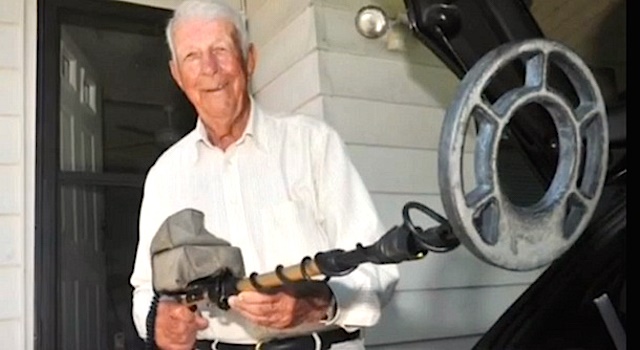
Robert Fowler said he was certain that he would never see his ring again when it slipped off his finger in 1979 and was lost in the Pacific Ocean.

He had owned it for only a couple of months, but 35 years later it would be returned to him by a Good Samaritan treasure hunter roaming the same beach where he lost it.

The San Francisco Chronicle reported yesterday, “The code of honor among treasure hunters requires a good-faith effort to find the owner of anything traceable.”

That’s why Larry Feurzeig  has found and reunited with owners no fewer than three gold rings.

“Wow,” Fowler said, handing Feurzeig a bottle of Champagne in appreciation. “I’m shocked. Amazed. Overjoyed. Life has a way of continuing to surprise us. Thanks.”

(READ the full story w/ photos in the SF Chronicle)

Story tip from Mike McGinley

Tribals See Lights in Their Homes for the First Time

Solar-light-in-India-MlindaFoundationPhoto

Tribal communities in some of the most remote and inaccessible forests in India were lifted out of the darkness and given hope for a better future. After never having electricity in their homes, they can now turn on solar lights and charge cell phones, an advancement that has kicked-off development for the entire village.

In July 2014, a micro-lending platform called Milaap partnered with the Mlinda Foundation to install affordable, community-owned solar mini-grids in rural villages that wanted to trade in their dirty kerosene lamps, for roughly the same cost as they were paying to buy fuel.

Communities like the Santhals in the Ayodhya hills, which had for centuries lived on subsistence farming in West Bengal, India, were given loans to install affordable solar electricity.

Milaap’s community of micro-lenders provided finance, so the tribespeople could own their solar grids and play a key role in their own development.

Solar lights not only are a means to improving their livelihood and education. Lifting them above the darkness also symbolizes hope, a path to a better future.

In the few short months since partnering with Mlinda, lenders on Milaap have helped set up solar microgrids in 23 off-grid tribal locations in the Sundarbans and in 20 hamlets of Purulia, Ayodhya Hills, benefiting over 280 families.

WATCH the video from one of the villages…

Inspired by the video?
Consider lending on Milaap to support more mini-grids