













58 years ago today, the Intel Corporation was founded in Mountain View, California. One of the largest manufacturers of computer hardware, Intel was a key component of the rise of Silicon Valley as a high-tech center, as well as a pioneer of random access memory and microprocessors. It was one of the first companies listed on Nasdaq, and is today the third largest semiconductor producer in the world by revenue. READ more about this American tech powerhouse… (1968)
Good News in History, July 18

Homegrown Catnip Lotion Proves to Be An Effective Mosquito Repellent in Rural Uganda

Homegrown catnip plants have proven to be as effective as DEET for repelling mosquitoes in rural Uganda.
Presented at an international science conference in Florence, Italy, a collaborative team of Welsh and Ugandan researchers believe they’ve found a lower cost solution to mosquito control that can reduce reliance on malaria medication, which the parasite is beginning to develop resistance to.
Nepetalactone is a chemical found in the essential oil of catnip, Nepeta cataria. It’s known for causing euphoric feelings in cats, but also seems to interfere with the olfactory sense of various mosquito species.
In laboratory tests, a 6% nepetalactone skin lotion proved as good as DEET for repelling mosquitoes from landing on a human arm. 2% nepetalactone proved only slightly less effective.
“DEET is out of the price bracket for most rural Ugandan subsistence farmers, so buying commercially available mosquito repellents is just not practicable,” says Dr. Simon Scofield, a senior lecturer at Cardiff University. “We wanted to make a repellent that is highly efficacious, but also allows local people to be involved in the production cycle so that it costs a minimal amount of money.”
Nepeta cataria is easy to grow, and the essential oil is easy to distil. It smells better than DEET, and besides all this it’s been used as a mosquito repellent traditionally for centuries.
“There is a real need to reduce the reliance on malaria medicines because malaria can develop resistance to drugs,” Scofield said. “Mosquito repellents represent one of the primary measures used to reduce the risk of malaria by reducing mosquito landing and biting events.”
Scofield worked with locals to develop a lotion product that could eventually be sold in order to apply market forces to what previously was created only through grant money. Even still, the resulting DSK lotion product cannot be patented, because it’s just essential oil and various stabilizers and other cosmetic bases.
“Once we know that we can sell and distribute the repellent at a low cost, that should generate a self-sustaining system where the money is flowing back to everybody at each stage in the development,” says Scofield.
SHARE This Quick, Easy, And Effective Mozy Repellent With Your Friends…
It Takes a Village to Raise a Child, But This Lonely 4-yo First Had to Raise His Neighborhood (WATCH)

There’s an old saying that it takes a village to raise a child. That was true for this lonely 4-year-old in North Carolina.
What his neighborhood didn’t know, however, was that it sometimes takes a child to raise a village.
Roman, from Concord, was a happy enough child who loves sports and athletics. But that changed when his parents got divorced, and his father moved away.
His grandparents live out of state, and though like all young boys his mom means the world to him, Roman developed into an inner loneliness.
Before all that, though, Roman woke up every morning looking for someone to say hello to. He’d stay by the door and wave at anyone who passed by the house; garbage man, Amazon driver, or one of the many neighbors that his mother, Anna Butzloff, said she didn’t know personally.
This story started with an old adage, and now here’s another one: people just don’t know their neighbors anymore. That was Butzloff’s case, so she was at a loss for what to do when all those people her son had been waving to started to come over and say hello.
It started with Wade Folger, a retired man who lived next door and the subject of many a “hey” from Roman. One day, he came over to talk. Soon after, he started to ask Roman if he wanted to come over and do stuff.
Eventually, Steve Hartman reports from his “On the Road” segment, other neighbors started to follow up on all those heys and handwaving, and before long, Roman had made some friends.
“I didn’t really know how to take it,” said Butzloff. “I just saw that my son was happy.”
That son of hers, like the Sun in the sky, soon became the light of their neighborhood. Inviting his senior citizen neighbors to his swim meets, basketball, soccer, and baseball practices, his preschool open house, and his frequent pastime of drag racing his bike down the block. When his birthday rolled around, his mother knew exactly who to call.
FANTASTIC 4-YEAR-OLDS: 4-Year-Old Calls 911 to Talk About Swimming. Police Respond With Birthday Surprise
He stitched together the neighborhood like a quilt, curing his loneliness, and changing his little world besides.
Hartman got the neighbors together and asked them what it was all like, and even though most of them came from an earlier generation to Roman’s mom, most of them didn’t know each other either. Now, they wave at each other, just like Roman did.
GREAT KIDS: Boy’s Great Tagline Helps Raise Thousands For Underprivileged Kids to Afford Hockey
“Look at what this little kid has built,” said one.
“It does,” another says, pausing, “it does a world of good.”
“If the world was like this child, what an awesome, awesome place it would be,” said the eldest among them.
WATCH the story below from Steve Hartman…
SHARE This Inspiring Story With Your Neighbors On Social Media…
Meet the ‘Firefighting’ Donkeys of Spain, Chowing Down on Grass and Fire Risk from Dawn to Dusk
During the recent heat dome over Europe, multiple regions of Spain were scorched by wildfires.
But in the idyllic Iberian ecosystem of Doñana National Park, things were calm and lush. There hasn’t been a wildfire in the park for 9 years, in fact.
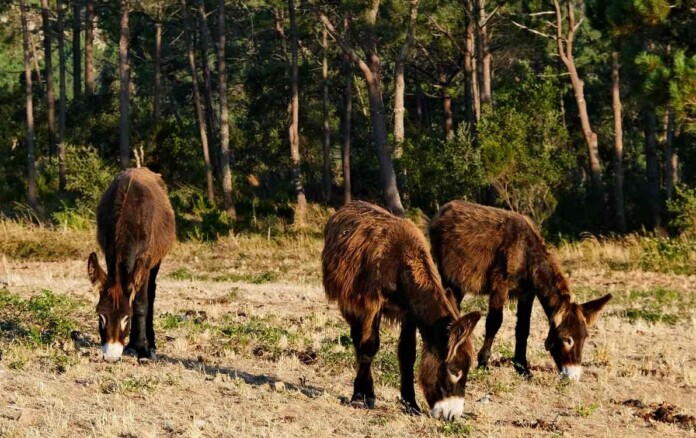
And it’s down to a very slow, very sweet team of hard workers: donkeys.
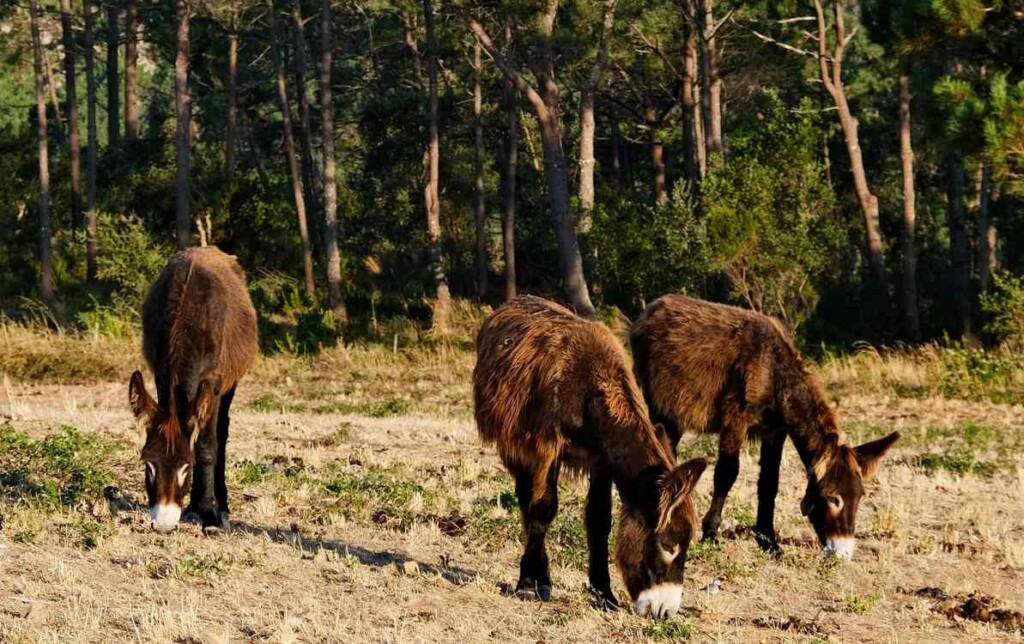
The “happy little donkeys” of Doñana have a simple job of each grazing freely across a 130 to 150 foot-long fire break, turning potential fuel in shrubs and grasses into food. From March to November, team members like Leonor, Ainoa, and Ume work 7 hours a day and drink some 8 gallons of water.
It might seem almost embarrassingly low-tech, but it works better than sheep and goats, and for Doñana, which acts as a vital refuge for Iberian lynx and migrating birds from Europe and Africa, it’s suitably low-impact.
The donkey fire brigade concept is being replicated in other areas of Spain that seem to be at ever greater risks of fires in their naturally-dry forests of pine. It is in fact the absence of donkeys that some researchers studying the increase in wildfires attribute for the greater and greater severity in burns.
Donkeys have worked in the field with Man thousands of years longer than horses. As faithful and sympathetic draft animals, they have plied the furrows, field, fells, and forests of Spain for millennia, but the onset of the major industrial revolutions and rural depopulation has removed these eating machines from the natural side of Spain, while the pre-domestic gazing wildlife which preceded them were long-since displaced or extirpated.
This has left the landscape vulnerable to explosive growth in understory vegetation and woody shrubs, which dry out in the more intense summers, and act as tinder and kindling for any spark.
LOW-TECH FIRE CONTROL: Portugal Welcomes First Wild Bison in 10,000 Years–the Keystone Species for Rewilding a Quarter-Million Acres
Nat Geo reports that Galicia, Catalonia, Ourense, Navarre, and the Basque Country have all enlisted “donkey brigades,” following Andalusia’s lead.
“A donkey weighs three times as much as a goat, so when it moves, it breaks up vegetation more effectively,” Joan Cedó, who launched Catalonia’s Tivissa Donkeys Firefighters in 2020, told the magazine. “A donkey also eats roughly 10 times more than a goat. That means its daily impact is much greater.”
MORE STORIES LIKE THIS: California Developer Builds First Neighborhood Where All the Homes Are Resistant to Wildfires
“Since we introduced donkeys in our municipality, there have been no wildfires,” says Cedó.
Sheep and goats are also used in Spain to control fires. In 2016 the Fire Flocks Project started by figuring out where the fires most often started and became the fiercest, before creating a line of premium brand meat and dairy products produced by 22 shepherds, half of them new to the job, who graze sheep, goats, and bovines in 600 fire-prone areas.
SHARE These Donkeys Helping To Protect Spain’s National Parks…
Chinese-Russian Biologists Release Nearly 500,000 Young Sturgeon into the Amur River

When the BBC visited China’s frigid northeastern province of Heilongjiang (Black Dragon River) in 2008 hoping to catch a glimpse of the river’s famous giant sturgeon, the English documentarians learned that there were no more giant sturgeon—that the Black Dragon River had been chronically overfished.
Yet as China’s economic advancements led to greater and greater concern over the environment, special effort was dedicated to saving the Heilongjiang sturgeon.
China shares the Heilongjiang with the Russians, who call it the Amur River, and environmental authorities from the two nations recently gathered in Tongjiang city to release some 5 million juvenile fish into the river.
Global Times reports that 200 juvenile Amur sturgeon, and 485,000 juvenile kaluga (another sturgeon species that inhabits the river) were dumped into the Amur in a mass-release ceremony on the first Tuesday in July.
“Another 5.2 million fry of commercially valuable fish species, including silver carp and grass carp,” were also released, the Times reported.
The outlet claimed that many of the sturgeons received injections of a fluorescent marker that would allow them to be tracked and identified throughout their lifespan, offering critical information about distribution and reproduction patterns. Though this year’s release is significant, similar efforts to try and recover sturgeon populations haven’t always translated into success.
Both Russia and China have maintained captive breeding and artificial propagation programs for years, resulting in 8.45 million Amur sturgeon fry alone being released into the Amur river by 2005. This didn’t translate into increased populations or number of mature individuals. China had initially wanted to protect the industry for sturgeon caviar through the captive breeding, but realized it wasn’t going to save the fish, and so legal commercial harvesting ended in 2007.
RIVER FOLK: Activists Use Folklore to Inspire Conservation Effort to Resurrect a Ghost of England’s Past
Most data in English shows the population to have been assessed as “Critically Endangered” by the IUCN by 2006, and again in 2019, albeit with little additional data.
However Chen Huaifa, director of the Heilongjiang Aquatic Animal Resources Conservation Center, told the Global Times that in very recent times, monitored kaluga and Amur sturgeon are living to 5 years and older, something that was not recorded as little as 8 years ago. In 2025, the center recorded a sturgeon having lived 8 years, the age at which male sturgeons will contribute to spawning for the first time.
SAVING FISH: Maine Counts Over 20 Million River Herring During Annual Run, the Highest in Decades
“I have been fishing for decades. Now we have fish release activities every year, and seeing bags of fry being released into the river makes me truly happy,” fisherman Li Changyou told the Global Times.
“Stock enhancement is not only about protecting resources, but also about preserving a way of livelihood for fishermen like us and future generations. When there are more fish in the river, fishermen can have a more secure future,” he said.
SHARE This Cross-Border Cooperation In Saving This Prehistoric Fish…
“The sound of a kiss is not so loud as that of a cannon, but its echo can last a great deal longer.” – Oliver Wendell Holmes

Quote of the Day: “The sound of a kiss is not so loud as that of a cannon, but its echo can last a great deal longer.” – Oliver Wendell Holmes
Photo by: Akbar Nemati
With a new inspirational quote every day, atop the perfect photo—collected and archived on our Quotes page—why not bookmark GNN.org for a daily uplift?

Good News in History, July 17

70 years ago today, the MGM musical comedy High Society was released. Starring Bing Crosby and a young Frank Sinatra, it was the first time the pair ever collaborated. It was a musical remake of Philadelphia Story, and was the last role for leading lady Grace Kelly before she left Hollywood to become Princess of Monaco, having married Prince Rainier. WATCH the trailer… (1956)
30 Beluga Whales are Finally Being Rescued After 2 Years Waiting in Shuttered Theme Park


The US and Canadian governments recently approved a plan for the transfer of captive beluga whales which have been stranded for years at a closed theme park.
Shuttered years ago when the captivity for intelligent marine mammals became too controversial, Ontario’s Marineland still contained 30 beluga whales in need of new, more ethical homes.
Located near Niagara Falls, Marineland had no more money to care and feed for the belugas, and even threatened to euthanize them if Canada didn’t approve permits to move the creatures to other aquariums, after a previous attempt to send them to China was rejected.
As a species listed in appendix II of the Convention on the International Trade of Endangered Species, movement of a beluga whale across borders requires a CITES permit for nations to remain in compliance with the treaty pursuant to that convention.
Now, both NOAA (the US Oceanic and Atmospheric Administration) and the Department of Fisheries and Oceans Canada and have approved plans and issued correct permits to move 28 animals to 4 different American aquariums, while Spanish authorities are pending permit issuance for the final 2 to be sent to Oceanogràfic València in Spain, which already houses belugas.
The Georgia Aquarium, Shedd Aquarium in Chicago, and two SeaWorld facilities in San Diego and San Antonio, are now preparing for the animals arrival.
All that’s left is for accredited veterinarians to now clear the whales for travel, and the special whale-transportation to be finalized.
“Once the belugas are cleared for travel by Canadian veterinarians, aquarium experts will accompany the animals to their new homes, where they will be met with diverse seafood to meet their nutritional needs, high quality environments with guaranteed water quality, and onsite medical care should they require it at any time,” the four American aquariums said in a statement.
“This rescue effort will take several weeks to mobilize and complete, and the comfort and safety of the whales remains of the utmost importance. Details will continue to change as this process moves forward, but the aquariums are committed to providing accurate updates along the way.”
MORE STORIES LIKE THIS: Two Beluga Whales Are Free for the First Time Since 2011 With a New Life On The Icelandic Coast
Known as the “white whale,” the beluga, a relative of the narwhal, is the only cetacean that naturally produces white skin pigmentation. They’re one of those animals whose skull forms their mouth into a smile, and coupled with their gentle demeanor and graceful swimming skills, they’re an aquarium favorite.
Male belugas in captivity can apparently mimic the pattern of human speech, several octaves lower than typical whale calls.
BEST OF BELUGAS: Kayaker Singing in Hopes of Attracting Beluga Whales Never Imagined They Were Actually Listening
One captive male beluga named No-see caused a diver in a tank with him to surface by imitating orders to get out of the water. Subsequent recordings confirmed that No-see had become skilled at imitating the patterns and frequency of human speech, and intentionally altered his normal methods of vocalization to achieve these sounds.
An animal this intelligent requires dignified and specialized habitat, something Marineland failed to provide, but soon will be awarded to all thirty animals for the rest of their days.
SHARE This Great News For These 30 Wonderful White Whales…
Japanese Engineers Help Modernize India’s Massive Railway, Launching Her First Bullet Train

For the most train-dependent transportation system in the world, the debut of its first high-speed or “bullet” train, is now tantalizingly close.
It’s set to begin phased passenger operations starting from August 15th, 2027, provided there are no more delays to the project.
Set to connect the financial center of Mumbai with Ahmedabad in the western Indian state of Gujurat, the Japanese-style high-speed train will shorten travel times by more than 4 hours. Surat, the global diamond cutting center, and current all-weather boom town in India, will also be on the line.
The Mumbai-Ahmedabad high-speed rail project, as seen in the image above, has been a long time in the making. In it, Shinzo Abe—the long-since assassinated Prime Minister of Japan, inspects a mock-up of one end of the train terminal.
Japanese engineering expertise was enlisted—along with a large loan—to help India begin modernizing its massive railway system.
“A considerable amount of work on the entire corridor has already been completed,” Dharmendra Tewari, Indian Railways’ additional director general, told AFP. “The first section of the bullet train will be operational in 2027, between the cities of Surat and Vapi,” the latter being a big chemical manufacturing hub.
Capable of traveling at 164 mph, Japan’s Shinkansen is earthquake-resistant, and comes with an exceptional safety and operational record dating back decades.
An article on the 300 mile-long Mumbai-Ahmedabad line published by AFP describes New Delhi as having pumped billions of dollars into overhauling creaking colonial-era railway infrastructure in recent times.
BIG ENGINEERING PROJECTS: New Railway Between Europe and China Will Shave a Week Off Delivery Times, Boost Kyrgyzstan Economy
It is the world’s most extensive rail network, carrying 7.41 billion passengers and 1.67 billion tons of freight. Around 45,000 miles of rail routes are plied by trains that run 63 miles per hour.
The nation’s indigenous speedy service is called the Vande Bharat, and can travel around half as fast as a Shinkansen.
NEW HIGH SPEED LINES: High-Speed Railway Progresses Towards a 200-mph Train Line From Dallas to Houston
To build the line to Mumbai, the contractors had to undertake a couple of national firsts, including India’s first undersea tunnel, and the longest conventional tunnel in the country. The project has already been delayed by 4 years, a result of planning the route through areas where permitting and land acquisition has proved much more complicated than first expected.
If the roll-out is safe and successful, future connections to the tech hubs of Pune and Chennai are envisioned in the 2030s.
SHARE This Better Way To Travel In India With Your Friends…
Would You Like Sugar With Your Stars? Sugar Detected in Interstellar Space for the First Time


Scientists have detected a simple sugar found in raspberries within the gas and dust at the center of the Milky Way.
It’s the first time a sugar molecule has been identified in interstellar media, having previously been found in our solar system on asteroids.
Called erythrulose, it’s found in raspberries and suntan lotion, but the authors of the paper describing the observation didn’t suggest there were pallid aliens working on their tan, rather, that a 4-carbon sugar can actually form in rather base mixtures of matter, before coalescing into planets.
The Spanish scientists at a research center called CSIC-INTA used 2 radio-wave telescopes in their own country to pick up signals from a large cloud of gas near the center of the Milky Way called G+0.693-0.027. The data returned by the telescopes was then subjected to spectroscopy analysis.
In spectroscopy, the spectrum of light reflecting off of molecules can be examined to the end of determining exactly what kind of molecule it is. In this case, the scientists say it’s erythrulose beyond any doubt.
“The detection of the first sugar in interstellar space suggests that the key ingredients for life can form in molecular nebula before stars and planets form,” study lead author Dr. Izaskun Jiménez-Serra from the CSIC-INTA Center for Astrobiology, said in a statement.
Sugars are not only sweeteners in our coffee and cakes, but building blocks for DNA, and the study detection shows that, leaving out a biological origin, “true sugars,” or sugars with 4 carbon molecules or more, can form abiotically—likely on the mantle of a dust particle.
SPACE ODDITIES:
- Two ‘Super-Puff’ Planets Lighter Than Cotton Candy Discovered by Researchers
- Astronomers Say They Have Solved One of Saturn’s Greatest Mysteries
- Microscopic ‘Christmas Tree’ is Remarkable Highlight of Science Project Comparing the Vast and Small
Astrophysicists speaking with ABC News AU explained that in the freezing void of space, it’s very difficult for large molecules to form. Erythrulose, which has 4 carbon, 8 hydrogen, and 4 oxygen atoms, would therefore most likely have formed on the surface of a dust particle.
There, molecules could bump into each other and stick, rather than bounce off one another, by becoming embedded in the dust through electromagnetism. Once thusly embedded, stellar radiation might force larger molecules to shrink by releasing energy, and in that moment, create molecular fusion and turn simple molecules into more complex chemicals.
So far, and since 1937, 350 chemicals have been identified in interstellar space.
SHARE This Stellar Sugar Story With Your Friends Who Love Space…
Maine Counts Over 20 Million River Herring During Annual Run, the Highest in Decades
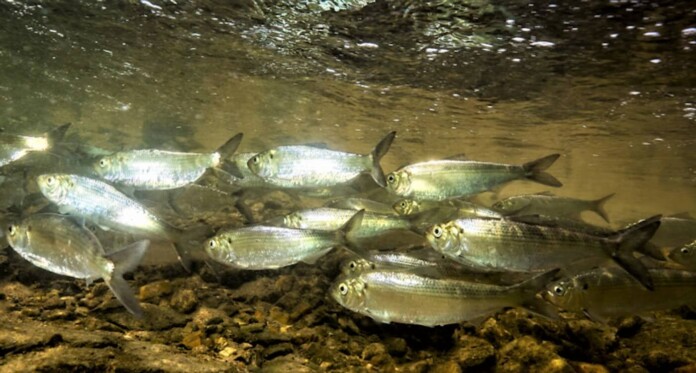
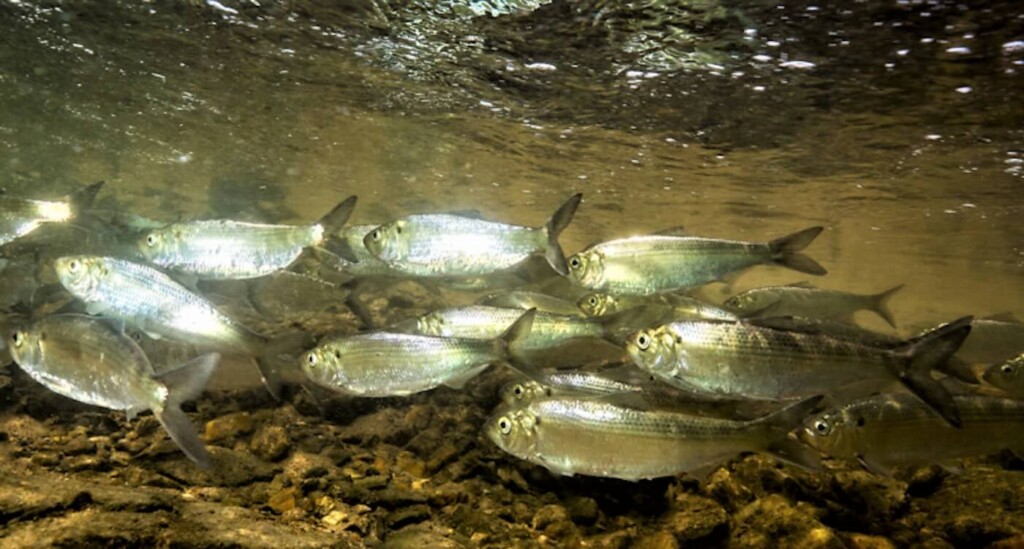
A beloved local fish staple that was illegal to harvest as recently as 2012 has seen an incredible recovery in Maine’s rivers following the removal of several large dams.
Particularly on the Penobscot River, the removal of 2 dams has resulted in the “premier success story of our time,” for Maine’s alewife fish, which had been declining in population since the 18th century because of damming.
At its best, the alewife run is like a force of nature. From bank to bank, a babbling brook that’s quiet for most of the year will become a torrent of silver as the fish migrate upriver to spawn just as salmon do.
Colonial settlers, Native Americans, fishermen, and every predator in the woods needed only to reach their hands in and pull out breakfast lunch and dinner. But as the rivers were dammed, the migrations slowed, and even as early as 1840 there were catastrophic collapses in fish stocks.
Commercial offshore harvesting also decimated the fish, causing towns whose rivers weren’t dammed to lost their alewife runs as well. By 1994, annual inland catches had fallen from 3 million pounds average to just 150,000 pounds of fish.
As the country found new ways to power itself, an effort to undam the rivers began in 1999 and finished in 2016—four years after a moratorium was declared in the fishing of alewives offshore.
In 2025, these efforts culminated in 20 million alewives running up Maine’s rivers.
“We’ve gone from losing the fish completely in a lot of river systems due to damming and pollution, and now we have some of the largest populations in the globe,” Rustin Taylor, the executive director of the Alewife Harvesters of Maine, told Sydney Cromwell from Inside Climate News.
More officially known as a river herring, this non-game fish was dubbed an alewife due to its fat silver belly—a reference to female tavernkeepers of yore. Taylor described them in an ecological sense acting as a great “nutrient conveyor belt,” bringing the nutrients of the cold ocean up into the land inside their guts.
UNDAMMING RIVERS BRINGS CHANGE: 44 Miles of Major Balkan River Freed from Wartime Concrete Obstruction – LOOK
Fed upon by most carnivores and omnivores in the forest and the rivers, the nutrients from the ocean are recycled through other animals and into the soil through those animals’ droppings.
In fact, Cromwell shares, the native Passamaquoddy tribe’s name for the species, siqonomeq, translates to “the fish that feeds all.”
Across Maine, alewife festivals routinely celebrate the return of the herring from the ocean, but for many decades they were mostly somber affairs, as the torrents of silver from yesteryear became trickles due to overfishing in the Atlantic. Some locals would actively help their fish get past smaller dams by scooping them up in buckets and dumping them out on the other side.
MORE GREAT AMERICAN FISH: Over 90 California Fish Stocks Almost Totally Rebuilt Thanks to Trawling Ban, Other Measures
Along with the removal of those dams, the construction of fish channels has helped them to get around the dams that remain.
“Some of those dam removals have led to incredible restorations of alewife migrations much faster than anticipated,” Taylor said, who called two dam removals on the Penobscot, where Atlantic salmon also run, “probably one of the premier success stories of our time.”
CELEBRATE The Return Of This Beloved Staple Of The Maine Countryside…
“I drank the silence of God from a spring in the woods.” – Georg Trakl

Quote of the Day: “I drank the silence of God from a spring in the woods.” – Georg Trakl (translated from German)
Photo by: Erin O’Brien
With a new inspirational quote every day, atop the perfect photo—collected and archived on our Quotes page—why not bookmark GNN.org for a daily uplift?

Good News in History, July 16

1404 years ago today, the Prophet of Islam, Muhammad (PBUH), journeyed with his followers from Mecca to Medina. As an event it’s known as the Hijrah, and the start of the Islamic calendar. The whole departure spanned about three months, during which Muhammad remained behind to convince those who were reluctant. The second Rashidun Caliph, Umar ibn Al-Khattab, designated the Muslim year during which the Hegira occurred the first year of the Islamic calendar in 638 or the 17th year of the Hegira. This was later Latinized to Anno Hegirae, the abbreviation of which is still used to denote Hijri dates today. READ more on this day… (622)
Humpback Whale Watching Surges in Brazil Where Population Has Grown 27-fold Since Whaling Ended
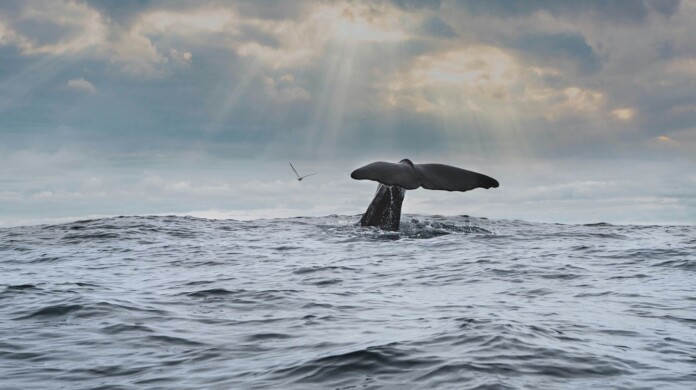
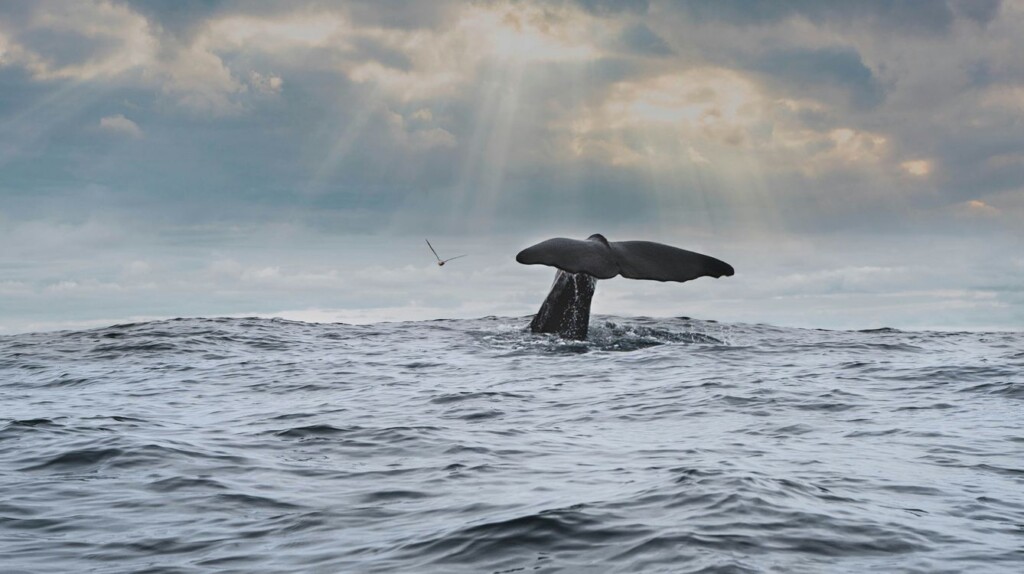
The population of humpback whales around the world continues to climb ever higher, as do the records for numbers of sightings in single whale-watching seasons.
In Brazil’s renowned Guanabara Bay, whale watching trips are becoming popular thanks to an increase in the population of humpbacks from 2,000 in 1986, to around 35,000 today.
Every year, the giant marine mammals migrate from Antarctic feeding grounds to warmer waters to breed. The population that passes Guanabara and Rio de Janeiro head towards Abrolhos Bank, a coral reef region spanning the coasts of the Brazilian states of Bahia and Espirito Santo, one of the most biodiverse areas of the Atlantic.
This occurs between June and November, when the animals are squarely within the lenses of cameras from groups like the Humpback Whale Project, Amigos da Jubarte (Friends of the Humpback Whale) and the Niteroi tourism agency’s whale-watching program; members of which spoke with ABC News in the US and AP about their experiences seeing these tremendous animals.
“It’s wonderful,” says Enrico Marcovaldi, co-founder of the Humpback Whale Project. “It shows that the whales are making a recovery, are healthy and thriving, and hopefully they’ll continue to do so.”
“Tourism can be a tool for the protection of species,” André Bento, president of Niteroi’s tourism agency, told AP on an outing in late June “I don’t think anyone who gets on this boat comes off the same way, right?”
GNN has reported on record numbers of returning humpback whales in South Africa, eastern Australia, and in the Salish Sea off the coast of Seattle, where they weren’t seen at all for many years; now there are hundreds.
SHARE The News Of Brazil’s Whale Numbers Trending Up With Your Friends…
3,200-yo Tomb Discovered in Luxor from the Era of Ramses


Another month, another big discovery in Luxor—this time of a tomb with preserved interior frescoes dating back around 3,200 years.
The T-shaped tomb was discovered by a team of Dutch-Egypt archaeologists in the middle of a long-term project to combine proactive conservation strategies with archaeological excavations at the Theban Necropolis.
Hisham El-Leithy, Secretary-General of Egypt’s Supreme Council of Antiquities, said that inscriptions inside the tomb identify its owner as a man named Paser. Decorative frescoes lining the walls of the tomb indicate it may have been made and occupied during the 19th Dynasty of the New Kingdom—the Ramesside period, that included who is arguably Ancient Egypt’s greatest-ever ruler, Ramesses II.
Research into the site is ongoing. Its open forecourt leading to an inverted T-shape layout is typical of New Kingdom tombs in the necropolis, and may contain a number of people beyond this mysterious Paser, located in a series of presumed underground burial chambers.
Interior elements include a well-preserved mudbrick bench meant to support stone funerary stelae, though these are missing, if ever they sat atop it.
Frescoes depict the tomb’s owner performing various religious rites in the New Kingdom style, as well as another panel with him seated beside his wife at an offerings table.

The discovery of the tomb was made by Carina van den Hoven, who has directed excavations in the sector since 2018, and was documented while establishing the first comprehensive archaeological survey of Lower Sheikh Abd El-Qurna area, one of the most important burial areas of the Theban Necropolis.
A study being prepared documenting the tomb’s discovery is expected to shed new light on the Lower Sheikh Abd El-Qurna and the relationships between its neighboring tombs, as well as the development of funerary culture there.
The discovery follows up major funerary finds in Luxor, including the tomb of a group of so-described “singing priests,” including 22 priests and priestesses in May, and a trio of official tombs in May of last year.
SHARE This Latest Discovery From Glorious Luxor With Your Friends…
South Carolina Restaurant Owner Finds $12,000 in Old Cabinet and Returns it to Former Owner


A restauranteur who found $12,000 in cash got in touch with the rightful owner live on the news to explain he wanted to turn it over.
Sak Yiengjuntuek knew as soon as he saw the stack of $100 bills that they belonged to the man who sold him the restaurant that would become Lemongrass Pho & Thai Cuisine in Myrtle Beach.
At the time, Yiengjuntuek was getting rid of some old standing tool chests that the previous owner had left. They were squarely junk, in his mind, but with all such things it was difficult resisting the urge to open them up and have a peek inside.
That’s where he found a seemingly ordinary sunglasses case.
“I saw the sunglasses case and then, you know, of course, when you see something like that, you want to open and look,” he told TODAY, adding that as soon as he did, he saw it was full of money.
“I was so shocked,” Yiengjuntuek says. “I knew right then that it belonged to the previous owner.”
What happened next was beautiful in several ways. Realizing he needed to get the money back to the man as soon as possible, he called the number he had on file only to find it had been disconnected.
Yiengjuntuek was at a loss for what to do next. What may have happened is that he contacted local NBC affiliate WMBF and wanted to share his story so that the owner of the money might see it on television.
He was no where else but live on-the-air when suddenly he remembered he had another number for the previous owner saved under a different name, which he not only explained to the camera, but called right then and there.
The relief was palpable in Yiengjuntuek’s voice when he heard the man answer the phone.
HONESTY EVERYWHERE: Florida Man Spends Days Searching for Owner of Lost $30,000 He Found: ‘it wasn’t mine to take’
“I have some good news for you,” he said.
WLBT would eventually learn that the money’s owner was struggling was a significant health problem, another reason why the local Myrtle Beach community now lauds the Southeast Asian restauranteur wherever he goes.
MORE STORIES LIKE THIS: Teen Rewarded with Cash and Job After Turning in Wad of $3,500 ‘Without Hesitation’
He hopes his action will inspire others.
“I just want to say: Do the right thing,” Yiengjuntuek told TODAY. “Don’t give up honesty.”
WATCH the story below…
SHARE This Splendid Story Of Honesty With Your Friends…
4 Different Bobkittens Rescued in a Week, Undergoing Rehab Together for Return to the Wild
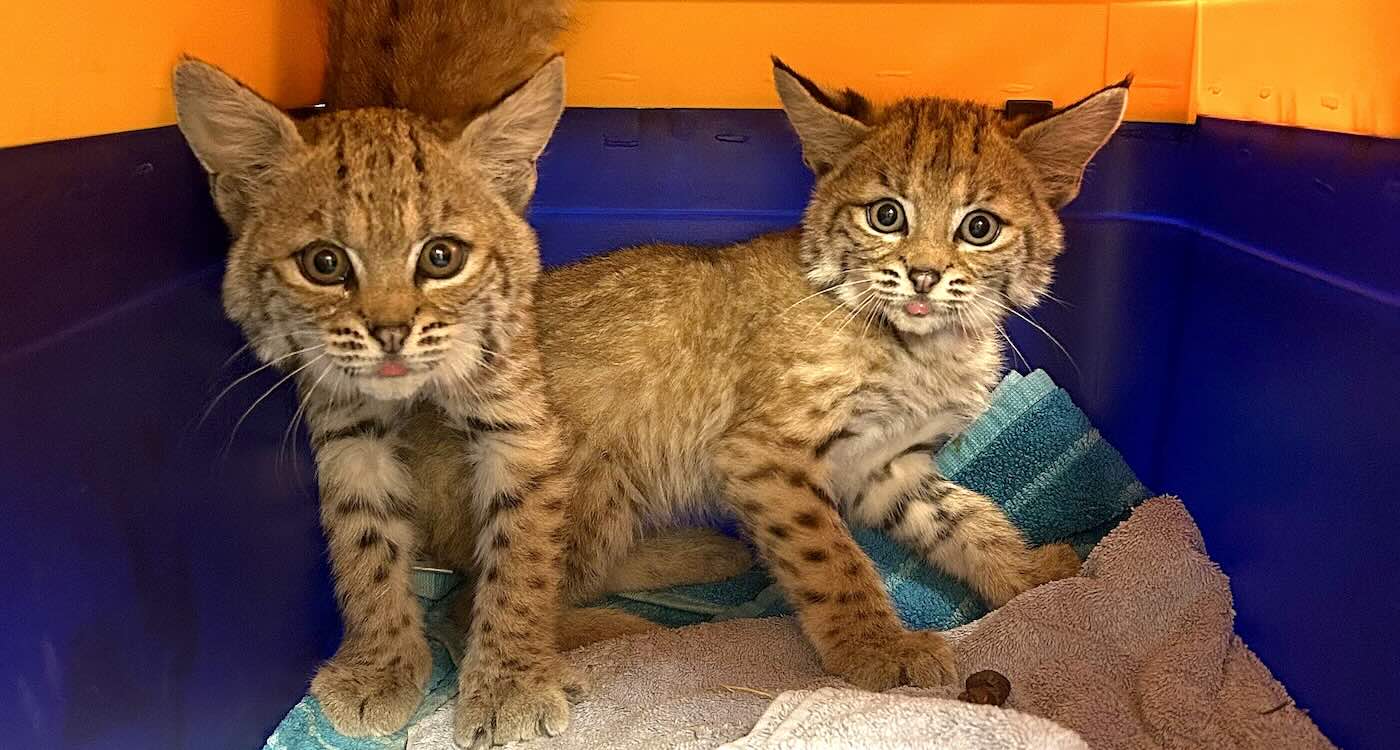
These two incredible animals are bobkittens, and they’re lucky to be alive.
They are 2 of 4 baby bobcats rescued within days of each other, from as many as 3 different mothers—all of whom either died, or lost or abandoned the kittens.
Now living together at the Saratoga Wildlife Care Center, they have a fighting chance of surviving to adulthood and passing on their genes, something which would have seemed impossible not long ago.
The kittens were discovered miles apart in California state. 2 were found in Kern whose mother had died from a fall, another was found in Carmel, and the last in Concord—all within a short space of time.
The Peninsula Humane Society & SPCA received calls about the situations and managed to collect all 4 under their roof at Saratoga Center, where they were cleared of parasites and given a natural meat diet in special recovery facilities.
“They have a large enclosure where they’re conditioning, they’re building muscle, they’re learning how to pounce on things,” Kinney said. “They’re very curious. We give them enrichment to keep their little bobcat brains going strong.”
KITTENS RESCUED: He Thought it was a Kitten Lost in the Snow – But it was One of The Most Endangered Mammals in Europe
Kinney and her team are doing a great job ensuring that care doesn’t cross over into realm of caring, and potentially rendering them unfit for return to the wild.
As of now, they remain quite leery of people, as they should, and are set for introduction as semi-adults into the wild in October.
Kinney says if you see a mewling bobkitten somewhere you shouldn’t immediately run to its aid. She recommends calling your nearest wildlife rescue outfit, which will typically ask some questions such as whether or not you’ve seen its mother or how long it has been there.
SHARE These Bright-Eyed And Bushy-Tailed Little Kittens On Social Media…
“Marriage is a mosaic you build with your spouse—millions of tiny moments that create your love story.” – Jennifer Smith

Quote of the Day: “Marriage is a mosaic you build with your spouse—millions of tiny moments that create your love story.” – Jennifer Smith
Photo by: rhoda alex
With a new inspirational quote every day, atop the perfect photo—collected and archived on our Quotes page—why not bookmark GNN.org for a daily uplift?

Good News in History, July 15

71 years ago today, 18 Nobel laureate scientists signed the Mainau Declaration publicly decrying nuclear weapons. Within one year, 34 others—mostly chemists and physicists—joined the German nuclear scientists Otto Hahn and Max Born in calling for an end to perilous radioactive bombs. READ the text of the Declaration… (1955)
Coffee Associated with Lower Risks of Liver Cancer and Deadly Cirrhosis


GNN has reported on studies that have found coffee to improve health outcomes in a variety of disease realms, including heart disease, dementia, and even cancer in an observational finding.
Now, a new study of hundreds of thousands of people compiled by Cedars Sinai Medical Center has identified that the liver may be a prime beneficiary of coffee consumption.
Embarrassingly, it took until 2016 for the WHO to remove coffee from the list of possible carcinogens, even as a mountain of evidence had built up that the beloved breakfast drink was not only not harmful, but actually a health drink.
Coffee has previously been identified as having hepato-protective effects—that is, protective to the liver—in a study of half-a-million individuals with known coffee consumption levels from the UK Biobank.
Compared to non-coffee drinkers, coffee drinkers had a 21% reduced risk of chronic liver disease, a 20% reduced risk of fatty liver disease, and a 49% reduced risk of death from chronic liver disease.
This new examination used the same massive data set, which followed some 500,000 people aged 40 to 69 for decades, recording a wide variety of health data. By 2023, 30,000 researchers had registered to use the UK Biobank data, and over 9,000 peer-reviewed articles based on it had been published.
In this analysis, Hyunseok Kim, assistant professor of Medicine at Cedars-Sinai, and his colleagues, Shelly Lu and Ju Dong Yang—all three of whom are medical doctors—looked at cases of the life-threatening liver disease called cirrhosis, as well as liver cancer, and liver-related death.
Compared to non-coffee drinkers, the team’s analysis found that coffee drinkers had a 32% lower risk of cirrhosis, a 47% lower risk of developing liver cancer, and a 42% lower risk of liver-disease-related death.
MORE COFFEE COVERAGE: Moderate Coffee and Caffeine Consumption Is Associated with Preventing Onset of #1 Killer
Additionally, blood protein data pointed in the same direction. Coffee drinkers had higher levels of proteins associated with healthy liver function. This reinforced the finding which might otherwise have been dismissed as a coincidence.
Still, 5, 4, or even 3 cups of coffee will be intolerable to some who are more susceptible to caffeine, although in an interesting finding, the 5 cup a-day effect was found in consumers of decaf as well, suggesting that the coffee’s flavonoid and phenol compliment may be behind the effects on the liver and caffeine.
WHERE THE BEANS COME FROM: Ugandan Coffee Growers Shrug Off Drought Thanks to Regenerative Agriculture
“Our findings support moderate coffee consumption for people who already enjoy and tolerate it well,” said study senior author Ju Dong Yang, medical director of the Liver Cancer Program at Cedars-Sinai.
“However, we would not recommend that someone begin drinking coffee solely for liver protection based on this study alone. Prevention should continue to focus on maintaining a healthy weight, limiting alcohol, exercising regularly, and managing blood sugar, blood pressure, and cholesterol.”
SHARE This Coffee-For-Liver Examination With Your Friends…