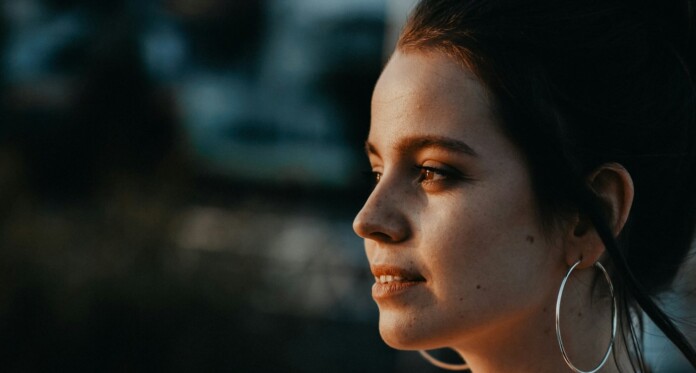
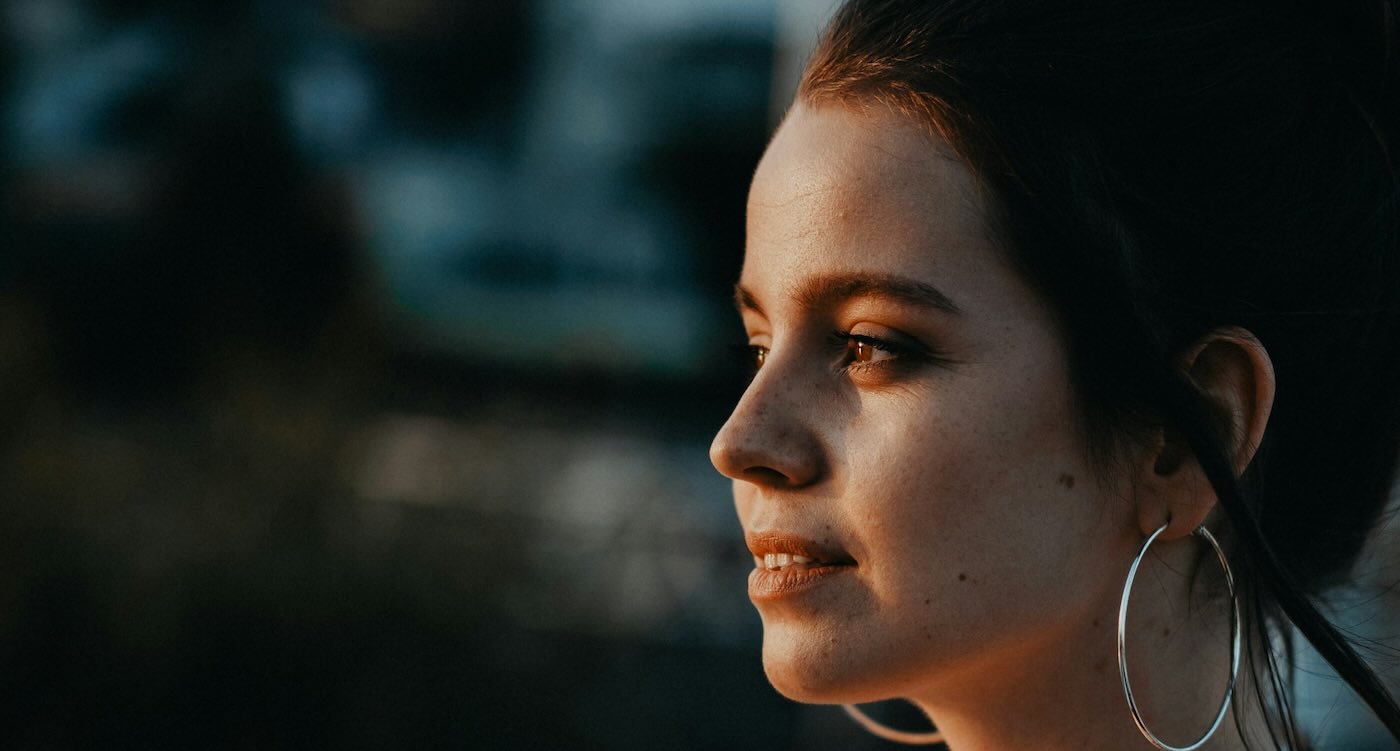
Quote of the Day: “This is the precept by which I have lived: Prepare for the worst; expect the best; and take what comes.” – Hannah Arendt
Photo by: Fellipe Ditadi for Unsplash+
With a new inspirational quote every day, atop the perfect photo—collected and archived on our Quote of the Day page—why not bookmark GNN.org for a daily uplift?
80 years ago today, Plaid Cymruor the Party of Wales, was founded with the aim of supporting Welsh culture in government as the progress of the 20th century led to fears that the Welsh language would become extinct. From the beginning, Plaid Cymru was stuck between Labor, the Liberals, and the Tories, arguing that the greatest share possible of Welsh rule should be reserved for Welsh people. From there they have steadily grown in support to be able to contest, and eventually win elections. READ More…
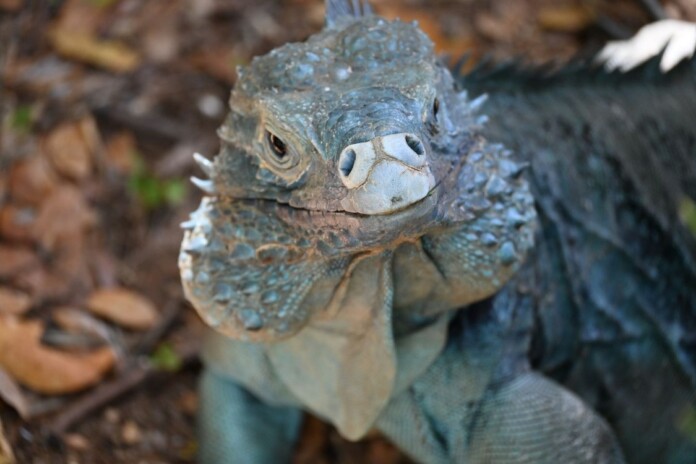
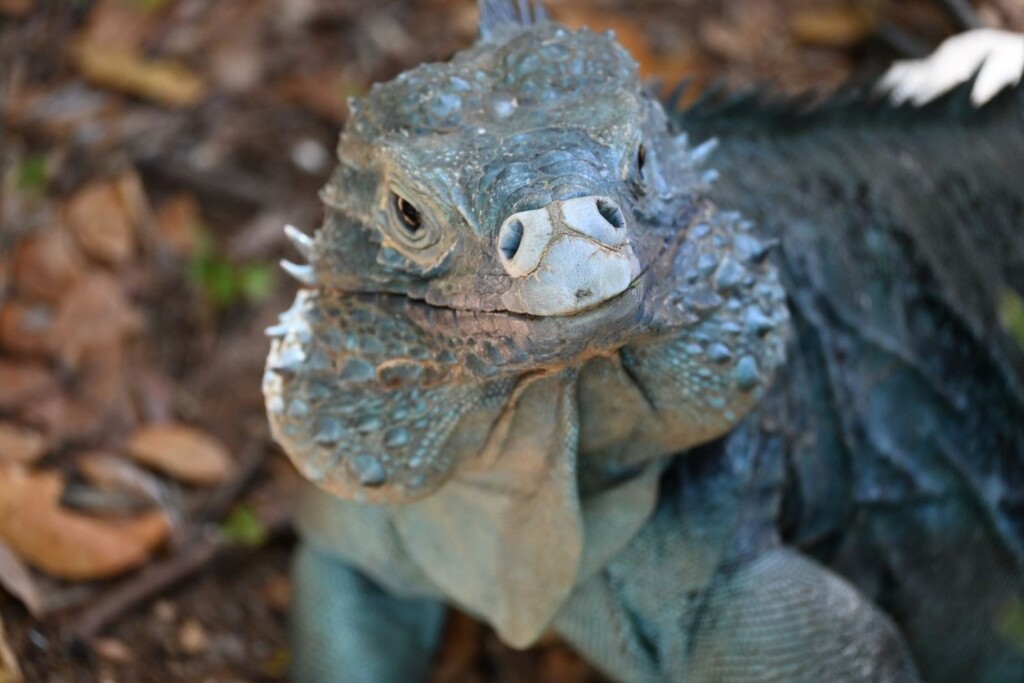
A Caribbean island’s beloved “blue dragons” have come roaring back from the brink thanks to diligent conservation efforts.
Green iguanas are the most common species of their kind, though they can sometimes turn red, and several other mottled shades of tan, brown, and grey.
That makes the blue iguanas of Grand Cayman in the Cayman Islands all the more special. Its chalky, Mar Caprese-blue scales are enchanting and made it a national symbol of Grand Cayman’s natural environment.
The largest island in the archipelago, Grand Cayman rose from the seas 2 million years ago, and these iguanas arrived on its rocky shores soon after. Like the dragons of Komodo, these blue dragons, as they’re affectionately called, eventually evolved to be the largest native land animal.
The blue coloration serves a purpose familiar in many animals. It flushes particularly vivid when the animals feel threatened, or in males during the breeding season. Melanophore cells in their skin can expand or contract to make them appear lighter or darker. A tranquil juvenile female may look almost khaki-colored, while a mature male in the breeding season is so vibrant one might imagine they could be seen from space.
They eat almost only vegetation, can grow more than three feet in length, and endear themselves to their human neighbors by displaying very familiar behaviors like yawning and sneezing.
With the arrival of humans came the introduction of invasive species, like cats and dogs. Hardly as ferocious as their mythical namesake, this led to precipitous declines in their population, CNN reports, until a breeding program and habitat protections kicked in when there may have been as few as 25 left on the island.
Now, 1,200 lizards have been released into these protected wilds, and the International Union for the Conservation of Nature recently reclassified the animal from “Critically Endangered,” to “Endangered.”
“The public’s emotional connection played a big role in the success of the restoration efforts,” Frederic Burton, conservationist and director of the Blue Iguana Recovery Program, told CNN. “Blue iguanas are part of Cayman now.”
SHARE The Story Of These Beautiful Animals With Your Friends On Social Media…
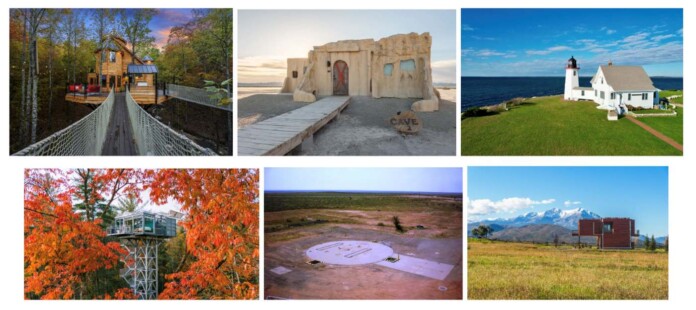
Some of the Airbnbs that Ryan Trahan stayed at - credit, Courtesy of Airbnb Community
Some of the Airbnbs that Ryan Trahan stayed at – credit, Courtesy of Airbnb Community
An acclaimed YouTuber whose font of fame would be impossible to describe to your grandmother just raised $11.5 million for St. Jude’s Children’s Hospital.
The unforgettable fundraiser centered around Ryan Trahan‘s breakneck 50-day trip around America, visiting one state each day, and attempting to find the coolest Airbnb in the process.
Making a review of each day, each state, and each Airbnb, totaling between 20 and 40 minutes of expertly produced video content, Trahan and his wife stayed in a castle, a lighthouse, a cave, a tree house, a missile silo, a potato, a barn, on a private island, on a private mountain, and even in a giant shoe.
They celebrated every million dollars raised with a cake, made many friend along the way, undertook all kinds of adventures, consumed god only knows how many coffees and perhaps energy drinks, and ended up on the very edge of the Big Island of Hawai’i in a private villa.
Their eventual decision was that the Treetopia Treehouse in Broken Bow, Oklahoma was the best Airbnb in the country.
The Treetopia Treehouse, voted as the best Airbnb in the country – credit, Courtesy of Airbnb CommunityThe villa where Trahan’s journey ended – credit, Courtesy of Airbnb Community
This strange sort of fundraiser reached a lot of ears, and 42,000 people donated to the cause. Six-figure donations were made from large companies like Airbnb, Shopify, Dollar Shave Club, T Mobile, Lectric eBikes, Hobby Lobby, and Kia, while philanthropic gifts were made by Dr. Peter Attia and fellow YouTuber MrBeast.
The whole thing seems rather bizarre, but it’s just another example—one of dozens published on GNN—of how valuable the internet has become for allowing this kind of mass distributed charity to take place.
WATCH the first episode, and maybe take the whole journey with Ryan…
SHARE This Wild Ride And Incredible Impact With Your Friends…
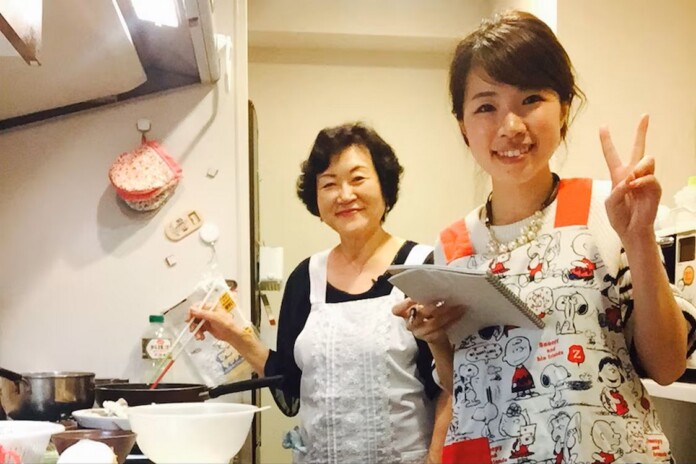
A woman and her contracted grandma - credit, Client Partners
A woman and her contracted grandma – credit, Client Partners
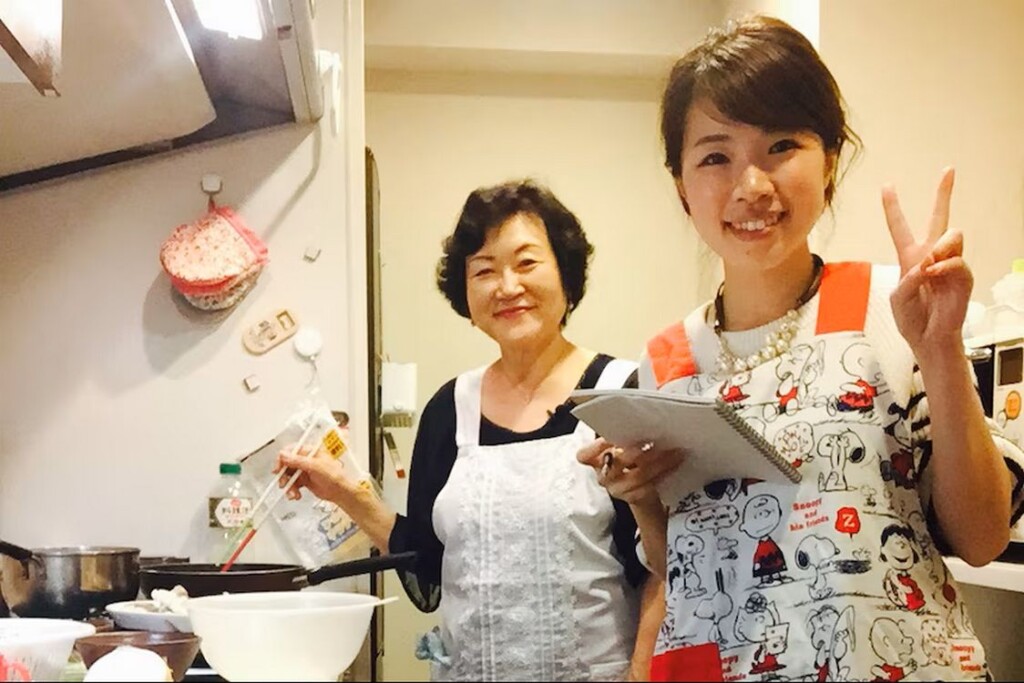
When a Japanese handyman contractor faced an oversaturated market, they turned to a pretty unusual solution: a ‘rent-a-grandma.’
With few other jobs available for women over 60 other than house cleaners, the company realized that for the same reason a person might want to hire a male handyman in his 60s during a homebuilding project, someone might want to hire a grandmother for a homemaking project.
Tokyo’s Client Partners started the OK! Obaachan (OK! Grandmother) service in 2011, and it’s become a hit.
“I never get bored,” 69-year old Taeko Kaji, one of the rent-a-grandmas, told the Australian ABC. “I get to go out and have these experiences and that’s why taking this job was the right decision for me.”
Client Partners allows customers to hire the services of guides and interpreters, but concern in Japanese society over run-of-the-mill, big city loneliness gave the company the idea to start renting friends, ‘aunts,’ and now even grandmothers.
“Some people may never have had a mother in the first place,” Client Partners chief executive Ms. Ruri Kanazawa told the ABC. “Our grandmother staff members, who cook for the guests and act like a mother to them, help provide the motherly warmth they need.”
Along with loneliness the service may be seen as addressing another societal challenge in Japan: the size of the geriatric population. As big as anywhere else on Earth, there are fewer and fewer working-age Japanese to support the growing number of pensioners. Working can provide better economic security, but many jobs become unavailable, especially women, to those in their golden years.
In traditional societies, the elders take on just such roles: as wisdom-holders, storytellers, adjudicators, and teachers. Client Services’ grandmother contractors very much fulfil that position—for a healthy hourly wage of around $55.
For years, ABC News reports, Japanese society saw women work until marriage, then quit their jobs, stay home to raise the kids until they enter school, then put one foot back in the job market through contract or part-time work. This generation of women, if they were married, would be secured in retirement through their husbands’ pension plans.
This contributed in no small part to the incredible economic boom experienced during the second half of the 20th century, but some women, who may have never been married, or whose husbands died young, face an extreme lack of available work.
Sharing their love and life experience with a young family is clearly an opportunity many are happy to have and happy to do.
SHARE This Wild But Sensible Concept With Your Friends On Social Media…
ACRE siding on a home - credit, Modern Mill, supplied
ACRE siding on a home – credit, Modern Mill, supplied
A groundbreaking new material made from upcycled rice husks in a zero-waste environment is giving homebuilders the option to reduce their carbon footprint while adding a rustic charm to their home’s exterior.
The product, called ACRE, offers the warmth and beauty of real wood with all the conveniences of composites, and is available as siding, decking, fencing, sheets, and trimming.
If any Americans were following the news during trade negotiations between Japan and the US, they may have learned, and maybe were surprised to do so, that US farmers grow 20 billion pounds of rice every year.
Each of those pounds are made up of hundreds of individual rice grains, each of which is covered by a hard husk, sometimes called a hull, which are normally just sent to the landfill.
ACRE inventor and producer Modern Mill is changing that by transforming this overlooked byproduct into a high-performance wood replacement that doesn’t require cutting down a single tree, and they’ve already spared 4,000 tons of rice husks from the landfill.
Unlike wheat, the rice hulls contain a significant amount of lignin, the organic polymer that forms wood.
This makes them strong and durable when processed, and capable of being harnessed for use as a building material. The husks themselves offer a tone and depth of color that the company describes as imitating tropical hardwoods like teak, ipe, and cedar.
An ACRE board – credit, Modern Mill, supplied
One pallet of ACRE material, therefore, saves a whole acre of tropical rainforest hardwoods, and in 2022 alone, 44,000 of those pallets were delivered to builders around the country.
Though prices can vary significantly, for most building projects their siding will cost between $10 and $12 per square foot.
In 2023, Modern Mill was named to Fast Company Magazine’s Most Innovative Companies list, and in 2025, in response to the devastating Palisades fires in California, Modern Mill donated siding for 20 families who lost their homes to aid recovery and rebuilding efforts.
“Our hearts are with the families and communities affected by the wildfires,” said Chris Guimond, Chief Executive Officer at Modern Mill. “We’re doing everything we can to help support relief efforts.”
ACRE is tested and certified in accordance with California fire code to be used in all areas from moderate to very high fire hazard severity.
SHARE This Innovative And Award-Winning Company’s Great Work And Product…
Quote of the Day: “Ah, summer, what power you have to make us suffer and like it.” – Russell Baker
Photo by: Fellipe Ditadi for Unsplash+
With a new inspirational quote every day, atop the perfect photo—collected and archived on our Quote of the Day page—why not bookmark GNN.org for a daily uplift?
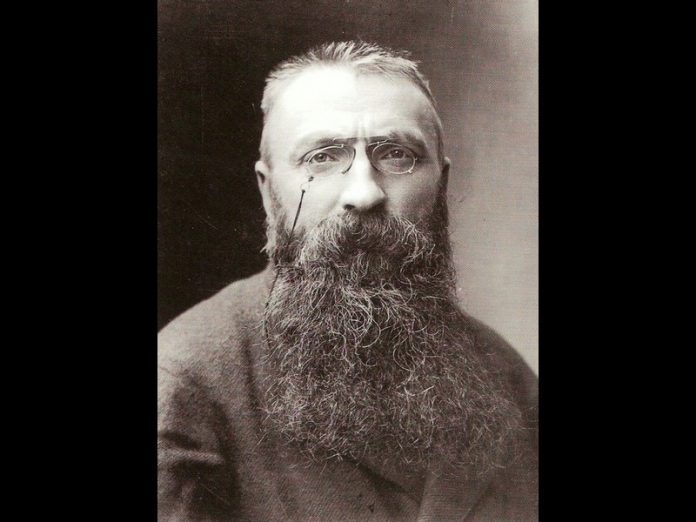
100 years ago today, the Rodin Museum opened in Paris, containing works left to the state by the famous sculptor Pierre Auguste Rodin. Centered in the Hotel Biron, Rodin wrote in 1909, “I bequeath to the state all my works in plaster, marble, bronze, and stone, together with my drawings and the collection of antiquities that I had such pleasure in assembling for the education and training of artists and workers.” Here one can find The Thinker, The Kiss, The Age of Bronze, and other of his most famous works. READ more…(1919)
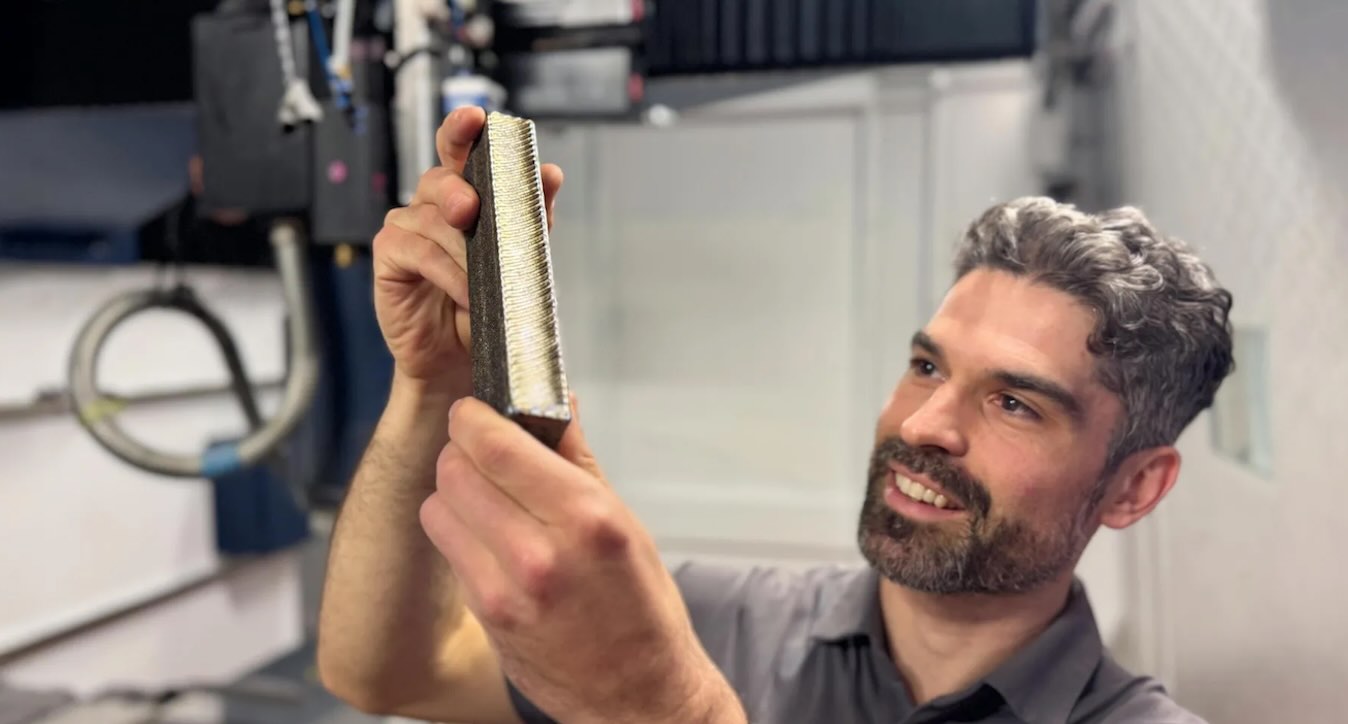
Ryan Brooke inspects a sample of the new titanium – Photo by Michael Quin (RMIT University)
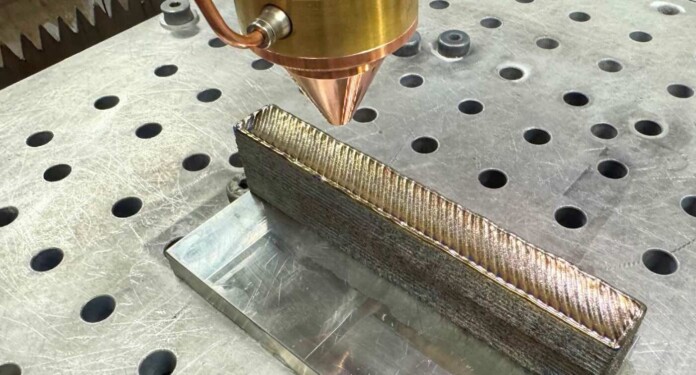
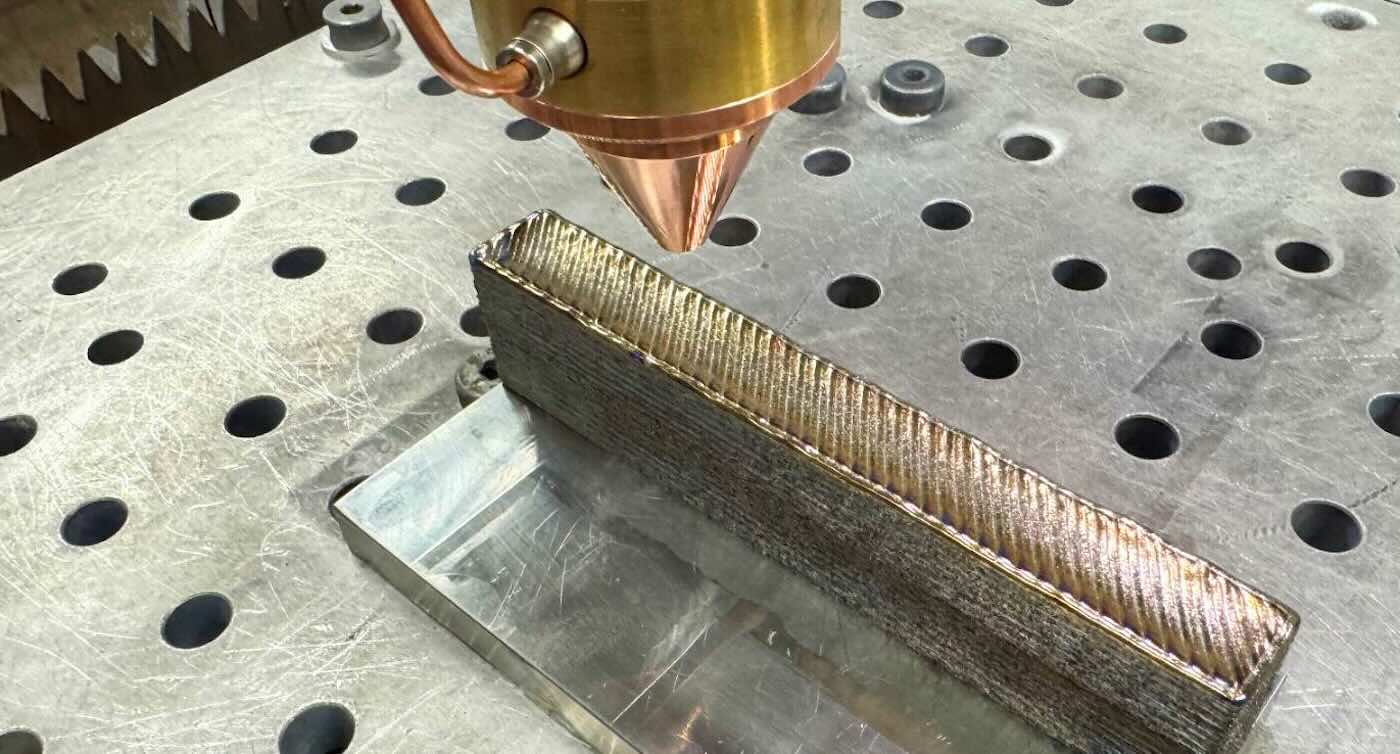
Engineers from an Australian University have produced a new type of 3D-printed titanium that’s about a third cheaper than commonly used titanium alloys.
A team of engineers at the Royal Melbourne Institute of Technology (RMIT) developed the groundbreaking alloy by replacing expensive vanadium with more accessible elements. By rethinking how titanium alloys are designed, the team created a material with improved performance and more uniform microstructure—key factors for aerospace and medical applications.
The team has filed a provisional patent on their innovative approach, which has also been outlined in a paper published in Nature Communications.
The study’s lead author Ryan Brooke, working at the university’s Centre for Additive Manufacturing, will investigate the next steps of commercializing the technology, saying the field of 3D-printed titanium alloys was ripe for innovations.
“3D printing allows faster, less wasteful and more tailorable production yet we’re still relying on legacy alloys (like Ti-6Al-4V) that doesn’t allow full capitalization of this potential. It’s like we’ve created an airplane and are still just driving it around the streets,” he said in a university press release.
“New types of titanium and other alloys will allow us to really push the boundaries of what’s possible with 3D printing and the framework for designing new alloys outlined in our study is a significant step in that direction.”
Besides being nearly 30% cheaper to manufacture, the latest study outlines a time- and cost-saving method to select elements for alloying, providing a clearer path for predicting the grain structure so the metal can print more evenly, avoiding the column-shaped microstructures that lead to uneven mechanical properties in some 3D printed alloys.
Photo credit: RMIT
“By developing a more cost-effective formula that avoids this columnar microstructure, we have solved two key challenges preventing widespread adoption of 3D printing,” said Brooke, a PhD candidate.
He recently talked to aerospace, automotive, and MedTech industry representatives about their needs.
“What I heard loud and clear from end users was that to bring new alloys to market, the benefits have to not just be minor incremental steps but a full leap forward.
“We have been able to not only produce titanium alloys with a uniform grain structure, but with reduced costs, while also making it stronger and more ductile.”
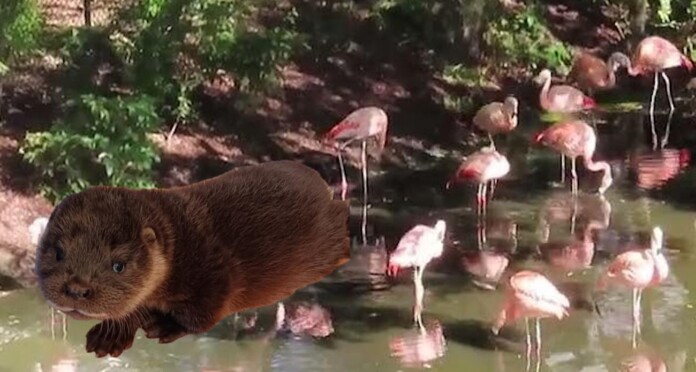
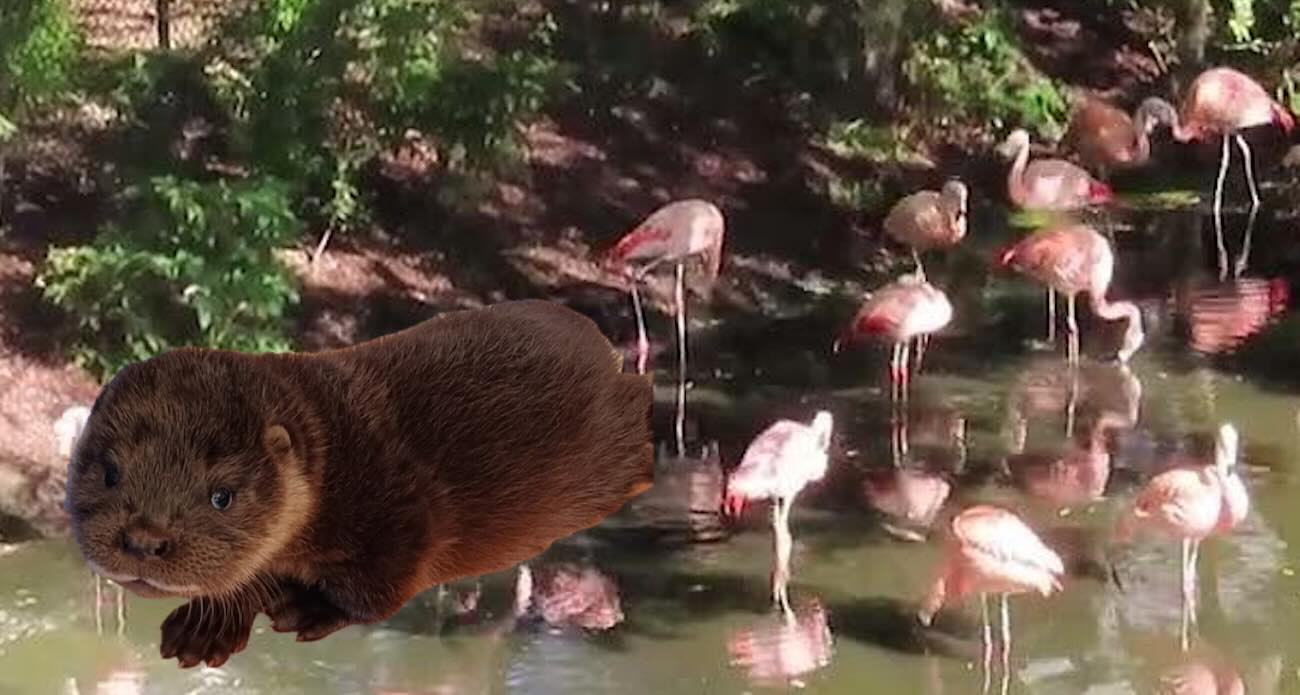
Mingo in foreground with flamingo enclosure in Colchester Zoo in background (file photo)
Mingo pasted into foreground with flamingo enclosure in Colchester Zoo in background (file photo)
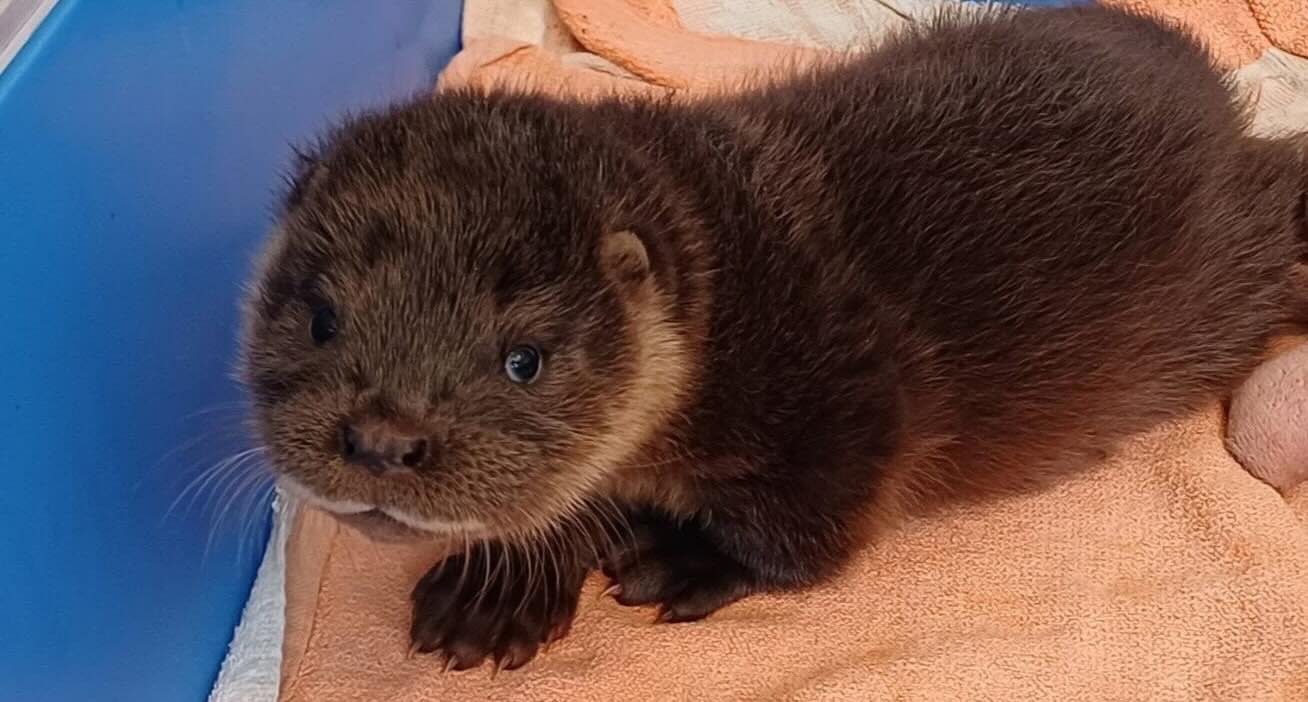
A wild otter cub has left officials baffled after he was found inside a flamingo habitat at a zoo in England.
The tiny cub now affectionately named Mingo was found all alone on the shoreline, weighing under 2 pounds (800 grams).
Only a few months old, the orphan surprised the staff at Colchester Zoo in Essex, when they found him ‘snoring’ peacefully.
“Mingo was found early in the morning, curled up on the bank of the main lake out in the open, fast asleep and snoring his head off,” said the zoo’s Jody Bedford, who initially found Mingo.
“We gave him a few hours to see if Mum would reappear.
“Knowing otters, it’s odd behavior to see a pup out in the open like he was. He seemed very strong and was very vocal when awake.”
Wild otters, which are usually born in groups of two to three and stay with their mums for around a year, are native to the UK and can be found along wetlands, rivers, and coastal areas.
Mingo was taken to Wildlives Rescue in Colchester who transferred him into the hands of experts at the UK Wild Otter Trust in North Devon.
Mingo (via SWNS)
“We’re still baffled as to how Mingo ended up in the flamingo habitat,” said Dave Webb, founder of the otter nonprofit. “It’s a total mystery.”
“But what’s absolutely clear is that he wouldn’t have survived much longer on his own.
“Otter cubs this young rely entirely on their mothers, and without immediate intervention, Mingo’s chances were zero.
“Thanks to the quick response from Colchester Zoo and Wildlives Rescue, we’ve been able to give him a second chance at life, and he’ll be released back into the wild when he’s strong enough.”
The UK Wild Otter Trust has been caring for and advocating for the protection of otters since 1998.
Their team of tireless volunteers is now working to ensure Mingo receives the round-the-clock feeding, warmth, and monitoring he needs to grow strong, before returning to the wild.
SHARE A SWEET CHUCKLE With Animal-Lovers on Social Media…
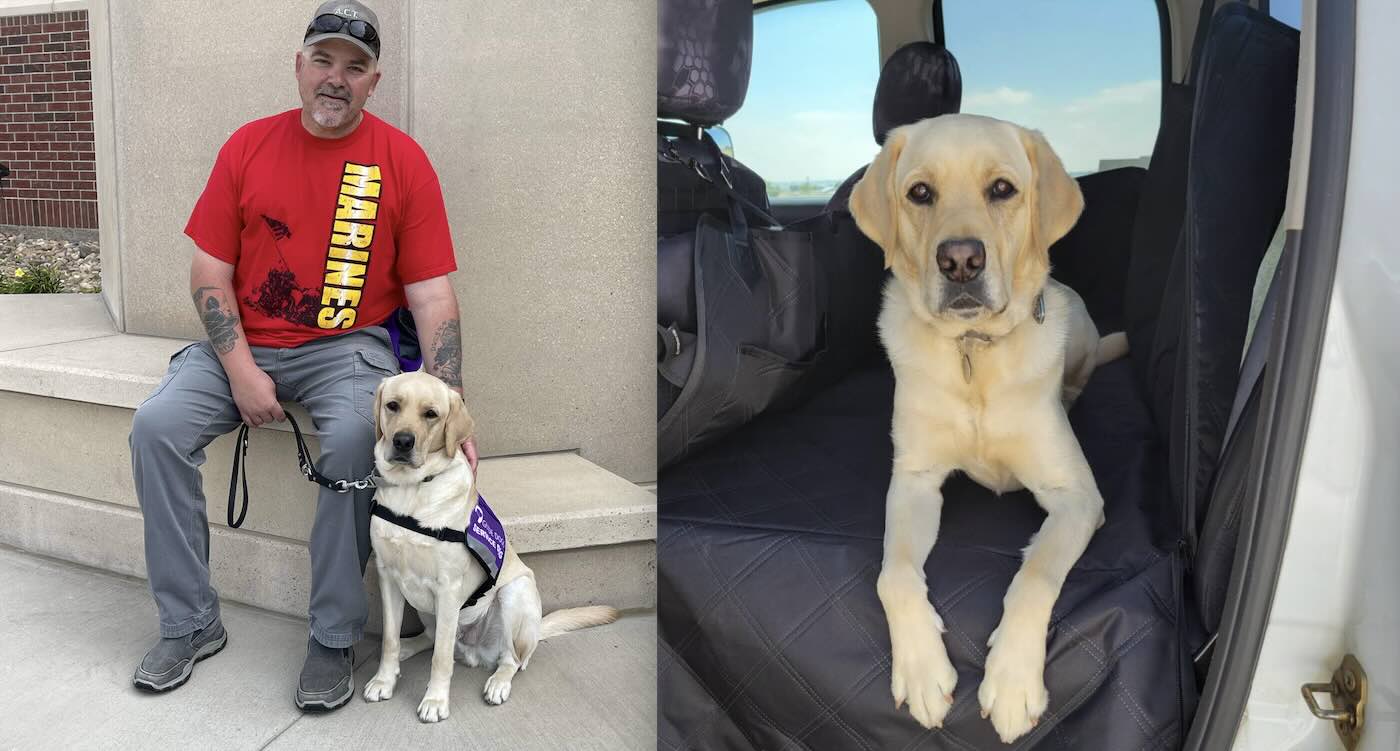
The Labrador usually lets Hank sleep late—but not on this particular day. Something was wrong. Very wrong.
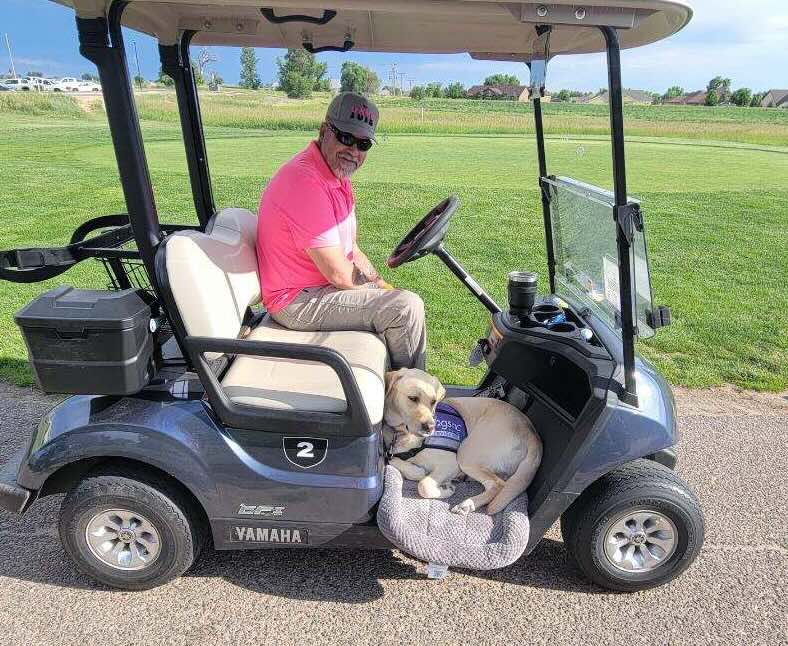
The service dog named Tommy had been with Hank Ford since he was a pup, and he knew his owner was at risk. He started nudging Hank with his nose, then pawing at him, and jumping on his body.
Get up. Get up. Get up.
Hank figured the dog needed to go outside a little earlier than normal. But when Hank stood up, he was light-headed and woozy, starting to sense that something was wrong too. He opened the door to let the dog outside, but Tommy didn’t budge.
54-year-old Hank kept feeling worse. He decided to check his vital signs with a blood pressure cuff and was startled by the results.
His pulse was a staggering 171 beats per minute.
The military veteran who had served for more than 20 years, called his local veterans hospital, but they thought his vital readings were obviously wrong, that he simply misused the machine.
Hank and Tommy both knew better, so the resident of Fort Lupton, Colorado, drove himself to the hospital, and the diagnosis arrived a few minutes later.
“They were freaking out about it,” Hank recalled, when doctors confirmed his vital signs. “It was good that Tommy woke me up.
“Something about the way he woke me up: He hasn’t done it before and he hasn’t done it since,” Hank told GNN. “Doctors said, more than likely, it would have been a stroke and it would have been a (big) one.”
What he was experiencing is AFib—an irregular heartbeat characterized by a rapid rhythm. The upper chambers of the heart beat out of sync with the lower chambers, and the condition can lead to reduced blood flow and cause strokes—or even death.
This recent event was not the only time Tommy helped save Hank’s life.
Service dog Tommy working at the golf course – Credit: Hank Ford
Years ago, Hank was in a self-described dark spot. He had spent decades of his selfless military service in high-stress situations, a hero in harm’s way. Desert Shield. Desert Storm. Bosnia. Operation Iraqi Freedom.
Then, when he left the military, he worked for years at a federal penitentiary, adding even more layers of stress.
All those experiences and memories weren’t easily forgotten. Hank had a significant case of PTSD (Post-Traumatic Stress Disorder). He didn’t like dealing with people or going out in public. He slept a lot and stayed at home, sheltering himself from the outside world.
His doctors encouraged him to pursue a service dog. And when his hunting dogs— also Labradors—passed away, Hank reached out to the Wounded Warrior Project for a service dog. That organization helped connect him with Dogs Inc, a nonprofit that provides guide dogs, service dogs, and therapy dogs, free of charge, to people in need.
Not long afterward, Hank and Tommy were united and the impact was immediate.
“We bonded fast,” Hank said. “I have had some good connections with dogs, but nothing like what we have…
“He would key the clues I was putting out really quickly. If you stress out, he will come out and look at you and put his chin on you and be like, ‘Hey, are you okay?’ It was a calming presence. And it was really quick. I was ready to have a dog again, but wasn’t expecting what I got.”
Hank received a new best friend and a new path forward.
Life started looking a whole lot better. And when Hank’s heart was on the verge of a potentially-fatal malfunction and he was stabilized in the hospital, his wife brought the dog in to see him. Tommy crawled right up onto Hank’s bed and laid across his body.
The dog stayed there for hours, just inches away from the beating heart of the man he had helped to heal years ago. So perhaps it’s no surprise that he was the crucial first responder and hero when Hank’s heart spun wildly out of rhythm.
“I knew dogs were man’s best friend for a reason,” Hank said. “He takes it above and beyond that.”
SHARE THIS STORY ON SOCIAL MEDIA WITH YOUR OWN BEST FRIEND…
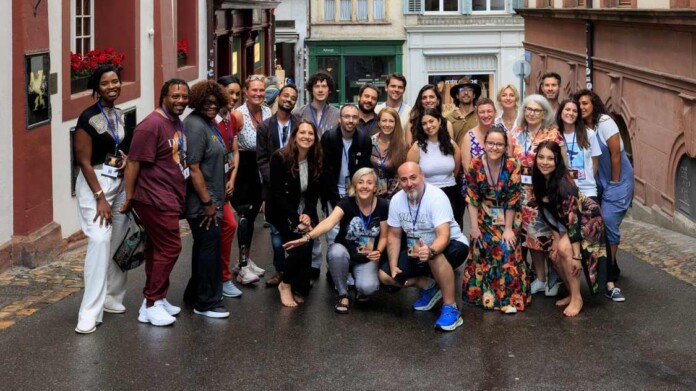
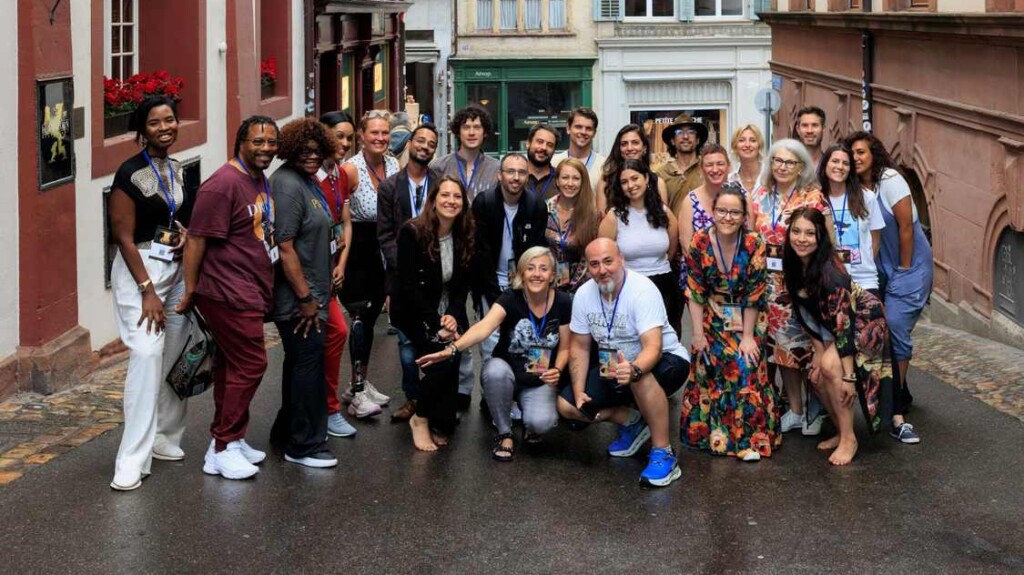
The first day attendance, in the old town of Basel - credit : Natalia Lorenzo, Maribel Lorenzo, Birgitte Kronsbjerg, Jonas Singer.
The first day attendance, in the old town of Basel – credit : Natalia Lorenzo, Maribel Lorenzo, Birgitte Kronsbjerg, Jonas Singer.
Average folk might have all kinds of questions about the World Economic Forum and what goes on there, but for two visionary women, the question was clear: where are all the artists?
For such a high-profile gathering of world leaders, thought leaders, and business leaders, how could there be no room for authentic creativity?
That burning inquiry inevitably led them to ask: if Klaus Schwab can organize a conference in a beautiful Swiss town and try to plan the future of human society, shouldn’t artists help expand that vision, bringing bold perspectives, fresh imagination, and the soul, story, and spirit of our time to the decision-making tables?
The Future of Humanity Experience, recently concluded across five locations in Basel during Art Basel Week, could be styled as a complementary expansion of what was inaugurated in Davos earlier this year. Hosted, energized, and enlivened through art and collaboration, four full-day events unfolded, each gathering a new constellation of 40 co-creators from diverse disciplines and from all corners of the globe to co-create a shared vision of the future.
Artists and organizers Iwona Fluda and Murièle ‘Solange’ Bolay put together the whole event in roughly 4 months, guided by a shared understanding of the scope and character of the project that almost never needed to be explained or spoken aloud.
Speaking to American media for the first time since the successful event launch during ArtBasel, the two women document their remarkable journey and success in creating what may become one of the most hotly anticipated conferences in Europe.
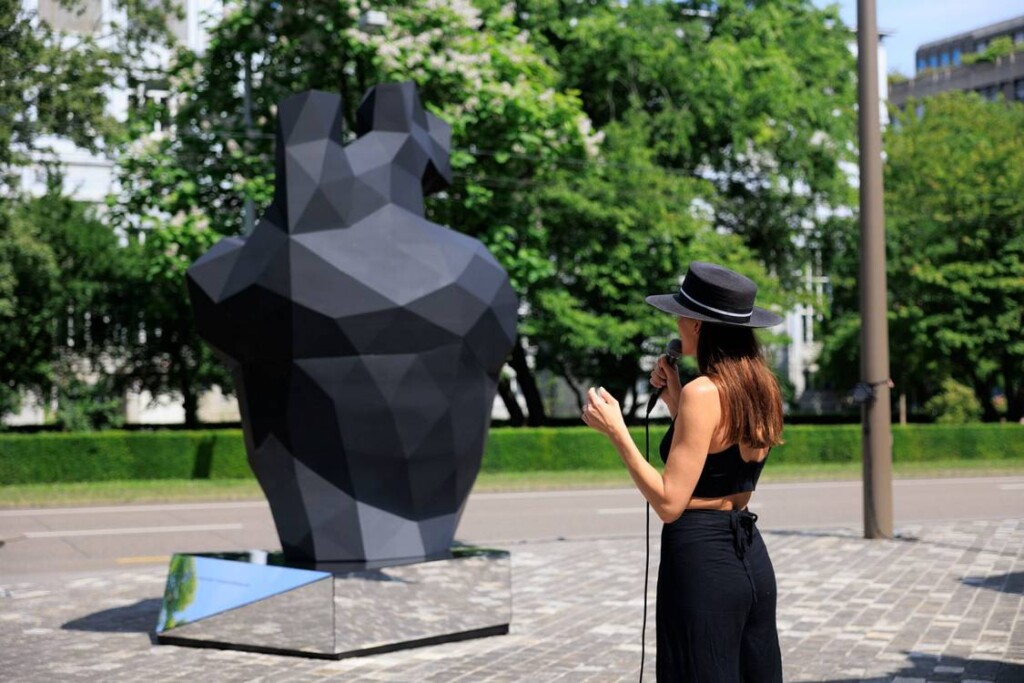
Event artist Replicah (Sabrina Bühlmann) invites the conference to immerse themselves in her street-side installation – credit: Natalia Lorenzo, Maribel Lorenzo, Birgitte Kronsbjerg, Jonas Singer.
Meeting in the ‘Under Davos
“I have been to Davos during the World Economic Forum 4 times at least, and I felt that creatives and artists are not represented there,” said Fluda, originally from Poland. “There is a type of void and missing space.”
“How come in this huge arena of world leaders, politicians, entrepreneurs, business people and investors there’s very little creativity or creative output visible?”
Solange, who has been attending the WEF on and off since 2007, recalls a different energy back then.
“In my opinion, it was very different then than what it is now. It was a lot more exclusive to attend the inner programs,” she told GNN. “Now, the village area has opened up to a much broader audience, and that’s where more conscious, less transactional conversations start to flow.”
According to her, Davos village is now the largest circle and what attracts the most independent thought leaders and entrepreneurs during WEF Week today. It’s also where the two women, who met through entrepreneur chats, curated an art exhibition that offered a glimpse of what stages like Davos could become if artists and creatives were given a place in the spotlight.
Originally proposed in Davos, their Future of Humanity Art Walk was a resounding success, reaching over 300,000 people worldwide, welcoming 4,000 on-site visitors, and featured artists from all continents, ranging in age from 6 to 85. With just seven weeks of preparation, what began as a small passion project quickly evolved into a full-blown immersive experience and event week during Art Basel.
“With my company MSB & Partners, we’ve been doing business transformations for over 18 years, and for the past 2.5 years, we’ve started incorporating art into these transformation processes.” Solange says. The paintings not only help inspire new ways of thinking and problem solving, she says, but act as an “anchor”, reinforcing that transformative mindset among company employees.
By Solange’s estimation, most enterprising activities focus on predicting certain trends, gravitating towards mega trends, and then somewhere in between products and services arrive on the market, a process she describes as “very brainy and calculated.”
“It’s a transactional focus versus an explorational one where we design the world we want to see.” In the case of the Future of Humanity Experience, co-designing a world was a notion both women had arrived at independently: with society changing so fast, what kind of world do we want to live in?
“We both have worked in different setups… internally in organizations; externally, as consultants, as business owners, and for me personally it was always the question about how can we really co-create things together without fighting against each other?” Fluda said.
“There really wasn’t time to think about it too much,” Solange remembers. “We were just in action mode and we were kind of ‘guided’ by a vision, that we never really spoke about, but we seemed to have and it was a very special time.”
Co-creators viewing an exhibited work by Maritsa Kissamitaki – credit: Natalia Lorenzo, Maribel Lorenzo, Birgitte Kronsbjerg, Jonas Singer.
The Future of Humanity Experience
The bootstrapped and crowdsourced events were a whirlwind 9 months of envisioning, organizing, partaking in, and debriefing after the most recent Future of Humanity Experience in Basel.
“How I operate is more like, ‘oh, there is an idea’—just this little spark. ‘I align with that, I feel like there is so much more we can do, how about we run the 1st sprint and see if it sticks?,'” Fluda told GNN. “That’s kind of my approach for anything. And then, if it does, as in this case, surprisingly, it did, then what else can we do with that?”
Some 100 artists from all around the world—from Trinidad and Tobago to China—submitted works for the exhibitions.
A week of enjoying curated art shows, presentations, open forums, and exquisite catered lunches left this reporter exhausted, but with a distinct feeling that Fluda and Solange had struck a chord with the very fabric of Western society.
The advent of the internet has seen the metaphorical ‘public square’ distributed online, while the traditional forums of our time: the corner cafe, the library, the bookstore, the townhall—have lost their relevance.
Academia’s trend towards hyper-specialization dampens cross-disciplinary dialogue; the behavior of our public intellectuals gradually came to be governed by social media engagement, and the rise of the digital influencer means that from travel, to fitness, to history and politics, topics are examined almost exclusively at the surface level.
The curated exhibitions at the Future of Humanity Experience were powerful. The themes they explored were broad and impactful, but even if an attendee has never visited an art gallery in their lives, what the event offers is the ‘forum’ as it may have been in our ancestors’ day. Here was a chance to discourse with mastery and enterprise from all over the professional world, and for the noblest of aims—co-creating a vision of the future we’d all like to see.
“I was there as a business person,” Solange says remembering her first art exhibit in Under Davos, “no one knew who created those pieces.”
“So I was able to listen to the conversations that happened in front of these canvases, and it was so interesting because it’s exactly the conversations that we want to hear happening, you know, in the boardrooms.”
After a successful launch, their outlook is broad and bright. Fluda and Solange perceive the future of the Future of Humanity Experience to be more than just an art exhibit, but a force, a forum, a service, and a community. Next year’s edition can only be bolder.
SHARE These Artists’ Bold Vision With Your Friends On Social Media…
Quote of the Day: “Nobody loves someone because they are handsome or ugly, stupid or intelligent. We love because we love.” – Honore de Balzac
Photo by: Nathan Dumlao
With a new inspirational quote every day, atop the perfect photo—collected and archived on our Quote of the Day page—why not bookmark GNN.org for a daily uplift?
On this day 99 years ago, Tony Bennett, the famed jazz and pop singer, who passed away just last year, was born. Bennett revealed in February that he was diagnosed with Alzheimer’s in 2016, but it’s been progressing slowly. “Touring keeps him on his toes and also stimulates his brain in a significant way,” said his doctor. Along with 6 dates in 2021, Bennett will perform tonight and Thursday with Lady Gaga at NYC’s Radio City Music Hall, celebrating a friendship that began a decade ago with a song on Bennett’s Duets album, that led to their LP Cheek to Cheekand its concert tour. READ more about this legend of the stage… (1926)
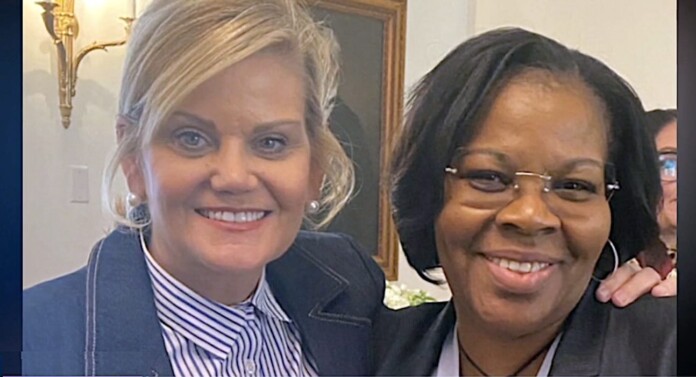
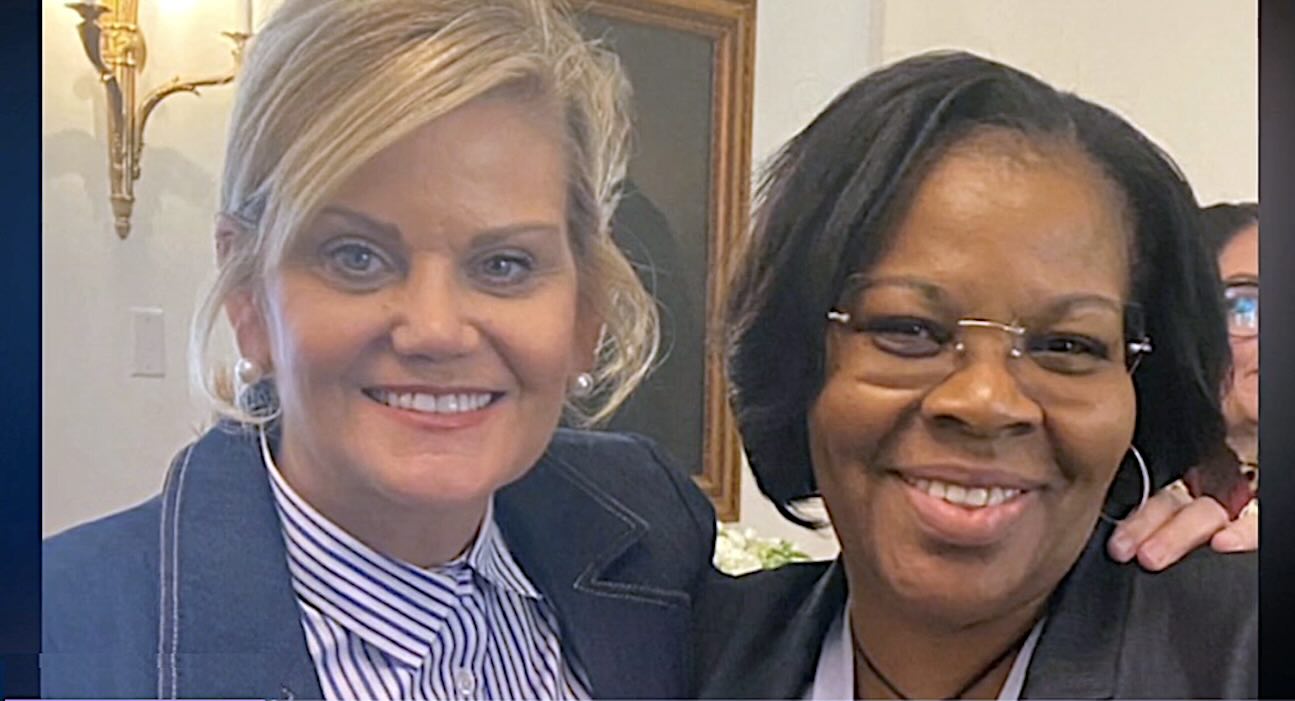
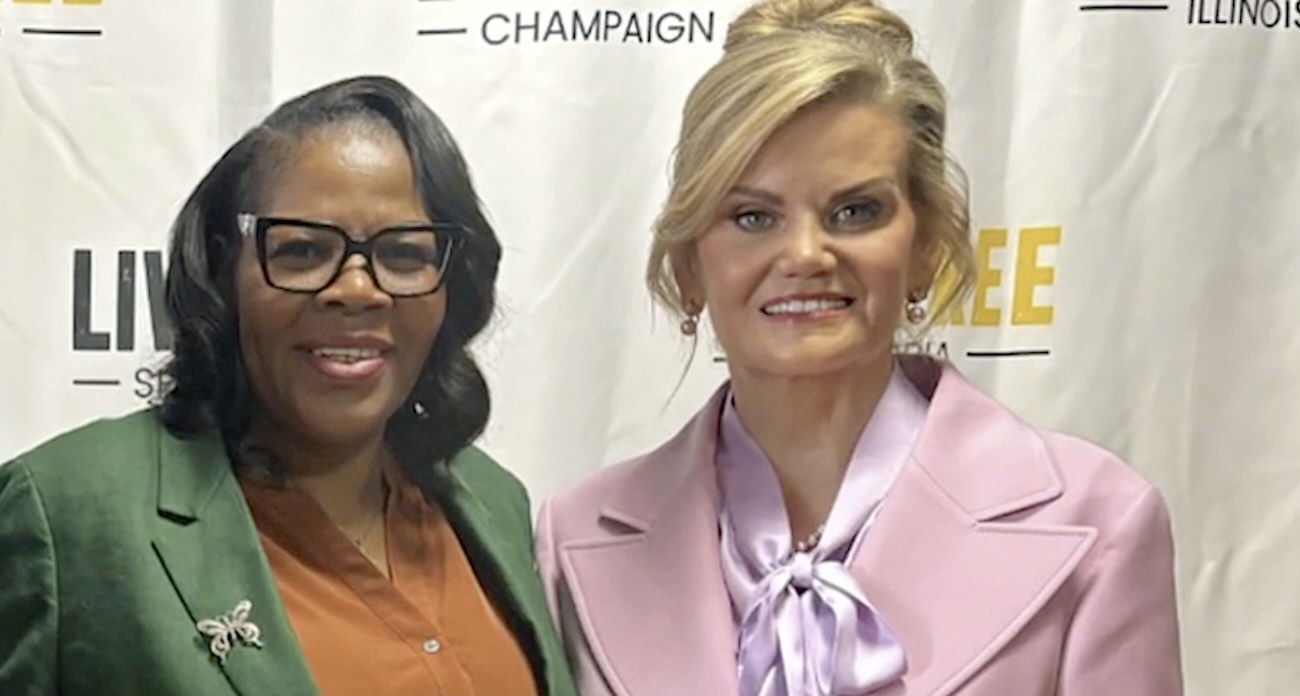
Illinois First Lady M.K. Pritzker with Willette Benford
Illinois First Lady M.K. Pritzker with Willette Benford
A pair of lives that diverged down different paths have now become unlikely partners, merged within a common cause.
60-year-old Willette Benford spent 24 years—nearly half her life—in an Illinois prison until a change in state laws expedited her release.
While behind bars though, Ms. Benford earned her GED and an associate’s degree, became an ordained minister, and provided much-needed counsel to support her fellow inmates.
When she was released, she entered a residential program called the Grace House, a nonprofit ministry that provides housing, counseling, and other critical support for women who are exiting the Illinois Prison System.
Stacking successes, she was soon hired as a legislative assistant for a Chicago alderman, Walter Burnett Jr.
“I am what it looks like to give someone a fair chance,” Benford told CBS News Chicago, WBBM-TV 2. “Not a handout, but a hand up.”
Benford became a powerful testimonial about what to do with a second chance. Others soon took notice.
Chicago Mayor Lori Lightfoot, who hoped to empower other people following prison sentences, appointed Benford the city’s first director of re-entry. Her work focused on providing support to those who were recently released from jail.
One of her initiatives was to orchestrate a reform of the city’s background checks so certain crimes would not automatically disqualify candidates from local jobs.
Benford’s efforts earned the attention of the state’s first lady, who was also becoming passionate about improving the lives of inmates after incarceration—especially women.
M.K. Pritzker, the wife of Illinois Governor J.B. Pritzker, first met Benford when she was at the Grace House. She followed Benford’s work in the Windy City—and in 2023 offered her a job in the first lady’s office as the senior advisor on women’s issues.
Willette Benford and Illinois First Lady M.K. Pritzker
The duo from different paths are now collaborating, aiming to improve access to housing, employment, and mental health care, so every Illinois female can achieve their own ‘second-chance’ success.
“She brings an intelligence and a vigor to this work that I don’t think anybody else could do,” Pritzker said on CBS. “I believe in Willette and I think there’s good in every person, and there’s a whole lot of good in Willette.”
Soon, the pair will launch a pilot program that provides childcare, housing, and job training for 100 women recently released from prison.
Thanks to their work, there will soon be other stories like Benford’s, tales of women who exited prison and found their way to success on the other side.
“You know, the lesson is you just really shouldn’t judge people,” Pritzker said. “You need to give people grace and it’s really amazing what two women from two completely different backgrounds can do when they join forces.”
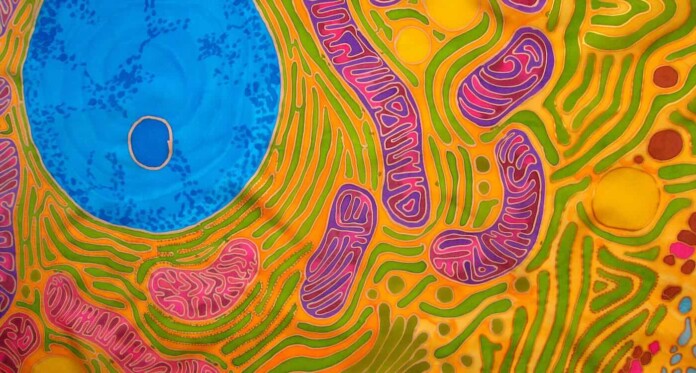
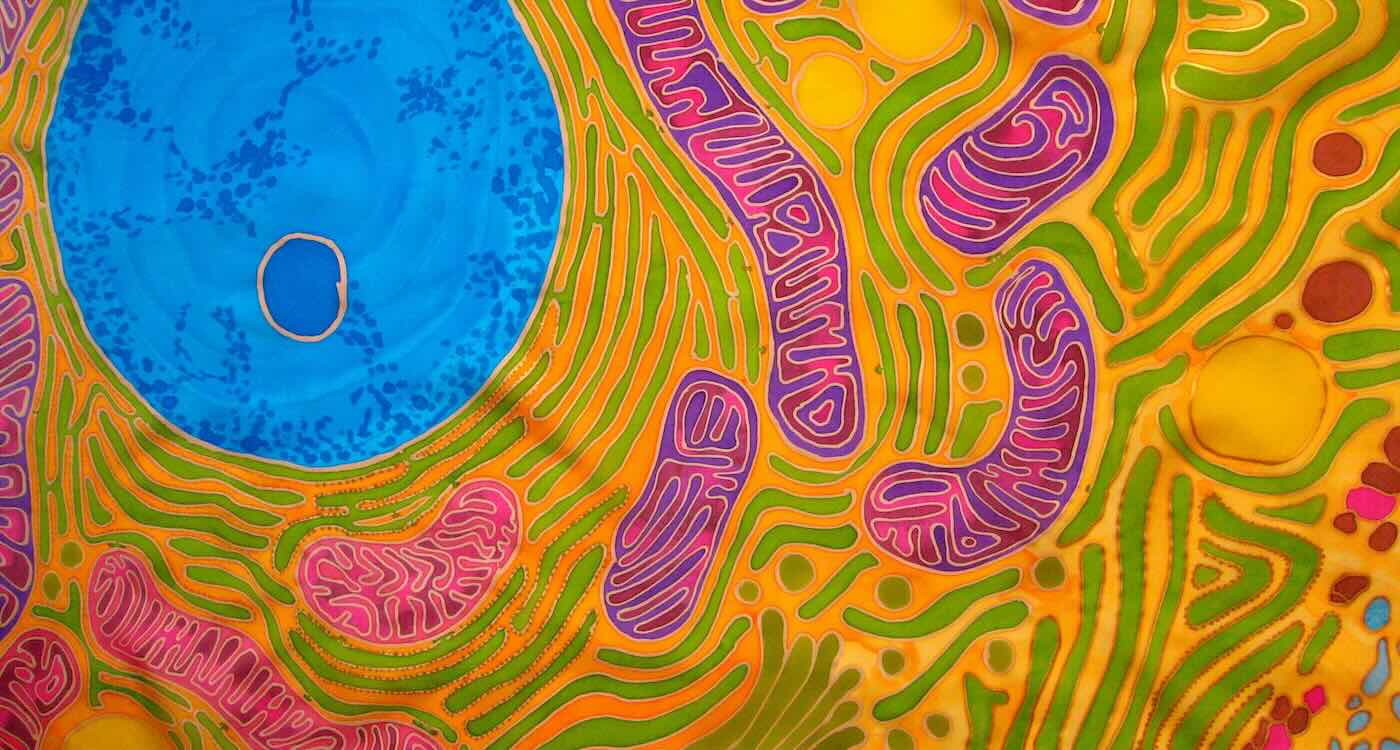
Cell with mitochondria – Painting by Dr. Odra Noel, CC BY-NC 4.0
Cell with mitochondria – Painting by Dr. Odra Noel, CC BY-NC 4.0
(Article by Jackie Rocheleau originally published by Knowable Magazine)
Infusion of the tiny, sausage-shaped structures helps to rejuvenate tissues deprived of blood. Researchers hope the technique can treat a variety of damaged organs.
James McCully was in the lab extracting tiny structures called mitochondria from cells when researchers on his team rushed in. They’d been operating on a pig heart and couldn’t get it pumping normally again.
McCully studies heart damage prevention at Boston Children’s Hospital and Harvard Medical School and was keenly interested in mitochondria. These power-producing organelles are particularly important for organs like the heart that have high energy needs. McCully had been wondering whether transplanting healthy mitochondria into injured hearts might help restore their function.
The pig’s heart was graying rapidly, so McCully decided to try it. He loaded a syringe with the extracted mitochondria and injected them directly into the heart. Before his eyes, it began beating normally, returning to its rosy hue.
Since that day almost 20 years ago, McCully and other researchers have replicated that success in pigs and other animals. Human transplantations followed, in babies who suffered complications from heart surgery — sparking a new field of research using mitochondria transplantation to treat damaged organs and disease. In the last five years, a widening array of scientists have begun exploring mitochondria transplantation for heart damage after cardiac arrest, brain damage following stroke, and damage to organs destined for transplantation.
Mitochondria are best known for producing usable energy for cells. But they also send molecular signals that help to keep the body in equilibrium and manage its immune and stress responses. Some types of cells may naturally donate healthy mitochondria to other cells in need, such as brain cells after a stroke, in a process called mitochondria transfer. So the idea that clinicians could boost this process by transplanting mitochondria to reinvigorate injured tissue made sense to some scientists.
From studies in rabbits and rat heart cells, McCully’s group has reported that the plasma membranes of cells engulf the mitochondria and shuttle them inside, where they fuse with the cell’s internal mitochondria. There, they seem to cause molecular changes that help recover heart function: When comparing blood- and oxygen-deprived pig hearts treated with mitochondria to ones receiving placebos, McCully’s group saw differences in gene activity and proteins that indicated less cell death and less inflammation.
About 10 years ago, Sitaram Emani, a cardiac surgeon at Boston Children’s Hospital, reached out to McCully about his work with animal hearts. Emani had seen how some babies with heart defects couldn’t fully recover after heart surgery complications and wondered whether McCully’s mitochondria transplantation method could help them.
During surgery to repair heart defects, surgeons use a drug to stop the heart so they can operate. But if the heart is deprived of blood and oxygen for too long, mitochondria start to fail and cells start to die, in a condition called ischemia. When blood begins flowing again, instead of returning the heart to its normal state, it can damage and kill more cells, resulting in ischemia-reperfusion injury.
Since McCully’s eight years of studies in rabbits and pigs hadn’t revealed safety concerns with mitochondria transplantation, McCully and Emani thought it would be worth trying the procedure in babies unlikely to regain enough heart function to come off heart-lung support.
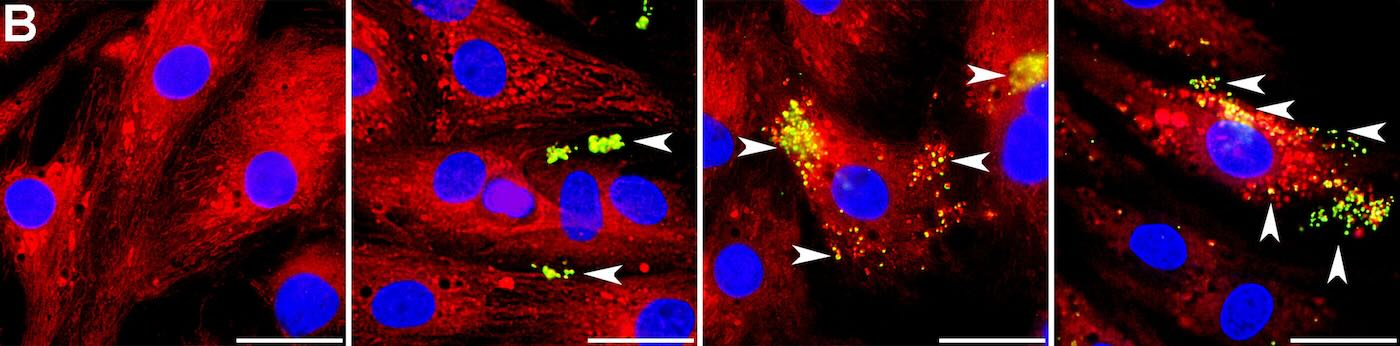
The left image shows rat heart cells that did not receive a transplant. The three other images show (left to right): donated mitochondria (yellow-green) outside of rat heart cells two hours after transplantation; donor mitochondria inside cells eight hours later; and donor mitochondria inside and outside of cells 24 hours later. CREDIT: A. MASUZAWA, AMERICAN JOURNAL OF PHYSIOLOGY–HEART AND CIRCULATORY PHYSIOLOGY 2013
Parents of 10 patients agreed to the experimental procedure, which was approved by the institute’s review board. In a pilot that ran from 2015 to 2018, McCully extracted pencil-eraser-sized muscle samples from the incisions made for the heart surgery, used a filtration technique to isolate mitochondria and checked that they were functional. Then the team injected the organelles into the baby’s heart.
Eight of those 10 babies regained enough heart function to come off life support, compared to just four out of 14 similar cases from 2002 to 2018 that were used for historical comparison, the team reported in 2021.
The treatment also shortened recovery time, which averaged two days in the mitochondrial transplant group compared with nine days in the historical control group. Two patients did not survive — in one case, the intervention came after the rest of the baby’s organs began failing, and in another, a lung issue developed four months later. The group has now performed this procedure on 17 babies.
The transplant procedure remains experimental and is not yet practical for wider clinical use, but McCully hopes that it can one day be used to treat kidney, lung, liver and limb injuries from interrupted blood flow.
The results have inspired other clinicians whose patients suffer from similar ischemia-reperfusion injuries. One is ischemic stroke, in which clots prevent blood from reaching the brain. Doctors can dissolve or physically remove the clots, but they lack a way to protect the brain from reperfusion damage.
Walker came across McCully’s mitochondrial transplant studies 12 years ago and, in reading further, was especially struck by a report on mice from researchers at Massachusetts General Hospital and Harvard Medical School that showed the brain’s support and protection cells — the astrocytes — may transfer some of their mitochondria to stroke-damaged neurons to help them recover. Perhaps, she thought, mitochondria transplantation could help in human stroke cases too.
She spent years working with animal researchers to figure out how to safely deliver mitochondria to the brain. She tested the procedure’s safety in a clinical trial with just four people with ischemic stroke, using a catheter fed through an artery in the neck to manually remove the blockage causing the stroke, then pushing the catheter further along and releasing the mitochondria, which would travel up blood vessels to the brain.
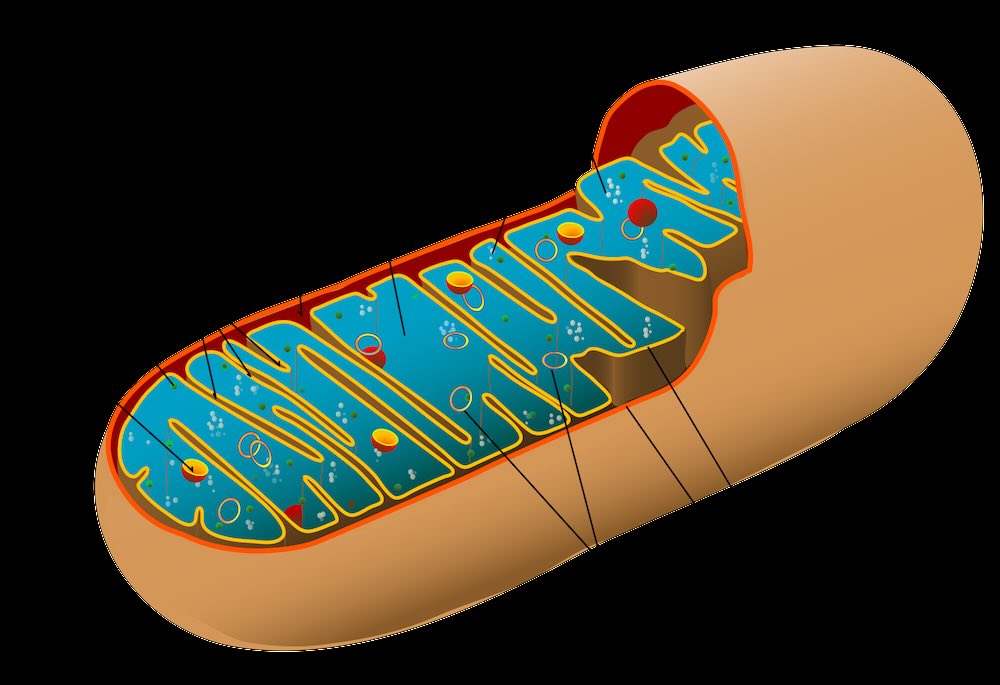
Animal mitochondrion diagram by Mariana Ruiz Villarreal
The findings, published in 2024 in the Journal of Cerebral Blood Flow & Metabolism, show that the infused patients suffered no harm; the trial was not designed to test effectiveness. Walker’s group is now recruiting participants to further assess the intervention’s safety. The next step will be to determine whether the mitochondria are getting where they need to be, and functioning. “Until we can show that, I do not believe that we will be able to say that there’s a therapeutic benefit,” Walker says.
Researchers hope that organ donation might also gain from mitochondria transplants. Donor organs like kidneys suffer damage when they lack blood supply for too long, and transplant surgeons may reject kidneys with a higher risk of these injuries.
To test whether mitochondrial transplants can reinvigorate them, transplant surgeon-scientist Giuseppe Orlando of Wake Forest University School of Medicine in Winston-Salem and his colleagues injected mitochondria into four pig kidneys, and a control substance into three pig kidneys. In 2023 in the Annals of Surgery, they reported fewer dying cells in the mitochondria-treated kidneys, and far less damage. Molecular analyses also showed a boost in energy production.
It’s still early days, Orlando says, but he’s confident that mitochondria transplantation could become a valuable tool in rescuing suboptimal organs for donation.
The studies have garnered both excitement and skepticism. “It’s certainly a very interesting area,” says Koning Shen, a postdoctoral mitochondrial biologist at the University of California, Berkeley, and coauthor of an overview of the signaling roles of mitochondria in the 2022 Annual Review of Cell and Developmental Biology. She adds that scaling up extraction of mitochondria and learning how to store and preserve the isolated organelles are major technical hurdles to making such treatments a larger reality. “That would be amazing if people are getting to that stage,” she says.
“I think there are a lot of thoughtful people looking at this carefully, but I think the big question is, what’s the mechanism?” says Navdeep Chandel, a mitochondria researcher at Northwestern University in Chicago. He doubts that donor mitochondria fix or replace dysfunctional native organelles, but says it’s possible that mitochondria donations triggers stress and immune signals that indirectly benefit damaged tissue.
Whatever the mechanism, some animal studies do suggest that the mitochondria must be functional to impart their benefits. Lance Becker, chair of emergency medicine at Northwell Health in New York who studies the role of mitochondria in cardiac arrest, conducted a study comparing fresh mitochondria, mitochondria that had been frozen then thawed, and a placebo to treat rats following cardiac arrest. The 11 rats receiving fresh, functioning mitochondria had better brain function and a higher rate of survival three days later than the 11 rats receiving a placebo; the non-functional frozen-thawed mitochondria did not impart these benefits.
It will take more research into the mechanisms of mitochondrial therapy, improved mitochondria delivery techniques, larger trials and a body of reported successes before mitochondrial transplants can be FDA-approved and broadly used to treat ischemia-reperfusion injuries, researchers say. The ultimate goal would be to create a universal supply of stored mitochondria — a mitochondria bank, of sorts — that can be tapped for transplantation by a wide variety of health care providers.
“We’re so much at the beginning — we don’t know how it works,” says Becker. “But we know it’s doing something that is mighty darn interesting.”
(PRNewsfoto/Annual Reviews)
This article originally appeared in Knowable Magazine under CC BY-ND 4.0 license, a nonprofit publication dedicated to making scientific knowledge accessible to all. Sign up for Knowable Magazine’s newsletter.
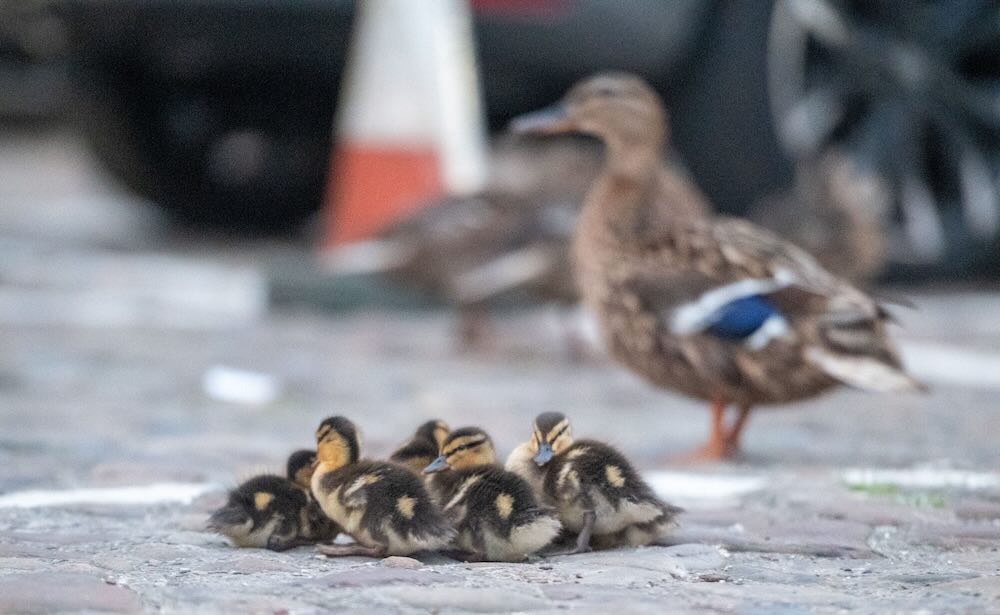
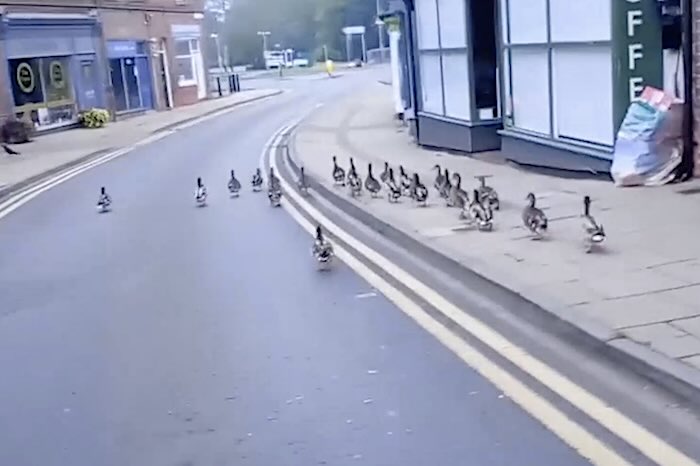
Duck families safely navigate town streets every night in Thirsk England thanks to volunteers - SWNS
Duck families safely navigate town streets every night in Thirsk England thanks to volunteers – SWNS
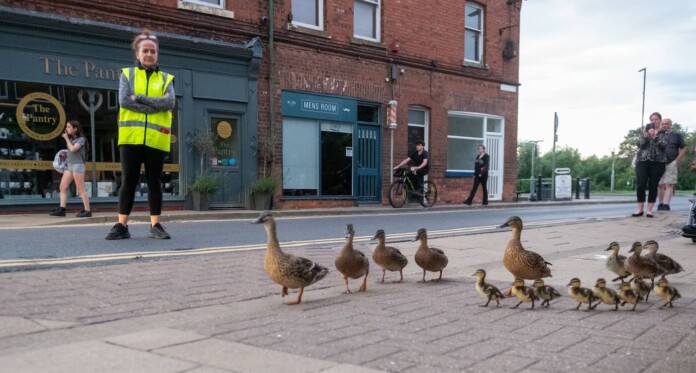
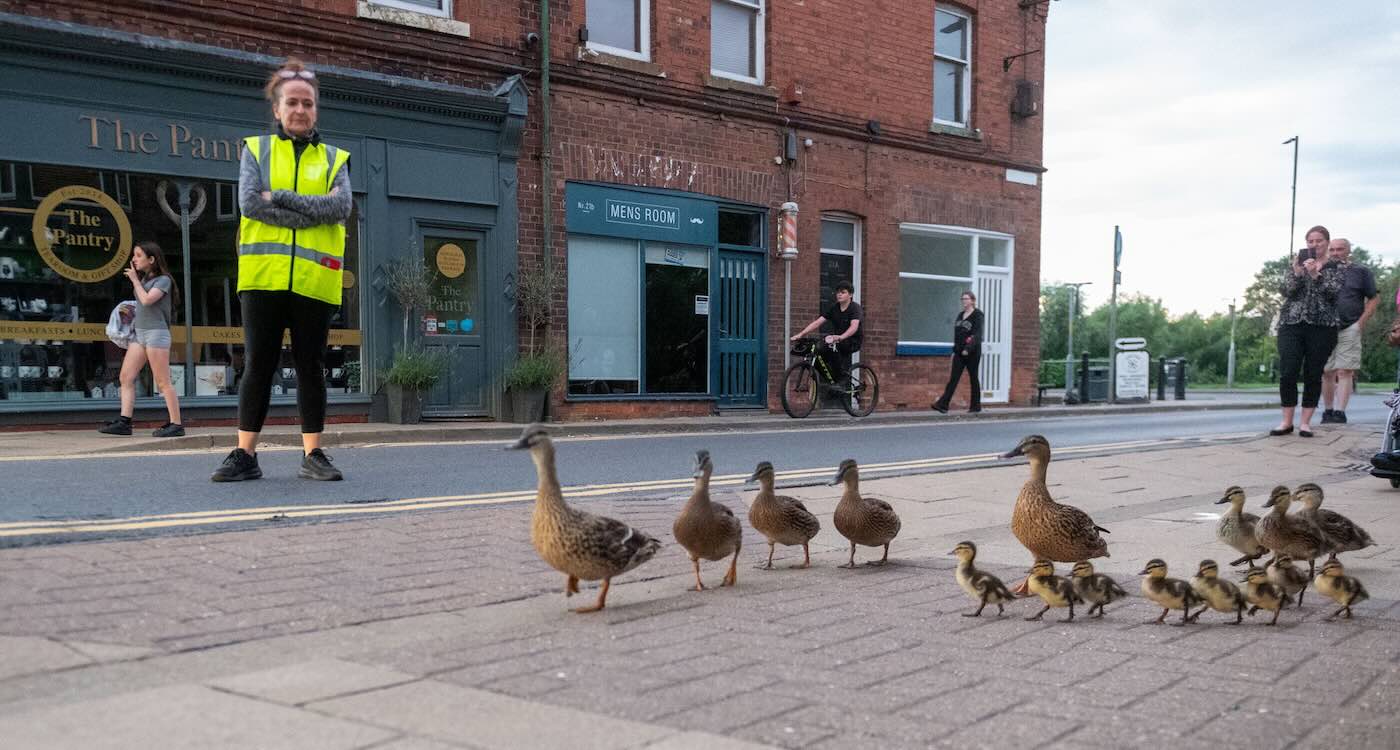
Volunteer ‘duck wardens’ are helping a group of mallards safely waddle across town after they chose a parking lot as the best place to roost with their ducklings.
15 citizens have answered the duck call in Thirsk, North Yorkshire, rotating shifts to personally escort 20 birds to the town center every evening.
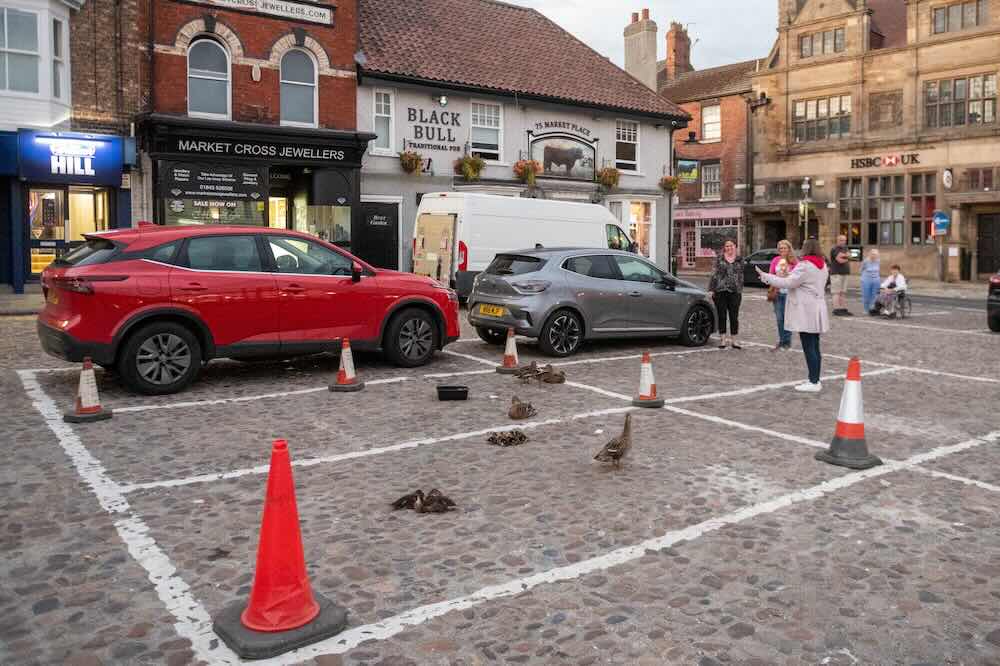
The birds start the 15-minute journey from The Cod Beck river at around 8:30pm and head to the market square car park where they sleep until around 4:30am the next morning.
Mystery surrounds the reasons why the ducks make the daily trip, but some believe the mothers feel safer sleeping with their ducklings away from riverside predators.
Emma-Jayne Hutchings, one of the volunteers acting as a crossing guard, thinks it might be because the cobblestones they sleep on are warm. Whatever the reason, it has now become a learned behavior.
“It is really heartwarming and adorable escorting the ducks on their walk,” the 48-year-old business advisor told SWNS news agency.
Volunteer crossing guard keeps ducks safe nightly in Thrisk-SWNS
“You know whenever they are leaving (the river) as they all start quacking like a call for arms then they march up in two battalions.
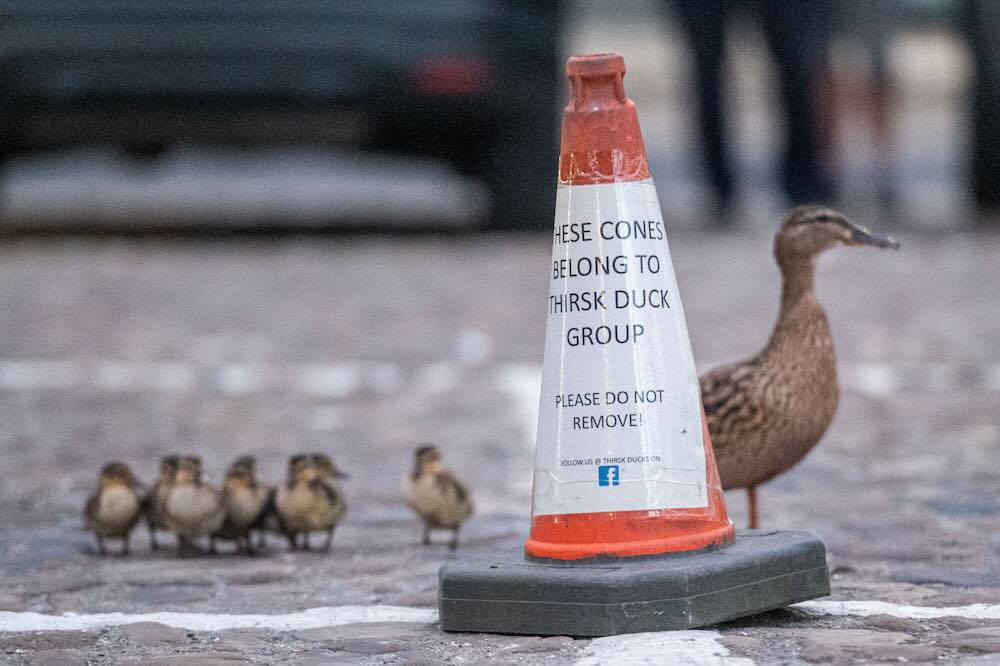
Once the waterfowl have reached their parking lot, the volunteers place traffic cones around them and watch over until the town falls silent at around 11pm on weekdays or sometimes as late as 2:30am on the weekend, when there may be ‘drunk revelers’ heading home from the pub that adjoins the car park.
Sleepy ducks kept safe with traffic cones –SWNS
Perhaps best of all, Emma-Jayne says it brings the town in northern England together.
“It has brought a wealth of community spirit with all parts getting involved to make sure the ducks are safe.
“We have been donated high-visibility jackets to wear. One local pub, the Mowbray Arms provides us with cups of tea or coffee whilst we watch over the them.
“It has been a really nice way to meet like-minded people, who have since become friends.”
Traffic cone marks sleeping spot for Thirsk ducks-SWNS
The mallards first started making the trek last year and, unsupervised, it led to four being killed whilst crossing the road.
As a result, Jodie Wood set up a Facebook page and now organizes volunteers along with Emma to keep them safe.
“I made a Facebook group asking if anyone wanted to help me with the ducks and it got lots of responses.”
Mallard duck with ducklings and traffic cones-SWNS
The ducks begin their evening adventures in mid-June and continue doing so until the beginning of December.
The volunteers say they don’t encourage the ducks to make the walk. They only look after them while they make the decision on their “own terms”.
Flock of ducks walking through town – SWNS
“They start walking at about 8:30pm and we walk with them and wait to see where they want to go—and put the cones around them,” said Jodie.
“Sometimes we get drunk revelers trying to touch them, mess with them, and walk through them. But 99 percent of the time it’s fine and people just come to chat and take pictures.”
She has lived in the town all her life but has never seen this animal behavior before.
“Something is scaring them away.
“There are a lot of rodents who linger in the area. We think there is a mink down there. It could also be a cat or a fox, but we aren’t 100 percent sure.”
So far, the volunteer group has tallied zero fatalities on their watch, since helping the ducks to safely navigate the route.
FREE WILL ASTROLOGY – Week of August 2, 2025
Copyright by Rob Brezsny, FreeWillAstrology.com
LEO (July 23-Aug. 22):
In ancient China and ancient Greece, the lion was not the king of beasts, but the guardian of gates. The threshold keeper. The one who asked, “Are you ready?” Now is a good time to bring this aspect of Leonine symbolism to your attention. You may soon feel a surge of leadership radiance, but not necessarily the stage-commanding kind. It will be more like priest and priestess energy. Gatekeeper presence. People and situations in your orbit are on the verge of transformation, and you can be a midwife to their transitions—not by fixing or moralizing, but by witnessing. So I invite you to hold space. Ask potent questions. Be the steady presence ready to serve as a catalyst.
VIRGO (Aug. 23-Sept. 22):
The love-fakers and promise-breakers and delusion-makers are no fun, but I think you will ultimately be grateful they helped you clarify your goals. The reverse healers and idea-stealers and greedy feelers are perilous to your peace of mind in the short run, but eventually they will motivate you to create more rigorous protections for your heart, health, and stability. In conclusion, Virgo, it’s one of those odd times when people with less than pure intentions and high integrity can be valuable teachers.
LIBRA (Sept. 23-Oct. 22):
The Svalbard Global Seed Vault is built into a Norwegian mountain near the Arctic. It’s humanity’s backup garden. It stores over a million seed varieties from all over the world, serving as a safeguard for biodiversity. In accordance with astrological omens, Libra, I invite you to imagine yourself as resembling a seed vault. What valuable capacities are you saving up for the future? Are there treasures you contain that will ensure your long-term stability and security? Which of your potentials need to get extra nurturing? Bonus: Now is a good time to consider whether you should activate any of these promises.
SCORPIO (Oct. 23-Nov. 21):
There’s a myth in Gnostic traditions that Sophia, the Goddess of Divine Wisdom, split herself apart and dispersed into the material world. She became embedded in every stone, plant, and drop of blood. And she’s still here, murmuring truth from within every part of the material world. In Sophia’s spirit, Scorpio, here is your message: Wisdom isn’t elsewhere. It’s embedded in your body; in your grief; in the wood grain of your table and the ache behind your eyes. More than ever, you have a mandate to celebrate this gift. So for now, refrain from thinking that spirituality is about transcendence and ascendance. Instead, greet the sacred in the dust and mud. Listen for Sophia in the ordinary. She speaks in sighs and sparks, not sermons.
SAGITTARIUS (Nov. 22-Dec. 21):
When I do tours to promote the books I write, the range of encounters can be wide. On one trip, over 300 people came to see me at a bookstore in New York City. They listened raptly, posed interesting questions, and bought 71 books. In Atlanta three days later, I was greeted by nine semi-interested people at a small store in a strip mall. They purchased three books. But I gave equal amounts of energy at both gigs. The crowd in Atlanta got my best, as did the audience in New York. I invite you to regard me as a role model, Sagittarius. Proceed as if every experience deserves your brightest offerings. Express yourself with panache no matter what the surroundings are.
CAPRICORN (Dec. 22-Jan. 19):
In ancient Egyptian cosmology, ka is the vital essence and the double of a person that lives on after death. But it also walks beside you while you live. It drinks, eats, and dreams. It is both you and more than you. Dear Capricorn, I invite you to tune in to your ka in the coming days, and any other spiritual presences that serve you and nourish you. Be alert for visitations from past selves, forgotten longings, and future visions that feel eerily familiar.
AQUARIUS (Jan. 20-Feb. 18):
“Dear Rob Brezsny: I wonder what you are like in person. Sometimes I get a Gen X vibe, like you wear vintage t-shirts from obscure bands, are skeptical but not cynical, and remember life before the internet, but are tech savvy. Other times, you seem like a weird time-traveler visiting us from 2088. It’s confusing! Are you trying to be a mystery? When’s your next public appearance? I want to meet you. —Aquarian Explorer.” Dear Aquarian: I’m glad I’m a riddle to you. As long as I avoid being enmeshed in people’s expectations and projections, I maintain my freedom to be my authentic self, even as I continually reinvent my authentic self. By the way, I recommend you adopt my attitude in the coming weeks.
PISCES (Feb. 19-March 20):
In Norse mythology, the god Odin plucked out one of his eyes and hung himself upside down from the World Tree for nine days. Why would he do such a thing? The ancient stories tell us this act of self-sacrifice earned him the right to learn the secret of the runes, which held the key to magic, fate, and wisdom. You don’t need to make a sacrifice anywhere near that dramatic, Pisces. But I do suspect you are primed for a comparable process. What discomfort are you willing to endure for the sake of revelation? What illusions must you give up to see more clearly? I dare you to engage in an inner realignment that brings metamorphosis, but not martyrdom.
ARIES (March 21-April 19):
For many bamboo species, nothing visible happens for years after the seeds are sowed. Beneath the surface, though, the plants are developing an extensive underground root system. This is referred to as the “sleep” or “creep” phase. Once the preparatory work is finished, the above-ground growth explodes, adding as much as three feet of stalk per day. Dear Aries, I sense you have been following a similar pattern. Soon you will launch a phase of vigorous evolution and expansion. It might feel unsettling at first, but I predict you will come to adore it.
TAURUS (April 20-May 20):
You are very close to uncovering interesting information about yourself—some new, some forgotten. But you will have to be brave and strategic to actually find it. If you manage to pull off this demanding-but-not-impossible trick, a series of breakthroughs may stream your way. Like what? Here are the possibilities. 1. A distorted self-image will fade. 2. An adversary’s hex will dissolve. 3. An inhibition will subside, freeing you to unite with a fun asset. 4. You will knock down a barrier that has been so insidious you didn’t know how strong it was.
GEMINI (May 21-June 20):
In medieval music, “organum” refers to passages that feature two voices. One is sung in long, sustained notes, and the other performs intricate, faster-moving melodic lines above it. This is an apt metaphor for the roles I invite you to take on in the coming weeks, Gemini: both the drone and the melody. One way to do it is to hold steady in one realm as you improvise in another. Another is to offer your allies doses of stability and inspirational dreams. Welcome the duality! You are capable of both deep-rooted rhythm and visionary risk; both fortifying truth and playful fun.
CANCER (June 21-July 22):
Cancerian author Ernest Hemingway had a reputation for bravado, but he was adept at wielding the protective, self-nourishing skills your sign is renowned for. He was sensitive about his works-in-progress, refusing to discuss unfinished stories. He understood that raw creative energy needed to be sheltered from kibitzing until it could stand on its own. “The first draft of anything is shit,” he said, but he also knew that defending the right to write that mediocre first draft was essential for him to thrive. Hemingway’s ability to channel his emotional vulnerability into moving prose came from establishing firm boundaries around his generative process. I recommend you do all that good stuff in the coming weeks, dear Cancerian.
WANT MORE? Listen to Rob’s EXPANDED AUDIO HOROSCOPES, 4-5 minute meditations on the current state of your destiny — or subscribe to his unique daily text message service at: RealAstrology.com
Quote of the Day: “Better keep yourself clean and bright; you are the window through which you must see the world.” – George Bernard Shaw
Photo by: Daniel Schaffer
With a new inspirational quote every day, atop the perfect photo—collected and archived on our Quote of the Day page—why not bookmark GNN.org for a daily uplift?
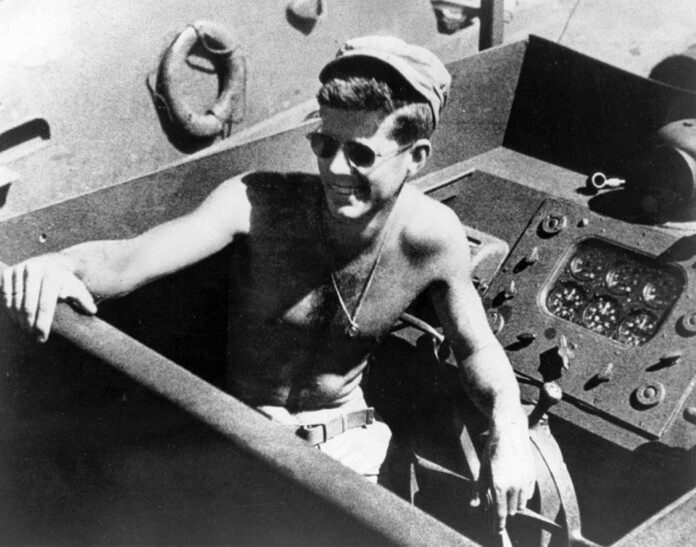
Lt John F. Kennedy as skipper aboard PT-109 - public domain
82 years ago today, in combat with the Japanese during the Solomon Islands Campaign in World War II, Patrol torpedo boat PT-109 was rammed by the Japanese Destroyer Amagiri. Its commanding officer, a certain Lieutenant John F. Kennedy, undertook almost single-handedly to rescued his crew of 12 men, saving all but two in the process, while being seriously injured. The event won Kennedy multiple decorations for bravery, and made him a bona fide war hero. READ how the event unfolded… (1943)