Now, the Labour party has pledged that—if elected in the upcoming October 17 elections—all energy generation in the country will be 100% renewable by 2030. This ups a previous target of phasing out all non-renewable energy by 2035.
According to a party statement, the pledge involves accelerating “the electrification of the transport and industrial sectors” and investing “in emerging technologies such as green hydrogen while continuing to make energy affordable New Zealanders.”
“The COVID-19 economic recovery represents a once in a generation opportunity to reshape New Zealand’s energy system to be more renewable faster, affordable and secure,” said Ardern.
#BREAKING: We’ve just released our clean energy policy, which outlines that if re-elected we will bring forward our 100% renewable electricity generation target by five years to 2030. pic.twitter.com/D3JOB3fiMa
“Investment in renewable energy is also jobs rich. Our plan will creating new jobs and develop the high skill workforce our future economy needs to thrive.”
Labour Energy Spokesperson Megan Woods added, “New Zealand produces 84 percent of its electricity from renewable sources now, but we can do better. We will stop activities that increase our emissions by, for example, banning new thermal baseload generation; and promote clean energy development.
“Our plan for clean energy and lower carbon emissions will help us seize the economic opportunities of being the clean, green country that New Zealanders see ourselves as being and that we can market ourselves as.”
The government also sees further investment in clean energy as being a means of reducing the country’s reliance on imported energy.
“We can produce some of the cleanest green hydrogen in the world,” explained Woods, “and potentially receive a premium for it in international markets.”
If New Zealand’s Labour Party wins the national election and meets its promises, the country could soon join Iceland and Paraguay in the list of nations that rely on 100% renewable sources for energy.
Costa Rica is also an impressively green state, with 99% of its energy coming from green sources.
Back in 2017, Southern California firefighters rescued a 4-month-old puppy from a raging wildfire.
The Great Dane/Lab mix was placed in an Anaheim animal shelter, with hopes of being reunited with her owners. When no family came to claim her, she was put up for adoption.
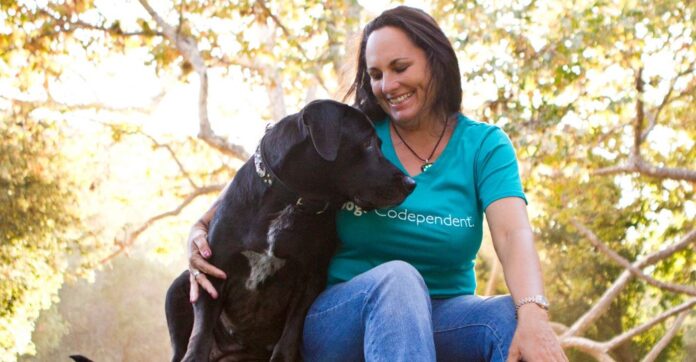
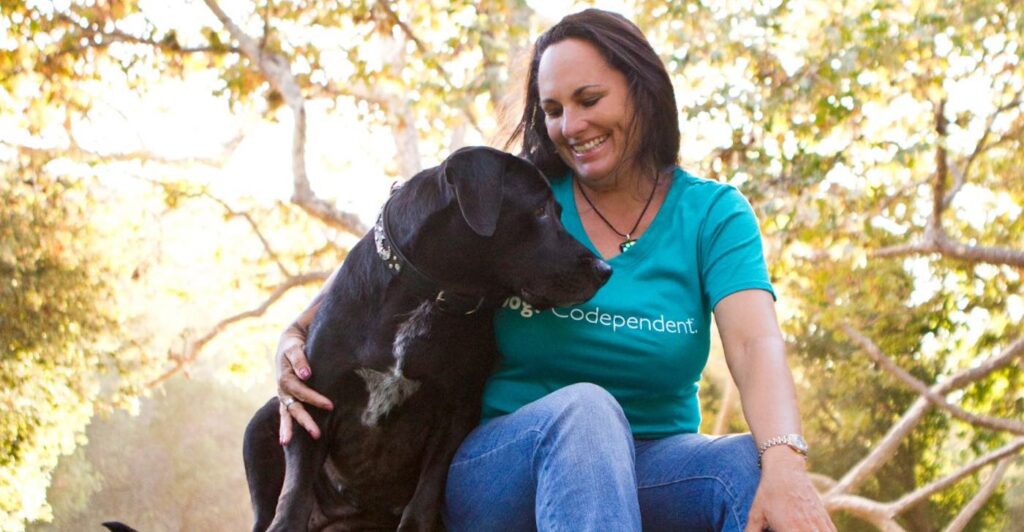
Debra Jo Chiapuzio
The pup’s soulful brown eyes and engaging demeanor soon won the heart of Debra Jo Chiapuzio, a former medical tattoo artist who’d employed her skills to lend emotional support to burn victims and cancer survivors.
In addition to her “ink creds,” Chiapuzio was also a longtime teaching practitioner of animal first aid and CPR.
She named her new fur baby Emma Zen because “she’s as Zen as her name—super mellow, super sweet, easygoing, and very adventurous,” Chiapuzio said in an interview with TODAY.
Even before adopting Emma Zen, no one understood better than Chiapuzio the devastating toll California wildfires were taking companion animals. Along with that knowledge, Chiapuzio saw an untapped need she felt destined to fulfill.
Chiapuzio started out by donating 17 specially fitted pet oxygen masks to the Anaheim fire department. She trained the firefighters to use them—but in her heart, she knew there was more to be done.
So, in 2011, Chiapuzio launched the nonprofit Emma Zen Foundation with the goal of distributing pet oxygen masks and offering education in their proper use to as many first responders as possible.
The dynamic duo of Chiapuzio and Emma Zen has since been checking in with fire stations up and down the West Coast.
As a result of their efforts—along with some much-appreciated help from a variety of donors including Girl Scout troops, the Annenberg Foundation, and numerous individuals—so far, the Emma Zen Foundation has been able to distribute 7,500 pet oxygen masks nationwide.
With the increasing frequency and severity of wildfires in the States, Chiapuzio eventually decided to dedicate herself to the Emma Zen foundation full-time.
At 13, in spite of a bit of age-related doggy arthritis, Emma Zen the canine still keeps her dog mom company as she makes the rounds.
“If I died tomorrow, we left behind—Emma and I—something that means more to me than anything, and that’s the animals on this planet,” Chiapuzio said. “This has been my biggest accomplishment, and I was led there by a dog.”
BARK Your Praise For This Initiative And Share The Story With Your Friends…
When a person retires after many years of service, they traditionally receive a card full of farewell wishes from their colleagues, and often a thoughtful gift—a framed photo or a large bouquet of flowers, perhaps.
That tradition has been turned on its head at one UK company: The boss is retiring, and he’s gifting £10 million ($12.7 million) to his employees as a goodbye.
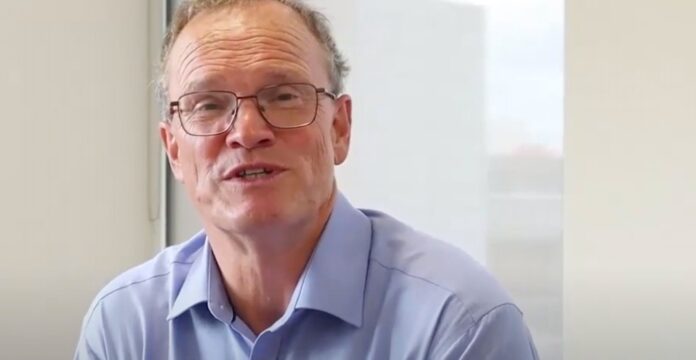
David Stevens is the chief executive of Admiral, the successful Wales-based motor insurance company that’s been listed on the London Stock Exchange since 2004. He co-founded the business with his wife Heather in 1991.
Starting with a team of just 57, they now have 7,500 staff in the south of Wales, and 3,000 overseas in the US, Spain, Italy, France, India, and Canada.
Full-time workers will get £1,000 ($1,270), and part-time staff will receive £500 ($635).
The 58-year-old CEO explained to the BBC, “Saying thank you to all Admiral staff in this way is the right thing to do.” We’re “proud and fortunate to have worked with a such a special group of people.”
Stevens isn’t the only businessperson to do good recently.
After four decades of making secret donations, the Irish-American duty-free shopping billionaire Chuck Feeney has managed to give away his entire fortune at the age of 89.
(WATCH the Odgers Berndtson video below for Stevens’ wise words for future leaders…)
Multiply The Good News By Sharing With Your Friends On Social Media…
An Australian company has produced a seaweed-based dietary supplement for dairy and beef cows that eliminates 80% of the methane content emitted by the animals.
Dave, CC license
If only 10% of global cattle herds consumed the supplement, created by FutureFeed Ltd, it would be the same as taking 50 million cars off the roadways.
Trialled for efficacy over five years with help from the Australian national science agency (CISRO), the supplement is based on a species of seaweed called Asparagopsis, and has been deemed safe for lifetime use in cows.
Furthermore, in news that will cause beef/ozone lovers to jump for joy, $13 million has already been secured from five investors to allow FutureFeed to establish the entire supply chain—from seaweed cultivation to production and distribution, and the company expects to see commercial volumes of the feed additive supplied into the Australian beef and dairy market by mid-2021, with international markets to follow.
Over a billion people globally depend on methane-emitting livestock for their livelihoods, and their presence in the economies of the developed and more importantly, the developing world, is nearly irreplaceable.
Winning the war
According to FutureFeed, animal protein is the only reliable source of protein and key micronutrients for 1 billion of the world’s inhabitants experiencing food insecurity.
However, ungulate burps, a long-persecuted source of greenhouse gases actually represent a fairly low percentage of GHGs in the world—about 5%.
Nevertheless, the battle to slow climate change has had scientists concerned about that 5% for years. Experts are quick to point out that ungulates emit methane, a powerful greenhouse gas. It’s about 28 times more powerful than carbon dioxide at warming the Earth over a hundred years, and 80 times more powerful over the course of two decades—so their impact on the atmosphere belies the small overall percentage.
Fortunately for ranchers, consumers, and the thousands of industries that rely on cow products, such as pet food, cosmetics, pharmaceuticals, and more, methane only stays in the atmosphere for 12 years, compared to the CO2 life cycle of around 1,000.
This means FutureFeed’s supplement will need only a few years before virtually erasing the atmospheric footprint of livestock methane production.
“FutureFeed enables agriculture and the environment to be partners not competitors, helps overcome negative perceptions of the cattle industry, and gives Australian farmers an advantage in the global marketplace as first adopters of this Aussie innovation,” Chief Executive Dr Larry Marshall of CISRO said.
“FutureFeed is addressing some of the greatest challenges we face, including food security, sustainable production and climate change, by turning science into a real product in the hands of business so they can turn it into jobs and economic growth.”
Good News Network reported earlier this year on a similar, garlic-based supplement produced in Switzerland called Mootral, that was found to reduce methane emissions from cows by 30-38%; not nearly as much as FutureFeed, but market competition is important to drive innovation—even in “public good” sectors like carbon reduction, and so having two separate supplements available will only increase the chances that the following two decades will see an end to the concerns of animal agriculture as a direct GHG producer.
SHARE The Good Green News With Your Pals On Social Media…
Representative file photo by Witches Falls Cottages, CC
Taking a hot bath several times a week has been shown in a study to possibly reduce your risk for blood pressure and diabetes.
Representative file photo by Witches Falls Cottages, CC
These findings came from a cohort study of 1,300 individuals in three different bathing groups—those who took a hot bath less than one, from one to four, and four or more, times a week.
Consistent with other findings based on the therapeutic benefits of extreme heat, the European Association for the Study of Diabetes collected measurements like blood pressure, body mass, and blood tests, and found that those with a higher frequency of bathing saw decreases in body weight, diastolic blood pressure, and glycated hemoglobin (a marker of blood sugar).
The highest average risk reductions were observed in those who bathed four or more times a week for a mean duration of 16 minutes, and the improvements in blood pressure and blood sugar were observed in adults regardless of weight, age, sex, or medications taken.
“Heat therapy, shown here with hot tub bathing, can be one effective therapeutic option for type 2 diabetes in daily life. An alternative form of heat exposure might be nutrition therapy and exercise,” noted Hisayuki Katsuyama, MD, in a report with Medscape news.
Heat shock therapy
One of the reasons heat therapy, as Katsuyama pointed out, can produce positive results with diabetes is that as blood moves from your core to your skin to facilitate sweating in the hot environment of a Jacuzzi or a hot bath, your heart starts to beat faster—up to 150 beats per minute, which is about the same as moderate intensity exercise.
Since exercise is an all-cause mortality mitigator, it’s no surprise the similar physiological effect would be beneficial for such significant morbidity factors like high-blood pressure, or diabetes.
A Finnish sauna session was found to increase heart-rate variability, which is indicative of the heart’s capacity to react strongly under stressful conditions. Long-term sauna use was also found to improve left-ventricular function and blood pressure.
Finnish saunas when used a similar number of times per week were also found to decrease the risk of death for stroke, hypertension, and cardiovascular disease by around 46%.
Sauna and hot water bathing can reduce your risk for all manner of heart-related diseases, possibly because it mimics exercise. In any case, if you’re the person who likes a hot bath before bed, you’re likely benefiting in ways you could never have imagined.
Share This Hot News With Your Friends On Social Media…
Quote of the Day: “A limited self will insist on a limited desire. The real truth about you is the life beyond your fears.” – Tama Kieves
Photo: by Vita Vilcina, cropped
With a new inspirational quote every day, atop the perfect photo—collected and archived on our Quote of the Day page—why not bookmark GNN.org for a daily uplift?
In labs around the world, scientists and engineers are working to transform skyscrapers into giant solar energy-generating pylons.
University of Michigan
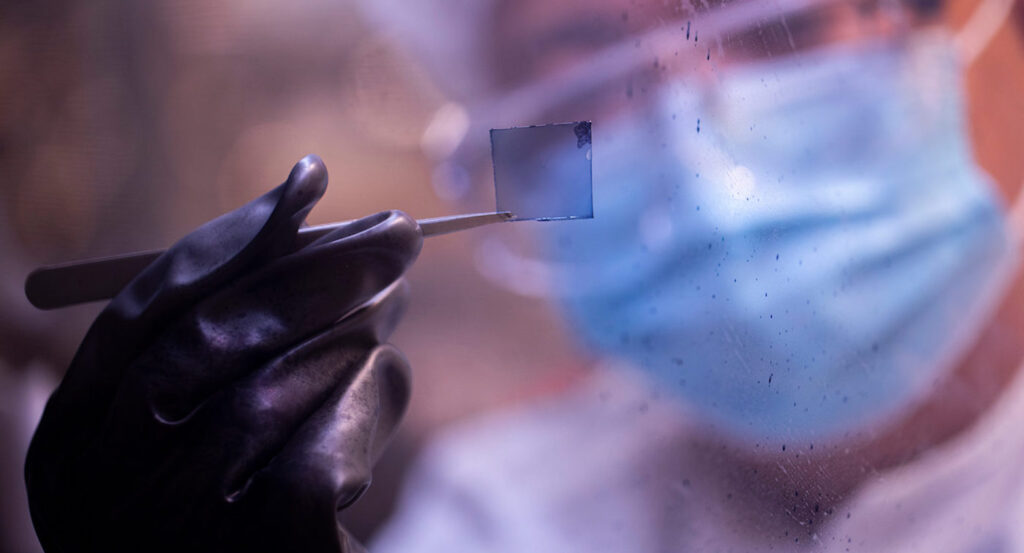
This has been made possible by a seemingly fictional invention that has appeared over the last few years—organic, transparent solar cells that when inserted into panes of glass, absorb sun and turn it into electricity to power the building.
A team from the University of Michigan contributed massively to this research, which was supported by the U.S. Dep. of Energy, by recently breaking the established scientific record for conversion efficiency (8.1%) and transparency (43%) in their carbon-based solar cells inserted into window glass, turning it to a slightly greyish-green tint like sunglasses or car windows.
“The new material we developed, and the structure of the device we built, had to balance multiple trade-offs to provide good sunlight absorption, high voltage, high current, low resistance and color-neutral transparency all at the same time,” said Yongxi Li, an assistant research scientist in electrical engineering and computer science who participated in the record breaking.
In addition, the researchers developed optical coatings which when applied to the glass, as is often the case with treated windows on skyscrapers, boost both power generated from infrared light and transparency in the human-visible range—two qualities that are usually in competition with one another.
Both versions of their cells can be manufactured at large scale, using materials that are less toxic than other transparent solar cells, and they can be placed in between the panes of double-glazed windows.
The transparent organic solar cells can also be customized for local latitudes, taking advantage of the fact that they are most efficient when the sun’s rays are hitting them at a perpendicular angle.
While they haven’t yet brought any of their remarkable technology to market, another company looking to turn skyscraper windows into electricity-rich solar panels is already making profits.
UBiQD and their “Quantum Dots”
Another set of engineers and scientists looking to help change the way skyscrapers power themselves is UBiQD, a development-stage company manufacturing nano-crystals in Los Alamos, New Mexico.
Calling their technology “Quantum Dots” in reference to their size (it would take 100,000 of them to span the width of your fingernail) they are used to make solar-powered windows that operate in a truly mind-boggling fashion.
Like tiny nano-onions, their layers protecting the light-emitting core, they are laminated onto a window pane where their crystalline structure captures sunlight and emits it through internal reflection outward in a two-dimensional grid towards the edges of the window pane.
Once there, the frame in which the glass is fitted can absorb the photovoltaic energy and convert it into electricity without the need for wires or other components to appear on the glass, thereby disrupting the view out of the window.
“A minimal photovoltaic profile and efficiently designed electronics allow UbiQD solar windows to fit into existing manufacturing and installation practices, making for a truly ubiquitous solar window,” explains the company website.
The company is also using another configuration of Quantum Dots to power a warp-speed jump in greenhouse technology. Greenhouse windows treated with special Quantum Dots will actually convert part of the sunlight’s blue spectrum during absorption.
Halloween is a holiday many relish with fervor—the homes and yards decked out with ghosts and Jack o’ lanterns, and families decked out in costumes taking to the streets for some trick or treating.
Andrew Beattie, Facebook
This year, with the COVID-19 pandemic putting a damper on many annual customs, it looked like celebrations-as-usual might be out of the question.
But for one die-hard Ohio Halloween fan, the importance of letting off some much-needed steam while making sure kids could enjoy the holiday in safety was all the incentive he needed to come up with a brilliant socially distanced trick-or-treating tradition—a contact-free candy chute.
“[Halloween] is just something I’ve always been passionate about,” Andrew Beattie told KSDK 5 News.
Even prior to the pandemic, Beattie had been toying with an idea for a candy chute prototype to make participating in the holiday easier for neighbors with mobility issues.
Having an immune deficiency himself, Beattie thought the buffer of a little extra distancing was just common sense, “especially at the time of year when people are having colds and things.”
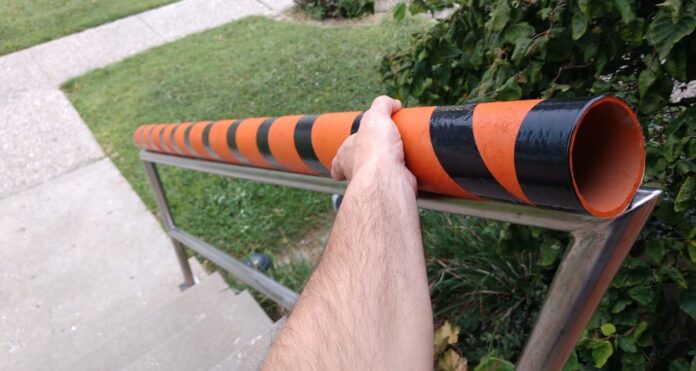
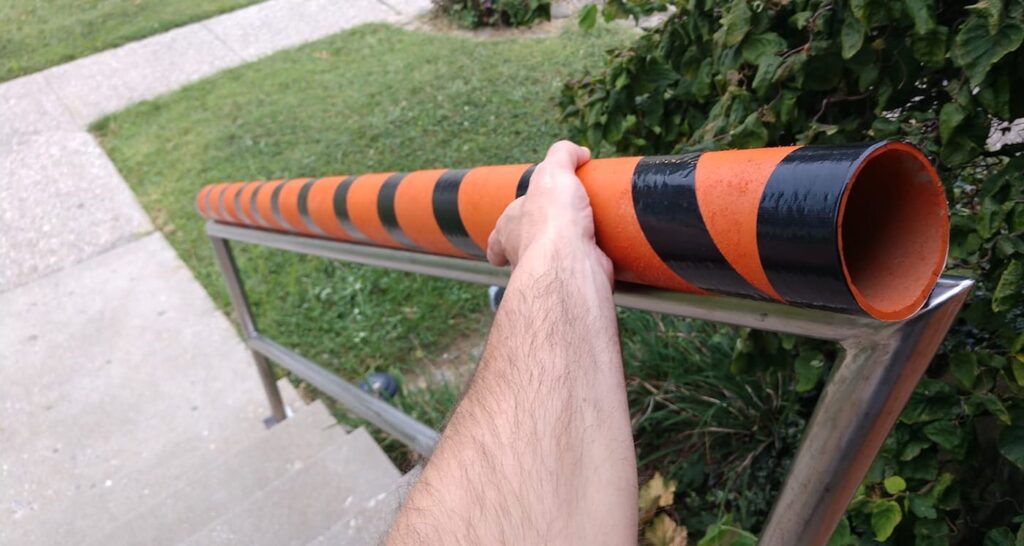
Beattie, along with his 6-year-old daughter, constructed the chute using a six-foot by four-inch shipping tube. After spray-painting their creation orange and finishing up with a spiral of black duct tape, they were ready to attach it to the railing that runs from the family’s porch down to the street. Decorative strings of green and purple lights completed the ghoulish theme.
“This is something that the kids will enjoy and not think of it as ‘I’m doing this to prevent disease,’” Beattie told CNN. “They’re doing it to have a good time… We need that. We need the community spirit back right now.”
Within three days of posting the invention to Facebook, Beattie’s chute went viral, garnering 8,000 comments, 27,000 reactions, and 62,000 shares.
“Even if people are completely comfortable with how things are, there are a lot of people who aren’t,” Beattie acknowledged. “If they can see people doing things like this, it can give them a little bit of grace, and that it might encourage more people to get involved and get out there and get us back to looking the way we want to look.”
A BOO!tiful sentiment indeed, and not surprisingly, Beattie’s invention triggered a score of DYI Halloween enthusiasts to come up with their own socially distanced candy chute variations.
A New York woman saw a random picture of a fish chair years ago and felt a “mystical” pull towards it—so she got the funky furniture tattooed on her leg.
The moment came full circle recently when a group of strangers traveled 300 miles to present her with the exact chair that she admired long ago.
You may not have heard of the Facebook group “Weird Second Hand Finds That Just Need To Be Shared,” but with nearly two million members, it’s an active community.
When a member posted a picture of a fun, if slightly surreal, chair with rainbow-colored fish for back rails, one group member was especially amazed. Syracuse auto mechanic Emily DelFavero had an inking of the exact item on her calf.
When she mentioned this weird piece of kismet to the strangers on Facebook, they soon jumped into action, insisting that she needed to own that chair.
Starting a GoFundMe to buy the quirky piece, they raised $600 and purchased the piece from the Baltimore flea market where it was located. According to On The Road with Steve Hartman, they then devised a plan to transport the fishy item more than 300 miles upstream to Emily.
A singing parrot has been wowing visitors to a wildlife park by belting out hit tunes by Beyoncé.
SWNS
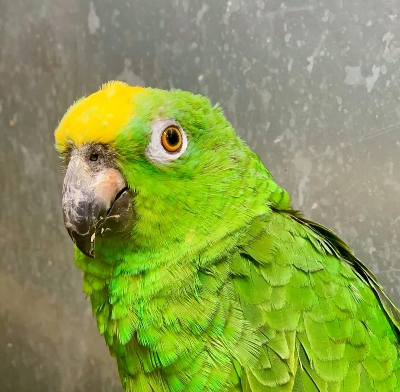
Chico is a nine-year-old yellow-crowned Amazon parrot. A species native to tropical South America, these birds are able to repeat human speech in a clear voice and can live often up to an astonishing 100 years old.
Based at Lincolnshire Wildlife Park, Chico has been amazing customers with his performances since arriving at the Boston sanctuary 18 months ago.
Footage of him singing an impressive rendition of Beyonce’s ‘If I Were A Boy’ has gone deservedly viral since being uploaded on Facebook by the park—the video has been viewed more than 100,000 times.
Chico can be heard hitting all the right notes as he sings the opening lines to the 2008 hit by the US megastar (on listening, you might also be able to hear visitors chuckle in the background).
The talented bird can also mimic other pop tracks such as ‘Poker Face’ by Lady Gaga, ‘Firework’ by Katy Perry, and ‘You Drive Me Crazy’ by Gnarls Barkley.
Lincolnshire Wildlife Park CEO Steve Nichols, joked, “Who’d have ever thought that a parrot would cause social distancing problems due to being so popular?”
A regular visitor, Graham Gardner, said, “People can’t get enough of him, there’s always a line of people waiting to see him—it’s like he’s an actual pop star at times… He’ll just break into song randomly and it leaves people in hysterics.
“He’s actually got a very good voice,” Graham explained, saying, “Maybe Simon Cowell might get in touch, you never know.”
(WATCH the video of Chico belting out Beyoncé’s famous tune below.)
SQUAWK Your Approval Of Chico’s Talents And Share This Story…
Quote of the Day: “Limits, like fear, is often an illusion.” – Michael Jordan
Photo: by britt gaiser, cropped
With a new inspirational quote every day, atop the perfect photo—collected and archived on our Quote of the Day page—why not bookmark GNN.org for a daily uplift?
All dogs may go to heaven, but when older pooches wind up in shelters, chances of them living out their final years in contentment are slim.
At Marty’s Place in Upper Freehold, New Jersey, however, the resident family of senior sanctuary dogs is getting a whole new “leash” on life.
Andrey, CC license
Marty’s Place founder Doreen Jakubcak understood that older dogs have significantly less chance of getting adopted, so she made it her mission to look out for the underdogs. The focus is on rehomed canines, age 7 and up.
Amenities at the upscale doggy retirement village include generous living quarters, medical and dental care, regular exercise, and activities geared toward their capabilities and limitations.
With plenty of sofas for just hanging out—and even an in-ground pool for those inclined to take a dip—every dog here is ensured of having his or her day.
While some dogs that pass through Marty’s Place eventually find adoptive pet parents, none of them ever have to worry about being abandoned. “When we commit to a dog that comes to Marty’s Place they do have a forever home,” Jakubcak told ABC News. “That forever home can be here at the sanctuary and when we can we try to place a dog into a new adoptive home.”
Rburtzel, CC license
Jakubcak noted that recently Marty’s Place has been catering to dogs of more advanced age, from 10 to 18. Many also have pre-existing health conditions, making finding new “furever” homes more of a challenge. Even so, Jakubcak says that prospective adopters shouldn’t rule out older dogs.
“When people hear the term senior dogs, they immediately think, ‘Ugh they’re boring,’ but some are high energy and require lots of exercise and stimulation,” Jakubcak told Good Morning America. “I do believe they know instinctively what you did for them and they are forever grateful. That bond… is nothing like you could imagine.”
“They’re so lucky that they can live out their golden years in this amazing place. We should all be that lucky, as human beings, we should be that lucky,” Volunteer Rennie Rankin added. “Every time I walk in the door, I think about that. Wow, this is how I should live out my last days.”
Jakubcak notes that Marty’s Place is more than just a sanctuary, it’s a family. “That family consists of our dogs, our staff, and our volunteers,” she said. “Everybody that’s here truly embraces the dogs and truly cares about them like they’re their own personal dogs.”
Of course, Marty’s Place isn’t alone in its appreciation for the gifts of love and companionship older dogs bring their owners. Steve Greig, heartbroken over the passing of his own pet, went on to become a serial adopter of senior pooches as part of the healing process. “They’re just wiser animals, he’s said. “These dogs know who they are and it’s easy to develop a relationship with a person or pet who knows who they are.”
Meet the bull who thinks he’s a horse, and who’s even known for his show-jumping skills.
SWNS
Sabine Rouas met Aston five years ago when she started helping out at a nearby cow farm.
She formed a close bond with the newborn calf, then called M309, and convinced the farmer to let her buy him.
43-year-old Sabine raised little Aston alongside her pony Sammy, now 10. She began noticing the baby cow was picking up the tricks she was teaching her new horse.
He quickly mastered trotting, galloping, stopping, going backwards, and turning around on command. He was even responding to Sabine’s voice, just like a horse.
Despite weighing 1.3 tonnes, it took just 18 months to teach him to leap over one-meter high horse jumps in the dressage ring—with Sabine on his back.
Now the pair attend fêtes and horse shows around Europe where they get to show off Aston’s skills.
Sabine, from Verdun in France, said, “I joke that he’s the man in my life, but we are really close.
“I have had him since he was a baby, taking care of him since the very early days. I think that bond is one of the reasons behind his talents.”
As for the audience’s when Sabine rides Aston at shows? “We get a good reaction. Mostly people are really surprised and initially they can be a bit scared because he’s big—much bigger than a horse.
“Even people working in farming are sometimes really scared around him. Most people, even farmers, don’t like to get too close to cows with horns. But once they see his real nature, and see him doing the exercises, they often say ‘oh he’d really quite beautiful’.”
(WATCH beautiful Aston in the video below.)
NEIGH Your Approval Of This Fun Story And Share It On Social Media…
Finnish research has discovered the functional ability of older people is much better today, compared to people of the same age three decades ago.
Katinka Bille, CC license
This finding was observed in a study conducted at the Faculty of Sport and Health Sciences at the University of Jyväskylä.
The study compared the physical and cognitive performance of Finnish people between the ages of 75 and 80 nowadays with those of people the same age in the 1990s.
“Performance-based measurements describe how older people manage in their daily life, and at the same time, the measurements reflect one’s functional age,” says the principal investigator of the study, Professor Taina Rantanen, in a statement.
Among men and women between the ages of 75 and 80, muscle strength, walking speed, reaction speed, verbal fluency, reasoning and working memory are nowadays significantly better than they were in people at the same age born earlier. In lung function tests, however, differences between cohorts were not observed.
“Higher physical activity and increased body size explained the better walking speed and muscle strength among the later-born cohort,” says doctoral student Kaisa Koivunen, “whereas the most important underlying factor behind the cohort differences in cognitive performance was longer education.”
Postdoctoral researcher Matti Munukka continues, “The cohort of 75- and 80-year-olds born later has grown up and lived in a different world than did their counterparts born three decades ago. There have been many favorable changes.
“These include better nutrition and hygiene, improvements in health care and the school system, better accessibility to education and improved working life.”
The results suggest that increased life expectancy is accompanied by an increased number of years lived with good functional ability in later life. The observation can be explained by slower rate-of-change with increasing age, a higher lifetime maximum in physical performance, or a combination of the two.
“This research is unique because there are only a few studies in the world that have compared performance-based maximum measures between people of the same age in different historical times,” says Rantanen.
“The results suggest that our understanding of older age is old-fashioned. From an aging researcher’s point of view, more years are added to midlife, and not so much to the utmost end of life. That’s hopeful news for us all.
Don’t Let The Good News Get Old—Share It With Your Friends On Social Media…
Landscapes along the Li River amid the South China Karst - credit, Sam Beasley via Unsplash
The megacities of China have seen a remarkable fall in most markers for air pollution, as well as in associated deaths.
According to a Bill and Melinda Gates Foundation-funded study from the journal Lancet, across all 33 of the Middle Kingdom’s provinces, autonomous regions, and municipalities there have been reductions in air particulates related to fuel-burning and cooking oil, as well as in ozone depleting substances.
By the numbers, the fall has been around 9% in air particulates since 1990.
Given that 81% of Chinese citizens still live in areas where air pollution exceeds acceptable levels under WHO Air Quality Guidelines, this reduction of particulates equates to a life-saving change for people across the country.
In 2017 compared in 1990, 60.6% fewer people have been dying per year based on a broadly defined set of conditions resulting from air pollution—translating to hundreds of thousands of lives.
One of the largest contributors to air pollution in China is from personal households: wood and coal burning for cooking purposes takes its toll, and currently represents a larger share of pollution after years of substantial public investment in the clean energy sector, and in advisory boards that address particulate matter pollution generated by power generation.
Lancet cites a recent analysis of public health and pollution policy strategies in 74 key Chinese cities, and averaged the declines in airborne particulate matter at around 33.3% from 2013-2017.
The unique policy structure of federal and municipal government allows greater flexibility for pollution control, and a 2019-2030 Healthy China Action Plan is already being implemented to control the use of solid fuels in household cooking—which is one of the largest sources of airborne pollution in the country.
This initiative will hopefully save even more lives and lead to cleaner and cleaner air for the most populous nation on Earth.
SHARE This Breath Of Fresh Air With Your Friends On Social Media…
In a remarkable showing of civic unity, one that proves even publicly traded, infinite-growth oriented firms understand moral responsibility, UK companies have returned or denied claims to £215 million ($275 million) in funding, which was either to given to them in error, or went unused as part of Britain’s coronavirus stimulus plan.
According to data from the UK’s version of the IRS, the HMRC, these returned funds came from 80,500 separate employers including some very large firms.
Under the Coronavirus Job Retention Scheme (CJRS), also known as the furlough scheme—a term which describes the placing of a worker on leave for a lower percentage of their overall salary—the government has granted £35.4 billion ($45.2 billion) in total payments to businesses so far.
“HMRC welcomes those employers who have voluntarily returned CJRS grants to HMRC because they no longer need the grant, or have realized they’ve made errors and followed our guidance on putting things right,” HMRC said at the time, according to the BBC.
Property developers Redrow and Barratt-Taylor Wimpey have both returned all the furlough money they have so far claimed. Other firms to do so include Games Workshop, the distribution giant Bunzl, and the Spectator magazine, which all together are worth around £1.5 billion ($1.92 billion) a year.
Swedish furniture giant Ikea also gave back the furlough money they originally claimed, saying they didn’t need it.
Department stores Primark and John Lewis, as well as supermarket chain Sainsburys, have also shown civic support for the world’s most comprehensive and generous coronavirus relief program.
They have refused to collect £1,000 ($1,277) bonus payments for each furloughed employee they bring back and keep employed through the holiday season.
In Primark’s case this total amounted to £30 million ($38 million) alone.
SHARE The Heartening News With Your Pals On Social Media…
Quote of the Day: “Who are we but the stories we tell ourselves—about ourselves—and believe.” – Scott Turow
Photo: by Deniz Altindas, cropped
With a new inspirational quote every day, atop the perfect photo—collected and archived on our Quote of the Day page—why not bookmark GNN.org for a daily uplift?
In 1982, a wealthy businessman quietly set up a philanthropic foundation. His goal was to secretly give away his entire fortune. Now, 38 years later, he has achieved his goal at the age of 89.
The Atlantic Philanthropies
Chuck Feeney made his money in the duty-free shopping business, building a nestegg of $8 billion over the course of his life.
The Irish-American is known for his frugality and humility. Despite his riches, he does not own a car. He rents a small apartment, he flies economy class, and he owns only one pair of shoes.
The co-founder of the Duty-Free Shoppers Group managed to keep his charitable activities hidden from the public for 15 years, until his identity was revealed to the public in 1997 when he sold his shares in the company.
He continued to keep a low profile until 2005, when the opportunity came along to do some good with the publicity.
The New Jersey-born businessman decided to cooperate in journalist Conor O’Cleary’s writing of his biography, with an eye toward promoting ‘giving while living’ to other wealthy people. In 2007, former Irish Taoiseach (Prime Minister) Bertie Ahern launched the book at Trinity College Dublin.
This week, Feeney’s foundation, The Atlantic Philanthropies, finally ran out of money.
The elderly businessman told the Guardian that he was very happy with “completing this on my watch.” He urged other super-rich folks not to wait until after they have passed away to experience the joy of giving away their fortunes.
In explaining what motivated his generosity, the duty-free shopping mogul said “Wealth brings responsibility. People must define themselves, or feel a responsibility to use some of their assets to improve the lives of their fellow humans, or else create intractable problems for future generations.”
Feeney has donated $3.7 billion to higher education institutions, including close to $1 billion to Cornell University alone, where he studied for free under the GI Bill after serving in the Air Force during the Korean War.
He has also donated $870 million to various human rights groups, and $1.9 billion to fund various projects in Northern Ireland and the Republic of Ireland, where he helped found the University of Limerick.
Feeney’s grandparents came to America from County Fermanagh in the North.
In addition to its direct financial impact, the businessman’s charitable actions inspired Bill Gates and Warren Buffett to establish the “Giving Pledge” for the world’s richest people.
Those who take the pledge commit to giving at least half of their fortune away to charity.
Expressing his admiration for what his friend has accomplished in his life, Buffett said that Feeney is “my hero and Bill Gates’ hero—he should be everybody’s hero.”
(WATCH Chuck Feeney’s Story Below On The Atlantic Philanthropies.)
Multiply The Good News By Sharing With Your Friends On Social Media…
September is harvest time in North Dakota. Like his neighbors, farmer Lane Unhjem was hard at it—until the unthinkable happened. When Unhjem’s combine caught fire, he went into cardiac arrest.
Unhjem was airlifted to a hospital in Minot where his condition was reported to be stable, but it was clear he wouldn’t be climbing back into the driver’s seat of a combine harvester anytime soon.
With 1,000 acres of crops yet to be harvested, Unhjem and his family were looking at taking a huge financial hit.
That’s when family, friends, and neighbors stepped in to help.
After word of Unhjem’s predicament got out, it was all hands on deck—or in this case, all hands on combines, grain carts, and semi-trucks.
“I talked to a couple of farmers, got their equipment, and then other people just started calling and we had equipment offered from all over the place in the county, and their workers to go with it,” family friend Jenna Binde said in an interview with KFYR TV News.
In all, about 60 farmers joined the effort, setting aside their own harvests to get Unhjem’s durum wheat and canola crops in their respective bins in a record time of seven hours.
While definitely pleased by the outcome, Binde wasn’t in the least surprised that the community pulled together when one of their own was in need.
“Everybody knows the Unhjems, and they’re good people…” she said.
“[It’s] just kind of the farming way of life, too. You help your neighbor out when they need it and don’t expect anything in return.”
“Sowing kindness reaps its own rewards” is a fine sentiment, but seeing it in action is just the sort of heartening harvest we all could use a lot more of these days.
PASS On The Kindness And Share The Story With Your Friends On Social Media…
There are a lot of reasons why diet, sleep, and exercise patterns may have been interrupted during the coronavirus lockdowns. Getting back into routines can be more difficult than starting them in the first place.
But with scientists adding many common health problems linked with diet and lifestyle to the list of COVID-19 morbidity factors, the time has never been better to make some changes and improve your eating habits and physical activity.
Always with a light heart, we’re calling it the Covid “19,” and here are some strategies — mental, dietary, and physical—for renewal and focus to help you tackle the post-lockdown pounds.
1) Understand Your Limitations
This is the foundational characteristic of any diet or lifestyle plan, because in essence we are all different. Our willpower is a depletable chemical resource, which many studies have demonstrated, and exercising it makes it more difficult to exercise it in the future.
Therefore, always try and keep in mind how making one choice will affect the rest of the day, and don’t set a trap for yourself to fall in when you come home from a tough day at work (don’t leave the healthy eating until dinner, for example).
2) Have A Clear Path To Success
Having clear, simple, attainable goals as opposed to lofty and difficult ones will increase not only the likelihood of success, but the chances you’ll continue to work to achieve them when faced with challenges.
Large challenges are not only difficult to achieve, but can bring you down and make it harder to reach simpler goals; a sort of “what’s the point of doing __ when I can’t do __?” mindset sinks in.
Instead, pick smaller targets to build confidence when starting a weight-loss journey “I’m always going to have a serving of vegetables with dinner,” is a great place to start.
3) Be Your Own Best Boss
Geri Weis-Corbley
The best boss or teacher you’ve ever had was able to both richly congratulate you on your successes, and work out what went wrong and give a constructive way to push you towards the next level.
You are your own boss at the end of the day when it comes to eating right, sleeping enough, and exercising, so try and behave like the best boss you ever had both when you do something wrong and more importantly when you do something right, as celebrating success is often more important for staying positive on your weight-loss journey.
4) Be A Source Of Positivity
An English study showed that the act of perceiving barriers to making healthy eating choices had a detrimental effect on participants’ ability to eat healthy foods regularly.
As Eric Idle said while hanging from the cross in Monty Python’s “The Life of Brian,” “always look on the bright side of life,” which we and evidently dietary researchers, wholeheartedly agree with.
Focus instead on what you can do: “I can cook more, I can use more local ingredients, I can help my kids eat more healthy foods, I can take up a sport.”
5) The “Friction and Fuel” Effect
According to an interview published in Livestrong with Allison Grupski, PhD, director of behavior change strategies and coaching at Weight Watchers—dietary and lifestyle habits become harder to follow when there is “friction” in your life and not enough “fuel.”
Friction refers to anything that makes your choices more difficult, for example when you or a loved one bring junk food into the house, or when you leave your gym clothes in the dirty laundry.
In contrast, fuel is anything that makes making the right choice easier, such as setting your exercise clothes out for the morning, listening to healthy eating podcasts, or preparing a smoothie the night before.
6) Cooking Substitutes
All manner of common products used in cooking—especially in baking, have a replacement, and learning these replacements can be especially valuable when pursuing healthy eating and lifestyle habits.
For baking, cooking oil like peanut or canola oil can be replaced with all kinds of mashed fruits and vegetables, including avocado, canned pumpkin or butternut squash puree, mashed banana, applesauce, and even skinned-plums.
For dairy, cut the butter and replace it with things like yogurt in various fat contents depending on how much binding molecules you need in your dish.
For pasta, look no further than the Spiralizer or another product that can turn things like zucchini into noodles. Don’t look at this as an insult to Italian classics, as Italians cook with vegetable pasta all the time.
For flour, you can use ground almonds or an ancient grain like spelt, also ground up to reduce carbs and increase fiber.
7) (If You Have Time) Eat Most Of Your Vegetables With Breakfast
For many working people, especially parents, breakfast might be the most leisurely meal of the day. If you work from home, even more so. We described earlier that it’s more difficult to make healthy eating choices in the evening or at night when you’re tired and worn out, so take advantage of the free time and eat most of your vegetables with breakfast!
This way you don’t have to do it later when you’re tired and don’t feel like peeling carrots or chopping cabbage.
Start with a skillet of hot olive oil and add five vegetables (spinach, kale, brussel sprouts, peppers, olives, avocado, bean sprouts, zucchini, parsley, onions, chard, anything really) until they’re wilted and soft. Then add meat or eggs, and voila—you’ve fulfilled most of your daily nutrient demands.
8) Adopt A Time-Restricted Feeding Schedule
Pioneered by scientists like Dr. Satchin Panda, based on his research with restricted hours of feeding in mice which demonstrated that the more time spent in a fasted state increased the mice’s resistance to the obesogenic effects of a fat/sugar rich diet, it’s becoming rather popular to adopt a 14/10 or 16/8 hour eating paradigm.
In such a paradigm, one spends 16 hours fasting, for example during the hours of 8PM to 12PM the next day, and this demonstrates not only a reduction in habitual calorie intake, but improvements in blood markers for things like diabetes—even without changes to the standard American diet.
Shutterstock licensed
9) It’s Not Always About the Sweat—But Consistency
Gyms are full of fitness enthusiasts who love to sweat, but getting in a good workout is not always about busting your bum on the elliptical machine. Rather it’s about consistency.
A week filled with five one-hour low-intensity workouts, or five 30-minute medium-intensity workouts, is more valuable than a week with one or two exhaustive, knee-shaking workouts that make you feel weak and vulnerable.
This is a strategy called snacktivities. It was developed by the University of Loughborough under a multi-million grant from the UK’s National Health Service to create a public health campaign that focused on getting sedentary office workers moving around in a way that didn’t necessarily involve a lengthy visit to the gym.
Pass On These Health Tips By Sharing Them With Your Friends On Social Media…