One of the world’s most endangered and iconic animals has just given birth to a new member of their species—and it may be all thanks to COVID-19.
Everland Park
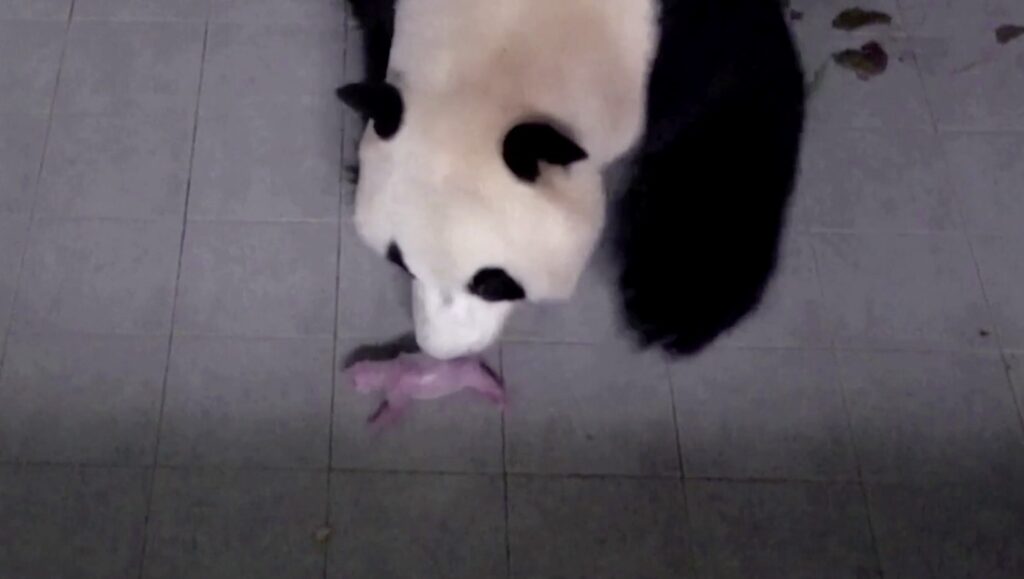
In late march when many zoos across the world had closed to avert a pandemic, two giant pandas in a South Korea zoo suddenly had some time alone, without gazing eyes, and the 7-year-old female named Ai Bao was soon pregnant.
On Monday, the 8-year-old male panda Le Bao became a new father to a healthy cub in Everland Park.
The cub weighed in at 7 ounces, and the zoo reported both mother and baby appear to be healthy and comfortable. It will take between 5—6 months for the panda cub to learn to climb and eat bamboo. After that, it will be available to be viewed by the public.
Meanwhile, in a Hong Kong zoo, another panda couple took advantage of the lockdown to mate—after social distancing from each other for a decade—but Ling-Ling has not shown any signs of pregnancy, a spokeswoman said.
Only 500-1000 giant pandas remain in the wilds of south-central China. The animal exhibits extraordinarily complicated mating behaviors, which has necessitated tireless work on behalf conservationists trying to do their part to save the species.
In the wild, pandas live solitary lives, and, like humans, can be very choosy when it comes to mating. Furthermore, females usually give birth to only one cub at a time, and there is only one period during the year — lasting only a few days, when females can conceive.
Similar to other large intelligent mammals, young pandas need a long time before they are capable of taking care of themselves, a period during which the female will not mate.
With dwindling panda numbers, it was in the 1950s that China began loaning pairs of pandas to foreign zoos as a token of goodwill, in what became known as “Panda Diplomacy”—and South Korea is just the latest zoo to have produced a cub.
Ai Bao and Le Bao arrived in the country in 2016, and their cub is now the first panda born in that nation, though it will be returned to China in 3—4 years time.
WATCH the video below…
SEND Out a Baby Announcement to Friend, by Sharing on Social Media…
Quote of the Day: “A woman’s place is in the house—the House of Representatives.” – Rep. Bella Abzug (born 100 years ago)
Photo: by princess – cropped
With a new inspirational quote every day, atop the perfect photo—collected and archived on our Quote of the Day page—why not bookmark GNN.org for a daily uplift?
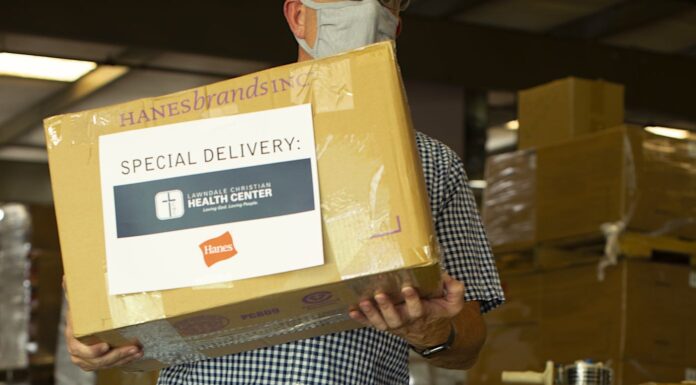
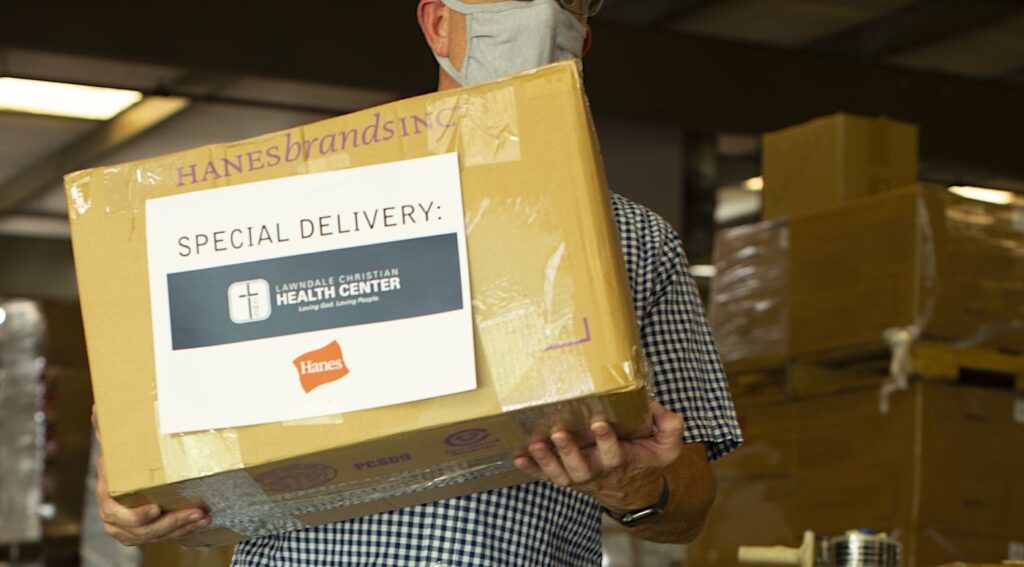
Hanes basic apparel is not only encouraging Americans to wear masks with their #MaskAround campaign, they are donating 1,000,000 coverings to homeless communities across the country to help protect them—and others—from the spread of COVID-19.
Using non-profit organizations that they partner with for their annual Sock Drive, Hanes is giving special emphasis to COVID-19/homelessness hotspots like Los Angeles, Miami, and Houston. They will leave distribution to groups like Invisible People, a homelessness advocacy group in America.
“Equipping homeless people with masks allows them to enter essential businesses with mask requirements, like grocery stores, which they would otherwise not be able to access, explains Mark Horvath, founder of Invisible People. “It’s very hard to contextualize homelessness for those who are lucky enough not to worry about access to bathrooms or basic needs like food and water. The impact is substantial.”
A survey commissioned by Hanes and conducted by Wakefield Research demonstrates that mask-use in America is far from absolute.
While 45% of people said they have 13 or more masks in their household, they admitted they often forget them when going out.
Mask Around Town
Hanes is supporting the national effort to slow the spread of COVID-19 with a TikTok and Instagram campaign featuring social media personalities who will ask consumers to highlight the unique places they #MaskAround to help keep others safe.
“We want to do our part to support the country’s effort to slow the spread of COVID-19,” said Sidney Falken, Chief Branding Officer at Hanes. “Our goal is to raise awareness around the importance of wearing them to help keep each other safe and healthy.”
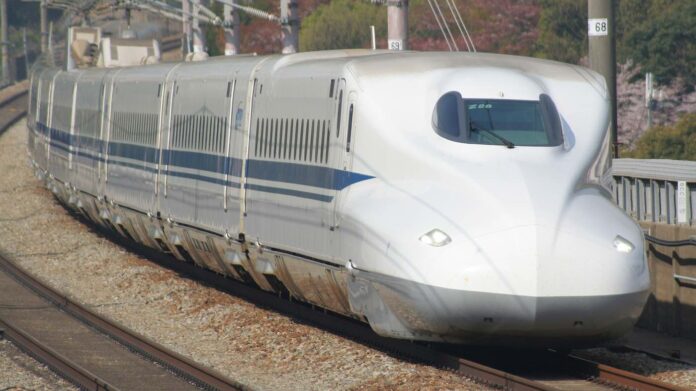
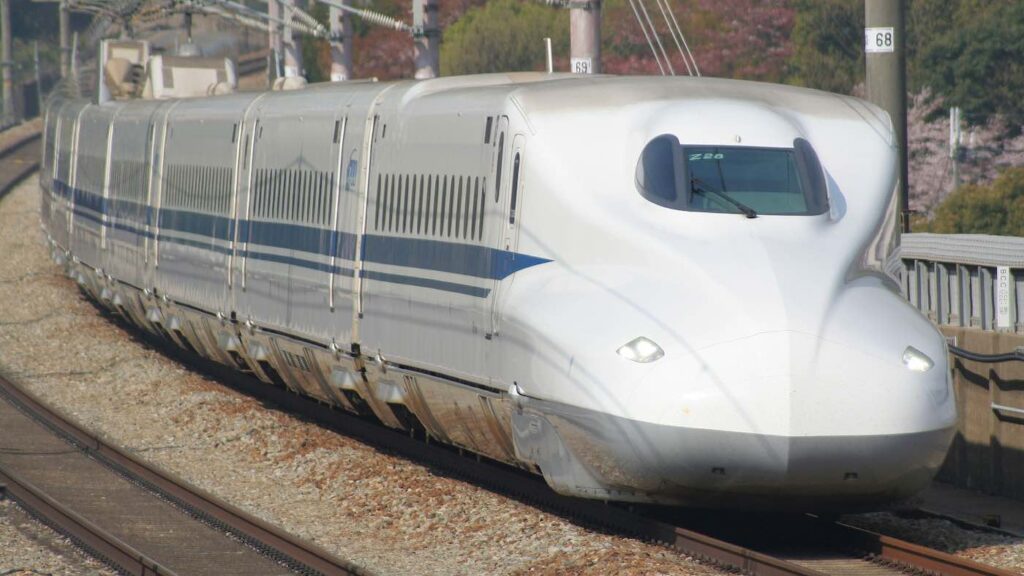
Central Japan Railway Company, (JR Central) has launched a newly designed high speed, or ‘bullet’ train, equipped with special features to better protect passengers from natural disasters.
Japan, an island nation surrounded by underground fault lines in the Pacific ‘Ring of Fire’, has a history of natural disasters, particularly earthquakes, but also typhoons and flooding, and much of the infrastructure for prevention and recovery is, at this point, baked into the fabric of society.
JR Central’s N700 Supreme is the first new train model in 13 years to plow at great speeds down the Tokaido Shinkansen line, which connects Tokyo to Osaka. It moves passengers along at 186 mph (300 kph) and comes with a variety of accommodating features like power outlets between the seats, diffused interior lighting, reclining seats and headrests, and better suspension and sound-proofing to provide a quieter, more stable ride.
However, for moments when luxury isn’t the focus for passengers, like during an earthquake, the train is equipped with an onboard lithium-ion battery component that will allow it to power itself for enough time to reach the nearest evacuation point along the tracks where the passengers can disembark.
A ceremony to mark the commute of the first N700S train was held at Tokyo Station in early July, with JR Central President Shin Kaneko among the participants.
The N700S is “full of our technological achievements,” Kaneko said.
Photo of N700 by Mitsuki-2368, CC license
Off-grid battery operations are the important details that form the web of disaster-proofing that exists in Japanese society. It’s these kind of auxiliary systems that allowed Japanese international airport KIX to recover so quickly after Typhoon Jebi smashed into Osaka bay in September 2018, bringing with it 124 mph (200 kph) winds. The waves overtook the seawall and flooded the terminals—and an ocean tanker crashed into the bridge connecting the airport to the mainland.
Despite that, the airport reopened partially in just 2 days, completing the repairs and allowing tens of thousands to arrive and depart in KIX once again only 17 days after the storm.
SHARE the Japanese Ingenuity With Friends on Social Media…
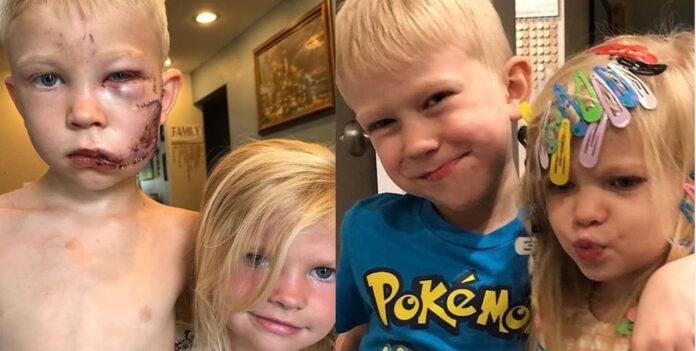
Before he shielded his little sister from the charging dog, before actor Chris Evans called him a hero and scores of strangers learned his name, 6-year-old Bridger Walker took it upon himself to be a model big brother.
When she was first born, he held her and just beamed, pointing to his chest when relatives asked for a turn. He didn’t want to give her up.
It’s why his act of heroism during a dog attack earlier this month came as no surprise to his parents, who recounted the July 9 incident on social media. Bridger, they said, stepped in front of his 4-year-old sister when a German Shepherd-mix barreled toward them.
“If someone had to die, I thought it should be me,” he told his dad.
Bridger’s aunt posted the story shortly after he got home from the hospital, saying Bridger had taken the brunt of the dog’s attack and yelled for his sister to run.
“I know it’s a long shot,” she wrote, “but I’m reaching out to the Avengers and other heroes so that they can learn about this latest addition to their ranks.”
It didn’t take long for Bridger’s story to go viral, after actress Anne Hathaway spotlighted the Wyoming boy’s bravery and attracted more than one million likes.
“I’m not an Avenger, but I know a superhero when I see one,” Hathaway wrote.
His heroics soon captured the attention of celebrity superheroes like Chris Evans (Captain America), Mark Ruffalo (The Hulk), and Hugh Jackman (Wolverine).
Nikki Walker, Bridger’s aunt, has recorded for Instagram the boy’s starstruck reactions to the many personal messages sent by his Hollywood idols.
Iron Man actor Robert Downey Jr. made a video for the boy, and called him “a rock star” and promised “something special” for his next birthday, joking that it would better than any of the other celebrity gifts.
And the gifts kept coming—like a guitar from musician Bret Michaels and rock specimens mailed to the family because Bridger loves geology. One of his aunt’s photos shows the 6-year-old grinning as he grips a hefty World Champion belt sent by the World Boxing Council after the organization declared him “The bravest man on Earth.”
Perhaps most heartwarming of all, though, was Chris Evans declaring that he was sending an authentic Captain America shield. As Bridger watched the video, he donned his own Captain America costume—with the blue mask partly covered the whorl of 90-plus stitches curving across his cheek.
His aunt summed up the whirlwind of attention, writing on Instagram, “This week has reminded us in a massive way that the goodness in humanity far outweighs the bad.”
“If the love you have extended towards us were extended to all, the world would certainly be a brighter place.”
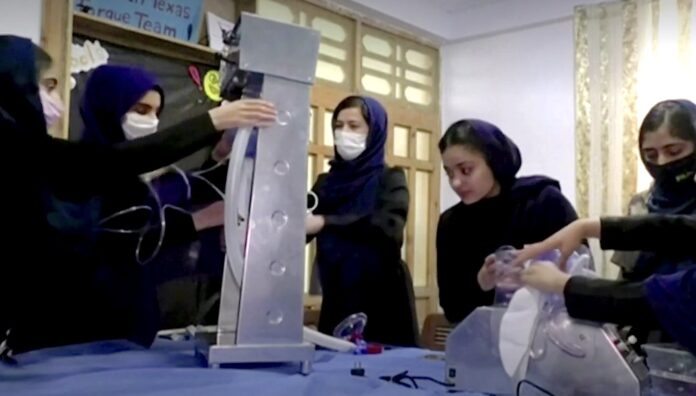
These days not much news comes out of Afghanistan that could be described as positive, but an all-girl high school team of legitimate geniuses, prove the South Asian country is so much more than just a war zone.
Their robotics team invented an inexpensive new ventilator model that will help the thousands of Covid-19 patients in their homeland, where there is a lack of such machines in hospitals.
In the city of Herat, the Afghan Robotics Team of 7 young girls finished the design of an open-source, mobile ventilator that costs as little as $700—compared to the $20,000 needed to purchase a traditional model. The lightweight machine can be powered by batteries that can run for ten hours.
They were among esteemed company, too, as their design was partially based on an MIT blueprint, and they received support and guidance from robotics experts at Harvard.
“We are delighted that we were able to take our first step in the field of medicine and to be able to serve the people in this area as well,” Somaya Faruqi, an 18-year old member of the robotics team, told Reuters. “All members of our team feel happy because after months of hard work, we were able to achieve this result.” (Watch the Reuters video below)
Afghanistan’s Minister of Health applauded the innovation and drive of the young girls, and eagerly awaited the devices’ approval from the World Health Organization.
“We appreciate the initiative and creativity in Afghanistan’s health sector…after they are approved, we will use these ventilators and we are determined to contract with companies so we can also export them,” he said.
A string of achievements
The Afghan Girls Robotics Team amassed international attention when in 2017, they traveled 500 miles from Herat to the capital of Kabul in order to secure visas for the First Global Challenge robotics competition in Washington, only to have them denied for no stated reason.
After public outcry caused the U.S. Department of State to reverse their decision, they claimed silver medals for their achievements in creating a machine that sorted dirty from clean water, even though a shipment of parts for their design was held up while entering the country.
After Washington, the team traveled to Europe and won the Entrepreneur Challenge at the International Robotex competition in Estonia, only months after the father of the team’s captain was killed in a suicide bombing.
— Embassy of the I.R. of Afghanistan in London (@AfghanistanInUK) November 26, 2017
“We are extremely proud of the wonderful accomplishments of the Afghan All-Girl Robotics Team,” Afghanistan’s ambassador to the United Kingdom, Said T. Jawad, said in a statement at the time.
“They are an excellent example for people around the world of what can be accomplished by young Afghans if given the right support and the opportunity to excel in their education.”
WATCH the video from Reuters below… Featured image credit: Reuters video Facebook
Need more positive stories and updates coming out of the COVID-19 challenge? For more uplifting coverage, click here.
SHARE The Mighty Girls of Science on Your Social Media Feeds…
Quote of the Day: “Starting each day with a positive mindset is the most important step of your journey to discovering opportunity.” – Jay Samit
Photo: by Gaelle Marcel
With a new inspirational quote every day, atop the perfect photo—collected and archived on our Quote of the Day page—why not bookmark GNN.org for a daily uplift?
An aerosol-based protein inhalant has been shown in trials to reduce the risk of death from SARS-CoV-2 and reduce the chance of developing serious symptoms by 79% compared to patients given a placebo.
Results also showed that patients were more than twice as likely to make a full recovery from Covid-19, meaning they had no lasting respiratory weakness or other damages.
The new drug called SNG001 is an inhalant of the naturally-occurring protein called interferon beta, and arose out of research conducted at the University of Southampton. The British biotech firm Synairgen, co-founded by three of the university’s professors, tested the treatment on 100 hospitalized COVID-19 patients (and 120 who were at home) in a randomized controlled trial spanning a period from March to May.
When inhaled directly into the lungs, interferon beta activates a powerful immune response. Interferon beta was a prime protein candidate for treatment testing because Covid-19 suppresses the body’s natural production of interferon beta which helps form the inherent protection against the spreading virus in the body.
“We are all delighted with the trial results announced today, which showed that SNG001 greatly reduced the number of hospitalized COVID-19 patients who progressed from ‘requiring oxygen’ to ‘requiring ventilation’,” said Richard Marsden, CEO of Synairgen.
“It also showed that patients who received SNG001 were at least twice as likely to recover to the point where their everyday activities were not compromised through having been infected by SARS-CoV-2. This assessment of SNG001 in COVID-19 patients could signal a major breakthrough in the treatment of hospitalized COVID-19 patients.”
Professor Stephen Holgate, one of Synairgen’s co-founders, described it as having “huge potential” for restoring the natural immune system response in a patient’s lungs.
He added that not only does SNG001 help the lungs combat Covid-19, but it could become a more important treatment than any future vaccines which may have to be re-engineered as the virus mutates in the future.
“Recognizing that SARS-CoV-2 is known to have evolved to evade the initial antiviral response of the lung, our inhaled treatment of giving high local concentrations of interferon beta restores the lungs’ ability to neutralize the virus, or any mutation of the virus or co-infection with another respiratory virus such as influenza or RSV, as could be encountered in the winter if there is a resurgence of COVID-19,” noted Holgate.
The Phase II trial was relatively small, and the results have not been peer reviewed for error or bias. The company would require regulatory approval before SNG001 can be commercially marketed, but if approved the treatment could revolutionize the way viral respiratory infections such as MERS, SARS, and Covid-19 are treated.
“Our efforts are now focused on working with the regulators and other key groups to progress this potential COVID-19 treatment as rapidly as possible,” said Marsden.
Last month, a research team at the University of Oxford announced they had successfully reduced the risk of death among seriously ill patients by administering the commonly available steroid dexamethasone.
Need more positive stories and updates coming out of the COVID-19 challenge? For more uplifting coverage, click here.
SHARE the ‘Breakthrough’ on Social Media to Give Your Friends Some Hope… (File photo by ThisisEngineering RAEng)
When you think of Harvard Law School, a few things probably come to mind—wealth, prestige, distinguished libraries, maybe sweater vests. You likely wouldn’t conjure a picture of a sanitation worker getting up at 4 a.m. to clean dumpsters and sort trash before school.
But, then, you don’t know Rehan Staton.
While getting into Harvard Law School is no easy feat for just about anyone, Rehan, whose single-parent family was poor, truly had his work cut out for him. And he doesn’t take all the credit either—he gives most of it to the people around him.
The 24-year-old college student told Today, “After going through everything that we did as a family, I just felt that we got into Harvard, and like, I just can’t even explain it. It was ‘we.'” The community around him made all the difference, he says.
Rehan admits he was “hungry for more” after living through years of family struggles and poverty. While growing up in Bowie, Maryland, his mother abandoned the family and moved out of the country when he was 8-years-old. However, that was also when he began learning the value of hard work. His father had to labor at multiple jobs to support Rehan and his older brother, Reggie.
Those times tested the family as a whole. As Rehan’s grades slipped, he channeled his energy into sports. He excelled at boxing and martial arts and won national and international competitions which he hoped would become his way out of poverty—but a rotator cuff injury would derail those plans completely.
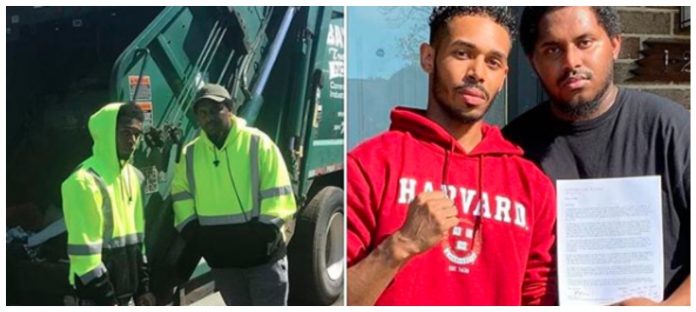
After years of struggling, Rehan’s high school grades were so poor that he was rejected from every college he applied to. So, instead of heading off to college at 18, he took a job at Bates Trucking and Trash. Most of his colleagues there had been formerly incarcerated. For many individuals, taking the job would feel like an utter low point. But for Rehan, it was when his life began to turn around.
Rehan and his brother both worked at the trash company – Photos courtesy of Rehan Staton
“It was the first time in my life a group of individuals that weren’t my father or my brother just came around me and… really just empowered me, uplifted me, told me I was intelligent.”
He believed the hype, when his coworkers urged him to go back to school, and one of the company owners, Brent Bates, helped him enroll in Bowie State University. Rehan earned a 4.0-grade point average and was able to transfer to the University of Maryland.
But Rehan’s struggles still weren’t over. During his junior year at Maryland, his father suffered a stroke, and Rehan had to return to work at Bates in order to save their family home. Many people would’ve given up, but he doubled-down on his schedule. Instead of dropping out of school, he woke each day at 4 a.m. to work his sanitation shift before class.
He graduated in 2018 with accolades, and was chosen to give a student commencement speech. When he took his LSAT test, he scored exceptionally well—in the 80th percentile—and began applying to law schools.
Rehan set his sights high—on Harvard.
Luckily, because that school comes with a hefty price tag, the young man found another supporter. Carmie McCook, a communications coach who calls him her protégé, started a GoFundMe page to help him with the cost. The initial goal was $75,000, but it surged to over $185,000 in donations. Carmie wrote on the page. “I felt incredibly strong empathy and admiration from him. A bond was formed and I told him I’d always be there for him if he needed me for anything. He now calls me ‘Ma’.”
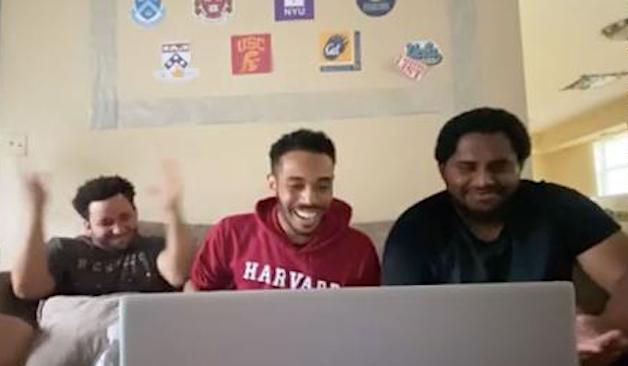
When it came time to finally hear the news whether Harvard had accepted him or not, Rehan recorded the moment on video. With his brother sitting next to him, he opened the notice on his computer—and their reaction was pure joy.
“Yes, Rehan is smart, but what makes his achievement even more admirable is his courageous journey to this moment,” said his mentor.
While most people heading to Harvard Law have the grades, the financial support, and maybe the sweater vests, Rehan just had his own painful story to stand on—the same story that makes him an inspiration.
Inspire Students Everywhere By Sharing This Great Story on Social Media…
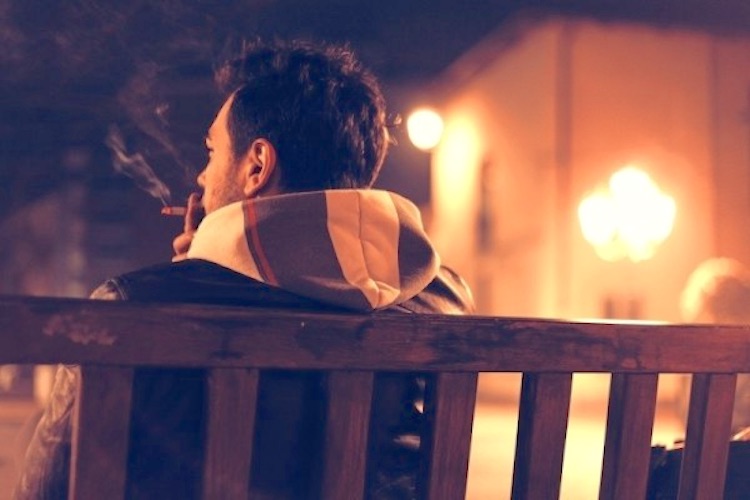
An English campaign designed to help and encourage people to quit smoking conducted a survey which has found that more than one million people have quit smoking since the outbreak of COVID-19.
The campaign called Action on Smoking and Health (ASH) reported that of the 41% of people in the UK who stopped smoking cigarettes in 2020 said it was a direct result of the pandemic.
It was not confirmed whether this was due partially or primarily to a lack of access to tobacco products because of the lockdowns, or the implementation of social distancing measures which prevented social cigarette use, or if it was from the links between smoking and the virus’s infection and hospitalization rates.
Strong evidence from several epidemiological studies linked smoking cigarettes and lung health with increased likelihood of developing the more serious panoply of symptoms arising from the novel coronavirus.
Separately, the University College London’s survey on smoking rates found fewer smokers among the 2020 UK population than in any year since they started taking the survey in 2007.
UCL’s annual Smoking Toolkit Study found that the average number of smokers who were quitting the habit in 2020 spiked from the 13-year average of 5.9% to 7.6%.
Around 7 million people were smoking in the UK in 2019. Since 2005, the Northeastern part of the country—with cities such as Newcastle and Sunderland—has seen the largest fall in smoking rates.
Treat Your Friends To The Good News By Sharing This To Social Media…
The set of Jeopardy photographed by Joseph Hunkins, CC license, cropped
Since 1984, when he debuted as the host of Jeopardy, Alex Trebek has been like family to the millions of viewers who joined him on television 5 nights a week.
And, like family, they embraced him with love and support—and an outpouring of letters, guidance, and prayers—after Alex announced last year that he had been diagnosed with stage four pancreatic cancer,
For decades, he put off writing a book about his life—until all that goodwill changed his mind. And the COVID-19 lockdown provided him with all the time he needed.
Today, on his 80th birthday, Trebek says he is “not afraid of dying,” yet he will head back to the show as soon as coronavirus restrictions are lifted.
While hosting his 36th season, he was undergoing rounds of chemo treatments and wore a wig whenever they taped the show because he was losing his hair.
Even though cancer has taken its toll, he says that as soon as he gets onstage, “it all changes suddenly. I’m myself again. I feel good,” he wrote in his new memoir, The Answer Is… Reflections on My Life.
The set of Jeopardy photographed by Joseph Hunkins, CC license, cropped
The book combines personal anecdotes with Trebek’s thoughts on a range of topics, including marriage, parenthood, education, success, spirituality, and philanthropy (his charitable giving has benefitted World Vision, the USO, United Negro College Fund, National Geographic Society, and Hope of the Valley Rescue Mission).
It uses a fun structure inspired by Jeopardy, with each chapter title presented in the form of a question, “What Is…”
Sean Manning, the executive editor at Simon & Schuster which published the book said, “Today, when there is so much uncertainty and turmoil in the world, Alex Trebek is a beacon of stability and positivity.”
The book, which dropped in bookstores yesterday, features dozens of never-before-seen candid photos of Trebek over the years—and the 7-time Emmy winner from Canada also answers the questions Jeopardy fans ask most, such as what prompted him to shave his signature mustache, and his opinion of Will Ferrell’s Saturday Night Live impersonation.
And he provides plenty more answers to questions like What is… ‘How it feels to be 80 and living with cancer.’ He peppers those passages with curse words, because that’s who he is in real life.
“I want people to know a little more about the person they have been cheering on for the past year,” he wrote.
WATCH an exclusive ABC interview from this week…
ALSO check out this funny video showing a day in the life of Alex behind the cameras…
Broadcast Some Happy Birthday Greetings to Alex on Social Media By SHARING…
Quote of the Day: “In times of widespread chaos and confusion, it has been the duty of more advanced human beings—artists, scientists, clowns and philosophers—to create order.” Tom Robbins (turns 88 today)
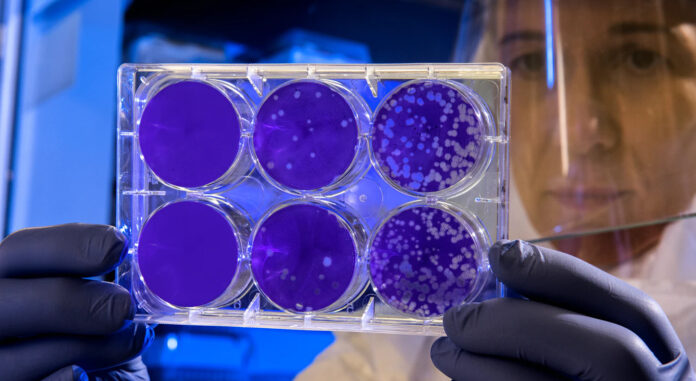
Photo: by CDC (growing flu cells)
With a new inspirational quote every day, atop the perfect photo—collected and archived on our Quote of the Day page—why not bookmark GNN.org for a daily uplift?
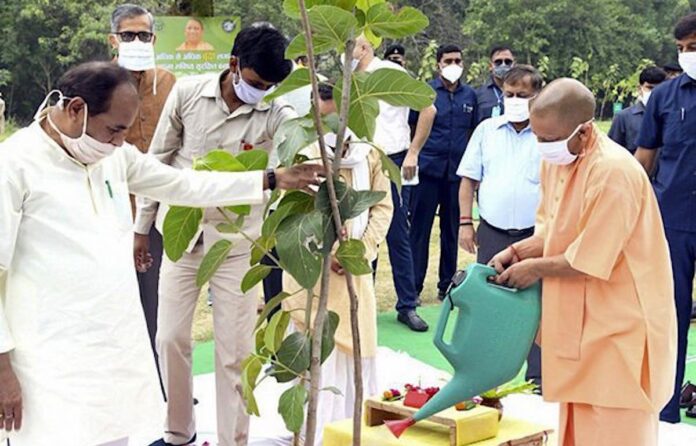
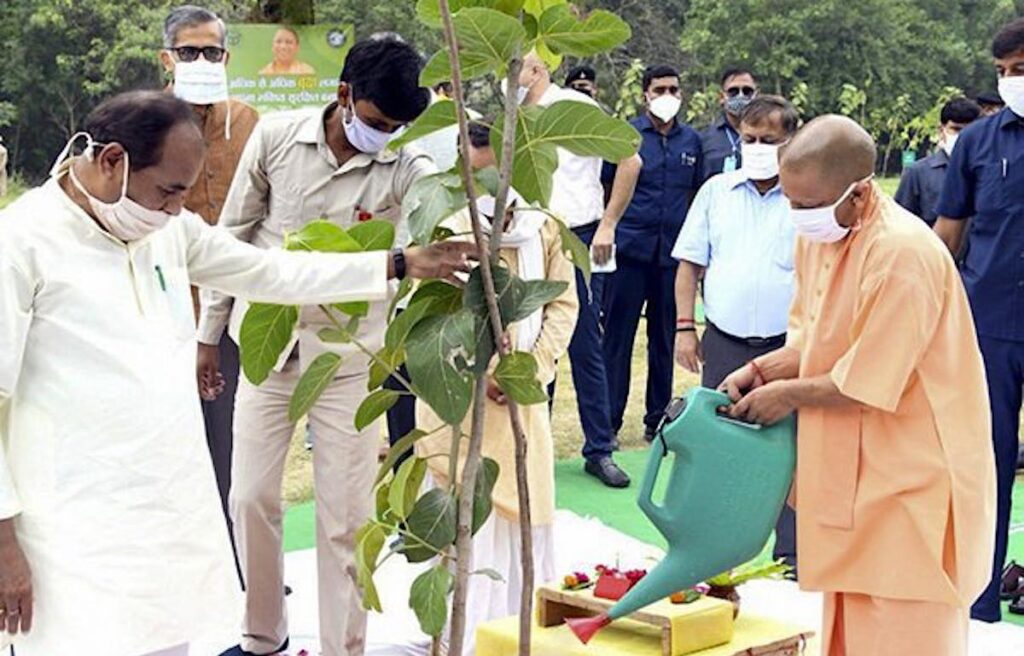
In the Indian state of Uttar Pradesh, there is space enough for trees to grow—and space enough for 2 million residents to plant truckloads of trees while social distancing.
Although the virus has spread fast throughout the country, its threat was not enough to dissuade the government of the most-populous Indian state from conducting a mass tree-planting campaign along the banks of the river Ganges as part of its pledge to shade a third of the nation under tree cover by 2030.
The nation’s target acreage of 235 million acres would represent an area the size of Texas and New Mexico combined.
The planting was carried out last week by volunteers, nonprofit employees, government workers, and even lawmakers, all of whom maintained distance from each other and wore face masks to stop the possible spread of coronavirus.
“We are committed to increase the forest cover of Uttar Pradesh to over 15% of the total land area in next five years,” said the state’s chief minister, Yogi Adityanath, pictured above during the campaign’s inauguration ceremony.
“In today’s campaign, over 20 million trees will be planted at the banks of the Ganges river, which will help in keeping this mighty river clean.”
Many nations have targeted 2030 as the deadline for various sustainability-related goals, to coincide with the UN’s 18 Sustainable Development Goals designed to encourage nations to solve the world’s largest problems, such as poverty, hunger, pollution, access to clean water, education access, and more.
Mass tree plantings have been launched as an easy and inexpensive method of drawing carbon from the atmosphere, with hundreds of millions of trees being planted in countries around the world, including China, Pakistan, India, Madagascar, and the nations of the Sahel, especially Ethiopia and Senegal.
The survival of every tree during such mass-planting operations is not guaranteed, of course, but compared to changing energy and transportation infrastructure, tree-planting is easy, inexpensive, and helpful in regenerating previously degraded land back to healthy, functioning ecosystems.
Shaquille O’Neal is no stranger to being featured in national news headlines, but it’s not just because of his legendary sports career—he is also regularly praised for having a heart of gold.
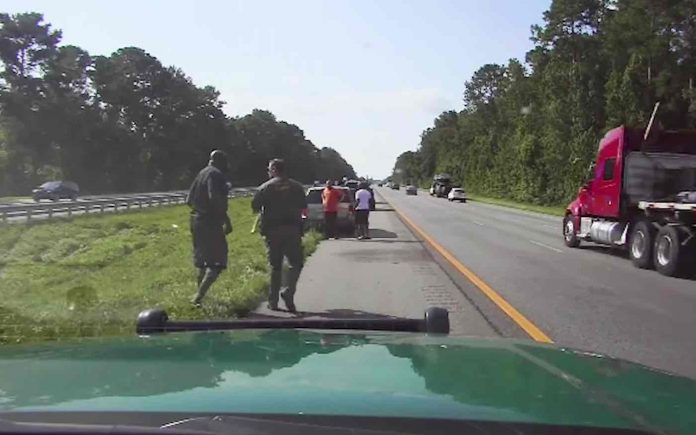
In addition to being hailed for his charity work and random acts of kindness, Shaq was lauded by law enforcement on Facebook after he stopped to help a Florida woman who was in a car accident last week.
According to the Alachua County Sheriff’s Department, Shaq pulled over to the side of I-75 when he saw the woman’s tire blow out. After making sure that she was okay following the collision, he waited with her until law enforcement arrived.
Shaq left the scene shortly afterwards, but not before greeting the surprised officers with a fist bump, as seen on the dash cam footage.
Since the Sheriff’s department posted the video to social media, it has been viewed almost 400,000 times—and while it’s not as if the NBA star was filmed removing a bullet, it is always heartening to see celebrities with kind heart.
(WATCH the video below)
Be Sure And Share This Sweet Story Of Celebrity Kindness With Your Friends On Social Media…
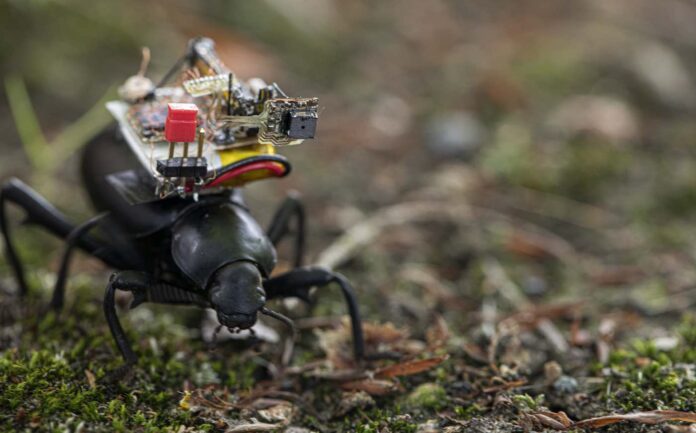
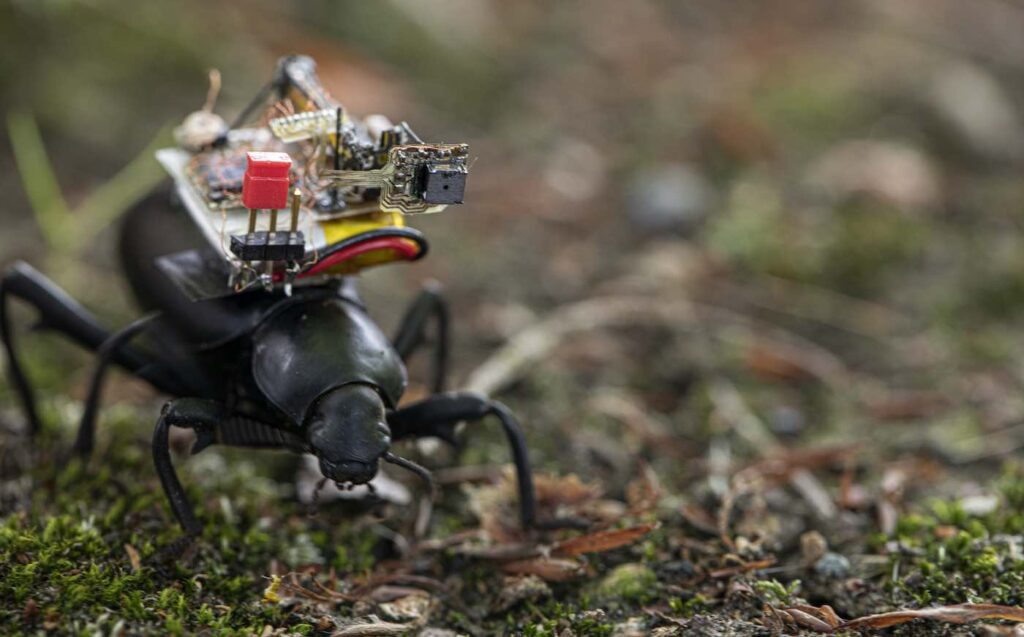
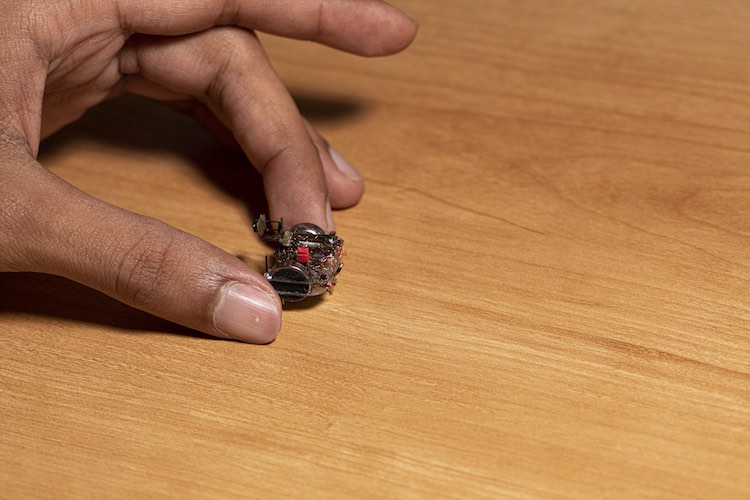
Researchers at the University of Washington have developed a tiny camera that can ride aboard an insect. Here a Pinacate beetle explores the UW campus with the camera on its back. Credit: Mark Stone/University of Washington.
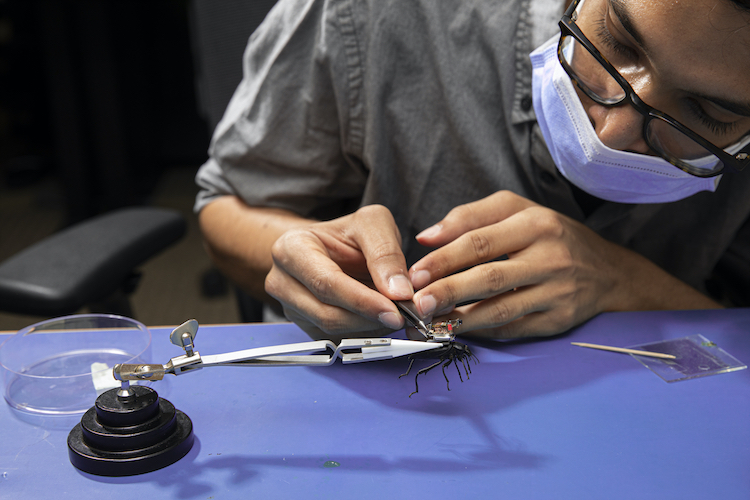
Attaching the camera system to a Pinacate beetle. Credit: Mark Stone/University of Washington.
In the movie Ant-Man, the title character can shrink in size and travel by soaring on the back of an insect. Now researchers at the University of Washington have developed a tiny wireless steerable camera that can also ride aboard an insect, giving everyone a chance to see an Ant-Man view of the world.
The camera, which streams video to a smartphone at 1 to 5 frames per second, sits on a mechanical arm that can pivot 60 degrees. This allows a viewer to capture a high-resolution, panoramic shot or track a moving object while expending a minimal amount of energy. To demonstrate the versatility of this system, which weighs about 250 milligrams—about one-tenth the weight of a playing card—the team mounted it on top of live beetles and insect-sized robots.
“We have created a low-power, low-weight, wireless camera system that can capture a first-person view of what’s happening from an actual live insect or create vision for small robots,” said senior author Shyam Gollakota, a UW associate professor in the Paul G. Allen School of Computer Science & Engineering. “Vision is so important for communication and for navigation, but it’s extremely challenging to do it at such a small scale. As a result, prior to our work, wireless vision has not been possible for small robots or insects.”
Typical small cameras, such as those used in smartphones, use a lot of power to capture wide-angle, high-resolution photos, and that doesn’t work at the insect scale. While the cameras themselves are lightweight, the batteries they need to support them make the overall system too big and heavy for insects—or insect-sized robots—to lug around. So the team took a lesson from biology.
“Similar to cameras, vision in animals requires a lot of power,” said co-author Sawyer Fuller, a UW assistant professor of mechanical engineering. “It’s less of a big deal in larger creatures like humans, but flies are using 10 to 20% of their resting energy just to power their brains, most of which is devoted to visual processing. To help cut the cost, some flies have a small, high-resolution region of their compound eyes. They turn their heads to steer where they want to see with extra clarity, such as for chasing prey or a mate. This saves power over having high resolution over their entire visual field.”
Researchers at the University of Washington have developed a tiny camera that can ride aboard an insect. Here a Pinacate beetle explores the UW campus with the camera on its back. Credit: Mark Stone/University of Washington.
To mimic an animal’s vision, the researchers used a tiny, ultra-low-power black-and-white camera that can sweep across a field of view with the help of a mechanical arm. The arm moves when the team applies a high voltage, which makes the material bend and move the camera to the desired position. Unless the team applies more power, the arm stays at that angle for about a minute before relaxing back to its original position. This is similar to how people can keep their head turned in one direction for only a short period of time before returning to a more neutral position.
“One advantage to being able to move the camera is that you can get a wide-angle view of what’s happening without consuming a huge amount of power,” said co-lead author Vikram Iyer, a UW doctoral student in electrical and computer engineering. “We can track a moving object without having to spend the energy to move a whole robot. These images are also at a higher resolution than if we used a wide-angle lens, which would create an image with the same number of pixels divided up over a much larger area.”
The camera and arm are controlled via Bluetooth from a smartphone from a distance up to 120 meters away, just a little longer than a football field.
The researchers attached their removable system to the backs of two different types of beetles—a death-feigning beetle and a Pinacate beetle. Similar beetles have been known to be able to carry loads heavier than half a gram, the researchers said.
“We made sure the beetles could still move properly when they were carrying our system,” said co-lead author Ali Najafi, a UW doctoral student in electrical and computer engineering. “They were able to navigate freely across gravel, up a slope and even climb trees.”
The beetles also lived for at least a year after the experiment ended.
“We added a small accelerometer to our system to be able to detect when the beetle moves. Then it only captures images during that time,” Iyer said. “If the camera is just continuously streaming without this accelerometer, we could record one to two hours before the battery died. With the accelerometer, we could record for six hours or more, depending on the beetle’s activity level.”
The researchers also used their camera system to design the world’s smallest terrestrial, power-autonomous robot with wireless vision. This insect-sized robot uses vibrations to move and consumes almost the same power as low-power Bluetooth radios need to operate.
The team found, however, that the vibrations shook the camera and produced distorted images. The researchers solved this issue by having the robot stop momentarily, take a picture and then resume its journey. With this strategy, the system was still able to move about 2 to 3 centimeters per second—faster than any other tiny robot that uses vibrations to move—and had a battery life of about 90 minutes.
Researchers at the University of Washington have developed a tiny camera that can ride aboard an insect-sized robot they designed. Credit: Mark Stone/University of Washington.
While the team is excited about the potential for lightweight and low-power mobile cameras, the researchers acknowledge that this technology comes with a new set of privacy risks.
“As researchers, we strongly believe that it’s really important to put things in the public domain so people are aware of the risks and so people can start coming up with solutions to address them,” Gollakota said.
Applications could range from biology to exploring novel environments, the researchers said. The team hopes that future versions of the camera will require even less power and be battery-free—or potentially even solar-powered.
“This is the first time that we’ve had a first-person view from the back of a beetle while it’s walking around. There are so many questions you could explore, such as how does the beetle respond to different stimuli that it sees in the environment?” Iyer said. “But also, insects can traverse rocky environments, which is really challenging for robots to do at this scale. So this system can also help us out by letting us see or collect samples from hard-to-navigate spaces.”
You’ve already seen people paint masterpieces onto canvases, but what about artists who can paint masterpieces onto water? That’s exactly what Garip Ay does in his studio every day.
The Istanbul-based artist specializes in the ancient Turkish art of “ebru”—or “water marbling” in English.
Ay creates each of his designs by distributing colorful dyes onto water that has been treated with wetting agents to make the pigments float. After that, he uses special tools to move the dyes into breathtaking pictures and patterns on the water’s surface.
Although the process is very soothing to watch, Ay says it is not an easy job to do himself—but the end results are magnificent.
(WATCH the video below)
Be Sure And Share This Enchanting Story With Your Friends On Social Media…
Quote of the Day: “Pay careful attention to those ideas that keep coming back to your mind. Ideas left lifeless are ghosts that don’t just haunt you, they bite.” – Richie Norton
Photo: by Jeremy Thomas (cropped)
With a new inspirational quote every day, atop the perfect photo—collected and archived on our Quote of the Day page—why not bookmark GNN.org for a daily uplift?
When a brave London rail worker saw a bike theft in progress at his station, he knew he couldn’t stand by and let it happen.
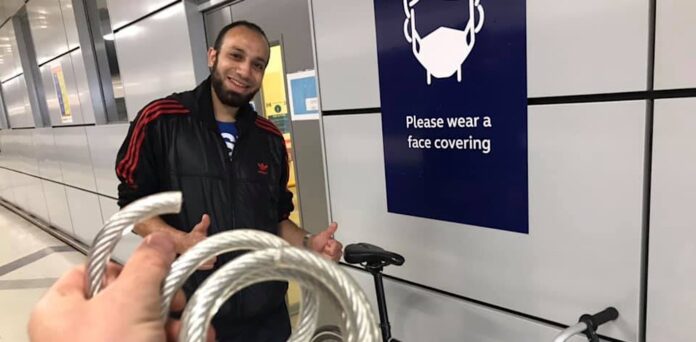
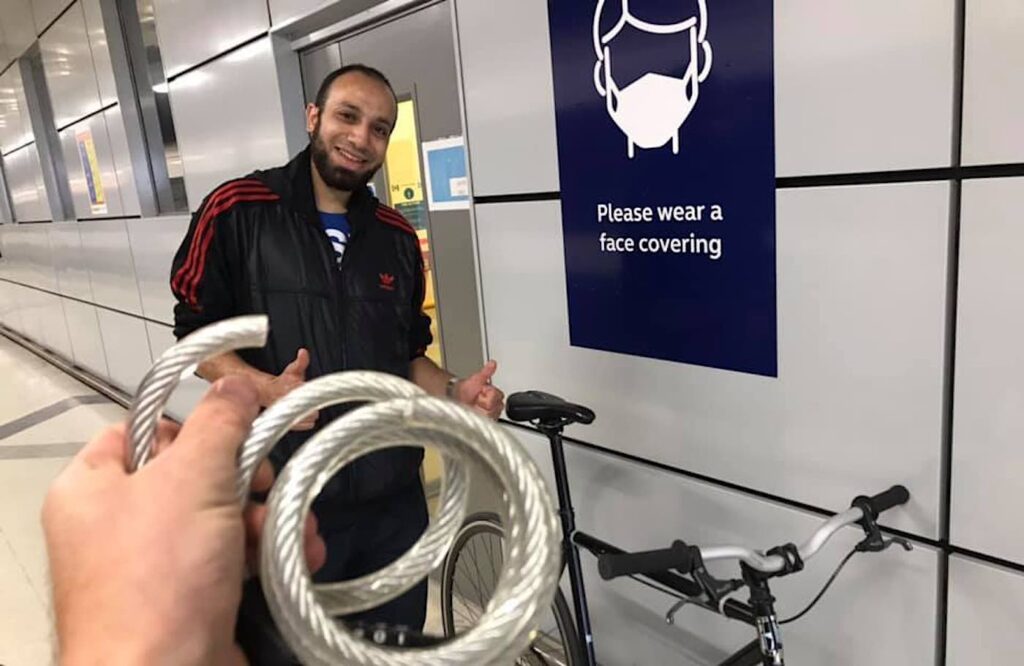
Abdul El-Gayar was clocking-off from his shift at Cannon Street station in Central London when he noticed a man using bolt cutters on a bicycle outside the entrance.
“I heard the sound of a lock being snapped and I didn’t think twice. I said ‘You’re not taking that’. I couldn’t let that happen,” El-Gayar, 31, told PA News.
“Voices were raised a little—I said ‘It’s not your bike’. The guy eventually gave up and walked off. I put the bike into safe storage because the lock had been broken.”
Even though El-Gayar’s workday had ended, he then chose to wait until the bicycle’s owner came back—and it took four hours.
“I have a bike and cycle to work; I know what value they have to people.”
When Steve Farmer arrived outside the station that evening, he’d already had a stressful day. Normally he’d lock his bike up at the office, but that morning he’d forgotten his security pass. Typically he’d always have his trusty U-lock with him, but he only had his son’s bike lock this time. So he’d left his bicycle outside the station and hoped for the best.
When he arrived at 6 pm and saw the cut lock on the ground where his bike had been, he thought the worst.
“I was gutted,” the 39-year-old told the Evening Standard. “I was annoyed that I had used a bad lock to lock it up with. I was resigned to the fact I would never see it again, but trudged back up to the station, thinking there was no point really in asking for the security cameras but wanted to try anyway.”
At the train platform he saw El-Gayar, who had “a smile I will never forget,” recalled Farmer, who entered the code into the cut bike lock to show he was the owner.
London rail worker Abdul El-Gayar by Steve Farmer – FB
Later on, Farmer shared a Facebook post detailing the day’s events and the generosity of El-Gayar — who he described as “a legend of a man” and “a credit to his employer.”
That post, which went up on June 29, has since been shared 134,000 times.
One commenter captured public sentiment towards El-Gayar’s kind actions perfectly: “People like Abdul make the world a better place.”
PEDDLE This Story Over to Friends on Social Media, And Restore Their Faith in Humanity…
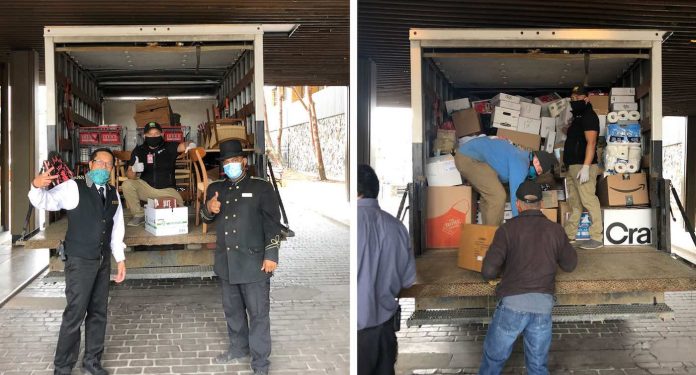
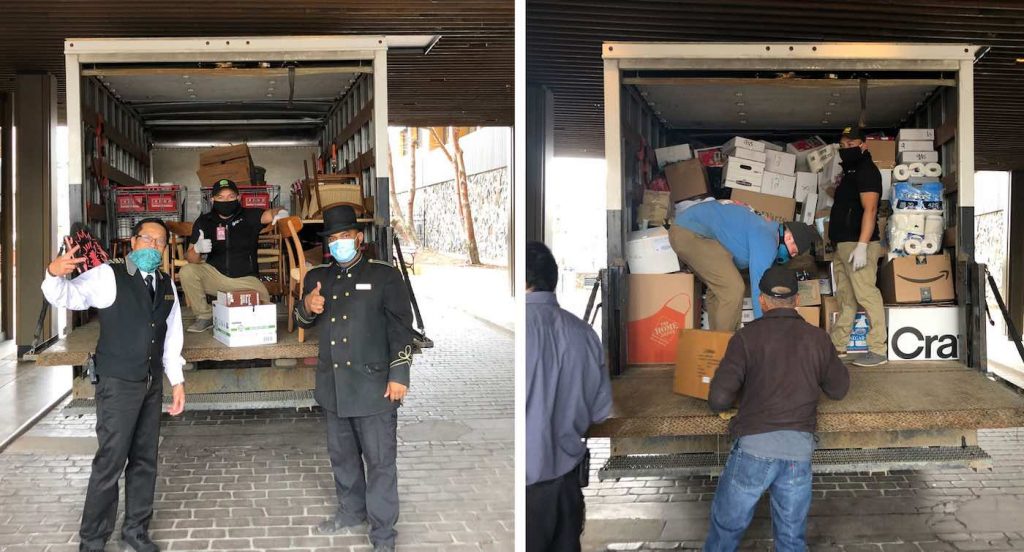
Catholic Social Services collected truckloads of supplies with the help of Hotel Captain Cook. (Courtesy Catholic Social Services Alaska)
Anchorage, Alaska was nominated as one of 50 finalists in the Reader’s Digest “50 Nicest Places in America” contest for 2020. A crowd-sourced effort to uncover places in all 50 states where kindness and generosity are reigning supreme amidst a climate of coronavirus and cultural upheaval, you can now vote for your favorite ‘Nicest Place’ by visiting the Reader’s Digest website.
A city known for its cold climate is warming hearts by ensuring its residents are safe during the coronavirus crisis—and that includes everyone in the remote city of nearly 300,000, especially the homeless.
“Since COVID-19 our community has come together—and it’s an amazing transformation that I never thought I would see,” said Sandy Cannon, the resident who submitted her city’s story to Reader’s Digest. “People are supporting local businesses, the homeless population is finally being cared for, and city leaders are stepping up and making us all proud.”
When Alaska issued its “hunker down” order due to the novel coronavirus, the staff at Catholic Social Services knew they needed to act quickly to get the homeless population of Anchorage off the streets and out of crowded shelters to stem the disease’s spread.
That meant finding private places for as many homeless as possible.
“We knew that getting these individuals into their own residences was going to be the safest option,” says Molly Cornish, community engagement director at the local Catholic Social Services.
So CSS staff worked around the clock to find hundreds of homes. But their success created a new problem: those being rehoused often lacked the necessities that so many take for granted. Soap, toothpaste and—of course—toilet paper.
A call for help on social media was picked up by Coronavirus Days of Caring, a new Facebook group of Anchorage residents. They collaborated with a local business that has an ongoing partnership with CSS, the Hotel Captain Cook, to start a drive. Residents could drop off necessities with the hotel bellmen to be distributed to a newly housed person.
Not only that; for every selfie taken during the drop-off, the hotel would give a $10 tip to staffers who had temporarily lost their jobs due to the pandemic.
Catholic Social Services collected truckloads of supplies with the help of Hotel Captain Cook. (Courtesy Catholic Social Services Alaska)
When the drive concluded, two massive box trucks full of household items had been gathered. Catholic Social Services now had everything they needed for anyone who walked through their front door.
“People were so generous,” says Cornish. “It was so wonderful to see.”
A peaceful march on June 5 to protest the death of George Floyd also inspired similar steps to help community members.
After the 1,000 residents gathered, a local art gallery launched a social-distancing charity event featuring photos of the protests. “The turnout was fantastic,” says Jovell Rennie, co-owner of Akela Space. “People just kept coming to support and donate.” And they raised $23,000 for groups serving Black and Native residents.
Cannon says such generosity is the kind of thing locals do automatically for neighbors in need. She credits the kindness of her 70-something neighbor, Charlotte, with making sure she and her husband both survived the quarantine, given their high-risk immune systems. Cannon is a 65-year-old with asthma and high blood pressure, while her husband has Crohn’s disease, pre-diabetes, and lung issues. Charlotte repeatedly picked up their medications whenever they were ready at the pharmacy, and frequently made other stops.
“I would say something offhand, like ‘Oh, I need flour,’ and magically the next day flour would arrive on my doorstep,” Cannon says. “It was like the flour fairy had come! Flour, sugar, toilet paper—the surprises kept coming.”
“She’s just always there, when there’s no payoff in it for her. She does it out of the kindness of her heart.”
Need more positive stories and updates coming out of the COVID-19 challenge? For more uplifting coverage, click here.
SHARE The ‘Nicest Place’ in Alaska And Warm the Hearts of Friends on Social Media…
It’ll be another decade until the world’s nations and firms are evaluated for the United Nations 18 Sustainable Development Goals 2030 (SDG).
Much to the delight of global conservationists, however, Pakistan has already met the criteria for SDG 13, which calls on nations to take urgent action against climate change and its effects.
Pakistan isn’t the richest country, but it does have a major incentive to tackle the climate crisis, as they are ranked among the most vulnerable nations to the direct climatic and meteorological effects of global climate change.
Malik Amin Islam, advisor to the Premier on climate change, announced that in the UN’s 2020 Sustainable Development Report, Pakistan had met the SDG 13 through its implementation of a variety of programs.
“With the achieving of the Climate Action SDG 13, Pakistan has proved that it is committed to global efforts against the challenge of climate change to protect life on the planet earth,” he told reporters.
From planting trees to clean water
Major initiatives that have contributed to the country’s the fulfillment of SDG 13 includes the 10 Billion Tree Tsunami Project—a nationwide project launched in 2015 by Prime Minister Imran Khan to reforest degraded land around the Hindu Kush Mountains in the northern Khyber Pakhtunkhwa Province.
Since the project was relaunched in April during the COVID-19 shutdowns, it has also helped to put thousands of recently-unemployed Pakistani laborers back to work.
Another trailblazing program which has contributed to the nation’s eco-success has been the Clean Green Pakistan Index, which ranks cities and towns based on the quality of solid and liquid waste treatment and removal, sanitation and drinking water services, and parks and green spaces.
File photo by Mehak Wajid Ali, CC
The communities that attain the highest scores receive a reward in recognition of their work.
In this article from the IUCN written by Amin Islam himself, the advisor outlines another of the pillars in Pakistan’s progress towards SDG 13—the Protected Areas Initiative— with a quote from American author Henry David Thoreau: “In wildness is the preservation of the world.”
Explaining the value inherent in preserving Pakistan’s protected areas, Amin Islam writes: “These protected refuges of nature also create a payback mechanism by creating spaces for human recreation, promoting ecotourism, generating green jobs, enhancing resilience to natural disasters, contributing to food and water security through ecosystem restoration and addressing issues such as climate change by sequestering carbon.”
The Protected Areas Initiative aims to cloak the 15% of the country that exists as wildlife sanctuaries and national parks in the finest possible ecological management plans and community conservation funds.
Climate: Everything to gain, everything to lose
According to Germanwatch, a sustainable development advocacy group advising for the Climate Risk 2020 report, Pakistan is the fifth most-vulnerable nation in the long term to extreme weather events owing to its geographical position, and has been in the top ten for the last 30 years.
“This means that the our economy is at peril from climate catastrophes and this is not alone an environmental challenge but also an issue affecting our economy, human health, agriculture and ecosystem,” said Amin Islam.
“Turning to renewable energy and a range of other measures that will reduce emissions and increase adaptation efforts is a key way forward as a part of viable climate action,” he added, according to The News Pakistan.
Prime Minister Khan announced that energy companies were withdrawing from plans to construct a series of 2,740-megawatt imported coal projects auctioned off by the previous government, pivoting instead to zero carbon and indigenous hydroelectric projects of a much higher, 3,700-megawatt capacity.
Pakistan has a gross domestic product, that while on the rise, still amounts to only $316 billion U.S. a year.
Keeping in mind that GDP isn’t the finest measure of economic conditions, this is less than half of the recently-passed $740 billion dollar U.S. National Defense Authorization Act of 2021.
Pakistan’s success in contrast to limited resources demonstrates that it doesn’t always have to be “superpowers” that take the lead on the world stage, but rather countries that have the will and the talent to make positive changes.
Reprinted with permission from World at Large, an online journal focused on travel, foreign affairs, health and fitness, and the environment.
Plant Some Positivity By Sharing The Exciting Eco News With Your Friends On Social Media…


















 In the Indian state of Uttar Pradesh, there is space enough for trees to grow—and space enough for 2 million residents to plant truckloads of trees while social distancing.