















251 years ago today, American Founding Father Patrick Henry spoke to Virginia legislators, where he famously proposed that their colony should join the revolution against King George and fight for independence. “I know not what course others may take, but as for me, give me liberty, or give me death!” READ other anecdotes from the moment… (1775)
19-Year-old Abandoned at Birth Without Legs Leads USA to Sled Hockey Gold at Paralympics


Kayden Beasley’s life began without lower leg bones in a Chinese orphanage—but his journey carried him off to a loving family in a tiny North Carolina town, and eventually to the 2026 Paralympics in Italy.
Along the way, he’s broken every barrier and overpowered the obstacles in front of him to help bring a Gold Medal in sled hockey to the United States.
Kayden was born as a congenital double amputee above the knee, but at age 3, was adopted by Anthony and Amy Beasley on Christmas Day, and brought up in a loving home 30 miles from Raleigh with another son adopted from China three years earlier.
“It’s all I’ve ever known,” Kayden said of his loving North Carolina family in an article by the Raleigh News & Observer. “(My adoption) is a part of the journey, but not all of it.”
When he was 13, someone at his doctor’s office told him about the Carolina Hurricanes sled hockey club—an adaptive version of ice hockey, featuring sled-like mechanisms that allow people with disabilities to partake in the sport.
Kayden’s first experience with it proved to be a resounding success.
“He’s a natural, and he’s never looked back,” said Brian Jacoby, Founder and Co-Director of the Carolina Hurricanes Sled Hockey. “His first international tournament, I think in the second game, he was named player of the game.”
Before long, a new-found purpose and passion overtook Kayden’s life, sending him skating past any perceived limitations. He was invited to a Team USA development camp for sled hockey and eventually made the team.
Then, he competed in the 2025 World Para Ice Hockey Championship, where he had two goals and five assists in five games, helping to lead Team USA to a gold medal.
This month he skated in the Milano Cortina 2026 Winter Paralympics in Italy, just weeks after the USA men’s and women’s teams both won gold in the same city’s Winter Olympics.
At 19 years old, Kayden is still the third youngest member of the team, but he played in all five games for Team USA, scoring three goals and adding an assist as the Americans earned yet another gold medal.
(Watch the clutch goal below…)
“Happy, proud, excited; I am not sure what describes my emotions the best,” Hurricanes Director of Youth Hockey and Community Outreach Shane Willis said in an NHL article.
“Hurricanes Sled Hockey is home to a USA Hockey Gold medal, and I can’t wait to see it grow—and have more young players look up to Kayden.”
HEARTWARMING ADOPTION: Doctor Adopts 4-yo Patient Who had No Family When he Arrived for Heart Surgery–And Found Homes for his 5 Siblings Too
The young Beasley’s life began seemingly surrounded by barriers and obstacles. But thanks to a family’s love and the purpose provided by a sport, he’s sped past them all, delivering a gold medal to his country, and some inspiration to anyone who hears his story.
SEND HIS STORY SKATING Across the Internet–Share it To Social Media…
Wag-atha Christie Dog May Have Resolved Victorian Murder Digging Up Poison Bottle From 160 Years Ago
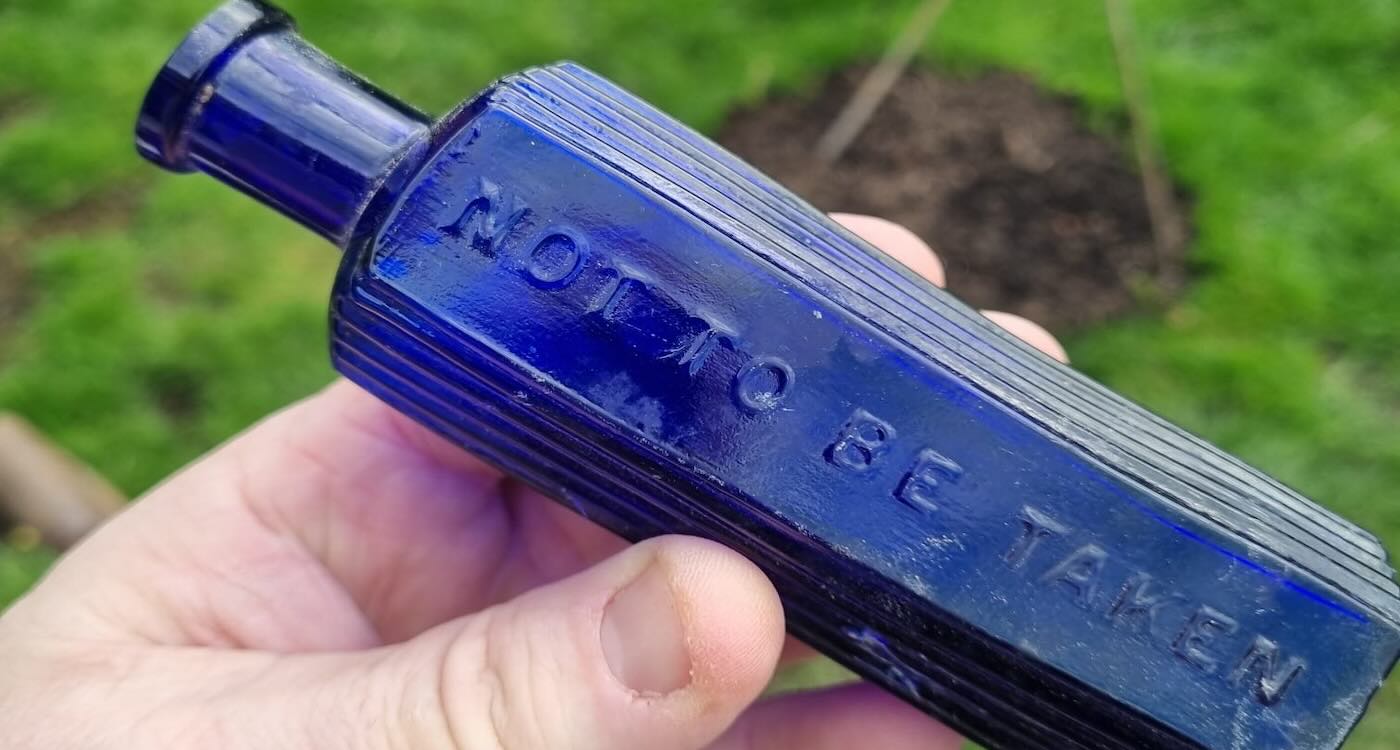
A family’s dog may have solved a notorious 160-year-old murder, after he dug up a bottle of poison buried in the garden.
The Labrador unearthed a blue vial under his lawn in Devon, England, that his owner, Paul Phillips, thought was a pipe—until he saw the words ‘Not To Be Taken’ embossed on glass.
The 49-year-old did some digging and discovered a woman named Mary Ann Ashford had lived two doors down and killed her husband William in 1865. She put poison into his tea so she could take his money and be with her young lover.
Now, in the modern-day town of Clyst Honiton, he’s pretty sure his dog has uncovered the evidence.
“My dog, Stanley, has been digging in the same spot in our garden,” Paul told SWNS news agency. “We kept patching it up—and even at one point had to put a paving slab over it—but he was insistent there was something there he wanted.
“It was a bright blue bottle in perfect, mint condition and had the words, ‘Not To Be Taken’ on the glass.”

After doing some research, he learned that such bottles were used in the mid-19th century for poisons, and then he remembered learning something about a murder and hanging in the village over a century ago.
“So I went back online and found the old newspaper article about William and Mary Ann Ashford living in Clyst Honiton. She was having an affair with a guy that worked at the local bakery. I think our property used to be a big cider barn.
“The fact that there was a murder due to poisoning in the next door down from us…you have to put two and two together!”
Paul also learned that his bit of local history became part of a national political question about the death penalty.
After tests showed that Mary Ashford had traces of arsenic and strychnine on her clothes, the local Victorian killer was sentenced to be executed for the “murder by arsenic poisoning of her husband of 20 years”—but the hanging almost went wrong.
Reportedly, with a crowd of 20,000 people watching, it took Mary minutes to die.
Paul said the incident galvanized opinion at the time against public hangings, and was key to ending them across the country.

“It is fascinating that we have found a bit of history in my garden from a woman that was instrumental in the end of corporal punishment 160 years ago,” he beamed.
“My family and friends are totally engrossed with the story.”
Since the discovery, Stanley has not been digging in that spot at all anymore.
MORE MYSTERIES SOLVED:
• Woman Finds Message on Toilet Paper Roll Written 35 Years Ago by Little Girl
• Paul McCartney ‘Gets Back!’ His Hofner Bass, 50 Years After Theft from Van
And Paul hopes a local historian steps up to help the family find out more information about the unique story.
SHARE THE WAG-ATHA CHRISTIE TALE With Dog Families on Social Media…
If ‘Free Pianos’ Show Up in Your Feed, Don’t Be Duped: Industry Pioneers Warn Against Them

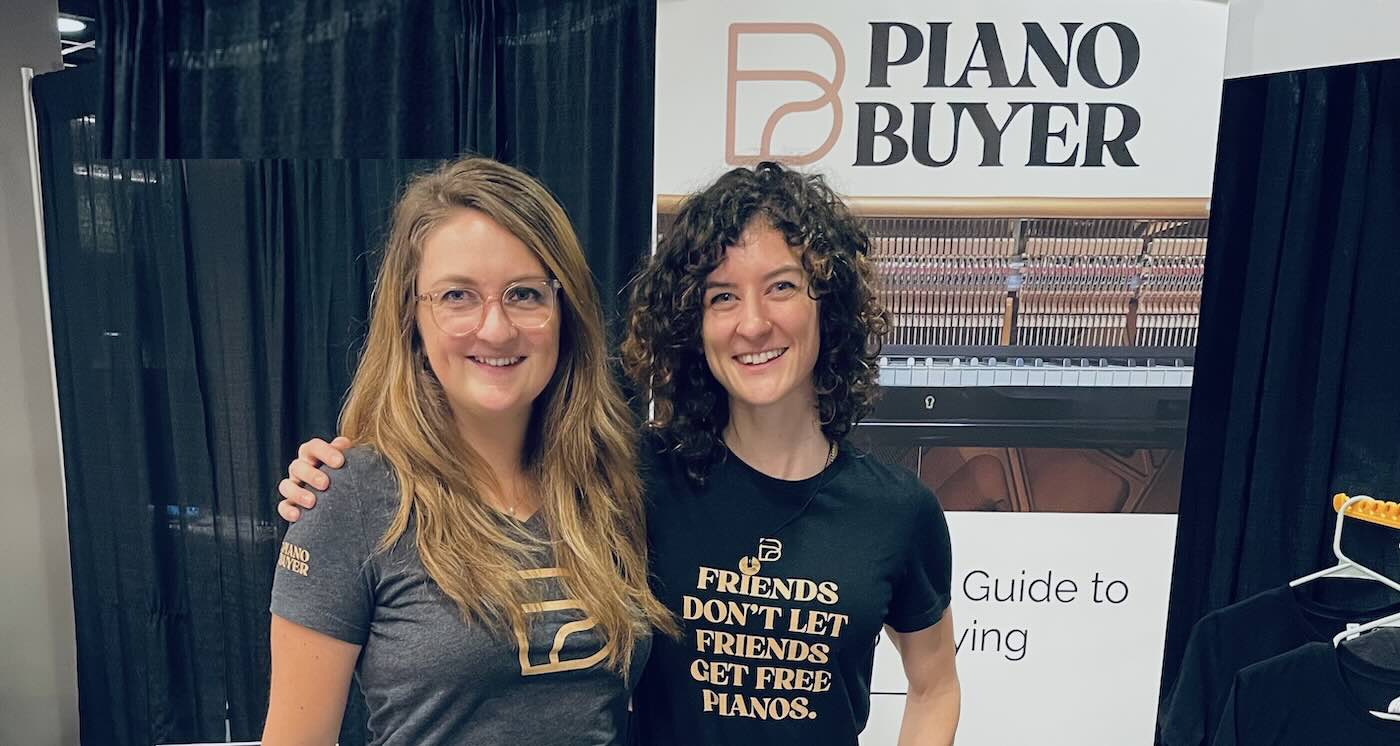
If you’re on Craigslist or Facebook Marketplace, chances are you’ve seen a listing for a “free piano.” This may seem like the bargain of a lifetime; however, it’s quite the opposite.
“An expired piano is not a gift, it is a liability,” according to piano technician Hannah Beckett, who is providing a valuable update in the way we buy and repair our 88-keyed friends.
Like anything made of organic materials, pianos don’t last forever, and roughly 95% of the pianos that are being given away for free are expired instruments that have been kept far past a healthy lifespan.
When factoring in the costs of moving, tuning, and maintenance, the pianos essentially become expensive paperweights—or, worst case scenario, they can bring termites, mouse nests, or mold into your home.
That’s why the pioneering Ms. Beckett has been working tirelessly to revolutionize the industry, publishing several articles on the horrors of free pianos, saving technicians and musicians alike from the wreckage of expired instruments.
She first became aware of these issues 12 years ago when she was working as a music teacher in Wilmington, North Carolina. When one of her student’s piano pedals began squeaking, she rolled up her sleeves and dove into the repair.
“Even though I’d been playing piano my whole life, I had no idea of the complexity involved in making these instruments work,” Beckett told Good News Network. “It’s a common issue among pianists today; while other musicians are able to do basic maintenance on their instruments, pianists have very little understanding of how pianos actually work.
“I found out the hard way that when they’re not working correctly, it’s the musician who suffers.”
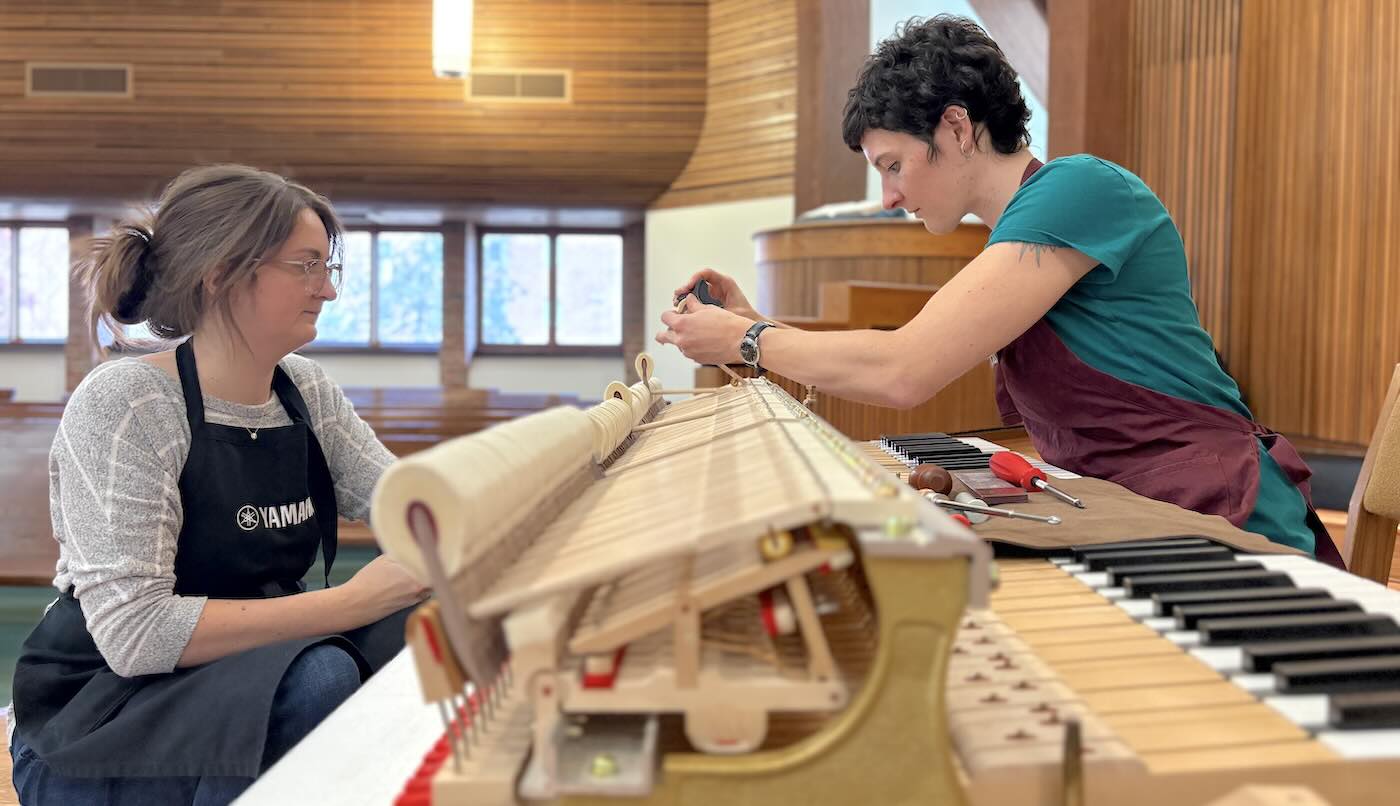
She’s been hooked on piano technology ever since. Now she can differentiate between a student’s mistakes and the piano’s mistakes—and spreads keen advice about refusing free pianos as the director/editor of Piano Buyer, an online resource for consumers seeking guidance on the ins and outs of pianos.
Fighting a male-domineering—and faltering—industry
Old uprights are not the only dinosaurs Ms. Beckett has been staring down. As a female in a male-dominated industry, Hannah has ushered in a better way of keeping pianos in tune.
Learning piano technology was a difficult path. Educational opportunities historically were not welcoming toward women, and reliable resources on such an esoteric craft can be expensive and hard to come by. Fortunately, Beckett landed some generous mentors—but even with individualized oversight, the learning curve is steep. Apprentices must hone their physical tuning technique, develop an advanced sense of hearing, and invest gobs of money into a specialized tool kit.
To make matters worse, the ‘90s tech boom led to a generational gap in the industry; the traditional father-son business model was failing because the majority of piano technicians who’d been actively working and garnering valuable expertise were now either passing away or retiring. Consequently, technicians have been scrambling to collect, document, and record all of their experience for future generations.

“The piano industry still operates like it’s stuck in the ‘80s. The older generation saw information as something to be guarded, to minimize competition,” explained Beckett. “Now we’re in a position where we don’t have enough educated technicians!”
Beckett spent years trying to create quality, accessible educational materials for new piano tech students, only to be met by industry sexism and pushback. And with that, she took matters into her own hands.
She became the mastermind behind the Professional Piano Technician’s Network (ProPTN), an online platform that became a marketplace for technicians to buy new and used tools, find peer-reviewed articles on repairs and business, and self-paced courses teaching the concepts and skill sets that have been notoriously difficult to learn about.
She and fellow piano technician McKinley Coda also produce a podcast that interviews professionals from across the industry, while a Discord forum serves as a help line for beginning techs who may need advice from the more experienced. ProPTN is the only platform of its kind run entirely by women, and its diverse, rapidly growing user base is evidence of its success.
Other piano tech courses typically cost hundreds if not thousands of dollars—but the ProPTN subscription costs just $65 a year.
“After spending way too much time and energy fighting a system with built-in restrictions, I decided to channel my efforts into building a new system with no glass ceiling,” said Beckett, who also tunes, repairs, and maintains pianos in Northern Virginia via the Aurelia Piano Co.
“While it has also been a ton of work, the rewards of helping a new generation experience a better educational environment than the one I navigated far exceed the fatigue of building from the ground up.”
With both of Beckett’s companies combined, industry professionals and musicians alike are becoming increasingly aware of the “free piano” problem.

Inexperienced technicians may continue trying to service expired pianos—despite how they hinder the progress and performance of pianists themselves—by focusing on how they may be able to service an instrument versus whether they should.
But heeding Beckett’s advice will result in performers being paired with better instruments; technicians becoming better trained at keeping instruments healthy; and the music world becoming more in tune every day.
SHARE THE INSIGHTS With Piano Players and Enthusiasts on Social Media…
Teens Recycle Old Pickleballs and Tennis Balls to Avert Millions From Landfills –And You Can Help


While most teenagers are focused on homework and weekend plans, twelve high school students from the Pacific Palisades community are confronting a global environmental issue hiding in plain sight: the estimated 500 million non-biodegradable tennis and pickleballs discarded into landfills each year.
They launched Another Bounce with an ambitious goal of setting a World Record for the most balls collected for recycling from racquet sports—a campaign that will culminate in an Earth Day collection event on April 19.
The group has partnered with Ridwell in Los Angeles, which shreds, washes, and pelletizes the balls, which are then shipped to their partner Merlin Plastics.
The recycled plastic is then used to create a variety of products: The pelletized post-consumer resin (PCR) ends up in various commercial and industrial products like nursery plant pots, carpeting, plastic packaging, and more.
They also supply balls to a group in Florida called Bounce Back Pickle which breaks down the plastic to create new pickle balls—avoiding the landfill waste that can take over 400 years to decompose.
Ultimately, their youthful mission is to vigorously advocate for a circular model for tennis and pickle balls—like computer manufactures have designed in partnership with electronics stores—meaning, ball companies should create their own take back programs to ensure products are responsibly recycled at the end of their life.

Simple ways you can help
The students have joined the California nonprofit Habits of Waste as the new ‘Junior Board’, and launched a public email campaign calling on major ball manufacturers (Penn, Wilson, Franklin, Dunlop, and Selkirk) to implement circular business models, including national take-back programs
“Youth leadership is one of the most powerful forces for change,” said the founder of Habits of Waste, Sheila Morovati, who landed in GNN’s headlines in 2018 for setting her own Guinness World Record for collecting over a million gently-used crayons to donate to 700 teachers.
Sheila’s son Leo, a varsity tennis player, is on the Board, along with Ford Casady, who’s currently ranked the #1 Junior Pickleball Player nationally (U18), and his brother Boone, who rounds out their #1 US Junior Doubles Team (18U).
After witnessing bins overflowing with discarded balls at courts across Southern California, the team of student athletes decided they would no longer sit on the sidelines.
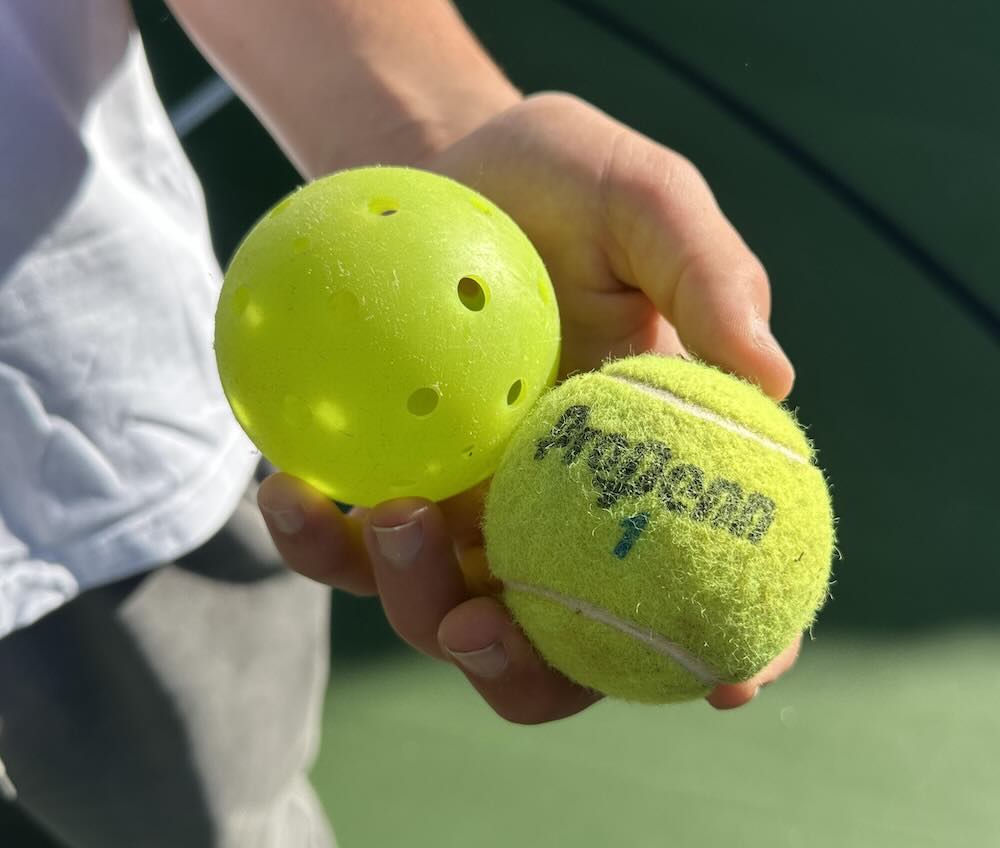
“We play the sport, we see the waste, and we aren’t waiting for adults to fix it,” said the 12 members who first came together while helping rebuild their community following the devastating Palisades Fire.
Beyond collecting balls within a 30-mile radius of Pacific Palisades—and nationally through shipped donations—the students are speaking at City Council meetings in Beverly Hills, Burbank, Santa Monica, Malibu, Los Angeles, to advocate for ordinances requiring parks, schools, and private clubs to recycle tennis and pickleballs.
They now have a warehouse in Santa Monica where people can ship balls if they want to help out nationally. (The address is: Habits of Waste Donation, 3000 31st St., Suite C
Santa Monica, CA 90405)
“It’s all very exciting,” Sheila told GNN in an email.
TEEN TITAN OF RECYCLING: Schoolboy With ‘Can-Do’ Attitude Has Recycled a Million Cans and Donated the Proceeds to Charity
A Guinness Record in their future?
Based on her research, the Guinness Record they must beat for the most tennis balls recycled is 1000, but there doesn’t seem to be any record for pickle balls yet.

“I will say that the kids are determined to set a substantial record so that they hold it for some time to come. Ultimately, the point of a world record is to raise awareness for issues, like ball waste, that people overlook everyday.”
Follow the group on Instagram @anotherbounce
MORE RECYCLING HEROES:
• Engineering Student Turns Red Solo Cups into Stylish Sweaters That Don’t Shed Microplastics
• China’s Dying EV Batteries and Solar Cells Are Powering a Circular Economy Worth $38 Billion per Year
AND SHARE THE RECYCLING IDEA By Posting This for Pickleball Players on Social Media…
“Luck is believing you’re lucky.” – Tennessee Williams

Quote of the Day: “Luck is believing you’re lucky.” – Tennessee Williams
Photo by: Aaron Burden (spring crocus)
With a new inspirational quote every day, atop the perfect photo—collected and archived on our Quote of the Day page—why not bookmark GNN.org for a daily uplift?

Good News in History, March 22

56 years ago today, native Mexican or “Chicino” residents in San Diego, California occupied a site under the Coronado Bridge, leading to the creation of Chicano Park. Home to the country’s largest collection of outdoor murals, as well as various sculptures, earthworks, and an architectural piece dedicated to the cultural heritage of the community. The park was designated an official historic site. READ what you can find there… (1970)
Boy Selling Towel That Stays Cool for 2 Hours Wins $200,000 in Prize Money
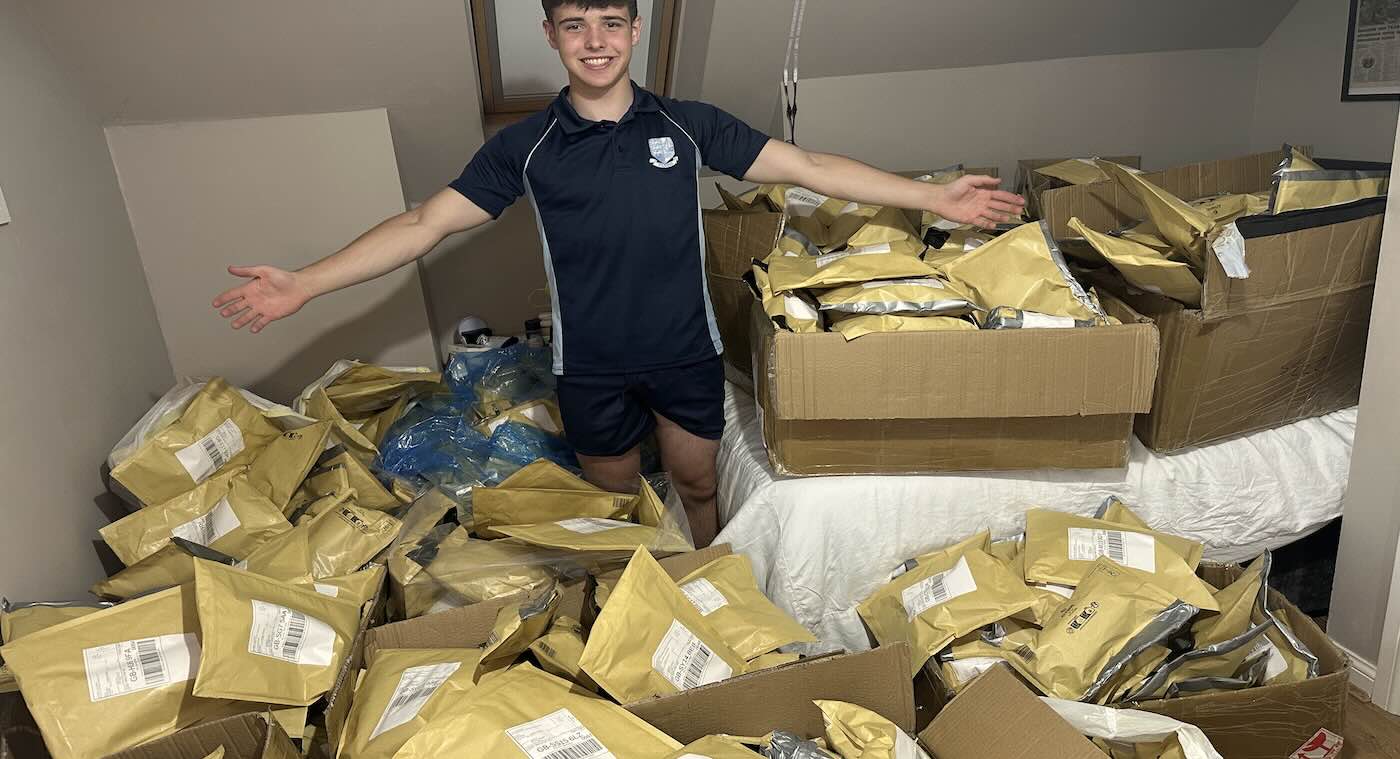
A teenage boy who is marketing a towel that stays cold for two hours has bested 15,000 other inventors to win a £150,000 cash prize ($200k) in an international competition.
16-year-old Harrison Nott is juggling his normal schoolwork while running his CoolTowel company, which earned £100k in revenues last year.
He became an entrepreneur in 2023, founding CoolTowel in his bedroom. He’s gradually scaled up his business, sending out more than 30,000 orders.
Reportedly, the towel is made of a three-layer polyester material that holds onto moisture. The directions say it “delivers cooling relief by wetting, wringing, and snapping the towel”.
Harrison, from Essex, England, was soon selling his wares via TikTok and a Shopify website—hitting £15,000 during his best day, last summer.
Now, after recent headlines, he’s coping with a quickly ballooning business.
“I’ve been very, very busy,” Harrison admits. “It’s gone from a relatively small side hustle run from my bedroom to a big business.
“I’ve had to grow up very fast. My school has been very helpful; I’m on a part-time timetable now to accommodate the needs of my business.”
In November, Harrison attended an Alibaba.com CoCreate Pitch event in London after applying with “15,000 other young entrepreneurs from around the world”.

He was one of just 30 chosen to pitch their business to judges at the event. And though ten others won $20k investments, Harrison was the only one to take home the grand prize of $200k, after wowing judges with his pitch.
One of the competition judges, ex-England footballer Rio Ferdinand, was so impressed with young Harrison that he exchanged numbers with him—and the boy hopes he becomes an investor, to help him take his business to the next level.
“I felt like a celebrity. It felt like a dream… ” (Watch one of his TikTok promotion videos below…)
@cooltoweltiktok ❄️🛍️ You NEED this CoolTowel! Its perfect for hot days, sport , menopause pets and more! Hurry! ❄️🛍️ #cooltowel #Coldsweattowel #Cooldown #Overheating #Hot #Viral #Getyours #tiktokshop #fyp
♬ original sound - CoolTowel
Harrison says he’s been lucky to have the inspiration of his dad, 42-year-old Matthew Nott, to guide him in his business.
HE’S A ROLE MODEL: Schoolboy With ‘Can-Do’ Attitude Has Recycled a Million Cans and Donated the Proceeds to Charity
“I’ve seen my dad running a business my whole life and I’ve always wanted to run my own, and have the financial control to do things for myself.
“I started my first business at eight, reselling items on eBay. I’ve started loads of different start-ups, most of them failing and losing money.
“They’ve given me the skills I needed to start a new one.
With a passion for fitness and playing squash, Harrison was frustrated by the lack of high-quality cooling towels in the UK, and that discontent drove him toward his goal.
He trademarked his brand with the help of his business teacher—and became a company. Determined to give back to his community, Harrison donates CoolTowel products to charities that support individuals with illnesses.
“It’s about building up a solid brand that people trust.”

Going forward, he hopes to be able to teach other people how to build up their own successful business.
TEEN GENIUS: Teens Invent Device that Removes Microplastics with Ultrasound Waves, Winning $50k
“I want to help people be their best self and launch their business if they want to, or get that skill they want to learn,” said Harrison, who has sponsored his own ‘sports day’ at this school, and presented an assembly about his business model.
“I’ve made a lot of mistakes but now I’ve got the formula.”
He plans to take A-level Business Studies, and his dad Matthew admires his commitment to bettering himself—in whatever he does.
“He’s a chip off the old block. When he fails at something, he doesn’t just say, ‘Oh I tried’. He works out where he went wrong.
TURNING WATER INTO WINE: Couple Makes Award-Winning Gin and Vodka After Starting Distillery in a Shed During Lockdown
“That is so important in life.”
INSPIRE AN ENTREPRENEUR By Sharing This on Social Media…
Fun ‘Fashion Shoot’ Makes Residents in a Senior Home Feel 20 Years Younger

Senior home residents were left feeling 20 years younger after posing for a photoshoot wearing high-fashion wigs and colorful clothing.
Residents at Maplewood Court, an hour outside London, were treated to the glam-up session thanks to the facility’s ‘Lifestyle Team’ who were inspired by a video on social media.
Providing an outrageous wardrobe of flower-studded wigs, sunglasses, hats and giant pearls, the photo shoot had the 72 residents abuzz with excitement.
The fun afternoon was the brainchild of employees Laura Taylor and Jo Morgan who kept it a secret, only leaking bits of excitement. “There was such a buzz in the home.”
“We loved the idea of giving our residents the chance not just to dress up but to go over the top and feel fabulous,” Ms. Taylor told SWNS news agency.
Centenarian Hilda Howes said it provided a new lease of life.
“I loved it, they made me look 80, instead of 100! It was so much fun to dress up in all the bright clothes.”

The pair sourced the wigs online, while other employees contributed jewelry, scarves, and sunglasses.
Deb Eve, a care assistant at the Maplewood home in Maidstone, did the ladies’ make-up while Morgan took the photographs with the help of her daughter.
“We were thrilled that everyone was so keen to get dressed up,” Morgan said.
“The whole thing lifted everyone’s mood; it was wonderful to see.”

The team will now print the photos for residents to display in their rooms, and a photo exhibition for the lobby is also in the works.
MORE COOL SENIOR SHOOTS:
• Seniors Recreate Iconic Movie Posters For Calendar – And They’re Amazing
• Nursing Home Recreate Classic Album Covers While in Lockdown – LOOK
One 92-year-old resident, Violet Syers, gushed, “I’ll be able to look at it every day and see how fabulous I looked.”
SHARE THE IDEA ON SOCIAL MEDIA, So Other Senior Homes Can Do the Same…
New AI Glasses for Dementia ‘Sees’ Objects With Labels Projected on Lenses to ‘Significantly’ Improve Lives

New AI glasses for people with dementia are able to project visual prompts onto the lenses to help folks live more independently—and they could be available in the UK in 2027.
The latest news comes after the glasses wowed both test patients in their homes and a panel of outside judges.
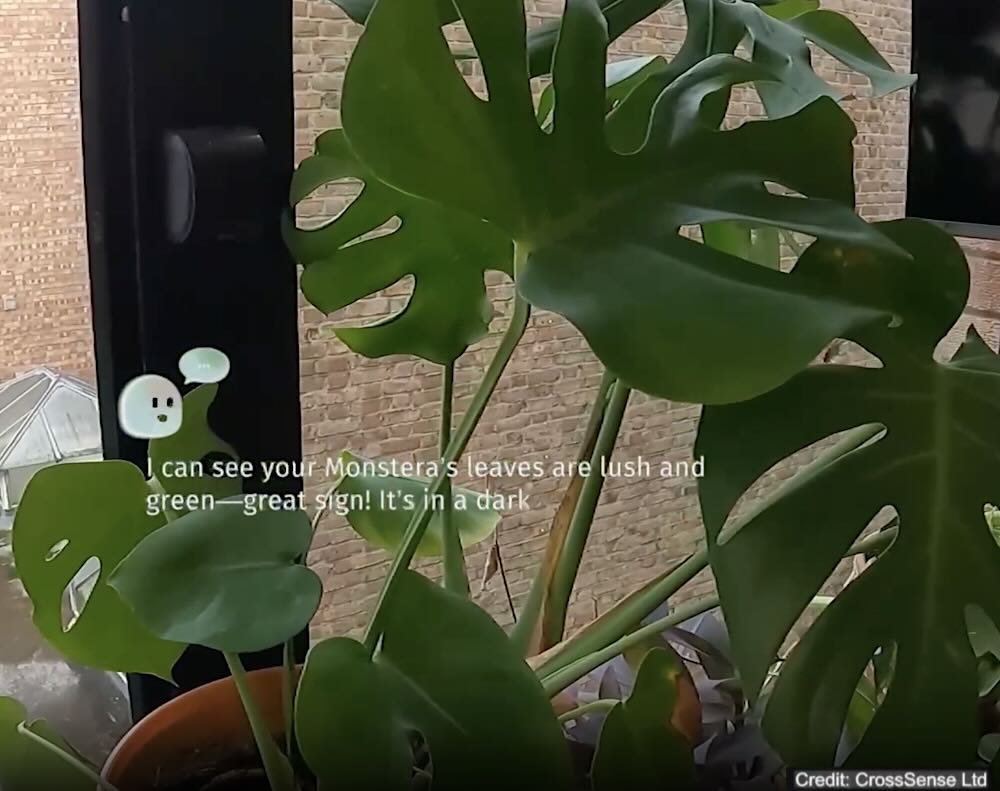
They can guide people living with early-stage dementia through daily activities by identifying common objects and providing audio commentary or answer questions while projecting visual prompts onto the lenses.
By asking gentle questions, the glasses’ AI companion, called ‘Wispy’, understands and learns a person’s unique way of doing things, with the AI adapting to each user’s needs as their dementia progresses.
Wispy will even talk through what to do when a person cannot remember a particular step in a process.
In test trials, three out of four patients reported a significant improvement to their quality of life, thanks to the glasses and Wispy’s tips developed from UK company CrossSense.

Spending over a decade creating and tweaking prototypes of the app and gadget, a team of AI engineers trained the glasses with dozens of everyday activities including getting dressed, managing household chores safely, making a cup of tea and interacting with loved ones.
The specs, which work with people’s prescription lens inserts and hearing aids, also capture the environment of the person living with dementia and the AI interprets that information to help the user to do the things that define independence.
“This includes feeling confident in their own home, taking good care of themselves, planning the day ahead, completing planned activities and hosting friends and family,” said the creators.
PREVENTING DEMENTING:
• Seniors Who Listen to Music May Slash Their Dementia Risk by Over a Third
• Cheese May Help Stave Off Dementia Shows Study of 27k People Followed For 25 Years
With a release date set for early 2027 in the UK, the inventors hope the specs, which weigh less than 3 ounces (75g), will be used by local authorities, care providers, and NHS hospital memory clinics.
Last week, the London-based team behind the technology, CrossSense, won the Longitude Prize on Dementia with its million dollar prize funded by the Alzheimer’s Society and Innovate UK.
The panel of international expert judges agreed that the winning solution was a genuine breakthrough technology with revolutionary potential for people living with dementia and their families.
CrossSense says the gadget includes a built-in battery that lasts for one hour, but also a portable power bank that can keep the glasses running all day long.
70-year-old Carole Grieg from London (pictured above), who founded a dementia support group called ForgetMeNots, tried the new glasses and is convinced they could help her fellow dementia patients maintain their independence.
“I thought it was an amazing concept, with the potential to provide real, reliable support for people like me, helping to compensate for the cognitive skills we gradually lose as dementia progresses.”
“For many of us, our world slowly becomes smaller as the condition progresses. Innovations like this offer real hope, and I know that as my own circumstances change, I will certainly be relying on them.”
Professor Fiona Carragher, chief research officer at Alzheimer’s Society admires the way the technology can develop its ‘intuitive personal support’.
LATEST ALZHEIMER’S BREAKTHOUGHS:
• Tiny Protein Confirmed to Dismantle the Toxic Clumps Linked to Alzheimer’s
• Compound in Rosemary and Sage was Turned into Alzheimer’s Treatment That Boosted Memory and Cut Amayloid
“By anticipating people’s needs as their condition progresses, easing daily living challenges, and providing reassurance to families, this revolutionary tech will allow people with dementia to maintain their independence for longer, within the familiar environment of home.”
SHARE THE DEMENTIA INNOVATION Projecting Hope On Social Media…
Your Weekly Horoscope – ‘Free Will Astrology’ by Rob Brezsny

Our partner Rob Brezsny, who has a new book out, Astrology Is Real: Revelations from My Life as an Oracle, provides his weekly wisdom to enlighten our thinking and motivate our mood. Rob’s Free Will Astrology, is a syndicated weekly column appearing in over a hundred publications. He is also the author of Pronoia Is the Antidote for Paranoia: How All of Creation Is Conspiring To Shower You with Blessings. (A free preview of the book is available here.)
Here is your weekly horoscope…

FREE WILL ASTROLOGY – Week of March 21, 2026
Copyright by Rob Brezsny, FreeWillAstrology.com

ARIES (March 21-April 19):
In 1960, Aries primatologist Jane Goodall arrived in Tanzania to study the social and family lives of chimpanzees. Her intention was to engage in patient, long‑term observation. In subsequent months, she saw the creatures using tools, a skill that scientists had previously believed only humans could do. She also found that “it isn’t only human beings who have personality, who are capable of rational thought and emotions like joy and sorrow.” Her discoveries revolutionized our understanding of animal intelligence. I recommend her approach to you in the coming weeks, Aries. Your diligent, tenacious attention can supplant outmoded assumptions. Let the details and rhythms of what you’re studying reveal their deeper truths. Your affectionate watchfulness will change the story.

TAURUS (April 20-May 20):
Ancient Romans had a household deity called Cardea, goddess of hinges and thresholds. She protected the pivot points, like the places where the inside meets the outside and where one state transforms into another. In the coming weeks, you Tauruses will benefit from befriending a similar deity. I hope you will pay eager attention to the metaphorical hinges in your world: the thresholds, portals, transitions, and in-between times. They may sometimes feel awkward because they lack the certainty you crave. But I guarantee that they are where the best magic congregates.

GEMINI (May 21-June 20):
You are fluent in the art of fruitful contradiction. While others pursue one-dimensional consistency, you thrive on the fact that the truth is too wild and multifaceted to be captured in a single, simple story. You make spirited use of paradox and enjoy being enchanted by riddles. You can be both serious and playful, committed and curious, strong and receptive. In the coming weeks, Gemini, I hope you will express these superpowers to the max. The world doesn’t need another person who separates everything into neat little categories. Your nimble intelligence and charming multiplicity are the gifts your allies need most.

CANCER (June 21-July 22):
In traditional Japanese aesthetics, wabi-sabi celebrates imperfection, impermanence, and the soulfulness that comes with age. A weathered wooden gate may be considered more beautiful than a new one. Its surface has a silvery grain from years of exposure to rain and sun. Its hinges creak from long use by countless passersby. Let’s invoke this lovely concept as we ruminate on your life, Cancerian. In my astrological estimation, it’s important that in the coming months you don’t treat your incompleteness as a deficit requiring correction. Consider the possibility that your supposed blemishes may be among your most interesting features. The idiosyncratic aspects of your character are precisely what make you a source of vitality.

LEO (July 23-Aug. 22):
In medieval Japan, swordsmiths would undertake spiritual purifications before beginning work on a new blade: abstinence, ritual bathing, prayer, and fasting. They believed that the quality of their consciousness influenced the quality of their creation—that the blade would absorb the maker’s mental and spiritual state. I bring this to your attention because you’re in a phase when your inner condition will have extra potent effects on everything you build, develop, or initiate. My advice: Prepare yourself with impeccable care before launching new projects. Purify your motivations. Clarify your vision. The creations you will be generating could serve you well for a long time.

VIRGO (Aug. 23-Sept. 22):
Master chess players don’t necessarily calculate more moves ahead than amateurs. Their years of study enable them to perceive the developing trends in a single glance, bypassing complex analysis. What appears to be stellar intuition is actually compressed expertise. You’re in a phase when you can make abundant use of this capacity, Virgo. Again and again, your accumulated experience will crystallize into immediate knowing. So don’t second-guess your first assessments, OK? Trust the pattern recognition that you have cultivated through the years.

LIBRA (Sept. 23-Oct. 22):
The cosmic powers have granted you a triple-strength, extra-long, time-release dose of sweet, fresh certainty. During the grace period that’s beginning, you will be less tempted to indulge in doubt and indecision. A fountain of resolve will rise up in you whenever you need it. Though at first the lucid serenity you feel may seem odd, you could grow accustomed to it—so much so that you could permanently lose up to 20 percent of your chronic tendency to vacillate.

SCORPIO (Oct. 23-Nov. 21):
Crows can hold grudges against individual humans for years. But they also remember acts of kindness and bring gifts like shiny objects and buttons to those who’ve helped them. They’re capable of both revenge and gratitude, and they never forget either. I suspect you’re entering a period when you’ll need to decide which of your crow-like qualities to emphasize, Scorpio. You have legitimate grievances worth remembering. You have also received gifts worth honoring. My counsel: Spend 20 percent of your emotional energy on remembering wrongs (enough to protect yourself) and 80 percent on remembering what has helped you thrive. Make gratitude your primary teacher, even as you stay wisely wary.

SAGITTARIUS (Nov. 22-Dec. 21):
More than any other zodiac sign, you Sagittarians can be both a discontented rebel and a sunny celebrant of life. You can see clearly what’s out of alignment and needs adjustment without surrendering your wry, amused tolerance. This double capacity will be especially useful to you in the coming days. You may not find many allies who share this aptitude, though, so you should lean on your own instincts and heed the following suggestions: Be joyfully defiant. Be a generous agitator and an open-hearted critic. Blessings will find their way to you as you subvert the stale status quo with creativity and kindness.

CAPRICORN (Dec. 22-Jan. 19):
Your persistence and endurance are among your greatest gifts to the world. You’re committed to building useful structures that outlast transitory moods and trends. On behalf of all the other signs, I say THANK YOU!, dear Capricorn. You understand that real power comes from showing up consistently and doing unglamorous work, refraining from the temptation to score quick and superficial victories. May you always recognize that your pragmatism is a form of loving faith. Your cautionary care is rooted in generosity. Now here’s my plea: More than ever before, the rest of us need you to express these talents with full vigor.

AQUARIUS (Jan. 20-Feb. 18):
One of your power symbols right now is the place where two tributaries blend into a single river. A second is where your favorite tree enters the earth. Here are other images to excite your imagination and stimulate your creativity: the boundary between cloud and sky; the darkness where your friend’s shadow overlaps yours; and the time between when the sun sets and night falls. To sum up, Aquarius, I hope you will access extra inspiration in liminal areas. Seek the vibrant revelations that arise where one mystery coalesces with another.

PISCES (Feb. 19-March 20):
Poet Mark Doty wrote, “The sea doesn’t reward those who are too anxious, too greedy, or too impatient. We should lie as empty, open, and choiceless as a beach—waiting for gifts from the sea.” This quote captures your Piscean genius when it’s working at its best. Others may exhaust themselves trying to force results, but you know that the best gifts often come to those who are patient, open, and relaxed. This is true right now more than ever before. I hope you will practice intense receptivity. Protect your permeability like the superpower it is. Be as supple and responsive as you dare.
WANT MORE? Listen to Rob’s EXPANDED AUDIO HOROSCOPES, 4-5 minute meditations on the current state of your destiny — or subscribe to his unique daily text message service at: RealAstrology.com
(Zodiac images by Numerologysign.com, CC license)
SHARE The Wisdom With Friends Who Are Stars in Your Life on Social Media…
Good News in History, March 21

46 years ago today, Pink Floyd’s single, Another Brick in the Wall, hit No.1 on Billboard, beginning an 11-week domination at the top of the charts. From their rock opera album The Wall, written by bassist Roger Waters, it is a protest song against rigid schooling—and features a local elementary school choir. Called (Pt. 2), it became their only No.1 single in the US and UK, and many other countries—and it sold over four million copies worldwide. WATCH the band’s official animated music video… (1980)
“Spring is far more than just a changing of seasons; it’s a rebirth of the spirit.” – Toni Sorenson

Quote of the Day: “Spring is far more than just a changing of seasons; it’s a rebirth of the spirit.” – Toni Sorenson
Photo by: Aaron Burden (spring crocus)
With a new inspirational quote every day, atop the perfect photo—collected and archived on our Quote of the Day page—why not bookmark GNN.org for a daily uplift?

Pioneer is First to Cross Texas Along His New xTx Trail – 1,500 Miles Devised for Hikers, Cyclists and Horses
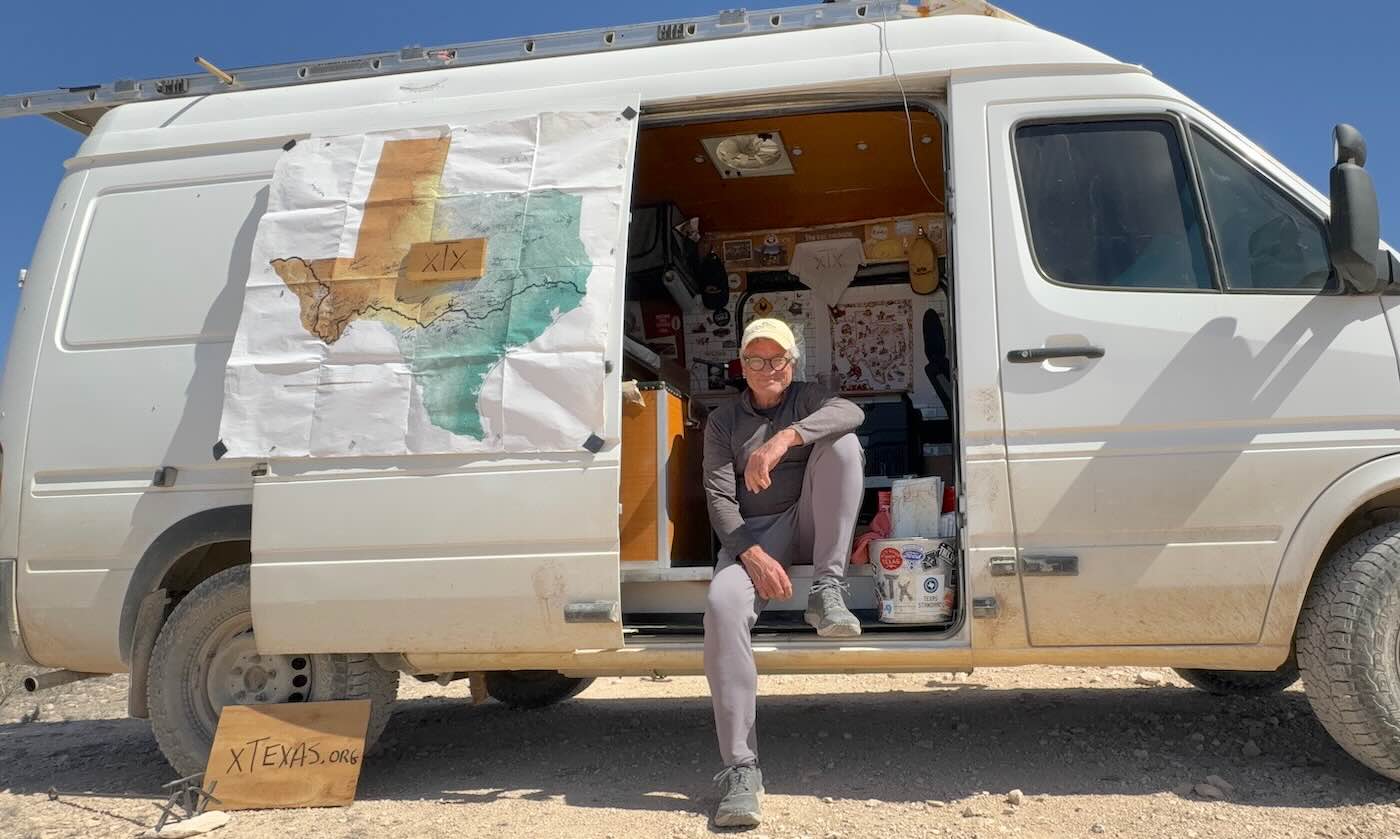
This is Charlie Gandy, who’s set to become the first adventurer to complete the Cross-Texas Trail, the xTx, America’s newest long-distance hiking route.
The 67-year-old invented the trail himself, and has so far invested $15,000 to ensure the route could become a destination for hikers, cyclists, and horseback riders.
Moving westward, he and his two hiking companions are set to arrive at the finish line in El Paso on the border with New Mexico on March 31st—having walked a full 1,500 miles across the Lone Star State.
Launched as a project in August of 2024, the xTx is meant to be traveled in late fall, winter, and early spring, when heat and water conditions aren’t so brutal.
Exactly how does one create the next Appalachian Trial? Well, in 2024, Gandy explained that it came down to the passion of a single man who pioneered the Appalachian Trail, and the same for the Pacific Crest Trail, making the two routes iconic bucket list goals for hikers across the world.
“As a native Texan, I’m a 66-year-old guy who likes to challenge myself to big, hairy goals and adventures—and it seemed to me like it was time for Texas to have its own Pacific Crest-type adventure route,” Gandy told Fox News Digital.


Beyond his own passion and obsession, the endeavor involved gathering sponsors for the creation of an organization to provide all the needed digital and hard-copy literature and publicity to let the nation know the trail exists.
He also had to find people willing to set up water stations in desert areas, and—because 96% of Texas land is privately-owned—people who were willing to allow the route to run through their property.
Gandy and his nonprofit have heard from enthusiastic Texans offering their own opinions of where the route should go—and a few who invited the tXt to run directly through their own land.
Like the Appalachian Trail, the xTx will take years to reach to its full potential. In its current iteration the xTx travels through the heart of rural Texas, weaving together public paved, gravel, and dirt roads, and wanders near or through sections of 17 state parks and 3 national parks.


“We’re establishing a 1,500-mile seasonal late fall through early spring hiking, cycling, and horseback trail through the heart of true Texas. It’s the first of its kind for the state,” Gandy said in a statement from his current position around Toyah, Texas.
ALSO CHECK OUT: Coveted Ranch Near San Francisco to Become Sprawling New Nature Preserve with Hiking Trails
The original working path for the whole route has largely been followed by Gandy on his current trip. You can see his progress and follow along as he nears the finish line on the Ride with GPS website.
It started on the eastern border of the state near Beaumont before meandering through a number of bayous and piney forests. The route continues, from the hills north of Houston, through a gap between San Antonio and Austin, into a leg above New Braunfels and scenic small towns like Lockhart, Luckenbach, and Kerrville.
Completing the detour, the trail starts to climb slightly north through the desert before plunging down into the gorgeous topography of Big Bend National Park in a large horseshoe curve that eventually leads directly north to the highest peak in the state among the Guadalupe Mountains, and westward to El Paso and the finish line.
SHARE This Incredible Journey From Tip To Tail Across Texas With Hiking Friends You Know…
Community Dads Raise Thousands to Surprise Beloved School Crossing Guard with a New Car


A group of North Texas dads raised money for a new car for a beloved school crossing guard, leaving her and the community in shock.
Ask anyone in the Moss Haven Elementary School community about Ms. Trecia Crawford and you’ll hear the same thing: she is so kind and protective of every child.
A staple of the community, who knows more parents on a first-name basis than most of the school employees, Ms. Crawford has been without wheels for the last 6 months after her car broke down and she lacked the money to repair or replace it.
“I was Lyfting here, and then when I ran out of money, I had to get on the bus,” Crawford told local CBS affiliate KTVT. “But I had to do what I had to do.”
Learning of her predicament, the Moss Haven Dad’s Club pooled their time and expertise to get the beloved Ms. Crawford back behind a wheel.
Marcus Waither is a member of the Dad’s Club who organizes the “Carpool Dads” volunteers, who drop children off to school every morning, saving parents gas and keeping kids safe. It was Waither’s idea to raise money to buy Ms. Crawford a new car.
The club raised an incredible $6,800 in just a few days, and from there, Waither tagged in local dad Adam Tharpe, general manager of Highland Lake Automotive. Tharpe found a white jeep that wouldn’t break his books to sell at an extreme discount. He took care of a few minor outstanding issues and even threw in some free oil change coupons.
DADS AND SCHOOLS: Dozens of ‘Flash Dads’ Cheer On Students Arriving at Schools in Kentucky–For 7 Years Giving High Fives and Support
Car in hand, Tharpe then passed the ball to Jeremy Graves, another dad from the club who took care of the liability insurance on the car on behalf of Ms. Crawford.

After that, the Jeep and the dads were ready, and on a morning in early March, surprised Ms. Crawford while she was on duty. In a Facebook post by the school district, Crawford can be seen holding her mouth in shock as she got the news.
MORE STORIES LIKE THIS: High School Students Repair Cars and Give Them to Single Moms: ‘You’re Really Making a Change in the World’
“Community isn’t just a buzzword,” read a blog post from the Richardson Independent School District, where Moss Haven is located. “It’s the action, time, and commitment of the parents, teachers, staff, and all those who show up in the smallest and biggest ways.”
SHARE These Great Dads Helping Out A Local Legend In Need…
Greek Government Organizes ‘Animal Airlift’ to Evacuate Pets and Owners from the Gulf


The Greek government organized an evacuation flight out of the United Arab Emirates specially-chartered for pets and their owners who couldn’t get seats on commercial airlines.
Every nation will have activated different contingencies to advise, protect, and help extract their citizens from the Persian Gulf states since Israel and the US launched their attacks against Iran.
For Greeks, their government paid close attention to one particular aspect of their citizens predicament—how they can flee with their four-legged family members.
On Wednesday, a flight touched down in Athens carrying more than a hundred passengers and their pets—the result of efforts to bypass the difficult process of flying internationally with companion animals.
“Our pets are not luggage, they are part of our families,” said the Greek Interior Ministry’s Special Secretary for the Protection of Companion Animals, Nikos Chrysakis.
The UAE, Qatar, and other nearby countries have been forced to repeatedly close their airspace and cancel thousands of flights over the 20 days of bombings and missile attacks, stranding hundreds of thousands of passengers. Attempting to fly with a pet has proven even harder than normal, a Greek cat owner told AP.
A hub of expatriates of all kinds, drawn by the once glamorous lifestyle, low taxes, and lovely weather, there were no shortage of Greeks that needed help escaping Abu Dhabi and Dubai.
When the special Aegean Air flight full of these expats touched down in Athens, joyous scenes followed; not only of locals seeing their loved ones and relatives return safe and sound, but of stressed pets leaping out of carriers and crates into their arms of their owners.
MORE STORIES LIKE THIS:
- Lion Rescued in Ukraine from a Tiny Cage Tentatively Walks on Grass for First Time–WATCH
- Abandoned Las Vegas Airport Dog Finds a Forever Home with the Officer Who Saved Him
- After Serving Together for 4 Years in Iraq, Dog and Army Handler Are Reunited to ‘Live the Couch Life’ in Texas
“It is very, very difficult to fly out of the country with your pets,” said Danai Koukoulomati, who arrived home with her cat, Muay Thai.
Another owner told the AP that returning to Greece safely with her dog Sirkati was “absolutely fantastic.”
According to Chrysakis, the Greek interior and foreign ministries had worked together for days “so we can have this good result, for the animals and people to return home safely.”
BARK About This Great Work On Behalf Of Stranded Citizens To Your Friends…
(UPDATE) DoorDash Adds Thousands to Woman’s Viral Fundraiser for Elderly Delivery Driver


A woman who had a DoorDash order brought to her house was shocked to see an old man on her doorbell camera.
Inspired to help, she set up a GoFundMe, which raised $940,000 to allow the man to retire, and her initiative grabbed the attention of the DoorDash company.
A spokesman told Fox News 17 that their team spoke with Richard, the elderly driver, who said he plans to continue door dashing even after becoming a merely-overnight millionaire, because it “keeps him active and he enjoys it.”
CEO Tony Xu reveled that Richard had completed 6,000 deliveries, and that the company added $20,000 irrespective of the enormity of the GoFundMe success.
GNN reported on March 17th, that It was just another weekday in Manchester, Tennessee, when Brittany Smith heard the doorbell ring.
Switching on her phone’s Ring doorbell camera app, she was surprised to see an elderly man she would later learn was named Richard, ascending to her porch in a red flannel shirt and khakis.
It could have been called a DoorDawdle order, as in his old age he could hardly ‘dash’ up the steps to her front door, and needed the handrailing for support.
“My daughter’s dad is a quadriplegic, so he often has things sent to the house because he can’t physically go get them,” Smith said, explaining why Richard arrived at their house that day. “This poor guy is struggling to get up my stairs to deliver my very capable daughter her Starbucks.”
Calling her daughter’s father, Smith asked to leave a bigger tip, but the father replied the opportunity through the DoorDash app to do so was gone. Meanwhile, she posted the video footage from the Ring camera on TikTok on other social media platforms, wondering if anyone in Manchester knew who the old man was.
A Facebook user recognized him as Richard and got in contact with Smith to reveal his identity and address. Driving over, Smith offered him a $200 tip, which would have made the story beautiful on its own, but it got even sweeter than the Starbucks Richard had delivered.
MORE STORIES JUST LIKE THIS: 81-year-old Waitress Couldn’t Retire, so a Stranger Raised Over $300K for Her
At his house, Richard explained that his wife lost her job and that the two of them quickly lost their savings paying for monthly expenses and a very costly medication she was taking. Richard took the DoorDash gig to try and supplement their income.
That’s when Smith set up the GoFundMe, with the aim of “helping Richard go back into retirement!”
GREAT GOFUNDMES: TikToker Crowdfunds $1.5 Million for 88-yo Army Veteran After Viral Supermarket Moment
With the footage from the Ring camera going viral, the GoFundMe benefited tremendously, and raised almost $1 million from an incredible 32,000 donations.
“I had no idea that I was going to gain that much traction,” Smith told the UK’s Independent. “Richard said he’s not slept in two days because he can’t quit watching the GoFundMe.”
SHARE This Incredibly Successful Gesture For An Old Man In Need…
“Try as you will, you cannot annihilate that eternal relic of the human heart, love.” – Victor Hugo

Quote of the Day: “Try as you will, you cannot annihilate that eternal relic of the human heart, love.” – Victor Hugo
Photo by: Federica Giacomazzi for Unsplash+
With a new inspirational quote every day, atop the perfect photo—collected and archived on our Quote of the Day page—why not bookmark GNN.org for a daily uplift?

Good News in History, March 20

27 years ago today, Legoland California, the first LEGO theme park outside Europe, opened in Carlsbad. It has over 60 rides, shows, and attractions, plus a water park, an aquarium and two hotels. Key themed areas rely on long-used LEGO set themes, including Dino Valley, Pirate Shores, Castle Hill, Miniland USA, and Adventure Land. Miniland USA is a particularly striking attraction, as it boats 1:20 scale dioramas built in LEGO of famous US places, such as New Orleans, Manhattan island, the National Mall, and the Las Vegas Strip. READ more about this famous theme park… (1999)
College Freshman Brings a Nostalgic General Store Back to Olde Towne Community in Virginia

Despite having her college years ahead of year, and only just obtaining the right to sign her name, a young Virginia woman has joined the ranks of American small business owners with a distinctly rustic flair.
With a childhood spent browsing old-timey general stores among the mountains of North Carolina, Lindsay Goodwin wanted to bring that nostalgic charm to her own town of Portsmouth.
She only graduated from Churchland High School last summer, but had been co-owner of Marketplace and General Store in Olde Towne Portsmouth since 2023.
She’s embarking on her freshman year of college towards a major in Arts at Virginia Wesleyan University, and admits that juggling both will be a challenge, but one she’s excited to undertake.
“Portsmouth is known for its history, and so we wanted to bring back the historical feel, but also the old-fashioned family place for everyone to come,” Goodwin told Kamilah Williams at WTKR News Norfolk.
Lindsay opened the store alongside her father, Tony Goodwin, who has long been a commercial real estate professional. He said that the store was purposefully built to give his daughter a plethora of opportunities: to have another anchor to the community she grew up in, to gain business experience for her university minor, and, of course, the opportunity to make a good living.
MORE SMALL BUSINESSES: San Fran Supervisor Goes After Stifling Regulations After Locals’ Dream of a Cafe Goes Up in Steam
That last point doesn’t always seem immediately obvious. Foot traffic can be substantial during high season, festivals, or holiday periods like Christmas, but sales can and do fall off.
Regardless, customers drawn to the old-fashioned shopping experience frequently remind them the father-daughter duo of why they came up with the idea in the first place.
GREAT LITTLE TOWNS: Arizona Suburb Turned into Mediterranean-style Walking Town Where Temperatures Stay Low
“When they come in, they say, ‘Man, this reminds me of something I grew up on back home,’ and that’s what makes us feel good about what we’ve done,” Mr. Goodwin said. “We’ve created a space that is nostalgic and fits Olde Towne perfectly.”
Beyond his daughter’s future, Mr. Goodwin said he sees the store as part of an effort to revitalize the historic city’s High Street, which has struggled with vacancies over the years.
For Lindsay, the goals are a little bit more immediate—keep up the sales, keep up the vibes, keep up with classes—then let the rest figure itself out.
SHARE This Father-Daughter Team Sprucing Up A Beautiful Historic City…