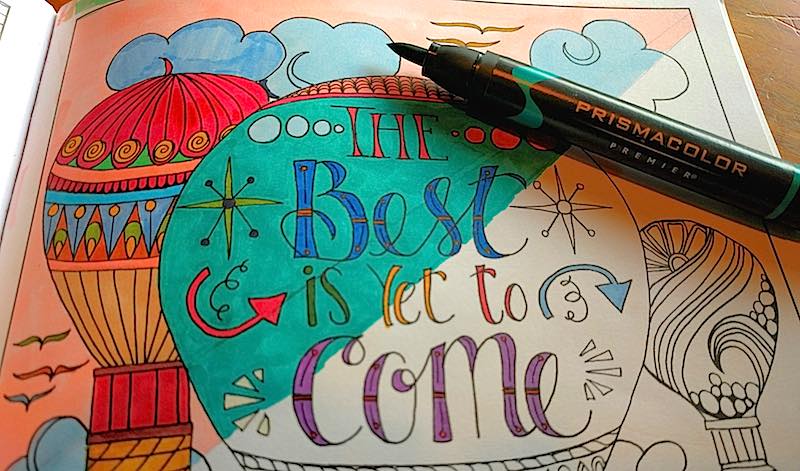
“Hope is the companion of power, and mother of success; for who so hopes strongly has within him the gift of miracles.” – Samuel Smiles
A new inspiring quote every day, juxtaposed over the perfect photo, and collected and archived on our Quote of the Day page—so, why not bookmark GNN.org for a daily uplift?
The Lesson: In order to fight the anxiety overwhelming your brain, you have to know what it is – and while many great minds throughout history have had some differing ideas of what anxiety is, it all comes down to the same thing.
Notable Excerpt: “Anxiety is temporal dislocation. It stems from our inability to be in the present. It stems from our overactive neocortical hardware getting obsessed … with this idea of an impending future that we can’t control.”
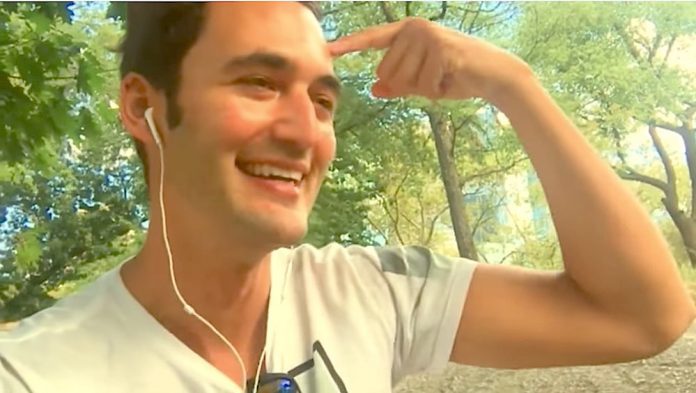
TheHost: Jason Silva is an Emmy-award winning television host, motivational speaker, and filmmaker. In addition to hosting his YouTube series Shots of Awe, Silva has given hundreds of lectures on creativity, technology, innovation, mental health, and relationships. His National Geographic TV show Brain Games has been broadcasted in over 171 countries.
(LISTEN to the inspiring talk below) – Photo by Practical Cures, CC
Good Advice? SHARE It – Or Check OutMoreOn Our Good Talks Page…
After twenty years of steady increases in the number of children being diagnosed on the autism spectrum, the U.S. Centers for Disease Control reported no such rise over the last three years, according to a nationwide survey.
More than 30,000 parents were asked if a health professional had diagnosed their child or adolescent with an autism spectrum disorder (ASD), which includes Asperger’s syndrome. In the annual study, the rate of those reporting such a diagnosis has remained relatively unchanged since 2014, according to a research letter in the Journal of the American Medical Association.
Currently, the causes of the ASD neuro-developmental symptoms, which alter communication abilities and social skills, are still unknown.
“Previous surveys have reported a steady increase in ASD prevalence in U.S. children over the past two decades,” the letter says. But in recent years, the numbers have hit a “plateau” — between 2014 and 2016, the estimate of children and adolescents with autism was about 2.4 percent, “with no statistically significant increase over the three years.”
The survey information was gathered through the Autism and Developmental Disabilities Monitoring Network, which is funded by the U.S. Centers for Disease Control and Prevention.
Stockholm is the first city in the world to deploy an ambulance specifically for responding to mental health crises. One year after its launch, its impressive data speaks to its success.
During its first year on the road, the Psychiatric Emergency Response Team (PAM) ambulance responded to over 1,000 individuals in need of help. On average, the PAM team responds to 135 calls a month – and they have only received repeated contact from 96 individuals in total. This low number of repeat crises shows the efficacy of having a dedicated team ready to listen to someone in need of counseling.
Out of the 1,036 individuals attended to during the first year, only one fourth went on to longer term inpatient care.
“It used to be the police who handled these kinds of calls. But just the presence of the police can easily cause a patient to feel like they’ve done something wrong. Mental illness is nothing criminal, so it doesn’t make sense,” PAM paramedic Anki Björnsdotter told VICE.
Though the city of Stockholm is quite large, the PAM is willing to go wherever it is needed across the region. Before any action is taken, Björnsdotter and the team take the time to understand the situation.
“We talk to the person in order to make a call about whether we should bring the patient to the hospital, or give them a ride home,” she says. Once the team ascertains the situation, they can offer help on the spot or bring them in for an evaluation and longer care.
The interior of the special ambulance reveals the obvious difference between a normal emergency response vehicle and the PAM. Where a typical ambulance would have its interior taken up by stretchers and medical equipment, the PAM is instead outfitted with comfortable chairs and a small desk to create a relaxed environment conducive to discussion and therapy.
When asked about her opinion on the future of PAM, Björnsdotter responded “I believe we will look back and think, ‘Why didn’t we do this sooner?’ I really hope similar services will be available to cover Sweden’s major cities, at least.”
Luckily, due to the success in Stockholm, additional regions such as Skåne, Örebro, Blekinge, and Jönköping are planning to create their own PAMs.
An adorable fluffy kitten has just been rescued from the Kentucky cold thanks to a local police sheriff who knew exactly what to do.
The cat had been frozen to a boat dock in Mercer County, Kentucky for eleven hours after it had accidentally tumbled into the water, climbed out onto the shore, and icy temperatures caused its paws and fur to stick to a rock.
Roy and Laurie Jasper, an older couple who lives near the marina, saw the kitten’s predicament and called for help.
You won’t be the only one resolving to quit smoking this year – cigarette company Philip Morris International will be attempting to kick the habit as well.
PMI plans on converting their product selection from smokes to smoke-free products, such as e-cigarettes and vapes.
According to PMI’s website, their new product portfolio already contains a host of nicotine-containing alternatives – but without the smoke
The international brand took out several full-page ads in UK newspapers to make the shocking announcement.
“We understand the millions of men and women who smoke cigarettes. They are looking for less harmful, yet satisfying, alternatives to smoking. We will give them that choice,” says the company.
“Society expects us to act responsibly. And we are doing just that by designing a smoke-free future.”
“Though criticism and negative thinking can serve as a steam valve for pain, they never solve my problems, only distract me from them.” – Al-Anon
A new inspiring quote every day, juxtaposed over the perfect photo, and collected and archived on our Quote of the Day page—so, why not bookmark GNN.org for a daily uplift?
In the wake of the sexual allegations that have begun to plague Hollywood stars, over 300 powerful women in theatre, film, and television have joined forces to put a stop to gender-based harassment in the workplace.
The Time’s Up campaign, which has already been adopted by thousands of women from blue-collar workplaces and Tinseltown alike, is a project working to implement a number of corrective measures against discrimination in the workplace.
For starters, the Time’s Up Legal Defense Fund’s crowdfunding page has already raised almost $15 million in order to provide “subsidized legal support for women and men who have experienced sexual harassment, assault, or abuse in the workplace and while in pursuit of their careers”.
Led by renowned U.S. attorney and women’s rights advocate Anita Hill, the campaign is also working to create and push through several pieces of legislation that will penalize organizations and companies that tolerate sexual harassment in the workplace.
Other efforts initiated by the campaign are encouraging the correction of gender disparities within the workplace, especially in film and television.
Additionally, women of Hollywood will be encouraged to wear black on the red carpet in solidarity with the campaign and other victims of discrimination.
A-list actresses Natalie Portman, Ashley Judd, Kerry Washington, Rashida Jones, Reese Witherspoon, and Emma Stone have all signed on with the campaign alongside such powerful women as Donna Langley, the chairwoman of Universal Pictures, and lawyers Nina L. Shaw and Tina Tchen, who served as Michelle Obama’s chief of staff.
In a letter that was published by the New York Times, the members of Time’s Up wrote: “The struggle for women to break in, to rise up the ranks and to simply be heard and acknowledged in male-dominated workplaces must end; time’s up on this impenetrable monopoly.”
Click To Share The News With Your Friends(Photo by Mira On The Wall, CC)
“Luckily, the elk fell in 20 yards from the shoreline which allowed us to open up a path in the ice back to shore,” stated the Wyoming Game And Fish Department in a Facebook post.
In a video posted to social media by Dustin Jones, however, a few people can be seen manually pulling the last two elk out of the water and onto the solid ice.
“What an amazing start to this day! All elk survived. Great to see the community come together and help these animals,” Jones wrote in a Facebook post.
(WATCH the video below)
Stay Cool: Click To Share The Sweet Rescue With Your Friends
Title: Jason Silva on Overcoming Anxiety and Finding Flow
The Lesson: This talk is all about exploring the pain and joy of creativity – whether it’s overcoming the fear of creating art, or the ecstasy that comes from making art that you’re proud of.
Notable Excerpt: “To fully and vividly live in the present is to be acquainted with the fact that it’s expiring as we live through it. To know that time is running out, every day is a day you’ll never get back. That’s still a problem for me. That’s how intensely I love the human experience.”
The Guest: Jason Silva is an Emmy-award winning television host, motivational speaker, and filmmaker. In addition to hosting his YouTube series Shots of Awe, Silva has given hundreds of lectures on creativity, technology, innovation, mental health, and relationships. His National Geographic TV show Brain Games has been broadcasted in over 171 countries.
The Host: Tom Bilyeu is the American entrepreneur responsible for co-founding Quest Nutrition: a health food brand that has been called the second fastest growing company in North America. Additionally, he is the co-founder and host of Impact Theory: a podcast dedicated towards educating the masses about business and success.
“Life isn’t about finding yourself. Life is about creating yourself.” – George Bernard Shaw
(Photo credit: Carl Izbicki, Venice Beach, California 2017)
A new inspiring quote every day, juxtaposed over the perfect photo, and collected and archived on our Quote of the Day page—so, why not bookmark GNN.org for a daily uplift?
The Lesson: Journaling is an essential practice to a successful and organized lifestyle – and this talk lists seven reasons as to why it is so important.
Notable Excerpt: “The first reason to journal – and the most important reason – is that it organizes your thinking. You ask the average person ‘What are your top five greatest visions,’ or ‘what are your top five values,’ … they’ll say that they don’t know. So it really comes down to this; vague thinking leads to vague production.”
The Speaker: Robin Sharma’s talks on business have attracted over 750,000 people seeking his unique insight on strategy, leadership, and entrepreneurial mastery – and those viewers are already starting to see results in their personal growth. A best-selling author and motivational speaker, Sharma’s has spent the last twenty years of his career delivering talks to thousands of people all over the world, as well as to the massive corporate workforces of Nike, Microsoft, and HP.
Podcast: Sharma’s first two Mastery classes are totally free to view and you can also download his free Mastery Sessions podcast on iTunes and Soundcloud, or watch his talks on YouTube.
(LISTEN to the inspiring talk below)
Good Advice? SHARE It – Or Check OutMoreOn Our Good Talks Page…
It has been three and a half year since Lorrie and Jeff Agan first ended their marriage – but after going on their own “separate journeys of self-renewal”, they finally found their way back to each other.
Lorrie and Jeff, who are the proud parents of eight kids, had been married for 25 years before they got a divorce in 2014.
“When their marriage failed, our whole family was devastated and torn apart,” says their son Jeff Jr. “Years went by, with fights and slick comments being waged from both sides.”
Jeff Sr. and Lorrie finally found their “redemption”, however, when they took some time to go their own ways.
Jeff went from working as a truck driver to being a nurse at the University of Toledo Medical Center. He also started dealing with his mental health issues by writing poetry and going to the gym. Meanwhile, Lorrie found peace in nature and meditation.
A few months ago, the divorcees struck up their old romance and started dating again.
Then in a video that has quickly gone viral on Twitter, Jeff can be seen proposing to Lorrie for a second time with a framed poem that he wrote entitled “Love Burns Anew”. As Lorrie finishes reading the last line of the verse, Jeff presents a ring – and of course she said yes.
“My parents were married for more than 20 years, divorced, fought a lot, went to work on themselves. Years later, they start dating and as of yesterday, this happened,” says Jeff Jr. “True love always finds its way back around.”
Because Jeff and Lorrie couldn’t afford a grandiose wedding the first time around, their son started a GoFundMe campaign to pay for a bigger ceremony. The page has already surged past its initial goal of $2,000.
(WATCH the heartwarming video below)
My parents were married for more than 20 years, divorced, fought a lot, went to work on themselves. Years later, they start dating and as of yesterday, this happened;
A drug developed for diabetes could be used to treat Alzheimer’s after scientists found it “significantly reversed memory loss” in mice through a triple method of action.
The research, published in Brain Research, could bring substantial improvements in the treatment of Alzheimer’s disease through the use of a drug originally created to treat type 2 diabetes.
Lead researcher Professor Christian Holscher of Lancaster University in the UK said the novel treatment “holds clear promise of being developed into a new treatment for chronic neurodegenerative disorders such as Alzheimer’s disease.”
Alzheimer’s disease is the most common cause of dementia and the numbers are expected to rise to two million people in the UK by 2051 according to Alzheimer’s Society, who part-funded the research.
Dr Doug Brown, Director of Research and Development at Alzheimer’s Society, said: “With no new treatments in nearly 15 years, we need to find new ways of tackling Alzheimer’s. It’s imperative that we explore whether drugs developed to treat other conditions can benefit people with Alzheimer’s and other forms of dementia. This approach to research could make it much quicker to get promising new drugs to the people who need them.”
Although the benefits of these ‘triple agonist’ drugs have so far only been found in mice, other studies with existing diabetes drugs such as liraglutide have shown real promise for people with Alzheimer’s, so further development of this work is crucial.”
This is the first time that a triple receptor drug has been used which acts in multiple ways to protect the brain from degeneration. It combines GLP-1, GIP and Glucagon which are all growth factors. Problems with growth factor signaling have been shown to be impaired in the brains of Alzheimer’s patients.
The study used APP/PS1 mice, which are transgenic mice that express human mutated genes that cause Alzheimer’s. Those genes have been found in people who have a form of Alzheimer’s that can be inherited. Aged transgenic mice in the advanced stages of neurodegeneration were treated.
In a maze test, learning and memory formation were much improved by the drug which also:
enhanced levels of a brain growth factor which protects nerve cell functioning
reduced the amount of amyloid plaques in the brain linked with Alzheimer’s
reduced both chronic inflammation and oxidative stress
slowed down the rate of nerve cell loss
Professor Holscher said: “These very promising outcomes demonstrate the efficacy of these novel multiple receptor drugs that originally were developed to treat type 2 diabetes but have shown consistent neuroprotective effects in several studies.”
“Clinical studies with an older version of this drug type already showed very promising results in people with Alzheimer’s disease or with mood disorders.”
“Here we show that a novel triple receptor drug shows promise as a potential treatment for Alzheimer’s but further dose-response tests and direct comparisons with other drugs have to be conducted in order to evaluate if this new drugs is superior to previous ones.”
Type 2 diabetes is a risk factor for Alzheimer’s and has been implicated in the progression of the disease. Impaired insulin has been linked to cerebral degenerative processes in type 2 diabetes and Alzheimer’s disease. Insulin desensitization has also been observed in the Alzheimer’s disease brain. The desensitization could play a role in the development of neurodegenerative disorders as insulin is a growth factor with neuroprotective properties.
(Source: Lancaster University)
Click To Share The News With Your Friends – Photo by Lancaster University
It certainly is a wonderful world when you can watch delightful shadow puppet performances on the internet – especially when they’re done to Louis Armstrong.
In an episode of Spicks and Specks, the Australian music-themed comedic television quiz show, Raymond Crow conducts an elegant shadow puppet show to the jazz ballad ‘What a Wonderful World’.
(WATCH the video below)
There’s Not A Shadow Of A Doubt: Click To Share With Your Friends
“We knew this person did a bad thing and there has to be consequences for their actions. But we didn’t have any ill feelings towards anybody,” President of Al Salam Louay Nassri told KARK.
“We heard that he was having financial problems. Now if you don’t pay your fine, that’s an automatic six years in jail. Well, we didn’t want him to go to jail for six years.”
In an inspiring show of forgiveness, the mosque then wrote Davis a check to cover the fine.
(WATCH the video below)
Pass On The Positivity: Click To Share The Story With your Friends – Photo by KARK
“Never let your sense of morals get in the way of doing what’s right.” – Isaac Asimov
A new inspiring quote every day, juxtaposed over the perfect photo, and collected and archived on our Quote of the Day page—so, why not bookmark GNN.org for a daily uplift?
If you thought 2017 was too depressing for words, then feast your eyes on this compilation of the ten greatest things that happened throughout the year.
Some of these stories you might never heard about (unless you’re a Good News Network regular), while others are iconic events that you will want to relive again.
A development that can turn the ocean into drinking water; a country that ran on 100% renewable energy for ten months; in India, 67 million trees planted in a single day; and a solution for ebola and cholera.
How about the celebrity chef who fed 3 million people in Puerto Rico when they needed it most? The world came together in a variety of ways, and we wanted to remind you of these inspiring moments.
Happy New Year from GNN, and editor, Matt Walton…
Feel Better Now? … PLEASE SHARE with your friends if you do – Or,
Learn a language while you wait for WiFi CSAIL tool integrates with email and web browsers to harness micro-moments. Written by Rachel Gordon MIT News
Hyper-connectivity has changed the way we communicate, wait, and productively use our time. Even in a world of 5G wireless and “instant” messaging, there are countless moments throughout the day when we’re waiting for messages, texts, and Snapchats to refresh. But our frustrations with waiting a few extra seconds for our emails to push through doesn’t mean we have to simply stand by.
To help us make the most of these “micro-moments,” researchers from MIT’s Computer Science and Artificial Intelligence Laboratory (CSAIL) have developed a series of apps called “WaitSuite” that test you on vocabulary words during idle moments, like when you’re waiting for an instant message or for your phone to connect to WiFi.
Building on micro-learning apps like Duolingo, WaitSuite aims to leverage moments when a person wouldn’t otherwise be doing anything — a practice that its developers call “wait-learning.”
“With stand-alone apps, it can be inconvenient to have to separately open them up to do a learning task,” says MIT PhD student Carrie Cai, who leads the project. “WaitSuite is embedded directly into your existing tasks, so that you can easily learn without leaving what you were already doing.”
WaitSuite covers five common daily tasks: waiting for WiFi to connect, emails to push through, instant messages to be received, an elevator to come, or content on your phone to load. When using the system’s instant messaging app “WaitChatter,” users learned about four new words per day, or 57 words over just two weeks.
Ironically, Cai found that the system actually enabled users to better focus on their primary tasks, since they were less likely to check social media or otherwise leave their app.
WaitSuite was developed in collaboration with MIT Professor Rob Miller and former MIT student Anji Ren. A paper on the system will be presented at ACM’s CHI Conference on Human Factors in Computing Systems next month in Colorado.
Among WaitSuite’s apps include “WiFiLearner,” which gives users a learning prompt when it detects that their computer is seeking a WiFi connection. Meanwhile, “ElevatorLearner” automatically detects when a person is near an elevator by sensing Bluetooth iBeacons, and then sends users a vocabulary word to translate.
Though the team used WaitSuite to teach vocabulary, Cai says that it could also be used for learning things like math, medical terms, or legal jargon.
“The vast majority of people made use of multiple kinds of waiting within WaitSuite,” says Cai. “By enabling wait-learning during diverse waiting scenarios, WaitSuite gave people more opportunities to learn and practice vocabulary words.”
Still, some types of waiting were more effective than others, making the “switch time” a key factor. For example, users liked that with “ElevatorLearner,” wait time was typically 50 seconds and opening the flashcard app took 10 seconds, leaving free leftover time. For others, doing a flashcard while waiting for WiFi didn’t seem worth it if the WiFi connected quickly, but those with slow WiFi felt that doing a flashcard made waiting less frustrating.
In the future, the team hopes to test other formats for micro-learning, like audio for on-the-go users. They even picture having the app remind users to practice mindfulness to avoid reaching for our phones in moments of impatience, boredom, or frustration.
“This work is really interesting because it looks to help people make use of all the small bits of wasted time they have every day,” says Jaime Teevan, a principal researcher at Microsoft who was not involved in the paper. “I also like how it takes into account a person’s state of mind by, for example, giving terms to learn that relate to the conversations they are having.”