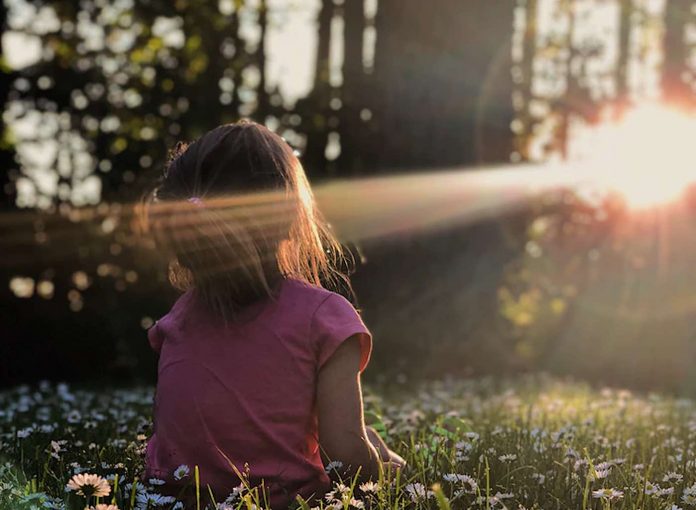
Quote of the Day: “Nothing is more important than reconnecting with your bliss.” – Deepak Chopra
Photo: by Melissa Askew, public domain
With a new inspirational quote every day, atop the perfect photo—collected and archived on our Quote of the Day page—why not bookmark GNN.org for a daily uplift?
The Victory Family Church in Norman, Oklahoma used a Zoom call to record “Don’t Worry Be Happy”, using only kitchen appliances, utensils, and voices.
Colten Dean is the church’s audio director and told GNN that members of the congregation regularly get creative with what they call “Jams”, thinking of creative ways to use unconventional instruments to put a song together.
“Usually these would be during our regular church services, but during quarantine we thought it would be fun to find a way to do one while everyone was stuck at home.”
The church’s pastor suggested one idea that most of the team really liked—the idea of using kitchen utensils.
“Many people have been cooking at home a lot more recently… Someone tossed out the song Don’t Worry Be Happy, and it immediately just made sense; I think we really just wanted to do something positive and uplifting for everyone,” says Colten.
“Once the idea started coming together, we quickly realized that it was just a great representation of all the different people in our community, and how we’re all in this together.”
And, you don’t need to be a cook—or belong to a church—to appreciate their masterful artistry.
Help Your Friends Be Happy By Sharing This Sweet Clip To Social Media…
File photo by Zero Emission Resource Organization, CC
File photo by Zero Emission Resource Organization, CC
California will soon be the home of the largest trash-to-hydrogen power plant in the world.
Similarly to the iconic scene at the end of the Back to the Future film, scientists will be using trash such used paper, old tires, textiles, and plastic to produce the cheapest and greenest hydrogen energy on Earth.
Super-green Hydro (SGH2) is launching the plant in partnership with the city of Lancaster, which will start processing 42,000 tons of solid waste into hydrogen energy around the start of 2021.
“We are the only company in the world delivering green hydrogen that is cost-competitive with the cheapest, dirtiest hydrogen made from coal and gas, and much less expensive than other green hydrogen,” says SGH2 CEO Dr. Robert Do. “Our technology can scale quickly and produce fuel 24/7, year-round.”
Operating 24 hours a day for 7 days a week, the Lancaster plant will produce 24,000 pounds (11,000 kilograms) of hydrogen per day. According to SGH2, this makes them 3 times bigger than any other hydrogen energy plant, a source which they describe as being the “missing link” to a decarbonized world.
Greener than green hydrogen
SGH2 have created a system whereby oxygen-rich gas is fed into a chamber containing a plasma torch that heats the inserted trash component past 3,500 degrees Celsius. This rapid change of state—from solid, to liquid, to gas, and finally to plasma—separates the hydrogen atoms from hydrocarbon molecules which is then used for energy. The high heat also removes any tar or particulates that can sometimes be produced as byproducts.
Lawrence Berkeley National Lab performed a lifecycle carbon analysis of the hydrogen produced this way and found that for every ton of hydrogen produced, the technology mitigated 23 to 31 tons of carbon dioxide.
“That’s 13 to 19 tons more carbon dioxide avoided than other green hydrogen processes, which rely on electrolysis and renewable energy,” reads the SGH2 website.
Originally designed to deal with medical waste, SGH2’s plasma technology can be used to reduce waste of most kinds—anything that is a problem for landfills while also containing hydrogen atoms is fair game.
“Our process extracts all carbon from the waste … removes all particulates and acid gases, and produces no toxins or pollution. The end result is high purity hydrogen and a small amount of biogenic carbon dioxide, which is not additive to greenhouse gas emissions,” reads the SGH2 website.
As a result production costs (based on current US costs) are projected to be $2 per 2 pounds of green hydrogen. Brown hydrogen, the cheapest form of hydrogen that accounts for about 30% of all hydrogen energy, is produced from a process of coal gasification at about the same cost, though it varies depending on the country.
Finally, the design of the technology allows it to be scalable to any size operation while using less land and requiring less capital to build than the current green hydrogen plants relying on wind farms or solar panels to generate power for electrolysis.
(WATCH the SGH2 video below)
Power Up With Positivity By Sharing The Good News With Your Friends On Social Media…
“What is a few more months out of my life? It’s nothing compared to what they’ve sacrificed.”
That’s the mindset that guided my 90-day journey across all 50 states in 2018 to visit almost 100 Korean War Memorials and meet 1,000 veterans along the way. Ever since I almost died in a car accident 12 years ago, I have considered each day as a bonus day, anyway.
After working as chief of staff and communications director for a US Congressman, I had traveled to 27 nations in 6 continents to thank and interview veterans in every county who participated in the Korean War—and documenting the undiscovered stories of 200 people who went to Korea under one United Nations flag was worth every fear and tear.
I had just returned home, physically and emotionally overwhelmed, still trying to process everything I had experienced when I learned about how there was a delay in building the Wall of Remembrance as an addition to the National Korean War Memorial in Washington, D.C. due to a lack of funds.
I knew what I had to do—so I packed my bags again and got behind the wheel, this time with the goal of raising awareness and funds for the Wall.
Despite the endless driving, sleepless nights and living out of a suitcase for more than three months, it turned out to be the most precious experience in my life.
Photo by Hannah Kim
I’ve witnessed the camaraderie and bloodshed bond in the veterans community, their sense of patriotism, heroism and humor. I now know the difference between an “oorah” and “hooah” and how much the patches and pins on their caps and jackets mean to them.
On two occasions, I joined motorcycle groups that ride to support veterans and found myself looking like a bike chick riding on a Harley along the Korean War Memorial Highway in Santa Paula, California and Meridian, Mississippi.
Most of all, I can now fathom the visceral meaning of sacrifice.
From the mountains to the prairies, I got to hug and kiss more than 1,000 Korean War veterans, most of whom were in their late 80s, some who drove for hours just to welcome me to the memorials I was visiting across the country.
Photo by Hannah Kim
Together, we laughed and cried as we recounted their wartime memories and laid a wreath in remembrance of their fallen comrades.
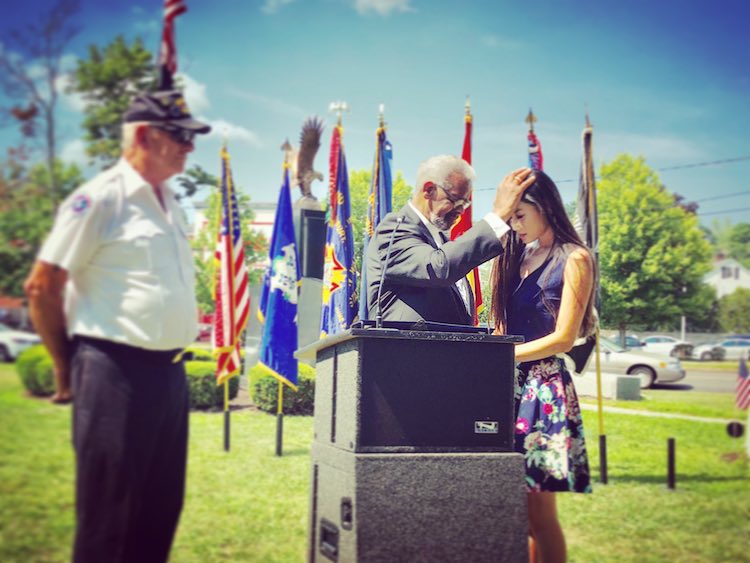
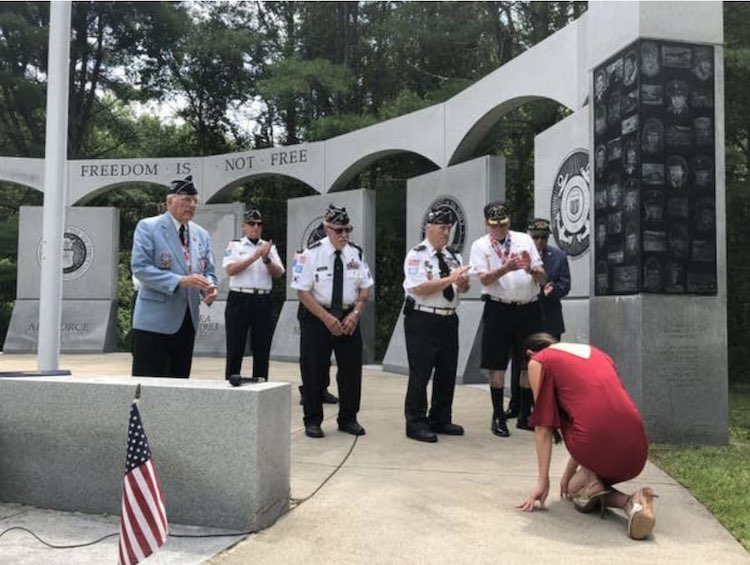
At every stop, I got on my knees and bowed—the Korean way, which is the highest form of respect—to express my humble and sincere gratitude on behalf of all my fellow Korean Americans thriving in the country we proudly call home, enjoying the freedoms that the veterans secured for us. Because none of us would be here if they didn’t fight in Korea almost 70 years ago.
That’s why I call all Korean War veterans my “Grandpas”—and I want all of America to recognize them.
For too long, the Korean War was referred to as the “Forgotten War” or even a “police action.” Yet 1.8 million young men and women served—and more than 36,000 never returned home. Every state in the union and inhabited US territory suffered a casualty—I know, because I’ve grieved with the families and veterans in every single one, including Puerto Rico, the US Virgin Islands, Guam, the American Samoa, and even inside four Indian Reservations.
Photo by Hannah Kim
During my visit to Hawaii, I was stunned to actually see with my own eyes the remains of 55 POW/MIAs recently repatriated from North Korea to the Defense POW/MIA Accounting Agency (DPAA) laboratory in Honolulu. There are 7,000 still missing-in-action and unaccounted for, and I’m hoping we can bring back every single one to their loved ones.
Until then, the very least we could do is to memorialize them and to thank the veterans who are still with us. They are our Grandpas and heroes who at the age of 18—and even as young as 15—saluted the flag and risked their lives for our country and all of us.
It broke my heart that most of the Memorial Day commemorations across the nation have been canceled due to COVID-19, so for the past two months, I have been pouring my heart and soul into unveiling the Korean War Memorials website featuring a virtual Wall of Remembrance with the names of nearly 41,000 killed worldwide in the Korean War, including hundreds or thousands from your own state. You can visit and pay tribute by leaving comments behind.
It also features photos of almost 180 Korean War Memorials I’ve personally visited, traveling 132,1000 miles to a total of 30 countries to collect stories of nearly 1,200 veterans. It will eventually include nearly 400 videos of me interviewing the “Grandpas” and supporters at each site.
You don’t have to travel any distance like me to thank the veterans and the young boys from your states who died for us. All I ask is that you virtually visit the website this Memorial Day and honor them. Ultimately, I want to ensure that those who died fighting for our freedoms will be remembered because freedom is not free.
This article was submitted for publishing on Good News Network by Hannah Kim: a former Congressional aide and founder of Remember727.
Photo by Hannah Kim
Be Sure And Honor Memorial Day With Your Friends By Sharing This Inspiring Story To Social Media…
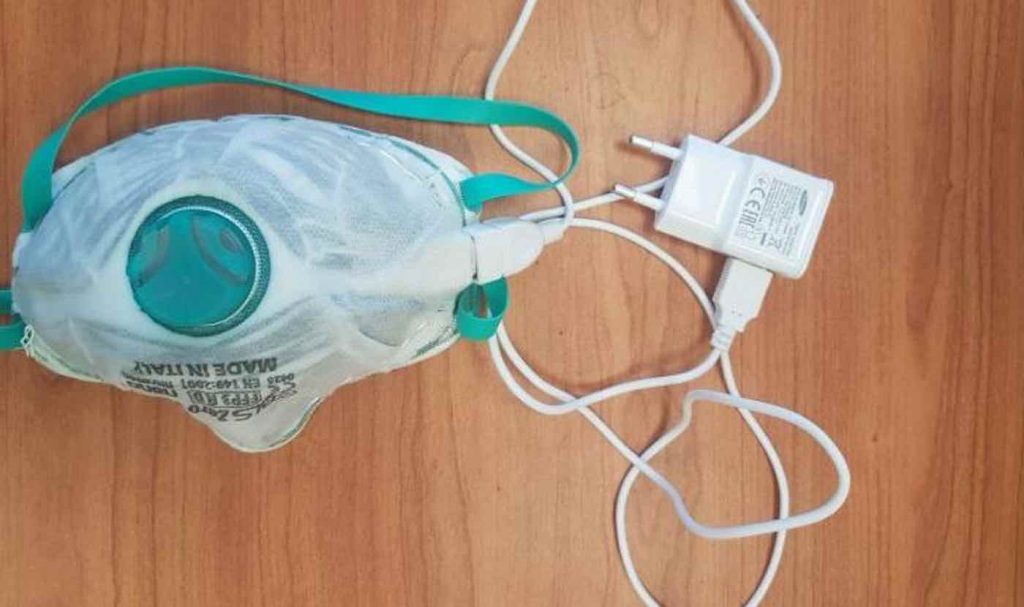
Israeli researchers have come up with a brilliant new prototype for a self-cleaning face mask which can kill pathogens—such as COVID-19—simply by drawing power from a smartphone charger.
Scientists from the Technion Faculty of Materials Science and Engineering in Haifa—one of Israel’s leading scientific research institutions—say the mask can use an electrical current from any standard 2-amp mobile phone charger to heat up a carbon fiber layer inside the mask and kill off any dangerous viruses that may have accumulated on its surface.
Since announcing the success of their innovative device this week, a Technion spokesperson told reporters that the researchers have already filed a patent application for the mask with the aim of making it commercially available in the United States for just $1.
That being said, the team has not yet commented on whether the mask will be made available in Europe.
However, conservationists hope the mask will help to alleviate the large amounts of medical waste currently being generated by disposable face masks and other single-use personal protective equipment (PPE).
Not only that, the reusable masks are expected to relieve mask shortages in US regions that have been hit hardest by the novel coronavirus.
Need more positive stories and updates coming out of the COVID-19 challenge? For more uplifting coverage, click here.
Photo by Technion Press Office
Protect Your Friends From Negativity By Sharing The Good News To Social Media…
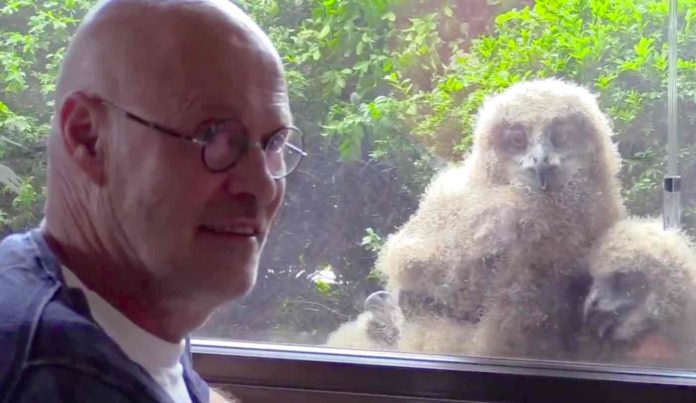
A Belgian man has managed to strike up a friendship with an unlikely new family living outside his window.
When Jos Baart initially heard noises coming from the planter outside his 3rd-story apartment window two months ago, he assumed that he was being visited by pesky pigeons.
To his surprise, Baart arrived home one day just in time to see an enormous Eurasian eagle owl taking flight from his balcony. Upon investigating his planter a little closer, he was shocked to find three fluffy baby owls staring back at him.
Eurasian eagle owls hold the Guinness World Record for being the largest owl in the world with a wingspan of about 1.5 meters (roughly 5 feet). The three baby owls in Baart’s planter are expected to reach full maturity after four months of nesting—but until then, they have found a great amount of entertainment in watching television with Baart.
In an interview with Dutch television show Vroege Vogels—or Early Birds in English—Baart says that the chicks will often watch his television from the window for hours at a time.
Although the mother is still relatively wary of Baart, the chicks have been more than happy to spend their afternoons around their human neighbor.
The feeling is mutual, too—Baart told the Dutch reporters that he hopes the owls will return again next year.
“Yeah, bring them on!” he exclaimed. “As long as they’re not pigeons.”
(WATCH the endearing news coverage below)
We could hardly believe it when we got a message from Jos Baart telling us that Europe's biggest owl, the Eurasian eagle-owl, had made a nest in a planter in front of his window. Not only that, she had also hatched three giant chicks!#vroegevogels#springwatch#owlpic.twitter.com/gz1odkFLYC
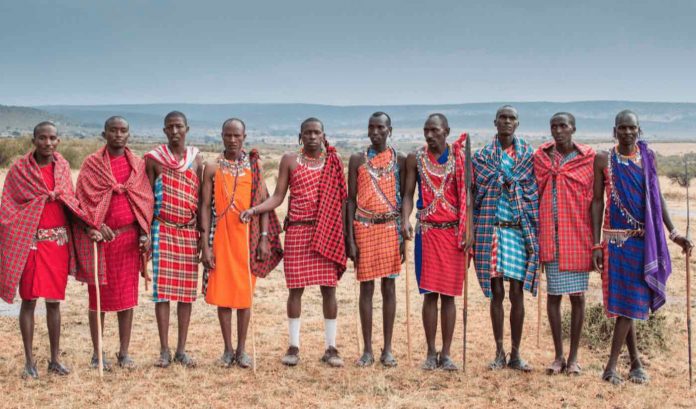
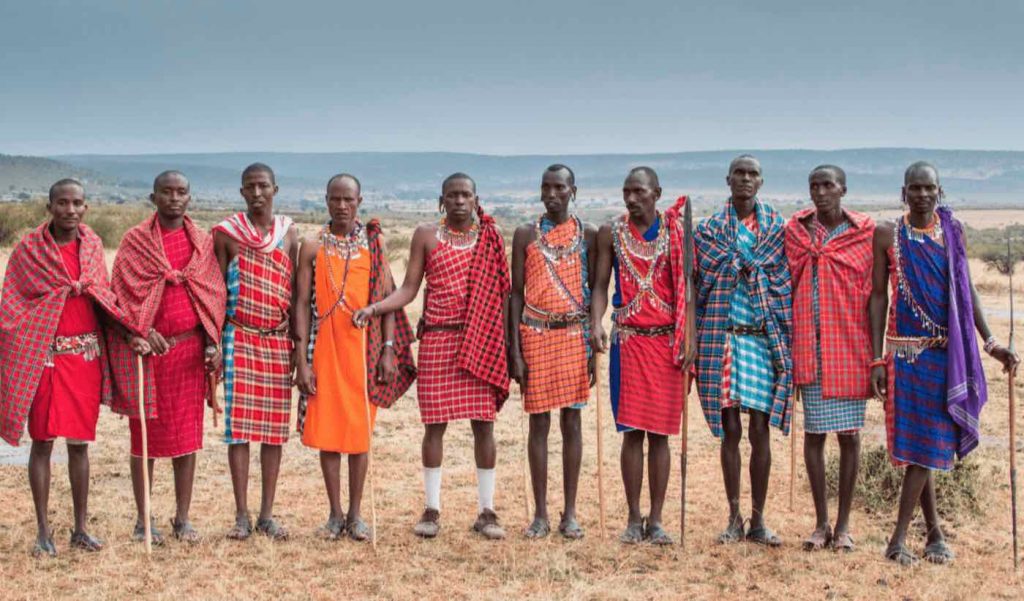
The rolling plains of the Maasai Mara in Kenya are home to the famous red-cloaked Maasai people as well as some of the most charismatic animals on earth.
When it became clear COVID-19 would destroy the tourism industry of the Maasai living in the breathtaking Nashulai Nature Conservancy, the tribe petitioned Avaaz, a website connecting local people-powered movements, to try and organize a response call for help.
As a result, 100,000 people raised money to help pay the rangers’ salaries, ensuring that the critical Nashulai elephant migration corridor remained safe from poachers. The money was also enough to secure sanitation and medical supplies and food for the Maasai community there, so they could survive the COVID-19 storm.
About 3,000 people live inside the boundaries of the 6,000-acre conservancy, with another 5,000 living in surrounding communities in traditional Maasai villages where they rely mostly on their cattle for food and money.
In 2016, Nelson Ole Reiyia and Margaret Koshal Reiyia placed a project on Avaaz to turn their home into a Nature Conservancy. “Avaazers” around the world chipped in with hearts and wallets to launch the Nashulai Maasai Conservancy, an innovative way to help the Maasai maintain their traditional way of live in a harmonious way with the land.
The Conservancy created a way to bring outside capital into the community through offering safaris and camping, as well as cultural homestays and other events.
Nashulai Conservancy – nashulai.com
These community programs brought increasing opportunities for education, established greater food and market security, and needed sanitation facilities.
The Maasai are famous warriors, and the conservancy established a mighty force against poachers. Professional rangers and young warriors called “moran” who are trained in bush practices, now serves as “The Warriors for Wildlife Protection”, monitoring the animal populations and protecting against poaching.
The Modern Maasai Facing COVID-19
COVID-19 has put much of this in danger. The tourist infrastructure, which 90% of all the Nashulai Maasai depend on for income, has completely collapsed.
The community library has been repurposed as a storehouse for medical equipment—and rationing of food supplies like cornmeal and cooking oil has begun.
With help from Avaaz they’ve been able to pay the rangers’ salaries, and import much needed medical and sanitary supplies.
“We’ve worked hard to create this unique conservancy, and we want it to be there for the people in their deepest moment of need,” writes Nelson Ole Reiyia on the Nashulai website.
Generous persons can still donate to their COVID-combating activities directly on the website, which are tax deductible contributions for the U.S. and Canada.
WATCH the video…
SHARE the Community Support on Social Media to Help the Maasai…
Need more positive stories and updates coming out of the COVID-19 challenge? For more uplifting coverage, click here.
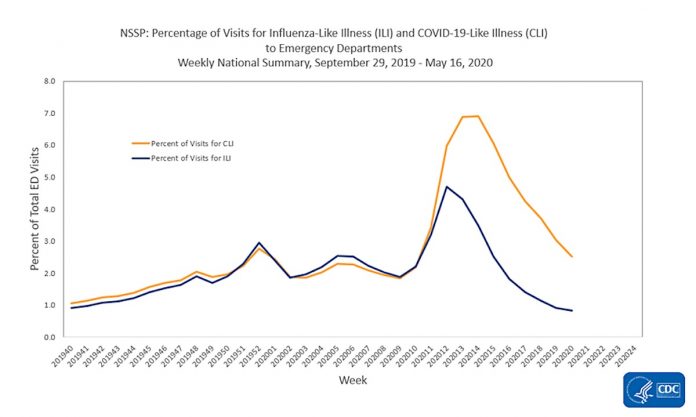
Some good news for those of us during this pandemic who are looking for things to get back to normal: The CDC reports large decreases in mortality rates—and hospitalizations— during April and May throughout most of the United States.
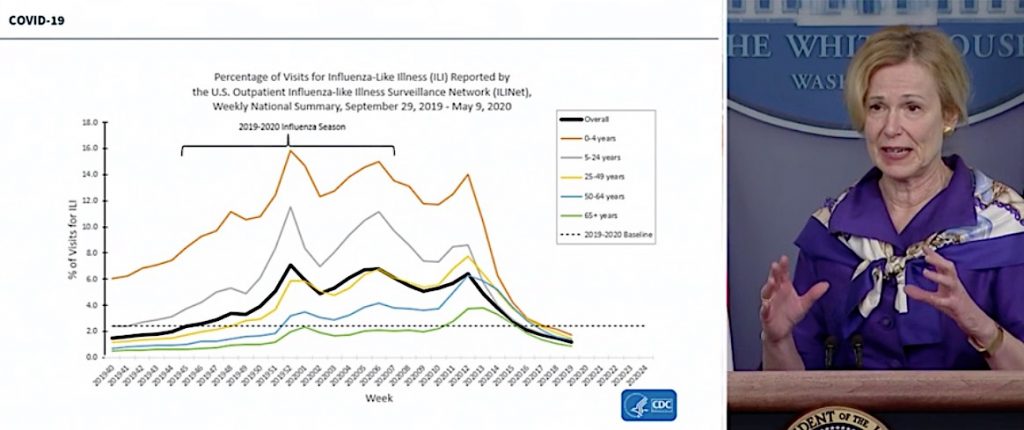
In a White House press briefing on Friday, coronavirus task force coordinator Dr. Deborah Birx provided some optimism when she shared these graphs and charts based on data from the Centers for Disease Control.
There has been a dramatic decline in COVID-19 deaths and hospitalizations, and an increase in testing—especially in high-burden states like New York.
Nationwide, there has been more than a 50% decline in new hospitalizations.
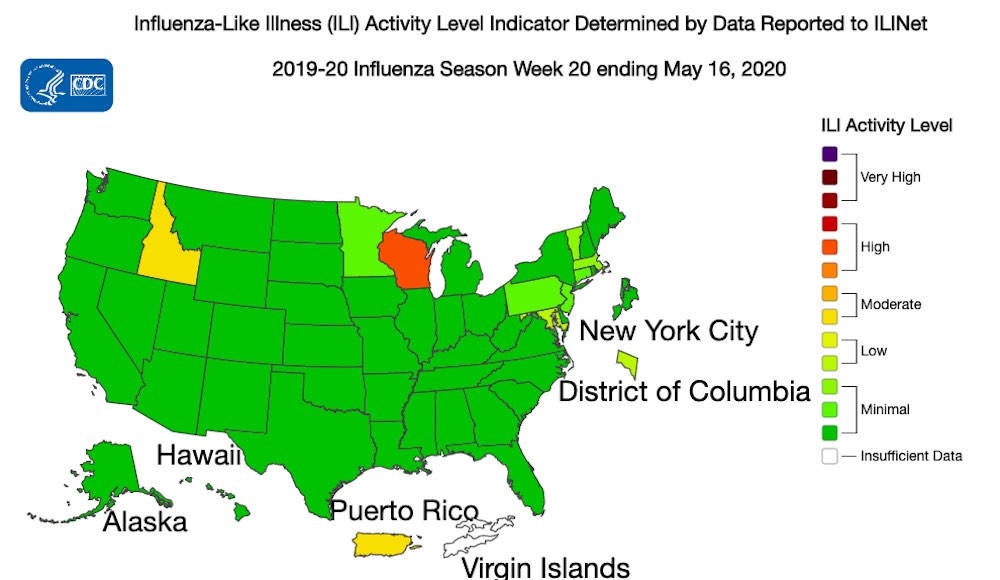
Across the country, the US is below the baseline for normal influenza-like symptoms normally reported in emergency rooms nationwide.
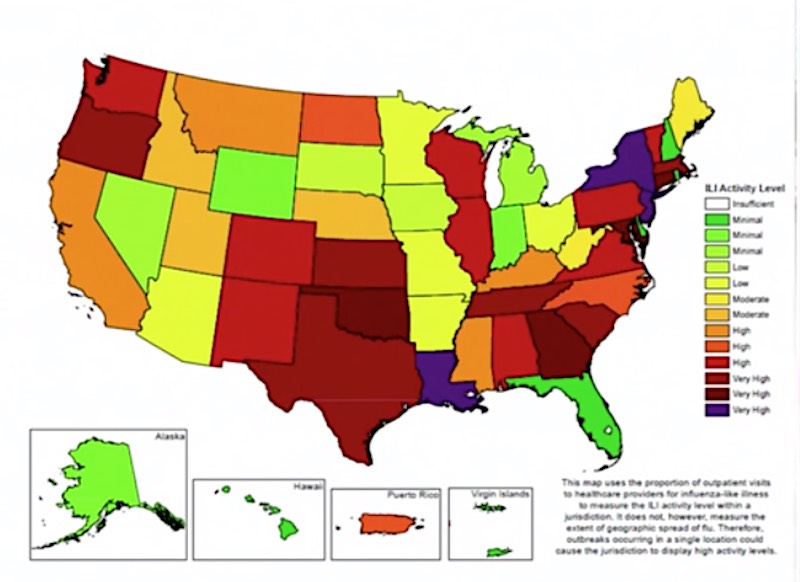
In the week ending May 16, compared to March 28, the vast majority of the U.S. have reported a reductions of the number of cases for influenza-like illness, with the green being the most desirable, after reports coming in from states and counties alike.
Compare that picture to this one in March, where you can see the prevalence of states recording a high number of cases for influenza-like symptoms during the week ending March 28:
Regarding testing, Dr. Birx said, “all of the 50 states have reached 2% testing” of the population, which was the desired number for the CDC, with many of the states over 4%.
“We are encouraged by the progress that many of the governors and states have made in their testing of their population.” The federal government has encouraged 100% of testing in local nursing homes, she added.
Regarding testing positive for the tests done in the nose, “You can see a dramatic decline across the states, and New York City just six weeks ago at 40%, is now at 10%.”
Below, you can see the decrease across various age ranges for visits to doctors after influenza-like symptoms during the week ending May 9.
“42 states are now have less than 10 percent test positive,” reports Birx.
The top three states with the largest percent testing positive, “so you can make decisions about social distancing,” including playing sports and engaging in other gatherings, are Maryland, Virginia, and the District of Columbia.
Also Nebraska, Chicago, Wisconsin, and Minnesota are all higher than average for numbers of testing positive—but, they are all under 20%.
Four weeks ago, half of the United States was over 20%, so many regions have shown vast improvement.
A brighter future lies ahead for the critically-endangered Hainan gibbons of Hainan Island thanks to decades of steady conservation work.
The small tropical island off the coast of China is the only place this charismatic primate is found, and their numbers have increased from just 10 individuals in 1970 to 30 in 2020.
The progress has been slow due to limited quality habitat and a slow rate of birth inherent in the species, but things have improved dramatically from when the conservation project began in 2003, and just 13 wild gibbons were left on the island living in two family groups.
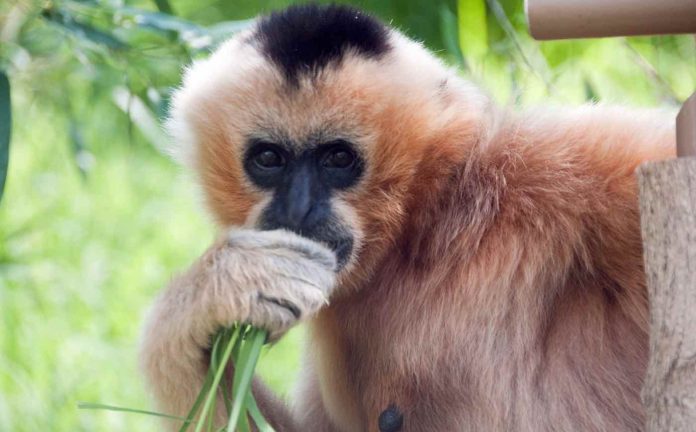
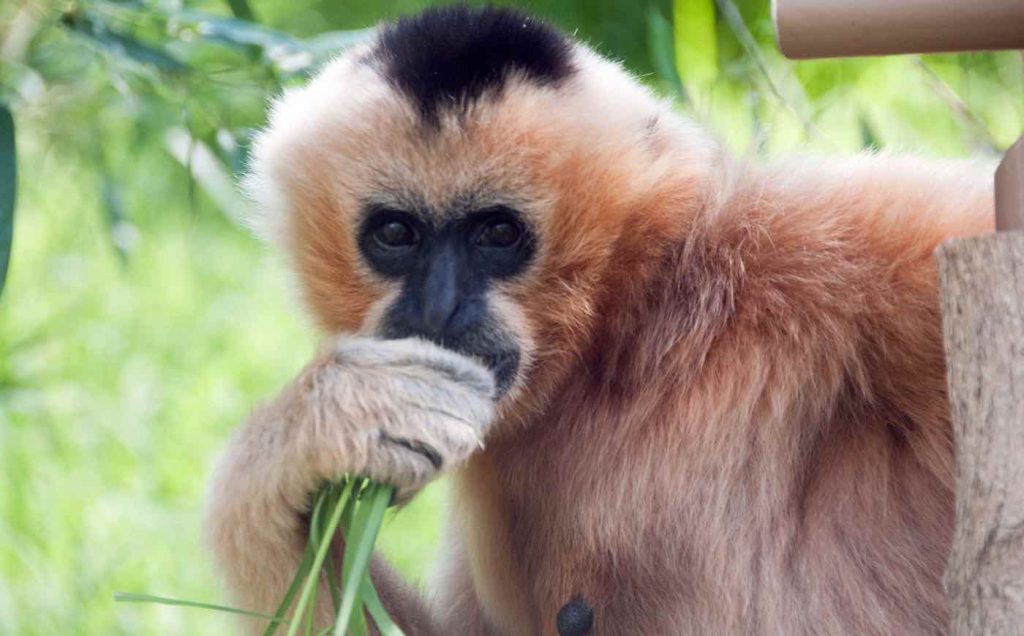
The males’ fur is jet black with white cheek patches while the females flush bright orange when they reach maturity. Their small faces and curious eyes make for a soft countenance as they gaze down on the rare passerby from the treetops.
“They are really intelligent animals. When they look at you, it feels like they are trying to communicate,” Philip Lo Yik-fui told South China Morning Post. Lo is a senior conservation officer at Kadoorie Conservation China which has been the driving force behind the conservation project.
Photo by Eric Kilby, CC
In 2016, a tourist website called Tropical Hainan claimed the Hainan gibbon was the world’s rarest mammal, and that it has survived this long only due to a spooky tale wherein one day a hunter shot one of the last few gibbons on the island and his whole family died of a mysterious disease. After this, hunting gibbons was believed to be unlucky.
Working Together For Gibbons
The two family groups were found living high in the mountains in Hainan’s sprawling Bawangling Nature Reserve. Their habitat was far from ideal, as it lacked the figs and lychee fruit trees that make up a sizable chunk of gibbon-diets.
Since then, Kadoorie has planted 80,000 fig and lychee trees to link existing habitat patches with the fruiting trees to encourage isolated populations to meet and interact.
According to SCMP, Lo says that the goal is to try and get the numbers of gibbons above 50, the mark when they would no longer be critically endangered, but simply “endangered” as designated by the International Union for the Conservation of Nature’s (IUCN) Red List.
“Our biggest goal now is to help expand the gibbons’ territory so the whole species won’t be wiped out if natural disasters occur,” Lo added.
He said that local forest authorities who were at first cold to the idea of intervention by the Hong Kong conservationists, have now thrown their support behind the project. In January of last year the Forestry Department of Hainan established the Hainan Tropical Rainforest National Park to further secure gibbon habitat.
The 19 species of gibbon on the island have been hunted in the past, but former hunters are being utilized for their knowledge of the forests and of the behavior of the animals and given jobs as conservationists.
“We try and instill a sense of pride in the locals, and the ex-hunters are really satisfied with their work now,” Lo said. “That is the main point of conservation work, it’s just as much about the people. And now people who were on opposing sides are teammates working together to protect the gibbons.”
SHARE This Amazing Conservation News With Your Friends On Social Media…
Have you ever gone to a public event and seen the trash cans filled to burst with plastic bottles and experienced a little anxiety over the knowledge that a large amount of it will end up in landfills?
Now, major food and beverage companies are getting behind a new startup of “plant plastics” that could spell the end of this problem once and for all.
The Guardian recently hailed an innovation out of The Netherlands as possibly marking “the end of plastic.” And the biochemical startup Avantium has weathered through COVID-19 slow-downs well, partially because the potential of its plant-based plastic to solve ocean and landfill pollution is so promising.
The Dutch company is partnering with the ‘biggest fish’ in the sea of bottling companies—Coca-Cola. Food company Danone which sells 24.6 billion in food products every year (as Dannon in the U.S.) has also come on board. They two giants have invested in construction of a world-leading bioplastics plant in The Netherlands.
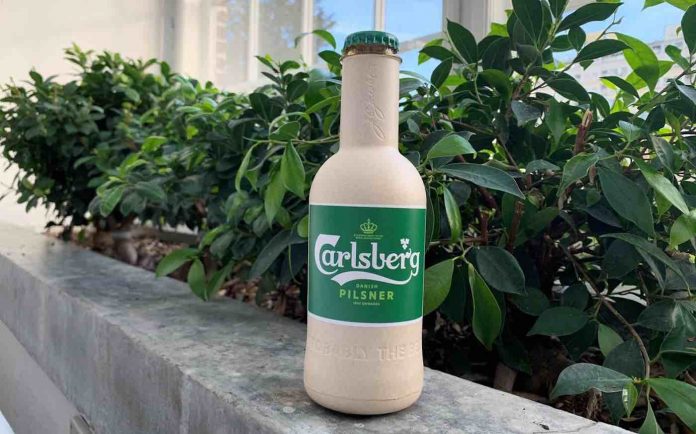
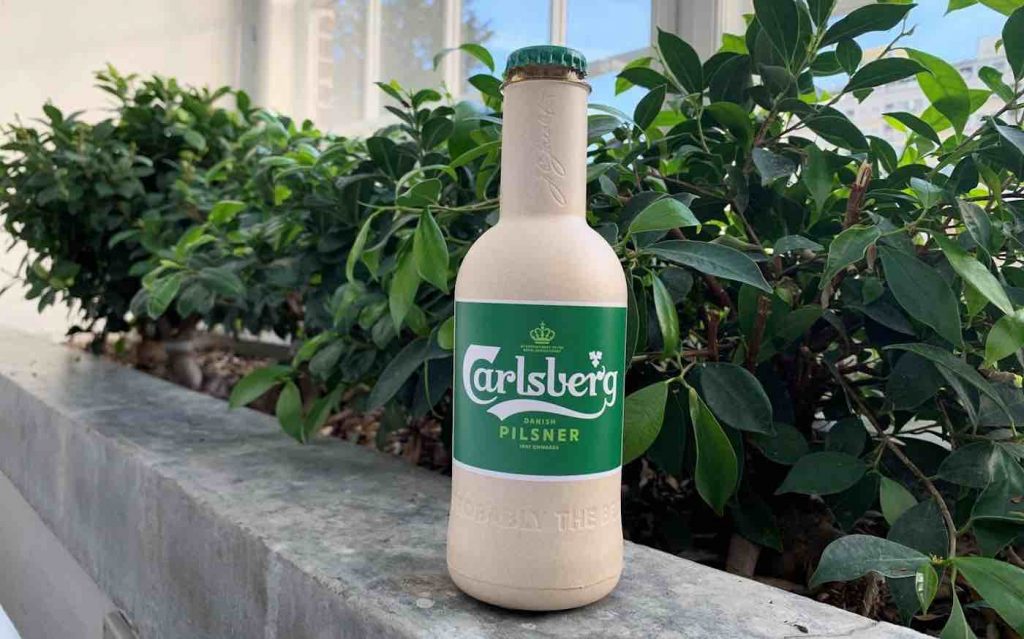
Carlsberg, the 173-year-old multinational brewing company, has already thrown its support behind Avantium’s design of bottles made from plant sugars.
Trials have shown that Avantium’s design is durable enough to contain carbonated drinks. When placed in a composter they will biodegrade over the course of one year, and over three when left in the natural environment.
Photo by Avantium
“This plastic has very attractive sustainability credentials because it uses no fossil fuels, and can be recycled—but would also degrade in nature,” Tom Van Aken tells The Guardian. Van Aken is the CEO of Avantium and plans to announce additional partnerships in support of its project this summer.
The bio-refinery will break down waste from corn, wheat, and beets and create 5,000 metric tons of plant-plastic in the first year.
Products packaged in Avantium’s plant plastics could be on the shelves in 2023, with high expectations of increased market demand to come quite soon after.
Multiply The Good News By Sharing It With Your Friends On Social Media…
Quote of the Day: “I believe in the forgiveness of sin and the redemption of ignorance.” – Adlai E. Stevenson II
Photo: by Siora Photography, public domain
With a new inspirational quote every day, atop the perfect photo—collected and archived on our Quote of the Day page—why not bookmark GNN.org for a daily uplift?
The babies brought by these storks weren’t delivered in blankets.
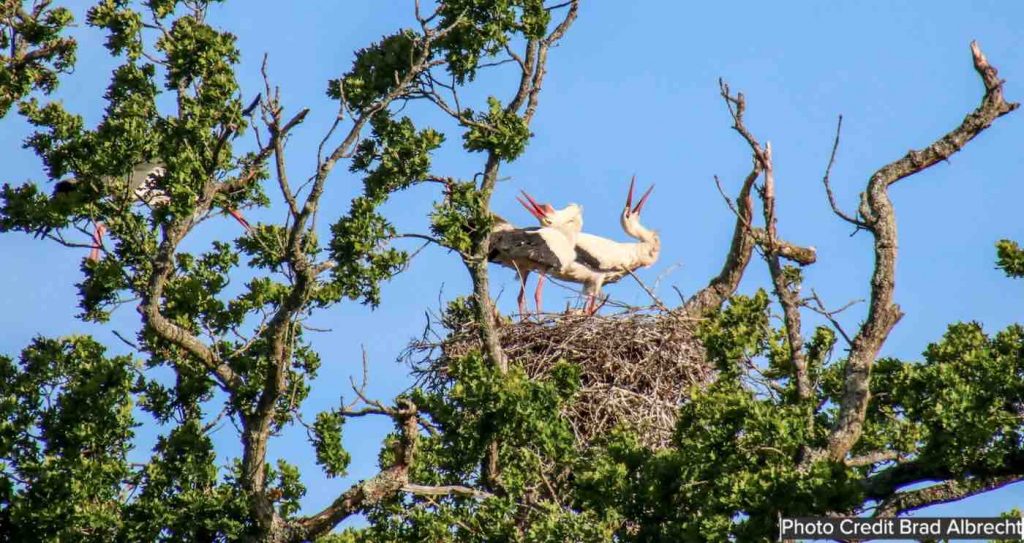
The White Stork Project was delighted to announce last week that wild storks in West Sussex have hatched their very own babies—and it is believed to be the first time in England since the 1400s.
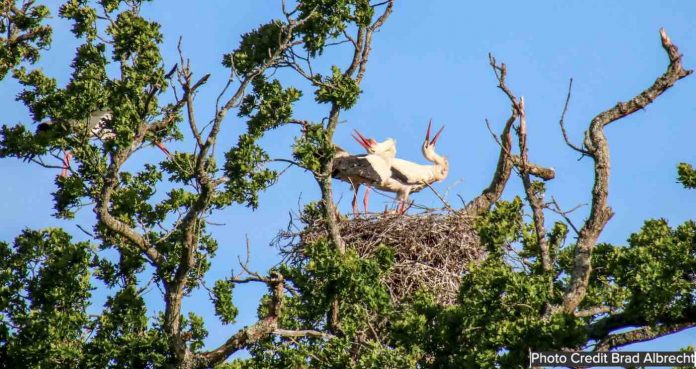
On a private estate used for stork conservation called the Knepp site, five eggs appeared in a nest high up in an oak tree. After 33 days of incubation, and much tending by the pair of storks, the first chick hatched on May 6.
White Stork Project Officer Lucy Groves watched as eggshell was removed from the nest and the parents were seen regurgitating food for the new chicks to eat.
This is the same pair that attempted to breed at Knepp last year without success. The female is a ringed bird from the project, which came to Knepp in 2016 from Poland. The male, however, has no identifying ring, so this is likely to be one of the twenty or so vagrant storks which visit the UK each year.
“The parents have been working hard and are doing a fantastic job, especially after their failed attempt last year,” said Groves excitedly. “It is incredible to have the first white stork chicks hatch in the wild for hundreds of years here at Knepp.”
There are two other breeding pairs on the property with six eggs having hatched in two of the nests.
“These are early days for the chicks, and we will be monitoring them closely, but we have great hopes for them.”
Photo Credit Brad Albrecht / White Stork Project
A total of three private estates have constructed 6-acre predator-proof pens where storks have been introduced.
166 rehabilitated wild-fledged white storks from Poland, as well as a small number of others from northern France, have been released into these pens over the course of the last three years, in order to establish local breeding populations, based on the successful approach used to restore white stork populations in Europe over the last 50 years.
The co-owner of the Knepp estate, Isabella Tree, said that when she hears the clattering sound coming from the tops of their oak trees “it feels like a sound from the Middle Ages has come back to life.”
By Lukáš Kadava
“We watch them walking through the long grass on their long legs, kicking up insects and deftly catching them in their long beaks as they go – there’s no other bird that does that in the UK.”
Lucy says, especially now, the birth brings hope: “This stunning species has really captured people’s imagination during the period of lockdown and it’s been great hearing about the joy and hope they have brought to people.”
It is an exciting first step toward reestablishing 20 wild pairs of these majestic birds at each of the three locations—bringing them back into the south of England once again.
WATCH a new video from the project…
SHARE This Amazing Birth News With Nature Loving Friends on Social Media…
Studies from Cornwall University have found that people who plan a trip in advance experience better feelings about their social situation, economic means, their state of health, and life in general.
It goes without saying that planning a trip in this moment would surely be difficult. There’s a strong chance no one but Italians will be under the Tuscan sun this spring or summer, according to the Italian Minister for Culture and Tourism.
However, that’s no reason to put off your vacation planning this year, as it could likely give you a significant mental boost during these turbulent times. Back in 2014, University of Cornwall researchers Amit Kumar and Matthew Killingsworth published a paper on how experiences provide more satisfaction than material goods.
The paper focused on an often overlooked aspect of an otherwise commonly researched field—experiential versus material consumption and the psychological effects of both before the consumption takes place.
The study found that delayed gratitude, especially as it relates to travel, was more pleasurable than both immediate consumption and delayed consumption of material goods and services. Another 2002 paper reinforced this idea when it found that UK citizens were happier when they had a holiday trip planned.
“It appears that those who are waiting to go on a holiday are much happier with their life as a whole, experience less negative or unpleasant feelings and thus enjoy an overall net positive effect from pleasant feelings. The holiday-taking group is also happier with their family, economic situation, and health domains compared to the non-holiday-taking group,” reads the study’s abstract.
The Journey Begins with You
“Our future-mindedness can be a source of joy if we know good things are coming, and travel is an especially good thing to have to look forward to,” Killingsworth told Nat Geo.
Planning a trip can be especially exciting because we often know just enough about where we’re going and what we’re going to do to begin imagining specific pleasurable details of the places—like the sensation of the sun or the smell of campfire smoke in the forest—but there are also enough absent details to leave us wondering about the novelty of different moments.
“In a sense, we start to ‘consume’ a trip as soon as we start thinking about it,” Killingsworth says. “When we imagine eating gelato in a piazza in Rome or going water skiing with friends we don’t see as much as we’d like, we get to experience a version of those events in our mind.”
By Hernán Piñera, CC license
Travel Planning Therapy
If you’re the kind of person who likes to plan a trip, there are a lot of reasons why starting right now could be very rewarding beyond the above mentioned improvements in mental health.
While COVID-19 presents a challenge both in terms of the danger it poses to health and the restrictions to travelers in popular tourist countries like Germany, Greece, France, Italy, Brazil, Japan and more, it provides an opportunity to visit a farther flung destination such as Bora Bora, Nepal, Sri Lanka, Oman, or the beaches of Argentina.
For those looking to spend their holiday in nature, there’s added incentive as one will be away from COVID-19 danger and able to enjoy the outdoors, which many citizens in places like the UK, Italy, and the U.S. have been unable to do because of the lockdowns.
Being stuck in our houses and neighborhoods for weeks without end, planning a trip can simply give us something else to talk about!
Many countries in more exotic and unstable regions of the world rely heavily on the money from tourism to sustain communities. Traveling just after this pandemic and spending money will help local markets recover from the economic destitution forecast by the UN.
I have traveled to 14 countries as diverse as Nicaragua, China, and Namibia, and am currently living abroad in Italy as a contributing writer for GNN, and I can pass on some suggestions for planning a trip.
I heard once that when an Australian Aborigine takes a “walkabout” it’s as much about experiencing the land as it is about finding the sense of one’s self, and that the two are inextricably linked in some way.
I like to keep in mind the towns and parks I would pass by on a journey whenever I plan a trip, picking destinations that connect over land, because I genuinely believe that the places in between is where magical things happen.
Once I have the principle destinations and activities in mind, I pull out my trusty world atlas and look at what kind of climate and terrain exists in the spaces between. After I experience the joy of feeling the pages of an atlas or a map and moving my fingers along the routes and places I want to go—which helps me feel closer to the destinations—I open Google Maps, zoom in until I can see the names of individual businesses, and I do a ‘walkabout’ along the route I’ve chosen, taking notes of all the little interesting things I see along the way.
If it begins to get stressful, file the idea away on a word document for later. You might plan an itinerary and be really excited about it without embarking for years. I planned a trip to Ecuador, Peru, and Chile for the summer of 2017, and I’m still excited about one day using it.
Start Planning A Trip With Your Friends By Showing This Encouraging Study To Social Media…
A victory in a decades-long court battle provided relief for a special part of the Amazon rainforest and for the Ashaninka indigenous people who live there, as their 1990s lawsuit against illegal logging interests finally ended with a public statement of apology and a $3 million award for compensation.
Forestry companies and their legal teams acknowledged the “enormous importance of the Ashaninka people as guardians of the forest, zealous in the preservation of the environment,” in their official apology which claimed regret “for all the ills caused.”
Francisco Piyãko, part of Ashaninka leadership said, “These resources come to enhance existing actions, to generate sustainability for our people, our land, so that it helps to strengthen us to continue the broader project of environmental protection and maintenance of our ways of life.”
Yale’s School of Forestry & Environmental Studies suggested that the Attorney General, Augusto Aras, believes this case could be a turning point in environmental and indigenous peoples lawsuits.
“What we did here was to comply with the Constitution, understanding that the indigenous people have sacred rights guaranteed by the Magna Carta,” Aras said in a statement. “You have the right to have a decent life, materially speaking, to choose your own destiny, to take part in political decisions, with respect to isolated communities.”
Beginning in 1980, forestry firms started harvesting mature cedar and mahogany trees for the European furniture trade in the Kampa do Rio Amônia Indigenous Reserve. The money awarded in the settlement will be paid over 5 years, and will be put mainly towards reforestation projects.
“The case will define hundreds of thousands of cases on massive environmental crimes in Brazil,” Antonio Rodrigo, the attorney for Ashaninka, said according to Latin Post.
(File photo by Nishaan ahmed)
Plant Some Positivity By Sharing The Exciting News With Your Friends On Social Media…
If someone approached you with a giant wrestling-style leather and gold belt slung over their shoulder that said “Grand Champion – Motown Mowdown” you’d be forgiven for mistaking them for some sort of amateur prize fighter or professional wrestler.
This Grand Champion belt is awarded to whichever volunteer mows the most grass on Detroit’s public playgrounds and parks in a 12-hour competition called the Motown Mowdown.
The Detroit Mower Gang—a group of volunteer grass cutters and playground repairmen—began their annual mow-a-thon on May 16th at the Hammerberg Playfield, an abandoned collection of sports fields, swing sets, and meadows on the city’s west side.
“No one owns this particular park, it just fell through the cracks,” Tom Nardone of Birmingham told Detroit News.
50-year old Nardone, who started the Detroit Mower Gang in 2009, added: “We just try to keep it alive … Without a group, you couldn’t mow this park with a mower in (fewer than) a couple of days.”
A Man and his Mower
A decade ago the city was close to filing for bankruptcy, and city hall announced that, of the 300 parks in Detroit, they only had funding to care for 72 of them. That year, Nardone purchased a lawn tractor on Craigslist and took it to a park on 8-Mile road. He started a Facebook Group to see if any neighbors would volunteer their time to help mow with him—and the rest is heartwarming history.
At Hammerberg Playfield last Saturday, gang members repaired broken swing sets and mowed the derelict fields before splitting up to tackle 10 other abandoned playgrounds and parks.
28-year-old Hannah VanEckoute, the reigning, defending, undisputed Motown Mowdown Champion of the World, arrived with her Dixie Chopper with her husband Gage for their fourth year with the gang.
“The reaction from people when they see what we’ve done is always so special,” said VanEckoute. “Sometimes the grass is so tall kids can’t even get into it and then the smile on their faces as we leave is such a great accomplishment.”
The work of the Detroit Mower Gang has allowed the city to slowly catch up to its park workload. Last year they formed a nonprofit called Enemies of Debris and hosted a “trash fishing” event where volunteers pulled trash out of the Detroit River with their fishing rods. As hard as he works, it’s Nardone’s hope that city hall will one day put him and his gang out of business.
“We could start a bowling league or something,” he joked.
Clean Up Negativity By Sharing This Inspiring Story With Your Friends On Social Media…
Quote of the Day: “There are some natures too noble to curb—and too lofty to bend.” –Louisa May Alcott’s mother, Abba Alcott
Photo: by Shane Stagner, public domain
With a new inspirational quote every day, atop the perfect photo—collected and archived on our Quote of the Day page—why not bookmark GNN.org for a daily uplift?
As graduation day came for Nathaniel Moore, a physician’s assistant at the University of Vermont, Burlington, he wondered why his graduation gown couldn’t be repurposed as a piece of personal protective equipment for his colleagues at the hospital where he worked.
“The image of my colleagues on the front line and at other medical facilities that lack the appropriate PPE and wearing trash bags with no sleeves and no protection under the waist, that just struck me,” 30-year-old Moore told Reuters.
Attempting to help other frontline health workers, Moore started Gowns 4 Good, a charity which has been donating gowns to hospital facilities that lack the necessary PPE to safely operate during the coronavirus outbreaks.
The slogan “Wear the Cap, Donate the Gown” has since been used to decorate many virtual graduation caps across the country to raise awareness for Gowns 4 Good.
With millions of young American students graduating from university every year, the ingenious donation scheme could potentially end the PPE demand for gowns in just a few days.
“Graduation gowns are more effective than other PPE alternatives given their length, sleeves, and easy zippered access,” reads the organization’s website. “To carry out this mission of protecting healthcare workers by upcycling graduation gowns, the Gowns4Good initiative was formed in April 2020.”
Medical facilities across the country have already submitted thousands of gown requests from the charity. Thus far, Moore has managed to collect 7,000 from private donors and another 2,700 from corporate partners Graduation Source and Cooper Cap and Gown.
Need more positive stories and updates coming out of the COVID-19 challenge? For more uplifting coverage, click here.
Photo by Gowns 4 Good
Protect Your Friends From Negativity By Sharing This Ingenious Story To Social Media…
While passing gas is usually considered a simple social passé for humans, cow burps are notorious for producing much more than a foul smell—they produce a gas that is terrible for the environment.
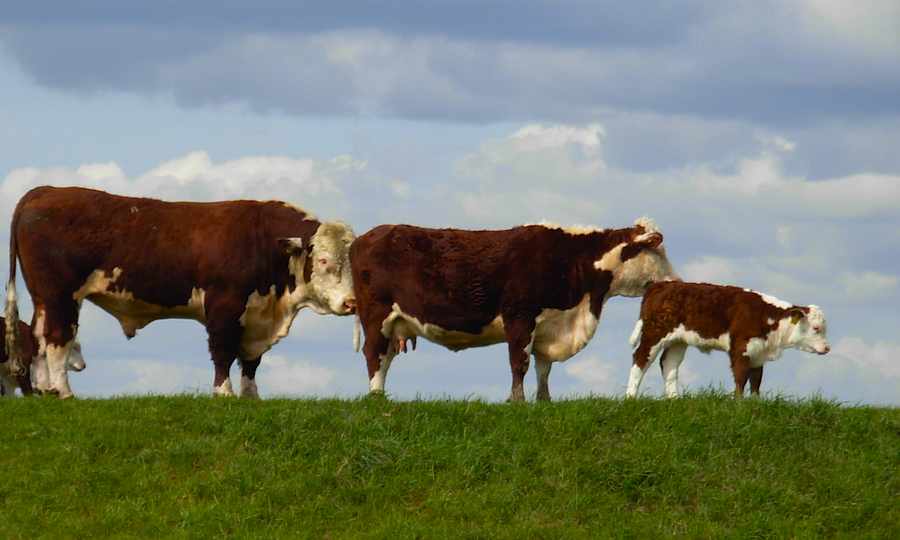
Thankfully, a new garlic-based dietary supplement given to cows has been shown in two different studies to reduce the methane content in cow belches by 30%–38%, which could help reduce the 2.6% of American greenhouse gas volume produced from cattle ranching.
Methane is a potent greenhouse gas (GHG) that traps heat in the atmosphere 25 times more effectively than CO2, according to the EPA and the IPCC.
Unlike CO2, which represents more than 80% of America’s GHGs, methane only stays in the atmosphere for 12 years, which means the supplements would take only a few years to begin having a measurable effect.
Mootral, the Switzerland-based company, will likely be celebrating their supplement’s success as they are set to be the first company on earth to be awarded carbon credits for methane reduction in cows. Both studies of the supplement have shown no adverse effects, both in the health of the animal and the flavor of the milk and meat.
The start-up came as a result of examining garlic’s antimicrobial effect on the human diet, and discovered they benefit cows. Cows produce methane when food in their chambered stomachs is broken down by microbes. The garlic supplement mixed with citrus “pellets” reduces the amount of microbes present, thereby making the belching less potent.
Chipping Away
According to the Environmental Protection Agency’s (EPA) executive summary of America’s GHG inventory from 1990 to 2016, agriculture as a whole accounted for 10% of America’s emissions, with 2.52% coming from enteric fermentation—the fermentation of feed in the stomachs of cows.
If every cow in America (a little over 100 million animals) and all 30 million horses for that matter, were in theory given the Mootral supplement and it corresponded with the previously-observed decrease of 30% in the animal’s methane emissions, merely 1.66% of GHGs in America could be attributed to animal agriculture.
Such a drop would see enteric fermentation fall from the largest source of methane emissions in the US to around the levels produced by landfills.
Mootral CEO Thomas Hafner has a realistic view of how reducing these small amounts of methane from cows and other livestock through cultural changes will be almost impossible.
“…even though we see a move towards non-dairy alternatives, and people going to non-animal protein sources, populations in other parts of the world are progressing from a cereal-based diet into an animal protein-rich diet. Whatever we lose on one side, we’re going to gain on the other, if not more. What we provide is a solution to reduce the impact of that down the line.”
Multiply The Good News By Sharing It With Your Friends On Social Media — Representative feature photo by Dave_A, CC
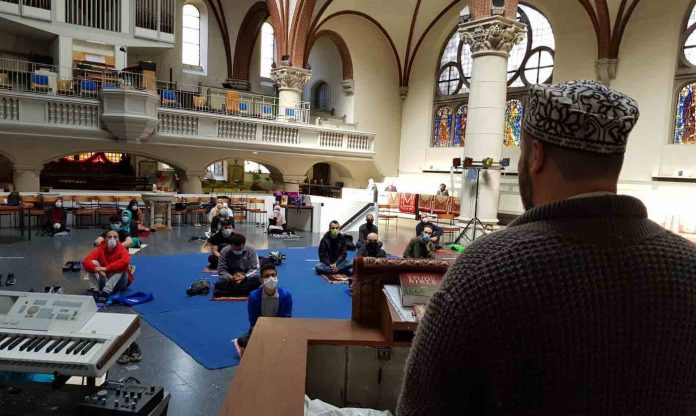
In a heartening display of inter-faith compassion, a German church has opened its doors to Muslims with no place to attend Friday prayers during Ramadan.
Although the nation suspended religious services back in March as a means of curbing the COVID-19 outbreaks, they recently started allowing worshippers to gather in groups of up to 50 people at a time.
The Dar Assalam mosque in the Neukölln district of Berlin typically hosts up to 1,000 worshippers at a time during the month of fasting, but due to the new social restrictions, hundreds of German Muslims have been struggling to find a place of prayer.
Thankfully, the nearby Martha evangelical church—located just one mile away from the mosque—offered to open its doors to host the Friday prayers.
The church has now reportedly been offering two different prayer services for the Islamic worshippers, one in German and one in Arabic. Worshippers have also been required to wear masks and maintain six feet of distance during the prayers.
Representatives of Dar Assalam say that the events have helped them to double the amount of people attending their services while simultaneously raising valuable funds to support the mosque during the lockdowns.
“It is a great sign of solidarity,” mosque spokesperson Juanita Villamor told Newsweek. “We are just thankful, this is a good chance of inter-religious dialog and it is wonderful that the church is doing this.”
Need more positive stories and updates coming out of the COVID-19 challenge? For more uplifting coverage, click here.
Be Sure And Share This Inspiring Story Of Inter-Faith Compassion With Your Friends On Social Media…
Everybody knows that dogs are man’s best friend—but these trusty canines in South Africa have also proven themselves to be the best friends of endangered wildlife as well.
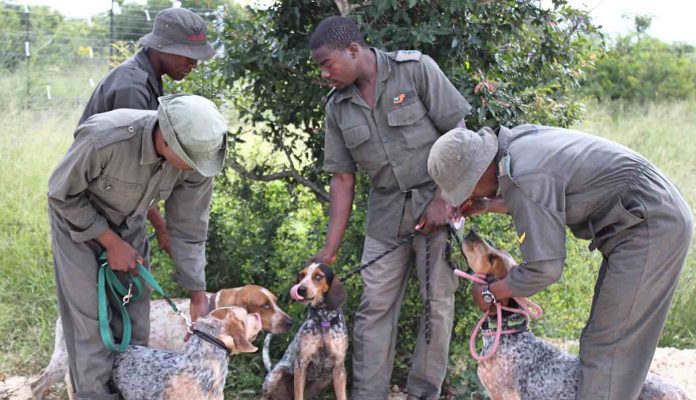
The pack of beagles, bloodhoods, and more, has saved the lives of 45 rhinos threatened by poachers since 2018. Now, in the midst of the coronavirus lockdown, they and their human friends at the Southern African Wildlife College continue to provide their essential services in the country’s national parks.
Trained to protect wildlife since birth, these hounds began their important work at the age of 18 months. Their efforts have helped law enforcement in the region of Kruger National Park catch an “unprecedented 145 poachers and confiscate 53 guns,” according to National Geographic.
But what is now a well-oiled wildlife protection operation did not start out that way; the story began in 2017, when Theresa Sowry, CEO of the Southern Africa Wildlife College, visited a man named Joe Braman at his rural ranch in Southern Texas.
Braman was a part-time police officer, businessman, and cowboy with no knowledge of the poaching crisis happening half a world a way—but Sowry had heard through the grapevine that Braman trained a special bloodline of dogs that had found great success in helping Texas law enforcement catch escaping prison inmates. She wanted to see for herself whether the pooches could be of help at the southern tip of her continent.
“Just think about it,” Braman mused to NatGeo. “If you spun a globe and threw a dart and it stuck, what’s the odds you’ll find a low-key guy in southern Texas’s coastal bend gettin’ picked to stop the extinction of a species?”
South African National Parks had previously employed anti-poaching teams using individual dogs, but their success was limited. “Kruger was very keen to test free-running dogs,” Sowry explained to the news outlet. “Building a pack dog team is a massive undertaking. You need the right genetics, the right training, and, most importantly, the right mind-set to bring it all together.”
Braman grew up raising just these types of dogs with his dad; the father and son team would train groups of 15 or so dogs to follow the scent of animals.
When Braman arrived in South Africa, the plan was simply to asses Kruger National Park’s K9 unit and to train a handful of dogs—but the project quickly expanded to reach a scale that nobody anticipated. After finding that training practices in the country were much different that what he did on his ranch back home, he returned to Texas to train a group of dogs which he could later bring back to Kruger.
Upon returning with his dogs, Braman didn’t know what to expect—but almost immediately after arriving at the park, the canines managed to catch a group of poachers who had killed a rhino. Since then, there has been a ten-fold increase in successful apprehensions of poachers thanks to the work of the K9 program.
In the midst of the COVID-19 pandemic, the work of the K9 team continues in earnest. On May 7th, the Southern African Wildlife College celebrated the first birthday of the black and tan hound puppies, born from the original dogs that came from Texas—and in six short months, they’ll be joining the veterans out in the field to continue protecting and serving endangered wildlife.
Multiply The Good News By Sharing It With Your Friends On Social Media…























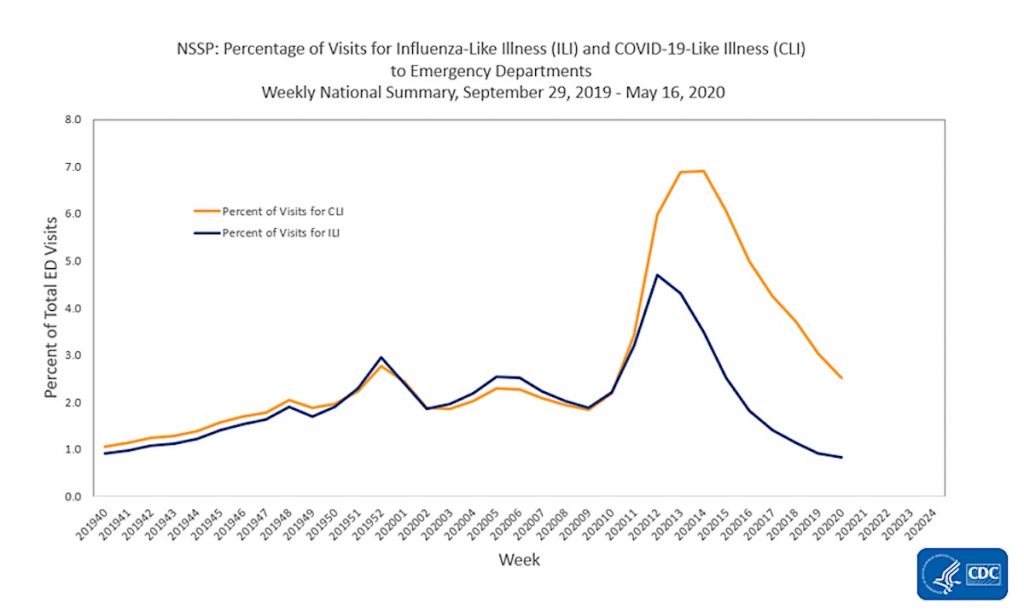 In a White House press briefing on Friday, coronavirus task force coordinator Dr. Deborah Birx provided some optimism when she shared these graphs and charts based on data from the Centers for Disease Control.