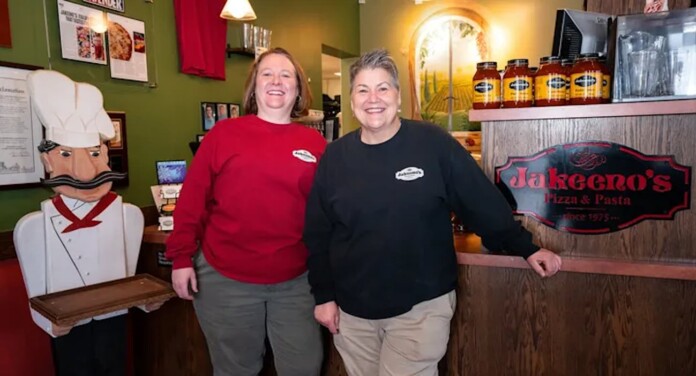
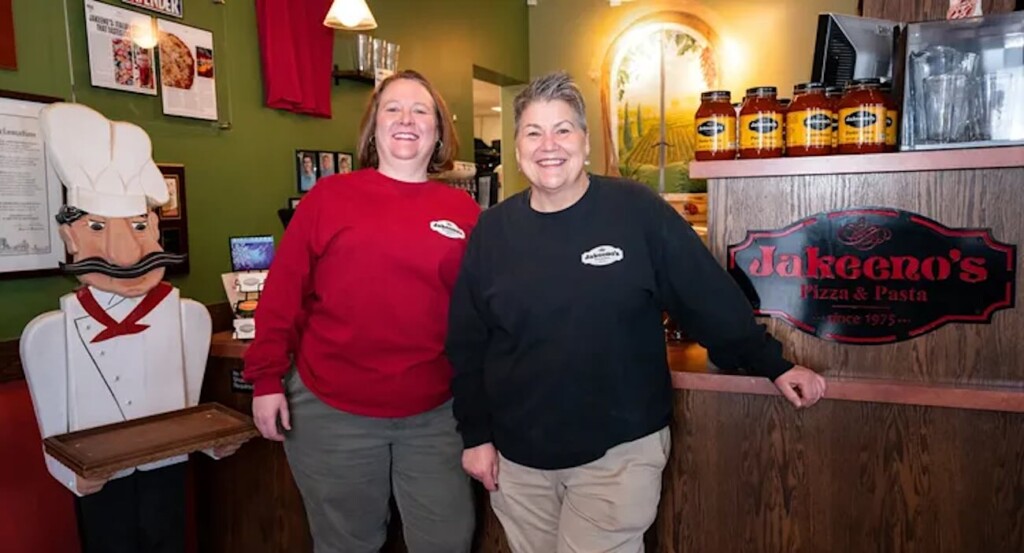
A sisters-owned pizza institution in Minnesota which recently closed after fire damage has received a big slice of help from the community.
In the early morning hours of July 11th, firefighters responded to a call as smoke poured from the roof of Jakeeno’s Pizza on the corner of Chicago Avenue and 36th Street in South Minneapolis.
Crews found an active fire burning beneath the roof membrane and had to open multiple sections of the roof to put it out. The restaurant was closed and empty at the time, and so the damage was luckily limited to just pocketbooks and bank accounts.
“Thankfully, we’re very well insured and we’re just kind of waiting for that process to happen,” said current co-owner Amy Keegan. “We’re just waiting on the insurance claim to come through. They’re doing their due diligence on their end.”
In the meantime, the shop has closed, but a local hospitality entrepreneur named Bob Tinsley organized a GoFundMe to support Amy and her sister Patty, as well as the whole staff whose jobs are on ice while Jakeeno’s is rebuilt.
The community has since responded compassionately, contributing $21,000 from 291 donations.
“We want them back; we appreciate them. We feel terrible that they lost their jobs from this and so we’re just trying to keep everybody whole,” Patty Keegan told CBS News.
GoFundMe contributions will go to paying the cooks, wait staff, and bartenders, but interested parties can also support Jakeeno’s by buying their brand pasta sauce and frozen pizzas available at local grocery stores and co-ops.
It’s not the first time the restaurant’s doors, which have remained open for half a century, have been under pressure to close. Jakeeno’s survived the Great Recession, COVID-19, and the rioting following the murder of George Floyd which occurred just two blocks away.
With a little help from the neighbors who so often tuck into one of their pies, Jakeeno’s can survive this too.
SHARE This Story Of Generosity And Resilience With Your Friends…
- credit, Wildlife Conservation Society Education Department / RJ Hawkins
– credit, Wildlife Conservation Society Education Department / RJ Hawkins
It was June 23rd when a furry brown arrow shot past a motion-activated camera along the Bronx River and sent conservationists mad with excitement.
It was the first time in approximately 100 years that an otter was observed in this borough of New York City, and provided compelling evidence that decades of conservation and restoration are transforming one of the Big Apple’s most iconic waterways.
The camera was deployed by local scientist RJ Hawkins and overseen by the Wildlife Conservation Society’s (WCS) Education Department, based at the Bronx Zoo.
Hawkins, a graduate of the Miami University of Ohio Advanced Inquiry Program (AIP) hosted at the Bronx Zoo, captured the image while conducting long-term camera trap monitoring for wildlife along the river in concert with the WCS
“When I first reviewed the images, I could hardly believe what I was seeing,” said Hawkins in a statement. “Knowing this may be the first documented river otter in the Bronx in generations was an incredible moment. It shows why long-term wildlife monitoring and environmental restoration efforts matter.”
Craig Piper, WCS’ Interim Executive Vice President of Zoos & Aquarium, and Director of the Bronx Zoo, agreed.
“There are moments in conservation that remind us why this work matters, and this is one of them,” said Piper. “Thanks to a broad coalition of public and private partners, we can celebrate the return of an otter as a result of decades of restoration work to provide cleaner water and healthier habitat. It’s a win for both wildlife and people.”
River otters once ranged throughout New York’s waterways but disappeared from many areas because of pollution, habitat degradation, and unregulated trapping. Today they are considered indicators of healthy freshwater ecosystems because they depend on clean water, abundant fish, and intact river habitats.
The sighting is the latest chapter in the Bronx River’s extraordinary ecological recovery. Once heavily polluted and long regarded as one of the nation’s most neglected urban rivers, the Bronx River has experienced decades of restoration led by public agencies, nonprofit organizations, community volunteers, and conservation partners.
In 2007, beavers returned to the river for the first time in more than 200 years. The appearance of a river otter suggests the river continues to become more hospitable for native wildlife.
While researchers caution that a single observation does not necessarily indicate a resident population, the discovery demonstrates that the Bronx River is increasingly capable of supporting native wildlife that has been absent for generations.
“This otter’s return is a gift, not just to the Bronx River but to the communities that have fought for 50 years to bring this river back to life,” said Javier Lopez with the Bronx River Alliance. “Today, this otter reminds us that when we invest in nature, nature responds, and when communities lead, change is possible.”
SHARE This Long-Awaited Recovery In A Long-Abused River System…
Tian Rui (left) and some of the seniors he visits (right) - credit, Tian Rui, via socials
Tian Rui (left) and some of the seniors he visits (right) – credit, Tian Rui, via socials
It’s estimated that over 110 million Chinese live and work abroad, which for the family members they leave behind can be heart-wrenching and difficult, above all for the elderly.
But thanks to a generous soul born to the mountain paths of Hubei Province, these severed family ties are being reconnected through social media and delivery services.
Tian Rui is 39, and used to be a courier among the mountains of rural Yichang Province. His years of delivering parcels through the various hamlets endowed him with close personal connections to many residents whose children had moved down to the big cities or to lands further afield to seek work.
Last year, South China Morning Post in Hong Kong reported, Tian decided that he would offer a new service in the area as sort of a middleman between these often elderly locals and their estranged offspring.
So far he’s made over 200 trips to houses across the county on behalf of the sons and daughters of residents there, sometimes to bring groceries or medications, birthday cakes, and sometimes just to check in and have tea.
“What they really want is to know their children are thinking of them and to have someone to talk to,” Tian shared with Jiupai News, adding that his most distant client lives in Bolivia.
Tian doesn’t charge for short trips, but asks for a reimbursement for fuel costs for longer ones.
Before visiting someone, he confirms the person’s address and name, what it is they’re likely to need, and then records a video of the whole thing, before chopping it up and sending it to the person’s relative.
In one case last December, Tian visited an elderly man and spent several hours with him before sending recordings of their time together to his family. These would be the last sight they had of their relative, as he died just 4 months after the visit.
Tian often witnesses the extraordinary longevity of rural Chinese, for example, a 100-year-old woman whom he visited on behalf of her grandchildren is seen in the video he produced as being spry and capable, demanding he stay for dinner before regaling him accounts of all 16 of her grandchildren’s birthdays.
Quote of the Day: “We do not judge the people we love.” – Jean-Paul Sartre
Photo by: Kenny Eliason (cropped)
With a new inspirational quote every day, atop the perfect photo—collected and archived on our Quotes page—why not bookmark GNN.org for a daily uplift?
Usain Bolt in the final of the 100 meters in Berlin, 2009 - Erik van Leeuwen NFDL
Happy 40th birthday to the world’s fastest man, Usain Bolt. The Jamaican superstar sprinter who retired in 2017 is a world record holder in the 100-meters, 200m and 4 × 100m relay. RE-LIVEBolt’s career below… (1986)
An image of pancreatic cancer - credit, PLOS ONE / DOI10.1371journal.pone.0150338 / CC 4.0. Int
An image of pancreatic cancer – credit, PLOS ONE / DOI10.1371journal.pone.0150338 / CC 4.0. Int
Researchers at Johns Hopkins report that an experimental drug targeting one of the most common genetic drivers of pancreatic cancer was safe in humans, and generated durable immune responses aimed at preventing the cancer in people at high risk.
Pancreatic cancer has one of the lowest survival rates of any form, and the developers believe the study is the first-in-human demonstration for a drug that could safely prevent the development of the cancer for those with a high-risk gene called mutant KRAS.
Findings from the phase 1 clinical trial were published July 16th in Cancer Discovery, a journal of the American Association for Cancer Research.
Pancreatic ductal adenocarcinoma often develops over many years from precursors such as pancreatic cysts, creating a potential window for interventions that could prevent cancer from forming.
KRAS mutations are present in most pancreatic cancers and most pancreatic precancerous lesions. A drug developed by Johns Hopkins Kimmel Cancer Center and its Skip Viragh Center for Pancreatic Cancer causes the immune system to recognize and destroy cells carrying these mutations before they can develop into cancer, using a mix of peptides and an immuno-adjuvant like a vaccine.
In a phase 1 trial in humans, twenty participants with a hereditary predisposition to pancreatic cancer and a pancreatic abnormality identified through imaging received the drug between April 2022 and February 2026. 4 doses were administered over 13 weeks. Researchers monitored participants for safety and immune responses through blood testing and follow-up evaluations.
“This is just the beginning, but the findings suggest that the immune system is getting activated,” says Elizabeth Jaffee, MD, deputy director of the Kimmel Cancer Center and co-senior author of the study. “We have more work to do, but this is a good start aimed at prevention, which no one had thought about doing before.”
Researchers found that 18 of 20 participants, or 90%, developed a median 18-fold increase in mutant KRAS-specific T-cell responses, indicating that the drug successfully activated immune cells capable of recognizing KRAS mutations.
Additional analyses showed that this response persisted for 2 years before monitoring concluded.
After a median follow-up of 16.5 months, none of the participants developed pancreatic cancer or a high-risk pancreatic lesion requiring surgical removal. All treatment-related adverse events classified as mild to moderate. The most common side effects were injection-site reactions, fatigue, chills and flu-like symptoms, all of which resolved without requiring treatment.
The investigators note that the study was designed primarily to evaluate safety and immune responses and was not intended to determine whether the drug prevents pancreatic cancer. They caution that the small study size and relatively short follow-up period limit conclusions regarding clinical efficacy.
The KRAS immune treatment was first tested in 2020 in patients who had undergone surgery and were at high risk of cancer recurrence. The study, published in Nature Communications in 2026, found that when the drug generated a strong immune response, those patients remained disease-free for at least 5 years.
SHARE These Encouraging Early Results For A Deadly Cancer With Your Friends…
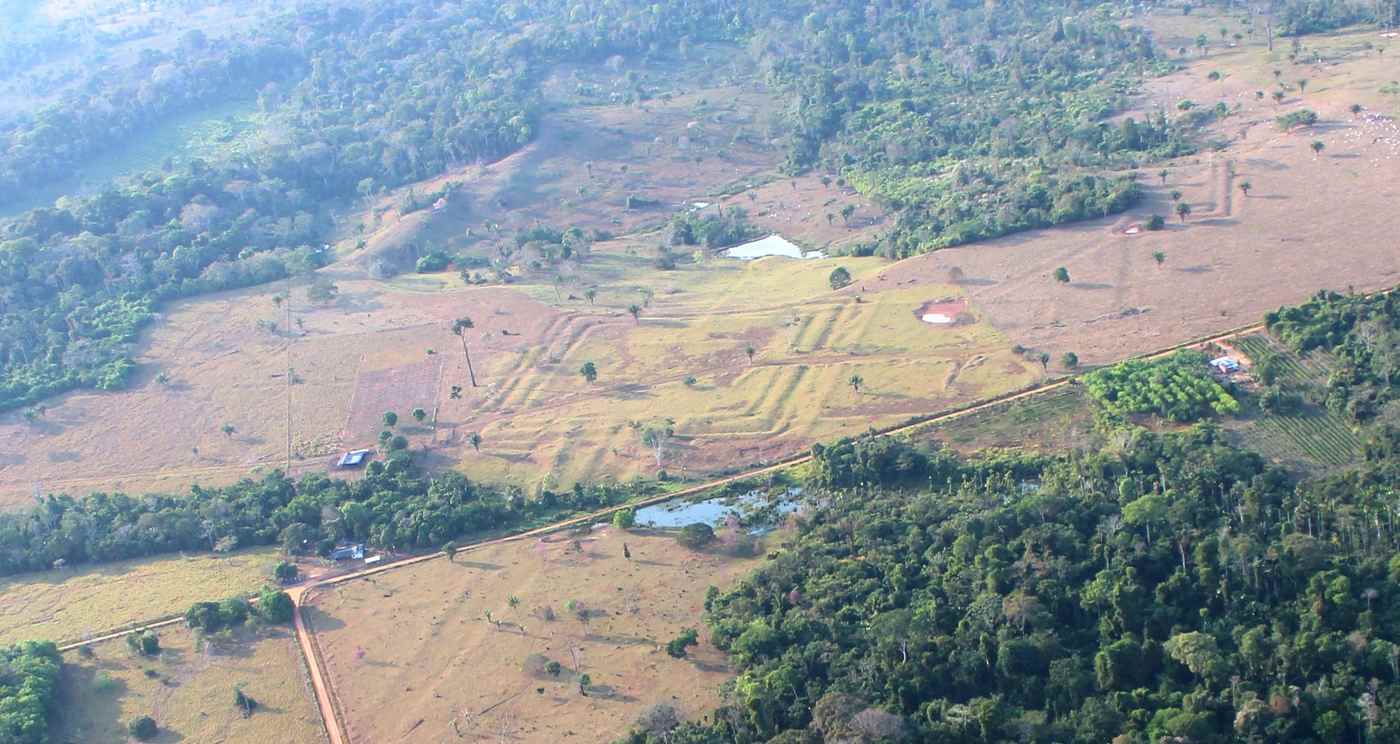
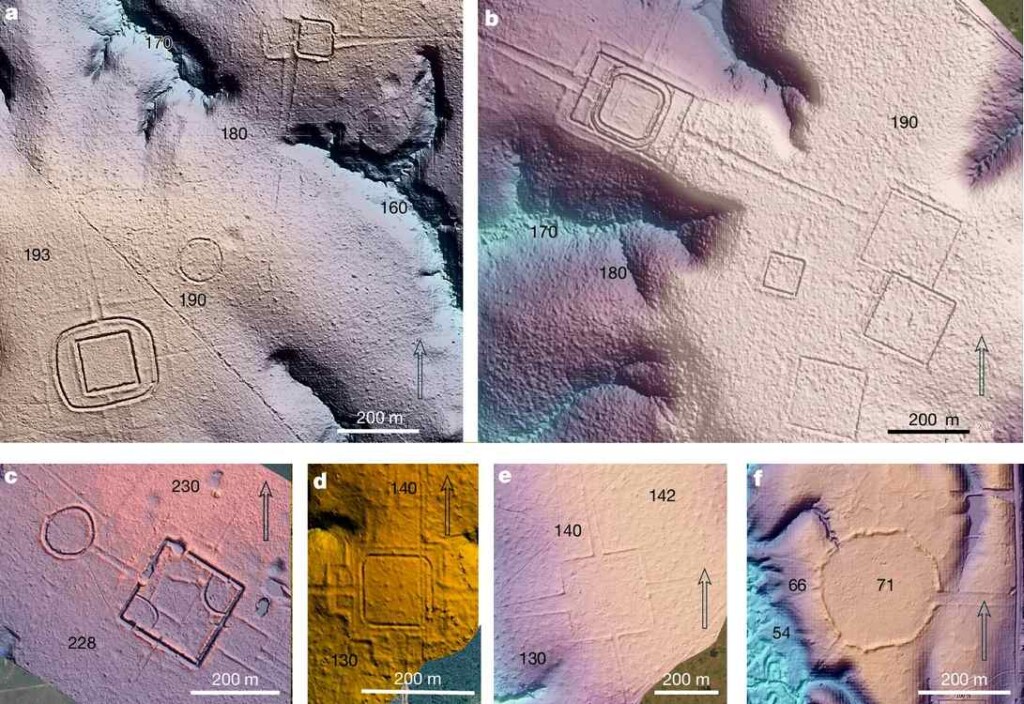
Tequinho geoglyph in Acre, Brazil - credit, Pärssinen et al.
Tequinho geoglyph in Acre, Brazil – credit, Pärssinen et al.
Hundreds of geometric earthworks were recently found in the southwestern Amazon, evidence that a monument-building, precolonial civilization was so much larger than previously thought.
The scale of this hidden world of massive earthen construction projects only began to truly be understood this decade, but a recent aerial survey using laser radar has dramatically increased the footprint of this civilization.
It may indeed be larger than anything yet known in the region, with the total body of evidence showing a greater concentration of these structures in just 3% of the Amazon than in the other 97%.
The paper, published last week in Nature saw Martti Pärssinen, at the Ibero-American Institute of Finland carry out surveys over an area of 4,497 km2 in the southwestern Amazon in concert with his colleagues from Finland and Brazil.
They used LiDAR, an acronym for “Light Detection and Ranging.” This technology fires a laser which moves through the jungle canopy and down to the ground before rebounding back up to the plane like sonar. It allows researchers to accurately map in fine detail what lies below the canopy, and has contributed to many seismic archaeological discoveries in the Amazon Rainforest over the last two decades.
Their dataset yielded 432 separate earthworks, of which 396 were previously undocumented, around the cities of Rio Branco, Lábrea, Boca do Acre, and Carauari. By extrapolating these results, and in combination with existing satellite studies, the authors suggest the region may contain far more of these earthworks—between 24,000–30,000.
Their builders are referred to as the Aquiry civilization, and are known almost exclusively because of their large geometric ditched enclosures, known as Amazonian geoglyphs. It’s assumed they functioned as ceremonial, political and public gathering centers.
The mostly solitary structures are composed of ditches and embankments and range from 0.35 to 14 hectares in size; the largest known geoglyph covers nearly 123 acres. They first began building the geoglyphs around 2,500 years ago, while either themselves or a successor society continued building and using them, albeit with alterations in style, to as late a date as the 13th century.
Aquiry life is believed to have reached its greatest scale and wealth between the 1st and 4th centuries of our common era.
A previous population estimate for the Aquiry considered how many people would have been needed to build and maintain the earthworks, and considered 60,000 to be an accurate assessment using the data of the time—when only 200 of the earthworks were known, but that number has increased by orders of magnitude with new evidence.
Various LiDAR images of the Aquiry geoglyphs – credit, Pärssinen et al.
“On the basis of both existing data and our LiDAR documentation, we show that this cultural area alone contains as many earthworks as previously estimated for the whole of Amazonia,” the authors wrote. “We also propose that the total human population of the area in 100–300 [CE] was 1.25–3 million people.”
1 to 3 million people, at roughly the same time period, would put the Aquiry civilization on par demographically with the Late Preclassical Maya societies from as far north as the northern Yucatan Peninsula to as far south as Belize, making Aquiry one of the largest groups in the Americas at the time.
Additionally, 28,000 earthworks would make the Aquiry region not so much smaller than the Maya Lowlands as well.
“By using airborne LiDAR technology, it has been possible to triple the area of the Aquiry civilization from the earlier 60,000 km2 to approximately 183,000 km2,” the authors summarized.
The study is a massive leap forward in the understanding of the Aquiry. Just take a look on Wikipedia and see how much information is available on them.
SHARE LiDAR Striking Archaeological Gold In The Amazon Once Again…
When a local resident found out that her schools in an extremely wealthy Northern California county was at the bottom for state funding, she stepped up to make the difference.
Maja Kristin asked the Ross Valley School District to organize a meeting of 100 teachers from their K-8 schools, with the special instruction that they weren’t to know what the reason was.
Gathered in a conference room on August 13th, Kristin explained she had discovered that its teachers were the paid the least of any peer group in the wealthy Marin County.
Marin is one of the highest-income counties in America by per capita income and median household income, and sits across the Golden Gate Bridge from San Francisco. Despite this, and despite sky-high property values, Ross Valley sits in the bottom 20th percentile for state school funding.
In order to make up the difference, Kristin asked a group of district school principals to hand out envelopes which the teachers were instructed to open.
“We as citizens, we can write direct checks,” Kristin told the assembly who discovered exactly that—paid to their order—each worth $9,161.70.
The bonuses were part of a donation worth $1 million to the school district, and KRON 4, a local news outlet, was in the room when the teachers saw their checks, recording their reactions and speaking to them afterwards.
“It’s life-changing,” one teacher, Sydney Dean, said.
“I don’t think I’ve ever experienced such a beautiful gift from someone I don’t even know or haven’t taught their kid,” another, Amber Bunnell-Wild added.
WATCH the story below from KRON 4…
SHARE This Determined And Generous Citizen Rewarding Marin County’s Teachers…
The fisherman recovering in his hospital bed - credit, Municipal Government of Uxpanapa
The fisherman recovering in his hospital bed – credit, Municipal Government of Uxpanapa
A harrowing story of survival and perseverance comes to us from Mexico, where a fisherman was rescued after spending 15 days in a pitch black cave.
The man, Erasto Crisanto Valdez, said he trusted in god to deliver him from the situation, which he survived by drinking rainwater and breathing from an air pocket.
According to the Municipal Government of Uxpanapa which organized the rescue operation, Valdez got lost in the cave while fishing in a cenote, Mexico’s famous limestone sinkholes.
Swimming down into a cave, darkness quickly enveloped the man until he was unable to find the way he came from. That was on July 23rd, and it wasn’t until August 7th that he was located.
The government said in a statement that the rescue required “an exhaustive 15-day operation coordinated by the Civil Protection of our municipality.”
“The rescue operations involved an unprecedented deployment on land, river, and air, guided by the firm conviction of not giving up until finding him. This historic achievement is the result of the close collaboration and joint effort of the three levels of government and high-level specialists.”
Valdez was transported to the hospital after being found in a condition of extreme malnourishment and dehydration. He hadn’t seen light in 15 days, and had lost all track of time.
“When I first entered that cave … I never imagined there was an air chamber there … Those 15 days felt like only three days to me,” Valdez recalled. “There’s a spring running through the middle … so when I felt thirsty or hungry, I’d drink the water from the cenote.”
“I couldn’t see a thing out there—you could only hear the lake—and I couldn’t tell if it was day or night. I kept my faith in God … to help me survive.”
Caves are arguably the most dangerous environments humans could venture into—submerged ones all the more so—and should only ever be done with all the necessary equipment, and only when they are well-mapped.
If for any reason you do decide to enter a cave, ensure your light source can last several hours and leave trail markings to help you find your way out—even something as simple as potato chips could prove lifesaving.
SHARE This Man’s Deliverance From The Most Nightmarish Of Scenarios…
Quote of the Day: “Pleasure in the job puts perfection in the work.” – Aristotle
Photo by: Getty Images for Unsplash+
With a new inspirational quote every day, atop the perfect photo—collected and archived on our Quotes page—why not bookmark GNN.org for a daily uplift?
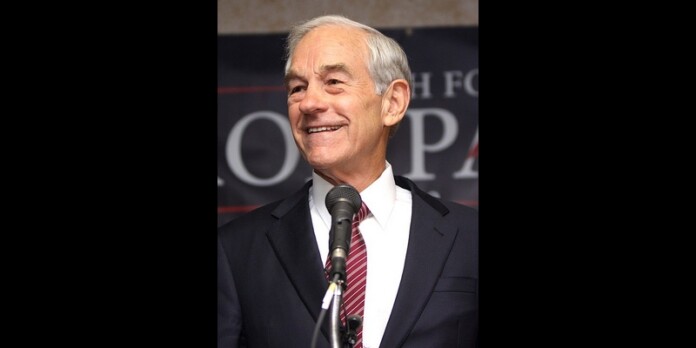
Happy 91th birthday to the former Congressman from Texas, Dr. Ron Paul. Before serving three terms as representative of the 22nd and 14th Congressional districts, the country doctor delivered an average of 1 baby per day, amounting to over 4,000 little ones because he was the only OB/GYN in Brazoria County. Respected by both sides of the aisle for his kindness and unwavering dedication to his principles, he happily worked with either party in order to advance the cause of liberty. READ more about America’s most famous Libertarian… (1935)
- TikTok credits via (@_jen_hamilton_) (@hopedotcom424)
– TikTok credits via (@_jen_hamilton_) (@hopedotcom424)
When a TikTok influencer and NYT bestselling author received her DoorDash meal in early August, a hand-scrawled note in the bag caught her eye.
The words were from the delivery driver: “Your tip is helping make our wedding possible,” it read. “It means the world to us. <3 Hope & Tyler.”
Hamilton is the author of the 2026 bestselling book Birth Vibes: Stories and Strategies for an Empowered Birth, a delivery room nurse, and founder of Hot Mess Express, a nonprofit that provides free home cleaning services for low-income parents.
She is nothing if not empathetic, and as she described in a TikTok video on her channel where she enjoys the company of some 5 million followers, the note caused her to go “kindness stalking.”
Finding the couple’s wedding page, she donated a heap of gifts through Amazon which arrived in a massive pile outside of the couple’s front door.
Hope, the delivery driver’s bride-to-be, responded with a video of the mass of presents, writing that they were “so grateful.”
GNN received confirmation that following the exchange, DoorDash itself sent Hope & Tyler a wedding present as well.
It’s not the first time that kindness through their platform has brought out kindness from the platform.
In March, GNN reported on the story of a woman who had a DoorDash order brought to her house and was shocked to see the driver was an old man who struggled to climb the 3 steps to her front door.
Inspired to help, she set up a GoFundMe, which raised $940,000 to allow the man to retire, and her initiative grabbed the attention of the company, which added $20,000 to the man’s makeshift retirement fund.
Kindness breeds kindness, even in the corporate world.
SHARE This Wonderful Example Of Asking And Receiving On Social Media…
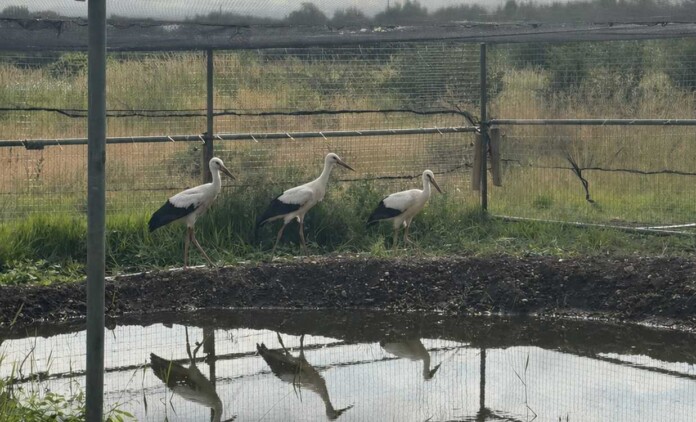
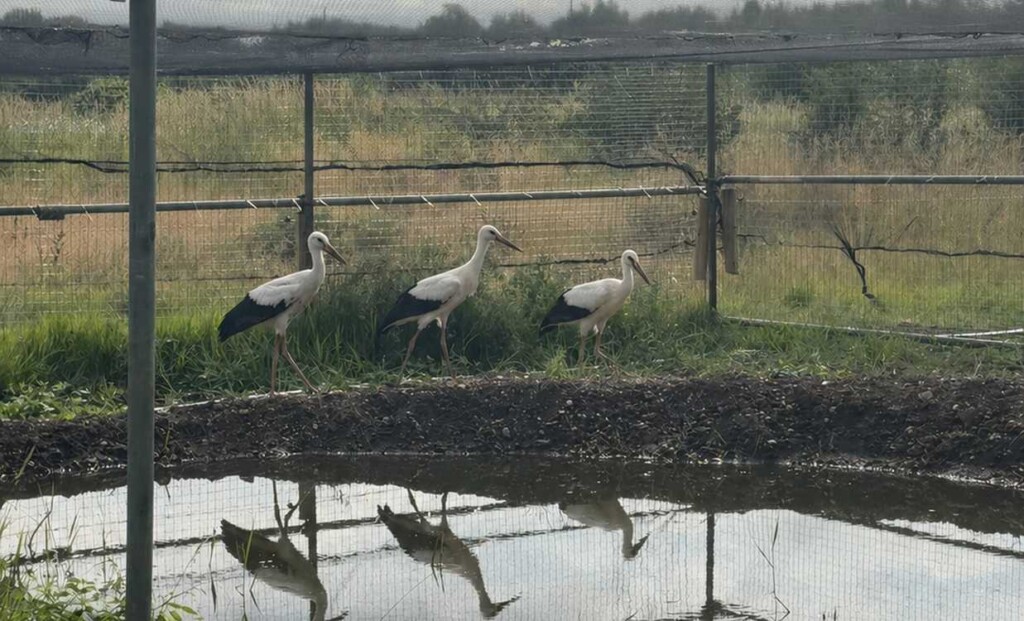
The last time a white stork nested in Derbyshire in the English Midlands region, the country’s King Henry VI was declaring war against the Duchy of Brittany and the Kingdom of France, while an independent Venice won a war against Serbia at a city that’s now in Albania.
Indeed, the large white wings of the bringer of babies have been absent for 600 years, and have now arrived as part of an effort to establish a healthy, wild, breeding colony on the same river where British authorities recently reintroduced the beaver.
The beaver had been missing even longer—going back to the era of the Magna Carta, or 800 years ago.
It’s fair to say the return of both animals has been truly historic.
“From this nature-rich enclosure to the possibility of a future wild population, every step will help strengthen wetland habitats, enhance biodiversity, and inspire people of all ages to reconnect with nature on their doorstep,” said Katie Last, Living Landscape Officer at Derbyshire Wildlife Trust.
The Derbyshire Wildlife Trust manages the Willington Wetlands site where the storks are to be released. They will first undergo an acclimation period during which they will familiarize themselves with the wetlands from the safety of a predator-proof enclosure designed by Celtic Rewilding, a charity that runs a similar organization in nearby Staffordshire, where the storks arrived from.
£300,000 from Veolia Environmental Trust was put up for the translocation, and the site was chosen along the River Trent where wild storks were recorded flying over recently. The hope is that the sighting of the settled birds will encourage the wild ones to settle down and breed.
“This project offers a rare opportunity to facilitate the return of a key missing species,” added Harvey Tweats, Director of Celtic Rewilding, in a statement.
“The Trent Valley is uniquely placed to support white stork recovery in the Midlands, combining extensive wetland habitats with restoration opportunities in former gravel pits. Historical evidence, including archaeological finds and place names around the Humber, also points to the species’ former presence.”
FLAP Your Wings Over To Social Media And Share This Story…
From the Italian police’s crack art crimes team comes the news that 3 stolen paintings by famous French artists were recovered and returned to their owners.
The Carabinieri, or military police, report that the paintings had been stolen in a heist from the private museum of the Magnani Rocca Foundation on March 22nd.
They include Fish by Pierre August Renoir, Still Life with Cherries by Paul Cézanne, and Odalisque on the Terrace by Henri Matisse, which together are valued at over $10 million.
A statement from the authorities detail that 9 Moldovan nationals are currently in custody as suspects pending an investigation. It also detailed that a 4th painting, another Renoir called Paysage de Cagnes, was abandoned during the escape from the villa that houses the foundation’s museum.
The thieves escaped across the garden after triggering an alarm, and left behind according to the statement, a previously stolen tractor which they used to batter down the gate which led to the villa.
“The National Secretary for the Military Police expresses its applause and profound gratitude to all its colleagues engaged in the brilliant recovery of the masterworks,” the translated statement read, without additional details about how the three-pronged recovery operation was conducted, or where, or with what leads.
Still Life with Cherries is by far the most valuable of the 3, having last moved at auction for $7 million. Painted by Paul Cézanne in the penultimate decade of the 19th century, spherical fruit had become commonplace in the author’s Post-Impressionist period, with apples, pears, and peaches routinely appearing in his still life works.
Only two other works that include cherries are known, and this one is the only one of the 3 that includes no other fruit.
SHARE This Great Police Work To Recovery This Patrimony For Art Lovers In Italy…
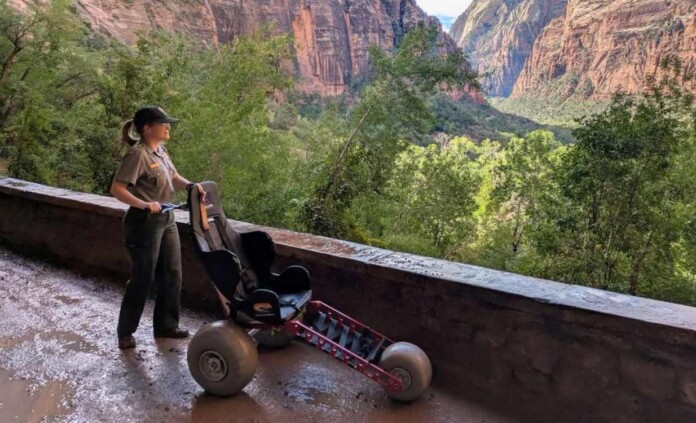
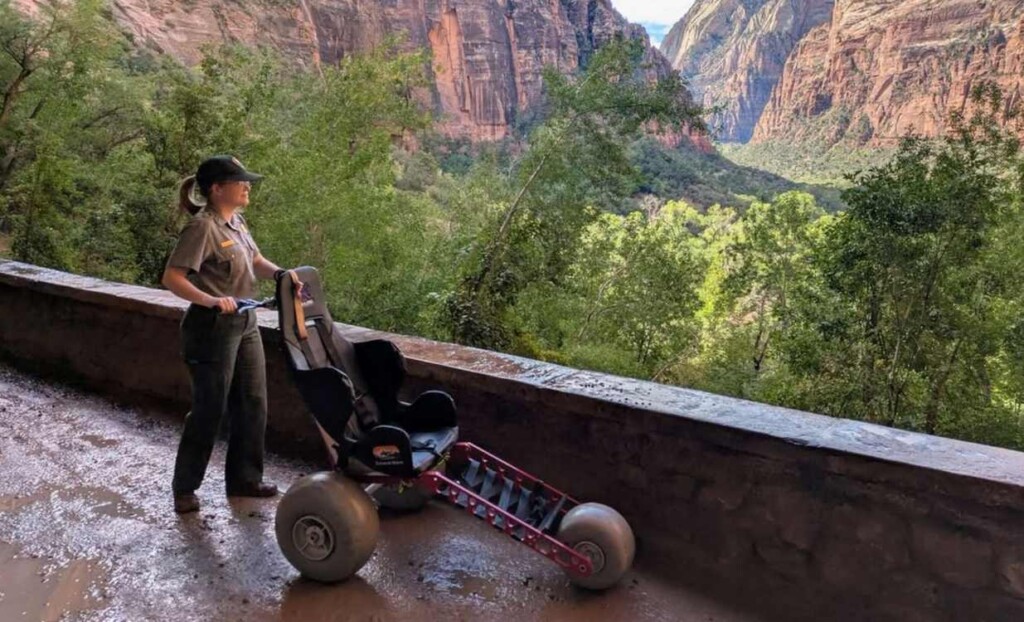
The world renowned Zion National Park has become the first to offer an all-terrain wheelchair for disabled visitors who want to enjoy the canyon system’s trails.
The equipment was made available thanks to a charitable nonprofit which used donated funds to purchase the wheelchair on behalf of Zion.
In going through the process of outfitting and delivery, the wheelchair’s manufacturer, Extreme Modus, realized that Zion was about to be the first of America’s national parks with its own offroad mobility options.
“It’s been almost two years in the making,” said Extreme Modus’ chief business development officer, Kenny Jardine.
“Zion actually got the chair in July of last year from a donor through a nonprofit organization called 2Live4, who was able to come in and donate the money to be able to make this possible.”
Co-founder of Extreme Motus, Ryan Grassley, developed the chair model over the last 7 years while taking a friend of his with cerebral palsy named Sam to all but 1 of Utah’s NPS properties.
“We were standing in front of the visitor center and telling the rangers how to use the chair, and a family walked by. They had a child that used a wheelchair, and the mom was like, ‘What is happening right now?’ We explained what we were doing, and the mom just started crying. It became immediately clear that having that equipment available was 100% the right thing to do.”
Zion National Park now allows anyone to use the chair for free on a first-come-first-served basis, being that only one is available.
SHARE This Incredible Opportunity For The Disadvantaged To See Zion…
Quote of the Day: “Courage is grace under pressure.” – Ernest Hemingway
Photo by: Fellipe Ditadi for Unsplash+
With a new inspirational quote every day, atop the perfect photo—collected and archived on our Quotes page—why not bookmark GNN.org for a daily uplift?
Expected to see 10 to 18 inches of sea level rise over the next 25 years, the city of Boston and the US Army Corps of Engineers have released a feasibility study for 20 separate infrastructure projects to protect the historic city’s coastline.
The study estimates that if nothing is done, costs to the city’s historic buildings, neighborhoods, but particularly to the transportation systems from flooding could reach as much as $54 billion by 2090.
The study therefore outlines a fifth of that estimated cost in investments towards infrastructure projects that will prevent the increased impacts of flooding in the decades leading up to that date. The projects will come in stages, just as the worsening impacts of predicted sea level rise are expected to.
“The reality is that doing nothing is not a viable option. Without action, the costs to public safety and economic vitality from coastal flooding will only be compounded,” said Lt. Col. David MacPhail, deputy commander of the Corps New England District, in a statement.
The planning strategies, according to the feasibility study summary, focused on finding different ways to manage storm risks both today and in the future under several different sea level change scenarios, and according to each neighborhood’s needs and capacities—a substantial challenge with even more substantial uncertainties.
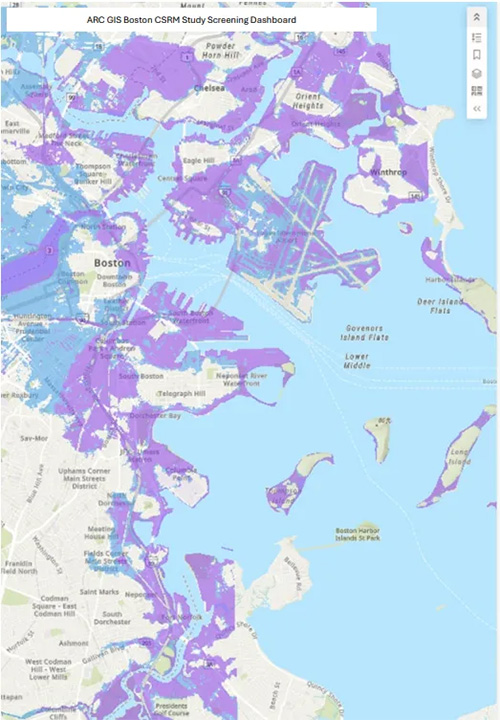
The USACE estimates, however, that virtually the entirety of Boston will experience inundation during a 100-year storm event over the next 64 years.
A map of Boston, with purple indicating flooding under intermediate sea level rises, and light blue under extreme rises – credit, US Army Corps of Engineers
“The Army Corps project is a generational opportunity to receive federal funding to invest in our coastline, but Boston needs a strategy that is viable and implementable to meet the match,” Rebecca Herst, Green Ribbon Commission associate director and director of climate resilience, told Engineering News Record.
The projects would span some 16 miles of urban coastline, from above Powder Hill in the north to Columbine Cliffs in the south.
Though the executive summary mentioned seawalls as a potential measure, no concrete ideas are yet proposed since the monumental investment costs are so variable.
Nonetheless, consultations over engineering effectiveness, economic opportunities, and environmental impacts of any ideas either proposed by the Commission’s coastal resilience task force, or by other “resource agencies and stakeholders,” were held, during which time federal government interest was also confirmed.
“The future of our city depends on the steps we take now to build resilient communities,” popular first-term Boston City Mayor Michelle Wu said in a statement. “With more frequent flooding in vulnerable areas during extreme weather events, the Coastal Storm Risk Management Feasibility Study is critical to understanding how to protect inland neighborhoods most at risk and unlocking resources to take action.”
The task force plans to finalize its financial blueprint by next summer, coinciding with the Corps’ final feasibility study. The agency will accept public comment on the analysis through September 18th.
SHARE This Important Story Of A City Planning For The Future With Your Friends…
Police in Belgium recently made a most remarkable discovery while digging under the foundations of an old brewery.
While using a jackhammer on the property in the city of Dendermonde, about 19 miles outside of Brussels, construction workers noticed coins beginning to appear in the hole they were making.
Kobe Phillips, a student working a part-time, said that he thought at first they were 1 euro coins, and asked a colleague to help him dig them out. Then they saw that they weren’t—and that there was a gold bar stuck to the end of their jackhammer.
You can see the proof of it in the photo above on the bar third from left in the top row.
40 gold bars and over 4,000 gold sovereign coins were eventually recovered, estimated to be worth some $10 million at current market prices.
“I thought they were one-euro coins, neatly lined up in a row. We dug them out, and then we saw a small bar of gold lying there, already attached to our digging hammer. There was actually a bit more than we’d thought,” Phillips told Belgium broadcaster VTM, according to CNN.
Police department Dendermonde via Facebook
After the scope of the discovery had been made clear, the workers called the property owner, who called the police.
The East Flanders Public Prosecutor’s Office told CNN authorities had recovered the gold and taken it to a secure and secret place where it would be held pending an investigation into provenance and ownership.
They also said that several people have already contacted them with proof of ownership documentation.
Most of the bars date to the 1960s, while the coins feature a variety of dates and bear a variety of origins.
Gold has been much in the news over the last 12 months as its value has nearly doubled since summer of 2025. In January, the yellow metal reached an all-time-record high of $5,600 per troy ounce, before a sell off brought it down to $4,000.
At publishing time Asian markets traded the metal at around $4,460 per ounce.
A fair amount more than half of all the gold in the Earth’s surface has already been mined according to scientific and industry estimations. Recovering large troves like this, apart from the incredible fortune it bestows upon its rightful owners, helps to ensure as much of that supply as possible remains available to the markets for jewelry, electronics, dentistry, aerospace, and personal wealth protection.
SHARE These Workers Literally Striking Gold On Social Media….
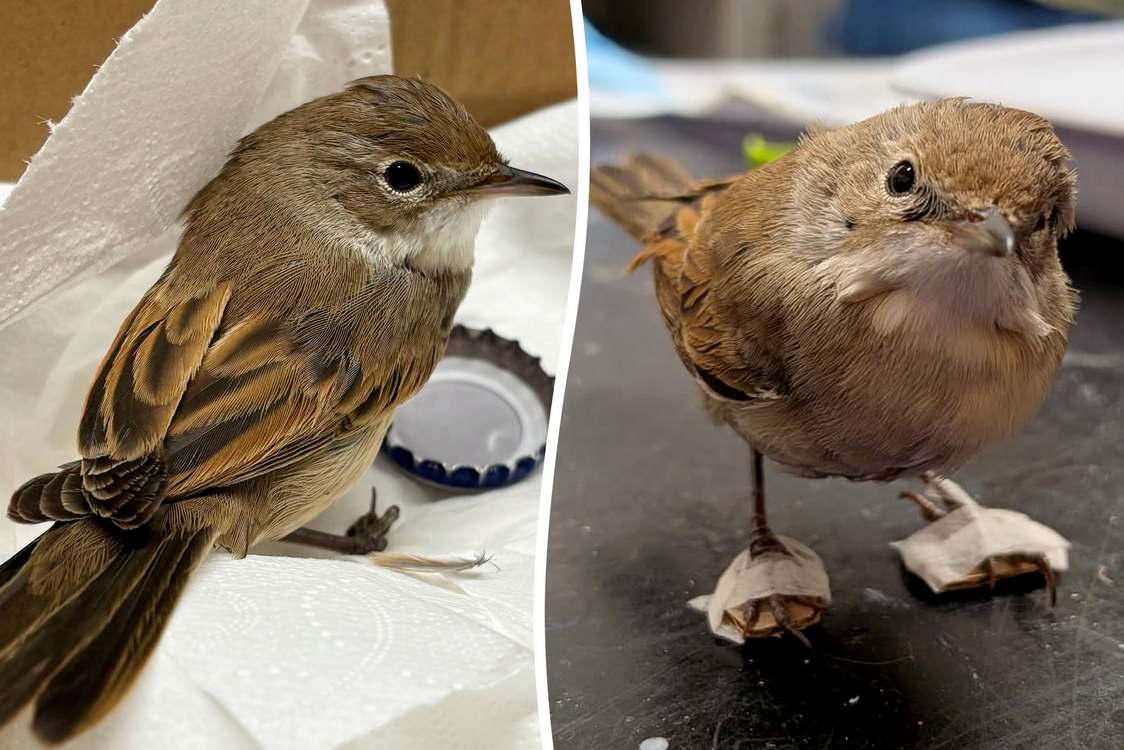
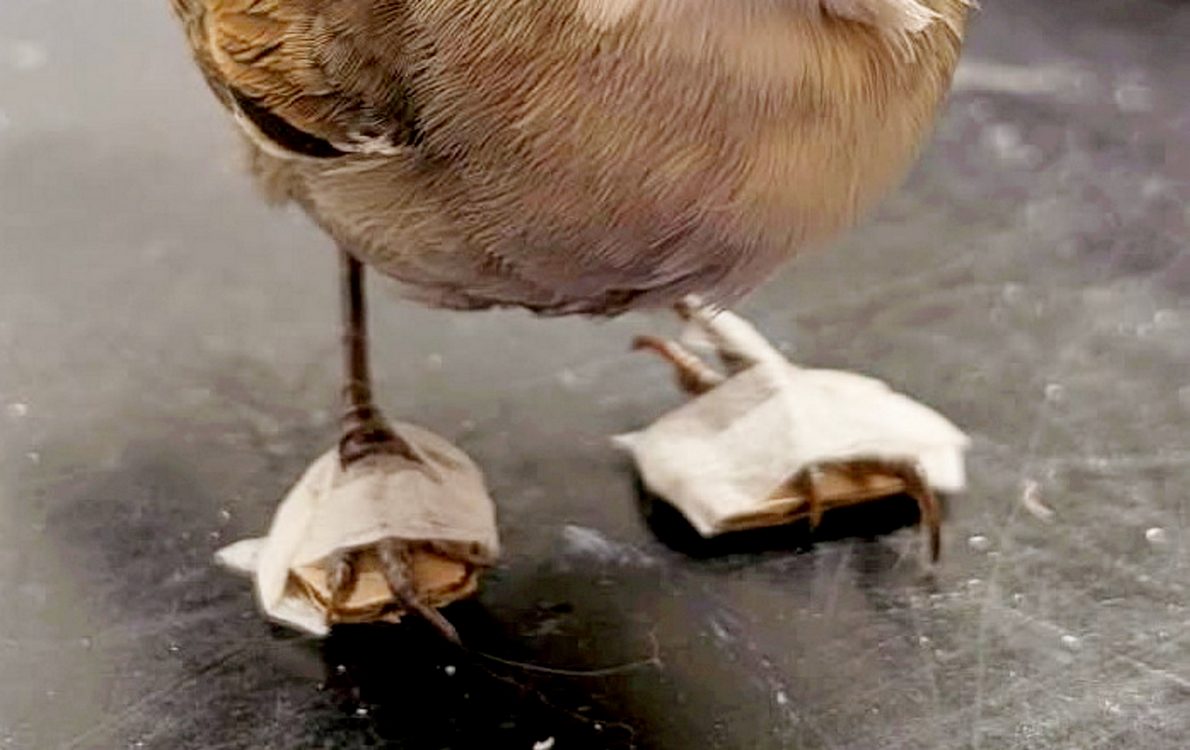
The whitethroat, injured with his foot casts - credit, Leicestershire Wildlife Hospital via SWNS
The whitethroat, injured with his foot casts – credit, Leicestershire Wildlife Hospital via SWNS
A bird that was hit by a car is undergoing a rather curious rehabilitation procedure.
The animal hospital it was taken do designed a pair of specially-built casts made of cardboard and tape.
It’s a bit makeshift, but the bird is said to be making good progress and will be released back into the wild once he has fully recovered.
“He was found last Saturday by some people who then called us and brought him in. We have used this technique before with other baby birds—but its usually when they have nutritional deficiencies,” said Amy Blower, at the Leicestershire Wildlife Hospital.
The whitethroat was found by a couple lying stunned in the road following a collision last Saturday.
His was taken to Leicestershire Wildlife Hospital where it was found his feet were curled up and unable to grip due to nerve or ligament damage.
The whitethroat, injured with his foot casts – credit, Leicestershire Wildlife Hospital via SWNS
Staff then decided to make him some tiny casts of cardboard, cotton wool, and micropore tape to hold his feet steady and allow him to stand while they heal.
“We put a little bit of cotton wool between the feet and the cardboard to add a bit of cushioning and then use micropore tape to secure them,” said Blower. “It seems to be doing the trick and he is making a good recovery.”
“Other than the issue with his feet he was uninjured so we’ll release him hopefully in a few days when he is better. It’s unusual for us to get whitethroats as they are only around in the summer and migrate from Africa.”
The whitethroat is listed as an amber species of conservation concern in the UK, requiring monitoring and potential intervention but not the urgent action.
This one will be grateful the action was, however, urgent—and clever to boot.
SHARE This Happy Songbird Soon To Return To The Wild…
Zhu Rongji, on the right, standing alongside his counterparts in Japan (center) and South Korea - credit, Korea Open Government License Type 1
Zhu Rongji, on the right, standing alongside his counterparts in Japan (center) and South Korea – credit, Korea Open Government License Type 1
Former Premier of the People’s Republic of China, Zhu Rongji, passed away on last week at the age of 97, with the country raising its flags to half-mast in commemoration of one of its wisest custodians.
His term as the head of state was not a long one—merely 5 years from 1998 to 2003—but his work was paramount to transform the country from the example that American mothers used to convince their children to eat all their dinner, to the economic powerhouse it is today.
This work began in earnest during his role as Vice Premier, a position of much greater power than an American Vice President. Under Premier Deng Xiaoping, Zhu executed critical market reforms in areas of banking, taxation, and government employment.
This included allowing thousands of government-owned businesses to fail, trusting a new private sector to support employment as the state sought to get tens of millions of workers off of the so-called “iron rice bowl” of cradle-to-grave welfare. As VP, Zhu also saw a reduction in the inflation rate from 24.3% in 1994, to -0.8% in 1998, in part through centralizing the wildly decentralized tax system by using an American tax model.
These large successes set Zhu up for election to the Premiership in 1998, which he kicked off with a program of privatization that lasted throughout his period in office, during which the PRC’s private sector experienced rapid growth. This was matched with a halving, roughly, in the bureaucracy between 1998 and 2003, part of an emergency response to the Asian Financial Crisis of 1997.
A 2002 article about Zhu stepping down from the Premiership bears at-the-time witness to the achievements of these market reforms. In 2000, worldwide foreign direct investment had fallen by half, yet it had increased 10% in the PRC. Two years later, global trade had fallen by 1%, but Chinese gross trade had increased by 22%.
“He’s someone who is well respected by Chinese citizens,” Angie Eagan, manager of the US marketing firm Burson-Marsteller’s Shanghai office, told the BBC at the time. “Having somebody who can hold the respect of multiple generations is quite something.”
In 2001, Zhu took the lead in negotiating China’s assent to the World Trade Organization, to domestic and international acclaim, an achievement that required close coordination with the United States and something he managed without kowtowing.
A lasting legacy, rooted in dissent
There was every chance that Zhu Rongji would have become a Mao-era casualty, never to enter the history books.
He was a member of good standing of the Communist Party during his youth, but repeated defiance of Mao Zedong’s cult of personality and catastrophic policies saw him exiled twice.
The first, in 1957, saw him expelled from the party and labeled a radical. Surviving this incident both physically and politically, a pardon led to his return to political life in 1962. He was purged again during the Cultural Revolution, and again survived, though sent to a special farm for disgraced government workers where he performed years of hard agricultural labor.
His arrival within the inner circle of Deng Xiaoping, Mao’s successor, was meritocratic, as the years in political exile left him with few connections among Beijing’s elite. He excelled in the country’s post-Mao academy, and in 1984 was named the founding dean of the Tsinghua University School of Economics and Management, a position that allowed him to meet western academics, and even leaders, for the first time.
“He was a very impressive individual from the very beginning…a man of enormous curiosity,” Dr. Nick Lardy, a China specialist at the Brookings Institution in Washington, who first met Mr. Zhu in the mid-1980s when he was the mayor of Shanghai, said in the BBC piece.
It was as mayor of Shanghai that he instituted that city’s first special economic zone, leading it to becoming a global financial center today.
As Premier Zhu earned a reputation as a strong, strict administrator, intolerant of corruption, nepotism, or incompetence. His shift toward meritocratic values in the bureaucracy was vigorous, opening government offices to private-sector advisors and experts, trying to cut connection-based promotion, and in what was quietly the most impressive accomplishment of all this disciplinariansm, got the military to relinquish its involvement in the business sector.
His nickname as Mayor and Party Secretary of Shanghai was “One Chop Zhu,” a refrain regarding his nature as something like a Western-style corporate axeman. It was this chopping that uncovered and dismantled the largest corruption ring in modern Chinese history—a massive smuggling operation inside the government of Fujian in the south.
After retiring, Zhu invested much of his time and energy into public philanthropy. In 2013 and 2014 alone, he donated 40 million RMB (around $6.5 million US) to charity.
There are many methods for measuring the success or failure of a country’s leadership. However, given the reality of political re-election pressure, even from within the ranks of a one-party system, an especially useful metric is to see whether or not policies left unfinished by one leader are carried out without alternation by the next.
In this sense, Zhu’s influence was profound on the following set of PRC leadership. His successor Wen Jiabao attempted to continue many of the reforms that Zhu had conceived and designed, creating and increasing the powers of independent regulatory commissions and restructuring the bureaucracy on the basis of merit.
Some of these were achieved, others were reversed under Wen’s successor, but with China’s place as the 2nd largest economy, his overall vision was no doubt achieved.
Wang Dan, China director at Eurasia Group, told the South China Morning Post that Zhu was “the true founder of China’s socialist market economy.”
“Subsequent reforms of similar depth have been absent from China; subsequent policies have essentially been reinforcements of the reforms he spearheaded in the 1990s,” he added, joining a chorus of economy-sector voices praising the man and his tenure to the paper.
Zhu Rongji is survived by his wife of over 50 years, Lao An, and their son, a business executive.
SHARE This Story Of China’s Reformist Premier On Social Media…