All News - Page 2 of 1725 - Good News Network
Home Blog Page 2

Jogger’s Call for Help Saves Critically-Endangered Penguin Found Face-Down on the Beach

African penguin rescued on South Africa beach - SWNS
African penguin rescued on South Africa beach – Catherine Huaw / SWNS

Rescuers raced to save a stranded penguin after a jogger spotted it and called for help.

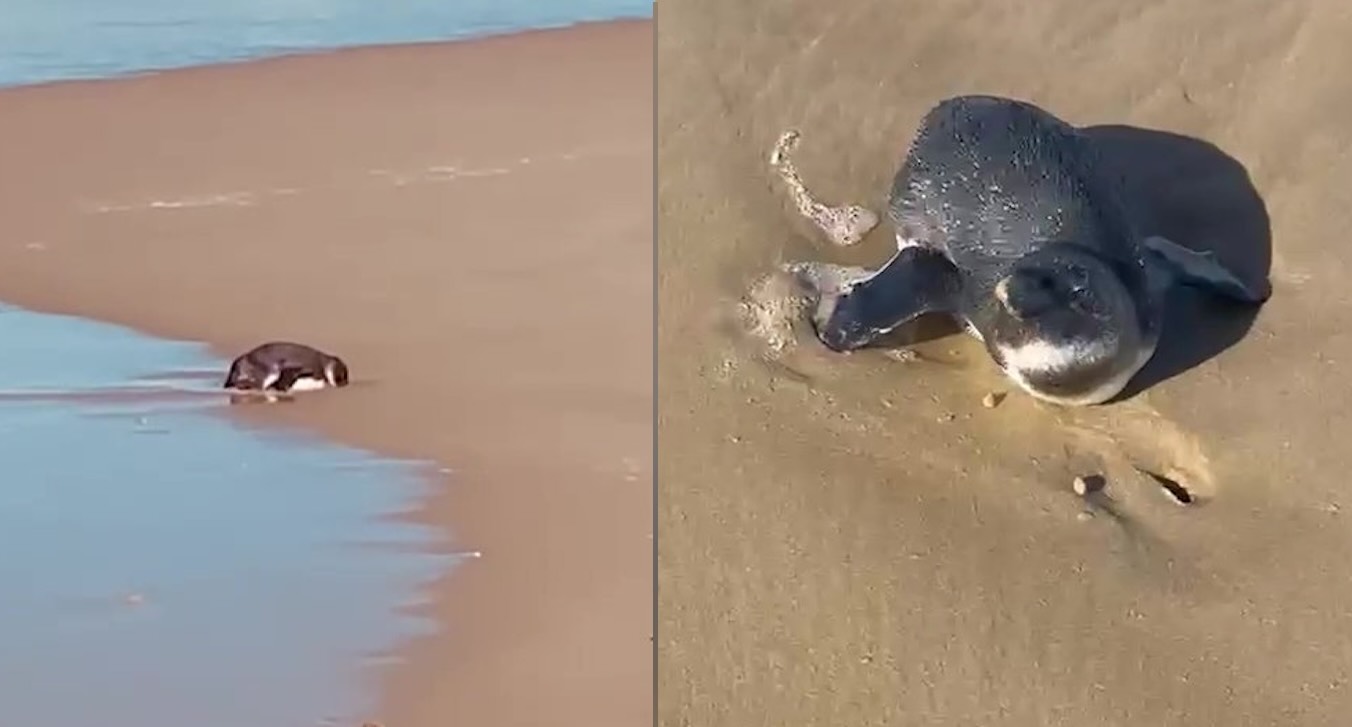
Two weeks ago, wildlife veterinarian Catherine Hauw was alerted that there was an African penguin lying helplessly on a beach with its head buried in the sand.

The 35-year-old medic rushed to the scene at Brenton-on-Sea in South Africa alongside a medical assistant and discovered the critically endangered bird weak and motionless with its beak in the sand.

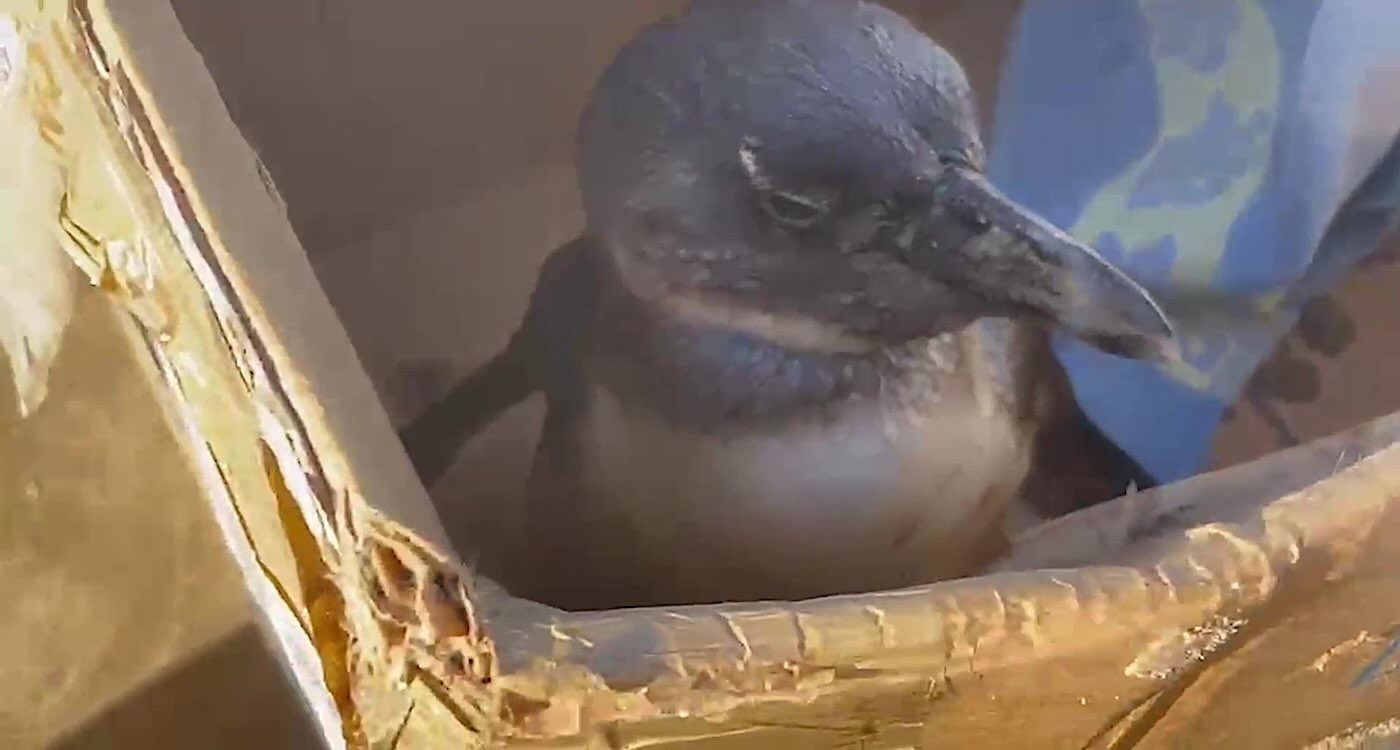
Using a towel and a box, the rescuers carefully transported the penguin from to a nearby veterinary clinic for urgent treatment.

Luckily, the penguin had suffered only a small wound to its abdomen, likely caused by a predator attack.

Experts believe the injury slowed the penguin down and caused it to become separated from the rest of its colony.

“We were quite concerned when we first arrived on the scene,” said Ms. Hauw from Paris, France.

“We had no idea how long the penguin had been lying there and we just really wanted to make sure it was alive.

Catherine Huaw / SWNS

“Once it lifted its head, we knew that was a good sign—but it still needed our help.”

The African penguin (Spheniscus demersus) is the only penguin species native to the African continent. Also known as the ‘jackass penguin’ due to its distinct, donkey-like braying call, it is easily recognized by its ‘tuxedo’ markings and unique chest dot patterns.

Their wild populations have plummeted due to habitat destruction, overfishing, and warming ocean currents that have altered fish migration patterns, forcing penguins to swim longer distances to hunt.

“It’s really important in these situations that if a member of the public discovers the animal that they contact professionals,” stressed Hauw.

“We were able to assess the penguin’s health on the beach and safely take it to a general vets clinic nearby.”

MORE PENGUIN GOOD NEWS:
Celebrating with a Cake Topped with Fish, World’s Oldest Penguin Turns 38
Big White Dogs Save the World’s Smallest Penguin in Australia
Penguin Becomes ‘Guide Bird’ Companion For Zoo Pal Suffering with Cataracts: Waddle I do Without You?

After being treated with electrolytes for dehydration at the clinic, the bird, which was not malnourished, was transported to a specialist sanctuary where it will be rehabilitated before being released back into the wild.

“They also release the penguins back out into the wild as part of a colony, so they’re not left alone.

Upon release, wildlife rescuers are confident the bird can restart its life with a new family.

SHARE SOME GOOD NEWS With Wildlife Lovers On Social Media…

Celebrating 15 Years of Matching Disabled Youth with College Athletes–Over 4,500 Kids Discover the Power of Belonging

Liam with Miami Ohio hockey team

Since 2011, a Boston-based nonprofit Team IMPACT has matched more than 4,500 children facing serious illness and disability with college teams across the U.S.—transforming lives through the power of belonging, empowerment and resilience.

Since pairing its first child with a college hockey team in Massachusetts, Team IMPACT has become a network spanning more than 850 colleges and universities across all 50 states and engaging over 112,500 student-athletes.

“Fifteen years ago, we set out with a simple but powerful belief that no child should ever be sidelined by illness or disability,” said CEO Krissie Kelleher.

Through Team IMPACT’s multiyear clinical program, children become official members of college athletic teams, attending practices, games, team dinners, and campus events, while building meaningful friendships and support systems that extend far beyond sports.

At the same time, student-athletes gain invaluable lessons in empathy, leadership, and perspective that shape them long after graduation.

One of those athletes is Blake Mesenberg, a hockey player at Miami University in Ohio, who found an instant connection with Liam, a 16-year-old with a rare genetic disorder that causes muscle weakness and developmental delays.

As a parent, Melissa has been blown away by the positive changes in her son and the genuine friendship that has developed.

“Liam knows that no matter what, he can always call Blake and talk to him about anything—even if Blake is home for the holidays or on summer break,” she said.

The hockey player takes interest in everything Liam is doing, supports him through his medical journey, cheers him on, and takes time to truly see how Liam is feeling.

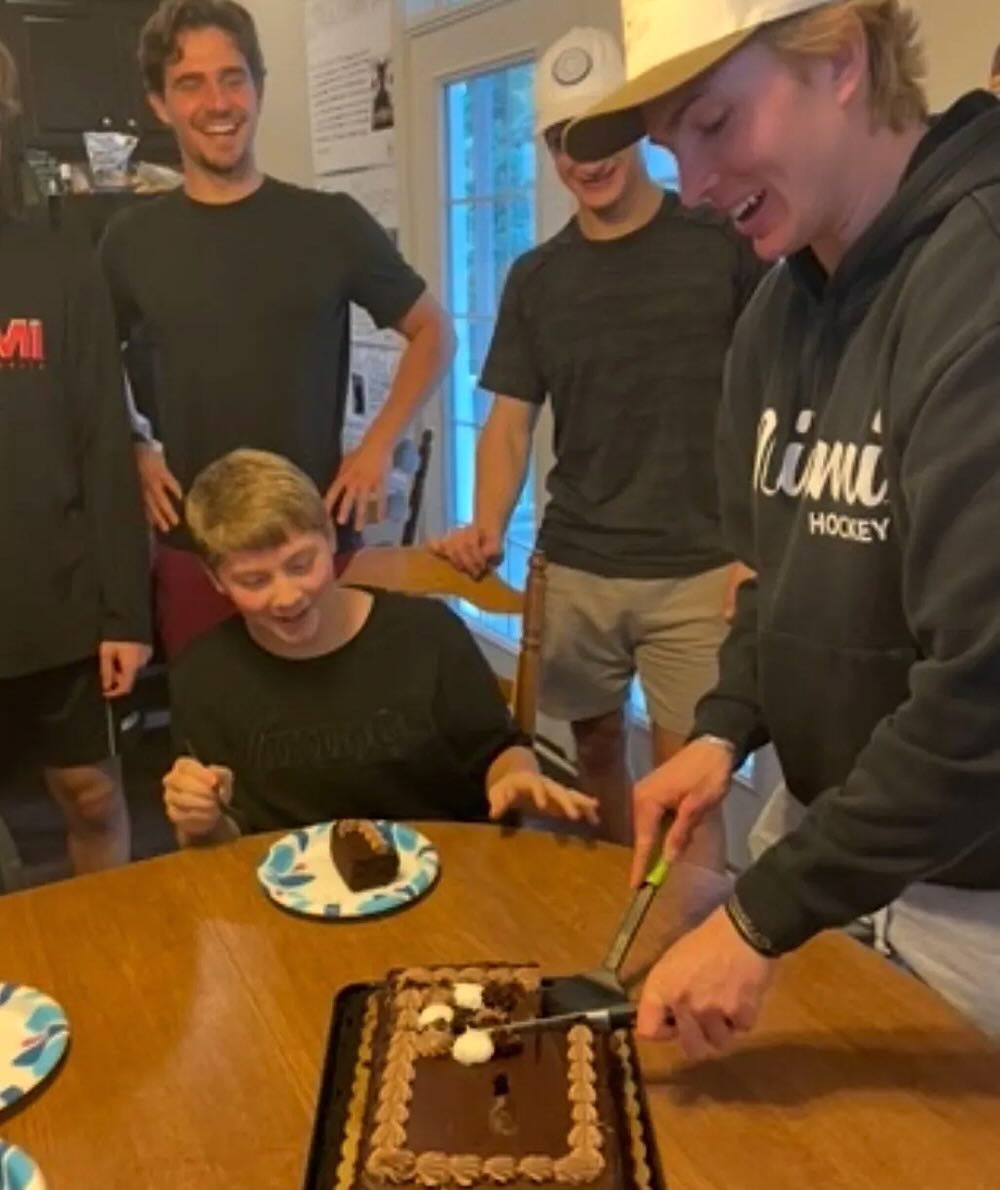
Blake and teammates celebrate Liam’s birthday

“Liam has never had a group of friends prior to joining the team, making it hard to have a birthday party. Blake made sure Liam’s 16th birthday was memorable, and Liam still talks about that night months later.”

To mark its 15th anniversary, Team IMPACT will roll out a series of national and local activations throughout 2026 to highlight the growing movement behind redefining what inclusion in sports can look like.

“Today, we celebrate the incredible community that has made this mission possible — our families, student-athletes, coaches, donors, healthcare partners, and supporters who continue to show what it means to be all in, all together.”

MORE INSPIRING ATHLETES:
Team Carries Wheelchair-bound Dad up Snowdon Peak Fulfilling Lifelong Goal–LOOK
Boy With Rare Bone Disorder Becomes Quarterback for a Day and Scores a Touchdown for the NFL Carolina Panthers

The organization invites supporters, schools, and community partners to help expand its reach so more children can be matched with teams in the years ahead. Learn more on their website, www.teamimpact.org. (Watch the 15-year celebration video below…)

GIVE MORE KIDS AN OPPORTUNITY By Sharing This on Social Media…

“Know thy self, know thy enemy. A thousand battles, a thousand victories.” – Sun Tzu

Getty Images For Unsplash+

Quote of the Day: “Know thy self, know thy enemy. A thousand battles, a thousand victories.” – Sun Tzu

Photo by: Getty Images for Unsplash+

With a new inspirational quote every day, atop the perfect photo—collected and archived on our Quote of the Day page—why not bookmark GNN.org for a daily uplift?

Getty Images For Unsplash+

Good News in History, May 17

Detonations aboard the USS Oriskany

20 years ago, the US Navy created what would become known as “The Great Carrier Reef,” after the USS Oriskany, a long-unused aircraft carrier commissioned after World War II was deliberately sunk to create the world’s largest artificial reef from a single vessel. It’s now ranked by the Times of London as one of the 10 finest wreck diving sites in the world, and can be found the Gulf of Mexico. WATCH a video of drivers exploring the wreck… (2006)

Sampling DNA in Seawater Can Reveal the Health of Dolphin Populations, in First for Conservation

SWNS
SWNS

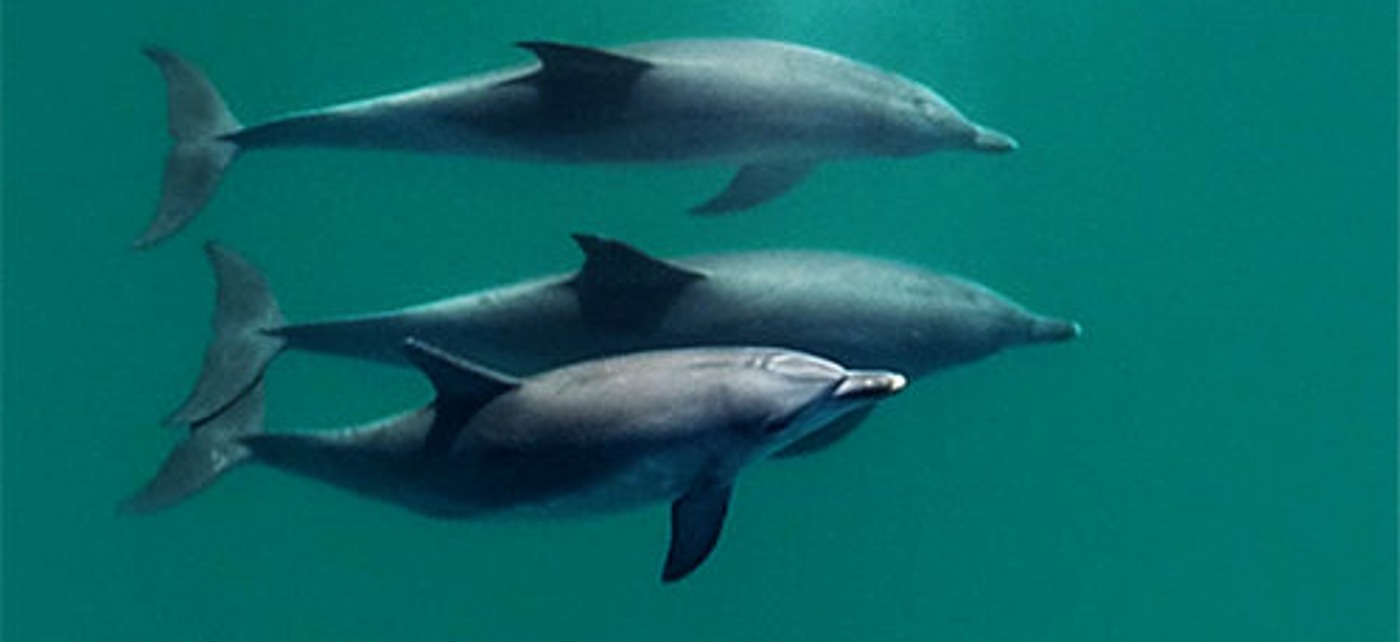
DNA floating in seawater is now enough to let scientists monitor the health of America’s dolphin populations.

Sampling DNA in seawater can show the local presence (or absence) of a species, but until now could give little information about those measures of biodiversity that are the most useful in conservation.

But, scientists in the US have now shown that mitochondrial DNA in water sampled near schools of dolphins contains enough information to measure their local effective population size—and monitor the health of these populations.

DNA is everywhere in the world’s oceans—not only inside cells from skin, scales, mucous, and feces, but also floating freely. Sequencing such ‘environmental DNA’ (eDNA) from open water has long been used as a cost-effective way of gauging the number and identity of species in a region, especially when they are rare and elusive or living at great depths.

But species richness is only the most basic biodiversity measure. Until now, eDNA-based methods could only give limited insight into the variables that are most relevant for conservation: the number of individuals, the evenness of the abundances of co-occurring species, or their within-species genetic diversity.

But that may be about to change, shows a new groundbreaking study in Frontiers in Marine Science.

“Here we show that repeated eDNA sampling can be used to estimate the genetic diversity of dolphins that occur in large schools and have very large populations,” said corresponding author Dr Frederick Archer from the NOAA/NMFS Southwest Fisheries Science Center in La Jolla, California.

MORE DOLPHIN NEWS:
‘Superpod’ of More Than 2,000 Dolphins Frolic off California Coast (WATCH)
World-First Video of Dolphins Stealing From Crab Pots Leaves Scientists Fascinated

“This is important because genetic diversity, its outcome measure, can be used as a measure of population size and how ready a population is to react to changes in its environment.”

Around Santa Catalina Island, located 47 km off Long Beach, California, the researchers followed 15 schools of dolphins with small boats in 2021. They focused on the four most common species locally: long-beaked common dolphins, short-beaked common dolphins, common bottlenose dolphins, and Risso’s dolphins.

Whenever they encountered a school, the researchers collected two-liter samples of seawater from the surface to compare the mitochondrial eDNA with that in public databases.

The scientists found 836 mitochondrial sequence variants in 126 water samples, of which 76% were from cetaceans and 60% from toothed whales. Overall, 29% were from the species of the school, which had been visually identified.

LOOK: Amazing Spectacle as Rare White Risso’s Dolphin Leaps Above the Water For Photographer

Long-beaked common dolphins had the greatest genetic diversity, followed by short-beaked common dolphins, while Risso’s and bottlenose dolphins proved much less diverse around Santa Catalina.

“Our study demonstrates the utility [of eDNA surveys] for efficiently assessing and comparing genetic diversity in social odontocetes,” concluded the authors.

Theory holds water

The authors are eager to put their methods to good use in conservation, now that they have been proven to work.

“It would be good to start eDNA monitoring programs as soon as possible that were not possible before. For example, we will be able to see how species composition in very small areas change over the course of a year – including rarer species that we don’t often detect on visual surveys,” said Archer.

AMAZING!
Dolphin Moms Use ‘Baby Talk’ with Their Calves, Research Shows
Friendship Between Species? First-Time Report of Wild Dolphin Changing its Language for Harbor Porpoises

“This can give us a lot of information on habitat use and will also allow us to potentially observe how environmental changes and anthropogenic effects such as pollution or underwater sound affect species distributions.”

SHARE THE BREAKTHROUGH With Dolphin-Lovers on Social Media…

Artsy Types May Age Better: Music and Museums Act as Exercise, Slowing Age By 4% Says Study

Credit: Caught In Joy

Culture vultures who regularly take part in arts activities—such as listening to music, visiting a museum, or reading—may be slowing the pace of their biological aging, according to a new study.

Researchers from University College London looked at blood test data and survey responses from over 3,500 adults in the UK.

The team compared their engagement in arts and cultural activities with chemical changes to DNA that influence biological aging without altering the genetic code.

The findings, published in the journal Innovation in Aging, showed that those who chose these activities more frequently, and who engaged in a wider diversity of such events, appeared to have a slower pace of aging and a younger biological age, as suggested by changes to their DNA.

The effects were comparable to those seen for exercise, according to the UCL team.

For example, people who did an arts activity at least once a week seemed to age 4% more slowly than those who rarely engaged with arts.

That was the same as those who exercised at least once a week, compared to those who did no exercise.

The links were stronger for middle-aged and older adults over 40—and remained true after accounting for factors that might skew the results such as body mass index (BMI), smoking, education level, and income.

“These results demonstrate the health impact of the arts at a biological level,” said study lead author Professor Daisy Fancourt.

RELATED: Seniors Who Listen to Music May Slash Their Dementia Risk by Over a Third

“They provide evidence for arts and cultural engagement to be recognized as a health-promoting behavior in a similar way to exercise,” she explained in a College media release.

“Our study also suggests that engaging in a variety of arts activities may be helpful.

“This may be because each activity has different ‘ingredients’ that help health, such as physical, cognitive, emotional, or social stimulation.”

Senior author Dr. Feifei Bu said their study provides the first evidence that arts engagement is linked to a slower pace of biological aging.

“This builds on a growing body of evidence about the health impact of the arts, with arts activities being shown to reduce stress, lower inflammation and improve cardiovascular disease risk, just as exercise is known to do.”

The research team used data from the UK Household Longitudinal Study, a nationally representative sample whose participants’ blood samples were analyzed to estimate biological age and pace of aging.

That was done using seven epigenetic clocks—tests that look at age-related DNA changes. Each of the seven clocks measured methylation at different sites on the genome.

The two newest clocks, DunedinPoAm and DunedinPACE, estimate the pace of aging, with a faster aging score associated with a higher risk of age-related diseases. Both frequency and diversity of arts engagement and physical activity were found to be linked to slower aging.

For the DunedinPACE clock, doing an arts activity at least three times a year was linked to aging 2% more slowly, monthly engagement was linked to 3% slower aging, and weekly activity to a 4% slower aging rate, compared to those who engaged with arts less than three times a year.

ALSO CHECK OUT: Singing or Playing Music Throughout Life is Linked with Better Brain Health While You Age

“This difference in pace of aging is comparable to that found in previous studies between current smokers and ex-smokers.”

In another test, PhenoAge, which estimates biological age, people who engaged in arts and cultural activities at least weekly were a year younger on average compared to those who rarely engaged, which beats out even exercise.

People who did exercise at least weekly were just over half a year younger on average.

Professor Fancourt, who is a UNESCO Chair in Arts & Global Health and Director of the World Health Organization Collaborating Centre on Arts and Health at the College, has been investigating links between arts and health for over a decade.

SHARE WITH YOUR ARTSY FRIENDS on Social Media…

18 Rescue Workers Toil for 6 Hours to Save Dog Trapped Underground (Watch Her Joyful Release)

Scarborough and Ryedale Mountain Rescue Team / SWNS

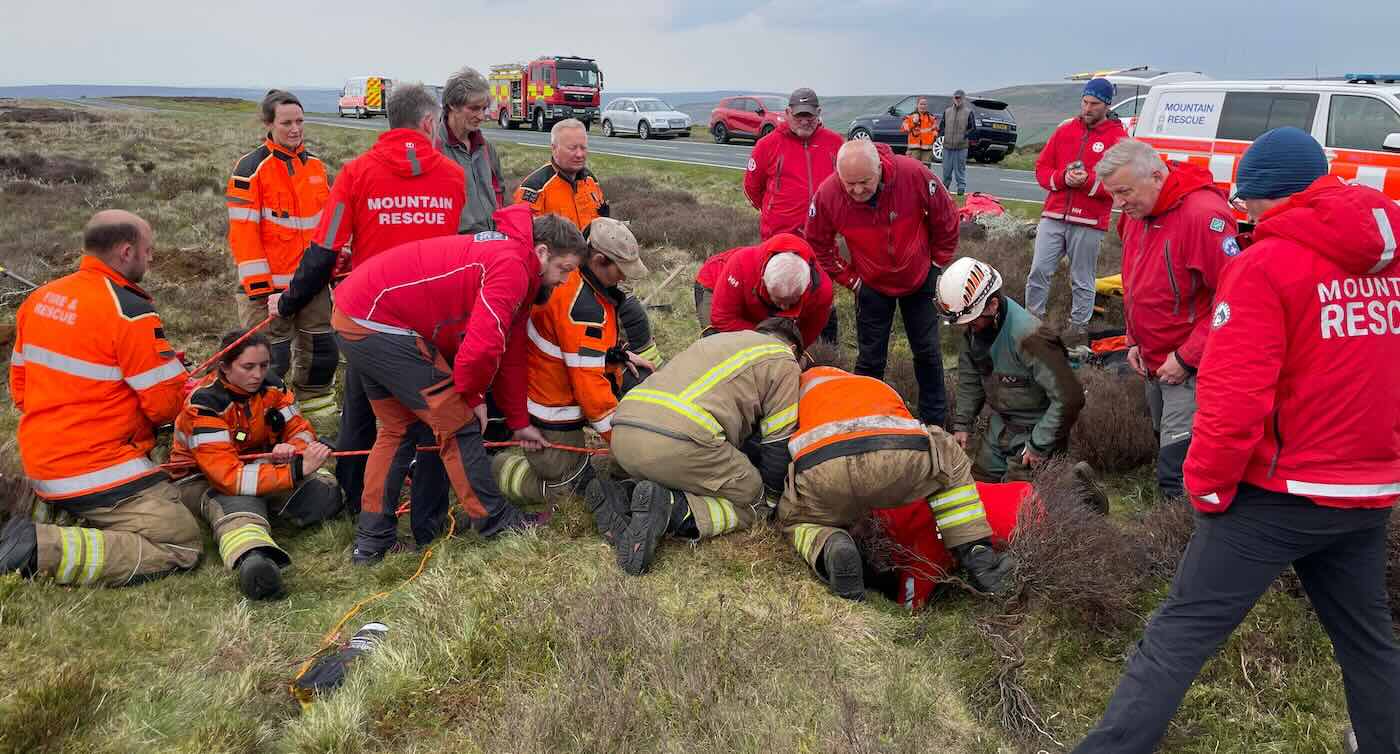
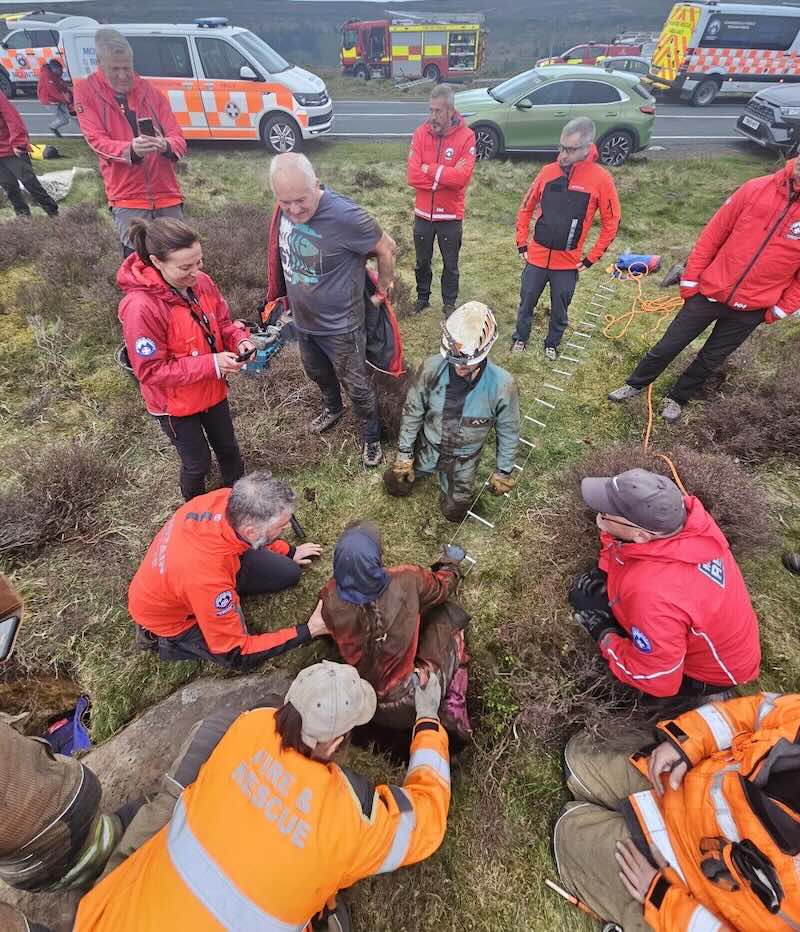
A dog’s carefree day, bounding over the moors in North Yorkshire, led to a six-hour scramble by dedicated rescuers determined to save her.

The Staffordshire bull terrier fell into a narrow crevice last week and became trapped 21 feet underground.

Her frantic owner called emergency services who sent the Scarborough and Ryedale Mountain Rescue Team to the scene in Scarborough.

The 18-person team needed plenty of ingenuity to reach the pooch named Maisy that was stuck in the hole 6.5 meters deep.

“I was first on scene, and when I saw the hole Maisy had fallen down I was quite worried because it was very tight,” said Tony Heap, the group’s lead incident controller.

“Luckily we have several members of our team who are small and they instantly volunteered to help.”

Scarborough and Ryedale Mountain Rescue Team / SWNS

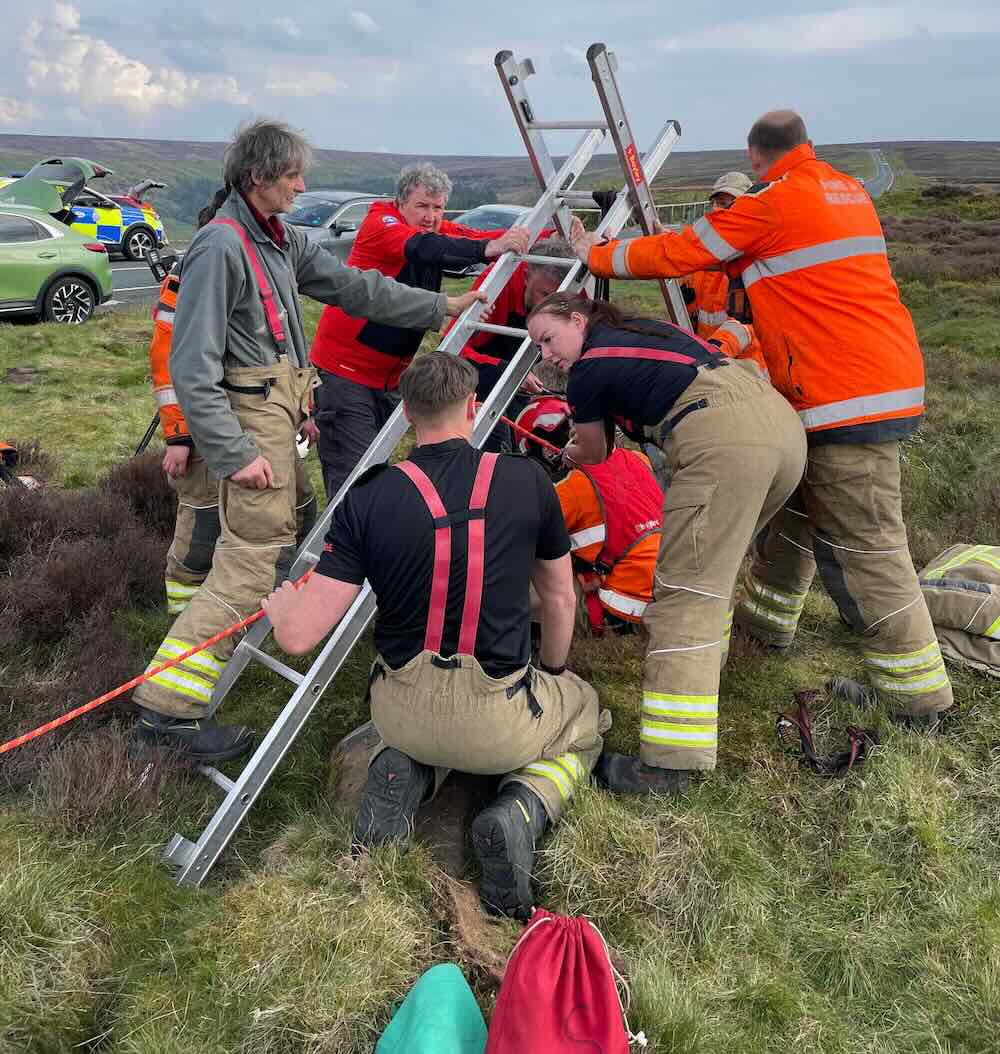
They could hear Maisy’s desperate whimpers as one of the rescuers plunged into the hole.

He climbed down with a hammer and chisel to widen the gap so they could squeeze further down to reach her.

“The rescuers had to just wedge their bodies across the gap.

“Any ropes would have restricted their movements and run the risk of dislodging rocks above.

“Everybody was focused on achieving the best outcome.”

Volunteer with Scarborough and Ryedale Mountain Rescue Team gets muddy – SWNS

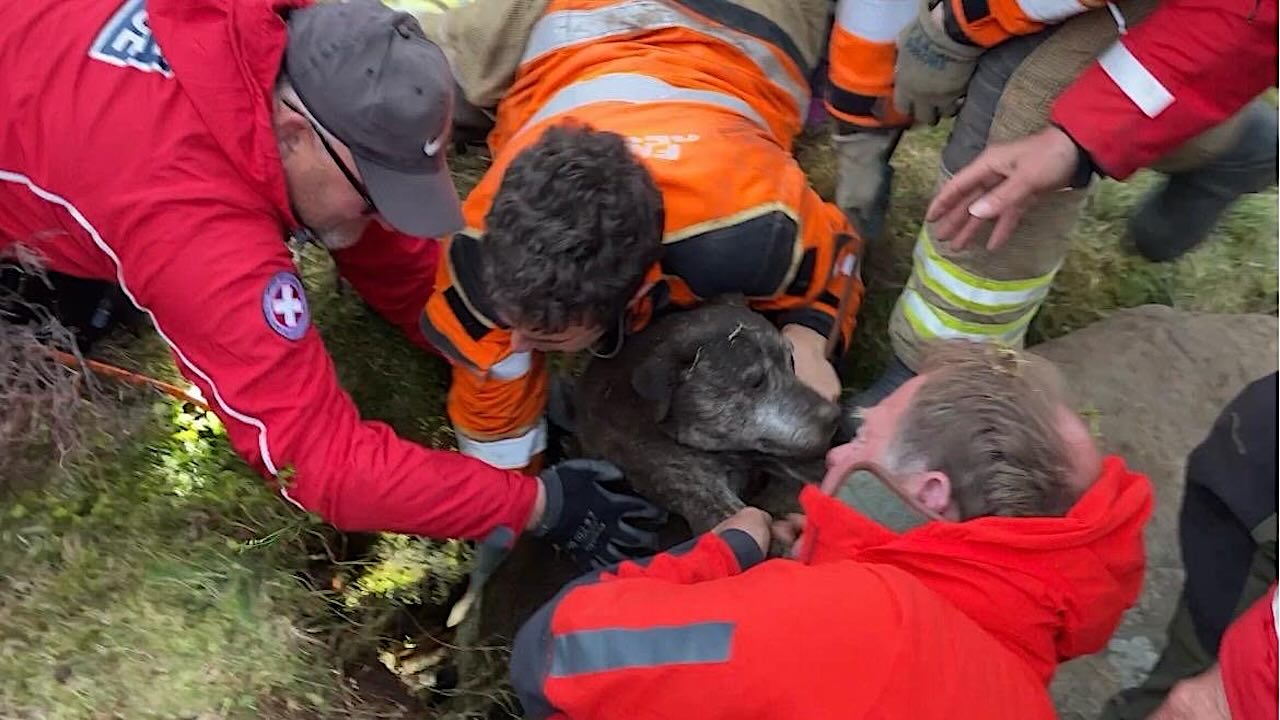
After six-hours they reached the 12-year-old dog which was passed—person to person—by three rescuers who formed a human chain inside the sink hole.

“There was something very heartwarming about working as a team to free Maisy.

Scarborough and Ryedale Mountain Rescue Team / SWNS

“I filmed the final moments and you could see the tears in the eyes of everybody as that dog came out of the ground.”

Once safely back on the surface, Maisy was reunited with her relieved owner. (Watch the moment below…)

HAIL THEIR DEDICATION To Every Living Thing By Sharing on Social Media…

Your Weekly Horoscope – ‘Free Will Astrology’ by Rob Brezsny

Our partner Rob Brezsny, whose latest book is Astrology Is Real: Revelations from My Life as an Oracle, provides his weekly wisdom to enlighten our thinking and motivate our mood. Rob’s Free Will Astrology, is a syndicated weekly column appearing in over a hundred publications. He is also the author of Pronoia Is the Antidote for Paranoia: How All of Creation Is Conspiring To Shower You with Blessings. (A free preview of the book is available here.)

Here is your weekly horoscope…
FREE WILL ASTROLOGY – Week of May 16, 2026
Copyright by Rob Brezsny, FreeWillAstrology.com
TAURUS (April 20-May 20):
Soil biologists say a teaspoon of productive soil may contain billions of living organisms. These bacteria, fungi, protozoa, and nematodes work in cooperative networks, generating a hidden abundance that ensures everything above ground thrives. Your immediate future has this quality, Taurus. Beneath the visible surface of your life, beneficial processes are generating fertility and possibility. You don’t need to see the miracle to trust it’s happening. Your role is simply to have faith as you maintain the conditions that allow this mysterious abundance to do its work.

GEMINI (May 21-June 20):
I suspect you would benefit from engaging with a friendly devil’s advocate or two in the coming weeks. Your clarity and understanding will deepen in just the right ways if you converse with affectionate skeptics who like and respect you but also want to help you grow. I realize that such people may be hard to find. If you can’t locate any, you could hire one. Or do the next best thing: Argue with yourself. Entertain lines of thought that are contrary to your usual ideas. Don’t let your habitual self get away with its usual rationalizations. The benefits of this exercise will be unpredictably huge.
CANCER (June 21-July 22):
In the Northern Hemisphere, the North Star holds a fixed place in the sky. Also known as Polaris, or the Pole Star, it hangs in almost the same spot throughout the night while other stars rise and set. Because of this steadfast presence, it has long served as a trusted marker for navigation, especially for sailors at sea. Over time, it naturally came to represent an inner compass or a guiding ideal. In your own experience, Cancerian, what serves as your symbolic North Star? What’s the steady, orienting force that helps you decide where and how to move next? Now is an auspicious moment to tend to and revitalize your bond with this central source of direction.
LEO (July 23-Aug. 22):
In the mid‑1950s, researchers developed reliable methods for creating synthetic diamonds in the laboratory. Since then, advances in technology have made it possible to grow large, high‑quality diamonds from small seed crystals in a relatively short time. I invite you to make this one of your operative metaphors, Leo. In the coming weeks, the forces of destiny will align with your efforts if you experiment with nurturing and expanding the parts of your life that are most like a diamond. Facilitate the development of your valuable beauty.

VIRGO (Aug. 23-Sept. 22):
Scientist Stuart Kauffman theorizes that living systems are healthiest when they operate near the “edge of chaos.” There’s a critical zone between rigid order and unstructured randomness where complexity and adaptability can flourish. Too much organization creates brittle stiffness, while excessive chaos prevents coherence. Life thrives when it has some of both. I invite you to ruminate on these themes in the coming weeks, Virgo. According to my edgy analysis of the astrological omens, you’re being invited to cultivate and foster your own personal “edge of chaos” territory. Your interesting task is to create sweet spots where structure and spontaneity synergize. Locate these happy places and abide there for a while.

LIBRA (Sept. 23-Oct. 22):
Choose two small and specific ways you’re going to stop pretending. One example might be how you respond when someone asks how you’re doing. Another may be an opinion you’ve been softening to keep the peace. Or maybe there’s a desire you’ve been downplaying because it feels impractical or too revealing. Here’s the name of this experiment: Incremental Precision Liberation. The key is to do it casually, with no melodrama or self-consciousness. If it’s successful, you could try another round in two weeks.

SCORPIO (Oct. 23-Nov. 21):
Scorpio primatologist Frans de Waal devoted years to watching chimpanzees reconcile with each other after enduring discord. He was fascinated by how they rebuilt trust through elaborate rituals of appeasement, grooming, and kind gestures. Once the chimps stopped fighting, he marveled, they actively repaired their connection, which often emerged stronger than it was before the dispute. I hope you will borrow their primate wisdom in the coming weeks, Scorpio. Do your best to navigate through conflict or alienation, and then instigate generous acts of rebonding. Don’t sulk, be evasive, or go silent. Be creative as you work to replenish what was damaged. The renewed relationship could be closer for having weathered the difficulties.

SAGITTARIUS (Nov. 22-Dec. 21):
The wandering albatross harnesses the wind, enabling it to travel vast distances with minimal effort. There’s an initial effort that leads to big energy savings. The bird climbs into strong winds and then relaxes as it gets transported, surfing the air currents. I mention this, Sagittarius, because I suspect you’ve been trying too hard and working too much—unnecessarily so. Less strenuous exertion, more gliding, please! Ask yourself what flows are already streaming in your favor. Could you catch a ride on existing momentum? Here’s my advice: Figure out where life’s tides are already moving, then position yourself to get carried along.
CAPRICORN (Dec. 22-Jan. 19):
Ethnomusicologists studying throat singing know that Tuvan singers can produce two or more tones simultaneously. The human voice, it turns out, has the ability to harmonize with itself. Most of us never discover this because we never try. What other multidimensional capacities are you not using because you’ve never investigated them or tested their limits, Capricorn? The coming weeks are ideal for experimentation. What unexpected capacities might you get access to if you explored possibilities you’ve assumed were beyond you? You may be able to develop aptitudes and acquire gifts you haven’t discovered yet.
AQUARIUS (Jan. 20-Feb. 18):
Cartographer Gerardus Mercator created his famous world map in 1569, enabling sailors to plot straight-line courses across oceans. But this technique dramatically distorts the size of landmasses. Greenland appears larger than Africa, when in reality Africa is 14 times bigger. And the truth is that every map privileges certain truths while distorting others. This is a key teaching for you right now, Aquarius. Examine the mental maps you’re using to navigate your life. Might they be hiding or warping reality in any way? Consider whether you would benefit from redrawing your inner visualizations of the wide, wild world out there.

PISCES (Feb. 19-March 20):
Perfectionism has increased dramatically in recent decades. Young people are especially affected. But here’s the twist: The compulsion for perfection rarely improves performance. It’s more likely to undermine achievement by triggering paralysis and excessive self-criticism. Now is a favorable time for you Pisceans to rebel against the trend. I encourage you to cultivate a relaxed devotion to being “good enough” as you enjoy yourself thoroughly. Do you know the difference between cheerfully seeking excellence and grimly striving for perfection? Move away from what demands your obsessive rigor and focus on what requires soulful completion.
ARIES (March 21-April 19):
When naturalist John Muir wanted to experience a storm, he climbed to the top of a 100-foot Douglas fir and rode it for hours through gale-force winds. He later reflected that the danger, in his judgment, was “hardly greater” than staying under a roof, and that the exhilaration and sensory richness justified his experiment. I’m not counseling you to be exactly like Muir in the coming weeks, Aries. Please don’t take foolish risks. However, I would love you to explore what truths are available when you put yourself in the path of intensity.

WANT MORE? Listen to Rob’s EXPANDED AUDIO HOROSCOPES, 4-5 minute meditations on the current state of your destiny — or subscribe to his unique daily text message service at: RealAstrology.com

(Zodiac images by Numerologysign.com, CC license)

SHARE The Wisdom With Friends Who Are Stars in Your Life on Social Media…

“What force is more potent than love?” – Igor Stravinsky 

Credit: Rusty Watson

Quote of the Day: “What force is more potent than love?” – Igor Stravinsky 

Photo by: Rusty Watson (cropped)

With a new inspirational quote every day, atop the perfect photo—collected and archived on our Quote of the Day page—why not bookmark GNN.org for a daily uplift?

Credit: Rusty Watson

Good News in History, May 16

60 years ago today, The Beach Boys released their iconic album Pet Sounds. Widely praised as one of the most influential records ever released, it was ranked No.2 on Rolling Stone magazine’s list of 500 Greatest Albums of All Time (behind Sgt. Pepper’s). WATCH a video on the making of Pet Sounds… (1966)

Extraordinary Breakthrough for Physics as Scientists Put Building-Size Magnet into the Palm of Your Hand

The two mini-mega magnets - credit, CC 4.0. Int - Science Advances (2026). DOI 10.1126sciadv.adz5826
The two mini-mega magnets – credit, CC 4.0. Int – Science Advances (2026). DOI 10.1126sciadv.adz5826

In an extraordinary breakthrough for physics, scientists at ETH Zurich have condensed the power of a superconducting magnet as big as a small building down into a device that fits in the palm of one’s hand.

This Tony Stark-like achievement promises unimagined possibilities in the fields of nuclear fusion and nuclear magnetic resonance.

Of particular utility would be turning some of the entire installations needed to perform the latter into something which could be situated onto a tabletop.

ETH Zurich is one of the top engineering schools in the world, and researchers from its Department of Chemistry and Applied Biosciences successfully made two kinds of magnets using special superconducting tape, neither of which exceeded 2.5 inches in diameter.

With them, they generated magnetic fields at an incredible 38, and 42 tesla of strength. For comparison, the world-record holding hybrid restive magnet at the National High Magnetic Field Laboratory in Florida generates a field of 45 tesla.

To do so, however, it required the following merely to built it: $15 million, 35 tons of materials arranged 22 feet high, and enough copper wiring to install the electrical cables in 80 family-size homes.

Running it, meanwhile, requires the following: 33 megawatts of power, 4,000 gallons of water every minute, and 2,800 liters of liquid helium to cool it down to -456° Fahrenheit.

To be fair to its engineers, it was built in 1999, and subsequent efforts have come close to 40-tesla magnetic fields with much smaller devices.

MORE ENGINEERING MARVELS: University in China Begins Installing World’s Strongest Gravity Centrifuge to Compress Space and Time

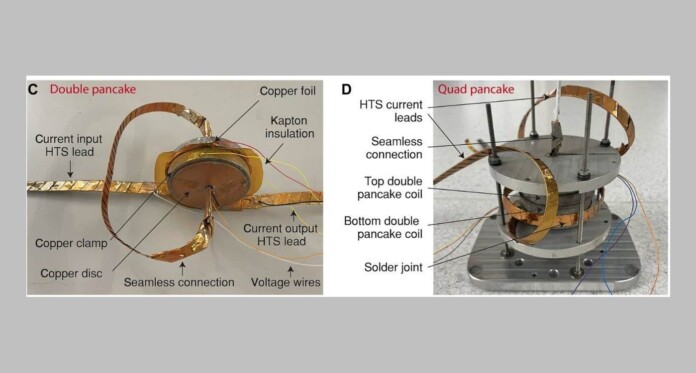
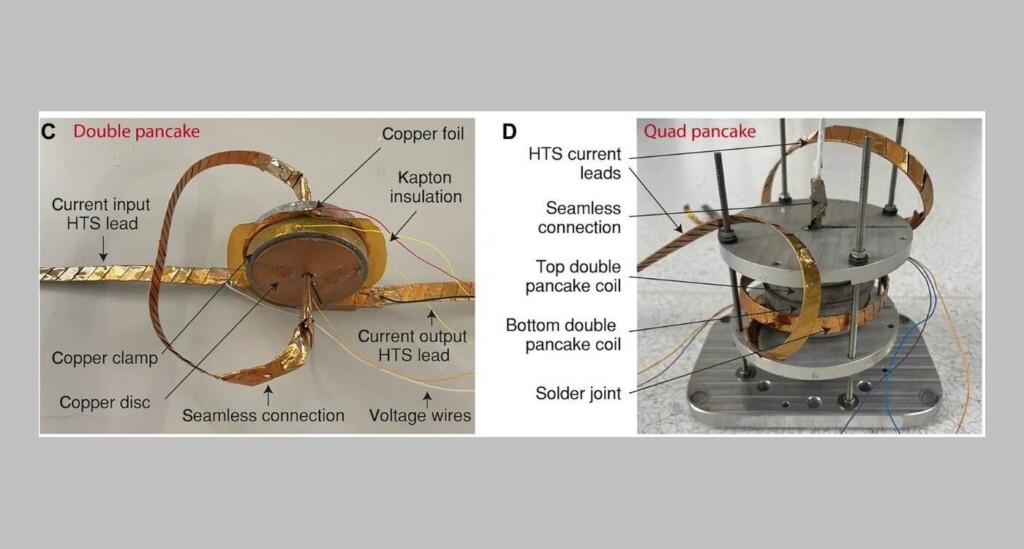
To build their game-changing prototypes, the scientists at ETH Zurich wound flat REBCO tape (rare earth barium copper oxide) into disk-shaped coils called pancakes and then stacked them together. Doing so concentrated the magnetic field into a small volume while using a much shorter length of tape than traditional designs.

The small size of the pancakes are, counterintuitively, key to the success of the design. Without joints, breaks in the tape, or insulation between the coils, there was no loss of conductivity, which also meant there was no need to overcome that loss through additional power and cooling.

RESONATE WITH THIS: Chinese Scientists Produce ‘Impossible’ Steel to Line Nuclear Fusion Reactors in Major Breakthrough

When the researchers pumped 1,000-amp currents through them, the dense, unbroken coils of REBCO tape generated a field of between 38 and 42 tesla.

Nuclear magnetic resonance, or NMR, is a hi-tech method for examining sub-atomic particles. Using just the 38 tesla magnet, the researchers were able to carry out NMR, and so suggested in their study that such mini-mega magnets could enable widely accessible high-field NMR and other applications around the world.

SHARE This Incredible Engineering Achievement With Your Friends… 

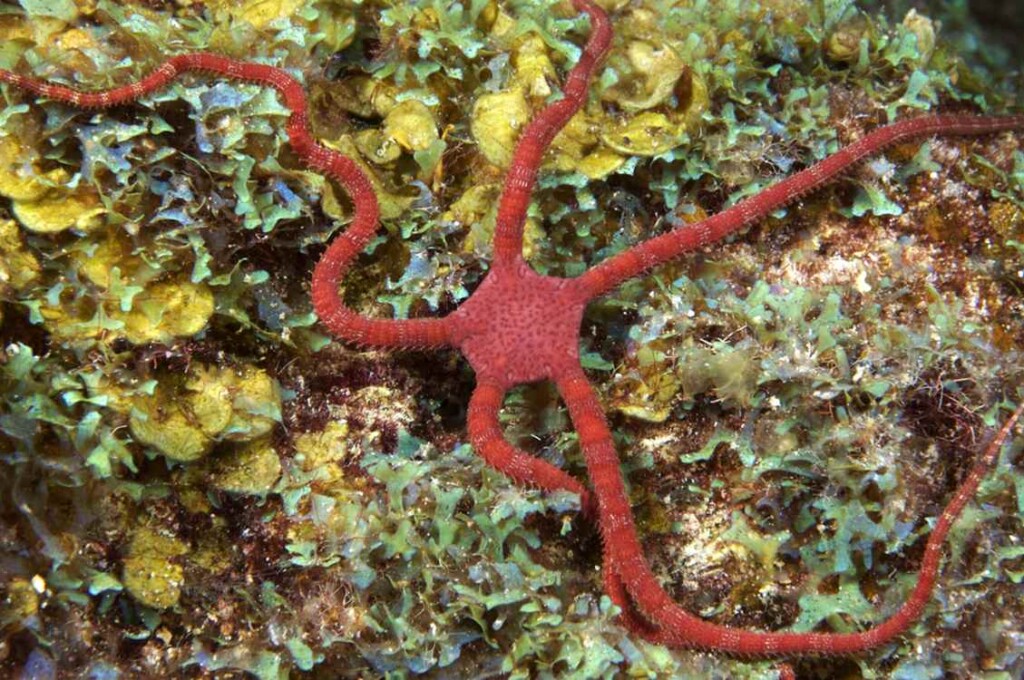
Another Trawling Ban, Another Big Recovery for Sea Life

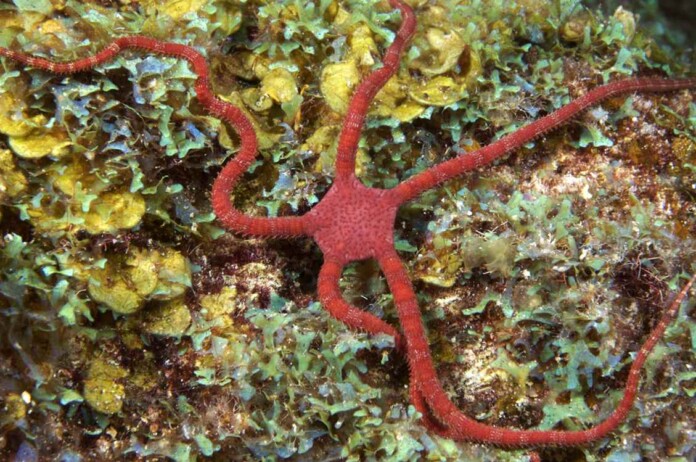
A mature ruby brittle star - credit, NOAA
A mature ruby brittle star – credit, NOAA

A decade after Scotland banned bottom trawling and dredging there are flourishing populations of no less than 1,500 species critical for seabed integrity.

The news came via a survey which compared the South Arran Marine Protected Area with nearby fished zones, in which scientists identified twice as many species, and thrice as much abundance of life.

“These seabeds may appear empty, but they are anything but,” said a lead researcher on the survey, Dr. Ben Harris from the University of Exeter.

“They can recover when protected, but much more slowly than fish communities in protected areas. That means long-standing, well-enforced protection is needed to realize their full ecological and biodiversity benefits.”

Harris helped lead the team from Convex Seascape Survey in studying not only the marine life they found, but the integrity of the muddy seabed. Though once thought of as barren areas, such muddy depths contain not only a wealth of wildlife, but significant carbon reserves trapped underneath them as part of the marine component in the global carbon cycle.

Marine life was capable of recolonizing the area comparatively quickly, as seen in both the diversity and abundance of life recorded in the survey. The carbon stocks, however, were estimated to have been disturbed in such a way that may require substantially more time to rebuild.

The scientists hope that their survey can be a catalyst for broader adoptions of marine seabed protection, as a small fraction of the 17% of EU territorial waters that have been protected extend those protections down to the seabed.

SHARE This Explosion Of Sea Life In Protected Waters With Your Friends…

3 Teens Win Earth Prize for Asia Inventing Tamarind Powder That Easily Removes Microplastics

Team Plas-Stick: Avyana Mehta with Vivaan Chhawchharia and Ariana Agarwal -released by Earth Prize

When an Indian science team set out to try and make a solution to microplastic pollution, it’s fair to say they probably didn’t expect to find that very solution in their kitchen larders.

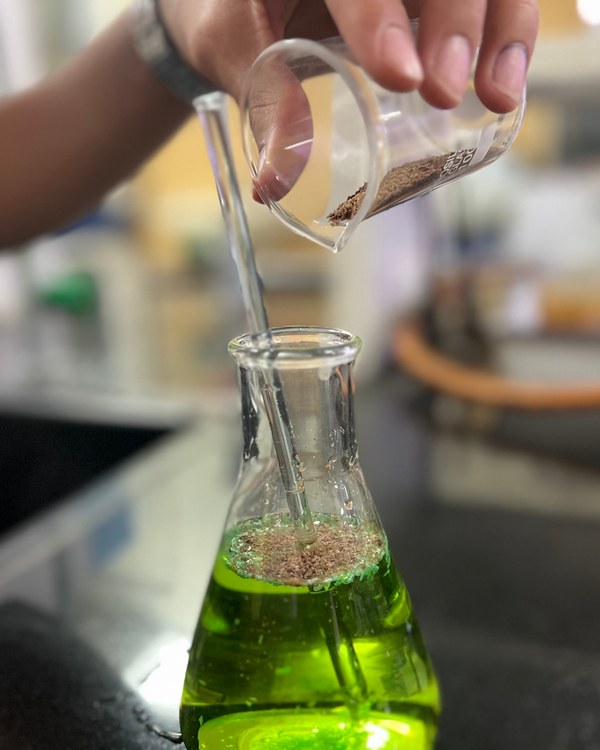
16-year-olds Vivaan Chhawchharia, Ariana Agarwal, and Avyana Mehta, used powdered tamarind seed as the base for an all-natural microplastic clumping agent. After a short agitation period, the clumped microplastic-tamarind mass can be removed with nothing more than a magnet.

In recognition of their brilliant invention, the 3 whiz kids were named Asia Winners of The Earth Prize 2026, which includes $12,5000 for each of them to develop their creation, called “Plas-Stick.”

Designed for use in shared water containers, the biodegradable powder binds invisible plastic particles into visible clumps that can then be easily removed with a handheld magnet, offering a simple and low-cost alternative to complex filtration systems.

The idea was sparked by the team’s studies in environmental science and a visit to a rural community, where they observed how drinking water is often stored in shared containers without access to advanced filtration systems.

Globally, over 2.2 billion people lack safely managed drinking water infrastructure, increasing reliance on stored water that may contain microplastics. Microplastics may be the most significant environmental and human health contaminant on Earth. Particles ranging in size from the 1/1 to 1/1,000th the width of human hair have been found virtually everywhere anyone has thought to look for them, including on the summit of Everest and the bottom of the Marianna Trench.

They have been recorded in worryingly high quantities in every human organ and tissue, including the brain and even placenta. Though the full gamut of toxic damage related to microplastic exposure isn’t fully known, what’s certain is that they act as strong endocrine disrupters.

Determined to create a solution that is both effective and accessible, Chhawchharia, Agarwal, and Mehta developed a system that requires no electricity or complex infrastructure. It in fact requires only a crop that’s already used widely in South Asian cuisine, which is both cultivated and thrives in the wild.

COMBATTING MICROPLASTICS: Seeds from ‘Miracle Tree’ Can Filter More Than 98% of Microplastics from Tap Water

With support from The Earth Prize, the team aims to scale the solution through decentralized production hubs and expand to rural communities across India, making safer drinking water more accessible for the whole sub-continent.

Adding tamarind seed to water (dyed green for visibility) – released

“Winning The Earth Prize is incredibly meaningful for us, because it validates a problem that is often invisible but affects communities across India every day,” the trio said in a statement released upon the announcement of their triumph in the Earth Prize.

MORE SCIENCE FAIRS: 14-Year-Old Wins $25,000 for Origami That Can Hold 10,000 Times its Own Weight

“Plas-Stick was designed to be simple, affordable and accessible, and this support allows us to take it beyond pilot schools and scale it to many more communities that need it most!”

The Earth Prize is run by The Earth Foundation, a non-profit based in Geneva, Switzerland, founded during the School Strike for Climate in 2019. At a time when climate anxiety affects a majority of young people—59% reporting they are very or extremely worried about the environment—the Prize provides a pathway from concern to action, equipping students with the tools to develop tangible, real-world solutions.

Polish Influencer Raises $67 Million for Cancer Research During 9-day Livestream

Łatwogang showing a video of Chris Martin during the fundraiser, along with child cancer patients - credit, screengrab
Łatwogang showing a video of Chris Martin during the fundraiser, along with child cancer patients – credit, screengrab

It is understood that a recent Polish influencer recently concluded one of the highest-ever fundraisers YouTube has hosted, generating $67 million to support childhood cancer patients and their families.

The marathon, 9-day livestreaming event garnered more than 50-times the originally aimed-for amount, gathering substantial momentum from a series of celebrity appearances that included a who’s-who of star Polish athletes and even Coldplay’s Chris Martin.

Streaming from Warsaw, the 23-year-old influencer known by the handle Łatwogang started listening to one special song on repeat for 9 days straight—a Polish rap diss track aimed not at a person, but at cancer itself. Written by Polish rapper Bedoes 2115, it includes a featuring credit of 11-year-old cancer patient Maja.

Maja is experiencing her third cancer relapse, but that didn’t stop her from helping out with the chorus, in which she tells her cancer that she’s “still here… laughing in your face.”

In between song playbacks, Łatwogang was joined by celebrities who caught on to the event, including the greatest Polish footballer to ever life, Robert Lewandowski, who recorded a video of himself singing along to the rap song, before announcing he had donated about a quarter-million dollars.

A teammate from the Polish national team and from Lewandowski’s current club Barcelona FC, Wojciech Szczęsny, also recorded a video.

@_rl9 #cancerfighter @bedoes2115 @latwogang ♬ oryginalny dźwięk - el✮

Six-time tennis grand slam champion and Warsaw native Iga Świątek announced her support for the fundraiser with both a cash donation and two tickets to her upcoming match at Wimbledon.

If you watched this year’s Winter Olympics at Milano-Cortina, you may have caught speed skater Vladimir Semirunniy who took silver for Poland in the Men’s 10,000 meter race. He donated his medal to the cancer fundraiser and shaved his head in solidarity with Maja and the other children who had made appearances over the 9 day fundraiser.

Chris Martin even got involved, playing a hastily prepared piano track in the polish language.

MORE HERCULEAN FUNDRAISERS: 

By last Monday, the fundraiser had reached over 282 million złoty or $67 million, which was collected by a special fund and immediately went to work supporting patients. Already, around 8.2 million of the 282 million has been spent helping 84 children, including by financing therapy, buying medical equipment and devices, and supporting families with medical bills.

“We asked the media… to publicize the fundraiser and the awareness that cancer is not a death sentence. Because that is all we care about,” said Łatwogang and Bedoes 2115 at the end of the 9 days of fundraising, adding their sincere thanks for “what you did for the kids and [how you] moved the entire country.”

WATCH the rap song below… 
SHARE This Powerful Use Of Social Media For Good On Your Own Socials…

“In the Spring, I have counted 136 different kinds of weather inside of 24 hours.” – Mark Twain

Credit: Diana Light for Unsplash+

Quote of the Day: “In the Spring, I have counted 136 different kinds of weather inside of 24 hours.” – Mark Twain

Photo by: Diana Light for Unsplash+

With a new inspirational quote every day, atop the perfect photo—collected and archived on our Quote of the Day page—why not bookmark GNN.org for a daily uplift?

Credit: Diana Light for Unsplash+

Good News in History, May 15

85 years ago today, baseball’s Joe DiMaggio began his historic 56-game hitting streak—getting at least one hit in the next 56 consecutive games—a Major League record that still stands today and has been described as unbreakable. During the streak, which ended on July 17, ‘Joltin’ Joe’ hit .408 with 15 home runs and 55 runs batted in—and struck out only five times. The closest anyone has come to equaling the 27-year-old’s feat is Pete Rose in 1978, with hits in 44 straight games. Experts consider DiMaggio’s streak to be uniquely outstanding and a statistical near-impossibility. WATCH an awesome video tribute… (1941)

With Mills Shuttered, Grassroots Effort Hopes to Give Welsh Valley New Purpose with Gorgeous 83-mile Hiking Trail

The entrance archway to the ruined Strata Florida Abbey - credit William Connolly CC 3.0. SA
The entrance archway to the ruined Strata Florida Abbey – credit William Connolly CC 3.0. SA

A new 3-day hiking trail is breathing life (and money) back into a historic valley in the Welsh countryside.

Famous for its valleys and its countryside, Wales is no stranger to hiking routes; the region has a robust rambling community and an existing famous trail that traces the Welsh coastline.

Now, meandering along the Teifi River, The Teifi Valley Trail allows hikers to experience 850 years of history, from the days of monastic hermitages to the industrial mill towns of the 19th century.

The following is taken from the itinerary on the trail’s website.

Originating in the Cambrian Mountains, the Teifi River drops quickly down to the 12th Century monastic ruins of Strata Florida. The trail then passes through farmland, a nature reserve and communities of varying sizes to reach the university town of Lampeter.

The middle stretch of the Teifi Valley introduces a mature meandering river, prone to flooding prompting diversions away from the river. The trail then passes through market and mill towns of old, harking back to the industrial heritage of the Valley.

The final stage of the trail offers waterfalls and wells, castles and ruined abbeys as well as fabulous riverside walking along the Teifi Gorge. Continue to the river estuary at Poppit Sands for the full trail experience.

“One of the main reasons for the trail is to get people with backpacks and boots down here to spend money,” trail organizer James Williams told the Guardian, whose correspondent walked the trail recently. “We’ve seen the economic effect the coastal paths have; we thought we could have a bit of that as well.”

Cardigan Bay in Wales, the terminus of the Trail – credit Graham Well CC 2.0. via Flickr

The Teifi River used to be a substantial economic artery through the Welsh nation. It was critical for materials transportation and a robust fishing industry while the surrounding countryside was the heart of Welsh wool production.

According to the Guardian, virtually all those days are gone. What has been left instead is relatively quiet and unused beauty and heritage that is now getting the respect it deserves.

NEW HIKING TRAILS: Pioneer is First to Cross Texas Along His New xTx Trail – 1,500 Miles Devised for Hikers, Cyclists and Horses

One example is the Strata Florida Abbey, at one time the second-largest on the island of Great Britain, and known as the “Welsh Westminster.”

On day 3, along the final section, there are two antique stone bridges, and two castles. Inside one of these can be found another true charm of the route—local fables and myth. A local noblewoman known as Nest apparently bore King Henry I a son before being married off to a Norman lord.

WALES NEWS: Urine From Music Festival Toilets is Fertilizing a New Biodiverse Forest With Odor-Free Nutrients

Nest’s cousin Owyn would eventually lay siege to the castle and attempt to kidnap Nest after falling madly in love with her.

All this and more—meandering creeks, rich birdlife, and ancient woodland—await the intrepid hiker.

SHARE This Great Reason To Skip London For Wales… 

Study Shows Littering Declined 34% Across America Since 2020

Litter across America has declined 34% since 2020, according to a new report from the Charity Keep America Beautiful.

The report reckons that every American’s share of litter along roadways and waterways has fallen over that time from 152 pieces to 96.

Decades ago, GNN founder Geri Weis-Corbley organized a local spring cleanup along her neighborhood’s country roads every year when she was raising kids.

“I can tell, looking at the roads now, that littering is way down because I live in the same neighborhood and there aren’t any organized cleanups anymore.”

The study, which updates the groundbreaking Keep America Beautiful (KAB) 2020 National Litter Study, is the most extensive research conducted in US history to estimate the scope, scale, causes and impacts of litter. KAB states that it provides both a progress report and a roadmap for where urgent action on litter is still needed as the country approaches its 250th Birthday.

By the numbers, roadway litter declined 22% (from 23.7 billion to 18.4 billion pieces), while waterway litter fell 45% (from 25.9 billion to 14.2 billion pieces).

The declines are being driven by a combination of factors: education that shapes behavior, strong local programs and enforcement, better infrastructure and access to waste systems and increased public engagement from businesses, organizations, governments and individuals.

“This study proves what we’ve always believed: litter is solvable when people, systems and partners work together,” said Jennifer Lawson, President and CEO of Keep America Beautiful.

“The declines show us what’s possible when communities act with urgency and commitment. But our work is far from done. With 35 billion pieces of litter still out there and new types emerging, we must scale what’s working, close the remaining gaps in infrastructure and access and continue building on this momentum.”

Nearly 90% of Americans feel personal responsibility to reduce litter, and 93% agree it’s a shared community responsibility among those polled for the study.

MAKING PROGRESS: Shanghai Achieves 98% Industrial Recycling Rates After 2019 Waste Management Plan

The study reveals how litter reflects the changing rhythms of American life. Cardboard litter is up 50% as online shopping reshapes consumer habits. PPE litter—masks and gloves that surged during the pandemic—is down 76%, while e-cigarette litter has spiked along vaping trends. Overall plastic litter is declining.

“Litter tells the story of how we live,” said David Scott, PhD, SVP of Data and Research at Keep America Beautiful. “Right now, it’s telling a story of progress, but it’s also showing us exactly where we need to focus next.

GAINING ON GARBAGE: Plastic Mardi Gras Beads Just End up in Landfill, So Coalition Swaps in Seed Beads and Jambalaya Spice Packets

“Without sustained effort and smarter strategies, these gains could be reversed. We must continue to act with urgency, double down on what’s working and tackle the challenges that remain.”

The newest insight from the study is the density of litter along America’s coastal areas. Coastal litter, estimated nationally for the first time, is dramatically higher compared to roadway and waterway litter. Coastal zones contain 8-13 times more litter per mile than inland environments, highlighting the need for a tailored strategy to address this problem.

SHARE This Positive Trend Away From This Great American Eyesore…  

Iraq Embarks on Preservation Work for the Ziggurat of Ur Using Bricks of Identical Material to 5,000-yo Original

Ziggurat of Ur with Hussein's restoration work seen in 2006 - credit,
Ziggurat of Ur with Hussein’s restoration work seen in 2006 – credit, public domain

Iraq has undertaken substantial preservation work on the ancient Ziggurat of Ur to protect it from the elements of a changing climate.

One of the most recognizable examples of Sumerian architecture, it’s a UNESCO World Heritage Site that stands at extreme risk of erosion and damage.

Ur is one of the oldest urban settlements known, with the earliest Sumerian period of habitation dating back to 3,800 BCE. Its earliest street plan stretched about 18 hectares, but would grow 9-times that size under its most powerful dynasty.

The ziggurat was constructed in the 21st century BCE, when it measured 210 feet in length, 148 feet in width, and perhaps could have stood 98 feet tall, though scientists don’t know for certain. It was built of air-dried mudbrick and bitumen and functioned as a temple to the patron deity of Ur, the moon god Namma.

Seen in the video below, and in the photo above, the monumental facade and staircases date back to a preservation that was undertaken by the deposed and deceased Saddam Hussein, but which don’t cover all of the original brick layers.

It actually was restored one before Hussein—in the 6th century BCE by the Neo-Babylonian King Nabonidus.

The Iraqi government has budgeted around $382,000 for new conservation work to protect the exposed upper sections of the original ziggurat.

MONUMENTAL PRESERVATION:

Across the world, low and middle income countries are restoring and preserving their heritage sites and ancient monuments, often with gaudy elements of mass-produced modernity. In comparison, the preservationists at Ur are making every effort to ensure the work is does as authentically as possible.

“For the paving bricks, a sample was taken from the ziggurat and a replica of the original was made containing the same chemical materials and physical properties,” said archaeologist Khadim Hassoun Honaein, a senior member of the conservation team.

“Regarding the mud, it was handmade on site in Ur and the clay was taken from an environment similar to that of the Ur ancient city.”

The northern side of the ziggurat has proven exceptionally vulnerable in recent decades to wind and sand erosion, and will feature as a principle target in the preservation work.

WATCH the story below… 

SHARE Iraq’s Efforts To Responsibility Preserve This Most Ancient Urban Monument…

Senior Scholar Fulfills Life-long Dream to Graduate Medical School–a Doctor at 73-Years Young

Dawn Zuidgeest-Craft, supplied to the Washington Post

When Mr. Carl Craft nearly died from a brain hemorrhage, he and his wife Dawn reviewed their bucket list. Carl wanted to travel, Dawn said she wanted to go to medical school.

“He thought I was crazy,” she said.

Now though, Dawn Zuidgeest-Craft proudly carries a doctorate in medicine after finishing as the school’s oldest-ever graduate at 72 years old.

The doctoral dream took root from the earliest periods of Zuidgeest-Craft’s life, and would blossom into a career as a nurse practitioner and pediatric educator. It was a career she enjoyed even while marrying and giving birth to two children.

For the sake of them, Zuidgeest-Craft put her medical school ambition on hold—at least until her 40s, she thought. Then she got divorced and remarried before she and her new husband—Carl—decided to start their own family. Zuidgeest-Craft spent the decade raising two more children.

The dream of medical school gradually faded until Carl suffered his brain hemorrhage, at which point Dawn realized it had to happen now, or, as the phrase goes, never.

Digging into her retirement savings, Zuidgeest-Craft paid the tuition for St. James School of Medicine in Anguilla, the Caribbean, where the institution waives the requirement for a Medical College Admission Test.

It wasn’t a straightforward process, and the senior scholar wouldn’t have hoped or imagined failing the biochemistry exam during year 1, but with the support of her husband Carl and the classmates who all remember her fondly from their dorm living, movie nights, and yoga sessions on the beach, Zuidgeest-Craft kept going.

MORE SENIOR SCHOLARS: Grandmother Graduates 60 Years After She Began College–and They Planned a Moving Tribute for Her (Watch)

It took clinical rotations in Chicago and West Virginia, and a stint in South Texas where a medical professional encouraged her—based on aptitude—to seek out a residency program, for Zuidgeest-Craft to graduate with her doctorate this month, not long in advance of her 73rd Birthday.

“When you have to do it for work… you feel like, ‘I got to do this so that I can pay my rent,’” Zuidgeest-Craft, who has three grandchildren, told the Washington Post. “I want to do this because I really enjoy this.”

KEEPING DREAMS ALIVE: Women DJs over 60 Take Stage at German Music Festival Rocking the Crowd, ‘It Was Fantastic’ (WATCH)

“I feel alive when I work in the medical field.”

She will begin her residency at Trinity Health Medical Center in Muskegon, Michigan this year.

SHARE This Inspiring Woman And Her Long Journey To Medical School…