Parents of children on the autism spectrum are rejoicing over this new line of shoes from Vans that have been designed specifically for kids with sensory issues.
As part of the brand’s Autism Awareness Collection, the eight pairs of shoes have been developed with a focus on soothing the senses through sound, touch, and appearance.
Since children with autism often have trouble tying shoelaces, the new line of sneakers is made up of slip-on models and shoes that can be fitted to the foot with a single strap hook-and-loop closure.
The shoes have even been designed with a soothing color palette in mind.
“Since 1966, Vans has stood as a champion of individuality and self-expression. The brand’s commitment continues with the release of sensory inclusive footwear designs as part of the Autism Awareness Collection,” said the company in a press release.
“To be more inclusive to common sensory sensitivities, Vans worked with the International Board of Credentialing and Continuing Education Standards to create designs utilizing Vans ComfyCush technology for all day comfort and ease of wear for adults, kids and toddlers.”
The company has also pledged to donate a minimum of $100,000 in shoe sale proceeds to the A.Skate Foundation—a nonprofit dedicated to teaching children with autism how to skateboard.
Run This Exciting Story Over To Your Friends By Sharing It To Social Media…
As more than 60 million Italian citizens are forced to wait out the nation’s COVID-19 outbreak from behind their closed doors, entire neighborhoods and communities are taking to their balconies to lift each other’s spirits with song.
From Salerno and Naples in the south to Turin and Palermo in the north, quarantined Italians have been filmed singing songs and playing instruments with each other from the windows of their homes.
Some of the Italians have led their neighbors through rousing renditions of Puccini opera solos; others have joined together for some triumphant soccer chants; and still others were filmed singing the national anthem.
Quote of the Day: “It is easy to believe we are each waves and forget we are also the ocean.” – Jon J. Muth, Zen Happiness
Photo: by Nigel Tadyanehondo – public domain
With a new inspirational quote every day, atop the perfect photo—collected and archived on our Quote of the Day page—why not bookmark GNN.org for a daily uplift?
“Prawn shells look like plastic,” pondered this Australian teen after dinner one night.
It had been a long, hard day of researching and trying to come up with biodegradable alternatives to plastic—including a banana peel solution and corn starch that didn’t pan out.
“That was when I realized that that dinner could have been my Eureka moment,” Angelina Arora told news.com.au.
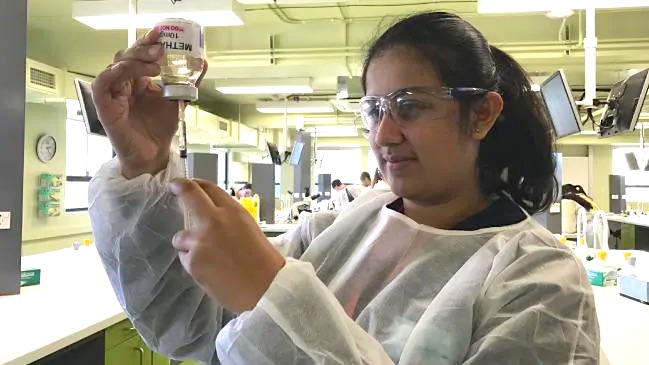
The Adelaide inventor used the inspiration to create a bioplastic made from prawn shells that completely degrades within about 33 days in a landfill.
The material, which the 17 year-old says is receiving very positive responses from manufacturers and interested companies, is flexible, durable, insoluble, and transparent, making it the perfect alternative for common plastic packaging.
“I’m still finalizing the legal aspects like patenting for example, however I am at the stage where I have produced a final prototype and would be ready to manufacture the plastic to distribute it commercially,” she said.
Furthermore, like many other seafood waste products like oyster shells, prawn exoskeletons are rich in nitrogen – the most important ingredient in plant fertilizers. This makes her material especially useful to farmers and agriculturalists, as it would degrade quite normally in fields or compost pits, while providing their crops with the nitrogen needed to maximize plant nutrients and immunity.
The remarkable innovation earned Angelina the BHP Science and Engineering Award, and last year she was named the Australian Geographic Society’s Young Conservationist of the Year.
Photos from Angelina Arora
A student of medicine, Arora also hopes to adapt her bioplastic for use as packaging for medical supplies.
Throw This Story on the Nearest Social Media Feed and Cook Up Some Hope!
A new renewable energy startup company has come up with a low-cost, zero-emissions solution to the thorny issue surrounding what happens when the sun isn’t shining and the wind isn’t blowing.
Paradoxically, the more the world embraces clean energy like solar and wind, the more it must embrace something markedly less-clean—diesel fuel or batteries.
In a building cut-off from a reliable grid powered by fossil fuel, diesel generators might be used to cover the hours of darkness when solar panels cease providing electricity. An alternative to this is to store the energy generated from the sun during the day in batteries, but along with representing a serious recycling problem, batteries require rare-earth minerals that are obtained from environmentally-destructive mining operations.
“Batteries are very expensive to store power for a 24 hour period,” says Jonas Eklind, CEO of Azelio, the Swedish energy startup that has potentially solved this problem for good. “If you want to store a lot of renewable energy, the most cost efficient way of storing this is thermal energy.”
In the always forward-thinking countries of Scandinavia, Azelio adapted an old Volvo assembly line factory to manufacture their patented, industry-first thermal energy storage system that will allow people to keep the energy that their standard PV solar panels generate during the day so they can use it in evenings.
And, instead of the critical energy storage component using rare and expensive minerals, the Azelio system uses recycled aluminum, which emits nothing, is much cheaper than lithium, and—as Jonas joked during an interview with GNN—“only lasts 62,000 years.”
Molten Aluminum can Save the Earth
The former CEO of a battery company, Jonas helped start this remarkable energy storage project in 2016 when he came onboard, around the same time Azelio was looking into thermal storage technology.
“When we started the project, we had a conversion unit that converts high temperatures into electricity,” he said. This device was called a Stirling Generator, and at first they would use biogas from landfills, water purification units—or from manure in a combustion engine to generate electricity—but after running numerous computer simulations on cost and energy capacity, determined that aluminum was the best choice.
Photons absorbed by solar panels on your roof enter into the system where an aluminum alloy is heated so it moves from a solid to a liquid. This allows for the storage of an incredibly dense amount of energy within the material which can be sent as heat into the Stirling Generator and turned into electricity on demand, with zero emissions and at a lower cost.
This is in direct contrast to fossil fuels, uranium rods or pellets, or diesel fuel, because the energy in the aluminum can constantly be melted and hardened again to produce or store energy.
With its high energy density, the material has the ability to store energy for an extended period of time, while the aluminum suffers no degradation in capacity over time.
The technology would prove to be ideal in parts of the world where grid reliability is low, like in Southern Africa where Jonas estimates that people only have access to a stable power grid 45% of the time.
Azelio’s thermal storage would allow for people to implement solar into a community, an industry, or just their homes, to defend against failing or unreliable grids, which Jonas says is becoming more and more normal even in the developed world. In his home country of Sweden, during the long winter, trees knock out power all the time, forcing rural communities to switch to diesel generators or similar interventions—sometimes for weeks.
“Our system can give you decentralized power based on solar and wind so you can build a local micro-grid that provides you with almost everything you need 24 hours a day,” said Jonas.
And one of the really exceptional things about Azelio’s system is that, in theory, it’s as scalable as necessary; from 100 kilowatts per-hour, up to 100 megawatts per-hour, and more. Though it is maximized for solar power, it can easily work the same way for tidal or hydropower, biofuels, and wind.
Most city or town grids are split up into multiple components that feed off of, support, and borrow from one another to remain stable. Like normal solar power that utilizes energy from from the sun and sells the excess into the grid before later buying back from the grid at nighttime, Azelio’s thermal storage can fit into the baseload power of a modern established grid as much or as little as is required—whether that’s 10% of total power needs or 90%.
Azelio technology is inaugurated at the Noor solar power plant in Morroco, March 5, 2020
Azelio is conducting three verification tests this year—first, in their home country of Sweden, and two others in partnership with renewable energy companies. On March 5th, they inaugurated their thermal storage technology at the massive Noor solar power complex in Morocco, teaming up with Masen, and later this year, they will launch in Abu Dhabi with Masdar. In addition to these, Azelio has received various customer enquiries of a potential value in excess of 16 billion euro, including one customer in California who wants the system both for wind and solar energy.
“In 2025, with what we have promised to the market for the cost of electricity coming out of the system, we can possibly compete with large scale installations where we need to power a whole city.”
Power Up Your Social Media Feed With Positivity — SHARE it…
At a time when shallow seagrass meadows have disappeared from 92% of UK’s vast coastline, scientists have realized that this curious and gentle habitat is needed now, more than ever, to help reduce CO2-induced warming—and guard against potentially rising seas.
Coastal ecosystems are among the most biodiverse on the planet. When salt marshes, shallow water seagrass beds, river estuaries, and tidal zones are healthy, these delicate ecosystems work like the tiles of a mosaic to create the picture of resilient seas and shores.
But, the losses of the crucial seagrass piece is coming to a head in Wales, where Dr. Richard Unsworth of Swansea University, unnerved by the annual decline of 7% in seagrass beds around the UK and Ireland, has worked to organize a massive replanting effort along the coast of Pembrokeshire, Wales.
“It’s incredibly productive and just sucks carbon into the sediments, traps particles that are locked there for millennia,” Dr. Unsworth told BBC. “That means that carbon dioxide is not in the atmosphere.”
According to WWF’s article 10 Reasons to Hope, seagrass can capture carbon 35 times faster than even tropical rainforests, but as it currently covers merely 0.2% of the seafloor, the potential to use more seagrass as a carbon offset is unlimited.
In preparation for this undertaking, 750,000 seagrass seeds were collected from various meadows around the UK last summer and stored in the laboratory at Swansea University.
Those seeds were transferred into small pouches sewn together from natural materials, and work has begun on lowering these seeds down onto the ocean floor off the coast of Dale Fort to create a 20,000-square-meter meadow (5 acres).
Seagrass is also imperative as a haven for wildlife, providing shelter, food, and a place to raise young for all kinds of marine species—as a video from the BBC demonstrates. Seagrass also acts as a nursery for important fish stocks like cod and pollock, and prevents seafloor erosion from storm surges.
In an interview with the BBC, Unsworth stressed the need for hundreds of thousands of acres of seagrass beds, salt marshes, and other coastal ecosystems because of the unique potential they have for tackling local, regional, and—inevitably—global environmental concerns, and for self-cleaning the seas themselves.
Plant Some Positivity By Sharing The Good News With Your Friends On Social Media…
Quote of the Day: “Crisis doesn’t change people; it reveals them.” – Eric Walters
Photo: by Slava B – public domain
With a new inspirational quote every day, atop the perfect photo—collected and archived on our Quote of the Day page—why not bookmark GNN.org for a daily uplift?
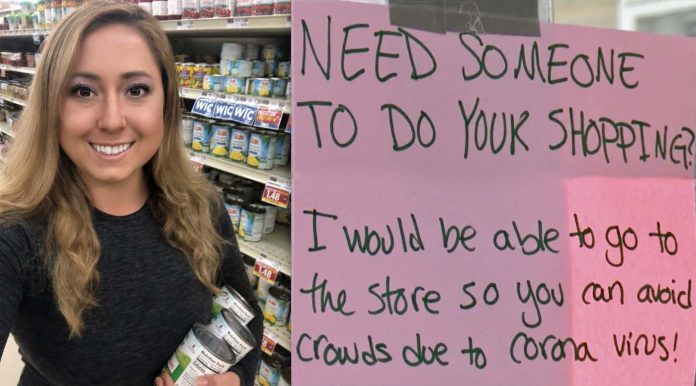
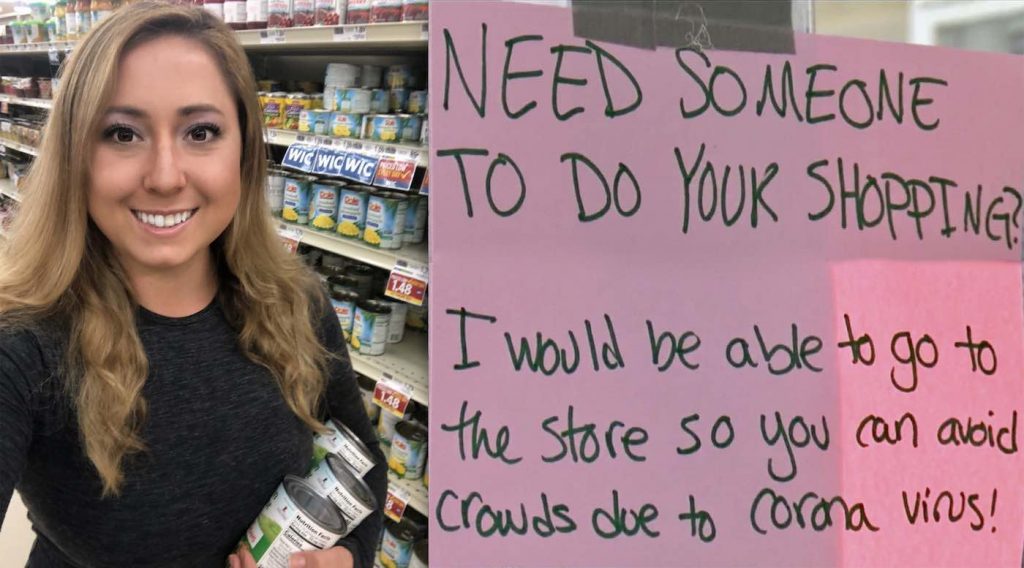
If you need to work from home because of the COVID-19 virus, maybe you’d like to get an inspirational jolt by taking some time to help your elderly neighbors—which is exactly what this North Carolina woman did.
Becky Hoeffler who works at Duke University, was talking to her grandfather on the phone when he mentioned that he was going out grocery shopping. She was concerned for him because the elderly population is most at-risk of catching the novel coronavirus, but he lives in New Jersey so she couldn’t help out.
That’s when she got the idea to make grocery runs for her senior neighbors, in lieu of helping her grandpa.
“Am I excited that I’m probably going to get a sweet loaf of banana bread from my neighbor, Patti, because of this, yes,” the spunky Hoeffler told WNCN News. “Either way though, I think being able to help your neighbor is one of the most American things that you can do.”
Her next door neighbor Patti asked for paper towels, fresh fruit, and flour, she told GNN. “I was really lucky to find the paper towels—that whole aisle is almost empty!”
And, some of the flour likely went into this homemade bread given to Becky to say thanks.
Hoeffler also walked down to the housing community for senior living at the end of her cul-de-sac. She talked to people on their porches and introduced herself—and the offer of kindness.
”They told me I could post the sign with my information near the mailbox station, so all members of the community would be able to see it!”
Becky at the supermarket, for GNN
“No one has responded to the sign yet but one of the women I talked to said she will call me in a few days and is thankful that she can stop feeling anxious about having to go to the store now!”
Becky has posted on a local Facebook group to try to get the word out and to see if anyone needs help.
“In these situations, when the community steps up, you really lessen the pressure on first responders and medical personnel,” she said in an email. “If you’re able to decrease, even by a little bit, the number of patients that have to seek care because they’ve been exposed to something, it’s good for the community as a whole.”
“Utilizing people power is one of the best ways that we can combat the virus.”
(WATCH the video from WNCN newscast)
MULTIPLY The Good By Sharing The Idea on Social Media!
Missouri’s Share the Harvest program, a goodwill mission that allows Missouri deer hunters to donate part, if not all, of their catch to charity, was a huge success this season. 6,750 whole deer and 350,000 pounds of venison were donated through the program and went to local food banks around the state.
The lean, grass-fed, additive-free meat was tested, ground, packaged, and delivered to the food banks thanks to the volunteers who organized more than 100 participating meat packing facilities. The cost of processing the meat is covered by numerous sponsors, including sportsman’s groups like Missouri Chapter National Wild Turkey, government departments like the Missouri Department of Conservation (MDC), and charity organizations like the Missouri Food Banks Association.
“Hunters started Share the Harvest because they saw a need in their communities,” said MDC Director Sara Parker Pauley in a statement. ”And hunters remain the driving force behind this popular program that helps feed our fellow Missourians who are in need.”
Share the Harvest is coordinated by the MDC and the Conservation Federation of Missouri. Launched in 1992, it has seen 4.3 million pounds of venison ground, packaged and sent off to ensure that people not only have something to eat, but something that is of exceptional nutritional value.
Because there are 1.4 million whitetail deer in Missouri alone, each year around 38,000 vehicles collide with the animals along Missouri’s roads. In 2018, hunters harvested almost 300,000 of them across all seasons.
Along with helping to feed the hungry, and reducing accidents, hunters play a vitally important role in containing the spread of chronic wasting disease in the state—a ferociously contagious, prion-protein disease that infects millions of deer in the country but especially in the Midwest.
Most sportsmen will tell you that sharing their quarry with friends and family is one of the great joys of their pastime, and so it’s not surprising that Share the Harvest is only one of many hunter-food bank initiatives across the country.
Perhaps the largest, Hunters for the Hungry has prominent chapters in Virginia, Texas, Iowa, Pennsylvania, Ohio, and also Missouri. Annually, 8 million pounds of venison is donated across all state chapters, creating over two million meals for America’s hungry.
This traditional way of life also contributes to less CO2 emissions, as hunting is one of the most environmentally-sustainable forms of food production. The carbon footprint from bringing this much meat to table is much smaller through hunting, than if done commercially.
Feed Your Friends Some Positivity By Sharing The Good News To Social Media…
California Governor Gavin Newsom has turned over 286 state-owned buildings and properties at no cost in order to house citizens sleeping on the streets.
The properties include state-owned undeveloped lots, fairgrounds, armories, and other government buildings. The move comes in the wake of other housing initiatives launched since Newsom took office in January 2019, including deploying emergency shelters in the form of mobile homes for homeless.
“Let’s call it what it is, a disgrace, that the richest state in the richest nation … is failing to properly house, heal and humanely treat so many of its own people,” Newsom said in his State of the State address February 19.
The rampant homelessness problem in California is normally attributed to a lack of low-income housing options, and Newsom has proposed $750 million dollars for the purpose of getting this kind of housing built and getting people in as fast as possible.
This is on top of the $1.6 billion that already has been allocated for homeless services and other projects.
The state said they would offer the properties to local governments for $1 leases, and said it had earmarked $650 million in State Emergency Homeless Aid “to build out sites.” But the local governments are charged with reviewing the sites and making final decisions about housing people there.
Homelessness in the most populous U.S. state has soared to around 151,000 individuals, with 41,000 of those being chronically homeless over a long term.
Also in his address, Newsom called for allowing exemptions from the state’s stringent environmental regulations, so that homeless shelters can be built more quickly, speeding up the process and reducing red tape.
According to Reuters, the time these properties sit in environmental review has allowed for those who don’t want shelters and low-income housing developed in their neighborhoods to organized and derail the constructions.
Power Up With Positivity By Sharing The Good News To Social Media – File photo by Imbudiallo
Quote of the Day: “Let us not pray to be sheltered from dangers, but to be fearless in facing them.” – Rabindranath Tagore
Photo: by Sarah Cervantes – public domain
With a new inspirational quote every day, atop the perfect photo—collected and archived on our Quote of the Day page—why not bookmark GNN.org for a daily uplift?
Growing older is inevitable—and a privilege for those who survive their youth. But accepting the changes in your body and lifestyle can be a hard pill to swallow for some.
In fact, in the UK there are an average of 5,400 Google searches every month for “best anti-aging cream”.
But what are the positives of aging? Is anybody shouting about them?
The Office for National Statistics recently revealed that the number of over-85s in the UK is set to increase from 1.6 million in 2018 to 3 million by 2043. As more people reach their ‘Silver Senior’ years, it’s time to celebrate aging and the benefits it brings.
A recent survey of 2,000 adults over the age of 50 sought to uncover their perceptions of aging. Most importantly, it aimed to discover the things they liked about being older—the benefits we all have to look forward to.
The respondents, all living in the U.K., were given a set of questions and a list of aspects of aging to choose from. Overall, 25% of respondents felt very positively about aging. Nearly half of the women (47%) either agreed, or somewhat agreed, that their self-confidence has grown with age. 41% also felt their sense of fulfillment has increased, too.
Meanwhile, 43% of men also believed their self-confidence had increased, and 40% believed their sense of fulfillment has developed, too.
WHAT ARE THE BEST THINGS ABOUT AGING? Survey Says…
Life experience
Being comfortable in your own skin
Having a greater sense of gratitude for the smaller things in life
Independence and freedom (perhaps related to not being tied down to job or family)
Ability to let things go
The cities that proved to have the most positive outlook on getting older might surprise you; Belfast came out on top, closely followed by Newcastle and Leicester.
In case you have difficulties finding the positive aspects of aging, Julie Jennings Dip COT HCPC, an independent occupational therapist, has compiled some tips on how to maintain a healthy and happy mindset as you age that you check out here.
The survey was conducted by One Poll on behalf of HSL, a company that works with Julie to make handcrafted furniture more ergonomic in the UK.
Be Sure And Share This Evergreen Survey With Your Friends On Social Media…
Rather than sharing ice cream with Tom Hanks, this particular “Lieutenant Dan” is on track to become the mascot for Cadbury candy.
The two-legged pup from New Richmond, Ohio is just one of the ten finalists vying to be the official new Cadbury Bunny. Although his Instagram bio says that he was “born a little different,” he apparently still knows “how to live life to the fullest.”
Assuming Lieutenant Dan wins, he will also be awarded $5,000 and a starring role in the next Cadbury commercial.
With Bhutan being ranked one of the most eco-friendly countries in the world, the king of the small nation asked his people to celebrate his most recent birthday in the most perfect way.
King Jigme Khesar Namgyel Wangchuck turned 40 years old on February 21st. Rather than ask for gifts, however, he told the people of Bhutan to either plant a tree, adopt a stray animal, or clean up their neighborhood in his honor.
Prime Minister Dr. Lotay Tshering announced the heartwarming wish to the world during a series of birthday celebrations and festivities at Changlimithang Stadium, saying “personal commitment such as this … would be the best gift for His Majesty.”
This is not the first time that the King has asked his people to plant trees on his behalf—back in May 2016, he and his wife celebrated the birth of their firstborn son by asking each of the nation’s households to plant a sapling, resulting in more than 108,000 trees planted.
Since the King and Queen are also now expecting the arrival of a second child this spring, the nation is quite likely to rejoice with an equally green ritual.
Plant Some Positivity By Sharing The Good News With Your Friends On Social Media…
It’s been three years since Tony Colley barely had enough money to feed himself—and now, he is making sure that other people won’t have to suffer from the same hunger.
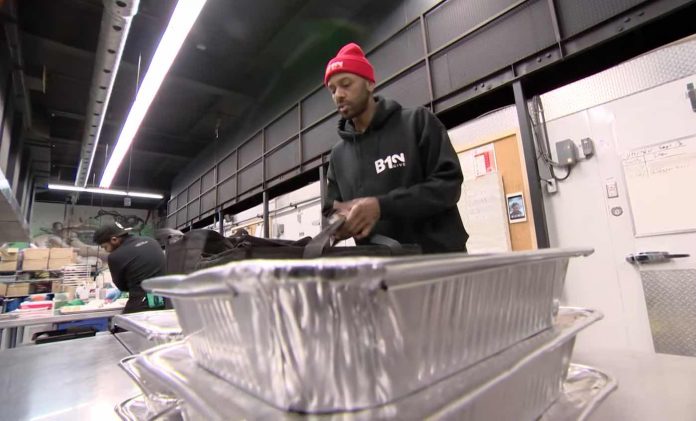
Colley is the mastermind behind B12Give—an “Uber Eats-style” project that rescues leftover food from catering events and donates it to homeless shelters and food pantries.
Since he launched the project last May, he has picked up and delivered more than 11,000 pounds of surplus food to charities throughout the greater Toronto area.
Colley says he was inspired to start B12Give after he landed a job as a part-time event manager for a catering company. Throughout the course of his job, he was heartbroken to see the amount of surplus food that was thrown out at the end of an event—so he started delivering the meals to shelters on his bike after each event.
Now, retailers participating in the B12Give subscription service can simply send a text to Colley whenever they have food to pickup. Colley can then drive the food over to the charities within the hour, making B12Give the first barrier-free food diversion program in Canada.
A Texas coffee shop is being praised for building its business around hiring young workers who have aged out of the foster car system.
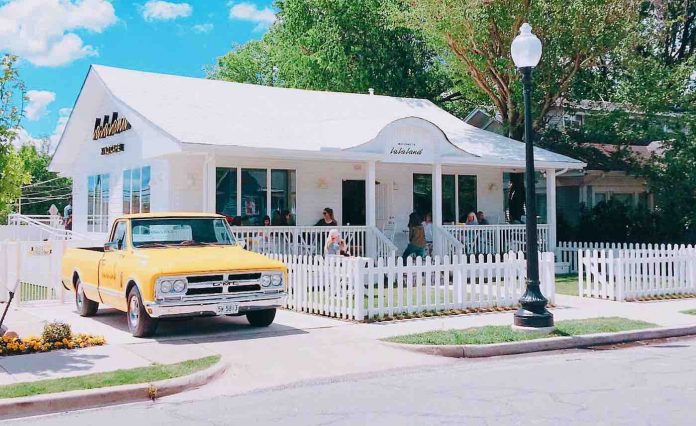
The La La Land Kindness Café in Dallas has gone out of its way to hire 9 former foster kids who were facing troubled times after turning 18 years old.
Since many foster kids are left without a support system once they age out of the system, many of them can end up on the streets—but not if Francois Reihani has anything to say about it.
The 24-year-old entrepreneur says that he was first inspired to launch the La La Land business model after he attended an informational meeting for a local nonprofit serving foster kids in Texas. Not only has the restaurant served as a place of employment for the at-risk youth, it has also become a safe haven and community support system for all of the employees.
“We’re not in the business of coffee, we just serve coffee—we’re definitely in the business of kindness,” Reihani told CBS News.
Reihani now hopes that his café will inspire other small businesses to adopt similar initiatives. For 20-year-old employee Ciara Morton who overcame homeless and depression after joining the La La Land workforce last year, the experience has been life-changing.
“I have people to believe in me and support me. I’ve never had that kind of support in my life,” she told CBSDFW. “So I’ve been able to believe in myself, and realize what I want in life and chase after it.”
Serve Up This Inspiring Story Of Kindness To Your Friends On Social Media…
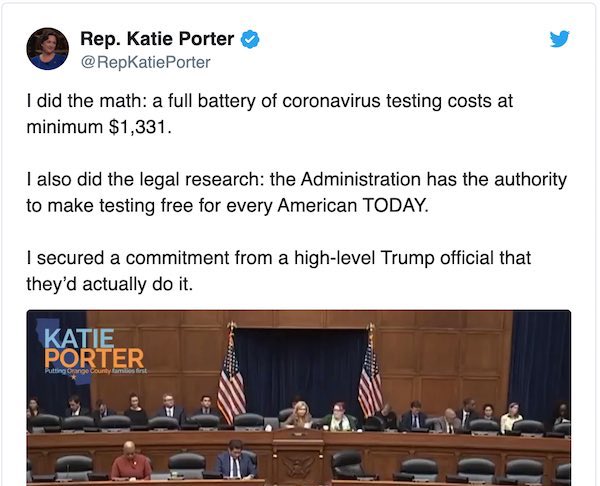
In a hearing on Capitol Hill yesterday, a congresswoman managed to secure a verbal confirmation from the director of the Centers for Disease Control and Prevention (CDC) that he would use his power under law to make coronavirus testing free for all Americans.
Rep. Katie Porter (D-CA) delivered an impassioned argument for free COVID-19 testing to CDC Director Dr. Robert Redfield, and also Robert Kadlec, assistant secretary of Health and Human Services during a House oversight committee Thursday.
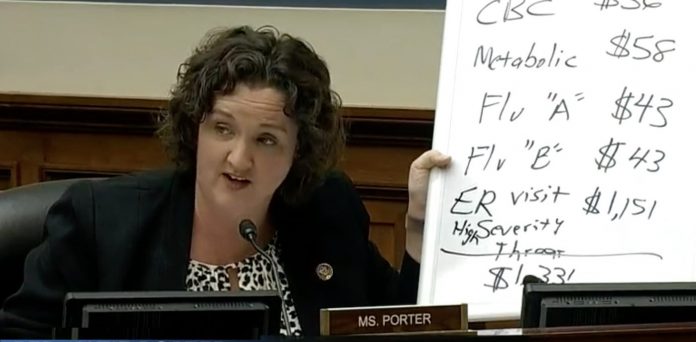
Porter used a whiteboard to tally up the average out-of-pocket costs of virus testing and ER visit in the U.S., stating that some Americans wouldn’t have the money, and so might stay home rather than get tested.
She then cited a statute from the Code of Federal Regulation which allows the CDC to authorize payment for the “care and treatment of individuals subject to medical examination, quarantine, isolation, and conditional release.”
After several minutes of pressing Redfield to commit to offering free testing and treatment to all Americans, regardless of insurance, he relented. “I think you’re an excellent questioner,” he said, “so my answer is yes.”
You can learn more about laboratories currently offering COVID-19 testing on the CDC website.
Porter, and two of her colleagues—Rep. Rosa DeLauro (D-Conn.) and Rep. Lauren Underwood (D-Ill.)—sent a letter to officials raising this issue of free testing last week, and have promised to hold the administration to this commitment, noting that the Director was under oath.
The congressional video of Porter’s interrogation at the hearing has already been viewed more than 50 million times since it was posted to her Twitter account on Thursday.
Share This Important News With Your Friends On Social Media…
Quote of the Day: “We suffer more from imagination than from reality.” – Seneca
Photo: by Josh Hild – public domain
With a new inspirational quote every day, atop the perfect photo—collected and archived on our Quote of the Day page—why not bookmark GNN.org for a daily uplift?
Reposted on #ThrowbackThursday, in case you missed it…
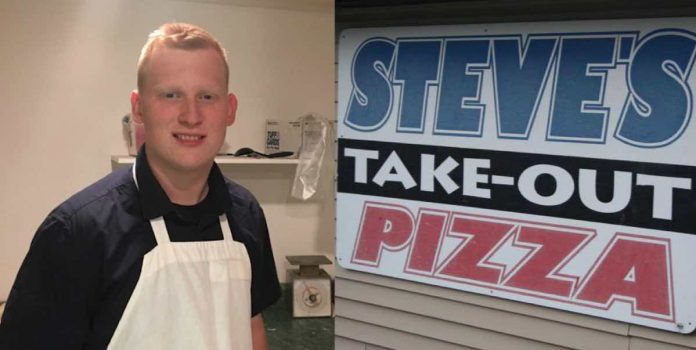
An 18-year-old pizzeria worker was praised for going above and beyond the call of duty after he broke the restaurant’s take-out rule to deliver a pizza to a family’s home three and a half hours away.
Julie and Rich Morgan had been reminiscing about the legendary pies that are served up at Steve’s Pizza place in Battle Creek, Michigan. It had been 25 years since the couple lived in the city, but despite the distance, the fabled restaurant still set the bar for the perfect slice of pizza.
“We were young and money was tight, but every pay day, Rich would pick up Steve’s Pizza for dinner,” Julie wrote in a Facebook post. “I can’t possibly describe how delicious this pizza is—but several moves and all these years later, it is still the gold standard and we’ve never found a better pizza yet. Rich has frequently critiqued other pizza as ‘good, but it’s no Steve’s.’”
Julie and Rich had been planning on visiting Battle Creek for her birthday—but as their vacation loomed closer, an unexpected cancer diagnosis left Rich in hospice.
“We talked about seeing the leaves and the lakeshore, but that was secondary to our planned visit to Steve’s,” says Julie. “Instead, I took Rich to the ER where he landed in ICU for five days, and where we learned the news that his valiant cancer battle was coming to an end.”
Unbeknownst to the couple, Julie’s father called Steve’s Pizza in hopes of getting a letter, text, or friendly phone call from the restaurant—but as fate would have it, the restaurant’s manager, 18-year-old Dalton Shaffer, answered the phone instead.
After listening to the plight of the Morgan family, Shaffer immediately asked what kind of pizzas the couple liked. Julie’s father emphasized that they lived in Indianapolis—which is 225 miles away from Battle Creek.
Despite the restaurant maintaining a firm take out-only rule, Shaffer waved away the man’s protests and said that he would be delivering two pepperoni pizzas to the couple’s house after he closed the store for the night.
True to his word, Shaffer drove for three and a half hours until he finally arrived at the Morgan’s house.
“And so, while Rich and I slept, at 2:30 AM, Dalton rolled into our driveway, left the car running and delivered two extra special pizzas to my waiting family,” wrote Julie. “He told them we were in his prayers, and offered to help in any way he could.
“My dad offered to put him up in a hotel, but he refused and immediately left for the return trip home because he had to work the next day,” she added.
Though the Morgan family has lauded praise about the pizzeria and their compassionate store manager, Shaffer remained humble. When asked about his extraordinary good deed, Shaffer told the Battle Creek Enquirer: “I just wanted to do that for them. I just wanted to make them happy.”
As a means of expressing her gratitude, Julie posted a photo of the legendary pie to Facebook, saying: “I am beyond overwhelmed and humbled by this act of genuine kindness. Dalton brought our family so much joy—and the best pizza in the world—at a really difficult time.
“While ‘thank you’ hardly seems adequate—from the bottom of my heart, thank you, Dalton … for making your epic middle of the night pizza delivery!”
Pie It Forward By Sharing This Sweet Story Of Kindness With Friends (Photo by Dalton Shaffer / Steve’s Pizza Facebook – Article originally published on GNN in October 2018)
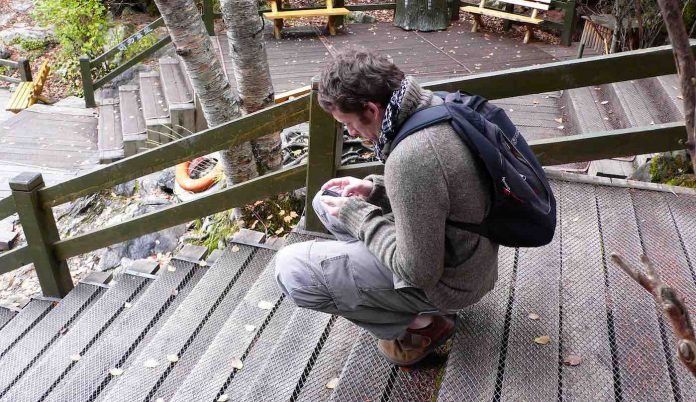
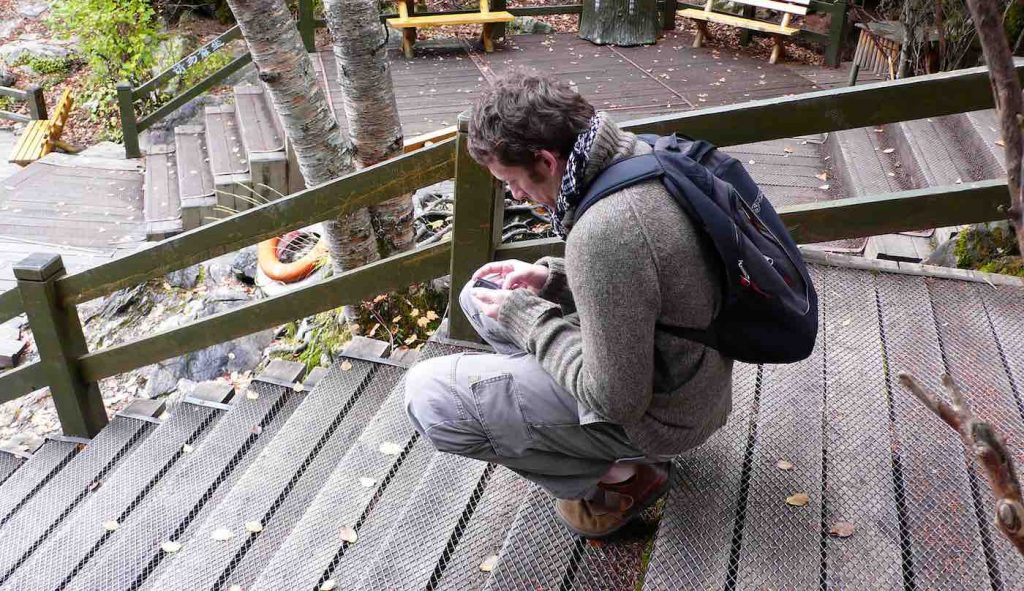
Standing desks are so passé—it’s time for squatting desks.
A USC-led study shows that squatting and kneeling were important resting positions in human evolution—and may be important for modern human health.
Sitting for hours a day is linked to some health risks, including cardiovascular disease, likely because it involves low muscle activity and low muscle metabolism. However, these risks seem paradoxical. For humans, evolutionary pressures favor conserving energy. Spending a lot of time sitting would seem to accomplish that goal. So, why should sitting be so harmful?
The USC-led team has shown that resting postures used before the invention of chairs—like squatting and kneeling—may hold the answer, as they involve higher levels of muscle activity then chair-sitting. These more active rest postures may help protect people from the harmful effects of inactivity.
“We tend to think human physiology is adapted to the conditions in which we evolved,” said David Raichlen, a professor of biological sciences at the USC Dornsife College of Letters, Arts and Sciences. “So, we assumed that if inactivity is harmful, our evolutionary history would not have included much time spent sitting the way we do today.”
The study was published this week in the journal Proceedings of the National Academy of Sciences.
To better understand the evolution of sedentary behaviors, the scientists studied inactivity in a group of Tanzanian hunter-gatherers, the Hadza, who have a lifestyle that is similar in some ways with how humans lived in the past.
For the study, Hadza participants wore devices that measured physical activity and periods of rest. The scientists found that they had high levels of physical activity—over three times as much as the 22 minutes per day advised by U.S. federal health guidelines.
But the scientists also found that they had high levels of inactivity.
In fact, the Hadza are sedentary for about as much time—around 9 to 10 hours per day—as humans in more developed countries. However, they appear to lack the markers of chronic diseases that are associated, in industrialized societies, with long periods of sitting. The reason for this disconnect may lie in how they rest.
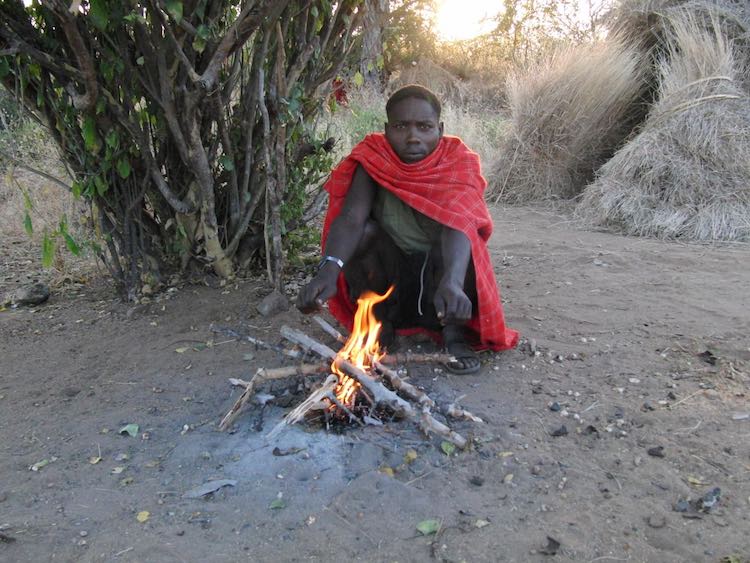
“Even though there were long periods of inactivity, one of the key differences we noticed is that the Hadza are often resting in postures that require their muscles to maintain light levels of activity—either in a squat or kneeling,” Raichlen said.
In addition to tracking activity and inactivity, the researchers used specialized equipment to measure muscle activity in the lower limbs in different resting postures. Squatting involved more muscle activity compared to sitting.
The researchers suggested that because the Hadza squat and kneel and have high levels of movement when not at rest, they may have more consistent muscle activity throughout the day. This could reduce the health risks associated with sedentary behavior.
The Hadza in Tanzania tend to squat or kneel when taking a break, which scientists believe may spare them from some risks for heart and metabolic diseases. Photo by David Raichlen of USC and Brian Wood of UCLA.
“Being a couch potato—or even sitting in an office chair—requires less muscle activity than squatting or kneeling,” Raichlen said. “Since light levels of muscle activity require fuel, which generally means burning fats, then squatting and kneeling postures may not be as harmful as sitting in chairs.”
In developed countries, humans spend inactive periods sitting on their duffs in chairs, recliners or sofas, so the only time they activate their leg muscles is when they bend their knees to slide into the seat. On average, people in more industrialized societies, including the United States and Europe, spend about nine hours per day sitting.
“Preferences or behaviors that conserve energy have been key to our species’ evolutionary success,” said Brian Wood, an anthropologist at the University of California, Los Angeles, who has worked with the Hazda people for 16 years. “But when environments change rapidly, these same preferences can lead to less optimal outcomes. Prolonged sitting is one example.”
The scientists dubbed this the “Inactivity Mismatch Hypothesis.”
“Replacing chair sitting and associated muscular inactivity with more sustained active rest postures may represent a behavioral paradigm that should be explored in future experimental work,” they wrote. Resolving this inactivity mismatch with our evolutionary past could pay off in better health today.
“Squatting is not a likely alternative,” Raichlen said, “but spending more time in postures that at least require some low-level muscle activity could be good for our health.”