Quote of the Day: “You’re picky about the car you drive, about what you wear, and what you put in your mouth… Be pickier about what you think.” – Abraham-Hicks
Photo: by JOHN LLOYD, CC license
With a new inspirational quote every day, atop the perfect photo—collected and archived on our Quotes page—why not bookmark GNN.org for a daily uplift?
While legislators are attempting to tackle the opioid crisis by enforcing regulation, these researchers have found success in another kind of approach.
As a means of alerting physicians to the dangers and realities of overprescribing, the researchers worked through a local medical examiner to send letters to 381 physicians in San Diego County, California concerning their former patients.
Based on actual cases, the letters informed the physicians that a patient to whom they had given an opioid prescription had passed away of a fatal overdose. Enclosed with the letter was a CDC-approved set of guidelines for how health care professionals should safely be prescribing opioids.
Though the premise is sobering, the study results proved to be successful – clinicians who received the letters prescribed 10% less opioids than the clinicians in the control group who did not receive the letters. Not only that, physicians who received the notices were overall less likely to start patients on opioids and less likely to give patients higher doses of opioids.
“Most people addicted to opioids began taking them because they were legally prescribed. Little attention has been paid to changing physicians’ prescribing behavior,” reads the study results, which were published in Science last month.
“[Additionally], most opioid prescription deaths occur among people with common conditions for which prescribing risks outweigh benefit. General psychological insights offer an explanation: People may judge risk to be low without available personal experiences, may be less careful than expected when not observed, and may falter without an injunction from authority.”
The team emphasizes that while their results are a positive nudge in the right direction, it is not the final solution. However, implementing smaller, more personalized approaches are a welcomed balance to passing more sweeping pieces of legislation that may prevent patients who actually require opioid prescriptions from getting the medication they need.
“I reached out to experts with a question: How do you fix opioid overprescribing without leaving behind pain patients?” said Vox journalist German Lopez. “Part of the solution, experts told me, are nudges like that in the Science study, instead of mandates and caps like [some] state governments have enacted. It’s also important to make non-opioid pain treatment available to patients, while training health care providers in the right way to wean patients off opioids.
“These solutions, though, need to come together to strike a balance — because there is no one silver bullet to solving this problem.”
Help Your Friends See This Encouraging New Piece Of Research By Sharing It To Social Media – Photo by Brett_Hondow, CC
This week, Leena Ali and Dawn Burke were total strangers – but an accidental text message ended up bringing them together at a woman’s funeral.
It’s all because Ali is a Brock University student who received a text from an unknown number saying: “Hey… is this Quinten?”
As a self-admitted prankster, Ali said yes.
On the other end of the line, Dawn Burke continued to text who she thought was her nephew. She invited Quinten to the “celebration of life” for her late aunt, Debbie Celar, and sent him the address for the funeral.
Upon receiving the texts, Ali dropped the act and admitted that she was not Quinten. She did, however, ask if she could still come to the funeral. Since Ali is Sudanese, she had never heard of a “celebration of life” and she was curious as to what it would entail. She even offered to bring something for the event – and Burke said yes.
“When I found out that it wasn’t Quentin, I just thought ‘I’ve gotta go with this, because my aunt Debbie would,’” Burke told The Star. “Aunt Deb would invite these people, whoever they are, into her home. That’s just who she was.”
True to her word, Ali showed up to the funeral with a food dish in hand – and despite the initial awkwardness of the family trying to figure out her connection to Aunt Debbie, their confusion soon turned to delight.
Burke realized Ali’s identity after she saw the bowl of fruit in the youngster’s hands – “and [then] she freaked out and got all excited,” says Ali.
Throughout the celebration, Ali talked to friends and family members of the late Aunt Debbie. All of them shared stories, jokes, and photos with their new acquaintance; and many of them even said that Ali reminded them of Debbie, all while they cried tears of joy.
So while Ali may have arrived as a stranger, her surprise appearance made a much bigger impact on the grieving family than she ever could have expected.
“My family hasn’t stopped talking about it,” said Burke. “Things happen for a reason and at such a sad time in our life, (Ali’s visit) made it the brightest.”
Surprise Your Friends With This Sweet Story And Share To Social Media – Photo by Leena Ali
In the latest string of progressive rulings, the Supreme Court of India has just struck down a colonial-era law that made adultery punishable for up to five years in prison.
The 158-year-old piece of legislation stated that a man had legal grounds to sue his wife’s lover without her consent. However, men were free to sleep with a married woman so long he had her husband’s consent.
In contrast, if a woman’s husband was unfaithful, she would not have been granted the same legal right.
Violations were punishable by up to 5 years in prison, a fine, or both.
The law, Section 497 of the Indian Penal Code, was overturned by the court based on its “unconstitutional” gender bias, saying that a “husband is not the master of a woman.”
The verdict from Chief Justice Dipak Misra and the 5-panel bench emphasized that adultery will still be grounds for divorce, but not jail time.
“The adultery law is arbitrary, and it offends the dignity of a woman,” said Chief Justice Dipak Misra, according to NPR. The rest of the panel added that the “archaic law long outlived its purpose and does not square with constitutional morality.”
“Excellent decision to decriminalize adultery,” female Congressional member Sushmita Dev wrote on Twitter. “Also, a law that does not give women the right to sue her adulterer husband and can’t be herself sued if she is in adultery is unequal treatment and militates against her status as an individual separate entity.”
The ruling comes just weeks after the court overturned a Victorian-era law that made homosexuality punishable by life in prison.
Spread The Love: Share The Good News With Your Friends – Photo by Yogita, CC
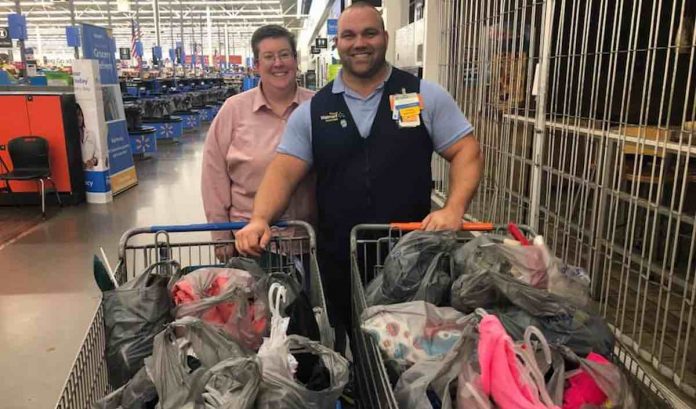
When the manager of a North Carolina Walmart heard about Shelli Tench’s mission to help Hurricane Florence victims, he opened up his own wallet so he could contribute over $1,000 to the cause.
With $50 in her pocket, Tench first went into the Walmart in Garner earlier this month with the intention of spending the last of her money on tee-shirts and underwear for a local hurricane relief shelter.
The shelter had told her that while people were able to take hot showers at their facilities, they did not usually have clean clothes that they could change into – so Trench was determined to spend her $50 on clothes.
Upon arriving at the Walmart, she asked the manager, Jeff Jobes, if she could have some sort of discount for the clothing – and she was stunned by his response.
“When Jeff … heard about the plight of the people at the shelter he didn’t give me a discount,” Trench wrote in an emotional Facebook post. “Instead, he armed me with one of his associates (Alex) and a shopping cart and told her to fill it… on him.
“Y’all… $1,251 later, I was able to deliver 254 items of clothing to the evacuees at the Garner High shelter because Jeff the manager loves his community and he proved it with his actions.”
The story does not stop there, however – the next morning, Jobes texted Tench and asked if there was anything else that the shelter needed for the 400 hurricane victims.
The refuge said that they needed fresh fruit for snacks and Gatorade. Tench relayed the message to Jobes only to receive a response reading: “Give me 30 minutes and then come see me.”
By the time Tench pulled up to the Walmart, Jobes and Alex were pulling together piles of donated goods for the shelter.
“They didn’t donate bags of fresh fruit,” Tench wrote. “They donated case after case after case after case of apples and oranges and bananas and Ensure and Boost and Gatorade and Cliff bars and pastries and bread and cookies. My van was loaded to the top.”
“The outpouring of love and support from the Walmart in Garner is unbelievable,” says Tench. “People may say a lot of negative things about Walmart but I’m here to tell you this right now… the staff at this store are world changers.”
Walmart as a company has additionally offered to donate $2 for every $1 donated to their Hurricane Florence relief fund, which has already raised over $7.5 million.
(WATCH the video below)
Be Sure And Pass On This Positive Story To Your Friends On Social Media – Photo by Shelli Tench
Quote of the Day: “If your ship doesn’t come in, swim out to it.” – Jonathan Winters
Image: by Todd Burke, CC license
With a new inspirational quote every day, atop the perfect photo—collected and archived on our Quotes page—why not bookmark GNN.org for a daily uplift?
The Lesson: Do you find it difficult to forgive other people? Are you wondering why is it so difficult to go on with your life after something bad has happened to you? Once you have been hurt, the fear that you could be hurt again will always follow you – but in order to avoid letting this fear control your life, you need to stop running away from it and face it so as to make space for something greater and bigger in your life.
In this video, Vishen Lakhiani tells us why it is so important to forgive people, how can we practice forgiveness and what great effects this simple – but still difficult act of radical forgiveness – can have on our lives.
Notable Excerpt: “Sometimes, the world, the universe, God, or however you want to call it, gives you these moments of stress so you can rise above them … Michael Beckwith calls these kensho moments. Kensho moments are moments where you grow from pain. Something happens – maybe your health breaks down, you end up in a hospital – but you grow from that, you learn to appreciate your body. Another philosophy I think of is the phrase hurt people hurt people, which simply means that everybody who hurts you is doing it because at some level, they were hurt themselves. They were just passing it on, but you have the ability to cut that code and stop the hurt, so you don’t continue passing it on. Think about human history and how nations fight nations for generations, because of this crazy ideal that hurt people hurt people, but we can forgive, we can move on.”
The Host: Vishen Lakhiani is an entrepreneur, education technology innovator, speaker, investor, and philanthropist. He is also the founder and CEO of Mindvalley and the author of “The Code of the Extraordinary Mind”.
According to this latest set of data, United States coal consumption has declined to the lowest rate since 1983.
A report that was published by Reuters shows that power production companies are swapping out their coal-fired units for natural gas, solar and wind energy.
The data, which comes from the U.S. Energy Information Administration, shows that coal power declined by 32 billion kilowatt hours (roughly 6% less energy) during the first half of 2018. Meanwhile, nuclear-powered generation was up by 16 billion, solar increased by 7 billion; and wind rose by 15 billion.
The report highlights a continuous decline in coal-powered generation from its peak in 2008. Reuters adds that – with 9 more gigawatts of power scheduled to close within the next two years – the decline is expected to continue.
Power Up With Positivity And Share The Good News With Your Friends – Photo by Tj.Blackwell, CC
A mean-spirited social media video has turned into a blessing for one homeless man who was down on his luck last week.
Because he suffers from several medical conditions and injuries, 56-year-old Anthony Torres has been homeless, hungry, and unable to work. Over the course of the last few weeks, he was robbed and mugged twice, and after struggling on the streets of several cities, he finally phoned his brother for help. He received some money from his sibling and bought a train ticket to stay with another brother in New Jersey.
Torres wanted to clean himself up so he could look nice and presentable for his brother and family, so he pulled out a razor, lathered himself up and started shaving on the NJ Transit train.
His fellow passenger, Pete Bentivegna, then started filming him shaving so he could post the video to social media.
The initial online reaction was harsh. People mocked Torres for being a “slob” – but then when he heard about the video, Torres started broadcasting his message through national news outlets and asking people not to judge him for being down on his luck.
Days later, the internet tide had turned. A man named Jordan Uhl created a GoFundMe page to raise money for Torres. Ashamed social media users made donations and offered up their apologies and letters of encouragement.
Over $41,000 has been raised in just one week, most of which has already been deposited into Torres’s account – and there are more donations pouring in every day.
The passenger who posted the video of Torres shaving has apologized for the incident. He has now licensed the video so that he can donate all of the proceeds to Torres and his family.
Additionally, Torres has received dozens of job offers, and while he is unable to accept them based on his disabilities, he says he is grateful for the kindness.
Most importantly, however, he feels that he has gotten his dignity back.
“He’s gone through hell his whole life,” his brother added. “I think this is an eye-opener for him, to see that so many people care about him.”
While Torres is currently safe and sound with his family, he plans on using the money to buy himself a mobile home so he can now have guaranteed shelter wherever he goes.
What Goes Around, Comes Around: Share The Positive Story With Your Friends
In an exciting new breakthrough for bread-lovers, this university has developed a medication that can alleviate or even completely eliminate the symptoms of celiac disease – and it should be available as early as 2021.
Celiac disease is a fairly common disease, affecting one to two percent of the European population. It is expressed as a hypersensitivity to gluten, a protein found in cereals such as wheat, barley or rye.
Although efforts are already being made to treat celiac disease, the proposed drugs have an effect on the immune system. Possible side effects must therefore be examined very carefully. Although initial clinical studies are underway, they will not lead to a marketable product in the next few years.
For this reason, an entirely different approach has been pursued at Technische Universität Wien (TU Wien) in collaboration with the industrial partner Sciotech Diagnostic Technologies GmbH.
Instead of developing a drug that interferes with the immune system, TU Wien has created a simple medical product that directly attacks the gluten molecules to render them harmless. This makes the approval process much simpler, meaning that the product should be available in ordinary pharmacies as early as 2021.
“Our bodies produce antibodies that fit intruding antigens precisely, like a key to a lock. This immune response makes these antigens harmless,” explains Professor Oliver Spadiut of TU Wien. “If a new antibody fragment is found and produced that docks to and blocks the invading gluten molecule without triggering the immune system, the symptoms of celiac disease can be suppressed.”
The aim of the research project was therefore to produce a complex of two such antibody fragments that envelop the gluten molecule at a molecular level, so that it can no longer have any further effects in the intestines.
To do this, certain bacteria have to be reprogrammed so that they produce exactly the desired antibody fragment. “The formation of such proteins in a bacterium is a highly complicated process,” explains Spadiut. “It can easily happen that the proteins are not folded exactly as we want.”
Instead of the desired antibody fragments, so-called “inclusion bodies” are formed – small particles consisting of incorrectly folded proteins. A process therefore had to be developed to refold these inclusion bodies and to obtain the desired proteins from them.
Such processes, in which the folding of proteins is specifically altered, have not yet been studied in great detail and so they are not very efficient. “You have to precisely understand the chemical processes involved and intervene in a complicated way,” says Spadiut. “It has therefore taken a while, but we have now developed a process that can be easily reproduced, can be scaled up to industrial application and delivers a very good yield of the desired product.”
The project was supported by the industrial partner SCIOTEC Diagnostic Technologies GmbH, who will now bring the new medical product to the market.
“It will be a preparation that celiac patients can take together with gluten-containing foods to alleviate celiac symptoms,” explains Spadiut. “It remains to be seen whether the symptoms will disappear completely or will only be alleviated. The precise effects will probably vary from person to person. In any case, we firmly expect the product to be available in ordinary pharmacies as early as 2021.”
After six long years, Mason Motz can finally speak for himself – and it’s all because a doctor thought to look under his tongue.
The 6-year-old boy from Katy, Texas was born with Sotos syndrome, a genetic condition that is characterized by delayed motor and mental development, as well as learning disabilities and distinctive facial features.
Additionally, since Mason has never been able to speak, physicians assumed he was nonverbal.
“He’s been in speech therapy since he was a little over 1 year old,” Mason’s mother Meredith told Inside Edition. “Sleeping was always stressful. He would stop breathing. He had trouble eating and swallowing; every single meal we would have to remove something that was choking him. He didn’t get the nutrition he needed. His teeth started having problems.”
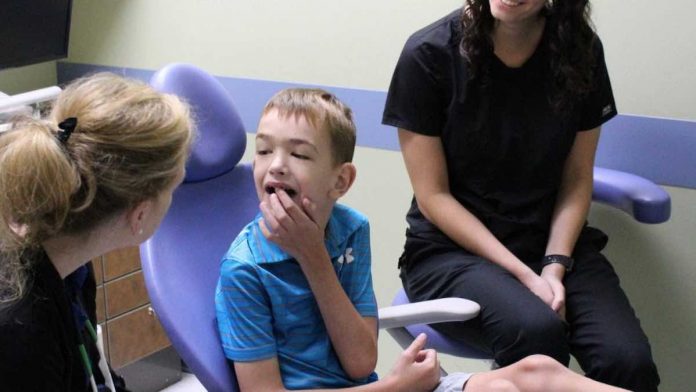
Mason’s life was utterly changed, however, when his mother took him to see Dr. Amy Luedemann-Lazar, a dentist who is familiar with handling special needs children.
While Mason was sedated, the dentist inspected his teeth and found that the boy was actually ‘tongue-tied’ with ankyloglossia, a condition that means his tongue never separated from the floor of his mouth when he was in the womb.
Luedemann-Lazar freed the boy’s tongue with a quick noninvasive surgery in April 2017 and his life has never been the same since.
“It’s like night and day. He doesn’t have choking episodes anymore; he’s eating different types of food,” Meredith said. “He’s behaving much better at school. His behavior was a problem, because he was getting poor quality of sleep at night, he was constantly tired and was not able to express himself. He doesn’t snore anymore. He doesn’t have sleep apnea anymore.”
More importantly, Luedemann-Lazar described Mason as a talkative, enthusiastic kid who feels more like “a whole person” now that he has finally found his voice.
(WATCH the video below)
Be Sure And Share This Inspiring Story With Your Friends – Photo by Meredith Motz
Quote of the Day: “There is nothing in a caterpillar that tells you it’s going to be a butterfly.” – Buckminster Fuller
Image: by Thomas Quine, CC license
With a new inspirational quote every day, atop the perfect photo—collected and archived on our Quotes page—why not bookmark GNN.org for a daily uplift?
In a historic milestone for oceanic conservation, the much-anticipated Ocean Cleanup initiative that was created by a Dutch teenager has successfully set sail and is now undergoing its final round of tests before it begins tidying up the Great Pacific Garbage Patch.
The ingenious vessel that has been designed to tackle the massive trash island left San Francisco Bay on September 9th and began testing on September 19th.
The vessel, which has been dubbed System 001 (or “Wilson”), traveled 350 nautical miles away from the coast to fulfill its 5-item checklist before taking on the garbage patch.
According to the Ocean Cleanup organization, one of the tests has already been successfully checked off the list. Testing is only expected to take one more week before it can tackle the patch.
Once completed, System 001 will be towed the remaining 1,000 nautical miles to the patch to begin the cleanup. The team has already started publishing groundbreaking evidence of their technology successfully in action.
“Consider it a final dress rehearsal before the main performance—cleaning plastic from the ocean,” the organization said in a statement.
“Confirming these objectives will provide us with the understanding to know if the system is up for the challenge it’s set to face in the patch. Should we encounter any issues, it is much easier to tow the system back to shore from here than it would be all the way from the patch.”
Here is the checklist System 001 needs to fulfill at the test site before it can head to the Great Pacific Garbage Patch. 1 down, 4 to go. pic.twitter.com/cYVxs9KQJR
This patch is a massive island of trash drifting halfway between California and Hawaii. Over a trillion pieces of debris have collected there because of the swirling vortex of current—a floating mass roughly twice the size of Texas.
After discovering the patch in the 90s, scientists said it would take thousands of years to clean it up—but Boyan Slat said in his TEDx talk that he could do it in less than ten, if he could get his special machinery built.
Though his claim caused many skeptics to raise their eyebrows, Slat dropped out of college so he could bring his plans to life. In addition to crowdfunding $2.2 million for his idea, he garnered millions more dollars through interested investors.
His nonprofit, the Ocean Cleanup Project, now employs 70 engineers, researchers, and scientists. With boats arriving to clean up the trash every six to eight weeks, Slat estimates that half of the patch will be collected in five years.
“I am incredibly grateful for the tremendous amount of support we have received over the past few years from people around the world, that has allowed us to develop, test, and launch a system with the potential to begin to mitigate an this ecological disaster,” says Slat.
You can follow System 001’s progress and location via the tracker on the Ocean Cleanup website.
Clean Up Negativity By Sharing The Good News With Your Friends – Photo by the Ocean Cleanup
It’s been a difficult six months for Gerard Dunn since his wife passed away – but thankfully, the internet is there to cheer him up.
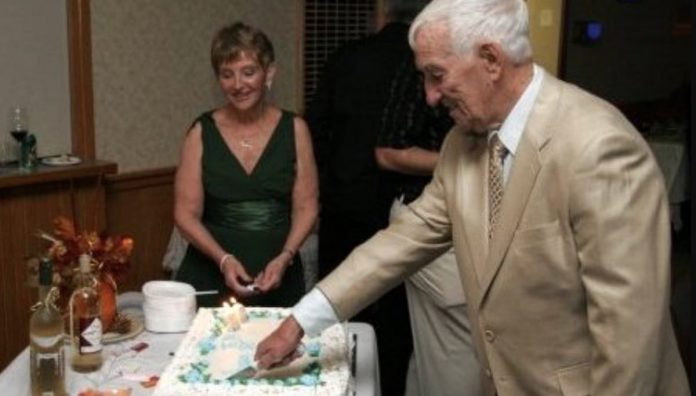
92-year-old Gerard and 82-year-old Ellen had been married for more than six decades. While she worked as a doting educator in Sydney, Nova Scotia, Gerard used to be a Canada Post mailman.
For this reason, Gerard loves the mail – and since Ellen died earlier this year, her husband has been cheered by the daily mail delivery.
His children have supplemented his mail-related adoration by sending him letters – but his daughter Miriam wanted to do something better for his birthday.
Earlier this week, Miriam made a Twitter post asking people to send letters to her father for his birthday in October.
Though she was only expecting a few people to respond, she was immediately overwhelmed by the positive response. Since she published the request, her tweet has been retweeted over 20,000 and received 40,000 likes. Users are promising to deliver artworks, food, cards, and tidbits; teachers are sending her photos of their students absorbed in the task of writing letters for Gerard; and thousands more people have sent her online well-wishes and appreciation.
If you'd like to meet my dad and be BLOWN AWAY. by his mad skills.... https://t.co/lJeKz5DsSq
“Dad really does wait for the mail every day, so the last couple of months, the siblings have been trying to send him a card or a newspaper clipping. Something small just to have something arrive in the mail,” she told Global News.
“I thought maybe I could get a few strangers on the internet to send him something that would really please him. I anticipated five or 10 people would say, ‘I will do that,’ but I certainly did not anticipate this.”
Miriam says that she has been doing her best to respond to the deluge of adoration, and though her dad is a bit too shy to address his sudden fame, she says that he is grateful for the kindness that is being shown to him in memory of his wife.
“My dad sees this as a tribute to mom not to him,” Miriam told the news outlet. “He sees this as something that acknowledges her life even though it’s done because of her absence, but he totally feels that this is more about her.”
Pass On This Positive Story To Your Own Friends By Sharing The Good News – Photo by Miriam Dunn
A compassionate father-daughter duo has donated a $44 million cattle farm to a school for veterinary medicine in order to offer students a unique resource to learn about animal medicine, ethical farming, and sustainable agriculture.
90-year-old Jack Anderson and his daughter Wynne Chisholm have been managing W.A. Ranches since 2005 when the senior turned away from his work in the gas and oil field. They are now donating the 19,000-acre (7,700-hectare) farm to the University of Calgary’s Faculty of Veterinary Medicine.
Their only conditions for the donation are guaranteed employment for their five full-time ranch workers and the ability to visit the farm from time to time. Otherwise, the university will take on full ownership of the ranch and all of its assets.
“It was important to us that we would still be allowed to come onto the ranch, particularly at calving time, and see the animals,” Chisholm told The National Post about their love for the land. “My dad will probably still want to do a drive-around weekly like he does now, to be able to see what’s happening.”
According to the news outlet, the ranch is the single largest gift of a ranch to a university in North American history.
“Our hope is that this gift will transform the teaching, learning and outreach experiences at UCVM, and empower faculty and students to create and share the scientific, evidence-based discoveries that will improve animal care and welfare, enhance our industry, and inform the public,” Chisholm added in a statement.
Dr. Baljit Singh, dean of the Faculty of Veterinary Medicine, said: “The gift of a cattle ranch of this size and calibre offers unprecedented educational opportunities within the dynamic and innovative teaching model practiced at the university.
“The ranch will provide a platform for collaboration with other faculties, industry and the public sector to foster interdisciplinary learning and research, and the development of an international centre of excellence in beef cattle health.”
“This gift will advance the leadership of our Faculty of Veterinary Medicine even further, providing a unique opportunity for our students to engage in immersive learning, develop their professional skills, and make the connections between human, animal and environmental health,” says university president Elizabeth Cannon.
Plant Some Positivity Amongst Your Friends And Share The Good News – Photo by Claire Windeyer / University of Calgary
Four people who have been paralyzed from the waist down are achieving what was previously thought to be impossible thanks to a groundbreaking new therapy.
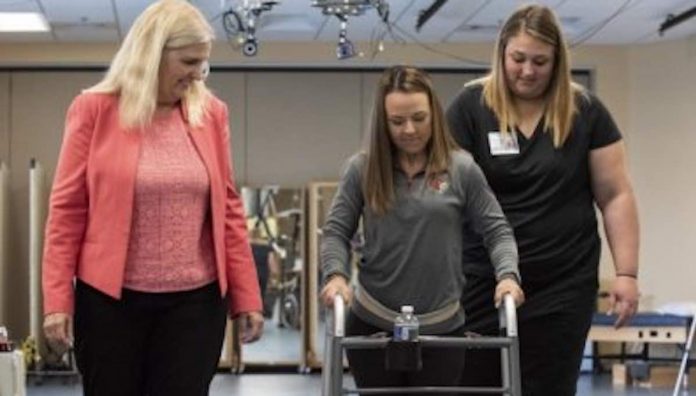
Using a spinal implant, two of the participants living with traumatic, motor complete spinal cord injury are able to walk independently once more while the other two are able to stand and take limited steps.
When the four participants joined the study, they were at least 2.5 years post injury. They were unable to stand, walk or voluntarily move their legs. Eight to nine weeks prior to the implantation of an epidural stimulator, they started training their motor skills by manual facilitating stepping on a treadmill for five days per week, two hours each day.
Although there were no changes to their locomotor abilities prior to the implant, following the epidural stimulation, participants were able to step when the stimulator was on and the individual intended to walk. Two of the participants were even able to achieve walking over ground – in addition to on a treadmill – with assistive devices, such as a walker and horizontal poles for balance while the stimulator was on.
“Being a participant in this study truly changed my life, as it has provided me with a hope that I didn’t think was possible after my car accident,” said participant Kelly Thomas, a 23-year-old from Florida. “The first day I took steps on my own was an emotional milestone in my recovery that I’ll never forget as one minute I was walking with the trainer’s assistance and, while they stopped, I continued walking on my own. It’s amazing what the human body can accomplish with help from research and technology.”
Jeff Marquis, a 35-year-old Wisconsin native who now lives in Louisville, was the first participant in this study to attain bilateral steps.
“The first steps after my mountain biking accident were such a surprise, and I am thrilled to have progressed by continuing to take more steps each day. In addition, my endurance has improved, as I’ve regained strength and the independence to do things I used to take for granted like cooking and cleaning,” said Marquis. “My main priority is to be a participant in this research and further the findings, as what the University of Louisville team does each day is instrumental for the millions of individuals living with paralysis from a spinal cord injury.”
This research is based on two distinct treatments: epidural stimulation of the spinal cord and locomotor training. Epidural stimulation is the application of continuous electrical current at varying frequencies and intensities to specific locations on the spinal cord. This location corresponds to the dense neural networks that largely control movement of the hips, knees, ankles and toes. Locomotor training aims to ultimately retrain the spinal cord to “remember” the pattern of walking by repetitively practicing standing and stepping. In a locomotor training therapy session, the participant’s body weight is supported in a harness while specially trained staff move his or her legs to simulate walking while on a treadmill.
This groundbreaking progress is the newest development in a string of outcomes at from the University of Louisville Hospital, all pointing to the potential of technology in improving quality of life – and even recovery – following spinal cord injury. This latest study builds on initial research published in The Lancet in 2011 that documented the success of the first epidural stimulation participant, Rob Summers, who recovered a number of motor functions as a result of the intervention. Three years later, a study published in the medical journal Brain discussed how epidural stimulation of the spinal cord allowed Summers and three other young men who had been paralyzed for years to move their legs.
“This research demonstrates that some brain-to-spine connectivity may be restored years after a spinal cord injury as these participants living with motor complete paralysis were able to walk, stand, regain trunk mobility and recover a number of motor functions without physical assistance when using the epidural stimulator and maintaining focus to take steps,” said author Susan Harkema, professor and associate director of the Kentucky Spinal Cord Injury Research Center at the University of Louisville.
“We must expand this research – hopefully, with improved stimulator technology – to more participants to realize the full potential of the progress we’re seeing in the lab, as the potential this provides for the 1.2 million people living with paralysis from a spinal cord injury is tremendous.”
Maxwell Boakye, chief of spinal neurosurgery at the University of Louisville, said: “Epidural stimulation is likely to become a standard treatment with several improvements in design of the device to target more specific neurological circuits.”
The study was conducted at the Kentucky Spinal Cord Injury Research Center at the University of Louisville and is published in this week’s New England Journal of Medicine.
Quote of the Day: “If your actions inspire others to dream more, learn more, do more and become more, you are a leader.” – John Quincy Adams
Image: by Elliot Margolies, CC license
With a new inspirational quote every day, atop the perfect photo—collected and archived on our Quotes page—why not bookmark GNN.org for a daily uplift?
A 19-year-old boy has finally been rescued from the ocean after he spent 49 days adrift at sea in a small fishing hut.
Aldi Novel Adilang works as a lamplighter on the Indonesian island of Sulawesi. Back in mid-July, the young man had been fulfilling his job of maintaining the lights aboard a floating fishing trap called a “rompong”.
Designed similarly to a small hut, the rompong has no paddles or engines of any kind. It floats on the ocean’s surface and uses lights to lure in fish.
While Aldi had been aboard the vessel during a particularly windy night, the ropes that kept the rompong moored to the seabed snapped, and he was set adrift.
He only had a few days worth of food, water, and fuel, so he managed to survive by catching fish and cooking them over fires that he made using the wooden fencing of the rompong. He also reportedly drank saltwater through his shirt to minimize his salt intake.
“[He] said he had been scared and often cried while adrift,” Indonesian diplomat Fajar Firdaus told The Jakarta Post. “Every time he saw a large ship, he said, he was hopeful, but more than 10 ships had sailed past him. None of them … saw [him].”
Finally, after spending a month and a half at sea, he was eventually spotted by a Panamanian vessel more than 77 miles (125 kilometers) at sea in Guam waters. Officials say they are unsure as to how he wasn’t dehydrated upon his rescue.
A 35-year-old man who had been in a vegetative state for 15 years after a car accident has shown signs of consciousness after neurosurgeons implanted a small nerve stimulator.
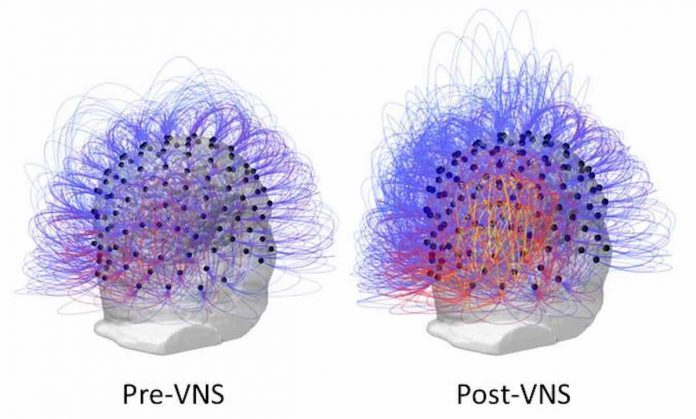
Using a simple 20-minute surgery, the simulator was attached to the vagus nerve in the patient’s chest. The outcome challenges the general belief that disorders of consciousness that persist for longer than 12 months are irreversible, the researchers say.
The findings reported in Current Biology this week show that vagus nerve stimulation (VNS) – a treatment already in use for epilepsy and depression – can help to restore consciousness even after many years in a vegetative state. By stimulating the vagus nerve, we show that “it is possible to improve a patient’s presence in the world,” says Angela Sirigu of Institut des Sciences Cognitives Marc Jeannerod.
The vagus nerve connects the brain to many other parts of the body, including the gut. It’s known to be important in waking, alertness, and many other essential functions. To test the ability of VNS to restore consciousness, the researchers, led by Sirigu and clinicians lead by Jacques Luauté, wanted to select a difficult case to ensure that any improvements couldn’t be explained by chance. They looked to a patient who had been lying in a vegetative state for more than a decade with no sign of improvement.
After one month of vagal nerve stimulation, the patient’s attention, movements and brain activity significantly improved, they report. The man began responding to simple orders that had been impossible before. For example, he could follow an object with his eyes and turn his head upon request. His mother reported an improved ability to stay awake when listening to his therapist reading a book.
After stimulation, the researchers also observed responses to “threat” that had been absent. For instance, when the examiner’s head suddenly approached the patient’s face, he reacted with surprise by opening his eyes wide. After many years in a vegetative state, he had entered a state of minimal consciousness.
Recordings of brain activity also revealed major changes. A theta EEG signal important for distinguishing between a vegetative and minimally conscious state increased significantly in areas of the brain involved in movement, sensation, and awareness. VNS also increased the brain’s functional connectivity. A PET scan showed increases in metabolic activity in both cortical and subcortical regions of the brain, too.
The findings show that the right intervention can yield changes in consciousness even in the most severe clinical cases, the researchers say.
“Brain plasticity and brain repair are still possible even when hope seems to have vanished,” Sirigu says.
The researchers are now planning a large collaborative study to confirm and extend the therapeutic potential of VNS for patients in a vegetative or minimally conscious state. In addition to helping patients, Sirigu says the findings will also advance understanding of “this fascinating capacity of our mind to produce conscious experience.”
Be Sure And Pass On The Groundbreaking News To Your Friends – Photo by Corazzol et al
In what is being called the “most adorable random act of kindness”, a stranger has made sure that a little boy will always be able to continue using his favorite parking space.
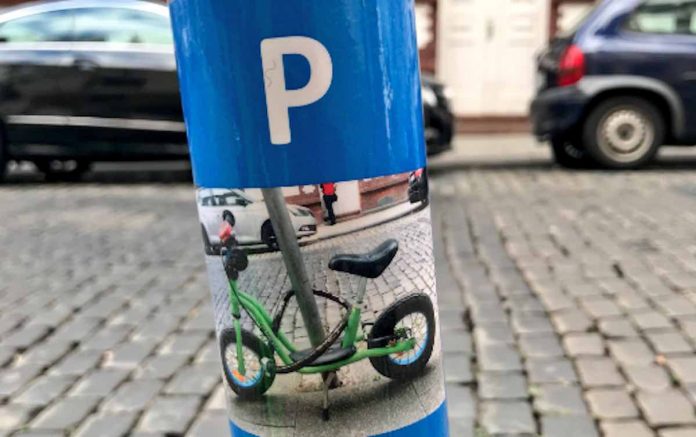
According to a Twitter post created by freelance travel writer Christie Dietz, her 4-year-old son has been parking his bike by the same lamppost “pretty much every day for the last year”.
Then earlier this week, her son was surprised – and delighted – that someone had attached a specialized parking sticker to the lamppost.
On the sticker was a photo of the boy’s little green bike above the word “Only”.
“Absolutely made our day,” wrote Dietz. “People can be so brilliant.”
Though Dietz has no idea who in Wiesbaden, Germany could have done the good deed for her son, she says that she plans on leaving a note by the parking spot to properly thank whomever may have created it.
My son has parked his bike by this lamppost just about every day for the last year. This morning, this sticker had appeared. Absolutely made our day. People can be so brilliant. Thank you, whoever did it ? pic.twitter.com/rYC8jCTD5L