It may be a lifeguard’s job to keep a watchful eye over the lives of swimmers, but this teen wasn’t expecting to save a life within minutes of being put on the job.
15-year-old Jack Viglianco had just started his first shift as a lifeguard at the Charles A. Foster pool in Lakewood, Ohio last Thursday when – after only being on the clock for 20 minutes – he heard a cry for help.
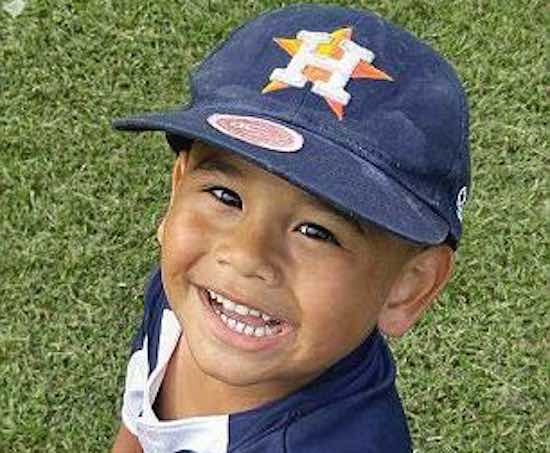
A 4-year-old boy who had been on a summer camp outing had accidentally moved into the deep end of the pool when he started struggling to keep his head above water.
As he splashed around in desperation, Jack leapt into action, jumping into the pool and helping the boy to safety.
And just like that, the teen was a hero.
“I was realizing that I just saved a kid’s life,” Jack told WJW. “And that is something not many other people can say. Nothing my friends have ever said.”
According to pool workers, lifeguards are a hugely necessary part of the facility; during last summer alone, there were over 42 incidents of people starting to drown. All were saved thanks to the lifeguards on duty.
(WATCH the video below)
Guard Your Friends From Negativity: Click To Share
As summer temperatures soar in the south, these police officers weren’t about to let a WWII veteran soak in his own sweat all day.
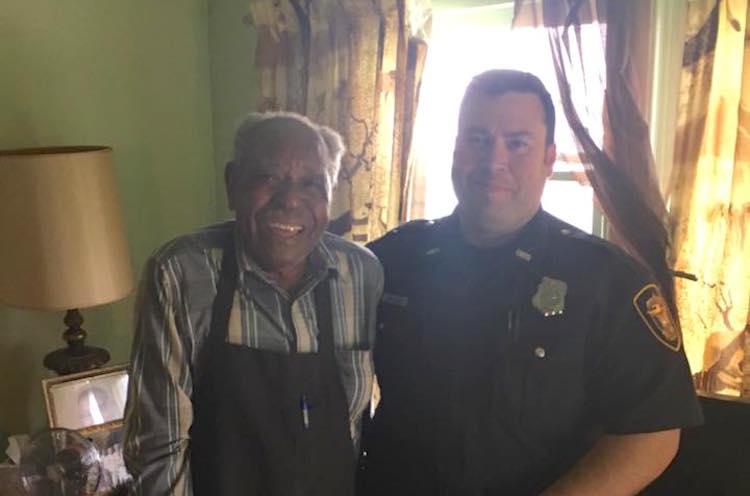
The Fort Worth Police Department in Texas received a 911 call from a 95-year-old man distressed over his broken air conditioner. Though it wasn’t exactly considered an emergency, two boys in blue dropped by the senior’s house to check out the situation.
Officers William Margolis and Christopher Weir drove over to Julius Hatley’s house where the senior was sitting out in the shade of his porch in the early morning 90-degree heat.
Not only was Hatley’s air conditioner broken, but his central air conditioning was broken as well. Heartbroken by Hatley’s sweltering situation, Margolis promised to return with a solution.
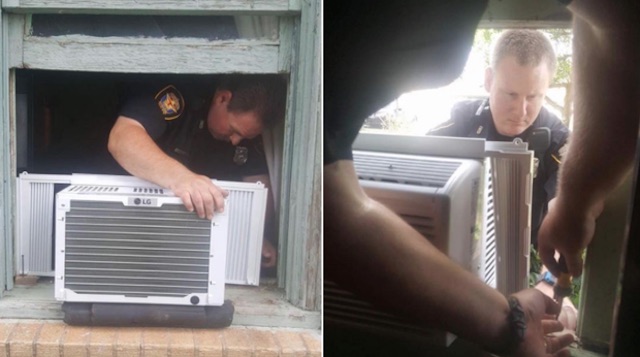
The officers then went to Home Depot and asked the employees which unit would be best for Hatley’s house. The store employees were so touched upon hearing about the veteran’s situation, however, that they decided to throw down $150 of their own money so they could split the cost of an air conditioner with Margolis.
The officers then brought the unit back to Hatley’s house with another coworker so they could make sure it was properly installed.
“This is what being an officer is about,” Weir’s wife wrote on Facebook. “This is what the media doesn’t report on but happens every single day by officers all over.”
“He was actually really excited,” Margolis told CBS News. “He said he knew if he needed help to call 911 and we actually were able to help him, so he was really excited about it.”
Additionally, since the story of the officers’ good deed has spread on social media, a repair company has offered to fix Hatley’s central air conditioning free of charge.
The officers plan on continuing to assist Hatley by repainting his house, installing new windows, and distributing a weekly supply of groceries to his house.
(WATCH the video below)
Protect Your Friends From Negativity: Click To Serve This Story Instead – OR,
The kids in this Catholic school class learned plenty about history, math, and science this year – but most importantly, they learned about kindness, unity, and love.
Owen Guertin of Carondelet Catholic School in Minneapolis, Minnesota was diagnosed with an arteriovenous malformation in November: a condition in which the blood vessels in the 4th grader’s brain were tangled. If the malformation is left untreated, the vessels can rupture, causing death.
Though Owen’s parents were understandably devastated – as the boy’s cousin recently passed away from the same condition – Owen’s classmates and teacher in room 101 were also upset.
As the boy prepared for surgery at the Boston Children’s Hospital, his fellow students missed his presence in the classroom. Every day, Owen’s favorite teddy bear dressed in the Catholic school uniform would be dropped off at school to save his owner’s seat, providing comfort to the classmates.
Then, one day, the room 101 teacher Kristen Rafferty was reading an excerpt from Sadako and the Thousand Paper Cranes by Eleanor Coerr, a book about a young woman with leukemia on a mission to fold over 1,000 paper cranes. One of her students piped up in response, asking if the class could fold 1,000 paper cranes for Owen.
Rafferty was more than happy to encourage the mission, allowing the children to fold cranes during recess, lunch, and prayer time. The kids felt that even though their collection of birds may be made out of paper, they would still help Owen recover from his surgery.
“I just knew the more we made the more Owen would heal, I didn’t want to stop because I wanted him to get better,” 4th grader Adie Scheel told KARE11.
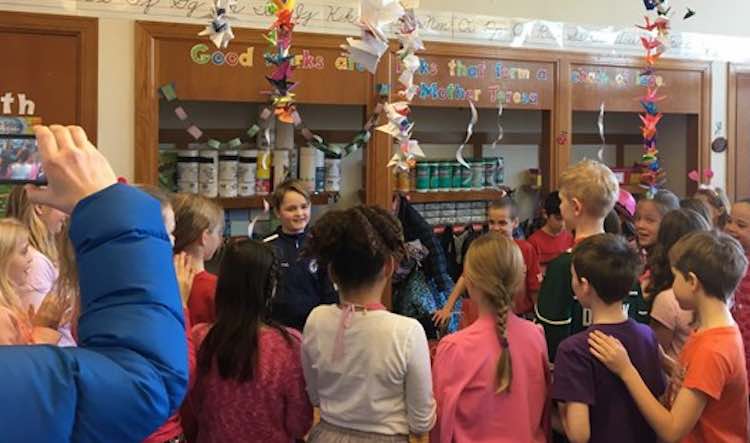
By the time Owen was in recovery from a successful 17-hour surgery, room 101 was adorned with a “crane-bow”: hundreds of tiny origami birds hanging from the ceiling in big rainbow bunches.
When the boy returned to the classroom on Valentine’s Day, he was welcomed back with an emotional greeting.
(WATCH the video below)
Click To Share This Crane-tastic Story With Your Friends – Photo by Joanie Witberler
A 12-year-old girl is being hailed as a hero after she used a first aid technique that she learned from reading The Hunger Games series to help treat her friend’s leg injury.
Megan Gething, Mackenzie George, and several of their other friends were playing in a Gloucester, Massachusetts marsh on Saturday morning when Mackenzie slipped through the mud and slashed her leg open on a piece of steel.
The wound, which was about 10 inches long and 3 inches wide, started bleeding profusely, sending the youngsters into a state of panic – except for Megan.
Remembering a scene in the Suzanne Collins novel, Megan quickly requested a pair of her friend’s shorts so she could tie a tourniquet on Mackenzie’s leg. As she applied pressure on the tourniquet, she calmly told one of the other teens to run and get help.
“I knew it from a book I read,” she told the Gloucester Times, referencing the young adult book series. “I figured it was a well-known method of stopping bleeding.”
Mackenzie’s family members arrived a few minutes later and carried the injured youth back to their home where she was taken to the local hospital. She then underwent surgery to make sure that there was no bacteria in the wound. Since the injury caused no nerve or muscle damage, Mackenzie is expected to make a full recovery by the end of the month.
Paramedics say that the situation could have been much worse if Mackenzie had continued to lose blood – and it’s all thanks to Megan’s quick-thinking under pressure.
“Megan was the star of the show. Thank goodness she was there. Mackenzie would have lost a lot more blood, and it could have been life-threatening if she hadn’t done what she did,” the youth’s father told the Gloucester Times.
Put The Odds In Your Friend’s Favor: Click To Share
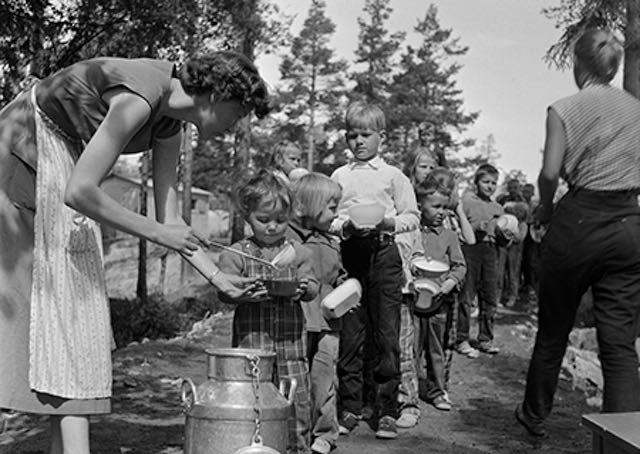
Finland’s capital city of Helsinki is celebrating its 75th summer of serving hot free meals to their young residents at public playgrounds.
The city’s 71 public parks and playgrounds have consistently served nutritious meals to kids ages 1 to 16.
Thanks to the funding from the Helsinki Social Services Department, hot meals and drinks have been distributed to the children every summer weekday at noon since 1942.
Since most of the kids have parents who are at work during the day, the parks and playgrounds provide a valuable space for them to play.
Additionally, volunteers, mothers, and works supervise the children with games, activities, singing, and dancing, which creates a tangible community spirit amongst the youngsters.
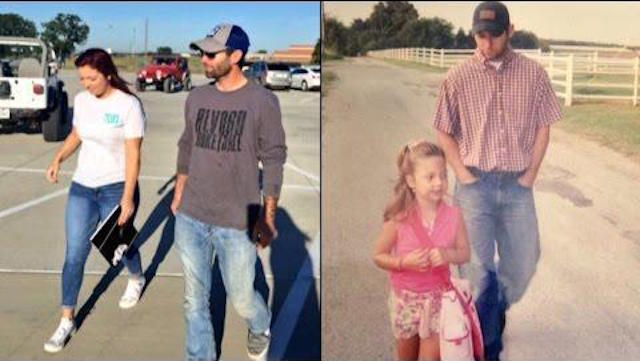
If this photo proves anything, it’s that this teenager and her dad are just as close as they were 13 years ago.
The photos depict a 5-year-old Brittany Gayler being walked to her first day of kindergarten by her father – and then again as an 18-year-old going to her last day of high school.
Brittany, who is a senior at Alvord High School in Alvord, Texas, says that it was a “bittersweet” moment that she’ll “remember forever.”
Her father, 38-year-old Jason Gayler, says that he was pretty choked up over the emotional flashback and the amount of praise that he received for his parenting skills on social media.
“It has been a bit shocking with a mix of happiness,’” Jason told TODAY about the overwhelming online response to the photo comparison. “It brings me great joy if we were able to help people think back to that time, even if just for a brief moment, and smile. I can hope one day when I’m old I can look back at this and smile!”
(WATCH the video below)
Click To Share This Dad-tastic Story With Your Friends (Photo by Brittany Gayler)
Homeless men are finding peace and purpose through their care of local beehives in Montreal.
Accueil Bonneau, a shelter and homeless care center based out of the Canadian city, has discovered the rewarding effects of teaching their residents about urban beekeeping.
Because of a now 4-year partnership with beekeeping company Alvéole, dozens of homeless Canadians have successfully reintegrated back into society thanks to the social and professional skills that they learned through the program.
Over 60 hives across seven locations within the city are cared for be homeless bee apprentices. The honey is then harvested and sold at participating Metro supermarkets. The money raised from the honey helps fund the program and provides small payments to the homeless apprentices, according to CBC.
Due to the careful handling of the bees, the participants learn to be more calm and gentle, which creates “therapeutic” feelings of ease.
“Survival of bees is important to me,” said program participant Roger Décarie. “Often mistaken for wasps that are more aggressive, they are maltreated and killed. Without the bees, there would be no flowers, no trees, nature would not be the same. We need to take care of them, just like they take care of us, and I am proud to contribute to that.”
“Montreal’s community takes care of l’Accueil. L’Accueil takes care of ‘the guys’. ‘The guys’ take care of the bees. And the bees take care of life… What wonderful interconnectedness!” says Aubin Boudreau, executive director Accueil Bonneau.
A 2-year-old boy may not be alive today if it weren’t for the concerted efforts of another child’s parents wanting to save other kids from the dangers of “dry drowning”.
Six days after 4-year-old Frankie Delgado went swimming with his parents for Memorial Day, he reportedly started suffering from fever and stomach aches. His condition worsened until he was eventually rushed to the hospital where he later passed away.
Doctors later informed Frankie’s parents that their son was a victim of dry drowning, also known as secondary drowning: a condition that mostly affects children.
The condition typically occurs when a child inhales water, and the fluid gets trapped in the child’s body. The liquid then causes the vocal chords to spasm and constrict until they restrict the body’s airway.
Though the Texan family was understandably devastated, they took to social media to spread awareness of their late son’s condition.
One person in particular who saw the Delgado’s warning was Staff Sgt. Garon Vega of Colorado who later recognized the same symptoms in his son Gio after the family went swimming at a community pool. Garon and his wife took Gio to the hospital were doctors conducted an X-ray of the 2-year-old’s lungs.
The boy had indeed swallowed a small amount of water, which – if gone untreated – could have caused his death.
“I feel like I needed to reach out to the parents of little Frankie and tell them, I don’t know how to word it, but their little boy saved our little boy’s life,” Garon told ABC 13. “’It was an unfortunate thing that happened, but if I had not told my wife that he swallowed the water, and if she had not seen that article, I think we would’ve ended up dispelling it as a regular sickness.”
A GoFundMe page has already raised $45,000 to cover Frankie’s funeral expenses.
Click To Share The Inspiring News With Your Friends (Photo by the Delgado family)
Following their 2017 general election, the UK now plays host to the most diverse panel of MPs (Members of Parliament) in history by inducting more women, openly LGBT and non-white members than ever before.
For starters, 10 new MPs of ethnic backgrounds were elected, including the Labour party’s Preet Gill, Parliament’s first female Sikh, and Tanmanjeet Singh, the first turban-wearing Sikh MP. This brings the total of non-white MPs to 51.
Additionally, seventeen women were elected as MPs, four which are black. This brings the total amount of female MPs to 208, with women making up about 45% of the Labour party and 21% of the Conservative party.
The amount of openly LGBT MPs has risen from 32 to 43 since 2015 – a 40% increase.
Then, according to the BBC, 2 more MPs with disabilities have joined the Labor party: Marsha de Cordova, who is blind, and Jared O’Mara, who has cerebral palsy hemiparesis.
“Better representation is a test of the quality of our democracy and one that is particularly urgent given the increased engagement of young people – a group that is not only more diverse but also expects discrimination of whatever kind to be combatted,” Omar Khan, director of race equality charity Runnymede Trust, told The Independent.
Diversify The News: Click To Share With Your Friends (Photo by CLLR Tony Belton-Conservative Party)
This groundbreaking new drug for cancer treatment was immediately approved by the FDA in light of its revolutionary effects on tumors across the body.
The drug, known as pembrolizumab (brand name Keytruda), is the first cancer treatment that can be used against 11 different kinds of cancers no matter their location; whether in the bone, colon, pancreas, brain, or lung, as long as the tumor has certain bio-markers.
Over the course of a 3-year medical trial, 86 patients who were suffering from advanced diseases that were resistant to all treatments were given pembrolizumab. All of the patients had already undergone several other types of therapy without any success.
By the end of the trial, 66 patients experienced dramatic tumor size reduction, while the tumors in 18 of the patients disappeared altogether without any sign of returning.
Many of these advanced types of cancer work by shielding themselves from the proteins that the immune system uses to detect and fight diseases. Pembrolizumab, however, is an example of an immunotherapy drug called a PD-1 blocker. These drugs detect tumors by their genetic code so that they can reveal them to the immune system, which can then work against them accordingly.
While the specific genetic code that pembrolizumab targets isn’t very common, the drug could still save over 60,000 Americans from rare cancers every year.
The researchers at Johns Hopkins Medicine first stumbled upon the genetic treasure chest years ago when a clinical trial of over a dozen patients were treated with an immunotherapy drug – none of them showed any kind of response, except for one, whose cancer disappeared altogether.
When researchers looked at the tumor’s genetics, they found a specific mutation that matched several other types of cancers. This led them to developing the drug that targeted the mutation: pembrolizumab.
“This was the eureka moment that led us to develop this clinical trial,” says Bert Vogelstein, co-director of the Ludwig Center at the Johns Hopkins Kimmel Cancer Center and the Genetics Program of the Bloomberg-Kimmel Institute.
The impact of positive and negative emotions might be more impactful than you think—and more persuasive.
A teacher in Curitiba, a southern region in Brazil, decided to illustrate the power of words to her students by using two cups of sealed rice.
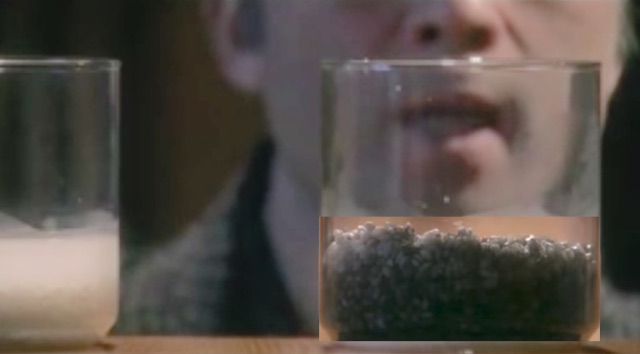
Physical education teacher Ana Paula Frezatto Martins arranged the class in a circle around the two cups of grains. Then, she asked the students to say bad things to one of the cups — things people might hear in everyday life, like “you are useless”, “you are stupid”, and “you can’t accomplish anything”.
To the second glass, the teacher asked the kids to say things they would like to hear from everyone. The kids used such expressions as “you are special”, “you can accomplish anything”, and “you are smart”. Days later, the rice in the “love cup” fermented naturally while the rice in the “hate cup” became dark and moldy.
Martins says she has always tried to show her students the importance of highlighting positivity.
“In my classes I explain the importance of saying nice things to each other, but kids need more tangible physical expressions of our examples,” says Martins, according to Globo.
“When you say something nice, like ‘you can do it’, you feel that in your heart,” says 10-year-old student Anita Santini Trevisan. The youngster says that because of the experiment, she has tried to be more positive every day.
Another student, Henrique Kloster, had a similar conclusion: “The damage of negativity is bigger than we can imagine … there are two ways to say things, the right way is to praise the good side of others with the eyes of the heart, not the eyes we see.”
The rice experiment mirrors a famous one conducted by Masaro Emoto who tested distilled water and natural water when it was frozen into crystals to see what would happen when they were exposed to different human emotional energy, in the form of words, pictures, thoughts and music — for instance, heavy metal music versus classical. He then observed the crystals under a microscope.
“In all of these experiments,” he wrote on his website, “the result was that we always observed beautiful crystals after giving good words, playing good music, and showing, playing, or offering prayer to water. On the other hand, we observed disfigured crystals in the opposite situation.”
He published these results as a photographic collection, entitled “Messages from Water (1999)”. The photos have been viewed by millions, and used in films, like the one below.
He also did a similar experiment on jars of cooked rice. As you can see in the video below, the rice stayed productive and pure when it was appreciated, but the rice that was either hated or ignored, turned black and moldy.
The rice experiment has been undertaken by others who recorded on video the same results, and shared them on YouTube.
It makes us want to pay more attention to the words and emotions we are displaying toward others every day.
MULTIPLY the Positive by Sharing the Notion With Your Friends (Images via YouTube)
A heroic 39-year-old didn’t hesitate to jump into the window of a moving car in order to assist a random driver suffering from a seizure.
The endangered driver first caught the attention of police, and the local Dixon, Illinois man Randy Tompkins, when his car started rolling through traffic onto the wrong side of the road.
Tompkins stopped his truck, ran towards the convulsing man’s car, leapt through the passenger-side window of the driver’s moving car, and brought the vehicle to a halt.
After years of financial distress and struggle, the Brazilian economy grew by 1%, according to government agencies.
During the first three months of 2017, the Brazilian GDP grew by 1% as compared to the two previous years. This translates to an increase of nearly $500 billion dollars in production of goods and services.
The Gross Domestic Product (GDP) represents the total value of all goods and services produced over a specific time period, indicating the size and evolution of a country’s economy.
These numbers might not seem like much, but there is a lot to celebrate when putting the context into perspective. Between 2015 and 2016, the Brazilian economy shrank by about 4% each year. The period has since been called the worst recession in the history of the country.
Now, with output increasing, 2017’s growth technically removes Brazil from the recession.
Indicators show that the main explanation for the expansion was agriculture. Brazil experienced the greatest improvement of field and farming production in 20 years. The harvest of grains was vital in creating the economic growth, as it was the biggest expansion since the 4th quarter of 1996. While this is cause for celebration, specialists say that other sectors of Brazilian employment need to improve in order for the nation to fully recover from the recession.
Dr. Carolina Medina, SFWC volunteer (Red)
Gopher tortoises
Electro-acupuncture therapy
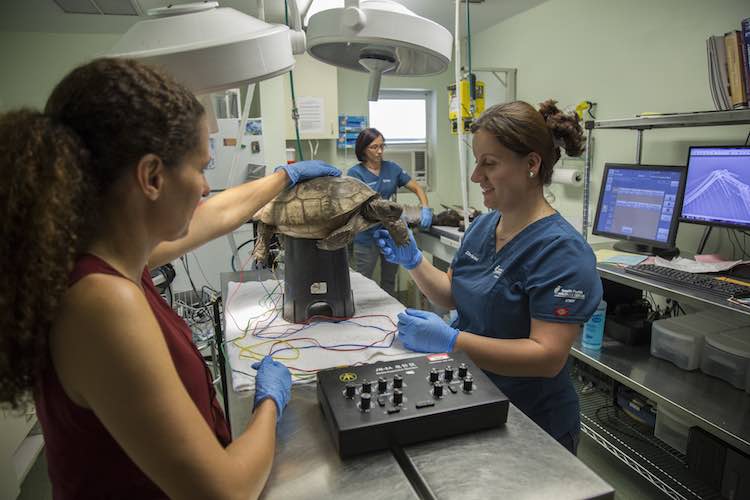
Though this wildlife center cares for thousands of animals every year, this is the first time they have ever used acupuncture on a patient.
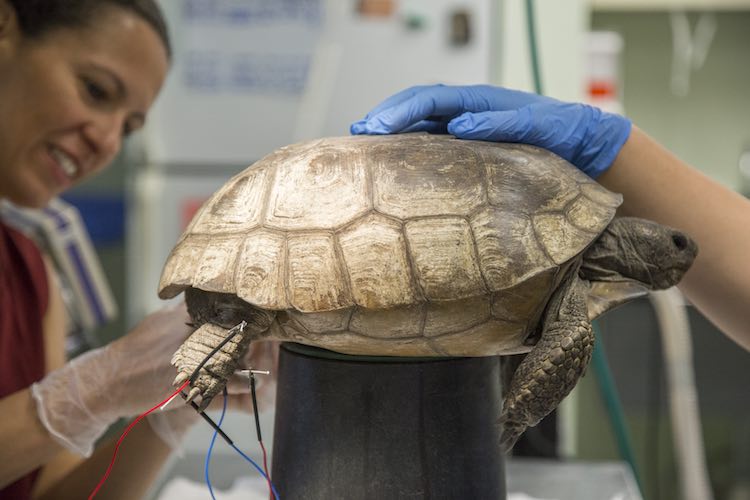
The special case was a 10-year-old gopher tortoise that was found on the side of the road with a deep crack in her shell and no motor control left in her back legs.
The South Florida Wildlife Center (SFWC) took the tortoise into their care and started a life-saving treatment of “electro-acupuncture”: a therapy that connects electrical leads to acupuncture needles with the goal of improving the stimulation of damaged nerves through mild electrical currents.
Their efforts paid off within just a week in April, as she regained movement in her back legs. One month later, the tortoise was wandering around her outdoor enclosure and munching on tasty grass shoots.
A threatened species in Florida, gopher tortoises make their homes by burrowing into the dirt. To ensure this particular patient’s survival, the final step is waiting until she regains her digging abilities before releasing her back into the wild.
The tortoise was a perfect example of SFWC’s promotion of the One Health concept, which recognizes that each individual species is linked to the survival of every other.
“Gopher tortoises are a keystone species,” said the Humane Society of the United State’s senior director Debra Parsons-Drake. “The burrows they dig are essential to the survival of hundreds of other species who use them for safety and shelter.
“By saving this one animal, we are not only benefitting her, but positively affecting the environment in which we all co-exist.”
Dr. Carolina Medina, SFWC volunteer, gopher tortoises, electro-acupuncture therapy
Click To Share This Cool Rescue With Your Friends – Photos by Jesus Aranguren/AP Images for HSUS
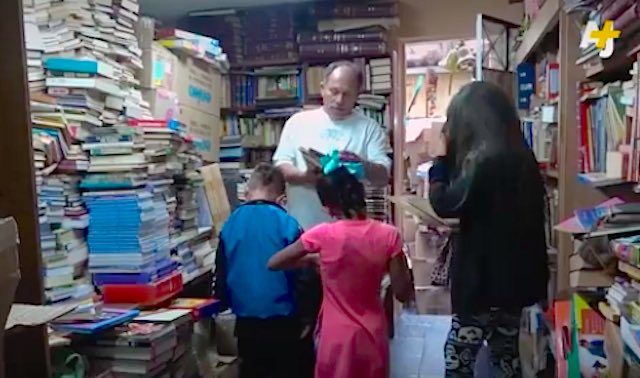
This garbage man hated to see all the books in the trash bins of wealthier neighborhoods—so he started salvaging them to create a new library for his own neighborhood.
It all began 20 years ago when Jose Alberto Gutierrez of Bogota, Colombia found a copy of Leo Tolstoy’s Anna Karenina in with the rubbish.
When he decided to rescue the book from the trash, it created a “snowball effect” that inspired him to continue saving discarded literature.
Gutierrez has since collected over 20,000 books that now make up his own free library, aptly named “Strength of Words”. Every single room of his house is overflowing with literature, which he opens up to community children on the weekends.
South Bogota is a poorer area, which makes finding books that are freely available much more rare than in other neighborhoods. Thanks to Gutierrez’s efforts, however, local children now have a host of resources at their disposal. He also has started shipping books to other regions that experience a lack of literature.
Gutierrez doesn’t limited his book-lending to children, either – the trash man has sent books to FARC rebels who are preparing to assimilate into civilian life, according to the BBC.
(WATCH the video below)
Help Your Friends Read This Story: Click To Share – Image via Al Jazeera video
Patrick Davis had enjoyed bowling for 40 years until disaster struck—but he is knocking down pins once again by overcoming what others might call a disability.
The father of two daughters was taken to the emergency room in May 2015 after the Illinois man told his sister he wasn’t feeling well.
All Davis remembers is being admitted to a hospital room and waking up a month later to his wife telling him that doctors were going to amputate his arms and legs.
Television reporter Gary Metivier reported that Davis had been admitted with pneumococcal pneumonia – a disease caused by bacteria infecting the lungs. When the bowler turned septic, doctors gave him only a one percent chance of survival.
He defeated those depressing odds, and five months after being released from the hospital, Davis started walking on two prosthetic limbs. Then his brother encouraged him to return to the sport he loved so much—bowling.
As you can see in this inspiring video, Davis is even a better bowler than ever.
(WATCH the video below, and see more in the KWQC-TV series called My Ability)
Score Big With Your Friends: Click To Share – Image via KWQC video
This sweet pup may not be a princess, but she surely will be living happily ever after with these fairy godparents.
Earlier last week, the Front Street Animal Shelter of Sacramento, California announced on Facebook that they had no more room for dogs in their facilities. The shelter made a post online encouraging readers to rescue their residents by coming in and adopting a pet.
There was one animal in particular that the shelter went out of their way to showcase for adoption: a loving dog named Joyce that had been living there for two months, waiting for a forever home.
A family in British Columbia saw the post and decided that Joyce would be a perfect addition for theirs.
The family then drove over 16 hours in order to adopt the patient pup – and shelter workers recorded the magical moment when they eagerly gave Joyce some well-earned belly rubs.
Front Street published a heartwarming video of the encounter, ending it with a shot of Joyce riding into the sunset with her new Canadian family.
If you live in the Sacramento area, the animal shelter is waiving all adoption fees for the rest of the month in order to find permanent homes for their residents.
(WATCH the video below)
Click To Share The Pawesome Story With Your Friends
This good Samaritan is being hailed by the internet as a bright light in a weary world.
The woman was photographed by Ryan Hamilton, who was dining on the rooftop of Old Crow Smokehouse across from Wrigley Field in Chicago, Illinois.
Cubs fans were exiting the stadium after their 5-3 victory against the St. Louis Cardinals on Saturday when a blind spectator named Yusef Dale “spent several minutes” unsuccessfully trying to hail a cab.
According to Hamilton, a young woman who was later identified as Casey Spelman walked up to the blind man and asked if he needed help. When Dale said yes, she then stood right by his side until a taxi pulled up into view.
“Wanted to give a shout-out to this girl,” wrote Hamilton. “Awesome to see such kindness in a world that the media portrays so much hate in. Share freely in hopes that her kindness spreads.”
Dale later praised Spelman, telling WGN, “She did not presume I was incompetent or unable … she didn’t get in my personal space and most importantly, she didn’t touch me, which is an issue for some people with disabilities.”
36-year-old Spelman has since downplayed her role by saying that her good deed should be the norm—not something considered unusual.
Score Big With Your Friends: Click To Share (Photos by Ryan Hamilton)
This football player scored more than a ride to his team’s voluntary workouts – he also scored a friend for life in his Uber driver.
Shareece Wright was stranded at Chicago O’Hare airport in Illinois on Sunday night when he had to be in Buffalo, New York at 7AM for practice.
So, the Buffalo Bills cornerback did what any self-respecting modern man would do, and he called for an Uber.
After two different Uber drivers flaked on the drive, Wright was getting desperate. Then, 26-year-old Hadi Abdollahian answered the request, assuming that it was just another normal night on the job.
Wright called Abdollahian and asked if the driver didn’t mind taking him to Buffalo. Thinking that the sports star meant “Buffalo Wild Wings”, rather than “Buffalo, New York”, he accepted. Abdollahian picked up Wright from the airport and found that he had misheard the destination. But, because he wanted to be a man of his word, the driver then told Wright to sit back, relax, and enjoy the 8-hour drive.
While the two traveled, the sports star and the driver exchanged stories about their lives, backgrounds, and careers. Abdollahian described how he first came to the United States in 2013 as an Iranian refugee and how he plans on studying computer science at Loyola University, while Wright talked about his family and professional football.
“He didn’t complain once. He kept me from stressing out. The only thing he complained about was people driving 50 miles an hour,” Wright told CNN. “His focus was to get me there on time and he did.”
After only stopping once to refuel, the Nissan Altima drove through the night until they finally arrived at the sports team’s facility – just in time for practice.
The trip cost a whopping $632 – but Wright was sure to tip his new friend an extra $300 for his compassion and company. Upon hearing about the trip, Bluerock Energy, one of the Buffalo Bills’s corporate sponsors attempted to reimburse Wright for the trip.
Wright, who is currently under a $775,000 contract, decided that Abdollahian deserved it more – so he sent it back to his friend in Chicago, bringing the driver’s payment to over $1,800.
As far as the trip is concerned, however, the aspiring student says he’s mostly just happy that he has a new friend. The two have chatted on the phone since their trip together, and they both plan on staying connected in the future.
“Honestly, I’m more excited … because of Mr. Wright,” Abdollahian told the Washington Post. “I’m his friend just for taking him to New York. This is more than enough for me.”
His mother amusedly affirms the statement, to which the young toddler cheerfully says “yeah!”
“It’s never too early to teach your kids to clean up after themselves,” says the New Jersey father. “I don’t care his feet can’t touch the ground, it’s Sunday clean up boy.”
Regardless of whether he continues to clean up after himself in the future, one thing is for sure – this kid definitely has a future in acrobatics.
UPDATE: We are sorry but this video has been removed from the internet some time after this story was published. – GNN team