Ray Johnstone was only looking for a fishing buddy to replace his deceased wife and friend – but after posting a heartbreaking online ad, the internet went wild.
Ray’s advertisement read: “My name is Ray Johnstone. Australian. I’m a widowed pensioner who is looking for a fishing mate. My previous mate is now deceased. What I want is a fishing mate in a similar position to myself who also wants someone to go fishing with. I am willing to share all costs, e.g. petrol, bait, and should you happen to own a boat (I am) willing to pay all ramp fees, but happy if you are also a land-based fisherman. If you are interested, contact me to arrange a meeting to see if we could get along with each other.”
The 70-year-old had apparently already posted the plea on Facebook without any luck, so he then transferred the ad to Gumtree at the suggestion of his nurse.
Since he published the ad on January 19th, it has been viewed over 80,000 times. Social media users have started the hashtag #I’llFishWithRay and extended offers of friendship from across the country.
Following the outpouring of support, however, Ray has apparently finally found a local fishing mate in a similar social situation who will accompany him to the water later this week.
The identity of the fishing friend has not yet been revealed, however the internet community is rejoicing the success of the pensioner’s search.
Regular attendees of this Texas mosque were grieving for only a short period of time before their faith in humanity was restored.
After the Islamic Center of Victoria burned down Saturday morning, the building’s heartbroken representatives created a GoFundMe campaign to rebuild the establishment. They were shocked to discover that within just 24 hours, the page had raised $500,000 of their $850,000 goal. Another day later, and they surpassed their goal.
In addition to the financial contributions, several commenters said that even though they didn’t have money to donate, they would be happy to volunteer their carpentry and construction skills.
The cause of the fire is still unknown, however the Victoria police and fire departments are currently investigating the incident alongside the FBI, the Bureau of Alcohol, Tobacco, and Firearms.
“Our hearts are filled with gratitude for the tremendous support we’ve received. The outpouring of love, kind words, hugs, helping hands and the financial contributions are examples of the true American Spirit,” wrote Shahid Hashmi, president of the Islamic Center. “We’re so very much thankful and appreciative of everyone’s thoughtfulness.
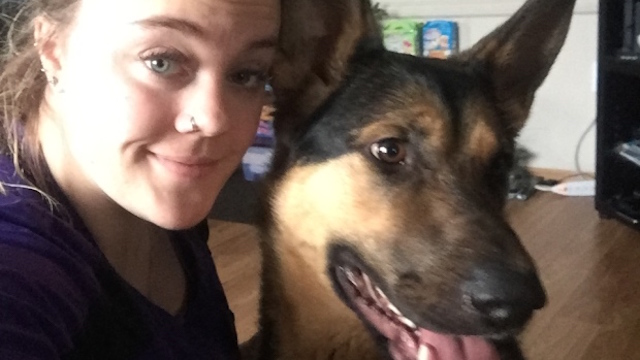
Ted the German shepherd-Akita mix and Abbey Boyd the SPCA worker became a match made in heaven after cheese-flavored bacon strips brought them together.
Ted was brought into the Northwest Territories SPCA in Yellowknife on Friday. Terrified by the building and surrounding humans, the canine refused to leave his kennel.
In an effort to befriend the pup, Abbey fed him some of the shelter’s bacon treats. After asking the maintenance worker if he could build Ted a bigger, more comfortable kennel, Abbey went home.
The next day at 3AM, Abbey went to work at the airport. Three hours later, she arrived home to find a dog sitting on her porch, barking in her direction. Though the duo were wary of each other, Abbey invited the dog into her house for investigation.
It was then that she noticed a small familiar mark on the pooch’s nose and recognized him as Ted.
According to the SPCA, Ted had broken out of his kennel and wriggled out from the chain link so he could trek over three miles to Abbey’s house.
How he found Abbey’s house is a mystery, but she reportedly took the incident as a sign and is planning on adopting the hound once she moves houses.
“I can’t ignore a sign like that,” Abbey told CBC. “He showed up at my house, out of how many people [that] live here? All the dogs. All the smells. He chose my house. Where I am.”
“[I’m going to] build my bond with him that apparently, he senses more than I do. [He’s] literally sitting on a platter ready to be loved and taken care of. He’s coming with me.”
Click To Share This Pawesome Story With Your Friends (Photo by Abbey Boyd)
Instead of throwing out the grounds leftover from morning pots of coffee, these University of Toronto students are turning them into a valuable resource for refugees overseas.
Women and children in refugee camps reportedly perform 90% of their cooking using firewood. Family members are often put in danger when leaving the camp to gather more firewood, and it can be a strenuous hours-long endeavor.
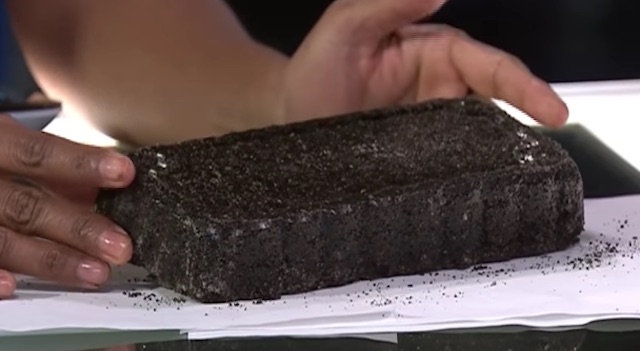
The Canadian engineering students are hoping to eliminate that risk by with the creation of Moto: a fake flammable log made of sugar, coffee grounds, and paraffin wax that can burn for up to 90 minutes.
“As soon as they’re out of the camp, they’re unsafe and that leaves them open to assault,” Bennett told CBC Toronto. “Moto logs prevent the dangers associated with that, but also frees women up to spend time doing other things, whether that’s trying to find another source of revenue or spending time educating their kids.”
The team currently collects coffee grounds from local Starbucks, Second Cup, and Tim Hortons outlets. As they continue to develop their prototype, the students plan on creating a simple recipe that can be replicated regardless of location or coffee shop availability.
A recent study of adults with early memory loss found that practicing a simple meditation or partaking in a music listening program may have multiple benefits for older adults with pre-clinical memory loss.
In this randomized controlled trial performed by a West Virginia University research team lead by Dr. Kim Innes, 60 older adults with subjective cognitive decline (SCD), a condition that may represent a preclinical stage of Alzheimer’s disease, were assigned to either a beginner meditation (Kirtan Kriya) or music listening program and asked to practice it for 12 minutes a day for 12 weeks.
As detailed in a paper recently published by the Journal of Alzheimer’s Disease, both the meditation and music groups showed marked and significant improvements in subjective memory function and objective cognitive performance at 3 months. These included domains of cognitive functioning most likely to be affected in preclinical and early stages of dementia, including attention, executive function, processing speed, and subjective memory function.
The substantial gains observed in memory and cognition were maintained or further increased at 6 months (3 months post-intervention).
Both intervention groups also showed improvements in sleep, mood, stress, well-being and quality of life, with gains that were particularly pronounced in the meditation group and sustained or further enhanced at the 3-month point.
The findings of this trial suggest that two simple mind-body routines, Kirtan Kriya meditation, which is a Kundalini yoga-based practice, and music listening, may not only improve mood, sleep, and quality of life, but also boost cognition and help reverse perceived memory loss in older adults with SCD.
The Singing Meditation
The Kirtan Kriya meditation utilizes ancient sounds – and is meant to be practiced for greater attention, concentration, improved short term memory, and better mood. The four chanting sounds used are Sa, Ta, Na, Ma—and translate to: birth, life, death, and rebirth..
The sounds are chanted repeatedly and in order and come from the Sanskrit mantra ‘Sat Nam’, which means ‘my true essence’.
If you would like to practice the Kirtan Kriya singing exercise, watch the video below and learn the basic steps…
Repeat the Saa Taa Naa Maa sounds (or mantra) while sitting with your spine straight and eyes closed. With each syllable, imagine the sound flowing in through the top of your head and out the middle of your forehead (your third eye point).
For two minutes, sing in your normal voice.
For the next two minutes, sing in a whisper.
For the next four minutes, say the sound silently to yourself.
Then, reverse the order, whispering again for two minutes, and out loud for two minutes, for a total of twelve minutes.
To come out of the exercise, inhale very deeply, stretch your hands above your head, and then bring them down slowly in a sweeping motion as you exhale.
After pulling her out amongst the glass, the two staggered away from the flames towards pedestrians waiting to help.
The driver was deemed unharmed and while the policeman suffered from minor smoke inhalation, he was later released from the hospital in a healthy condition.
(WATCH the video from his body camera below)
Click To Share This Daring Rescue With Your Friends
Over the course of his career with a package delivery service, Randy Hoist has seen a lot of mail marked “return to sender”; but the destiny of one box was so important it propelled him on a four year journey to find the proper owner.
The delivery was stranded in Hoist’s UPS Store in Golden Valley, Minnesota, because the intended recipient no longer lived at their address, and the sender was nowhere to be found.
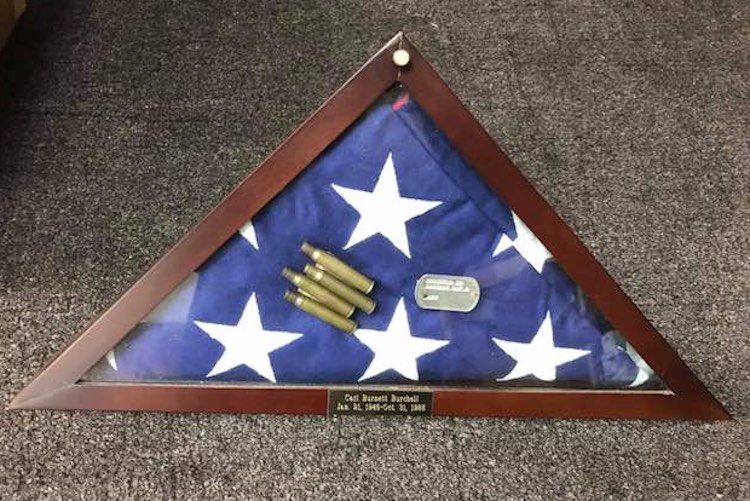
Inside the package were letters from Ronald Reagan and Richard Nixon, as well as the American flag honoring the funeral of the recipient’s father, a U.S. Navy veteran who had passed away from cancer three decades earlier. The box also contained poems, photographs, and letters the man had written during his military career.
“I can’t express how thankful I am that Randy was so passionate to find us,” Tim told Good News Network. “I couldn’t have asked for a better start to 2017. Receiving this package has been priceless.”
The UPS store owner was just as excited. “I felt like a giddy kid.”
“It brought a huge smile to my face knowing that I was able to help this family keep these heirlooms,” he said in an interview with Good News Network.
“Giving up was not an option—not with a family photo album. I was a photographer and I believe that pictures are a way to share and remember your family history. I could never have thrown away something that important.”
Do Your Part to Inspire Excellence… SHARE the story – OR,
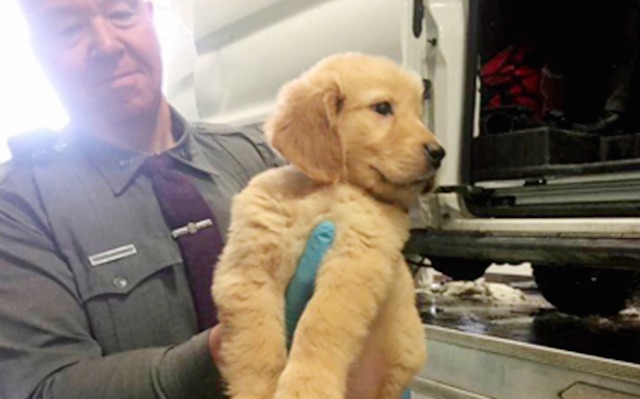
When New York state police arrived on the scene of an automotive accident, they were shocked to discover a crashed transport vehicle that had been carrying over one hundred puppies of different breeds.
The truck, which veered off the shoulder of Interstate 86 in Avoca, New York is suspected to have been transporting the dogs from a puppy mill – an inhumane operation that breeds dogs for sale.
Only 2 out of the 104 pups were seriously injured by the collision, and law enforcement officials contacted the Finger Lakes SPCA for assistance.
All but 4 of the puppies have been given back to the transport company due to the necessity of medical care, but FLSPCA are currently pursuing a formal release of ownership.
“While we too abhor puppy mills, we know of no means to legally confiscate animals only because there is a strong likelihood that a puppy came from one,” says the FLSPCA. “We would like to express our extreme appreciation to the New York State Troopers, T & R Towing, Bath Veterinary Hospital, FLSPCA staff and volunteers for all of their efforts to mobilize and quickly assist these animals. We would also like to thank our community for their concern for these puppies.”
The agency actively works to prevent animal cruelty through their humane programs, the care of animal cruelty victims, and by “supporting area law enforcement with their investigations as requested.”
(WATCH the video below)
Click To Share– OR, (Photo by New York State Police)
Scott Chafian is celebrating his 20th wedding anniversary with Cindy by staying true to his vows and caring for his wife “in sickness” as in health.
Cindy has been living on dialysis for the last two years because of her polycystic kidney disease. The left kidney had already been removed while her right started shutting down shortly afterwards.
It’s hard not to grin while watching this adorable father-daughter duo perform a classic Pixar tune.
Claire Ryan and Dave Crosby of the YouTube channel Claire and the Crosbys are taking the internet by storm with their cover of “You’ve Got A Friend In Me” by Randy Newman from the movie Toy Story.
Since it was published earlier this month, the video has already wracked up over 5.2 million views – and counting.
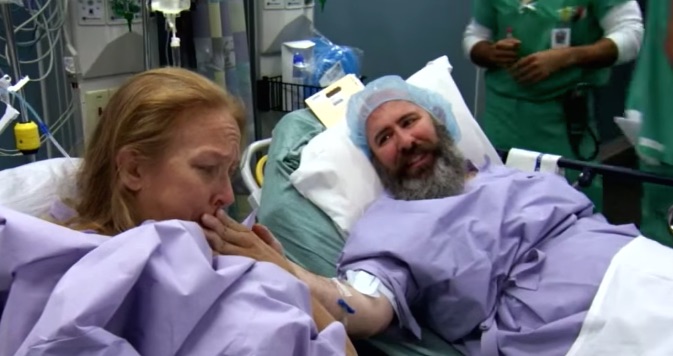
Melissa Benoit has lived with cystic fibrosis her whole life – and if it weren’t for a daring double-transplant procedure, the condition would have claimed her life.
The 33-year-old Canadian mother came down with influenza which led the bacteria in her lungs to spread throughout her body until she reportedly succumbed to septic shock, causing her organs to totally shut down despite life support systems.
As her condition worsened, doctors at the Toronto Lung Transplant Program conferred with the family and made a risky decision: they would remove the cause of the sepsis by removing her lungs altogether. There was only a one percent chance that the last-minute procedure would work.
For six days, Melissa was kept alive with a device that was not intended to replace the lungs—only assist in oxygenating the blood. Doctors hoped they could stop the sepsis so that she might get strong enough to receive a new pair of lungs from an organ donor. The successful procedure is now being called a world-first.
“They pulled me back from the dead,” Benoit said as she thanked her family during a news conference on Wednesday. “Foremost I have to thank my donor and my donor’s family. Without them, whatever procedure the physicians would have performed would have been useless.”
Her recovery has been swift, and she is walking and playing with her child once again.
(WATCH the video below)
Breath In The Positivity: Click To Share(Photo by University Health Network)
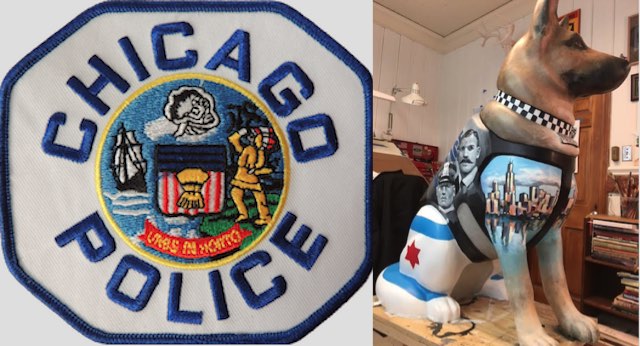
As a way of honoring fallen Chicago police officers, 200 painted fiberglass dog statues will be erected around the city to benefit the officers’ families.
The Chicago Police Memorial Foundation is partnering with PAWS Chicago for the 54-inch statues to be on display from July 23rd through Labor Day. Each figure can be sponsored for up to $2,000 and purchased after the art campaign for an extra $500. The funds will be divided amongst the two organizations, benefitting both medical care for pets and the care of families related to police officers killed or wounded in the line of duty.
The project is similar to that of Horses of Honor, a campaign that raised $480,000 for supporting Chicago police forces and family by auctioning off 125 life-sized horse statues in 2014.
“Building on the success of Horses of Honor, K-9 for Cops brings together two great organizations, the Chicago Police Memorial Foundation and PAWS Chicago,” Chicago Police Memorial Foundation Executive Director Phil Cline said in a news release.
“We are honored to partner with the Chicago Police Memorial Foundation, whose police officers and K9s are on the front lines protecting our communities every day,” PAWS Chicago founder Paula Fasseas said in the release.
City resident Ian Miller has started a petition to rename the Pittsburgh International Airport after Fred Rogers, the beloved children’s television show host.
Miller’s petition – which has already collected 1,800 signatures out of 2,500 – will be sent to the Allegheny County Airport Authority and the City of Pittsburgh requesting to officially rename the airport Fred Rogers International Airport.
“Pittsburgh is still an active transit hub and, for many people, our airport will be their first experience in Pittsburgh,” says Miller. “We wish to welcome everybody to our neighborhood.”
One of the supporters, Kishan Thadikonda from Frederick, Maryland, applauded the effort by saying: “In a time where the future looks bleaker and bleaker, it would be refreshing to honor someone who taught me above all to be a good person.”
Costco debuted the news that it will take steps to address bee-killing pesticides in its supply chain.
Its inaugural bee policy encourages suppliers of garden plants to limit the use of non-essential chemicals, discourages use of neonicotinoid insecticides on pollinator-attractive plants and encourages use of eco-friendly methods of pest and disease control. Costco is also expanding its selection of organic products, which supports pollinator health. This bee policy was incorporated into Costco’s Sustainability Commitment, published silently on its website in December.
As part of a multi-year campaign, Friends of the Earth conducted product testing and sent a letter with its allies urging Costco and other top retailers to stop selling plants treated with bee-toxic neonicotinoids (neonics) and to remove products containing these pesticides from store shelves. The announcement comes at the same time as news from the U.S. Environmental Protection Agency. Earlier this month, the EPA released its final Policy to Mitigate the Acute Risk to Bees from Pesticide Products, published preliminary pollinator-only risk assessments for the neonicotinoid insecticides clothianidin, thiamethoxam, and dinotefuran and updated its preliminary risk assessment for the neonicotinoid imidacloprid. the EPA’s actions failed to address non-agricultural uses.
“Costco’s decision to limit these bee-killing pesticides on garden plants and increase its selection of organic products demonstrates it is listening to its customers and taking into account the most up-to-date sound science,” said Tiffany Finck-Haynes, food futures campaigner at Friends of the Earth U.S. “However, we know that Costco and other retailers can do even more to protect bees. We urge Costco and other leading food retailers to phase-out pollinator toxic pesticides in its food supply chain to address the bee crisis.”
A study released by Friends of the Earth and Pesticide Research Institute in August, Gardeners Beware 2016, revealed the presence of bee-killing neonicotinoid pesticides in plants sold at major retailers. The plants tested are considered “bee-friendly” for home gardens, and the levels of pesticides detected have the potential to harm or even kill bees. The analysis found that garden retailers are responding to consumer pressure – between 2014 and 2016, the number of plants tested that contained neonicotinoids decreased by 51%.
Costco joins more than 65 retailers across the country that have taken steps to help protect pollinators. The Friends of the Earth report highlights leaders and laggards in pollinator protection. Commitments by Home Depot and Lowe’s to phase-out neonic pesticides in plants and products are helping to transform the market, Ace Hardware, True Value, and Walmart have not yet made similarly firm commitments.
Other major garden retailers have announced plans to take action. To date, True Value has said it is looking to phase out neonicotinoid products by Spring 2018 and Ace Hardware has said it is willing to eliminate neonicotinoid products by Spring 2019, but have not addressed eliminating neonicotinoids on plants.
“No one wants to buy plants for their gardens that could harm bees or other pollinators,” said Finck-Haynes. “We call on all retailers, particularly Ace Hardware and True Value, to stop lagging behind and immediately adopt formal public policies to eliminate neonicotinoid pesticides from their plants and products. It is clear retailer action is more important than ever given government failure.”
It’s that dreaded time of year – flu season. And we humans aren’t the only ones feeling the pain. Dogs can get the flu, too.
Scientists at the University of Rochester School of Medicine and Dentistry have developed, for the first time, two new vaccines for canine influenza. This research is not only important for improving the health of our furry friends, but for keeping us safe, too. Dogs that have been infected with multiple influenza viruses have the potential to act as “mixing vessels” and generate new flu strains that could infect people. This hasn’t happened yet, but experts say it’s possible.
Today, veterinarians use vaccines that include inactivated or killed flu virus, but experts say they provide short-term, limited protection. Scientists led by Luis Martinez-Sobrido, associate professor in the department of Microbiology and Immunology created two “live-attenuated” vaccines against H3N8 canine influenza virus, which is currently circulating in dogs in the U.S. Past research shows that live-attenuated vaccines, made from live flu virus that is dampened down so that it doesn’t cause the flu, provide better immune responses and longer periods of protection.
Martinez-Sobrido’s team used a genetic engineering technique called reserve genetics to create a live vaccine that replicates in the nose, but not in the lungs. The nose is where the virus first enters a dog’s body, so generating an immune response there could stop the virus in its tracks. If the vaccine were to get into the lungs it could create unwanted inflammation in response to the live virus. The study found the live vaccine was safe and able to induce better immune protection against H3N8 canine influenza virus in mice and dog tracheal cells than a commercially available inactivated vaccine.
In a second study, the team used reserve genetics to remove a protein called NS1 from H3N8 canine influenza virus. Previous studies have shown that deleting the NS1 viral protein significantly weakens flu viruses so that they elicit an immune response but don’t cause illness. This approach has been used with human, swine and equine flu viruses to generate potential vaccines and was also safe and more effective than a traditional inactivated H3N8 influenza vaccine in mice and dog tracheal cells.
The team is planning to test both live-attenuated vaccine approaches in clinical trials with dogs. The hope is to come up with new options to stem the spread of flu in shelters and kennels, and to avoid the transmission of a dog flu virus to people. As many dog owners and animal lovers are in close contact with dogs on a regular basis, Martinez-Sobrido believes its best to prevent dogs from getting the flu in the first place.
The team is using this research to tackle other dog flu viruses, too. They’ve used the safety of these approaches to engineer a live-attenuated vaccine for the H3N2 canine influenza virus, which was introduced in the United States in 2015. Early results show that similar to the H3N8 vaccine, the H3N2 live-attenuated vaccine is able to protect against the H3N2 canine influenza virus and is more effective than the only currently available inactivated vaccine.
(Source: University of Rochester School of Medicine and Dentistry)
Click To Share This Pawesome Story With Your Friends – Photo by University of Rochester School of Medicine and Dentistry
After dozens of failed resumé submissions, Brian Smith finally landed the job he needed all thanks to some sharp new threads.
Brian lost his job back in February – and despite applying to 180 jobs over the course of one year, no one wanted to hire him. As he struggled to survive on the streets, things looked bleak.
But then he heard about a special deal at Utah Woolen Mills, a clothing store in Salt Lake City. For every suit that the shop sells, they donate one to someone in the process of turning their lives around.
Brian was given the suit on Saturday and landed the job three days later.
(WATCH the video below)
Click To Share This Spiffy Story With Your Friends
Instead of investing $5 million in a 30 second advertisement broadcasted during the Super Bowl, Kraft Heinz is giving all of their salaried employees the day off after the big game.
The Chicago-based company is also going one step further and asking their fans to sign a petition that would make the day after the Super Bowl a national holiday.
“Statistics show over 16 million people call in sick or just don’t show up to work,” says the company’s petition. “And for those that do, productivity plummets so far that the country loses on average around $1 billion (true story). Enough with the madness.”
“The Heinz brand doesn’t settle on delivering superior taste or quality, and we don’t believe America should have to settle on the day after the best sports day of the year,” Nicole Kulwicki, head of Heinz brands, said in a press release.
(WATCH the video below)
Help Your Friends Ketchup: Click To Share With Your Friends
If you’re especially tired of seeing negative news everywhere, you might enjoy this cute animal tweet off; the most adorable competition to ever bless the internet.
It all started yesterday when the Smithsonian National Zoo made a Twitter post announcing the birth of their new resident baby seal.
Not to miss an opportunity to show off her state’s own furry friends, Twitter user Sarah Hill called on the Virginia Aquarium to rise to the challenge.
When they responded with a photo of an “otter/osprey combo”, other zoos and aquariums around the nation joined the fray by tweeting their own precious critters in the #CuteAnimalTweetOff.
The winner as of right now seems to be an embarrassed baby otter from the Seattle Aquarium with over 1,000 likes.
Last Thursday, Irish Parliament passed a historic bill that would lead Ireland to becoming the first country in the world to divest its sovereign wealth from coal, oil, and gas.
The Fossil Fuel Divestment Bill will divest over $8.5 billion from the Ireland Strategic Investment Fund. The legislation passed in a 90 to 53 majority vote will be reviewed by the financial committee before becoming law.
The bill, introduced by independent representative Deputy Thomas Pringle, can attribute its success to Trócaire, a Catholic development charity that rallied for the political campaign.
“With a climate-sceptic recently inaugurated into the White House, this move by elected representatives in Ireland will send out a powerful message,” said Éamonn Meehan of Trócaire. “The Irish political system is now finally acknowledging what the overwhelming majority of people already know: That to have a fighting chance to combat catastrophic climate change we must phase out fossil fuels and stop the growth of the industry that is driving this crisis.”
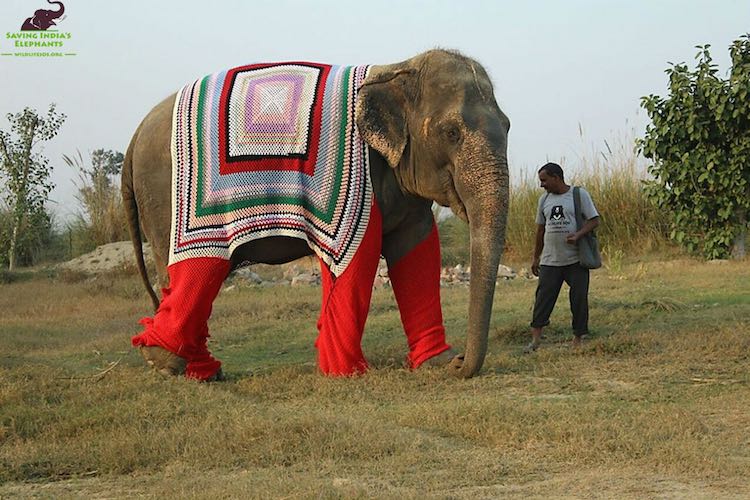
These pachyderms may be big, but they’re still just as susceptible to the cold as we are.
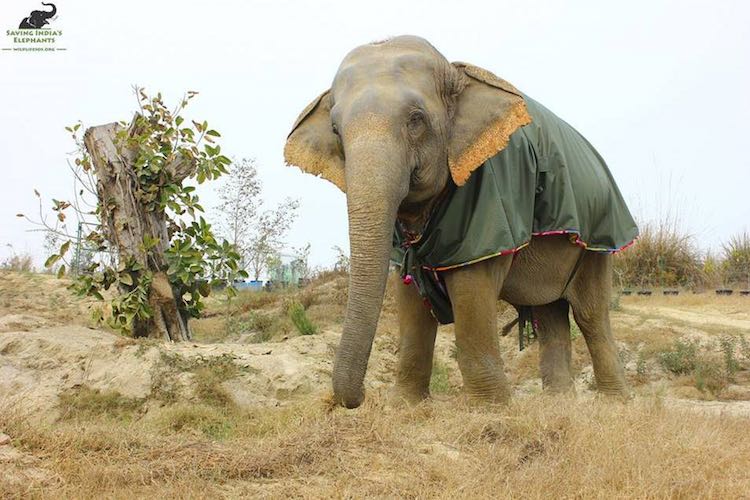
That’s why the villagers of Mathura, Uttar Pradesh are knitting giant sweaters called Jumbo Jackets for their elephant neighbors. The Jackets may take over 4 weeks to make, but the recipients are grateful for the warmth since India was recently struck by a cold snap.
The elephants, who are residents of the Wildlife SOS Elephant Conservation and Care Center, were rescued from previously abusive homes. The center houses 20 different male and female tenants who are now able to spend their days in happy comfort.
“It is important to keep our elephants protected from the bitter cold during this extreme winter, as they are weak and vulnerable having suffered so much abuse making them susceptible to ailments such as pneumonia. The cold also aggravates their arthritis which is a common issue that our rescued elephants have to deal with,” Kartick Satyanarayan, Co-founder and CEO of Wildlife SOS said in a statement.
Stay Warm: Click To Share With Your Friends(Photos by Wildlife SOS)