










All News - Page 602 of 1725 - Good News Network
Home Blog Page 602

Forget the ‘Best By’ Date; This Compostable Bioplastic Packaging Changes Color When the Food Goes Bad

Photo by Primitives

Anyone who’s worked in the food service industry understands that the ‘best-by’ dates often come and go long before the product has begun to spoil inside in any way. Contrastingly, anyone who’s worked in the food service industry also knows that food can go bad in ways which we can neither notice nor anticipate.

But what if the packaging containing a fresh food product could detect and warn you when spoilage occurs?

An intrepid nonprofit based out of San Francisco is currently developing such packaging that incorporates sensing material that will change its color, or give a sign in some way, to the handler or buyer when it detects the presence of harmful or unwanted bacteria or other chemicals.

“We’re incorporating sensing mechanisms into our materials that allow it to detect things like spoilage or even cold chain monitoring,” Viirj Kan, CEO of the startup, told Fast Company. In fact, they intend to harness “nature’s embedded intelligence.”

Kan and Noa Machover—the cofounder of Primitives—began developing the idea as students at MIT and they’re now working to commercialize their technology—and they’ve chosen to start with an area of food packaging that doesn’t always make headlines, but is in desperate need of help.

RELATED: German Supermarket Saves Over 2,000 Tons of Food By Reselling Items Other Stores Won’t

Of all the plastic polluting the earth, plastic bottles and ‘single-use’ bags and straws might inspire the greatest revolt and action, but Primitives has determined it’s the ultra-thin, sometimes vacuum-sealed, packaging around meat, produce, and bakery products that today is one of the most difficult items to recycle.

Photo of spoilage detection by Primitives

Along with their spoiling-sensing technology, Primitive is developing a compostable version of this sort of plastic as its flagship effort—a plastic that can be composted in your own garden by simply burying it.

Because today’s standard film contains multiple layers of different kinds of plastics, thin plastic sleeves are difficult to recycle. Primitive initially developed theirs with CO2-guzzling algae, but is exploring the potential of other compostable material like cannabis and other agriculture waste.

MORE: 30,000 Pounds of Leftover Super Bowl Food Saved From Landfill and Donated to Charity

Believe it or not, these sorts of bio-materials block oxygen from reaching the food inside even more effectively than plastic—while simultaneously working better to block the sun’s harmful UV radiation, another common cause of spoilage.

No word yet on when their product will be ready for market, or if they have distribution partnerships in place, but we’ll be watching to see what these innovative partners come up with.

Preserve Positivity By Sharing The News With Your Friends On Social Media…

Apple and Pear Cores Turned Into Chemical-Free Sweetener as an Alternative to Artificial Sweeteners and Sugar

Photo by Martin Bargl

A Dutch company aptly-called Fooditive, is turning pear and apple cores, as well as bruised and discarded fruit from producers and suppliers into a chemical-free, calorie-free, sugar substitute.

Artificial sweeteners like sucralose and aspartame, though legal for use in food and beverages for decades in the United States and elsewhere, are now not only emerging as a potential genotoxin (a poisonous substance which damages DNA), but also as an environmental pollutant since it is not entirely absorbed by our bodies and can travel all the way through our water treatment systems and back into groundwater sources.

Refined cane sugar has its own problems, playing a role in the global skyrocketing rates of diabetes and obesity since the 1950s. Sweeteners and syrups made from corn have much the same effect on our bodies, while also contributing massively to keeping afloat the problematic, uncompetitive American system of agriculture, farm subsidies, and lobbying.

Dutch food scientist Moayad Abushokhedim uses a natural fermentation process to extract fructose from third-rate fruits collected from suppliers and turns it into a calorie-free sweetener that contributes to Rotterdam’s goal of a circular economy by 2030.

RELATED: 30,000 Pounds of Leftover Super Bowl Food Saved From Landfill and Donated to Charity

According to the company’s website where you can see a detailed ingredients list, he plans to make Fooditive Sweetners available in powder, liquid, and syrup forms. There is no information yet on how to purchase.

Apart from their sweetener, Fooditive also has a solution for artificial preservatives, creating natural ones from carrot waste, and he counters harmful emulsifiers with potato extracts.

Right now, the company is in the process of expanding their operations to try and get Fooditive products like their sweeteners and preservatives into commercial Dutch foodstuffs.

CHECK OUT: German Supermarket Saves Over 2,000 Tons of Food By Reselling Items Other Stores Won’t

“Our products really provide the food and beverage producers with the ability to have a clean label, a green label, and show people what’s in their food,” said Gijs Gieles, Fooditive spokesperson to Fast Company.

These kinds of recycling applications are becoming more and more common in Europe, especially since France passed a law in 2016 forcing supermarkets to recycle, compost, or donate as much of their outgoing or expired stock as possible. Other countries like Germany began to create similar legislation, and a German supermarket SirPlus Rescue Market specializes in discarded, expired, or unwanted packaged foods and produce.

Share This Sweet Alternative With Your Healthy Friends On Social Media… (File photo by Martin Bargl)

Brazilians Get Juicy Tax Breaks When They Adopt Animals, Plant Trees, or Hail Historic Roots

A slew of Brazilian cities are passing laws that offer tax deductions or exemptions for citizens who want to pitch in to restore the health and beauty of their communities.

Whether by increasing tourism, restoring historic city centers, or boosting beautification by planting trees and maintaining their lawns, there are several ways residents of Goiânia, Belo Horizonte, Quinta do Sol, or Saraba can reduce their Brazilian property tax (IPTU), by anywhere between 30–100%.

Shopkeepers in Goiânia can receive a 2-year exemption from the IPTU if they help restore the original Art Deco-style of the city’s historic center by remaking their facades and storefronts to conform to the original 1950’s Parisian-inspired character.

For anyone who’s traveled to South or Central America, the site of a stray dog is nothing unusual. In the city of Quinta de Sol, the Rescue Program for Abandoned Dogs is a measure to encourage citizens to adopt stray dogs in exchange for a tax break.

Dog lovers can get 50% off their tax bill for big dogs, 40% for medium-sized dogs, and 30% for miniatures.

LOOK: Stray Cat With No Ears Finally Adopted After Shelter Worker Crochets Her a Pair of Purple Ones

Known for its jabuticaba trees, Sabara is offering anyone looking to save some money on their IPTU a 5% deduction for every jabuticaba tree they plant in their front or back gardens.

Photo of jabuticaba fruit trees by Vania Wolf, CC license

In the cities of Belo Horizonte and Minas Gerais, a homeowner can get an IPTU exemption if they maintain a wild garden on their property. Described in the law as ‘private ecological reserves’ the specifics of the legislation reads that the reserve of anyone seeking an exemption must contain “primitive or semi-primitive natural conditions” that aid in the “preservation of the biological cycle of species of fauna or flora native to Brazil”.

MORE: Hotel Helps Dogs Get Adopted By Allowing Long-Term Guests to Foster Shelter Pups During Their Stay

As a way to ease the burden for those who have served, Fortaleza is offering exemptions for WWII veterans. The city of Acros is following suit for citizens with debilitating or chronic diseases like certain cancers, Alzheimer’s, and MS. Acros has issued 20 tax exemptions since 2017 for people with catalogued chronic diseases.

With a score from the World Bank of 1.68 out of 7 ranking the “burden of government regulation,” with 1 being the most burdensome, any break from the taxman will likely be a welcome relief for the citizens of Brazil.

And with more trees, primitive reserves, happy doggos, and art deco restaurants to show for it, visitors to the South American country will likely be just as happy.

Share The Innovative Ideas With Your Friends On Social Media – File photo by Andrey, CC

Orchestra Allows Deaf People to ‘Hear’ Beethoven Through Touch – Much Like the Maestro Did

Zsuzsanna Foldi of Hungary was declared deaf at eight-months-old due to a meningitis infection. Now at age 67, with her hands placed gently on a musician’s double bass while sitting among the performers of the Danubia Symphony Orchestra in Budapest, she’s been able to enjoy Beethoven’s famous 5th Symphony in a way quite similar to the very man who composed it.

“When I sat next to the musician who played the bass today, I started crying,” she told Reuters.

“My father also had a double bass… and I did not have a hearing aid. I always put my ear on the bass and he played to me,” she added.

This was the first in a series of spring performances being planned by the orchestra’s conductor for people with hearing impairments, bringing music to those who might not otherwise have no access to it.

RELATED: Smart Caption Glasses Allow Deaf Audience Members to Watch Live Theater Performers Directly

The performers are positioned in a way that allows the audience members with the most severe hearing impairments sit among them, either placing their hands on the instruments to feel the vibrations, or holding a red balloon, which gathers vibrations from multiple instruments conveying them through the fingertips.

Conductor Mate Hamori said the idea was to connect the maestro’s music with those who were most capable of sympathizing with Beethoven—who famously composed his iconic 9th symphony when he was totally deaf in later years.

Beethoven’s hearing became gradually more and more impaired over his life, and from 1804 to 1808 when he wrote the fifth symphony, it was already very difficult for him to hear. As it became worse and worse, he started composing music on his piano so he could feel the vibrations through the keys.

One of the audience members with their own hearing problems remarked about the stringed instruments producing a very tactile vibration, so it was “not a coincidence that he wrote this kind of music.”

(WATCH the video below)

Be Sure And Share This Sweet Story Of Inclusivity With Your Friends On Social Media…

“I travel not to go anywhere, but to go. I travel for travel’s sake. The great affair is to move.” – Robert Louis Stevenson

Quote of the Day: “I travel not to go anywhere, but to go. I travel for travel’s sake. The great affair is to move.” – Robert Louis Stevenson

Photo: by Dino Reichmuth – public domain

With a new inspirational quote every day, atop the perfect photo—collected and archived on our Quotes page—why not bookmark GNN.org for a daily uplift?


Monks in Thailand Create Iconic Orange Robes from Recycled Plastic – 40 Tons Already Collected On Their Own

Helping to relieve suffering in the world is one of the goals of Buddhist teachings that guide followers on their journey from birth to death.

And for one Buddhist temple in Thailand, it’s not only food, money, and clothing that pilgrims donate to the cause. They bring plastic waste.

Despite being a fraction of the size of China, India, and the U.S., Thailand is one of the five biggest contributors to plastic pollution on the Earth.

RELATED: Man Sick of Trash and Crime, Buys Buddha Statue for Street—and Transforms Neighborhood

Thailand is also predominantly Buddhist, and according to Phra Maha Pranom Dhammalangkaro, his temple is doing its part to combat the global environmental crisis, in line with the teachings of the Buddha.

Plastic Prayers

He has turned the Wat Chak Daeng temple in Samut Prakan Province, just south of Bangkok, into a recycling mecca. A large recycling machine pulverizes donated plastic bags and bottles into large bales which the monks organize to be shipped off to recycling plants.

Once broken down, the plastic is turned into polyester fibers which are then dyed by the monks and turned into their iconic saffron orange robes.

“Donating one kilogram (2.2 lb) of plastic bottles can help make a full set of monk robes, which has a high return value, both in terms of money and merits,” the temple’s abbot, Maha Pranom, told Reuters.

WATCH: 170 Foxes Are Rescued From Fur Farm and Given New Home at a Buddhist Monastery

When the Abbot Pranom ventures out into surrounding communities, citizens offer up their plastic waste rather than food, to receive his blessings.

In two years, the temple has produced more than 800 sets of the raiment, which sell for between 2,000 baht ($65.79) and 5,000 baht ($164.47). The income keeps the recycling operation up and running, along with a revolving staff of volunteer housewives, retirees, and disabled persons.

“If you don’t collect these plastics, where do they end up? In the stomachs of dugongs, dolphins, whales, and many other sea animals,” the Abbot tells them.

LOOK: Burned as a Boy, 11-Year-old Monk Wants to be ‘Greatest Lama’

According to the Ocean Conservancy, the 40 tons of plastic that the monks have recycled is a great first step in helping stem the tide of plastic pollution from Thailand that places the Southeast Asian country in 5th place for plastic polluting nations.

“Not only are the monks making a concrete contribution to recycling, but they are raising awareness in their communities,” Chever Voltmer, Director for Plastics Initiatives at Ocean Conservancy told Reuters.

(WATCH the video below)

Be Sure And Share The News With Your Friends On Social Media…

Master Violinist Performing for Inmates Receives Unexpectedly Enthusiastic Ovation (Watch)

When master Latvian violinist Gidon Kremer drew his bow across the strings of his 379-year-old Amati violin on the final note in his recent performance of Preludes to a Lost Time by Weinberg, and Chaconne by Bach, the audience leapt into the air in a rousing standing ovation.

But, rather than the ornamental halls of the Kennedy Center, the applause echoed around the gymnasium in British Colombia emanating from the hands of prisoners, incarcerated for crimes ranging from burglary to murder.

“I have to say that in some ways they were more attentive or more enthusiastic compared to some concert audiences,” 72-year-old Kremer told CBC news. (See a clip below.)

The concert in the Pacific Institution in Abbotsford was put together by the Looking at the Stars Foundation, a Toronto-based charitable organization that puts on classical music events and performances for those who might not have the opportunity to access traditional theaters and concert halls.

RELATED: Inmates Are Earning Free College Degrees Behind Bars, And Their Recidivism Rate Plunges to 2%

Founded in 2015 by a Lithuanian refugee, Dimitri Kanovich, Looking at the Stars has hosted 37 such concerts in 15 Canadian prisons in just four years.

As the day of the performance arrived, prisoners entered the gymnasium after being searched by a guard and a sniffing dog—then, a personal handshake from Mr. Kanovich ensured they felt welcome.

Encouraging Music in Prison

The audience was spellbound for an hour during the performance, according to Vancouver Symphony Orchestra President, Angela Elster. The orchestra was a production partner for the prison concert, and is soon to work with Corrections Canada to create a program that allows inmates access to instruments that they formerly played and would like to play again.

After the show, there was a Q&A session with the Latvian maestro. Prisoners asked him questions about composers like Vivaldi, about how old he was when he started playing the violin as a child, and who played his antique violin before he came to possess it.

LOOK: Matches Made in Heaven (and Jail): Troubled Dogs Saved From Euthanasia by Doting Inmates

But more than anything else they wanted to express their heartfelt gratitude for coming all the way to their institution and playing for them one of the most complicated pieces of music imaginable.

“I think music is something that can give warmth to everyone in trouble, in prison or not in prison,” said the violinist. “I’m happy to have been here.”

(WATCH a clip of his performance—with ovation at 2:00— from CBC below…)


Be Sure And Share The Inspiring Story With Your Friends On Social Media…

Cherokee Nation First U.S. Tribe to be Invited to Preserve Their Heirloom Species in Global Seed Vault

With close to 1 million samples from nearly every country on earth, the Svalbard Global Seed Vault in the remote Svalbard Island, between Norway and the Arctic, contains the largest collection of seeds and other plant specimens in the world.

Last week, the Cherokee Nation became the first Native-American tribe to receive an invitation to contribute seeds of their own heirloom crops and join the effort to ensure biodiversity and food security in the uncertain centuries ahead.

“This is history in the making,” said a Cherokee Nation press release. “It is such an honor to have a piece of our culture preserved forever. Generations from now, these seeds will still hold our history and there will always be a part of the Cherokee Nation in the world.”

The tribal office of the Secretary of Natural Resources collected nine samples of Cherokee heirloom crops to send to the Global Crop Diversity Trust, including Cherokee White Eagle Corn, the tribe’s most sacred corn, which is typically used during cultural activities, and three other varieties of corn grown for consumption in distinct locations to keep the strains pure.

RELATEDAt Long Last, Native Californian Tribe Gets Land Back To Call Its Own

Other seeds sent to the Svalbard seed bank include Cherokee Long Greasy Beans, Cherokee Trail of Tears Beans, Cherokee Turkey Gizzard black and brown beans, and Cherokee Candy Roaster Squash.

These heirloom species predate the arrival of Europeans on the American continents, and their preservation offers a chance to secure critical biodiversity for the central North American region in case of crop shortages or other disasters that could result in flora extinction events.

Svalbard Global Seed Vault, Tiq, CC license

It also ensure that the proud history of the Cherokee will live on through the ages.

In 2019, after being interviewed by National Public Radio about the Cherokee Nation’s own heirloom seed bank program, their Senior Director of Environmental Resources, Pat Gwin was contacted by the Global Crop Diversity Trust.

“He sent me an email and said they would be honored to have the tribe’s seeds in the seed vault,” said Gwin. “…Knowing the Cherokee Nation’s seeds will be forever protected and available to us … is a quite valuable thing indeed.”

CHECK OUT: First-of-its-Kind Village for Homeless Native Americans Now Houses Dozens in Seattle

Share This Fabulous Foodie Story With Your Friends On Social Media – Featured photo by petitspapiers, CC license

“The older I get, the greater power I seem to have to help the world; I am like a snowball – the further I am rolled, the more I gain.” – Susan B. Anthony (born 200 years ago)

Quote of the Day: “The older I get, the greater power I seem to have to help the world; I am like a snowball – the further I am rolled, the more I gain.” – Susan B. Anthony (born 200 years ago today)

Photo: by Jerry Zhang – public domain

With a new inspirational quote every day, atop the perfect photo—collected and archived on our Quotes page—why not bookmark GNN.org for a daily uplift?


Restaurant Server Praised for Pulling Off Epic Save After He Somehow Fell Without Dropping Any of His Four Dishes

This is the impressive moment a waiter fell to the floor while he was carrying four meals—and he didn’t even drop a single plate.

24-year-old Jamie Shoebridge has been waiting tables for three years, although he may now be considering a career in the circus after he pulled off this incredible juggling act.

Shoebridge’s little accident occurred on Sunday afternoon during the lunchtime rush. CCTV cameras captured the moment that he slipped on some peppercorn sauce and fell to the floor, taking down a decorative plant in the process.

As bizarre as it is, however, he somehow managed to keep hold of the plate he was holding in his left hand while somehow continuing to balance the three other meals he had been carrying on a tray in his right.

RELATED: Watch Rollercoaster Passenger Use His Astonishing Catlike Reflexes to Catch a Stranger’s iPhone in Mid-Air

Shoebridge, who is a restaurant supervisor from Nottingham, said he then jumped back up and delivered the meals as planned with his guests none-the-wiser.

“One minute I was walking along with the plates and the next minute I was on the floor,” said Shoebridge. “I lost my footing and fell down face first.

“There was some peppercorn sauce on the floor and I slipped on it. It’s all a blur and I’m not sure how it happened,” he continued. “It was just an instinct to lift my arms up and try to save the plates. I just got back up and carried on as normal.”

MORE: Postwoman’s Special Delivery Through Open Second-Story Window is Being Hailed as the ‘Most Amazing Thing Ever’

The only casualty of the three roast beef dinners and bangers and mash dish was one sausage and a few peas.

“I have no idea how none of the plates got smashed,” said Shoebridge. “I’m impressed with myself.”

“It didn’t hurt but I was very confused as to how it happened. We all had a laugh about it in the office. It has become a bit of a running joke at work now.”

(WATCH the video below)

Serve Up This Stunning Save To Your Friends By Sharing It To Social Media…

Bees Are Benefiting From Hemp Pollen as More Legal Cannabis is Grown Since 2018 Farm Bill

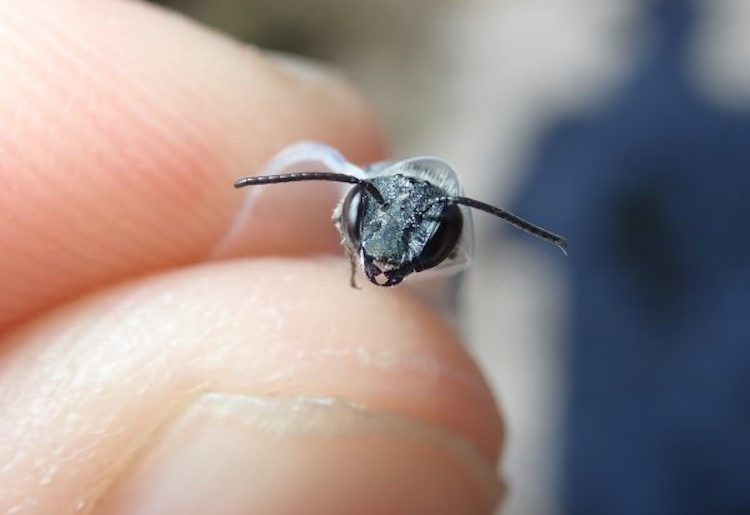
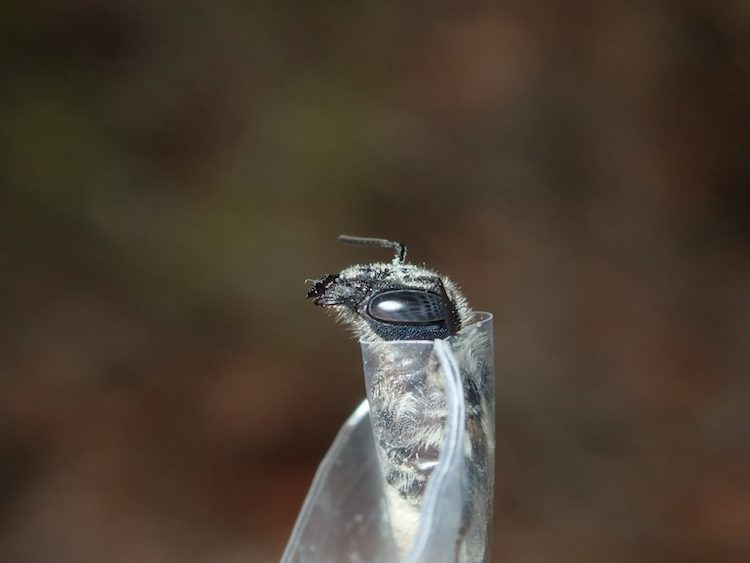
Since the 2018 Department of Agriculture Farm Bill finally legalized industrial hemp in the United States, scientists have discovered an unexpected benefit to the new fields of green sativa: it’s is helping dwindling bee populations.

Cannabis sativa is an exclusively wind-pollinated plant and thereby creates an abundance of pollen for a variety of bee species. And, in the past year, since the legislation passed, industrial hemp plants are more commonly being grown outdoors instead of the closets and basements of years past.

This particular study, published in the journal Environmental Entomology, recently found evidence of increasing bee diversity and population after they studied the species loitering on hemp flowers across 11 farms in the Finger Lakes region of New York.

“We identified all bee visitors to the species level and found that hemp supported 16 different bee species,” state the authors.

RELATED: Want to Help Bees? Leave the Dandelions Alone This Spring

Ninety percent of all the netted bees visiting the hemp flowers were apis mellifera (the honey bee) and bombus impatiens (the bumblebee).

In addition to bee populations suffering from the effects of pesticides, insecticides, and a reduction in plant diversity, bee populations are negatively affected by disruptions in pollen resource availability throughout the year.

The authors of the newly-published study, however, detail that since hemp flowers in late summer, bees in the vicinity have a pollen-rich resource available to them during a time of the year when pollen is scarce.

LOOK: 316 Dutch Bus Stops Are Getting Green Roofs Covered in Plants as a Gift For Honeybees

“Because of its temporally-unique flowering phenology, hemp has the potential to provide a critical nutritional resource to a diverse community of bees during a period of floral scarcity and thereby may help to sustain agroecosystem-wide pollination services for other crops in the landscape,” reads the study.

They also found that plant height played a significant role in the number of bees attracted to each field.

“As cultivation of hemp increases, growers, land managers, and policy makers should consider its value in supporting bee communities and take its attractiveness to bees into account when developing pest management strategies.”

CORRECTION: This article previously confused hemp and marijuana. Both come from the same plant species, Cannabis sativa, but cannabis sativa plants with 0.3 percent of the psychoactive THC, or less, are hemp. Cannabis plants with more than 0.3 percent THC are marijuana.

Plant Some Positivity By Sharing The Good News To Social Media…

Man Has Been Delivering Hundreds of Roses to Widows, Military Wives, and Single Women on Valentine’s Day


Valentine’s Day is a day of romance for some—but for others, it might be a reminder of loneliness or grief.

That’s why 29-year-old Seth Stewart has spent the last eight years making sure that local widows, single women, and military spouses in Spokane, Washington are not forgotten during the holiday.

Every morning on Valentine’s Day, Stewart and his brothers deliver single red roses to the homes of women who have lost their spouses or had their significant partners deployed overseas.

Stewart keeps a list of all the women and mothers in his area who he delivers to every year. In the weeks leading up to the holiday, Stewart asks Facebook readers to send him the additional names of women who might need a pick-me-up so he can add them to the list.

LOOKHusband Plants Field of Flowers for Blind Wife to Smell, So Spectacular it Gets Visitors

Stewart says that he and his brothers generally deliver between 400 to 500 free roses every year—with the help of a delivery driving team—but this year, they’re delivering 700 roses to women across the region.

They’re hoping to deliver many more roses in the years to come, and expand into other areas, especially after witnessing the emotional impact that it has had on the recipients.

“Every single year we do this, there are always one or two women who break down sobbing because it means so much to them,” Stewart told CNN.

“One of our deliveries this year was a widow,” Stewart told GNN. “Her husband passed a few years ago. We were instructed to sign the card from her late Husband: ‘Happy Valentine’s day. I love you. –Floyd’.

“It’s pretty powerful stuff each year,” said Stewart, who pays for any expenses not covered by their crowdfunding page.

If you would like to nominate someone to receive a rose next Valentine’s Day, you can send Stewart a message via his Rose Rush Facebook page.

(WATCH the video below) – Photo by Seth Stewart

Be Sure And Share This Lovely Story Of Kindness With Your Friends On Social Media

Scientists and Refugees Are Growing Crops in the Desert Using Discarded Mattresses Bound for the Landfill

Photo by University of Sheffield / Desert Gardens

British scientists have succeeded in cultivating tomatoes, peppers, aubergines and herbs in the desert using discarded mattresses bound for landfill.

The innovative system, which was tested in a refugee camp in Jordan, could be rolled out to every shelter in the world, helping millions of people to thrive in barren landscapes.

Since aid workers often discard thousands of used foam mattresses in refugee camps across the globe, University of Sheffield scientists began developing foam “soils” in their labs in hopes of using old bed materials as a growing medium for crops.

The research team, led by Professor Tony Ryan, is made up of experts in hydroponics: a technique in which plants are grown with their roots resting in a solution of water and essential nutrients instead of soil. The method uses 70-80% less water than planting straight into the soil and eliminates the need for pesticides.

RELATED: Scientists Use Recycled Sewage Water to Grow 500-Acre Forest in the Middle of Egyptian Desert

In the first trial of its kind, his researchers worked with a group of Syrian refugees at the Zaatari camp, which serves as a shelter to many who are already experienced farmers themselves.

They showed the study participants how to fill waste containers from around the camp with mattress foam and a carefully balanced nutrient solution. Seedlings were then planted straight into the foam so it could support the roots as the plant grew.

Working closely with the refugees, the team successfully created “desert gardens” that provide people in the camp with fresh herbs and vegetables, training opportunities, and longed-for greenery in a challenging desert.

Photo by University of Sheffield / Desert Gardens

“The refugees we have worked with have taken our training and made the project their own, growing things we never thought would be possible in the desert environment using recycled materials,” said Ryan.

“We are only at the start of what might be possible, in terms of what refugees and their situation has to teach us about all of our potential futures.”

Nearly 1,000 refugees have been taught how to manage the hydroponic system thus far—and the team believes it could benefit even more people around the world.

MORE: Coastal Dutch ‘Farm’ Grows Seaweed to Filter Pollution From Their Favorite Beach –And Tackle Climate Change

The project gives people the tools and techniques they need to grow their own food and gain future employment as well as boosting mental health and greening the camp.

In turn, the scientists have learned from the refugees whose use of the foam in real-world conditions has demonstrated its potential to grow crops more sustainably—and in places with degraded soils.

Desert Garden Project Manager Dr. Moaed Al Meselmani said: “I’m a researcher and a Syrian refugee myself—and now I’m helping others like me to learn new skills and feed their families with fresh herbs and vegetables in the desert.

Photo by University of Sheffield / Desert Gardens

“When you’re forced to flee your home, it’s the simple things you miss—like a cup of fresh mint tea or showing your children how to plant a seed. This project connects people with home and gives them hope for the future.”

The Sheffield researchers now hope to raise £250,000 with their Desert Garden appeal to make the project sustainable. The money will be used to supply seeds, nutrients, and training for another 3,000 refugees.

The United Nations High Commissioner for Refugees (UNHCR), which runs Zaatari camp, provides Syrian refugees with enough money to buy staples like bread and chickpeas. Nutritious fruit and vegetables, however, are often out of reach—and traditional fresh mint tea is considered a luxury.

CHECK OUT: Drought-Proof ‘Cooling Houses’ Use Saltwater and Cardboard to Grow Tons of Healthy Produce in the Desert

Professor Ryan, director of the university’s Grantham Centre for Sustainable Futures, said: “UNHCR see this as something that can work in nearly every refugee camp to improve mental health and well-being.

“If we can make desert gardens economically and culturally sustainable in Jordan, we can ultimately roll this out around the world and help millions of refugees to thrive.”

Professor Duncan Cameron, director of the Institute for Sustainable Food at Sheffield, said: “It’s astonishing what happens to the collective human imagination when it meets and is ignited by urgent reality.

WATCH: Man Succeeds Where Government Fails: He Planted a Forest in the Middle of a Cold Desert

“Our research on synthetic soils meant we could re-imagine the UNHCR’s waste disposal problem—where aid workers saw used mattresses, we saw an alternative growth substrate.

“This project is about co-creation, not ‘smart ideas’ parachuted in. As scientists, we’ve learned an enormous amount from the refugees about how our research can be applied in the real world, and they’ve gained valuable skills for the future.”

(WATCH the University of Sheffield video below)

Plant Some Positivity By Sharing The Good News To Social Media…

Boy in Wheelchair Left Awestruck After Seeing Target Store Ad Featuring Boy ‘Like Him’

This is the emotional moment that a young boy in a wheelchair was left awestruck by an advertisement featuring a child who looked just like him.

Oliver Garza-Pena—who turns 2 years old next month—has a condition called caudal regression syndrome. Since the condition impairs the development of his lower body, he relies on a wheelchair to move around.

Earlier this month, Oliver had been on a shopping trip with his parents at a Target store in Arizona when he caught sight of a clothing ad depicting another boy in a wheelchair—and he was floored.

RELATED: First US National Park to Offer Heavy-Duty Wheelchairs for Disabled Visitors to Enjoy the Scenery

“Today Oliver stopped me dead in his tracks and turned back around to see this picture that he spotted! He just stared at it in awe!” his parents wrote on Facebook.

“He recognized another boy like him, smiling and laughing on a display at Target,” they continued. “Oliver sees kids every day, but he never gets to see kids like him.

“This was amazing! I am so happy that other kids that pass through here with their parents will see this! There is a lot of focus on representing diversity, but representing people with disabilities is just as important!”

WATCH: When Family Can’t Afford Motorized Wheelchair for 2-Year-Old, High School Students Modify Toy Car Instead

Since they published a photo of the heartwarming moment to Oliver’s Facebook page “Ollie’s World”, it has been shared more than 30,000 times with the hashtag #RepresentationMatters.

Additionally, the post ended up reaching the news feed of the boy featured in the ad—and Ollie’s parents were delighted over the chance to express their gratitude.

“This post was shared so much that it made it to the family and the boy in the Target display. Thank you Colton in Massachusetts for making a difference!!” they wrote.

Be Sure And Share This Sweet Story Of Representation With Your Friends On Social Media…

“If I had a flower for every time I thought of you… I could walk through my garden forever.” – Alfred Tennyson

Quote of the Day: “If I had a flower for every time I thought of you… I could walk through my garden forever.” – Alfred Tennyson

(Happy Valentine’s Day from GNN!)

Photo: by Polychrome Creative – public domain

With a new inspirational quote every day, atop the perfect photo—collected and archived on our Quotes page—why not bookmark GNN.org for a daily uplift?


61% of Americans Say They’ve Turned to a Romantic Vacation to Save Their Relationship

Nearly three in five Americans say a vacation saved their relationship, according to a new Valentine’s Day survey of 2,000 adults who have traveled out of town with their significant other.

The poll also found that 61% have gone on a vacation with their partner in an effort to reignite their romance. And, it’s no wonder: 6 in 10 tended to experience more romance while on vacation, as compared to their everyday lives.

TOP 5 REASONS FOR A VACATION WITH A PARTNER
1. To spend more quality time with significant other 72%
2. To experience something new with partner 72%
3. To see a part of the world never seen before 66%
4. To go on an adventure 63%
5. To reignite the romance 61%

The poll also revealed that the average American will go on three separate romantic getaways, at least overnight, with their partner in a year.

WATCH: After Couple is Mocked for Wedding Proposal at KFC, Thousands Rally To Offer Dream Wedding and Gifts

The survey, conducted by OnePoll in conjunction with Apple Vacations, examined travel habits and compiled a list of the ways that couples are most romantic with each other on vacations—which are different from their normal routines.

TOP 5 WAYS TO TURN UP THE ROMANCE
1. Giving compliments 48%
2. Showering with affection 47%
3. Going out on a planned date 43%
4. Holding the door for me 43%
5. Buying gifts 42%

It’s becoming increasingly popular to propose to a significant other on vacation; 41% percent suspected that their partner might pop the question while on a trip together.

Of those who thought their partners were going to propose marriage while on a trip, four in five had their suspicions confirmed.

But they don’t only get engaged during a romantic getaway. Thirty-one percent have actually eloped while enjoying a destination with their partner.

LOOK: Elderly Man Gazing Fondly at His Date in McDonald’s Inspires Thousands of Romantics Online

So how do you keep romance alive when you’re not on vacation? Here are five of our favorite stories about people going above and beyond the call of duty for the sake of love.

TOP 5 STORIES OF EVERYDAY ROMANCE
1. How a Doting Husband Used 8 Billboards to Tell His Wife He Loved Her More
2. As Wife Loses Eyesight, Husband Learns to Do Her Makeup and Impresses Kardashian
3. Inspiring Couple Made New Year’s Resolution to Go On 52 Dates—and They Succeeded
4. ‘Best Boyfriend Ever’ Fills Prescription of ‘Love Pills’—With Tiny Notes
5. Guy Makes Everybody Smile When He Picks Up Girlfriend in Themed Cars Every Day

Be Sure And Share The Romance With Your Friends On Social Media…

Forget Online Dating: Writing Letters to This Ancient Tree in Germany is Fabled to Help People Find Their Valentine

If you haven’t felt the spark of love through online dating apps, it may be time for you to sew your seeds in better places—like under the loving limbs of this tree in Germany.

The Bridegroom’s Oak tree is fabled to have had a remarkable history of helping people find true love.

It started with a couple in 1890 who used a hole in the tree to pass notes to each other in secret. As more and more people told the story of the star-crossed lovers, admirers began using the 600-year-old tree as a mailbox to deliver their own letters of hope—to their future soulmates.

The tree was given its own postal address in 1927, and it now receives roughly 1,000 letters per year. People visit the tree, read and take home letters that look interesting, and become pen pals—and sometimes they even get married.

LOOKWhen Widow Carries On Husband’s Kind Tradition of Filling a Cooler, People Pay It Forward

Karl-Heinz Martens has delivered letters to the tree as a mailman for 30 years, and he believes the ancient oak has a certain kind of “unparalleled” magic.

“I do believe there is something magical about the tree,” he says. “This aura, this tranquility that you have there, this serenity cannot be matched by the internet. I’m getting goosebumps just talking about it.”

If you’re skeptical about the tree’s ability to call in “lady luck”, that’s fine – but you should also known that Martens is now happily married to a woman who sent him a letter through the tree after she saw him in an interview on TV.

(WATCH the sweet video below by Great Big Story) – Photo by Great Big Story

Spark Some Romance By Sharing The Love Story With Friends On Social Media…

Teen Scientist and His Dog May Be First Research Team of Their Kind to Tackle Air Pollution From the Ground

SWNS
SWNS

A Labrador has become the first dog in the UK—and potentially the world—to join the fight against air pollution by recording pollutant levels near ground level.

Bagheera (or “Baggy” for short) wears a pollution monitor on her collar so she can take data measurements close to the ground.

Since her monitor has found that air pollution levels are higher closer to ground level, her research has helped highlight concerns that babies and toddlers may be at a higher risk of developing lung problems.

MORE: Teen Awarded $50,000 Science Fair Prize for His Method of Removing Microplastics From Water

Conventional air pollution monitors are normally mounted on lampposts at about 9 feet (2.7 meters) in the air. However, since Baggy stands at roughly the same height as a child in a pushchair at just 2.5 feet tall, she frequently records pollution levels which far exceed the standard data.

Baggy is thought to be the first dog in the UK, if not the world, to join the fight against air pollution in this way.

The doggy data research was the idea of Baggy’s 13-year-old owner Tom Hunt and his dad Matt.

SWNS

The English youngster from Chesham, Buckinghamshire realized that pollution levels are around two-thirds higher close to the ground than they are in the air at the height where they are recorded by the Environment Agency.

Tom has since reported their shocking findings to the government and the Buckinghamshire County Council in an attempt to emphasize that infants are at higher risk of asthma.

LOOK: Cameroon Man Uses Wasted Plastic Bottles to Build Canoes for Fishermen in Need

“I am really proud of Baggy, I think our research is really important,” said Tom, who has been firm friends with his beloved dog since the family got her at just five weeks old. “People need to recognize that it is us young people and kids who are suffering the most from air pollution, and something needs to be done about it urgently.”

Tom’s dad Matt Hunt said he was “very proud” of his son because “when he gets an idea, he keeps his head down and gets on with it.”

SWNS

“The whole purpose of this is that Tom really does want to do some good and stop young kids from getting asthma,” Matt continued. “The national data is skewed. The pollution monitors are ordinarily hung upside down from lampposts, a lot higher up, to avoid vandalism. But this gives a completely different, flawed result.

“We have about 40 to 45 hours of data now, which has shown that pollution levels are about two-thirds higher closer to the ground.”

CHECK OUT: Dutch Guy Famous for Cleaning Up Pacific Garbage Patch is Now Clearing the World’s Rivers Too

Matt, who owns alternative energy firm Bio Global Industries, said his son has had a passion for the environment since he was very young.

“He became aware of environmental studies at a very early age, about 7 or 8 years old,” Matt said. “He built up a passion for it, and he became very interested in gadgets, so he started to do some research to see if he could monitor pollution levels for himself.

SWNS

“About 14 months ago, he got this new piece of tech which is like a test tube. One Sunday afternoon, we went out to do some monitoring, and I said, why don’t we take Baggy with us?

“We put a pollution monitor around her collar, and let her monitor the pollution levels lower down,” he concluded.

MORE: The Guys Who Sell Ocean Plastic Bracelets Are Closing in on 8 Million Pounds of Waste Pulled From the Sea

The family has now contacted government department DEFRA (Department For Environment, Food, and Rural Affairs) with their data—and they say it is up to DEFRA to act on it.

Additionally, Tom and Baggy’s research contributes to the Plume app, which uses mobile phone location settings to let people know how air pollution is affecting their area.

Bagheera the Labrador. SWNS.

Matt said there are a few key things that can be done to help guard youngsters against suffering asthma attacks.

“The main thing is to keep them above exhaust level. Get them a higher pushchair [stroller], like the old-style ones, to keep them higher up from the ground.”

As for one-year-old Baggy, she is apparently happy to enjoy her regular dog days whenever she’s not helping the environment.

Tom said: “Most of the time, Baggy is just like any other dog—she doesn’t like the Hoover and she loves to pull the stuffing out of her teddies. But for the rest of the time she is a super dog, and we are all really proud of her.”

Be Sure And Share This Pawesome Story With Your Friends On Social Media…

This 104-Year-old Veteran Who Never Before Celebrated Valentine’s Day Gets 70,000 Love Letters

A 104-year-old United States Marine veteran who has never celebrated Valentine’s Day before has been left dumbfounded by a sudden deluge of love letters pouring into his mailbox.

William White—‘Major Bill’ as he is now known to the internet—was awarded a Purple Heart after he fought at Iwo Jima during World War II, and he served a total of 35 years active duty. He now lives at an assisted living facility in Stockton, California where he is a beloved member of the retirement community.

One of his admirers, a fellow resident, launched a social media campaign called “Operation Valentine” recruiting friends, family members, and strangers to send Valentine’s Day cards to White, hoping to get 100 mailed.

RELATED: After 12 Years of Waving to Students From Her Window, Watch Her Reaction to 400 Kids Saying Goodbye

Even when White’s wife of 42 years was alive, he says they never exchanged cards or celebrated the Hallmark holiday.

So imagine his surprise when he was flooded with more than 70,000 love letters, greeting cards, and well wishes from all 50 states and several foreign countries.

“It’s just too fantastic,” White told Reuters. “It’s something I’ve never heard of or seen. All of a sudden here, like a ton of bricks. I’m sort of speechless.”

(WATCH the news coverage below) – Photo by b/60

Send This Sweet Story To Your Friends By Sharing It On Social Media…

All Australian Bushfires in NSW Have Officially Been Contained Thanks to Week of Heavy Rain

Photo by Pablo Anwandter / NSW Rural Fire Service

After months of bushfires raging across the Australian coast, elated firefighters have just announced that they have managed to contain all of the fires.

The exciting news comes after a week of historic rainfall in New South Wales and the Australian Capital Territory. Although there are still 24 active fires burning in the region, they are small enough for firefighters to manage accordingly.

“After what’s been a truly devastating fire season for both firefighters and residents who have suffered through so much this season, all fires are now contained in NSW, which is great news,” said Rural Fire Service Deputy Commissioner Rob Rogers.

“Not all fires are out, there’s still some fire activity in the far south of the state, but all fires are contained so we can really focus on helping people rebuild.”

LOOK: Australian Soldiers Are Using Their Time Off to Care for Koalas Displaced by the Fires

Prior to the start of the downpour last week, there were 61 active fires, roughly 20 of which were uncontained.

Many of the bushfires have been fueled by the drought conditions that have plagued eastern Australia for the last three years.

Thanks to the rain, however, Sydney—which is the largest city in Australia—enjoyed their wettest day on record in about 15 months.

According to the Sydney Morning Herald, the welcomed rainfall has also helped to refill Sydney’s reservoirs to their highest levels since the drought began in November 2018, with the state dams reporting an average of 75% capacity.

(WATCH the announcement video below)

Multiply The Positivity By Sharing The Good News With Your Friends On Social Media…