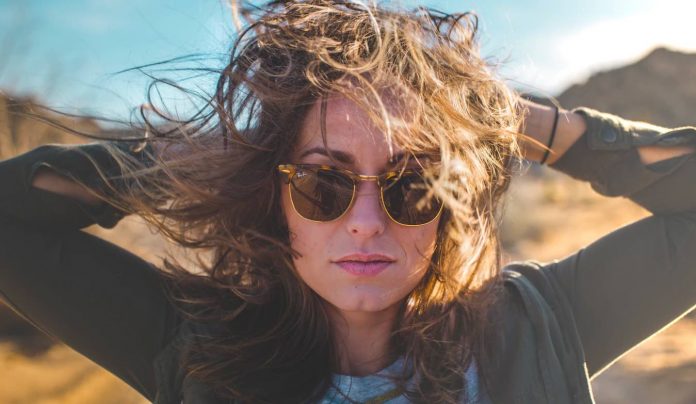
Quote of the Day: “A dreamer is one who can only find his way by moonlight, and his punishment is that he sees the dawn before the rest of the world.” – Oscar Wilde
Photo: by Hosen Kadah – public domain
With a new inspirational quote every day, atop the perfect photo—collected and archived on our Quotes page—why not bookmark GNN.org for a daily uplift?
Julia Dordoni (left) with a happy couple in Aspen, Colarado. SWNS.
This talented wedding artist paints couples as they exchange vows during their marriage ceremony—and she says she still sheds tears every time she sees the bride walking down the aisle.
42-year-old Julia Dordoni paints around 25 weddings a year and charges between $1,300 to $1,700 (£1,000–£1,300) for the sentimental pictures.
Since she first began her unusual career back in 2011, she has painted beach nuptials in Hawaii and winter weddings in the snowy Rocky Mountains of Colorado with each painting requiring up to eight hours of work to complete.
“I feel honored that husbands and wives-to-be trust me to capture that special time in their lives,” said Dordoni. “Also the sheer beauty of love and the look in their eyes when they are walking down the aisle is priceless.
“It is so humbling for me and sometimes it is overwhelming,” she added. “I shed tears at pretty much every wedding.”
The artist from Steamboat Springs, Colorado begins her artworks by painting the landscape before the wedding even starts. and usually presents the finished artwork halfway through the reception.
Flying Diamond Wedding painting, Colarado. SWNS.
“I start painting early,” says Dordoni. “First I get the landscape before the wedding starts. I take pictures of the bride and groom so I can have that as a reference in order to paint them.
“I incorporate them into the painting typically during the wedding cocktail hour and I usually complete the painting halfway through the reception.
“I include more details than a traditional impressionist artist. I exaggerate my colors and put a lot of detail into the bride and groom,” she added. “The bride’s dress is the most detailed, but the background is more impressionist.”
The single mom was hired for the unique job by chance when she was painting on vacation in Maui, Hawaii and spotted a wedding taking place. She included the bride and groom in her painting and showed off the finished piece to the concierge at the Four Seasons Resort.
SWNS
The concierge was so impressed, she showed the painting to the General Manager who then put Dordoni in touch with the Four Seasons wedding department.
A week later after Dordoni had already flown home, she received a call from the Four Seasons offering to feature her as a live wedding painter at their Hawaii resort.
She leapt at the opportunity and moved to Hawaii, painting weddings for the upmarket hotel and working as a residential artist for Fairmont Kea Lani, a neighboring resort.
In 2014, however, she returned to Colorado with her daughter Enya, who was 4 years old at the time.
Estes Park Overlook Ranch Wedding painting, Colarado. SWNS.
“As beautiful as Hawaii is, I decided to move back to Colorado with my little girl to enjoy an active mountain lifestyle,” she said. “[But] I see myself doing this for the rest of my life. I always tell my friends I can see myself as a little old lady painting at weddings.”
Dordoni typically books sessions a year in advance, although some couples will reach out to her at the last minute.
She is occasionally in such high demand that she has two sets of clients on the same date, in which case, she has one bride and groom provide photographs of themselves and their landscape so she can paint the picture remotely.
“I love painting mountains, so Aspen and Vail are favorite locations,” says Dordoni. “Mountains are so amazing.
Julia Dordoni painting at a wedding a the Flying Diamond Ranch in Steamboat, Colarado. SWNS.
“I also really love painting Jewish weddings because they have the most beautiful receptions so I love it when the guests put the bride and groom up in chairs [during the Horah].
“I also painted an Eastern Indian wedding once and that was the most spectacular thing. Their dresses were just so gorgeous, colorful and beaded,” she added. “That’s the only Indian wedding I’ve attended and it was magical.”
Since Dordoni fell in love with her job, she says she doesn’t plan on switching careers any time soon.
“I couldn’t have asked for a more perfect career. I feel like I am living a dream,” said the artist. “I am so blessed to be a part of these special days.”
If you want to commission Dordoni for a painting or check out more of her work, you can visit her website.
Paint Up Some Positivity By Sharing The Idea On Social media…
This 91-year-old man has not only become a role model for his entire gym, but also to thousands of people on the internet.
Lloyd Black resolved to join the Anytime Fitness gym in Semmes, Alabama last year after he found himself struggling to accomplish simple household tasks. He hoped that joining a gym might strengthen some of his muscles and help with the random aches and pains in his body.
Over the course of a year, Black has been diligently working out at the gym three times a week. Despite how his outfits garner plenty of attention, he says that he prefers to wear overalls and coveralls during his workouts because they are warm, comfortable, and he has “trouble keeping his pants up” otherwise.
When Black first joined Anytime Fitness, gym manager Ashley Seaman says he could barely last 10 minutes on the treadmill without becoming winded. Now, however, the senior can effortlessly breeze through half an hour of power-walking before moving on to his workout routine.
He also takes time to help other seniors new to the gym learn how to use the weightlifting machines.
“He’s just a friendly soul,” Seaman told TODAY. “It’s cute because he will go to the other silver sneakers—the elderly members—and he’ll show them how to use the machines.”
Photo by Ashley Seaman/Anytime Fitness
As a means of praising Black for his progress, Seaman recently named Black “Member of the Month”.
“Mr. Black became a part of our Anytime family 1 year ago and we have seen nothing but motivation and inspiration from him since he started,” the gym wrote on Facebook. “He says he is 91 years young and brags about how much his workout routine has helped him in his daily routines.
“Seeing someone like him inspires others to keep it up and incorporate fitness into their life,” they added. “Seeing him in the gym 3 times a week working out in his overalls brightens our day and we hope to have him many more years to come!”
Black’s photos have now been shared thousands of times across social media, with internet users praising Black for being such a positive role model.
“He says that, even before his feet hit the floor, he will do his bicycle (exercises) in the bed and it helps them to get up and do things in the morning,” Seaman told TODAY. “[He shows] that age is just a number, it doesn’t mean you can’t get into the gym, and it’s never too late.”
Photo by Ashley Seaman/Anytime Fitness
Be Sure And Flex This Awesome Story To Your Friends On Social Media…
An exciting new study calculated that, contrary to expectations, global carbon dioxide emissions did not continue their increase in 2019, but actually flatlined as renewable energy sources, efficiency, and other factors, chipped away at worldwide energy-related CO2 levels.
The research, conducted by the International Energy Agency (IEA) and published earlier this week, found that global CO2 emissions from energy sources were unchanged at 33 gigatons in 2019 even as the world economy expanded by 2.9% over 2018.
This was primarily due to declining emissions from electricity generation in advanced economies, thanks to the expanding role of renewable sources (mainly wind and solar), shutting down coal plants, and higher nuclear power generation. Other factors included milder weather in several countries (to require less cooling or heating), and slower economic growth in some emerging markets.
“We now need to work hard to make sure that 2019 is remembered as a definitive peak in global emissions, not just another pause in growth,” said Dr. Fatih Birol, the IEA’s Executive Director. “We have the energy technologies to do this, and we have to make use of them all. The IEA is building a grand coalition focused on reducing emissions—encompassing governments, companies, investors and everyone with a genuine commitment to tackling our climate challenge.”
A significant decrease in emissions in advanced economies in 2019 offset continued growth elsewhere. The United States recorded the largest emissions decline on a country basis, with a fall of 140 million tons, or 2.9%. US emissions are now down by almost 1 gigaton from their peak in 2000.
Emissions in the European Union fell by 160 million tons, or 5%, in 2019 driven by reductions in the power sector. Natural gas produced more electricity than coal for the first time ever, meanwhile wind-powered electricity nearly caught up with coal-fired electricity.
Japan’s emissions fell by 45 million tons, or around 4%—the fastest pace of decline since 2009, as output from recently restarted nuclear reactors increased.
Emissions in the rest of the world grew by close to 400 million tons in 2019, with almost 80% of the increase coming from countries in Asia where coal-fired power generation continued to rise.
Across advanced economies, emissions from the power sector declined to levels last seen in the late 1980s, when electricity demand was one-third lower than today. Coal-fired power generation in advanced economies declined by nearly 15% as a result of growth in renewables, coal-to-gas switching, a rise in nuclear power and weaker electricity demand.
“This welcome halt in emissions growth is grounds for optimism that we can tackle the climate challenge this decade,” said Dr. Birol. “It is evidence that clean energy transitions are underway—and it’s also a signal that we have the opportunity to meaningfully move the needle on emissions through more ambitious policies and investments.”
The Agency will also hold an IEA Clean Energy Transitions Summit in Paris on July 9th, bringing together key government ministers, CEOs, investors and other major stakeholders from around the world to promote and support more real-world solutions.
In a win-win for the public, these New York prisoners proudly earned their college degrees—while they were still behind bars.
They were part of the latest graduating class consisting of inmates who’ve gotten their diplomas for free through Hudson Link: a nonprofit degree-granting program dedicated to providing prisoners with a college education so they are less likely to reoffend upon release.
According to Hudson Link, the general rate of recidivism in the state is 43%, while the prisoners who walk out with degrees have only a 2% chance of being re-incarcerated.
The organization argues that it costs a whopping $60,000 per year to jail an individual in New York State, but only $5,000 to provide them with a prison education.
Hudson Link is capable of offering the degree program for free thanks to private donations and sponsorships. The organization currently operates out of five different New York prisons, including the Sing Sing Correctional Facility in Ossining where this emotional graduation ceremony below took place last month.
To date, Hudson Link has awarded 700 degrees to inmates. An additional 600 students in state prison are currently enrolled in the program.
The organization was founded by Sean Pica who served his own prison sentence back in 1998. Upon release, after completing a reduced sentence of 16 years, Pica began his trailblazing work with the hopes of offering other inmates a second-chance beyond prison walls.
“I think a lot of our prisons in this country were built on an effort of punishment,” Pica told Freethink. “But when you punish somebody, there’s got to be something about rehabilitation and second chances, and that’s what we’re doing in these prisons.”
(WATCH the emotional Freethink video below) – Photo by Freethink
Teach Your Friends About Good News By Sharing This To Social Media…
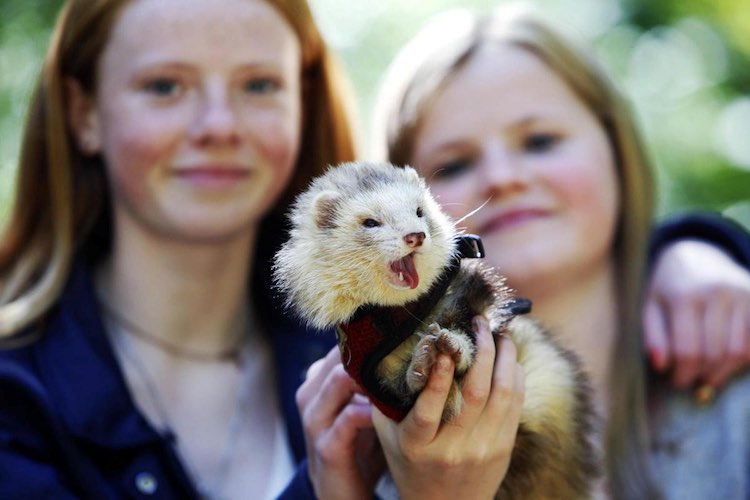
A South Carolina man beat the odds with a winning lottery ticket worth $100,000—and he actually managed to claim the money after he accidentally threw the ticket into the trash.
The unnamed winner from Newberry says that he had thrown the Palmetto Cash 5 ticket away after he mistakenly checked the winning numbers for the previous day and assumed that he had lost.
He only realized his mistake the following day when he saw the results for the January 24th drawing and found that he had successfully matched all five numbers of the drawing: 9, 15, 25, 27, and 30.
“I couldn’t believe it,” he told the South Carolina Education Lottery.
Thankfully, he managed to recover the ticket from the trash and claim his prize.
He now plans on using the winnings to set up a college fund for his grandkids and donate the rest to charity.
The odds of winning that particular lotto prize are reportedly 1 in 501,942, but those odds are probably higher if the winner also has to dig through the dumpster to find the ticket—so make sure to always double-check your numbers before you chuck them in the garbage.
Be Sure And Share The Good Fortune With Your Friends By Sharing This Story To Social Media…
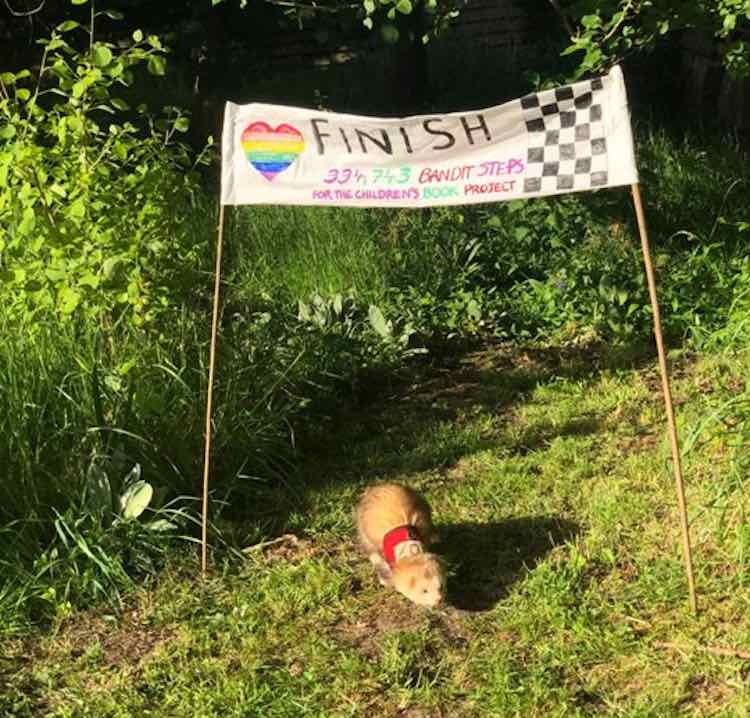
Quote of the Day: “If opportunity doesn’t knock, build a door.” – Milton Berle, comedian
Photo: by Sergio Arze – public domain
With a new inspirational quote every day, atop the perfect photo—collected and archived on our Quotes page—why not bookmark GNN.org for a daily uplift?
As rainfall continues to extinguish the bushfires still burning across Australia, this brigade of soldiers has been doing their part to help recovering wildlife by using their rest periods to help injured koalas.
The 9th Brigade of the Australian Army recently posted a photo of their soldiers from the 16 Regiment Emergency Support Force bottle-feeding koalas at the Cleland Wildlife Park in the Adelaide Hills.
According to the Brigade’s Facebook post, the soldiers have been using their time off from bushfire relief work to care for the koalas and build climbing structures for all the recovering marsupials.
Since the photos were posted to social media a few weeks ago, they have been shared more than 45,000 times.
Thankfully, the torrential rainfall across New South Wales and the Australian Capital Territory has extinguished more than 30 of the region’s the active bushfires—and officials say the downpour could put out the rest of the fires by the end of the week.
Although the downpour has resulted in some flooding across the provinces, the NSW Rural Fire Service says they are “over the moon” to see the rainfall aiding them in their fight against the bushfires.
Multiply The Good By Sharing This Sweet Story of Humanity With Your Friends On Social Media…
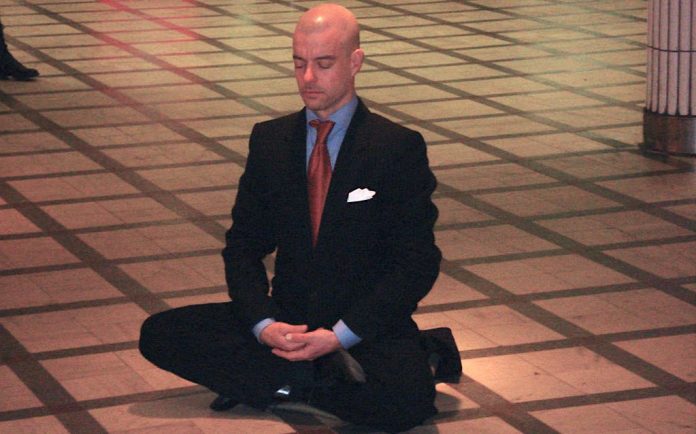
A new handheld 3D printer can deposit sheets of skin to cover large burn wounds—and its “bio ink” can accelerate the healing process.
The device, developed by a team of researchers from the University of Toronto Engineering and Sunnybrook Hospital, covers wounds with a uniform sheet of biomaterial, stripe by stripe.
The bio ink dispensed by the roller is composed of mesenchymal stroma cells (MSCs)—stem cells that differentiate into specialized cell types depending on their environment. In this case, the MSC material promotes skin regeneration and reduces scarring.
The project is led by Richard Cheng under the supervision of Professor Axel Guenther, and in close collaboration with Dr. Marc Jeschke, director of the Ross Tilley Burn Centre, and his team at Sunnybrook Hospital.
Their successful in-vivo trials on full-thickness wounds are reported in the journal Biofabrication.
The paper is a major step forward for the team, which unveiled the first prototype of the skin printer in 2018. The device was believed to be the first device of its kind to form tissue in situ, depositing and setting in place in two minutes or less.
The handheld 3D skin printer developed by University of Toronto Engineering researchers works like a paint roller, covering an area with a uniform sheet of skin, stripe by stripe. Blue dye was used for this photo shoot for visibility purposes. (Photo by Daria Perevezentsev)
“Previously, we proved that we could deposit cells onto a burn, but there wasn’t any proof that there were any wound-healing benefits—now we’ve demonstrated that,” says Guenther.
The current method of care for burns is autologous skin grafting, which requires transplantation of healthy skin from other parts of the body onto the wound.
But large, full-body burns pose a greater challenge. Full-thickness burns are characterized by the destruction of both the outermost and innermost layers of the skin; these burns often cover a significant portion of the body.
“With big burns, you don’t have sufficient healthy skin available, which could lead to patient deaths,” says Jeschke.
Since 2018, the printer has gone through 10 redesigns, as the team moves towards a design they envision surgeons using in an operating room. The current prototype includes a single-use microfluidic printhead to ensure sterilization, and a soft wheel that follows the track of the printhead, allowing for better control for wider wounds.
Photo by Daria Perevezentsev
Next, Cheng says that they ultimately want to “further reduce the amount of scarring, on top of helping with wound healing. Our main focus moving forward will be on the in-vivo side.”
Jeschke believes the handheld skin printer could be seen in a clinical setting within the next five years. “Once it’s used in an operating room, I think this printer will be a game-changer in saving lives.
“With a device like this, it could change the entirety of how we practice burn and trauma care,” he added.
As the fashion industry continues to phase out the use of animal fur, more and more people are cleansing their closets of all their rabbit, fox, and mink furs.
Rather than let those fur coats go to waste, however, the People for the Ethical Treatment of Animals (PETA) is putting them to good use by donating them to Afghani people in need.
Last week, PETA partnered with Life for Relief and Development to hand out more than 200 donated fur coats to the people of Kabul.
With temperatures dipping well below freezing, the coats are expected to offer some much-needed warmth to the men, women, and children living in poverty in the capital city of Afghanistan.
“Nothing can bring back the rabbits, minks, and foxes … but the coats that they died for can at least be used for good,” says PETA Executive Vice President Tracy Reiman. “PETA encourages everyone to donate their fur or fur-trimmed coats to help those who have but few options in life—the only people with any excuse to wear them.”
Photo by PETA
Life for Relief and Development CEO Dr. Hany Saqr added: “With all of those that are less fortunate around the world, we at Life are honored to be able to work with PETA to give warmth during the harsh winter to those in need.”
This is not the first time that animal fur has been used to warm the less fortunate; back in November 2018, PETA and Life for Relief handed out 280 coats to Syrian refugees who had fled to Iraq.
PETA’s fur donation program also sends unwanted coats to homeless shelters and wildlife rehabilitation centers so they can be used as bedding for orphaned animals.
A New York City convenience store cashier is going viral for allowing his customers to load up on free food and snacks—but he does have one simple condition for his generosity.
20-year-old Ahmed Alwan has been asking his customers at the Lucky Candy deli to answer spontaneous math questions at the counter.
If they successfully solve the problem, Alwan gives them five seconds (and oftentimes more than five seconds) to grab all the goodies they can carry.
Customers have walked out of the Bronx convenience store carrying everything from bluetooth speakers to bananas and loaves of bread—and Alwan gives it all away for free.
“All I wanted to do was to help people, but I wanted to make it fun,” Alwan told CNN. “It’s a way to entertain and educate people in need while putting a smile on their face, too.”
Since Alwan came up with the idea last month, he has uploaded more than a dozen videos of his endearing math challenges to social media, which has quickly made him an internet sensation.
Although he asks participants to refrain from trying to take his cat, Alwan has been happy to pay for all of the free goods with his own money.
Alwan’s father, Saleh Aobad, is the owner of the store—and he told CNN that he is “very proud” of his son for doing his part to help those less fortunate.
“It’s impacting the business in a positive way, bringing awareness and attention to the store as well as spreading positivity throughout the community,” he said.
Alwan says that many of the customers featured in his videos are low-income residents who often have trouble making ends meet and paying their bills on time—so he has been more than happy to offer them a brief financial respite in exchange for an algebra problem.
This is not the first time that Alwan has gone out of his way to help his fellow Bronx residents, either—the college student reportedly has a history of giving away store products on credit and offering free food and coffee to homeless people sleeping on the street.
Alwan is now accepting GoFundMe donations through a personal crowdfunding page so he can continue giving away free food and supplies to his customers.
Quote of the Day: “The light of friendship is like the light of phosphorus, seen plainest when all around is dark.” – Grace Crowell
Photo: by Annie Spratt – public domain
With a new inspirational quote every day, atop the perfect photo—collected and archived on our Quotes page—why not bookmark GNN.org for a daily uplift?
When Sarina Rohr was born almost three decades ago in 1990, her mother, Manuela, was simply grateful for each additional day she was able to spend with her micro-preemie.
Born just one pound and 15 ounces only five months into gestation, the doctors predicted Sarina wouldn’t survive the first few nights; and if she did, she would have severe handicaps.
But her mother, an avid yogi and yoga teacher, vowed the breath of life would save her baby girl—and now 29 years later, Sarina is a 5’8” tall college student who loves knitting.
Sarina first began selling knitted hats and scarves as a means of earning taxi money to get to school. Then one day while admiring the hat her mother knit for her as a preemie, she had an epiphany: she could knit hats for other preemies to keep them warm.
“I love the thought that not one baby born ‘too soon’ will go home without a hat,” Sarina excitedly explains. “I’m often lonely, but when I knit with others at my charity-knitting events, I feel wonderful. We have Girl Scouts and seniors knit with us—it’s so much fun!”
Photo by Manuela Rohr
In the last few months, the mother-daughter duo has teamed up with other knitting groups from Santa Rosa, California to Germany (Manuela’s native country) and knitted more than 250 tiny hats adorned with the label “Hats with a Mission”.
Forty of the hats were donated to the NICU in her mother’s hometown of Speyer, Germany last June. Then to “pay forward” the gift of her own life in September, Sarina donated 40 more hats to the same NICU where she was born at University Hospital in Cincinnati, Ohio.
Additionally, her mother received 184 more hats back in November from their partnering knitting groups in Germany. Half of the hats will be donated to the NICUs in California and half will go to other NICUs around the country.
Photo by Manuela Rohr
Many more hats are being prepared to fill orders which have come in from Austria, Albania, and several other countries as the word spreads.
“It’s Sarina’s vision. Like a lotus, it took root in the deepness of her soul’s longing and I see it bloom,” Manuela says. “And I will help her grow this dream. It holds mine in its arms.”
The mother-daughter duo now plans to register “Hats with a Mission” as a nonprofit, with funds distributed to knitters who have disabilities like Sarina for the organic cotton yarn (totaling about $15 a hat), needles, and shipping costs. They also plan to set up a fund for people like Sarina who are special-needs to support their education when it’s not granted by the state, and to help support them and their families as well.
“This is baby Kendra from University Hospital Cincinnati. That’s the hospital where Sarina was born and where she gifted 40 hats in September. Kendra is one of the receivers and her mom sent us a thank you letter and this pic.” –Manuela Rohr
“My mission, most of all, is to educate people to make inclusion possible,” says Sarina, a naturally determined human rights activist. “I don’t want to be on the side lines of life—I want to be with everybody else.”
“I want to show the world what’s possible if we focus on our strengths and not the weaknesses, and help each other. I don’t let my hiccups define me—but people who don’t know me do. I am different but not less.”
Lisa Cherry is the editor of Stories From the Yogic Heart, an inspiring collection of memoirs by yoga enthusiasts, including Sting and Mariel Hemingway, about their experiences in the mystical world of yoga. Lisa is also a freelance contributor to Yoga International, the Yoga Journal, Canada’s Globe and Mail, and more.
Multiply The Good One Stitch At A Time By Sharing This Sweet Story To Social Media…
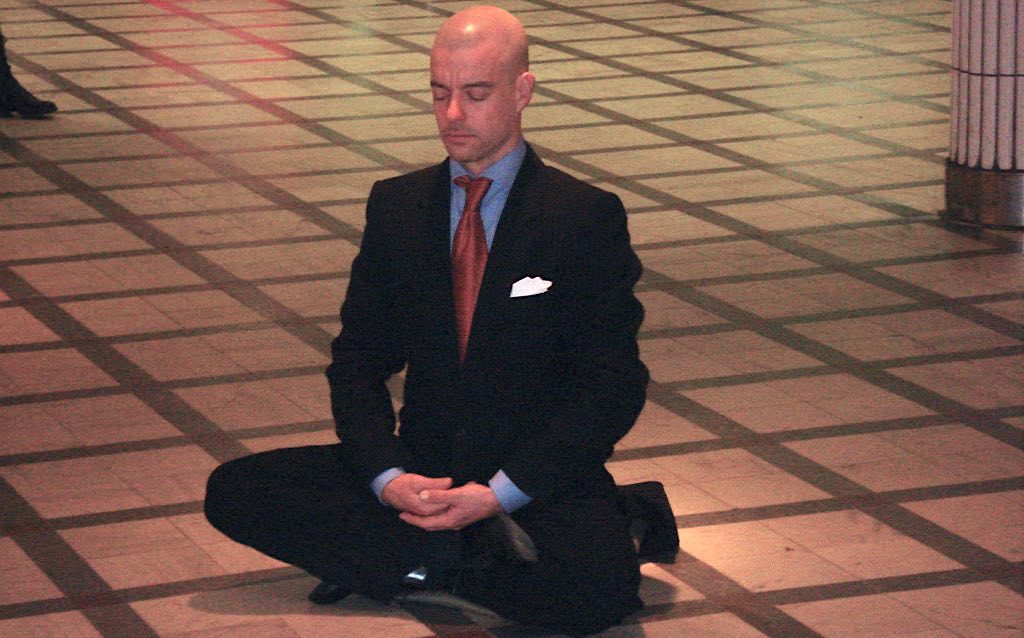
In Afghanistan, it’s considered offensive and taboo for women to ride bicycles—but one nonprofit has given these girls a different kind of fun on wheels.
Skateistan is an organization that uses skateboarding to helps to empower marginalized youth and rescue them from the streets so they can be transitioned into a community that will teach them about leadership and independence.
Learning To Skateboard In A Warzone (If You’re a Girl)—a short film documentary about the organization’s mission in Afghanistan—recently brought Skateistan back into national headlines after it won the 2020 Academy Award for Best Short Film this week, although the nonprofit has been changing lives since 2007.
Photo by Jessica Fulford-Dobson
According to the Skateistan website, over 60% of their students are low-income and do not have access to education—but the organization believes that once they hook the kids into the program, the possibilities are endless.
Whether it’s instilling feelings of confidence and autonomy through skateboarding, or simply letting children know that someone cares, the program has encouraged kids to believe in themselves.
“When skateboarding came into Afghanistan,” Skate Girls of Kabul photographer Jessica Fulford-Dobson told BBC, “they didn’t even know what it was.”
Inspired by the young women’s joy, the photographer first approached Skateistan about documenting their life and community in 2012.
One of her portraits of the skaters later ended up taking home the 2nd place prize in the 2014 Taylor Wessing Photographic Portrait Prize.
Photo by Jessica Fulford-Dobson
“[The skater] first caught my eye because she was wearing such a beautiful color,” recalled Fulford-Dobson to the news outlet. “She’s just immaculate. From the way she has tied her headscarf so beautifully and so naturally, you see that she has an innate sense of grace. Her little hennaed hand rests gently—yet possessively—on the skateboard, and how small she seems beside it! I love her assurance: her firm, steady gaze. One feels a sense of depth in her eyes, even though she is just 7 years of age.”
After just one year of attending the Back to School Skate program, the girl in the prize-winning portrait (left) passed her first three educational grades, and enrolled in the national school system—all will continuing to skate in her free time.
It may not be a conventional way of offering an education, but since Skateistan started in 2007, they have helped teach thousands of kids—44% of whom are girls—around the world to skate each week.
You can also donate to the organization on the Skateistan website or purchase Jessica Fulford Dobson’s book “Skate Girls of Kabul” here.
(WATCH the short film’s trailer below)
Be Sure And Share This Awesome Story With Your Friends On Social Media…
Using your phone to diagnose disease or track your medical condition is the holy grail for remote health monitoring.
So far it’s been impractical to combine the two in a single device; tech companies don’t want the regulatory headaches that would come from labeling phones medical devices.
But University of Cincinnati engineers have come up with the next best thing.
UC professor Chong Ahn designed a tiny portable lab device that plugs into a phone, connecting it automatically to a doctor’s office through a custom app UC developed. With a single drop of blood or saliva on a custom plastic lab chip UC designed, the device smaller than a credit card can diagnose infectious diseases such as coronavirus, malaria, HIV, Lyme disease, or countless other health conditions like depression and anxiety.
The phone provides the power and test protocol to the lab chip. A patient simply puts a single-use plastic lab chip into his or her mouth then plugs that into a slot in the box to test the saliva.
The device automatically transmits results to the patient’s doctor through a custom app UC created for nearly instant results.
In his latest study, Ahn and his research team used the smartphone device to test for malaria. But the device could be used for smart point of care testing for countless chronic or infectious diseases or to measure hormones related to stress.
“Everybody has a phone—more than 3 billion people,” Ahn said. “So how can we use that technology to test for infectious diseases such as coronavirus? It’s a rapid diagnostic tool you can use at home. Right now it takes several hours or even days to diagnose in a lab, even when people are showing symptoms. The disease can spread.”
The project demonstrates UC’s commitment to research as described in its strategic direction called Next Lives Here.
Ahn’s research team developed the device by creating a novel lab chip that uses natural capillary action, the tendency for a liquid to adhere to a surface, to draw a sample down two channels called a “microchannel capillary flow assay.” One channel mixes the sample with freeze-dried detection antibodies. The other contains a freeze-dried luminescent material to read the results when the split samples combine again on three sensors.
Ahn said the device is accurate, simple to use and inexpensive.
“The performance is comparable to laboratory tests. The cost is cheaper. And it’s user-friendly,” Ahn said. “We wanted to make it simple so anyone could use it without training or support.”
Photo by Joseph Fuqua II/University of Cincinnati
Improving mental health
UC doctoral student Sthitodhi Ghosh, the study’s lead author, said the biggest advancement in the device is in the novel design of its tiny channels that naturally draw the sample through the sensor arrays using capillary flow.
“The innovation of this device is using a capillary-driven microfluidic lab chip,” Ghosh said. “So the entire test takes place on the chip automatically. You don’t have to do anything.
“This is the future of personal healthcare,” Ghosh said.
While the device has applications for diagnosing or monitoring viruses or other diseases, Ahn said he sees potential in the field of mental health. Mental health providers already use smartphones to track the wellness of patients through regular surveys. But psychosocial data can be subjective.
Ahn recalled the excruciating stomach ache he felt when he was hospitalized for an infection. He had trouble translating how he felt on a pain scale of 1 to 10 for his doctors. The pain left him feverish and soaked in sweat, but he reasoned it could surely be worse.
“I said, ‘I’m a 2’ so they didn’t give me pain medicine. My wife says, ‘Honey, you almost died! Take the pain medicine.’ So from then on I said I was a 6 or 7 and I got pain medicine and I was good,” he said.
Evidence-based treatment
By routinely testing hormones or other biomarkers associated with depression or anxiety, Ahn said he could help doctors correlate how patients feel with actual changes in their biochemistry. This could improve treatment for countless patients, he said.
And the device can use saliva as well as blood, which is less invasive and stress-inducing than a finger prick.
“If you’re stressed from doing a finger prick, it’s already creating a bias in the testing of stress,” Ghosh said. “That’s why we’re moving to a noninvasive method.”
Ahn is pursuing a patent to commercialize his device. Medical diagnostics company Mico Biomed, which has offices in Cincinnati, is a co-author of the study.
The biggest hurdle could be making people feel confident and comfortable enough to use the unfamiliar device at home, he said.
But the vast amounts of data collected from the tests over time could help psychiatrists better understand the biochemistry underlying mental illness, which could lead to better evidence-based treatments, he said.
“My dream for the rest of my career at UC is to improve public and mental health by providing a new mobile health tool,” he said.
Rather than rotting in a landfill, more than 30,000 pounds of leftover Super Bowl food are being used to feed hungry Floridians.
All the uneaten food from last week’s game at the Hard Rock Stadium has been donated to local shelters throughout southern Florida.
NFL Green organizers partnered with Centerplate and food recovery charity Food Rescue US in order to facilitate the massive volunteer mission throughout the week following Sunday’s game.
“We know food insecurity impacts one in seven people in the state of Florida,” said Carol Shattuck, CEO of Food Rescue US. “Through our work with Centerplate and NFL Green, we can make sure excess food from Hard Rock Stadium and the Miami Beach Convention Center helps to feed individuals and families throughout Miami, while also not contributing to the growing food waste crisis in the U.S.”
The rescued food includes uneaten chicken wings, ribs, tenderloins, and charcuteries from concession stands and VIP booths.
The food is expected to feed 20,000 people after it is all successfully distributed between the Miami Rescue Mission, Broward Outreach Center, Broward Partnership for the Homeless, Lotus House Shelter, and Camillus House.
Food Rescue US Miami director Ellen Bowen told ESPN: “It’s a full volunteer job for everyone. We just want to help people in need. It’s amazing to see how much food there is that otherwise would have been thrown in the trash that can now feed so many people.”
Feed Your Friends Some Positivity By Sharing The Good News To Social Media…
Orangutan crafts a tool in Prague Zoo by Lucie Štěpničková - SWNS
This is the awe-inspiring moment that a wild orangutan offered its hand to a man wading through snake-infested waters.
The brief interaction was captured by amateur photographer Anil Prabhakar as he was on a safari with his friends through a conservational forest on the Indonesian island of Borneo last month.
The forest, which is maintained by the Borneo Orangutan Survival Foundation (BOS), is a sanctuary for the critically endangered apes who may need refuge in the face of injuries, poaching threats, or habitat loss.
Since venomous snakes are the orangutan’s only real predator in the forest, it is quite likely that this particular ape knew the consequences of approaching the muddy waters.
The man in the photo was a conservancy guard who was busy clearing off the snakes for Prabhakar and his friends when the orangutan offered its hand. Prabhakar later told CNN it was as if the orangutan was saying “May I help you?”
Due to the unpredictability of wild orangutans, the warden ended up circling around to a different point in the bank and climbing out of the water on his own—but not before Prabhakar snapped a photo of the breathtaking interaction.
“I just grabbed that moment,” he said. “It was really emotional.”
Quote of the Day: “Try not to get lost in comparing yourself to others. Discover your gifts and let them shine!” – Jennie Finch
Photo: by David Clode – public domain
With a new inspirational quote every day, atop the perfect photo—collected and archived on our Quotes page—why not bookmark GNN.org for a daily uplift?
Over a third of Americans have felt judged about their cooking skills—and no wonder. Four in Ten said in a new survey that they can only prepare one meal without outside help, and that is breakfast—eggs and French toast.
A survey of 2,000 adults found that a “Top Chef” appearance probably isn’t in the future for these Americans, as one in five (just 21%) say they have only one standout dish in their arsenal.
The survey, conducted by OnePoll on behalf of Mazola corn oil, asked respondents what makes them feel most confident in kitchen.
The top five meals that they can make without consulting a recipe are eggs over easy (49%), scrambled eggs (46%), hard boiled eggs (44%), poached eggs (44%) and french toast (41%).
But even the simplest recipes can cause chaos for these folks in the kitchen. On average, respondents said they forget four ingredients per month while cooking. And, over half admitted they’ve had a full-on kitchen disasters, prompting 31% to trash it and start from scratch.
The best news of all? Kitchen mishaps will not keep these intrepid cooks from taking on new culinary challenges in 2020.
49% plan on tackling more complex recipes in the new year and 45% hope to diversify the types of cuisine they cook.
They also aspire to update their skills with 42% hoping to master air frying, which claims to mimic deep frying with nothing more than hot air and a few drops of oil—just in time for Healthy Heart Month in February. 36% are dreaming of becoming a baking maestro, and a third want to set their grill skills on fire.
WHAT MEALS CAN YOU MAKE WITHOUT A RECIPE? … SURVEY SAYS:

1. Eggs over easy 49%
2. Scrambled eggs 46%
3. Hard boiled eggs 44%
4. Poached eggs 44%
5. French toast 41%
6. Soup 36%
7. Grilled cheese 36%
8. Pasta 36%
9. Rice 36%
10. Salad 36%
Sirplus founders Martin Scott and Raphael Fellmer.
A Berlin supermarket is tackling the challenge of reducing food waste by reselling all of the unattractive products that other grocery stores refuse to carry.
Sirplus Rettermarkt in Berlin Steglitz. Photo by Sirplus.
The SirPlus grocery store stocks their shelves with foodstuffs and produce that is expired, near to expired, misshapen, or just a bit odd, and offers it to shoppers for up to 80% less than the regular supermarket prices.
According to the United Nations Food and Agriculture Organization, 1.3 billion tons of food are thrown out or wasted every year across the world. This amounts to one third of all food produced worldwide, at the same time as trash landfills are filling rapidly.
The majority of the global waste comes from Europe and North America, with the average European wasting 210 to 254 pounds (95 to 115 kilograms) of food every year.
Some of the food rejected by other supermarkets, restaurants, or wholesalers—which SirPlus quality assurance specialist Timo Schmitt and his team inspect every day—is discarded because of something as little as a cucumber that has grown at a 90-degree angle, or a jar of jam that is mislabeled.
Others, like items past their expiry date, are carefully inspected to ensure that it is safe to eat. “We check smell, taste, consistency and packaging,” Schmitt told Klaus Sieg, a Hamburg journalist. “If in doubt, we call in a laboratory.”
As long as food has been deemed safe to eat and the customer understands the risks inherent in what they are purchasing, expired biscuits or even castaway yogurt and meat is legal to sell under German law.
Sirplus founders Martin Scott and Raphael Fellmer.
“Suppliers such as farmers, […] wholesalers [and] retailers have a strong economic incentive to partner with us,” explain the founders of SirPlus in an interview in 2017. “When buying or trading their surplus via our marketplace […] we’re saving them significant disposal costs, while providing a new revenue source”.
France passed a law four years ago that supermarkets must not throw away food that has reached its sell-by date. This could mean donating to food banks, composting it, or recycling it for use in pet food or biofuel—but all of the above require larger operational expenses than simply selling it.
Fellmer and Schott allow producers and distributors to save storage and disposal costs by selling or donating their food to SirPlus, which if their own storage space can’t accommodate, will be offered for free to NGOs.
In 2019, SirPlus saved 2000 tons of food (4.4 million pounds). The company also has bold plans for 2020 and wants to continue opening stores in Berlin while expanding into other cities, to launch their own product line with the SirPlus label made specifically from food that’s been rescued, and create an online platform that allows for home grocery delivery—all to distribute the increasingly larger amounts of donated food coming SirPlus’ way, which includes one million croissants last year.
Sirplus produce.
They also have a subscription service called the “Retterbox” (Rescue Box) containing a random assortment of quality-controlled products that have been saved from the dumpster and delivered to your house on a monthly basis with free shipping throughout Germany.
Inspire Copycats in Your Area by Sharing The Good New On Social Media…