A federal government plan to protect a vast area of the US Arctic as habitat for polar bears has been upheld by an appeals court. The ruling overturns a previous victory by the state of Alaska and fossil fuel lobbyists opposing the designation.
The US court of appeals for the ninth circuit reversed a lower-court decision that ruled the US Fish and Wildlife Service’s protection of 187,000 square miles of Alaska’s northern coast – an area larger than California – was too extensive and arbitrary.
According to The Guardian, the verdict has been hailed by conservationists as vital for the survival of a species suffering because “their habitat is melting from beneath their feet”.
WATCH the video above by Wochit – and SHARE the News…
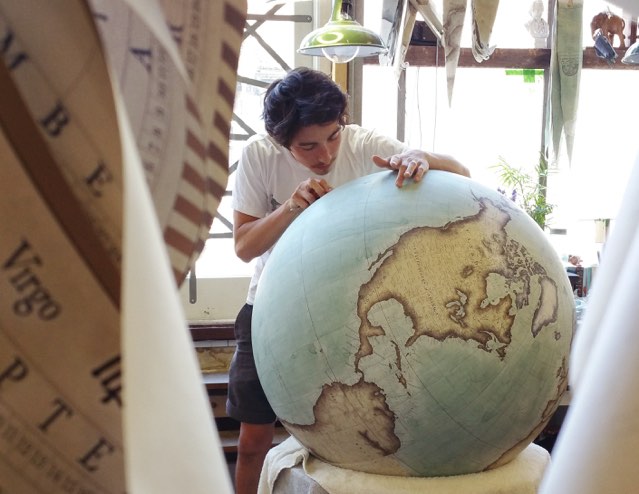
There is a small company in London that is still crafting models of the world entirely by hand. The traditional profession that was almost lost is now thriving.
It takes between a few weeks to a few months for artists at Bellerby & Company to complete each single globe from start to finish.
A team of 8 artists make around 300 globes a year, wetting and stretching paper on a plaster-of-paris sphere and then hand painting all the detail around the continents and oceans.
They even personalize the maps for some customers; the cartography can be edited for each customer, mapping people’s lives – from their adventures, to explorations to the history of their family’s movement across the world.
True love knows no boundaries – even if the lovers in question are homeless.
Larry Cannon, a Vietnam veteran, and Julia have been desperately in love and living on the streets while dreaming of having a home in Los Angeles. But hope is on the horizon now because of a community that cares.
Elvis Summers and his volunteers worked some magic in December when they built these lovebirds a “tiny house” shelter. Now they are raising money to buy a plot of land on which to locate it amid a new tiny home community. But Elvis is not only solving matters of shelter, but matters of the heart, as well.
During a weekend build session on the grounds of a church in the Compton neighborhood where they were constructing eight new dwellings, Elvis and his crew put together a wedding ceremony for the luckless couple.
“The wedding was so beautiful, everybody cried,” Elvis told Good News Network.
The pastor and his wife at Faith Community Church were “so excited”. Members of the church hung decorations and hours before the wedding, the pastor’s wife found, among the construction volunteers, singers who wanted to form a makeshift choir.
“An hour and a half later, they were singing ‘Going to the Chapel’ as Julia walked down the aisle,” recalls Elvis. “It was awesome.”
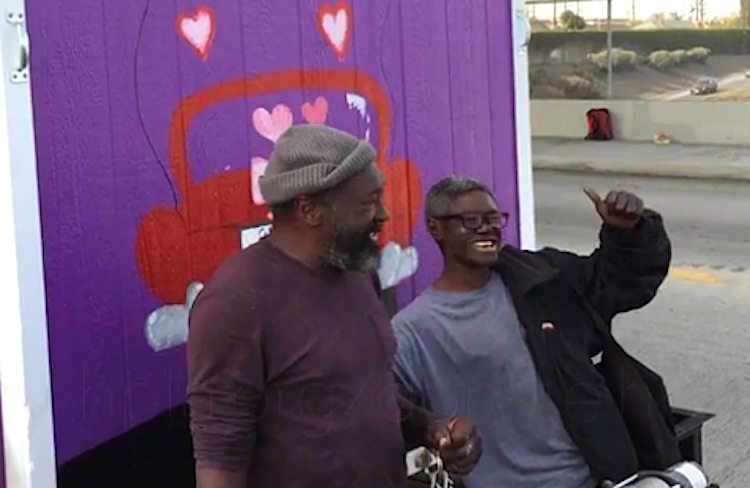
After a video camera recorded the exchange of vows (below), the newlywed couple was gifted with a tiny purple home painted with “Just Married!” emblazoned on the side for Mr. and Mrs. Larry Cannon.
Elvis, with his spiky hair, has become a full-time hero to the homeless and built 37 tiny houses since his story on Good News Network “blew up” and went viral worldwide in April 2015. He now works seven days a week– unless his girlfriend forces him to rest for a day–planning and building portable shelters on wheels so people can have a place to sleep, removed from the mean streets in California. His campaign, My Tiny House Project L.A., has hosted tiny house building marathons for which 200 volunteers show up.
“They’ve got tiny home communities in Seattle, Texas, Colorado, Tennessee, and Oregon–and they are working,” says Elvis. “I get calls all the time from around the country asking how to build a community and recently I traveled to Arizona and saw two 40-acre lots on which they are planning one with showers, community gardens, the works.
Due to L.A.’s recent ban on tiny shelters because they violate zoning laws, Elvis was forced to think bigger. His new mission is to buy a plot of land to start a tiny home community right in the city that needs it most.
You can help our intrepid hero by donatingto Elvis’s Campaign, Here. Though he hasn’t received his 501c(3) status yet, Elvis says, “It’s in The works.” (The group is incorporated and a registered charity in the state of California.)
(WATCH the wedding story below, via Good News Network’s YouTube page)
Last week in Virginia, a transgender woman was given a job at a local KFC restaurant –and then had her heart broken within an hour as she was fired for being trans-gender.
The corporate headquarters of KFC soon stepped in and offered her a new job and fired the manager who discriminated against her.
These two pen pals have been great friends since they were kids, but now, after finally meeting each other for the first time in 38 years, they’re closer than ever.
Beth Graham and Sandi Fisher first discovered their friendship in the 5th grade when they both replied to the old children’s television show Big Blue Marble to request a pen pal. They’ve had a few brief phone conversations in the past but long-distance calls were too expensive for chatting.
Over the years, their friendship has evolved to include emailing and Facebook messaging. Then came the day when Sandi was visiting Pennsylvania from Colorado and the two finally came together face to face after almost four decades.
It was bliss.
“You’re shorter than I imagined!” says a joyful Beth through tears.
It’s nice to think about giving back throughout the year, but it may seem like organizations are only interested in ongoing monetary donations, rather than asking for your time or suggesting little things you can do to make a difference every day.
If you’re looking for tips or inspiration, the new “Giving Back Guide” from Tiny Prints discusses everyday ways to serve your community.
Here are nine ways to give back without opening your wallet:
1. Share your talents. Whether you are a knitting wiz or a yogi, you can find an organization that could use your expertise. Make winter hats for the homeless or teach yoga classes at your local Boys and Girls Club.
2. Support companies that give back. Programs like eBay Giving Works, Amazon Smile, and birth announcements by Tiny Prints give back a percentage of sales to charities throughout the year. In the case of Amazon Smile, you can choose the charity that benefits.
3. Take the lead. Organize a bake sale to raise funds for a cause near to your heart.
4. Donate your stuff. From canned goods to clothing to appliances and vehicles, you can donate just about anything. You can even schedule a pick-up with many non-profits, like Purple Heart, the Lupis Foundation, which collect your old clothing and household items.
8. When your birthday comes along, ask family or friends to donate to your favorite charity, in lieu of gifts. Many of your favorite charities have ways to set up a donation page online, to make it easy to collect pledges and see your total grow.
9. Use some of that stationary or colored paper collecting dust in your closet to send homemade cards to the troops overseas or drop them off at your local children’s hospital to spread some cheer.
These fifth graders are learning sign language and the reason why speaks volumes about their character.
Students at a Peoria, Illinois school give up recess every Wednesday so they can learn sign language just to better communicate with a deaf classmate — Rhemy Elsey.
The kids formed an American Sign Language club and practice their skills with Rhemy and an instructor.
Rhemy has cochlear implants, but still relies on signing for much of his ability to communicate with others. He’s been overwhelmed by the willingness of classmates to give up free time just so they can learn to carry on conversations with him.
“It’s like they want to be like me,” Rhemy told WMBD News.
(WATCH the Facebook video below from WMBD News) — Photo: news video
Check out my story on these awesome 5th graders that are learning sign language--all so that they can communicate with a friend and classmate. I think these children stand to teach us an amazing lesson that we can all take something away from--about kindness and accepting others :) Happy Friday! http://www.centralillinoisproud.com/news/local-news/students-learn-sign-language-for-friend
Posted by Alyssa Paldo on Friday, February 19, 2016
The secret to anyone’s success can start with a great haircut — even if you’re just a dog.
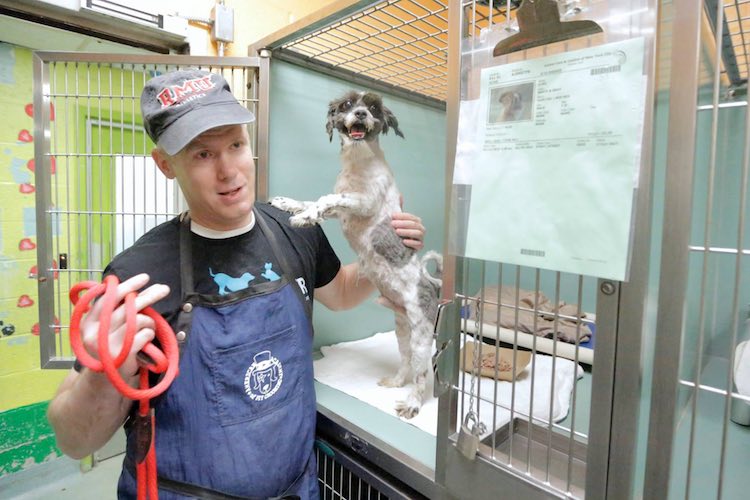
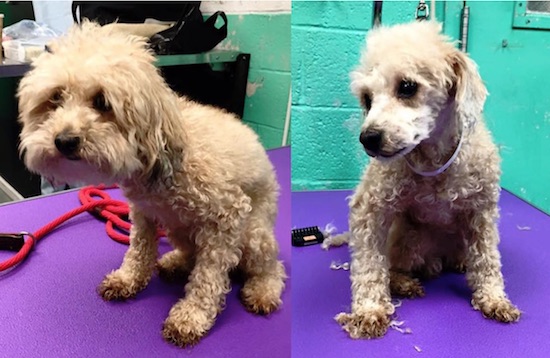
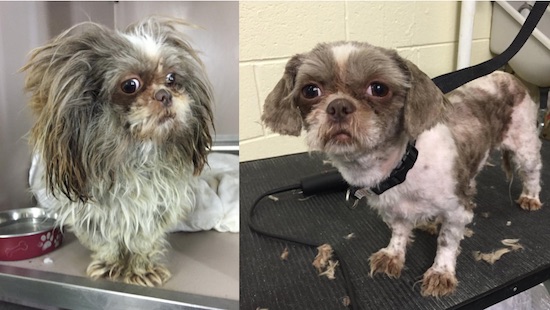
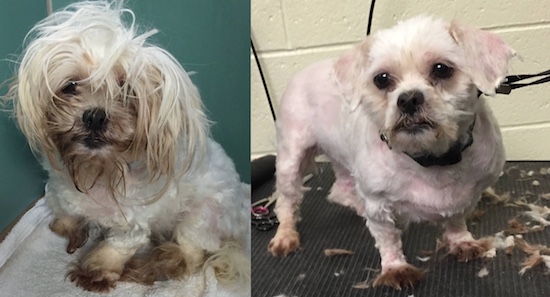
Mark Imhof only started his dog grooming service four months ago, but has already donated 50 free trims to homeless pups in New York City in order to improve their chances of being adopted–and, wow, does it work.
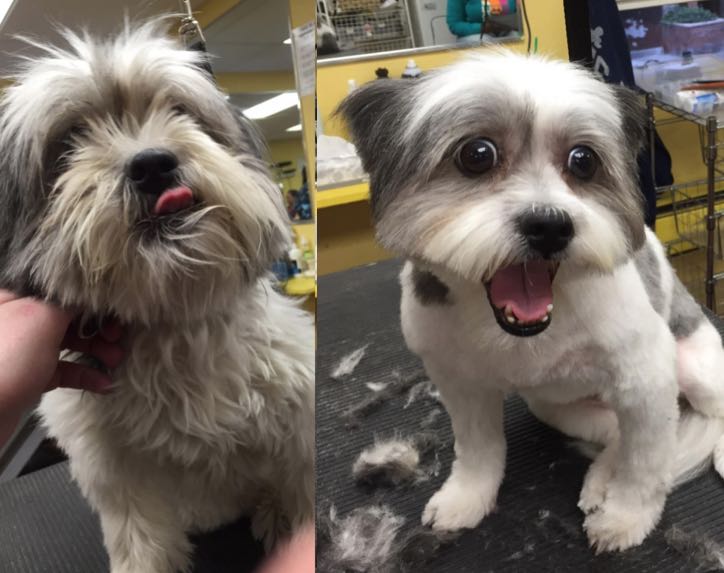
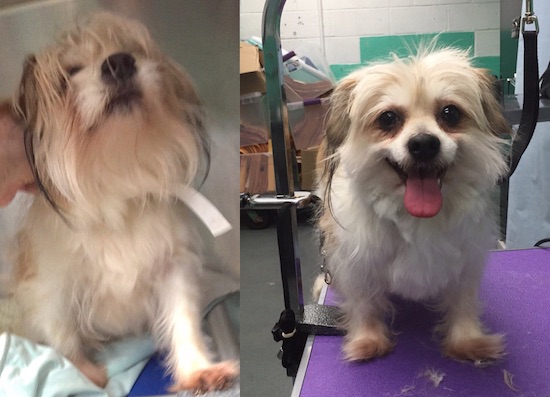
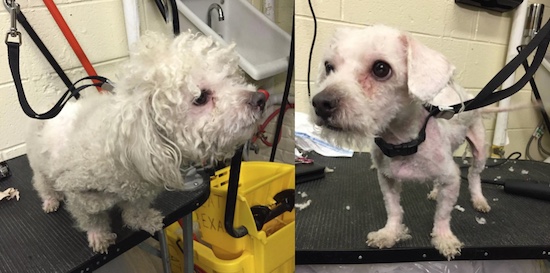
Just check out these “before and after” pictures to see how a bit of grooming has very much improved the dogs’ chances of finding a forever home.
Imhof owns “The Dog Guy” pet services, and says his volunteer work is helping these dogs win back some of their self-respect.
Some of the dogs come into the shelter with fur so matted, it makes it difficult for them to move — or even interferes with their sense of smell.
Imhof says he’s seen instant personality changes in dogs as soon as he finishes with their haircuts.
Imhof, quit his job as a certified public accountant, to start his pet services business in November — and began providing free trims for a passel of pooches at Animal Care Centers of NYC.
These make-overs have resulted in almost every dog moving on to a forever home. One animal was even adopted as he was being carried off the grooming table.
“I come home uplifted every day,” Imhof told Metro. “I develop a bond with the animals which is just amazing.”
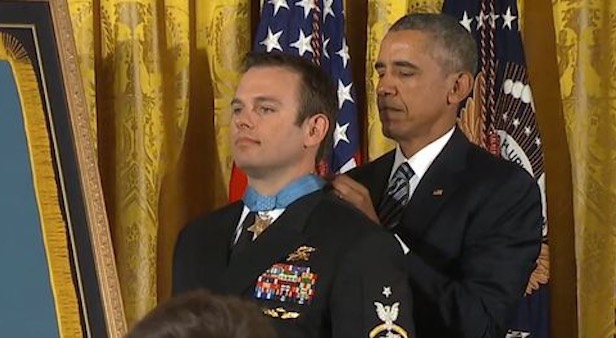
Today at the White House, Senior Chief Special Warfare Operator Edward C. Byers Jr. became the sixth Navy SEAL in U.S. history to receive the Medal of Honor.
In a ceremony, President Barack Obama praised Byers’ for his heroic gallantry as an assault team member during Operation Enduring Freedom in 2012.
“Like so many of our special operators, Ed is defined by a deep sense of humility,” said Obama. “He doesn’t seek the spotlight. In fact, he shuns it. He’s the consummate quiet professional.”
The president welcomed members of Byers’ family, including wife Madison, daughter Hannah, and mother Peggy. The crowd laughed as Obama recounted Peggy’s question upon hearing the news of her son’s award, “Do you think I can come?”
Obama called Byers “a special breed of warrior,” part of a select few who serve the American people in the shadows with honor and sacrifice.
“Our special operations forces are a strategic national asset. They teach us that humans are more important than hardware,” said Obama. “Today is a reminder that our nation has to keep investing in this irreplaceable asset; deploying our special operators wisely, preserving force and family, making sure these incredible Americans stay strong in body, mind and spirit.
The American people may not always see them. We may not always hear of their success. But they’re there-in the thick of the fight, in the dark of the night, achieving the mission. And we thank God they’re there,” added Obama.
“If it wasn’t for the team I wouldn’t be standing here.”
“The important thing I want to say here is that everything we do is as a team; if it wasn’t for that team I wouldn’t be standing here today. Specifically for me, my teammate, friend and brother Nick Checque,” he said, referring to fallen team member Petty Officer 1st Class Nicolas Checque. “The award is truly his. He was an American hero and he was the hero of that operation.
Today has been a very memorable day in my life surrounded by friends and family and it is truly something I’ll never forget. We’re gonna celebrate Nick’s life and celebrate the lives of the brothers that have fallen protecting our freedoms so that we can sleep peacefully in our beds at night,” added Byers.
In December 2012, Byers, along with other members of his team, was tasked with a mission to rescue Dr. Dilip Joseph, an American citizen being detained by the Taliban in a mountainous region in the Qarghah’i District of Laghman Province. Byers was the second assaulter on the approach toward the building identified as containing the hostage.
While Byers tried to rip down blankets that served as the door to the building, the first assaulter pushed his way through the doorway and was immediately shot by enemy AK-47 fire. Byers, fully aware of the hostile threat inside the room, boldly entered and immediately engaged a guard pointing an AK-47 towards him. As he was engaging that guard, another adult male darted towards the corner of the room. Byers could not distinguish if the person may have been the hostage scrambling away or a guard attempting to arm himself with an AK-47 that lay in the corner, so he tackled the unknown male and seized control of him. While in hand-to-hand combat, Byers maintained control of the unknown male with one hand, while adjusting the focus of his night vision goggles (NVGs) with his other. Once his NVGs were focused, he recognized that the male was not the hostage and engaged the struggling armed guard.
By now, other team members had entered the room and were calling to Joseph to identify himself. Byers heard an unknown voice speak English from his right side. He immediately leaped across the room and selflessly flung his body on top of the American hostage, shielding him from the continued rounds being fired across the room. Almost simultaneously, Byers identified an additional enemy fighter directly behind Joseph. While covering the hostage with his body, Byers was able to pin the enemy combatant to the wall with his hand around the enemy’s throat. Unable to fire any effective rounds into the enemy, Byers was able to restrain the combatant enough to enable his teammate to fire precision shots, eliminating the final threat within the room.
Byers quickly talked to Joseph and, after confirming that he was able to move, extracted him to the helicopter-landing zone. Byers, a certified paramedic and 18D medic, subsequently assisted with the rendering of medical aid to the first assaulter. Byers and others performed CPR during the flight to Bagram Airfield where his teammate was declared deceased.
In a U.S. Navy video, Byers recalled the moment the president called to say he would receive the Medal of Honor. “I felt very honored and very humbled because now I’m gonna be a representative for the Navy and the Navy Special Warfare community and there’s a weight that that carries with it,” he said. “And that weight is the sacrifice that everybody has made within this community…it’s an affirmation of the job that we do and an appreciation for the job that we do.”
The Medal of Honor is the nation’s highest award given to members of the Armed Forces for gallantry in action. Byers is the first living active duty member of the U.S. Navy to receive the Medal of Honor since Apr. 6, 1976. He is the first living active duty enlisted member of the U.S. Navy to receive the Medal of Honor since Petty Officer Michael Thornton (also a SEAL) was awarded the Medal of Honor by President Richard Nixon Oct., 15 1973.
A husband and father to one daughter, Byers was born in Toledo, Ohio, and began his naval career in 1998 as a hospital corpsman. The following year, he was assigned to Great Lakes Naval Hospital and later served with 2nd Battalion, 2nd Marines, in Camp Lejeune, North Carolina. While on deployment with the 26th Marine Expeditionary Unit aboard USS Austin, Byers earned the Enlisted Surface Warfare Specialist badge and Fleet Marine Force warfare device.
After graduation, he attended the Special Operations Combat Medic course and was subsequently assigned to East Coast SEAL Teams. He has deployed overseas 11 times with nine combat tours. Byers was promoted to the rank of senior chief petty officer in January 2016.
In addition to the Medal of Honor, Byers personal decorations include the Bronze Star with Valor (five awards), the Purple Heart (two awards), the Joint Service Commendation Medal with Valor, the Navy Commendation Medal (three awards, one with Valor), the Combat Action ribbon (two awards) and the Good Conduct Medal (five awards).
Today Chevrolet is celebrating the extra 24 hours that we have in a Leap Year, by urging people to do something nice for someone–and leading the way by stellar example.
All month, they’ve been asking the question: “What nice thing could you do for someone who doesn’t expect it?”
The auto company has answered the call by giving away new cars –not just to anyone, but a surprise for a family that has been serving the homeless for years.
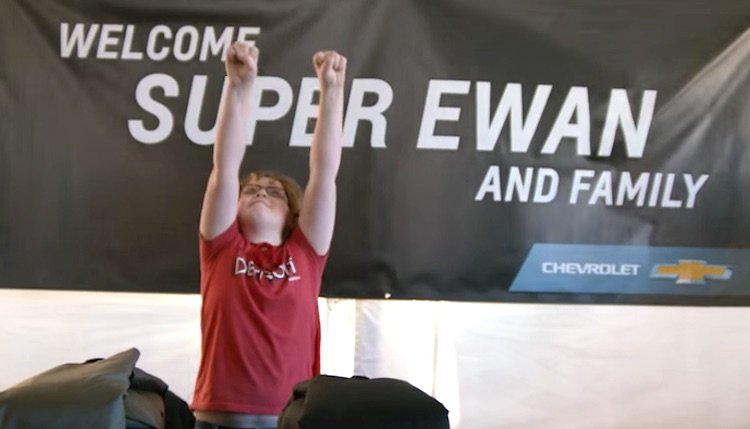
They heard about nine-year old “Super Ewan” who began at age seven wearing a red cape while bringing food to Detroit folks living on the street. One Saturday every month, his parents help him fulfill his superhero ideals by feeding the less fortunate. (link to gnn in blue)
Last week in Roosevelt Park, Chevrolet stepped up to assist big time, setting up a huge tent and helping Ewan distribute new sleeping bags and hot meals to the city’s homeless amid banners announcing their Leap Year campaign, #DayItForward.
The boy and his parents were thrilled with the extra gifts for the homeless, but then Ewan got a surprise of his own.
As a reward for his hard work, Chevrolet gifted Super Ewan with a brand spankin’ new red Chevy Traverse so he can deliver even more of his goodies to the homeless.
(WATCH the inspiring surprise below)
Chevrolet also gave a new car to a teacher’s aide in California, and got celebrities like Kevin Spacey to do something nice for #DayItForward.
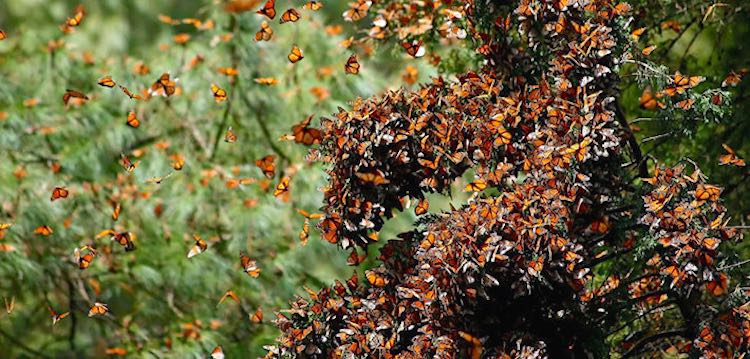
Try to imagine 10 acres of woodland fields and branches dripping with butterflies. That’s what the remarkable comeback of the monarch species looked like this winter following the annual migration.
Three-and-a-half times as many monarchs as the year before returned to their home in the central Mexico mountains this winter.
Each year, the black and orange insects migrate 3,400 miles south to the tropical climate. Their numbers had been falling in recent years, until a resurgence in 2014. This year’s increase has been even greater.
It’s impossible to actually count all the individual butterflies, but because they huddle so closely together, scientists and conservationists add up all the land area the monarchs cover. This winter it came to 10 acres of butterflies — up from a record low of 1.66 acres just two years earlier.
It’s a strong recovery, but still has a long way to go to match the 44 acres of butterflies from 1996.
Mexico, the U.S., and Canada have all committed to helping the monarchs recover. The U.S. is reintroducing milkweed plants along 1,100 square-miles of the monarchs’ migration route to make up for herbicide use destroying huge tracts of the plant. Monarchs lay their eggs on milkweed exclusively, and find it a vital food source.
Mexico successfully cracked down on illegal logging in the monarch reserve, where the butterflies rely on the forest canopy to help shelter them during winter.
Conservationists estimate 140 million monarchs arrived this year, and if the upward trend continues they will hit their goal of seeing 220 million by 2020.
“It is time for celebration because we see the beginning of success,” U.S. Fish and Wildlife Service Director Ashe told the Associated Press. “But our task now is to continue building on that success.”
These elementary students are learning more than just the “three Rs” — reading, ‘riting, and ‘rithmatic. Add a fourth one: Respect — they’re learning how to give it, and receive it.
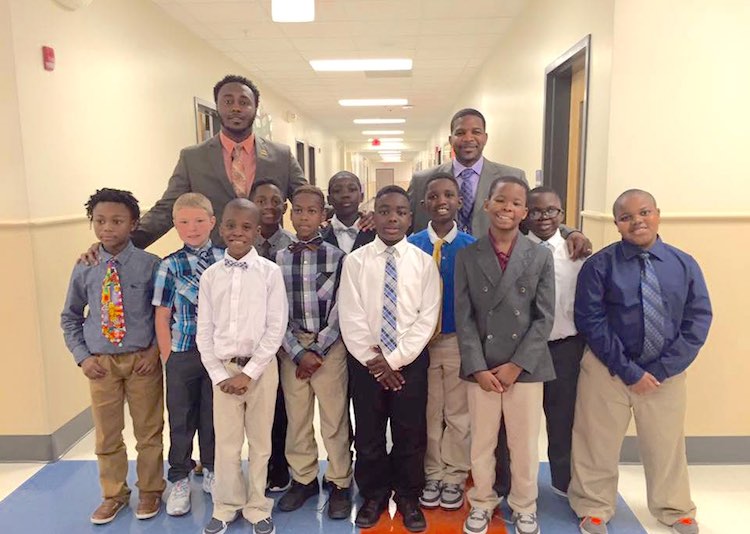
The boys are members of the “Gentlemen’s Club” at Memminger Elementary in Charleston, South Carolina.
Every Monday they wear suits and ties to school and learn new social skills to help them succeed in life.
Raymond Nelson, a student support specialist, teaches them how to shake hands, make eye contact, open doors for others, and properly address their elders.
The Gentlemen’s Club motto is “Look good, feel good, do good.”
Nelson believes learning social skills in grade school will stick with students throughout their lifetime, turning at-risk kids into successful adults. He came up with the idea over winter break, remembering a similar group he belonged to as a kid.
“It helped me to be a better man and I can spread that knowledge to these young boys,” Nelson told WCSC News. “They perform well when they realize someone cares about them.
(WATCH the video from WCSC below) — Photo: WCSC video
We had a barking good time watching this pit bull mix puppy reunited with her family.
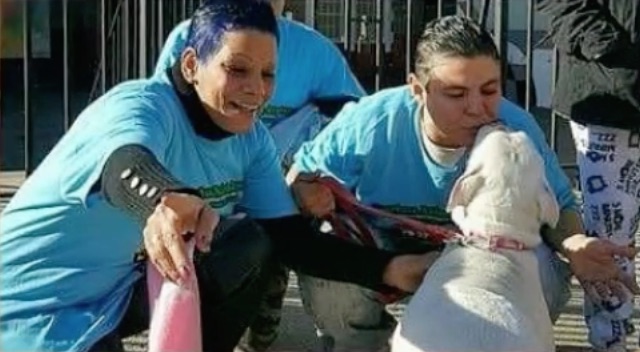
After being stolen from the porch of her home in The Bronx borough of New York two and a half years ago, Rihanna was found last week over a 100 miles away and brought into a shelter in Stratford, New Jersey.
Staff at the Voorhees Animal Orphanage tracked down the original pet owners using a microchip embedded in the lost pup and telephoned the family, who began crying on the phone.
Rihanna was still a long way from home so two volunteers at the shelter offered to make the two-hour drive back to the Big Apple with the dog in the back of the truck.
“This was an incredibly emotional situation,” Laurie Ballard, manager of the VAO, told Good News Network, “Microchip information is not always current, so while we were thrilled to discover the animal had been microchipped, it does not always lead to a reunion with their owner.”
Even though it had been years since Rihanna had seen her family, she was bouncing for joy to see her owners once more.
“In this case, given all that the family and the dog had been through over nearly three years – it was nothing short of a miracle. Everyone at the Voorhees Animal Orphanage was thrilled to play a part in such a happy reunion.”
(WATCH the video above from VAO) – Share the Joy, Pass it on…
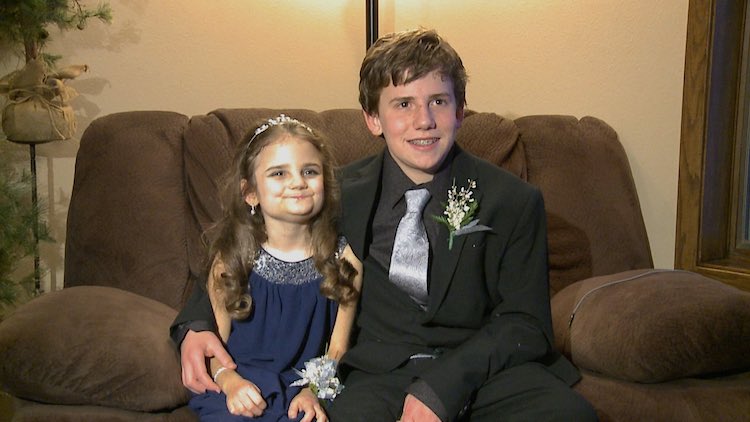
Her big brother made sure Rebekah got the whole formal experience, bringing her to dinner in Sioux Falls, South Dakota with his classmates and their dates.
“It’s fun to watch her live part of life where the disease doesn’t creep in, where she is just excited to be going and doing something that every child and every teenager gets to do,” her father Tony said.
(WATCH the heartwarming video below or READ the story from KSFY News)
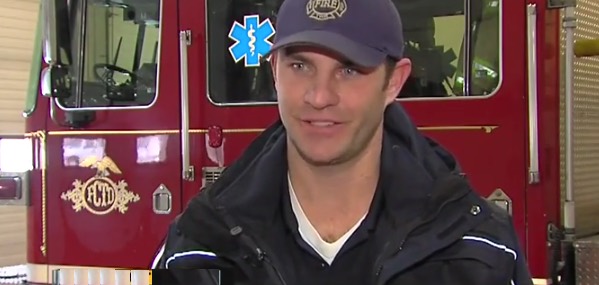
Firefighters are known for saving lives, but this Detroit area public servant went beyond the normal heroics with a powerful gift that came from a burning desire to help a family.
Ryan McCuen responded to an emergency call after the power went out at the home of a young man whose life is maintained by an electric ventilator.
After arriving he soon realized that the family, swamped with medical bills, had fallen behind on their electric payments–more than $1,000 behind–even while paying $200-$300 per month to try to get the balance paid off.
The Michigan family of seven had found some relief from a GoFundMe campaign set up by the mother, Christy Quant-Stone, who cares for two sons with muscular dystrophy, but had not received enough pledges to cover their urgent needs.
Ryan decided on the spot that he was going to pay their electric bill – in full – after he took the man to the hospital, and 20 minutes later the home’s power was restored.
For the first time, scientists have identified the activity of a metabolic enzyme found in the batteries of human skin cells as being key to the declines of aging.
A Newcastle University study, published online in the Journal of Investigative Dermatology, has found that the activity of mitochondrial complex II significantly decreases in older skin.
This discovery brings experts a step closer to developing powerful anti-aging treatments and cosmetic products which may be tailored to counteract the decline in the enzyme’s activity levels.
Paving the way for developments in age-related diseases
Findings may also lead to a greater understanding of how other organs in the body age, which could pave the way for drug developments in a number of age-related diseases, including cancer.
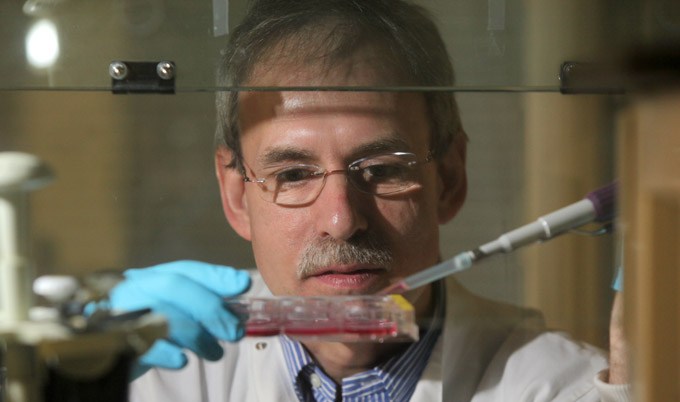
Mark Birch-Machin, Professor of Molecular Dermatology at Newcastle University, led the pioneering study with Dr Amy Bowman from his research group.
Professor Birch-Machin said: “As our bodies age we see that the batteries in our cells run down, known as decreased bio-energy, and harmful free radicals increase.
“This process is easily seen in our skin as increased fine lines, wrinkles and sagging appears. You know the story, or at least your mirror does first thing in the morning!
“Our study shows, for the first time, in human skin that with increasing age there is a specific decrease in the activity of a key metabolic enzyme found in the batteries of the skin cells.
“This enzyme is the hinge between the two important ways of making energy in our cells and a decrease in its activity contributes to decreased bio-energy in aging skin. Our research means that we now have a specific biomarker, or a target, for developing and screening anti-ageing treatments and cosmetic creams that may counter this decline in bio-energy.
“There is now a possibility of finding anti-aging treatments which can be tailored to differently aged and differently pigmented skin, and with the additional possibility to address the aging process elsewhere in our bodies.”
Enzyme activity declines with age
Complex II activity was measured in 27 donors, from aged six to 72 years. Samples were taken from a sun-protected area of skin to determine if there was a difference in activity with increasing age.
Techniques were used to measure the activities of the key enzymes within mitochondria that are involved in producing the skin cell’s energy, a type of mitochondrial gym or skin physical. This was applied to cells derived from the upper (epidermis) and lower (dermis) levels of skin.
It was found that complex II activity significantly declined with age, per unit of mitochondria, in the cells derived from the lower rather than the upper levels, an observation not previously reported for human skin.
The scientists found that the reason for this is the amount of enzyme protein was decreased and furthermore this decrease was only observed in those cells that had stopped proliferating.
Further studies will now be required to fully understand the functional consequences in skin and other tissues, and to establish methods to assess anti-aging strategies in human skin.
Dr Bowman, Research Associate at Newcastle University’s Institute of Cellular Medicine, said: “Newcastle University is pioneering research into aging as it has long been thought that mitochondria play an important role in the aging process, however the exact role has remained unclear.
“Our work brings us one step closer to understanding how these vital cell structures may be contributing to human aging, with the hope of eventually specifically targeting areas of the mitochondria in an attempt to counteract the signs of aging.”
A recent study carried out in mice showed that complex II activity is lower in the skin of naturally aged older mice compared to younger mice.
The mitochondrial complex II published research was funded by the North Eastern Skin Research Fund, the NIHR Biomedical Research Centre at Newcastle University and Newcastle Upon Tyne Hospitals NHS Foundation Trust and Newcastle University’s Faculty of Medical Sciences.
Just two decades ago there were no wolves in Germany, after they were hunted to extinction a century ago.
“Wolves were not deliberately reintroduced into the wild in Germany, but returned naturally. They were first spotted 18 years ago, having wandered across the border from Poland,” reports the Telegraph.
They have since established a population of some 150 in eastern Germany and another 50 are roaming in western parts of the country.
13-year-old Lilly Thompson didn’t always live in a comfortable Idaho home. That’s why she did something special for the kids who started out just like her—homeless.
Before her mother Lyndette passed away from stage four breast cancer when she was just 3, Lilly and her mom were living at Father Joe’s Village homeless shelter in San Diego.
The young orphan was then adopted by her daycare sitter and raised in Idaho without any knowledge of her homeless roots.
When Lilly eventually discovered her heritage, she knew she wanted to do something meaningful for the children who were growing up like she did, so she started a Go Fund Me page and raised $1,700 to buy gifts for the shelter.
Whenever women at Father Joe’s complete certain chores, they receive credit that they can use to get supplies and toiletries from the “Baby Bucks Store”. On December 23rd, the shelves of that store were overflowing with goodies thanks to Lilly’s donations.
”It is extremely sad knowing my mother isn’t alive to see this,” Lilly told the Good News Network, “but I know she was awesome from what everyone tells me.”
We think Lilly picked up a little of that awesome-ness at a very early age.
Shelley Kohut and a team of volunteers have become social media philanthropists funding temporary financial needs in their Canadian community one Facebook auction at a time.
Ever since they started in 2013, Neighbors Helping Neighbors has provided ‘hand-ups’ – rather than handouts – to citizens struggling to pay the bills in Sundre, Alberta.
Town members donate household items to be auctioned off on their Facebook page with the proceeds going to residents in their town; this serves as a win-win for those who want to use their clutter for charity and for those who temporarily have a hard time paying a bill or affording gas money for a week or two.
Neighbors Helping Neighbors reveal they’ve done everything from giving food and gas cards to an elderly gentleman while his stolen identity was sorted out by the government, to adopting a family for Christmas when the head of household was off the job because of a surgery.
“[The hand-ups are] not to maintain a lifestyle — they are to help people who, in their normal lives, have hit some kind of hurdle, especially these days,” Kohut told the Sundre Roundup.
It all started when Kohut’s church pastor gave her $100 to pay forward in an act of kindness. The organization expanded to recruit more volunteers until there were two auctions a week raising $2,000 to $3,000 dollars a month.
Any community could do the same thing, and a quick google search turns up many ways to auction items on Facebook.
He was an animal lover who had a dog, six cats, seven chickens, and a parakeet. Now, the Ohio man who had no family has left his three-million dollar fortune to animals who are haven’t been at all fortunate.
When Bob Wetzell died in December, his legal documents directed that his estate be liquidated and the money go to creating a new animal shelter.
His lawyer says the money will go to the Animal Welfare League in Champaign County, and be used to buy a farm that will be used to rehabilitate unwanted pets, provide dog training, and serve as a preserve for animals to roam freely.