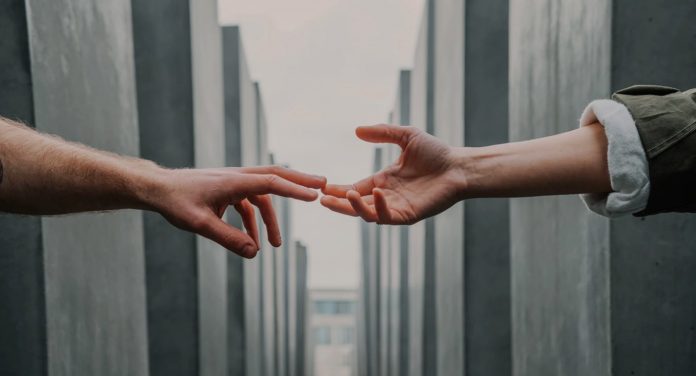
Quote of the Day: “What sunshine is to flowers, smiles are to humanity… The good they do is inconceivable.” – Joseph Addison
Photo: Masaaki Komori, public domain
With a new inspirational quote every day, atop the perfect photo—collected and archived on our Quote of the Day page—why not bookmark GNN.org for a daily uplift?
XPRIZE has always held global competitions to find the best solutions to some of the world’s biggest challenges, and now they want to solve the problem of rising unemployment due to the pandemic.
On Monday, the nonprofit organization announced XPRIZE Rapid Reskilling to reinvent job training methods to reemploy the hardest hit communities.
Sponsored by the nonprofit philanthropy group, New Profit, the contest aims to find optimal ways to give workers new skills and secure employment amid drastic changes due to technological advances as well as COVID-19.
XPRIZE is inviting teams to develop new innovative ways that can be applied to multiple occupations. Teams must prove reskilling can be done two-times faster than current solutions and must be affordable, accessible, and collaborative.
The focus will be on over 80 specific occupations that are growing fast, require only a high school diploma or post-secondary certificate, and pay above a living wage. The goal is to set a new standard for how current and future generations of workers are trained for the jobs of tomorrow.
“On the 100th Day of the global COVID-19 pandemic, we launched one of our most important competitions to date,” said XPRIZE CEO Anousheh Ansari. “XPRIZE Rapid Reskilling is designed to address the reality of a changing workforce where technology is displacing workers at an unprecedented pace, which has only been heightened by COVID-19.”
It’s not about automation, robotics, or artificial intelligence. It’s about people.
With a $5 million top prize, they are calling on all tech experts, educators, training providers, staffing agencies, employers and academic institutions to form teams that will use novel methods to rapidly train 500 people at no cost in 60 days, and place them in jobs…ensuring job retention of at least 90 days, while demonstrating “exponential adoption by deploying the training solutions for 5,000 individuals in three industries.”
Rapid Reskilling is committed to ensuring diversity because most of the people unemployed in the U.S. right now are people of color, and their goal is to have at least 40 percent of the teams made up of people from those communities.
XPRIZE Rapid Reskilling is part of New Profit’s broader Future of Work Grand Challenge, a collaborative, cross-sector effort that will help prepare 12 million Americans from disinvested communities for workforce success by 2025, with help from the MIT program ‘Reimagining Pathways to Employment in the US’ from MIT Solve.
XPRIZE is no stranger to solving major problems on a global scale. They launched the Carbon XPRIZE, which is developing breakthrough technologies to convert CO2 emissions into everyday, usable products.
“We’ve been at the forefront of innovation for 25 years,” said Dr. Emily Musil Church, Executive Director of Equity at XPRIZE. “The future of work isn’t just robotics, or artificial intelligence, or automation; it is ultimately about people. XPRIZE Rapid Reskilling will create a future in which all workers can rapidly attain new and more relevant skills to open up new opportunities equal to the pace of technological developments.”
If you’re interested in forming a team and joining the competition, visit rapidreskilling.xprize.org for more information.
One of the biggest challenges with widespread implementation of renewable energy is storage—but now in England, a trailblazing company is developing the world’s first liquid-air battery storage facility for renewable energy.
And the zero-emission concept costs half as much to produce as lithium-ion batteries.
Capable of powering 200,000 homes for a whole day and storing renewable energy for weeks on end, the facility is slated for operation in 2022.
Good News Network has recently reported on other schemes of renewable energy storage, including Swedish energy company Azelio’s recycled aluminum batteries for storing thermal energy in an block of molten aluminum.
When grid demand is low, leftover green energy is used to compress air into a liquid form for storage. When grid demand rises, pressure on the liquid air releases, turning it back into a gas. This gas is then used as a fuel for a green-energy wind turbine that can generate clean electricity to be sent back into the grid.
The most admirable qualities of the technology are its scalability, generating anywhere from 80MW per hour to 200MW per hour; its zero emission output; and the cost, which is 50% lower than manufacturing lithium-ion batteries.
Photo by Highview Power
The government of Manchester, England has supported the project with a £10 million grant in hopes of supporting the country’s decarbonization goals and encouraging a green recovery from the COVID-19 lockdowns that have hurt the English economy.
“Air is everywhere in the world. The main competitor is really not other storage technologies but fossil fuels,” says Highview CEO Javier Cavada told The Guardian.
“This revolutionary new facility will form a key part of our push towards net zero, bringing greater flexibility to Britain’s electricity grid and creating green-collar jobs in Greater Manchester.
Highview is projected to launch similar locations for similar battery systems in the UK, Europe, and US, but the Manchester project will be the first facility to come online, scheduled to be completed in 2022.
“The first one is definitely the most important and this is why we really value the UK government’s bold move to use UK technology to solve UK problems and afterwards export the tech globally,” said Cavada.
Power Up With Positivity By Sharing The Good News With Your Friends On Social Media…
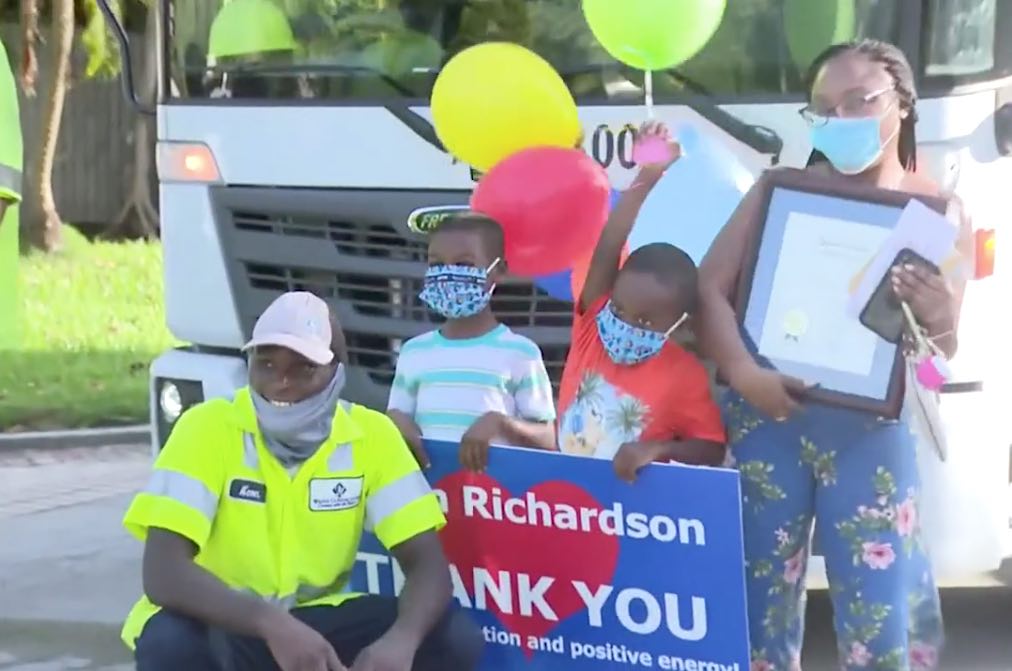
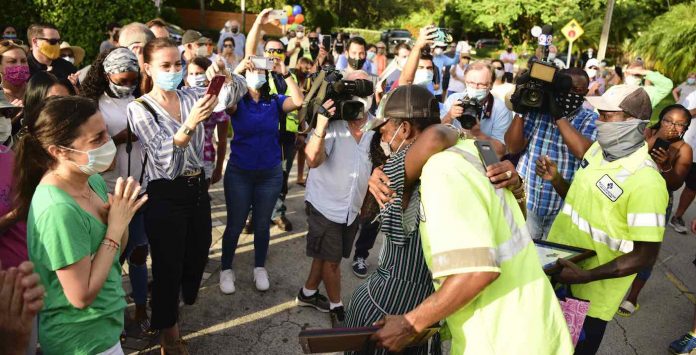
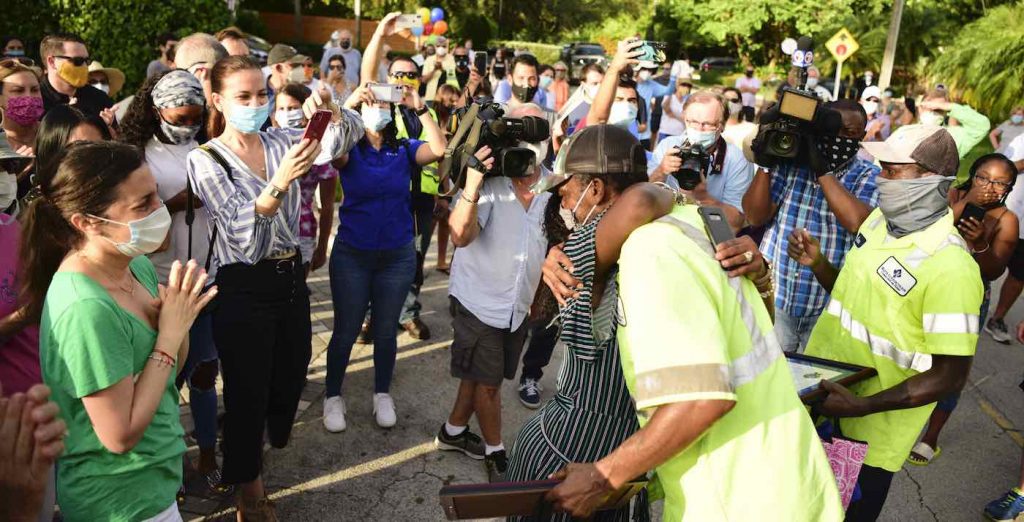
Saul and Keon have never missed a day of work picking up trash in Miami Beach—and they’re especially glad they were covering their route this week as a beautiful surprise awaited them.
When their huge truck rolled down the street into the North Bay Road community they found scores of residents who’d gotten up early to line the street with signs and balloons, all to simply say ‘we love you’.
Jennifer Elegant wanted to show her family’s appreciation so she organized the socially-distancing surprise ‘thank you’ celebration to honor the essential workers whom she called “extraordinary”.
Even the Miami Beach mayor, Dan Gelber, showed up to salute them— because Saul Scruggs and Keon Richardson do so much more than pick up trash.
“They bring an incredible, positive energy to the entire neighborhood,” Jennifer told GNN. “Simply put, they spread joy.”
What is particularly special about these two men is the positive energy that they bring with them. They always have smiles on their faces and never miss an opportunity to say hello and brighten someone’s day. They also go out of their way to help others and expect nothing in return.
One day, Saul spent 45 minutes helping a neighbor dig through her trash to help her look for her lost wedding ring. He also waited over an hour with another neighbor who was having heart issues and needed an ambulance.
Jennifer has had “meaningful discussions” with these amazing sanitation workers about their inspiring levels of happiness and often share their wisdom with her Miami Dade College psychology students.
“They continue to maintain their upbeat demeanor even during this stressful COVID-19 pandemic, sacrificing their own safety in order to keep our city clean and beautiful,” she said.
Keon with his family – video by Brian Ely on YouTube
“Every day we are surrounded by heroes who bring us inspiration and joy but too often we are unable to recognize these special individuals for the impact they make on others. I wanted Saul and Keon to know that we are thankful from the bottom of our hearts.”
And the thanks showed up yesterday in gift bags, cards, and presents—like a mini-trash truck from a little boy—presented to these ‘essential workers’ from the many people who appreciate them.
WATCH the local news coverage from WPLG News… (Featured photo shows Jennifer, Saul, and his wife)
SHARE This Sweet Gesture on Social Media and Inspire Others to Do the Same…
Quote of the Day: “Although the world is full of suffering, it is also full of the overcoming of it.” – Helen Keller (born 140 years ago)
Photo: BLM rally by risingthermals, CC license, cropped
With a new inspirational quote every day, atop the perfect photo—collected and archived on our Quote of the Day page—why not bookmark GNN.org for a daily uplift?
A pair of new studies reveals a silver lining amid the COVID gloom: Many fathers feel closer to their kids during the pandemic, and want to create a new normal going forward.
The studies, released last week as part of Canadian Men’s Health Week, were conducted in May on behalf of the nonprofit Canadian Men’s Health Foundation (CMHF). The first survey asked 1,019 Canadian fathers about the impact of the COVID lockdown on their roles as fathers.
“Even though families have faced stressors and challenges with COVID-19, we recognize that fathers have been granted a golden opportunity to take time to slow down and connect with their children,” said Canadian Health Minister Adrian Dix.
“Many parents work full time and commute, and when that is taken away, they have more opportunities for togetherness, like a game of catch or going for a hike. Men’s health is impacted by their living situations, and getting a little more physical activity with their kids is a little thing that makes a big difference. We can learn from this pandemic in more ways than we think.”
During lockdown, 40% of the respondents felt COVID-19 has had a positive impact on their role as a father, 52% are more aware of their importance as a father, and 60% felt closer to their children. Half of those surveyed have already decided to be more engaged as a father in the future.
According to the study, almost two thirds of fathers have been providing companionship to their children more often during lockdown, and almost half plan to continue doing so as restrictions are lifted. Likewise, 56% have been providing guidance to their children more often, with 46% planning to continue doing that as well.
“I’ve been off work since March and it’s been stressful, but the upside is I’ve been able to spend a lot more time with my daughters,” said Dal Watson of Burnaby, B.C. “I’m a professional chef and I’ve been spending time in the kitchen at home teaching my kids how to cook. We’re also sitting down as a family and eating together, which was something that couldn’t happen very often when I was working. I’m grateful for the extra time I have with my family.”pandemic in more ways than we think.”
Nick Black, Managing Partner at Intensions Consulting, said fathers’ increased engagement can take many forms. One tangible way the study sees dads engaging is that 64% are eating more meals with their children.
“Sharing meals can provide an important opportunity for family connection,” says Black. “There is considerable evidence that eating meals together can have a positive impact on kids mental health, nutritional choices, school performance, and can even reduce the incidence of drug and alcohol use.”
As a follow up to the online survey, The Men’s Initiative (TMI) at UBC conducted virtual focus groups with 45 fathers from across Canada. Many fathers described a hectic family dynamic prior to COVID with busy lives focused on long work days with commuting, eating on the run, and catering to children’s schedules. With the sports, extracurricular, and social activities, the family members experienced lives that were lived in parallel with each other.
As the pandemic evolves, fathers have expressed concern that they will experience a tension between shifting back to the “old normal,” and a desire to create a new normal going forward.
“We know the active and positive presence of fathers in their children’s lives has a positive effect on those children’s mental and physical wellbeing and reduces the frequency of their negative behaviors,” noted Dr. David Kuhl, a UBC Professor of Medicine and a co-founder of TMI.
“If the COVID-19 lockdown accelerates the movement of dads to be more engaged with their children, that could be a lasting benefit from a tragic public health crisis,”said Dr. Larry Goldenberg, the Founding Chair of CMHF. “It is clear, however, that men realize it will be a challenge to continue spending quality time with their families once the daily stresses of commuting and working long hours are reintroduced to their lives.”
CMHF has some easy ‘Dad Tips’ to help fathers find a better work-life balance at DontChangeMuch.ca.
Need more positive stories and updates coming out of the COVID-19 challenge? For more uplifting coverage, click here.
SHARE The Silver Lining With Fathers on Social Media…
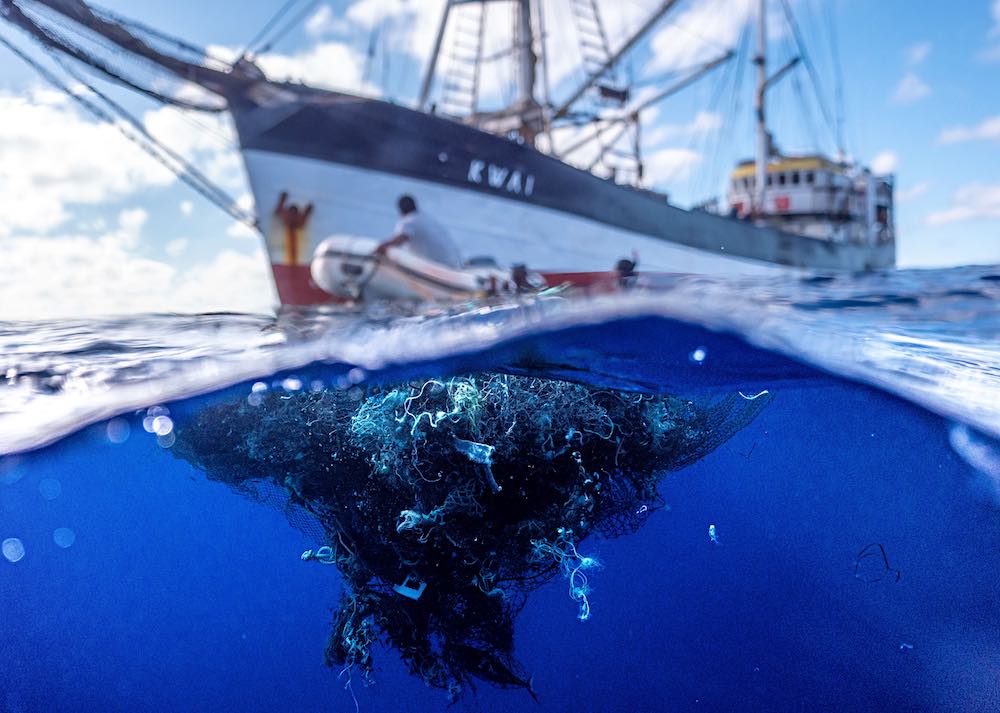
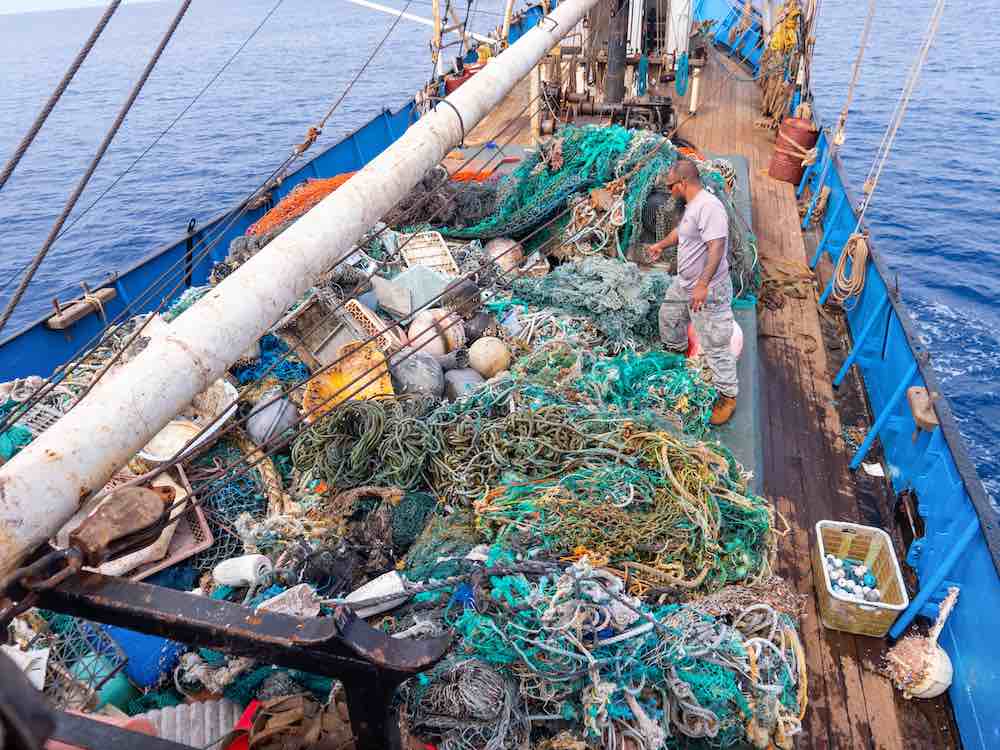
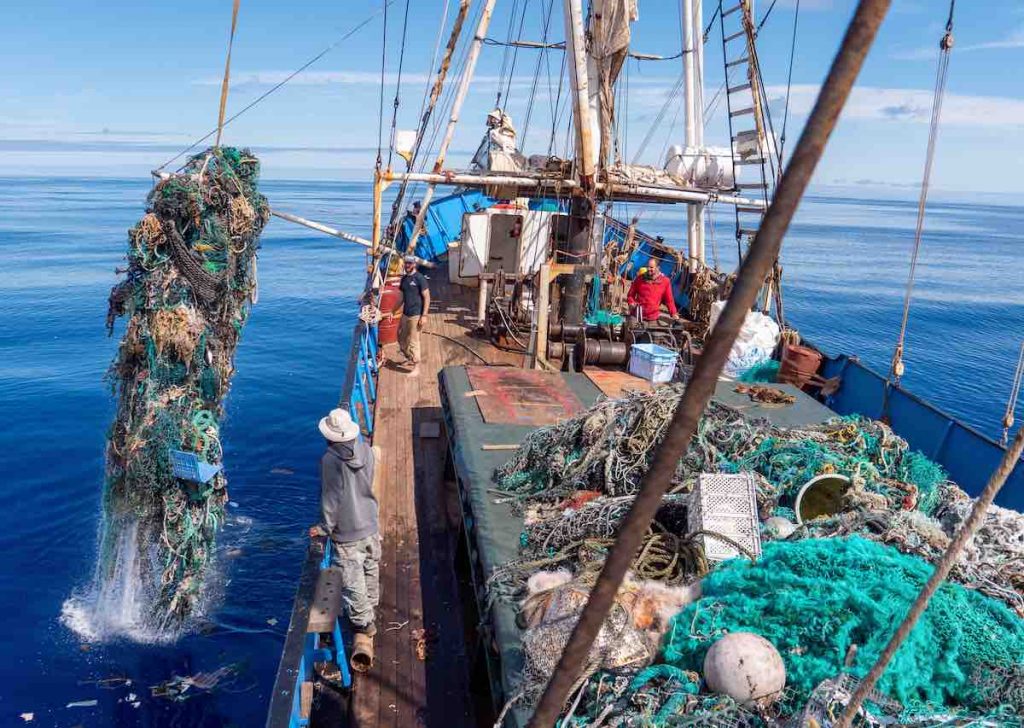
Ocean Voyages Institute says it made history this week, returning to the port of Honolulu Tuesday, after successfully removing 103 tons of fishing nets and consumer plastics from the Great Pacific Garbage Patch.
It more than doubled its own record-setting results from a 25-day stint last year during this 48-day expedition. And, Mary Crowley, the group’s founder and executive director, says they are headed back to sea in two days to collect more debris.
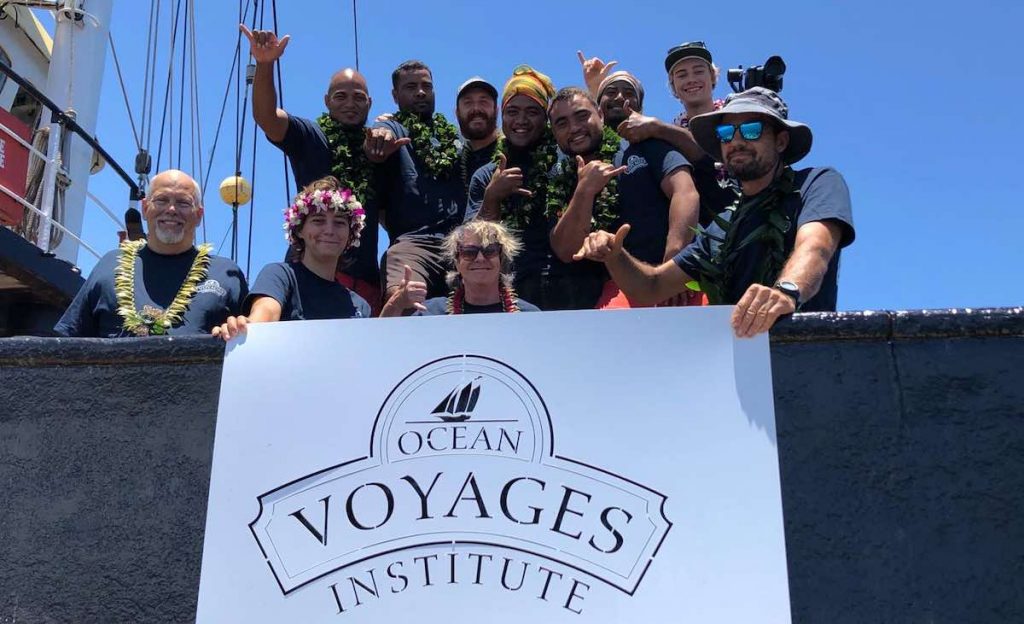
“I am so proud of our hard working crew,” says Crowley. “We exceeded our goal of capturing more than 100 tons of toxic consumer plastics and derelict ‘ghost’ nets—and in these challenging times, we are continuing to help restore the health of our ocean, which influences our own health and the health of the planet.”
Known as the ‘Ghost Net Buster,’ Mary Crowley is renowned for developing effective methods to remove significant amounts of plastics out of the ocean, including 48 tons (96,000 lbs.) of plastics during two ocean clean-up voyages in 2019, including one that scooped up nets that had trapped garbage around the Hawaiian islands.
All photos by Ocean Voyages Institute
“Even though beach cleanups are the most efficient way to collect trash, ocean cleanup—intercepting it before it comes to the shore—is very important,” Dr. Nikolai Maximenko of FloatEco told GNN during a Zoom press briefing. “Nothing can replace the effort in the ocean.”
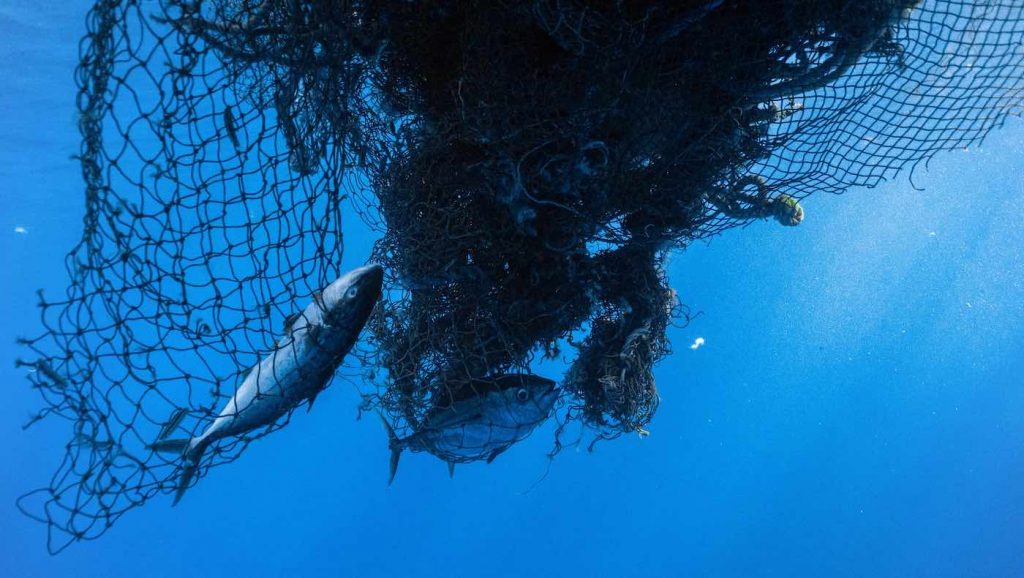
Aboard their cargo ship, the team has been using GPS satellite trackers since 2018, designed with the help of engineer Andy Sybrandy, of Pacific Gyre, Inc. Crowley’s theory proved successful that one tracker can lead to many nets. The ocean frequently ‘sorts’ the floating debris so that a tagged fishing net can lead to other nets and a density of debris within a 15-mile radius.
Ocean Voyages Institute
“We are utilizing proven nautical equipment to effectively clean-up the oceans while innovating with new technologies,” says Crowley in a media release. “Ocean Voyages Institute has been a leader in researching and accomplishing ocean clean-up for over a decade, granted with less fanfare and attention than others, but with passion and commitment and making meaningful impacts.”
Ocean Voyages Institute unloaded the record-breaking haul of ocean plastic debris this week while docked alongside Pier 29, thanks to the support of Honolulu-based Matson, in preparation for upcycling and proper disposal. The team is committed to 0% ending up in any landfill and is sending the sorted debris to recycling companies to be turned into insulation, energy, etc.
Ocean Voyages Institute
“In keeping with our commitment to environmental stewardship, Matson has been searching for a way to get involved in cleaning up the Pacific,” said Matt Cox, chairman and CEO. “We’ve been impressed with the groundbreaking efforts of Ocean Voyages Institute and the progress they’ve made with such a small organization, and we hope our support will help them continue this important work.”
The sailing cargo vessel, S/V KWAI, left the Hawaiian port of Hilo on May 4, after a three week self-imposed quarantine period to ensure the health of crew members, in the face of the COVID-19 pandemic.
Crew on departure – Ocean Voyages Institute
The GPS satellite tracking beacons are being placed on fishing nets by volunteer yachts and ships.
Ocean Voyages Institute is launching a second voyage that will depart in two days to continue clean-up of the area, but its length (between 25-30 days) will be determined by donations and fundraising. You can donate by check, paypal, or other method on their website.
“Our goal is to have another 3-4 boats working next year—all bringing in large cargos of debris,” Crowley (who spends most of the year in Sausalito, California) told GNN by phone. “We have vessels wanting to help clean up, so right now we can begin to make a big change, because our solutions are scalable.”
Over the long term, they are aiming to expand to other parts of the world desperately needing clean-up help, so that abandoned fishing nets will never again entangle or harm a whale, dolphin, turtle or reef.
SAIL This Great News to Your Friends on Social Media…
Campanula flower with soap bubble by Eijiro Miyako
Even though bees had a ‘very good year,’ with the second smallest winter hive loss in 14 years, according to an annual survey released in March, agriculture experts continue to look for alternative pollination techniques. And, just in time for National Pollinator Week, we’ve got news on a pollinator of a different sort.
Bees and other pollinators like butterflies are essential to farmers who grow flowering crops like fruit orchards and almonds, but with bee populations suffering over the last decade, due to a variety of factors, one innovative researcher in Japan may have found the perfect solution—and the idea came to him while in the park blowing soap bubbles with his son.
Eijiro Miyako, an associate professor at the Japan Advanced Institute of Science and Technology has successfully used soapy bubbles to pollinate a pear orchard by delivering pollen grains to targeted flowers in the most delicate way, utilizing a drone.
The whimsical technique would be much cheaper and more effective than other types of manual pollination, when used in concert with robotic or drone delivery methods.
The study, published in Nomi, Japan on June 17 in the journal iScience, presents a low-tech complement to robotic pollination technology designed to supplement the work of vanishing bees.
“It sounds somewhat like fantasy, but the functional soap bubble allows effective pollination and assures that the quality of fruits is the same as with conventional hand pollination,” wrote Miyako, the senior author.
Campanula flower with soap bubble by Eijiro Miyako
“Soap bubbles have innovative potentiality and unique properties, such as effective and convenient delivery of pollen grains to targeted flowers and high flexibility to avoid damaging them.”
Miyako and colleagues had previously published a study in the journal Chem, in which they used a tiny toy drone to pollinate blossoming flowers. But, even though the drone was only two centimeters long, the researchers struggled to prevent it from destroying the flowers as it bumped into them.
While searching for a more flower-friendly artificial pollination technique, Miyako spent a day at the park blowing bubbles with his son. When one of the bubbles collided against his son’s face — a predictably injury-free accident — Miyako found his inspiration.
After confirming through optical microscopy that soap bubbles could, in fact, carry pollen grains, Miyako and Xi Yang, his coauthor on the study, tested the effects of five commercially available surfactants on pollen activity and bubble formation. The neutralized surfactant lauramidopropyl betain (A-20AB) won out over its competitors, facilitating better pollen germination and growth of the tube that develops from each pollen grain after it is deposited on a flower.
Based on a laboratory analysis of the most effective soap concentrations, the researchers tested the performance of pear pollen grains in a 0.4% A-20AB soap bubble solution with an optimized pH and added calcium and other ions to support germination. After three hours of pollination, the pollen activity mediated through the soap bubbles, remaining steady, while other methods such as pollination through powder or solution became less effective.
Miyako and Yang then loaded the solution into a bubble gun and released pollen-loaded bubbles into a pear orchard, finding that the technique distributed pollen grains (about 2,000 per bubble) to the flowers they targeted, producing fruit that demonstrated the pollination’s success.
Finally, the researchers loaded an autonomous, GPS-controlled drone, which they used to direct soap bubbles at fake lilies (since flowers were no longer in bloom) from a height of two meters, hitting their targets at a 90% success rate when the machine moved at a velocity of two meters per second.
Although this approach to pollination appears promising, more techniques are still needed to improve its precision. Plus, with soap bubbles, weather is key — raindrops can wash away pollen-bearing bubbles from flowers, while strong winds might blow them astray.
Next, Miyako and colleagues plan to tackle the issue of waste generated by the artificial pollinator prototype, since most bubbles still fail to land on their target flowers.
SHARE the Buzz With Your Bee-Loving Friends on Social Media…
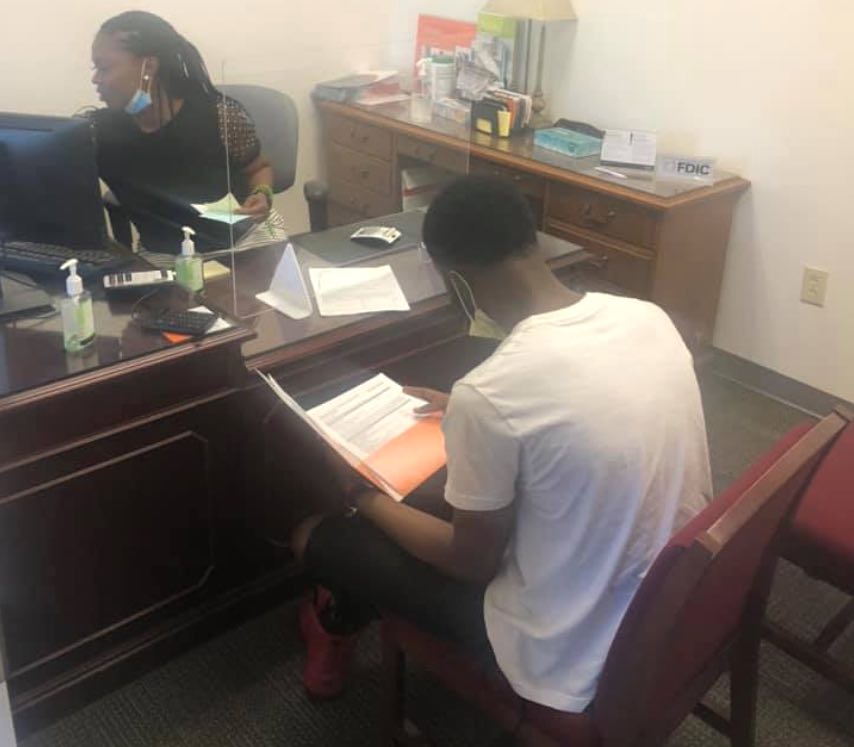
What started as a lonely graduation day for a teen in Alabama has turned into a priceless opportunity to bond with his teacher. Now, that teacher is working to get that student a car that will get him started in his adult life.
On Thursday, Bessemer City High School held its annual graduation ceremony. Dominque Moore was one of the teachers involved in coordinating the event. After the ceremony had ended, Dom was cleaning up after the festivities.
Nearly everybody had left to celebrate with friends and family, but one young man was still sitting there by himself.
“I know his moods and I knew he wasn’t himself,” Dom told AL.com. “I asked him, ‘Where are your people?’ and he was like, ‘Nobody’s here.”
Not knowing what to say at first, the teacher told him “I expect big things from you and it’s going to be OK.”
Dom assumed that someone would show up eventually to give the graduate a ride home. But nobody did. When Dom offered to drive him, neither of the two had any idea that this was to be more than just a ride home.
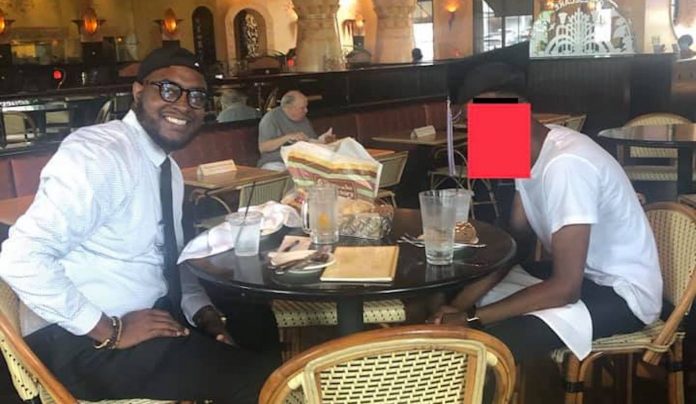
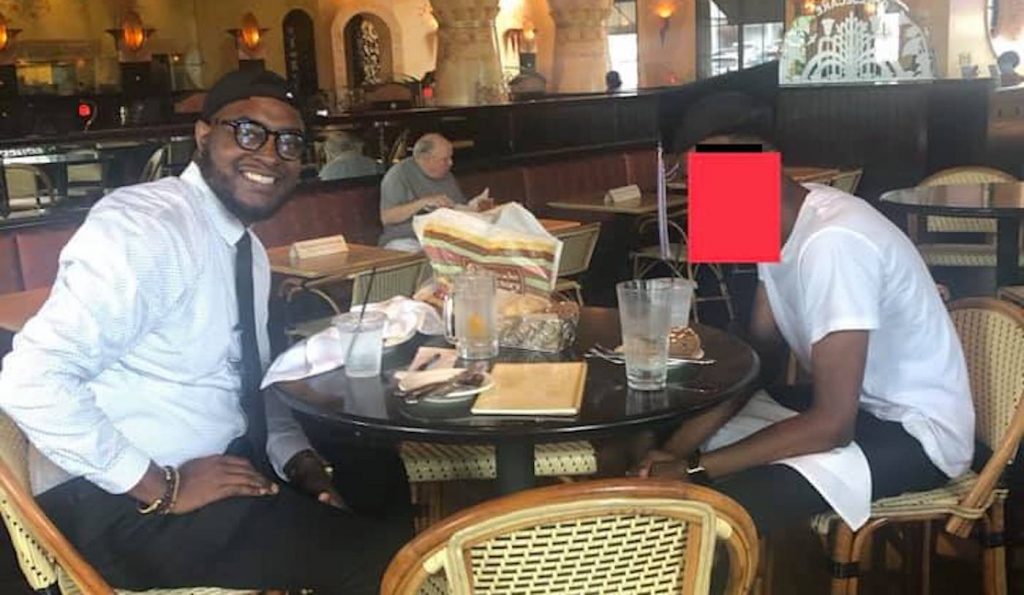
The teacher decided to take him out to eat—at any restaurant of his choice. They ended up at the Cheesecake Factory, and enjoyed a hearty meal and dessert to celebrate the graduate’s achievement.
At first, the two were fighting back tears. But before long, they were having a great time together. Dom never asked why the boy’s family did not attend the ceremony. What was important to him was that the young man felt appreciated for what he had accomplished.
Dom Moore – Facebook
Later that evening, Dom took to Facebook to share a photo and some thoughts on the event. He says that he doesn’t normally post about these situations, as they are all too common in his profession, but that something inside urged him to share this experience.
And, he shared his Cash App ID in the post ($mooredaeducator) for anyone who may want to be a “blessing” to this young man.
Before long, generous people—many of them strangers—had sent more than $5,000 in donations. Dom took the teen to open a bank account with the money, and is also hoping to help him buy a car, and save up to attend college one day.
This baby needed a village and WE ARE HERE!” Ash Norris commented on Dom’s Facebook post.
Another commenter, Chip Dillard, volunteered to mentoring the young man, saying, ‘I’m retired and I’d gladly donate 20 hours per week.”
“I’m feeling amazing, that so many people would bless him in the way they have,” Dom told GNN, nine days after he started the fundraiser, which has undoubtedly raised more money since the first report. “He has received a great deal of funds which have been turned over to a financial advisor.”
Dom hopes that the story will remind all of us what is truly important and give hope to those who are struggling. “We take people and life for granted. Even though we have bad, in this moment it shows that mankind is good.”
MULTIPLY The Good By Sharing This With Your Friends on Social Media…
Quote of the Day: “At last it dawned on me that these obstacles were my life.” – Father Alfred D’Souza
Photo: by Ed 259, public domain, cropped
With a new inspirational quote every day, atop the perfect photo—collected and archived on our Quote of the Day page—why not bookmark GNN.org for a daily uplift?
People want to help each other, even when it costs them something and even when the motivations to help don’t always align, a new study suggests.
In research published earlier this month in the journal Science Advances, sociologists found that people overwhelmingly chose to be generous to others—even to strangers, and even when it seems one motivation to help might crowd out another.
It is the first study to examine how all the established motivations to be generous interact with one another.
“We wanted to do an exhaustive study to see what the effects of those motivations would be when combined—because they are combined in the real world, where people are making choices about how generous or kind to be with one another,” said David Melamed, lead author of the study and an associate professor of sociology at The Ohio State University.
The study involved more than 700 people, and was designed to help researchers understand prosocial behavior.
“It means doing something for someone else at a cost to yourself,” Melamed said. “So one example would be paying for the person behind you’s order at the coffee shop. Or right now, wearing your mask in public. It’s a cost to you; it’s uncomfortable. But you contribute to the public good by wearing it and not spreading the virus.”
Scientists previously had determined that four motivators influenced people to behave in a way that benefited other people.
One: The recipient of a kindness is inclined to do something nice for the giver in return. Two: A person is motivated to do something nice to someone that she saw be generous to a third person. Three: A person is likely to do good in the presence of people in their network who might reward their generosity. And four: A person is likely to “pay it forward” to someone else if someone has done something nice for her.
Those four motivators had all been studied isolated from one another, and some had been studied as a pair—but until this experiment, scientists had not conducted a comprehensive study about how the four motivators might affect one another in the real world, where the motivation to be kind to others might be influenced by multiple factors.
“In the real world, the conditions under which people are nice to each other are not isolated—people are embedded in their networks, and they’re going about their daily lives and coming into contact with things that will affect their decisions,” Melamed said. “And these experiments show that all the motivations work. If you want to maximize prosocial behavior, it was a really great thing to see.”
For this study, which was done online, participants had to decide how much of a 10-point endowment to give to other people. The points had monetary value to the participants; giving cost them something.
Then the researchers created different scenarios that combined one or all four of the potential motivators for giving.
Melamed said that prior to the experiment, he thought the motivations for kindness might crowd one another out. For example, a person may be less apt to indirectly reward another’s generosity toward a third person when he is focused on directly giving back help that he received.
“People have a self-bias,” he said. “If you do something nice for me, I may weigh that more than if I see you do something nice for someone else—but we found that all the motivators still show up as predictors of how much a person is willing to give to someone else, regardless of how the differing motivators are combined.”
This research helps us understand the remarkable quantity and diversity of prosocial behavior we see in humans, Melamed said.
“From an evolutionary perspective, it’s kind of perplexing that it even exists, because you’re decreasing your own fitness on behalf of others,” Melamed said. “And yet, we see it in bees and ants, and humans and throughout all of nature.”
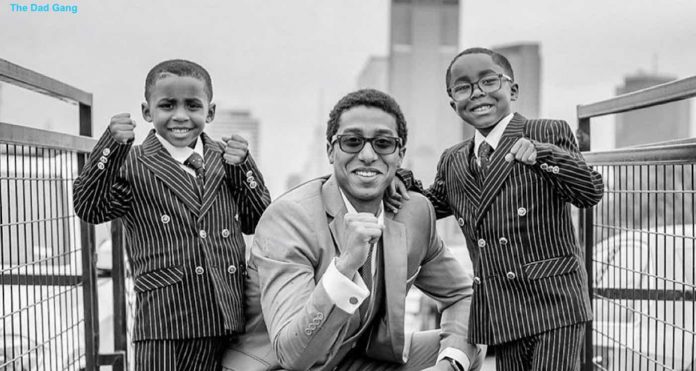
Four years ago, a woman approached a black father who was shopping at the grocery store with his kids. She commended him for “sticking around,” and doing right by his children. Now, he and his “Dad Gang” are marching in Washington D.C. in an effort to challenge such racial stereotypes.
Sean Williams says that moment in the grocery store—in a mostly-white Long Island neighborhood—was not unique, and many of his friends have experienced similar situations. The encounter led him to launch an organization of solidarity for Black dads with a mission to change the way people view Black fatherhood.
According to the CDC, African-American fathers who live with their children are more active than other groups in terms of changing diapers and bathing and dressing their kids. Sean wants these positive qualities of black fatherhood to become more well-known and more celebrated in the culture.
“The Dad Gang” has evolved into a community of socially-conscious allies whose motto, ‘We are dad goals,’ sums up the purpose of the group’s events: to enjoy their time together, while setting “the new standard of what black fatherhood looks like worldwide.”
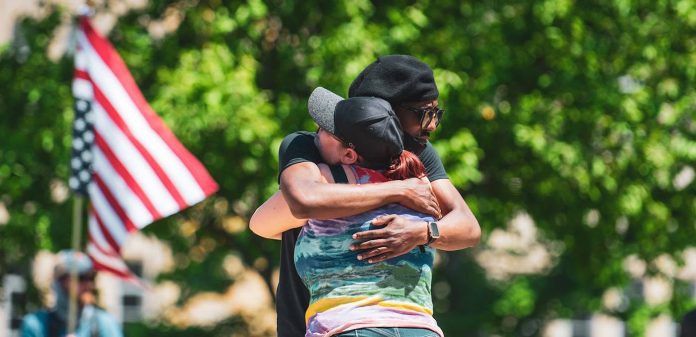
Thanks to The Dad Gang, it was not just an ordinary Father’s Day weekend in the nation’s capital. Hundreds gathered with Sean and his group at the National Museum of African American History and Culture to celebrate their families and bust racial stereotypes.
Sheila Roberts of Tampa, FL was in D.C. visiting her father. When she heard about the event at the museum, she couldn’t think of a better way to celebrate his big day.
“Black fathers don’t get the credit they deserve,” She told the Washington Post. “I’m here to dispel the myth and stereotype.”
The group also stood in solidarity with those protesting the death of George Floyd in recent weeks. Edward Smith, COO of The Dad Gang, told ABC that Floyd’s daughter, although she lost her father to racial injustice, she also “gained a million more” dads who cared about her.
They might have been hearkening back to memories of the ‘Million Man March’ 25 years ago, when nearly a million Black men and family members came to the National Mall to pledge to be better fathers and lift up their communities.
The Dad Gang has positioned themselves at the next level of the national conversation. #DadGoals include inspiring people with photos and videos on social media, like on Instagram here, about the joy and reality of black fatherhood and family life. You can support their mission here.
WATCH a video from ABC…
SPREAD the Love With Dads on Social Media By Sharing the Inspiring Story…
The first patient to be treated for Sickle Cell Disease with the revolutionary gene-editing program CRISPER had a transfusion of billions of modified cells last year, and now a year later her treatment is still working perfectly.
Before Victoria Gray underwent the treatment in mid-2019 she had been experiencing frequent bouts of physical pain. Patients like her are often forced to get blood transfusions—an average of seven per year in Gray’s case—in order to ensure that their body has enough healthy red blood cells to carry oxygen throughout the body.
But now, alleviation of almost all of her symptoms has allowed her to stay out of Mississippi hospitals and support her three kids while her husband, a national guardsman, was temporarily deployed out of town.
The era of COVID-19 is hardly the time to be popping into a hospital for a blood transfusion, so the improvement for Gray has been substantial—and feels like “a miracle”.
“Since my treatment I’ve been able to do everything for myself, everything for my kids,” she told NPR. “And it’s been a joy not only for me but for the people around me.”
An artifact of the strange genetic history of humanity, sickle-cell genes evolved in Africans as a strong defense against malaria, but they can also increase the chance of dying relatively young from the blood disorder.
However, her case, along with those of two others who were treated in the same way, is producing only good news a year later. Dr. Haydar Frangoul of the Sarah Cannon Research Institute in Nashville, Tennessee, who is treating Gray, described it as “extremely thrilling to see and extremely exciting.”
Frangoul and other scientists using CRISPER presented the results of their latest testing of the three cases to the European Hematology Association on June 12th. The two other subjects had a related condition, beta thalassemia, and were treated in Germany with a similar method and have now been able to live without blood transfusions for 15 months.
“I think this is a huge leap for the medical field,” Frangoul told NPR in an interview, asserting that Gray will be, hopefully, the first of many thousands more of patients who will be able to see things they never imagined possible.
“High school graduations, college graduations, weddings, grandkids — I thought I wouldn’t see none of that,” Gray said.
SHARE the Good News on Social Media… (Photo by Libertas Academica, CC license on Foter)
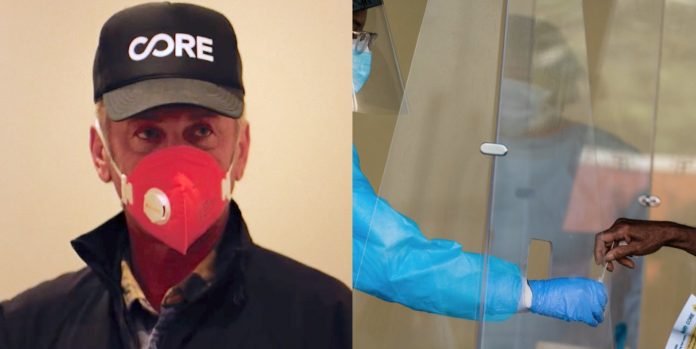
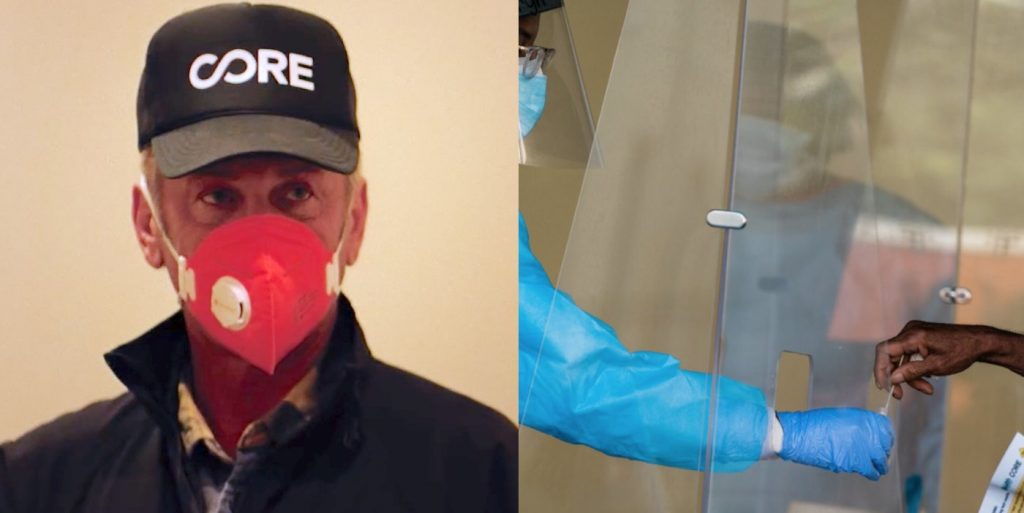
It’s been ten years since Hollywood A-lister and philanthropist Sean Penn mobilized a huge team of volunteers to rebuild Haiti after an earthquake claimed 250,000 lives. His nonprofit, CORE, is still there today, with 150 people working with local communities.
Now his own country needs help, and CORE—formerly J/P Haitian Relief—has stepped in to do the valuable work of testing for COVID-19, free of charge, in communities across the country.
They’ve already completed 530,000 tests, and maybe just as importantly, freed up firefighters to get back to their regular duties.
After he learned that the testing stations were being manned by firefighters in Los Angeles, Penn says CORE was able to leverage “existing infrastructure” and send in trained volunteers to practically take over the city’s testing program.
LA Mayor Eric Garcetti told Penn they could use the help, and Governor Gavin Newsom was on-board, so the firefighters were relieved—and the operation was soon expanded to other cities in California.
“The Los Angeles fire department had already set up several of these [testing] sites, but they were populated by firefighters, meaning that those firefighters would not be available to do their traditional duty,” Penn told Tonight Show Host Jimmy Fallon by video. “There was about 25 firefighters operating those sites, now the sites are manned by between 25 and 70 CORE staff [per site].”
CORE website
CORE is also providing free testing in the California cities of Bakersfield, Oakland, and Napa, and now has expanded to Atlanta, Georgia, New York City, New Orleans, Detroit Chicago, and the Nation of the Navajo.
A longtime Liberal activist, Penn told Fallon that he is not only ‘pro-test’, he is ‘pro-protest’, and has set up a mobile coronavirus testing station for protesters in Washington D.C.
“I’ve got a lot of superheroes working with me,” crowed Penn.
Explaining his enduring penchant for civic volunteer and nonprofit assistance work, Penn told Fallon that he acquired the spirit and sense of civic duty from his father—a spirit which he says he aspires to every day.
CORE is 501(c)3 organization, so all donations are tax-deductible in the U.S. You can donate to Penn’s work, or get information on how to volunteer with CORE on its website.
WATCH Sean talk about how young people have a great opportunity today…
Need more positive stories and updates coming out of the COVID-19 challenge? For more uplifting coverage, click here.
SHARE The Inspiring Work With Your Friends on Social Media…
Quote of the Day: “There’s nothing more attractive than someone who seems to live effortlessly.” – Taylor Swift (about Carly Simon, who turns 75 today)
Photo: by Bram Cymet, CC license
With a new inspirational quote every day, atop the perfect photo—collected and archived on our Quote of the Day page—why not bookmark GNN.org for a daily uplift?
A healthcare startup committed to securing personal protective equipment (PPE) supplies for underserved communities, is working with Native American communities to close the shortfalls of gear that could combat the spread of COVID-19.
Global-PPE is aiding Partnership with Native Americans, a Native-led, Native-serving nonprofit that works in remote and impoverished reservations, to distribute 10,000 surgical masks to numerous tribes in the Southwest and Northern Plains regions.
“Donations are critical right now and the generous donation of masks from Global-PPE will further us in doing all we can to ensure Native Americans are not left behind in this pandemic,” said Joshua Arce, president and CEO of PWNA.
The COVID-19 pandemic has led to severe shortages of PPE equipment across the US, and Global-PPE was started to address this widespread problem and make sure critically needed medical supplies are available to those who need it, including underserved communities.
“COVID-19 continues to disproportionately put the health and lives of people of color and people in underserved communities at grave risk,” said Sanjay Puri, CEO of Global-PPE, which is based in Reston, Virginia. “Our support of PWNA is just the beginning of our commitment to the health and well-being of those in disadvantaged communities.”
Native American communities remain at a higher risk of contracting the coronavirus due to multiple factors, including overcrowded housing on the reservations as well as high rates of preexisting health conditions such as diabetes, kidney disease and respiratory illness.
The COVID-19 pandemic has been especially hard on elderly people, who have been advised to strictly adhere to stay-at-home orders and social distancing guidelines.
For those living in care facilities, this has meant that friends and loved ones cannot even visit them in person.
But, a care home in Brazil has come up with a creative solution, allowing seniors to connect with their loved ones while still keeping them safe from infection.
For 28 seniors living in isolation since March 17 at the Três Figueiras home in Rio Grande do Sul in Brazil, Mother’s Day came and went without any visitors—and the loving staff noticed that spirits were at an all-time low.
“We noticed that our senior residents were feeling sad,” Rubia Santos, the care home’s administrator told CNN. “We thought they would be much happier if we found a way for them to hug their relatives.”
So they put their heads together and created the ‘hug tunnel.’
All photos courtesy of Três Figueiras
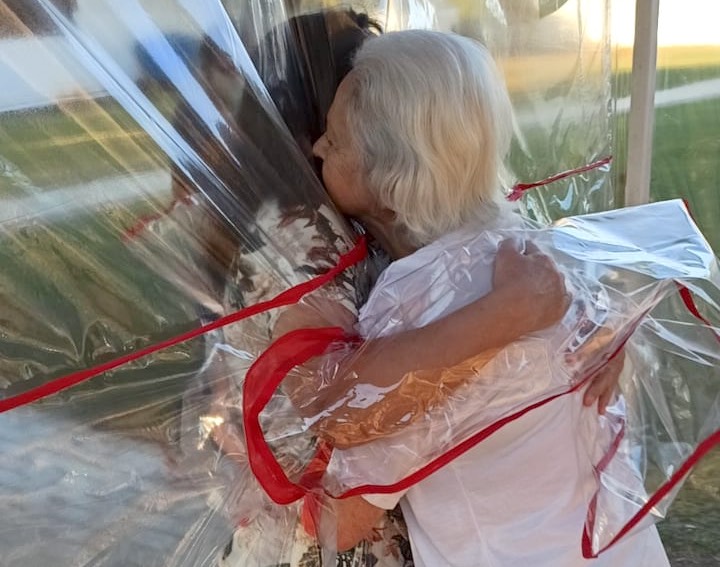
Made of thick plastic sheeting, the hug tunnel has arm holes for visitors and residents to wrap their arms around the person standing on the other side.
All photos courtesy of Três Figueiras
The plastic has arm holes at three different heights to accommodate children and those in wheelchairs.
It gives people the opportunity to feel the warmth of human contact without risking coming into contact with the coronavirus.
To keep it extra safe for the residents, the staff at Três Figueiras makes sure the plastic is disinfected in between visits, which are all scheduled in advance. And visitors also have their temperatures checked and are asked to use hand sanitizer beforehand.
Courtesy of Três Figueiras
The idea came from a viral video showing a woman in the US hugging her mother using a plastic curtain with arm enclosures in the backyard.
It is catching fire around the world, connecting elderly folks with their loved ones in the most heartwarming way. In the video below, a woman in Illinois gets to hug her eager great-grandchildren, with the words HUG TIME decorating the plastic.
Rubia says the residents’ faces light up with joy due to these visits. “If anyone out there runs a senior living home or facility, I recommend you do this.”
“It is so gratifying to see them hugging each other and so important.”
Can’t get enough of this? Check out this touching story from the UK, where a man created a similar “cuddle curtain” when he needed a hug from his grandmother, who is overjoyed
GIVE This Idea a Hug—And Multiply the Good By Sharing it on Social Media…
An Austrian farmer has experienced a trailblazing “eureka moment” on how to grow vegetables throughout the winter—and he is now teaching his technique to other European gardening communities as well.
According to a recent interview with Reasons to Be Cheerful, horticulturist Wolfgang Palme says he accidentally discovered his “winter farming” technique after a batch of his Asian lettuce was left undamaged by an early frost in the vegetable fields behind his house in Lower Austria.
The temperature had dropped to -11º Celsius (12º Fahrenheit), and although the crop is generally frost-resistant to temperatures of -3 or so, the lettuce—and Palme’s other vegetables—had survived the cold.
Palme, who is head of the Research Institute of Horticulture in Austria, was puzzled by the agricultural phenomenon. Upon doing some digging on why his vegetables may have survived the cold snap, the horticulturist found that the existing scientific literature on the frost-hardiness of Central European vegetables was just wrong… so he started to make it right.
The result is that Zinsenhof, the experimental farm where Palme conducts his research, now grows lettuce, spinach, scallions, red radishes, purslane, lacinato kale, turnips, carrots, celery, herbs, and pea sprouts throughout the winter.
These vegetables are all part of a crop of more than 70 species which Palme has learned to cultivate in the winter.
For the most part, Palme’s technique involves combining the use of unheated plastic tunnels under the produce and heating the ground with manure. He has also been experimenting with planting his crops at varying times of the year, his reasoning being that if he plants seeds too late, their roots wont be strong enough to last winter; if they are planted too early in the year, the plants will fruit too quickly.
According to Palme’s gardening guide published by Reasons to Be Cheerful, you can grow iceberg lettuce throughout winter temperatures of between 0 and 8 degrees Celsius if you sow your seeds at the beginning of August, plant at the end of the month, and harvest the crop between November and January.
Since Palme is now passionate in using his research to impact society at large, he now holds winter gardening classes in Augarten Park, Vienna where attendees can manage their own vegetable beds. He also works with commercial and small-time farmers with the hopes of helping them to exploit the year-long potential of their fields.
Not only do his teachings help farmers to exponentially improve their crop yields, it also helps reduce the greenhouse gas emissions generated by the demand for imported vegetables flown in from tropical climates, which is roughly 15 times the cost of growing domestically.
“In a cold winter night, a heated greenhouse of 1.5 acres causes as much CO2 equivalent as a detached house in a whole year,” says Palme. “Mankind can no longer afford this.”
Photo by Wolfgang Palme
Plant Some Positivity Amongst Your Friends By Sharing The Good News With Your Friends On Social Media…
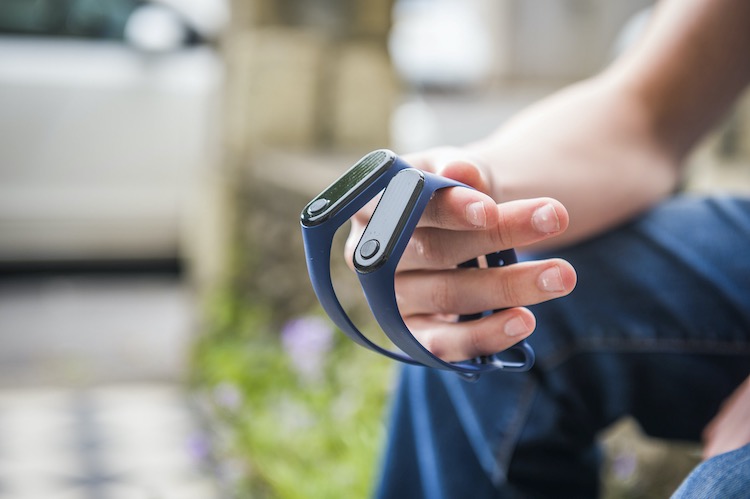
This teenage entrepreneur is responsible for inventing a simple, yet brilliant way to help curb coronavirus infections.
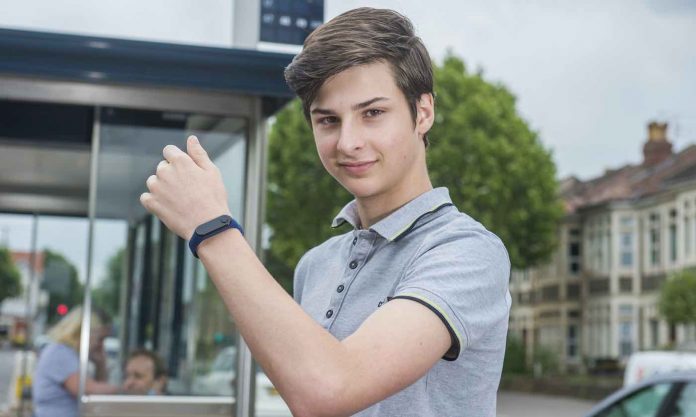
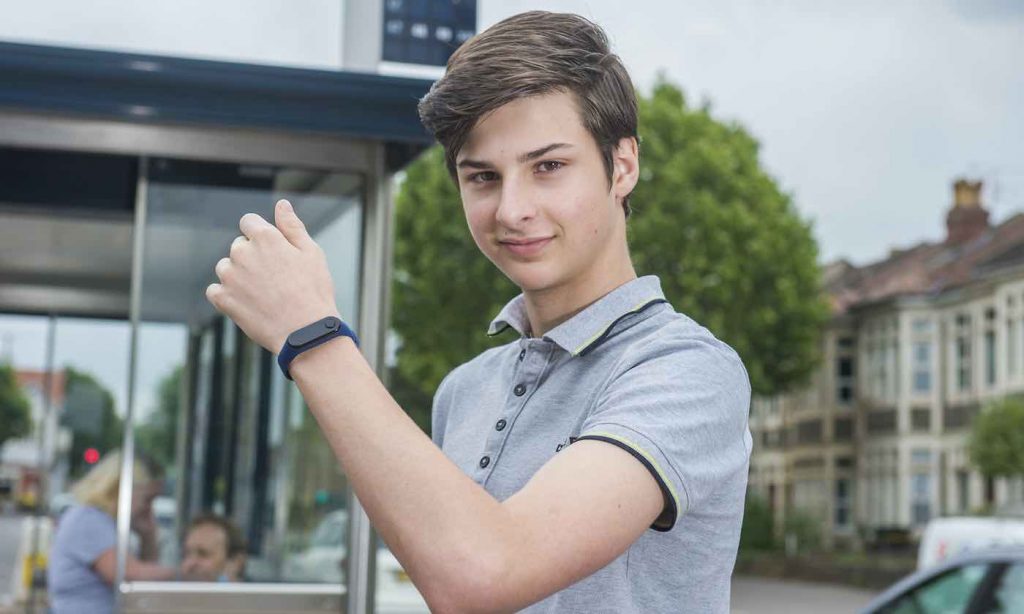
15-year-old Max Melia designed and developed a wearable wristband which alerts users whenever they are about to touch their face
He first came up with the brilliant idea two years ago as a means of reducing the spread of the cold and flu. After both of Max’s parents contracted COVID-19 four months ago, however, he threw all his efforts into developing a working prototype.
“Watching this pandemic unfold on the news, it was clear the devastating effect it was having on people lives’ across the world,” says Max. “However, it wasn’t until I saw the severity of the virus first-hand, when my parents both contracted COVID-19, did I truly appreciate just what we were dealing with.”
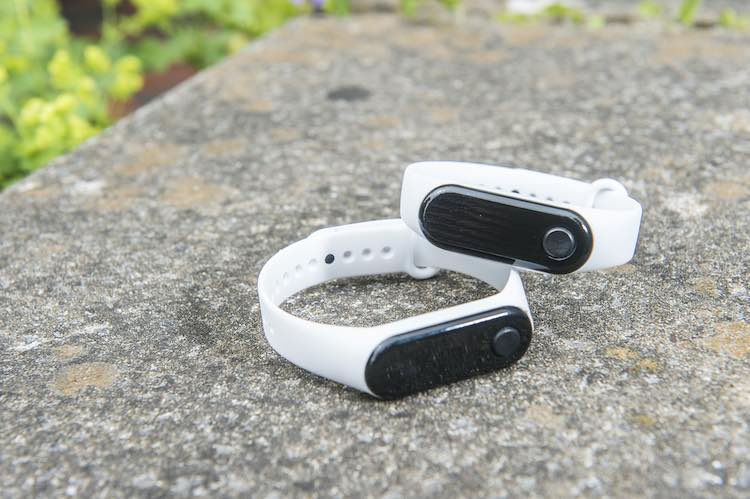
The tech-savvy English teen has since produced the VybPro, which warns users whenever they are about to subconsciously touch their face.
The gesture has been recognized as one of the key ways that coronavirus can be transmitted, making it a potentially live-saving invention.
SWNS
Worn on both wrists, the intelligent device is expected to retail for £89 ($112) with the patent currently pending.
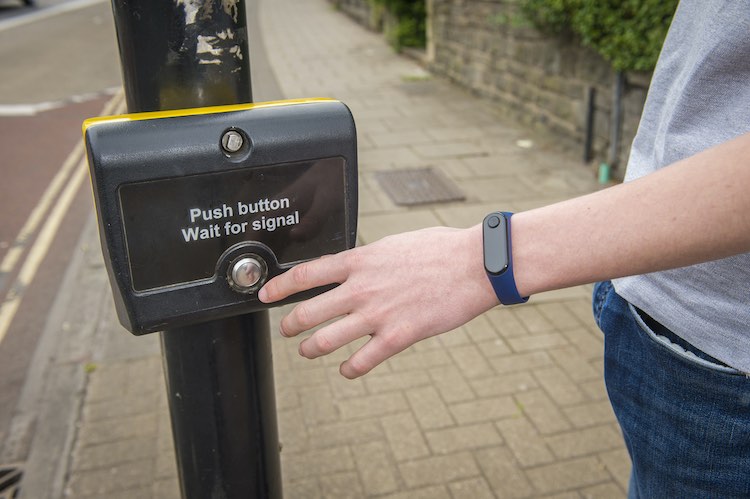
It uses position-sending technology algorithms to distinguish between predicted face touching and other hand motions. A vibration on the device then alerts the user to hand gestures that are dangerously near the face.
“We came up with the concept a few years ago when my family was repeatedly catching cold and flu viruses from traveling in and out of London and I could see how easy it was to pick up germs—especially from using public transport,” said Max.
“It was only when the World Health Organization began urging people to avoid touching their eyes, nose and face to stop the spread of the virus from contaminated surfaces, did I realize that it could make a real difference in slowing the transmission of coronavirus.”
Max, who is from Bristol, launched a £60,000 ($75,000) crowdfunding campaign on Kickstarter earlier this week to further his project and turn the prototype into a public reality.
“The main priority of this project is not to make money, but to get it onto the wrists of those it can help keep safe,” he added. “Any profits made from early sales via the crowdfunding site will be reinvested into providing free devices to organizations that help people such as NHS staff and nursing homes.
VybPro wristbands. SWNS.
“I believe that this device can make a real difference in the fight against coronavirus and I’m determined to do all that I can to bring it to market.
“I really hope that the general public can see the potential and are inspired to get behind the campaign to fund the next stage of the development.
Available in a choice of two colors, VybPro is rechargeable, splash-resistant, and made from waterproof silicon. It can also easily be turned off when eating and drinking.
Quote of the Day: “It is almost impossible to throw dirt on someone without getting a little on yourself.” – Abigail Van Buren, ‘Dear Abby’
Photo: by Luz Fuertes, public domain
With a new inspirational quote every day, atop the perfect photo—collected and archived on our Quote of the Day page—why not bookmark GNN.org for a daily uplift?

















 RELATED: