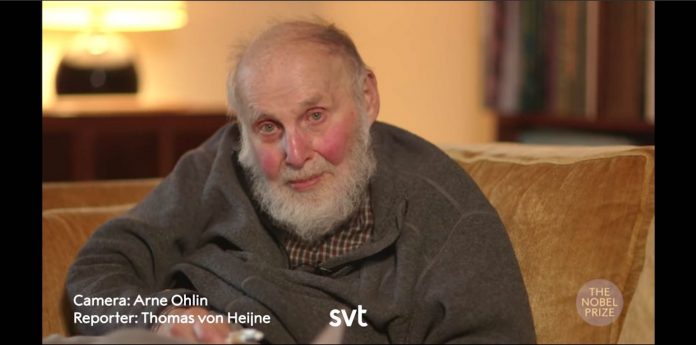
Just because Arthur Ashkin just became the world’s oldest Nobel Prize winner doesn’t mean he is ready to retire – instead, he has something bigger in mind.
The 96-year-old inventor was awarded the 2018 Nobel Prize for Physics in recognition for his work with optical levitation: a process of controlling the movement of microscopic particles using the force of photons. His efforts have had a profound effect in furthering our understanding of how light behaves, and how it can be harnessed for practical applications.
Despite this career-defining accomplishment, Ashkin allowed himself only a few moments to discuss his past work by fondly recalling the day he first levitated microscopic organisms using a laser.
“It surprised me. It would surprise anybody,” Ashkin told Business Insider. “I invented optical levitation.”
But Ashkin’s sentiment was quickly interrupted by the excitement he now holds for his new invention.
“I’m not about celebrating that old stuff, I got something new and important,” Ashkin told the Nobel spokesman in a phone interview. “I’m working on solar energy and I think I’ve gotten some important stuff and the world badly needs science in climate change.”
By using a tube that can concentrate light, Ashkin plans to improve how existing solar panels currently harness energy. His invention could greatly increase their output, while substantially reducing the cost of production with each tube costing mere pennies to make.
“I’m making cheap electricity,” he told Business Insider, adding that he believes his invention will earn him another Nobel Prize nomination. “And I’m gonna win too.”
In the meantime, Ashkin has already filed a patent for the tube, which will only add to his impressive 47-patent collection. After that, he expects his findings to be published in the journal Science.
As for the small matter of the $500,000 he received from the Nobel Prize Organization, Ashkin plans to take his beloved wife Aline out for a “good meal,” while the rest will help to pay for the future college expenses of his 5 grandchildren.
For the time being, Ashkin hopes his newfound popularity will allow him a grander audience for his new technology – one that he claims “will save the world.”
(LISTEN to Ashkin’s amusing reaction to hearing he was a Nobel winner in the video below) – Photo by Arne Ohlin / Nobel Prize
Power Up With Positivity By Sharing The Good News With Your Friends On Social Media
These magical pictures captured the moment that the clouds parted to reveal a swirling aurora light above an Icelandic mountain that was featured in Game of Thrones.
The ethereal green light display appeared over Kirkjufell – also known as “The Witch’s Mountain” – which rises from the sea in the isolated west of the Nordic nation.
The glow, which is caused by solar particles reacting with Earth’s magnetic field, can be seen spiraling out from the crooked summit at 463 meters (1,519 feet).
Located on the Snæfellsnes peninsula, the dramatic peak appeared in seasons six and seven of the popular HBO fantasy show.
Photographer Craig McDearmid caught the incredible spectacle on an “aurora hunting” trip in January, which was almost ruined by stormy weather.
“We hadn’t really had that much luck. We drove from one side of the island to the other,” said McDearmid. “We traveled about 500 miles the day before, just trying to get a gap in the clouds.”
On the last day of the trip, McDearmid went north to Kirkjufell, hoping for a last chance to catch a glimpse of the northern lights.
Craig McDearmid / SWNS
“Unbelievably, the clouds started to clear as soon as the sun went down,” said the 49-year-old photographer. “You could see the aurora and it just got stronger and stronger.
“It just came off at that time, at that magical moment and we happened to be there to get it.”
McDearmid, who is from Hamsterley Colliery, England, used his tripod to take a five-second exposure as the lights appeared to hover over the giant rock – and the results are breathtaking.
“I’ve never seen that swirling formation before. I’ve never seen anything like that happen,” said McDearmid. “You just get swept up into this magical world. It’s fairly euphoric to witness. It’s just awe-inspiring when it moves across the sky.”
Craig McDearmid / SWNS
Don’t Wait For Winter To Come: Share These Stunning Pictures With Your Friends On Social Media
Quote of the Day: “There is nothing in the world so irresistibly contagious as laughter and good humor.” – Charles Dickens
Photo: by a4gpa, cropped from CC license image on Flickr
With a new inspirational quote every day, atop the perfect photo—collected and archived on our Quotes page—why not bookmark GNN.org for a daily uplift?
This New Hampshire grocery store found themselves in quite a pickle last week when their entire cash register system crashed unexpectedly.
While some businesses may have responded to the crisis by asking their customers to leave empty-handed, the Hannaford supermarket in West Lebanon let their shoppers walk out of the store with their groceries for free.
According to the store manager, the registers were not expected to be repaired for at least an hour. With roughly 50 people in line, the employees did not want to make people wait around – so they simply bagged up everyone’s groceries and happily sent them on their way.
The store reportedly gave away between $3,000 to $5,000 worth of groceries that day – but the shoppers apparently had the most priceless reactions.
“Hannaford just took the worst shopping experience I’ve ever had and made it into one of the best,” a customer told WPTZ in an interview.
(WATCH the news coverage below) – Photo by WPTZ
Be Sure And Share This Sweet Story Of Customer Service With Your Friends On Social Media
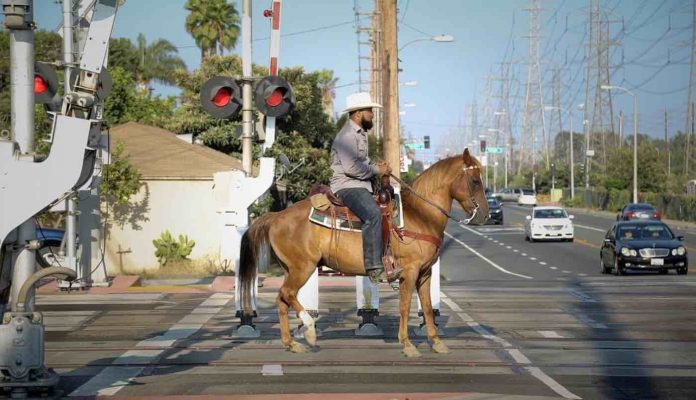
Though the streets of Compton are generally associated with racial violence, this group of cowboys is breaking stereotypes by getting at-risk youngsters off of the street and onto horses instead.
The Compton Cowboys is a band of African-American locals who find peace and community through riding horses through the California city.
The 10 original founders of the horse-collective first met each other as young boys at a nonprofit stable located in a semi-rural area of Compton. Since their relatives encouraged them to attend the organization’s activities as an alternative to gang violence, the stable provided the youngsters with a safe haven from the dangers of their environment.
“I was always around shootings and gangs, but none of that happens when I’m in the stables with the horses,” one of the Compton Cowboys told the New York Timesin March. “There’s peace with the animals.”
All of their equine steeds have been rescued from things like abuse and malnutrition, and each one has been given a new lease of life under the care of the cowboys. Their struggle mirrors that of their riders, having grown up in an underdeveloped and inhospitable landscape.
“The throwaway horses that we were given ended up being the best horses for us because they had a feisty spirit and a chip on their shoulder just like we did,” cowboy Randy Hook told the Times. “They were the underdogs just like we were.”
The group hopes that their efforts also helps to show the accomplishments of the African-American cowboys that have been omitted from popular history and media. Roughly 5,000 to 8,000 African American men and women become ranchers and herders after the Civil War – a tradition the Compton Cowboys upholds everyday.
Today, the future of the Compton Cowboys looks bright. In addition to being positive role models for their community, the members are competing in rodeos and polo events, with some setting their sights on the Olympics.
In the meantime, they can rest assured that their efforts have not gone unnoticed, as they slowly but surely reshape the American notion of what makes a cowboy.
“At the end of the day, we want people to also think about us when they think about cowboys, not just a bunch of white guys in cowboy hats who smoke Marlboro cigarettes,” added Hook. “We’re trying to be the guys who make it cool to wear Stetson hats and Wrangler jeans in the ’hood.”
(WATCH the cowboys in action in the commercial video below) – Photo by Compton Cowboys
Wrangle Up Your Friends By Sharing This Inspiring Story To Social Media
Converting Wi-Fi signals to electricity with new 2-D materials Device made from flexible, inexpensive materials could power large-area electronics, wearables, medical devices, and more.
Written by Rob Matheson MIT News
Imagine a world where smartphones, laptops, wearables, and other electronics are powered without batteries. Researchers from MIT and elsewhere have taken a step in that direction, with the first fully flexible device that can convert energy from WiFi signals into electricity that could power our electronics.
Devices that convert AC electromagnetic waves into DC electricity are known as “rectennas.” In a newly-published study that appears in Nature, the researchers demonstrate a new kind of rectenna that uses a flexible radio-frequency (RF) antenna that captures electromagnetic waves — including those carrying WiFi — as AC waveforms.
The antenna is then connected to a novel device made out of a two-dimensional semiconductor just a few atoms thick. The AC signal travels into the semiconductor, which converts it into a DC voltage that could be used to power electronic circuits or recharge batteries.
In this way, the battery-free device passively captures and transforms ubiquitous WiFi signals into useful DC power. Moreover, the device is flexible and can be fabricated in a roll-to-roll process to cover very large areas.
“What if we could develop electronic systems that we wrap around a bridge or cover an entire highway, or the walls of our office and bring electronic intelligence to everything around us? How do you provide energy for those electronics?” says paper co-author Tomás Palacios, a professor in the Department of Electrical Engineering and Computer Science at MIT.
“We have come up with a new way to power the electronics systems of the future — by harvesting WiFi energy in a way that’s easily integrated in large areas — to bring intelligence to every object around us.”
In experiments, the researchers’ device can produce about 40 microwatts of power when exposed to the typical power levels of WiFi signals (around 150 microwatts). That’s more than enough power to light up an LED or drive silicon chips.
Promising early applications for the proposed rectenna include powering flexible and wearable electronics, medical devices, and sensors for the “internet of things.” Flexible smartphones, for instance, are a hot new market for major tech firms.
Another possible application is powering the data communications of implantable medical devices, says co-author Jesús Grajal, a researcher at the Technical University of Madrid. For example, researchers are beginning to develop pills that can be swallowed by patients and stream health data back to a computer for diagnostics.
“Ideally you don’t want to use batteries to power these systems, because if they leak lithium, the patient could die,” Grajal says. “It is much better to harvest energy from the environment to power up these small labs inside the body and communicate data to external computers.”
All rectennas rely on a component known as a “rectifier,” which converts the AC input signal into DC power. Traditional rectennas use either silicon or gallium arsenide for the rectifier. These materials can cover the WiFi band, but they are rigid. And, although using these materials to fabricate small devices is relatively inexpensive, using them to cover vast areas, such as the surfaces of buildings and walls, would be cost-prohibitive. Researchers have been trying to fix these problems for a long time. But the few flexible rectennas reported so far operate at low frequencies and can’t capture and convert signals in gigahertz frequencies, where most of the relevant cell phone and WiFi signals are.
To build their rectifier, the researchers used a novel 2-D material called molybdenum disulfide (MoS2), which at three atoms thick is one of the thinnest semiconductors in the world. In doing so, the team leveraged a singular behavior of MoS2: When exposed to certain chemicals, the material’s atoms rearrange in a way that acts like a switch, forcing a phase transition from a semiconductor to a metallic material. The resulting structure is known as a Schottky diode, which is the junction of a semiconductor with a metal.
“By engineering MoS2 into a 2-D semiconducting-metallic phase junction, we built an atomically thin, ultrafast Schottky diode that simultaneously minimizes the series resistance and parasitic capacitance,” says first author and EECS postdoc Xu Zhang.
Parasitic capacitance is an unavoidable situation in electronics where certain materials store a little electrical charge, which slows down the circuit. Lower capacitance, therefore, means increased rectifier speeds and higher operating frequencies. The parasitic capacitance of the researchers’ Schottky diode is an order of magnitude smaller than today’s state-of-the-art flexible rectifiers, so it is much faster at signal conversion and allows it to capture and convert up to 10 gigahertz of wireless signals.
“Such a design has allowed a fully flexible device that is fast enough to cover most of the radio-frequency bands used by our daily electronics, including WiFi, Bluetooth, cellular LTE, and many others,” Zhang says.
The reported work provides blueprints for other flexible WiFi-to-electricity devices with substantial output and efficiency. The maximum output efficiency for the current device stands at 40%, depending on the input power of the WiFi. At the typical WiFi power level, the power efficiency of the MoS2 rectifier is about 30%. For reference, today’s rectennas made from rigid, more expensive silicon or gallium arsenide achieve around 50 to 60%.
The team is now planning to build more complex systems and improve efficiency.
It was been almost two years since the infamous Fyre Festival descended upon the Bahamas – and though there are still people recovering from the financial and legal blight of the disastrous event, a Netflix documentary has helped to ease the pain of those it hurt the most.
The Fyre Festival was originally intended to be an ultra-exclusive music festival for high rollers and millennial moguls on a Bahamian island. Due to poor planning and reckless organization by the now notorious 27-year-old Billy McFarland, the event was a complete and utter failure.
Upon overbooking the festival and promising the guests fancy villas and 5-star catering, the jilted attendees ended up being trapped on the island with soaked mattresses, meager food rations, and a shortage of flimsy tents.
McFarland is currently serving a 6-year sentence for fraud partially due to how he reportedly scammed investors out of an estimated $27 million. Furthermore, he neglected to pay hundreds of Bahamians after they worked around-the-clock in order to help organize the festival.
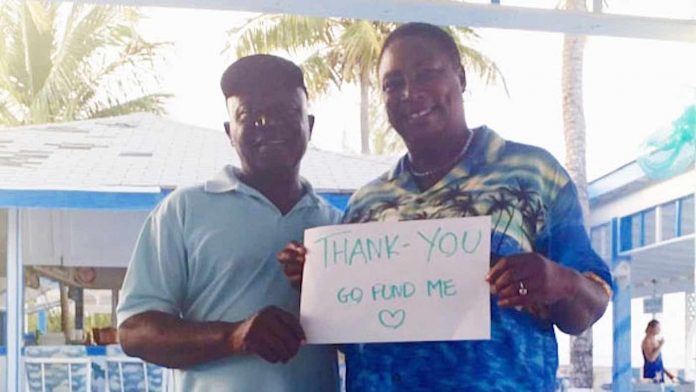
Earlier this month, Netflix released a documentary about the Fyre Festival in which they featured an interview with Maryann Rolle, the Bahamian owner of the Exuma Point Resort.
Though she was not booked as the original caterer for the festival, Rolle ended up being a reluctant hero to the attendees and organizers after she and her husband toiled day and night to serve over 1,000 meals throughout the event.
In the film, Rolle tearfully recounts how she was never paid the $50,000 she was owed for her contribution to the festival. Additionally, she gave away all $50,000 of her lifetime savings in order to help pay off her fellow Bahamian workers.
“I was left in a big hole!” says Rolle. “My life was changed forever, and my credit was ruined by Fyre Fest.”
Now, if you haven’t watched the documentary, Rolle’s interview is easily the most heart-wrenching part of the entire film – but thankfully, it succeeded in drawing attention to her plight.
Over the course of the last two weeks since the documentary’s release, a GoFundMe page for the Rolles has raised over $200,000 in donations.
Though the campaign has raised almost double the amount that the Fyre organizers owe Rolle, she plans on sharing all of the excess funds with her fellow Bahamians who suffered from the event, especially those who are still owed money.
“I am going to help the people who worked with the festival as much as I can here, and then other islands too, I will give it to them,” Rolle told CBS News. “It makes me happy knowing the world has cared about me and I will pass it all along and let everybody enjoy it. That might be the best thing for me at this time.”
(WATCH the video below) – Photo by Maryann Rolle
Be Sure And Share This Heartening Story With Your Friends On Social Media
Even though Alfonso Garcia is not on the field with the Los Angeles Rams, the football players still consider him a part of the team.
Garcia, who works at the L.A. Memorial Stadium, always keeps the facility “in tip top shape” for the football team. So as a means of showing some love to their beloved colleague, the Rams decided to surprise him with two tickets to the upcoming Super Bowl game against the New England Patriots.
In a video that was uploaded to the team’s Twitter page, Garcia can be seen walking into one of the stadium offices – and he is confused when he is greeted by Rams wide receiver Brandin Cooks.
“One of the guys that works here, he said the general manager, Les, wanted to speak to me,” Garcia later told CBS Los Angeles. “And, well it made me a little nervous because that’s not an office you really want to get called into.”
Upon sensing Garcia’s anxiety, Cooks laughs and says there is no reason to be nervous. Instead, he just wants to give Garcia a gift.
“On behalf of the team and organization, we would love to invite you and your son, Josh, round trip [to the] Super Bowl,” Cooks said. “You mean so much to us and everything that you do does not go unnoticed.”
Garcia is overwhelmed. Fighting back tears, he says that he has always wanted to go to the Super Bowl since he was a little boy – and now, he will be able to bring his own son to the game as well.
“Oh my god, are you serious?” Garcia says emotionally. “This is a dream come true.”
“From the bottom of my heart thank you, I love you guys. To have this and be with you guys in something so special like this. Wow, from the bottom of my heart, I thank you. Everybody.”
(WATCH the video below) – Photo by Los Angeles Rams
Quote of the Day: “The more you are motivated by love, the more fearless and free your action will be.” – Dalai Lama
Photo: Free Hugs in Brussels in 2007, by André Cortes, CC license on Flickr
With a new inspirational quote every day, atop the perfect photo—collected and archived on our Quotes page—why not bookmark GNN.org for a daily uplift?
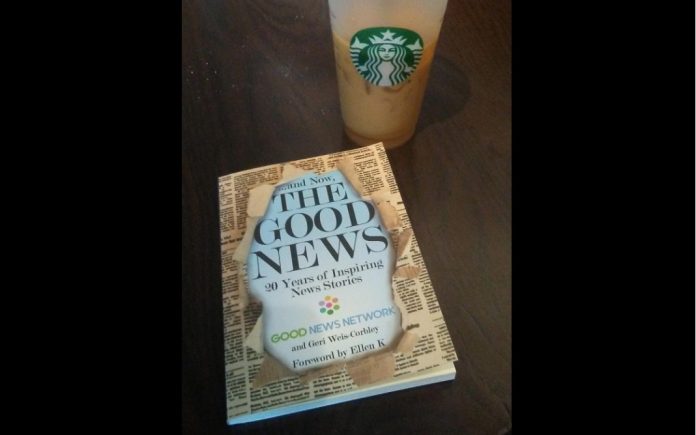
We sure appreciated seeing this today—a review for our new book…
Good News Network published their first book last month, a collection of the best stories from the last 20 years, in a small gift volume… On the book’s Amazon page, a woman named Julie wrote this:
“I read lots of wonderful books every year – hundreds. This is the best of the best that I’ve devoured in quite awhile. I’m a fan of The Good News Network, but for those who don’t know the media outlet, this book will lead you back to believing in humanity if you ever question it. Full of brief stories about people of all walks of life finding common ground, helping one another and giving of themselves in surprising ways, this book is full of heart. Perfect gift for anyone who struggles day-to-day with depression or needs a reason to smile. Who am I kidding? This is the rare book for EVERYBODY! My advice? Buy a stack of these little gems and hand them out like candy to friends and strangers alike. You’ll feel good that you did.”
IN OTHER AMAZON NEWS: Our new book, “…And Now, The Good News”, will be available as an ebook for your devices and apps soon, priced at around $4.95.
(Release in early February)
For Those Who Dislike Amazon: We are also selling the paperback ourselves (to US Residents only) through our publishing partner White Cloud Press, HERE.
Buy the Book Overseas: We’ve added Australia to the list of countries where overseas customers can get local delivery! Find the book on Amazon Marketplaces in these places: United Kingdom — Canada — Germany — Spain — Italy.
(Photo, above, uploaded to Amazon in a review by Joseph @ Strategic Media Studios)
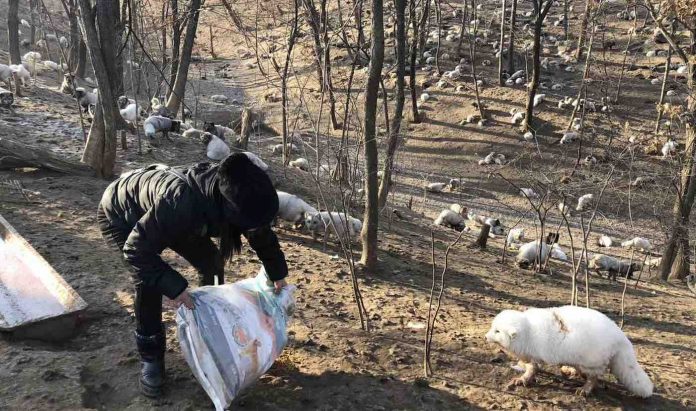
Dozens of foxes have been saved from a Chinese fur farm and been given a new home at a Buddhist monastery.
Animal activist Karen Gifford has spent the last few weeks documenting the rescue initiative in a series of Facebook videos that were shared with her by a woman named BoHe.
BoHe is one of the volunteers who helped to rescue the 174 white foxes that had been bred and raised at a nearby fur farm. She operates a local dog sanctuary that is home to over 2,400 canines, many of which were reportedly rescued from the dog meat trade.
Due to a lack of income, the fur farm had been preparing to close their doors and dispose of their remaining foxes – but upon hearing that the animals were in need of a new home, the residents of the Buddhist Jilin Nursing Garden in Mudanjiang, China said that they were happy to welcome the critters onto their property.
In the first of Gifford’s Facebook posts, the foxes can be seen arriving in cages by the truckload. One day later, Gifford posted an update in which the foxes can been seen enjoying their first steps outside of their cages and onto the sanctuary grounds.
Now, Gifford is rallying for donations to help buy food for the foxes. The critters will reportedly be staying at the monastery until volunteers are able to construct a permanent shelter.
“Thank you to all the wonderful supporters! I’m sure your hearts swell seeing these videos and the Buddhist monk standing among the foxes free in the garden,” writes Gifford. “The weather is freezing at Bohe’s base … so please, anything is appreciated.”
(WATCH the video below) – Photo by Karen Gifford / BoHe
Be Sure And Share This Sweet Rescue Story With Your Friends On Social Media
One of the world’s most beloved ice cream companies says that they will be phasing out all of their single-use plastic packaging over the course of the next year.
Following their elimination of plastic straws over the summer, Ben & Jerry’s announced earlier this week that they would also be kicking off the New Year by eliminating plastic spoons from their 577 stores worldwide.
Jenna Evans, Ben & Jerry’s Global Sustainability Manager, is leading the transition. She noted that the company’s shops currently hand out 2.5 million plastic straws and 30 million plastic spoons every year. If all the plastic spoons used by Ben & Jerry’s in the US were placed end to end, they’d stretch from Burlington, Vermont to Jacksonville, Florida.
“We’re not going to recycle our way out of this problem,” she said. “We, and the rest of the world, need to get out of single-use plastic.”
Ben & Jerry’s first embarked on its plan to phase out single-use plastics in August after they started making their plastic straws available by request only. Many of their shops had already transitioned away from to plastic packaging by this time – but in the months leading up to Free Cone Day on April 9th, the company’s branches will now be completing the transition by replacing their plastic spoons with wooden alternatives.
By the end of 2020, Ben & Jerry’s says that they will have also replaced their clear plastic cups, plastic-lined cups, and plastic lids with biodegradable alternatives.
The company has a history of striving for more sustainable packaging solutions. Since 2009, their ice cream pints – or “tubs” as they’re known in the UK and Europe – have been made with Forest Stewardship Council (FSC) Certified paperboard. Because they are coated with polyethylene to create a moisture barrier, however, they are difficult to recycle, which is why Ben & Jerry’s plans on exploring other packaging options.
“Over the past year, we have begun an intensive effort to find a biodegradable and compostable coating that meets our product quality requirements,” said Evans.
“In the short term, eliminating plastic straws and spoons is not going to save the world,” she added. “But it’s a good start toward changing expectations. We’re committed to exploring additional options to further reduce the use of disposable items. This transition is the first step for us on a more comprehensive journey to eliminate single-use, petroleum-based plastic in our supply chain, and we look forward to reporting on our progress.
“Thankfully, Ben & Jerry’s has a baked-in solution to plastic waste: it’s called our Waffle Cone,” she concluded. “They’re yummy, convenient, and waste-free!”
Be Sure And Share This Sweet Piece Of News With Your Friends On Social Media
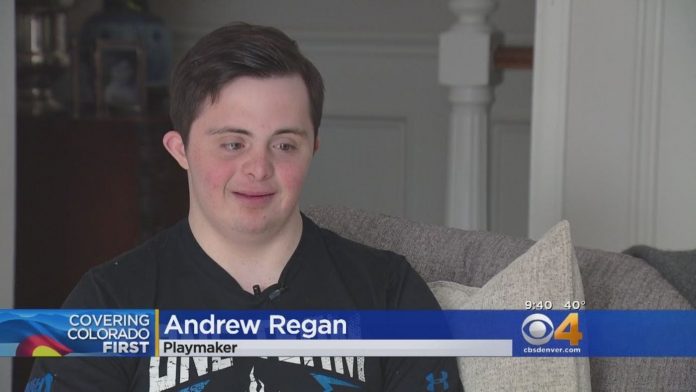
Andrew Regan is becoming internet famous after his school shared an astounding video of the teen athlete scoring a half-court shot right at the buzzer.
The special needs student, who plays for the Unified basketball team at Cherry Creek High School in Denver, Colorado, only had seconds left on the clock when he made the jaw-dropping shot last week.
Not only did he land the shot right at the third-quarter buzzer, he also managed to sink the ball with nothing but net.
Upon successfully making the shot, the audience members, players, and coaches all went wild.
Since the high school uploaded a video of the play to social media, it has racked up hundreds of thousands of views and been featured on dozens of news outlets.
Andrew, who has been playing basketball since he was 5 years old, says that he is still processing the “surreal” experience from last week’s game, but he is thankful for the flood of love and support that he has received since the video was uploaded.
(WATCH the interview below or our international viewers can watch it on the CBS News website) – Photo by KCNC
Score Big With Your Friends By Sharing The Sweet Story To Social Media
Contrary to popular belief, the United States is using less coal than ever before – and in 2018, coal usage reached its lowest level in almost 40 years.
After reaching its peak in 2007, coal usage has been in sharp decline as safer and more efficient energy sources take on more substantial roles on the American electrical grid.
According to a recent report from the U.S. Energy Information Administration, coal usage fell by 4% in 2018, which is the lowest it has been since Jimmy Carter’s presidency in 1979.
Natural gas, an energy source that releases 50% to 60% less carbon dioxide emissions than coal, surpassed coal as the leading source of U.S. electricity generation in 2016. The increased use of natural gas, along with renewable energy sources such as solar and wind, have led economists and analysts alike to predict a significant decrease in coal usage by 2050.
Tougher pollutant restrictions are partially responsible for coal’s decline, but the main reason for coal’s decline may have more to do with economics than with regulation.
The report states that “coal demand in the power sector is sensitive to changes in the price of natural gas,” meaning that whenever natural gas becomes less expensive, demand for its use increases, resulting in a decreased demand for coal.
As natural gas plants have become increasingly efficient in converting gas to electricity, the relative cost of natural gas has decreased.
With economic forces expected to continue curbing American coal use, environmentalists can breathe a sigh of relief knowing that its retirement will only help to usher in a new era of sustainable energy.
Clean Up Negativity By Sharing The Good News To Social Media – Photo by TJ Blackwell, CC
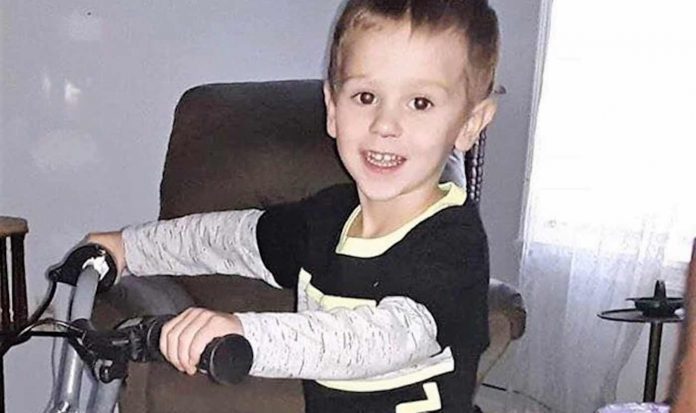
A 3-year-old boy has been rescued from being lost in the woods amidst extreme weather conditions – and he credits his survival to an unlikely friend he apparently made along the way.
Casey Hathaway first went missing from his great-grandmother’s backyard in Ernul, North Carolina when he was playing outside with his two siblings last Tuesday. When his relative eventually called for the children to come inside, Casey was mysteriously absent.
The family searched the surrounding area for 45 minutes before they called 911.
For the next two days, dozens of volunteers, rescue workers, law enforcement officials, drones, and FBI agents searched over 1,000 acres of treacherous terrain in order to find the boy.
Freezing temperatures, wind and rain eventually forced emergency responders to call off the search and send volunteers home until weather conditions improved.
Then on Thursday night, the Craven County Sheriff’s Office received a tip from a local who heard a little boy crying for his mother.
The tip led rescuers 50 yards into the woods where Casey was tangled in some thorny bushes on the other side of a river. The boy was soaked, but in relatively good shape.
After getting the boy some water and reuniting him with his family, rescuers were surprised to hear Casey say that he survived the ordeal thanks to a friendly bear that kept him safe.
“Casey is healthy, smiling and talking. He said he hung out with a bear for two days,” Casey’s aunt Breanna Hathaway wrote in a Facebook post. “God sent him a friend to keep him safe. God is a good God. Miracles do happen.”
Even though no one is able to confirm whether this bear friend was real or imaginary, Craven County Sheriff Chip Hughes told WCTI in the interview below that it was nothing short of astonishing that such a tiny youngster was able to endure two days of freezing temperatures and rain.
The boy was treated for his cuts and bruises at the Carolina East Medical Center, but was otherwise found to be healthy and in good spirits.
“It’s a really overwhelming feeling that he’s back and he’s alive,” family member Heather Garris told WTVD. “I know that’s really shocked the whole community. It’s an eye-opener, definitely for a miracle – believing in miracles because I’ve seen now they really do happen.”
Quote of the Day: “Let yourself be silently drawn by the strange pull of what you really love. It will not lead you astray.” – Rumi
Photo: by Pamela P. Stroud, CC license via Flickr
With a new inspirational quote every day, atop the perfect photo—collected and archived on our Quotes page—why not bookmark GNN.org for a daily uplift?
If you prefer spicier food, there is a good chance you also lead a spicier life, according to this latest survey of 2,000 Americans.
The poll examined the correlation between taste buds and personalities and found that people who preferred hotter foods were more likely to report that they lead hotter lives.
The researchers at OnePoll asked the 2,000 participants a series of questions about personality. Then, the team divided the answers into groups based on the preferred level of spiciness in meals—none, mild, medium, or hot.
Interestingly, the results showed that people who preferred hot foods were more likely to lead hotter lives.
According to the study, spicy palates tended to correlate with an increased sense of adventure, with participants who preferred hotter food more often expressing a love of roller coasters, listening to loud music, and driving fast down winding roads.
The spicy food lovers in this poll were more likely to have gone skydiving, scuba diving, and taken rafting trips.
They were also six times more likely to have gone bungee jumping than those who don’t like any spice at all—and 45% more likely to have traveled out of the country.
Results showed people who enjoy their food to be hot were the most likely to rate their happiness level at a perfect ten than any other spicy preference, and gave similar ratings about how happy they were in their current job.
The hot spice lovers were very goal-oriented and 29 percent more likely to have a dream that they were actively working towards. They also showed higher scores for being sociable and extroverted, with hot food fans being more likely to say they loved meeting new people and more likely to rate themselves as good public speakers.
And, finally, spicy food fans self-reported having hotter relations in the bedroom with almost double the amount of… ahem, adult fun, than those who didn’t like any spice in their food (5.3 times per month compared to 3.2 times per month.)
The poll was commissioned by the hot sauce brand El Yucateco, which commented that its customers often “live life to its fullest.”
File photo by Pan American Health Organization, CC
A large portion of women have never received the HPV vaccine, yet a new study says they are experiencing fewer cases of infection, thanks to, what is called, “herd protection”.
The vaccine in this study was designed to protect patients against four strains of HPV that have been linked to cervical cancer. The 10-year study, which was conducted by researchers from the University of Cincinnati, examined the rates of HPV infection among 1,600 female patients who went to their clinics.
Of the total 84% of the group that were vaccinated, the researchers calculated they experienced an 81% reduction in HPV infection.
Patients who had not received the vaccination also experienced a reduced risk of infection, however. Based on the team’s data from 2006, one-third of the non-vaccinated patients tested positive for the HPV strains. Ten years later, the rate of infection dropped to 19.4%.
This occurrence, or “herd protection” results when a vaccinated portion of the population helps to bring down rates of infection amongst the masses.
Dr. Amanda Dempsey, an associate professor of pediatrics at the University of Colorado, wrote an editorial to go alongside the study, published in the journal Pediatrics, saying the vaccine works. “And that’s true even if you’re already sexually active and have had sexually transmitted infections.”
Recent studies have demonstrated the safety of the HPV vaccine, but more research is needed to track the impact of that vaccine, Kahn’s team said.
Meanwhile, recent news from Australia has inspired hope for a future without cervical cancer.
SHARE This With Your Herd (on Social Media) — Photo by Pan American Health Organization, CC
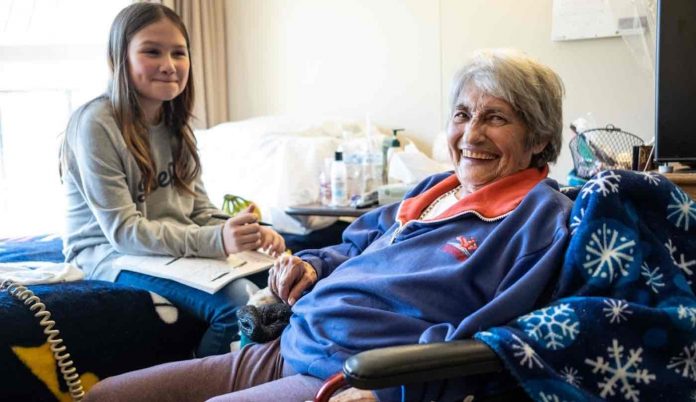
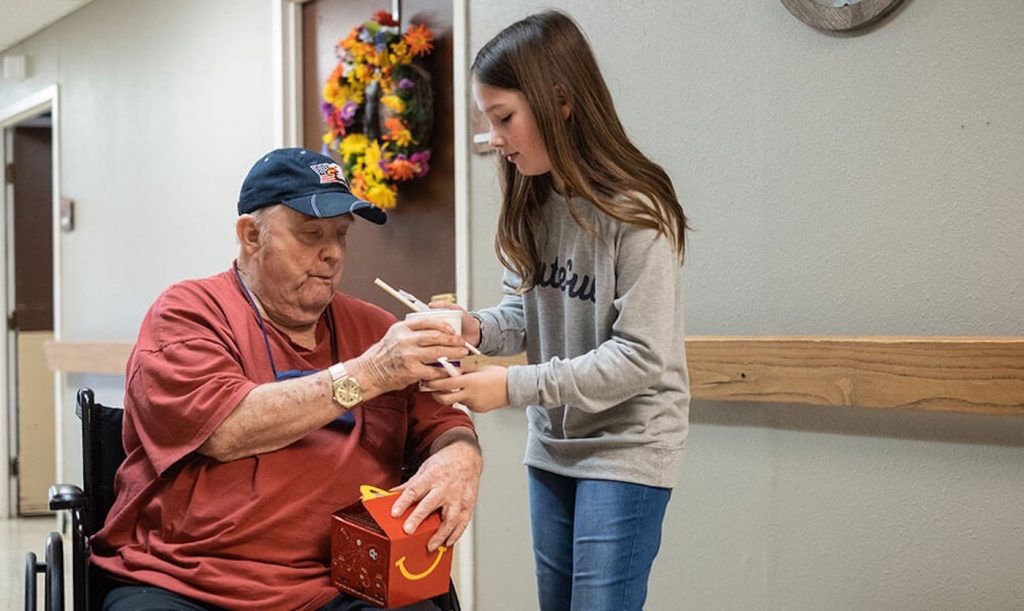
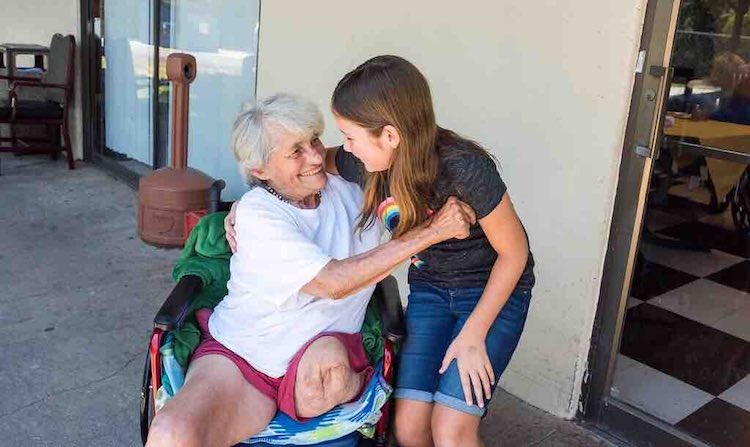
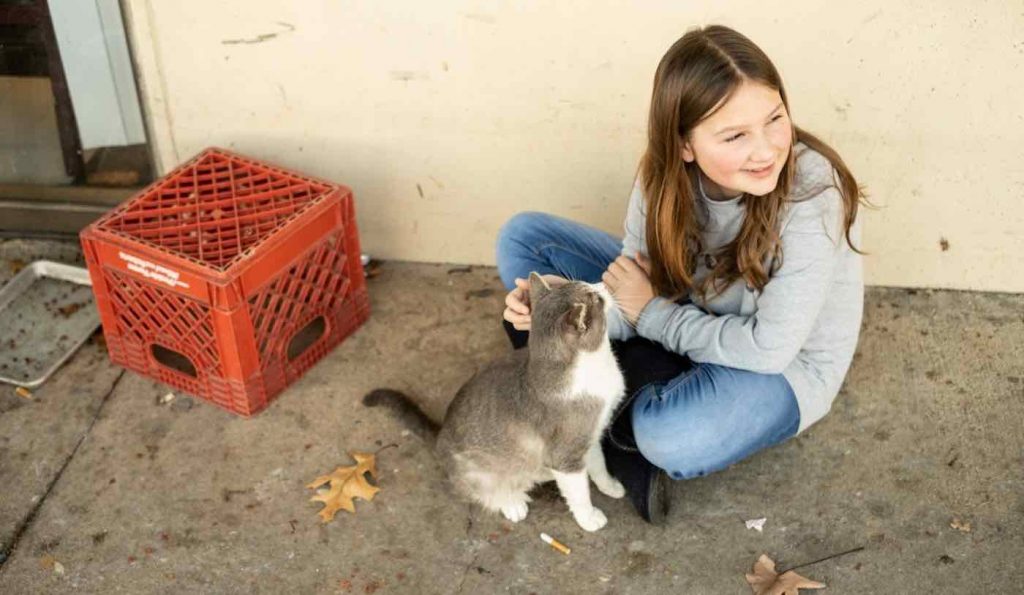
This 11-year-old girl may not be a magical genie, but she is winning hearts for her magical mission of granting wishes to nursing home patients.
Ruby Kate Chitsey first became inspired to help elderly residents after she spent last summer helping her mother Amanda with her work.
Amanda runs a business in which she assists dozens of patients at five different nursing facilities across Harrison, Arkansas. When Ruby Kate was visiting one of these nursing homes over the weekend, she noticed one of the residents gazing forlornly out the window.
The youngster was confused, however, when the only thing outside of the window was someone walking a dog out to a car.
“I asked Pearl, ‘What’s so important?’ She told me that it was her dog of 12 years, and she didn’t know the next time she would see it,” said Ruby Kate. “Pearl’s face was so sad. I thought that of all the things in this world Pearl could have, she would probably just ask for more visits with her dog.”
Pearl was unable to see her dog because she couldn’t afford to care for her on her own. Since half of US nursing homes are funded by the government, patients are only given about $40 to spend on “extra” comforts outside of room and board. This means that hundreds of residents only have $40 to spend on simple luxuries, such as haircuts, new pants – or dog food.
“I’m 11, and even I have enough money saved in my piggy bank to help Pearl get a few more visits with her dog,” says Ruby Kate.
The determined youngster then resolved to try and grant the wishes of more people there, so she grabbed her notebook and started knocking on the door of each resident’s room. She then asked them: “If you could have three wishes, what would they be?”
Some residents simply wished for a new pair of fitted pants; others dreamily expressed their longing for fast food; one woman even said that she wished she could go to a water park to watch families having fun.
“It was a great experience for everyone,” said Ruby’s mom. “You expect people to tell you they want a million dollars or a new car, but they don’t. They want snacks or a pair of pants that fits.”
Ruby Kate then launched her Three Wishes project to raise money for the patients’ wishes. Her mother helped her to set up a GoFundMe and Amazon wishlist for the project – and since they created the pages in November, the crowdfunding campaign has raised over $26,000.
The donations have helped to buy clothing, corrective hearing devices, food, shoes, and the most commonly requested item amongst the residents: pet food.
“The response so far has been amazing,” says her mom. “There are a lot of fundraisers for everything, but not so much for the elderly. It’s been refreshing to see attention shine on this group.”
Be Sure And Share This Sweet Story Of Kindness With Your Friends On Social Media
A doting dad built a handicap-accessible snow fort so all of his children could play together – and the photos of the winter castle are melting hearts across the internet.
Greggory Eichhorn and his wife are the proud parents of nine kids, all of whom are adopted and have special needs.
So when their home in Cincinnati, Ohio was blanketed in snow last week, Eichhorn built a massive igloo for his kids to play in. Not only that, he added a little nook at the base of the tower so that his two kids in wheelchairs could join in on the fun.
A friend of Eichhorn posted photos of the snow fort to social media, and the sweet pictures have generated thousands of comments praising the dad for his simple labor of love.
Eichhorn has since responded to the outpouring of appreciation by saying that he and his wife are happy to shower their kids in adoration. They also hope that their parenting will inspire other families to adopt special needs children.
“Our family is getting kind of full, and it would be great if people stepped up, took on the same roles, and enjoyed the kind of joy that we do,” Eichhorn told WXIX. “We get a lot of joy out of life.”
(WATCH the news coverage below)
Be Sure And Share This Cool Story With Your Friends On Social Media