All News - Page 735 of 1721 - Good News Network
Home Blog Page 735

How a College Student and Minister Answered Each Other’s Prayers With a Note Attached to a Balloon (Podcast)

A Baptist minister was losing his faith, so much that he didn’t even want to go to church any more, until a balloon with a desperate plea for help floated down into his lap… Hear The Good News Guru tell the heartwarming story (from the September 28, 2018 Ellen K. Morning Show on KOST-103.5 radio in Los Angeles).

WATCH the video at Good News Network

After Century of Removing Appendixes, Docs Find Antibiotics Can Be Enough Two-Thirds of the Time

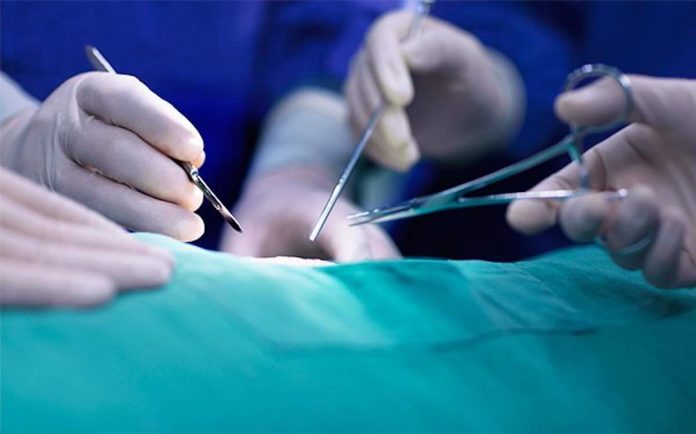
After more than a century of cutting out tiny, inflamed organs from people’s guts, doctors have found that surgery may not be necessary after all—a simple course of antibiotics can be just as effective at treating appendicitis as going under the knife.

The revelation comes from a large, randomized trial out of Finland, published in JAMA last week.

Despite upending a long-held standard of care, the study’s finding is not entirely surprising; it follows several other randomized trials over the years that had carved out evidence that antibiotics alone can treat an acute appendicitis. Those studies, however, left some dangling questions, including if the antibiotics just improved the situation temporarily and if initial drug treatments left patients worse off later if they did need surgery.

The new JAMA study, with its full, five-year follow-up, effectively cauterized those remaining issues. Nearly two-thirds of the patients randomly assigned in the study to get antibiotics for an uncomplicated appendicitis didn’t end up needing surgery in the follow-up time, says the Finnish researchers from the University of Turku authors. And those drug-treated patients that did end up getting an appendectomy later were not worse off for the delay in surgery.

RELATEDDrinking Baking Soda Could Be Cheap, Safe Way to Combat Autoimmune Disease, Says Scientists

“This long-term follow-up supports the feasibility of antibiotic treatment alone as an alternative to surgery for uncomplicated acute appendicitis,” the authors conclude.

The finding suggests that many appendicitis patients could be spared the risks of surgical procedures, such as infections. They may also be able to save money by not needing such an invasive procedure (although the study didn’t compare costs), and they could reap the benefits of shorter treatment and recovery times.

For their initial look at the simpler appendicitis treatment, researchers led by Paulina Salminen randomly assigned 530 patients that showed up in the hospital with an acute, uncomplicated appendicitis to get either a standard, open surgery to remove their inflamed organ or a course of antibiotics. (By “uncomplicated,” the authors mean there weren’t other issues like perforation, abscess, or suspicion of a tumor.)

MOREWhen Doctors Predicted These Coma Patients Would Not Wake Up, AI Disagreed. Then All 7 Patients Woke Up.

The patients ranged in age from 18 to 60 and enrolled in the trial between November 2009 and June 2012. Those who went under the knife stayed in the hospital for a median of three days, while the antibiotic-treated patients stayed in the hospital for three days to get intravenous drugs, which were then followed by seven days of oral antibiotics out of the hospital.

A couple of patients were lost in follow-up, including one from an unrelated death, leaving 272 patients in the surgery group and 256 in the antibiotic group.

In the antibiotic group, 70 patients ended up having surgery within the first year of the treatment. Within the subsequent five years, 30 others also underwent surgery. That left 156 antibiotic-treated patients, or about 61 percent, who were able to escape the scalpel.

CHECK OUTNew Study Shows That Weight Loss Can Be Boosted Fivefold Thanks to Novel Mental Imagery Technique

The authors think that percentage could be even higher in follow-up studies. They note that the decision to undergo surgery after the initial randomization was entirely up to the patients’ treating surgeons—most of whom weren’t involved in the trial and some of whom were skeptical of the idea that antibiotics alone could treat appendicitis. This fact, the authors note, could have artificially inflated the number of people who ended up getting an appendectomy. They point out that seven of the 100 antibiotic-treated patients who underwent surgery didn’t actually have evidence of appendicitis at the time of their surgery, based on their medical records.

Still, going with antibiotics first meant fewer complications and faster recoveries overall. The antibiotic group had a complication rate of 6.5 percent, whereas those assigned to surgery had a rate of 24 percent, mostly due to infections. Of the 100 antibiotic-treated patients who later had surgery, they had typical complication rates for the procedure. This suggests that delaying the surgery for this group didn’t lead to more problems.

Complications or not, the antibiotic group overall took a median of 11 days of sick leave to recover, while the surgery group took 22 days.

LOOKGot Kidney Stones? Ride a Roller Coaster, Says Study

There were a couple of catches to the study that warrant follow-up. One big issue is that the study compared antibiotic treatment to standard, open surgery—not a more modern, minimally invasive laparoscopic surgery, which is now common in the US. If this had been the standard of care in the surgery group for this study, it might have shifted the cost-benefit scales, potentially reducing complication rates and recovery times.

That said, the authors note that the antibiotic treatment was also heavy-handed in the study. The researchers went with a “conservative” three-day IV treatment followed by more oral antibiotics, which may have been overkill. They did this because “[w]hen this protocol was designed, there was little information available to guide the application of antibiotic treatment for appendicitis,” they note. Future studies could find that shorter, less intense courses of antibiotics could also do the trick, further reducing complication rates and treatment time.

Last, the study didn’t compare costs of the interventions or the bills that would have been incurred by those in the two treatment groups. This will be another question to address in follow-up studies as doctors fine-tune the best way to handle appendicitis after all these years.

Treat Your Friends To This Positive Piece Of Health News By Sharing To Social Media 

Experience Emotional and Physical Health Benefits By Spending Some Time On a Boat

Roughly 142 million Americans take to the nation’s waterways on boats each year—and for good reason. Recent research has shown that people experience emotional, behavioral and psychological benefits from being near, in, on, or under water.

One of the leading researchers on the health benefits of participating in activities like boating is Dr. Wallace J. Nichols, a marine biologist and author of “Blue Mind”, the bestselling book on the scientific connection between water and happiness.

“The effect of boating on our lives, and its fundamental connection to our planet’s waters, are well documented from an economic, ecological and educational perspective,” said Dr. Nichols. “But, the relationship of a boat to our health has been largely overlooked.”

We now know, thanks to science, that the mere sight and sound of natural waters promotes wellness by lowering cortisol, increasing serotonin and inducing relaxation.

RELATEDGot Kidney Stones? Ride a Roller Coaster, Says Study

For the first time, Dr. Nichols is exploring how being on a boat benefits overall health.

In contrast to the aquatic state of relaxation, “Red Mind” is a state of mind described as an “edgy high, characterized by stress, anxiety and fear.” While stressors such as money and work influence people, there are new stressors associated with urbanization and a constant tether to technology that offer little respite from the demands of today’s world. An antidote to “Red Mind” is “Blue Mind”—a mildly meditative state characterized by calm, peacefulness, unity, and a sense of general happiness associated with the water.

“I have done a tremendous amount of research on the benefits of being near, in, on, or under water,” said Dr. Nichols. “The best place to begin is by first considering everything that’s being taken away when we step aboard a boat—traffic noise, televisions, offices—they all fade away. The boat is the greatest technology ever invented to access and explore a vast world of ‘Blue Mind’ benefits and escape the ‘Red Mind’ mode of an anxious and distracted life on land—although its application is understudied and under-prescribed.”

CHECK OUTWoman Makes Drug-free Patches That Treat Nausea, Cramps, Vertigo, Hangovers – And Even Car Sick Pets

Boating triggers a restful state. It provides the means to get outside of daily routines, allowing our brains to reset, think beyond our current circumstances, and connect to something bigger than ourselves. Being on the water on a boat promotes physiological and psychological changes spanning health and wellness, awe and wonder, creativity and play, and happiness and relaxation:

  • Boating resets our brain: With Americans taking less vacation, more than ever people need to restore their minds. Being on the water has been shown to offer relaxation, restoration and happiness, along with the added benefits of exercise, social time, and a connection with nature.
  • Boating is meditative: Doing absolutely nothing is a lost art in our society, but is more important than ever as time spent in nature, especially when it involves water, is a valuable way to offset the stresses of living and working in modern contexts.
  • Boating is awe-inspiring: Awe is an important emotion that helps us get outside ourselves and is uniquely tied to meaning, purpose, compassion and self-worth. Water is one of the best sources of wonder, and boats of all types allow us to experience this awe.
  • Boating promotes play and induces creativity: Stress is shown to inhibit creativity. One of the best remedies is play, which triggers the release of endorphins. Watersports and aquatic activities are a source of play, ushering in the body’s natural feel-good chemicals.
  • Boating appeals to our senses: The mere sight of water can induce a flood of neurochemicals that promote wellness. A lifelong relationship to water, facilitated through boating, brings vast cognitive, emotional, psychological, social and spiritual benefits for people of all ages and abilities.

Dr. Wallace “J” Nichols is a scientist, wild water advocate and New York Times best-selling author of “Blue Mind: The Surprising Science That Shows How Being Near, In, On, or Underwater Can Make You Happier, Healthier, More Connected and Better at What You Do.” He is a research associate at the California Academy of Sciences and co-founder of Ocean Revolution, SEEtheWild, Grupo Tortuguero, and Blue Mind Life. He now resides on California’s SlowCoast with his wife, two daughters and a pod of dogs, cats, chickens, and wildlife.

If This Story Floats Your Boat, Be Sure And Share It With Your Friends

“Miracles happen not in opposition to nature, but in opposition to what we know of nature.” – St. Augustine

By Ann Fisher, CC license

Quote of the Day:  “Miracles happen not in opposition to nature, but in opposition to what we know of nature.” – St. Augustine

Photo: by Ann Fisher, CC license

With a new inspirational quote every day, atop the perfect photo—collected and archived on our Quotes page—why not bookmark GNN.org for a daily uplift?

7-Year-Old Becomes Certified Barber So She Can Offer Free Haircuts To Kids in Her City

She may be only 7 years old, but she has already found her calling in a pair of scissors.

Before Neijae Graham-Henries ever even started the second grade, the youngster became a certified barber and started giving free haircuts to kids in Philadelphia as a means of community service.

LOOKGuy Gives Shelter Dogs Free Haircuts to Help Them Get Adopted 

She first became interested in cutting hair when she followed her brother to check out the Junior Barber Academy. Though her sibling wasn’t interested in hairdos, Neijae certainly was.

“She wasn’t intimidated because she was the youngest student and she was not intimidated because she was the only female,” Neijae’s mother Jamie Graham told CBS News.

(WATCH the video below)

Cut Out Negativity From Your Life And Share the Love With Your FriendsImage via CBS News video

She Went From a Champion to Being Unable to Walk – Then Returned to Shatter a National Record

Rikenette Steenkamp, a hurdler from South Africa, was well on her way to being one of the most accomplished athletes of her time.

Steenkamp made the decision when she was just 6 years-old to be an athlete. By the time she was 22, she had become internationally recognized in track and field and there was no doubt her career choice was leading towards greatness. She imagined herself running forever—but then in 2016, when doctors discovered an extra bone in her ankle, it seemed that her life as a champion had come to an end.

The more hurdles she jumped over, the more pain she felt in her ankle, eventually leading her to undergo surgery to have the extra bone removed. The surgery resulted in two years that were so painful that the star athlete spiraled into a crippling depression.

“I felt like I was left behind by the world and forgotten,” she told Beautiful News.

RELATEDWatch Mom Break Record for Fastest Human on a Bicycle – ‘Now I know how Evel Knievel felt’

Despite this setback, however, Steenkamp was determined to run again—even if she had to learn how to walk again, first.

“You will come back. You will run again,” Steenkamp constantly told herself. “Challenges don’t prevent you from your calling. It prepares you for it.”

After a grueling and seemingly endless rehabilitation process, she returned to the sport in 2017—and she was better than ever. Even though all her competitors were training while she was forced to rest, she wasn’t going to let anything stop her from becoming the champion she knew she wanted to be. She began a record-breaking comeback that the sport had not witnessed in decades.

WATCHWhen Goalie Loses First Game 11-0, His Dad Posts Clip of His Saves and Prompts Outpouring of Support

Steenkamp took first place in every race she ran after her injury. She broke the South African Women’s 100-meter hurdle record set in 1998. Only a few weeks later, she beat her own time at 12.81 seconds, setting the national 100-meter record.

To what does she attribute the astonishing comeback? “Nothing can keep you from your destiny,” she told Beautiful News.

(WATCH the incredible interview below)

Be Sure And Share The Incredible Story With Your FriendsPhoto by Beautiful News South Africa

Congress May Soon Put a Stop to Airlines Giving Passengers Less and Less Legroom

You may finally have enough room to actually cross your legs during future airline flights.

The U.S. Congress recently announced that they are considering taking action against the Federal Aviation Administration (FAA) for allowing airlines to cram passengers into seats with less and less legroom.

An organization called FlyersRights has led the way, filing a lawsuit against the FAA and demanding a larger space allocation for each seat on a plane. The group argues that tight seating could be a dangerous hinderance for passengers in case of an emergency.

FlyersRights staff attorney Andrew Applebaum told NBC News: “Over the last 20 years the average American passenger has grown taller and larger and that makes it more difficult for passengers to evacuate from the airplane.”

POPULARAir Canada Pilot Overhears Distressed Mom on Plane, Then Drives Her to Husband’s Bedside

Despite pressure from the advocacy group, however, the FAA recently issued a response to the court challenge stating that there was not enough research to mandate minimum seat space.

The amount of seat space for an economy flight from seat-back to seat-back previously averaged about 35 inches – but now as a means of fitting more passengers onto planes, some airlines have decreased the space to as low as 28 inches, and it may be enough to spur Congress to put their foot down.

CHECK OUT: She Shattered Glass Ceiling At 36,000 Feet, Becoming Airline Captain at 26

According to USA Today, lawmakers from both sides of the aisle have agreed that passengers ought to have a right to expect adequate seat space—for comfort and for safety.

Mandating a standard seat space is just one proposal that is being reviewed for a new FAA funding plan that was published by lawmakers this week. Other proposals include ensuring that flight crew members are given at least 10 hours of rest between their shifts; blocking airlines from bumping passengers off of overbooked flights if they have already boarded the plane; and improving the standards for traveling service animals.

Fly This Story Over To Your Friends: Share It On Social Media

Watch Very Good Dog Patiently Wait to Eat So His Owner Can Take a Picture

This dog has just set a new bar for what it means to be a good boy.

A Golden Retriever named Dash is winning hearts across the internet after he was spotted patiently waiting to chow down on the hot dog he was carrying in his mouth.

Why was he resisting the urge to eat the tasty treat? Because his owner wanted to take a picture of his pup with the snack.

WATCHMan Creates Elaborate Cardboard Castle to Reconcile With His Cat – and It Worked

A video of Dash posing for his owner was uploaded by a bystander to the “Dogspotting” Reddit page which allows users to post photos of cute doggies they see on the street.

After the video was up-voted over 66,000 times, Dash’s owner Ande finally came forward to identify himself and his obedient companion for the Reddit community.

“I live in Seattle and every summer our baseball team (go Mariners!) has a ‘Bark in the Park’ night where DOGS GET TO GO TO THE GAME WITH THEIR HUMANS,” Ande excitedly told Dogspotting. “THIS IS NOT A DRILL AND OFFICIALLY MY BEST SPOT YET.”

In addition to tipping-off his fellow dog lovers to the sporting event in Washington state, he also shared Dash the dog’s Instagram page filled with cute golden poses.

But no image can beat this latest depiction of the world’s largest ‘wiener dog’.

Be Sure And Share The Pawesome Story With Your FriendsPhoto by SeattleMana

“You’re picky about the car you drive, about what you wear, and what you put in your mouth… Be pickier about what you think.” – Abraham-Hicks

Quote of the Day:  “You’re picky about the car you drive, about what you wear, and what you put in your mouth… Be pickier about what you think.” – Abraham-Hicks

Photo: by JOHN LLOYD, CC license

With a new inspirational quote every day, atop the perfect photo—collected and archived on our Quotes page—why not bookmark GNN.org for a daily uplift?

Researchers Tried to Curb Opioid Abuse By Sending Letters to the Doctors – and It Made a Difference

While legislators are attempting to tackle the opioid crisis by enforcing regulation, these researchers have found success in another kind of approach.

As a means of alerting physicians to the dangers and realities of overprescribing, the researchers worked through a local medical examiner to send letters to 381 physicians in San Diego County, California concerning their former patients.

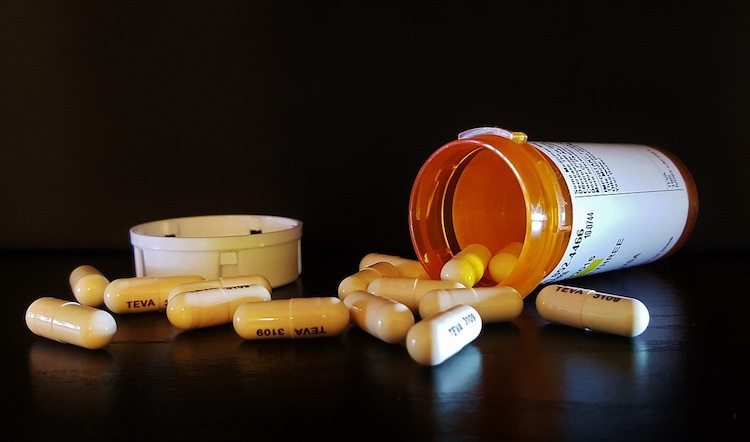
Based on actual cases, the letters informed the physicians that a patient to whom they had given an opioid prescription had passed away of a fatal overdose. Enclosed with the letter was a CDC-approved set of guidelines for how health care professionals should safely be prescribing opioids.

Though the premise is sobering, the study results proved to be successful – clinicians who received the letters prescribed 10% less opioids than the clinicians in the control group who did not receive the letters. Not only that, physicians who received the notices were overall less likely to start patients on opioids and less likely to give patients higher doses of opioids.

RELATEDOpioid Crisis Breakthrough – Non-Addictive Painkiller Found Effective

“Most people addicted to opioids began taking them because they were legally prescribed. Little attention has been paid to changing physicians’ prescribing behavior,” reads the study results, which were published in Science last month.

“[Additionally], most opioid prescription deaths occur among people with common conditions for which prescribing risks outweigh benefit. General psychological insights offer an explanation: People may judge risk to be low without available personal experiences, may be less careful than expected when not observed, and may falter without an injunction from authority.”

The team emphasizes that while their results are a positive nudge in the right direction, it is not the final solution. However, implementing smaller, more personalized approaches are a welcomed balance to passing more sweeping pieces of legislation that may prevent patients who actually require opioid prescriptions from getting the medication they need.

LOOKTown’s Compassionate Approach Cuts Rates of Overdose by More Than Half – State to Adopt It

“I reached out to experts with a question: How do you fix opioid overprescribing without leaving behind pain patients?” said Vox journalist German Lopez. “Part of the solution, experts told me, are nudges like that in the Science study, instead of mandates and caps like [some] state governments have enacted. It’s also important to make non-opioid pain treatment available to patients, while training health care providers in the right way to wean patients off opioids.

“These solutions, though, need to come together to strike a balance — because there is no one silver bullet to solving this problem.”

Help Your Friends See This Encouraging New Piece Of Research By Sharing It To Social Media – Photo by Brett_Hondow, CC

When Student Accepts Stranger’s Accidental Invitation to a Funeral, She Becomes ‘Brightest’ Part of the Day

This week, Leena Ali and Dawn Burke were total strangers – but an accidental text message ended up bringing them together at a woman’s funeral.

It’s all because Ali is a Brock University student who received a text from an unknown number saying: “Hey… is this Quinten?”

As a self-admitted prankster, Ali said yes.

On the other end of the line, Dawn Burke continued to text who she thought was her nephew. She invited Quinten to the “celebration of life” for her late aunt, Debbie Celar, and sent him the address for the funeral.

RELATED80-Year-old Man Rescues Drowning Boy Only to Find Out That He Saved the Kid’s Father 30 Years Earlier

Upon receiving the texts, Ali dropped the act and admitted that she was not Quinten. She did, however, ask if she could still come to the funeral. Since Ali is Sudanese, she had never heard of a “celebration of life” and she was curious as to what it would entail. She even offered to bring something for the event – and Burke said yes.

“When I found out that it wasn’t Quentin, I just thought ‘I’ve gotta go with this, because my aunt Debbie would,’” Burke told The Star. “Aunt Deb would invite these people, whoever they are, into her home. That’s just who she was.”

True to her word, Ali showed up to the funeral with a food dish in hand – and despite the initial awkwardness of the family trying to figure out her connection to Aunt Debbie, their confusion soon turned to delight.

LOOKWoman Scours the Web For Years to Find Sister She Never Met – Until Her New Neighbor Moves In

Burke realized Ali’s identity after she saw the bowl of fruit in the youngster’s hands – “and [then] she freaked out and got all excited,” says Ali.

Throughout the celebration, Ali talked to friends and family members of the late Aunt Debbie. All of them shared stories, jokes, and photos with their new acquaintance; and many of them even said that Ali reminded them of Debbie, all while they cried tears of joy.

CHECK OUT: Woman Accidentally Buys the Same Book She Sold 5 Years Ago and Finds Mother’s Last Words

So while Ali may have arrived as a stranger, her surprise appearance made a much bigger impact on the grieving family than she ever could have expected.

“My family hasn’t stopped talking about it,” said Burke. “Things happen for a reason and at such a sad time in our life, (Ali’s visit) made it the brightest.”

Surprise Your Friends With This Sweet Story And Share To Social MediaPhoto by Leena Ali

Supreme Court Strikes Down Archaic Adultery Law in India Because ‘A Husband is Not the Master’

In the latest string of progressive rulings, the Supreme Court of India has just struck down a colonial-era law that made adultery punishable for up to five years in prison.

The 158-year-old piece of legislation stated that a man had legal grounds to sue his wife’s lover without her consent. However, men were free to sleep with a married woman so long he had her husband’s consent.

In contrast, if a woman’s husband was unfaithful, she would not have been granted the same legal right.

Violations were punishable by up to 5 years in prison, a fine, or both.

WATCHAfter Planting a Tree Every Day for 40 Years, Man Has Created Blossoming Forest on Barren Wasteland

The law, Section 497 of the Indian Penal Code, was overturned by the court based on its “unconstitutional” gender bias, saying that a “husband is not the master of a woman.”

The verdict from Chief Justice Dipak Misra and the 5-panel bench emphasized that adultery will still be grounds for divorce, but not jail time.

“The adultery law is arbitrary, and it offends the dignity of a woman,” said Chief Justice Dipak Misra, according to NPR. The rest of the panel added that the “archaic law long outlived its purpose and does not square with constitutional morality.”

RELATEDTrain Passenger Uses a Twitter Post to Help Rescue 26 Girls From Traffickers

“Excellent decision to decriminalize adultery,” female Congressional member Sushmita Dev wrote on Twitter. “Also, a law that does not give women the right to sue her adulterer husband and can’t be herself sued if she is in adultery is unequal treatment and militates against her status as an individual separate entity.”

The ruling comes just weeks after the court overturned a Victorian-era law that made homosexuality punishable by life in prison.

Spread The Love: Share The Good News With Your FriendsPhoto by Yogita, CC

Woman Has Just $50 to Spend on Hurricane Victims But Store Manager Tells Her to Fill Up Some Carts Instead

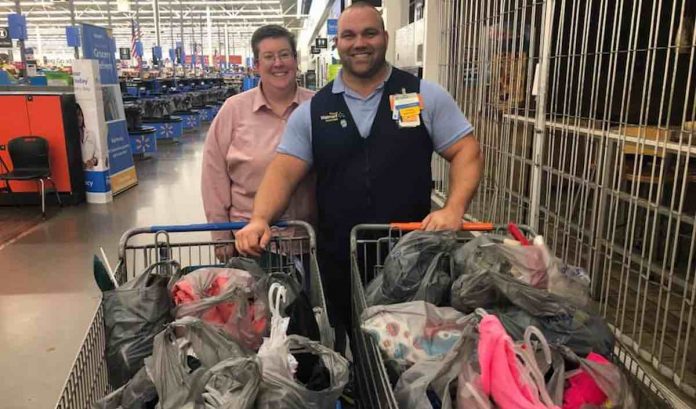
When the manager of a North Carolina Walmart heard about Shelli Tench’s mission to help Hurricane Florence victims, he opened up his own wallet so he could contribute over $1,000 to the cause.

With $50 in her pocket, Tench first went into the Walmart in Garner earlier this month with the intention of spending the last of her money on tee-shirts and underwear for a local hurricane relief shelter.

The shelter had told her that while people were able to take hot showers at their facilities, they did not usually have clean clothes that they could change into – so Trench was determined to spend her $50 on clothes.

Upon arriving at the Walmart, she asked the manager, Jeff Jobes, if she could have some sort of discount for the clothing – and she was stunned by his response.

RELATEDHeated Argument With Starbucks Manager Takes Unexpected Turn Towards Friendship and Kindness

“When Jeff … heard about the plight of the people at the shelter he didn’t give me a discount,” Trench wrote in an emotional Facebook post. “Instead, he armed me with one of his associates (Alex) and a shopping cart and told her to fill it… on him.

“Y’all… $1,251 later, I was able to deliver 254 items of clothing to the evacuees at the Garner High shelter because Jeff the manager loves his community and he proved it with his actions.”

WATCHEmployee Lets Autistic Teen Stock the Shelves; Video Goes Viral and Strangers Give Him $120K

The story does not stop there, however – the next morning, Jobes texted Tench and asked if there was anything else that the shelter needed for the 400 hurricane victims.

The refuge said that they needed fresh fruit for snacks and Gatorade. Tench relayed the message to Jobes only to receive a response reading: “Give me 30 minutes and then come see me.”

By the time Tench pulled up to the Walmart, Jobes and Alex were pulling together piles of donated goods for the shelter.

LOOKWalmart Cashier Steps In When Nail Salon Refuses Woman in Wheelchair

“They didn’t donate bags of fresh fruit,” Tench wrote. “They donated case after case after case after case of apples and oranges and bananas and Ensure and Boost and Gatorade and Cliff bars and pastries and bread and cookies. My van was loaded to the top.”

“The outpouring of love and support from the Walmart in Garner is unbelievable,” says Tench. “People may say a lot of negative things about Walmart but I’m here to tell you this right now… the staff at this store are world changers.”

Walmart as a company has additionally offered to donate $2 for every $1 donated to their Hurricane Florence relief fund, which has already raised over $7.5 million.

(WATCH the video below)

Be Sure And Pass On This Positive Story To Your Friends On Social MediaPhoto by Shelli Tench

“If your ship doesn’t come in, swim out to it.” – Jonathan Winters

Quote of the Day:  “If your ship doesn’t come in, swim out to it.” – Jonathan Winters

Image: by Todd Burke, CC license

With a new inspirational quote every day, atop the perfect photo—collected and archived on our Quotes page—why not bookmark GNN.org for a daily uplift?

Forgiveness Can Have a Much Bigger Impact On Your Physiological Wellbeing Than You Ever Imagined

The Lesson: Do you find it difficult to forgive other people? Are you wondering why is it so difficult to go on with your life after something bad has happened to you? Once you have been hurt, the fear that you could be hurt again will always follow you – but in order to avoid letting this fear control your life, you need to stop running away from it and face it so as to make space for something greater and bigger in your life.

In this video, Vishen Lakhiani tells us why it is so important to forgive people, how can we practice forgiveness and what great effects this simple – but still difficult act of radical forgiveness – can have on our lives.

Notable Excerpt: “Sometimes, the world, the universe, God, or however you want to call it, gives you these moments of stress so you can rise above them … Michael Beckwith calls these kensho moments. Kensho moments are moments where you grow from pain. Something happens – maybe your health breaks down, you end up in a hospital – but you grow from that, you learn to appreciate your body. Another philosophy I think of is the phrase hurt people hurt people, which simply means that everybody who hurts you is doing it because at some level, they were hurt themselves. They were just passing it on, but you have the ability to cut that code and stop the hurt, so you don’t continue passing it on. Think about human history and how nations fight nations for generations, because of this crazy ideal that hurt people hurt people, but we can forgive, we can move on.”

The Host: Vishen Lakhiani is an entrepreneur, education technology innovator, speaker, investor, and philanthropist. He is also the founder and CEO of Mindvalley and the author of “The Code of the Extraordinary Mind”.

Podcast: The Mindvalley Podcast is available on Stitcher, Apple Podcasts, and Google Play.

(LISTEN to the inspiring talk below)

Good Advice? SHARE It – Or Check Out More On Our Good Talks Page

US Power Producers’ Coal Consumption Falls to 35-Year Low

According to this latest set of data, United States coal consumption has declined to the lowest rate since 1983.

A report that was published by Reuters shows that power production companies are swapping out their coal-fired units for natural gas, solar and wind energy.

RELATEDNew Battery Gobbles Up Carbon Dioxide Before It Ever Reaches the Atmosphere

The data, which comes from the U.S. Energy Information Administration, shows that coal power declined by 32 billion kilowatt hours (roughly 6% less energy) during the first half of 2018. Meanwhile, nuclear-powered generation was up by 16 billion, solar increased by 7 billion; and wind rose by 15 billion.

The report highlights a continuous decline in coal-powered generation from its peak in 2008. Reuters adds that – with 9 more gigawatts of power scheduled to close within the next two years – the decline is expected to continue.

Power Up With Positivity And Share The Good News With Your FriendsPhoto by Tj.Blackwell, CC

Man Once Mocked for Shaving on Public Transit Has Gotten Money, Job Offers, and His Dignity Back

A mean-spirited social media video has turned into a blessing for one homeless man who was down on his luck last week.

Because he suffers from several medical conditions and injuries, 56-year-old Anthony Torres has been homeless, hungry, and unable to work. Over the course of the last few weeks, he was robbed and mugged twice, and after struggling on the streets of several cities, he finally phoned his brother for help. He received some money from his sibling and bought a train ticket to stay with another brother in New Jersey.

Torres wanted to clean himself up so he could look nice and presentable for his brother and family, so he pulled out a razor, lathered himself up and started shaving on the NJ Transit train.

His fellow passenger, Pete Bentivegna, then started filming him shaving so he could post the video to social media.

RELATEDCafé That Hires and Feeds the Homeless Has Just Built a Village for Their Rough Sleeping Employees

The initial online reaction was harsh. People mocked Torres for being a “slob” – but then when he heard about the video, Torres started broadcasting his message through national news outlets and asking people not to judge him for being down on his luck.

Days later, the internet tide had turned. A man named Jordan Uhl created a GoFundMe page to raise money for Torres. Ashamed social media users made donations and offered up their apologies and letters of encouragement.

Over $41,000 has been raised in just one week, most of which has already been deposited into Torres’s account – and there are more donations pouring in every day.

MOREHomeless Are Getting Six-Figure Jobs in Poor Neighborhood Overrun by Tech Companies

The passenger who posted the video of Torres shaving has apologized for the incident. He has now licensed the video so that he can donate all of the proceeds to Torres and his family.

Additionally, Torres has received dozens of job offers, and while he is unable to accept them based on his disabilities, he says he is grateful for the kindness.

Most importantly, however, he feels that he has gotten his dignity back.

CHECK OUT: The Homeless in San Diego Are Getting Jobs Thanks to a 16-Year-old Boy

“I fee so happy,” Torres told The Washington Post. “I feel like a new man.”

“He’s gone through hell his whole life,” his brother added. “I think this is an eye-opener for him, to see that so many people care about him.”

While Torres is currently safe and sound with his family, he plans on using the money to buy himself a mobile home so he can now have guaranteed shelter wherever he goes.

What Goes Around, Comes Around: Share The Positive Story With Your Friends

Drug That Can Alleviate or Even Completely Eliminate Celiac Symptoms May Be Available as Early as 2021

In an exciting new breakthrough for bread-lovers, this university has developed a medication that can alleviate or even completely eliminate the symptoms of celiac disease – and it should be available as early as 2021.

Celiac disease is a fairly common disease, affecting one to two percent of the European population. It is expressed as a hypersensitivity to gluten, a protein found in cereals such as wheat, barley or rye.

Although efforts are already being made to treat celiac disease, the proposed drugs have an effect on the immune system. Possible side effects must therefore be examined very carefully. Although initial clinical studies are underway, they will not lead to a marketable product in the next few years.

For this reason, an entirely different approach has been pursued at Technische Universität Wien (TU Wien) in collaboration with the industrial partner Sciotech Diagnostic Technologies GmbH.

RELATEDNew Study Shows That Weight Loss Can Be Boosted Fivefold Thanks to Novel Mental Imagery Technique

Instead of developing a drug that interferes with the immune system, TU Wien has created a simple medical product that directly attacks the gluten molecules to render them harmless. This makes the approval process much simpler, meaning that the product should be available in ordinary pharmacies as early as 2021.

“Our bodies produce antibodies that fit intruding antigens precisely, like a key to a lock. This immune response makes these antigens harmless,” explains Professor Oliver Spadiut of TU Wien. “If a new antibody fragment is found and produced that docks to and blocks the invading gluten molecule without triggering the immune system, the symptoms of celiac disease can be suppressed.”

The aim of the research project was therefore to produce a complex of two such antibody fragments that envelop the gluten molecule at a molecular level, so that it can no longer have any further effects in the intestines.

MOREGot Kidney Stones? Ride a Roller Coaster, Says Study

To do this, certain bacteria have to be reprogrammed so that they produce exactly the desired antibody fragment. “The formation of such proteins in a bacterium is a highly complicated process,” explains Spadiut. “It can easily happen that the proteins are not folded exactly as we want.”

Instead of the desired antibody fragments, so-called “inclusion bodies” are formed – small particles consisting of incorrectly folded proteins. A process therefore had to be developed to refold these inclusion bodies and to obtain the desired proteins from them.

Such processes, in which the folding of proteins is specifically altered, have not yet been studied in great detail and so they are not very efficient. “You have to precisely understand the chemical processes involved and intervene in a complicated way,” says Spadiut. “It has therefore taken a while, but we have now developed a process that can be easily reproduced, can be scaled up to industrial application and delivers a very good yield of the desired product.”

CHECK OUT: Woman Makes Drug-free Patches That Treat Nausea, Cramps, Vertigo, Hangovers – And Even Car Sick Pets

The project was supported by the industrial partner SCIOTEC Diagnostic Technologies GmbH, who will now bring the new medical product to the market.

“It will be a preparation that celiac patients can take together with gluten-containing foods to alleviate celiac symptoms,” explains Spadiut. “It remains to be seen whether the symptoms will disappear completely or will only be alleviated. The precise effects will probably vary from person to person. In any case, we firmly expect the product to be available in ordinary pharmacies as early as 2021.”

Reprinted from Technische Universität Wien

Cure Your Friends Of Negativity By Sharing The Good News On Social Media

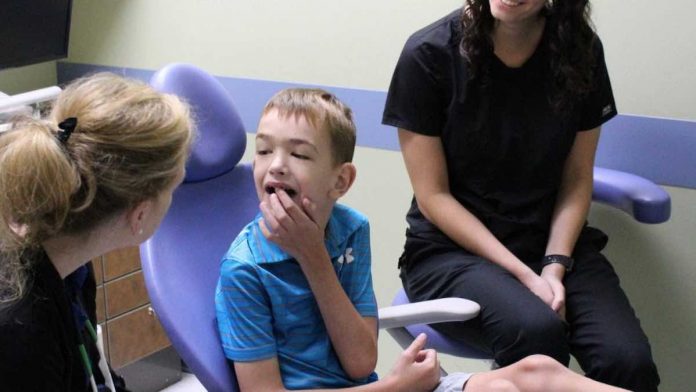
Boy Thought to Be Nonverbal Can Speak After Dentist Discovers He is Simply ‘Tongue-Tied’

After six long years, Mason Motz can finally speak for himself – and it’s all because a doctor thought to look under his tongue.

The 6-year-old boy from Katy, Texas was born with Sotos syndrome, a genetic condition that is characterized by delayed motor and mental development, as well as learning disabilities and distinctive facial features.

Additionally, since Mason has never been able to speak, physicians assumed he was nonverbal.

“He’s been in speech therapy since he was a little over 1 year old,” Mason’s mother Meredith told Inside Edition. “Sleeping was always stressful. He would stop breathing. He had trouble eating and swallowing; every single meal we would have to remove something that was choking him. He didn’t get the nutrition he needed. His teeth started having problems.”

RELATEDEmployee Lets Autistic Teen Stock the Shelves; Video Goes Viral and Strangers Give Him $120K

Mason’s life was utterly changed, however, when his mother took him to see Dr. Amy Luedemann-Lazar, a dentist who is familiar with handling special needs children.

While Mason was sedated, the dentist inspected his teeth and found that the boy was actually ‘tongue-tied’ with ankyloglossia, a condition that means his tongue never separated from the floor of his mouth when he was in the womb.

Luedemann-Lazar freed the boy’s tongue with a quick noninvasive surgery in April 2017 and his life has never been the same since.

LOOKBoy With Autism’s LEGO Replica of the Titanic is So Impressive, it is Now on Display at the Ship’s Museum

“It’s like night and day. He doesn’t have choking episodes anymore; he’s eating different types of food,” Meredith said. “He’s behaving much better at school. His behavior was a problem, because he was getting poor quality of sleep at night, he was constantly tired and was not able to express himself. He doesn’t snore anymore. He doesn’t have sleep apnea anymore.”

More importantly, Luedemann-Lazar described Mason as a talkative, enthusiastic kid who feels more like “a whole person” now that he has finally found his voice.

(WATCH the video below)

Be Sure And Share This Inspiring Story With Your FriendsPhoto by Meredith Motz

“There is nothing in a caterpillar that tells you it’s going to be a butterfly.” – Buckminster Fuller

Quote of the Day: “There is nothing in a caterpillar that tells you it’s going to be a butterfly.” – Buckminster Fuller

Image: by Thomas Quine, CC license

With a new inspirational quote every day, atop the perfect photo—collected and archived on our Quotes page—why not bookmark GNN.org for a daily uplift?