Delicious food is appreciated worldwide as a fixture of shared culture, family tradition, comfort at home and luxury eating out. A centerpiece of celebration and events, food always get the festivities underway.
Nothing serves as an indulgent pick-me-up like a warm dish of your favorite food—especially you’re feeling blue. While doctors, along with the current organic ‘local food’ movement, urge us towards healthier, balanced diets, this doesn’t mean comfort food needs to be abandoned.
There are ways to turn your guilty pleasure into a healthy ones and still get the psychological boost.
Rather than physical needs, these food cravings are based on your emotional needs. This is because your choice of dishes may be a reminder of someone you love, a childhood experience, or any emotions that can have a positive influence on your mood. By engaging in this sentimental dish, you stimulate the feelings in your subconscious and that familiar feeling is brought back to comfort you.
Forget calories, focus on comfort
Our favorite comfort foods are usually high-calorie, nutrient-deficient dishes that can often lead to overeating. However, the caloric aspect is not the essence of comfort food’s positive effects. Rather than turning away from enjoying these foods (or feeling guilty when you eat them), it is better to become aware of the healthier versions of these foods, which can comfort just as well. After all, the point of comfort food is to make you feel better, not worse.
According to a paper published by the International Journal of Gastronomy and Food Science, comfort food can also be determined by basic tastes, like sweet and salty.
So by recreating these key tastes, it can provide the same effect of comfort, without having to reproduce the potentially unhealthy dish.
The healthy alternatives
There are so many food choices available to provide a variety of healthy, yet enjoyable, versions of your go-to comfort foods. Whether it’s pizza, macaroni and cheese, burgers and fries, or spaghetti, there are ways to make them healthy.
Health-focused restaurants have started switching up these recipes to maintain the comfort factor while reducing the unhealthy parts—swapping out french fries for baked sweet potato fries, using salad style ingredients on pizza, adding cauliflower or zucinni ribbons in mac and cheese or pasta. Even seaweed fries and sesame seeds in your favorite Korean dish form part of the modern, healthy fast food movement.
It’s a massive relief to know that your comfort cravings are completely normal and, contrary to what you might think, can even be healthy for you. There should be no judgment or shame attached to taking pleasure in enjoyable food, even if it is to improve your mood. Instead, the fact that it can boost your mood and conjure positive feelings from your past puts comfort food in a bright new light.
After all, feeling good is contagious and only adds to the world’s positive vibrations.
Listen to the stirring tale of how a mother’s devotional love endured 45 years of complete separation: “She knew you would be back.” Hear The Good News Guru tell the inspiring story (from the May 25, 2018 Ellen K. Morning Show on KOST-103.5 radio).
This story was submitted as a nomination to the Reader’s Digest “Top 10 Nicest Places in America” contest: a crowd-sourced effort to uncover corners of the country where people are still kind and respectful in an era of cultural and political divides. If you know of a community, business, or nonprofit where kindness prevails, then be sure to submit a testimony or anecdote here before the June 5th deadline. (GNN will be one of the judges!)
West Lafayette, Indiana is one of the nicest places in America because when someone is in need of help, others step in to lend a hand.
Recently, when a new, local brewer had an emergency, other local breweries stepped in to assist, no questions asked – because being nice and helping others defines our community.
In West Lafayette, the beer scene has taken off. In one year, we went from two breweries to six. But instead of looking at each other as competition, our local breweries help one another.
Recently, brewer Jason Cook from Teays River (a brewery that opened in 2017), had just started the boil for a seven-barrel, 217-gallon brew of a new beer that he’d been thinking about for a while. He was calling it No Control IPA, which is an homage to a 1989 song by Bad Religion.
But as he was making the massive batch of beer, he nearly lost the tip of the little finger on his right hand.
On his way to the hospital he was trying to figure out how to save roughly 1,388 glasses worth of beer. Instead of having to trash the brew, however, two other local brewers rushed over to the facility– no questions asked –to save the brew.
They could have seen this as an opportunity to gain leverage on their competition, but instead, they helped to rescue this new brewery from what could have been a major financial loss. Also, the new breweries that have opened in our area tell stories about the free-flow of help and advice that comes from the other breweries (especially from the breweries that have been around for years) because they believe that there’s room in the market for each one to find a niche.
This is just one story of an act of kindness. But it shows what our area is all about: helping one another when crisis hits. And that to build a community, instead of seeing each other as competition, helping others and being nice pays off for everyone.
Reprinted with permission from Reader’s Digest. To learn more about GNN’s part in searching for the Top 10 Nicest Places, click here.
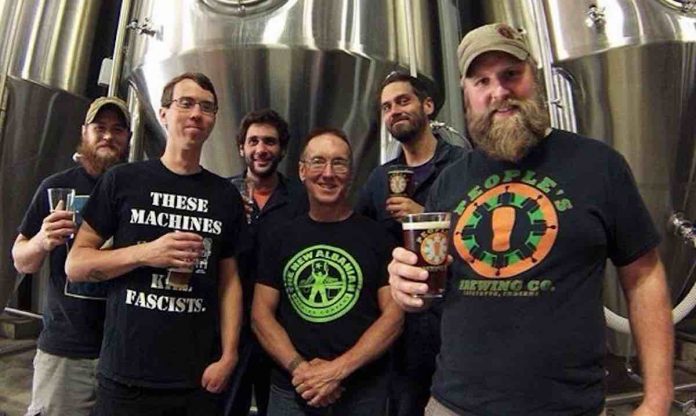
Brew Up Some Positivity With Your Friends And Share This Story To Social Media – Photo submitted by Sara Erickson
Miraculous days start “normally” – and on this fateful day, I was back home with my family for Christmas after returning from 500 miles away, having taken care of my mother for a year.
Since our cats’ brand of litter had not been to our liking, we drove 25 miles to Eugene, Oregon to find a substitute at one of their twelve or more pet stores.
The kitty litter aisle was forty feet long, which made our choice all the more complicated. We did not want pine litter, as it is hard on the lungs. We had tried the newspaper brands and crushed walnuts; and we were not sold on the clumping brands because it attached to our Persians’ long fur. All of these factors meant that we were reading bag after bag of clay and crystal litters to find the best fit.
When someone pushed their grocery cart up to the litter section, I approached them like the “kitty-rozzi” so I could interview them about their choice: “Have you used this brand long? Does it hold odor? How often do you change it? Do you have long or short haired cats?” Everyone smiled and graciously participated in our survey.
We then began comparing their selections. During our hour of research, none of the customers shared their cats’ names.
Finally, this beautiful, blue-eyed woman with shoulder-length white hair reminiscent of a white Persian cat tossed a bag of litter into her cart.
I noted her kind face and purr-ceded to ask her my list of questions – and during those few seconds of divine timing our lives merged in a city of 160,000.
When she responded, “We have two short haired cats,” I quipped, “Oh, you look like someone who would have Persians.”
She stopped, caught her breath and quietly said, “We did have two—and loved them. But ‘Myrakle’ died a year ago.”
Quote of the Day: “When nothing is sure, everything is possible.” – Margaret Drabble (English author and critic)
Photo: by mandy lackey, CC license
With a new inspirational quote every day, atop the perfect photo—collected and archived on our Quotes page—why not bookmark GNN.org for a daily uplift?
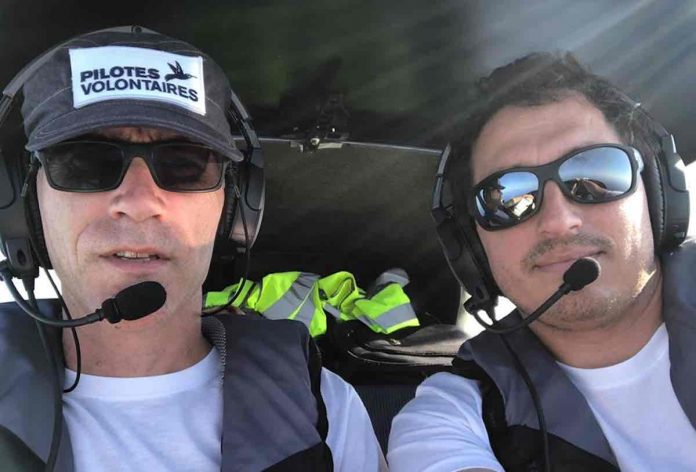
Two pilots have spent their combined life savings for the sole purpose of saving refugees from the perils of sailing across the Mediterranean Sea.
José Benavente and Benoit Micolon are the French altruists behind the volunteer rescue group Pilotes Volontaires. The two men launched the effort after they pooled their hard-earned money to purchase a $150,000 plane to be used for rescuing migrants at sea.
“José and I bought the plane with our own personal money because otherwise we would have wasted too much time searching for financing,” Micolon told NBC News.
Benavente is no stranger to humanitarian efforts – for 25 years, he’s worked for the Red Cross and witnessed the challenges faced by Syrian migrants. Micolon, who first met Benavente in 2006 when they were earning their pilots’ licenses, became interested in the cause after his friend described firsthand the refugee crisis.
Every year, thousands of refugees pile into boats as a means of reaching safety in Europe. Unfortunately, many of those vessels don’t make it to dry land.
“It is very difficult to locate these small boats, sometimes carrying hundreds of people, and often the vessels ready to help them arrive too late,” says the pilots’ website. “We refuse to accept this fact as a fatality and we want to act to save more lives. Our mission is to provide air support, thanks to our aircraft adapted to search at sea.”
After buying the plane in January, Benavente and Micolon launched their maiden flight over the Mediterranean to search for boats earlier this month. By partnering with several regional nonprofits and charities to coordinate rescue efforts, the dynamic duo is now able to spot lifeboats from the air and direct rescue ships towards their location.
The industrious little plane is named “Hummingbird” after a Native American story about a hummingbird that attempts to stop a forest fire by scooping up drops of water with its beak and dropping it on the flames. When the other animals ask what the hummingbird is doing, it says: “I’m doing what I can.”
If you would like to donate to the Pilotes Volontaires, you can visit their website.
Fly This Inspiring Story To Your Friends And Share To Social Media – Photo by Pilotes Volontaires
This story was submitted by Tammy Bacon as a nomination to the Reader’s Digest “Top 10 Nicest Places in America” contest: a crowd-sourced effort to uncover nooks where people are still kind and respectful in an era of cultural and political divides. If you know of a community, business, or nonprofit where kindness prevails, then be sure to submit a testimony or anecdote here before the June 5th deadline.
I was raised in Corryton, Tennessee, but later married and moved to a neighboring county. After 26 years and a divorce, I decided that I really wanted to return home.
I bought a small, run-down, house nearly a century old, and began working to bringing it back to life. Aside from a little family help, I did this largely on my own.
While working on my house, I had several neighbors stop by to compliment my work and efforts in restoring this little house. Those neighbors, and many others, later returned to offer their assistance with whatever my current project may be, much to my great appreciation.
Stories About Corryton
My neighbor Tommy has come over in the dead of winter to fix my plumbing when the pipes froze; help me clear brush; and assist me in building my chicken coop. He has helped me build raised beds for my garden, as well as a fence to protect it. He even built and installed a clothesline for me, and his entire family has been very kind and friendly to me since my move.
Another neighbor, Mark, used his tractor to level my property so it would be mowable, and worked the land around my pond to allow for better water flow. His family has been extremely sweet to me as well.
Many other neighbors have been happy to offer a helping hand. They even made me homemade candies for Christmas.
I didn’t know a single person when I moved here a year ago, and now I feel as though my neighbors are family – and not a single person has been willing to accept payment for the hours and hours of labor spent on my property.
Having grown up in Corryton, I knew the people here were supportive and friendly. My elementary school principal, Bob Martin, helped me all throughout grade school, and even got me my first job. He has been retired for years, and still helps the community by running the town food bank for needy families.
That neighborly attitude is exactly the reason I came back to my little hometown – [but] I honestly didn’t expect to find this degree of neighborly love when I returned. The support and welcoming attitude of my new neighbors has been a reminder to me that there are still many friendly, helpful people in Corryton. This will forever be my hometown.
Reprinted with permission from Reader’s Digest. To learn more about GNN’s part in searching for the Top 10 Nicest Places, click here.
Share The Sweet Story Of Community With Your Friends – Photos by Tammy Bacon
In a stirring gesture of unity and compassion, several British Muslim groups took out a full-page ad in the newspaper to voice their opposition to anti-Semitism.
In giant, bold black text across the top, the ad read: “We Muslims have one word for Jews. Shalom.”
“As British Muslims, we believe that the time has come to speak out. For far too long, anti-Semitism has gone unchecked,” the ad continued. “Eradicating it is a challenge faced by all of us.
“We understand that many in our country empathize with the Palestinians and their right to a sovereign state. However, we must be ever vigilant against those who cynically use international issues to vilify Jews or promote anti-Semitic tropes. There is no cause that can justify the promotion of hate.”
“Just as we challenge those who recycle anti-Muslim tropes, we stand firmly against racism directed at our Jewish sisters and brothers.”
The ad, which was published in the Telegraph on Thursday, was signed by such major advocacy groups as anti-extremism group Faith Matters; Muslims Against Anti-Semitism; and the Association of British Muslims.
According to the Jewish Telegraphic Agency, the statement was a welcomed follow-up to the Board of Deputies of British Jews denouncing Islamophobia last week.
The Board of Deputies of British Jews expressed their appreciation for the ad on Twitter, saying: “Incredible solidarity – a full-page ad by Muslim sisters and brothers in today’s Telegraph. Thank you. Together we will defeat the twin evils of anti-Semitism and anti-Muslim hate.”
Share The Inspiring Story Of Peace On Social Media – Photo by the Board of Deputies of British Jews
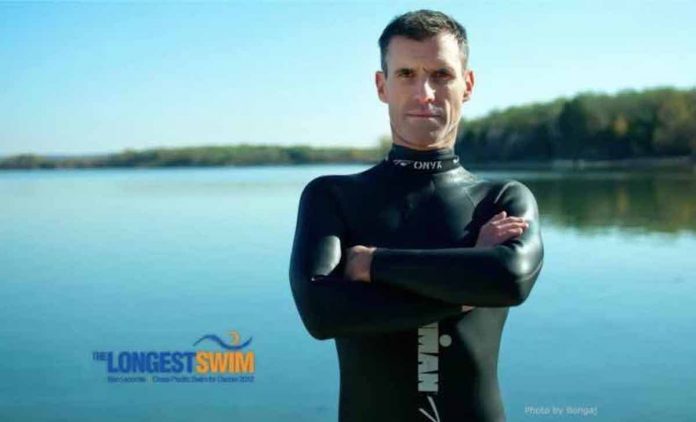
In 1988, Ben Lecomte became the first person to swim across the Atlantic Ocean – and now, 30 years later, he wants to become the first person to successfully swim across the Pacific.
Lecomte is set to leave from the coast of Choshi, Japan on Sunday and spend the next 6 to 8 months swimming the 5,500-mile distance to San Francisco. The athlete hopes that the incredible transcontinental quest will raise awareness for oceanic health and the real dangers of water pollution.
The Frenchman has been training for the endeavor over seven years by swimming 6 hours every day. Over the course of his expedition, however, he will swim a full 8 hour day and sleep on a boat piloted by his crew.
The boats that will escort him are equipped with technology that will repel sharks and predators. His special wet suit is designed to withstand chilly waters, which may drop to 50 degrees Fahrenheit (10 degrees Celsius).
Lecomte’s journey, which is being called “The Swim,” will be live-streamed by Discovery and shared on social media so viewers can follow Lecomte every step of the way. The footage will end up in a feature-length documentary to be released in 2019.
The feat will be documented and measured by the scientific publishing platform Seeker. Lecomte has also partnered with 27 research institutes, including NASA and the Woods Hole Oceanographic Institution, to collect over 1,000 samples of water and maritime specimens along the way. The specimens will be collected by the 8-person crew that is looking after Lecomte on his trip.
“The mission of my historic swim is to bring to light the current state of our oceans,” said Ben Lecomte. “The research we collect during ‘The Swim’ will ultimately help us better protect our oceans and I’m excited to partner with Seeker and Discovery to bring this expedition and our findings to the world.”
“‘The Swim’ is an exciting opportunity to highlight the deep connection we all have with the ocean – and the importance to protect and cherish it” said Dr. Sylvia Earle, Founder of Mission Blue and patron of expedition.
Fins crossed for a safe crossing!
(WATCH the trailer below)
If This Floats Your Boat, Share it With Your Friends – Photo by Bongaj
Quote of the Day: “Happiness is as contagious as gloom. It should be the duty of those who are happy to let others know of their gladness.” – Maurice Maeterlinck
With a new inspirational quote every day, atop the perfect photo—collected and archived on our Quotes page—why not bookmark GNN.org for a daily uplift?
This story was submitted as a nomination to the Reader’s Digest “Top 10 Nicest Places in America” contest: a crowd-sourced effort to uncover nooks where people are still kind and respectful in an era of cultural and political divides. If you know of a community, business, or nonprofit where kindness prevails, then be sure to submit a testimony or anecdote here before the June 5th deadline.
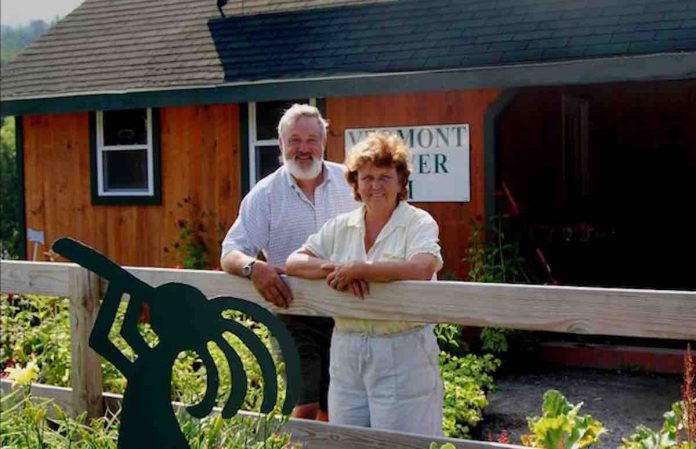
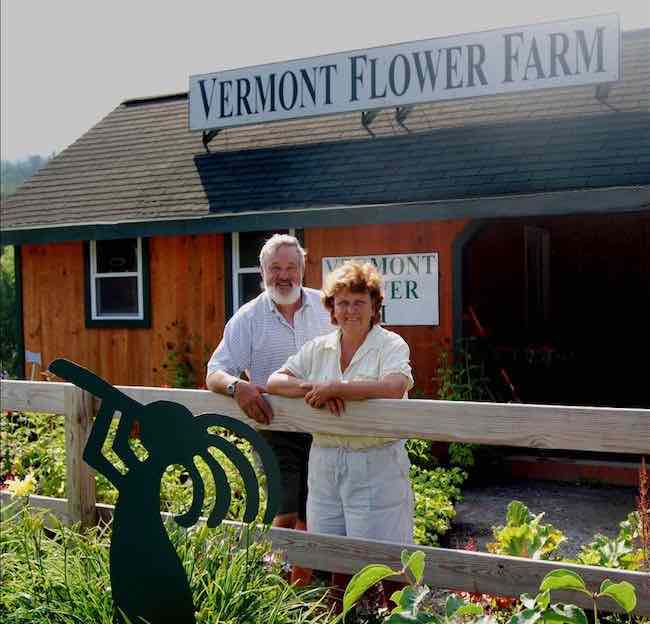
The Vermont Flower Farm is owned and operated by two of the nicest, most kind-hearted people on the face of this earth.
Their names are George and Gail Africa and they have an autistic son whose name is Alex Africa. George just turned 70-years-old this past April, but you would never know it.
He and Gail have owned their five-acre flower farm for over 10 years now, but before they bought the land Route 2, they had a flower farm at their house on Peacham Pond, also in Marshfield.
I first met George and Gail about the time they started moving their farm to the Route 2 location from their home by Peacham Pond. A friend and I noticed that for a couple of days they had been making dozens and dozens of trips back and forth by our home. My friend suggested that we let them borrow our trailer and we started helping them move. After they were moved to their new location, I began visiting them on a daily basis. They are a very welcoming couple, and we formed an unbreakable friendship right away.
Without getting into too much detail, my severe depression began to act up again and the Africas noticed. They slowly but deliberately took me under their wing so they could try to pull me out of it and get me the help I needed. The flower farm, along with George and Gail, soon became my saving grace as they have for many others over the past years. They and the farm not only pulled me from my depression after a long, hard journey, but also they and the farm literally saved my life.
A similar situation happened to a now-mutual friend of ours. This friend was going through a bout of depression, but noticed that when she would visit the flower farm, pull some weeds, and plant some flowers, her mood would lift.
She and I used the flower farm as a “therapy” tool at the suggestion of George and Gail.
For the past couple of years, we have both become better people thanks to George, Gail and the flower farm. The Africas have had thousands of customers return every year, not necessarily to purchase any of their day lilies, hosta, blueberry bushes, peonies, astilbe, etc., but to just sit down, relax, and visit the nicest place and the two nicest people anyone could ever meet.
Reprinted with permission from Reader’s Digest. To learn more about GNN’s part in searching for the Top 10 Nicest Places, click here.
Plant Some Positivity With Your Friends And Share This Sweet Story – Photo by Michelle Gibson
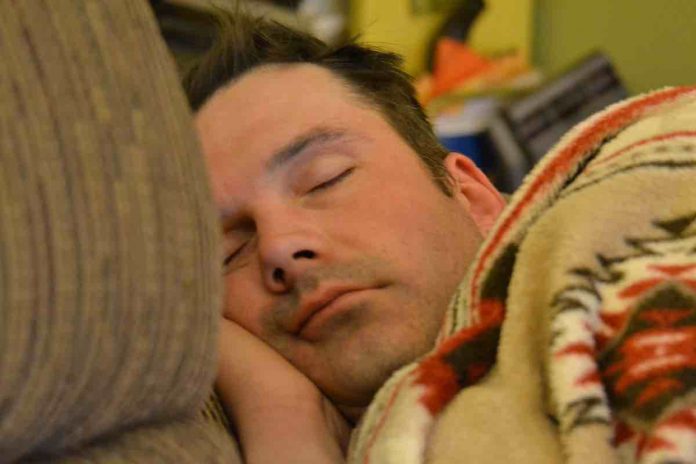
If you’ve been struggling with sleep deprivation throughout your work week, then don’t feel bad about sleeping in this weekend – a new study says that it’ll make you live longer.
Researchers at Stockholm University and the Karolinska Institute – which is Sweden’s most acclaimed medical university – have published a new study that links sleeping in on the weekend to living a regular lifespan.
The study followed the sleep habits of 43,880 subjects over the course of 13 years. The findings showed that people who slept for short amounts of time during the week and the weekend had a 52% increased rate of mortality.
However, people who slept for short amounts of time during the week, but compensated for it by sleeping in on the weekends, displayed normal rates of mortality.
Additionally, the sleep deprivation did not affect subjects who were over 65 years old – which means that thousands of middle-aged adults are being negatively affected by lack of sleep.
The study, which was published in the Journal of Sleep Research, directly reenforces why people of all ages should aim to periodically get at least 7 to 8 hours of sleep during the week, even if they are sleeping less during the other nights.
If you are having trouble sleeping, then this other study suggests that you go camping for a weekend in order to reset your body’s natural sleep cycle; or you can simply put on Baa Baa Land, the “world’s most boring film”.
So when Saturday morning rolls around, go ahead and turn off your alarm clock – it’s for your own good.
Don’t Snooze On This Story: Share It With Your Sleep-Deprived Friends – Photo by Tony Alter, CC
This mom’s testimony of kindness is just another example of why kids have the purest hearts.
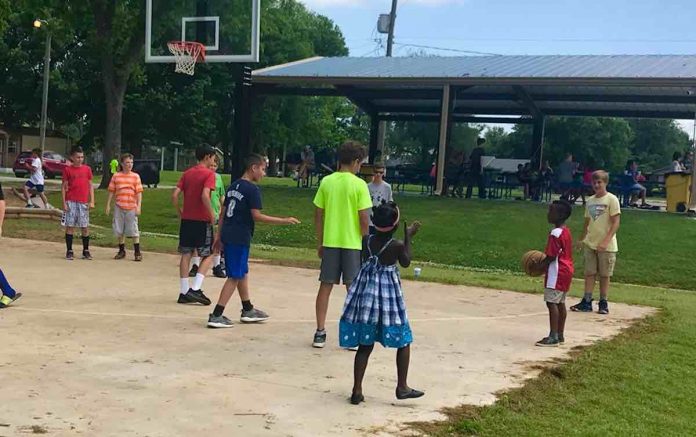
It was a quiet morning when Christy Lee Rowden of Oologah, Oklahoma took her two kids Asher and Mercy to the park this week. Since it was still early in the day, the youngsters spent the first part of their trip playing by themselves.
Then, a group of 5th grade boys from Oologah Upper Elementary showed up and started playing basketball.
Rowden says that since she adopted 7-year-old Asher from Uganda, he can be shy around other kids as a result. But this time, as he quietly stepped back to watch the boys play, they approached him instead.
“All the boys came over and shook Asher’s hand and introduced themselves. Then they asked him to play with them,” Rowden wrote on Facebook, adding that the gesture “melted her heart.”
“They were so kind – they included him by letting him catch and throw the ball and they cheered him on and high-fived him,” says Rowden.
“It seriously brought tears to my eyes – especially being the mom of a black boy in a mostly white community,” she added.
The video of the youngsters all hugging and encouraging Asher has been shared on Facebook hundreds of times – and it’s not hard to see why.
Clayton Brown, who says that he knows the kids in the video, wrote: “We teach our kids to be color blind because at the end of the day we’re all humans just getting through life. So seeing this makes me –and I’m sure the other parents– feel like we’re doing the right thing.”
(WATCH the sweet video below)
Share The Sweet Story Of Compassion With Your Friends – Photo by Christy Lee Rowden
These dexterous robots are getting ready to disrupt the multi-billion dollar pesticide and seed industry by using AI technology to selectively seek and destroy weeds.
Currently, farmers are forced to shell out cash for large amounts of herbicide that is indiscriminately sprayed over their crops – 90% of which have already been genetically modified to resist the weed-killing chemicals, says Reuters. The seed and pesticide industry is currently worth about $100 billion, and thanks to lucrative business models such as this, $26 billion of it alone is from the herbicide industry.
These robots, on the other hand, are autonomously designed to gently roll across farmlands and use built-in cameras to search for individual weeds, rather than blindly blanketing an entire crop field. Once a weed is detected, the contraption shoots a minuscule amount of herbicide directly onto the plant and continues on its merry way.
The 4-wheeled, solar-powered robots have up to 95% accuracy and their selective spraying methods could reduce herbicide use by up to twenty times.
There are several tech startups that are already working on delivering these robots to farmers worldwide. Switzerland-based company EcoRobotix says that once its investors are sorted out, their weed-killing contraption could be on the market as early as 2019.
Additionally, American tractor company John Deere recently joined the robo-business by buying out Blue River: a Silicon Valley startup responsible for designing weed-killing robots that can be attached to the backs of tractors.
“A lot of the technology is already available. It’s just a question of packaging it together at the right cost for the farmers,” said Richard Lightbound, Robo’s CEO for Europe, the Middle East and Africa.
“If you can reduce herbicides by the factor of 10 it becomes very compelling for the farmer in terms of productivity. It’s also eco friendly and that’s clearly going to be very popular, if not compulsory, at some stage,” he told Reuters.
(WATCH the video below)
Plant Some Positivity With Your Friends And Share The Good News – Photo by EcoRobotix
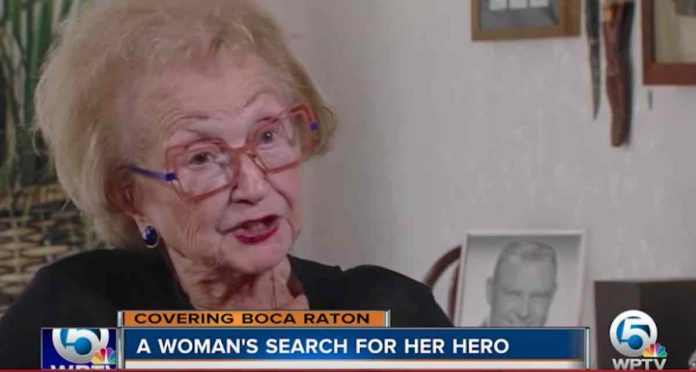
94-year-old Alice Modine drives everywhere, and she isn’t afraid to drive in bad weather either – but on one particularly rainy day over the weekend, Modine could barely see through her windshield.
The rain was coming down so hard in Boca Raton, Florida, she decided to pull over and wait for the weather to clear up.
As she slowly pulled her car over to wait out the storm, she suddenly noticed that her car had started filling up with water. She had unknowingly driven her car into a lake, and the vehicle was flooding fast.
“I tried to move the car forward and back nothing worked. I tried to pull down the windows they didn’t work, I tried to open the doors, nothing worked,” Modine told WPTV. “So I thought to myself this has happened before, not to me, but to other people and I may stay in the car forever. I’ve lived a good life, I’ve had a very happy life up to now. It just may be the end of it. I didn’t panic. I didn’t feel upset.”
As Modine was making her peace with the afterlife, however, the car door was suddenly forced open and she saw a young, “good-looking” man in his 30s.
The man pulled her to safety onto the grass and then asked her if she had anything in the car that she needed. When Modine said that she’d like to have her purse and the papers for the car, the man went right back into the vehicle to fetch all the valuables.
Modine hopes that telling her story to WPTV will help her find the mysterious hero so she can properly thank him for saving her life.
(WATCH the video below)
Share The Sweet Rescue Story With Your Friends – Photo by WPTV
Quote of the Day: “In nature there are neither rewards nor punishment; there are only consequences.” – Robert B. Ingersoll (Political leader, U.S. Civil War veteran)
With a new inspirational quote every day, atop the perfect photo—collected and archived on our Quotes page—why not bookmark GNN.org for a daily uplift?
This story was submitted as a nomination to the Reader’s Digest “Top 10 Nicest Places in America” contest: a crowd-sourced effort to uncover nooks where people are still kind and respectful in an era of cultural and political divides. If you know of a community, business, or nonprofit where kindness prevails, then be sure to submit a testimony or anecdote here before the June 5th deadline.
DeRidder has been a military town for nearly a century, as the Louisiana Maneuvers established the nearby Fort Polk military base in the 1940s. If you’ve served our nation or are related to someone who has, you understand what this means and how your community is part of your support.
The people of DeRidder are well-accustomed to welcoming new people to the town, saying goodbye — and most importantly, remaining friends. DeRidder people are known for their hospitality, patriotism, and lending a hand in times of need. Residents have sheltered people during hurricanes, helped veterans in need, and frequently pull together to help their own. DeRidder’s history reads like a guide for kindness.
Stories About DeRidder
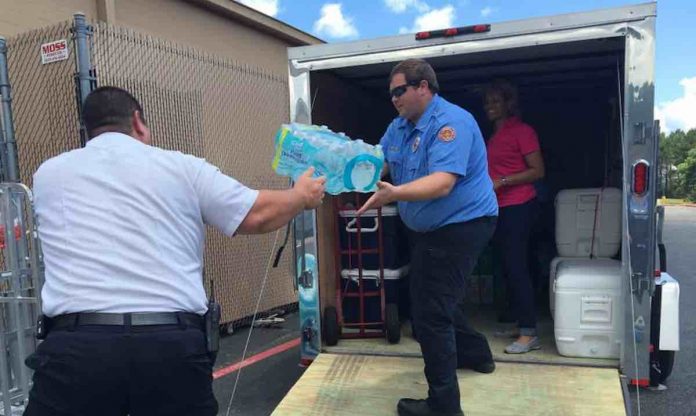
This small town in west Louisiana has a soup kitchen, a food pantry, and a host of active service organizations, which are rarities in some parts of the country. The most recent example included the community helping a 97-year-old World War II veteran, as area veterans and their families joined forces to assist in improving his general quality of life. Here are just a few examples of kindness, both old and new:
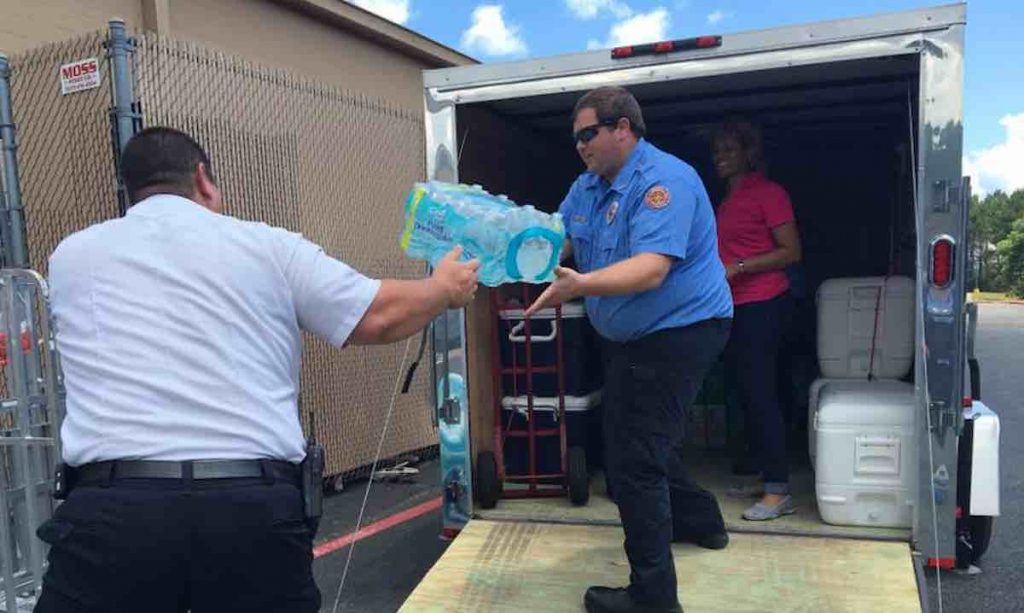
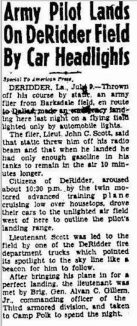
1941: Residents helped a plane in the dark after it was thrown off course from Barksdale, a military location in Shreveport. Residents drove their cars to the unlit air field to outline the pilot’s landing range. Lt. Scott was led to the field by a DeRidder firetruck pointing it’s spotlight to the skyline as a beacon for him to follow.
1941: Residents united to help staff the town’s United Service Organization, which provides respite for servicemen.
2004: A USMC veteran lived in a public park for three months, and the community pulled together to find him shelter and support after media coverage.
2005: After Hurricane Katrina, many local churches and organizations helped to shelter evacuees and collected funds to assist them after their displacement. The American Legion Post 27 even helped coordinate a wedding for two evacuees. Of the wedding party, groom Warren Noel told The American Press, “I wouldn’t say they are just friends, but family. I love them. If I had a car, I wouldn’t leave. I love it here.”
2017: Over 20 soldiers from Fort Polk worked at the Soul Soup community soup kitchen in December 2017. Also in The American Press, Sgt. Michael McGonigal said, “One thing I have been taught, and that I strongly believe in, is that a unit is only as strong as the community that supports it.”
2018: Redeemer Lutheran Church started a community garden to supply the local food pantry with fresh produce to give to those in need. Church member Elizabeth Smith told KPLC, “I was thinking how nice it would be instead of mowing grass, we had something there producing and I thought about a garden, and we already give to God’s food box…so I was thinking we could give them fresh fruits and vegetables with what we grow.”
Reprinted with permission from Reader’s Digest. To learn more about GNN’s part in searching for the Top 10 Nicest Places, click here.
Share The Inspiring Story Of Community With Your Friends – Feature Photo by City of DeRidder Facebook / Newspaper photo by Elona Weston
Researchers have just made a breakthrough discovery in how we can possibly treat stroke patients in the future.
A team of scientists at the University of California Los Angeles successfully regrew brain tissue that was previously damaged by a stroke.
“We tested this in laboratory mice to determine if it would repair the brain and lead to recovery in a model of stroke,” said Dr. S. Thomas Carmichael, professor of neurology at the David Geffen School of Medicine at UCLA. “The study indicated that new brain tissue can be regenerated in what was previously just an inactive brain scar after stroke.”
The brain has a limited capacity for recovery after stroke. Unlike the liver, skin and some other organs, the brain does not regenerate new connections, blood vessels or tissue structures after it is damaged. Instead, dead brain tissue is absorbed, which leaves a cavity devoid of blood vessels, neurons or axons — the thin nerve fibers that project from neurons.
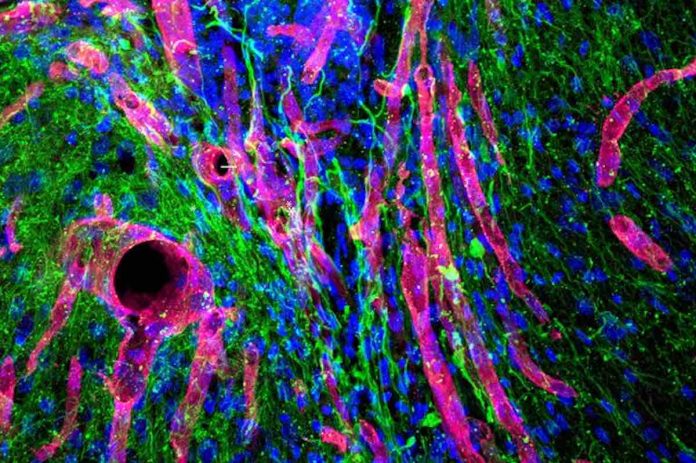
As a means of filling these stroke-induced cavities in the brains of mice, the researchers applied a gel-like biomaterial that formed a kind of scaffolding into which new neurons and blood vessels could grow.
The gel is also infused with medications that stimulate blood vessel growth and suppress inflammation, since inflammation results in scars and impedes functional tissue from regrowing.
After 16 weeks, the stroke cavities contained regenerated brain tissue, including new neuronal connections — a result that had not been seen before. The gel was eventually absorbed into the body, leaving only healthy tissue behind; and the mice’s ability to reach for food improved, a sign of improved motor behavior, although the exact mechanism for the improvement wasn’t clear.
“The new axons could actually be working. Or the new tissue could be improving the performance of the surrounding, unharmed brain tissue,” said Tatiana Segura, a former professor of chemical and biomolecular engineering at UCLA who collaborated on the research.
Regardless, the gel is being hailed as a revolutionary discovery for future stroke treatment. The researchers now plan on studying the gel’s efficacy for regrowing brain tissue long after the stroke has occurred.
Share The Exciting Breakthrough With Your Friends – Photo by UCLA Health
Fleet of autonomous boats could service some cities, reducing road traffic Researchers design 3-D-printed, driverless boats that can provide transport and self-assemble into other floating structures.
Written by Rob Matheson MIT News
The future of transportation in waterway-rich cities such as Amsterdam, Bangkok, and Venice — where canals run alongside and under bustling streets and bridges — may include autonomous boats that ferry goods and people, helping clear up road congestion.
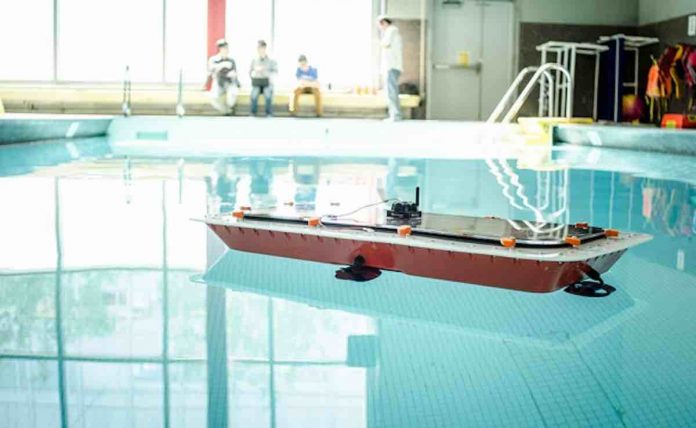
Researchers from MIT’s Computer Science and Artificial Intelligence Laboratory (CSAIL) and the Senseable City Lab in the Department of Urban Studies and Planning (DUSP), have taken a step toward that future by designing a fleet of autonomous boats that offer high maneuverability and precise control. The boats can also be rapidly 3D-printed using a low-cost printer, making mass manufacturing more feasible.
The boats could be used to taxi people around and to deliver goods, easing street traffic. In the future, the researchers also envision the driverless boats being adapted to perform city services overnight, instead of during busy daylight hours, further reducing congestion on both roads and canals.
“Imagine shifting some of infrastructure services that usually take place during the day on the road — deliveries, garbage management, waste management — to the middle of the night, on the water, using a fleet of autonomous boats,” says CSAIL Director Daniela Rus, co-author on a paper describing the technology.
Moreover, the boats — rectangular 4-by-2-meter hulls equipped with sensors, microcontrollers, GPS modules, and other hardware — could be programmed to self-assemble into floating bridges, concert stages, platforms for food markets, and other structures in a matter of hours. “Again, some of the activities that are usually taking place on land, and that cause disturbance in how the city moves, can be done on a temporary basis on the water,” says Rus, who is the Andrew and Erna Viterbi Professor of Electrical Engineering and Computer Science.
The boats could also be equipped with environmental sensors to monitor a city’s waters and gain insight into urban and human health.
Better design and control
The work was conducted as part of the “Roboat” project, a collaboration between the MIT Senseable City Lab and the Amsterdam Institute for Advanced Metropolitan Solutions (AMS). In 2016, as part of the project, the researchers tested a prototype that cruised around the city’s canals, moving forward, backward, and laterally along a preprogrammed path.
The ICRA paper details several important new innovations: a rapid fabrication technique, a more efficient and agile design, and advanced trajectory-tracking algorithms that improve control, precision docking and latching, and other tasks.
To make the boats, the researchers 3D-printed a rectangular hull with a commercial printer, producing 16 separate sections that were spliced together. Printing took around 60 hours. The completed hull was then sealed by adhering several layers of fiberglass.
Integrated onto the hull are a power supply, Wi-Fi antenna, GPS, and a minicomputer and microcontroller. For precise positioning, the researchers incorporated an indoor ultrasound beacon system and outdoor real-time kinematic GPS modules, which allow for centimeter-level localization, as well as an inertial measurement unit (IMU) module that monitors the boat’s yaw and angular velocity, among other metrics.
The boat is a rectangular shape, instead of the traditional kayak or catamaran shapes, to allow the vessel to move sideways and to attach itself to other boats when assembling other structures. Another simple yet effective design element was thruster placement. Four thrusters are positioned in the center of each side, instead of at the four corners, generating forward and backward forces. This makes the boat more agile and efficient, the researchers say.
The team also developed a method that enables the boat to track its position and orientation more quickly and accurately. To do so, they developed an efficient version of a nonlinear model predictive control (NMPC) algorithm, generally used to control and navigate robots within various constraints.
The NMPC and similar algorithms have been used to control autonomous boats before. But typically those algorithms are tested only in simulation or don’t account for the dynamics of the boat. The researchers instead incorporated in the algorithm simplified nonlinear mathematical models that account for a few known parameters, such as drag of the boat, centrifugal and Coriolis forces, and added mass due to accelerating or decelerating in water. The researchers also used an identification algorithm that then identifies any unknown parameters as the boat is trained on a path.
Finally, the researchers used an efficient predictive-control platform to run their algorithm, which can rapidly determine upcoming actions and increases the algorithm’s speed by two orders of magnitude over similar systems. While other algorithms execute in about 100 milliseconds, the researchers’ algorithm takes less than 1 millisecond.
Testing the waters
To demonstrate the control algorithm’s efficacy, the researchers deployed a smaller prototype of the boat along preplanned paths in a swimming pool and in the Charles River. Over the course of 10 test runs, the researchers observed average tracking errors — in positioning and orientation — smaller than tracking errors of traditional control algorithms.
That accuracy is thanks, in part, to the boat’s onboard GPS and IMU modules, which determine position and direction, respectively, down to the centimeter. The NMPC algorithm crunches the data from those modules and weighs various metrics to steer the boat true. The algorithm is implemented in a controller computer and regulates each thruster individually, updating every 0.2 seconds.
“The controller considers the boat dynamics, current state of the boat, thrust constraints, and reference position for the coming several seconds, to optimize how the boat drives on the path,” Wang says. “We can then find optimal force for the thrusters that can take the boat back to the path and minimize errors.”
The innovations in design and fabrication, as well as faster and more precise control algorithms, point toward feasible driverless boats used for transportation, docking, and self-assembling into platforms, the researchers say.
A next step for the work is developing adaptive controllers to account for changes in mass and drag of the boat when transporting people and goods. The researchers are also refining the controller to account for wave disturbances and stronger currents.
“We actually found that the Charles River has much more current than in the canals in Amsterdam,” Wang says. “But there will be a lot of boats moving around, and big boats will bring big currents, so we still have to consider this.”
The work was supported by a grant from AMS. Co-authors on the paper are: first author Wei Wang, a joint postdoc in CSAIL and the Senseable City Lab; Luis A. Mateos and Shinkyu Park, both DUSP postdocs; Pietro Leoni, a research fellow, and Fábio Duarte, a research scientist, both in DUSP and the Senseable City Lab; Banti Gheneti, a graduate student in the Department of Electrical Engineering and Computer Science; and Carlo Ratti, a principal investigator and professor of the practice in the DUSP and director of the MIT Senseable City Lab.
People are obsessing over this video of a dentist and his young patient – and it’s for very good reason.
Dr. Eyal Simchi from Riverfront Pediatric Dentistry in New Jersey recently uploaded a video of himself enchanting a toddler with a “magic” ball of light.
The technique is just one of Simchi’s many methods to make children feel less scared of the dentist’s office. From blowing bubbles to magic tricks and stuffed animals; it’s pretty clear to see that his “no-tear” techniques work pretty well.
Since he uploaded the video to Facebook last week, it has been viewed over 17 million times. Not only is the youngster delighted by the trick, but hundreds of other adults watching the clip are puzzled by the illusion.
We don’t want to spoil the secret, so we’ll keep the answer to ourselves. But just because it isn’t real magic, it doesn’t make the video any less adorable.
(WATCH the adorable video below)
Share The Sweet Video With Your Friends – Photo by Dr. Eyal Simchi