All News - Page 960 of 1764 - Good News Network
Home Blog Page 960

Buckwheat Wildflower Discovered 69 Years After Disappearing

buckwheat-750x-soquelnursery

Botanists have discovered a patch of Mount Diablo buckwheat, a species previously thought to be extinct, near Antioch, California.

The pink wildflowers are growing in the 6,000-acre Black Diamond Mines Regional Preserve. They’re considered a critically endangered variety. After 69 years of presumed extinction, a small amount was discovered in Mount Diablo State Park in 2005. The discovery of this cluster is a heartening sign for scientists.

MORE: Wisconsin Man Plants 4-Mile Stretch of Sunflowers in Tribute to Late Wife

“It’s a really exciting discovery because the previous place where they found this plant was a small location, and the biggest number of plants there on any given year was 100. This is almost 2 million plants. We’re super excited about it,” said Michele Hammond, a botanist with the East Bay Regional Park District.

For the last decade or so, experts have been trying to cultivate the plant by collecting seeds, but this has proved difficult. According to officials, 80,000 seeds were planted in one site on Mount Diablo, but only 200 plants actually grew. They hope this new discovery will help spur reintroduction efforts.

RELATED: Husband Plants Field of Flowers for Blind Wife to Smell, So Spectacular it Gets Visitors

“The Antioch population is a great discovery. Its habitat is quite different from the 2005 rediscovery site, and provides valuable information for efforts to develop new populations,” said Holly Forbes, curator and conservation officer at the University of California, Berkeley’s Botanical Garden (Peter Fimrite, San Francisco Chronicle, Sept. 8).

Reprinted with permission from E&E Publishing

Let The Positivity Bloom: Click To Share – Photo by Soquel Nursery

12-Year-old Creates First App to Help Alzheimer’s Patients Keep Track of Things

Emma Yang and Grandma-Released

Emma Yang had become increasingly frustrated trying to communicate with her grandmother suffering from Alzheimer’s disease.

The teen had a hard enough time keeping in touch because of the distance between her home in New York and her grandma in Hong Kong.

After the elderly woman forgot Emma and her dad’s birthdays, the cogs in her young brain started to turn – what if there was an app that could help dementia patients keep track of events, faces, dates, and information?

RELATED: ‘Lost’ Memories in Alzheimer Sufferers May Be Recoverable, Says Study

That’s when Emma created Timeless: the first app designed specifically for Alzheimer’s patients.

The innovative teen talked to dozens of elderly victims in order to create solutions for problems that already plagued every patient.

CHECK OUT: Discovery Promises New Treatments, Possible Prevention of Alzheimer’s

The app has lots of unique features, including a facial recognition algorithm that can assign names and relationships to pictures of loved ones; there is a Today section that has the time, date, weather forecast, and events listed in a comprehensive schedule, as well as a notification system that will let patients know if they are trying to call someone that they have already contacted in the last five minutes.

MORE: Kirk Douglas Gives $15 Million on 99th Birthday to Build Alzheimer’s Center

“The concept behind my idea is that we can allow technology to do what it’s good at, such as facial recognition, and use it to solve problems that we cannot solve ourselves,” Emma told Tech 50+. “The potential for technology to be able to help my grandmother, and others suffering from Alzheimer’s along the way, is what inspired me to create Timeless, because despite the difficulties of the illness, Alzheimer’s patient too should be able to cherish the timeless moments in life.”

The teen, who received one of the “Ten Under Twenty” innovation awards at the 2016 CE Week conference, is still in the development stages of the app with financial backing from the Michael Perelstein Discover Your Passion Scholarship awarded to her last year—but she hopes to release the app by the end of the year.

(WATCH the App demonstration below)

SHARE the Awesome Idea: Click To Share – Photo by Tech 50+

This Four-Foot Cat is the Biggest – and Most Lovable – in New York City (WATCH)

????????????bro, do you even lift cats? (That's my daddy @splurt @splurttech) NOT PHOTOSHOPPED!!! ????:@thewestisblue

A photo posted by SAMSON AKA CATSTRADAMUS (@catstradamus) on


This gentle giant has more heart than he does fur.

Samson the cat has gained internet fame for being the biggest cat in New York City, weighing in at 28 pounds and measuring 4 feet long.

Born 4 years ago as a healthy Maine Coon kitten, the pussycat has gathered almost 100,000 Instagram followers since his social media debut.

WATCH: Mysterious Cat Rescues Injured Tourist From Swiss Mountains

Samson’s owner Jonathan Zurbel pampers his pet with walks in his stroller and a personal groomer who is paid to $120 a week to watch after the fancy feline.

Though Maine Coons are the largest of the domestic cat breeds with distinct silky coats and intelligent, playful personalities, the average Maine Coon only weighs between 8 and 18 pounds.

POPULAR: How Mervin the Rescue Chihuahua Stole 30,000 Hearts on Instagram

(WATCH the video below)

Click To Share This Purrrrfect Story With Your Friends

This Teen And Her 82-yo Grandpa Are Going to College Together

student-and-grandfather-melanie-salazar

There’s no greater untruth than the notion that someone is too old for education–and Melanie Salazar’s 82-year-old grandfather is perfect evidence of the contrary.

Rene Neira has been studying economics since the 1950s, but he decided to put his degree on hold so he could get married and start a family.

Now the studious senior is going back to school with his 18-year-old granddaughter at Palo Alto College in San Antonio, Texas.

RELATED: They Wanted Her to Undergo Cancer Treatment, But 90-yo Hits The Road Instead

The two have become university celebrities since Melanie’s photo of the duo made its debut on Twitter, inspiring thousands of retweets.

“I think people are very drawn to him because this is an every-day person—an 82-year-old person— who isn’t giving up on their education,” Salazar told CBS News. “He’s determined to get his degree. It’s been awesome knowing how something that seems so normal to me is so out-of-the-ordinary and extraordinary to everyone else.”

LOOK: Elderly Folks Who’ve Said ‘Hell No’ to Old-People Clothes

Neira plans on graduating with his Associate’s degree before transferring to the University of Texas for his bachelor’s.

As for Melanie, she’s just happy to have a role model – and a friend – for her freshman year studying liberal arts.

You Don’t Need A Degree To Spread This Story Around: Click To Share – Photo by Melanie Salazar

Expansion of Yosemite Park Will Provide Crucial Habitat for Endangered Owls

yosemite-cc-toddwendy

Yosemite National Park gained 400 acres this week in the park’s largest expansion in nearly 70 years.

The new land is on the western side of the park and contains meadows, cedars and ponderosa pines. It is critical habitat for several endangered species, such as the willow flycatcher and a biologically unique population of 200 great gray owls.

Private landowners Robin and Nancy Wainwright sold the property to conservation nonprofit Trust for Public Land, which then handed it over to the park. The Wainwrights had owned the land since 2006.

RELATED: A 3,000-Mile Bike Path Will Soon Stretch From Florida To Maine

“This meadow is a remarkable gift to the American people, coming at a historic time as we celebrate the centennial of the National Park Service,” said Yosemite Superintendent Don Neubacher.

The Rim Fire in 2013 jeopardized negotiations for the land, as it burned a huge swath of land around the property.

MORE: National Parks Partner With Subaru to Get Landfill Trash to Zero

“The former landowners thought it was worth more than the appraisers we hired, but we were patient,” David Sutton, the Trust for Public Land’s California director, told the Los Angeles Times. “No one can drive past this property without stopping and saying, ‘Wow. Isn’t that gorgeous?'”

Reprinted with permission from E&E Publishing

Spread The Good News: Click To Share – Photo by ToddWendy, CC

Supercars That Assemble Like IKEA Furniture Will Deliver Aid All Over Africa

ox-truck-cropped-global-vehicle-trust

The sleek, black bookcase in your living room might have demanded too much time–and frustration–to be worth it, but what if you could end up with a car as a result of that patient assembly?

Meet the Ox – the world’s first flat-pack car that can be assembled by 3 people in under 12 hours.

Crossing the treacherous African wilderness in a vehicle has always proved difficult for all kinds of expensive, heavy-weight models on the market – that’s why supercar genius Gordon Murray created this 2-wheel drive, all-terrain vehicle built entirely out of lightweight Scandinavian engineered plywood. The material is built to carry up to two tons of cargo and withstand the rocky roads of this continent.

MORE: Man Creates ‘Shoes That Grow’ So Poor Kids Don’t Outgrow Them

Though the assembled prototype is about the same size as the Ford Focus, the automobile’s size—when shipped in parts—amounts to a fraction of its eventual height, allowing more vehicles to be transported easily to areas in need. A regular shipping container, for instance, can carry only two regularly-sized motor vehicles versus six flat-pack trucks.

Best of all, the hit British TV show Top Gear confirmed that no special tools are required for assembly and, with characteristic glee, declared the vehicle to be unbreakable.

Photos by Ox
Photos by Ox

RELATED: Colombians Are Building Houses Made of Wasted Plastic—Shaped Into Huge Lego Bricks

Gordon Murray designed the Ox especially for the Global Vehicle Trust to manufacture and distribute. Though the prototype still needs more funding to mass produce, the cheap, revolutionary cars are expected to deliver thousands of tons of food, clean water, medicine, and aid into remote impoverished areas of Africa.

Drive This One To Your Friends: Click To Share

EPA Takes First Steps in Cleaning Toxic Mines in Navajo Nation

navajo-nation-land-cc-wolfgang-staudt

The U.S. Environmental Protection Agency started accepting bids this week to assess and plan a $1 billion cleanup of abandoned uranium mines on Navajo reservations.

The agency expects to spend $85 million on the planning stages, which would come from the $1 billion settlement with Kerr-McGee Corp., the operator of the mines in the southwestern US.

MORE: Farmer Returns 700 Acres of California Coast to Native American Tribe

The roughly 50 mines are scattered across Arizona, New Mexico, and Utah, and could contain dangerous levels of gamma radiation.

“This is only one element of a much larger project since 2008,” said Clancy Tenley, the EPA official who is directing the cleanup program in the Navajo Nation. “EPA and five other agencies have invested more than $100 million in cleaning up and assessing abandoned mines on the Navajo Nation.”

RELATED: China Fights Water Pollution, Bans Paper Mills and Oil Refineries

Out of the more than 500 abandoned mines in the region, tribal and federal officials have determined that these 46 mines are in the worst shape, according to the Arizona Republic.

Reprinted with permission from E&E Publishing

Clean Up Negativity: Click To Share – Photo by Wolfgang Staudt, CC

Tasmanian Devils Are Adapting to Fight Debilitating Cancer

Malenkov in Exile, CC license

Tasmanian Devils-CC Malenkov in Exile

A genetic variation among some Tasmanian devil populations may be helping the endangered species shake off a fatal and contagious cancer.

The cancer has cut Tasmanian devil numbers by 80 percent.

Now, scientists writing in the journal Nature Communications believe a genetic variation present among isolated populations in Tasmania is making the species cancer-resistant.

RELATED: Manatee Population Has Rebounded 500 Percent, No Longer Endangered

Researchers reported that two sections of the genome — each related to the immune system and cancer risk — were morphing quickly.

The changes occurred so fast that biologists said they were not mutations but rather adaptations that are becoming more frequent as the devils try to fight off the disease (Nicholas Bakalar, New York Times, Sept. 2).

Reprinted with permission from E&E Publishing

Click To Share This Hopeful Headline With Your Friend – Photo by Malenkov in Exile, CC

Check Out These 10 Incredible Youths Spreading Peace Around The World


So often we see angry young people in conflict. Here are 10 who are peace-building:

Emma Watson, UK. Actress Emma Watson became a UN Ambassador for Goodwill at the age of 24. When her speech for the HeforShe campaign went viral her passion for women’s rights rsonated with advocates around the world. (Photo by Kingsley Huang, CC)

victor-ochen-cc-us-institute-of-peace

Victor Ochen, Uganda. Victor grew up surrounded by conflict in the Lira district in northern Uganda, but he chose to be a peace activist. He was nominated for the Nobel Peace Prize and is a UN Global Goals Ambassador. His organization, the African Youth Initiative Network (Ayinet), helps thousands of victims of the Ugandan civil war get treatment and overcome the traumas of the war. (Photo by U.S. Institute of Peace, CC)

nino-nanitashvili-exchanges

Nino Nanitashvili, Georgia. Nino has dedicated her career to peacebuilding and development through evolving technologies. She founded the first technology-oriented professional community in Georgia and directs a project that brings Georgian and Abkhazian youth together through online games. (Photo by the Bureau of Educational and Cultural Affairs)

chris-eigeland-unyouth

Chris Eigeland, Australia. Chris is the Australian youth representative to the UN, founder of The Schoolbag initiative, and director of Global Voices – a not-for-profit providing pathways for young Australians to contribute to international diplomacy. (Photo by UnYouth)

omang-agarwal-your-commonwealth

Omang Agarwal, India. Omang is the Asia Representative for the Commonwealth Youth Peace Ambassadors Network. He founded Youth for Peace International and is a big believer in peace through education. (Photo by Your Commonwealth)

khalida-brohi-tedx

Khalida Brohi, Pakistan. Khalida is the founder of Sughar Women (now Sughar Empowerment Foundation), a nonprofit empowering women in 23 villages across Pakistan. Through a six-month course with Sughar, women gain business skills and graduates get small loans to start businesses and help connecting to markets. (Photo by TEDX)

ahmad-shakib-mohsanyar-kelsey-brannan-ecapasc-us-department-of-state

Ahmad Shakib Mohsanyar, Afghanistan. Ahmad wants to counter the narrative that youth need to leave Afghanistan to improve their lives. He founded a social media campaign titled “Afghanistan Needs You”, which strives to make Afghanistan a better place for young people. (Photo by Kelsey Brannan ECAPASC US Department of State)

esraa-al-shafei-tedx

Esra’a Al Shafei, Bahrain. Esra’a is an advocate for freedom of speech and civil rights. She founded Mideast Youth, an online forum that amplifies the voices of dissent in the Middle East and North Africa, to promote social justice. (Photo by TEDX)

ahmad-shakib-mohsanyar-kelsey-brannan-ecapasc-u-s-department-of-state

Basel Almadhoun, Palestinian Territories. Basel believes debates can change people’s ways of thinking, so he organises debates in Gaza. He received wide-spread media attention for his work organizing TEDx talks in Gaza to bring dialogue to a wider audience. (Photo by Kelsey Brannan, ECA/PASC, U.S. Department of State)

malala-and-shiza-shahid-twitter

Malala Yousafzai and Shiza Shahid, Pakistan. You have no doubt heard of Malala, the young woman shot by the Taliban who went on to found The Malala Fund, but you also need to know about the fund’s co-founder and CEO Shiza. She has been beside Malala through it all, and is a driving force behind the fund’s good works. (Photo by Shiza Shahid)

All around the world, youth like these are working for peace right now to build a better future.

Reprinted with permission from Peace News.

Get Your Friends Inspired – Click To Share

Police Help Boy with Cerebral Palsy Complete Bucket List Journey

bamaga-police-youtube

This 9-year-old’s dream adventure almost didn’t come true because of his parents’ injuries – until the local police force stepped in to help.

Sidney Cook has always wanted to go to the end of Cape York – the very northernmost tip of Australia.

But since he is wheelchair-bound because of his cerebral palsy, it was up to his parents to get him there.

MORE: Instead of a Second Protest, Black Lives Matter Joins Police For a Barbecue

The trip, however, didn’t look possible after his mom had surgery on her knee and his father started suffering from a back injury.

The parents sent out a plea for help on Facebook where – 15 minutes later – Acting Senior Constable Talina O’Brien of the local Bamaga police department in Queensland offered her assistance.

On the day of the adventure, one of the town residents brought a specially made chair for Sidney that would allow the officers to carry him over the trails.

WATCH: Police Surprise Drivers with Ice Cream Instead of Tickets

Four police each grabbed a corner of the travel throne, and they were off across the Cape.

Boys in blue who had their days off even showed up to lend a hand.

At the very end of the peninsula, there is a sign that reads: “You are standing at the northernmost part of the Australian continent”. Standing next the sign, was a television crew waiting to surprise and welcome the travelers.

RELATED: Photo of Citizens Guarding the Police Brings Needed Hope

Sidney was overjoyed.

“It was an awesome day for all of us and an absolute privilege to be a part of this journey,” said Constable O’Brien in a statement. “Sidney might be paralyzed from the waist down but he has a massive heart and an even bigger smile. He told us that he loves soccer and music but nothing compares to adventuring with his mum and dad.”

(WATCH the sweet video below)


Multiply The Good: Click To Share – Photo by Bamaga Police Department

Teens Develop Revolutionary App That Will Teach Blind Children Braille

braille-app-and-tablet-youtube

This team of teens were shocked to learn that only 10% of blind people under the age of 18 could read braille – so they created the first app of its kind that could change the game for visually challenged children.

The app is designed to announce words and letters aloud for the blind user while it constructs the phrase in braille on a simulator. That way, the children can feel the way the sound is spelt on the gadget.

MORE: Breakthrough Treatment With Lab-Grown Corneas Cures Blindness in Sheep

The Aurora, Ontario teens received a $10,000 global innovation award in order to continue development while they receive mentorship from the Digital Media Zone, a business incubator at Ryerson University.

(WATCH the video below)


Click To Share The Genius With Your Friends

Watch the Barcelona Youth Soccer Team Console the Losing Japanese

youth-soccer-teams-youtube

These footballers may not even be teenagers yet, but that hasn’t tarnished their sense of sportsmanship in the slightest.

The Barcelona youth soccer team were playing a game against the Japanese in Tokyo for the U-12 Junior Soccer World Challenge 2016 in August.

The Spanish players won with a spectacular 1-0 victory, but they couldn’t help but notice that their triumph came at a price: the Japanese players were crushed.

LOOK: Burned as a Boy, 11-Year-old Monk Wants to be ‘Greatest Lama’

After their defeat, some of the children were crying, shaking, or simply crumpled on the ground in heartbreak.

That’s when Barcelona showed that they were not only talented, but kind-hearted as well.

(WATCH the video below)


Kick This Story Over To Your Friends – Click To Share

Beloved Town Dog Has Made 4-Mile Trek Every Day For 10 Years Just to Visit Neighbors

bruno-the-dog-youtube

Bruno the dog may be old, but that doesn’t stop him from trotting four miles through the countryside every day just so he can say hello to everyone in town.

Ever since Bruno was brought to Debbie and Larry LaVallee as a puppy twelve years ago, the adventurous pooch could not be tied down.

The couple became accustomed to the dog’s disdain for containment, so the canine is renowned for roaming free in order to say hello to all of his friends – his friends being everyone in Longville, Minnesota.

WATCH: Couple Drive 2000 Miles Cross Country to Adopt Blind Dog

His first stop during his daily visit is the butcher shop where the workers always treat him to some leftover scraps of meat

Then he makes his rounds to the gas station, city hall, the library, and the ice cream shop where all the residents stop to give him some love.

RELATED: How Mervin the Rescue Chihuahua Melted 30,000 Hearts on Instagram

As a matter of fact, everyone is so enamored with the elderly canine, that they recently erected a wooden statue of the mascot along with a Facebook page reporting all of Bruno’s most recent adventures.

Many of the residents will even give Bruno a ride home in order to save his joints from walking the 4 miles back.

(WATCH the video below)


Click To Share This Sweet Story With Your Friends

Check Out Our Favorite Hairdos From The Beard and Mustache Championships

@GregAnderson
Photo by @GregAndersonPhoto

If you think 2016 has been pretty wild and wooly already, wait till you see the competitors of this year’s National Beard and Mustache Championship competitors.


incredibeard-greg-anderson
Photo by @GregAndersonPhoto

Shot by Las Vegas-based commercial photographer Greg Anderson, the competition featured some pretty hairy categories like Best Dali Mustache, Best Fu Manchu, Best Sideburns, and Best Imperial Mustache.


pointy-facial-hair-greg-anderson
Photo by @GregAndersonPhoto

This was Greg’s third time in four years photographing the championship and he says it gets better every time.


Photo by @GregAndersonPhoto

“I went in loving the style, eccentricity and photogenic nature of the competition and now I love the guys that show up year after year, have a great time, and let me hang out even though I just have a poorly maintained ‘business beard’,” Greg told the Good News Network. “It’s a great group I hope to keep photographing and drinking beer with for a long time to come.”


Photo by @GregAndersonPhoto

This competitive display of masculinity took place on Labor Day weekend in Nashville, Tennessee.

Click To Share These Curly Creations With Your Friends – Photos by Greg Anderson

Simple Blood Test Could Detect Cancer Ten Years Before Symptoms Show

blood-test-cc-aldenchadwick

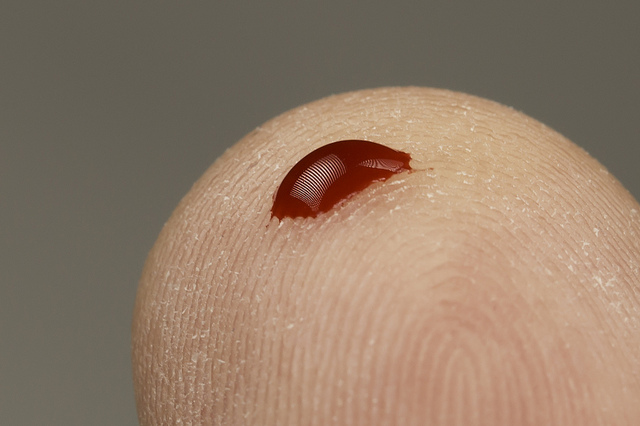
Now getting tested for cancer at the doctor’s could be as simple as a little prick of the finger – and it could save your life up to ten years in advance, before symptoms even start to show.

A team of researchers at the Swansea University in Wales have discovered that they can now recognize when a patient will develop cancer because of a mutation that occurs in blood cells.

Using a simple test that tracks down the mutated cells, doctors can now detect the illness in someone’s blood stream even if won’t develop for years.

RELATED: ‘Lost’ Memories in Alzheimer Sufferers May Be Recoverable, Says Study

Professor Gareth Jenkins, who led the study, said: “The test can be likened to a cancer smoke detector because a smoke detector does not detect the presence of fire in our homes but it’s by-product – smoke. This test detects cancer by detecting the ‘smoke’, the mutated blood cells. The old adage of no smoke without fire also applies to ‘no cancer without mutation’ as mutation is the driving force for cancer development.”

The figurative ‘smoke detector’ has so far only been used to look for cancer in the oesophagus, due to victims’ low survival rates from not recognizing symptoms in time for treatment, but researchers are confident that the test will work just as efficiently with other forms of the disease.

MORE: Geneticists Uncover Major Clue To Understanding Schizophrenia

The $46 test is currently undergoing trials of detecting pancreatic cancer, and researchers are predicting that the life-saving procedure could be available to the public in just 5 years.

Though the test is simple, cancer treatment is always more effective when initiated as soon as possible, making this easy procedure a discovery that could save thousands of lives.

Spread The New: Click To Share – Photo by AldenChadwick, CC

New Guidelines Will Push Landfills to Convert Their Emissions into Electricity

US-Landfill-UNPhoto-CC-Flickr

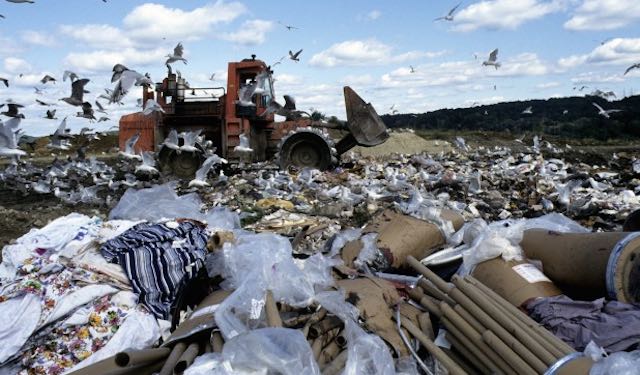
U.S. EPA is turning its focus to one of the more silent contributors to climate change: America’s landfills.

The agency released a revised set of guidelines in July that’s meant to push landfill owners into cutting down on methane emissions. These guidelines address a key component in the climate mitigation strategy, since all large waste disposal sites emit landfill gas — a potent mix of carbon dioxide, methane and other toxics.

Almost 20 percent of methane emissions generated by human activity in the country comes from landfills.

The guidelines introduce a new emissions threshold under which landfill owners will be held accountable for setting up their own mechanisms to prevent harmful gases from being released into the atmosphere. While environmentalists are applauding the move, others worry that a combination of tightening regulations and poor cost analysis by EPA might put some smaller landfills out of business.

RELATED: Colombians Are Building Houses Made of Wasted Plastic—Shaped Into Huge Lego Bricks

“We thought that the EPA costs were low, to be honest,” said Pat Sullivan, senior vice president at SCS Engineers, an environmental consulting firm. “We didn’t think they did a good job of recognizing [the differences in cost] when you’re looking at smaller landfills. They used the data they had, which was submitted to them from the larger facilities.”

Essentially, the emissions guidelines have introduced a new threshold beyond which landfill owners will be held accountable for cleaning up their site’s emissions. The threshold is currently 34 megagrams a year of non-methane organic compounds (NMOCs) — a component of landfill gas against which EPA measures and regulates landfill emissions — lowered from a previous 50 Mg. The impact of this, according to EPA, will be a reduction of around 290,000 metric tons of methane a year by 2025: the equivalent of about 7.1 million metric tons of carbon dioxide.

CHECK OUT: Teenage Girl Turns Plastic Trash Into Million-Dollar Biofuel

EPA states that the new guidelines will have an annualized net cost of $54.1 million by 2025, calculated by estimating the cost of setting up, operating and monitoring gas collection systems and then offsetting this with the revenue from the electricity that can be generated with the gas. But some experts remain skeptical of this estimate.

According to Sullivan, the guidelines mean different things for different landfills. Some would probably have triggered the 50 Mg threshold at some point in the future, and for them, this simply means they’re going to have to put in their collection systems a little earlier.

MORE: California Breaks Solar Record, Generates Enough Electricity for 6 Million Homes

But there are also some landfills that never would have hit the threshold. In the case of smaller ones, he says, adhering to these guidelines is probably going to be a more expensive task.

”The EPA’s position is that they evaluated the cost for both these scenarios, and that the reductions are still cost-effective at the threshold they’ve picked. But if you compare both, it’ll clearly be a more costly endeavor for smaller sites, and if you ask them, they’re probably going to have a different opinion,” he explained.

“It comprises of piping underneath and within the waste, with separate systems for landfill gas and leachate,” explained Daniel Hoornweg, an associate professor with the University of Ontario’s Institute of Technology. “You collect the gas with negative pressure — so you draw it in — and then you combust it. You can also clean it up and put it back into the natural gas grid system.”

MORE: Device Removes Trash Floating Near The Shore Before it Reaches Sea

Broken down into costs, however, it can amount to quite a bit. There’s the initial cost of putting in the main body of the system — which includes extraction wells and other points of collection, thousands and thousands of feet of piping that transfers the gas from these points to a common location, and then a landfill gas flare that destroys the methane and NMOCs. In landfills that convert the gas into energy, there’s additional equipment: engines and boilers, for instance.

For smaller landfill facilities, the amount of capital needed for this can be overwhelming. According to Sullivan, a system could easily cost a few million dollars to set up and $100,000 a year to maintain and operate.

RELATED: Carbon Pollution From U.S. Power Plants Hits 27-Year Low

“These aren’t the kind of systems that you install once and they continue operating on their own for 25 years,” Sullivan said. “Landfills are living, breathing beasts, and as waste settles, it can have an effect on equipment. Moreover, the equipment is exposed to the elements, like wind, rain, snow and fleet. The systems require constant maintaining and monitoring, and the new regulations have requirements of technicians on site, as well.”

So the cost of installing these systems is proportionally higher for smaller facilities. Take two examples: a 100-acre landfill and a 500-acre one. The larger landfill will require five times the number of collection points and a scalable amount of piping. However, when it comes to the control system, the difference isn’t fivefold.

CHECK OUT: Costa Rica Has Been Powered Only By Renewable Energy For 122 Days

“Even if I have to buy a flare that’s five times bigger, it will only be about 2 ½ times the price — and that’s a big chunk of the overall cost,” Sullivan said. “It’s the same when it comes to operation. The cost of maintaining the larger landfill will not be five times the cost of the smaller one. The economy of scale is with the larger one.”

Moreover, a smaller landfill’s income is directly linked to its size, since its main source of revenue is through tipping fees — what a landfill charges for deposited waste. Larger landfills take in more waste — and more money.

So what can smaller landfill facilities do to offset the cost of setting up a gas collection system?

“If they’re really concerned about being able to comply with the rule, they have the opportunity to close,” said Anne Germain, the director of waste and recycling at the Environmental Industry Associations.

That isn’t the ideal situation. Landfill owners can also try adjusting their tipping fees to offset the cost of installing a collection system. But while there isn’t any cap on the tipping fee, Germain points out that landfills need to remain competitive, and increasing their fees too much will push waste haulers to other dumps.

The other option is to draw revenue from the gas collection system itself.

LOOK: Biology Professor Donates Beard to Help Clean Up Oil Spills, You Can Too

“Landfill owners have explored a variety of utilization options,” Germain said. “These include direct use, where they build a pipeline directly to a nearby industry and have them collect the gas, or it can be used to generate electricity. More recently, people have tried cleaning it up to pipeline quality and putting it into natural gas pipelines or to [compressed natural gas] quality, after which it’s used to fuel trucks.”

When these technologies were introduced, they tended to be cost-prohibitive for smaller landfills. But micro-turbine technology has made them more affordable.

“It’s more economical for them to be able to enter the market,” Germain said. “Of course, much of this is highly dependent on the cost of fuel — and gas prices are currently down — but one of the nice things about natural gas is that it’s considered a renewable energy, and so there’s an opportunity for it to be sold at a little bit of a premium.”

Reprinted with permission from E&E Publishing

Clean Up The Negativity: Click To Share – Photo by Flickr, CC

Number Of Hungry US Kids Drops To Lowest Level Since Before Recession

robert-lee-food-saving-CNNheroes-Youtube

The number of Americans struggling to get enough to eat last year showed a big decline, according to a new report that revealed good news–especially for children.

The government agency USDA, which provides food and nutrition assistance programs for low-income households, says the estimated percentage of U.S. households that were food insecure in 2015 declined significantly, continuing a downward trend from a high of 14.9 percent in 2011 to 12.7 percent last year.

The number of children experiencing food insecurity during the year dropped almost two percent from 2014.

RELATED: “Uber Against Hunger” Delivers Unused Food To Needy, Hits Milestone

Only 59 percent of food-insecure households in the survey conducted by the U.S. Census Bureau reported that in the previous month, they had participated in one or more of the three largest Federal nutrition assistance programs (SNAP; Special Supplemental Nutrition Program for Women, Infants, and Children (WIC); and National School Lunch Program).

WATCH: 12-Yr-Old Opens Food Pantry, Gets Huge Surprise From Huge Food Manufacturer

The 2015 food security survey covered 39,948 households comprising a representative sample of the U.S. civilian population of 125 million households.

SHARE the Positive Trend… (Photo: CNN Heroes) 

Single Mom Disguises Herself as a ‘Dad’ So Son Won’t Feel Left Out

yevette-vasquez-facebook

This single mom wasn’t afraid to butch up if it meant her sweet child wouldn’t feel left out on Donuts for Dads Day.

Yvette Vasquez was dropping her son Elijah off at Sue Crouch Intermediate School in Fort Worth, Texas when she noticed that there were more cars in the parking lot than usual.

When she asked why, Elijah explained it was because there was a special parenting event – but it was for dads only.

WATCH: 82-Year-old Woman Finally Finds Long Lost 96-yo Birth Mother

Noticing the sad look on the boy’s face, Yvette insisted they drive the 7 minutes back to their home so she could be his father for the day.

One plaid shirt, fake mustache, and spritz of cologne later, ‘Mr. Vasquez’ was escorting her son into the school weather they liked it or not.

MORE: Grandfather Donates Kidney, Sparks Idea for Voucher Program That is Spreading Life

However, not only did most of the fathers there applaud her courage, but her Facebook photos with the hashtags #WeGettingThemDonuts and #ILoveHim became an instant hit with parents everywhere.


Multiply The Good: Click To Share – Photos by Yvette Vasquez

Old New York City Toilets Used to Reintroduce Oysters

oysters-cc-editor-b

New York City officials announced a plan yesterday to restock New York Harbor with oysters using old toilets to create their habitat.

Mayor Bill de Blasio (D) and the New York City Department of Environmental Protection said porcelain from 5,000 recycled toilets will be installed to provide oyster beds and breeding grounds. Fifty thousand live oysters will also be lowered into the sea.

MORE: Seafood Lovers Rejoice – Chesapeake Blue Crabs Rebound Like Crazy

Oysters once thrived in the city’s waters. Scientists estimate half the world’s oysters once lived in New York Harbor through the 17th century.

Their populations declined from pollution, and Dutch colonists began overharvesting them.

Officials note that oysters returned to New York Harbor on their own in the past few decades, after the passage of the 1972 Clean Water Act led to healthier waterways. But de Blasio’s office still labeled the species “functionally extinct.”

RELATED: World’s Largest Vertical Farm Near NYC Uses 95% Less Water and No Pesticides

The mollusk deposit will provide a boon to local ecosystems.

“This oyster bed will serve multiple purposes — protecting our wetlands from erosion, naturally filtering our water and providing a home for our sea dwellers are just a few,” said de Blasio in a statement (Ben Guarino, Washington Post, Sept. 7).

Reprinted with permission from E&E Publishing

Isn’t This Story A Pearl? Click To Share – Photo by Editor B, CC

Animal Lovers Rejoice! There’s Now a Wine For Your Furry Friends

cat-with-wine-apollo-peak

After you’ve had a long day at the office and all you want to do is crack open a bottle of red in order to properly relax and close out the evening, you now no longer have to worry about finding a drinking partner to accompany your habits.

This 100% organic, non-alcoholic wine is created in the foothills of the Colorado mountains by a pet pampering company known as Apollo Peak.

MORE: Dogs Can Now Join NYC Diners at Outdoor Tables, Say New Rules

Whether you’re a cat owner who can’t find the right companionship in humans anymore, or a dog owner who just wants to have some fun with their pooch, anyone can empathize with this company’s motto: why drink alone when you can drink with the special somebody that has always understood you?

The two feline flavors, Pinot Meow and MosCATo, are infused with salmon oil, organically grown beets, and catnip, making for a sweet treat for any pussycat in your home.

RELATED: Woman Reads to Shelter Dogs to Ease Their Loneliness—And Her Own

The dog wines, CharDOGnay and Zinfantail, are not just tasty – the natural concoction of ingredients can also help your dog relax and sooth digestion.

Spread The Pawesome News: Click To Share – Photo from Apollo Peaks