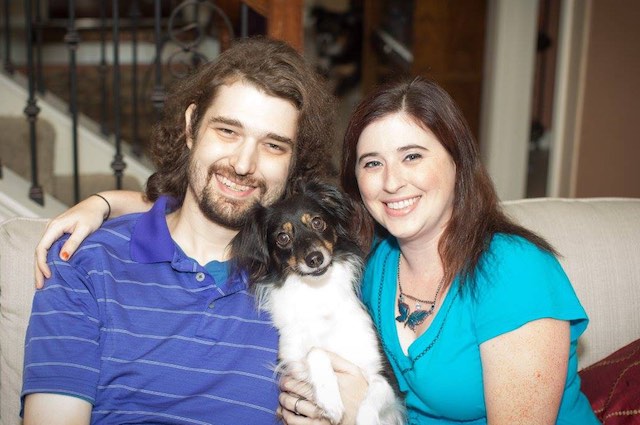










Over the weekend, an incredible 5,277 shelter pets found homes in a multi-state adoption event orchestrated by Maddie’s Fund, named for a cherished miniature schnauzer.
With it’s endowment of $300 million, the organization’s mission is to turn America into a “No-Kill Nation,” with one of its key events being the May 29-31 Pet Adoption Days. The unique catalyst sparking the adoptions is the promise of free grants to shelters for every animal that they can place. Grants ranging from $200 – $2,500 per animal helped incentivize adoption by covering the fee for prospective pet parents.
For pets who are harder to place, these adoption weekends can mean the difference between life and death.
“Senior pets and those with critical medical conditions, like those with diabetes or who have lost an eye or a limb, don’t get adopted as quickly,” said Sharon Fletcher, a spokesperson for Maddie’s Fund. “I just got off a call with someone who told me two of their pets who’d been there 6 months and a year finally got adopted last weekend.”
Co-founder David Duffield created the foundation in honor of his miniature schnauzer, Maddie, who offered him comfort while he built his now successful software business, Workday. Maddie’s legacy now lives on through the 31,000 companion animals around the country who have found homes thanks to her namesake nonprofit.
Maddie (photos courtesy of Maddie’s Fund)
“David loved that little dog so much, he wanted to give other people the opportunity to see what joy a companion animal can bring,” Fletcher told Good News Network. “When he got down on the floor and played with Maddie, he wasn’t stressed out about anything.”
Maddie’s fund also produces webcasts and educational programs within the organization, which are free to the public. The educational arm of the organization also invests in case studies, like how to most effectively raise awareness for adoption of harder to place pets.
Maddie’s Fund partners closely with the Humane Society of the United States and the Shelter Pet Project, among countless others. This year’s participating states included Nevada, Wisconsin, and six counties in California.
The Obama administration is teaming up with 150 private companies and groups to rein in antibiotics in the U.S. food supply.
During a White House summit on antibiotic use this week, voluntary pledges poured in from 150 food processors, restaurant chains, hospitals and drug companies to phase out the use of meat from animals treated regularly with antibiotics.
Scientists and medical doctors have consistently warned that the overuse of antibiotics in farm animals has decreased the effectiveness of “miracle drugs” that once were potent against bacterial infections.
The White House issued a memorandum directing the 350 federal government cafeterias nationwide to begin using low-antibiotic food starting the first of next year.
At the same time, companies ranging from Tyson Foods and Perdue, to McDonald’s and Chick-fil-A joined the effort to produce and provide low antibiotic meat to their customers in the private sector.
Wal-Mart is already asking it’s meat suppliers to make details of its annual antibiotic use public.
“This is music to our ears,” said Dr. Thomas Frieden, director of the Centers for Disease Control and Prevention.
Director Clint Eastwood will attempt to land yet another award-winning American Hero movie with a new film based on the life of US Airways pilot Chesley Sullenberger.
In 2009, shortly after take-off from LaGuardia Airport, Captain “Sully” Sullenberger’s jet flew into a flock of geese and lost both engines. With no power to stay airborne and no time to reach an airport, he steadily and expertly maneuvered the crowded jetliner over New York City and landed it in the Hudson River, saving the lives of all 155 people aboard.
It made Sully an instant hero, earning him the title “Captain Cool” from New York Mayor Michael Bloomberg.
Afterward, Sully was surprised by all the accolades that he received, but, he wrote, “I realize how this event had touched people’s lives, how ready they were for good news, how much they wanted to feel hopeful again… We’ve had a worldwide economic downturn, and people are confused, fearful and just so ready for good news. They want to feel reassured that all the things we value, all our ideals, still exist.”
Tech-giant Twitter is taking some of its poorest neighbors under its wing by providing computer skills training at its new “NeighborNest.”
The social media titan has opened a $3 million, 4,000-square-foot community center down the block from its headquarters in the Tenderloin District, one of San Francisco’s poorest neighborhoods.
Twitter employees will volunteer alongside professional social workers in order to help parents search for housing and learn new computer skills. Their kids can either play in the child care center or get help with basic computing or learning to write code.
The company was offered a six-year tax break to invest in the community around their headquarters.
In addition to the NeighborNest, Twitter is investing another $3 million in grants to non-profit organizations serving poorer neighborhoods around the city.
(WATCH the video below from KGO News or READ more in The Chronicle) – Photo: KGO video
A retired policeman and his former foe have joined forces to provide jobs for ex-offenders.
Officer Ray Robakowski and former gang member Jacob Maclin were bitter enemies through multiple arrests over a decade. But that changed eight years ago when Maclin turned his life around — with Robakowski’s help.
The cop helped Maclin get a job with Community Warehouse — a Milwaukee non-profit home improvement business that puts ex-convicts to work while teaching them job skills.
Ironically, years later, when Robakowski went looking for something to do after he retired from the police force, he came to see the manager at Community Warehouse — it was his one-time enemy, and now long-time friend.
Together, they’ve helped more than a dozen former criminals turn their lives around.
(WATCH the CBS News video above or READ the story via the Bradley Foundation) – Photo: CBS video
I went to see my ponies out in the fields on Valentine’s Day. I told my partner I would only be gone for forty-five minutes, since I was only making a quick check on them, but when I got there, I decided it was such a nice day, I’d have a look around with my dog Tess for any dangers in the overgrowth.
Well I was about three quarters of the way around the field before I arrived at the bottom of a very steep hill. To my surprise, I found a sheep stuck on its back, completely tangled in brambles…. And somehow it was still alive!
Eventually I got it free from the brambles — not easy without gloves — but it was too weak to walk; it could barely lift its own head. I knew I had to get this sheep back up to the farm, but carrying her up the hill was difficult since to get a hold of her and it was about the size of my border collie Tess, except heavier! It was too big for me to put my arms around, but I managed by heaving her up by the scruff of the neck and hips.
About twenty minutes later with Tess hot on our heels, I was thankful to reach the top. We finally made it to the farm gate but it wouldn’t open and I had no more strength in my hands to undo it. I called my horses over; Tim – a 12.2hh fiery grey Welsh X who is always happy to stick his nose in all goings, and Foxy the 13.3 Highland Mare.
All photos submitted by Lucy Laing
“Foxy, I need your help: I need to get this sheep to the other gate. Will you please allow me to put it on your back and carry it over? It’s very ill and needs your help!” Yes, this is actually what I said to my horse. I’m sure she understood, because she gave me a trusting gaze and stood still. Up the sheep went and I asked Foxy to walk slowly and steadily (There was no head collar or lead rope, it was just 100% trust.) She walked as straight as an arrow to the other gate. The sheep kept kicking her side but she stayed calm. Foxy is a very sensitive horse so for her to ignore it was amazing.
Once at the other gate, I took the sheep off of Foxy and placed her onto a pile of hay. I still had at least 2 acres of field to go through to get the sheep back to the yard, but I knew that there was no possible way I could manage to carry her that far. Leaving the sheep (I had named it Juliet by that point) on some hay, I went to get a wheelbarrow to carry her to the farm.
When the farmer showed up, he looked at the dying sheep and knew from many years of experience that there was no hope for her. Sheep never fight to live. It’s a sad but true fact.
Juliet staid determined through the night to stay alive. I knew nothing about sheep, but I was ready to do anything to make sure this sheep survived. Tess cared for this her as much as I did, always going to lie next to her, or watching her balefully from afar.
That following week, she had more control of her head but still could not stand. I noticed that she wasn’t using her right hind leg, so I decided to phone a clinic. They informed me that since Juliet was still living, it probably wasn’t broken or dislocated since both of these are excruciating injuries and sheep will die because the pain is too much. The vet was impressed that I had gotten her to eat and drink, but told me not to get my hopes up.
By this point, I was more than attached to little Juliet. I had a friend who happened to be a sheep expert and she confirmed that a sheep will die if in the slightest pain, so I took on the responsibility of massaging Juliet’s legs twice a day, and the pleasant job of trimming her rear end. In an effort to get her to move, I was advised to start challenging her to move 30cm to reach her hay and water — sheep won’t use their legs unless you encourage them to.
I’d spoken to the farmer again and he said he would get one of his stable hands to make a frame for her to sit in that would let her feet move freely and strengthen the muscles. He congratulated me on my effort to nurse the sheep back to health, and said I could keep it if I wanted to. This definitely kept her off of the butcher’s list.
Over the weeks, Juliet had gotten used to Tess always wanting to be close to her, so I took a cute photo of them together and put it on Facebook, calling it “We’ll always be friends forever, wont we?” It spread fast and got over 4700 Likes. I couldn’t believe it, to be honest!
On March 10th, after being in her swing for 4 days, Juliet the sheep could walk by herself. She was wobbly at first, but I felt like a proud mom watching her child take its first steps. We reckon that Juliet was stuck for more than 2 days at the bottom of the hill — how a fox didn’t find her is amazing in itself. She is a true fighter who I have had the privilege to care for.
When Nibbles was just a duckling, he imprinted a little boy as his rightful parent. With no mother of his own, the animal needed a full-time caregiver–and he got one.
The daily adventures of Johnny and Nibbles range from diving in the kiddie pool to riding on bikes and wagons of all kinds.
Most adorable, though, is when mom takes Nibbles to the bus stop in her car, where the duck waits inside the window and longs for Johnny to return from school. Check out his excited reaction, in the video below, when he sees Johnny finally emerge.
The total number of people using drugs in Portugal has actually fallen by more than a third since the country began focusing on treatment programs instead of punishment.
In 2001, critics worried that drug addiction rates would skyrocket, but not only have they come down, heroin addiction rates have been cut in half.
HIV infections, which are spread by shared needles, have also been cut in half, while the number of drug-related deaths has been cut by 75%.
Under the decriminalization law, users are allowed to possess a 10-day supply of illicit drugs — anything from marijuana to heroin – and those who have more are sent before a three-person drug commission. The panel decides on a fine or treatment, but opts for treatment in four out of every five cases.
About 25 countries have reduced criminal penalties for drug use since Portugal changed its approach on illicit drugs from a criminal matter to one of public health.
The kids at Amber Watt’s Gigglez and Grinz Daycare in Murrayville always get super excited whenever they see the police drive by–and even more excited when they can get a wave out of them.
Imagine their elation when one officer got out of his squad car and sat down on the ground beside them.
“This will be a forever memory for these kids, and something I’m sure they will brag about forever. It was the day they had circle time on the sidewalk with a hero,” Watt wrote in a letter to the Langley Times.
The kids clung to every word British Columbia Const. Joel Shoihet uttered to make them feel special.
Looks like an effective solution to air pollution might be right under our feet.
Dutch scientists have completed a full scale year-long test of smog-eating concrete that shows certain kinds of air pollution being cut by as much as 45 percent.
When a key air pollutant, nitrogen oxides (NOx), are emitted from cars’ exhaust pipes and mixed with titanium oxide, a chemical reaction occurs when hit with sunlight, that turns the toxic gas into a harmless powder.
Scientists at Eindhoven University of Technology in the Netherlands sprayed concrete paving stones with titanium oxide and paved a city block with the stones. Under ideal weather conditions, the blocks “ate” up to 45% of the air pollution. Even with rain, clouds and snow blocking the sunlight, the daily average for the purifying pavement was a 19% improvement overall.
A stretch of road in Chicago made with the same chemical has been dubbed “America’s greenest street” and the University of California has created roofing tiles that work on the same principle.
Let’s hope more testing might lead to long highways prepared with the natural white substance, titanium oxide, which you might have used as a sunscreen or in white paints. In certain quantities and particle sizes the substance can be a health hazard, which is why more testing is needed. The substance also offers great potential for industrial waste water detoxification.
I believe most parents of kids with cancer would agree that there are an infinite number of stresses in this life of childhood cancer. Yet there were so many strangers that came into our lives who seemed to understand what we were going through.
Having lost our jobs, living on the generosity of others is scary. We didn’t live in the city so anytime our vehicle made an odd noise or we knew it needed repairs, I felt sick. The first time we took our van in to get fixed after her diagnosis, I chewed on my finger nails knowing how little money we had, yet having a way to get her to the hospital was paramount. I knew we could always call an ambulance, but true to how deep my worry went, “What if for whatever reason the ambulance couldn’t get to her? It was and is our job to protect her.”
So there I stood in front of the counter waiting to hear the total “damage” – I knew it would be over a thousand dollars.
But Dave handed me the keys and when I asked how much it was, he said not to worry about it– they looked after it.
Doing this once was truly shocking, but Dave and Chris from Ballymote Auto did it time and time again.
When hearing that a customer was getting rid of their van, which still had some miles left in it, they told this customer about us and before we knew it, we could breath again for awhile.
Submitted family photo
They continued to help us until we finally moved closer to hospital. We could never repay all they have done for us and if there is ever a time in our lives when we are in a position to impact their lives, the way they did ours, we will.
They helped us in a very difficult financial time, but they also reminded me just how much people care – that even if you cannot always count on those you call family, there are strangers that become friends, not out of obligation, but because they want to.
Ballymote Auto in Ballymote, Ontario, Thank you! From the bottom of our hearts!
“The James Gang” is officially patrolling the jungle gym at a Mankato, Minnesota elementary school, protecting one “special needs” boy from any more bullying.
When a group of James Willmert’s fifth-grade classmates saw that he was being teased at recess last fall, they made a pact to have his back, all year long.
Their teacher believes the school’s anti-bullying curriculum factored into the boys’ actions and resulted in kindness that has gone far beyond the classroom.
The boy, adopted from an orphanage in Colombia, now plays sports with his five new friends after school – an activity he’s never enjoyed before.
They even pitched in money to buy him a Playstation gaming system.
“He used to not want to go out for recess or anything, it would be like a struggle,” James’ mom told KARE-11 News. “And now he can barely eat his lunch to get outside to play with those guys.”
(WATCH the video above or READ the story from KARE-TV – *NOTE* the page auto-plays, so adjust your speakers)
File photo on homepage by Gonzalo Díaz Fornaro, CC
Kala the sun bear is so elated to be back in the forest, it’s unbearable!
Initially sold as an exotic pet as part of the illegal wildlife trade, Kala was rescued by the Bornean Sun Bear Conservation Center, who took her in earlier this year.
Now, the center is “teaching” her to be a wild bear again, and it looks like she is adapting pretty well. In fact, each lesson looks like a blissful experience.
Kala is sharpening the sun bear skills she’ll need to return to the wild, like how to climb trees.
She’s also learning to use her long, powerful claws to strip tree bark and look for termites — a favorite treat for sun bears.
All Photos via Facebook/Bornean Sun Bear Conservation Centre
“Kala is everything a cub should be – playful, inquisitive and sweet-natured,” the Center posted on the Bornean Sun Bear Conservation Center website. “Sometimes, she does not want to leave the forest.”
The center’s goal is to teach Kala everything she’ll need to live in the wild so that in a couple of years she will never have to leave the forest again.
Relax! You don’t have to hire a masseuse to reap the benefits of aromatherapy.
If you can get your hands on a bottle of lavender or cardamom extract, you’re well on your way to improving your mood, your health, and your immune system, according to a series of scientific studies.
These essential oils, derived from plants, can be used at home to create a relaxing aural experience while simultaneously treating a variety of ailments.
It’s a method that goes way back: a smattering of ancient civilizations, from the Egyptians to the Romans and the Chinese, have all used them for healing purposes.
Here’s how the science breaks down:
Scent receptors in your nose send messages to the amygdala and hippocampus (parts of the brain) that affect emotions and memories. The theory is that scent can influence these areas, and that some oils, like lavender, can soothe in the way that medications do when stimulating cells in certain parts of the brain.
Beware, though: many lotions, candles, and the like labeled as aromatherapy aren’t the real deal. For aromatherapy at its most pure, stick with the essential oils. You can the oil in a myriad of ways:
Just sniff it.
Dab it on a handkerchief to slide in your pillowcase.
Rub it on your skin in a circular motion, either on your temples, above the eyes, on the wrists, or on the neck.
Drop a few drops in the bathtub.
Inhale over a bowl of steaming water infused with a few drops.
Inhale this one, straight up. It’s said to be great for alleviating stress and good for your skin. It’s also widely used to treat urinary tract infections.
This one is kind of a grab bag. The flowery oil is used to boost libido, treat depression after childbirth, treat addiction issues and respiratory issues, and alleviate tension. Note: pregnant women should avoid this one.
This is the mac daddy of medicinal oils. Bergamot is believed to stimulate the liver and spleen to help with digestion, soothes skin ailments like eczema and psoriasis, and is also used treat depression and anxiety. Note: Stay out of the sun with this one on, or it will burn.
If you need a boost, this is the oil for you. Just a couple of whiffs could help you become more alert and energized. It’s also a mood booster, and is known to help calm irritated skin (and mood) and help folks breathe easier.
You’ve most likely come across this in cold remedies and cough drops, and for good reason. Distilled from the leaves and twigs of Eucalyptus trees, this extract decongests and has antiseptic and anti inflammatory properties. Rub this one in when you’ve got a headache, fever, or stuffy nose. Lavenderhas almost identical properties, if you prefer a less intense scent.
(Photo credits: (top to bottom) Bart Speelman, whirledkid, Tara Aveilhe, tdlucas5000, Joshua-Mayer, Juan Carlos Martins, Jean-Jacques Boujot, Pam Link – all via CC)
Wait ’til your friends get a whiff of this…. Share below
Have you heard the one about the guy who walks into a bar — and comes out with a new kidney?
It happened almost that quickly for Don Thomas, a regular customer at the Hooters restaurant in Roswell, Georgia. He was talking to a new waitress, Marianna Villareal, when he happened to mention he’d lost both his kidneys to cancer.
Villareal, 22, recently lost her grandmother to kidney disease, and even though she didn’t know the 72-year-old outside of work, she didn’t hesitate to offer him one of her kidneys.
She says she wasn’t able to do anything for her grandmother, but knew the transplant would be worth it if Thomas got to live a longer, happier life because of it.
(WATCH the WXIA News video below)
Photo by Mariana Tolentino, Twitter – Story Tip from Carilyn
Ex-convict David Potchen walked into a local small-town bank in Indiana and told the teller to give him all their money.
He walked out with $1,600 and sat down to wait for the police.
Potchen, who said he’d tried his best to earn a living after getting out of prison, wanted to go back to the place where he actually worked and earned money and didn’t have to sleep in the woods.
When Indiana Judge Clarence Murray heard the evidence, he offered Potchen an alternative to prison. Instead of sentencing the man to 13 years, Murray asked aloud in his courtroom if anyone could give him a job.
A local reporter wrote a story about it, and “the owner of a nearby trucking company decided it was time to show a little faith,” reports NBC News. “David Potchen is now a full-time welder, and a good one, too.”
Apparently he is about as happy and loyal as a worker could be.
(WATCH the NBC video, or READ the story from NBC News -NOTE* auto playing video, adjust your speakers)
With this “Big Bang” comes the creation of a new generation of scientists.
The cast and creative minds behind their hit TV show have announced “The Big Bang Theory Scholarship Endowment,” which has been funded with $4 million so far, to help students majoring in science and math at the University of California Los Angeles (UCLA).
“We have all been given a gift with ‘The Big Bang Theory,’” Chuck Lorre, the show’s co-creator and executive producer, said in a statement. “This is our opportunity to give back.”
Lorre, is funding most of the endowment along with gifts from about 50 other people — including several of the show’s stars. It’s the first time the cast and crew of a television series has endowed a scholarship at UCLA.
Even though the show is set at Caltech in Pasadena, California, the show has ties to UCLA. Actress Mayim Bailik earned her doctorate in neuroscience there and the show’s science consultant, David Saltzberg, is a UCLA physics and astronomy professor.
Remember the teen who unveiled an ambitious plan to clean up the plastic floating in the world’s oceans? Well, his invention is set to be deployed in 2016.
After completing a $2 million crowdfunding campaign last September, he is ready to launch the project off the coast of Tsushima Island, between the East China Sea and Sea of Japan.
The system of solar-powered floating booms and processing platforms were dreamed up by Boyan Slat when he was a 19-year-old first-year Aerospace Engineering student at TU Delft University in the Netherlands.
The 6,500 foot boom will be the longest floating structure ever put to sea and will spend at least two years collecting plastic trash floating in the Korea Strait.
People on the island are also looking into the possibility of using the plastic waste recovered by the system as an alternative fuel source.
A study published in the Proceedings of the National Academy of Sciences last year estimated there are 5.25 trillion pieces of plastic in the world’s oceans. Slat believes his system can collect almost half of this 77,000 tons of plastic within just 10 years.
His organization, The Ocean Cleanup, plans to deploy increasingly larger booms culminating in a 62 mile-long system that will tackle the Great Pacific Garbage Patch between Hawaii and California.
SHARE the Good Green News… (Photo from The Ocean Cleanup)
Fifty years after he charmed audiences with his goofy dance steps playing a chimney sweeper in “Mary Poppins,” Dick Van Dyke shows he still has the moves in a new music video.
The sprightly 89-year-old appears with his real-life wife, Arlene Silver, showing off his high-stepping moves in order to entice her to dance.
The music video is part of a new bluegrass album by Dustbowl Revival, which will be released July 21.