Barack Obama, his two daughters, and Michelle switched on the National Christmas Tree with some help from actress Reese Witherspoon and the musical guests.
Miss Piggy also made a special appearance reading “The Night Before Christmas” with Michelle Obama.
Following the shooting last Friday at a Colorado Planned Parenthood clinic when a gunman killed three people, including a police officer, and wounded nine others, one Christian pro-lifer decided to go into a local clinic 1,300 miles away–to apologize.
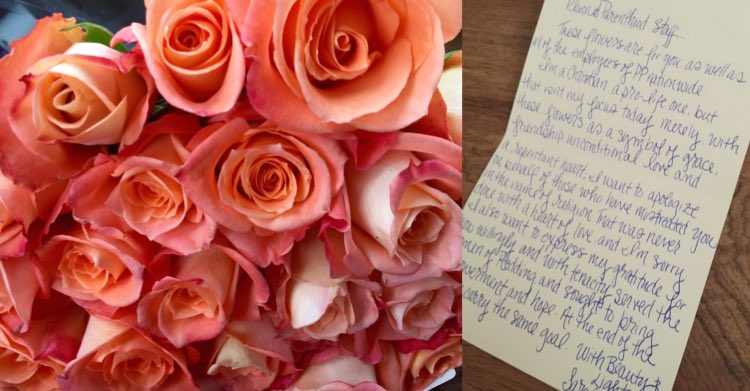
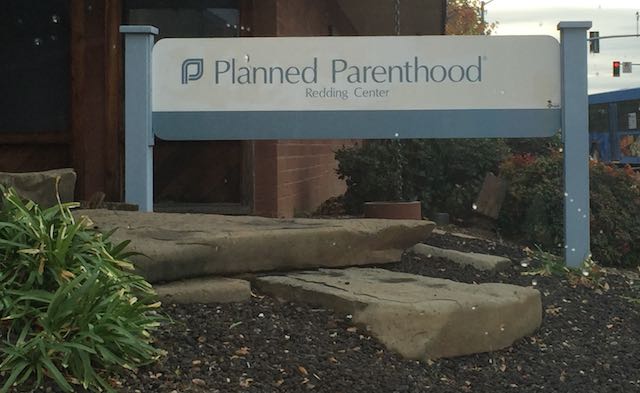
On Wednesday, Sarah Parker brought two dozen peach-colored roses to the Planned Parenthood clinic in Redding, California to say she was sorry, and to thank them for their work.
“I wanted to sincerely apologize as a pro-lifer for how they’re been treated in the name of God, as well as to celebrate them,” Parker told Good News Network after we contacted her. “Our driving motivator that women would have hope and be treated with respect and care is the same.”
When Parker got the idea to send the bouquet and card, it was completely out of the blue. A vision came to her and she saw herself walking up the front steps of Planned Parenthood.
Photos courtesy of Sarah Parker
“I was actually watching Netflix when it happened,” she recalled. “I had a picture coming to my head about three or four times and I knew I needed to do something about it. So I did.”
She says she didn’t do it to receive any kind of accolade, but hoped her gesture of reconciliation might lead to a conversation in their office about Christian ideals.
Her handwritten letter, which she simply left at the waiting room window with the roses before leaving, said this:
Planned Parenthood Staff…
These flowers are for you, as well as the employees of PP nationwide. I’m a Christian, a pro-life one, but that isn’t my focus today.
With these flowers as a symbol of grace, friendship and unconditional love and a repentant heart; I want to apologize on behalf of those who have mistreated you in the name of religion. That was never done with a heart of love, and I’m sorry.
I also want to express my gratitude for how willingly and with tenacity (you) served the women of Redding, and sought to bring empowerment and hope. At the end of the day, we carry the same goal.
With Beauty and Light, Sarah Parker
“I really just think it’s about having an unconditional love regardless of where people are at–because unconditional love is kinda a big deal and will always ignite restoration.”
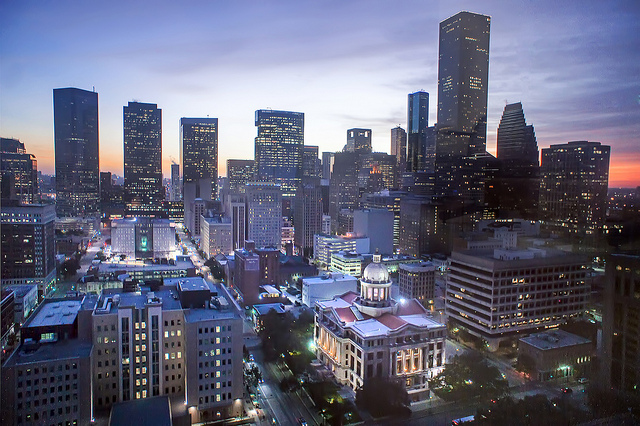
Thousands of homeless vets and their families have permanent roofs over their heads in Houston, Texas thanks to an aggressive effort to eliminate veteran homelessness.
At least 4,114 formerly homeless veterans, and their spouses and children, have been housed since 2012– which nearly cut in half the city’s homeless population.
Houston’s effort, dubbed “The Way Home,” takes the ‘Housing First’ approach — putting the homeless in permanent housing before tackling any underlying issues that led to their situation. The program allowed Utah to reduce homelessness by 91% over ten years.
2015 saw repeated milestones reached by those combating veteran homelessness: In January, New Orleans, Louisiana became the first city in the U.S. to eliminate it; Connecticut became the first state to end chronic homelessness among veterans in August; and Virginia, the first state to functionally eliminate it for all its veterans in November.
A monumental effort coordinated between more than 70 government, business, religious, nonprofit, and charitable groups to tackle the homelessness problem, earned Houston an award in December from the National Alliance to End Homelessness.
“Houston’s achievement shows what we can accomplish when we have the resources and the determination to change lives for the better,” Nan Roman, President and CEO of the Alliance, said.
(WATCH the video from Houston Homeless Org below) — Photo: Katie Haugland, CC
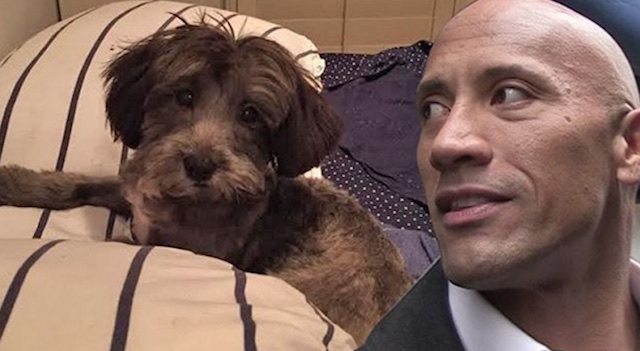
A star known for his action movies showed his softer side, helping a sick puppy get the surgery it needs.
The Saving Spot shelter in Los Angeles named the four-month-old stray after Dwayne “The Rock” Johnson because he was going to have to be tough to survive. The little dog needed heart surgery to fix a murmur.
The shelter set up a campaign to raise the $5,000 needed. When the star of the “Fast and Furious” movies finally heard about the pup’s plight – about two weeks into the fundraising – The Rock chipped in $1,500 for the surgery to help get them to their goal.
“Stay strong lil’ Rock!” Johnson wrote on the GoFundMe page for the dog’s surgery. “Let’s get you taken care of, healed up and feeling better for Christmas. Plus you have a VERY cool name to uphold. Got your back.”
The campaign topped its goal by $1,000 and Dwayne the dog is scheduled for surgery December 18.
(WATCH the video from WPIX News below) — Photo: Saving Spot, GoFundMe page
Last night, the U.S. Congress achieved something that has been unattainable for more than a decade. It passed a five-year transportation bill that finally delivers long-term national funding for roads, bridges, and mass transit. The “Fixing America’s Surface Transportation (FAST) Act” (H.R. 22) restores certainty to a national transportation program that has been strung along by more than 35 stopgap short term extensions.
The $305 billion legislation, which will govern federal policy through 2020, reflects a bipartisan compromise the Obama administration “always believed was possible.”
Business groups and members of Congress praised the legislation for creating construction jobs, improving freight delivery and streamlining government regulation.
“Today is a monumental day for the U.S. Congress, working Americans and the entire equipment manufacturing industry,” Association of Equipment Manufacturers President Dennis Slater said in a statement.
“Cities desperately need long-term certainty in their transportation planning and funding. We can’t fix the bridges or roads that millions of Americans use every day without it,” said Clarence E. Anthony, CEO of the National League of Cities. “Together, we can build a world-class transportation infrastructure that will connect, empower and build a foundation for future growth in cities across the nation.”
The FAST Act calls for spending approximately $205 billion on highways and $48 billion on transit projects over the next five years and includes a number of programs relevant to city infrastructure:
The program that provides funding for walking and bicycling infrastructure directly to local leaders, is now a part of the Surface Transportation Block Grant Program and its funding has been increased from $835 million to $850 million.
Additional money for bridges and transit, especially buses—a critical lifeline for cities—has been increased, with locally-owned bridges now eligible for more than $22 billion in federal funding under the National Highway Performance Program.
New access to federal financing is available for innovative transit projects and the minimum project size has been lowered from $25-$50 million to $10 million for projects with significant local government involvement, making it much easier for projects outside of major metropolitan areas to apply for low-cost federal financing.
Both chambers of Congress passed it overwhelmingly, with the House voting 359-65 and the Senate, 83-16. The bill will be paid for with gas tax revenue and a package of $70 billion in offsets from other areas of the federal budget, according to The Hill.
Little did they know about his struggles with addiction, when an Ohio church congregation, in a random act of kindness, tipped a delivery driver $700 for one pizza.
Churches have been surprising pizza drivers lately with large tips — teaching their members a lesson about generosity. But the congregation at Life Point Church in Mentor ended up learning more about miracles when they saw what their gift eventually manifested. That one act of kindness early on a Sunday morning has snowballed into a life-changing event for 22-year-old Jeff Louis.
When he left the church on November 22, he recorded a tearful video, talking about his efforts to stay clean, how he was working so hard to do the right thing, and how much the gesture meant to him.
“It just really, truly amazes me that people who don’t even know me, just wanted to help me that much,” he says. “I’m blessed.”
More than a million people have watched his YouTube video since then. Among them were the people who operate Cliffside Malibu in California — one of the most beautiful drug treatment centers in the America.
They surprised Jeff by offering to pay 100% of his rehabilitation and therapy costs, which can run as high as $88,000 a month.
Jeff flew there yesterday, on the latest leg of his life-altering journey that began with a Sunday Morning delivery which turned into a take-out order of redemption.
(WATCH the video by Jeff Louis below) – Photo: Jeff Louis video
Send Your Friends A Slice Of Goodness, Share This…
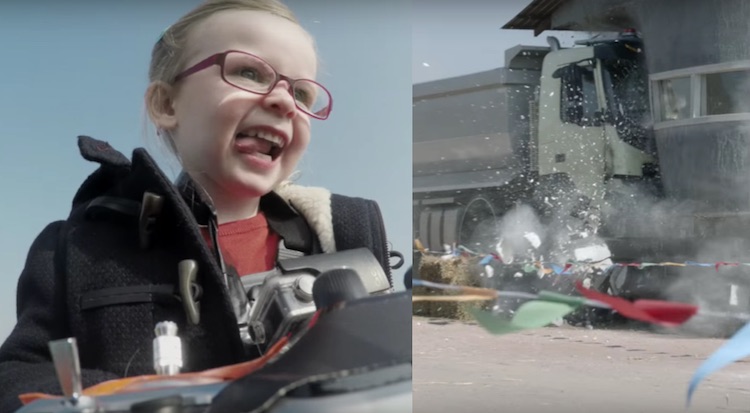
She sends the off-road big rig into a pond, tumbling down a hill, and smashing into a building in what has to be the best day ever for any kid who likes playing with trucks.
Buckle your seat belts and prepare to laugh as you watch the video below.
(WATCH the video from Volvo below)
Send This Video Flying At Your Friends, Share It Below…
Ibrahim Bayzed’s story is one that can only be described as “coming full circle.”
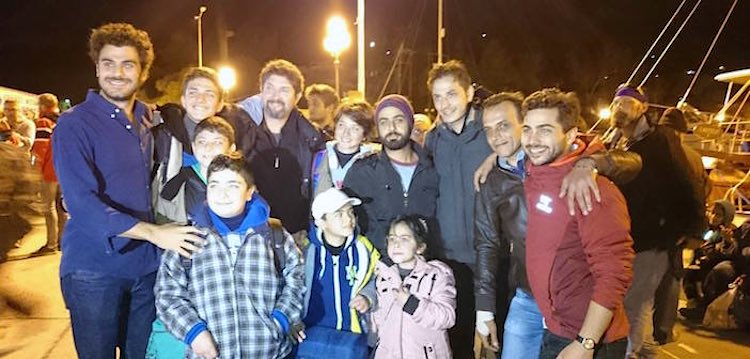
He fled Syria in 2012 during a mass exodus of opponents of Syrian dictator Assad’s regime and headed to Egypt to complete his studies in international trade and logistics management. Upon completion of his studies he went to Turkey to work and save money for his eventual journey to Europe.
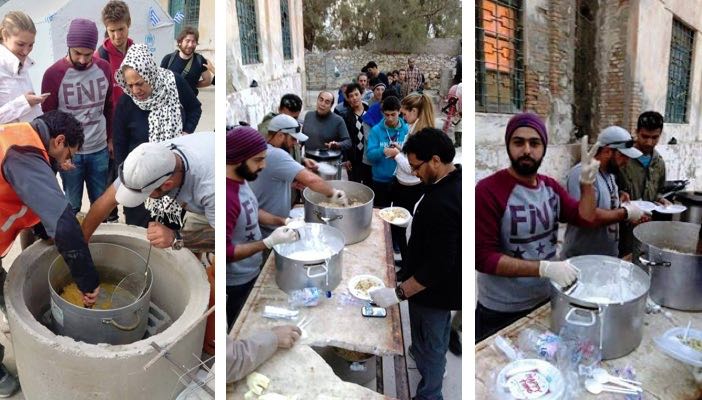
He worked in a clothing factory in Istanbul for a year, saving enough money to pay smugglers to take him to Greece. He, together with other Syrian families departed Turkey and landed on the tiny island of Tilos, where locals welcomed them, fed them and offered dry clothes and a place to rest, before taking the ferry to Athens.
On Tilos— a tiny island of a few hundred residents who have created a welcome center supported by the mayor and many local volunteers and residents, Ibrahim and the other refugees were treated with dignity and compassion, according to Elena Pissa, one of the locals who assists with the coordination of refugees there.
Ibrahim eventually left and settled in Athens, staying for a year and trying numerous times to get to Germany via the Balkan route, unsuccessfully–but eventually made it, got a job and established himself with German residency.
Thanking the Greeks by Giving Back
In early November, Ibrahim Bayzed decided it was time to give back. He returned to Greece to offer his support to arriving refugees and help the Greek people who were dealing with the crisis on a daily basis. He traveled to Leros island and volunteered, assisting Greek police with the registration of refugees, the distribution of food and clothes.
“I saw this as my duty,” he told the Pappas Post in an exclusive interview, adding that “I already know the risks these people face and the difficulties they face trying to cross into Europe. I also felt it my duty to help the Greek people who are doing everything they can to help my people. What I experienced on Tilos was pure humanity and I want to share some of this with the Greek people who continue to help.”
Reprinted with permission from The Pappas Post: Gregory C. Pappas is a media, film and marketing artist who is passionate about his Greek heritage and wants to share it with the world. (Photos via Pappas Post)
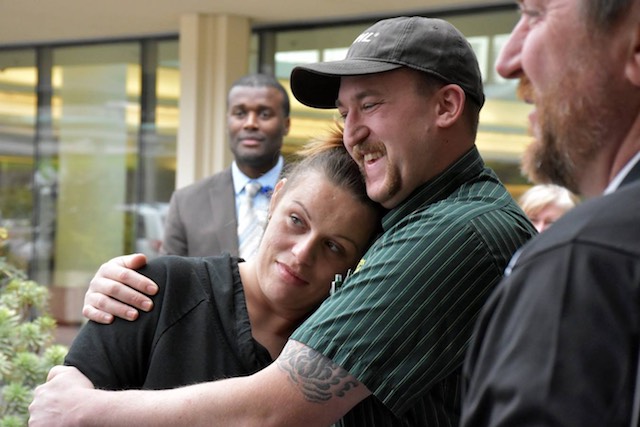
A stolen car led to an amazing act of kindness for a struggling pair of new parents.
Jessica Daniels was visiting her premature baby at a Renton hospital outside Seattle, Washington when her car was stolen from the parking lot.
She and her boyfriend, Ben, had just lost their other car in an accident — and they live 25 miles from the hospital where baby Genevieve is being treated.
Both parents are Iraq War veterans and aren’t able to afford another car. They were having to ask friends and neighbors to give them rides to the hospital and weren’t able to spend enough time with their new baby.
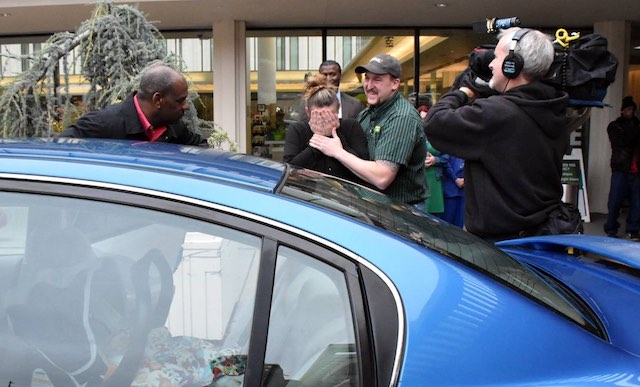
When KIRO reporter Jesse Jones heard their story, he started making phone calls. A local Ford/Hyundai car dealer donated a blue set of wheels. The local fire department even installed a car seat.
The cameras were rolling as Ben and Jessica walked out of the hospital to the shiny, blue surprise parked in their path.
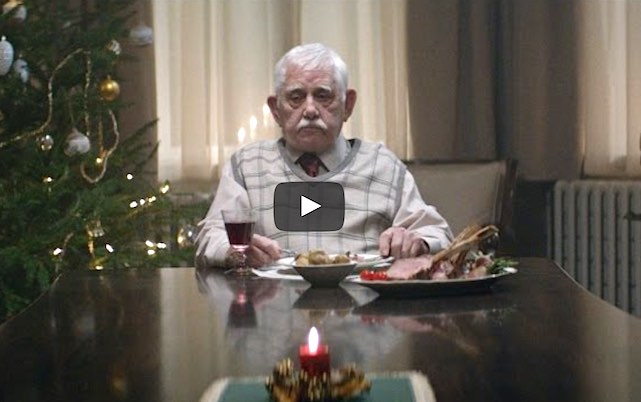
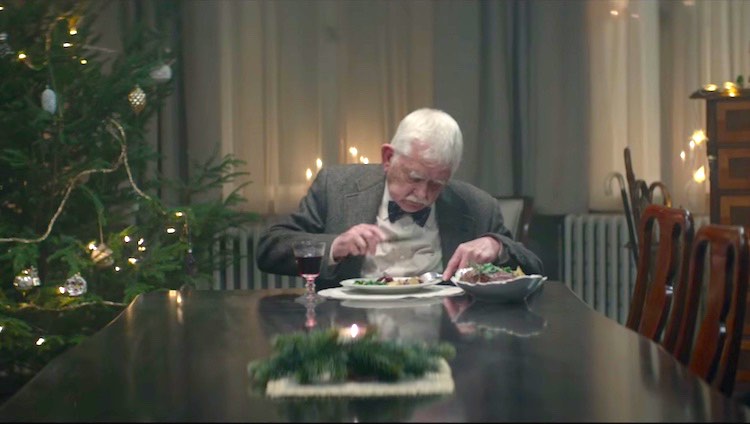
This German Christmas ad may have you in tears before it finishes, but it has a happy ending.
Supermarket chain Edeka released the video of a lonely grandfather spending Christmas after Christmas alone because his children and grandchildren are too busy to visit.
A fan came to the rescue when Public Enemy most needed a friend—and a quick ride to their gig.
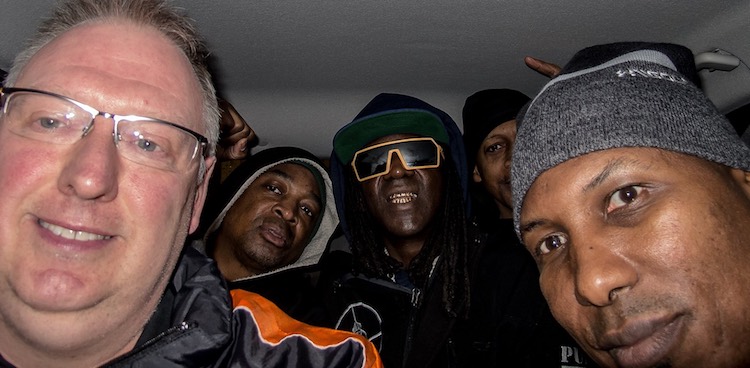
Kevin Wells had stopped by a Broomhill, UK record store Saturday, where members of the iconic hip-hop group were signing autographs to get his picture with Chuck D and Flavor Flav before heading to work.
The band was still signing autographs when their taxi took off — leaving them stranded miles from the arena where they were to perform in just a few minutes.
The band took Wells up on an offer to drive them, the five piled into his compact car, and they set out on backstreets following every shortcut Wells could remember.
“Bohemian Rhapsody, by Queen, came on the radio,” Wells told the Sheffield Star. “Everyone was singing the words and rocking out in the back of my car. I was looking in the rear view mirror thinking, ‘is this actually happening?’”
Never thought I'd see the legendary Public Enemy in a Ford Focus
Security at the arena was skeptical that the band of millionaire musicians was arriving for the show in a Ford Focus, until Chuck D rolled down the window and flashed a security pass.
Wells got the band to the arena just 15 minutes before Public Enemy was to take the stage.
A simple hashtag is uniting thousands of people in a flooded city while showcasing humanity at its best.
This week saw the heaviest monsoons in a century hit Chennai, a city of four million in southeastern India. The rising rainwater has closed highways, railroads, and airports and displaced entire neighborhoods.
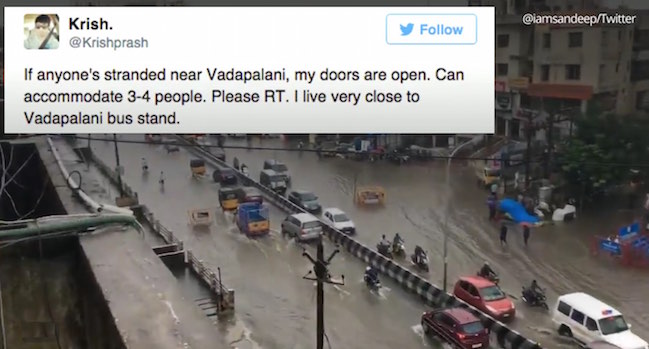
Thousands of residents began offering help via Twitter using #ChennaiRainsHelp to list open homes for people who’ve been flooded out of their own.
If anyone is looking for emergency shelter they can look through the tweets on #ChennaiRainsHelp and find those set up at mosques, churches, temples and even movie theaters and malls. It’s also helped locate volunteers to distribute food and other supplies.
People stranded by floodwaters are using the hashtag to let searchers know where they are.
Still others have used it to tag photos and video of heroic rescues or of people simply helping each other during the disaster.
Compiling those images into the video below, Scroll.In posted on its Facebook page that the hashtag “proves Chennai citizens’ solidarity in the worst of times.”
(WATCH the video below from Scroll.In) — Photo: Twitter.com/IamSandeep
Minnesota has an unusual refugee problem — too many people volunteering to help.
“We have four to five times the number of volunteer inquiries and interest,” the Minnesota Council of Churches told the Star Tribune. “It’s a wonderful problem to have.”
The sudden surge has happened in just the last couple of weeks, as 31 governors around the U.S. demanded that no Syrian refugees be allowed in their states.
But in Minnesota, citizens are offering to house refugees in spare bedrooms and teach English classes. They’re also flooding relief agencies with donations of coats, diapers, cash, and other items.
Even though no Syrians have reached the state yet, their plight is raising awareness that has inspired people to help.
According to the Star Tribune, five nonprofit agencies resettle about 2,000 refugees in Minnesota every year. Three of those groups report a sudden groundswell of support in the past two weeks.
Donations to the International Institute of Minnesota have come from around the state and from 24 other states — many with governors rejecting refugees. The Institute, which resettled 465 mostly African and Asian immigrants last year, has received 500 phone calls from people asking to volunteer in the last two weeks.
Catholic Charities report an upsurge of volunteers and the Council of Churches has had to put people wanting to help on a waiting list.
Volunteer To Share This Story… (Photo by DFID-UK, CC)
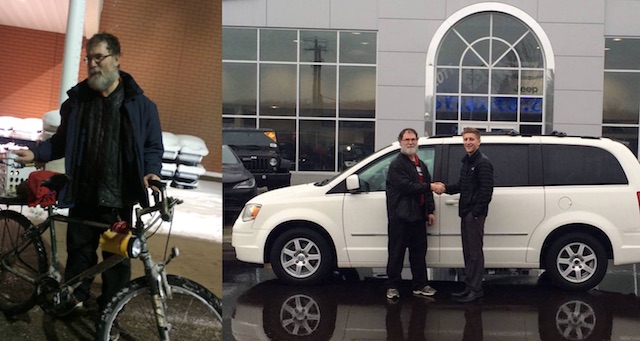
A powerful snowstorm, a dangerous bike ride, and a good Samaritan all came together to change a Michigan man’s life for the better.
Tony Berard rides his bike seven miles down a busy highway to work the midnight shift at a grocery store. He was making that commute in a heavy Michigan snowstorm when young Jason Kapoor, driving in the opposite direction, first saw him.
Tony had been in financial trouble ever since his wife got sick — she couldn’t work and medical bills piled up. Then, both their old cars quit running. Tony didn’t have the money to fix them or buy a new one, so he did what he had to.
With the harsh Michigan winters at hand, Jason’s heart was moved to help the Waterford man.
So he told the Tony’s story intending to get people to give him a ride on the road–and, indeed, the next day, another stranger spotted him on his bike and offered him a ride. But a better idea was born after the post was shared 17,000 times, and the discussion turned toward getting the man a used car.
Jason launched a GoFundMe page called “Keep Tony Warm” and donations heated up. It raised more than $19,000 in nine days.
As fate would have it, Jason works at a car dealership right across the highway from Tony’s job — and he worked out a deal to put Tony in a new minivan with a working heater for those frozen commutes this winter.
(WATCH the video below from WXYZ News) — Photos: Jason Kapoor, Facebook
I want to discuss the real impact Good News can have on our lives, and then follow up with some recent developments in Renewable Energy that illustrate the measurable progress we’ve made and continue to make toward a better world.
As End, or Means, or Both
People often think of Good News as a rare extravagance, or even worse, they consider it less relevant to us than the problems of the day, a kind-of nice-to-have. I’d like to suggest that it’s more than that: Good News isn’t just something to make us feel better, but a means to shaping our future.
That admittedly is a lofty claim, but it has a logical basis. These days, big changes are happening in our world–globalization, cultural and social issues, new technologies, and all the resulting environmental impacts.
People struggle with change, especially when they have a stake in it, and yet it’s exactly when we have a stake in it that our response matters most.
From Humanity to the Individual
If you think about it, humanity’s solutions all arise from our responses to the issues. Our best responses have sometimes come from a new idea or the actions of courageous individuals; and these in turn have led to brand new technologies, grass-roots movements, changes in corporate or government policy, or an overall change in the perspective of a nation. It is because our reactions and interactions are so integral to our societal behavior that they have such power to move us either forward or backward.
But world-changing ideas and great courage have historically appeared when opportunity has called for them.
Can we really just decide to have more breakthroughs without the impetus of impending crisis? There had better be a way or we’re in for an even more dramatic future.
A Taoist saying advises, “Do the great while it is still small.” After all, it’s not efficient to respond only after an emergency has set in. That makes for heroes, but also for a great deal of loss. Still, what is meant by “the great” if not the issues of the day, and how can anyone say they are “still small”?
Good News in Renewable Energy
To put all this theory into practice: let’s talk about some recent efforts to shift toward renewable energy.
For starters, the facts now show that renewable energy is both economical and effective. You often hear that renewable energy doesn’t scale, either economically or demand-wise – but the reverse is true:
Some statistics in the UK help to set the record straight:
In 2014 UK carbon emissions fell 8.4%, while the economy grew 2.6%
UK renewable energy accounts for 20% of all energy usage
One in five people in the US population is not developing diabetes like they used to — the first sustained improvement in 25 years.
The number of new cases of the disease has fallen by nearly 20% in the last seven years, according to new figures released in December by the Centers for Disease Control and Prevention. In 2014 alone there were 300,000 fewer new cases than the 1.7 million recorded for one year in 2008.
Health officials aren’t sure what exactly is causing the decline, but it parallels changes in Americans’ eating and exercise habits.
Studies indicate people are drinking 20% less soda than in 1998, the number of people exercising regularly has increased by 17% since 2001, and children are consuming 5.5% fewer calories on average than they did in the 1990s. Another impressive trend: childhood obesity rates have plummeted by more than 40% over the last decade.
“It’s not yet time to have a parade,” Dr. David Nathan, Director of the Diabetes Center at Massachusetts General Hospital, told the New York Times. “[But] it has finally entered into the consciousness of our population that the sedentary lifestyle is a real problem, that increased body weight is a real problem.”
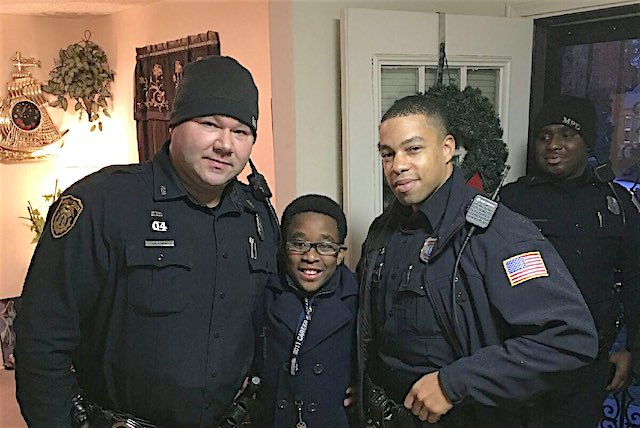
An 11-year-old boy’s concern for his mother so impressed police officers, they replaced his prized possession after it was taken in a burglary.
Thieves struck while Tontrevion Campbell and his mother were at church over the weekend. His Xbox and all the video games he loves to play were among the stolen items.
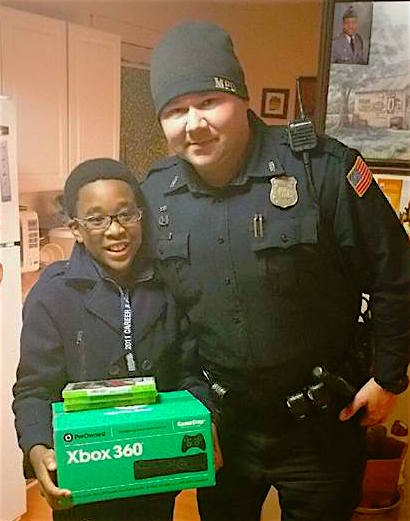
Officers picked up a new Xbox with some games and when the store manager found out why they were shopping, he threw in an extra controller, so two friends can play together.
When they returned to the family’s home and queried Tontrevion about the Xbox, they asked him if it might be the one that was stolen.
“No, sir,” the boy told the. “Mine was older.”
Then the officers revealed this new one was for him, which moved him and his mother to tears. (video of reaction below)
“Just to be able to alleviate some of his stress, just of that day, and actually help that family in this time, like Christmas, it really was an overwhelming feeling,” said one of the police officers said.
(WATCH the video below from WMC News) — Photos: Memphis Police Department, Facebook
Wow! Bell-ringers never had such an amazing Christmas treat delivered into their little red buckets.
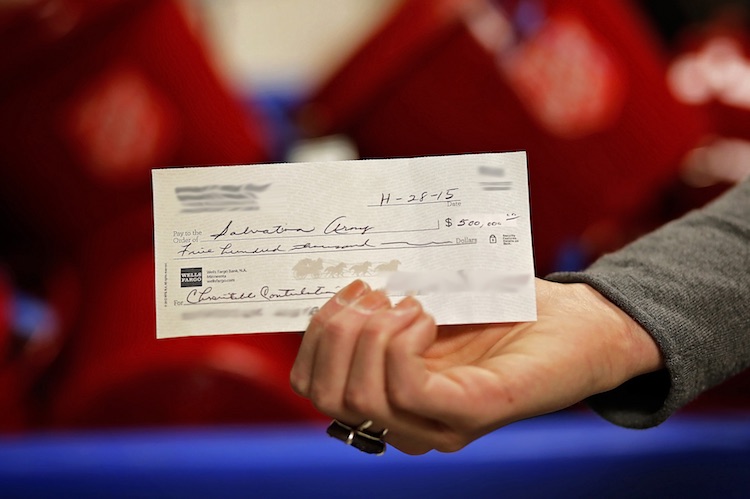
An anonymous couple dropped a $500,000 check into a Salvation Army kettle Saturday — the most generous donation ever received by one of the charity’s sidewalk Santas.
The donors from the Minneapolis, Minnesota area alerted charity officials to be on the lookout for their contribution. But Rosemont city firefighters were unaware when a passerby quietly slipped the half million dollar check into their midst.
They hope their gift will encourage others to be more generous this holiday season.
The contribution, which crushed the national kettle donation record of $25,000, doesn’t appear to be linked to a famous anonymous donor in the same city. The Salvation Army dubbed that generous kettle-giver “Saint Grand” because of the donations of around $1,000 (a “grand”) left at multiple kettles in the area since 2011.
Saint Grand’s pattern is the same, leaving bundles of crisp, new $100 bills. Last year, $10,000 was left this way in multiple drops at a single kettle, and $7,000 at others in the area. Over the weekend, four separate kettles received $1,100 gifts from the anonymous do-gooder.
With these, and the record donation, the local Salvation Army is well on track to collect their goal of $11.6 million this year.
If these guys can build a Death Star, putting up a Christmas tree should be a breeze.
When it was time to put up their holiday decorations, Kyle Shearrer and his dad, Phil, apparently had help from these Star Wars Stormtroopers, and even Darth Vader himself. They documented the whole process in photos—just in case you have a “disturbing lack of faith” in their story.
The Stormtroopers first rolled out a drop cloth in a festive shade of Tatooine Sunset Red…
Can we next expect to see Yoda hanging the mistletoe? He could levitate everything into place, just like he did at this bakery competition… A piece of cake for the Jedi Master.
The entire slideshow is capped off with the troopers holding a sign that reads, “19 More Days” alluding to the weeks left before the long-awaited new Star Wars film hits theaters.
(SEE all 23 pictures on Kyle’s Facebook page or on Imgur or WATCH them assembled with music below)
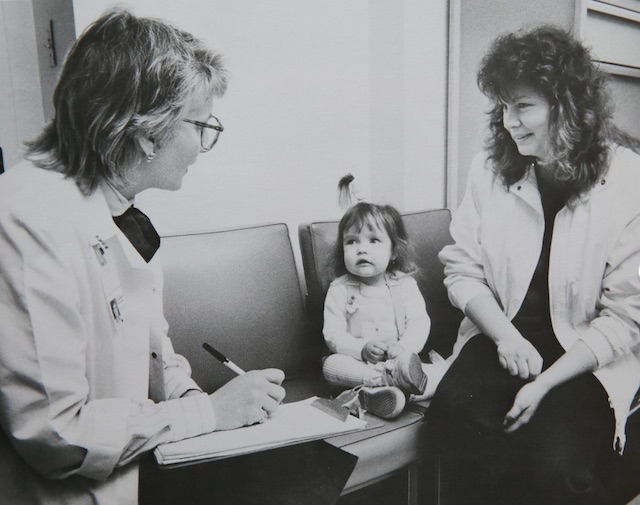
After almost 25 years, the two met again by chance, and Lynn learned just how much she did make a difference in her patients’ lives, when the roles were reversed.
This time, she was the patient–in a hospital being treated for rheumatoid arthritis, when a young nurse came in to adjust her medicine.
Lynn felt something familiar about her and read the name on her name tag.
Sure enough, little Nichole, now 30, had followed in the footsteps of “Sweet Lynnie,” the nurse who inspired her as a little girl and nursed her through years of surgery and treatment.
“When you get to be my age, you look back and wonder if you made a difference,” she told the Milwaukee Journal Sentinel. She found out she really did.
(Photo: Children’s Nurse magazine – SEE more photos at the Journal Sentinel)

















 A stolen car led to an amazing act of kindness for a struggling pair of new parents.