With millions of people struggling to cope with the strange lifestyles changes presented by the COVID-19 outbreaks, we can still look to one of America’s most beloved role models to learn how to react to the pandemic with kindness and grace.
Fred Rogers is the trailblazer responsible for transforming children’s television and hosting the Mr. Rogers’ Neighborhood show. Before he ever appeared on the big screen, however, he spent many of his childhood summers quarantined inside his Pittsburgh home.
Since Rogers suffered from hay fever and breathing problems as a boy, he would often be forced to keep to his bedroom because the city air was so polluted.
As fate would have it, Rogers ended up turning to his imagination to keep himself entertained during these periods of quarantine—and those periods of self-isolation are what spurred Rogers to dream up some of his most iconic characters to later appear on his TV show.
(WATCH the video below) – Feature photo by the McFeely-Rogers Foundation
Be Sure And Share This Inspiring Story With Your Friends On Social Media…
The COVID-19 pandemic represents the biggest shock to the global economy in more than seven decades, but new research says that the outbreaks are likely to result in a record-breaking 8% annual decline in carbon emissions—the largest decrease in history.
A new report released this week by the International Energy Agency (IEA) provides an almost real-time view of the COVID-19 pandemic’s extraordinary impact across all major fuels. Based on an analysis of more than 100 days of real data so far this year, the IEA’s Global Energy Review includes estimates for how energy consumption and carbon dioxide (CO2) emissions trends are likely to evolve over the rest of 2020.
“Only renewables are holding up during the previously unheard-of slump in electricity use,” said Dr. Fatih Birol, the IEA Executive Director. “It is still too early to determine the longer-term impacts, but the energy industry that emerges from this crisis will be significantly different from the one that came before.”
The Global Energy Review’s projections of energy demand and energy-related emissions for 2020 are based on assumptions that the lockdowns implemented around the world in response to the pandemic are progressively eased in most countries in the coming months, accompanied by a gradual economic recovery.
The report projects that energy demand will fall 6% in 2020—seven times the decline after the 2008 global financial crisis. In absolute terms, the decline is unprecedented—the equivalent of losing the entire energy demand of India, the world’s third largest energy consumer.
Advanced economies are expected to see the biggest declines, with demand set to fall by 9% in the United States and by 11% in the European Union. The impact of the crisis on energy demand is heavily dependent on the duration and stringency of measures to curb the spread of the virus. For instance, the IEA found that each month of worldwide lockdown at the levels seen in early April reduces annual global energy demand by about 1.5%.
Changes to electricity use during lockdowns have resulted in significant declines in overall electricity demand, with consumption levels and patterns on weekdays looking like those of a pre-crisis Sunday. Full lockdowns have pushed down electricity demand by 20% or more, with lesser impacts from partial lockdowns. Electricity demand is set to decline by 5% in 2020, the largest drop since the Great Depression in the 1930s.
At the same time, lockdown measures are driving a major shift towards low-carbon sources of electricity including wind, solar PV, hydropower and nuclear. After overtaking coal for the first time ever in 2019, low-carbon sources are set to extend their lead this year to reach 40% of global electricity generation—6 percentage points ahead of coal.
Electricity generation from wind and solar PV continues to increase in 2020, lifted by new projects that were completed in 2019 and early 2020. An additional report from energy research group BloombergNEF says that wind and solar power are now the cheapest sources of new energy development for two-thirds of the world’s population.
This trend is affecting demand for electricity from coal and natural gas, which are finding themselves increasingly squeezed between low overall power demand and increasing output from renewables. As a result, the combined share of gas and coal in the global power mix is set to drop by 3 percentage points in 2020 to a level not seen since 2001.
Coal is particularly hard hit, with global demand projected to fall by 8% in 2020, the largest decline since the Second World War. Following its 2018 peak, coal-fired power generation is set to fall by more than 10% this year.
After 10 years of uninterrupted growth, natural gas demand is on track to decline 5% in 2020. This would be the largest recorded year-on-year drop in consumption since natural gas demand developed at scale during the second half of the 20th century.
Renewables are set to be the only energy source that will grow in 2020, with their share of global electricity generation projected to jump thanks to their priority access to grids and low operating costs. Despite supply chain disruptions that have paused or delayed deployment in several key regions this year, solar PV and wind are on track to help lift renewable electricity generation by 5% in 2020, aided by higher output from hydropower.
“This crisis has underlined the deep reliance of modern societies on reliable electricity supplies for supporting healthcare systems, businesses and the basic amenities of daily life,” said Dr. Birol. “But nobody should take any of this for granted—greater investments and smarter policies are needed to keep electricity supplies secure.”
As a result of these trends—mainly the declines in coal and oil use—global energy-related CO2 emissions are set to fall by almost 8% in 2020, reaching their lowest level since 2010. This would be the largest decrease in emissions ever recorded—nearly six times larger than the previous record drop of 400 million tonnes in 2009 that resulted from the global financial crisis.
“Resulting from … economic trauma around the world, the historic decline in global emissions is absolutely nothing to cheer,” said Dr Birol. “But governments can learn from [the 2008 crisis] by putting clean energy technologies—renewables, efficiency, batteries, hydrogen and carbon capture—at the heart of their plans for economic recovery. Investing in those areas can create jobs, make economies more competitive and steer the world towards a more resilient and cleaner energy future.”
This is just one of many positive stories and updates that are coming out of the COVID-19 news coverage this week. For more uplifting coverage on the outbreaks, click here.
File photo by rabiem22, CC
Power Up With Positivity By Sharing The Silver Lining With Your Friends On Social Media…
— The London Palladium (@LondonPalladium) April 30, 2020
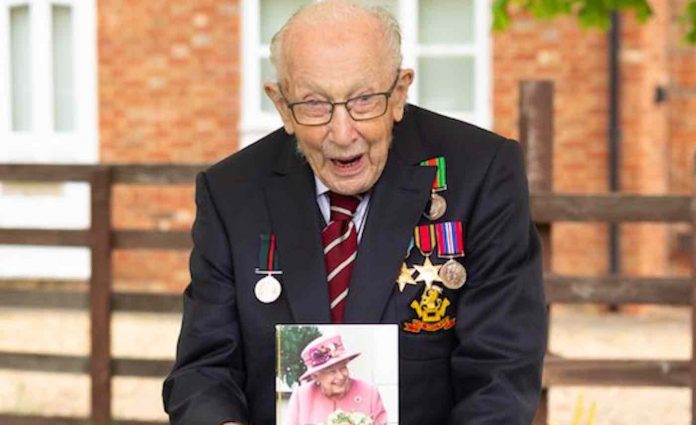
Yesterday was the 100th birthday of Captain Thomas Moore—the WWII veteran who captured hearts around the world after successfully raising millions of dollars for healthcare workers fighting the novel coronavirus.
So in celebration of the centenarian’s special day, businesses, celebrities, government officials, hospitals, children, and social media users around the world came together to make his birthday particularly special.
Moore originally started walking around the his back garden on April 6th with the intention of raising just £1,000 solely by doing 100 laps before his 100th birthday on April 30th.
Over the course of just one month, however, Captain Moore’s fundraiser has topped a whopping £32 million ($40 million) for NHS Charities Together—a new Guinness World Record for money raised on behalf of the healthcare system.
In recognition of his spectacular achievement, the war veteran was officially promoted from the rank of captain to honorary colonel in a letter presented by Lt. Col Thomas Miller and approved by Her Majesty the Queen.
Enjoying a day of rest and the opportunity to reflect on a wonderful day celebrating my 100th birthday. So many well wishes and memorable moments the family will always cherish. Thank you all once again!#TomorrowWillBeAGoodDayhttps://t.co/drElKcks2w
— Captain Tom Moore (@captaintommoore) May 1, 2020
Moore was flooded with more than 125,000 birthday cards, all of which have been individually open and displayed in the halls of his grandson’s school.
Among the birthday cards were a few specially hand-written well wishes from Her Majesty Queen Elizabeth, Prince William and Duchess Kate, and England football captain Harry Kane.
“I am so pleased to know that you are celebrating your one hundredth birthday,” wrote the Queen. “I was also most interested to hear of your recent fundraising efforts for NHS Charities Together at this difficult time. I send my congratulations and best wishes to you on such a special occasion.”
Our Great Hall has been transformed into a sea of 100th birthday cards for Captain Tom. His grandson Benjie, a Fifth Former here at school, has been showing his grandfather photos of the cards as they have been arriving. The Captain has been 'blown away' by the sheer number. pic.twitter.com/CqXqVyN6dt
Prime Minister Boris Johnson recorded a special video message of appreciation for Moore, which was broadcasted during an interview with the veteran on BBC.
“I know I speak for the whole nation when I say we wish you a very happy 100th birthday,” said Johnson. “Your heroic efforts have lifted the spirits of the entire nation, you’ve created a channel to enable millions to say a heartfelt thank you to the remarkable men and women in our NHS who have all been doing the most outstanding job.”
Moore’s newfound fame has resulted in hundreds of thousands of new social media followers; a musical single which has gone to number one on the UK’s most popular iTunes chart; and a number of shoutouts from international celebrities praising him for his work, including a video message from the Duke and Duchess of Cambridge.
More than 1 million people from around the world also signed a petition to have Captain Moore knighted—but despite all the appreciation and praise, Moore remained humble during his birthday celebration with the press and requested that they end the event with a round of applause for healthcare workers.
“Reaching 100 is quite something. Reaching 100 with such interest in me and huge generosity from the public is very overwhelming,” said Moore, according to BBC. “People keep saying what I have done is remarkable, however it’s actually what you have done for me which is remarkable.
“Please always remember, tomorrow will be a good day,” he concluded.
This is just one of many positive stories and updates that are coming out of the COVID-19 news coverage this week. For more uplifting coverage on the outbreaks, click here.
(WATCH the full news coverage of Moore’s birthday below)
Be Sure And Share This Sweet Story With Your Friends On Social Media…
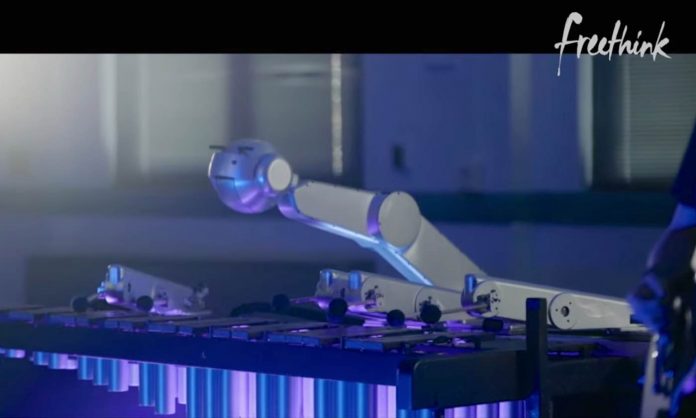
Engineers at the Georgia Institute of Technology have designed the first robot capable of not only playing music, but creating music—and its name is Shimon.
The musical robot was trained on a vast data set of everything from progressive rock to jazz to rap. Shimon takes this knowledge of past music and uses algorithms to come up with unique robot music of his own.
Shimon is showing us what can happen when robots don’t just work for us, but work with us. Its unique approach to composition makes it possible for listeners to gain exposure to new musical ideas that would have been unthinkable strictly with human input.
Quote of the Day: “An optimist is simply a proactive realist.” – Vera Nazarian
Photo: by Greyson Joralemon, public domain, cropped
With a new inspirational quote every day, atop the perfect photo—collected and archived on our Quote of the Day page—why not bookmark GNN.org for a daily uplift?
On Friday night, a 24-hour global event will begin live-streaming all over the internet with 200 cultural, spiritual, and community leaders hoping to unite people across the world and celebrate our common humanity.
Sharing inspirational messages or music from their homes will be Oprah Winfrey, Jimmy Carter, Yo-Yo Ma, Julia Roberts, Deepak Chopra, Common, Jennifer Garner, Maria Shriver, Rick Warren, Martin Luther King III, Alanis Morissette, David Brooks, Eckhart Tolle, Josh Grobin, Martin Sheen & so many more.
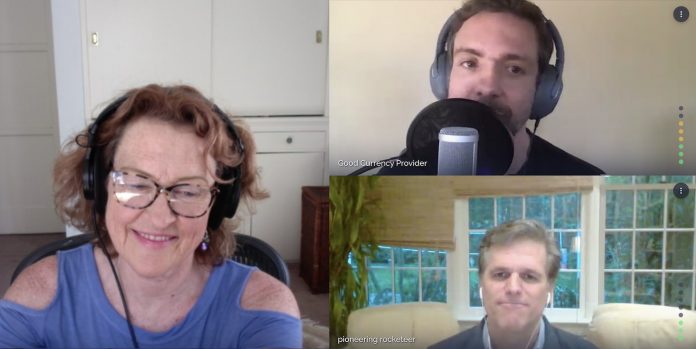
Tim Shriver, the Chairman and CEO of Special Olympics, organized the event and spoke with GNN on the Good News Gurus podcast.
“We did polling and the data said that division and hostility is the number one problem in the county today—and people are starving for a change,” he said. “This event, the reason it is so crazy-audacious, is that people are starving for an opportunity to side WITH something.”
The Call to Unite will be live-streamed on Facebook, YouTube, Twitch, Twitter, LinkedIn, SiriusXM channel 109—and on their website www.Unite.Us, beginning at 8:00PM EDT on Friday May 1, running through Saturday evening.
Through lessons, performances, conversations, and more – they hope to support all of us in coping with the challenges of this moment in order to emerge from this crisis better than when it began. Participants—as well as viewers—will be invited to #AnswerTheCall by giving, serving, and sharing their stories.
“We’ve got over 24 hours and 200 teachers. Some are homeless women; some are ex-presidents and some are ex-cons; some are 12-years-old and some are in their 80s.”
Even though billions of people around the world are isolated and anxious because of the COVID-19 pandemic, millions are rising to the occasion by showing each other love and support in countless ways. The Call to Unite, which is partnering with Points of Light, is a celebration of those acts of humanity, and an invitation to the world to join in lifting one another in this moment of need.
Each participant taking part in the global livestream event will answer the call in their own way – teaching a practice, performing a song, sharing a memory, offering a prayer, or otherwise presenting a gift to the world. (Check out the growing list of musicians, entertainers, artists, and civic leaders.)
“Some of them you may think, ‘That’s not for me,’ but others might change your life,” Shriver told GNN. “And, most important might be the one that you bring…making you realize your talent or gift.”
Just in case you didn’t already have enough reasons to love Academy Award-winning actor Tom Hanks, he recently disclosed that he and his wife Rita Wilson would be donating their blood to help scientists develop potential treatments for COVID-19.
Hanks and Wilson had tested positive for the novel coronavirus back in mid-March while they had been overseas in Australia. Upon recovering from the virus in April, Hanks has been using his recovery as a source of hope—and amusement—for social media users.
During his most recent appearance on NPR’s comedic radio game show “Wait, Wait… Don’t Tell Me!”, the hosts asked Hanks about whether he was now immune to the virus.
Not only did Hanks confirm that his blood now carries antibodies against COVID-19, he says that he and Wilson will be donating their blood to further coronavirus research.
“We have not only been approached [about donating blood]; we have said, ‘do you want our blood? Can we give plasma?’” quipped Hanks. “And, in fact, we will be giving it now to the places that hope to work on what I would like to call the Hank-ccine.”
While the treatment is not likely to be named after the actor, scientists are currently researching “convalescent plasma treatment”—an experimental therapy that was recently approved for testing by the FDA. The treatment involves drawing blood plasma out of an individual who has built up an immunity to the virus as a result of their recovery. The plasma—which is chocked full of healthy antibodies that have grown to fight the virus—is then injected into a sick patient so the antibodies can theoretically attack the virus for its new host.
Since hospitals across the country are now searching for recovered COVID-19 patients to donate blood plasma, several NBA players are also now cooperating with the National COVID-19 Convalescent Plasma Project (CCPP19) to volunteer as donors.
However, NPR show host Peter Sagal aptly responded to Hanks’s joke by saying: “There could be no better ending to this international catastrophe than if the cure turns out to be the blood of Tom Hanks.”
This is just one of many positive stories and updates that are coming out of the COVID-19 news coverage this week. For more uplifting coverage on the outbreaks, click here.
(LISTEN to the amusing segment below) – Feature photo by Dick Thomas Johnson, CC
Multiply The Good News And Laughter By Sharing This With Your Friends On Social Media…
Although the novel coronavirus pandemic has driven thousands of workers into unemployment, the Pakistani government has found a way to provide jobs to their citizens while also reforesting the nation.
According to Reuters, Pakistan has created more than 63,000 jobs for unemployed day laborers by relaunching the nation’s ambitious 10 Billion Tree Tsunami campaign.
The 5-year initiative, which was started by Prime Minister Imran Khan back in 2018, was temporarily shut down in mid-March as a result of the country’s quarantine. With thousands of agricultural workers facing unemployment amidst the lockdowns, however, the program was relaunched earlier this month.
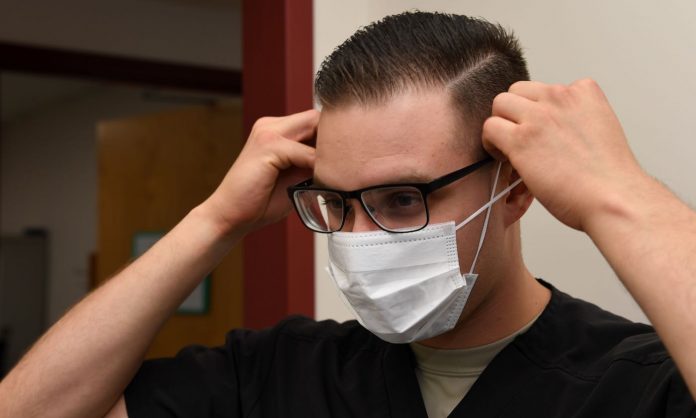
The laborers, who are still required to wear face masks and respect social distancing guidelines, are now being given daily living wages as “jungle workers” planting saplings and protecting the trees from fires and illegal logging. The Pakistani government has reportedly been planting the majority of these trees in rural, low-income areas where locals can benefit from the work.
The nation’s environmental ministers go on to say they hope to hire three times as many workers as last year in order to meet their goal of planting 20 million saplings by the end of 2020, bringing the project’s total to 50 million trees.
This is not the first time that the nation has made headlines for planting trees; the 10 Billion Tree Tsunami is a continuation of another extensive tree-planting government effort which resulted in more than 300,000 new jobs and millions of saplings planted across the Khyber Pakhtunkhwa province back in 2017.
Now Malik Amin Aslam, who is the climate change adviser for the prime minister, told Reuters that legislators hope to continue using the pandemic as a tool to ramp up their efforts against climate change.
“This tragic crisis provided an opportunity and we grabbed it,” Aslam told the news outlet in a phone interview. “Nurturing nature has come to the economic rescue of thousands of people.”
This is just one of many positive stories and updates that are coming out of the COVID-19 news coverage this week. For more uplifting coverage on the outbreaks, click here.
File photo by Junaid Ali, CC
Plant Some Positivity By Sharing The Good News With Your Friends On Social Media…
Despite being forced to stay inside of her Manhattan apartment amidst the novel coronavirus lockdowns, this college student has managed to strike up a fond new friendship with her elderly neighbors—and she did it by using Post-It notes.
Without anyone to keep her company in quarantine, Lillian Kogan felt spurred to display a message of greeting from her apartment window earlier this month in hopes of getting a response. Using several dozen colored stickie notes, the young New Yorker arranged the Post-Its to spell out the word “Hi!” on her window.
Shortly after Kogan put up the Post-It notes, she was delighted to see that her neighbors across the street had put up a similar message in response.
Kogan and her neighbors continued to exchange short messages to each other from their windows until she eventually caught sight of them sunbathing on their front porch. Upon discovering that she had been communicating with an elderly couple, Kogan used her stickie notes to ask if they needed food.
Although they politely declined her offer of assistance, Kogan donned a pair of rubber gloves and a face mask so she could make a batch of fresh-baked cookies for her new friends. She then sent the goodies over to the neighbor’s apartment building with a note that included her name and phone number in case they needed anything.
84-year-old Toni Sonet, who told Inside Edition that she had been using construction paper to respond to Kogan’s messages, said that the exchange has become a sweet source of entertainment and friendship since the beginning of the lockdowns.
“Cookies were delicious,” said Sonet. “It was fun—it felt like the beginning of a relationship.”
This is just one of many positive stories and updates that are coming out of the COVID-19 news coverage this week. For more uplifting coverage on the outbreaks, click here.
(WATCH the interview below)
Be Sure And Share This Sweet Story Of Kindness With Your Friends On Social Media…
Quote of the Day: “The heart has its reasons which reason knows not.” – Blaise Pascal
Photo: by Tyler Nix, public domain, cropped
With a new inspirational quote every day, atop the perfect photo—collected and archived on our Quote of the Day page—why not bookmark GNN.org for a daily uplift?
The Good News Gurus podcast invited a special guest on the show—Timothy Shriver—after hearing about the global LIVE streaming show he has organized for Friday, May 1.
Shriver, the CEO and Chairman of Special Olympics, talked about The Call to Unite, a 24-hour event that will feature 200 inspiring leaders and entertainers, like Oprah, Yo-Yo Ma, Deepak Chopra, Common, Jennifer Garner, Maria Shriver, Rick Warren, Julia Roberts, David Brooks, Eckhart Tolle, and Josh Groban. CLICK to Listen:
The podcast also includes a lightening round of good news for the week of April 28.
Although adults around the world have been forced to start working from home amidst the novel coronavirus outbreaks, a global poll of 2,250 office workers suggests that many of them are actually much happier working from home.
Not only that, 77% believe working from home is one of the most effective ways to help the environment.
The survey, conducted by OnePoll in conjunction with GoTo by LogMeIn, aimed to uncover how office workers feel about working from home and their environmental impact. The poll included 1,000 U.S. office workers, 250 office workers in India, the UK, Brazil, and Germany, 125 office workers in Australia and 125 office workers in New Zealand.
With a whopping 84% of respondents worrying about their environmental impact, over 75% of respondents say their commute to work is something they feel guilty about when it comes to the daily impact it has on the environment.
The average office worker surveyed revealed they used to spend nearly an hour every single day commuting to and from their jobs—that’s five hours each week office workers could get back by working from home.
Additionally, the poll revealed that 48% of participants would happily take a pay cut if it meant they could work from home indefinitely.
“We’ve long seen the benefits of remote work to allow employees to have more flexible schedules, but as most of the world has turned to full-time remote working amidst the COVID-19 pandemic, one of the unexpected benefits is the impact this is already having on the environment,” said Mark Strassman, SVP and GM for Unified Communications & Collaboration at LogMeIn.
And it’s not just the environmental benefit of working from home that proved appealing to workers. In addition to saving time with their commute (72%), office workers surveyed say saving money (66%) is a huge perk to working from home.
Other benefits associated with working remotely include the ability to spend more time with family and friends (56%), feeling happier (45%)—and actually being more productive (37%).
Over half surveyed (57%) revealed working from home provides them with the ability to embrace a more flexible schedule while a further 48% say they can save money on things like their commute or childcare when they work remotely.
Beyond that, 56% say they simply enjoy the ability to wear whatever they want when working from home.
Another 46% of those studied say one of the best things about working remotely is the close access to their kitchen while a further 44% can get some of their weekend chores out of the way.
“It’s clear from our survey that office workers are concerned about the impact their behavior is having on the environment,” continued Strassman. “And allowing them to work full-time or even part-time remote can help to mitigate carbon emissions, save employees’ time and ultimately create a work culture where employees are happier and more productive.”
TOP 5 PERKS OF WORKING FROM HOME…
1. Flexible schedule 52%
2. Saving money 48%
3. Access to kitchen 47%
4. Wearing whatever they want 45%
5. Completing weekend to-do’s 44%
Be Sure And Share The Intriguing Poll Results With Your Friends On Social Media…
A Florida loose leaf tea company has found a means of keeping their business open while simultaneously spreading joy to people who could use a smile.
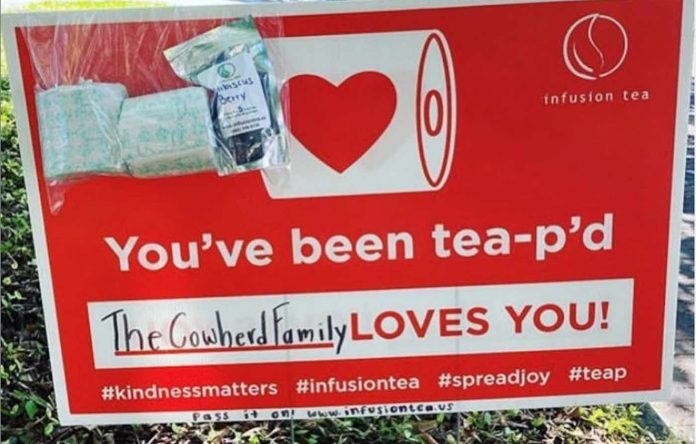
Over the course of the last month, dozens of Orlando homeowners have been delighted to find that their yards have been “tea-p’d” by employees from the Infusion Tea beverage company.
Although getting “tee-p’d” usually describes young hooligans festooning people’s houses in loose toilet paper, Infusion Tea employees have put their own compassionate spin on the word by leaving gifts of toilet paper, loose leaf tea packages, and yard signs emblazoned with messages of appreciation on people’s front lawns.
Customers have been purchasing the yard sign care packages as surprise gifts for friends and family members in Orlando. When Infusion Tea launched the contactless delivery service, they were maybe expecting to rack up one or two dozen orders.
To their surprise, the service became an immediate hit, resulting in more than 1,300 tea-p packages and yard signs purchased for local homeowners.
In fact, the initiative has been so successful for the little business, they have been able to rehire their laid-off staffers so they can also offer to mail the tea-p care packages to recipients nationwide.
“We call it our little COVID miracle,” Infusion Tea owner Brad Cowherd told The Orlando Sentinel. “We have been able to bring back all of our furloughed employees that want to come back. Everyone’s working that wants to be working. It’s good for the employees, it’s great for morale.”
If you want to purchase a tea-p care package for a loved one, healthcare worker, teacher, or friend, you can visit the Infusion Tea website for more information.
This is just one of many positive stories and updates that are coming out of the COVID-19 news coverage this week. For more uplifting coverage on the outbreaks, click here.
Be Sure And Share This Sweet Story Of Kindness With Your Friends On Social Media…
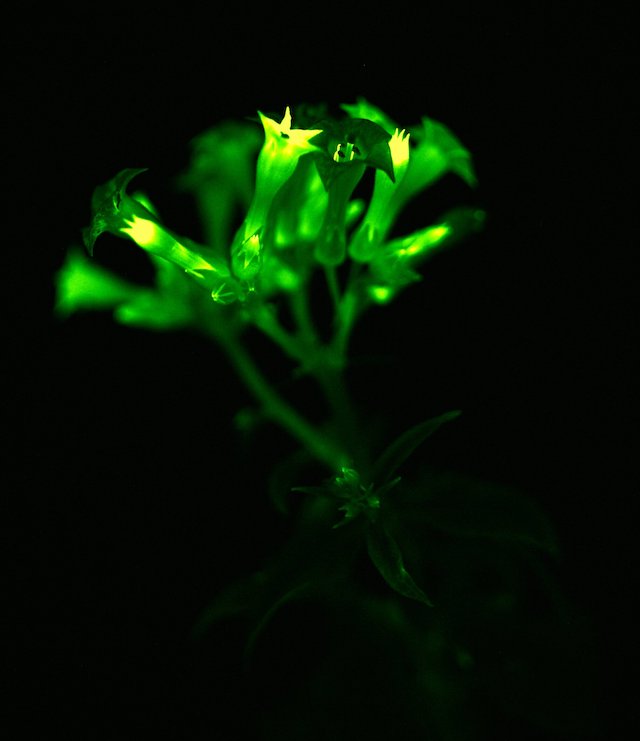
Although glowing plants may seem like a work of science fiction, researchers have succeeded in creating plants that produce their own visible luminescence—and they say the possibilities for how we can use these plants are endless.
This week in Nature Biotechnology, the scientists revealed that bioluminescence found in some mushrooms is metabolically similar to the natural processes common among plants. By inserting DNA obtained from the mushroom, the scientists were able to create plants that glow much brighter than previously possible.
This biological light can be used by scientists for observing the inner workings of plants. In contrast to other commonly used forms of bioluminescence, such as from fireflies, unique chemical reagents are not necessary for sustaining mushroom bioluminescence—in other words, plants containing the mushroom DNA glow continuously throughout their lifecycle, from seedling to maturity.
The breakthrough is similar to a project launched by MIT scientists in 2017, which used nanoparticle infusions to turn the plant’s stored energy into light, although the glow only lasted for about four hours at a time. The researchers later used their glowing plants for an art exhibit exploring the possibilities of integrating the plants into modern eco-friendly architecture.
“Lighting right now consumes a vast portion of our energy demand, approaching close to 20% of our global energy consumption, generating two gigatons of carbon dioxide per year,” says Michael Strano, the Carbon P. Dubbs Professor of Chemical Engineering at MIT. “Consider that the plants replace more than just the lamp on your desk. There’s an enormous energy footprint that could potentially be replaced by the light-emitting plant.”
The plants described in this week’s discovery can also be used for practical and aesthetic purposes, most notably for creating glowing flowers and other ornamental plants—and while replacing street lights with glowing trees may prove fantastical, the plants produce a pleasant green aura that emanates from their living energy.
Photo by Planta
According to the authors, the plants can produce over a billion photons per minute.
The report in Nature Biotechnology was authored by 27 scientists, led by Drs. Karen Sarkisyan and Ilia Yampolsky. The research was carried out principally through a collaboration between Planta, a biotech startup in Moscow, the Institute of Bioorganic Chemistry of the Russian Academy of Sciences, MRC London Institute of Medical Sciences, and the Institute of Science and Technology Austria.
Light Bio is a new company that plans to commercialize this novel technology in ornamental house plants in partnership with Planta. Light Bio CEO Dr. Keith Wood stated: “Thirty years ago, I helped to create the first luminescent plant using a gene from fireflies. These new plants can produce a much brighter and more steady glow, which is fully embodied within their genetic code.”
However, designing new biological features is more complex than merely moving genetic parts from one organism to another. Like gears in a watch, the newly-added parts must metabolically integrate within the host. For most organisms, the parts needed for bioluminescence are not all known. Until recently, a complete part list was available only for bacterial bioluminescence—but past attempts to create glowing plants from these parts have not gone well, largely because bacterial parts typically do not work properly in more complex organisms.
Little more than a year ago, scientists uncovered the parts that sustain bioluminescence in mushrooms. For the first time, the living light of an advanced multicellular organism was fully defined.
In the present report, the authors disclose that mushroom bioluminescence works particularly well in plants. This allowed them to make glowing plants that are at least ten-fold brighter. Using ordinary cameras and smartphones, green illumination was recorded coming from leaves, stems, roots, and flowers. Moreover, the sustained light production was achieved without harming the health of the plants.
Although mushrooms are not closely related to plants, their light emission centers on an organic molecule that is also needed in plants for making cell walls. This molecule, called caffeic acid, produces light through a metabolic cycle involving four enzymes. Two enzymes convert the caffeic acid into a luminescent precursor, which is then oxidized by a third enzyme to produce a photon. The last enzyme converts the oxidized molecule back to caffeic acid to start the cycle again.
In plants, caffeic acid is a building block of lignin, which helps provide mechanical strength to the cell walls. It is thus part of the lignocellulose biomass of plants, which is the most abundant renewable resource on Earth.
As a key component of plant metabolism, caffeic acid is also integral to many other essential compounds involved in colors, fragrances, antioxidants, and so forth. Despite their similar sounding names, caffeic acid is not related to caffeine.
By connecting light production to this pivotal molecule, the glow emitted by the plants provides an internal metabolic indicator. It can reveal the physiological status of the plants and their responses to the environment. For instance, the glow increases dramatically when a ripe banana skin is placed nearby (which emits ethylene). Younger parts of the plants tend to glow most brightly and the flowers are particularly luminous. Flickering patterns or waves of light are often visible, revealing active behaviors within the plants that normally would be hidden.
In this published research, the authors relied on tobacco plants because of their simple genetics and rapid growth—but the benefits of mushroom bioluminescence are broadly fitting to plants. Research at Planta, and by Arjun Khakhar and colleagues, have demonstrated feasibility for other glowing plants, including periwinkle, petunia, and rose.
Even brighter plants can be expected with further development. New features may be possible, such as changing brightness or color in response to people and surroundings. Through this living aura, we may even gain a new awareness of our plants that emulate the inspiring allure of Avatar.
Reprinted from MRC London Institute of Medical Sciences
(WATCH the beautiful plant-growth compilation video below)
Plant Some Positivity Amongst Your Friends By Sharing The Cool Story To Social Media…
Representative photo by Airman 1st Class Elora J. Martinez
As the world continues its fight to curb the novel coronavirus outbreaks, several countries have announced significant recoveries this week.
France, Italy, and Spain—the countries with the highest numbers of confirmed cases outside of the US—outlined their plans for slowly lifting their various social restrictions as rates of infection and fatality continue to fall.
In light of Italy recording their lowest number of new cases since March 10th, Prime Minister Giuseppe Conte says that the country will begin reopening the economy on May 4th. Although schools will not reopen until September, small businesses and restaurants will soon be allowed to reopen so long as customers are limited to takeout options and social distancing guidelines. Factories will also be reopened for manufacturing and people will be allowed to visit their relatives in small numbers.
Meanwhile, Spain celebrated a significant decline in coronavirus-related deaths, with daily counts falling below 300 for the first time since March 20th. Government officials say that they will be slow to reopen the economy; however, they will start to lift social restrictions by allowing children to play outside for one hour per day—a first for the nation’s youth after spending six weeks in isolation.
Al Jazeera reports that France also hailed their largest single-day drop in COVID-19 deaths after it fell by more than 33% in just 24 hours. The country also recorded their lowest number of in-hospital deaths in 5 weeks.
New Zealand was quick to enact some of the world’s strictest social restrictions after confirming just a few cases of the virus back in March. Now, Prime Minister Jacinda Ardern says that the nation’s pre-emptive shutdowns has succeeded in eliminating community transmission of COVID-19 this week. This means that while there will still most likely be new cases of the virus, healthcare officials will know where it is being transmitted.
Although New Zealand has had 1,500 confirmed or probable cases of novel coronavirus over the course of the last two months, government officials report that they will still be cautious in gradually lifting social restrictions, starting with some non-essential businesses.
South Australia also announced that they are considering easing travel restrictions after the nation made it 7 days without a new recorded case. This accomplishment is largely credited to the province testing more than 15,000 people within a two-week period. There are now currently only 14 active cases.
Taiwan has been celebrating its own milestone of 17 straight days without any new local cases as well as its first 4-day streak without any new domestic or imported COVID-19 cases.
This is just one of many positive stories and updates that are coming out of the COVID-19 news coverage this week. For more uplifting coverage on the outbreaks, click here.
Representative photo by Airman 1st Class Elora J. Martinez
Be Sure And Share The Encouraging Statistics With Your Friends On Social Media…
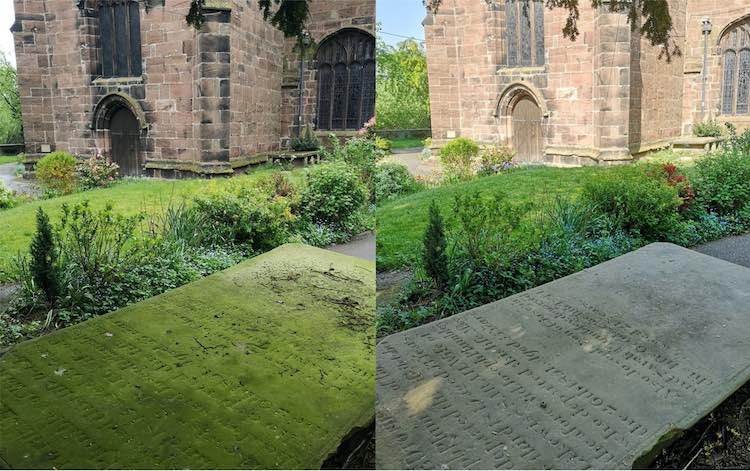
An English father and his three kids have been using their daily outings during the COVID-19 shutdowns to clean neglected headstones in local cemeteries.
Every day since the lockdowns were first implemented one month ago, 37-year-old Ryan van Emmenis has been taking walks around his neighborhood in Winsford, Cheshire.
Emmenis was first inspired to launch his labor of love after a friend published a picture of their family member’s headstone to Facebook. Since the grave was noticeably weather-worn and dirty, Emmenis—who runs his own cleaning company—offered to clean up the stone for free.
With his cleaning supplies in hand, Emmenis stopped by the headstone on his daily walk through town and tidied up the grave maker—and he was floored by how much better it looked.
Emmenis then resolved to take 20 minutes out of his daily walks to clean up some of the grave markers around town. With the help of his kids, he has tidied up two dozen headstones in the St. Chad’s and Swanlow Park cemeteries.
Emmenis says that while he has been using industrial cleaning products for some of the older headstones, his kids have been working with soap and water.
Photo by Ryan van Emmenis
“You’ve got to be respectful of the fact that it’s someone’s family member, it’s someone’s memories. You’ve got to make sure you’re using the right products and you’re being careful and delicate with it,” Emmenis told the Press Association News Agency. “Some of these headstones I’m cleaning are over 100 years old—and algae, moss etc. can have a really negative impact on them so you’ve got to be really careful.”
Since Emmenis published a few pictures of his work to social media, he has been flooded with praise from neighbors, strangers, and the family members of the deceased people’s headstones.
“I had some feedback from people saying they were really grateful for what I’d done because it was family members and they hadn’t visited the grave for 20 years, they’d been unable too,” Emmenis told PA. “Someone used the term ‘you’re bringing memories back to people’.
“When a grave is dull and it’s got algae on it and you can’t read it, there’s nobody seems to give it much time if they don’t know the person,” he added. “Once you’ve cleaned up one of these graves, it’s really noticeable, which means people are stopping and taking a moment to read and remember these people.”
Emmenis recently partnered with a church vicar in order to decide which gravestones ought to be cleaned. For social media users who have been inspired by his initiative, Emmenis recommends that anyone without professional cleaning experience stick to using soap and water.
This is just one of many positive stories and updates that are coming out of the COVID-19 news coverage this week. For more uplifting coverage on the outbreaks, click here.
Photo by Ryan van Emmenis
Clean Up Negativity By Sharing This Inspiring Story With Your Friends On Social Media…
Quote of the Day: “An optimist believes in the optimal usage of all options available, no matter how limited. As such, an optimist always sees the big picture.” – Vera Nazarian
Photo: by Armand Khoury, public domain, cropped
With a new inspirational quote every day, atop the perfect photo—collected and archived on our Quote of the Day page—why not bookmark GNN.org for a daily uplift?
Although many young people may be a-buzz about whatever pop musicians are on the weekly top 40 charts, this beekeeper has made a name for himself by using his electronica music to raise awareness about dwindling honeybee populations.
Not only that, all of his electronic music is made using sounds that he has recorded from within his very own hives.
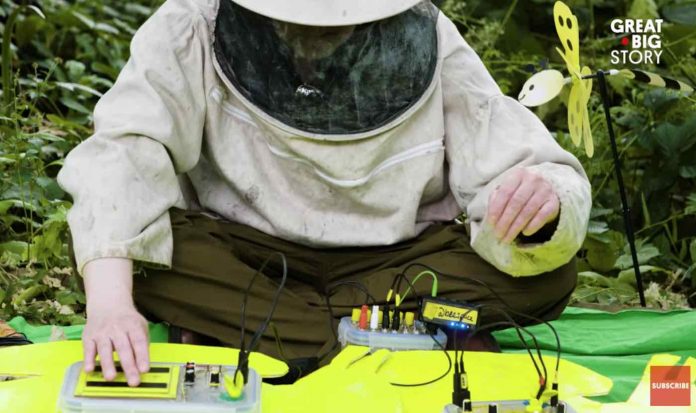
For the last 20 years, mysterious London-based beekeeper and musician Bioni Samp has been using his own equipment to research and record the various sounds of his honeybee hives.
Bioni then mixes the sounds to make experimental music that is entirely played by his bees.
In addition to only identifying himself by his Bioni alias, he has played shows around the world all while keeping his face hidden by an antique beekeeper’s suit.
Bioni hopes that his music will help young people to think about their impact on struggling pollinator populations—and considering his social media followings on YouTube, Spotify, and Bandcamp, his mission has been fairly successful.
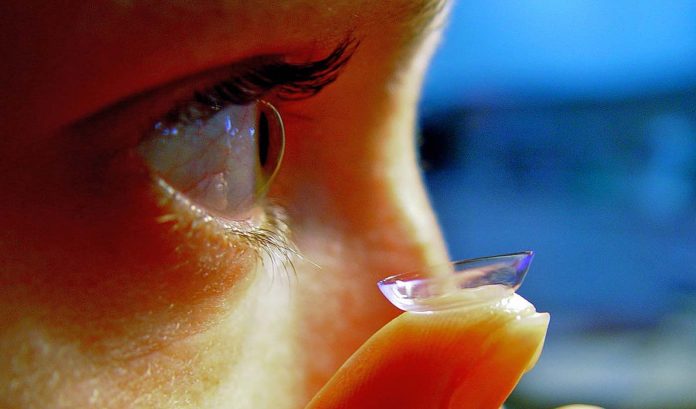
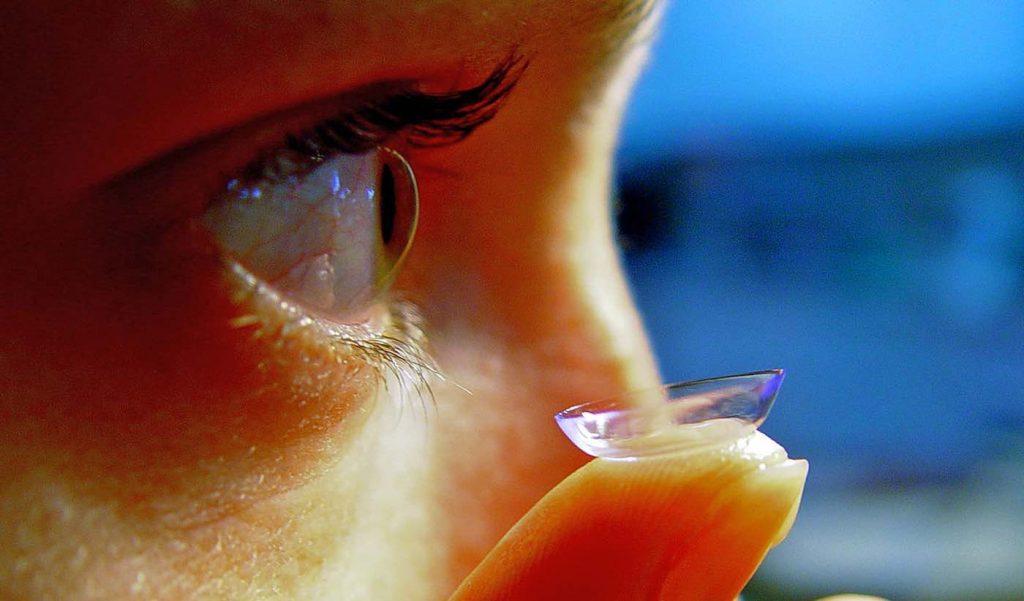
An innovative new smart contact lens is being developed to allow diabetics to monitor glucose levels through liquid in their eyes.
The invention, which is wireless and remotely operated, means glucose levels could soon be monitored in the blink of an eye—and even be treated with medicine dispensed directly into the membrane.
Scientists say that the new tech represents the first potential use of contact lenses to monitor and treat symptoms of diabetes with a remote control drug dispenser.
It comes after Google’s failed attempts to develop the Google Contact Lens for diagnosing diabetic patients, which was discontinued in 2018.
Researchers say the eyewear could provide an alternative to invasive blood tests for diabetics while simultaneously paving the way toward on-demand treatment for certain eye diseases.
The device uses chip technology to monitor sugar levels through the blood vessels behind the eyelids and warn the user of potential health emergencies. It could also dispense medicine through the eye to treat diabetic retinopathy, a diabetes-related condition caused by damage to the ocular blood vessels.
When tested in rabbits, the lens offered noninvasive glucose monitoring and controlled drug delivery for the condition.
“We developed smart contact lenses for both continuous glucose monitoring and treatment of diabetic retinopathy,” said study author Dr. Do Hee Keum from Pohang University of Science and Technology in South Korea. “Our smart contact lens has a unique function of ocular drug delivery.
“With further development and testing, the smart contact lens could relieve diabetics from relying on invasive blood tests while potentially paving the way toward on-demand treatment of retinopathy and other eye disease.”
Smart electronic contact lens devices have been widely investigated for diagnostic applications, especially for continuous glucose monitoring. In 2014, Google announced a project to develop the Google Contact Lens for helping people with diabetes measure their glucose levels through their tears.
Despite intensive effort for the commercial development of the Google lens, however, the team reported insufficient consistency in their measurements between tear glucose and blood glucose concentrations to support the requirements of a medical device.
“The disappointing clinical results might be associated with the challenges of obtaining reliable tear glucose readings in the complex on-eye environment,” said Dr. Keum. “We believe that with proper calibration and baseline monitoring, the changes in glucose concentrations can be measured reliably for each patient using the smart contact lens.”
The team says that they were inspired to develop the lens upon discovering that the surface of the cornea offers a convenient window to monitor physiological changes throughout the body.
“The surface of the cornea uniquely presents a convenient and noninvasive interface to physiological conditions in the human body,” said Dr. Keum. “The eyes are directly connected to the brain, liver, heart, lung, and kidney and can serve as a window to the body.”
Since the researchers wanted to design a model that could both perform this function and dispense drugs through the eye, they developed a smart contact lens that includes a real time electrochemical biosensor, an on-demand flexible drug delivery system, a wireless energy transfer system, and a remote radio frequency communication system.
In the study, they inserted lenses into the eyes of live diabetic rabbits and injected two units of insulin 15 minutes later to lower the rabbits’ blood glucose levels.
They then monitored the changes and repeated the test after the lenses were used for 63 days to demonstrate their ability to remain stable over time. Next, the researchers used the lenses to remotely release genistein—a drug used to treat diabetes—into the rabbits’ eyes.
Upon measuring the concentration in the cornea one hour later, they found the lens delivered the drug as effectively as an eye injection.
Dr. Keum and her team also used an infrared thermal camera to test the design for safety and found little variation in the lens’ temperature.
However, the scientists say that additional research is required to reveal whether this smart contact lens may serve as a next-generation wearable device to advance diabetes healthcare.
“This smart theranostic contact lens will be investigated further as a next generation wearable device to achieve the real-time biosensing of ocular biomarkers and on-demand medication for ubiquitous health care applications to various ocular and other diseases,” said Dr. Keum.
Representative photo by איתן טל, CC
It’s Not Hard To See That You Should Share This Exciting News With Your Friends On Social Media…
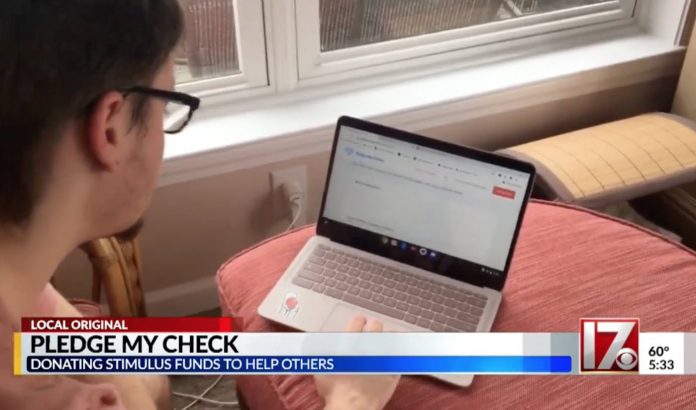
Since the United States government began issuing stimulus checks to Americans this week, a group of volunteers from North Carolina has rallied thousands of people in stable financial positions to donate part of their stimulus checks to help people affected by COVID-19.
Within the first week of the Pledge My Check website being launched, over $18,000 was pledged from 37 people across 11 states.
This number is now up to $70,000 pledged from 129 people across 15 states. Individuals are encouraged to donate directly to the people, causes, or organizations they support because Pledge My Check is not accepting donations directly—so 100% of everyone’s pledges reach their intended recipient.
Similar efforts have launched across the United States supporting a variety of causes. Currently, Pledge My Check reports that the largest sum of their pledges is being directed to local causes, primarily addressing food insecurity through Feeding America’s network of food banks and their affiliated food pantries across the country. However, many people are simply donating directly to waiters, neighbors, and community members.
“The idea is to encourage folks to pledge in a way that is life-giving to them and others,” said Jordan Bowman, who leads a local nonprofit organization. “There is complete freedom in how people pledge, but we are encouraging them to consider local causes and to be creative in how they can use this money to support their neighbors, nonprofits, and small businesses.”
One woman named Kirsten who donated $1,200 said: “My husband and I decided to donate 50% of our total checks. We’ve made monthly gifts to several organizations. These are: Heifer International, UNICEF, The Arts and Science Center of South East Arkansas, Doctors Without Borders.”
Other highlighted organizations include: Meals on Wheels, DonorsChoose.org, and GiveDirectly. Organizations can create their own custom pledge pages to encourage their volunteers and donors to pledge their stimulus checks to their organizations for free.
This initiative is the work of a growing volunteer team based out of Raleigh-Durham, North Carolina. “This project is all about bringing out the best in our communities,” commented project co-creator, Ryan O’Donnell. “When the stimulus checks were announced, I felt this was a simple way for people to help their neighbors.”
Lead project designer, Bethany Faulkner, added: “I’m fortunate to be in a stable financial situation. I wanted to help, and this stimulus check is an opportunity to redirect that vital financial support to those who need it most in our community.
“We built this tool to enable that and make it a community effort, even as we’re separated in our own homes,” she concluded.
This is just one of many positive stories and updates that are coming out of the COVID-19 news coverage this week. For more uplifting coverage on the outbreaks, click here.
(WATCH the news coverage below OR our international viewers can check it out on the CBS News website)
Multiply The Good By Sharing The Inspiring News With Your Friends On Social Media…