











All News - Page 668 of 1737 - Good News Network
Home Blog Page 668

Researchers Discover Proteins That Could Soon Restore Damaged Hearing and Irreversible Deafness

Photo by Doetzlhofer Lab / Johns Hopkins Medicine

Researchers at Johns Hopkins Medicine may have just found the key to restoring hearing in people with irreversible deafness.

Using genetic tools in mice, researchers at Johns Hopkins Medicine say they have identified a pair of proteins that precisely control when sound-detecting cells, known as hair cells, are born in the mammalian inner ear. A report on the proteins was published in eLife.

“Scientists in our field have long been looking for the molecular signals that trigger the formation of the hair cells that sense and transmit sound,” says Dr. Angelika Doetzlhofer, associate professor of neuroscience at the Johns Hopkins University School of Medicine. “These hair cells are a major player in hearing loss, and knowing more about how they develop will help us figure out ways to replace hair cells that are damaged.”

In order for mammals to hear, sound vibrations travel through a hollow, snail shell-looking structure called the cochlea. Lining the inside of the cochlea are two types of sound-detecting cells, inner and outer hair cells, which convey sound information to the brain.

WATCH: Smart Caption Glasses Allow Deaf Audience Members to Watch Live Theater Performers Directly

An estimated 90% of genetic hearing loss is caused by problems with hair cells or damage to the auditory nerves that connect the hair cells to the brain. Deafness due to exposure to loud noises or certain viral infections arises from damage to hair cells. Unlike their counterparts in other mammals and birds, human hair cells cannot regenerate. So, once hair cells are damaged, hearing loss is likely permanent.

Scientists have known that the first step in hair cell birth starts at the outermost part of the spiraled cochlea. Here, precursor cells start transforming into hair cells. Then, like sports fans performing “the wave” in a stadium, precursor cells along the spiral shape of the cochlea turn into hair cells along a wave of transformation that stops when it reaches the inner part of the cochlea. Knowing where hair cells start their development, Doetzlhofer and her team went in search of molecular cues that were in the right place and at the right time along the cochlear spiral.

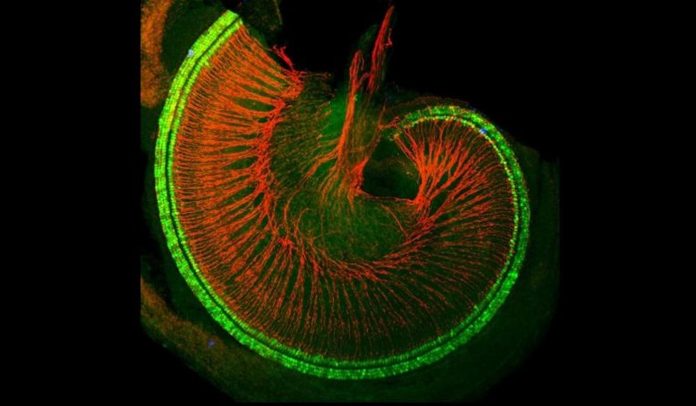
Mouse cochlea with hair cells shown in green and auditory nerves shown in red. Photo by Doetzlhofer Lab / Johns Hopkins Medicine

Of the proteins the researchers examined, the pattern of two proteins, Activin A and follistatin, stood out from the rest. Along the spiral path of the cochlea, levels of Activin A increased where precursor cells were turning into hair cells. Follistatin, however, appeared to have the opposite behavior of Activin A. Its levels were low in the outermost part of the cochlea when precursor cells were first starting to transform into hair cells and high at the innermost part of the cochlea’s spiral where precursor cells hadn’t yet started their conversion. Activin A seemed to move in a wave inward, while follistatin moved in a wave outward.

MORE: Gentle Ear Stimulation Shown to Significantly Reduce Symptoms of Parkinson’s Disease–Even Months Later

“In nature, we knew that Activin A and follistatin work in opposite ways to regulate cells,” says Doetzlhofer. “And so, it seems, based on our findings like in the ear, the two proteins perform a balancing act on precursor cells to control the orderly formation of hair cells along the cochlear spiral.”

To figure out how exactly Activin A and follistatin coordinate hair cell development, the researchers studied the effects of each of the two proteins individually. First, they increased the levels of Activin A in the cochleas of normal mice. In these animals, precursor cells transformed to hair cells too early, causing hair cells to appear prematurely all along the cochlear spiral. In mice engineered to either overproduce follistatin or not produce Activin A at all, hair cells were late to form and appeared disorganized and scattered across multiple rows inside the cochlea.

“The action of Activin A and follistatin is so precisely timed during development that any disturbance can negatively affect the organization of the cochlea,” says Doetzlhofer.

CHECK OUT: Robotic Arm Named After Luke Skywalker Enables Amputee to Touch and Feel Again— ‘It almost put me to tears’

“It’s like building a house—if the foundation is not laid correctly, anything built upon it is affected,” she added.

Looking more closely at why overproduction of follistatin results in disorganized hair cells, the researchers found that high levels of this protein caused precursor cells to divide more frequently, which in turn made more of them convert into inner hair cells in a haphazard way.

Doetzlhofer notes that her research in hair cell development, although fundamental, has potential applications to treat deafness caused by damaged hair cells: “We are interested in how hair cells evolved because it’s an interesting biological question,” she says. “But we also want to use that knowledge to improve or develop new treatment strategies for hearing loss.”

Reprinted from Johns Hopkins Medicine

Help Your Friends Hear About The Good News By Sharing It To Social Media…

Watch Passengers Sing Emotional ‘Irish Blessing’ For Their Airline Pilot After His Final Flight

When it was finally time for an airline pilot to retire from his decades-long career, the passengers on his final flight asked if they could give him an emotional Irish goodbye—and the results are breathtaking.

Brian Lenzen is a pilot from Chaska, Minnesota who has been happily flying with American Airlines for 34 years—but despite his love of flying, pilots are forced to retire at the age of 65.

So as Lenzen prepared to hang up his pilot’s uniform, he made sure that his last flight was a special one. With a hand-picked crew of beloved colleagues, he chose Dublin as his final destination and had a “wonderful time” at an Irish pub before they all returned home.

RELATED: Watch the Tender Moment When Elvis Reaches Out His Hand to Sing Duet With Senior in a Walmart

As fate would have it, there happened to be an Irish choir on board the plane for their returning flight. When they heard that it was Lenzen’s final flight, they asked an attendant if they could sing an Irish blessing to the pilot to celebrate his retirement.

Upon exiting the plane, the captain was then greeted by the St. Anthony on the Lake choir bidding him adieu—and he could barely contain his emotions.

“It was just a very special moment,” Lenzen told KARE11. “I’m kind of an emotional guy anyway, and so I got a little tearful realizing that was for me.”

(WATCH the video below)

Be Sure And Share This Sweet Story With Your Friends On Social Media…

We May Soon Be Able to Use Ultra-Thin Slice of Wood to Safely Clean and Drink Salt Water

Photo by T. Li, University of Maryland

As a means of providing clean drinking water to countless arid regions around the world, scientists have developed a new technique for filtering salt water using a thin piece of wood.

Inspired by the intricate system of water circulating in a tree, a team of researchers from Princeton University figured out how to use a thin slice of wood as a membrane through which water vapor can evaporate.

Rather than using massive amounts of energy to boil water for long periods of time, the filtration method works by gently heating one side of the wood—measuring in at 500 micrometers thick—so that the water is driven evaporate to the colder side of the wood, leaving behind salt or other contaminants.

Most membranes that are used to distill fresh water from salt water are made of polymers, which are derived from fossil fuels and are also difficult to recycle. The wood membrane is a more sustainable material, and according to the researchers, has very high porosity, which promotes water vapor transport and prevents heat loss.

RELATED: Cheap 2D Material Can Cleanse 99.9999% of Bacteria From Water in 30 Minutes Simply by Using the Sun

In a paper published earlier this week in the journal Science Advances, the researchers demonstrate that the new membrane they designed—measuring in at 500 micrometers thick—performs 20% better than commercial membranes in water distillation tests.

Collectively, the wood membrane method filtered 20 liters of water per square meter, but the team believes that they will be able to improve the system with additional experimentation.

“If you think of traditional water filtration, you need very high-pressure pumping to squeeze the water through, so it uses a lot of energy,” Princeton researcher Jason Ren told New Scientist. “This is more energy efficient and it doesn’t use fossil-fuel based materials like many other membranes for water filtration.”

Clean Up Negativity By Sharing The Good News To Social MediaFile photo by U.S. Airman 1st Class Sadie Colbert

After 12 Hours, Search and Rescue Crew Finally Finds Trapped Toddler by Following His Giggles

When this little Canadian boy became trapped in a deep hole, he was finally rescued after search crews heard the sound of his giggles.

The 2-year-old youngster wasn’t giggling over his predicament, however—he was giggling with delight at the sight of the Royal Canadian Mounted Police riding horses to his rescue.

Courtlund Barrington-Moss first went missing during a family reunion in Aneroid, Alberta on a Monday evening last week. When his mother noticed that he had disappeared, over 400 people were recruited for the search and rescue mission, from volunteers and family members to emergency crews and a search plane.

RELATED: American Brothers Successfully Save Irish Girl Who Was Swept Out to Sea in Serendipitous Twist of Fate

The crew searched throughout the night, calling Courtlund’s name—but to no avail.

Finally after 12 hours of searching the area, a pair of volunteers heard a giggle coming from the woods.

Despite how the boy had become trapped in a neck-deep hole, he was still able to see the rescuers and laugh at the sight of their horses.

MORE: Grandma Missing 5 Days is Found Alive After Her Grandson and Friends Decide to Search One Last Time

Shelby Layman, the deputy fire chief of a neighboring town, told the Star Phoenix: “He saw them before they saw him, actually. He saw their horses and he started giggling and wanted to pet the horses.

“The entire area just erupted with joy. It was pretty emotional. Everybody was yelling and people were running around,” she added.

Photo by Keeley Moat

Upon being taken to the hospital, the boy was found to be sunburnt and scratched, but still in generally good health.

“He was honestly just exhausted and not really sure what had happened,” his mother told NBC News.

Be Sure And Share The Good News With Your Friends On Social Media…

“Those truly linked don’t need correspondence. When they meet again after many years apart, their friendship is as true as ever.” – Deng Ming-dao

Quote of the Day: “Those truly linked don’t need correspondence. When they meet again after many years apart, their friendship is as true as ever.” – Deng Ming-Dao

Photo: by GWC Copyright 2014

With a new inspirational quote every day, atop the perfect photo—collected and archived on our Quotes page—why not bookmark GNN.org for a daily uplift?


American Brothers Successfully Save Irish Girl Swept Out to Sea in Serendipitous Twist of Fate (GNN Podcast)

Photo by Juliana Butler

Four American brothers who were in Ireland for their grandfather’s funeral ended up saving the life of a little girl on a serendipitous day with a magical meaning. Hear our Good News Guru tell the inspiring story on the radio in Los Angeles—during the August 2, 2019 Ellen K. Morning Show on KOST-103.5.

SEE the full story on GNN

Subscribe, Rate, and Review our Good News Gurus podcast on iTunes, or for Android devices on Podbean.

Check Out our Summer Sale and get 20% off–plus Free Shipping–on the Good News Book, a GREAT Gift. 

It’s Amusing the Ways Each Generation Defines ‘Adulting’ – Top 20 Things That Make You an Adult

A new survey of 2,000 Americans asked people to pinpoint the moment they felt fully like a grown-up adult—and their answers revealed some amusing key differences between generations and genders.

Realizing you’re in charge of your own life occurs early on with the sudden realization that, like Jerry Seinfeld, you can eat cereal whenever you want! However, realizing you are an adult most often occurs when a person deals with finances on their own.

The survey, conducted by OnePoll in conjunction with Farm Rich, examined the mindset and process of transforming into a fully-fledged adult, otherwise known as “adulting.”

All of the top five signs of adulting are related to money. Having a budget is the number one answer indicating when someone’s reached adulthood (55%)—followed closely by filing your own taxes (52%).

A quarter of those surveyed started to save money like an adult, too, by using coupons for the first time.

In sixth place is doing your own laundry. (Beware: every adult learns in the beginning how to turn all their ‘whites’ red, and how horrifying it is to pull your favorite sweater out of the dryer, when suddenly it can only fit a 3-year-old.)

RELATED: These Are Some of the Most Amusingly Bizarre Excuses People Have Used to Avoid the Gym

More than a third of respondents said adulting involves scheduling regular doctor’s and dental appointments, and making a list to take to the grocery store.

Food

No one surveyed thinks that just because you’re an adult you should be eating all kale salads and almonds. Over half of Millennials and Gen-Xers pointed out that eating snacks for dinner is an indication that you have officially reached adulthood. And, 33 percent of older Baby Boomers eat comfort foods whenever they want, as a way to handle stress.

Both Millennials and Baby Boomers believe that having vegetables and coffee in the house are important if you want to call yourself an adult. And 22% said you should be taking something out of the freezer to defrost ahead of time!

No matter what generation, the poll found that everyone indulges in comfort foods from their youth—the top 5 being pizza, spaghetti, hot dogs, mac and cheese, and a grilled cheese sandwich—with Millennials more likely to reach for the chicken nuggets—compared to just 20% of older folks.

MORE: Don’t Forget the Vegans! At Your Next BBQ, Here’s How You Can Easily Shine As a Host

(See the Top 20 list of What Makes You an Adult below…)

Stress

Millennials seem to put more pressure on themselves to reach adulthood. According to the survey, after age 26 Millennials believe it becomes embarrassing if you are not a full-fledged adult. Surprisingly, Baby boomers were more forgiving and named age 31 as the cut-off.

Perhaps not surprisingly, there is a difference between men and women in their 20s: the average man considered himself to be an adult at age 26, while women identified as adults three years earlier, at age 23, according to the survey.

Though independence is the top perk of adulthood, it does create some stress. Both Millennials and Gen Zers named stress as their least favorite part of adulthood.

43 percent of Millennials turn to video games to forget their adult responsibilities—and who can blame them?

CHECK OUT: Stressed-Out Americans Only Get 43 Minutes of ‘Me Time’ Per Day, But Solution May Lie in Their Backyards

TOP 20 SIGNS OF BEING AN ADULT
1. Having a budget 55%
2. Buying a house 54%
3. Filing your own taxes 52%
4. Understanding and monitoring your credit score 48%
5. Investing in a 401(k) 46%
6. Doing your own laundry 43%
7. Scheduling regular doctor’s appointments 38%
8. Making a list to take when going to the grocery store 35%
9. Cooking dinner most of Monday through Friday 33%
10. Watching the nightly news 31%
11. Changing the bed sheets regularly 31%
12. Reading the newspaper 29%
13. Hosting dinner parties or gatherings with friends 29%
14. Buying a sensible pair of shoes 27%
15. Making the bed every morning 26%
16. Drinking wine 26%
17. Using coupons 25%
18. Getting excited over staying in on a Saturday night 25%
19. Starting the morning with coffee 23%
20. Taking something out of the freezer to defrost 22%

Quiz Your Friends on Their Answers By Sharing It To Social Media…

New Research Says That ‘Tickling’ Ear Therapy Could Slow Down Symptoms of Aging

A new study says that “tickling” the ear with a small electrical current might slow down some of the effects of aging.

Scientists from the University of Leeds found that a short daily therapy delivered for two weeks for people over the age of 55 led to both physiological and wellbeing improvements, including a better quality of life, mood and sleep.

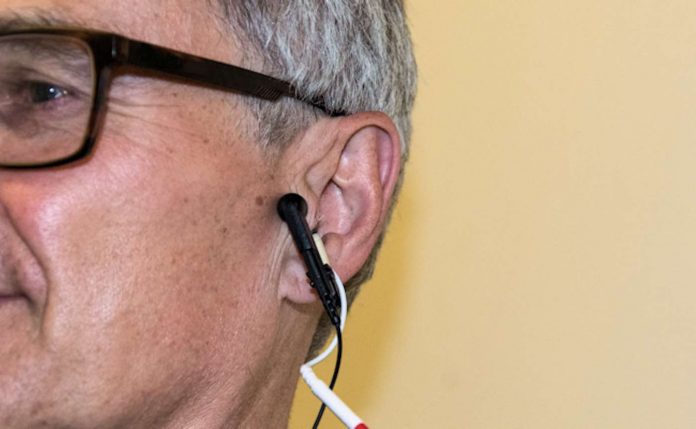
The therapy, called transcutaneous vagus nerve stimulation, delivers a small, painless electrical current to the ear, which sends signals to the body’s nervous system through the vagus nerve.

Their measurements showed the therapy could help protect people from chronic diseases to which we become more prone as we get older, such as high blood pressure, heart disease and atrial fibrillation.

The researchers, who published their findings this week in the journal Aging, suggest that the “tickle” therapy has the potential to help people age more healthily by recalibrating the body’s internal control system—also known as the autonomic nervous system.

“The ear is like a gateway through which we can tinker with the body’s metabolic balance, without the need for medication or invasive procedures,” said Lead author Dr. Beatrice Bretherton, from the School of Biomedical Sciences at the University of Leeds. “We believe these results are just the tip of the iceberg.”

RELATED: Gentle Ear Stimulation Shown to Significantly Reduce Symptoms of Parkinson’s Disease–Even Months Later

“We are excited to investigate further into the effects and potential long-term benefits of daily ear stimulation, as we have seen a great response to the treatment so far,” she added.

The autonomic nervous system controls many of the body’s functions which don’t require conscious thought, such as digestion, breathing, heart rate and blood pressure.It contains two branches, the sympathetic and the parasympathetic, which work against each other to maintain a healthy balance of activity. The sympathetic branch helps the body prepare for high intensity “fight or flight” activity, whilst the parasympathetic is crucial to low intensity “rest and digest” activity.

As we age, and when we are fighting diseases, the body’s balance changes such that the sympathetic branch begins to dominate. This imbalance makes us more susceptible to new diseases and leads to the breakdown of healthy bodily function as we get older.

CHECK OUT: Scientists Found Flute Music That Helps to Build the Brains of Premature Babies

Clinicians have long been interested in the potential for using electrical currents to influence the nervous system. The vagus nerve, the major nerve of the parasympathetic system, has often been used for electrical stimulation and past research has looked at the possibility of using vagus nerve stimulation to tackle depression, epilepsy, obesity, stroke, tinnitus, and heart conditions.

However, this kind of stimulation needs surgery to implant electrodes in the neck region, with associated expense and a small risks of side effects. Fortunately, there is one small branch of the vagus nerve that can be stimulated without surgery, located in the skin of specific parts of the outer ear.

In Leeds, previous controlled research studies have shown that applying a small electrical stimulus to the vagus nerve at the ear, which some people perceive as a tickling sensation, improves the balance of the autonomic nervous system in healthy 30-year-olds.

Other researchers worldwide are now investigating if this transcutaneous vagus nerve stimulation (tVNS) could provide a therapy for conditions ranging from heart problems to mental health.

In their new second study of this therapy (the first one included a placebo sham intervention), scientists at the University of Leeds wanted to see whether tVNS could benefit over 55-year-olds, who are more likely to have out-of-balance autonomic systems that could contribute to health issues associated with aging.

RELATED: Be Sure and Floss! Researchers Say Good Dental Health ‘Substantially’ Decreases Risk of Alzheimer’s

They recruited 29 healthy volunteers, aged 55 or above, and gave each of them the tVNS therapy for 15 minutes per day, over a two week period. Participants were taught to self-administer the therapy at home during the study.

The therapy led to an increase in measured parasympathetic activity and a decrease in sympathetic activity, rebalancing the autonomic function towards that associated with healthy function. In addition, some people reported improvements in measures of mental health and sleeping patterns.

Being able to correct this balance of activity could help us age more healthily, as well as having the potential to help people with a variety of disorders such as heart disease and some mental health issues. Additionally, improving the balance of the autonomic nervous system lowers an individual’s risk of death, as well as the need for medication or hospital visits.

MORE: Broccoli Isn’t Just Good For You – Scientists Find It Holds Molecule That Could Be the ‘Achilles’s Heel’ of Cancer

Researchers found that individuals who displayed the greatest imbalance at the start of the study experienced the most pronounced improvements after receiving the therapy.

Further studies are now needed to understand what the long-term health effects of tVNS might be, as this study involved a small number of participants, over a short time period.

Edited from article by the University of Leeds

Be Sure And Share The News With Your Friends On Social Media…

Watch This Fun-Loving Owl Have an Absolute Hoot When It Discovers Children’s Inflatable Pool

During a particularly hot English afternoon, this adorable owl spied a children’s swimming pool—and relished the opportunity for refreshment.

The opportunistic tawny can be seen hopping into the makeshift bird bath—looking left and right for danger. Then it precedes to dip its beak into the inches-deep water checking out the potential.

Getting its face wet was not quite enough, so the bird starts flapping its wings to make the water fly up into the air then rain down on its back.

The clip was captured by renowned wildlife artist and photographer Robert E. Fuller at around midnight earlier this month.

WATCH: Bald Eagle Weighed Down by Large Ball of Ice is Freed By Locals Who Jumped into Frozen Lake

Fuller uses wildlife surveillance cameras in his garden near Malton, North Yorkshire, to capture the after-dark goings-on that inspire his paintings.

“The paddling pool belongs to my children but they hadn’t really used it for a while and it had filled with rainwater,” said the English artist. “When I spotted an owl chick using it to bathe in I decided to direct one of my cameras on to the pool.

LOOK: Bird Rescuers Ask for Help in Nesting Season—Thousands Donate Hand-Knitted Nests

“Last year I filmed some tawny owls bathing in my garden pond,” he added. “I was very surprised to see that their chicks had adopted the paddling pool for their own fun this year.”

Fuller said that the main reason the animals bathe is to clean their feathers—and the kiddie pool, is just enough water to do that while keeping frisky feathered visitors safe and happy.

(WATCH the cute clip below)

Have A Hoot With Your Friends By Sharing This Sweet Video To Social Media…

“What a great therapist, teacher, or coach does is to alert people to resources they did not realize they had. That is the ultimate gift.” – Nathaniel Branden

Quote of the Day: “What a great therapist, teacher, or coach does is to alert people to resources they did not realize they had. That is the ultimate gift.” – Nathaniel Branden

Photo: by Kullez, CC license on Flickr

With a new inspirational quote every day, atop the perfect photo—collected and archived on our Quotes page—why not bookmark GNN.org for a daily uplift?


This Revolutionary Blast Furnace Vaporizes Trash and Turns It into Clean Energy (Without Any Emissions)

Photo by Sierra Energy

An exciting new startup can make clean energy by vaporizing heaps of trash without any waste or emissions.

The Sierra Energy company is aiming to tackle all of the non-recyclable garbage that ends up in landfills—from hazardous wastes and plastics to everyday trash and tires.

The company’s modified blast furnace uses FastOx gasification technology to heat all of the trash to 4,000 degrees Fahrenheit, which is about twice as hot as the heart of a volcano.

While it may seem like this would require large amounts of energy, the system is able to generate the heat simply by injecting pure oxygen into the furnace. The oxygen then reacts with the carbon emanating from the rotting garbage in order to create carbon monoxide and hydrogen. The steam is then pumped back into the furnace to maintain the internal temperature.

RELATED: Students Design Beach Vacuum That Can Suck Up Microplastics While Leaving All the Sand

The fuel that is made from the FastOx technology is reportedly 20 times cleaner than California fuel standards. And all of the gases that are generated by the chemical process are captured for reuse—for instance, to replace fossil fuels that power airplanes or for use as fertilizer, hydrogen, or ethanol.

Earlier this week, Sierra Energy announced that they were able to close a $33 million Series A investment round in order to further develop and commercialize its technology for municipalities and landfills so they can convert waste into clean, renewable energy and fuels.

LOOK: Adidas Test to Sell Shoes Made of Ocean Plastic Was So Successful, They’re Going Even Further

“The world is drowning in trash which, when landfilled, is a leading generator of methane, a greenhouse gas that is 86 times more harmful to our climate than carbon dioxide,” said Mike Hart, Sierra Energy’s CEO.

“Our FastOx gasification technology can efficiently and cost-effectively convert this trash into electricity, hydrogen, renewable natural gas, diesel, ammonia, and a variety of other valuable end-products. When you combine our technology with recycling and other waste diversion strategies, you have the solution to the world’s waste problem as well as a mobile casinos valuable source of renewable energy.”

The first commercial FastOx system was installed at a U.S. Army installation at Fort Hunter Liggett in Monterey County, California in 2017, to help achieve the Army’s zero waste goals.

(WATCH an explanation of the technique below…)

Power Up With Positivity By Sharing The Good News To Social Media… 

In World First, Doctors Have Been Prescribing Museum Visits to Patients—With Vouchers for Free Entry

Natural history museum in Chicago

Canadian doctors are now being encouraged to prescribe for their patients a new kind of supplemental treatment that doesn’t have any side effects: a relaxing trip to an art museum.

Back in November 2018, the Montreal Museum of Fine Arts (MMFA) teamed up with the Médecins Francophones du Canada (MFdC) to develop a plan that encourages physicians to write out art therapy prescriptions for their patients—and they included some great motivation.

Ordinarily, adult admission into the museum can cost as much as $31—but a doctor’s prescription will allow up to two adults and two children to enjoy the museum together for free.

Doctors participating in the program are given a pad of 50 free admission slips to dole out at their discretion. Since the initiative launched last year, the museum has filled over 185 prescriptions in the greater Montreal area.

MORE: Stressed? New Study Says You Simply Need a 20-Minute ‘Nature Pill’

The program, which is being called “the first of its kind in the world”, is also being used to conduct further studies of the effects of art therapy on a variety of physical and mental conditions, including anxiety, depression, Alzheimer’s disease, and cardiac arrhythmia.

“I am convinced that in the 21st century … the cultural experience of art will contribute to health and well-being as much as the practice of sports,” Nathalie Bondil, Executive Director and Chief Curator of the MMFA, enthusiastically said of the program.

“For skeptics, remember that a hundred years ago, it was said that sports distorted the body and threatened the fertility of women! Today, doctors prescribe exercise!”

Be Sure And Share The Intriguing News With Your Friends On Social Media 

Daughter’s Compassion For Classmate Prompts Mom to Buy-out Entire Store Supply of 1,500 Shoes

A compassionate mom from Arkansas is being praised for buying out the entire stock of a closing shoe store so she could donate all of the pairs of shoes to people in need.

Carrie Jernigan had been shopping with her kids at the Payless Shoe Store closing in Alma when her daughter asked if they could buy an extra pair of Avengers-themed shoes for her classmate whose shoes were too small.

Jernigan was more than happy to buy the shoes for her daughter’s friend. Then, following a curious afterthought, she asked the cashier how much it would cost to buy the rest of the store’s supplies.

She told KFSM: “As I was checking out I just said ‘how much for the rest of the shoes in the store,’ almost joking, and I could see the clerk’s face, her wheels start to turn, and she finished checking me out. She said ‘can I have your number?’”

The district manager later called Jernigan and told her the cost of purchasing all the product left in the store—about 1,500 boxes of shoes—and Jernigan jumped on the chance.

RELATED: Watch Ugandan Woman’s Joyous Reaction When She is Given Her First-Ever Pair of Shoes, Thanks to a Stranger

Since she bought out the store’s supply back in May, she and her family have been giving the shoes away to needy kids in their community.

“If you ask [my kids] what they want to be when they grow up, they say be kind—and so I don’t care what they do in life as long as they are kind and good people,” Jernigan told the news outlet.

“This just reiterates to me that their hearts are in the right place, and if it’s in the right place they can do amazing things.”

(WATCH the news coverage below) – Photo by KFSM

Race This Sweet Story Of Kindness Over To Your Friends On Social Media…

One of the Largest Hotel Companies in the World is Ditching Mini Bathroom Bottles to Eliminate Plastic

The company that runs the Holiday Inn and Crowne Plaza hotel chains announced this week that all of its 843,000 guest rooms will provide shampoo and other bathroom amenities from bulk-sized containers, eliminating millions of plastic bottles from landfills.

InterContinental Hotels Group (IHG), one of the world’s leading hotel companies, will be implementing the phase-out across all 5,600 of their properties worldwide with the transition to be completed within two years.

Building on its efforts to reduce plastic waste as part of a broader sustainability agenda, this pledge makes IHG the first global hotel company to commit all brands to removing bathroom miniatures in favor of bulk-size amenities.

Almost a third of its hotels have already adopted the change, according to Keith Barr, the CEO of IHG.

CHECK OUT: Another Victory Against Plastic – These Water Brands Will Soon Be Packaged in Aluminum Cans

“It’s more important than ever that companies challenge themselves to operate responsibly—we know it’s what our guests, owners, colleagues, investors, and suppliers rightly expect,” said Barr. “Switching to larger-size amenities will allow us to significantly reduce our waste footprint and environmental impact as we make the change.”

IHG currently has an average of 200 million bathroom miniatures in use across its entire hotel estate every year. As the new brand standard is adopted between now and 2021, the company expects to see a significant reduction in plastic waste.

LOOK: Adidas Test to Sell Shoes Made of Ocean Plastic Was So Successful, They’re Going Even Further

Switching to bulk-size amenities is a tested approach at IHG, which believes their hotel guests increasingly want more sustainability without any impact on the quality of their experience.

In October 2018, IHG announced the removal of single-use plastic straws from its hotels globally—an average of 50 million straws removed from IHG’s hotel estate each year, enough to stretch all the way from New York to Tokyo.

Multiply The Good News By Sharing This With Your Friends On Social Media…

50-Year-old New Yorker Being Hailed as ‘Highway Hero’ After Clearing Floodwaters From Freeway in Her Crocs

This 50-year-old New Yorker is being hailed as a “highway hero” after she took it upon herself to clear a flooded expressway with nothing but a traffic cone.

Daphne Youree had just picked her cat up from the veterinarian’s office last week when she started driving down the Long Island Expressway.

To her shock, she found that the highway had been flooded due to a recent storm. When she and her fellow motorists realized that there was no way for them to drive through the floodwaters, they all parked their cars and watched in helplessness.

RELATED: When Woman’s Car Fails and She Can’t Afford a Tow, Canadian Teens Push it 4 Miles to Get Her Home

“When I got out I saw a bunch of guys standing around talking about how someone needs to go do something,” Youree told The Gothamist. “Someone suggested we see how deep it was. But no one wanted to do it. So I volunteered.”

So without any further ado, Youree marched into the muddy floodwaters in her Crocs and found that the expressway drains had been clogged with dirt and sticks from the flooding. She then grabbed a traffic cone and began clearing the dirt from the drains.

“It didn’t really smell bad, just rain water with pieces of wood and dirt in it—that was what was clogging the drain,” said Youree. “So when I unclogged it, it cleared pretty quickly. At deepest it went above my knees.”

After Youree managed to successfully clear the highway, she responded to a tweet from the Emergency Management Department announcing that she had cleared the floodwaters.

In addition to City Council Speaker Corey Johnson thanking her for being a “great New Yorker,” Twitter users have begun rallying for Youree to be elected as the new mayor of New York—but the photographer says that she was simply happy to do her civic duty as a city-dweller.

Be Sure And Share This Story Of The Highway Hero With Your Friends On Social Media…

Photographers Spent Hours Putting Together These Inception-Inspired Pictures—and the Results Are Spectacular

SWNS
Kazanksky cathedral in St Petersburg, Russia. (Photo by SWNS)

A dedicated team of photographers has created these astonishing Inception-inspired pictures using hundreds and hundreds of pictures layered on top of each other.


Golden Gate in Vladimir, Russia. (Photo by SWNS)

The photos, which were created by video production company Lestnica, capture the iconic grand plazas, towering monuments, and majestic architecture of Russian cities that appear to be bending over themselves at a stomach-churning tilt.


Uspensky Cathedral in Vladimir, Russia. (Photo by SWNS)

Each image is anchored by an architectural feature as the focal point, with sidewalks and streets fanning outward similarly to how they were depicted in scenes from the 2010 sci-fi thriller.


Govenment building in Vladimir, Russia. (Photo by SWNS)

“The first time I saw shots similarly to these was in the movie Inception,” said Artem Prudentov, founder of Lestnica. “I thought it was computer graphics and it was impossible to take the same kind of shot in real life.


Palace Square in St Petersburg, Russia. (Photo by SWNS)

“A little later, my friend Ivan Medvedev sent me pictures that resembled those from the film. He found them on the internet and I thought it was just a photo of a 3D model.


Moscow university in Moscow, Russia. (Photo by SWNS)

“I said it wasn’t possible to take the same real picture of the city,” he mused, “but all this time, I was thinking about how to get a picture like that.


Victory Park, Moscow, Russia. (Photo by SWNS)

“I started trying. I took pictures, edited them, found mistakes, and corrected them. This cycle was repeated again and again over the following months.”


Russian Exhibition centre in Moscow, Russia. (Photo by SWNS)

The Lestnica photographers finally succeeded in creating the warped images by bending and merging together a series of photos.


SWNS

The team had to carry out 100 photo shoots and capture over 1,000 photos from different heights in order to create the final products.

Each image took over 12 hours to complete—but it finally resulted in a series of pictures that were appropriately “grand and majestic”.

Inspire Your Friends By Sharing The Good News To Social Media…

This Hiker Credits Metallica for Saving Her and Her Dog From Hungry Cougar

A Canadian woman is crediting one of her favorite heavy metal bands for saving her and her dog from a hungry cougar.

Dee Gallant and her dog Murphy were hiking through the wilderness of Vancouver Island in British Columbia last week when she found herself in a spine-chilling predicament.

As they were walking down through the woods, Gallant noticed that she and her pup were being stalked by a cougar standing 50 feet up the trail. Upon noticing that the cat was slowly creeping towards them, Gallant yelled at it to stop—and even though it remained at the end of the trail, it was still crouched in a predatory position with its gaze fixed on Gallant and Murphy.

Since the wind was blowing in the wrong direction, Murphy had not even picked up the scent of the cougar when Gallant spotted it. She knew she had to try and scare the big cat away before it pounced, so she began waving her arms in the air and yelling at the cougar.

MORE: Husky Saves Deaf Hiker After She Tumbled 700 Feet – and It’s Not the First Time He’s Saved a Stranger in Alaska

She spent about one minute trying to frighten the cougar, all while it remained transfixed on Gallant—but when her scare tactics failed to work, she knew she had to try something different.

Gallant then cranked up the volume on her cell phone, scrolled through her music library, and played the loudest song she had: “Don’t Tread On Me” by Metallica.

“I thought it was the noisiest thing on my phone that would probably scare it, that was also the messaged I wanted to convey to the cougar,” she told Kelowna Now. “As soon as the first notes blared out it ran into the bush.”

RELATED: Hiker Was About to Die in a Snowstorm When She Was Saved by a Total Stranger Following Her Intuition

Though Gallant was a little shaken during the remainder of her hike back to civilization, she and Murphy eventually made it home safely.

She now hopes to one day tell her story to the members of Metallica and thank them for coming to her rescue.

“I would love to contact them someday and tell James Hetfield that he saved my life,” she laughed.

(WATCH the video snippet below) – Photo by Dee Gallant

Be Sure And Share The Incredible Rescue Story With Your Friends On Social Media…

After Showing 92% Efficiency in Early Trials, We’re One Step Closer to First Ever Herpes Vaccine

We are now one step closer to having the first ever vaccine for genital herpes.

Last week, BlueWillow Biologics announced the issuance of a US patent number for the development of their intranasal herpes simplex virus (HSV) vaccine, which puts them one step closer towards conducting human trials.

The patent protects the use of the pharmaceutical company’s unique NanoVax adjuvant platform in the development of a vaccine that provides protection against HSV-1 and HSV-2, the two viruses that can cause genital herpes.

The intranasal NanoVax platform elicits both mucosal and systemic immunity through its novel oil-in-water nanoemulsion adjuvant, offering a unique advantage to combat sexually transmitted infections including genital herpes. The mucosal immunity elicited by intranasal NE vaccines provides critical protection against infections at the port of entry by which a pathogen enters the body.

RELATED: Robotic Arm Named After Luke Skywalker Enables Amputee to Touch and Feel Again: ‘It almost put me to tears’

The vaccine has demonstrated safety and efficacy in both prophylactic and therapeutic animal models for genital herpes. In a prophylactic guinea pig study, the intranasal vaccine prevented genital herpes infection in 92% of animals vaccinated. The vaccine also reduced recurrent lesions and viral shedding by more than 50% in therapeutic study animals previously infected with genital herpes compared to the animals who received no treatment.

More than one in six people aged 14 to 49 are infected with genital herpes and an estimated 776,000 new infections occur annually, according to the Centers for Disease Control and Prevention. Genital herpes increases a person’s risk of contracting HIV and can lead to miscarriage and premature birth in infected pregnant women. Herpes can also be passed from the mother to child during birth, potentially resulting in neonatal herpes, a fatal infection. Most genital herpes vaccine candidates have failed or been abandoned in recent years, leaving no reliable therapeutic or preventive vaccine for the disease.

MORE: Researchers Used Natural Gut Bacteria to Prevent—and Reverse—Food Allergies in Pre-clinical Trials

“Genital herpes is easily and often unknowingly transmitted between partners. The lifelong infection frequently causes psychological distress and negatively impacts quality of life,” said Dr. Ali Fattom, Senior Vice President of Vaccine Research and Development at BlueWillow.

“After years of research in animals, we are moving closer to studies in humans where we expect results to validate the potential of this much-needed vaccine,” he added.

Protect Your Friends From Negativity By Sharing The Good News To Social Media…
Watch the Magical Moment a Caregiver Sings With His Alzheimers Patient to Help Him Recall a Tune

When a man with Alzheimer’s disease could not remember the lyrics or melody to a song he liked, his caretaker offered up his own voice to help him out.

The caretaker began singing the gorgeous tune after his patient mentioned how he loved Bolero, but could not recall any songs.

After the caretaker began singing a few bars, however, the patient was able to join in—and the resulting duet is magical.

(WATCH the heartwarming video below)

Be Sure And Share The Sweet Footage With Your Friends On Social Media…

“We do not receive wisdom, we must discover it for ourselves, after a journey through the wilderness, which no one else can make for us, from which no one can spare us.” – Marcel Proust

Quote of the Day: “We do not receive wisdom, we must discover it for ourselves, after a journey through the wilderness, which no one else can make for us, from which no one can spare us.” – Marcel Proust

Photo: by Simon Matzinger, CC license

With a new inspirational quote every day, atop the perfect photo—collected and archived on our Quotes page—why not bookmark GNN.org for a daily uplift?