All News - Page 683 of 1724 - Good News Network
Home Blog Page 683

A Personal Message to GNN From Our Favorite Newscaster!

I wanted to share this, especially if you’re a long-time fan of GNN.

You guys know me as the founder—and how I’ve been working to share good news with the world for 21 years.

For my 60th birthday last week, the staff surprised me with a personal message from Steve Hartman! Our favorite news broadcaster, GNN shares his videos ALL the time—so, this was wonderful and so special.

It’s great to hear about whenever famous people take the time for kindness. (Check out our Celebrities page for more like this, including the latest ‘Keanu Kindness’.)


Steve ROCKS, sp please go follow his Facebook page and show him some love: On the Road with Steve Hartman…

Always Disorganized? That Might Actually Be A Good Thing

Disorganized-CC-edtechworkshop


There’s never been a better time to be disorganized.

For those of who you have been criticized for being messy, we have some good news. According to Steven Johnson, “the more disorganized your brain is, the smarter you are.”

He is the author of Where Good Ideas Come From: The Natural History of Innovation. In his book, he notes that this revelation was discovered in a neuroscience experiment conducted by bio-psychologist Robert Thatcher.

In addition, Johnson and other sources have cited “messy” ideas as proving to have a profound impact on creativity.

For instance, research has revealed “wandering minds” to be more creative—and even large cities as being more creative than smaller towns due to the amount of spurring ideas.

“Being right keeps you in place,” says this author of seven books focused around science, technology and life. “Being wrong forces us to explore.”

RELATEDHow One Man Became a Math Genius After Suffering Brain Injury

The book begins with Charles Darwin’s first encounter with the teeming ecosystem of the coral reef and draws connections to the intellectual hyper-productivity of modern life.

By the end of the book, Johnson builds a case for what he believes:

“You may not be able to turn your government into a coral reef, but you can create comparable environments on the scale of everyday life: in the workplaces you inhabit; in the way you consume media; in the way you augment your memory. The patterns are simple, but followed together, they make for a whole that is wiser than the sum of its parts. Go for a walk; cultivate hunches; write everything down, but keep your folders messy; embrace serendipity; make generative mistakes; take on multiple hobbies; frequent coffeehouses and other liquid networks; follow the links; let others build on your ideas; borrow, recycle, reinvent. Build a tangled bank.”

(READ more at TIME Magazine)

Inspire the creativity, share below…

“To believe in the story of Easter is to believe that a wall is nothing more than a door in disguise.” – Craig D. Lounsbrough

Quote of the Day:  “To believe in the story of Easter is to believe that a wall is nothing more than a door in disguise.” – Craig D. Lounsbrough

Photo: by Yorgos Stavrinos, CC license via Flickr

With a new inspirational quote every day, atop the perfect photo—collected and archived on our Quotes page—why not bookmark GNN.org for a daily uplift?

This Guy Created a Social Media Project for His Love of Dogs – and it Has Now Saved Dozens of Pups

Before Matt Nelson had millions of online followers and subscribers, he was just a guy who loved dogs; three years later, he has used his love of canine companions to save the lives of dozens of pups.

When Nelson was just a freshman in college, he started a “We Rate Dogs” Twitter account so he could post pictures of cute dogs and rate them on a 10/10 scale.

That being said, Nelson has given every single dog on his channel a 10/10 rating – “because they’re all better than perfect.”

WATCHWhen Two Dogs Became Trapped in Ice, the Perfect Russian Rescuer Happened to Be Walking By

“Dogs have always been a part of my life,” Nelson told GoFundMe. “When I was a bored college freshman and wanted to start a new thing, I knew that most people shared this love of dogs with me, so why not create an account that embraced that?”

Since starting with several thousand followers, his Twitter account has accumulated 8 million subscribers.

Some people might settle for internet fame, but as Nelson became more and more familiar with canine friends, he found an opportunity to use his passion project for good.

“In mid-2016, there were four dog – three pugs and an older yellow lab –who always dressed up for the holidays,” says Nelson. “Their owner would make a whole backdrop and dress them up, and she sent me a photo for every holiday.

“Then, I learned that one of them needed a doggie wheelchair. I think he was 12 years old and struggling a little bit. It was $400 or $500 for the wheelchair, so his owner started a GoFundMe.”

Since Nelson figured that his followers were familiar with the sweet pups, he shared the crowdfunding campaign in hopes of helping to raise money for the the wheelchair. Within hours, their followers donated enough money to meet the crowdfunding goal.

Inspired by his followers’ dedication, Nelson continued to share GoFundMe campaigns for the pups on his page – and every single time, his followers helped the campaigns to meet their goals.

LOOKFive Days After Disappearing, Dog is Finally Found and Rescued From Underground Rabbit Hole

“These were dogs that people weren’t familiar with until they read their stories, but they just attached themselves to it and raised the money,” said Nelson. “In that first year, we shared one with a goal of over $10k – so this was the post where I thought, ‘If we don’t make it, it’s okay’ – but within 24 hours, that goal was hit.”

In 2017, Nelson committed to consistently sharing canine-related crowdfunding goals. To date, he has helped 88 different campaigns meet their goals, raising over $552,000 in donations.

“I’d like to think that if anyone else had this audience, they would do the same. Hopefully I’ve taken it and done the best I’ve could with it, but it’s been wild for sure,” said Nelson.

“If you believe in a cause, I’m sure a quick Google search can get you to where that cause is being elevated. And if you’re really invested in it, you can find a way to get it done.”

(LISTEN to Nelson’s interview below) – Photo by Matt Nelson

Be Sure And Share The Pawesome Story With Your Friends On Social Media…

Sniffing Pleasant Odors Shown to Decrease Cigarette Cravings

Smokers who are trying to quit may not always have to reach for a piece of nicotine gum to stave off a craving. Deliberately inhaling a pleasant aroma may be enough to reduce the urge to light up, at least temporarily, and could be used as part of an effective smoking cessation strategy.

“Despite disappointing relapse rates, there have been few new approaches to smoking cessation in general and to craving relief in particular,” said lead author Michael Sayette, PhD, of the University of Pittsburgh. “Using pleasant odors to disrupt smoking routines would offer a distinct and novel method for reducing cravings, and our results to this end are promising.”

The research, which was conducted by the American Psychological Association, was published in the Journal of Abnormal Psychology.

While smoking rates have fallen over the past 50 years, approximately 40 million Americans still smoke, according the U.S. Centers for Disease Control and Prevention. Most adult smokers want to quit and at least half report trying in the past year, yet half of those who try relapse within two weeks.

RELATEDRecovering Addict Gives Free Gym Memberships to Those Who Want to Stay Sober

“Even with nicotine replacement, relapse is common. New interventions are urgently needed to help the millions who wish to quit but are unable,” said Sayette.

The researchers recruited 232 smokers, ages 18 to 55, who were not trying to quit at the time and were not using any other nicotine delivery system, such as gum or vaping. They were asked not to smoke for eight hours prior to the experiment and were required to bring a pack of their preferred cigarettes and a lighter with them.

Upon arrival, the people first smelled and rated a number of different odors generally considered to be pleasant (e.g., chocolate, apple, peppermint, lemon, or vanilla) as well as one unpleasant chemical odor, tobacco from the participant’s preferred brand of cigarettes and one blank (no odor). They were then asked to light a cigarette and hold it in their hands, but not smoke it. After 10 seconds, the participants verbally rated their urge to smoke on a scale of 1 to 100 before extinguishing the cigarette and putting it in an ashtray.

MORETown’s Compassionate Approach Cuts Rates of Overdose by More Than Half – State to Adopt It

The participants then opened a container that held either the scent they had rated most pleasurable, the scent of tobacco or no scent and sniffed it once before again rating their urge to smoke. They continued to sniff the container they were given for the next five minutes, rating their urge to smoke every 60 seconds.

The average craving score just after lighting the cigarette was 82.13. Regardless of what odor they smelled, all participants experienced a decreased urge to smoke after sniffing the container, but the average craving scores for those who smelled pleasant odors dropped significantly more (19.3 points) than those who smelled tobacco (11.7 points) or received the blank (11.2 points).

The researchers were not surprised by the findings, as they confirmed and extended results from a much smaller, exploratory study they had previously conducted, according to Sayette.

CHECK OUT: Give Yourself a ‘Dry January’ – You’ll Sleep Better, Save Money, and Lose Weight

“These days, replicating prior findings is not something I take for granted, and extending the research by showing that we can maintain the effect for as long as five minutes suggests it might offer enough time for a smoker to decide to avoid or leave their high-risk situation,” he said.

Sayette believes that part of the reduction seen in all three conditions may be due to smokers extinguishing the cigarette and removing temptation. As for why pleasant aromas achieved a greater reduction in cravings, he thinks they may work by distracting smokers from thoughts of their craving to memories linked to these olfactory cues (e.g., peppermint reminded some of the smokers of childhood Christmas holidays spent at a grandparent’s home), but more research would need to be done to confirm his hypothesis.

“Our research suggests that the use of pleasant odors shows promise for controlling nicotine cravings in individuals who are trying to quit smoking,” said Sayette, who noted that additional research needs to be done to see if this strategy could prove useful alone or in combination with other approaches to smoking cessation.

Reprinted from American Psychological Association

Be Sure And Share The News With Your Friends On Social Media…

“Cheating and lying aren’t struggles. They’re reasons to break up.” – Patti Callahan Henry

Quote of the Day:  “Cheating and lying aren’t struggles. They’re reasons to break up.” – Patti Callahan Henry

Photo: by Marc, CC license via Flickr

With a new inspirational quote every day, atop the perfect photo—collected and archived on our Quotes page—why not bookmark GNN.org for a daily uplift?

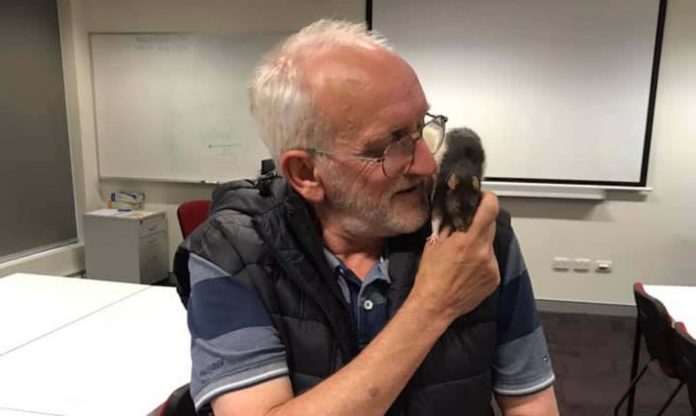
Homeless Man Finally Reunited With Beloved Pet Rat After Pedestrian Mistakenly Took It Home

A homeless man named Chris has been reunited with his pet rat after social media users rallied together to help.

The 59-year-old man was devastated when his beloved Lucy first went missing. The dynamic duo is frequently seen on the streets of Sydney, Australia, and the two are virtually inseparable.

Lucy disappeared from her usual resting spot earlier this month when Chris briefly left his sidewalk setup in order to use the bathroom. When he returned to his spot and found that his pet rodent was gone, he immediately contacted the New South Wales Police Department for help.

Upon reviewing nearby security footage, the officers found that a woman had taken Lucy from Chris’s encampment.

LOOKMan Reunites Senior With His Pup After Standing On a Street Corner With ‘Lost Dog’ Sign for 3 Hours

With the help of the police force, Chris posted a photo of himself holding a sign to social media. The sign read: “My pet rat Lucy was stolen on Saturday. Lucy is black and white with a bit of brown.”

The post was shared across Facebook until it was eventually spotted by the woman who had taken the rat.

According to a statement from the police force, the woman had been walking down the sidewalk when she “saw Lucy alone, believed she had been abandoned, so took her home and cared for her.”

WATCHTears Flow as 88-Year-old Finally Meets Biological Daughter She Thought Died At Birth

Upon seeing the Facebook photo, the woman handed Lucy over to the police so she could be reunited with her proper owner.

Needless to say, Chris was delighted.

“This feels wonderful,” he said in a video released by the police force. “Thank you very much everybody. She knows she’s missed me, too, aye.”

(WATCH the police video below) – Photo by NSW Police

Be Sure And Share This Rat-astic Reunion Story With Your Friends On Social Media…

New MDMA Study From Johns Hopkins Further Explains Why Ecstasy Can Help Treat PTSD

Reprinted from Johns Hopkins University

A group of Johns Hopkins neuroscientists have found that the psychoactive drug MDMA, or ecstasy, causes a neural response called a “critical period,” when the brain is sensitive to learning the reward value of social behaviors.

The findings, reported earlier this month in Nature, may explain why MDMA may be helpful in treating people with post-traumatic stress disorder.

Critical periods were first described by scientists studying snow geese in the 1930s. About 24 hours after a gosling hatches, researchers observed, if the mother goose is nowhere to be found, the hatchling will bond with an object, including non-living ones. Yet, if the mother goose disappears after the critical period ends, about 48 hours later, the hatchling won’t bond to an object.

Since the snow goose study, studies have shown evidence that critical periods smooth the way for the development of language, touch, and vision. For the MDMA study, scientists at the Johns Hopkins School of Medicine wanted to determine whether a critical period exists for learning the rewards associated with social behaviors, and if so, whether the drug could reopen the critical period.

RELATEDVeterans Are Finding Peace From PTSD Through ‘Float Therapy’

Neuroscientist Gül Dölen and her team studied groups of mice in enclosures with different bedding. They put several mice together in one enclosure with one type of bedding for 24 hours and, in the next 24 hours, put the same mice by themselves in another enclosure with a different type of bedding. The mice began to associate certain types of bedding with isolation or companionship. Then, they let the mice wander between enclosures with the two types of bedding and tracked how long the mice spent in each enclosure. The more time the mice spent in the bedding linked to their companions indicated more social reward learning.

“It’s why people gather around the water cooler,” says Dölen, assistant professor of neuroscience at the Johns Hopkins University School of Medicine. People are conditioned to know that the water cooler is an optimal place to chit-chat with companions.

In their experiments, Dölen and her colleagues found that the critical period for social reward learning in mice occurs around puberty and wanes once they become mature adults. To determine if they could reopen the critical period, the scientists gave MDMA to mature mice, waited 48 hours for the drug to be washed out of their system, and observed how the mice explored their enclosure and behaved with other mice in the enclosure. Following the treatment with MDMA, most of the animals responded to social interactions the same way as juveniles, by forming a positive association between social interactions and the bedding. This effect lasted for at least two weeks after the MDMA treatment, and it was not observed in mice given saline injections.

MOREVeteran With PTSD is Creating Free Tiny House Community for Others Like Him

“This suggests that we’ve reopened a critical period in mice, giving them the ability to learn social reward behaviors at a time when they are less inclined to engage in these behaviors,” Dölen says.

Dölen and her postdoctoral student and first author of the current study, Romain Nardou, also observed that MDMA works to reopen the critical period only if the drug is given to mice when they are with other mice, not if it is given to mice while they are alone. This suggests that reopening the critical period using MDMA may depend on whether the animals are in a social setting, say the scientists.

The mice maintained their ability to learn the rewards of social behavior for up to two weeks from the time they were given MDMA. During this time, Dölen and her colleagues also found that the brains of the mice had corresponding responses to oxytocin, known as the “love hormone,” which is made in the hypothalamus and acts in the brain as a signal between neurons that encode information about social rewards. They found these responses by looking more closely at synapses, the spaces between brain cells called neurons. Their experiments showed that, in mature mice given MDMA, oxytocin triggers signaling in the synapses that encodes learning and memory, which does not typically happen in mature mice.

CHECK OUTElderly Couple Share Their Farm With Vets Suffering From PTSD

Dölen says that opening the critical window for social reward behavior may also have implications for treating psychiatric conditions. A strong bond between a psychotherapist and patient is well-known to be important for successful treatment. If MDMA reopens the critical period for social reward learning in humans in the same way it does for mice, then it could explain why the drug has been successful in treating people with PTSD, perhaps by strengthening the psychotherapist-patient bond.

MDMA has been designated by the U.S. Food and Drug Administration as a “breakthrough therapy” for PTSD, meaning that the agency will fast-track the development and review of clinical trials to test it. However, the researchers caution that MDMA may not work for every psychiatric condition linked to social behaviors.

“As we develop new therapies or determine when to give these therapies,” Dölen says, “it’s critical to know the biological mechanism on which they act.”

Treat Your Friends To Some Good News By Sharing This To Social Media…

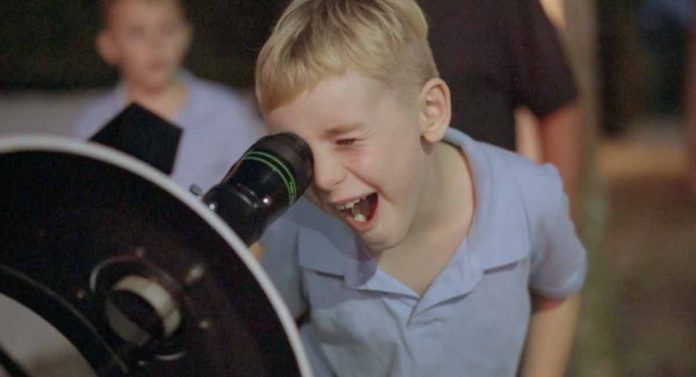
Man Brings Telescope to the Street and Invites People to Look at the Moon –Their Reactions Will Bring You to Tears

Everyone has seen the moon before – but not many people have seen it the way that Wylie Overstreet has.

In an awe-inspiring video that was chosen as a “Staff Pick” on Vimeo back in March 2018, Overstreet takes his $1,000 telescope out onto the streets of Los Angeles.

When passerby inevitably become curious over his bulky metal instrument sitting on the sidewalk, he tells them it’s a telescope and asks them if they would like to use it to see the moon.

With filmmaker Alex Gorosh on hand to record their reactions, dozens of people all take turns peering through the telescope to get a glimpse of the moon like they’ve never seen it before.

WATCHResearchers Drop Ice Chunk Down Glacial Hole and it Makes the Most Satisfying Sound Ever

Some people were brought to tears; others simply gasped in surprise – but every single one of them was moved by the incredible view.

“It’s incredible!” exclaimed one of the pedestrians. “I feel like I just landed on the moon!”

The video, which is appropriately overlapped with the soothing sounds of Claude Debussy’s “Clair De Lune”, is a compilation of people’s reactions from ten different nights over the course of one year.

RELATEDHave You Ever Seen a Shaolin Monk Pierce a Pane of Glass With a Needle?

Overstreet describes the experience in the video by saying: “To be able to see it up close, and feel like you can almost reach out and touch it – that’s what makes it real to us. It makes you realize that we’re all on this small little planet and we all have the same reaction to the universe we live in. I think there’s something special about that. Something unifying. It’s a great reminder that we should look up more often.”

(WATCH the tear-jerking video below)

A New View of the Moon from Alex Gorosh on Vimeo.

Click To Share The Out-of-this-World Video With Your Friends – Photo by Alex Gorosh

“Treat a man as he is, he will remain so. Treat a man the way he can be and ought to be, and he will become as he can be and should be.” – Goethe

Quote of the Day: “Treat a man as he is, he will remain so. Treat a man the way he can be and ought to be, and he will become as he can be and should be.” – Goethe

Photo: by HendersonStateU, CC license via Flickr

With a new inspirational quote every day, atop the perfect photo—collected and archived on our Quotes page—why not bookmark GNN.org for a daily uplift?

Young Couple Rescued From Crocodile-Infested Park After Writing ‘HELP’ in the Mud

Photo by Western Australian Police

A young couple has been rescued from a crocodile-infested park after they scrawled out a massive call for help in the mud.

20-year-old Colen Nulgit and his girlfriend, Shantelle Johnson, had gone out for a daytime fishing trip at Keep River National Park near the upper border of Western Australia last week when their car became stuck in some mud.

When they were unable to free the vehicle from the grime, they began to worry. The park’s waterways are often crawling with crocs, and the couple had already seen plenty of reptile tracks running through the mud.

LOOKChildren Form ‘Human Arrow’ to Lead Helicopter to Escaping Thieves, Win Award

Not only that, they had only brought a carton of water bottles and some meager food rations for the trip.

Nulgit and Johnson tried to fall asleep in their car – but as the sun set and the nearby water levels began to rise, they feared that the high tide would bring the crocodiles closer to their car.

The young couple then moved towards dry land and hoped for rescue. They even used a piece of wood to trace the word “HELP” into the mud alongside an arrow pointed towards their car.

Photo by Western Australian Police

Thankfully, the couple had been careful to tell Nulgit’s parents where they were going and when they expected to be home; so when they failed to return the very same night, his concerned mother called the police.

Rescue crews began searching the area by aircraft the next morning. Upon hearing the sound of the plane, the couple started a fire so the rescuers would see the smoke.

MOREWhen Goats Get Themselves Stuck on Narrow Ledge of Bridge, Humans Come to Their Rescue

As the plane drew closer to the smoke, rescuers successfully located the couple after they caught sight of the “HELP” sign pointing towards the car.

Nulgit and Johnson were overwhelmingly grateful for the rescue – and even though they say that they will not be deterred from going on more outback excursions in the future, they now plan on putting together an emergency survival kit for the car.

(WATCH the police video below) – Feature photo by WA Police

Help Your Friends Avoid Negativity By Sharing The Good News To Social Media…

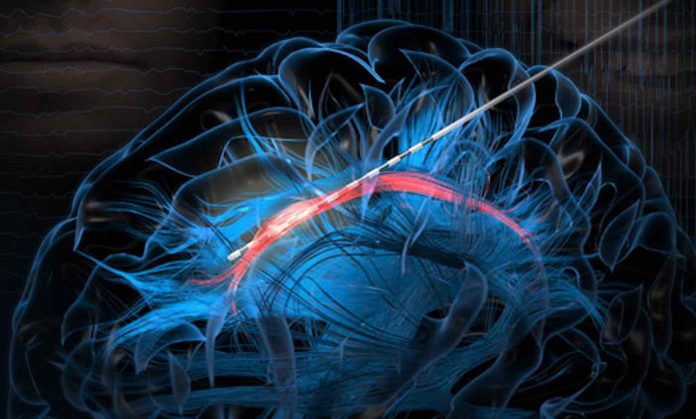
First American With Drug-Resistant Epilepsy Has Great Success With Newly-Approved ‘Brain Stimulation’

For the first time in America since the procedure was approved for commercial use last year, scientists have successfully treated a patient for drug-resistant epilipsy with a technique called “deep brain stimulation” (DBS).

DBS is a minimally-invasive surgical therapy that uses an implanted medical device, similar to a cardiac pacemaker, to deliver electrical stimulation to precisely targeted areas of the brain as adjunctive treatment for several neurological disorders – including depression.

In April 2018, the FDA granted pre-market approval for Medtronic DBS therapy as adjunctive treatment for reducing the frequency of partial-onset seizures in individuals 18 years of age or older who are drug-resistant to three or more anti-epileptic medications.

The approval was based on results from the SANTE trial (Stimulation of the Anterior Nucleus of the Thalamus in Epilepsy), where patients had a median seizure frequency reduction of 75% at seven years post-implant.

RELATEDExciting New Study Shows That Zapping the Brain ‘Acutely’ Relieves Symptoms of Depression

During DBS, thin stimulation electrodes are placed into deep regions of the brain that control various functions. A pacemaker implanted in the chest sends electrical impulses through the electrodes, which regularizes abnormal brain activity and alleviates symptoms.

DBS therapy for epilepsy delivers controlled electrical pulses to a target in the brain called the anterior nucleus of the thalamus (ANT), which is part of a network involved in seizures.

Dr. Robert E. Gross completed the first case in the U.S. since the procedure was FDA-approved and made available commercially. That procedure was conducted at Emory University Hospital in November 2018 – and according to a university statement in February, the patient is doing well.

WATCHHe Was Called Foolish for His Research; Now Documentary Tells How He Won Nobel Prize for ‘Cancer Cure’

“The commercial availability of DBS provides an important surgical treatment option for patients who suffer from epilepsy and do not respond to medication,” says Gross. “ANT DBS has been shown to significantly reduce the frequency and severity of seizures and improve quality of life out to seven years.”

“While it has only been two months since the system was turned on, his frequency of seizures has declined by more than 50%, and we expect improvement to increase further with additional programming sessions.”

The second case at Emory took place on February 21st and researchers are eager to witness its continued success.

CHECK OUT: Years After She Smells Parkinson’s Disease on Her Husband, Woman is Now Paving the Way for Early Detection Test

According to the American Epilepsy Society, as many as three million Americans have epilepsy. Antiepileptic drug (AED) medication is the primary treatment to control seizures; however, approximately one third of individuals with epilepsy have seizures that do not successfully respond to AEDs. In the SANTE trial, all subjects had tried at least three AEDs and, on average, lived with epilepsy for 22 years prior to treatment with DBS.

The Medtronic DBS System for Epilepsy has demonstrated safety and effectiveness in patients who averaged six or more seizures per month over the three most recent months (with no more than 30 days between seizures) and has not been evaluated in patients with less frequent seizures.

In addition to medically refractory epilepsy, DBS therapy is currently approved in many locations around the world, including the United States and Europe, for the treatment of the disabling symptoms of essential tremor and Parkinson’s disease.

(Reprinted from Emory University)

Treat Your Friends With A Daily Dose Of Good News By Sharing This To Social Media…

GNN Fans Write Poems Dedicated to Good News for My Birthday

To celebrate both National Poetry Month — and my birthday Friday — I asked newsletter subscribers to send in poems about what it’s like to read the news on Good News Network. Here are a few, including this one from my French friend in California: (Thanks so much!)

Le poeme from Pascal

In the mists of this fresh morning
I take my warm cup of “Zen” coffee
To get ready for my daily Om zing
With good news that anchors hope into reality…

I can visualize with all optimism and vigor
All these people that are doing such noble deeds
And I know, now, for the children future
That such good work will fulfill their needs

I can go now, walking tall and smiling
That those good news I have just read
Makes me confident and even more wanting
To spread the fact that we are winning

This feeling of calm and happiness revolution
I can share it and show the way to so many
That when we see the might of all compassion
We are the heroes for the following generation

hugs sign Times Square

From Kareen Johnston Tucker

In a world filled with so much bad news. . .
so much sad news . . .
what a relief to find this glad news . . .
in the Good News Network.

Open the file with a click and watch your
screen fill with a flood of stories. . .
stories of hope. . .
stories of joy. . .
stories that put a smile on your face
. . .a spring in your step
. . .and a warm fuzzy feeling like a
soft blanket warming your soul.

Stories that soothe your mind, body, and spirit
stories that inspire you and remind you that
there is much good t be found
just open your heart, your eyes, your mind
. . .and tap into the source at
. . .the Good News Network.

Here are two poems, from Pamela Haines
in slightly different styles:

The Choice

There’s good and bad news
Both can be aired
We needn’t be spared
Which would you choose?

Turning the Soil

This soil is hard and sour
No place for living things
Yet living things would grow
Despite all odds.
Stunted, spindly
Starved for proper food
We stretch and strive.

The soil has been degraded over time
Fat promises run dry
Earth’s patient bills come due
Hatreds stirred by fears
Yield searing flame and bitter ash
A nightly dose of horror
Blares out from our screens–
A culture drawn to shock
Consumed by greed.
We do not thrive.

But things can change.
With patient work a soil can be renewed
Rich life-supporting nutrients worked in
Tales of generosity, good news
Stories that renew our faith, give hope
allow cramped roots the space to move
reach out, take in good food
Give strength to stem, leaf, flower.
With inner health restored
In upright vigor, reaching toward the sun
The task is not so bleak–
To claim our common future
Claim our lives.

From Anthony Fraser

To read good news,
helps me get rid of the blues.

It puts a smile on my face,
It makes me want to dance in place.

I feel so glad to read about good things
It makes me want to sing.

So keep on printing these words of joy
And I’ll keep shouting, O’Boy!

Smiley face flag

From David Wilkinson

The only good news is no news,
that’s what I used to say
\And so I chose to miss the news to brighten up my day

But now I know that Good News
is found with just a click
And I can chose just what to read – I think that’s pretty slick!

Good News is read without the dread
that most news seems to bring
The posts uplift and comfort, they cause my heart to sing

And I find joy that in this world
there are still folks who care
They make my day by doing good, and finding ways to share

So, though most news may still be bad,
I choose to read the best
and though I need to be aware, for safety’s sake, I guess

A bit of bad and ugly news
can be offset, I say
By clicking onto GNN, where Good News wins the day!

Good News Logo


“Beauty is not who you are on the outside, it is the wisdom and time you gave away to save another struggling soul like you.” – Shannon L. Alder

Quote of the Day: “Beauty is not who you are on the outside, it is the wisdom and time you gave away to save another struggling soul like you.” – Shannon L. Alder

Photo: by Andrés Gallardo, CC license via Flickr

With a new inspirational quote every day, atop the perfect photo—collected and archived on our Quotes page—why not bookmark GNN.org for a daily uplift?

With Only 147 of World’s Fattest Parrots Left, This Year’s Baby Boom Has Left Researchers Positively Squawking

Baby kākāpō being hand-fed – Darren Scott / Department of Conservation (NZ)

The world’s fattest and only flightless species of parrot has just enjoyed an astonishing baby boom – and conservationists are thrilled.

Though they used to be one of the most common birds of New Zealand, there are only 147 adult kākāpō alive today.

The species was previously thought to be extinct until a small population was found on an island south of the country’s mainland in the 1970s. Over the course of the following decades, their population incrementally increased from 18 birds in 1977 to 50 in the mid-1990s, according to The Guardian.

Kākāpō only breed every two to four years, when rimu trees produce fruit in what’s known as a mast year. The last mast year, in 2016, saw a record 34 birds added to the population.

RELATEDWorld’s Second Largest Coral Reef Has Just Been Removed From Endangered List

This month, however, scientists were delighted by the arrival of 76 new chicks – which is more than double the previous record number of hatchlings.

“It’s absolutely huge, it’s massive,” Dr. Andrew Digby, a science advisor to the Department of Conservation’s kākāpō recovery program, told The Guardian.

“In the last two seasons there have been huge quantities of fruit not seen for 50 years, so that’s why all of the female kākāpō know it is time to breed, and actually started much earlier than usual, meaning some have now been able to nest twice.”

LOOKEndangered Parrots Won’t Stop Messing With Traffic Cones So the Cheeky Birds Have Been Given Their Own Roadside Gyms

A temporary hand-rearing facility was set up in Invercargill to help care for this season’s most vulnerable chicks, providing a rare opportunity for people to see a kākāpō before they were returned to their predator- and pest-free island homes.

In previous years, public viewings were held over longer periods, but with the chicks and their mothers doing so well on the islands, the facility was not required for the same length of time this year.

“Kākāpō are [a cultural treasure] for all New Zealanders and we are so excited to share their success with the public this year,” says kākāpō advocacy ranger Bronnie Jeynes.

“With all the rimu fruit available the chicks are really thriving on the islands this year. For the first time in recent memory we’ve been able to put three chicks in one nest! It’s a hugely exciting time.”

(WATCH this kākāpō’s adorable happy dance in the video below)

Fly The Good News Over To Your Friends By Sharing It To Social Media – Feature photo by Don Merton / Department of Conservation (NZ)

Stressed-Out Americans Only Get 43 Minutes of ‘Me Time’ Per Day, But Solution May Lie in Their Backyards

Struggling to find a little “me time”? You’re far from alone because the average American only gets five hours of “me time” in a week — that’s just 43 minutes a day.

In addition to a lack of “me time”, a new poll examining where and how people like to unwind found the average person only gets into their ideal headspace 3.5 days a week, so it’s no surprise that one in four wouldn’t describe themselves as “relaxed.”

The results from a survey of 2,000 people found that current events, jobs, partners, kids, and too much noise are the top five things that prevent people from getting enough R&R.

Frequent stressors can quickly turn a day sour. Three in four people admitted that if they don’t have time to get in a good headspace with some “me time,” it negatively affects their mood.

MOREStressed? New Study Says You Simply Need a 20-Minute ‘Nature Pill’

75% of people wish they spent more time outdoors and 20% admit they don’t use their own outdoor space enough.

There are so many benefits to relaxing outside, rather than inside. Medical research has shown that spending time in nature can reduce symptoms of mental and physical ailments and boost the body’s production of immune cells and cancer-fighting proteins. Other studies show that spending just 20 minutes in nature can greatly reduce a person’s stress levels – and people who live close to birds and trees are less likely to suffer from depression, anxiety, and stress.

The research conducted by OnePoll on behalf of POLYWOOD also found that a quarter of those surveyed revealed that they aren’t even home during daylight hours to spend time on the deck or patio.

LOOKHow a Yoga Teacher is Saving First Responders Across America From Depression – With Downward Dog

Moreover, many are deterred from hanging outside by the shabby state of their outdoor spaces. Almost three in 10 described their lawn or deck furniture as “worn down” while one in 5 would be embarrassed to have guests over with their yard as it currently sits.

When asked how people wanted to improve their yards, respondents said more plants and flowers (53%), new furniture (40%), new deck/patio (29%) and power washing the exterior (28 percent).

“I think (it’s) human nature to be outdoors,” said interior designer Angelo Adamo from POLYWOOD. “For us to be inside all the time, it’s just awkward, it’s unorthodox. We need to spend more time outdoors.”

MOREInstead of ‘We Are What We Eat,’ the Science of Kindness Says ‘We Are What We See’ in Daily Life

“Decorating and designing the outdoor like you’re designing your indoor space is a trend that’s gaining momentum and I think will be here to stay,” added Farah Merhi, Founder of Inspire Me! Home Decor. “The backyard is becoming an extension of the indoors.”

TO DO LIST FOR OUTDOOR SPACE
Plant flowers – 53%
Replace furniture – 40%
Mow lawn – 32%
Weed garden/replace deck – 29%
Power wash – 28%
Hire landscapers – 19%

REASONS PEOPLE AREN’T OUTSIDE MORE
Weather – 51%
Work – 36%
Household chores – 32%
Not home in daylight – 23%
Kids – 21%
Don’t like outdoors – 10%

Be Sure And Share The Survey With Your Friends On Social Media…

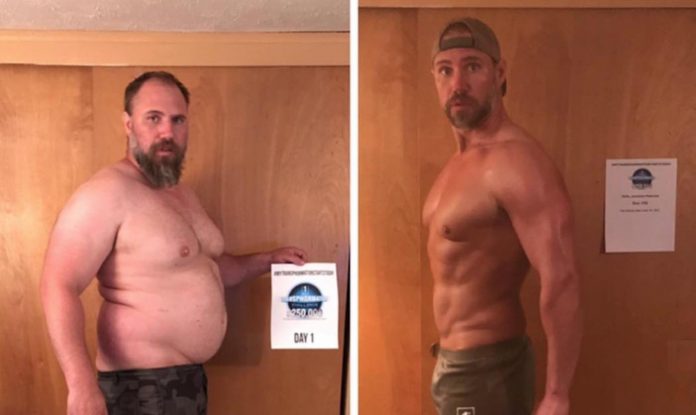
Role Model Dad Spurred to Lose 92 Pounds in 5 Months After One Hiking Trip With His Kids

Being a parent is already a life-changing experience, but this 40-year-old dad underwent an astonishing transformation after going on a hike with his kids.

Before Jeremiah Peterson looked like a supermodel, he weighed 290 pounds. He was only motivated to lose weight after he went on a hike with his family in 2017 and became self-conscious over how quickly he tired out from the activity.

“Instead of remembering all the good memories we had made on this trip, all I can remember is this one thing that kept playing in my head over and over again: I found myself running out of breath and having to take breaks way before my 9-, 7-, and 6-year-old kids,” Peterson wrote on Instagram.

CHECK OUT: Man is Transformed After His Weight Takes Up 2 Plane Seats During Wildfire Evacuation

The dad from Missoula, Montana then resolved to get in shape.

He started by cutting alcohol out of his life and adhering to a ketogenic diet. Every day for five months straight, he would hike for two hours and spend one hour at the gym.

After 150 days of strict diet and exercise, Peterson lost 92 pounds and shrunk from a size 42 pant size to a size 33. Not only that, he can now run nonstop up the hiking trail that once exhausted him.

MOREGive Yourself a ‘Dry January’ – You’ll Sleep Better, Save Money, and Lose Weight

Peterson now uses his story and fitness expertise to coach and inspire almost 100,000 social media followers – but he says that his kids are the real reason for his triumphs.

“Finding your reason why is essential if you want to achieve success in life,” he wrote in an Instagram post. “If you don’t have a strong reason behind your actions you are less likely to get the results.”

Be Sure And Share This Inspiring Story With Your Friends On Social Media…

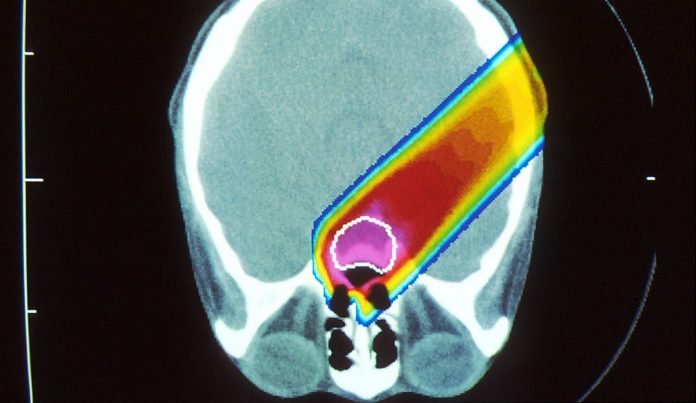
‘Proton Therapy’ is Noninvasive Treatment for High-Risk Cancers – In Use Today With ‘Excellent’ Success Rate

This exciting new study shows that “proton therapy” is a stunningly effective noninvasive treatment against high-risk childhood cancers – and it comes with minimal side effects.

Unlike traditional photon radiation using x-rays, proton radiation therapy (PRT) is a non-invasive, precise cancer treatment that uses a beam of protons moving at very high speeds to destroy the DNA of cancer cells, killing them and preventing them from multiplying.

Highly targeted, PRT has significant promise for treating tumors in very young children and may reduce radiation exposure to healthy, developing tissue that may result in lifelong impacts.

Researchers from Children’s Hospital of Philadelphia (CHOP) and the Perelman School of Medicine at the University of Pennsylvania analyzed the largest cohort to date of pediatric patients with high-risk neuroblastoma who were treated with proton radiation therapy.

WATCHHe Was Called Foolish for His Research; Now Documentary Tells How He Won Nobel Prize for ‘Cancer Cure’

Not only did they find that proton therapy was effective at reducing tumors, they also found that it demonstrated minimal toxicity to surrounding organs.

The study is published online in the International Journal of Radiation Oncology • Biology • Physics.

“These data are extremely encouraging and could be a game-changer for a number of reasons,” said lead author Christine Hill-Kayser, Chief of the Pediatric Radiation Oncology Service at Penn Medicine.

“Not only did we observe excellent outcomes and minimal side effects that validate the use of PRT in high-risk neuroblastoma patients, we answered a lingering question about proton therapy – the concern that because it is so targeted, tumors may come back. Tumors mostly did not come back, suggesting PRT is effective, less toxic and a superior choice for our young patients who must endure intense treatment modalities in an effort to cure this high-risk cancer.”

MOREBoy is Cured of Aggressive Cancer Thanks to Stem Cell Treatment Using Donated Umbilical Cord

Neuroblastoma is the most common cancer in infants, accounting for more than 10% of all childhood cancer deaths. Primary neuroblastoma tumors are commonly adrenal tumors, which are very close to the kidney, liver, pancreas and bowel in children, making them hard to treat without harming vital organs in tiny bodies. Treatment usually involves a combination of therapies including chemotherapy, radiation and surgery.

Typically, the 5-year survival rate of high-risk neuroblastoma patients is as low as 40%. Researchers from CHOP studied 45 patients with high-risk neuroblastoma who received PRT at both of their institutions between 2010 and 2015.

Five years after treatment, the longest recorded period of study in the largest cohort of patients to date, researchers observed excellent outcomes, with 82% of patients still alive, and 97% free of a primary site tumor reoccurrence.

CHECK OUT: UCLA Surgeons Develop Simple Spray Gel to Super-Charge Immunity and Prevent Cancer From Returning

Toxicities, or side effects, are measured on a scale from 1 to 5, with 5 being the most severe. No patient observed in the study experienced grade 3 or 4 long-term acute liver or kidney toxicity, with the majority of patients experiencing grade 1 side effects from PRT.

“We’ve showed PRT is not only effective in the treatment of high-risk neuroblastoma, but it also spared damage to the developing liver, kidneys and bowel that may occur in pediatric patients exposed to traditional radiation,” said Hill-Kayser. “While we look forward to longer-range data on these patients 10 years down the road, the excellent outcomes we see here, coupled with the fact the precision proton approach did not increase recurrence rates, support the expanded use of proton therapy in neuroblastoma and other high-risk childhood cancers.”

Furthermore, a study of 125 pediatric patients that was conducted at Northwestern University in November found that proton therapy was associated with improved cognitive function and an increase of roughly 10 IQ points in contrast to traditional radiation. Additional studies have also claimed that proton therapy is less costly than alternative radiation methods.

RELATEDDrug That Can Stop a Dozen ‘Untreatable’ Cancers Gets Approval—And Company Vows to Help Every Patient Afford It

“A child’s brain is more sensitive to radiation. The radiation can disrupt connections being formed in the white matter and prevent the brain from developing normally,” said lead author Jeffrey Paul Gross, Northwestern University radiation oncology resident. “If we are able to spare healthy portions of the brain from radiation there is a potential for improved long-term cognitive outcomes.”

PRT used against prostate cancer in adults has also resulted in a 5-year survival rate of 93.25%.

With more and more proton therapy clinics opening up across the US, CHOP researchers say that they will be conducting further studies on the efficacy of the treatment against other cancers.

(WATCH the video below)

Treat Your Friends To Some Good News By Sharing It To Social Media…

Oil Rig Workers Come to the Rescue of Exhausted Dog Found Swimming 135 Miles From Shore

This lucky pup has been given a second leash on life after she was found swimming in the middle of the ocean 135 miles from shore.

Workers aboard an oil rig were stunned to see the exhausted Aspin paddling through the waters in the Gulf of Thailand last week.

Upon calling out to the dog, she swam over to the ship and took shelter on the metal bars of the ship. Workers then managed to secure a rope around the waist of the dog and pull her onto the deck.

Khon Vitisak, the worker who rescued the dog, told The Daily Mail: “We found her trying to swim towards our rig, which is about 135 miles from the shore. Thankfully, the sea was quite still because the wind was calm.

LOOKFive Days After Disappearing, Dog is Finally Found and Rescued From Underground Rabbit Hole

“We just saw her small head but if the ripples were bigger, I think we probably wouldn’t have noticed her at all,” he added.

While the oil rig workers radioed for help, they built a makeshift cage for the dog and gave her food and water so she could recover her strength.

She was eventually brought to a veterinarian in Songkhla, southern Thailand – and despite being found in the ocean, she was in surprisingly good health and animal rescue workers named her Boonrod.

No one has been able to figure out how Boonrod ended up at sea – but if no one comes forward to claim her, Vitisak says that he will be happy to adopt her as his own.

(WATCH the video below) – Photo by Viral Press

Be Sure And Share This Pawesome Story With Your Friends On Social Media…

“In a genuine relationship, there is an outward flow of open, alert attention toward the other person in which there is no wanting whatsoever.” ― Eckhart Tolle

Quote of the Day: “In a genuine relationship, there is an outward flow of open, alert attention toward the other person in which there is no wanting whatsoever.” ― Eckhart Tolle

Photo: by ohsohappytogether CC license via Flickr

With a new inspirational quote every day, atop the perfect photo—collected and archived on our Quotes page—why not bookmark GNN.org for a daily uplift?