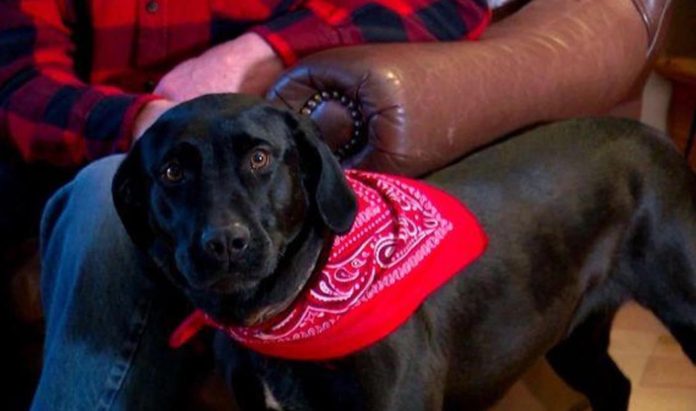
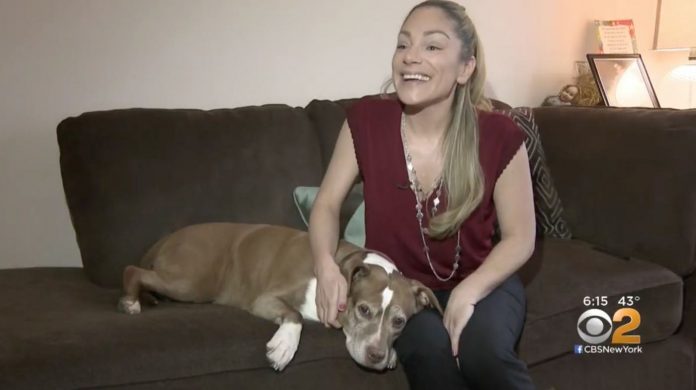
An 11-year-old pit bull is being hailed as a hero after she went to great lengths in order to escape from her home and bring police officers to the door.
In all the years that Sadie has lived with her owners in Tuckahoe, New York, she has never ran away from home – but last week, Sadie escaped through her back door and started wandering up and down city streets barking up a storm.
When the police department received several calls about a noisy runaway pit bull, they arrived on the scene only to have Sadie take off running through the neighborhood.
Police officers chased the pit bull until she finally led them all the way to the backyard of her home – and they were surprised to find that the sliding door was open and the fence was broken. Not only that, they detected the odor of gas coming from inside the house.
The responders then found that the smell was coming from a gas leak in the basement.
If Sadie had not alerted law enforcement to the impending danger, the leak could have led to an explosion – or maybe something worse.
At the time of their discovery, Sadie’s owner Serena Costello had been out with her 4-year-old daughter. Even though they weren’t home, further investigation of the house showed that Sadie had gone to great lengths to ensure her family’s safety; the canine hero had left bloodied claw marks on the door frame trying to escape and she only managed to open the sliding door by digging out a wooden door blocker from its resting place.
Upon hearing that her pup had prevented a disaster in the making, Costello was overwhelmed with gratitude for her furry companion.
“She is a hero,” Costello told WABC. “She is our hero. It’s just so out of character for her to do. She saved our lives. Yeah. Emotional.
“[Police] had to write me a summons, which they didn’t want to, but I guess it’s the law for having an unleashed dog in the area,” Costello added. “But one of the police officers, I guess after [they said that it] was a gas leak, took the summons and ripped it up.”
(WATCH the news coverage below or our international viewers can watch the video on the CBS News website) – Photo by WLNY
Be Sure And Share This Pawesome Story With Your Friends On Social Media…
Quote of the Day: “In every walk with nature one receives far more than he seeks.” – John Muir
Photo: copyright 2018, GWC
With a new inspirational quote every day, atop the perfect photo—collected and archived on our Quotes page—why not bookmark GNN.org for a daily uplift?
Instead of using his winnings on sports cars or luxury goods, this British boxing champion donated all of it to charity.
After spending years of his life struggling with drug addiction and mental health issues, Tyson Fury became a heavyweight boxing champion.
The 30-year-old fighter, who is also known as “The Gypsy King” in the ring, squared off against Deontay Wilder in December, 2018. Though Fury’s purse for the fight was about $3.5 million, the total amount of pay-per-view income brought his payment to roughly $9 million – all of which he donated to charity.
He initially announced that he would be donating his purse for the fight after he traveled to Los Angeles for a media conference and he was shocked by the amount of homeless people he saw on the streets.
Though the fight against Wilder ended in a controversial draw, he recently confirmed that he had indeed donated his entire purse to several UK charities that specialize in providing housing for recovering alcoholics and addicts.
Fury confirmed the donation after a fan asked him about his financial pledge during a Q&A segment of a charity auction in Cardiff last week.
“I did give away my last purse, but I don’t do charity work for a pat on the back,” said Fury, as reported by The Sun. “I do it to help people, but I do not want praise for it, I don’t want to be called a do-gooder.”
(WATCH the fighter’s inspiring message for his viewers below) – Screen grab from BT Sport video
There will be people who need a lift in spirits today, maybe yesterday and maybe even tomorrow. I hope this little message can help you ?❤️? pic.twitter.com/ulD1Lm9HzJ
In partnership with The Moth, a nonprofit dedicated to the art of storytelling, Good News Network is debuting Moth Monday, a series of inspiring tales brought to you from live stages across the world.
David Cole and his wife received a box full of Christmas presents from grandma—but it wasn’t their grandmother.
They didn’t know what to do with the gifts—all addressed “To Ben, Love Grandma,” and with no return address to guide them in shipping. So, they opened them.
The first items were pretty standard trinkets, but David’s wife began to sign when she saw the teddy bear. Then, when they unwrapped the hand-knit sweater, they both felt genuine sadness for the mistakenly delivered gifts.
All this didn’t prepare them for what was in the last box: the original bed covering, decorated with a fire truck, that Ben’s father had slept under when he was a boy.
Now, the Houston couple HAD to find Ben—but, how?
LISTEN to the story below…
The Moth gives people an opportunity to tell a true story in front of a live audience, and sometimes their stories are chosen to air on the radio show, now celebrating its tenth year, and broadcasting on 485+ public radio stations—and on The Moth podcast, which is downloaded over 52 million times a year.
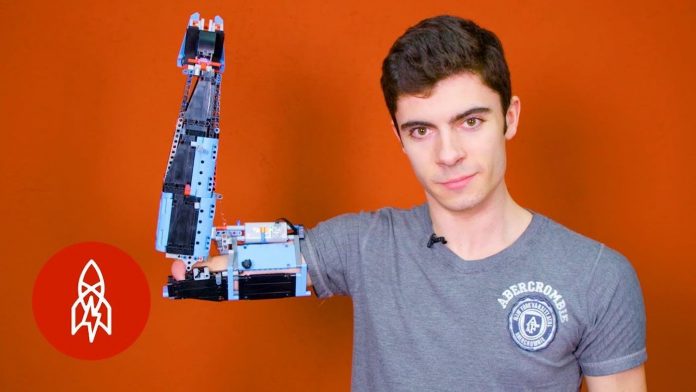
While LEGO bricks are generally considered to be toys meant for fun and amusement, David Aguilar used the bricks to build his own prosthetic arms.
Due to a rare genetic condition, Aguilar was born without a right forearm. He has always loved building with LEGOs – so as a means of addressing his disability, he constructed his first prosthetic arm out of the toy bricks when he was only 9 years old.
The LEGO arm worked, but it wasn’t very strong. 9 years later, he built another model arm that was so durable, Aguilar could use it to do pushups.
The 19-year-old is now studying bioengineering at the Universitat Internacional de Catalunya in Spain. He also hosts a popular YouTube channel under the pseudonym of “Hand Solo”.
Once Aguilar graduates, he hopes to design prosthetic solutions for other disabled kids so they can benefit from the same positivity that he has experienced with his LEGO arms.
(WATCH this 2018 interview with Aguilar in the video below) – Photo by Great Big Story
Build Some Positivity By Sharing The Inspiring Story With Your Friends On Social Media…
In a prison system where a 15-minute phone conversation can cost up to $20, many convicts and their loved ones are unable to afford the costs of communication.
Thankfully, an ingenious new app designed by ex-convicts is offering an inexpensive and convenient way for inmates and their families to keep in touch.
Most prison facilities charge prisoners upwards of 25 cents per minute on the phone, and 40 cents per email. This cost, paired with the difficulty of sending photos and letters through traditional means, often results in a lack of communication between inmates and their families.
Pigeonly is a service that allows users to share their photos with inmates simply by taking a picture with their cell phone and uploading it to the app. The photo is then screened by Pigeonly employees so that it can be sent to the appropriate prison, printed onto paper, and delivered to the convicted recipient.
Pigeonly, which has been called “Instagram for Prisons”, also offers postcard, letter, and greeting card-sending services. They even have an unlimited phone plan that reduces the cost of a call from 25 cents or more per minute to a flat $4.99 per month – all for the sake of facilitating a connection to the outside world for prisoners
Frederick Hudson was inspired to create Pigeonly after spending 5 years in a federal penitentiary.
“I saw first-hand how difficult and expensive it was to stay in touch,” Hudson told Bloomberg in an interview. “I also saw how much of an impact that made on the person behind bars. I would see the guys that had the financial means to stay in touch and when they left prison I would hear that they were doing well, but those who didn’t have the support network on the outside – I’d see them coming back in.”
Hutson is not alone in this observation. Studies show that maintaining contact with friends and families decreases the likelihood of recidivism and increases chances of employment after release, which also spares taxpayers the burden of substantial prison costs. Furthermore, children who maintain close bonds with incarcerated parents are also shown to display reduced rates of delinquency and behavioral problems.
After receiving a photo from his girlfriend, 43-year-old Cedric Benton stared at it for hours before pinning it to his prison cell wall, full of photos of loved ones.
“It might sound small, but that’s something we weren’t able to do before,” Benton told Bloomberg. “It also makes me think of my freedom and how I got to get out and stay out.”
Be Sure And Share The Good News With Your Friends On Social Media…
When the Camp Fire forced thousands of families to flea their California homes back in November, many pets were separated from their owners in the confusion of the evacuation.
Thankfully, there is an animal shelter that has been dedicated to reuniting rescue cats with their families.
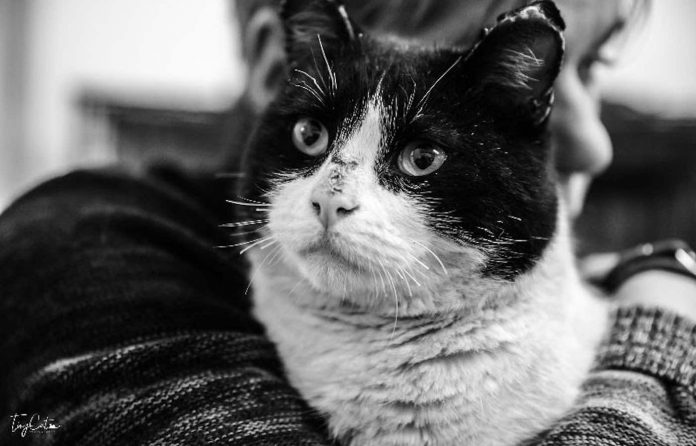
Photo by Tiny Cat Photography
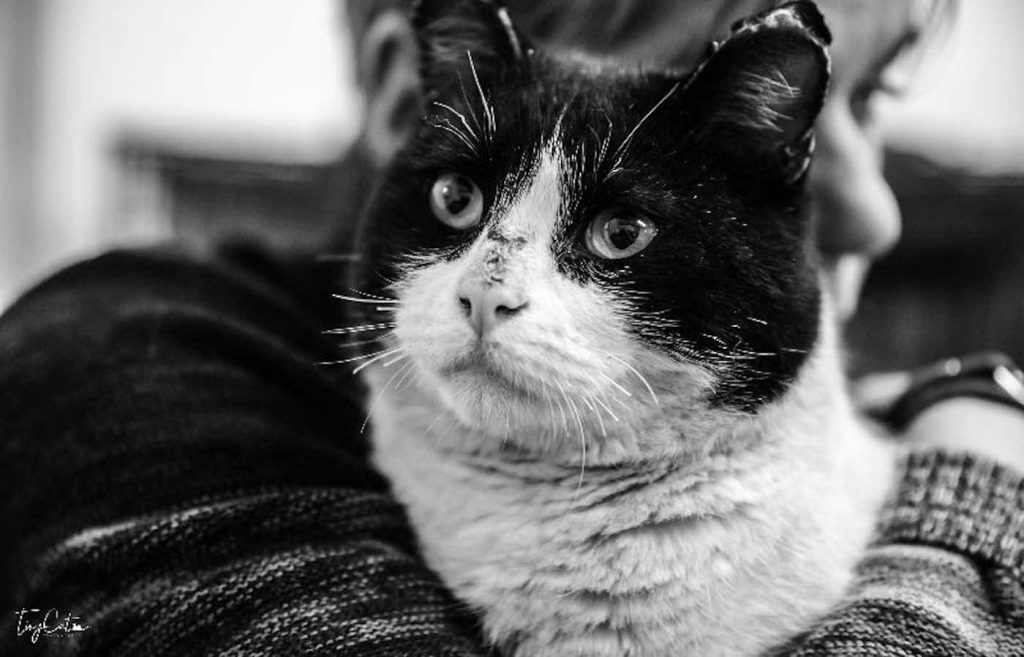
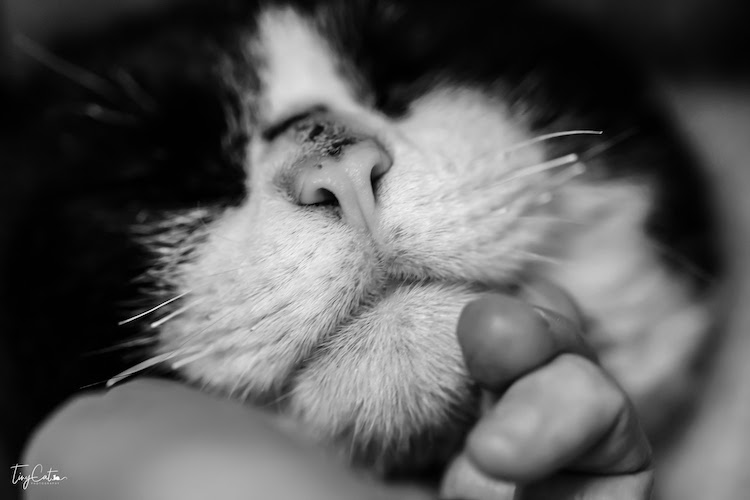
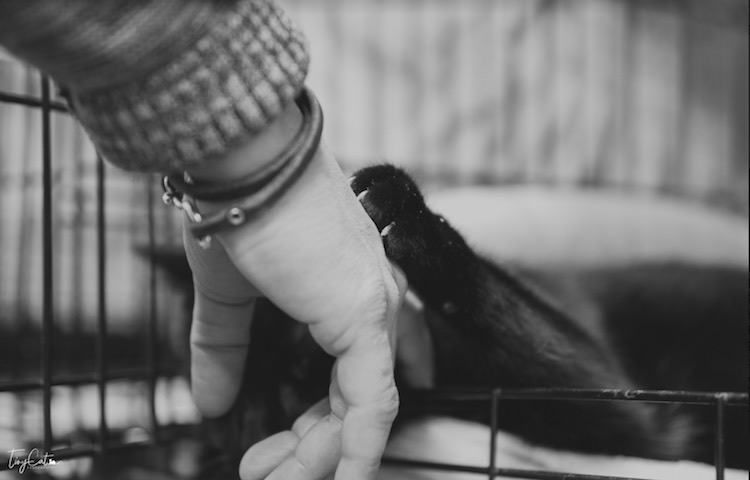
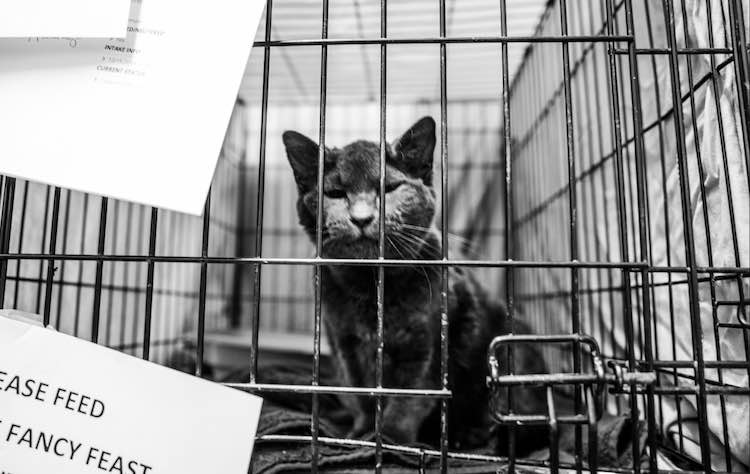
The Alley Cat Allies Recovery Center has been rescuing, treating, and housing lost cats that have been found near the wildfire disaster area. Since the center was opened in Marysville shortly after the wildfires subsided in December, they have facilitated over 50 family reunions.
The center has been managed by staffers from the nearby FieldHaven Feline Center in collaboration with the international feline welfare organization Alley Cat Allies. They are currently sheltering 150 rescue cats, almost half of which have been at their facility for longer than 30 days – but the team is still determined to find homes for every single one of the cats.
Photo by Tiny Cat Photography
“By opening The Alley Cat Allies Recovery Center in Marysville, we have a location that’s out of the disaster zone, yet close enough to locations such as Paradise and throughout Butte County that it will be convenient for pet owners to come to the center and reunite with lost pets,” said Joy Smith, executive director of FieldHaven Feline Center.
“Additionally, our temporary transfer station for cats in Paradise will be even closer to affected residents, and we encourage them to check for their cats there before making the drive to Marysville,” she added.
Photo by Tiny Cat Photography
Though rescue animals are typically put up for adoption after waiting 30 days for the owners to come forward, the recovery center is allowing the cats to stay for longer periods of time in order to maximize their chances of being reunited with their rightful families.
“As we’ve seen so often, the weeks after a disaster slips from the headlines are very challenging for rescue organizations such as our friends at FieldHaven,” said Alley Cat Allies president and founder, Becky Robinson. “It’s important that they’re able to [run] this critical recovery center and transfer station so residents can recover their animals.
A teenager named Destene was recently reunited with her beloved furry companion after the feline escaped during the wildfires.
“Destene was carrying Mama Kitty to the car when they heard an explosion and she jumped from her arms,” said recovery center workers. “Destene at first refused to leave, stating that she would stay there and die trying to save her baby if she had to. Her dad was a voice of reason and told her they had to leave.”
After checking with dozens of animal shelters, Destene had given up hope that Mama Kitty had survived the fire until a family member saw a photo of the feline from the recovery center on social media.
“When Destene came to the Recovery Center, Mama instantly recognized her and put her front paws on Destene’s shoulders and hugged her. THIS is why we are NOT putting cats up for adoption after they’ve been with us for 30 days. We STILL have work to do to find people like Destene who have given up hope.”
If you would like to donate to the recovery center and help them continue with their rescue efforts, you can visit the Alley Cat Allies website.
(WATCH the reunion video below)
Be Sure And Share The Pawesome Story With Your Friends On Social Media…
Quote of the Day: “To be yourself in a world that is constantly trying to make you something else is the greatest accomplishment.” – Ralph Waldo Emerson
Photo: by Leif E., CC license via Flickr
With a new inspirational quote every day, atop the perfect photo—collected and archived on our Quotes page—why not bookmark GNN.org for a daily uplift?
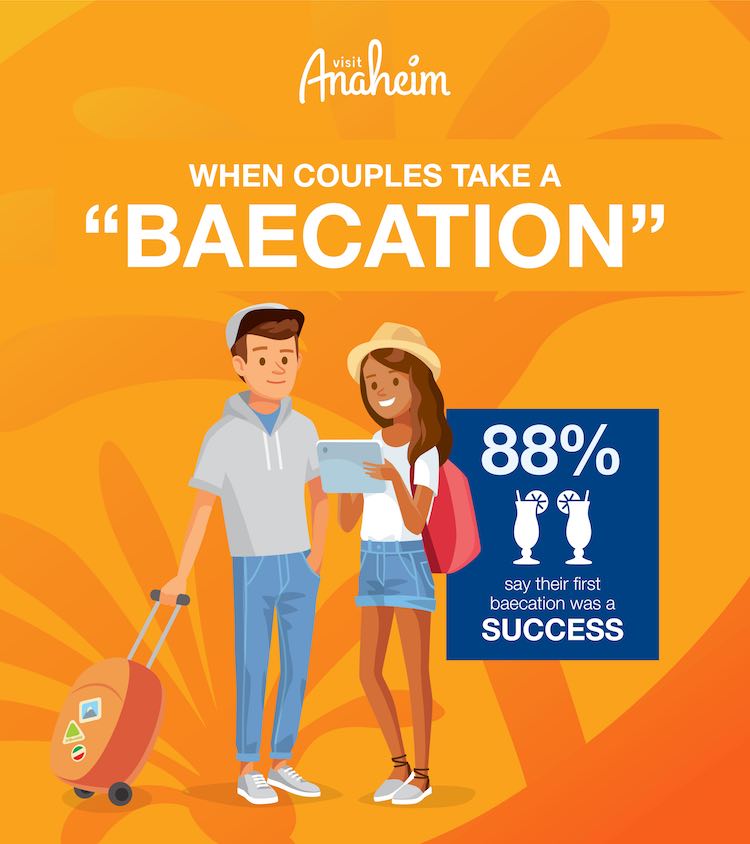
The Urban Dictionary defines “Bae” as a shortened version of baby or babe, or an acronym meaning “before anyone else.” A fun new study discovered that how and when couples navigated their first ‘baecation’ together can be a defining moment in their relationship.
Why are romantic getaways important? The survey found that 37% of participants fell in love on their first baecation, while 23% broke up because of the trip!
88% percent of respondents say their first trip with a significant other was a success—even while planning, booking and budgeting for the trip left 24% overwhelmed by the stress.
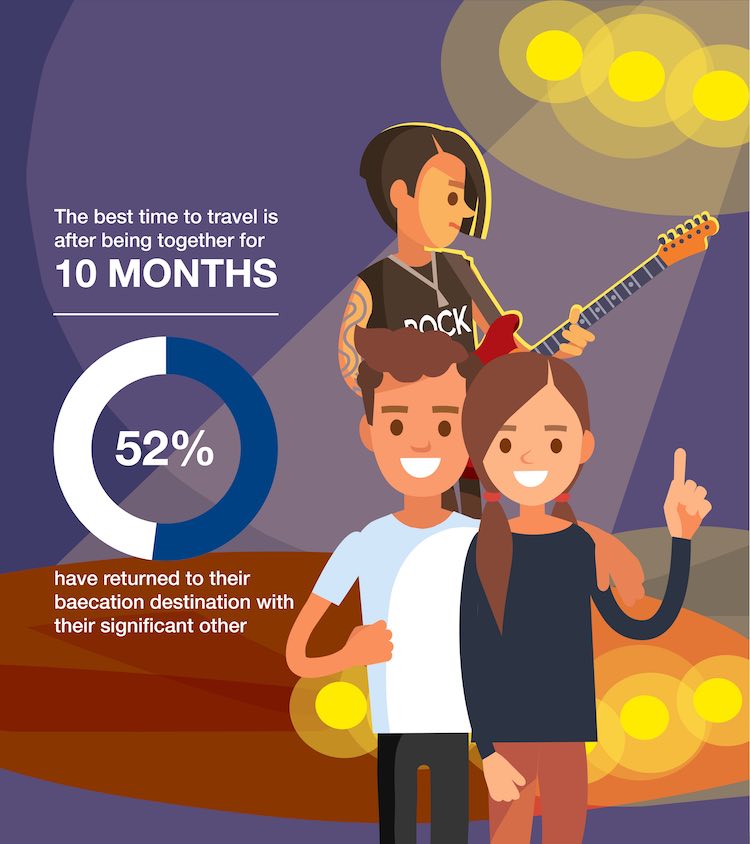
When is the best time for couples to go? For the best results, the study shows that new couples should take their first vacation together about 10 months into the relationship.
Commissioned by Visit Anaheim, a California vacation destination, and conducted by OnePoll, the survey of 2,000 American adults who have traveled with a partner showed that even with a few bumps in the road, the first vacation together is generally a success story – so much so, that over half of respondents (52%) have returned to the same destination of their first trip.
For a vacation to be successful, respondents say the most important factors are picking the right destination (69%), having a budget that works for both partners (61%) and good planning (60%).
Making sure you and your partner are serious about each other (51%) and being able to compromise (44%) were also contributing factors.
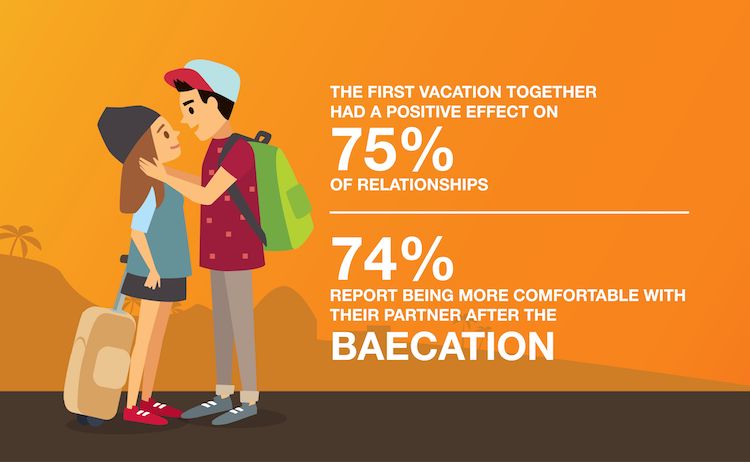
Three-quarters of participants say the trip had a positive effect on their overall relationship, while half (49%) reported a positive effect on how romantic they are with their partner – and after traveling together for the first time, 74% reported feeling more comfortable with their partner.
That being said, it’s not all smooth sailing: The most common couple disagreements were in regard to the destination (32%), where to stay (31%) and how long the vacation should be (29%).
When choosing a destination, respondents say cost was the most important factor (62%), followed by the activities offered in the area (54%) and the mode of transportation needed to arrive (44%).
Additionally, 4 in 10 wanted to travel somewhere with a mix of active and laid-back activities. Bon Voyage!
Be Sure And Share This Fun Bit Of Research With Your Friends On Social Media
The ultimate dream job for millennials is up for grabs: being paid to travel the world and post your extraordinary experiences on social media.
The position of apprentice “Shore Explorer” will include visits to destinations including Alaska, Japan, Norway and Dubai—and the icing on the cake is a once-in-a-lifetime trip to a private island in the Caribbean.
On landing the job, the chosen candidate will also be paid a salary equivalent to $135,000 (£104,000) per year for their troubles as they shadow expert photographer, Russ Francis.
The “Shore Explorer” candidate is expected to perform the daily task of posting their experiences on Instagram, Instagram Stories and IGTV. Additionally, they will be selected for the position by an independent panel of judges including James McVey—The Vamps’ guitarist and “I’m A Celebrity” star—and travel writer Nadia El Ferdaoussi.
“I’m so excited to be working with Royal Caribbean to find the perfect person for this new apprenticeship; someone who has a passion for travel, exploration and seeking out new and extraordinary experiences around the world,” said McVey. “And, of course, they have to be brilliant at sharing their adventure online too.”
SWNS
The once-in-a-lifetime job opportunity was thought up by Royal Caribbean International, whose spokesman said: “We’re looking for an adrenaline junkie who is not only hungry for adventure, but also has a unique ability to capture a moment and tell a story in a simple social media post.
“We already offer a huge amount of incredible, once-in-a-lifetime, on-land experiences as part of our cruise holidays – from zip wires and white-water rafting, to walking on glaciers and hot air balloon rides.
“By launching this position, we’re hoping that the winning candidate will take our shore excursion program to the next level,” he added.
According to a new survey by OnePoll, British youth, aged 18 to 37, claim to be a “do it” rather than “buy it” generation—focused on spending their money on memorable things to do, rather than possessions. 56% believe they simply get more out of experiences than they would from a physical asset—and for a quarter, the “instant gratification” gained through a fun experience is enhanced by posting on social media.
A 63-year-old was diagnosed with cancer just days after the disease killed his dad—yet he has now been crowned a bodybuilding world champion after beating the illness, and thanks his estranged father for the epic timing that saved him.
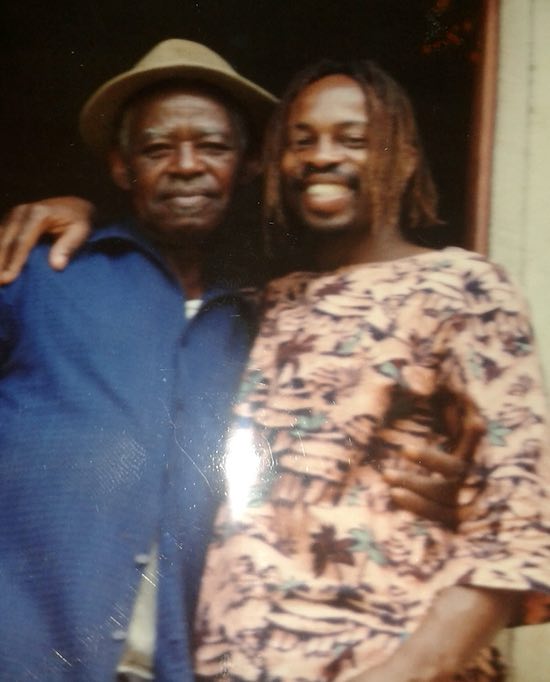
Only after he was raised by his grandmother, did Denton Wilson meet his estranged birth father Benjamin Wilson for the first time. Just two weeks after getting to know each other, however, Benjamin died of prostate cancer, which prompted Denton, in his early 40s, to get himself checked out as a precaution.
To his horror, Denton was also diagnosed with the condition and warned he could only have a matter of weeks to live.
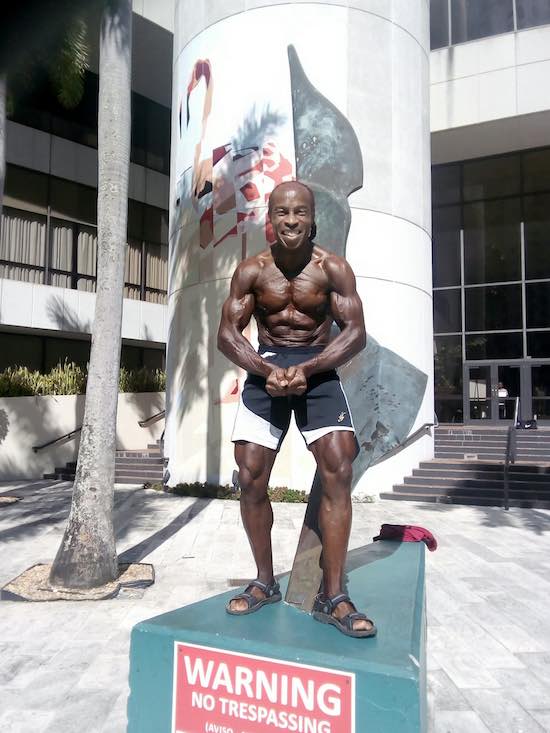
He underwent surgery to remove his diseased prostate and then took up bodybuilding to regain his strength. Now, 20 years on and a grandfather himself, he has been crowned the over-60s bodybuilding champion at the world finals in Miami, Florida.
Denton, a former youth and community worker from Sheffield, said: “I was given a second chance at life. His death gave me life. At the time, I knew nothing at all about the disease and I was healthy.
“If I never met my dad then I would have been dead a long time ago,” he added. “It was a dream for me to meet him and his death saved my life.
SWNS
“I set myself goals and set out on a dream to achieve. It was overwhelming to be the best in Britain so to become the best in the world is incredible.”
Denton was born in Jamaica and brought up by his grandmother, then moved to England to live with his mother when he was 9 years old. Upon discovering his father’s name, Denton “vowed” to one day return to Jamaica to track his dad down.
When Denton returned to his home country in 1997 and found his dad, he spent the next two weeks getting to know the 79-year-old before he learned that the man had prostate cancer. The day after he arrived back in the UK from the trip, he found out his dad had died.
“I saved up for a long time to go to Jamaica. It felt like a miracle to finally meet him. It was like finding the final piece in a jigsaw puzzle,” said Denton.
SWNS
Denton said it was “devastating”, but it prompted him to get a check-up after his father’s funeral. Blood tests then revealed that Denton – who was only 42 years old – had an “aggressive” form of prostate cancer and required urgent life-saving treatment,.
“I felt angry. I was angry at God for letting me watch my father die,” he added. Then, when he found out about his own diagnosis, Denton added: “I was devastated. I couldn’t believe it. I thought I was going to die.
“I said I wanted time to think about my options but the doctor said ‘you don’t have time’. He said I was going to die.”
SWNS
After surgery to remove his cancerous prostate in 1998, he took up bodybuilding in a bid to “come back stronger” and transformed his physique with a strict healthy eating regime and committed to three gym sessions a week.
He has since been crowned the British bodybuilding champion over 40s, over 50s and over 60s. His crowning glory came in November last year, when he was named the over 60s bodybuilding champion at the DFAC world finals in Miami, Florida.
“I worked hard to achieve my status and want to help other people to achieve,” said Denton. “I am so happy and so proud of myself. A lot of people die from cancer but I was given a second chance.”
Denton now wants to inspire others by sharing his experience and giving motivational talks on battling prostate cancer.
Quote of the Day: “Laughter is the sun that drives winter from the human face.” – Victor Hugo
Photo: by Damian Verley, CC license via Flickr
With a new inspirational quote every day, atop the perfect photo—collected and archived on our Quotes page—why not bookmark GNN.org for a daily uplift?
This black Labrador mix is being hailed a hero after she came to the rescue of an 87-year-old woman in distress earlier this week.
Tim Curfman was taking out the garbage from his home in Minnesota during the record-breaking winter storm last week when his 4-year-old pup Midnight started acting strangely.
“She had her ears perked up looking at me,” Curfman told CBS Minnesota. “She doesn’t normally do that. Sometimes you get that feeling something’s up.”
Curfman decided to follow Midnight out into the snow – and she immediately dashed over to the other side of their house. There, he found his elderly neighbor Noreen lying in the snow.
She had fallen to the ground while trying to refill her bird feeder, and there was nothing to grab that could help her get back up again. She had been lying in the snow for at least half an hour when Curfman found her.
He then brought Noreen into his house so he and his wife could get the chilled senior into warm, dry clothes.
She has apparently made a full recovery without sustaining any frostbite – and it is all thanks to Midnight; or as she is now being affectionately nicknamed, Lassie.
(WATCH the video below) – Photo by CBS Minnesota
Be Sure And Share This Pawesome Story With Your Friends On Social Media
Australian scientists have come up with an ingeniously “crappy” way to recycle treated sewage sludge and turn it into bricks.
Biosolids are leftovers from the wastewater treatment process that can be used as fertilizer, in land rehabilitation, or as a construction material.
Around 30% of the world’s biosolids are stockpiled or sent to landfill, using up valuable land and potentially emitting greenhouse gases that would damage the environment.
Now a team at RMIT University in Melbourne, Australia, has demonstrated that fired-clay bricks incorporating biosolids could be a sustainable solution for two industries at once.
Published this month in the journal Buildings, the research showed how making biosolid bricks only required around half the energy of conventional bricks. As well as being cheaper to produce, the biosolid bricks also had a lower thermal conductivity, transferring less heat to potentially make buildings cooler in the summer.
About 5 million tons of the biosolids produced in Australia, the EU, US, and Canada currently go to landfills or stockpiles each year. The study determined that using a minimum 15% biosolids in 15% of bricks produced today could totally use up this 5 million tons.
Lead investigator Associate Professor Abbas Mohajerani said the research also tackled the excavation of soil required for brick production.
“More than 3 billion cubic meters of clay soil is dug up each year for the global brickmaking industry, to produce about 1.5 trillion bricks,” said Mohajerani, a civil engineer in RMIT’s School of Engineering. “Using biosolids in bricks could be the solution to these big environmental challenges.”
The research examined the physical, chemical and mechanical properties of fired-clay bricks incorporating different proportions of biosolids, from 10 to 25%.
The biosolid-enhanced bricks passed compressive strength tests and analysis showed that heavy metals stayed largely trapped within the brick. Additionally, bricks that only contained 25% biosolids required about half as much energy as their ordinary counterparts due to the organic content of the biosolids, implying that they could considerably reduce the carbon footprint of brick manufacturing companies.
“It’s a practical and sustainable proposal for recycling the biosolids currently stockpiled or going to landfill around the globe,” said Mohajerani.
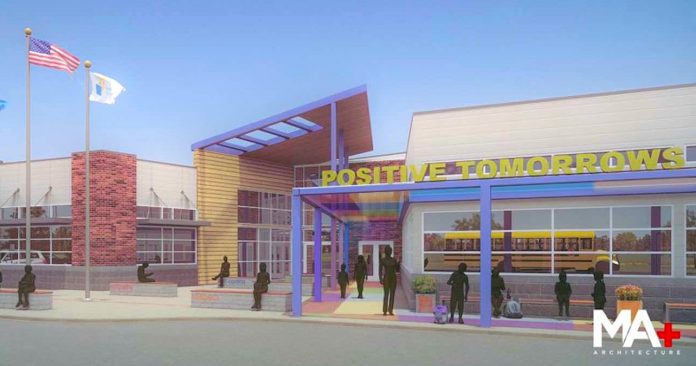
This groundbreaking new school campus—which has been designed for homeless kids, by homeless kids—will soon serve as a refuge for roughly 200 underprivileged kids in Oklahoma City.
Positive Tomorrows, the nonprofit organization behind the school’s creation, recently began construction on the facility with a focus on the growth and wellbeing of the students.
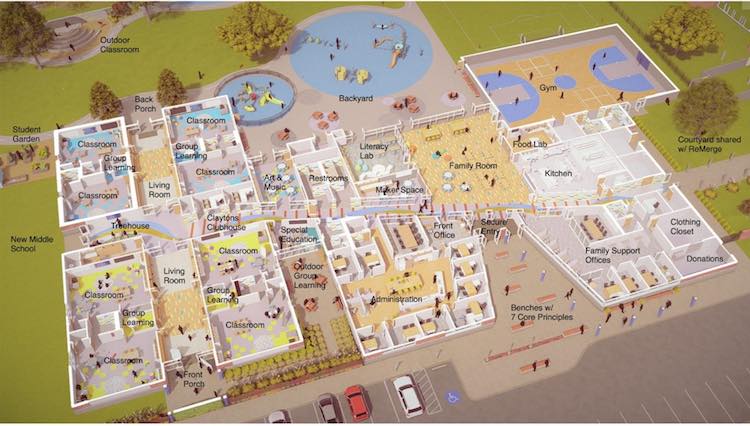
The new facility will host a fully stocked and furnished “living room” area for both the students and their parents. Here they can prepare meals, eat dinner, and share in each other’s company, with the additional comfort of knowing they have a place where they are welcome.
“Our families are in … survivor mode,” Amy Brewer, Director of Education at Positive Tomorrows, told Citylab. “Schooling is an afterthought at best. For many of our kids, if they were not at Positive Tomorrows, they would not be at school. Positive Tomorrows is able to provide a family with an array of support services that a traditional public school cannot.”
Additionally, the students were able to help design the building with their own needs in mind. In an exercise Positive Tomorrows titled “Dream Big,” students were asked to submit drawings of what they wanted their new school to look like. Out of all of their requests, there were two common underlying desires amongst the homeless students: a place to spend quality time with other kids, and additional rooms to serve as their own personalized spaces.
Although these requests may seem relatively simple, they indicate the students’ need for both community and consistency – two things that they rarely experience when they are having to constantly move from one shelter, couch, garage, or basement to the next.
“Our kiddos have nothing that’s their own,” said Brewer. “‘If I want to do a Lego project, I can’t leave it out because where I stay tonight may not be where I stay tomorrow.’”
The nonprofit that just celebrated its 26th birthday has experienced great success in their work educating and supporting homeless Oklahoma families. According to an independent impact study summarized on the Positive Tomorrows website, about half of the families who received assistance from the organization have shown improvements in housing, employment, and income.
Positive Tomorrows has also provided tens of thousands of free school meals, as well as health and dental checkups. With the construction of a new school building, the charity staffers are excited to help more families than ever before, knowing that they’ve been turning away 100 kids every year.
“We feel a responsibility to serve more students,” said Susan Agel, Positive Tomorrows President and Principal. “We are thrilled to take this step forward today, and to move toward serving more of our community’s most vulnerable children.”
YOU can also improve the tomorrows of homeless kids today with a donation –or by sharing on social media so others might donate.
After a heart-stopping rescue from an icy Montana snow bank, animal lovers are rejoicing over this cat’s miraculous recovery.
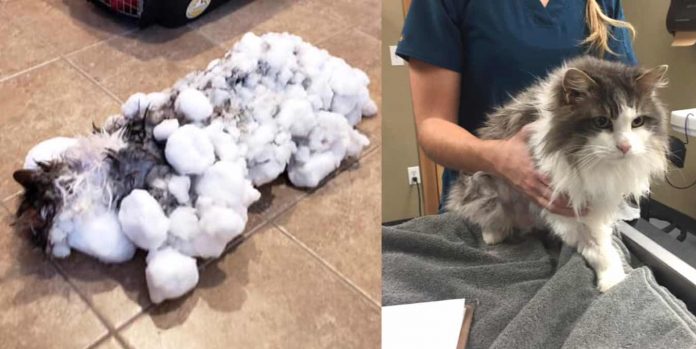
Earlier this week, Fluffy the cat’s owners were horrified to discover their beloved feline buried in a snow bank amidst temperatures that had fallen to 8ºF (-13ºC).
With 16 inches of powder already on the ground, Fluffy’s fur had become a matted coat of ice and snow. By the time her owners brought her into the Animal Clinic of Kalispell, her temperature had fallen dangerously low and she had become unresponsive.
Clinic staffers spent the following two hours surrounding their feline patient in warm water and blankets. When her condition failed to improve, she was taken to the emergency room and given further treatment.
After a few more hours, she finally began to show signs of improvement.
The clinic later posted a shocking before-and-after photoset to Facebook in which they showed off Fluffy’s stunning recovery.
Though the cat has been returned to good health, Fluffy’s owners told ABC News that she is apparently now strictly an indoor car.
Be Sure And Share This Pawesome Recovery Story With Your Friends On Social Media…
Quote of the Day: “You can never leave footprints that last if you are always walking on tiptoe.” – Leymah Gbowee
Photo: by Jeff Kubina, CC license via Flickr
With a new inspirational quote every day, atop the perfect photo—collected and archived on our Quotes page—why not bookmark GNN.org for a daily uplift?
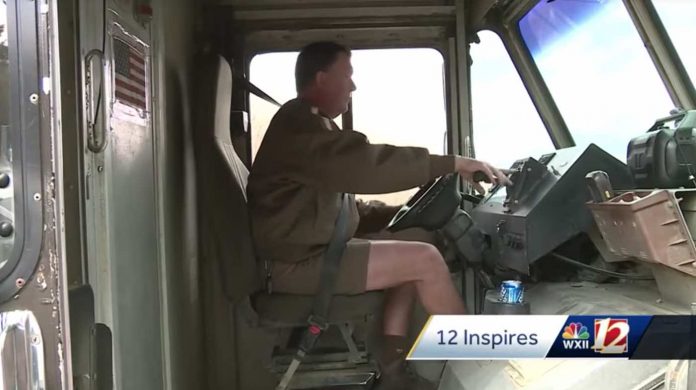
Todd Holland is being hailed as a hero for listening to his instincts earlier this week – and he hopes his rescue story will inspire other delivery workers to do the same.
Holland works as a UPS delivery driver in Ashe County, North Carolina. As he was dropping off a package for one of his customers, he noticed that another package which he had delivered a few days previously was still outside the front door.
That’s when Holland said that he knew in his gut that something was wrong. He then began pounding on the door and yelling for an answer. When he tried to open the door and found that it was unlocked, he entered the house and found the homeowner lying on the floor.
Holland dialed 911 and waited with the man until paramedics arrived. Though he has not been able to speak with the homeowner since he was taken to the hospital, the compassionate delivery driver has been helping to look after the man’s dog and house while he is treated.
Holland now hopes that his story will inspire other delivery drivers to show the same amount of care and attention to their customers.
“I made it a point to tell the guys at work this morning, if you deliver to people – and a lot of people that we deliver to, especially in these rural areas, us, the FedEx man and the mail man might be the only people they see during the week,” Hollad told WXII. “I told them, if you realize and get a gut feeling that something is wrong, check it out. It probably is.”
(WATCH the news coverage below) – Photo by WXII
Be Sure And Deliver The Good News To Your Friends On Social Media
It’s rare to find thousands of dollars in cash laying around on the ground, let alone flying through the air on the highway – but that’s exactly what Terry Brubaker saw last month.
Brubaker had been driving through Gloversville, New York when she suddenly saw $20, $50, and $100 bills fluttering in the wind in front of her windshield.
She quickly pulled over to the side of the road and started grabbing the cash out of the air. In total, she collected roughly $6,600.
She went to the Fulton County Sheriff’s Office to turn in the money just as the owner of the cash was filing a report.
Kim Steenburg had been on her way to the bank when she accidentally left the cash in an envelope on top of her car as she was busy fastening her niece’s seatbelt. Upon hearing that Brubaker had turned in the money at the police station, she was overwhelmed with relief.
As it turns out, Steenburg’s husband was killed in a New York limo crash last year and she had been planning on using the money to go on their honeymoon cruise so she could scatter her husband’s ashes at sea.
Illustration by Federica Bordoni via The Rockefeller University
Illustration by Federica Bordoni via The Rockefeller University
She weighs less than one ten-thousandth of an ounce and her top speed is less than two miles per hour. Nonetheless, the female mosquito is one of the most dangerous animals on the planet. For as she flies from person to person, this tiny creature transmits microbes that can sicken and kill millions of people every year.
Recently, however, scientists from The Rockefeller University have shown that female mosquitoes can be persuaded not to bite at all.
Their work, which appears in the journal Cell, illuminates the biology underlying the host-seeking and blood-feeding behaviors that make these insects such a menace – and could lead to new ways of shutting those behaviors down.
The researchers conducted their experiments on Aedes aegypti mosquitoes, the species responsible for spreading dengue, Zika, chikungunya, and yellow fever.
Female Aedes are fiercely attracted to human beings, whose blood contains the protein they need to produce their eggs. Yet once they have fed, that attraction declines precipitously, and the bloated mosquitoes show little interest in seeking another blood meal for several days.
“It’s like the ultimate Thanksgiving dinner,” says Laura Duvall, the postdoctoral fellow who led the project.
Scientists can reproduce that long-term postprandial effect by injecting female mosquitoes with large doses of small protein-like molecules called neuropeptides, which activate specialized receptors. But the list of possible neuropeptide-receptor combinations is long, and better tools were needed to develop compounds that could more efficiently suppress a female’s feeding behaviors without having other, unwanted effects.
Fortunately, similar receptors regulate feeding behavior in many species, including our own. And that shared evolutionary inheritance provided Duvall and her colleagues with the clue they needed to solve the mystery of the mosquito’s missing appetite.
In humans, so-called Neuropeptide Y or NPY receptors regulate food intake, and the pharmaceutical industry has developed anti-obesity drugs that both activate and inhibit them.
Duvall and her colleagues reckoned the same drugs might affect the mosquitoes’ NPY-like receptors, as well. And they were right.
When the researchers fed female mosquitoes saline solution doped with drugs that activate human NPY receptors, the insects’ attraction to a human host – as measured by their willingness to fly towards a bit of nylon stocking that Duvall had worn long enough to absorb the bodily odors that scream “mealtime” to mosquitoes – plummeted just as if they had had a blood meal. Alternately, when the researchers fed the mosquitoes blood doped with a drug that inhibits the same receptors, they behaved as if they had not eaten at all.
To pinpoint the particular receptor that the human drugs were acting upon, the team used their knowledge of the mosquito genome to clone all 49 of the species’ possible neuropeptide receptors and exposed them to the same compounds. Only one, an NPY-like receptor known as NPYLR7, responded to all the human drugs that had affected the mosquitoes.
“We were impressed and amazed that drugs designed to affect human appetite worked perfectly to suppress mosquito appetite,” said Vosshall, Robin Chemers Neustein Professor.
What’s more, when the team fed blood to mutant Ae. Aegypti that had been genetically engineered to lack proper NPYLR7 receptors, those mosquitoes remained as interested as ever in their next meal – confirming that NPYLR7 was indeed the receptor they had been looking for.
At that point, the researchers knew that NPYLR7 might be what they have long sought: a means of preventing mosquitoes from biting people. But the human drugs they used to manipulate the receptor in the lab wouldn’t be suitable for use in the wild, where they might affect people as well as mosquitoes.
Instead, they began searching for molecules that would selectively activate NPYLR7 without triggering human NPY receptors. Starting with an initial list of more than 250,000 candidates, the team ultimately settled on “compound 18” – a molecule that suppressed Aedes‘ host-seeking behavior with no off-target effects.
Demonstrating that a drug will cause female mosquitoes to turn up their noses at a piece of tasty-smelling nylon is one thing, however. Proving that it will prevent them from biting a living, breathing host when it is laid out in front of them like a Thanksgiving turkey is another.
So for their final test, the researchers let some mosquitoes loose on a live mouse. (While Aedes prefer humans, they will make do with other mammals when necessary.) Much to their satisfaction, mosquitoes that were fed compound 18 were as disinterested in feeding on the rodent as mosquitoes that had enjoyed a full-blown blood meal.
The team’s findings have far-reaching implications, both for future research and for vector control.
Now that the researchers know which receptor is responsible for switching off Ae. Aegypti’s host-seeking and biting behaviors, they can begin to identify where it is produced in the insect’s body, and when it might be naturally activated by chemicals that the mosquitoes produce themselves. (Although they still do not know exactly which naturally occurring neuropeptides activate NPYLR7, Duvall and her colleagues now have a list of nine possible candidates.) That, in turn, will help them trace the larger neural circuits that govern the mosquito’s feeding behavior.
At the same time, their results suggest a new strategy for reducing the transmission of mosquito-borne diseases – and perhaps ailments spread by other insects, as well.
With a bit of luck, medicinal chemists could refine compound 18 to produce an even more potent molecule that could be delivered to female mosquitoes in the wild through baited traps, or through the semen of male mosquitoes that have been genetically modified to produce it themselves.
Muzzling Ae. Aegypti would be a boon in and of itself. But other blood-feeding, disease-carrying arthropods, including the mosquitoes that spread malaria and the ticks that transmit Lyme disease, also possess NPY-like receptors. It seems likely that a compound that suppresses Ae. Aegypti’s feeding behaviors would suppress theirs, too. And that would take a significant bite out of the global disease burden imposed by these pernicious blood-suckers.


















 In partnership with The Moth, a nonprofit dedicated to the art of storytelling, Good News Network is debuting Moth Monday, a series of inspiring tales brought to you from live stages across the world.