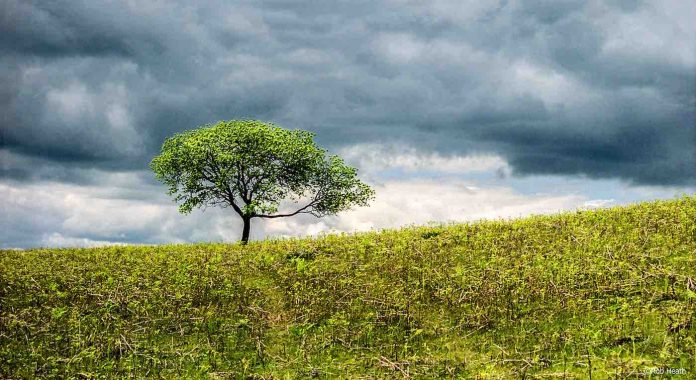
Quote of the Day: “The man without thought for the future will surely have trouble close at hand.” – Chinese proverb
Photo: by Robert J Heath, CC license on Flickr – cropped
With a new inspirational quote every day, atop the perfect photo—collected and archived on our Quotes page—why not bookmark GNN.org for a daily uplift?
13-year-old Kaitlyn Figueroa Lopez has never said a word in her entire life—until a Christmas lights display spurred her to speak.
Since Kaitlyn was first diagnosed as autistic and nonverbal at 3 years old, doctors predicted that she would never speak.
However, she and her mother Marisabel had been sitting outside their home in Mulberry, Florida so they could observe their neighbor’s holiday lights earlier this week when a “Christmas miracle” took place.
Every year, Don Weaver puts on a stunning music display with more than 200,000 individual lights synchronized to Christmas music. This is not the first time that the mother-daughter duo has watched the elaborate light show, but this is the first time that it inspired Kaitlyn to speak.
As they were watching the lights, Kaitlyn suddenly stood up and started yelling “Santa! Santa is coming!”
For Marisabel, it was the first time that she had ever heard her daughter speak—and now, she believes it will certainly not be the last.
“To hear her speak, it just gives me hope,” she told the WFLA. “Today it’s 2 to 3 words, tomorrow it could be a sentence. A year from now it could be a whole conversation.”
(WATCH the heartwarming news coverage below) – Photo by WFLA
Be Sure And Share The Sweet Holiday Story With Your Friends On Social Media…
With countless businesses, individuals, governments, and organizations joining in on the fight against climate change, these ten headlines from 2019 show that we have made more than a few notable strides in saving the world.
So without further ado, here are the top ten most popular environmental stories of the year.
Back in July, Dutch automotive company Lightyear introduced the world’s first long-range solar car: the four-passenger all-electric vehicle called Lightyear One.
The prototype had already sold 100 orders to be filled in 2021 after it was presented to a select audience of investors, customers, partners, and press in the Netherlands over the summer.
The Lightyear team of international engineers (some coming from Ferrari and Tesla) said they now believe it to be a historic turning point in the fight against global CO2 emissions.
In April, the National Pollinator Garden Network surpassed their goal of registered pollinator gardens with just over 1,040,000 gardens registered with their Million Pollinator Garden Challenge.
The organization launched the ambitious initiative back in 2015 as a means of saving pollinators, which are responsible for about one in three bites of food that we eat every day.
Though most of the registered pollinator gardens are concentrated in the United States, the project also recruited members in Canada, Mexico, and Europe. The registered spaces, most of which are comprised of private yards and public gardens, all add up to a network of approximately 5 million acres of enhanced or new pollinator habitat.
French startup Carbios is poised to solve most of the world’s recycling conundrums with a new process that uses enzymes to break down the most problematic PET plastics (like contaminated black food trays) into a form so pure that it can be used to make clear water bottles that look and act like those made from petroleum.
The green chemistry company announced in October that it had wrapped up funding for the construction of a new recycling plant that will use enzymes to biorecycle—all at once, and in a few hours—multicolored plastic, like food trays or polyester shirts—for which the recycling rate is close to zero.
The first-of-its-kind battery, which was switched on at the University of the Sunshine Coast (USC) in September, has been designed to store energy generated by 6,000 solar panels that have been installed across campus rooftops—and it has already slashed their overall electrical usage by 40%.
Over the course of the next 25 years, the thermal energy tank is expected to save $100 million in air conditioning costs and dramatically reduce the school’s greenhouse gas emissions, according to school representatives.
The study, which was published back in April, was the first of its kind to outline a cost-effective international strategy to keep the planet’s carbon emissions at 1.5 degrees Celsius. Not only that, it was the first study of its kind to suggest a global strategy that does not involve carbon-capture technology.
The “Global Energy System Based on 100% Renewable Energy—Power, Heat, Transport and Desalination Sectors” report was conducted by the Lappeenranta University of Technology (LUT) and the Energy Watch Group (EWG) from Germany.
An innovative young man from Cameroon has been cleaning up pollution in his city by turning plastic bottles into boats.
Ismaël Essome Ebone was first inspired to build his “EcoBoats” as a student back in 2011. After his boats proved successful, he invested all of his money into launching his nonprofit Madiba & Nature: a charity dedicated to collecting plastic waste from around the region and turning it into boats for ecotourism and fishermen in need.
Thanks to the success of the recycling venture, the Cameroonian organization was this year able to install the nation’s first ever EcoBin for collecting, sorting, and recycling waste materials.
The Sierra Energy company has been readying to tackle all of the non-recyclable garbage that ends up in landfills by vaporizing the heaps of trash and turning it into clean energy without any waste or emissions.
The fuel that is made from the FastOx technology is reportedly 20 times cleaner than California fuel standards. Additionally, all of the gases that are generated by the chemical process are captured for reuse—for instance, to replace fossil fuels that power airplanes or for use as fertilizer, hydrogen, or ethanol.
Back in August, the company announced that they were able to close a $33 million Series A investment round in order to further develop and commercialize its technology for municipalities and landfills so they can convert waste into clean, renewable energy and fuels.
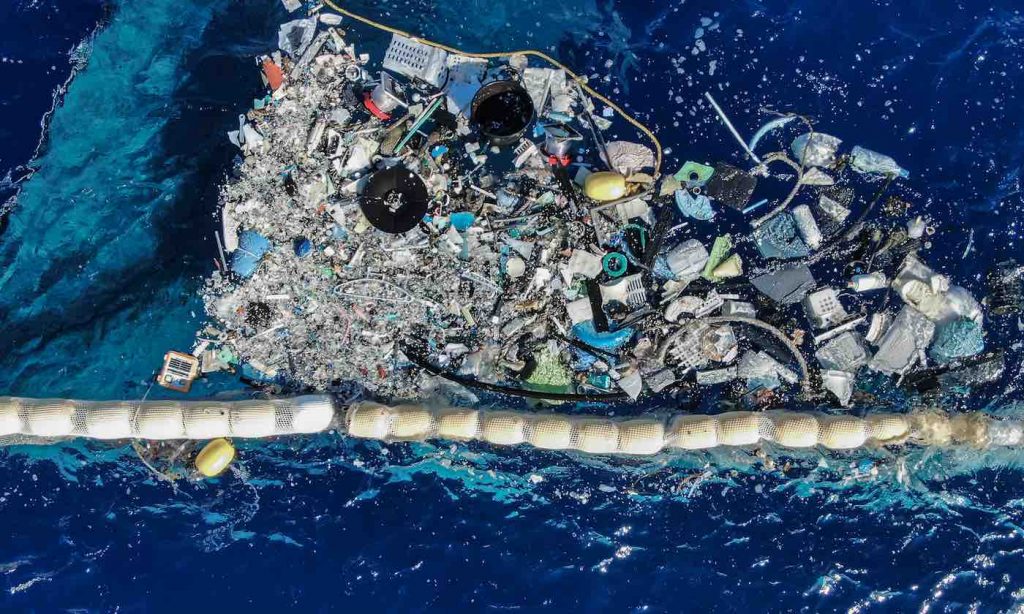
For the first time in history, conservationists collected trash from the Great Pacific Garbage Patch for recycling.
After one year of testing, The Ocean Cleanup organization announced in October that their System 001/B vessel had successfully captured and collected plastic debris from the patch.
Furthermore, the team brought back their first load of garbage for recycling last week.
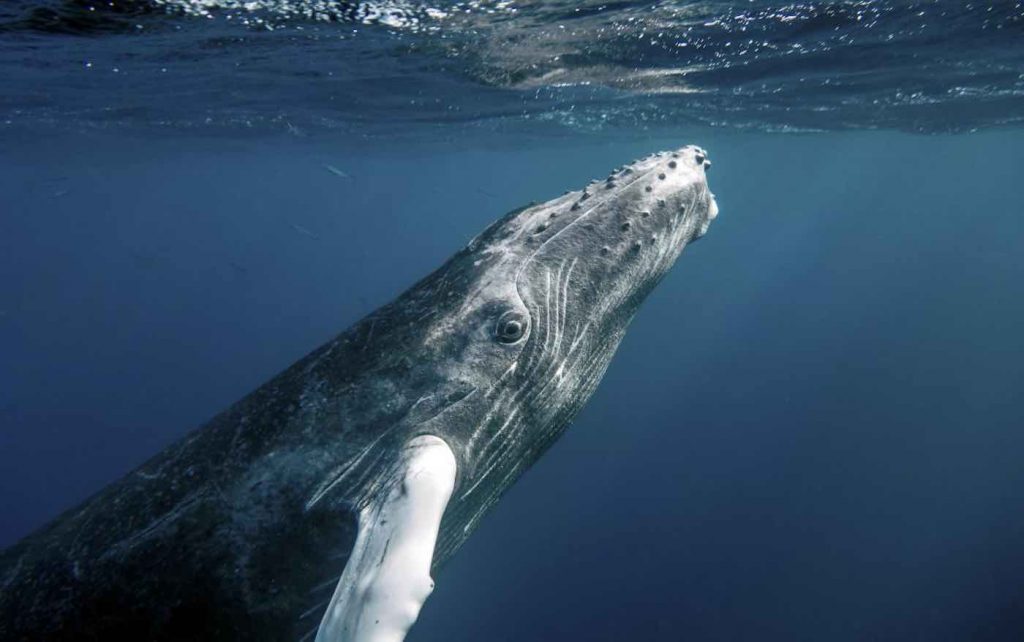
Intense pressure from the whaling industry in the early 1900s saw the western South Atlantic population of humpbacks diminish to only 450 whales, after approximately 25,000 of the mammals were hunted within 12 years.
However, a study from the University of Washington’s School of Aquatic and Fishery Sciences which was published in November revealed that the species’ population has now rebounded to 25,000 once more.
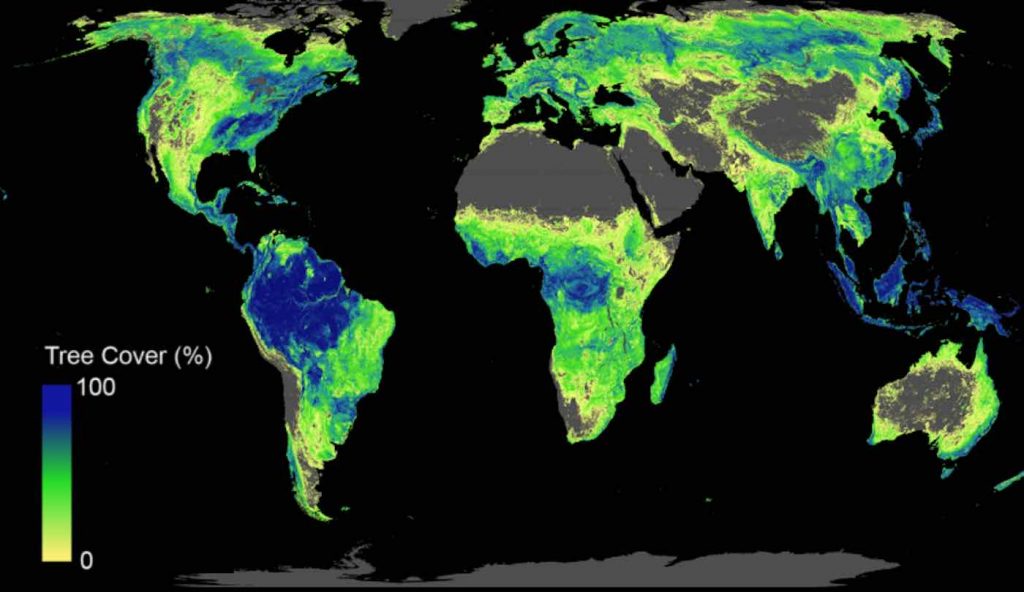
According to a historic study that was published by the Crowther Lab of ETH Zurich back in July, around 0.9 billion hectares (2.2 billion acres) of land worldwide would be suitable for reforestation, which could ultimately capture two thirds of human-made carbon emissions.
Since the lab investigates nature-based solutions to climate change, the researchers showed for the first time where in the world new trees could grow and how much carbon they would store.
Clean Up Negativity By Sharing The Eco-Friendly News With Your Friends On Social Media…
This US Army veteran is a perfect example of how anyone can achieve their dreams—regardless of their experiences.
Joshua Carroll had only been in high school when an airplane crashed into the World Trade Center back in 2001. Rather than pursue a college education, Carroll got his GED so he could enlist in the military.
After spending three deployments in Iraq, Carroll returned to his home in Virginia and found himself suffering from PTSD—and a general lack of purpose.
Carroll had begun working as a janitor at a local school when he caught sight of a Stephen Hawking book sitting on a library shelf. As he flipped through the pages, Carroll suddenly decided to pursue his childhood dream of being a physicist.
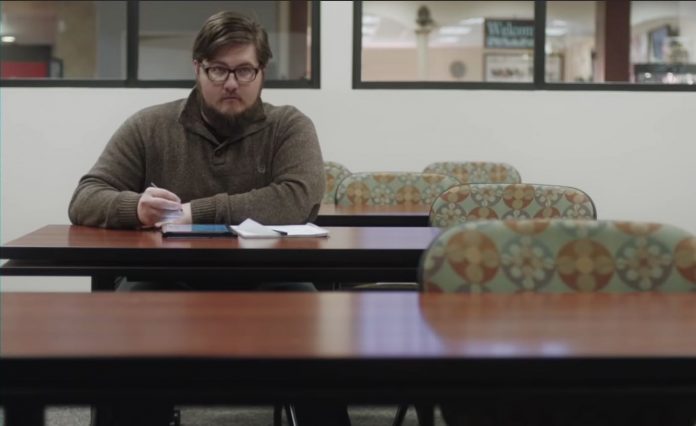
With just a 10th grade education in geometry, Carroll managed to persuade the admissions staffers at Radford University to let him skip the prerequisites for the physics program provided he could teach himself trigonometry.
Armed with nothing but the internet, Carroll prepared for his entrance exam by watching dozens of YouTube videos to learn advanced mathematics in just three weeks.
Not only did he pass with flying colors, he graduated as one of the top students in his class—and he has been working as a physicist ever since.
(WATCH the inspiring video below)
Be Sure And Share The Inspiring Story With Your Friends On Social Media…
After months of renovation, Pope Francis is hailing the launch of a project that he has long dreamed of in Rome: a 24-hour church and shelter for the homeless.
Opened on December 9th, the church is designed to be a place where the homeless can wash their clothes, connect to the internet, escape the cold, or relax and have a rest, as well as a place to receive food, water, clothes, blankets, and spiritual and psychological comfort.
“Churches with closed doors should be called museums,” wrote Pope Francis in a letter detailing the church’s mission to Padre Ángel García, the founder of the Catholic NGO Mensajeros de la Paz (“Messengers of the Peace”). “I wish that the doors to the House of God are always open because it walks among the peoples, in the history of men and women.”
The newly-renovated sanctuary, which has been dubbed the Church of the Santissime Stimmate di San Francesco, or “Holy Stigmata of St. Francis”, was built by Garcia and the nonprofit in Rome’s historic Pigna district.
Always Open
In his letter to Padre Ángel, Pope Francis praised the project as a common home to build together, and that a 24/7-church and shelter represented “an oasis of peace of the love of God, a place of welcome, reconciliation and forgiveness”.
The Mensajeros de la Paz foundation has been constructing these church/shelters since 2015 when they finished their first project in Madrid. The Church of San Anton was the first of what Father Garcia saw as his dream: a temple whose doors never closed.
San Anton also brought technological modernization to their 24 hour services, offering free WiFi, power outlets, television screens playing papal related news, and even confessions by iPad for the hard of hearing.
Being the patron saint of animals, the Church of San Anton is pet-friendly, and has a dog fountain outside. Inside, they offer free coffee to visitors.
Padre Garcia operates several of these churches, not just in Madrid and Rome, but also in Barcelona, Mexico City, and Amman, Jordan—but it is the Stigmata St. Francis which is closest to the Pope’s heart.
“Pope Francis always says that he would like to have a poor Church for the poor. This project is just that. We count on his blessing,” the founder of Mensajeros celebrated.
(WATCH the news coverage below) – Photo by Vatican News
Be Sure And Share The Inspiring Story With Your Friends On Social Media…
A woman near Fort Worth, Texas was surprised with a new car—nominated to receive a Christmas Wish because she always manages to stay friendly and kind, despite her valiant struggles as a single mom.
Bridgett works at Chick-fil-A in Benbrook, Texas, and anyone who visits the restaurant knows her by her infectious optimism. She brings smiles to local residents every day; knows their names and faces, as well as their orders. She’s never shy to give out hugs, hold babies for tired mothers, and everything in between.
So when her car was totaled, it’s no surprise that her friends wanted to do everything they could for her.
One of those friends was Amy. She wrote a letter to 94.9 KLTY in Dallas/Fort Worth, explaining Bridgett’s situation and the dire circumstances she was under—on top of her car being totaled, Bridgett’s son had been admitted to the hospital. A new car seemed completely out of reach.
“With my kids, it’s not ‘can we go to Chick-fil-A’, it’s ‘can we go see Bridget’, so I just felt led, like, someone needs to know about this,” said Amy. “She’s so deserving.”
She nominated Bridget for KLTY’s Christmas Wish program and station reporter Bonnie Curry called Dane Minor of Freeman Toyota, who coincidentally had been praying to find the perfect person to give a new car.
Together, Dane and Bonnie pulled up to the Chick-fil-A drive-through window to receive their order from a smiling, gracious Bridgett. As she handed them their drinks and food, Dane explained that they had a surprise for her.
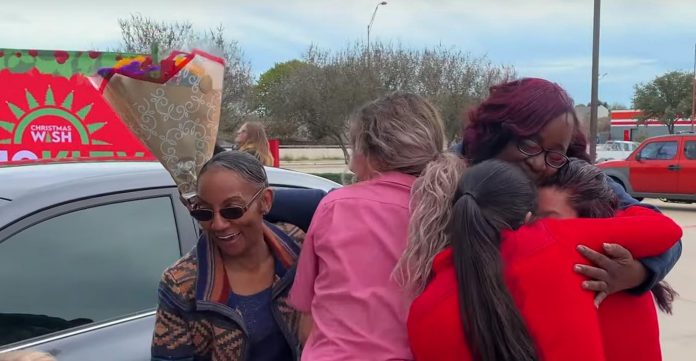
Bridgett broke down in tears as her coworkers lead her outside and Dane handed over the keys—and 94.9 KLTY shared another surprise: $2,000 to get Bridgett caught up on bills and groceries.
Bridgett has been overwhelmed by the outpouring of love. “This is so deserved! Ms. Bridgett is the sweetest!” Nancy Lemons commented. “She’s always giving joy to each person she interacts with.”
This heartwarming video might inspire YOU to do more to bless people this holiday season.
(WATCH the video below from KLTY radio)
Send Someone The Christmas Spirit by Sharing This On Social Media…
Quote of the Day: “People are always blaming their circumstances for what they are. I don’t believe in circumstances. The people who get on in the world are the people who get up and look for the circumstances they want—and if they can’t find them, make them.” – George Bernard Shaw
Photo: by Tim Vrtiska, CC license on Flickr – cropped
With a new inspirational quote every day, atop the perfect photo—collected and archived on our Quotes page—why not bookmark GNN.org for a daily uplift?
When it comes to global-scale issues, it’s often the small, localized problems that spur people to action.
While the often-dire rhetoric of the climate crisis is a powerful driver of green technology, it was the visual blight of pollutants floating in the shore waters off their favorite Dutch beach that caused two intrepid Hollanders to try and do their part.
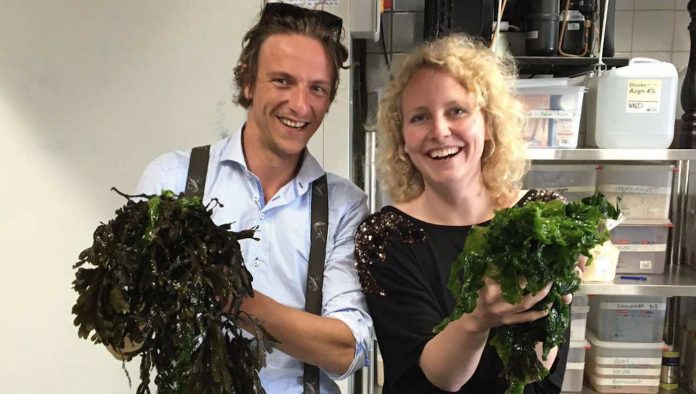
Nikki Spil and Sjoerd Laarhoven, residents of IJmuiden, regularly watched runoff tumble out of the factory on one side of the IJmuiden harbor before drifting across to the pristine beach so often enjoyed by citizens of The Netherlands.
“If you’re constantly in this area, you can literally see the pollution float by”, Nikki told MaatschapWij. “Especially on stormy days there is no way around it. Sjoerd and I wondered whether there was anything we could do to tackle this problem.”
Now, across from the smoke-belching chimneys of the Tata Steel factory, Nikki and Sjoerd farm seaweed at their Sea Farm Ijmond, as a simple, nature–based answer to the pollution drifting toward their beach.
Reports like the one published in July that produced a model showing that mankind can combat the worst of CO2 emissions by planting a trillion trees makes it seem like they are the optimal flora for the job.
“People often think that trees can provide the world with the biggest amount of oxygen, but actually it’s the algae,” says Nikki. “They’re the lungs of the Earth.”
Brian Yurasits
Seaweed is also a natural filter of pollutants, and is used as a treatment in chelation therapy for patients with heavy metal poisoning. Nikki and Sjoerd deliberately chose to create Sea Farm Ijmond in an area where it could clean their local harbor, even though their seawead might grow better elsewhere.
An Alternative to Plastic
Seaweed, if dried and rendered properly, can also be used to replace plastic for many common household items. Good News Network reported on the efforts of some Dutch scientists trying to bring seaweed plastics to market on a wider scale—and, Nikki and Sjoerd are providing their harvest as a resource.
Designers Eric Klarenbeek and Maartje Dros developed the bioplastic to replace synthetic plastics, using their dried algae which can be turned into a material that can then be used in 3D printers to create plastic items from trash cans to tableware and shampoo bottles.
They have partnered with a number of other companies producing bio-polymer to create a network known as 3D Bakery. They hope that – instead of buying products from large multi-national companies – one could simply walk down the street and “bake” some replacement items, whether it be cups, plates, flower vases, or tables.
While Nikki and Sjoerd’s seaweed farm is still small, come harvest time the aquatic plant is shipped off to a refinery in the town of Petten.
“There they purify it and turn it into a natural fertilizer. The rest is being prepared for bioplastic as we speak,” said Nikki.
I go estate sale shopping regularly and whenever I find an unfinished embroidery project I buy it and finish it bc there’s no way that soul is resting with an unfinished project left behind. One day I found this stunner for $5. The I walked pic.twitter.com/2zIzTsRuSI
— Shannon “Badass Cross Stitch” Downey (@ShannonDowney) October 23, 2019
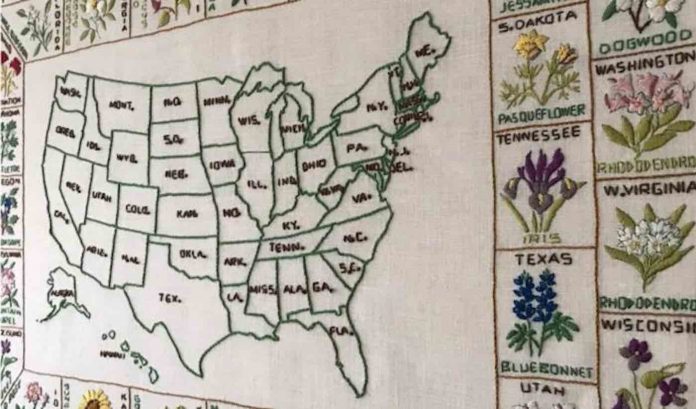
Shannon Downey never knew the deceased woman who had spent years toiling over this embroidered quilt of the United States—all she knew was that she had to finish it.
A 41-year-old artist, Shannon often visits estate sales so she can find unfinished craft projects that she can complete and then donate to charity. She had been browsing through one particular Chicago estate sale back in October when the patchwork masterpiece revealed itself.
Each piece of the quilt had been carefully planned to divide the country into 100 different hexagonal sections, but the stitching was only half-done. Downey could tell that it had been crafted by an expert needleworker—and it was on sale for just $6.
“I walked into the bedroom and found a box full of fabric. I opened it up and discovered it was a massive quilting project that was just begun. Every bit of the project mapped out and in this plastic tub,” Downey recalled on Twitter. “I sat on the floor and almost cried because I knew I had to buy it and finish it, but it was a massive … undertaking and while I embroider, I don’t quilt.”
After purchasing the project, Downey did some digging and found that it had belonged to a retired nurse named Rita Smith who passed away at the age of 99 back in August.
“That woman STARTED a massive quilting project at 99,” emphasized Downey. “Now I really had to finish this thing.”
Despite her determination, finishing the quilt would take Downey years to do on her own—so she reached out to her Instagram followers and asked for help.
Within 24 hours, more than 1,000 people volunteered to help take on the project.
I made a massive spreadsheet and collected mailing addresses. I started preparing the squares to ship out to my new team. As I did, I discover Rita had stitched 2 of the states already! What a grand surprise. I’m not saying I cried but I’m not saying I didn’t. pic.twitter.com/YfkzPZ25NO
— Shannon “Badass Cross Stitch” Downey (@ShannonDowney) October 23, 2019
Downey soon assembled a team of 50 needleworkers from across the country and assign each of them a portion of the quilt to complete. Since Smith had completed two hexagons of the quilt, along with its border, prior to her passing, Downey and her team are doing their best to mimic Smith’s embroidery style.
The crafters have become friends now—and hope to finish stitching the quilt designs sometime next year. After that, Downey has arranged for a team of Chicago-based quilters to take over the project and put the final pieces together.
One family’s loss has sparked a movement to bring light into others’ lives via a makeshift Christmas tree farm.
A man named Mark suffered every parent’s worst nightmare after he lost his daughter Mary Beth at age 7. She had spent the majority of her life in surgery, receiving medical procedures to correct severe heart defects.
While being treated at Children’s of Alabama hospital in Birmingham, Mark said it was painful for them to spend the holidays without her in their home—so they would often bring Christmas to her. After she passed, he wanted to make sure no other parents or children had to miss holidays together.
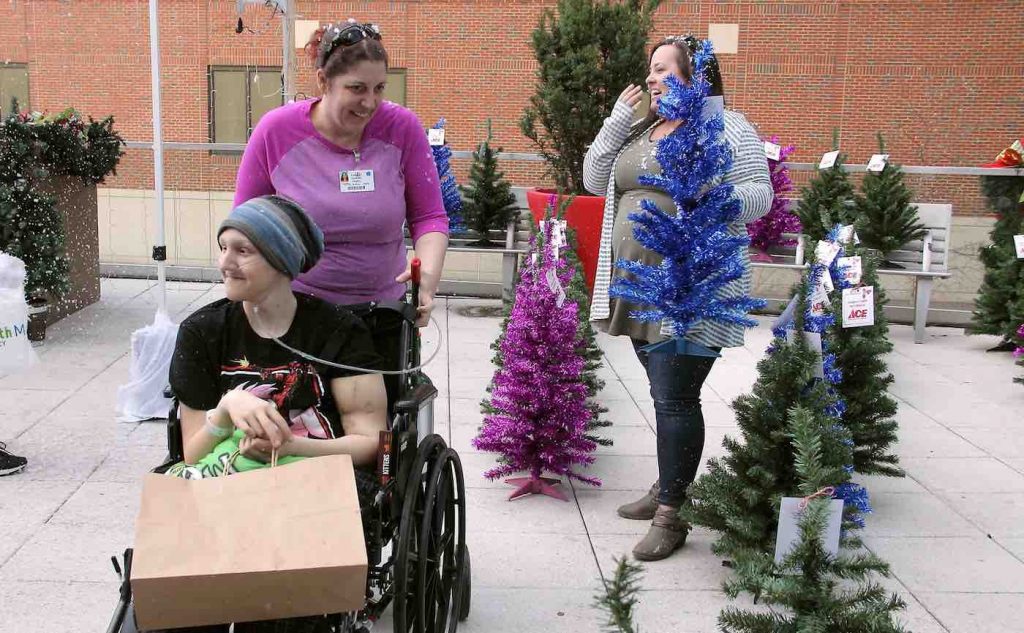
So, as an Ace Hardware employee, he and his colleagues made it happen. Mark reached out to several nearby Ace Hardware stores and the businesses immediately committed to help.
They received donations of 285 trees from 25 store owners to create a makeshift tree farm at the hospital for the kids—and last week, the dream became a reality.
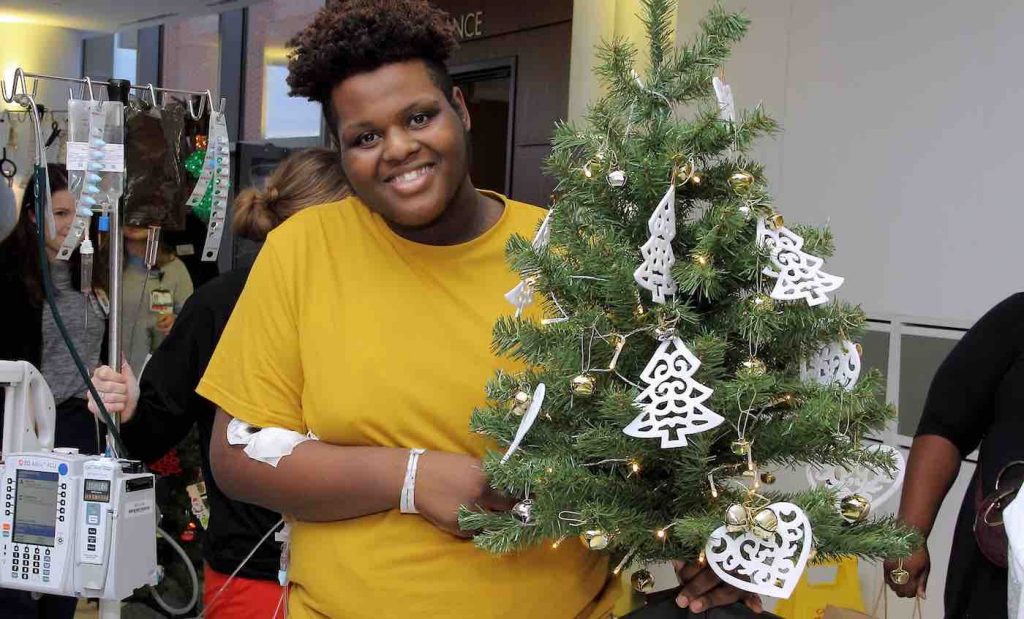
Each child chose their own tree, decorated it with ornaments, and met Santa himself amongst twinkly lights and artificial snow.
For those unable to leave their rooms, Christmas was brought direct to them so they didn’t miss out on the excitement.
Children’s of Alabama is part of the Children’s Miracle Network—and it’s no wonder!
SHARE This Sweet Story of Kindness With Your Friends On Social Media…
Sometimes we find our teachers in the most unlikely places.
A few years ago, I visited San Quentin State Prison for the first time, entering what can only be described as an intimidating, medieval-looking castle with guard towers. I vividly recall the clang of those iron gates as they slammed shut behind me—a sound that still reverberates viscerally.
It turned out that that day was the beginning of my volunteer work co-facilitating a weekly men’s group within the walls of this maximum-security facility. I had no idea my life would change when I agreed to make the first visit.
One of my congregants runs this group and had asked if I would go with her to San Quentin. In my mind, I was doing her a favor. I thought it would be novel, but once would be enough. I expected to meet angry men with no desire for real change. Did I really have time for this? After all, I was already juggling so much. I went feeling tired and anxious, with a long to-do list in my mind for the coming day at church.
I discovered this group of men serving life sentences had a monk-like desire and dedication for self-knowledge, self-mastery, and transformation.
By the time I left that evening, I was most unexpectedly brimming with energy and feeling uplifted in ways I’d not experienced for quite a long time.
No Distraction from the Self
Sometimes we find motivation and truth as well as catalysts for change in the most unlikely places and with people we might not think of as our teachers. Unlike the outside world, there are no real distractions in prison. You aren’t checking your cell phone. There isn’t any escaping your situation and circumstances.
Those of us who move about freely can avoid anyone we might dislike—but that’s not an option in prison. One has to come up with other ways of coping that do not result in breaking rules, getting in fights, or incurring any reason to be sent to “The Hole”; also known as the Adjustment Center.
Each day one is faced with himself. Over the years and decades, a stark self-analysis can bring about transformation in prison that, here on the outside, we might never take time to explore.
To my surprise, this group of men serving life sentences had a dedication and degree of perseverance I had never been exposed to in any group.
What had brought these men to prison so many years (or even decades) ago was not only the crimes they committed; the bigger truths of their lives included not understanding themselves or their motivations, their wounding, and lack of healthy coping strategies.
These men now wanted to share, learn, and grow in order to understand themselves in deeper and more profound ways. They were hungry for spiritual tools and practices—but at the core for many of them was a need to be reconciled with the higher power of their understanding. (The group comprises several faith traditions and ethnicities, so for all of them to be willing to learn and grow together is a minor miracle in itself.)
Within those first few hours in the presence of these men, I experienced their authenticity and willingness to share from the depths of their being. I remembered the quote from Jesus in the book of Matthew from the Bible: “I was in prison and you visited me. Just as you did it to one of the least of these who are my family, you did it to me.”
Now I understand the profundity of that direction. Every minister, rabbi, imam, or other spiritual leader wants to be with people who are serious about change and transformation. At San Quentin, in this particular group, I find myself surrounded by men who fit that description exactly.
In retrospect, my volunteering has not only been welcomed by the men but has also been a catalyst for inner transformation for myself. Sometimes we find our teachers in the most unlikely places. Turns out nothing was what I expected.
Rev. Bill Englehart is a Unity minister based in Southern California. He is a writer and speaker, workshop leader, and instructor for Unity Worldwide Spiritual Institute.
– Reprinted with permission of Unity®, publisher of Daily Word® (File photo by Don Christner, CC license)
Be Sure And Share The Inspiring Story With Your Friends On Social Media
Quote of the Day: “I’ll think of some way! After all, tomorrow is another day.” – Scarlett O’Hara, Gone With the Wind(debuted 80 years ago today)
Image: Gone With the Wind screen capture
With a new inspirational quote every day, atop the perfect photo—collected and archived on our Quotes page—why not bookmark GNN.org for a daily uplift?
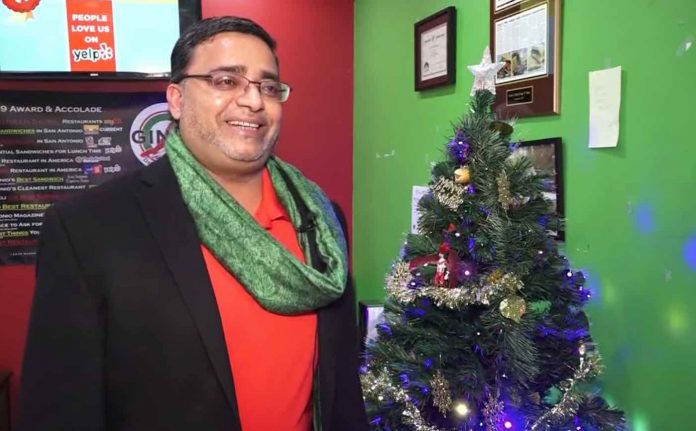
Aleem Chaudhry doesn’t just work tirelessly to provide his customers with tasty sandwiches—he also ensures that any child who writes a letter to Santa Claus in his town is guaranteed a response.
In addition to Chaudhry being the owner of Gino’s Stop-N-Buy deli in San Antonio, Texas, he is also known for being a reliable messenger in Santa’s workshop.
Chaudhry gained the yuletide reputation a few years back when he put up a bright red mailbox for the North Pole. Though it was only meant as a holiday decoration, many local children started using the mailbox to drop off actual letters to Santa—so Chaudhry took it upon himself to write back to every letter.
Last year alone, Chaudhry received and wrote back to more than 400 letters. Not only is he planning to do the same thing this year, he’s making it easier for the tots to write their notes to St. Nick.
So enthusiastic is his holiday labor of love that Chaudry has set up a letter-writing station for all of his young customers, stocking it with pens, markers, paper, and stamps.
(WATCH the news coverage below) – Image credit: screenshot of video by KENS-News
Deck The Halls With This Sweet Story On Social Media…
The population of the majestic Hawaiian Goose numbered 25,000 on the islands in 1778 when Captain Cook arrived, but soon those numbers were decimated by human-introduced animals like the mongoose until there just 30 left in 1952.
Photo by Bettina Arrigoni, CC license
Known locally as the nēnē, the goose was placed on the Endangered Species list in 1967, and conservationists went to work trying to repopulate the islands.
After 60 years of an intensive captive breeding program, rigorous habitat restoration, and active management strategies, the population has increased 90-fold—and this week, US Interior Secretary Bernhardt announced that the nēnē had recovered enough to be considered no longer endangered.
“Today’s announcement highlights the progress (that) the Endangered Species Act intends to deliver,” said Bernhardt. “Through collaboration and hard work the nēnē is out of intensive care and on a pathway to recovery.”
The nēnē’s glidepath from the brink of extinction in the decades following 1967 was paved by the breeding of nearly 3,000 birds in captivity which were then released onto more than 20 sites throughout the main Hawaiian Islands.
The release of captive-bred nēnē on national wildlife refuges, national parks, and state and private lands has saved the species for future generations. Today, there are more than 2,800 birds with stable or increasing populations on Kaua‘i, Maui and Hawai‘i Island and an additional population on Moloka‘i.
Although the bird’s federal status has been upgraded, safeguards will remain in place to protect the species because it is still rated as ‘threatened’.
Protect Your Friends From Negativity—Share The Good News on Social Media!
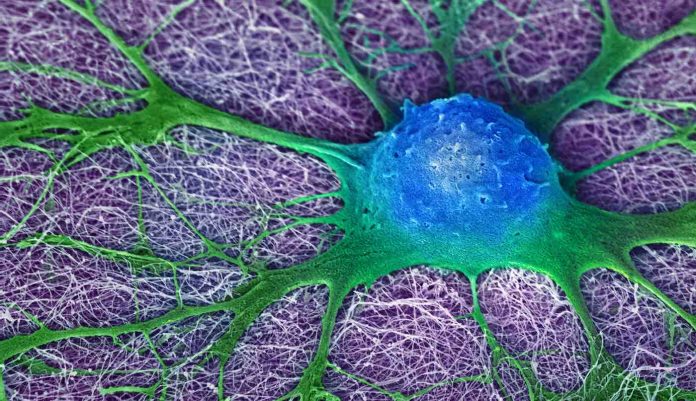
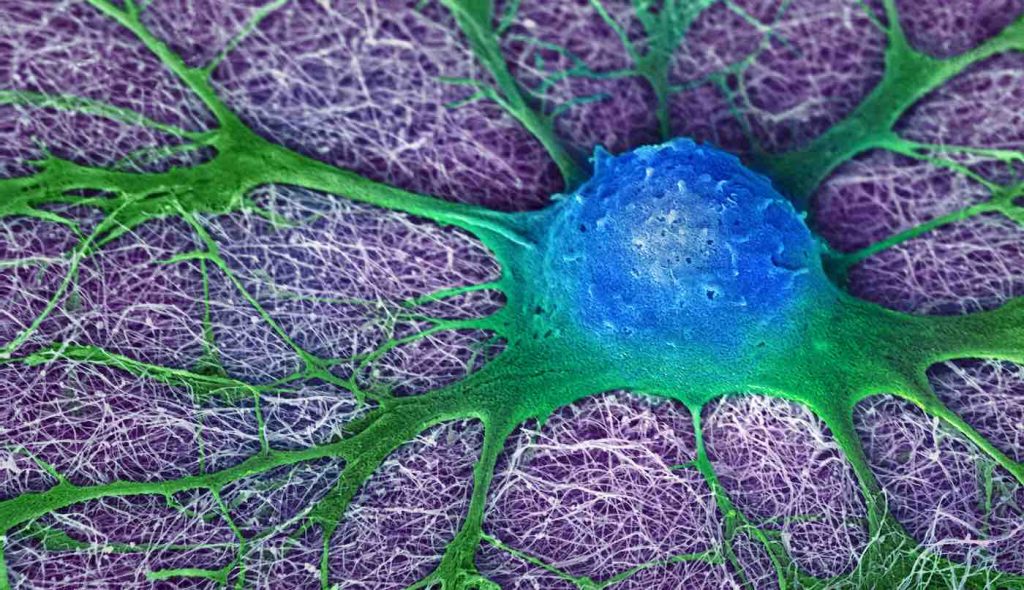
There are two drugs that have been developed by Salk Institute researchers to successfully treat Alzheimer’s in mice—and now, they have found that the very same drug compounds can also slow the aging process in the brains of healthy older mice.
In mouse models of Alzheimer’s disease, the investigational drug candidates known as CMS121 and J147 improve memory and slow the degeneration of brain cells. Now, Salk researchers have shown how these compounds can also slow aging in healthy older mice by blocking the damage to brain cells that normally occurs during aging and restoring the levels of specific molecules to those seen in younger brains.
The research, published last month in the journal eLife, suggests that the drug candidates may be useful for treating a broader array of conditions and points out a new pathway that links normal aging to Alzheimer’s disease.
“This study further validated these two compounds not only as Alzheimer’s drug candidates but also as potentially more widely useful for their anti-aging effects,” says Pamela Maher, a senior staff scientist at Salk and a co-corresponding author of the new paper.
Old age is the biggest risk factor for Alzheimer’s disease—above the age of 65, a person’s risk of developing the disease doubles about every five years. However, at a molecular level, scientists aren’t sure what occurs in the brain with aging that contributes to Alzheimer’s.
“The contribution of old age-associated detrimental processes to the disease has been largely neglected in Alzheimer’s disease drug discovery,” says Antonio Currais, a Salk staff scientist and first author of the new paper.
Maher and David Schubert, the head of Salk’s Cellular Neurobiology Lab, previously developed CMS121 and J147, variants of plant compounds with medicinal properties. Both compounds—derivatives of the flavonol fisetin, and a molecule present in the curry spice curcumin—tested positive for their ability to keep neurons alive when exposed to cellular forms of stress related to aging and Alzheimer’s disease.
Photo by the National Institute of Health, CC
Since then, the researchers have used the drug candidates to treat Alzheimer’s in animal models of the disease. But experiments revealing exactly how the compounds work suggested that they were targeting molecular pathways also known to be important in longevity and aging.
In the new research, Maher, Currais, and their colleagues turned to a strain of mice that ages unusually fast. A subset of these mice was given CMS121 or J147 beginning at nine months old—the equivalent of late middle age in humans. After four months, the team tested the memory and behavior of the animals and analyzed genetic and molecular markers in their brains.
Not only did the animals given either of the drug candidates perform better on memory tests than mice that hadn’t received any treatment, but their brains showed differences at the cellular and molecular levels. In particular, expression of genes associated with the cell’s energy-generating structures called mitochondria was preserved by CMS121 and J147 during aging.
“The bottom line was that these two compounds prevent molecular changes that are associated with aging,” says Maher.
More detailed experiments showed that both drugs affected mitochondria by increasing levels of the chemical acetyl-coenzyme A (acetyl-coA). In isolated brain cells, when the researchers blocked an enzyme that normally breaks down acetyl-CoA, or when they added extra amounts of an acetyl-coA precursor, they saw the same beneficial effect on mitochondria and energy generation. The brain cells became protected against the normal molecular changes associated with aging.
“There was already some data from human studies that the function of mitochondria is negatively impacted in aging and that it’s worse in the context of Alzheimer’s,” says Maher. “This helps solidify that link.”
Maher and Currais are planning future experiments to test the effects of CMS121 and J147 on how other organs age. They also hope to use the new results to inform the development of new Alzheimer’s drugs; targeting other molecules in the acetyl-coA pathway may help treat the disease, they hypothesize.
“We are now using a variety of animal models to investigate how this neuroprotective pathway regulates specific molecular aspects of mitochondrial biology, and their effects on aging and Alzheimer’s,” says Currais.
Earlier this week, Amazon began surprising hundreds of US charities—supporting every kind of cause from STEM education, to homelessness, hunger, disaster relief, youth organizations, sustainability and more—by fulfilling the products requested on each of their AmazonSmile Charity Lists.
The online retailer will continue to donate hundreds of thousands of items on wish lists for nonprofits through the end of the year to ensure they have what they need to get a jump start on the new year.
“We are enormously grateful to Amazon for fulfilling our Charity List,” said Chris Bailey, Executive Director of the Mona Bailey Academy. “Receiving this type of product donation allows us to continue our mission of delivering cutting edge and creative educational programming to underprivileged elementary age students in the Seattle area and beyond.”
Some of the items donated by Amazon during this holiday season include more than 5,000 blankets, sheets, and pillows; more than 30,000 toys and educational items for kids; more than 40,000 pajamas, shoes, and other apparel items; and over 60,000 food and pantry items from water to canned goods.
“Amazon’s generosity will allow us to meet a portion of the great needs of people experiencing homelessness on our borough’s streets, in the ferry terminal, and especially the children and families in our Staten Island shelter,” said Reverend Terry Troia, President and CEO of Project Hospitality. “We are grateful.”
In addition to fulfilling hundreds of AmazonSmile Charity Lists, Amazon is surprising several organizations whose mission is to support those experiencing homelessness across the country with more than $1 million in monetary and in-kind donations for the holidays.
Winter is the hardest time for homeless communities; a monetary donation provides nonprofits with the flexibility to fund existing gaps including emergency shelter, medicine, food, supplies, and seasonal staffing.
Along with the donation, 10,000 “Boxes of Smiles” gift packages will be delivered to shelters—which include toys, electronics, personal care products, and books—for people in need of services at Central Arizona Shelter Services, Domestic Abuse Women’s Network, SEARCH Homeless Services, and other charities.
“We are so grateful that Amazon has fulfilled our AmazonSmile Charity List,” said Nancy Keil, President and CEO of Second Harvest Food Bank of Middle Tennessee. “The holidays are a difficult time of year for struggling families.”
Hundreds of thousands of the nonprofits that have joined the AmazonSmile Charity Lists have already been able to get donations since the program was unveiled in 2013 because the lists provide an easy way for customers to donate directly to causes they want to support. Since launching, AmazonSmile has facilitated more than $155 million to charitable organizations.
For starters, Purrfect Pals, a local cat shelter based in Arlington, Washington, posted a request on Facebook asking for donations to restock their food pantry. Within just two days of the post, customers placed 300 orders worth of $20,000 in pet food.
Additionally, since Hurricane Dorian struck the Bahamas in September of this year, Amazon customers purchased relief items, worth over $200,000, destined for The American Red Cross, Save The Children, and SBP, to support communities affected by the hurricane.
Pass On The Positivity By Sharing The Good News With Your Friends On Social Media…
Quote of the Day: “Out of suffering have emerged the strongest souls; the most massive characters are seamed with scars.“ – Edwin Chapin
Photo: by pixle, CC license via Flickr (cropped)
With a new inspirational quote every day, atop the perfect photo—collected and archived on our Quotes page—why not bookmark GNN.org for a daily uplift?
Australian actress Olivia Newton-John is best known for her iconic role in the musical film Grease—which is why she decided to auction off hundreds of pieces of movie memorabilia to raise money for charity last month.
The 71-year-old starlet felt spurred to donate the cinematic treasures after she was diagnosed with breast cancer for the third time in 2018.
She then put more than 500 articles of her clothing, jewelry, and film props up for auction so she could donate all of the proceeds to her cancer research charity, the Olivia Newton-John Cancer Wellness and Research Center.
The legendary leather jacket which she wore at the end of Grease ended up selling for $242,200.
Newton-John was stunned, however, when the jacket was returned to her once more.
Though the jacket’s buyer chose to remain anonymous to the public, he met with Newton-John in Los Angeles earlier this week so he could surprise her with the gift-wrapped jacket.
“This jacket belongs to you and the collective soul of those who love you, those for whom you are the soundtrack of their lives. It should not sit in a billionaire’s closet for country club bragging rights,” the man told an awestruck Newton-John. “For this reason, I humbly and respectfully return it to its rightful owner, which is you.”
After getting over her initial shock, Newton-John tearfully thanked the man and gave him a hug, saying: “You’re the best, you’re the best! I’m so grateful.”
“This is the most beautiful present,” she added, “but mainly it’s your heart that I’m grateful for.”
Newton-John happily told the donor and the gathered reporters that she would finally be able to fulfill her dream of putting the jacket on display in her cancer research center.
(WATCH the emotional video below)
Be Sure And Tell Your Friends About This Sweet Story, Stud…
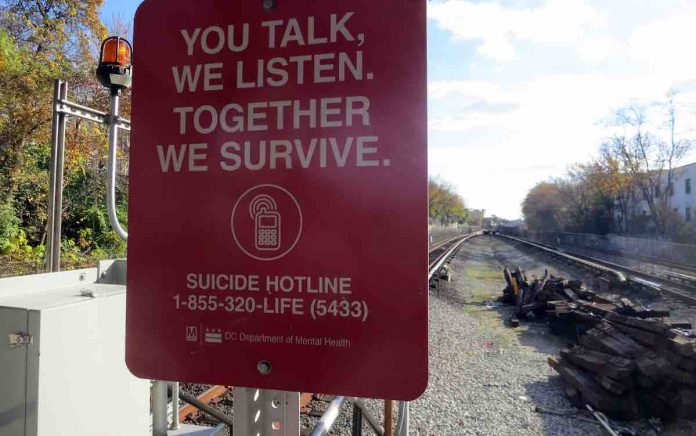
The United States will soon be getting its own 3-digit suicide hotline: 988.
The initiative was unanimously approved by all five members of the Federal Communications Commission (FCC) on Thursday. They are now gathering feedback, opinions, and input from the public before moving forward with officiating the dialing code.
The FCC’s proposal will now require phone carriers to launch the hotline within the next 18 months.
“988 has an echo of the 911 number we all know as an emergency number,” said FCC Chairman Ajit Pai during the commission’s open December meeting. “We believe that this three-digit number dedicated for this purpose will help ease access to crisis services, it will reduce the stigma surrounding suicide and mental health conditions, and ultimately it will save lives.”
The approval comes after the FCC submitted a report to Congress back in August describing the best possible method of implementing a 3-digit phone number for the federally-funded National Suicide Prevention Hotline.
The 138-page report recommended that Congress designate 988 as the new dialing code to be used for a nationwide suicide prevention and mental health crisis hotline, which “would likely make it easier for Americans in crisis to access potentially life-saving resources.”
The report was created in response to the National Suicide Hotline Improvement Act of 2018, which was approved in the House in a near unanimous 379-1 vote back in July 2018. It was then signed into effect by President Donald Trump the following month.
“We all know by heart to dial 911 during an emergency. We have fate and confidence that somebody who can help will be on the line. It shouldn’t be any different for someone in a mental health crisis,” said Rep. Leonard Lance (R-NJ) in support of the bill.
Until the hotline is launched, Americans suffering from suicidal impulses are encouraged to call the official suicide hotline: 1-800-273-8255.
Be Sure And Share The Good News With Your Friends On Social Media – File photo by Daniel Lobo, CC