In addition to the Five-time Grammy award winning rap visionary Kendrick Lamar blowing everyone’s minds with his groundbreaking performance of “Alright,” he took the time to deliver a proper message to kids.
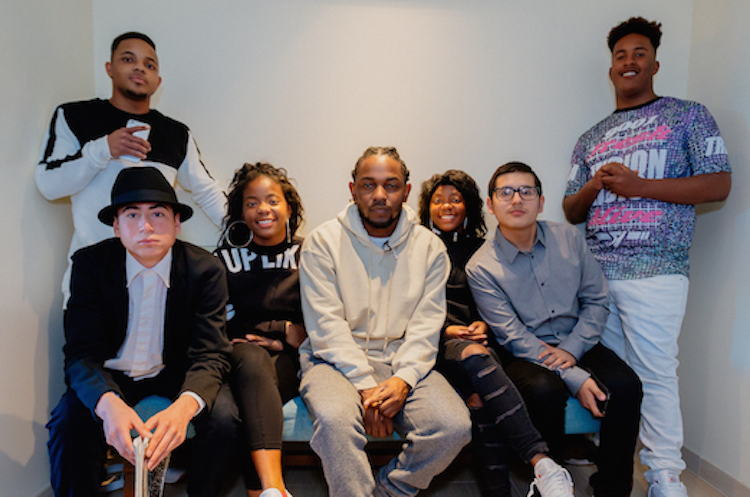
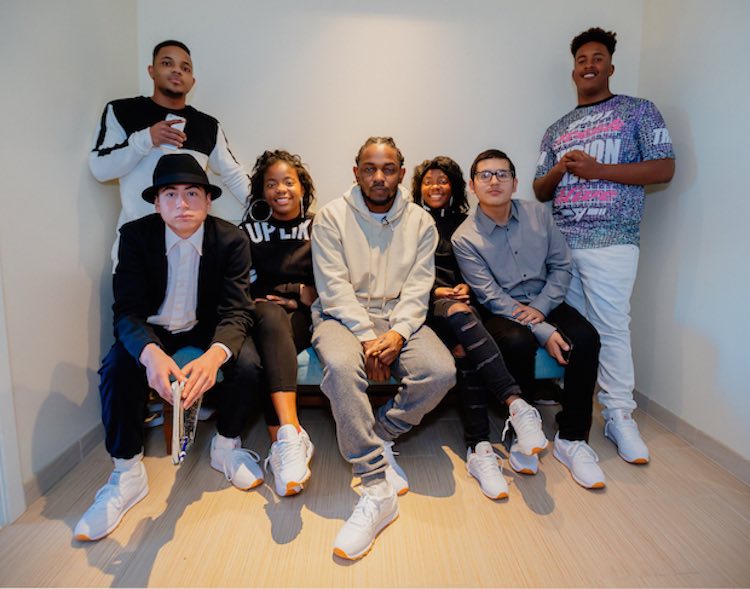
6 kids, in fact, from his old Compton school Centennial High.
A Reebok-sponsored video released on Tuesday, shows the youth being escorted to the Grammys via limo ride destined for some one-on-one time with their hometown hero and a view of the stage.
Throughout his music career, Kendrick has been very outspoken about his roots in Compton: from writing songs about being pressured into a life of crime for his major-label debut album good kid, m.A.A.d city, to the effects of police brutality on black youth in his most recent work, To Pimp A Butterfly.
Giving the six teens quality time with their role model reinforced the hope that it doesn’t matter where they grow up; anyone can beat the odds and follow their dreams.
“It reminds me of where I came from,” Kendrick remarked in the video. ”I can see they’re full of energy just like how I used to be. Full of motivation to do something with themselves. So hopefully ten years from now, they’ll be even further than where I’m at.’
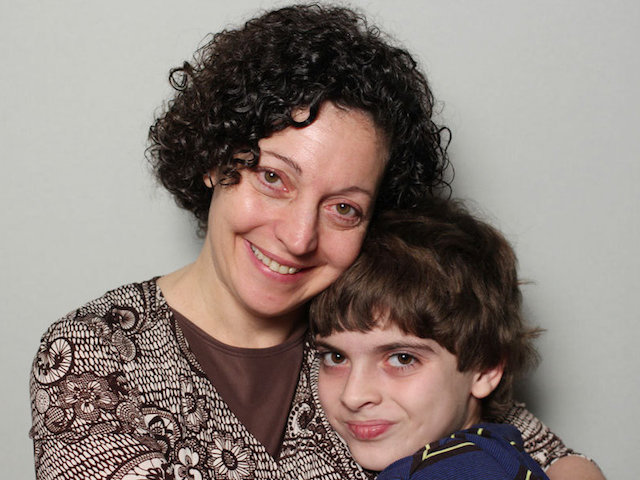
Dramatic seizures aren’t enough to dampen this 11-year-old’s quest for knowledge – and this interview suggests they have actually piqued the boy’s spirituality and love for friends and family.
After the seizures started about a year ago, Benny Smith had to leave school and be tutored at home. That’s rough for a brilliant kid who has an insatiable thirst for learning–but it is also tough on his sister who didn’t get equal attention at home. Benny pointed out this fact to his mother, hoping to change it, which shows he’s more worried about his family’s well-being than his own.
In a candid, thoughtful interview recorded by his mom for the StoryCorps website, this smart-as-a-whip child reveals, “I’ve got a yearning.”
“It’s like the call of the sirens from Odysseus, but instead of flesh-eating monsters, it’s like a treasure-trove of knowledge.”
As you can see, Benny is not your average sixth-grader.
He’s going back to the classroom this year and throughout his ordeal kept a positive outlook on life, saying he has stayed focused on the “galaxy of experiences” life holds for him.
Thailand’s tigers are coming back from the brink — with their numbers nearly tripling here — thanks to heightened protections.
An eight-year long “census” tracked the big cats across Southeast Asia between 2005 and 2012, and found tiger populations nearly tripled in size in Thailand, where the government has carried out tough anti-poaching efforts.
The study, published in the journal Conservation Biology, was the first ever long term study of tigers in the region. It identified 90 Indochinese tigers in Thailand’s Huai Kha Khaeng Wildlife Sanctuary — up from their all time low of 35 just a few years earlier. Only 350 of the subspecies existed in a handful of countries in the wild in 2010.
The Wildlife Conservation Society and Thai government have worked together for nearly 15 years to step up anti-poaching efforts, such as armed guards regularly patrolling in the sanctuary. Conservationists believe those protections have created an environment where not only tigers are safe, but their prey is multiplying too, which enables the tiger population to expand with the food source.
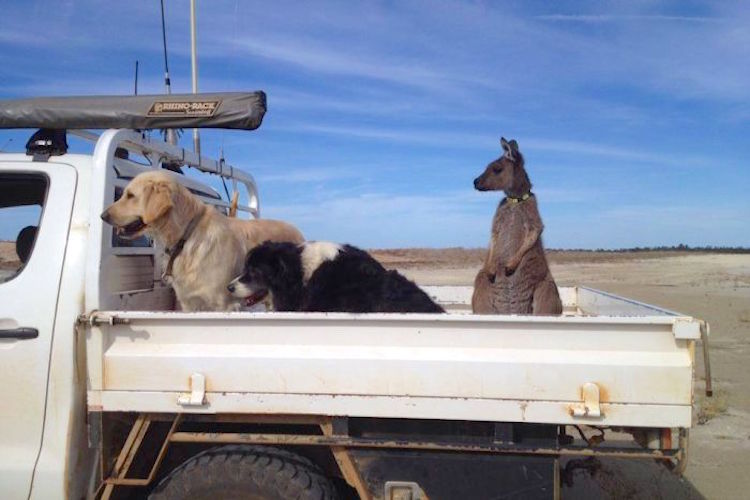
Barns was nominated for “Australian of the Year” in 2014 for his work to rescue the country’s iconic animals. He has written a book called Kangaroo Dundee, which is also the title of a BBC Documentary about his hopping-good works.
His refuge cares for more than two dozen joeys at a time, but this one isn’t interested in waiting until the rest are at the dinner table. Watch the animal’s insistence in the cute video above.
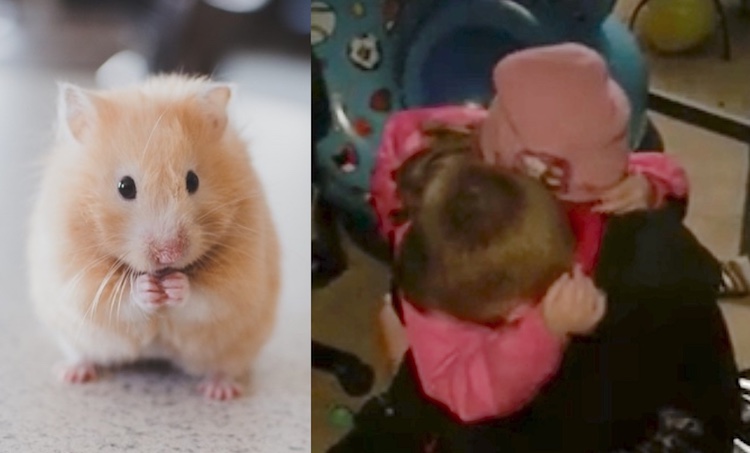
What’s better than a new pet hamster? …How about a hug.
That’s what this little boy gives his sister after she surprises him with a gift bought with her own birthday money.
Abby Stout’s parents asked her what she wanted to do with the $55 she’d received from friends and family, and the little girl never faltered in her answer.
“I am literally crying at work…,” the elder Daniel Stout wrote on his wife’s Facebook page. “Our kids are incredible.”
(WATCH the video below) — Photos: Rachel Stout, Facebook; unsplash, CC
So ever since Abby got her hamster Daniel had been busting his butt doing extra chores and going above and beyond to earn money to buy himself one. We added up Abigail's birthday money and gift cards and she had $55 total. I asked her what she wanted to do with her money and she says, "I want to surprise Daniel and buy him his hamster. He has been working soooo hard." I asked her numerous times of she was sure that's what she wanted to do with her money and she never faltered. Daniel went over to a friend's house to have a sleepover and we took Abby to pet smart where she asked for the exact hamster Daniel said he wanted, held it to make sure it was nice and excitedly told the woman all about how she was surprising her brother. We got it home, set it up and she she couldn't wait for him to get home from his sleep over so he could be surprised and meet and name his hamster. This is the video of him meeting "Cubby." Daniel Stout
Posted by Rachel Stout on Monday, February 15, 2016
OFF - a DEET containing product. mosquito CC 2.0. Mike Mozart CC 3.0. Katja Schultz
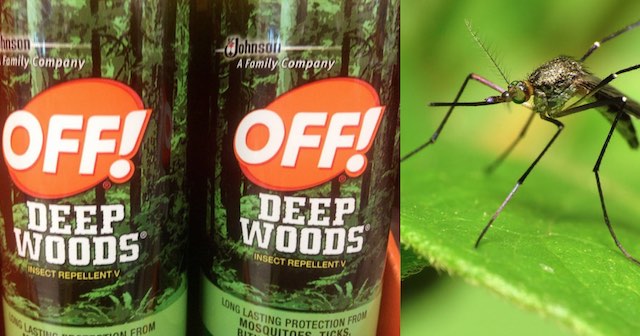
The maker of one of the world’s most popular mosquito repellants is ramping up production, cutting its cost in Argentina, and donating millions to help people around the world avoid the Zika virus.
Wisconsin-based S.C. Johnson, maker of OFF!, is giving $15 million dollars over the course of this year to the Red Cross and governments of countries affected by the mosquito-borne disease.
Zika is usually a mild disease–most people won’t even know they’ve had it–but in some cases it can cause severe birth defects if a woman contracts the disease while pregnant.
Production of the repellant has been increased at three factories to supply nine times the normal demand in both Brazil and Argentina where the virus has spread fastest. They also cut the cost of OFF! by 25% after a request from Argentinian leaders.
CEO Fisk Johnson says the company is running round-the-clock shifts seven days a week. He also says the family-owned company has shifted its focus from profits to making sure there is a steady supply chain to places that need their product so there are no shortages.
(WATCH the video from CNBC below) — Photos: Mike Mozart, CC; Katja Schultz, CC
Share This Great Example of ‘People Over Profits’…
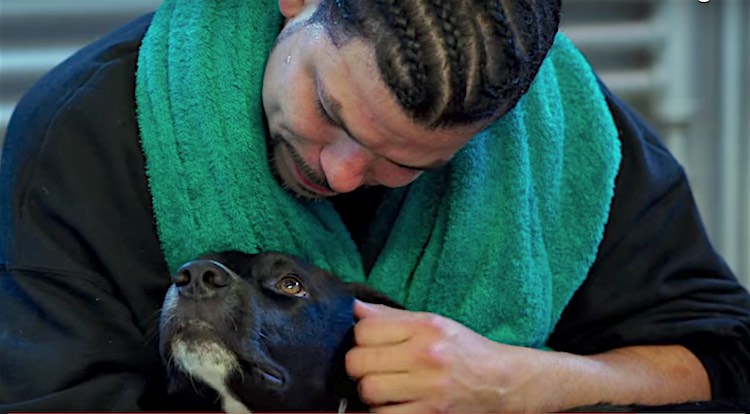
A Prison inmate can connect with an abused dog probably better than anyone. A new documentary shows firsthand how this connection can change two lives at the same time, and proves “nothing is impossible” when it comes to redemption.
“Dogs on the Inside” explores a Massachusetts program in which stray or wild dogs are given a second chance at life behind barbed wire as minimum security prison inmates foster them–and in the process, improve their own situations.
The prisoners bathe, feed, and train the dogs, preparing them for adoption. Over the course of the program, many of the men learn to build, for the first time, bonds of trust in their lives.
Its producers say their film “reconfirms the timeless connection between man and dog.” That link lets inmates see the gradual improvements in their dog’s nature and learn that they, too, can change.
The documentary’s bonus feature clips follow one dog and one inmate months after they leave prison, showing how both came out better equipped for a new life.
When his wife lost her eyesight, a farmer planted thousands of fragrant flowers around their home so she find her way back from sadness.
Toshiyuki and Yasuko Kuroki had been married for 30 years, working a herd of 60 cows on a dairy farm in Japan, when Yasuko went blind from complications due to diabetes.
She began to withdraw from life, no longer talking to people and locking herself away inside their house.
One day, Toshiyuki noticed a shibazakura — a bright, fuchsia-colored flower — growing on the farm. He knew his wife couldn’t enjoy looking at it, but then he though about it’s powerful fragrance and an idea blossomed.
Toshiyuki began planting the flowers near the house, then across the farm. He transformed his dairy into a giant flower garden. Tourists started showing up during cherry blossom season to tour the pink-blanketed grounds.
And his wife began to open up again. The fragrance lured her out of the house, and she began interacting with visitors which led her away from life as a recluse.
That was more than 25 years ago, and the flowers are still blooming on Toshiyuki and Yasuko’s farm. The dairy cattle are all gone and a shed that housed them is now a museum of the flowers and the story behind them.
Every March and April when the shibazakura bloom, 7,000 tourists come to visit, to smell the fragrance, see the blanket of pink, and catch a glimpse of a couple now in their 70s and 80s, walking through a garden built by love.
(WATCH the video below from Asahi Shimbun, or READ more at Rocket News)
Plant This Beauty in Your Newsfeed… Photos: Asahi Shimbun video; Kuruman, CC; gtknj, CC
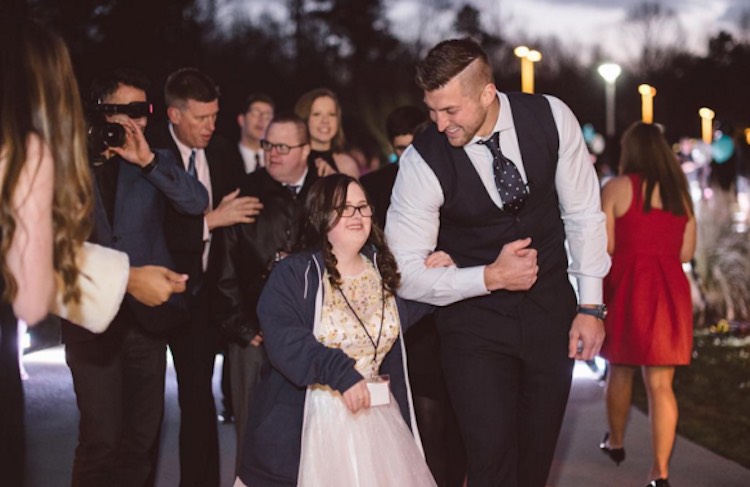
Tim Tebow is known for his talents throwing a football, but now he’s throwing a different kind of ball for everyone to marvel at: the former NFL quarterback funded 200 different prom nights on Valentine’s Day weekend, specially arranged for kids with special needs and disabilities.
Complete with limos, paparazzi, and volunteers on hand for hair and makeup, about 32,000 guests over the age of 16 were given a night to remember.
Hosted by the Tim Tebow Foundation in 48 different states and 7 countries, the Night To Shine proms recruited help from over 70,000 volunteers for the special evening.
Tim even made an appearance at the New York location much to the delight of his guests.
“I hope you are having the best night!” Tebow exclaimed in a personal message to the prom attendees. “Why? Because this night is about you! It is a night for you to shine.”
This is one teacher who knows his students are paying attention.
When Kyle Simpler mentioned in class the fact that he hadn’t had a birthday cake in 10 years, he thought nothing of it. He never makes a fuss about his birthday–but it turns out his students at Burleson High School would.
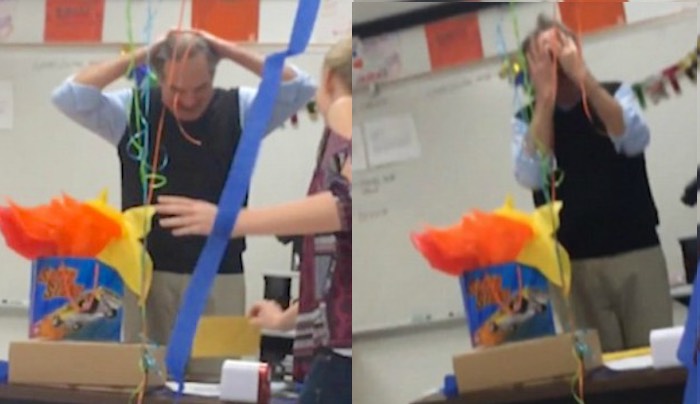
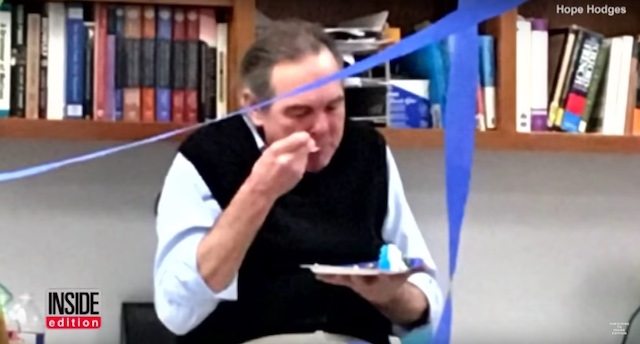
The Texas teens pooled their money so they could surprise him with decorations, a cake and presents.
Several had their cellphones out and recorded the moment when the English teacher walked into his classroom to see it decked out in streamers – with presents and a birthday cake waiting for him on his desk – as the kids sang “Happy Birthday”.
One of the students said she was shocked when she heard that her favorite teacher doesn’t enjoy any parties or fuss from his family on birthdays. She decided, “We’ve got to change this.”
“It was totally a surprise, I’ll tell you that. I was floored,” Simpler told Inside Edition. “I’ll never forget this.”
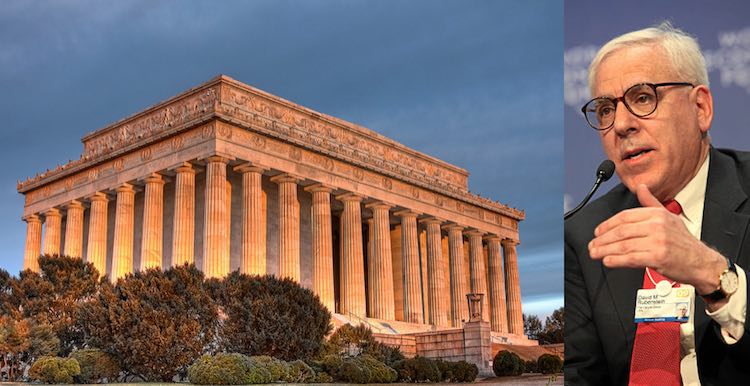
Abraham Lincoln might be rising up out of his chair to thank this Washington, D.C. businessman.
Thanks to the billionaire philanthropist David M. Rubenstein, one of America’s most iconic monuments will receive some much-needed repairs.
Rubenstein, who has contributed heavily to the National Park Service and Smithsonian Institution in the past has donated $18.5 million to fund the most extensive renovations to the Lincoln Memorial since it opened in 1922.
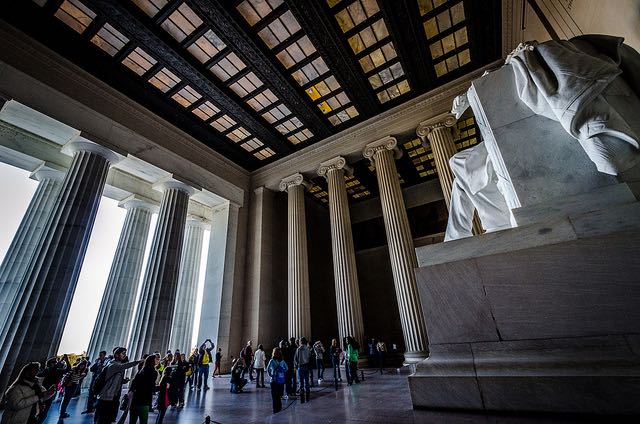
Fixing the damage from the 2011 earthquake that rattled the region is number one on the to-do list. The project, expected to be finished in 2019, will also add an elevator to improve accessibility and scrub decades of dirt and grime from the Memorial’s walls. It will also fund renovations in the basement that holds educational programs and displays.
“These improvements will hopefully enable more people to better understand and appreciate Abraham Lincoln’s remarkable leadership during one of the most trying periods in American history,” said Rubenstein, co-founder of The Carlyle Group, a Washington, DC-based banking investment group. “I am humbled to be a part of honoring this great man and preserving this iconic memorial for future generations.”
Rubenstein is also one of the signers of The Giving Pledge, a group of millionaires and billionaires who’ve promised to donate at least half their wealth to philanthropic causes or charities.
National Park Foundation photo shows repairs that are needed
The Memorial is patterned on a Greek Doric temple, with flowing steps rising to a larger than life, seated statue of Abraham Lincoln, America’s 16th president. His “Gettysburg Address” and “Second Inaugural Address” — among the greatest speeches ever delivered on American soil — are engraved from ceiling to floor on its interior walls. In 1963, Martin Luther King, Jr. delivered his “I Have a Dream” speech from the Memorial’s steps.
Rubenstein’s gift, announced on Presidents’ Day in February, is his fourth, and largest, donation, which he calls “patriotic giving” to the National Park Service. He also funded repairs to the Washington Monument, which was cracked during the earthquake.
Also, the National Park Foundation, the official charity of America’s national parks, launched a $350 million fundraising campaign to raise money for the parks and commemorating the National Park Service’s 100th anniversary. The Foundation has already raised more than $200 million on their own starting in October 2013. The money raised will provide for “transformative investments” to protect special places and “connect more people from all backgrounds to parks”. The campaign will continue through September 2018.
Photos: Jason OX4, CC; World Economic Forum, CC; m01229, CC
Inspire Others to Donate to the Campaign…Share it.
Twenty years ago, Russia’s suicide rate was twice what the World Health Organization (WHO) termed a high suicide rate — with 40 suicides per 100,000 people. By 2014, the country had cut the rate by more than half — enough to be considered average by WHO standards.
Recycling those little, plastic pill bottles that Westerners take for granted is behind a genius plan for helping out millions of people in Africa.
In Malawi, a shortage of bottles means people need to carry loose pills home in their hands or wrapped in paper. Once they arrive home in mud-and-thatch huts, they have to find a way to store them so they stay clean and dry.
The container shortage endangers the health of people who depend on daily doses of medicines to treat everything from high blood pressure to HIV.
An Indiana charity figured out an amazingly simple and highly successful solution to the problem — recycle used bottles in America.
Dick and Diana Stephens had already distributed $200 million in aid to the country through their Malawi Project founded in 2000 – but the issue of pill containers had confounded them for years.
Dick came up with the idea of recycling used bottles in what he called a “Eureka moment” that hit him while he was staring into his medicine cabinet.
He put out a Facebook appeal and pretty soon, he and Diana were getting as many as 200 packages in the mail every day. More than two million used bottles were donated in eight months.
By the end of 2015 two forty-foot trailers left for Malawi. Included in the shipments were over 600,000 pill containers....
So many deliveries were coming in, they had to suspend the drive over the holidays when the Postal Service worried they wouldn’t be able to keep up the deliveries.
The Malawi Project now has more bottles than it can handle — and is not taking more donations — at least until they deliver their stockpile overseas.
But its website lists other groups doing similar work and encourages people to start pill bottle recycling projects like theirs through local churches and their missionary programs.
Share The Inspiring Idea… (Photo: Charles Williams, CC)
When a Liverpool man bought tickets for himself and a homeless guy to go watch their favorite teams score goals, he never imagined the friendly gift would lead to meaningful goals scored off the pitch and a life turned around.
Every day on his way to work in England, Rossico Jenkoski would buy a cup of coffee for the homeless man named Darren.
Darren had lost his job and apartment after his girlfriend passed away, and depression took hold. One thing he never lost, though: his enthusiasm for the Everton football club endured, even while he lived on the streets.
Instead of spending money for “stupid things at Christmas” — as Jenkoski put it — he used part of his holiday budget to buy tickets to a match between Everton and his own favorite team, Liverpool–and chose his homeless friend to be his guest.
The simple act of kindness inspired Darren who has since found a job and an apartment.
“I posted this story to show you that a little bit of kindness can go so far and help get someone on the right track again,” Jenkoski (pictured, left) wrote on his Facebook page, below. “I used to drink coffee with Darren on the streets, then I did it at Goodison Park, and now we drink it in his flat.”
So this is a picture of me (on the left) and Darren (a homeless guy from Liverpool). Every day on my way to work I see...
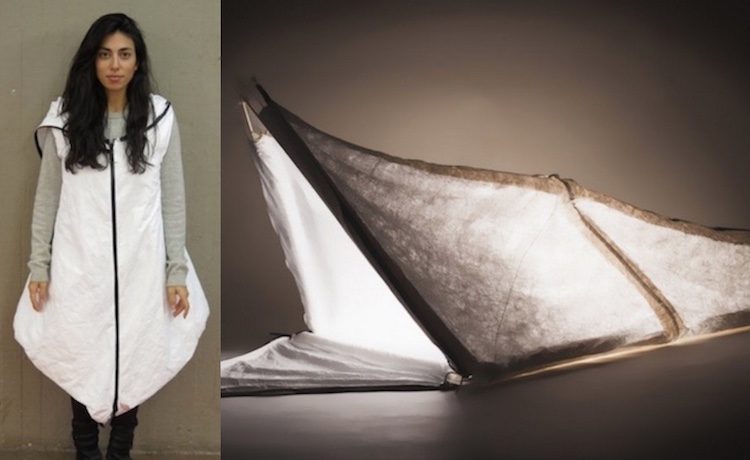
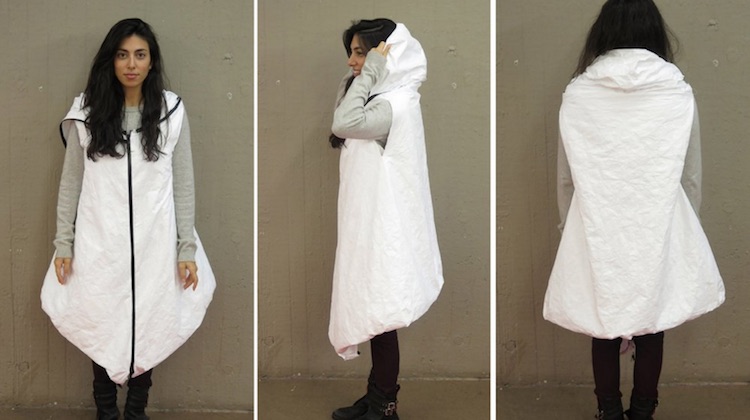
A group of interior design students have created the ultimate outerwear for refugees — a poncho that converts into a tent or sleeping bag, while safely storing important documents.
The wearable shelter features large, waterproof pockets for carrying vital papers and supplies, and it offers the convenience of an easy folding method to create a warm sleeping bag or, by adding a few kite rods, a personal tent.
Students at London’s Royal College of Art took part in an intense “hackathon,” working with guidance from Doctors Without Borders to create what they’re calling “wearable habitations.”
WALL Fashion London paid for factory-ready prototypes of the final design and the students have launched a Kickstarter campaign to raise the money needed to bring their idea to market.
They hope to have their design available to the public in June.
“While our wearable won’t solve the whole problem it addresses a small part of it,’ Dr Harriet Harriss said. “Its conspicuous, provocative design also acts as a kind of spotlight on the crisis, serving as a reminder to us all about the need to continue to press forward in finding an integrated and lasting solution to the problem.”
(WATCH the video below from Reuters) — Photos: Joshua Tam, Royal College of Art
After beating cancer two different times, climbing the world’s tallest mountains seemed easy by comparison — even if he does it with just one lung.
Sean Swarner has climbed Mount Kilimanjaro a dozen times and these days, he is inspiring other cancer survivors by leading them up the trails to the summit.
He was twice diagnosed with cancer, at age 13 and again at 16. Swarner remembers sitting on the floor of his shower, 60 pounds overweight and losing his hair from cancer treatments. Doctors had given him just two weeks to live.
It was his life’s lowest point, but also its turning point.
Swarner came up with a mantra: “The human condition can sustain itself for roughly three days without water, but no human alive can live for more than 30 seconds without hope.”
He’s never given up hope since that day.
Swarner has climbed the highest mountain on every continent and was the first cancer survivor to summit Mount Everest. The trek into the thin air was made doubly difficult because he had only one lung.
He created his own foundation, the Cancer Climber Association, to show survivors of the disease their continuing potential. Each year, it grants one cancer survivor the opportunity to climb the tallest mountain on the African continent with Swarner as guide.
“Taking people up Kilimanjaro, I see a transformation,” Swarner told TODAY. “It gives them the tools to say, ‘Hey, if I can conquer that mountain, I can do anything.’”
(WATCH the video at Your Erie) — Photo: news video
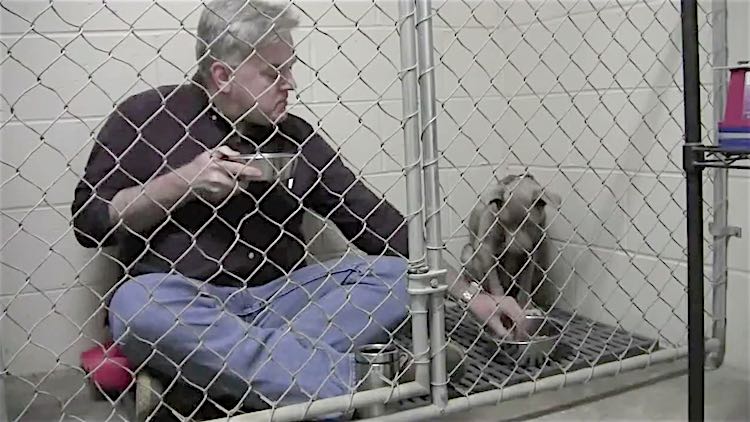
A veterinarian won over a jittery stray dog — and the hearts of millions of people — after he crawled into the pup’s crate and shared a meal with her.
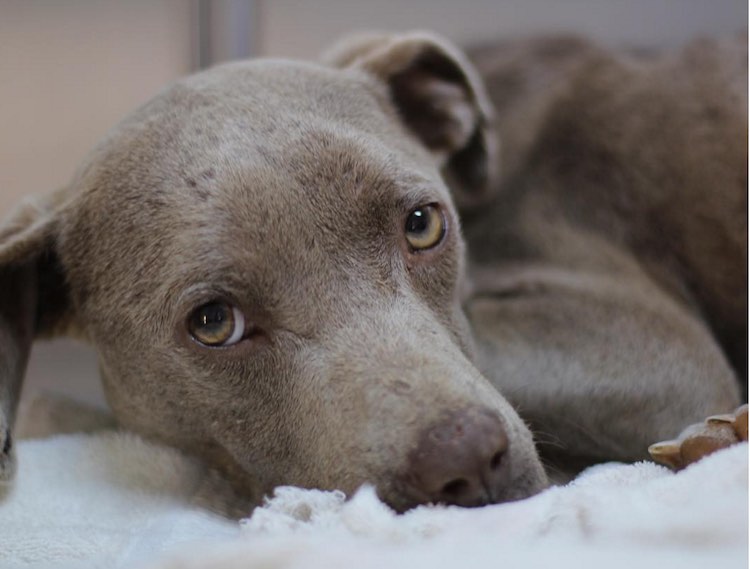
The little rescue dog that Dr. Andy Mathis would later name “Graycie” was brought into his office about two weeks ago, emaciated and in poor health. The vet was afraid he’d have to put her down, but decided to ask his Facebook followers for advice.
The dog made improvements but still wouldn’t always eat — until Dr. Mathis started climbing into her crate and having regular breakfasts with her.
Dr. Mathis has been documenting Graycie’s progress on his Facebook and Instagram pages and she’s doing better — perhaps proving breakfast really is the most important meal of anyone’s day.
Sherry Proper Spangler’s daughter recorded this video of her grandmother celebrating birthday number 85 by fanning her arms and legs in the Pennsylvania snow.
Since she posted it to Facebook on January 30, interest has, well, snow-balled. More than a million people have enjoyed the fun.
(WATCH the video below) — Photo: Sherry Proper Spangler, Facebook: geralt, CC
A single mother may have won the lottery, but it was a homeless man’s lucky day when she turned a two dollar bet into nearly $15,000 to help the man get back on his feet.
Sofia Andrade spent her last two dollars on an instant lottery ticket and won $200. On her way home with her winnings, she noticed a homeless man at a stop sign.
She invited the man, Glenn Williams, for a cup of coffee and he was so grateful he couldn’t stop crying on the drive.
With temperatures forecast to plunge in New Bedford, Massachusetts that night, Andrade found out local shelters were full — so she used her winnings to put Williams up for the night in a hotel.
She posted about the encounter on Facebook, and soon other people were pitching in. A barber gave Williams a free haircut, friends donated cold weather gear and a kid even sent the homeless man a Valentine’s card.
Andrade wasn’t done helping Williams. She set up a GoFundMe page hoping to raise $5,000 for the homeless man. In just two days, it’s raised $14,891.
CORRECTION: Using a February 16, 2016 United Press International article as the main source, we incorrectly dated this story. The Senate confirmation actually took place in May, 2014. Good News Network apologizes for the misinformation but will leave this article posted as background for an “On This Day in History” mention, that we previously published here.
______________________________
A former prosecutor and judge for her Hopi tribe has become the first Native American woman to become a federal judge.
The U.S. Senate unanimously confirmed Diane Humetewa to a District Court bench in Arizona on Monday (see correction above). She’s only the third Native American to serve as a federal judge, and the only one currently to be serving.
The National Congress of American Indians issued a statement saying it hoped her appointment would lead to more highly qualified Native Americans being appointed to judgeships.
There are 21 Native American reservations in Arizona and all felonies on those lands are tried in federal court.
“We do not have a bench that reflects the community it serves,” Former U.S. Attorney Paul Charlton told the Arizona Republic. “And now, for the first time in our nation’s history, we’ll have a representative.”