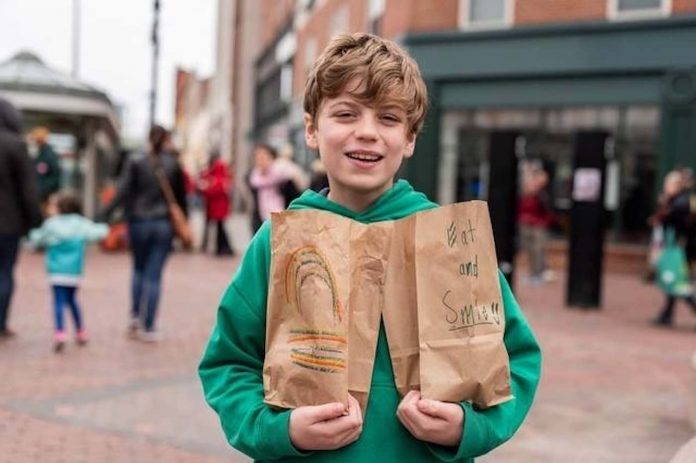
Liam Hannon may only be 12 years old, but he is already making a big difference in Massachusetts.
Liam is the founder and operator of “Liam’s Lunches of Love,” an organization dedicated to handing out meals to the homeless people of Cambridge. Over the course of the last year, Liam has handed out over 2,000 lunches to the homeless population in his neighborhood – an act of kindness that hasn’t gone unnoticed by his community.
“In this time when there seems to be so much negativity, maybe you have to turn to a 12-year-old to lead the way,” Cambridge Mayor Marc McGovern told WBZ-TV. “Liam gives me hope for the future of Cambridge, the country and the world.”
On each paper bag, Liam writes a handwritten message, often accompanied by an encouraging little doodle. Other people from across the US have contributed to Liam’s mission by sending him their own illustrated lunch bags as well.
“It’s like a way to give people joy, maybe spark something in them that can change them,” Liam told the news outlet.
Liam’s father Scott created a GoFundMe to raise money for his son’s organization back in April, and it has amassed over $44,000 – money that Liam will use to purchase a food truck, so he can more easily travel across Boston and give away his free lunches to the homeless population.
(WATCH the video below or our international viewers can watch the clip on the CBS News website) – Photo by Scott Hannon
Be Sure And Pass On This Positive Story To Your Friends On Social Media
Quote of the Day: “The moon is a friend for the lonesome to talk to.”
― Carl Sandburg
Photo: Copyright GWC
With a new inspirational quote every day, atop the perfect photo—collected and archived on our Quotes page—why not bookmark GNN.org for a daily uplift?
Just before Christmas, President Trump signed the bipartisan 2018 Congressional Farm Bill, which included a provision that effectively legalizes hemp in the U.S., as long as the CBD oil tincture contains no more than 0.3% of THC, the active ingredient in marijuana that gets people high, which industrial hemp does not.
The historic law, which takes effect this month, treats hemp as an agricultural commodity and removes it from the Drug Enforcement Agency’s list of schedule 1 drugs.
However, the Farm Bill empowers states to regulate (or ban) the production and sale of hemp within their borders, a move that would be counterproductive to local farmers who now have the option of growing a productive crop, while corn and soybean prices are low.
Promoters have long extolled the virtue of the grassy weed as one of the cheapest and most important crops for solving the world’s problems around sustainability and health—with it’s alleged ability to treat numerous symptoms and diseases.
The plant, cannabis sativa, is one of the fastest growing crops and was one of the first plants to be spun into usable fiber 10,000 years ago. It is so diverse, it can be made into paper, rope, clothing, biodegradable plastics, paint, insulation, biofuel, food, and animal feed.
A hemp byproduct called cannabidiol, or “CBD oil”, still has some stringent rules so not just anyone can produce and sell the product. The non-intoxicating compound found in cannabis is now technically legal, if and only if the hemp is produced by a licensed grower in a manner consistent with the Farm Bill and associated federal and state regulations.
33 states have legalized cannabis for medical purposes. Over the past six years, 10 states have legalized cannabis and marijuana for adult use, however these are all technically banned under federal law—and the Farm Bill does nothing to change that.
The Lesson: Although we often attribute the invasive nature of new technology as the reason for our anxieties, we shouldn’t be so quick to condemn it—because if these same feelings also existed 100 years ago, during a quieter and simpler time, then perhaps technology is not the root cause of this feeling.
Notable Excerpt: “Maybe that rushed feeling is an aspect of the experience of ‘today’ for many adults; while we assume that it’s the new gizmos (whether that’s the locomotive, automobiles, telephones, email, or Twitter) that make us feel that way, it’s really always ourselves.”
The Host: Dubbed a “Happiness Guru”, best-selling author Gretchen Rubin shares in this two-minute podcast the fact that even in 1925 cultural critics were noting that people looked harried on the street—food for thought in our own culture when we assume it is technology that is making us feel like there is “no time” or no peace.
Podcast: Her top-ranking, award-winning podcast, “Happier with Gretchen Rubin,” which discusses happiness and good habits.
You may soon be able to drink sparkling water that contains carbon dioxide captured directly from the atmosphere.
Climeworks, a company that specializes in carbon-capture technology, will be applying their air filtration machines to suck up CO2 for use in the creation of sparkling water.
The company partnered with Swiss beverage brand Valser, which is owned by Coca-Cola HBC, and one of the beverage industry leaders in sustainability. The drinks made with the captured carbon will be on supermarket shelves in Europe within the next three months.
Climeworks machines use large air filters to collect carbon dioxide direct from the air in one step—and the startup already has 14 carbon-capture facilities installed atop power plants, waste incinerators, and other industrial buildings across Europe.
The buildings supply excess heat and power to run the modular machines.
According to the company, “The majority of the energy required to run the direct air capture plant comes from low-grade/waste heat.”
The captured emissions are currently being used to boost greenhouse crop production, help create synthetic fertilizer, and renewable fuel.
They hope their machines will be able to capture at least 1% of the world’s CO2 emissions by 2025.
“Ultimately what we are trying to do is halt climate change, or even reverse climate change, so be able to scale up to the size that could really make an impact,” Climworks’ communications manager Louise Charles told Business Insider.
(WATCH a 2017 company video below, to see the machines at work…)
Clean Up Negativity By Sharing The Good News To Social Media – Photo by Valser
He went from working on a garbage truck to graduating from a major university, honored as their student commencement speaker—and he says he owes it all to the love and support shown to him by his coworkers, many of whom were “ex-felons”, but they changed his life.
Because of his upbringing, Rehan Staton says this was nothing short of a miracle.
Due to traumatic events within his family, education was not a priority. His mother abandoned the family at a young age, so he was raised in Bowie, Maryland solely by his loving father.
Although Staton wanted to succeed in school, food and housing insecurities plagued the family and he started to lose focus. He spent a lot of his time practicing martial arts and working different jobs with the hopes of one day becoming a professional fighter, boxer, or mixed martial arts fighter.
He told Good News Network: “I worked a part-time job to pay off the household bills. In both areas, I felt successful – in martial arts I began to win national and international championships—and at work, I felt appreciated and productive. At school, I felt like I didn’t belong.”
After sustaining a major injury during his senior year of high school, Staton realized he would not be able to do MMA or boxing professionally. Since he placed heavy emphasis on martial arts rather than schoolwork, his GPA and SAT were below average. It was Staton’s SAT score of 1100 (out of 2400) which discouraged him from entering college and led him to work for a trash and recycling company.
“Most of my coworkers were ‘ex-felons,’ but they changed my entire life by the love and support they gave me,” Staton says of Bates Trucking Trash & Recycling. “They encouraged me every day to pursue college. Even the owner of the company and his son encouraged me.”
They eventually connected Staton with a professor at Bowie State University (BSU) who ended up becoming his mentor. Shortly after, he was admitted to the school.
Staton’s grades consistently placed him on the Dean’s List, and he became actively involved in campus activities and organizations. He received numerous academic and leadership awards and became president of an organization geared toward mentoring other students. He even participated in numerous community outreach activities—all while working for the trash company.
After two years, he transferred to the University of Maryland (UMD) where he continued to received high academic honors, even while now working 40 hours per week in order to support his father who suddenly suffered stroke.
He lost weight, as food money was tight, but UMD gave him the help he needed—and Staton maintained his Dean’s List standing with a cumulative GPA of 3.81.
Since graduating last month, Staton will be spending the next year or two working as a paralegal in order to gain extra experience before entering law school. He is also speaking at multiple schools to inspire others to reach their dreams.
“I just feel lucky. I Without the support of everyone around me, none of this would be possible. I will pay it forward.”
Be Sure And Share This Incredible Story Of Success With Your Friends On Social Media – Photo by Gail Marie Rupert
Quote of the Day: “Money is neither my god nor my devil. It is a form of energy that tends to make us more of who we already are, whether it’s greedy or loving.” – Dan Millman (Peaceful Warrior)
Photo: by ambert, CC license
With a new inspirational quote every day, atop the perfect photo—collected and archived on our Quotes page—why not bookmark GNN.org for a daily uplift?
Carol Benjamin was unaware until recently that her daughter’s hearing was actually impaired, but she saw the proof for herself last week when the family experienced the baby’s delighted reaction to hearing her older sister’s voice clearly for the first time.
Because the youngster’s reaction was so priceless, her mother posted the video of Scarlet using the hearing aids at the Atlanta Hearing Associates in Milledgeville, Georgia.
Benjamin called the event “one of the absolute best days of our lives.”
(WATCH the adorable video below) – Photo by Carol Benjamin
Be Sure And Share This Cute Clip With Your Friends On Social Media
Montreal’s most historic hospital, closed since 2015, has been transformed into a temporary homeless shelter to ensure that no man (nor beast) will be forced to sleep in the winter cold.
Patient rooms in the former Royal Victoria Hospital have been converted into an 80-bed homeless shelter that is now open to women and men—and their pets.
The temporary refuge was launched last week after city homeless shelters found themselves filled to capacity and struggling to accommodate rough sleepers amidst falling temperatures.
And because the overwhelming majority of shelters do not allow pets, officials worked to create a situation where people and their animals would be welcomed.
Though the hospital will ensure warmth and safety for Montreal’s homeless until April 15th, provincial legislators will be working with city officials to secure more long-term solutions and permanent housing for when the shelter closes in the spring.
“We’ve been able to move forward quickly on creating this emergency unit for homeless people,” said Montreal Mayor Valérie Plante, according to CBC. “Of course, this is for this winter, but what is a positive sign is knowing that our administration wants to find a solution on the long-term.”
“No one should be outside right now. Everyone deserves a roof,” she added.
Sam Watts, CEO of the city homeless shelter Welcome Hall Mission, said: “We’re making some good progress toward eliminating homelessness in Montreal. But the reality is, right now, we do need a temporary facility over the course of the winter because we don’t want to leave anybody on the streets.”
Share The Good News With Your Friends On Social Media – Photo by Jeangagnon, CC
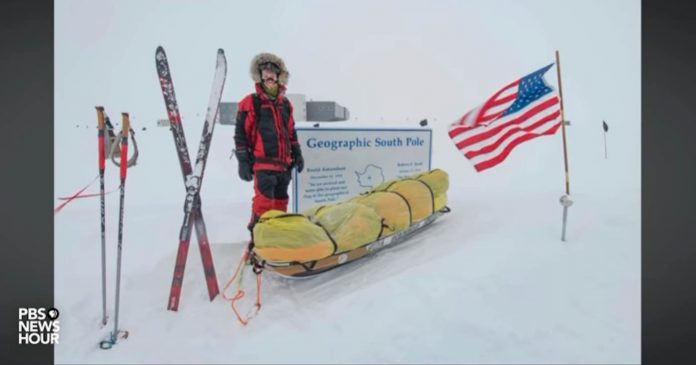
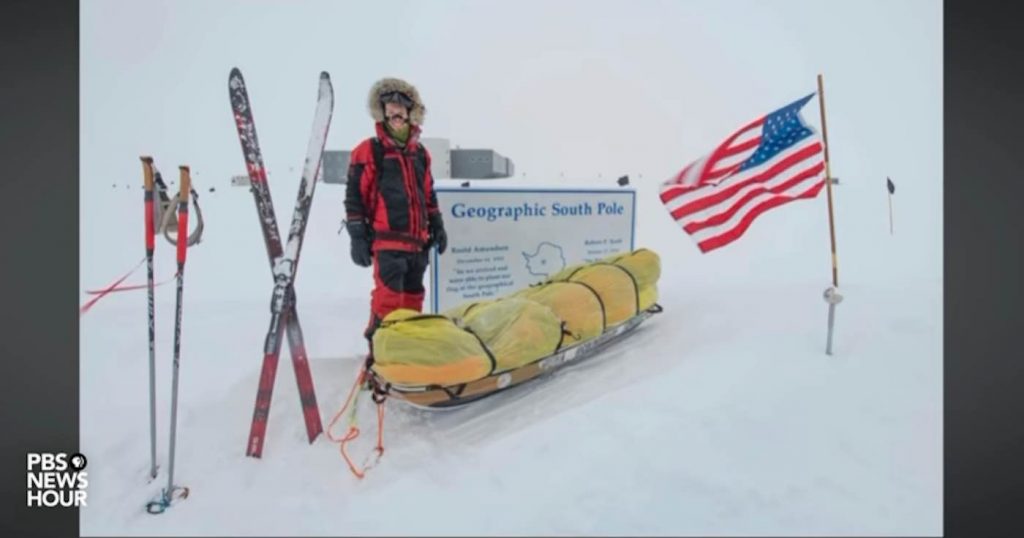
Antarctica is a frozen, wind-whipped continent, hostile to almost all forms of life—except, apparently, a lone man from Oregon.
33-year-old Colin O’Brady just became the first unaided person to complete a solo trek across Antarctica.
Extreme hikers have managed to cross the continent before, but they have always completed the feat with the assistance of dog teams or kites (to help propel them forward), and air-dropped supplies.
O’Brady, however, traveled the 930-mile journey in 54 days, lugging his entire load of gear— 375-pounds—personally.
Though the adventurer could have been airlifted back to warmth immediately upon completion on December 26, O’Brady waited at the finish line for a special reunion.
In 2016, British explorer Henry Worsley died while attempting the same extreme journey. The late hiker was honor by O’Brady’s friend Louis Rudd, an Englishman who decided to complete the same trek in a race against O’Brady.
While O’Brady finished the hike before Rudd, the American decided to stay in Antarctica to celebrate with his friend—despite fantasizing for two months about eating fresh food and salads while subsisting on freeze-dried food.
Together, Colin could share a beautiful moment with Louis as the only other person alive who has completed the same trip.
(WATCH the news coverage below) – Photo by Colin O’Brady
Hike This Story Over To Your Friends By Sharing It To Social Media
Solar farms are not just addressing the need for renewable energy, they are also becoming a source for food and habitat for dwindling pollinator populations.
According to research from the National Renewable Energy Lab, America is expected to add more than 6 million acres of solar farms and facilities by 2050. In addition to hosting solar panels, however, more and more environmentalists are taking advantage of this energy farmland by planting wildflowers that are critical to the survival of honeybees and butterflies.
Back in August, a research team from the U.S. Department of Energy’s Argonne lab began examining the potential benefits of establishing pollinator habitat at large utility-scale solar energy facilities to help conserve the threatened insects. Looking at some 2,800 of these existing and planned facilities in the contiguous United States, the team found that the area around solar panels could provide an ideal location for the plants that attract pollinators.
Often filled with gravel or turf grass, this land otherwise goes unused. Research has shown that in some locations these grounds offer a perfect place to establish native plant species, such as prairie grass or wildflowers, around which pollinators are prevalent.
Researchers also discovered that planting pollinator habitat on solar farms that are situated near agricultural farmland could dramatically improve crop yields, generating as much as $4 billion in agricultural revenue.
This 2016 UK study supported the findings, saying that “solar farms have a positive impact on biodiversity for a range of plant and animal species when combined with an appropriate land management plan, in particular, broad-leaf plants, grasses, butterflies, bumblebees, and birds.”
One solar company based out of Minnesota has already planted hundreds of acres of pollinator-friendly greenery across their different locations.
In addition to similar plantings, this solar farm in Oregon has also used their land to host 48 bee hives.
Ecologists from Cornell University are currently conducting research on which combinations of wildflowers and grasses provide the most support for pollinators – but until then, scientists are hopeful that the solar farm strategy could be sweet lifesaver for honeybees.
Be Sure And Share The Buzz With Your Friends On Social Media – Photo by Micha Jost, CC
Quote of the Day: “Hope is leaving room for magic bigger than you.” – Kerry Washington (on Stephen Colbert show, Nov. 2018)
Photo: by Renate Dodell, CC license
With a new inspirational quote every day, atop the perfect photo—collected and archived on our Quotes page—why not bookmark GNN.org for a daily uplift?
From our 50th episode on the radio in Los Angeles…
A man stuck in long airport security lines thought no one cared that he would miss his grandson’s funeral—but employees at this airline delivered the most incredible customer service.
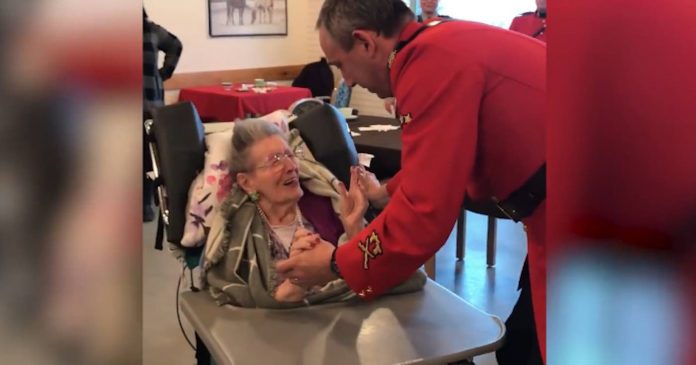
This centenarian had the sweetest reaction to a chivalrous Mountie stepping forward to grant her birthday wish.
As a means of celebrating Elsie Shepherd’s 100th birthday earlier this week, her nursing home in Regina hosted a party at the facility.
In addition to inviting her family members, Shepherd mentioned how she hoped there would be police officers at the celebration – so the nursing home staffers called the RCMP Depot Division and asked if any Mounties could go to the party.
“She was ear-to-ear smiles,” Chernoff told CTV News. “I was able to take her out to the dance floor and we had a conversation there and you could see the smile on her face, she just couldn’t stop.”
Since the RCMP uploaded the video to their Facebook page, it has been viewed thousands of times – and it’s easy to see why.
(WATCH the sweet video below) – Photo by RCMP Depot Division
Be Sure And Share This Heartwarming Clip With Your Friends On Social Media
Tiger populations are rebounding around the world, but conservationists are rejoicing over the big cat’s speedy recovery in Nepal.
In honor of National Conservation Day back in September, Nepal announced that there are now an estimated 235 wild tigers in the country, which nearly doubles the record-low baseline of around 121 tigers in 2009.
If these trends continue, Nepal could become the first of 14 countries to double its national tiger population since international agencies gathered together in 2010 and set the ambitious TX2 goal to double the world’s wild tiger population by 2022.
“Our commitment to the Global Tiger Recovery Program gains new ground with Nepal’s growing tiger numbers and a successful implementation of Nepal’s Tiger Conservation Action Plan,” stated Bishwa Nath Oli, Secretary of the Ministry of Forests and Environment. “Protecting tigers is a top priority of the government, and we are thankful for the able support of our partners, enforcement agencies, local communities and the international community for a common purpose.”
Nepal conducted its national tiger survey between November 2017 and April 2018 in the transboundary Terai Arc Landscape (TAL), a vast area of diverse ecosystems shared with India. Camera traps and occupancy surveys were used to estimate tiger occupancy and abundance, while line transect surveys were used to derive prey density. The last tiger survey in 2013 had estimated the tiger population at 198.
“This significant increase in Nepal’s tiger population is proof that when we work together, we can save the planet’s wildlife – even species facing extinction,” said Leonardo DiCaprio, WWF-US board member and chairman of the Leonardo DiCaprio Foundation, which has funded tiger conservation in Nepal’s Bardia National Park and elsewhere since 2010. “Nepal has been a leader in efforts to double tigers within its own borders and serves as a model for conservation for all of Asia and the world. I am proud of my foundation’s partnership with WWF to support Nepal and local communities in doubling the population of wild tigers.”
The success in Nepal has been largely attributed to the country’s political commitment and the adoption of innovative tools and approaches towards tiger conservation. Nepal was the first country to achieve global standards in managing tiger conservation areas, an accreditation scheme governed by the Conservation Assured Tiger Standards (CATS). With four more years to go, the TX2 goal of doubling tiger numbers globally can only be achieved if all the tiger range countries step up and commit to a similar level of excellence.
Additionally, in May 2018, Nepal celebrated a new benchmark with the achievement of 365 days of zero poaching of rhinos on five occasions between 2011 and 2018.
“Every tiger counts, for Nepal and for the world,” stated Dr. Ghana S Gurung, Country Representative, WWF-Nepal. “While Nepal is but a few tigers away from our goal to double tiger numbers by 2022, it also underscores the continued need to ensure protection, and improved and contiguous habitats for the long-term survival of the species.”
Preserve Positivity By Sharing The Good News With Your Friends On Social Media – Photo by WWF
As a means of putting their plastic to good use, this university is offering bubble wrap to their students to help them de-stress.
The ‘stress-relief packs’ are being handed out at Bristol University to help undergraduates fight exam nerves. The packets of bubble wrap come with instructions: “For immediate stress relief, pop three capsules every 4-6 hours, or as needed.”
Ironically, some students apparently became more stressed by the bubble wrap therapy’s potential to cause plastic waste.
The Bristol University Student Union soothed their anxieties by issuing a reassuring statement via the school’s paper Epigram saying that the bubble wrap was originally used to package new furniture for the Student Union living room.
“We are aware that a number of students have raise concerns about the environmental impact of the bubble wrap,” said a Bristol SU spokesperson. “Sustainability is important to us which is why the bubble wrap being offered is being reused – it was originally the packaging that various living room items arrived in.”
Though it’s unclear how effective the bubble wrap therapy is proving to be for the students, past research has shown that “mindless” fidgeting activities can help people be more productive.
So next time you have an abundance of bubble wrap in your home, don’t feel too guilty about popping a few “capsules” for immediate stress relief.
Pep Up With Some Positivity: Share The Fun Story With Your Friends On Social Media
Though gambling is generally at odds with religion, this 67-year-old Buddhist is making up for his love of poker by donating all of his winnings to charity.
Scott Wellenbach recently came in third place at the PokerStars Caribbean Adventure tournament in the Bahamas, earning him a whopping $671,240 in winnings.
Instead of keeping the cash, however, the Canadian man will be donating it all to charities such as Oxfam and Doctors Without Borders.
Wellenbach first fell in love with poker when he won a free trip to Las Vegas in 2010. Prior to the tournament, the most he had ever won from a game was roughly $72,000; then, he landed a seat at the Bahamian tournament table after winning an online championship.
Wellenbach says that his disciplinary practices often vary depending on the week, but he generally meditates for one hour every day – and he meditates for much longer when he is competing in a tournament.
He also admits that gambling is contradictory to Buddhism, he believes that the game offers some key insights on the religious teachings.
“Poker gives you a tremendous opportunity to work with the heavens and hells of your mind,” says Wellenbach. “You’re winning and losing every minute-and-a-half, and so some sense of how your hopes and fears go up and down with the passing circumstance of the world is brought to fore at the poker table.”
(WATCH the interview below)
How can you not love this guy? Scott Wellenbach explains why he will be giving all of his winnings away. Watch that and then check our live #PCA updates as Wellenbach continues to compete for $1.5 million.
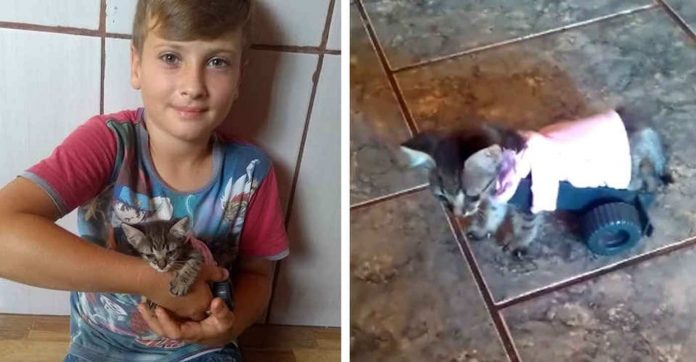
A clever 9-year-old boy has transformed the life of a kitten after he noticed that it was unable to play to play with its siblings.
João, who is from Paraná, Brazil, first met the little feline during a recent visit to his neighbor’s house.
The neighbors were caring for a litter of kittens that had been born only weeks earlier – and while they were all cute as could be, there was one cat in particular that caught João’s eye.
“[He] saw a kitten that couldn’t walk,” João’s mother Rogéria Bello Corazza said in a Facebook post. “He was very sad to see the other kittens playing, and that she couldn’t join them.”
Unable to stop thinking about the disabled animal, João started brainstorming about how he could help her.
Finally, he decided to build her a tiny custom wheelchair using materials he borrowed from a friend. Within minutes of getting her set up with the new set of wheels, she was off and rolling.
Earlier this week, Corrazza posted a heart-melting video of the kitten trying out her wheelchair for the first time, and it has already been shared thousands of times on Facebook.
“I’m very proud of my children, but today was far beyond,” said Corrazza. “His joy of being able to help was the best part.”
(WATCH the video below) – Photo by Rogéria Bello Corazza
Be Sure And Share This Pawesome Story With Your Friends On Social Media
Quote of the Day: “For every minute you are angry you lose sixty seconds of happiness.” – Ralph Waldo Emerson
Photo: by Pedro Ribeiro Simões, CC license
With a new inspirational quote every day, atop the perfect photo—collected and archived on our Quotes page—why not bookmark GNN.org for a daily uplift?
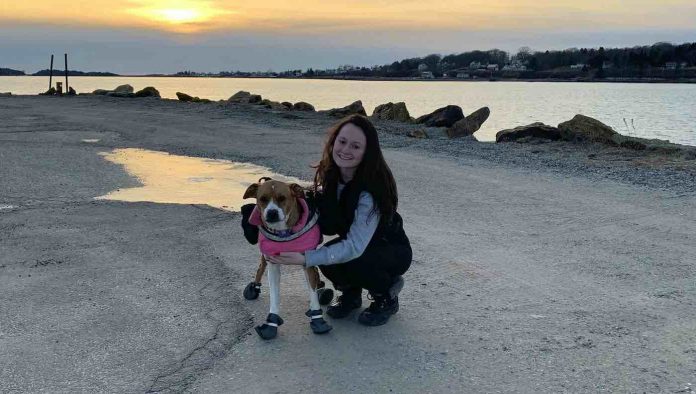
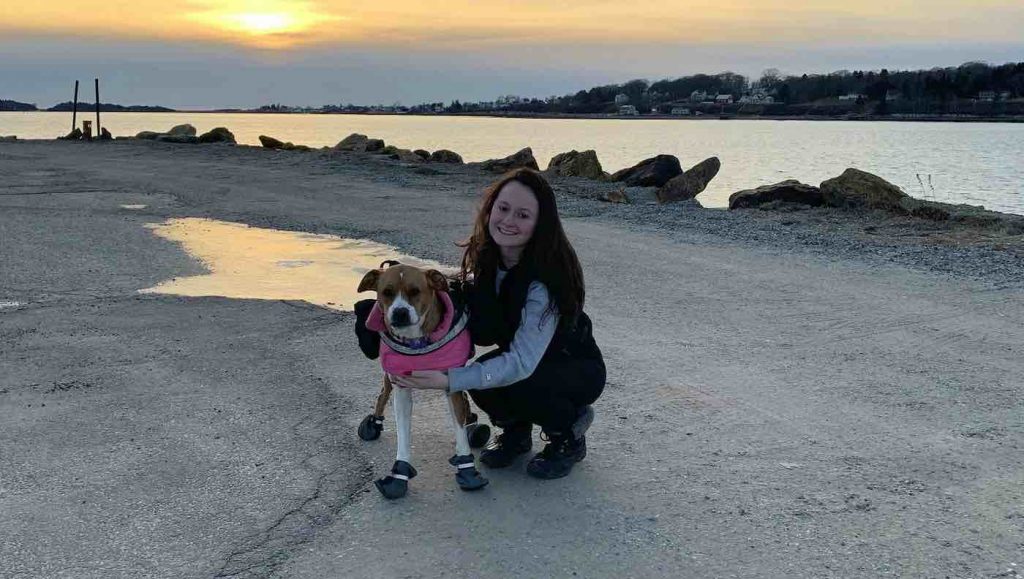
Due to an extremely rare medical condition, this teenager is constantly in danger of being rushed to the hospital simply from being exposed to a strong smell – but now, a canine companion has given her an entirely new leash on life.
15-year-old Martina Baker sufferers from a condition called Mast Cell Activation Syndrome (MCAS). It makes her allergic to “almost everything” including heat, water, cleaning products, perfumes and cologne. Even a whiff of cooking oils or bleach could send Martina into anaphylactic shock, and if she doesn’t receive treatment quickly, she could die.
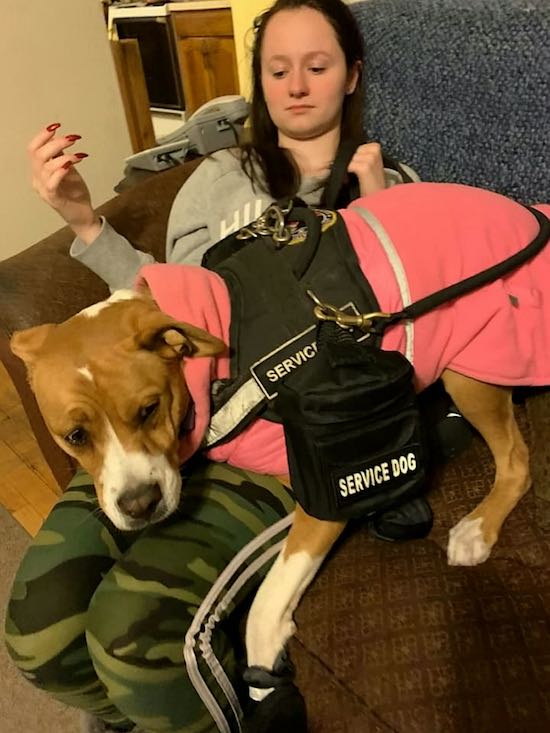
Now, after raising $10,000 USD, Martina has been partnered with a highly-trained pup named Caiomhe (pronounced Queeva) who alerts her to possible dangers before they occur.
Thanks to Caiomhe, Martina has been able to revisit dozens of normal life activities, such as being able to enjoy a movie theater screening for the first time in years.
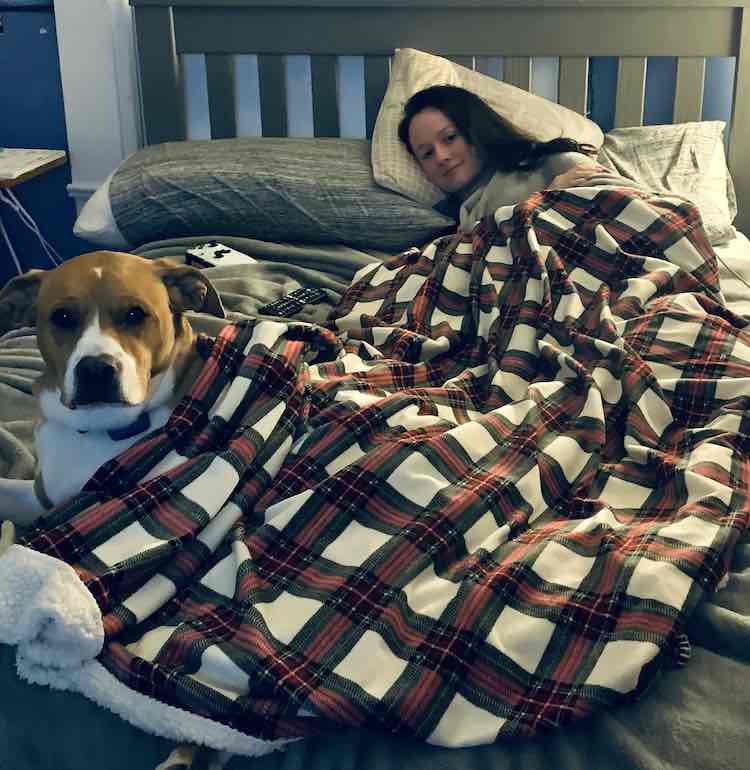
“Caiomhe has changed my life,” said Martina. “I feel so much safer with her around, I am able to have a social life again.
“I lost a lot of friends after I developed MCAS. It’s hard for people to handle, for them to watch me collapse and have to take my EpiPen and be rushed to hospital all the time,” added the teen from Wiscasset.
SWNS
Up until two and a half years ago, Martina was a completely healthy teenager – but then, she suddenly became plagued with terrifying symptoms.
“I wasn’t allergic to anything before, then one day I woke up with hives all over my body,” says the teen. “I had to go to the hospital because I had an anaphylactic reaction. My throat started swelling up with hives. They treated me with an EpiPen.”
Martina’s 48-year-old mother Loretta Morse Leighton said: “The hives would flare up all the time, she’d go into anaphylactic shock and we’d to have to rush her to the ER about three times a week. We never knew what was triggering it really.”
For months, doctors were baffled by Martina’s condition. Because of the reactions, Martina was forced to miss school and stay at home in a sealed room in order to avoid anaphylactic shocks.
SWNS
“We took her to see a specialist in every major discipline, everything from cardiologists to psychologists,” said Loretta, who eventually took Martina to an immunologist in Massachusetts who correctly diagnosed her with MCAS.
After Martina finally received a diagnosis, Leighton realized that a service dog might help her daughter.
Caiomhe was trained by Jamie Robinson, a specialist in Tucson, Arizona – one of the only people in the world to train dogs to assist MCAS patients.
“A dog’s nose is about 100,000 times better than a human nose and just about every biochemical process in our bodies is indicated with a change in scent,” said Robinson, who runs her own service dog business called Access to Service Corp.
SWNS
Robinson had Martina send her pieces of clothing she had worn so Caiomhe could get used to her scent and the specific smell of the teenager’s anaphylaxis. The pup was then trained to identify a long list of smells that are life-threatening triggers for Martina.
Because 3-year-old Caiomhe can smell the release of histamine from Martina’s body, the pup can now detect when her owner is having a reaction before anyone even realizes it. Thanks to Caiomhe and regular mast cell stabilizing drugs, Martina’s anaphylactic episodes have reduced from three times a week to once every four to six weeks.
Martina often wears a mask when she goes outside and the family still has to be very careful in their home. Loretta cleans with vinegar instead of cleaning products and has stopped using all detergents on sheets and clothing. They must practice “odorless cooking” and spend a lot of time grilling outside, even in winter.
Martina is also extremely sensitive to warmth, so her bedroom isn’t heated at all, even during the freezing Maine winters.
SWNS
“I don’t know how she tolerates the cold, she lives like a penguin in there,” laughed Loretta.
But despite these difficulties, Martina’s livelihood has been totally transformed.
“I feel that Caiomhe was destined to be my daughter’s guardian angel,” says Leighton. “In the pictures of Martina now with Caiomhe, I see joy, light and life. A spark that has been missing and robbed from her since this awful disease has taken ahold of her. Caiomhe brought that back to her in a new, wonderful and amazing way.”
Be Sure And Share This Pawesome Story With Your Friends On Social Media























 Laughter may the best medicine, but hearing aides don’t hurt either.