Quote of the Day: “Nobody can go back and start a new beginning, but anyone can start today and make a new ending.” – Maria Robinson
With a new inspirational quote every day, atop the perfect photo—collected and archived on our Quotes page—why not bookmark GNN.org for a daily uplift?
San Francisco is launching a groundbreaking new program that will provide opioid addiction treatment to homeless people directly on the streets.
Mayor Mark Marrell just announced that he will be investing $6 million in funding for the “first-in-the-nation” initiative as a means of curbing opioid addiction and reducing the risk of overdose.
The program employs a dedicated team of physicians to go out onto the Bay Area streets and write buprenorphine prescriptions for drug-addicted homeless people.
Buprenorphine is a pill that is taken daily to reduce withdrawal symptoms in drug users. The treatment has been shown to help in fighting off addiction and reducing rates of overdose.
When asked why the physicians provided the treatment on the streets, rather than in a clinic, Dr. Barry Zevin, who is the city’s medical director for Street Medicine and Shelter Health, told The New York Times: “Most health care for the homeless happens under the model of waiting for people to come in to a health center. But a lot of people never come in.”
“Appointments are the enemy of homeless people. On the street there are no appointments, and no penalties or judgments for missing appointments.”
A year-long pilot study of the program showed that “virtually all of the people” who were approached by the clinicians were interested in the treatment. By the end of the study, a fair amount of drug users were still taking buprenorphine as a means of treating their addiction with the help of the clinician team.
“The Street Medicine buprenorphine program is another important step to address the … crisis afflicting drug users in our community,” said Barbara Garcia, San Francisco Health Director. “Homeless people who use drugs are especially vulnerable, and our system of care needs to adapt. By going directly to them with compassionate outreach and expertise, we are able to help a group that we were missing by relying on a more traditional structure of clinic visits that does not work for everyone.”
Treat Your Friends For Negativity And Share This Positive News To Social Media – Representative photo by Peronimo, CC
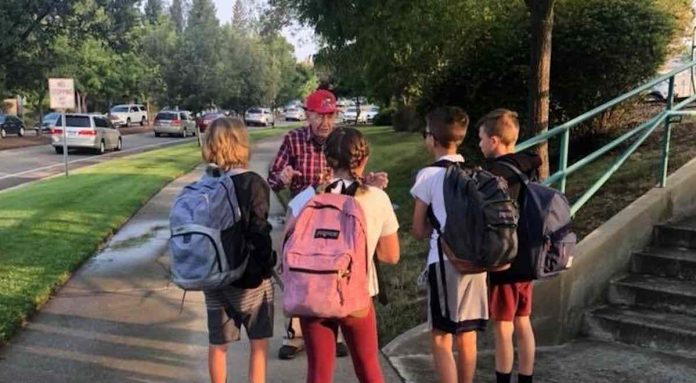
This “cute little old man” is making a big difference in the lives of local youngsters.
For the last 10 years, Wally Richardson has been standing outside of Marina Village Middle School in El Dorado Hills, California so he can greet all of the students with life advice and fist bumps before they start their school day.
The 94-year-old veteran was recently brought into the spotlight when Gina Arnold was dropping her daughter Audrey off at school earlier this week.
Audrey specifically asked if she could be dropped off at the corner of the school so she could talk to the “cute little old man”.
When asked who this mystery stranger was, Audrey told her mother: “He stands at the steps where you drop me off and encourages all the students as they walk in. He talks about kindness and gives us advice and fist bumps! It’s the best part of the day!”
Sure enough, when Gina drove to the aforementioned steps, she saw Richardson standing amongst a crowd of delighted students. She then took a photo of the exchange and posted it to Facebook with words of praise for the senior.
“This is exactly the kind of love and support our middle schoolers need,” wrote Gina. “This man stands out side the school every day and gives the gift of encouragement to every student that comes near him.”
Richardson simply says that he enjoys talking to the kids because he wants to leave a positive legacy in the area – and clearly, his efforts have worked.
There is now a mural on the school wall that is filled with some of the veteran’s most precious bits of wisdom so that it can serve hundreds of students in the future.
Gina told Inside Edition that there are even kids in college who still remember and benefit from the advice Richard gave them in their younger years.
“I strive to be like this guy as much as possible,” says Gina. “We all should.”
(WATCH the interview below)
Be Sure And Pass On This Positive Message Of Kindness To Your Friends – Photo by Gina Michelle
Step aside, dogs – goats may be man’s new best friend, according to a heartwarming new study.
A research team from the Royal Society Open Science has found that goats can recognize human emotions in facial recognition tests – and they consistently prefer happy faces to sad ones.
The scientists put 20 goats into a pen that was filled with photos of humans with happy faces and humans with sad or angry faces. Conclusively, the goats spent more time looking at, sniffing, or otherwise engaging with the happy images.
The researchers orchestrated the trials based on the belief that since goats have been domesticated alongside humans for thousands of years, the animals would have developed a heightened sensitivity to human emotion.
The research team now believes this study suggests that other domesticated animals are likely to show perception of emotional valence in humans as well, something that is considered to be limited amongst working animals.
The study has also been hailed as a wonderful step towards a better relationship with our working animals, and that more rights might be afforded to them if we can fully understand the levels of interaction between us.
“The study of emotion perception has already shown very complex abilities in dogs and horses,” says study co-author Natalia Albuquerque. “However, to date, there was no evidence that animals such as goats were capable of reading human facial expressions. Our results open new paths to understanding the emotional lives of all domestic animals.”
Don’t Baaaaack Out Now: Be Sure And Share The News With Your Friends
Andy Corbley is the founder and editor of World At Large, a small environment, travel, and lifestyle focused journal that stresses integrity, nuance, and honesty which launched in early March 2019.
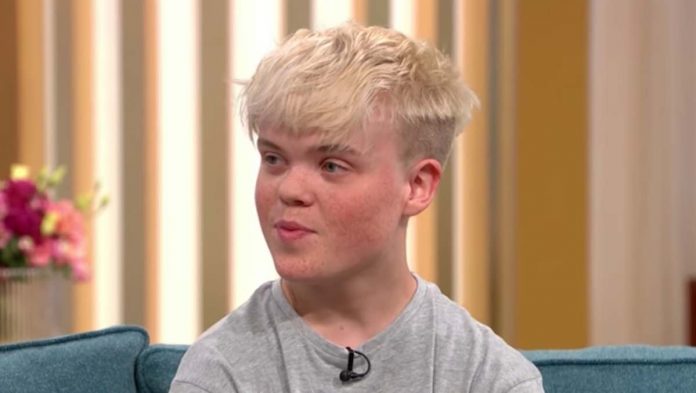
When this 18-year-old was told that he couldn’t pursue his dream career based on his height, Gordan Ramsay stepped in to help.
Louis Makepeace has wanted to be a chef since he was a kid. When he was conditionally accepted into a cooking and hospitality course at Worcester College, however, he was later “appalled” to find out that the school had backtracked on their decision and would not allow him to take the course because his height made him a “safety risk” in the kitchen.
Since Makepeace has dwarfism, he stands at just 3 feet 10 inches tall. After the teen accused the school of discrimination, his story was spread across social media until it caught the eye of celebrity chef Gordan Ramsay.
Ramsay tweeted that he would be more than happy to offer Makepeace an apprenticeship “any day”.
“Gordon’s tweet was a genuine offer of help for Louis Makepeace, should he wish to pursue his cooking career within the Gordon Ramsay Restaurants chef apprentice programme,” said a spokesperson for Ramsay, according to the BBC.
Additionally, she says that Ramsay has “supported and mentored hundreds of young chefs throughout his career, and strongly believes no one should be discriminated against in the workplace due to a disability.”
Quote of the Day: “It is one of the most beautiful compensations in life that no man can sincerely try to help another without helping himself.” – Ralph Waldo Emerson
Photo: by Duncan Rawlinson-Duncan.co, CC license
With a new inspirational quote every day, atop the perfect photo—collected and archived on our Quotes page—why not bookmark GNN.org for a daily uplift?
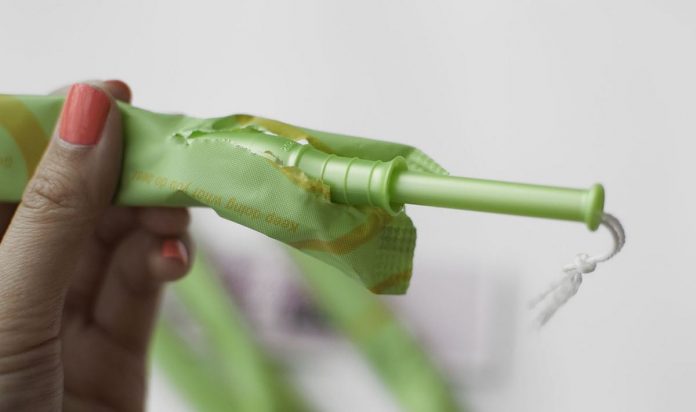
Scotland is now set to become the first country in the world that provides free feminine hygiene products to all of their students.
The $6.6 million (£5.2 million) initiative will benefit roughly 400,000 students across all of the country’s schools, universities, and colleges.
Recent surveys have shown that one in four responding pupils have had trouble accessing sanitary products, while one in five participants have experienced “period poverty” in the past. The new scheme will ensure that Scottish students will no longer have to forgo their hygienic needs based on their income or social situation.
“In a country as rich as Scotland it’s unacceptable that anyone should struggle to buy basic sanitary products,” said communities secretary, Aileen Campbell, according to The Guardian.
“I am proud that Scotland is taking this world-leading action to fight period poverty and I welcome the support of local authorities, colleges and universities in implementing this initiative.
“Our £5.2m investment will mean these essential products will be available to those who need them in a sensitive and dignified way, which will make it easier for students to full focus on their studies.”
Be Sure And Pass On The Positive News To Your Friends – Representative photo by The Period Blog, CC
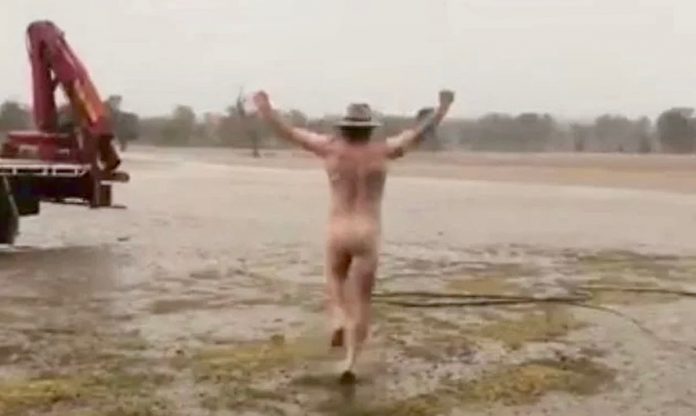
After months of drought, arid areas of Australia finally received some much-appreciated rainfall earlier this week – and some farmers have been very quick to rejoice in the moisture.
This new video depicts an ecstatic farmer from Dubbo, New South Wales celebrating the downpour by running into the rain wearing nothing but a hat.
The English government has just announced that they will be banning the use of electric shock collars on cats and dogs.
Shock collars can deliver up to 6,000 volts of electricity, sometimes for as long as 11 seconds. Other collars can release noxious smelling chemicals as a means of dissuading pets from certain behaviors. Both of these devices have been shown to cause – and worsen – behavioral problems and anxiety in pets.
Animal rights organizations that have been rallying for the ban encourage using positive-reward training techniques instead.
According to a 2014 survey, 74% of the English population is in favor of the ban, while one third of recipients thought that there was already a ban in place. Scotland and Wales have both banned electric shock collars.
Dr. Rachel Casey, who is the director of canine behavior and research at animal welfare organization Dogs Trust, applauded the ban.
“Scientific research has demonstrated that electronic devices which deliver an aversive stimulus have a negative impact on dog welfare, so this ban will have a major positive impact for dogs in the UK,” said Casey, according to the BBC.
Containment fences, which use shock methods to prevent animals from leaving a certain area, are still legal based on evidence that they reportedly prevent up to 300,000 from being harmed in road and traffic related accidents.
BREAKING NEWS!
We’re thrilled to announce that the Government are banning the use of electric shock collars across the UK.
It’s been a hard-fought campaign for us, starting over 10 years ago; but today’s news will ensure dogs are trained using positive methods, free from pain. pic.twitter.com/toQMel3azo
Most people are pretty angry about finding another vehicle blocking their driveway – but not this person.
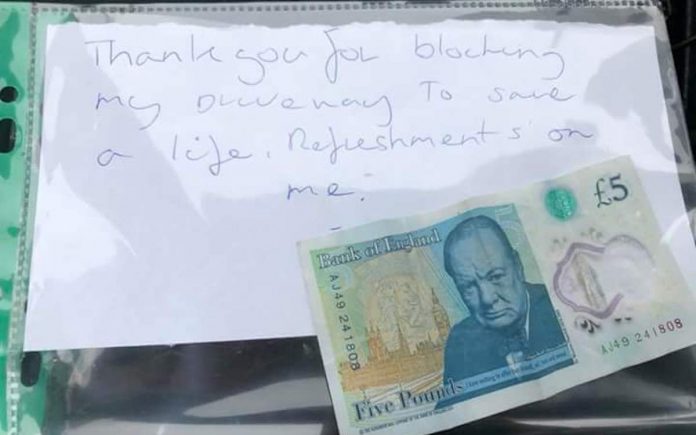
An anonymous homeowner in Flintshire, Wales is being hailed for leaving a refreshingly positive note on the windshield of an ambulance that was blocking their driveway earlier this week.
The person left a small message saying: “Thank you for blocking my driveway to save a life. Refreshments on me.” Attached to the message was a £5 note.
According to Metro, a spokesperson from the Welsh Ambulance Service remarked on the good deed by saying: “Such a boost for our hardworking crews when they get a heartfelt thankyou note for doing a tough job … No financial incentive required! They are just dedicated. Thank you anonymous author.”
The sweet gesture is reportedly being praised after the East Midlands Ambulance Service urged people to communicate with paramedics about blocked driveways earlier this week.
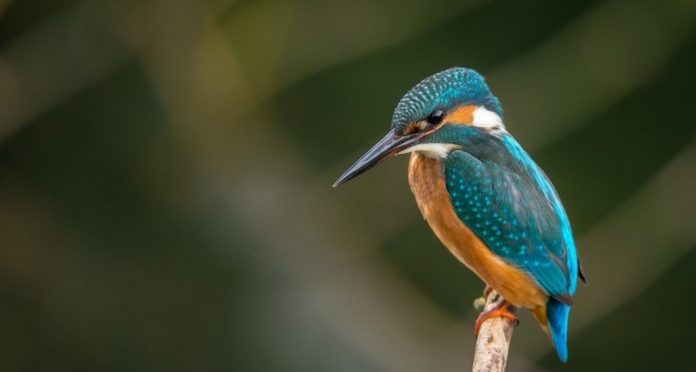
Quote of the Day: “Birds could very well live without us, but many—perhaps all—of us would find life incomplete, indeed almost intolerable without the birds.” – Roger Tory Peterson (on the 110th anniversary of his birth)
With a new inspirational quote every day, atop the perfect photo—collected and archived on our Quotes page—why not bookmark GNN.org for a daily uplift?
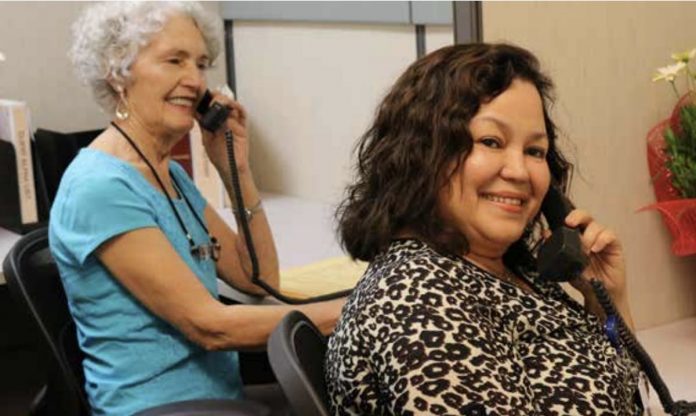
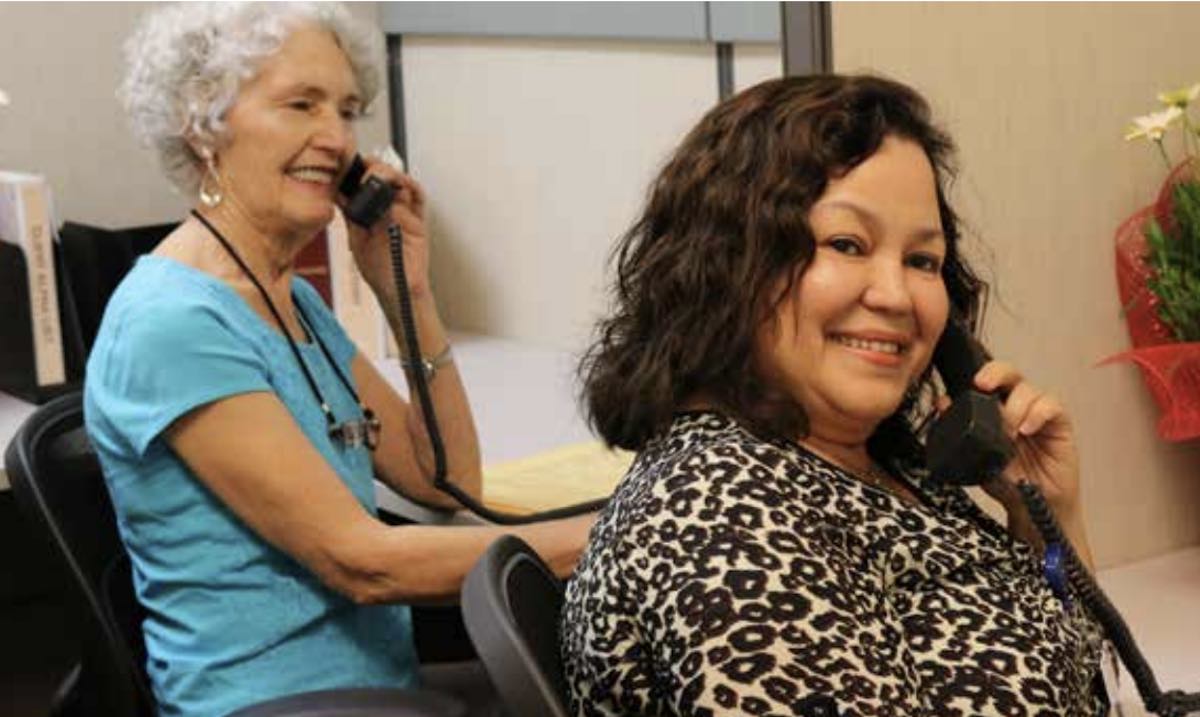
For isolated seniors who don’t get many visitors, a personal phone call can make all the difference in the world, and one nonprofit in California has dialed 1.6 million times.
For more than two decades, Eskaton, a nonprofit organization serving seniors for 50 years, has reached out to homebound elders via its Telephone Reassurance program.
It’s not just to check up on their health. Volunteers, with their daily dose of conversation, provide an opportunity to socialize.
Older people who are lonely are more likely to develop dementia than their more socially connected peers. In fact, loneliness produces physical effects that are among the most problematic in modern medicine, says Linda Whiteside, the Telephone Reassurance program manager.
“Social connections formed between volunteers and the Telephone Reassurance participants go a long way to reduce health risks and bring peace of mind to seniors and their family members.”
To date, Eskaton volunteers have made more than 1.6 million phone calls.
Ben, a senior who benefits from the program, said, “I am so grateful that someone is calling me every day and checking on me. It lifts my spirits to know someone cares.” Another called it a “lifesaver.”
The program, which is staffed by volunteers who have all passed a background check, is currently servicing the region of Sacramento.
Photo courtesy of Eskaton
If you know a local senior that would benefit, you can call 916-334-1072 or 866-ESKATON. Also get in touch, no matter your age, if you would like to be a volunteer.
They offer training, and place calls seven days a week, 365 days a year.
One of the most remarkable stories of forgiveness had its sad beginning 25 years ago this month, so we reached out to the California woman whose inspiring daughter sacrificed her life to create positive change for a beautiful yet brutal country, leading her parents to do the same.
Amy Biehl was a bright, determined Stanford graduate who ventured to South Africa on a Fulbright scholarship to work in the anti-apartheid movement during its explosive final months before Mandela would become president.
She worked alongside her black comrades to register voters, and she longed to address the poverty of their squalid townships, believing that economic change was critical for any meaningful transformation. She was giving two of them a ride home when the blue-eyed blonde became a target for four angry youths who’d just left a rally where militants were calling for the death of privileged white settlers.
Despite the desperate objections of her ANC colleagues that she was ‘a comrade’, Amy was stoned and stabbed to death on a road in Guguletu township on the very corner that her parents would soon be calling ‘The Spot of Hope’.
Peter and Linda Biehl left their gated community in wealthy Orange County, motivated and haunted by reading Amy’s diaries. They flew to Cape Town and toured the townships where Amy worked and talked with her friends about the unemployment problem. Peter was a businessman, and with money pouring in to honor their daughter’s noble cause, they began to organize one development project after another—welding, sewing, a print shop, a bakery, a construction company, sports facilities, and adult literacy programs.
But the most startling development of all was the loving relationship that developed between Amy’s parents and her killers.
“People say, ‘well I couldn’t get together with people that harmed my loved one,’ but forgiveness is really about liberating yourself—letting go, so you can be free of hate and bitterness. It’s really a one-way street that doesn’t need the other person to do anything… Reconciliation is a different step. It’s really hard work.”
Their reconciliation process began when they talked with Bishop Desmond Tutu, who was setting up the country’s Truth and Reconciliation Commission and would win the Nobel Peace Prize for it. The Biehls knew that amnesty would be granted to the young men whose crimes were politically motivated, and they wanted to participate to “honor” the country’s healing process.
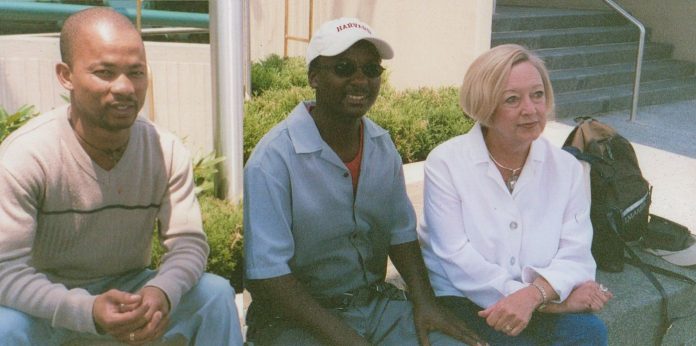
Photo copyright Johanna Baldwin, Easy (left) and Ntobeko (right) with Linda and Peter in 1999
“We did not expect to have a relationship with them, but two of the young men, after they were released from prison, saw that things hadn’t changed in their community, and they wanted to help. They had the courage to come to us, to our foundation, which was bringing jobs to young people—and we admired that,” Linda Biehl told Good News Network by telephone from Cape Town before Saturday’s anniversary celebrations began. “They were considered by some of their former comrades to be selling out to the all-American dollar.”
Forget about dinner and a movie – why not spend use a date night with your significant other to make the world a better place as a team?
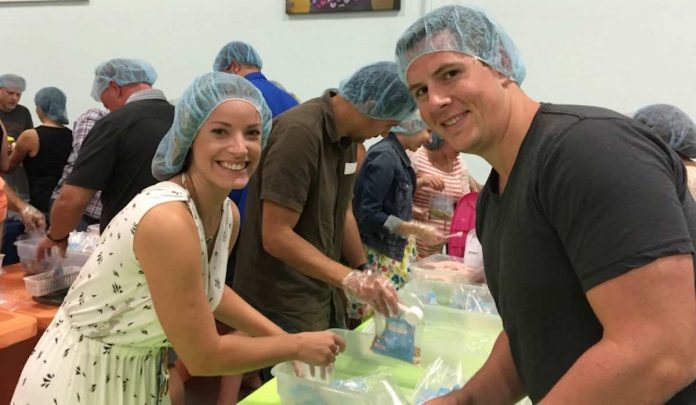
As a means of helping couples to blend volunteerism and romance, Do Good Date Night has made a list of ten things that you can do to use connective date nights to impact worthy causes.
The innovation 2-for-1 solution of Do Good Date Nights result in unique couple-centered activities that are engaging, enjoyable and satisfying for participants, while also being purposeful and impactful to charities.
Since the event was launched in 2015 by Kristen Manieri, a writer and podcast host who founded a national network of date night websites, the concept of philanthropic date nights has since spread across the country.
“I believe most people want to do something to support their communities but struggle to find the balance of busy, everyday life with the desire to give back,” says Manieri. “That’s why volunteerism date nights are a much-needed win-win! Couples spend quality time together while impacting causes close to their hearts.”
Couples can participate in or host official Do Good Date Night events – or they can independently employ the concept on their own.
So here are 10 ways to make the world a better place with your better half.
1. Oh Baby: Pause on cuddling one another to snuggle with babies. Some hospitals encourage cuddlers to cozy up to preemies and other cuties in need.
2. Dish It Out: Satisfy your craving to combat hunger by collecting goods from neighbors to deliver to shelters, volunteering at food banks to sort/organize donations, cook for families at the Ronald McDonald House (a residence for those accessing hospital care) or drive meals to home-bound patients.
3. Be Homebodies: Habitat for Humanity grants couples the building blocks to construct homes for families in need.
4. Make Love a Shore Thing: Align with beach preservation organizations to infuse your sand and surf agenda with a shore clean-up effort.
5. Respect Thy Elders: Read stories, have lunch, run errands or just listen to senior citizens at hospitals or assisted living facilities.
6. Salute the Troops: Show your gratitude with care packages or pitch in at Veteran’s Association centers.
9. Embrace Puppy Love: Help animal shelters by walking dogs, gifting food/toys or distributing adoption flyers.
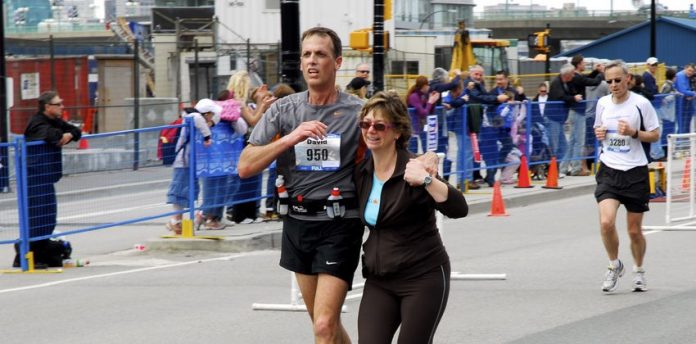
10. Let Your Hearts Race: Run the course of life together while impacting causes you love.
Do Good Date Night combines volunteerism with date night by giving couples access to fun and rewarding service experiences in their communities. It’s a division of the parent company, Date Night Guide, a network of city-wide and national content empowering couples to love, laugh and live their best life together through fun experiences and real relationship insight.
Be Sure And Share The Handy Hints With Your Friends – Photo by Date Night Guide
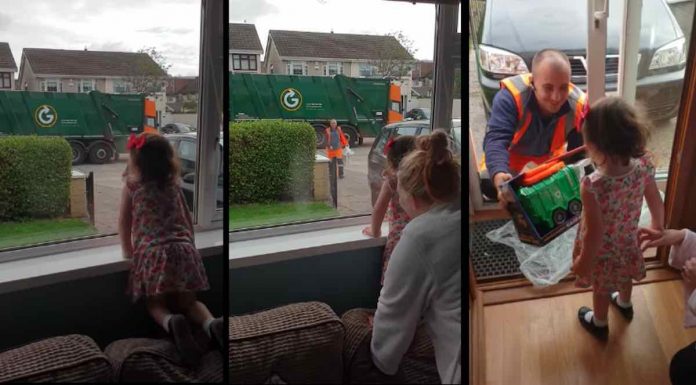
This little girl loves her local garbagemen. Every time they pull up outside of her home in Ireland, she excitedly watches them work from the window until they leave.
That’s why her dad, a Reddit user named Wayne L, asked the garbagemen if they could brighten her day by giving her a little wave during their stops.
One week later, the little girl was waiting by the window as per usual when – to her delight – she saw that one of the garbagemen started walking up to their door with a bag in hand.
As the dad videotapes the entire exchange, the family rushes to meet the approaching worker.
The Greyhound Recycling employee then greets the little girl and gives her a toy garbage truck along with a garbageman coloring book and a company hat.
Needless to say, the family was ecstatic.
“I went to the bin men the week before and told them my daughter loves watching them and [I asked if they would be] so kind to just give her a wave next time,” Wayne reportedly wrote on Reddit. “We only expected a wave, which is why my daughter shouted ‘he has a present’ and my wife [brought] her to the door.”
“The shock and enjoyment experienced by us all is genuine – faith in humanity restored,” he added.
(WATCH the adorable video below)
Multiply The Joy And Share This Sweet Clip With Your Friends – Photo by Wayne L
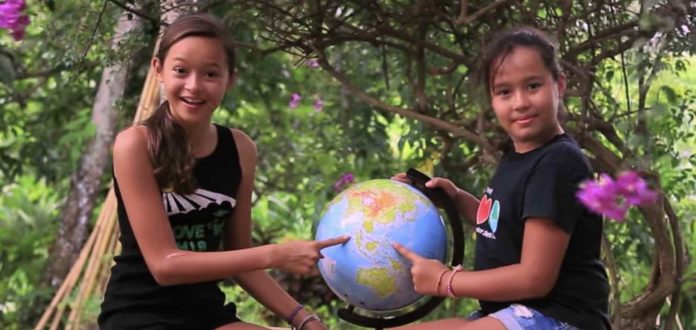
For many of us, the island of Bali will conjure up images of palm-shaded resorts, pristine white beaches, and crystal clear Indonesian waters, but the reality for those fortunate enough to live in such a place is that the ‘paradise,’ is often cluttered with litter—but two teenagers from the island have been working for years on a solution.
In 2013, Melati and Isabel Wijsen launched their flagship non-profit, Bye Bye Plastic Bags, aiming to secure a ban on single-use plastic bags across the Indonesian island. They had to be undaunted by the statistics: 5% of bags are recycled in Bali, while the entire island chain ranks as the world’s second largest producer of ocean-born plastic pollution.
Inspired in school by world leaders like Martin Luther King Jr. and Mahatma Gandhi effecting positive change, the 15- and 17-year-old have made progress towards the goal of eliminating the environmentally destructive bags.
In July 2015, the Bali province signed a letter committing work towards a ban by the end of 2018, signed by Bali governor Mangku Pastika.
Two years ago, after collecting 100,000 signatures, Bali Airport officially said ‘Bon Voyage’ to plastic bags, and last year One Island, One Voice a collective of NGO’s and local businesses organized the largest beach cleanup in the island’s history – with 12,000 volunteers from all over the world removing 40 tons of garbage in 55 separate locations around the island.
Since beginning their crusade against plastic bags in 2013, their efforts have culminated in some remarkable achievements, including a TED talk discussing the problem of plastic garbage and their grassroots approach to solving it, as well as a guest speaking invitation at the UN World Oceans Conference in New York.
As the 2018 deadline loomed ever closer. Melati and Isabel attended multiple meetings with their government throughout 2017 in response to the original promise made almost 3 years before, with debate and uncertainty about whether Bali province has the authority to institute a general ban. The girls argued it is quite clearly within the island’s authority as an autonomous region.
The Bali sisters know that economic incentives will make the transition to a full ban far easier, and they’ve suggested a “pay for plastic policy,” taxing every plastic bag made and sold, pointing out that 40 countries have already instituted levies, bans, and taxes on plastic bags, and that their own island loses tourist revenue of about $53 million dollars due to plastic pollution every year.
Any hesitancy by government officials toward the commitment they made in 2015 hasn’t slowed down the Wijsen sisters, who continue their wide-ranging body of work in the fight against plastic pollution in their home.
(LEARN More in their Ted Talk, below)
Clean Up Negativity And Share The Good News With Your Friends
Andy Corbley is the founder and editor of World At Large, a small environment, travel, and lifestyle focused journal that stresses integrity, nuance, and honesty which launched in early March 2019.
Quote of the Day: “We either make ourselves miserable, or we make ourselves strong.The amount of work is the same.” – Carlos Castaneda
With a new inspirational quote every day, atop the perfect photo—collected and archived on our Quotes page—why not bookmark GNN.org for a daily uplift?
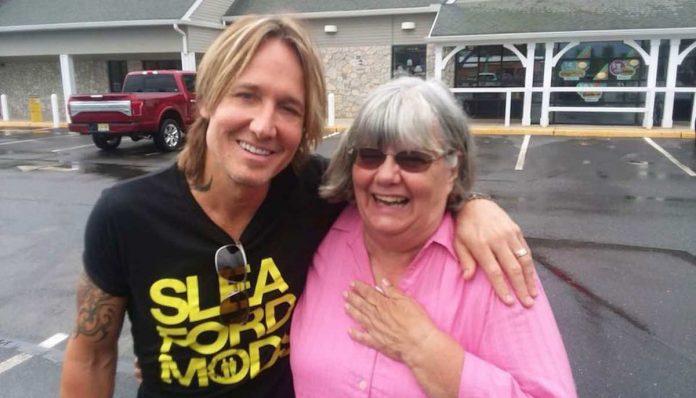
One woman’s kindness at a local convenience store resulted in a private Keith Urban meet-and-greet right there in the aisle, after she unknowingly picked up the singer’s tab.
Retired school teacher Ruth Reed was standing in line at the Wawa when she overheard that the man in front of her was having trouble with his credit card.
Reed was more than happy to rescue her fellow customer by offering him the few dollars needed for the purchase—but she couldn’t stop thinking the man looked incredibly familiar.
Astonishingly, the patron turned out to be country music star Keith Urban who was in Medford, New Jersey for a concert.
Reed told CBS News that he asked what her name was: “And he said, ‘Ruth, I’m Keith,’ and I said, ‘That’s who you look like, Keith Urban! Do people ever tell you that you look like Keith Urban?’”
And he said, “I am Keith Urban.”
It took some convincing for Reed to believe that she had actually just paid for the star’s snacks—she even asked Urban’s bodyguard if it was true. Finally, when she realized he indeed was standing in front of her, the teacher “just fell apart…and he was gracious.”
The superstar was happy to take a picture with Reed, who hopes the story will inspire others to do good deeds for each other.
(WATCH the news coverage of the event below)
Be Sure And Share The Serendipitous Story With Your Friends – Photo by Anna Simpkins
One of the most vital resources on the planet may soon be readily available in your backpack.
A professor of mechanical engineering is leading a research team to develop a lightweight, battery-powered pack that can harvest water from the air—as many as 10 gallons per hour— even in arid locations.
The nanofiber-based harvester could help address modern water shortages due to climate change, industrial pollution, droughts and groundwater depletion, especially in dry parts of California, Africa and China. This will also aid residents in South America who live atop mountain ranges higher than rain clouds.
“I was visiting China, which has a freshwater scarcity problem,” said Dr. Shing-Chung Wong of the University of Akron. “There’s investment in wastewater treatment, but I thought that effort alone was inadequate.”
He figured it would be more prudent to develop a water harvester that could take advantage of abundant water particles in the atmosphere.
To miniaturize water generation and improve the efficiency, Wong and his UA students turned to electrospun polymers. Electrospinning uses electrical forces to produce polymer fibers ranging from tens of nanometers up to 1 micrometer — an ideal size to condense and squeeze water droplets out of the air. These nanoscale fiber polymers offer a much larger surface-area-to-volume ratio than that provided by the typical structures and membranes used in water distillers.
By experimenting with different combinations of polymers that were hydrophilic — which attracts water — and hydrophobic — which discharges water, the team concluded that a water harvesting system could indeed be fabricated using nanofiber technology.
Unlike existing methods, Wong’s harvester could work in arid desert environments because of the membrane’s high surface-area-to-volume ratio. It also would have a minimal energy requirement.
The appearance of the portable water harvester depends on the end-use applications. The envisioned design looks much like a backpack.
“We could confidently say that, with recent advances in lithium-ion batteries, we could eventually develop a smaller, backpack-sized device,” Wong said.
What’s more, Wong’s nanofiber design simultaneously grabs water and filters it, thus the water would be free of pollutants and immediately drinkable.
Next, Wong hopes to obtain additional funding to build a prototype of the freshwater harvester. He anticipates that, once his team is able to produce the prototype, it should be inexpensive to manufacture.
The English government has just announced that it will be banning unethical kitten and puppy farms.
With details of the new legislation to be discussed in the fall, the ban will effectively prevent third-party breeders from being able to sell cats and dogs that have not been raised or treated in suitable conditions.
Licensed breeders will only be able to sell litters that they have bred themselves, and they will be limited to the sale of a certain number of litters per year. Breeders selling animals online will have to display their license number along with the pet’s country of origin and residence.
Anyone wanting to adopt a dog or cat will have to contact a rehoming center or a breeder directly, rather than depending on pet stores that may be acquiring their animals from unscrupulous sources.
“A ban on third-party sales will ensure the nation’s much loved pets get the right start in life,” said environmental secretary Michael Gove, according to The Guardian.
“People who have a complete disregard for pet welfare will no longer be able to profit from this miserable trade,” he added.
Be Sure And Share The Pawesome Good News With Your Friends – Photo by George Thomas, CC