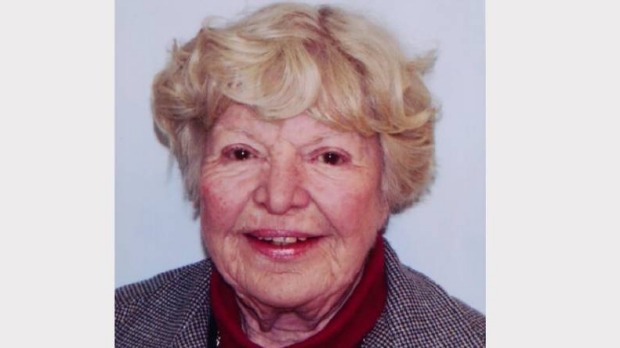
Lily Fardell may not have had any children of her own, but many children who don’t have a home will be living a better life thanks to the sale of hers.
Lily’s legacy of generosity in her New South Wales community has continued following her death in 2015, as the sale of her mansion, known as Pacific House, funds charity efforts to help local homeless children.
The house, which sold at auction for a whopping $2.35 million dollars, was full of sculptures, furniture, and antiques that were expected to bring the total amount of her donation to St. Vincent de Paul in Newcastle to nearly $4 million after auction.
Known for her kindness and spunk, Lily often hosted Christmas and tea parties on her veranda with friends, caroling, and wine.
Those friends were eager to attend the auction for the Catholic charity because they wanted to take home reminders of their friend as a way of supporting her generous last wish.
“She couldn’t have children of her own,” her nephew Michael told The Sydney Morning Herald. “But she loved children and left almost everything she had to a charity which supported them.”
He was still a teen when he decided to quit his job, pack up his favorite musical instrument, and travel the world. Nothing unusual for a young vagabond, except Dotan Negrin wasn’t strapping a guitar to his back — he was lugging around an upright piano.
He wasn’t just hauling it to a local street corner, he has pushed the 500 pound piano onto Florida beaches, he’s played it inside a redwood tree in California, and on a mountaintop in the rainforests of Guatemala.
He’s played in hundreds of locations in 21 countries, attracting crowds and tips at the Brooklyn Bridge, the Eiffel Tower, and on the rim of the Grand Canyon.
If you’re looking to sip something that contains 10 times the antioxidants of green tea — and 14 times more than wild blueberries — ‘matcha’ may just be your cup of tea.
The consumption of matcha has been linked to better heart health, lower cholesterol, and the prevention of cancer and type 2 diabetes.
The powder is made from young green tea leaves that are left in the shade for two to four weeks before harvesting. This increases the amount of chlorophyll— which transforms sunlight into energy—generating a higher concentration of antioxidants.
After they’re harvested, the young leaves are steamed, dried, and ground into a fine powder. Instead of straining water through the leaves, the powder is dissolved into the final brew, so people actually consume the whole leaf when they drink it.
Matcha also packs a punch comparable to a cup of coffee, providing up to six hours of energy, minus the crash.
It’s also so potent that you really only need one cup a day.
In historical times, matcha was only available to Japanese royalty, monks, and to samurai warriors who would drink it to gain extra energy for their battles.
When I tell people I teach yoga, at least half of them tell me, “Oh I’m way too inflexible to do yoga” or, “I can’t balance to save my life.”
Which, I get… I really do. When I first went to a yoga class and saw someone standing on their head, I panicked. At the time, I couldn’t even touch my toes, or imagine putting the top of my head on the floor.
But it also pains me to hear, because yoga is such an effective way of increasing flexibility and balance. And if you don’t do something about those tight muscles and wobbly ankles now, it’s not going to get better. In fact, it will only get worse.
So, here are the 8 best ways to get over the idea that yoga isn’t for you–and start a fun, productive and lasting relationship with your own body.
1. Embrace Yourself As a Beginner
Having no idea what you’re doing is actually a beautiful thing. It relieves you of expectations. It makes you stay curious. It gives you the opportunity to try something new. How often does that happen in your life? Long-time yoga practitioners have to struggle to keep their minds open to new learning. You’ve got a blank slate–at least when it comes to yoga. Enjoy it.
If the thought of being the person who’s pointing to the left when everyone else is pointing to the right is keeping you from going to a class, practice at home. There are yoga DVDs on Amazon, YouTube videos and online streaming services that will allow you to be in your own space and go at your own pace. At some point, you’ll want to take class with a teacher who will help you tailor the practice to your particular body. But if you aren’t quite ready to go to the class, bring the class to you.
3) Avoid Comparison
In every class, there will be someone—or maybe a whole posse of people—who will be able to do more than you. They will look glamorous and serene while you are red-faced and ready to bolt. Resist the urge to hate them—or yourself—and it will automatically deepen your practice.
Comparison make you focus on how you are separate, and yoga is about understanding how we are all connected. The more you can honor where you are today, the faster your current state will change.
4. Take a Beginner’s Class
It takes a special teacher to be able to truly serve beginners. Seek out the ones who have that skill by looking for the words “Level 1,” “beginner” or “basic” in the class description.
These classes will give you a firm foundation in the basic poses and make it much easier to keep up when you start going to more advanced classes.
5. Embrace Props
Photos courtesy of Acacia TV
Blocks, straps, blankets, bolsters—or if you’re at home, couch cushions, belts and books—are your best friend! These props help you tailor a pose to fit your body, instead of contort (and potentially injure) your body to fit a pose.
Sit up on a folded blanket (or two, or three) in a forward bend, and see how much more likely you are to be able to touch your toes.
6. Talk to the Teacher
A good teacher wants to know about his or her students.
Introduce yourself a couple minutes before class starts and explain that you’re a beginner. He or she will be able to tell you how to modify poses during class to suit your level.
7. Gently Check Your Ego at the Door
I know it’s not fun to feel like a remedial student. But if you can resist the urge to go straight for the most advanced version of a pose, you’ll be able to build on your successes instead of potentially crashing and burning.
Tree pose is still tree pose, whether your foot is on your ankle, calf, or thigh. Once you’ve mastered the basic version, you can move on to the next level.
8. Listen to Your Body
Ultimately, your body will tell you everything you need to know about how yoga is working for you. Reach only as far as feels doable to you. “No pain no gain” does not apply on the yoga mat.
There’s always a next time to give you a chance to build on the stretching you have achieved today.
A United States appeals court ruled that federal regulators should not have approved the use of an insecticide, which is linked to a decline in bee populations, and determined that the EPA used “flawed and limited data”.
The ruling means farmers have to immediately stop using sulfoxaflor, marketed under the brand names Transform and Closer, unless and until the Environmental Protection Agency obtains more evidence regarding its effects on honeybees. Only then will the EPA be allowed to decide if it can re-approve the chemical for use on crops.
“It’s a complete victory for the beekeepers we represent,” said Greg Loarie, an attorney representing several commercial beekeeping groups told Reuters. “The EPA has not been very vigilant.”
The Ninth Circuit Court of Appeals agreed, and determined the EPA didn’t collect enough “substantial evidence” to prove sulfoxaflor was safe before approving its use.
Bee populations have been declining in recent years, and though some blame an attack of mites or viruses, beekeepers point to evidence that certain pesticides–neonicotinoids–that attack the central nervous system of insects are a huge contributor. Sulfoxaflor falls into that category.
While Europe has already banned their use, California and Ontario have strong restrictions on neonicotinoids and garden stores at Lowe’s had been phasing out its use.
The EPA had originally proposed several limits on sulfoxaflor’s use, but later backed off and approved it for unconditional use on crops. The court found that the EPA amended its policy even though the maker, Dow AgroSciences, failed to provided additional studies the EPA had requested.
Many of us remember our first teachers—and though they’ve likely had thousands of students throughout their teaching career, they often remember us, too.
One day, while watching the Minneapolis news on KARE-TV, retired kindergarten teacher Lorly Schik recognized one of the reporters as her student from 30 years ago.
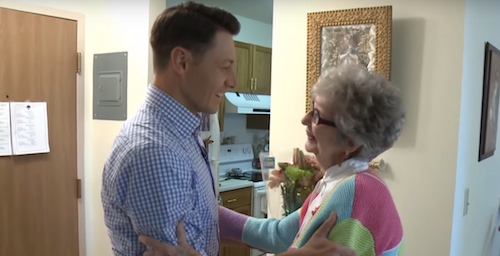
After writing Cory Hepola a letter and sending it to his parents, the reporter set up a meeting, and brought flowers to her home. After an initial hug, the pair eagerly sat down to open up a box full of memories.
Five years after a soldier was given a gift that raised his spirit during days of war, Jackson Smith paid back his best friend Brian.
Both good deeds were made possible by NFL quarterback Drew Brees, who, at the time, had just won the Super Bowl but was happy to send some down-home love to a New Orleans Marine.
The photo above (right) was sent to Smith at the front lines, showing the star athlete holding a life-sized cutout his picture.
“When I saw that picture, I cried my eyes out. I felt that Brian had pulled off the greatest act of friendship in the history of Mardi Gras,’ wrote Jackson Smith. “At a time in my life when I knew little beyond doubt and exhaustion, his gesture brought me through. I believed that I could never repay him or Drew Brees for what they had done for me.”
In the end, he did repay the favor to Brian, with the help of the same New Orleans Saints star QB.
Kindergarten is a huge change for all children, but it can be even more difficult for those on the autism spectrum. Getting my son to school for the first half of last year was a feat in itself. Each morning, he experienced panic attacks and meltdowns before we even reached the car. By the time we got to school, I would have to hold his hand to his classroom. When we reached his classroom, I would spend a good 10-20 minutes calming him down until he felt comfortable enough to join the rest of his class. When he got home each day, he would spend hours crying.
I would attend lunchtime with him each day, so it would give him something to look forward to at the half-way point. Also, it gave me a chance to be in my “mom detective mode” to see if there was something going on that I was missing.
He seemed to get along fine with his fellow classmates, and after many conversations with all of his teachers, I was at a standstill. Services for autism in our area outside of his school are hard to come by, so when I found a new behavioral therapist within ten minutes of my home who specialized in autism, I was excited.
After working with my son for a period of time, the therapist thought he was working so hard on controlling his emotions at school that he would quite literally blow up at home because that’s where he felt the most comfortable. It made sense.
Over the next few months, I had tried everything with my son to help ease his anxiety. I bought weighted blankets, vests, an abundance of sensory toys and we even did kid yoga twice a day. I joined online support groups, in-person support groups and even brought him to the doctor to see if medication would be a good option for him.
After Christmas break, I was surprised to see him return from school one day in January with a big smile on his face. I didn’t even question it right away until a week later when my son started talking about an interaction with another teacher. The next morning when I brought him to school, he had a little bit of a swag to his step. And when we passed a classroom with a teacher from a different grade level, my son stopped and gave Mr. T a big high-five. He still wanted me to walk with him to his classroom and do our normal breathing exercises–but that all slowly changed in the last five months of school.
Each day when he would come home, he would immediately say Mr. T gave him a high-five again today or Mr. T said hi to him. It would later change to, he gave Mr. T a high-five and a hug today. The high-fives didn’t cure my son’s anxiety, but it gave him something to look forward to, which is so important when so many decisions are taken away from our kids.
For the rest of the school year, his high-fives with this kind teacher were always the biggest highlight of his day. And very slowly, my son needed me less and less. By May, he didn’t need me to walk past the front of the school with him, and on some days, he even asked to take the bus.
The best acts of kindness are when someone doesn’t even know they’re doing something that affects someone’s life. They’re just doing it because. My son had no previous interactions with this teacher, but for whatever reason, he was comfortable with him when he almost always has a hard time interacting with people he doesn’t know well.
Always take the time to smile or give a high-five. You very well could be the one to help put a little swag in someone else’s step. Thank you Mr. T for unknowingly giving my son something to look forward to each day.
So, just remember — that simple act of kindness you perform just might have a far grander role is God’s plan than you realize!
In the last two weeks, the willingness of German and Austrian residents to provide sanctuary and aid appeared to be boundless, as thousands of refugees fleeing Syria arrived by bus and train.
The eagerness to help is so great in Munich that the city has been “obliged to draw up waiting lists for volunteers who want to assist,” according to the Independent.
“Spontaneously hundreds of ordinary citizens came to the station in support, welcoming the arrivals with applause.” wrote Elke, a student in Munich to friends overseas. “They bring food and drinks, toys, and whatever else they have to give to people who have nothing.”
This 100-foot-tall structure in the shape of a tulip can deliver clean, sustainably-produced energy, even at night, because it is the world’s first hybrid solar power generator.
Photos by Aora Solar
Designed by Israeli architect Haim Dotan and Aora Solar, the solar turbine can power 60-80 homes at a time, combining sculpture, architecture, and infrastructure to create a magnificently efficient—and appealing—power source.
Currently, the “solar tulip” stands as an artistic beacon of power in Samar, Israel and Almeria, Spain, where a bloom at the top of the tower captures sunlight from a series of mirror reflectors. After the sun goes down, the solar generator is powered by diesel, biogas, and natural gas. Plans are also underway to construct a solar-tulip facility near Arizona State University in Tempe.
Dotan explained his design saying he fashioned the turbine as a flower “to create emotions, excitement and awareness of the destruction of natural resources.”
The solar tulip’s ability to work as a stand-alone plant is an advantage in countries without developed utility grids, which is why solar tulips will also soon be sprouting up in Ethiopia, according to the Ministry of Water, Irrigation, and Energy.
How does it work?
From the centerpiece in the tulip flower, super-heated air travels down and turns a turbine blade, generating 100 kilowatts of electricity and 170 kilowatts of heat energy.
The system’s low water consumption – the tulip powers the micro turbine with heated air instead of steam – is especially appealing in the desert Southwest, which has led to the partnership between Aora-Solar, Arizona State University and GreenFuel Technologies.
It’s also a modular system, which means it can expand to meet the energy needs of a growing community–just like planting more bulbs leads to bigger garden.
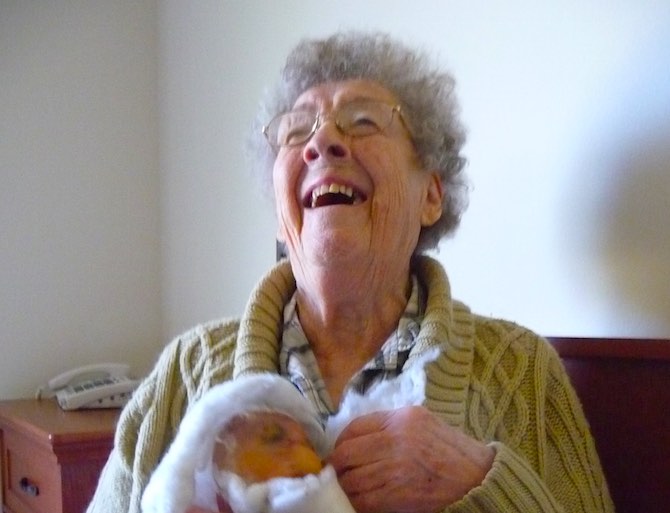
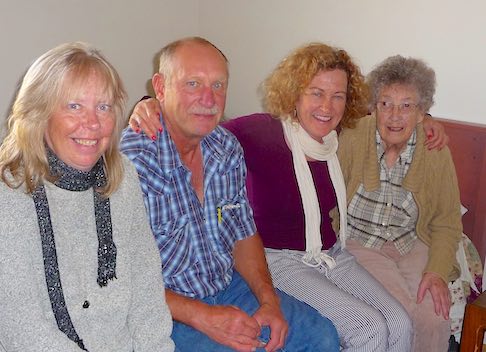
Everyone warned me that my grandmother with Alzheimer’s might not recognize me and would remain disconnected during what would be my final visit to her hometown in Wisconsin.
She was 98-years-old and I hadn’t seen her in a decade– me, living a thousand miles away and she, living far from any airport.
I was determined to make this last visit count… But how?
As editor at Good News Network, I had seen stories about the power of music to unlock the personality of elderly shut-ins. So, ’Bring polka music’ – Check.
I thought about the handmade items she gave us, but the afghan blanket keeping me warm every winter was too bulky to bring on a plane.
Then, I remembered the “peek-a-boo doll’. When she was in her 60s, she gave these cheeky dolls to my sister and me when we were teens. I kept it wrapped in an old record store bag up in the closet. This was just the device I needed to break through the wall of isolation and indifference.
I made sure my sister recorded the moment on video–a moment that produced so much joy, a moment that proved she could still light up the room, with her giggling and folksy Midwest talk, even while dementia cloaked her mind.
Afterward, I played the tune Beer Barrel Polka, and we all sang along. She knew every lyric.
(WATCH the video, and laugh, below)
When the somewhat-lewd Peek-a-boo Doll was shown to the other old ladies and staff playing Bingo in the next room, they couldn’t stop laughing, saying, “Kate made that?”
My beloved grandmother died this week, two months shy of 100.
If bouts of nausea leave your head spinning and stomach churning, a new cure may fit right on your wrist.
Acupressure bands are an old method for fighting seasickness used by Chinese fishermen. They wrap around the wrist and have an adjustable post that presses down on the acupressure point called the “Nei Kuan,” located about three finger widths up from the wrist, on the forearm between the two prominent tendons there.
After discovering the device relieved her morning sickness, Romy Taormina created a modern version of the acupressure band. She liked the application, but wasn’t wild about the way the wrap looked, so she started her own company to produce a more hip version.
Her product, called Psi Bands (pronounced sigh bands), is FDA-cleared and designed to treat nausea, whether from motion sickness, chemotherapy, pregnancy, or anesthesia.
When Kris Wittenberg first heard about them, she drove 45 minutes from her home in Eagle, Colorado, to the nearest store selling PsiBands to buy some for her 10 year old daughter, Addison, who frequently got car sick.
“She loves them,” Wittenberg told Good News Network, “Plus, she thinks they’re cute.”
Wittenberg compares them to the trendy Swatch watches of the 1980’s, but thinks they have a 21st century focus on how to treat disorders and discomfort.”
“It wasn’t a drug, it wasn’t a medication,” Wittenberg said. “She doesn’t get sick on drives now, and she can even read in the car.”
Wittenberg says the bands are all she’s ever needed to control Addison’s motion sickness over the past four years. She also gave some to a friend going through chemotherapy.
Taormina cites four published studies on her website attesting to the effectiveness of the bands in treating nausea from chemotherapy, morning sickness, motion sickness, and anesthesia.
The company also makes financial contributions to the National Breast Foundation and other cancer charities.
While a cure may make people feel better in the future, Taormina’s company has delivered Psi Bands to the local cancer center in Pacific Grove, California, to help patients in her hometown feel better while going through chemo today.
When a 20-year-old college student went to visit her grandparents in India back in 2010, she noticed that many people were living without light—that, or they were using bulbs that fairly quickly ran out. She immediately decided to buy energy efficient bulbs for ten families using her own money.
Mansi Prakash, now an economics major at New York University, came up with a solution that was simple but effective, one that would go on to change the lives of thousands: sending eco-friendly light bulbs to small villages.
“Most families have light bulbs—they just weren’t turning them on and using them,” Prakash told TakePart. “For someone who couldn’t afford food three times a day, paying the high electricity bills was not an option.”
If they used an 11-watt compact fluorescent bulb instead, which costs about $2 and lasts 3-4 years, residents would save 80% on their energy bills. The money saved could go toward health care, food or education.
Being able to turn on lights whenever you need them can give families more hours in the day to be productive, and allow children more time to study.
Prakash, who was born in India and raised in the Philippines, has since founded the nonprofit Brighter Today and–with help from the Clinton Foundation–has been distributing energy-efficient bulbs that are donated by electronics giant Philips.
To date, her nonprofit has helped bring cheaper electricity to 5,300 homes in rural India.
Prakash is also focused on a new solar project called Light for Life that she hopes will illuminate homes that have no access to electricity. It is another innovative device that brings in daylight with a plastic bottle, bleach and water.
(READ more at TakePart) Photos: Brighter Today, Facebook
The hunting of mountain lions has been illegal in California since 1990, but because of their proximity to humans and civilization in California, these big cats have had a hard time crossing the street safely.
Construction of the world’s largest “nature bridge” should help reduce the number of statewide, automobile-related wildcat deaths.
The green overpass will connect the protected public lands of the Santa Susanna Mountains and the Santa Monica mountains after plans are finalized and construction begins in 2017.
Spanning over eight lanes of traffic on the 101 Freeway, the Liberty Canyon wildlife corridor is likely to measure 200 feet across and 165 feet wide. The highway will be bordered by drought-tolerant vegetation, and will cost between $33 and $38 million dollars.
It’s important for mountain lions to be able to roam over—and claim—new territory freely. If they can’t, the species risks inbreeding and territorial fighting between packs.
The Mountains Recreation and Conservation Authority is still putting together the finishing touches on the design plan, and have begun a fundraising initiative to help with expenses.
When a father started using the streets in Southeast Washington to teach his young daughters the alphabet, he inspired an animal art movement.
Streets running east and west in the U.S. capital are lettered – A Street, B Street, C Street, and so on. Stephen Young started using the streets to teach his young daughters the alphabet back in 2011, telling them what animal’s name began with each letter.
He pitched the idea of putting actual animal sculptures at intersections to the Capitol Hill Arts Workshop, a nonprofit community arts group, and they ran with it like a cheetah. “C” is for cheetah, by the way.
Animals have been popping up around the neighborhood ever since – like the Koala on K Street above. Some of the others:
“D” is for Dog, a daredevil darting through fire.
“E” is for Emus, elevated above the esplanade.
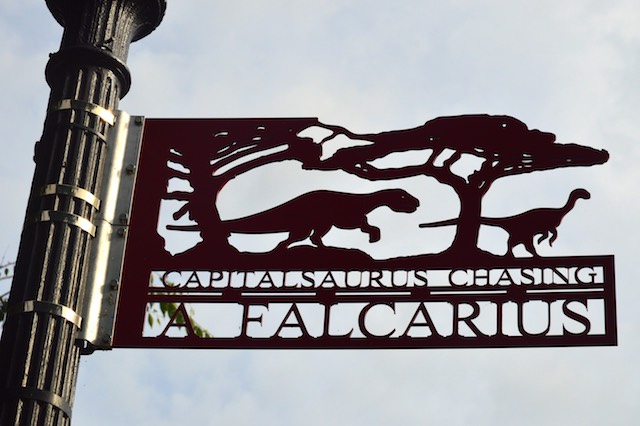
“F” is for Falcarius, fearful of becoming food for a Capitalsaurus.
When the letters run out, the streets are given names in alphabetical order while streets running diagonally are named after states. So…
“N” is for North Carolina, and for Narwals noodling up a post.
“V” is for Virginia, and Viceroy Butterflies vying for valued space.
In all, there are ten animal sculptures so far — for the letters D, E, F, G, I, K, L, N, S, V. The Capitol Hill Arts Workshop still has room for 16 more – creating a walking tour of the alphabet for kids to learn their ABCs.
(READ more at the Washington Post) – Photos: Terry Turner, Good News Network
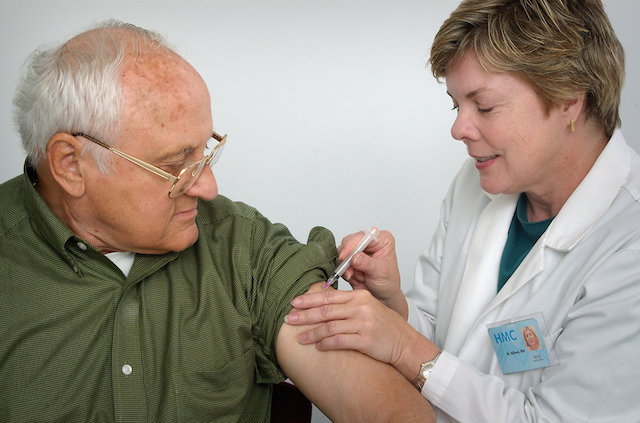
A new shingles vaccine will be on the market within two years — and unlike the current one, the new shot will be nearly 100% effective and not weaken over time.
A study of 16,000 patients, aged 50 and older, found the new vaccine 97% effective — regardless of age. Drug maker GlaxoSmithKline developed the vaccine and conducted the studies.
Shingles is a painful rash of blisters that can engulf the whole body. Anyone who’s ever had chicken pox is at risk of shingles. Once you get chicken pox, the disease never leaves your body. As you age, your immune system weakens and the disease can reactivate as shingles.
There is a vaccine now, but that one is only 64% effective and it weakens over time. The U.S. Centers for Disease Control only recommends it for people 60 and over — and by the time they turn 70, the current vaccine is only 38% effective.
The new vaccine adds something called an adjuvant — a chemical that “wakes up” the immune system. It’s been used effectively in other vaccines and, in the case of shingles, allows the immune systems of elderly people in their 80s to better keep the virus at bay.
(READ more at NPR News) — Photo: CDC, Public Health Image Library
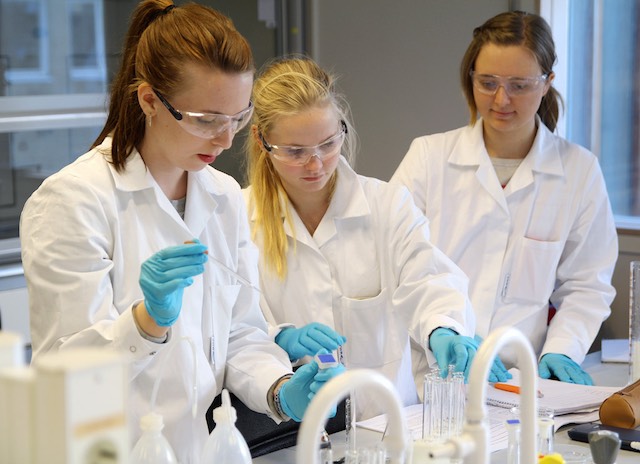
Alabama school standards for teaching science are evolving.
Education leaders have pushed past old standards which led to requirements like stickers on biology books warning that evolution was “a controversial theory.” Those now are gone.
Added are more hands-on experiments and course material about global warming and climate change.
There has been little opposition in Alabama, where both topics normally raise the ire of politicians and some parents. Three years of planning for the new standards went smoothly and they now have the backing of the state’s science teachers association.
The biggest change is in the area of “doing science” — involving students in conducting experiments and hands-on exploration of scientific topics. Science teachers love that because it will help students understand the subject better than relying on textbooks alone.
(READ more at NPR News) — Photo: Per Henning/NTNU, CC
The village of Zundert’s most famous native would have been awestruck at the sights, smells, and sounds of these 500,000 dahlia tributes.
Every year, the Corso Zundert parade brings out the competitive streak in locals who spend an entire year planning massive floats covered in dahlia flowers.
This year, to honor Vincent Van Gogh on his 162nd birthday, the colossal creations were themed around the artist’s paintings and self-portraits.
Dutch citizens take the parade very seriously, and usually start conceiving ideas for the float days after the competition ends – that’s 363 days of planning for the next celebration.
Between the months of May and August, teams of competing workers toil over the float’s frame, culminating in a feverish scramble the night before the parade when fresh flowers are finally nailed into place.
“By the First Sunday of September the fever burns within us,” the Corso Zundert website reads. “Will the moving floats be finished in time? Are there enough dahlias? And who is going to win this time?”
Photo Credit (and top) by Werner Pellis
The first Zundert flower parade took place in 1936 in honor of Queen Wilhelimina’s birthday, but the ‘parade’ only consisted of a modest bicycle and farmer’s cart. Since the village is known for having over 50 different species of dahlias, the idea of a larger flower parade eventually blossomed.
In order to keep a cap on the competitive craziness, the judges have limited the float size to 62 feet long, 15 meters wide, and 30 feet tall.
Because of its historical significance in the Netherlands, winning the trophy for best float is considered to be one of the greatest honors a Dutch citizen can receive in their lifetime.
Photo Credit: Erwin MartensPhoto Credit: Werner Pellis
Whenever anyone asks me how old my little Wiley is, I always say, “The rescue folks told us they think he’s between two and four years old.”
That being said, I definitely remember the exact day and time we picked him up, the day he became our baby.
I didn’t know that “Gotcha Day” was a thing until PetSmart charities sent our Chihuahua mix a care package that included a toy that says “Adopt,” a festive glittery bowl, some streamers, and a “Pup-Pie” (here on Amazon) that looks like a doggy cake.
Snow the Shepherd Instagram
Since many rescue dog owners never find out the actual day of their dog’s birth or their exact age, “Gotcha” day is intended to celebrate the day your pup was adopted.
The first official Happy Gotcha Day celebration will kick off this weekend, Sept. 11-13, at 1,400 PetSmart stores hosting events throughout the U.S., Canada, and Puerto Rico.
Every day, 1,000 pets find a new home through PetSmart adoption centers nationwide.
“For adopted pets, confirming a birthday is tough, so we wanted to call out to these new pet parents with a special day, ‘Gotcha Day,’ to celebrate the moment they brought home their newest family member,” said Eran Cohen, executive vice president of customer experience at PetSmart.
With the weekend festivities, and Facebook outreach, they hope to find families to take in 15,000 homeless pets across the country–dogs and cats that may have no known birthdays but finally have a day to call their own.
Photos by Richard W. Rodriguez/AP Images for PetSmart

























 7. Gently Check Your Ego at the Door














 For the rest of the school year, his high-fives with this kind