











All News - Page 619 of 1737 - Good News Network
Home Blog Page 619

‘Unprecedented’ New Photos of the Sun’s Surface Are Being Hailed as Landmark Achievement for Science

Scientists have used a new solar telescope to capture the world’s most detailed pictures of the sun’s surface—and the achievement is being hailed as a historic milestone for “ushering in a new era of solar astronomy”.

These newly-released first images from the National Science Foundation’s (NSF) Daniel K. Inouye Solar Telescope reveal unprecedented detail of the sun’s surface and preview the world-class products to come from this preeminent 4-meter solar telescope.

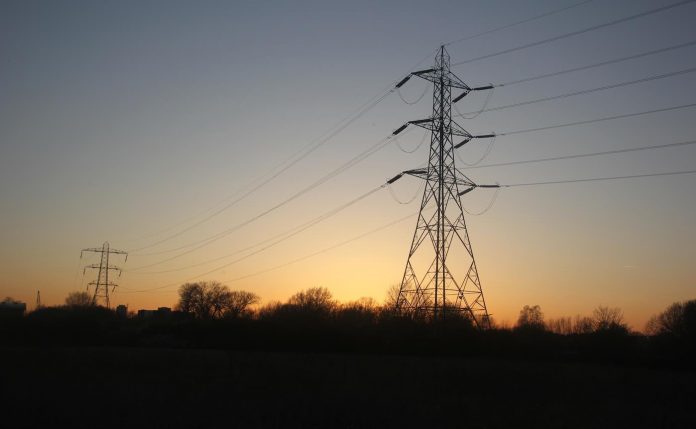
Activity on the sun, known as space weather, can affect systems on Earth. Magnetic eruptions on the sun can impact air travel, disrupt satellite communications and bring down power grids, causing long-lasting blackouts and disabling technologies such as GPS.

CHECK OUT: Scientists Detect Tone Pattern in the Ringing of a Newborn Black Hole for the First Time, Proving Einstein Right Again

These first images from NSF’s Inouye Solar Telescope show a close-up view of the sun’s surface, which can provide important detail for scientists. The image shows a pattern of turbulent “boiling” plasma that covers the entire sun. The cell-like structures—each about the size of Texas—are the signature of violent motions that transport heat from the inside of the sun to its surface. That hot solar plasma rises in the bright centers of “cells,” cools off and then sinks below the surface in dark lanes in a process known as convection.

“This image is just the beginning,” said David Boboltz, program director in NSF’s division of astronomical sciences and who oversees the facility’s construction and operations. “Over the next six months, the Inouye telescope’s team of scientists, engineers and technicians will continue testing and commissioning the telescope to make it ready for use by the international solar scientific community.

“The Inouye Solar Telescope will collect more information about our sun during the first 5 years of its lifetime than all the solar data gathered since Galileo first pointed a telescope at the sun in 1612,” he added.

Photo by NSO/AURA/NSF

“Since NSF began work on this ground-based telescope, we have eagerly awaited the first images,” said France Córdova, NSF director. “We can now share these images and videos, which are the most detailed of our sun to date. NSF’s Inouye Solar Telescope will be able to map the magnetic fields within the sun’s corona, where solar eruptions occur that can impact life on Earth. This telescope will improve our understanding of what drives space weather and ultimately help forecasters better predict solar storms.”

Illuminating what we know about our nearest star

The sun is our nearest star—a gigantic nuclear reactor that burns about 5 million tons of hydrogen fuel every second. It has been doing so for about 5 billion years and will continue for the other 4.5 billion years of its lifetime. All that energy radiates into space in every direction, and the tiny fraction that hits Earth makes life possible. In the 1950s, scientists figured out that a solar wind blows from the sun to the edges of the solar system. They also deduced for the first time that we live inside the atmosphere of this star. But many of the sun’s most vital processes continue to confound scientists.

LOOK: This is the First Ever Image of a Black Hole and Scientists Are Calling It a ‘Dream Come True’

“On Earth, we can predict if it is going to rain pretty much anywhere in the world very accurately, and space weather just isn’t there yet,” said Matt Mountain president of the Association of Universities for Research in Astronomy, which manages the Inouye Solar Telescope. “Our predictions lag behind terrestrial weather by 50 years, if not more. What we need is to grasp the underlying physics behind space weather, and this starts at the sun, which is what the Inouye Solar Telescope will study over the next decades.”

Solar magnetic fields constantly get twisted and tangled by the motions of the sun’s plasma. Twisted magnetic fields can lead to solar storms that can negatively affect our technology-dependent modern lifestyles. During 2017’s Hurricane Irma, the National Oceanic and Atmospheric Administration reported that a simultaneous space weather event brought down radio communications used by first responders, aviation and maritime channels for eight hours on the day the hurricane made landfall.

Finally resolving these tiny magnetic features is central to what makes the Inouye Solar Telescope unique. It can measure and characterize the sun’s magnetic field in more detail than ever seen before and determine the causes of potentially harmful solar activity.
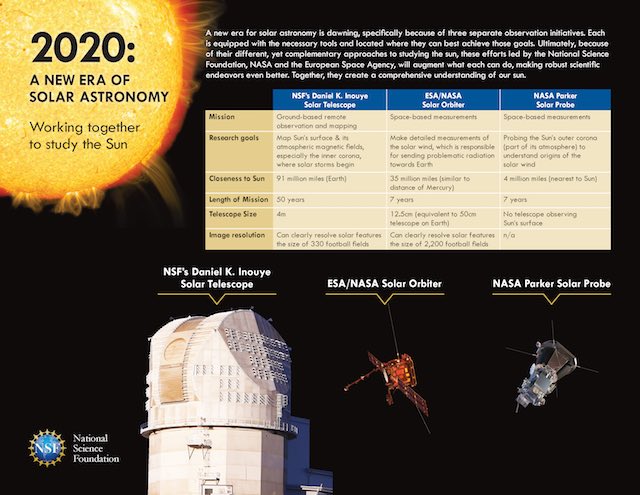
Photo by NSF

Better understanding the origins of potential disasters will enable governments and utilities to better prepare for inevitable future space weather events. It is expected that notification of potential impacts could occur earlier – as much as 48 hours ahead of time instead of the current standard, which is about 48 minutes. This would allow for more time to secure power grids and critical infrastructure and to put satellites into safe mode.

The engineering

To achieve the proposed science, this telescope required important new approaches to its construction and engineering. Built by NSF’s National Solar Observatory and managed by AURA, the Inouye Solar Telescope combines a 13-foot (4-meter) mirror—the world’s largest for a solar telescope—with unparalleled viewing conditions at the 10,000-foot Haleakalā summit.

Focusing 13 kilowatts of solar power generates enormous amounts of heat—heat that must be contained or removed. A specialized cooling system provides crucial heat protection for the telescope and its optics. More than seven miles of piping distribute coolant throughout the observatory, partially chilled by ice created on site during the night.

RELATED: Teen Discovered New Planet 6.9 Times Bigger Than Earth Just Days into NASA Internship

The dome enclosing the telescope is covered by thin cooling plates that stabilize the temperature around the telescope, helped by shutters within the dome that provide shade and air circulation. The “heat-stop” (a high-tech, liquid-cooled metal donut) blocks most of the sunlight’s energy from the main mirror, allowing scientists to study specific regions of the sun with unparalleled clarity.

The telescope also uses state-of-the-art adaptive optics to compensate for blurring created by Earth’s atmosphere. The design of the optics (“off-axis” mirror placement) reduces bright, scattered light for better viewing and is complemented by a cutting-edge system to precisely focus the telescope and eliminate distortions created by the Earth’s atmosphere. This system is the most advanced solar application to date.

“With the largest aperture of any solar telescope, its unique design, and state-of-the-art instrumentation, the Inouye Solar Telescope—for the first time—will be able to perform the most challenging measurements of the sun,” said Thomas Rimmele, director of the Inouye Solar Telescope. “After more than 20 years of work by a large team devoted to designing and building a premier solar research observatory, we are close to the finish line. I’m extremely excited to be positioned to observe the first sunspots of the new solar cycle just now ramping up with this incredible telescope.”

Photo by NSO/AURA/NSF

Ushering in a new era of solar astronomy

NSF’s new ground-based Inouye Solar Telescope will work with space-based solar observation tools such as NASA’s Parker Solar Probe (currently in orbit around the sun) and the European Space Agency/NASA Solar Orbiter (soon to be launched). The three solar observation initiatives will expand the frontiers of solar research and improve scientists’ ability to predict space weather.

“It’s an exciting time to be a solar physicist,” said Valentin Pillet, director of NSF’s National Solar Observatory. “The Inouye Solar Telescope will provide remote sensing of the outer layers of the sun and the magnetic processes that occur in them. These processes propagate into the solar system where the Parker Solar Probe and Solar Orbiter missions will measure their consequences. Altogether, they constitute a genuinely multi-messenger undertaking to understand how stars and their planets are magnetically connected.”

Reprinted from the National Science Foundation

(WATCH the short NSF clip below)

Shine A Light On Positivity By Sharing The Exciting News With Your Friends On Social Media…

Shaq Pushes Ahead With Super Bowl Viewing Party So He Can Donate All the Proceeds to Kobe Bryant’s Charity

Despite enduring the loss of his longtime friend and colleague Kobe Bryant, Shaquille O’Neal says that he still plans on hosting his annual Super Bowl party in Florida in the late Laker’s honor.

Not only that, Shaq will be donating all the proceeds generated from the event between the Kobe & Vanessa Bryant Family Foundation and the families of the helicopter crash victims.

Shaq’s Fun House Event will be taking place this weekend at the Mana Wynwood Convention Center in Miami. The party, which is set to feature such musical performers as Pitbull and Diddy, will host a variety of games, carnival rides, and circus performances in addition to streaming the Super Bowl LIV game between the San Francisco 49ers and the Kansas City Chiefs on Sunday.

MORE: After Making History With New Film Studio, Tyler Perry to Build a Shelter for Disadvantaged Women and Children

Shaq says that he had been contemplating canceling the event after he was left reeling from the death of Bryant, who played alongside him on the Los Angeles Lakers for three of Shaq’s NBA titles.

“Been going back and forth the past couple of days on if I should even have my event in Miami this weekend,” Shaq wrote on Instagram this week. “Part of me wanted to stay to myself as I reflect what my brother and his family mean to me and my family. But in thinking what would Kobe want, what would he do? Kobe would want us to push through and celebrate life. So let’s do just that.

“I’ll be dedicating and donating all my proceeds from Friday nights Fun House to all the families who lost loved ones and to the Kobe and Vanessa Bryant Foundation,” he concluded. “Together we will celebrate all those who lost their lives in Sunday tragedy. RIP my brother, my friend and my homie, The Black Mamba. Until we meet again.”

RELATED: Michael Jordan Opens First of Two Clinics for Uninsured and Underprivileged People

As ticket prices for this weekend’s Lakers’ game against the Portland Trailblazers skyrocket up to $950, StubHub also announced that they would be donating all of their ticket sales generated from the game to Bryant’s charity—and they will be doing the same for the postponed Lakers-Clippers game as well.

“In honor of Kobe and Gigi Bryant, all fees for the Jan. 31 Lakers vs Portland Trailblazers game and the Lakers vs Clippers game—for whenever it is rescheduled—will be donated to the Kobe & Vanessa Bryant Family Foundation,” the company told USA Today Sports in a statement.

Shaq has been openly candid about his grief over Bryant’s death, although he also was filmed leading a rousing chorus of “Kobe!” chants outside of the Staples Center this week since the street has been flooded with fans commemorating the Lakers legend.

WATCH the video below…

Be Sure And Share The Heartening News With Your Friends On Social Media – File photo by Keith Allison, CC

“Fear is the glue that keeps you stuck. Faith is the solvent that sets you free.” – Shannon L. Alder

Justin Jensen, CC License

Quote of the Day: “Fear is the glue that keeps you stuck. Faith is the solvent that sets you free.” – Shannon L. Alder

Photo: by Justin Jensen – CC license, cropped

With a new inspirational quote every day, atop the perfect photo—collected and archived on our Quotes page—why not bookmark GNN.org for a daily uplift?


Teen Praised for His Honesty After Heartfelt Apology (and Cookies) For Stranger Following Icy Road Accident

Not many people would celebrate their mailbox getting taken out by a car, but when Crystal Collins experienced the valor and kindness of the particular youth who hit it, she knew she wanted to shout his praises in public.

The teenager rang her doorbell while she was at home in Lincoln, Nebraska and told her that he had accidentally hit her mailbox with his truck due to the snow and icy conditions on the road.

Not only did the youngster offer his most heartfelt apologies for the incident, he also offered her every dollar in his wallet.

RELATED: Man Finds $43K Inside Used Couch and Returns it All to Woman Whose Grandfather Hid it in Secret

Collins told him to keep his money, but he returned to her house two days later with a plate of homemade cookies.

Collins was so touched, she published a Facebook photo of the young man from her security camera last week in hopes of identifying him and his family.

“I’m looking for his parents,” she wrote. “They should know what an outstanding young man they have raised!”


After the post was shared several thousand times, the young man was identified as Owen Sullivan. It also reached the social media feed of his mother Jamy—and she was extremely touched by her son’s honesty.

“I honestly got teary-eyed, because it was so, it’s just nice to know your kids do good things when you’re not around,” she later told KOLN.

(WATCH the heartwarming interview below)

Be Sure And Share This Sweet Story Of Kindness With Your Friends On Social Media…

British Carbon Tax Leads to Whopping 93% Drop in Coal-Fired Electricity

A tax on carbon dioxide emissions in Great Britain, introduced in 2013, has led to the proportion of electricity generated from coal falling from 40% to 3% over six years, according to research led by University College London (UCL).

British electricity generated from coal fell from 13.1 TWh (terawatt hours) in 2013 to 0.97 TWh in September 2019, and was replaced by other less emission-heavy forms of generation such as gas. The decline in coal generation accelerated substantially after the tax was increased in 2015.

In the report, ‘The Value of International Electricity Trading’, researchers from UCL and the University of Cambridge also showed that the tax—called Carbon Price Support —added on average £39 to British household electricity bills, collecting around £740m for the Treasury, in 2018.

Academics researched how the tax affected electricity flows to connected countries and interconnector (the large cables connecting the countries) revenue between 2015—when the tax was increased to £18 per tonne of carbon dioxide—and 2018. Following this increase, the share of coal-fired electricity generation fell from 28% in 2015 to 5% in 2018, reaching 3% by September 2019.

LOOK: This Tasty Seaweed Reduces Cow Emissions by 99%—and It Could Soon Be a Climate Gamechanger

Increased electricity imports from the continent reduced the price impact in the UK, and meant that some of the cost was paid through a slight increase in continental electricity prices (mainly in France and the Netherlands).

Project lead Dr Giorgio Castagneto Gissey (Bartlett Institute for Sustainable Resources, UCL) said: “Should EU countries also adopt a high carbon tax, we would likely see huge carbon emission reductions throughout the Continent, as we’ve seen in Great Britain over the last few years.”

Lead author, Professor David Newbery (University of Cambridge), said: “The Carbon Price Support provides a clear signal to our neighbors of its efficacy at reducing CO2 emissions.”

MORE: For First Time Ever, Scientists Identify How Many Trees to Plant and Where to Plant Them to Stop Climate Crisis

The Carbon Price Support was introduced in England, Scotland and Wales at a rate of £4.94 per tonne of carbon dioxide-equivalent and is now capped at £18 until 2021.The tax is one part of the Total Carbon Price, which also includes the price of EU Emissions Trading System permits.

Report co-author Bowei Guo (University of Cambridge) said: “The Carbon Price Support has been instrumental in driving coal off the grid, but we show how it also creates distortions to cross-border trade, making a case for EU-wide adoption.”

Professor Michael Grubb (Bartlett Institute for Sustainable Resources, UCL) said: “Great Britain’s electricity transition is a monumental achievement of global interest, and has also demonstrated the power of an effective carbon price in lowering dependence on electricity generated from coal.”

CHECK OUT: Rather Than End Up in a Landfill, Non-Recyclable Glass May Soon Be a Cheaper New Ingredient in Concrete

The overall report on electricity trading also covers the value of EU interconnectors to Great Britain, measures the efficiency of cross-border electricity trading and considers the value of post-Brexit decoupling from EU electricity markets.

The report annex focusing on the Carbon Price Support was produced by UCL to focus on the impact of the tax on British energy bills.

The findings from UCL and the University of Cambridge were part of wider research to examine cross-border electricity trading between Great Britain and connected EU markets, commissioned by energy regulator Ofgem to inform its annual flagship State of the Energy Market report.

Reprinted from University of College London – Photo by Matthew Black, CC

Power Up With Positivity By Sharing The Good News To Social Media…

Internet-Famous Crossing Guard Dog Presented With Doghouse and ‘People’s Choice’ Award

The heroic canine who won hearts across the internet after escorting a group of kindergartners across a busy street has been given a stylish new home for his bravery—and a “people’s choice” award to boot.

Although the pup has been given many names by the locals, he is currently being called Kupata—which means “Sausage” in English—because of his affinity for free snacks at the local butcher.

The stray pup became internet famous earlier this month after he was filmed running to the rescue of the children at a crosswalk in Batumi, Georgia. By the time he was done scolding the nearby vehicles, the kids were able to cross the street without interference.

LOOK: Couple Awakens to Find Random Malnourished Dog in the Living Room—and All the Windows and Doors Shut

Nona Zakareishvili, a local woman who has been feeding Kupata for the last few years, told Radio Tavisupleba: “He loves kids so much. If he sees them wanting to cross [the road], he will immediately go to their aid, and may even wait for them in the park.”

Upon hearing about his good deed, the Adjara Tourism Department honored the pup by presenting him with his very own doghouse. Not only that, the doghouse is emblazoned with a “People’s Choice” star depicting Kupata’s name.

“The popular Kupata now has his own home. He was only aiming to help kids safely cross the streets, but it has amounted to so much more. The employees of the Department bought him a home with the words: ‘People’s Choice’. That is something he certainly well deserves,” reads a translated version of a Facebook post from the tourism department.

Be Sure And Share The Pawesome Rescue Story With Your Friends On Social Media…

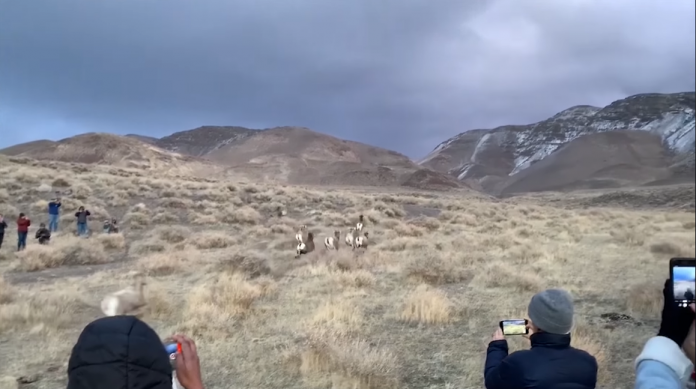
Watch the Thundering Return of Bighorn Sheep to Nevada Land They Haven’t Roamed for 100 Years

With the help of a local Native American tribe, 21 desert bighorn sheep became part of an important reintroduction program to create a population of Nevada’s state animal in lands they’ve been absent from for almost 100 years.

The animals were deposited on the shores and hills around Pyramid Lake near the Nevada-California border.

“We’ve recovered a species lost in time,” Emily Hagler, a biologist for the Paiute Tribe,  told KTVN. “It’s been a main focus of the tribe for many years, recovering our fisheries and now to be able to recover a large game species is incredibly tremendous.”

The Paiute of Pyramid Lake were heavily involved in the reintroduction efforts. In June of 2018, after consultation with bighorn sheep conservationist Larry Johnson the tribe agreed to begin coordinating with the Department of Wildlife on the project.

MORE: Humpback Whale Population Bounces Back From Near-Extinction—From Just 450, to Over 25,000

A November 2018 resolution that designated the bighorn sheep as a “tribal species of protection” was the launching point towards the capture and release of 17 ewes and 4 rams into an area where the last confirmed sighting of desert bighorn was by pioneers heading west in the early 20th century.

“We’ve been trying to restore sheep to every possible mountain range that they lived in back in the day,” Mike Cox told the Vegas Review Journal, statewide bighorn sheep program coordinator and staff biologist for the department.

CHECK OUT: Hope on Horizon for Escaped ‘Russian Spy Whale‘ After Video of Its Rugby Skills Goes Viral

All 21 sheep received a shiny, brand-new radio collar and the ewes had a blood test to ensure they were pregnant. This way at least a dozen lambs should be born onto the land in the spring of 2020 to help jump start the population and encourage the females to stay in the area, thus encouraging rambling rams to move into Pyramid Hills to breed the ewes in the fall and winter.

“It’s a perfect opportunity to remove some of those and give them a little bit more space and then allow a herd to take off here and grow on their own,” said Cox.

(WATCH the spectacular release below)

Be Sure And Share The Exciting News With Your Friends On Social Media…

Filmmaker Animates Himself into Girlfriend’s Favorite Movie So He Can Ask Her to Live Happily Ever After


It’s not every day you get to propose to your high school sweetheart—which is why filmmaker Lee Loechler made sure his marriage proposal was extra special.

Hearts are melting across social media after Loechler proposed to his longtime girlfriend, Sthuthi David, by reanimating the ending of her favorite film: Walt Disney’s Sleeping Beauty.

It took six months of work to animate the scene and arrange for the movie screening to take place. Loechler started by contacting the Coolidge Corner Theater in their hometown of Brookline, Massachusetts and asking if they could host a fake film screening for the proposal—and the theater was more than happy to accept.

WATCH: After Couple is Mocked for Wedding Proposal at KFC, Thousands Rally To Offer Dream Wedding and Gifts

After that, Loechler made a Reddit post asking for 20 strangers to attend a free screening of Sleeping Beauty so that David’s closest friends and family could hide in the back of the theater and watch the proposal unfold without being recognized.

Since Loechler also knew that inviting his girlfriend to the screening would invite suspicion, he forwarded a fake email announcement about the movie screening to David through her mother. A few days later, David’s mother casually mentioned that she had bought tickets for the family to attend the screening—and to Loechler’s “delight”, David invited him to her own surprise proposal.

The movie then played itself out as it normally would—except when it got to the scene where the prince kisses Princess Aurora, David was visibly confused when the skin and hair colors of the animated characters started to change.

LOOK: Bride and Groom Betrothed to History After She Wore a Wedding Dress Made From the Parachute That Saved Him

The on-screen prince then held up a ring and tossed it into the air so that Loechler could “catch it” from the front row of the audience and get down on one knee for what was potentially the most heartwarming fairytale ending in history.

Needless to say, David accepted Loechler’s proposal to live happily ever after. Not only that, their video of the proposal has racked up more than 6 million views since it was uploaded to YouTube back in December—and it’s not hard to see why.

(WATCH the tear-jerking video below)

Don’t Let Your Friends Sleep On This Sweet Story—Share It To Social Media…

“What good is the warmth of summer, without the cold of winter to give it sweetness.” – John Steinbeck

By Bert Kaufmann, CC license

Quote of the Day: “What good is the warmth of summer, without the cold of winter to give it sweetness.” – John Steinbeck

Photo: by Bert Kaufmann – CC license, cropped

With a new inspirational quote every day, atop the perfect photo—collected and archived on our Quotes page—why not bookmark GNN.org for a daily uplift?


If You Buy a Sapling For This Rainforest, Money Also Helps Turn Illegal Loggers into Forest Guardians

We can take shorter showers. We can try to recycle our plastic. We can make sure to turn the lights off in our homes at night. But the sense of urgency in the face of our climate crisis leaves some people discouraged because there isn’t more they can do.

For 13 years, however, Health in Harmony has been offering caring citizens of the world a way to reduce their impact on the environment—a chance to minimize, or even neutralize, their carbon footprint in ways that benefit so much more than just the CO2 equation.

The intrepid nonprofit is allowing people to buy personal carbon-offsets and using the money to benefit rural communities in Borneo and Madagascar. The brilliance behind their program is the way it addresses the locals in and around these tropical rainforests who are both impoverished, and living nearby some of the most important and vulnerable ecosystems on earth—ecosystems that if lost could place the goal of overcoming our impact on climate forever beyond our reach.

Tropical rainforests are the Fort Knox of carbon storage, as well as bastions of biodiversity. Many tracts, like Gunung Palung National Park on the island of Borneo have been hit hard by slash-and-burn agriculture and illegal logging, because struggling locals look for ways to make money and feed their families.

Based in Portland, Oregon, Health In Harmony offers people worldwide the opportunity to buy tropical tree seedlings that, when matured, will sequester a certain amount of carbon per year. But the impact here is profound.

According to an article in Fast Company, during its first ten years the program achieved 90% reduction in logging activities within households where the nonprofit was operating. This resulted in an astonishing regrowth of 52,000 acres of rainforest.

Photo courtesy of Health In Harmony

Kinari Webb, founder of Health In Harmony explained that 95 trees will offset the carbon emitted by an average American—while planting them ensures the survival of one of the most biodiverse places on earth.

WATCH: First Drone Project of Its Kind in Canada is Aiming to Plant 1 Billion Trees by 2028

With the group’s carbon-offset calculator, you can enter in key contributors in your own personal carbon footprint such as how much gasoline you use, or how many miles you’ve flown on airlines, and the calculator will come up with the cost of that carbon footprint as it relates to buying seedlings to be planted in Borneo and Madagascar.

According to Webb a monthly donation of $31.00 is likely enough to make you a carbon-neutral citizen.

And, to assuage your skepticism about reforestation efforts that don’t ensure saplings’ survival, Webb says that during the first 3 years, watering, weeding, fertilizing, and fire prevention are regularly provided for the trees. Over their first 10 sites they’ve seen a survival rate of 80%.

They diversify, using over 100 native tree species and indigenous fruit trees, while also compensating for failure by planting more than is needed to account for tree death during infancy and adolescence. These steps ensure that the full biodiversity compliment of the jungle can return even in the plantations. But, that is just the beginning.

CHECK OUT: For First Time Ever, Scientists Identify How Many Trees to Plant and Where to Plant Them to Stop Climate Crisis

Not Just Planting Trees, Transforming Villages

Photo by ASRI Kids / Nina Finley

Part of the money from your carbon offset purchases also provides healthcare, sustainable agriculture training, and economic empowerment for the villages near Gunung Palung National Park.

A “green credit” system allows the residents who work to reduce illegal logging to receive discounts of up to 70% on medical services at the medical facilities of Health In Harmony’s partner on the group  ASRI.  They can even pay for medical care with things like tree seedlings, artisan goods, and manure.

MORE: People Have Passively Planted Over 30 Million Trees Simply by Surfing the Web

ASRI also works with village chiefs to nominate a Forest Guardian. Respected members of their community, the Forest Guardians are trained by ASRI to work with illegal loggers to try and convince them to put down their chainsaws. They spread awareness of alternative ways of generating income while earning discounts on medical services for themselves and their neighbors.

Sustainable modern agriculture techniques are replacing slash and burn methods which have been destroying the rainforest while yielding fewer crops. In 2018, locals were producing more crops for their families and selling the remainder for additional income. In July 2018, Health In Harmony’s Kitchen Gardens, and Goats for Widows projects allowed women at home to generate their own income from farming small plots of land or keeping goats whose manure and milk helped wives who had lost their husbands to stay afloat financially.

Next Up: Madagascar and Her Lemurs

Beyond a second, even larger, Indonesia site called Bukit Baka Bukit Raya National Park, which is a critical sanctuary for orangutans, Health In Harmony has expanded its operations to another biodiversity mecca: Madagascar.

RELATED: Scientists Use Recycled Sewage Water to Grow 500-Acre Forest in the Middle of Egyptian Desert

Madagascar’s forests are massively at risk from logging and agriculture, and with them almost 100 species of lemur, the charismatic primate found nowhere else on earth.

In the autumn of 2019, Health In Harmony began setting up reforestation, healthcare, agricultural training, and more in Manombo Special Reserve, a 14,300-acre protected area in southeast Madagascar, home to nine species of lemur—all of which are threatened with extinction.

Health In Harmony is proving that any concerned citizen can do far more than recycle to prevent climate change, and that the power of their dollar can help a lot more lifeforms than humans and trees.

Share This Incredible Opportunity With Your Friends on Social Media

Researchers Use ‘Flash’ to Turn Plastic Trash and Food Waste into Valuable Material

Photo by Jeff Fitlow / Rive University
Photo by Jeff Fitlow / Rice University

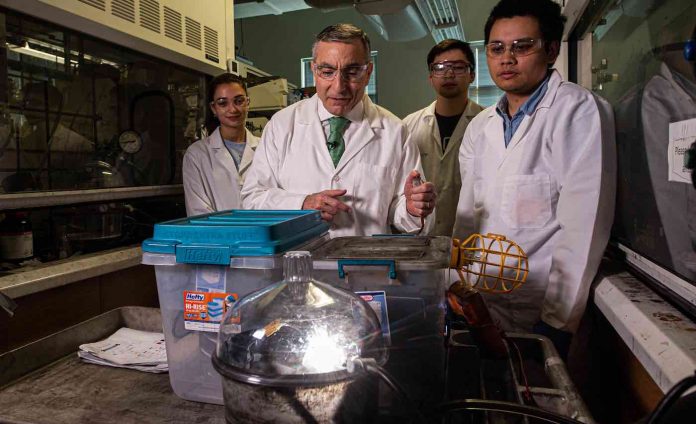
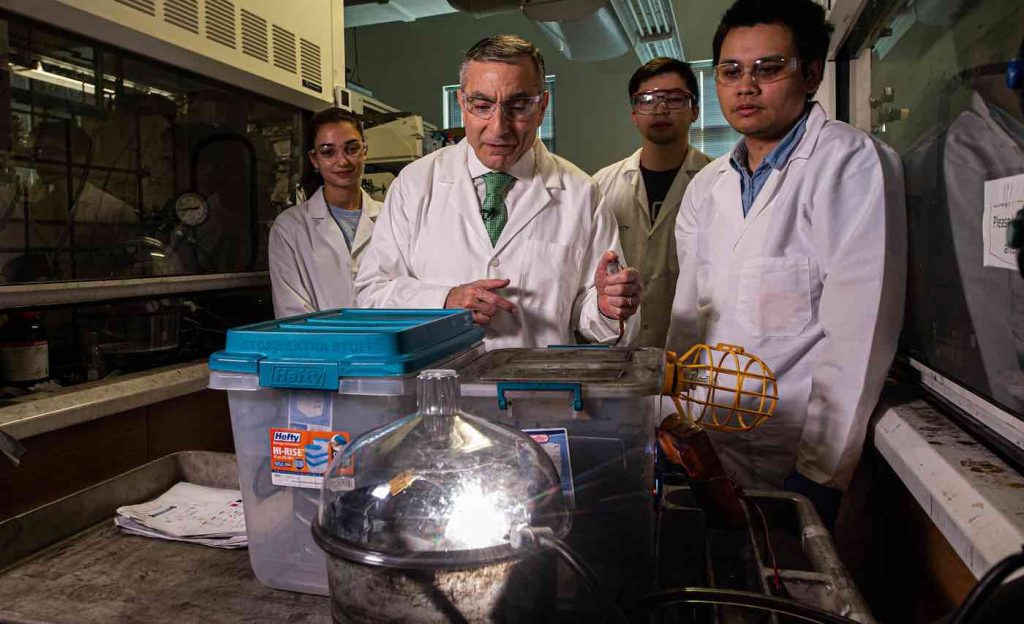
That banana peel from your lunch, turned into graphene, could help facilitate a massive reduction of the environmental impact of concrete and other building materials. While you’re at it, toss in those plastic empties.

A new process introduced by the Rice University lab of chemist James Tour can turn bulk quantities of just about any carbon source into valuable graphene flakes. The process is quick and cheap; Tour said the “flash graphene” technique can convert a ton of coal, food waste or plastic into graphene for a fraction of the cost used by other bulk graphene-producing methods.

“This is a big deal,” Tour said. “The world throws out 30% to 40% of all food, because it goes bad, and plastic waste is of worldwide concern. We’ve already proven that any solid carbon-based matter, including mixed plastic waste and rubber tires, can be turned into graphene.”

As reported in Nature, flash graphene is made in 10 milliseconds by heating carbon-containing materials to 3,000 Kelvin (about 5,000 degrees Fahrenheit). The source material can be nearly anything with carbon content. Food waste, plastic waste, petroleum coke, coal, wood clippings and biochar are prime candidates, Tour said. “With the present commercial price of graphene being $67,000 to $200,000 per ton, the prospects for this process look superb,” he said.

MORE: Another Victory Against Plastic—These Water Brands Will Soon Be Packaged in Aluminum Cans

Tour said a concentration of as little as 0.1% of flash graphene in the cement used to bind concrete could lessen its massive environmental impact by a third. Production of cement reportedly emits as much as 8% of human-made carbon dioxide every year.

“By strengthening concrete with graphene, we could use less concrete for building, and it would cost less to manufacture and less to transport,” he said. “Essentially, we’re trapping greenhouse gases like carbon dioxide and methane that waste food would have emitted in landfills. We are converting those carbons into graphene and adding that graphene to concrete, thereby lowering the amount of carbon dioxide generated in concrete manufacture. It’s a win-win environmental scenario using graphene.”

“Turning trash to treasure is key to the circular economy,” said co-corresponding author Rouzbeh Shahsavari, an adjunct assistant professor of civil and environmental engineering and of materials science and nanoengineering at Rice. “Here, graphene acts both as a 2D template and a reinforcing agent that controls cement hydration and subsequent strength development.”

RELATED: This Revolutionary Blast Furnace Vaporizes Trash and Turns It into Clean Energy (Without Any Emissions)

In the past, Tour said, “graphene has been too expensive to use in these applications. The flash process will greatly lessen the price while it helps us better manage waste.”

“With our method, that carbon becomes fixed,” he said. “It will not enter the air again.”

The process aligns nicely with Rice’s recently announced Carbon Hub initiative to create a zero-emissions future that repurposes hydrocarbons from oil and gas to generate hydrogen gas and solid carbon with zero emission of carbon dioxide. The flash graphene process can convert that solid carbon into graphene for concrete, asphalt, buildings, cars, clothing and more, Tour said.

Flash Joule heating for bulk graphene, developed in the Tour lab by Rice graduate student and lead author Duy Luong, improves upon techniques like exfoliation from graphite and chemical vapor deposition on a metal foil that require much more effort and cost to produce just a little graphene.

Photo by Jeff Fitlow / Rive University

Even better, the process produces “turbostratic” graphene, with misaligned layers that are easy to separate. “A-B stacked graphene from other processes, like exfoliation of graphite, is very hard to pull apart,” Tour said. “The layers adhere strongly together. But turbostratic graphene is much easier to work with because the adhesion between layers is much lower. They just come apart in solution or upon blending in composites.

“That’s important, because now we can get each of these single-atomic layers to interact with a host composite,” he said.

The lab noted that used coffee grounds transformed into pristine single-layer sheets of graphene.

LOOK: Toronto Garbage Trucks Will Soon Be Powered by Biogas From the Very Food Scraps That They Collect

Bulk composites of graphene with plastic, metals, plywood, concrete, and other building materials would be a major market for flash graphene, according to the researchers, who are already testing graphene-enhanced concrete and plastic.

The flash process happens in a custom-designed reactor that heats material quickly and emits all noncarbon elements as gas. “When this process is industrialized, elements like oxygen and nitrogen that exit the flash reactor can all be trapped as small molecules because they have value,” Tour said.

He said the flash process produces very little excess heat, channeling almost all of its energy into the target. “You can put your finger right on the container a few seconds afterwards,” Tour said. “And keep in mind this is almost three times hotter than the chemical vapor deposition furnaces we formerly used to make graphene, but in the flash process the heat is concentrated in the carbon material and none in a surrounding reactor.

“All the excess energy comes out as light, in a very bright flash, and because there aren’t any solvents, it’s a super clean process,” he said.

MORE: Dutch Guy Famous for Cleaning Up Pacific Garbage Patch is Now Clearing the World’s Rivers Too

Luong did not expect to find graphene when he fired up the first small-scale device to find new phases of material, beginning with a sample of carbon black. “This started when I took a look at a Science paper talking about flash Joule heating to make phase-changing nanoparticles of metals,” he said. But Luong quickly realized the process produced nothing but high-quality graphene.

Atom-level simulations by Rice researcher and co-author Ksenia Bets confirmed that temperature is key to the material’s rapid formation. “We essentially speed up the slow geological process by which carbon evolves into its ground state, graphite,” she said. “Greatly accelerated by a heat spike, it is also stopped at the right instant, at the graphene stage.

RELATED: China is Now Phasing Out Single-Use Plastics as Early as This Year

“It is amazing how state-of-the-art computer simulations, notoriously slow for observing such kinetics, reveal the details of high temperature-modulated atomic movements and transformation,” Bets said.

Tour hopes to produce a kilogram (2.2 pounds) a day of flash graphene within two years, starting with a project recently funded by the Department of Energy to convert U.S.-sourced coal. “This could provide an outlet for coal in large scale by converting it inexpensively into a much-higher-value building material,” he said.

Reprinted from Rice University

(WATCH the explanatory video below)

Power Up With Positivity By Sharing The News With Your Friends On Social Media…

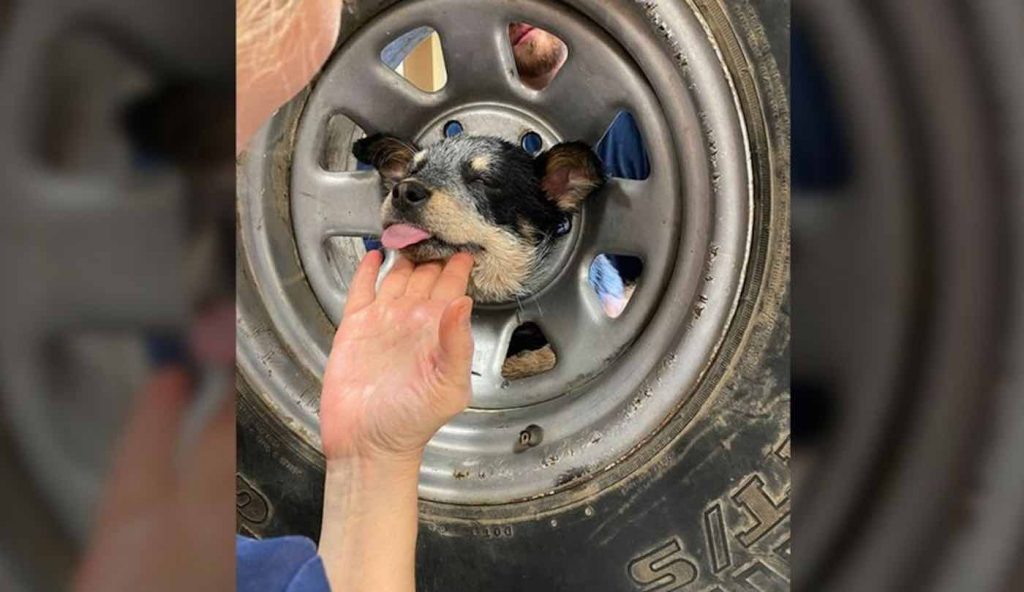
Firefighters Successfully Save Puppy From Metal Wheel Rim Using a Saw to Cut It Free

Photo by Riverside County Animal Services

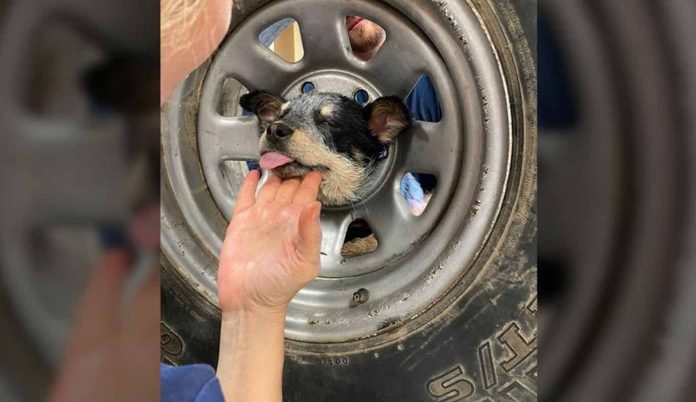
Firefighters and animal safety officers are being hailed for going above and beyond the call of duty to rescue a distraught 3-month-old Australian cattle dog.

Last week, Riverside County Animal Services responded to a call in Coachella, California about a young pup who had gotten her head stuck in the rim of a spare car tire.

At first, the rescuers attempted to slide the dog’s head out of the metal rim by lubricating her neck with oil, but her neck had already become too swollen from the wheel.

The rescuers then transported the distressed pup to the Veterinary Services Division of the Coachella Valley Animal Campus and calmed her down with a sedative.

LOOK: Firefighters Soothe ‘Very Scared’ Little Girl By Asking Her to Paint Their Nails After She Was in a Car Crash

For a long while, the firefighters took turns using a sawzall to cut a hole in the metal—until finally, they were able to pull the dog free.

“It was so worrying to me. I was trying to imagine how the heck she got put in that position and you just got to remember that puppies will be puppies. Just curiosity,” said David Hough, a Riverside County animal care technician, according to CNN. “There was probably food on the other side of it or something, she just crammed her head right through.”

Since publishing the video of the pup’s rescue to YouTube last week, it has been viewed more than 33,000 times.

(WATCH the video below)

Be Sure And Share The Pawesome Story With Your Friends On Social Media…

This Collapsible, Self-Cleaning Steel Straw Could Finally Spell the End of Disposable Plastic Alternatives

Swapping out single-use plastic straws for a reusable alternative is an easy way to reduce your environmental impact—but reusable straws are notoriously hard to clean.

That’s why innovators have developed the Penna Straw: a collapsible, self-cleaning reusable straw that could save hundreds—if not thousands—of disposable straws from ending up in a landfill every month.

The straw is comprised of four separate stainless steel segments that can magnetically snap together when it’s time for the user to enjoy a tasty beverage. When it’s time to be cleaned, the pieces can be broken down and placed inside of a convenient carrying case equipped with four separate brushes to clean the straw segments.

The carrying case is then filled with water through a small hole; all the user has to do is place their finger over the hole, give the case a few shakes, and then dump out the water through the very same hole.

LOOK: Rather Than Plastic or Bird Feathers, These Winter Coats Are Filled With Wildflowers to Help Butterfly Habitats

If that isn’t enough, the case is also equipped with a UV light system that can reportedly sterilize 99% of the remaining bacteria.

California-based tech company Elretron has been developing the straw for the last year prior to its launch on Kickstarter this week. Since the crowdfunding campaign was published, however, it has already surged past its original goal and raised more than $17,000 for manufacturing.

The first of the Penna Straws are expected to be delivered in April 2020—and the developers hope to deliver thousands more during the year to come.

(WATCH the explanatory video below)

Clean Up Negativity By Sharing The Intriguing News With Your Friends On Social Media…
Dozens of Proud Students Show Up in Court To Watch Their Teacher Become a US Citizen After 13 Years

Photo by Cornerstone Learning Academy

It has been 13 years since Annmarie Small came to America from Jamaica in hopes of achieving a better life for her and her son.

After Small emigrated to Tallahassee, Florida in 2007, she began working as an elementary school teacher at Cornerstone Learning Academy.

Not only did the school provide her with a steady job, it also introduced her to a loving community of supportive teachers and students, many of whom greeted her at the airport when her plane first landed from Jamaica.

WATCH: Boy Invites His Entire Kindergarten Class to His Adoption Hearing—and the Ceremony Was Incredibly Sweet

So when it was finally time for her to earn her US citizenship last week, she was surrounded by dozens of her current and former students cheering her on.

“I use the term ‘bag of emotions’ because that’s exactly what it was,” 42-year-old Small told WFTS about the heartwarming event. “When everything was quiet after the ceremony and I went home, I cried, and it was tears of joy.

“I’m so happy the process is over now because it’s been a long process,” she added. “And there were tears of joy because I’ve had the support of Cornerstone since day one.”

(WATCH the video below)

Be Sure And Share This Sweet Story With Your Friends On Social Media…

“Banish the word ‘struggle’ from your attitude and your vocabulary. All that we do must be done . . . in celebration.” – Hopi Elders

Quote of the Day: “Banish the word ‘struggle’ from your attitude and your vocabulary. All that we do must be done . . . in celebration.” – Hopi Elders

Photo: by Eddi van W. – CC license

With a new inspirational quote every day, atop the perfect photo—collected and archived on our Quotes page—why not bookmark GNN.org for a daily uplift?


Rather Than Slip into Depression, Man Quits Job, Sells Possessions, and Travels the World With a Ferret

SWNS
SWNS

Despite enduring a string of heartbreaking losses in the same year, this former airman has transformed his life for the better—and he did it by quitting his job, selling all of his possessions, and traveling the world with his pet ferret.

25-year-old Charlie Hammerton was determined to change his life after he was left grieving the deaths of his best friend, mother, and adopted mom all in the same year.

His mom Jan died in March 2017 aged 53 after suffering from motor neurone disease; then his best friend Will Moss passed away aged 22 just a few months later from a suspected drug overdose. At the end of the year, his adopted mum Samantha passed away from a heart attack.

LOOK: When Grandma Confesses She Has Never Seen the Ocean, Grandson Takes Her On Epic Cross-Country Trip

“It was horrible for me, but I didn’t want to get into a rut because of it all,” says Hammerton. “I did think about killing myself a couple of times because I didn’t know where to turn.

Living in Arnold, Nottinghamshire at the time, he decided to turn his back on a promising career and put almost all of his money into a globe-trotting adventure with his “best pal”: Bandit the rescue ferret.

“I was living in a nice flat, had a good job and had three cars. I had a lot of savings behind me and I was lucky enough to be very secure,” he added. “But it was all just ‘stuff’ to me and didn’t really mean anything. So I decided to get rid of the lot and set off with Bandit.”

SWNS

Hammerton then quit his job and sold almost all his possessions—including his three cars. Collectively, he managed to drum up £15,000 ($19,500) for his dream trip, £5,000 of which he spent on a campervan.

Starting out in February 2018, Hammerton and Bandit ventured through Holland, Germany, Sweden, Norway, France, Spain, and Italy.

MORE: Man Completes Ultimate Nonstop Road Trip By Visiting All 419 National Park Service Sites in America

The inseparable pair traveled for a total of 8 months to more than 25 towns and cities in 11 countries, all of which Hammerton documented on their public Facebook page.

His hilarious holiday album is full of snaps of Bandit posing in front of iconic landmarks—from the Eiffel Tower in Paris to the Colosseum in Rome.

SWNS

“Traveling was the most amazing experience of my life and it was completely liberating,” said Hammerton. “We followed the sun across the world and camped under the stars in amazing places.

“It was beautiful and I spent it with my best friend,” he added. “I have less money now but I am much wealthier as a person.”

SWNS

Hammerton rescued Bandit from an animal sanctuary in 2015—and the pair have been inseparable ever since. The little ferret even stayed with him at his military digs in Coningsby whilst Charlie was working for the Royal Air Force (RAF).

“He has seen me at my best and my worst and has always been with me,” says Hammerton. “Bandit has been with me through thick and thin.”

SWNS

In addition to their cross-continental road tripping adventures, they have also raised awareness for different charities. The pair have walked across Hadrian’s Wall in aid of the motor neurone disease charity MND, and also skateboarded 40 miles across London in aid of a drug awareness charity.

In November 2018, Hammerton released a book about his travels called “Before Our Adventures”, which is now available on Amazon.

“The book is all about how you can take anything bad and turn it into something really good,” said Hammerton. “Everyone has the right and the ability to do that. It’s easy to get stuck in a rut, but there’s no need to.

SWNS

“I went through a really rough time and developed serious depression. I felt suicidal and just didn’t know what to do with myself,” he continued. “A chain of bad things had happened to me and I had good reason to feel really miserable about my life.

“But I decided that was not what I wanted to be. I didn’t want this to define me. I channeled the negative energy and turned it into something positive.”

Charlie now works in schools across the country teaching youngsters about how to build confidence, self-esteem, and outdoor living skills such as camping and bushcraft.

SWNS

Be Sure And Share The Inspiring Story With Your Friends On Social Media…
Researchers Find Dozens of Non-Oncology Drugs That Can Also Kill Cancer Cells

Photo by Susanna Hamilton / Broad Communications

A study testing thousands of medicines in hundreds of cancer cell lines in the lab uncovers new tricks for many old drugs

Drugs for diabetes, inflammation, alcoholism—and even for treating arthritis in dogs—can also kill cancer cells in the lab, according to a study by scientists at the Broad Institute of MIT and Harvard and Dana-Farber Cancer Institute.

The researchers systematically analyzed thousands of already developed drug compounds and found nearly 50 that have previously unrecognized anti-cancer activity. The surprising findings, which also revealed novel drug mechanisms and targets, suggest a possible way to accelerate the development of new cancer drugs or repurpose existing drugs to treat cancer.

“We thought we’d be lucky if we found even a single compound with anti-cancer properties, but we were surprised to find so many,” said Todd Golub, chief scientific officer and director of the Cancer Program at the Broad, and professor of pediatrics at Harvard Medical School.

RELATED: Accidental Discovery of New T-Cell Hailed as Major Breakthrough for ‘Universal’ Cancer Therapy

The new work appears in the journal Nature Cancer. It is the largest study yet to employ the Broad’s Drug Repurposing Hub, a collection that currently comprises more than 6,000 existing drugs and compounds that are either FDA-approved or have been proven safe in clinical trials (at the time of the study, the Hub contained 4,518 drugs).

The study also marks the first time researchers screened the entire collection of mostly non-cancer drugs for their anti-cancer capabilities.

Historically, scientists have stumbled upon new uses for a few existing medicines, such as the discovery of aspirin’s cardiovascular benefits. “We created the repurposing hub to enable researchers to make these kinds of serendipitous discoveries in a more deliberate way,” said study first author Steven Corsello, an oncologist at Dana-Farber and founder of the Drug Repurposing Hub.

MORE: FDA Approves Pancreatic Cancer Drug Treatment After It Was Shown to Double Patient Lifespans

The researchers tested all the compounds in the Drug Repurposing Hub on 578 human cancer cell lines from the Broad’s Cancer Cell Line Encyclopedia (CCLE). Using a molecular barcoding method known as PRISM, which was developed in the Golub lab, the researchers tagged each cell line with a DNA barcode, allowing them to pool several cell lines together in each dish and more quickly conduct a larger experiment. The team then exposed each pool of barcoded cells to a single compound from the repurposing library, and measured the survival rate of the cancer cells.

They found nearly 50 non-cancer drugs—including those initially developed to lower cholesterol or reduce inflammation—that killed some cancer cells while leaving others alone.

Some of the compounds killed cancer cells in unexpected ways. “Most existing cancer drugs work by blocking proteins, but we’re finding that compounds can act through other mechanisms,” said Corsello. Some of the four-dozen drugs he and his colleagues identified appear to act not by inhibiting a protein but by activating a protein or stabilizing a protein-protein interaction. For example, the team found that nearly a dozen non-oncology drugs killed cancer cells that express a protein called PDE3A by stabilizing the interaction between PDE3A and another protein called SLFN12—a previously unknown mechanism for some of these drugs.

CHECK OUT: Husband-Wife Duo Has Developed ‘Gene and Cell Therapy’ Cancer Vaccine Now Being Tested on Patients

These unexpected drug mechanisms were easier to find using the study’s cell-based approach, which measures cell survival, than through traditional non-cell-based high-throughput screening methods, Corsello said.

Most of the non-oncology drugs that killed cancer cells in the study did so by interacting with a previously unrecognized molecular target. For example, the anti-inflammatory drug tepoxalin, originally developed for use in people but approved for treating osteoarthritis in dogs, killed cancer cells by hitting an unknown target in cells that overexpress the protein MDR1, which commonly drives resistance to chemotherapy drugs.

Photo by Susanna Hamilton / Broad Communications

The researchers were also able to predict whether certain drugs could kill each cell line by looking at the cell line’s genomic features, such as mutations and methylation levels, which were included in the CCLE database. This suggests that these features could one day be used as biomarkers to identify patients who will most likely benefit from certain drugs. For example, the alcohol dependence drug disulfiram (Antabuse) killed cell lines carrying mutations that cause depletion of metallothionein proteins. Compounds containing vanadium, originally developed to treat diabetes, killed cancer cells that expressed the sulfate transporter SLC26A2.

MORE: Simple Blood Test is Being Developed to Predict Breast Cancer Five Years Before Any Clinical Signs of Disease

“The genomic features gave us some initial hypotheses about how the drugs could be acting, which we can then take back to study in the lab,” said Corsello. “Our understanding of how these drugs kill cancer cells gives us a starting point for developing new therapies.”

The researchers hope to study the repurposing library compounds in more cancer cell lines and to grow the hub to include even more compounds that have been tested in humans. The team will also continue to analyze the trove of data from this study, which have been shared openly with the scientific community, to better understand what’s driving the compounds’ selective activity.

“This is a great initial dataset, but certainly there will be a great benefit to expanding this approach in the future,” said Corsello.

Reprinted from the Broad Institute

(LISTEN to the explanatory video below)

Treat Your Friends To This Exciting News By Sharing It To Social Media…

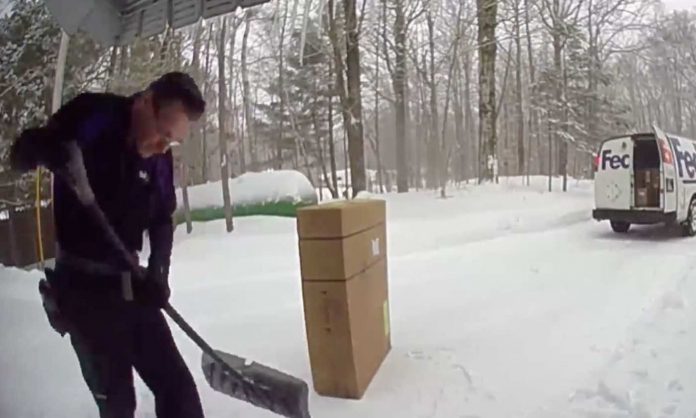
Heartwarming Video Shows FedEx Driver Secretly Shoveling Snow Off of Customer’s Front Stoop

This FedEx driver is being hailed for going above and beyond the call of duty to help out a neighbor during a routine delivery run.

Jodi LaFreniere is a kindergarten teacher who had been away from her home in Manistique, Michigan when the good deed took place last week.

Since her doorbell security camera is activated by motion, she got a notification text on her cell phone about someone approaching her home.

WATCH: Hospital Janitor Forges Lasting Friendship Between Two Boys in Isolation After Noticing a Love of LEGOS

Upon looking at the security footage, she saw a FedEx driver walking a package up to her door. When he caught sight of all the snow on her front stoop, however, he put down the package, grabbed a shovel, and began clearing away the snow.

“Although we see many acts of kindness in the Upper Peninsula, it was still surprising to see that he went the extra step,” LaFreniere told CNN. “I shared it with my coworkers immediately because I couldn’t believe it. It made my day.”

The delivery driver, Melvin J. Marlett, has reportedly been working for FedEx for 23 years. Although LaFreniere is usually never home to greet him during his deliveries, her fiancé says he has shared many delightful conversations with the driver.

RELATED: ‘Friendship Over Business’—Coffee Shop Owner Helps Competitor Stay Open During Hospice Treatment

LaFreniere later reached out to Marlett and asked for his permission to post the video in hopes that it would hearten others on social media—and her wish has now come true since her Facebook video of the incident has already been viewed more than 57,000 times.

Despite how Marlett humbly insists that he was simply doing his job, he says he is also happy his good deed is having such a positive effect on the internet.

“I would hope it’s something that anybody would have done,” Marlett told the news outlet. “If you take care of your customers, they take care of you.”

(WATCH the video below)

Be Sure And Share This Simple Story Of Kindness With Your Friends On Social Media…

Culturally Wealthy: More Americans Visited Their Library in 2019 Than the Movies—By Far

Book lovers can be heartened to hear that the dazzling special effects of Hollywood’s blockbusters are still no match for the comfort of the public library.

According to a recently published Gallup poll—the first of its kind conducted in almost two decades—Americans visited the library far more than any other cultural institution in 2019.

On average, visits to the library far exceeded any other recreational activity with US adults reporting 10.5 trips per year.

In contrast to this number, Americans only reported paying 5 annual trips to the movie theater, 5 trips to sporting events, 4 trips to musical or theatrical performances, and 2.5 trips to museums.

RELATED: Trash Man Creates Free Library Out of 20,000 Books Found in Garbage

The survey goes on to say that while these numbers are relatively similar to data collected in 2001, Americans have reported going to slightly more museums (0.7 visits), national parks (1.3), and theatrical or musical performances (1.1). However, there has been a 1.3 decrease in average movie theater visits.

Unsurprisingly, the data says that low-income adults visit public libraries slightly more than higher-income families, most likely because of how most library services are free; although survey reporters did report that women reported visiting the library nearly twice as frequently as men do, 13.4 to 7.5 visits.

LOOK: World’s Coolest Library Opens in China and It’s Breathtaking

That all being said, the survey reporters say that the poll is cause for celebration amidst a technologically-saturated era.

“Despite the proliferation of digital-based activities over the past two decades—including digital books, podcasts, streaming entertainment services and advanced gaming—libraries have endured as a place Americans visit nearly monthly on average,” remarked poll author Justin McCarthy. “Whether because they offer services like free Wi-Fi, movie rentals, or activities for children, libraries are most utilized by young adults, women, and residents of low-income households.”

Help Your Friends Read The Good News By Sharing It To Social MediaPhoto by Gallup

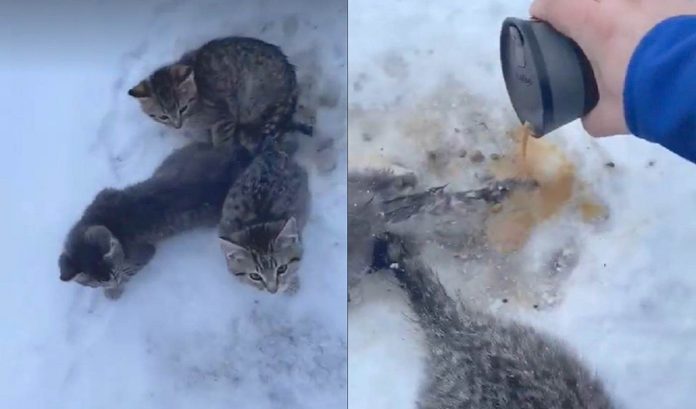
Man Uses Coffee to Rescue Three Kittens Whose Tails Were Frozen to the Ground

A Canadian oil worker is being hailed for using his leftover coffee to rescue three kittens he found trapped to a sheet of ice last week.

Kendall Diwisch had been performing some routine checks on the oil wells in Dayton Valley, Edmonton when he saw what looked like a piece of trash left on a sheet of snow.

Upon closer inspection, however, he was shocked to discover that it was a trio of terrified kittens whose tails were frozen to the ground.

WATCH: Bald Eagle Weighed Down by Large Ball of Ice is Freed By Locals Who Jumped into Frozen Lake

Diwisch quickly fetched his cup of coffee from his pickup truck and used the hot liquid to sufficiently melt the ice around the kittens’ tails. After the coffee had done its job, Diwisch was able to pull the felines free and take them home.

Diwisch then posted photos and video of his ingenious rescue mission to Facebook in hopes of finding a forever family for the kittens.

“Took them home, fed and watered them; they look to be healthy and friendly,” he wrote. “If any friends are looking to have a new addition in their family, let us know as they will need homes. All three look to be males, and we also gave them dewormer.”


Since publishing his post to social media, Diwisch’s rescue video has been viewed more than half a million times. Not only that, he found a family to adopt all three of the cats.

“All three little rascals went to their new home today where they get to be together instead of separating them,” wrote Diwisch. “All three are eating and drinking and very energetic. Thanks for everyone’s consideration and offering to take them; very appreciated.”

(WATCH the news coverage below)

Be Sure And Share This Pawesome Rescue Story With Your Friends On Social Media…