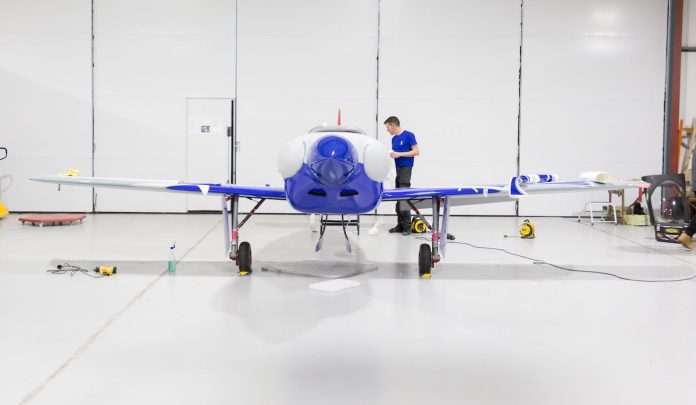
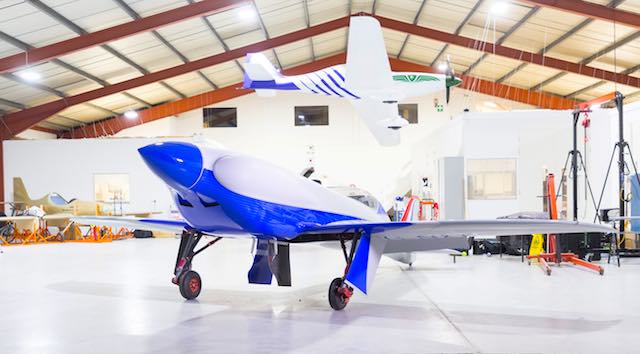
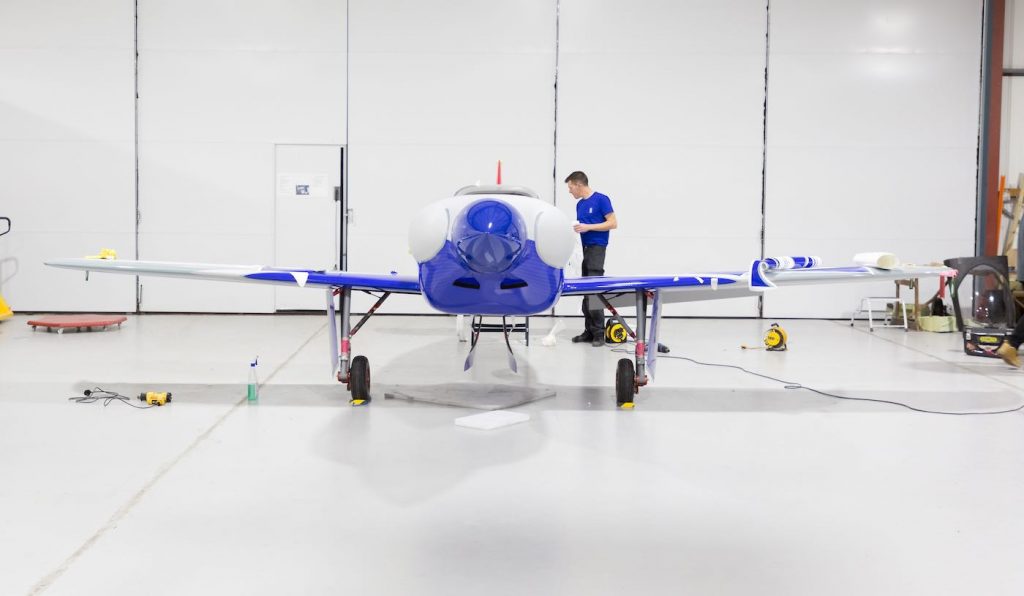
This week, Rolls-Royce unveiled its first all-electric plane—and they are aiming for it to be the fastest sustainable aircraft in the world.
After the iconic automotive company presented the machine at Gloucestershire Airport in Staverton, England, they will now begin work on integrating the groundbreaking electrical propulsion system to enable the zero-emissions plane to make a run for the record books.
The plane will be targeting a speed of more than 300 miles per hour (480 kilometers per hour) in order to break the record when it deploys in the spring.
The aircraft, which is part of an initiative called Accelerating the Electrification of Flight (ACCEL), is a key part of the company’s new strategy to champion electrification.
The ACCEL project plane will have the most power-dense battery pack ever assembled for an aircraft, providing enough energy to fuel 250 homes or fly 200 miles on a single charge. Its 6,000 cells are packaged to minimize weight and maximize thermal protection.
Furthermore, an advanced cooling system ensures optimum performance by directly cooling the battery cells during the high-power record runs.
SWNS
Rolls-Royce Electrical Director Rob Watson said: “Building the world’s fastest all-electric aircraft is nothing less than a revolutionary step change in aviation.
“This is not only an important step towards the world-record attempt but will also help to develop Rolls-Royce’s capabilities,” he added. “[It will] ensure that we are at the forefront of developing technology that can play a fundamental role in enabling the transition to a low carbon global economy.”
SWNS
Power Up With Positivity By Sharing The Exciting News With Your Friends On Social Media…
Desertification, also known as desert-creep or desert-spread, is a process that has caused much concern over the last decade—and it’s a major problem for the ancient land of Egypt, where 96% of the country’s landmass is desert.
So why is it that—if you drove a car 10 miles west of the Suez Canal—you would see bountiful forests of eucalyptus, teak, and mahogany trees limned against the orange sand and blue sky of the Sahara?
Serapium Forest is the most prosperous of Egypt’s 36 tracts of land that make up an ambitious program to combat desertification by creating sustainably managed commercial forests fed entirely by wastewater.
The 500-mile forest is only a short distance from the populous Egyptian city of Ismailia, inhabited by 400,000 people who produce millions of tons of sewage and sewage water every year.
Routed a dozen miles to the Serapium site, the sewage water arrives in massive microorganism-populated underground vats where oxygen is fed in to accelerate the bacterial purification process. A system of pipes then deposits the wastewater throughout the forest.
Since human wastewater is still rich in nitrogen and phosphorus even after being treated, it is effectively a MiracleGro formula provided free of charge by Ismailia’s citizens. (Watch the encouraging video below.)
An Ambitious Effort
Recent efforts by Egyptian scientists have produced plenty of research suggesting that the wastewater potential for afforestation in the country could turn 1.6 million acres of desert into commercial forests that are arable and economically viable.
The federal effort, called the National Program for the Safe Use of Treated Sewage Water for Afforestation is going a long way towards achieving the country’s commendable ambitions voiced in the 1992 UN Rio conference on climate change—because so many trees can soak up hundreds of tons of CO2.
The research was supported by Forest Finance, a German forest investment company that has already established near-natural forests in Panama and Vietnam to aid those countries in economic development, CO2 absorption, and wildlife conservation.
Forest Finance wants to increase the number of species grown in Serapium by including a plantation on the site. That way, the biodiversity of the commercial forest would be able to support a greater array of life and species, and hopefully increase the profitability as well.
Green Walls
Although desertification is sometimes thought of as the swallowing of lands adjacent to deserts, it is actually a process whereby land that was once fertile or semi-arable becomes desert as a result of things like unsustainable agricultural practices, or long-lasting drought.
Africa’s Great Green Wall project, a remarkable effort across more than 10 countries to build a giant patchwork wedge of vegetation to combat desertification in Africa’s Sahel region—the band of semi-arid yet arable land south of the great Sahara—swaps the word desertification for land degradation.
Africa’s Great Green Wall is a success that is also currently being matched by the Chinese, whose “Green Great Wall,” is made in a similar way to Egypt’s.
The African green wall has produced some staggeringly good figures along their stated goals of jobs created, carbon sequestered, land reclaimed, and food produced. It has established best practices for the combating of land degradation by ensuring that the “wall” is a mosaic of different families of plants and land use strategies, providing greater robustness and flexibility in the face of drought or fire.
Although the Serapium Forest suffers from the precarious circumstances derived from lack of funding and political stability, it’s still growing—a 500-acre green wall to join the others in the world in fending off the sands of the world’s deserts from spreading.
(WATCH the 2016 news coverage on Egypt’s miracle forest below)
Plant Some Positivity By Sharing The Good News With Your Friends On Social Media…
Quote of the Day: “Don’t aspire to make a living, aspire to make a difference.” – Denzel Washington (turns 65 today)
Photo: by Mount Rainier National Park, CC license – cropped
With a new inspirational quote every day, atop the perfect photo—collected and archived on our Quotes page—why not bookmark GNN.org for a daily uplift?
When the owner of a California donut shop was criticized for regularly welcoming a homeless man into his restaurant, he responded with compassion—and he is now being repaid with a flood of support towards him and his homeless customer.
LISTEN to the inspiring story told on the radio by our GNN founder (in the Good News Guru podcast below) or READ the full story after that…
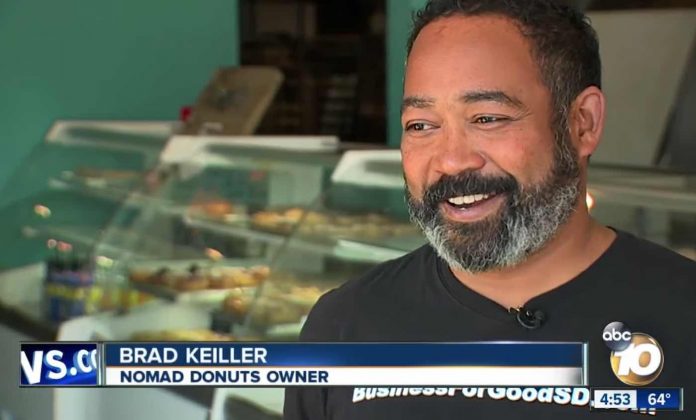
Since Brad Keiller opened Nomad Donuts in San Diego five years ago, the café has become a popular little hotspot for locals, particularly 58-year-old Ray Taylor.
Taylor has been living on the streets since a series of unfortunate financial setbacks left him broke and without health insurance in 2011.
“It was a financial decision to be homeless, not a drug addiction or a moral breakdown,” Taylor told the San Diego Union-Tribune.
Despite enduring the difficulties of being homeless, Taylor doesn’t drink, do drugs, or panhandle for money. Thanks to his friendship with Keiller, however, he does spend many of his afternoons sitting outside of Nomad Donuts, enjoying the occasional conversation with the customers.
Taylor’s presence outside of the store is what prompted one of Keiller’s customers to leave a 1-star Yelp review of the shop back in November. The review, which has since been removed, said that Taylor’s regular appearances outside of the shop “really made them feel great about spending $5 on a jelly donut.”
Keiller spent several days contemplating how to respond to the review before he eventually opted to post a patient public response illustrating how Taylor—and others suffering from difficult circumstances—would always be welcome at the store.
“I understand how you feel, it’s not easy to look at,” wrote the 49-year-old restauranteur. “I know I probably lose some business, possibly yours, too, because of my choice not to chase him away, but I won’t. He’s not looking for handouts and he tries not to bother anyone. If you stop and talk to him, maybe you’ll come to like him, too.”
Since publishing the response, Keiller’s donut shop has become flooded with an influx of supportive customers. Additionally, Keiller started a GoFundMe campaign to help pay for some of Taylor’s daily necessities—and to Taylor’s surprise, it has raised almost $6,000 in donations from around the world.
“Thank you all for contributing to Ray’s GoFundMe!” wrote Keiller in a later crowdfunding update. “We’ve exceeded [our goal of $1,000], which is just overwhelming for Ray! He’s incredibly touched by all the love and good will.
“Know that you’ve made Ray’s day to day a lot less stressful and more comfortable. He thanks me and all of you daily!
“Yesterday, we withdrew $200 from the fund, which Ray used to buy a VISA gift card from the local Target. He treated himself to a hot meal from the Barons Market last night—and he now has a bus pass thanks to you!!”
(WATCH the news coverage below) – Feature photo by KGTV News
Do-not Forget To Share This Sweet Story Of Kindness With Your Friends On Social Media…
Lithium-ion batteries are notorious for developing internal electrical shorts that can ignite a battery’s liquid electrolytes, leading to explosions and fires.
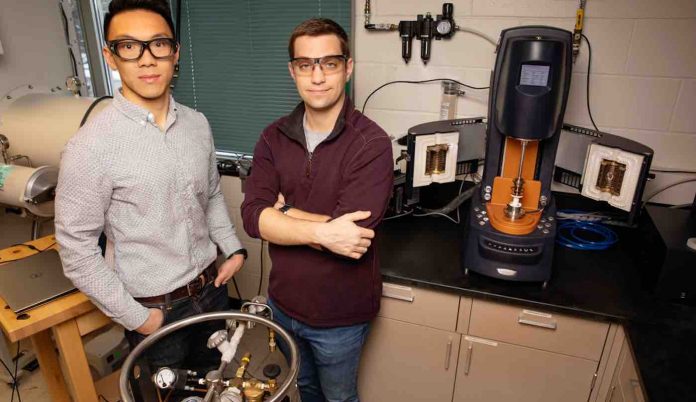
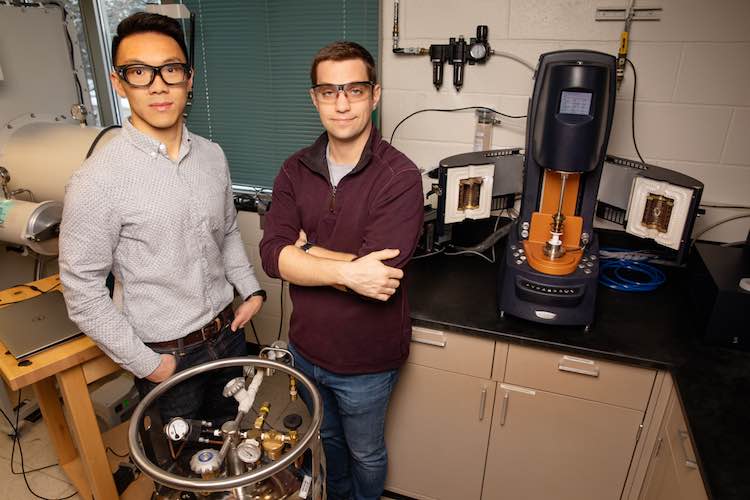
Engineers at the University of Illinois, however, have developed a solid polymer-based electrolyte that can self-heal after damage—and the material can also be recycled without the use of harsh chemicals or high temperatures.
The new study, which could help manufacturers produce recyclable, self-healing commercial batteries, is published in the Journal of the American Chemical Society.
As lithium-ion batteries go through multiple cycles of charge and discharge, they develop tiny, branchlike structures of solid lithium called dendrites, the researchers said.
These structures reduce battery life, cause hotspots and electrical shorts, and sometimes grow large enough to puncture the internal parts of the battery, causing explosive chemical reactions between the electrodes and electrolyte liquids.
There has been a push by chemists and engineers to replace the liquid electrolytes in lithium-ion batteries with solid materials such as ceramics or polymers, the researchers said. However, many of these materials are rigid and brittle resulting in poor electrolyte-to-electrode contact and reduced conductivity.
“Solid ion-conducting polymers are one option for developing non-liquid electrolytes,” said Brian Jing, a materials science and engineering graduate student and study co-author. “But the high-temperature conditions inside a battery can melt most polymers, again resulting in dendrites and failure.”
Past studies have produced solid electrolytes by using a network of polymer strands that are cross-linked to form a rubbery lithium conductor. This method delays the growth of dendrites; however, these materials are complex and cannot be recovered or healed after damage, Jing said.
To address this issue, the researchers developed a network polymer electrolyte in which the cross-link point can undergo exchange reactions and swap polymer strands. In contrast to linear polymers, these networks actually get stiffer upon heating, which can potentially minimize the dendrite problem, the researchers said. Additionally, they can be easily broken down and resolidified into a networked structure after damage, making them recyclable, and they restore conductivity after being damaged because they are self-healing.
Photo by L. Brian Stauffer / University of Illinois
“This new network polymer also shows the remarkable property that both conductivity and stiffness increase with heating, which is not seen in conventional polymer electrolytes,” Jing said.
“Most polymers require strong acids and high temperatures to break down,” said materials science and engineering professor and lead author Christopher Evans. “Our material dissolves in water at room temperature, making it a very energy-efficient and environmentally friendly process.”
Although the researchers acknowledge that more work is required before the material could be used in batteries that are comparable to what is in use today, the team probed the conductivity of the new material and found its potential as an effective battery electrolyte to be particularly promising.
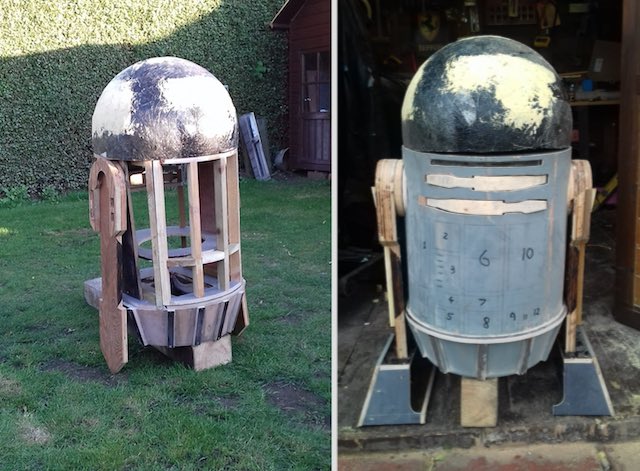
This Star Wars mega-fan has celebrated the release of the latest sci-fi blockbuster by unveiling an ultra-realistic working replica of the iconic droid R2-D2.
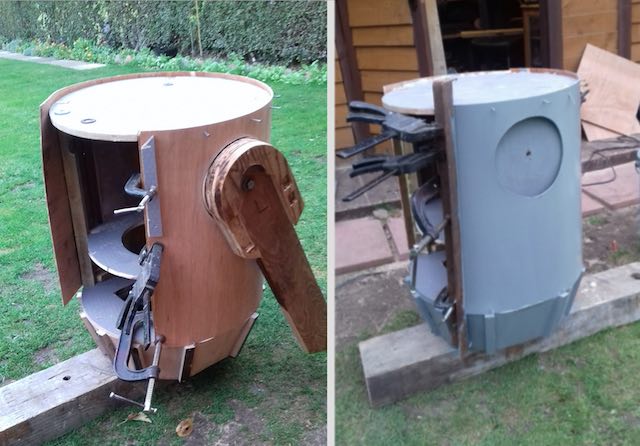
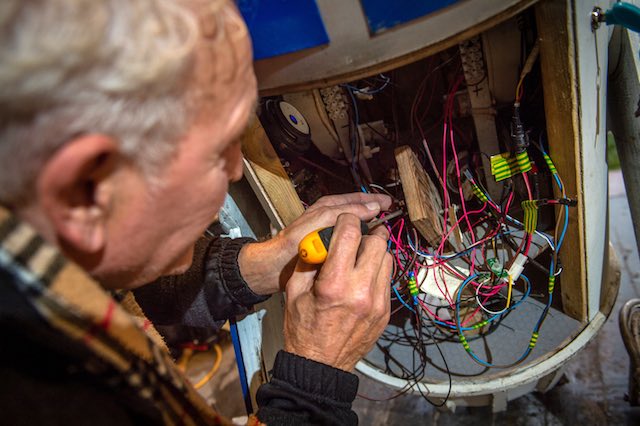
Over the course of the last 12 months, 66-year-old Ricky Butler has spent countless hours toiling away in his garden shed to create the remarkable 3.5-foot-tall imitation.
The droid, which is made from plywood, fiberglass, and aluminum, is fitted with a whopping 500 feet of wiring and blu-tooth speakers so it can light up, beep, and roll around just like the real thing.
“It’s a very long and often a very difficult process to build something like this, but I love the challenge because it keeps my mind active,” says Butler.
SWNS
“When I look at the finished thing now, I’m absolutely delighted—it’s come out brilliantly,” he added. “Sometimes I can’t believe that I actually did it.”
Butler, who also built an X-wing starfighter measuring in at 21 feet long, has been a fan of the Star Wars franchise ever since watching the first installment in 1977. However, the granddad-of-seven and semi-retired actor only began building Star Wars replicas as a hobby a couple of years ago when he took a step back from work.
“I’ve been a big fan of the series ever since queuing up to watch A New Hope in the cinema more than 40 years ago,” Butler said. “I’ve always liked making things and working with electronics so I thought, ‘why not combine that with Star Wars?’”
SWNS
Butler says he doesn’t know how many hours he has dedicated to building the droid—only that he would go into his back garden shed in Doncaster, England “at any opportunity” to work on it.
“At my age it’s important to keep your mind active—and doing this is a really good way to do that for me,” says Butler. “I have to think about what I’m doing and work out how to fix things.
“I rely on lots of knowledge I have picked up over the years, but every now and then there is something I get stuck with. When that happens I go on YouTube and watch a video to help me do it.”
SWNS
Over the years, Butler has worked as a disc jockey and an actor, including a stint as the body double for Sam Neil, who is famous for his role as Dr. Alan Grant in Jurassic Park.
Then in 2018, he built his “battlescorched” X-wing starfighter fitted with half-a-mile of cables, flashing lights, joy sticks, and the moving wings.
SWNS
Immediately after unveiling that particular creation, he began work on R2-D2 with the help of his 16-year-old son Prince, who wants to be a civil engineer.
His next creation will be a lifelike Dalek replica from Doctor Who, which he plans on starting in the new year so he can have it ready by Christmas 2020.
SWNS
You Don’t Need To Use The Force To Share This Awesome Story With Your Friends On Social Media…
For many people, the New Year is a time to adopt new habits as a renewed commitment to personal health; in addition to aspiring fitness buffs packing themselves into the gym, grocery stores are filled with shoppers eager to try out new diets.
However, do these diets have the scientific evidence to support their beneficial health claims? Johns Hopkins Medicine neuroscientist Dr. Mark Mattson concludes that intermittent fasting does.
Mattson, who has studied the health impact of intermittent fasting for 25 years, and adopted it himself about 20 years ago, writes that “intermittent fasting could be part of a healthy lifestyle.” Furthermore, he says his new article published in this week’s issue of The New England Journal of Medicine is intended to help clarify the science and clinical applications of intermittent fasting in ways that may help physicians guide patients who want to try it.
Intermittent fasting diets, he says, fall generally into two categories: daily time-restricted feeding, which narrows eating times to 6–8 hours per day, and so-called 5:2 intermittent fasting, in which people limit themselves to one moderate-sized meal two days each week.
An array of animal and some human studies have shown that alternating between times of fasting and eating supports cellular health, probably by triggering an age-old adaptation to periods of food scarcity called metabolic switching. Such a switch occurs when cells use up their stores of rapidly accessible, sugar-based fuel, and begin converting fat into energy in a slower metabolic process.
Mattson says studies have shown that this switch improves blood sugar regulation, increases resistance to stress and suppresses inflammation for various periods of time. Because most Americans eat three meals plus snacks each day, they do not experience the switch, or the suggested benefits.
Photo by Johns Hopkins Medicine
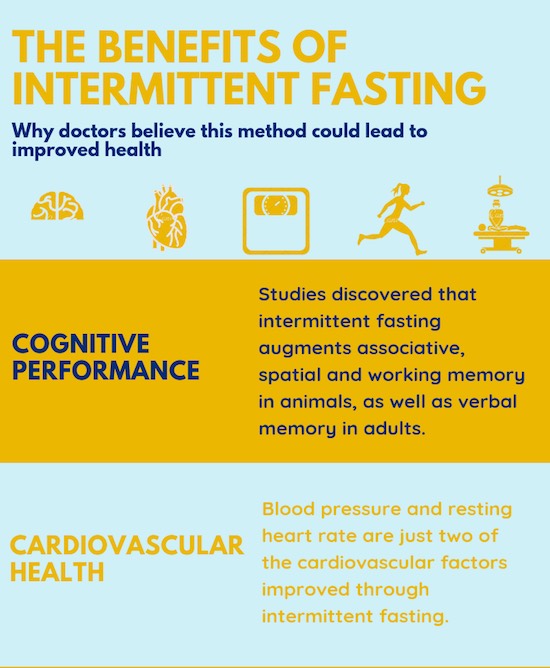
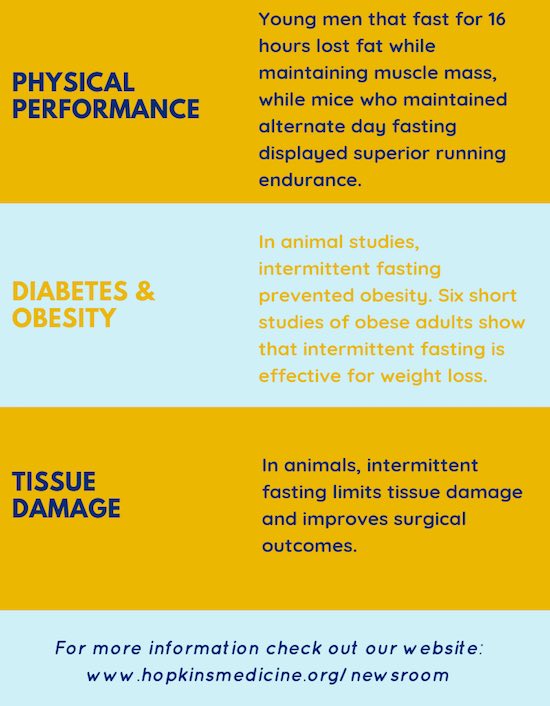
In the article, Mattson notes that four studies in both animals and people found intermittent fasting also decreased blood pressure, blood lipid levels and resting heart rates.
Evidence is also mounting that intermittent fasting can modify risk factors associated with obesity and diabetes, says Mattson. Two studies at the University Hospital of South Manchester NHS Foundation Trust of 100 overweight women showed that those on the 5:2 intermittent fasting diet lost the same amount of weight as women who restricted calories, but did better on measures of insulin sensitivity and reduced belly fat than those in the calorie-reduction group.
More recently, Mattson says, preliminary studies suggest that intermittent fasting could benefit brain health too. A multicenter clinical trial at the University of Toronto in April found that 220 healthy, non-obese adults who maintained a calorie restricted diet for two years showed signs of improved memory in a battery of cognitive tests.
While far more research needs to be done to prove any effects of intermittent fasting on learning and memory, Mattson says if that proof is found, the fasting—or a pharmaceutical equivalent that mimics it—may offer interventions that can stave off neurodegeneration and dementia.
“We are at a transition point where we could soon consider adding information about intermittent fasting to medical school curricula alongside standard advice about healthy diets and exercise,” he says.
Mattson acknowledges that researchers do “not fully understand the specific mechanisms of metabolic switching and that “some people are unable or unwilling to adhere” to the fasting regimens. But he argues that with guidance and some patience, most people can incorporate them into their lives.
Photo by Johns Hopkins Medicine
It takes some time for the body to adjust to intermittent fasting, and to get beyond initial hunger pangs and irritability that accompany it. “Patients should be advised that feeling hungry and irritable is common initially and usually passes after two weeks to a month as the body and brain become accustomed to the new habit,” Mattson says.
To manage this hurdle, Mattson suggests that physicians advise patients to gradually increase the duration and frequency of the fasting periods over the course of several months, instead of “going cold turkey.” As with all lifestyle changes, says Mattson, it’s important for physicians to know the science so they can communicate potential benefits, harms and challenges, and offer support.
In a heartening example of interfaith compassion, a New York church and mosque joined forces to feed low-income families and offer free health screenings for the holidays.
On Christmas Day, the Westbury United Methodist Church partnered with the Islamic Center of Long Island in order to provide a warm meal—and an even warmer welcome—to financially struggling families.
Although the church and mosque have been helping to facilitate these yuletide feasts for the last 5 years, this is the first event during which they have offered health consultations as well.
“We can give them the additional service of getting medically checked out since we have so many physicians in our community,” Islamic Center volunteer Mukheet Ahmed told WLNY.
The two religious establishments hope that their collaborative charity work will help inspire others to look past their differences during the year ahead.
“We don’t see religion as a border, we see it as something that’s there to help,” another volunteer told reporters. “I want to create a bond between all faiths. I think when it comes down to it, we are all human.”
(WATCH the news coverage below) – Photo by WLNY
Be Sure And Share This Sweet Story Of Interfaith Kindness With Your Friends On Social Media…
With a new inspirational quote every day, atop the perfect photo—collected and archived on our Quotes page—why not bookmark GNN.org for a daily uplift?
25-30 million Christmas trees are sold every year in North America, and many of them get tossed in the landfill when there is a myriad of great recycling ideas for fir trees that can have an important impact on local ecosystems and neighborhoods.
The month leading up to Christmas can be so busy as to make you dizzy, but the few days after the most wonderful day of the year can be just as hectic. There are leftovers to eat, boxes to deal with, presents to sort, and a great big chunk of foliage that is taking up space in your living room.
Last January down in Virginia Beach, locals began bringing their Christmas trees to Chicho’s, a local restaurant looking to utilize them as a way to protect their beachfront town from storm surges.
Volunteers drove around Virginia Beach neighborhoods picking up trees and wreaths that were placed along the curbs, and depositing them in the parking lot behind the restaurant. The trees act as perfect “sand fences” capturing wind-blown sand grains in their needles and branches and preventing the erosion of sand off the beaches.
It’s a simple and effective way of building the dunes back up after storms like Hurricane Florence, when high winds battered the beaches of Croatan and Outer Banks.
This season, Matt Potter, the owner of Chicho’s expects to collect double the amount of trees he managed last year when 500 were gathered up by community volunteers and brought to the beaches.
Chicho’s second annual tree drive runs from Dec. 26 to Jan. 16. Trees can be dropped off at the Oceanfront Chicho’s, at 2820 Pacific Ave. Anyone who drops off a tree can also get a large cheese pizza for $7.99. If you need your tree picked up, email [email protected].
Other ways of recycling trees
If you don’t live near Virginia Beach, there are plenty of other ways you can recycle your Christmas tree that can benefit the environment.
If you or a friend has a wood stove, a couple months of seasoning will turn your tree into a decent source of firewood. Pine wood burns fast, ignites quickly, and creates an intense heat as well as a lovely smell.
If you live near a pond or a lake, you can canoe out into the middle of the water and chuck the tree into the murky depths—trees provide great underwater habitat for fish.
Go on the internet and see if you have a landfill that creates community mulch. If you take your tree there it will be chipped up and turned into mulch for people’s gardens.
Next year, buy a living tree, if you have room in your yard, so you can replant it after Christmas and have a supply of Christmas trees in future years.
You also could try and find a place where you can leave your tree, and cover it in bird-friendly treats. It will encourage the birds to build a nest in the shelter of the boughs. Find a place lacking in tree cover and the birds will appreciate the chance to have a home.
If you’ve come up with a clever way to recycle your tree, tell us about it in the comments below!
Plant Some Positivity By Sharing These Ideas With Friends On Social Media — File photo by Dineshraj Goomany, CC
Nobody likes waiting in traffic—but as any dedicated pet lover knows, everything can be made better by dogs.
26-year-old Celina Romera had been waiting for traffic to move at an intersection in Tampa, Florida when she spotted the driver ahead of her getting out of his car.
Mountaineers and winter sports enthusiasts know the dangers of frostbite—the tissue damage that can occur when extremities, such as the nose, ears, fingers and toes, are exposed to very cold temperatures. However, it can be difficult to get treated quickly in remote, snowbound areas.
Now, researchers reporting in ACS Biomaterials Science & Engineering have developed a convenient gel that could be sprayed onto frostbite injuries when they occur, helping wounds heal.
Frostbite causes fluids in the skin and underlying tissues to freeze and crystallize, resulting in inflammation, decreased blood flow and cell death. Extremities are the most affected areas because they are farther away from the body’s core and already have reduced blood flow.
If frostbite is not treated soon after the injury, it could lead to gangrene and amputation of the affected parts. Conventional treatments include immersing the body part in warm water, applying topical antibiotic creams or administering vasodilators and anti-inflammatory drugs, but many of these are unavailable in isolated snowy areas, like mountaintops. Others, such as topical medications, could end up freezing themselves.
Rahul Verma and colleagues at the Institute of Nano Science and Technology, on the other hand, wanted to develop a cold-stable spray gel that could be administered on-site for the immediate treatment of frostbite injuries—and their new study says they succeeded.
To develop their spray, the researchers packaged heparin, an anticoagulant that improves blood flow by reducing clotting and aiding in blood vessel repair, into liposomes. These lipid carriers helped deliver heparin deep inside the skin.
They embedded the heparin-loaded liposomes in a sprayable hydrogel that also contained ibuprofen (a painkiller and anti-inflammatory drug) and propylene glycol, which helped keep the spray from freezing at very low temperatures.
When the researchers tested the spray gel on animals with frostbite, they found that the treatment completely healed the injuries within 14 days, whereas untreated injuries were only about 40% healed, and wounds treated with an antibiotic cream were about 80% healed. The spray reduced levels of inflammatory cytokines at the wound site and in the blood circulation, which likely accelerated healing, the researchers say.
A new study in animal models suggests that caffeine may offset some of the negative effects of a diet that’s high in fat or sugars.
Rats that consumed the caffeine extracted from mate tea gained 16% less weight and accumulated 22% less body fat than rats that consumed decaffeinated mate tea, scientists at the University of Illinois found in a new study.
The effects were similar with synthetic caffeine and that extracted from coffee.
Mate tea is an herbal beverage rich in phytochemicals, flavonoids and amino acids that’s consumed as a stimulant by people in southeastern Latin American countries. The amount of caffeine per serving in mate tea ranges from 65-130 milligrams, compared with 30-300 milligrams of caffeine in a cup of brewed coffee, according to the study.
For four weeks, the rats in the study ate a diet that contained 40% fat, 45% carbohydrate and 15% protein. They also ingested one of the forms of caffeine in an amount equivalent to that of a human who drinks four cups of coffee daily.
At the end of the four-week period, the percentage of lean body mass in the various groups of rats differed significantly. The rats that ingested caffeine from mate tea, coffee or synthetic sources accumulated less body fat than rats in the other groups.
The study, published recently in the Journal of Functional Foods, adds to a growing body of research that suggests mate tea may help fight obesity in addition to providing other beneficial health effects associated with the phenolic compounds, vitamins and flavonoids it contains.
“Considering the findings, mate tea and caffeine can be considered anti-obesity agents,” said Elvira Gonzalez de Mejia, a co-author of the study and director of the division of nutritional sciences at the U. of I. “The results of this research could be scaled to humans to understand the roles of mate tea and caffeine as potential strategies to prevent overweight and obesity, as well as the subsequent metabolic disorders associated with these conditions.”
In the rats, the accumulation of lipids in the adipocytes was significantly associated with greater body weight gain and increased body fat, according to the study.
To determine the mechanism of action, the scientists performed cell culture studies in which they exposed adipose cells from mice to synthetic caffeine or the coffee or mate caffeine extracts. They found that regardless of its source, caffeine decreased the accumulation of lipids in adipose cells by 20% to 41%.
The scientists also tracked the expression of several genes associated with obesity and lipid metabolism. These included the fatty acid synthase gene (Fasn), an enzyme compound involved in the synthesis of fatty acids from glucose; and the lipoprotein lipase gene (Lpl), which codes for an enzyme that breaks down triglycerides.
All of the caffeine treatments, regardless of origin, significantly down-regulated the expression of both Fasn and Lpl. In the cell cultures, Fasn expression diminished by 31% to 39%, while Lpl expression decreased by 51% to 69% among cells treated with synthetic caffeine or the caffeine from mate tea or coffee, they found.
In the rats that consumed the mate tea caffeine, expression of Fasn decreased by 39% in their fat tissue and by 37% in their livers, the researchers found.
The decreased expression of Fasn and two other genes in the liver evoked lower production of low-density lipoprotein cholesterol and triglycerides in the liver as well, according to the study.
“The consumption of caffeine from mate or from other sources alleviated the negative impact of a high-fat, high-sucrose diet on body composition due to the modulation of certain lipogenic enzymes in both adipose tissue and the liver,” de Mejia said. “The decreased expression of Fasn and Lpl brought about lower synthesis and accumulation of triglycerides in the adipose tissue.”
This Oregon man may have just won the award for “Grandfather of the Year” after he surprised his grandkids with a creative Christmas gift on wheels.
Doug Hayes recently decided to surprise his 10 grandkids by getting them their own personal school bus for Christmas.
Since the youngsters go to a relatively small Catholic school in Gladstone, Oregon, there have never had access to a bus system that could take them to class.
Now, Hayes plans on using the “Grandfather Express” to bring his grandchildren to school every day.
Needless to say, the kids were pretty excited about the surprise.
“I was really stunned. I never expected him to buy a bus,” Hayes’ grandson Christian Hayes told WZDX reporters. “I think my friends are all gonna be stunned.”
- Please observe the license on this photo before use - Visit my other sites, for more photography. My squares at InstagramMy page at FacebookMy cool websiteContact me here. Copenhagen based photographer Thomas Rousing, captures the beauty of everyday life in the city. He seeks to explore the interestingness of making images filled with endless details and beautiful colors.
Quote of the Day: “The bright sun, that brings back, not light alone, but new life, and hope, and freshness to man—burst upon the crowded city in clear and radiant glory.” – Charles Dickens, Oliver Twist
Photo: by Thomas Rousing, CC license – cropped
With a new inspirational quote every day, atop the perfect photo—collected and archived on our Quotes page—why not bookmark GNN.org for a daily uplift?
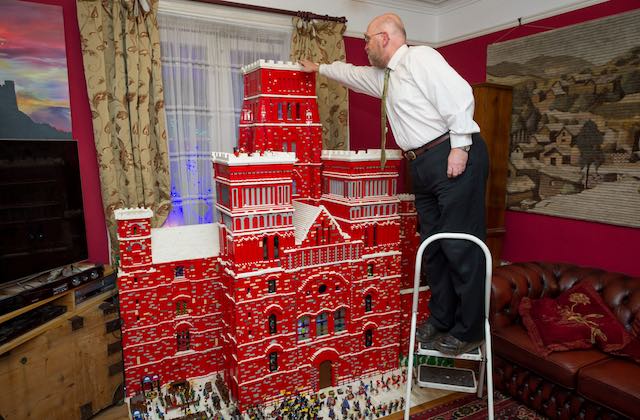
This Lego-loving couple has spent the last six weeks creating this stunning Alpine ski scene out of 400,000 bricks—just in time for Christmas.
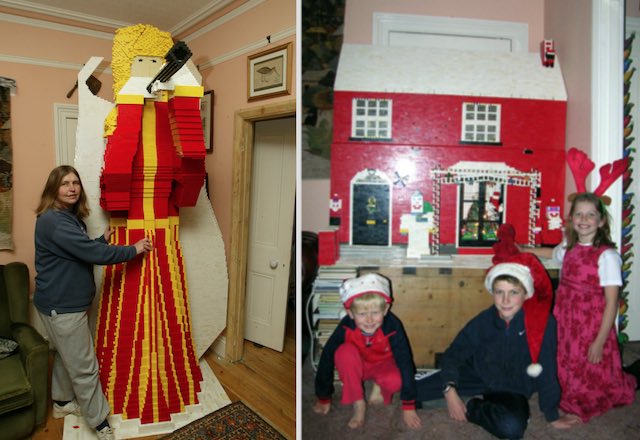
Every year, 61-year-old Mike Addis and his 56-year-old wife Catherine Weightman carefully construct a Christmas-themed Lego creation to celebrate the holiday season.
Since this year was the 25th anniversary of their first ever yuletide sculpture, they decided to take on their biggest project yet: an 8-foot-tall by 8-foot-wide snow-covered Alpine ski resort complete with working lifts, trains, and lights.
The massive Lego creation currently takes up half the living room of their English home in Huntingdon, Cambridgeshire.
SWNS
“It’s definitely the biggest,” said Mr. Addis, a retired school teacher. “It’s a mixture of a Swiss Mountain resort, a German Christmas market, and Father Christmas’s workshop.”
The incredible structure includes a medieval town, various holiday chalets, Santa’s house and workshop, and a working train that delivers right to Santa’s workshop. It also includes elves, a reindeer and sleigh, and lots of working street lights.
“Each time you look at it you notice something new,” said Addis. “My favorite bit I think is the church—it worked really well. The town center is also a firm favorite.
SWNS
“It’s hard to say exactly how many hours a day we’ve spent on it because some days I’ll spend eight or ten hours, while other days I won’t touch it at all.”
Previous festive Lego projects have included a life-size polar bear that was 8 feet (2.5 meters) tall, the Durham Cathedral, a ginger-bread house, choir boys, Father Christmas, and even their own house.
“The models are enjoyable but also take a lot of patience and can be quite frustrating sometimes,” said Addis.
Mike Addis putting the final bicks on his Lego Durham Cathedral in 2014. SWNS.
“On one occasion during this build, I tripped and smashed one of the supports so we had to start that all over again. But the beauty of Lego is that it it can be rebuilt.”
Speaking of how they create their masterpieces, Addis revealed that they never use any instructions.
“We always free-build, we never have any instructions. We like to figure it out ourselves,” said Addis. “Normally we would build from the bottom up, but this time we had to do it the other way round and start building from the back forwards.
“Even the structure behind, which is hidden, was free-built.”
SWNS
Every year, the couple begins their construction on the retired man’s birthday in the autumn. “On October 13th, we have a birthday party and people come round to help us start it off,” said Addis. “We always start constructing our projects on my birthday, and we aim to finish it by December 1st.
Unsure of how many Legos exactly were used, Addis estimates the number is around 400,000 from their basement collection of bricks.
“We’ve collected Legos for over 50 years, and some are from my wife’s collection too. Being a teacher, people also like to gift us some Legos too, so we’ve amassed quite a large collection.
SWNS
“We have a cellar, so we store them all down there and organize them by color and size.”
When asked if the couple have already decided on next year’s project idea, Addis said they had a special procedure for the decision-making process.
“The best time for us to make a decision is when we’re coming back from holiday because the journey is often long and boring and so it’s a good time for us hammer out ideas.”
SWNS
While the couple kick-start each construction with a celebration, they say it’s only right they should begin the dismantling process with a party as well.
“We’ll have a break-down party where we invite our friends over to help us and we try to do that as close to the 6th of January as possible,” said Addis. “I’d say it takes us about two to three weeks to dismantle each project.”
The couple will also be hosting an open house event for family and friends on December 21st so people can marvel at their amazing talent.
SWNS
Deck The Halls Of Social Media By Sharing This Fun Story With Your Friends…
Quote of the Day: “It is in giving that we receive.” – Francis of Assisi (Merry Christmas from GNN!)
Photo: by John Stratford, CC license – cropped
With a new inspirational quote every day, atop the perfect photo—collected and archived on our Quotes page—why not bookmark GNN.org for a daily uplift?
This Welsh dog owner may have just captured the best group Christmas photo of all time.
Liam Beach is an animal management graduate who recently coaxed all 17 of his pet Dachshunds into holiday jumpers so he could pose them on his staircase and take a family picture of the pack.
Although Beach said the elaborate yuletide photo required a full bag of treats and almost an hour of patience, he was eventually able to photograph Buster, Daisy, Ziggy, Wallie, Zac, Bonnie, Saffie, Duke, Diamond, Ruby, Kizzy, Sammy, Kansy, Kiki, Lottie, Benji, and Dudley all dressed up in their holiday best.
This is not the first time that the 20-year-old from Rhondda, Wales, has managed to capture a pic of the pups on the stairs, but his previous effort only required about 10 minutes of orchestration; this Christmas photo demanded a lot more work because of the doggie sweaters.
“It took about 45 minutes to get the picture because when the dogs were dressed in their outfits, they thought it was time to go walking and [they] all went crazy running around the house,” Beach told reporters. “So, I had to calm them down before putting them on the stairs.”
The resulting picture, however, is cute enough to deck the halls of any social media feed.
If you want to check out more cute pictures of Beach and his faithful flock of wiener dogs, you can visit his Instagram page.
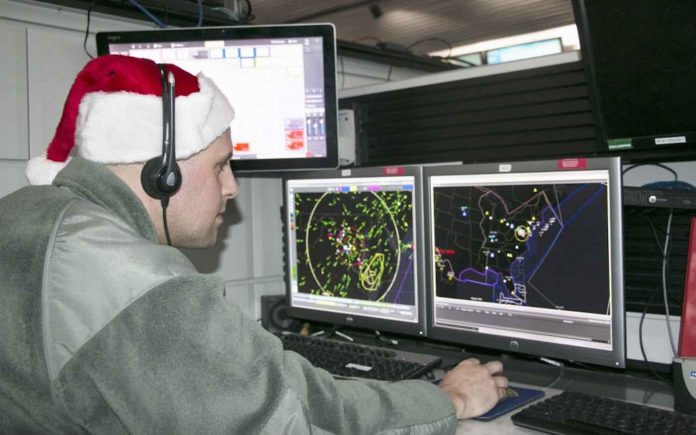
For the 64th year in a row, civilians and military personnel have enthusiastically volunteered to continue their tradition of tracking Santa’s journey around the world on Christmas Eve.
The tradition started in 1955 when Sears accidentally misprinted their telephone number in an advertisement that told kids they could talk to Santa and his elves. Instead, they listed the number of the North American Aerospace Defense Command (NORAD).
Military personnel were quick to catch on to the mistake, but instead of disappointing their hopeful young callers, they fielded hundreds of phone calls and reassured the children that they were keeping an eye on Santa’s whereabouts.
After NORAD was founded in 1958, the military headquarters made it their duty to keep the public informed about Santa’s location.
“In addition to our day-to-day mission of defending North America, we are proud to carry on the tradition of tracking Santa as he travels along his yuletide flight path,” said Gen. Terrence O’Shaughnessy, commander of NORAD and U.S. Northern Command. “The same radars, satellites and interceptors employed on December 24th are used year-round to defend Canadian and American airspace from threats.”
Now, anxious youngsters can either call the NORAD’s Santa Tracker hotline, send an email to the agency volunteers, or they can check up on Kris Kringle’s location on the agency’s website.
Your NORAD Tracks Santa Team hard at work (not really...we are seriously just having fun spreading holiday cheer!) pic.twitter.com/wSZ43myjn7
“They’re all really sweet, small voices. I had a little girl tell me good night instead of goodbye. It’s really sweet,” one of the volunteers told reporters. “It really gets you into the Christmas spirit. There are Christmas carols in the background, everyone’s very friendly, happy to be there.”
NORAD has more than 47 satellites stationed across North America from 22,000 miles above the Earth’s surface. The satellites can track Santa’s location by using infrared heat sensors to detect unusual flying objects—such as a magical sleigh and eight tiny reindeer.
If you want to contact NORAD for a personal update on Santa’s whereabouts, you can call them at 1-877-HI-NORAD (1 877-446-6723) or send an email to [email protected].
However, the NORAD volunteers are quick to tell young readers that even though it may be exciting to keep up with the head elf’s journey, he will only visit their homes once they are fast asleep on Christmas Eve.
Our Command Senior Enlisted Leader, Sergeant Major Paul McKenna, talking to some of our volunteers. pic.twitter.com/NxVQrvHeSR
This bionic pancreas may soon provide a whole new level of medical freedom to type 1 diabetics since the device was recently granted “breakthrough” status by the US Food and Drug Administration (FDA).
Beta Bionics, Inc—a medical technology company working to develop and commercialize the world’s first fully automated bionic pancreas—announced that their investigational iLet Bionic Pancreas System had received the exciting designation earlier this month.
The iLet Bionic Pancreas System is a pocket-sized, wearable investigational medical device that is designed to autonomously control blood-sugar levels.
Beta Bionics founder and Boston University researcher Ed Damiano developed the device as a means of offering hope to his son, who was diagnosed with type 1 diabetes as a toddler—and now, the designation means that it could soon help millions of other diabetics as well.
The on-body wear is similar to that of an insulin pump. Unlike insulin pump therapy, however, the investigational system is designed so that users need only enter only their body weight for the iLet to initialize therapy. Immediately thereafter, the iLet begins controlling blood-sugar levels automatically, without requiring the user to count carbohydrates, set insulin delivery rates, or deliver bolus insulin for meals or corrections.
The iLet is designed to function as three medical devices in one. It can be configured as an insulin-only bionic pancreas, a glucagon-only bionic pancreas, or a bihormonal bionic pancreas using insulin and glucagon. The insulin-only and bihormonal configurations may be helpful in diabetes. The glucagon-only configuration may be helpful in rare conditions that often lead to chronic, low blood-sugar conditions, such as congenital hyperinsulinism. Beta Bionics is committed to obtaining regulatory approval and commercializing all three iLet configurations.
The Massachusetts-based company was founded in 2015 to commercialize the iLet and obtain regulatory approval for all three bionic configurations.
“We believe the iLet Bionics Pancreas System represents a true breakthrough therapy for the management of glycemia, particularly in type 1 diabetes,” said Damiano, who is also the President and CEO of Beta Bionics. “We are particularly excited by the possibility that the iLet may be able to provide safer and more effective therapy in far more people than current therapies due to its simplicity of use.”
These mathematical dosing algorithms were developed at Boston University and refined based on results from home-use clinical trials in adults and children with T1D.
The other founders of Beta Bionics in addition to Damiano include other parents of children with type 1 diabetes and people with type 1 diabetes—which is why the company says it is committed to acting in the best interests of the diabetes community and to profoundly disrupting the diabetes medical device industry by bringing the iLet to market as expeditiously and responsibly as possible.
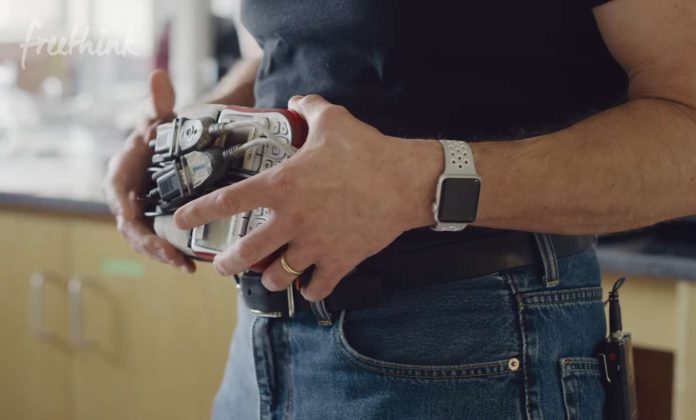
(WATCH the 2017 Freethink interview with Damiano below) – Photo by Freethink
Power Up With Positivity By Sharing The Good News With Your Friends On Social Media…