One family’s loss has sparked a movement to bring light into others’ lives via a makeshift Christmas tree farm.
A man named Mark suffered every parent’s worst nightmare after he lost his daughter Mary Beth at age 7. She had spent the majority of her life in surgery, receiving medical procedures to correct severe heart defects.
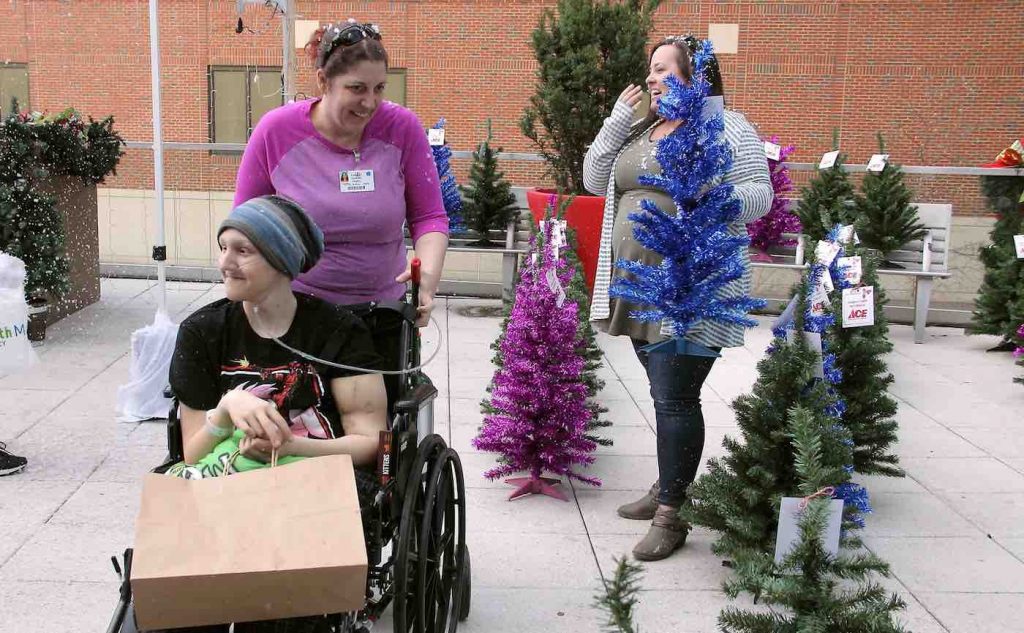
While being treated at Children’s of Alabama hospital in Birmingham, Mark said it was painful for them to spend the holidays without her in their home—so they would often bring Christmas to her. After she passed, he wanted to make sure no other parents or children had to miss holidays together.
So, as an Ace Hardware employee, he and his colleagues made it happen. Mark reached out to several nearby Ace Hardware stores and the businesses immediately committed to help.
They received donations of 285 trees from 25 store owners to create a makeshift tree farm at the hospital for the kids—and last week, the dream became a reality.
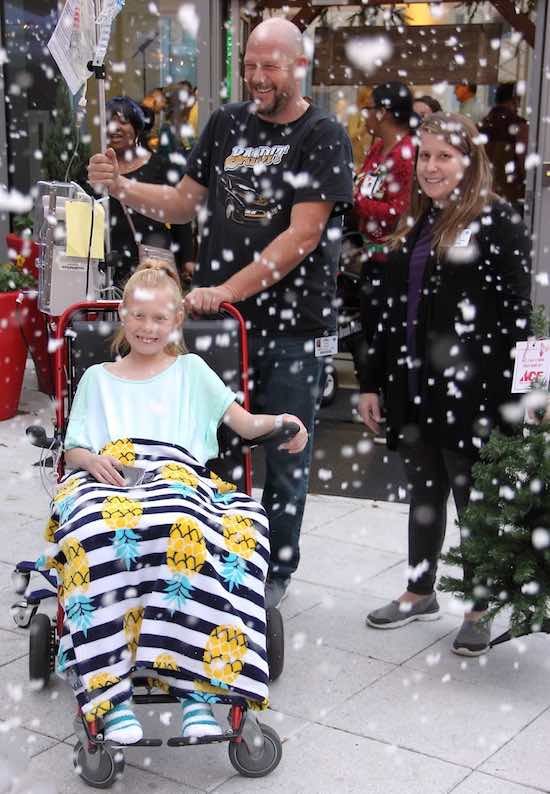
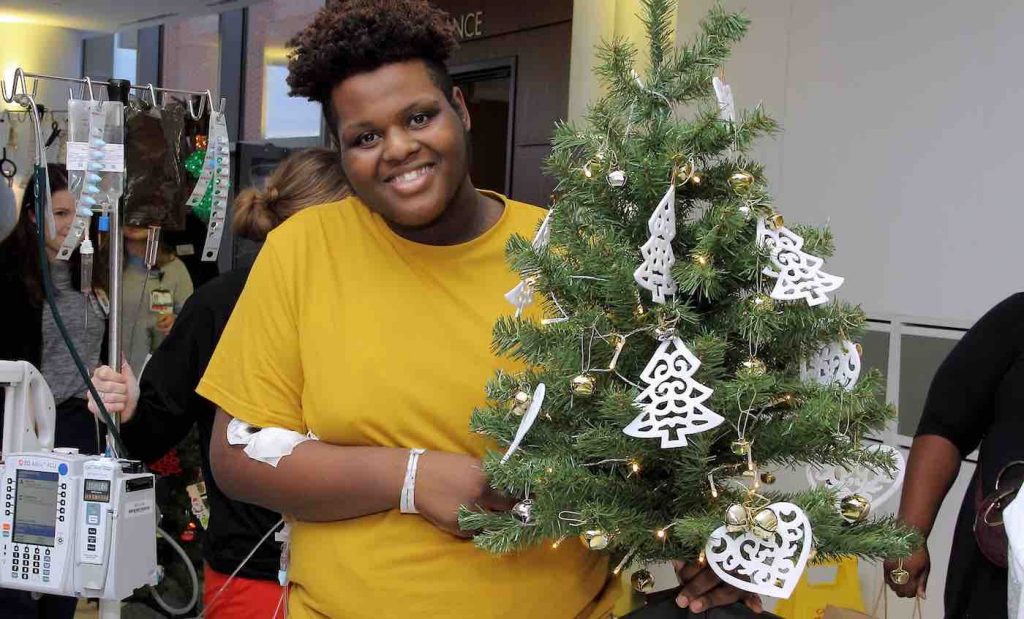
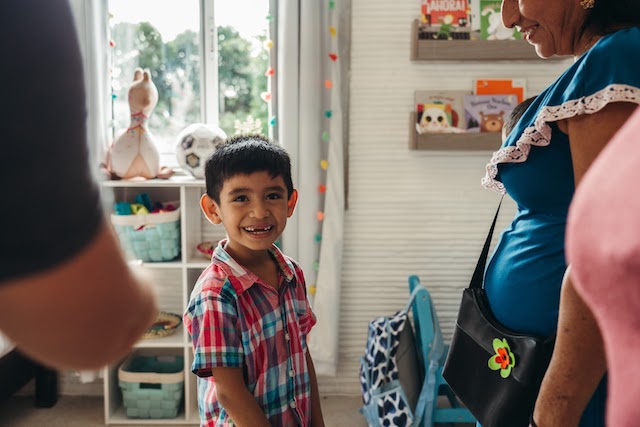
Each child chose their own tree, decorated it with ornaments, and met Santa himself amongst twinkly lights and artificial snow.
For those unable to leave their rooms, Christmas was brought direct to them so they didn’t miss out on the excitement.
Children’s of Alabama is part of the Children’s Miracle Network—and it’s no wonder!
SHARE This Sweet Story of Kindness With Your Friends On Social Media…
Sometimes we find our teachers in the most unlikely places.
A few years ago, I visited San Quentin State Prison for the first time, entering what can only be described as an intimidating, medieval-looking castle with guard towers. I vividly recall the clang of those iron gates as they slammed shut behind me—a sound that still reverberates viscerally.
It turned out that that day was the beginning of my volunteer work co-facilitating a weekly men’s group within the walls of this maximum-security facility. I had no idea my life would change when I agreed to make the first visit.
One of my congregants runs this group and had asked if I would go with her to San Quentin. In my mind, I was doing her a favor. I thought it would be novel, but once would be enough. I expected to meet angry men with no desire for real change. Did I really have time for this? After all, I was already juggling so much. I went feeling tired and anxious, with a long to-do list in my mind for the coming day at church.
I discovered this group of men serving life sentences had a monk-like desire and dedication for self-knowledge, self-mastery, and transformation.
By the time I left that evening, I was most unexpectedly brimming with energy and feeling uplifted in ways I’d not experienced for quite a long time.
No Distraction from the Self
Sometimes we find motivation and truth as well as catalysts for change in the most unlikely places and with people we might not think of as our teachers. Unlike the outside world, there are no real distractions in prison. You aren’t checking your cell phone. There isn’t any escaping your situation and circumstances.
Those of us who move about freely can avoid anyone we might dislike—but that’s not an option in prison. One has to come up with other ways of coping that do not result in breaking rules, getting in fights, or incurring any reason to be sent to “The Hole”; also known as the Adjustment Center.
Each day one is faced with himself. Over the years and decades, a stark self-analysis can bring about transformation in prison that, here on the outside, we might never take time to explore.
To my surprise, this group of men serving life sentences had a dedication and degree of perseverance I had never been exposed to in any group.
What had brought these men to prison so many years (or even decades) ago was not only the crimes they committed; the bigger truths of their lives included not understanding themselves or their motivations, their wounding, and lack of healthy coping strategies.
These men now wanted to share, learn, and grow in order to understand themselves in deeper and more profound ways. They were hungry for spiritual tools and practices—but at the core for many of them was a need to be reconciled with the higher power of their understanding. (The group comprises several faith traditions and ethnicities, so for all of them to be willing to learn and grow together is a minor miracle in itself.)
Within those first few hours in the presence of these men, I experienced their authenticity and willingness to share from the depths of their being. I remembered the quote from Jesus in the book of Matthew from the Bible: “I was in prison and you visited me. Just as you did it to one of the least of these who are my family, you did it to me.”
Now I understand the profundity of that direction. Every minister, rabbi, imam, or other spiritual leader wants to be with people who are serious about change and transformation. At San Quentin, in this particular group, I find myself surrounded by men who fit that description exactly.
In retrospect, my volunteering has not only been welcomed by the men but has also been a catalyst for inner transformation for myself. Sometimes we find our teachers in the most unlikely places. Turns out nothing was what I expected.
Rev. Bill Englehart is a Unity minister based in Southern California. He is a writer and speaker, workshop leader, and instructor for Unity Worldwide Spiritual Institute.
– Reprinted with permission of Unity®, publisher of Daily Word® (File photo by Don Christner, CC license)
Be Sure And Share The Inspiring Story With Your Friends On Social Media
Quote of the Day: “I’ll think of some way! After all, tomorrow is another day.” – Scarlett O’Hara, Gone With the Wind(debuted 80 years ago today)
Image: Gone With the Wind screen capture
With a new inspirational quote every day, atop the perfect photo—collected and archived on our Quotes page—why not bookmark GNN.org for a daily uplift?
Aleem Chaudhry doesn’t just work tirelessly to provide his customers with tasty sandwiches—he also ensures that any child who writes a letter to Santa Claus in his town is guaranteed a response.
In addition to Chaudhry being the owner of Gino’s Stop-N-Buy deli in San Antonio, Texas, he is also known for being a reliable messenger in Santa’s workshop.
Chaudhry gained the yuletide reputation a few years back when he put up a bright red mailbox for the North Pole. Though it was only meant as a holiday decoration, many local children started using the mailbox to drop off actual letters to Santa—so Chaudhry took it upon himself to write back to every letter.
Last year alone, Chaudhry received and wrote back to more than 400 letters. Not only is he planning to do the same thing this year, he’s making it easier for the tots to write their notes to St. Nick.
So enthusiastic is his holiday labor of love that Chaudry has set up a letter-writing station for all of his young customers, stocking it with pens, markers, paper, and stamps.
(WATCH the news coverage below) – Image credit: screenshot of video by KENS-News
Deck The Halls With This Sweet Story On Social Media…
The population of the majestic Hawaiian Goose numbered 25,000 on the islands in 1778 when Captain Cook arrived, but soon those numbers were decimated by human-introduced animals like the mongoose until there just 30 left in 1952.
Photo by Bettina Arrigoni, CC license
Known locally as the nēnē, the goose was placed on the Endangered Species list in 1967, and conservationists went to work trying to repopulate the islands.
After 60 years of an intensive captive breeding program, rigorous habitat restoration, and active management strategies, the population has increased 90-fold—and this week, US Interior Secretary Bernhardt announced that the nēnē had recovered enough to be considered no longer endangered.
“Today’s announcement highlights the progress (that) the Endangered Species Act intends to deliver,” said Bernhardt. “Through collaboration and hard work the nēnē is out of intensive care and on a pathway to recovery.”
The nēnē’s glidepath from the brink of extinction in the decades following 1967 was paved by the breeding of nearly 3,000 birds in captivity which were then released onto more than 20 sites throughout the main Hawaiian Islands.
The release of captive-bred nēnē on national wildlife refuges, national parks, and state and private lands has saved the species for future generations. Today, there are more than 2,800 birds with stable or increasing populations on Kaua‘i, Maui and Hawai‘i Island and an additional population on Moloka‘i.
Although the bird’s federal status has been upgraded, safeguards will remain in place to protect the species because it is still rated as ‘threatened’.
Protect Your Friends From Negativity—Share The Good News on Social Media!
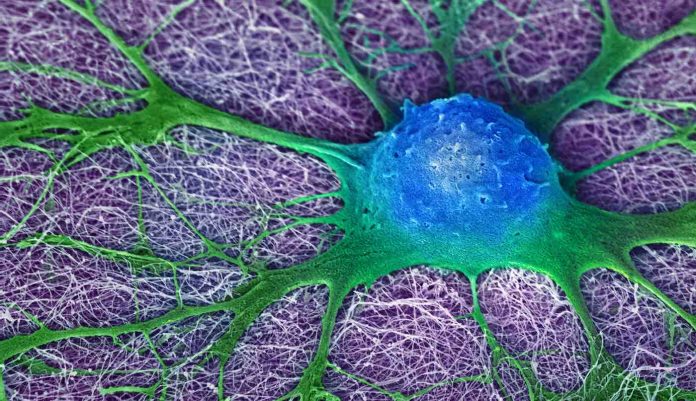
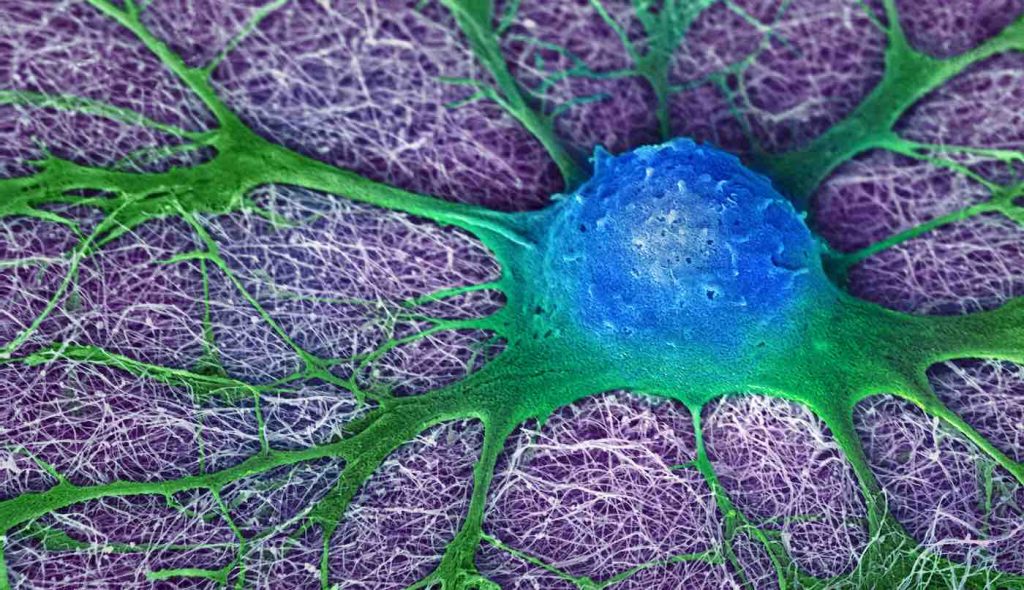
There are two drugs that have been developed by Salk Institute researchers to successfully treat Alzheimer’s in mice—and now, they have found that the very same drug compounds can also slow the aging process in the brains of healthy older mice.
In mouse models of Alzheimer’s disease, the investigational drug candidates known as CMS121 and J147 improve memory and slow the degeneration of brain cells. Now, Salk researchers have shown how these compounds can also slow aging in healthy older mice by blocking the damage to brain cells that normally occurs during aging and restoring the levels of specific molecules to those seen in younger brains.
The research, published last month in the journal eLife, suggests that the drug candidates may be useful for treating a broader array of conditions and points out a new pathway that links normal aging to Alzheimer’s disease.
“This study further validated these two compounds not only as Alzheimer’s drug candidates but also as potentially more widely useful for their anti-aging effects,” says Pamela Maher, a senior staff scientist at Salk and a co-corresponding author of the new paper.
Old age is the biggest risk factor for Alzheimer’s disease—above the age of 65, a person’s risk of developing the disease doubles about every five years. However, at a molecular level, scientists aren’t sure what occurs in the brain with aging that contributes to Alzheimer’s.
“The contribution of old age-associated detrimental processes to the disease has been largely neglected in Alzheimer’s disease drug discovery,” says Antonio Currais, a Salk staff scientist and first author of the new paper.
Maher and David Schubert, the head of Salk’s Cellular Neurobiology Lab, previously developed CMS121 and J147, variants of plant compounds with medicinal properties. Both compounds—derivatives of the flavonol fisetin, and a molecule present in the curry spice curcumin—tested positive for their ability to keep neurons alive when exposed to cellular forms of stress related to aging and Alzheimer’s disease.
Photo by the National Institute of Health, CC
Since then, the researchers have used the drug candidates to treat Alzheimer’s in animal models of the disease. But experiments revealing exactly how the compounds work suggested that they were targeting molecular pathways also known to be important in longevity and aging.
In the new research, Maher, Currais, and their colleagues turned to a strain of mice that ages unusually fast. A subset of these mice was given CMS121 or J147 beginning at nine months old—the equivalent of late middle age in humans. After four months, the team tested the memory and behavior of the animals and analyzed genetic and molecular markers in their brains.
Not only did the animals given either of the drug candidates perform better on memory tests than mice that hadn’t received any treatment, but their brains showed differences at the cellular and molecular levels. In particular, expression of genes associated with the cell’s energy-generating structures called mitochondria was preserved by CMS121 and J147 during aging.
“The bottom line was that these two compounds prevent molecular changes that are associated with aging,” says Maher.
More detailed experiments showed that both drugs affected mitochondria by increasing levels of the chemical acetyl-coenzyme A (acetyl-coA). In isolated brain cells, when the researchers blocked an enzyme that normally breaks down acetyl-CoA, or when they added extra amounts of an acetyl-coA precursor, they saw the same beneficial effect on mitochondria and energy generation. The brain cells became protected against the normal molecular changes associated with aging.
“There was already some data from human studies that the function of mitochondria is negatively impacted in aging and that it’s worse in the context of Alzheimer’s,” says Maher. “This helps solidify that link.”
Maher and Currais are planning future experiments to test the effects of CMS121 and J147 on how other organs age. They also hope to use the new results to inform the development of new Alzheimer’s drugs; targeting other molecules in the acetyl-coA pathway may help treat the disease, they hypothesize.
“We are now using a variety of animal models to investigate how this neuroprotective pathway regulates specific molecular aspects of mitochondrial biology, and their effects on aging and Alzheimer’s,” says Currais.
Earlier this week, Amazon began surprising hundreds of US charities—supporting every kind of cause from STEM education, to homelessness, hunger, disaster relief, youth organizations, sustainability and more—by fulfilling the products requested on each of their AmazonSmile Charity Lists.
The online retailer will continue to donate hundreds of thousands of items on wish lists for nonprofits through the end of the year to ensure they have what they need to get a jump start on the new year.
“We are enormously grateful to Amazon for fulfilling our Charity List,” said Chris Bailey, Executive Director of the Mona Bailey Academy. “Receiving this type of product donation allows us to continue our mission of delivering cutting edge and creative educational programming to underprivileged elementary age students in the Seattle area and beyond.”
Some of the items donated by Amazon during this holiday season include more than 5,000 blankets, sheets, and pillows; more than 30,000 toys and educational items for kids; more than 40,000 pajamas, shoes, and other apparel items; and over 60,000 food and pantry items from water to canned goods.
“Amazon’s generosity will allow us to meet a portion of the great needs of people experiencing homelessness on our borough’s streets, in the ferry terminal, and especially the children and families in our Staten Island shelter,” said Reverend Terry Troia, President and CEO of Project Hospitality. “We are grateful.”
In addition to fulfilling hundreds of AmazonSmile Charity Lists, Amazon is surprising several organizations whose mission is to support those experiencing homelessness across the country with more than $1 million in monetary and in-kind donations for the holidays.
Winter is the hardest time for homeless communities; a monetary donation provides nonprofits with the flexibility to fund existing gaps including emergency shelter, medicine, food, supplies, and seasonal staffing.
Along with the donation, 10,000 “Boxes of Smiles” gift packages will be delivered to shelters—which include toys, electronics, personal care products, and books—for people in need of services at Central Arizona Shelter Services, Domestic Abuse Women’s Network, SEARCH Homeless Services, and other charities.
“We are so grateful that Amazon has fulfilled our AmazonSmile Charity List,” said Nancy Keil, President and CEO of Second Harvest Food Bank of Middle Tennessee. “The holidays are a difficult time of year for struggling families.”
Hundreds of thousands of the nonprofits that have joined the AmazonSmile Charity Lists have already been able to get donations since the program was unveiled in 2013 because the lists provide an easy way for customers to donate directly to causes they want to support. Since launching, AmazonSmile has facilitated more than $155 million to charitable organizations.
For starters, Purrfect Pals, a local cat shelter based in Arlington, Washington, posted a request on Facebook asking for donations to restock their food pantry. Within just two days of the post, customers placed 300 orders worth of $20,000 in pet food.
Additionally, since Hurricane Dorian struck the Bahamas in September of this year, Amazon customers purchased relief items, worth over $200,000, destined for The American Red Cross, Save The Children, and SBP, to support communities affected by the hurricane.
Pass On The Positivity By Sharing The Good News With Your Friends On Social Media…
Quote of the Day: “Out of suffering have emerged the strongest souls; the most massive characters are seamed with scars.“ – Edwin Chapin
Photo: by pixle, CC license via Flickr (cropped)
With a new inspirational quote every day, atop the perfect photo—collected and archived on our Quotes page—why not bookmark GNN.org for a daily uplift?
Australian actress Olivia Newton-John is best known for her iconic role in the musical film Grease—which is why she decided to auction off hundreds of pieces of movie memorabilia to raise money for charity last month.
The 71-year-old starlet felt spurred to donate the cinematic treasures after she was diagnosed with breast cancer for the third time in 2018.
She then put more than 500 articles of her clothing, jewelry, and film props up for auction so she could donate all of the proceeds to her cancer research charity, the Olivia Newton-John Cancer Wellness and Research Center.
The legendary leather jacket which she wore at the end of Grease ended up selling for $242,200.
Newton-John was stunned, however, when the jacket was returned to her once more.
Though the jacket’s buyer chose to remain anonymous to the public, he met with Newton-John in Los Angeles earlier this week so he could surprise her with the gift-wrapped jacket.
“This jacket belongs to you and the collective soul of those who love you, those for whom you are the soundtrack of their lives. It should not sit in a billionaire’s closet for country club bragging rights,” the man told an awestruck Newton-John. “For this reason, I humbly and respectfully return it to its rightful owner, which is you.”
After getting over her initial shock, Newton-John tearfully thanked the man and gave him a hug, saying: “You’re the best, you’re the best! I’m so grateful.”
“This is the most beautiful present,” she added, “but mainly it’s your heart that I’m grateful for.”
Newton-John happily told the donor and the gathered reporters that she would finally be able to fulfill her dream of putting the jacket on display in her cancer research center.
(WATCH the emotional video below)
Be Sure And Tell Your Friends About This Sweet Story, Stud…
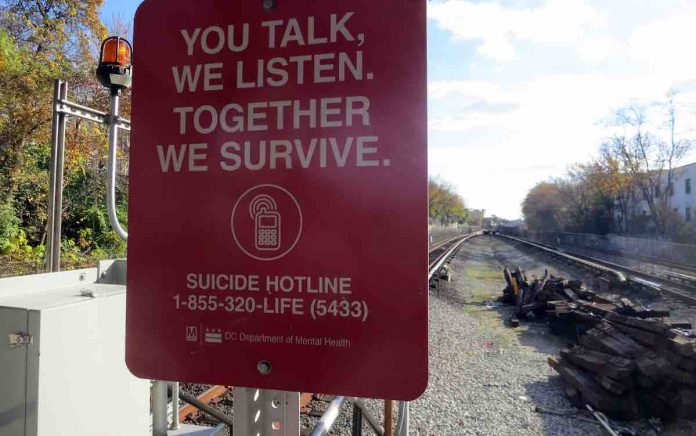
The United States will soon be getting its own 3-digit suicide hotline: 988.
The initiative was unanimously approved by all five members of the Federal Communications Commission (FCC) on Thursday. They are now gathering feedback, opinions, and input from the public before moving forward with officiating the dialing code.
The FCC’s proposal will now require phone carriers to launch the hotline within the next 18 months.
“988 has an echo of the 911 number we all know as an emergency number,” said FCC Chairman Ajit Pai during the commission’s open December meeting. “We believe that this three-digit number dedicated for this purpose will help ease access to crisis services, it will reduce the stigma surrounding suicide and mental health conditions, and ultimately it will save lives.”
The approval comes after the FCC submitted a report to Congress back in August describing the best possible method of implementing a 3-digit phone number for the federally-funded National Suicide Prevention Hotline.
The 138-page report recommended that Congress designate 988 as the new dialing code to be used for a nationwide suicide prevention and mental health crisis hotline, which “would likely make it easier for Americans in crisis to access potentially life-saving resources.”
The report was created in response to the National Suicide Hotline Improvement Act of 2018, which was approved in the House in a near unanimous 379-1 vote back in July 2018. It was then signed into effect by President Donald Trump the following month.
“We all know by heart to dial 911 during an emergency. We have fate and confidence that somebody who can help will be on the line. It shouldn’t be any different for someone in a mental health crisis,” said Rep. Leonard Lance (R-NJ) in support of the bill.
Until the hotline is launched, Americans suffering from suicidal impulses are encouraged to call the official suicide hotline: 1-800-273-8255.
Be Sure And Share The Good News With Your Friends On Social Media – File photo by Daniel Lobo, CC
This sweatshirt is being hailed as the world’s first ever “self-cleaning” article of clothing—and for every one sold, one is donated to the homeless.
The shirts are made from nanoscopic polyester fibers that repel liquid similarly to a lotus leaf; fluids simply bounce off the surface of the clothing without staining it.
In addition to repelling liquids and spills, the shirts can also go without being washed for up to a month—and once they are cleaned, the fabric dries 40% faster than regular clothing.
Varun Bhanot and his wife Anisha Seth developed the hoodies as a means of helping homeless people in Britain—but they did admit that the jumper would also be perfect for wine spills during boozy Christmas parties.
“We created a jumper and a hoodie range that repels liquids, dirts, sweats and odors, because you never really know what’s going to happen on any given day,” said Bhanot. “You could spill your coffee, spill some water, or maybe you’re at a party and you might spill some wine down your jumper.
“You could wear it in the gym, or you could go out and about in it for more than a month and you probably wouldn’t even need to wash it,” he added. “After more than a year of experimentation, prototyping, and fabric development, we’ve created what we think could be the world’s first set of self-cleaning clothing.”
Unhoused co-founder Anisha Seth – SWNS
The 29-year-old entrepreneurs from London are the co-founders of Unhoused: a charity dedicated to helping homeless people throughout the city.
For every article of warm clothing bought from the organization, one is donated to charity. Since launching the charity, they have donated more than 100,000 articles of clothing to London’s rough sleepers—and now that they have succeeded in developing the revolutionary sweatshirts, the couple is selling them for £69.99 ($93) on the site under the same buy one, give one model.
“What is great is for every single one bought, one is donated to the UK’s homeless,” said Bhanot. “We partnered up with a few shelters here in East London and the response from them has been one of a huge amount of surprise; most of the stuff they get in tends to be second-hand donations.
SWNS
“They could have something which could keep them perpetually very warm, very clean, and would reduce the need for them to be constantly washing things in washing facilities and of course the environmental benefits that come along with that, really took a lot of these shelters by surprise.
“It could be a game-changer for sustainable clothing all over the world, and an absolute life-saver for the UK’s homeless and those sleeping rough, who may not have access to washing facilities and need to be kept warm and clean all year round.
“Even though we only launched it around a month ago, people have been absolutely astounded by the effect it can produce and also the longevity of something like this,” he concluded.
(WATCH the interview below)
Clean Up Negativity By Sharing The Good News With Your Friends On Social Media…
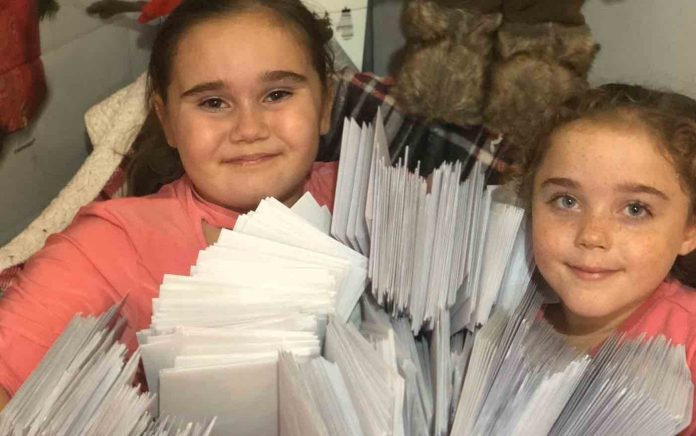
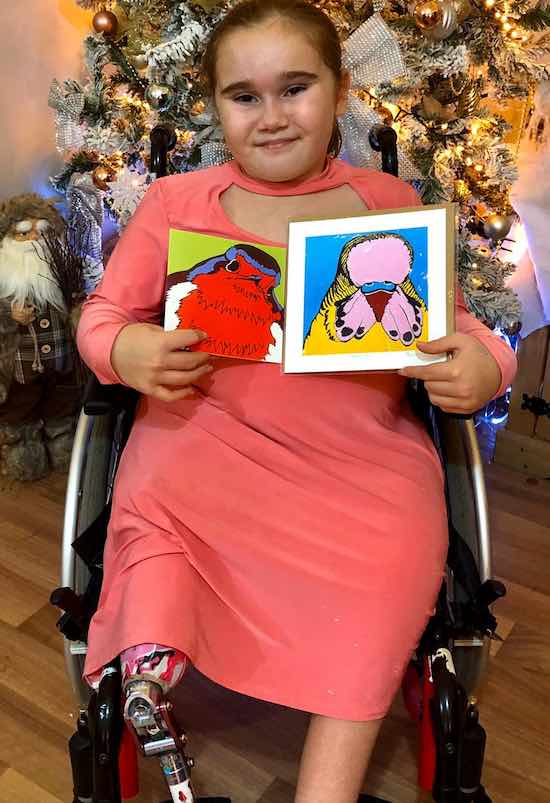
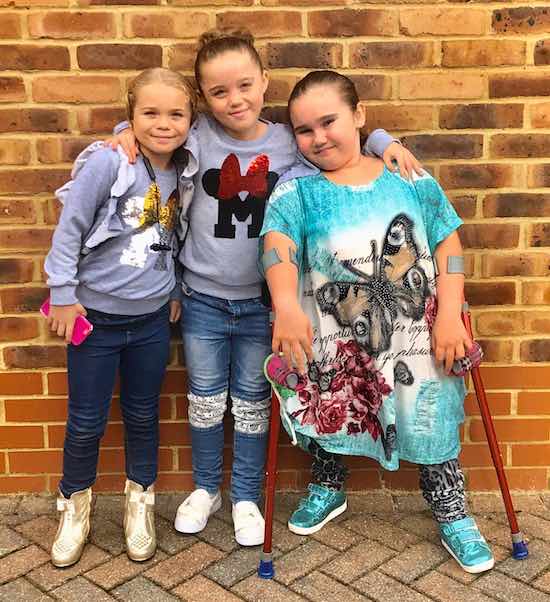
This 11-year-old schoolgirl has been spreading yuletide cheer throughout her village by hand-delivering more than 1,000 Christmas cards—all while having only one leg.
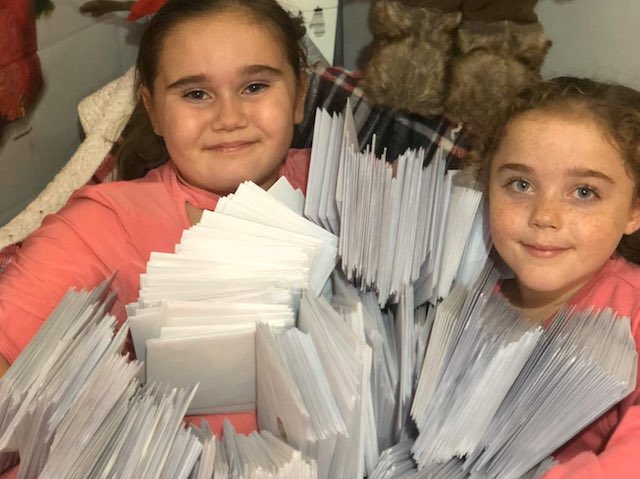
Angel Farley has written and delivered 1,064 greetings cards so far this year in her mission to put a smile on people’s faces for the holidays.
The English schoolgirl was born without a femur and hip socket. Prior to undergoing an operation last year to amputate her leg, it had been attached directly to her hip.
Despite her limited mobility, however, the thoughtful youngster decided to start sending Christmas cards to lonely people in her village two years ago.
Angel first got the idea for the festive labor of love after she had asked her mom who else she could send cards to apart from her classmates.
“It just got me thinking. I spoke with Angel about the idea of asking on Facebook if anyone would like a card from her,” said Angel’s mother Holly Farley. “That’s when she told me that she thinks it would be nice to send cards to other people with disabilities and other people who might be forgotten at Christmas. It just went from there.”
SWNS
The family from Kent felt particularly moved to spread holiday cheer after their village rallied to support them following Angel’s amputation back in February 2018.
Angel and her parents decided to have her right leg amputated above the leg to improve her mobility.
“She used to do what we called a ‘pirate walk’,” recalled Holly. “She had to swing her leg out sideways which made her hip swing and caused her spine to curve.
“She wore a prosthetic leg as well, but it had to be straight because it was attached to her foot and ankle, which of course, bends.”
SWNS
The amputation at Great Ormond Street Hospital initially seemed to have gone well, but her leg became extremely infected, which led to the youngster being hospitalized for two months while battling sepsis.
“It was a really hard time for us. I asked doctors whether she was going to survive and they couldn’t give me a straight answer,” says Holly.
Angel has since made a strong recovery and thanks to a new prosthetic leg, is able to move much more freely than before.
“During her recovery, people in the village we had never met donated money for Angel,” Holly said. “It was a real eye opener. We felt like we needed to do something to show our appreciation so decided to expand the card giving.”
SWNS
The mother-daughter duo have delivered more than a thousand cards—more than ten times the total they delivered in 2017. All together, they have spent about 60 hours filling out all of the cards by hand since they began their project in early November.
The messages inside read: “From our house to yours. Happy Christmas. Love from Angel and Family.”
Angel’s dad, Rob, said: “We don’t want it to become a chore, so we only do it when the girls want to. Angel and her nine-year-old sister Mikayla sit at a little table and fill them in, bless them.”
SWNS
Holly added: “It’s all about making people smile at Christmas. We go around the village as a family most evenings. Sometimes Angel finds it difficult to access properties because of her disability, but she does her best.”
Holly also says her daughter has been flooded with messages of thanks and support from people on Facebook.
“After what we went through last year, we feel so lucky to have Angel with us,” continued the mother-of-four. “We are so happy to be able to give something back to the people in the village. It’s a really special community.”
Deck The Halls Of Social Media By Sharing This Sweet Story With Your Friends…
Quote of the Day: “Change, indeed, is painful; yet ever needful; and if memory have its force and worth, so also has hope.” – Thomas Carlyle
Photo: by Jonathan Gonzales, CC license (cropped)
With a new inspirational quote every day, atop the perfect photo—collected and archived on our Quotes page—why not bookmark GNN.org for a daily uplift?
What is the meaning of life? It’s a big question with possibly even bigger implications for our health and wellbeing than we previously thought.
Over the last three decades, meaning in life has emerged as an important question in medical research, especially in the context of an aging population. A recent study by researchers at the University of California San Diego School of Medicine found that the presence of and search for meaning in life are important for health and wellbeing, though the relationships differ in adults younger and older than age 60.
“Many think about the meaning and purpose in life from a philosophical perspective, but meaning in life is associated with better health, wellness and perhaps longevity,” said senior author Dilip V. Jeste, senior associate dean for the Center of Healthy Aging. “Those with meaning in life are happier and healthier than those without it.”
The study, which was published online in this week’s edition of the Journal of Clinical Psychiatry, found the presence of meaning in life is associated with better physical and mental wellbeing, while the search for meaning in life may be associated with worse mental wellbeing and cognitive functioning.
“When you find more meaning in life, you become more contented, whereas if you don’t have purpose in life and are searching for it unsuccessfully, you will feel much more stressed out,” said Jeste.
The results also showed that the presence of meaning in life exhibited an inverted U-shaped relationship, while the search for meaning in life showed a U-shaped relationship with age. The researchers found that age 60 is when the presence of meaning in life peaks and the search for meaning of life was at its lowest point.
“When you are young, like in your twenties, you are unsure about your career, a life partner and who you are as a person. You are searching for meaning in life,” said Jeste. “As you start to get into your thirties, forties and fifties, you have more established relationships, maybe you are married and have a family and you’re settled in a career. The search decreases and the meaning in life increases.”
“After age 60, things begin to change. People retire from their job and start to lose their identity. They start to develop health issues and some of their friends and family begin to pass away. They start searching for the meaning in life again because the meaning they once had has changed.”
The three-year, cross-sectional study examined data from 1,042 adults, ages 21 to 100+, who were part of the Successful Aging Evaluation (SAGE)—a multi-cohort study of senior residents living in San Diego County. The presence and search for meaning in life were assessed with interviews, including a meaning in life questionnaire where participants were asked to rate items, such as, “I am seeking a purpose or mission for my life” and “I have discovered a satisfying life purpose.”
“The medical field is beginning to recognize that meaning in life is a clinically relevant and potentially modifiable factor, which can be targeted to enhance the wellbeing and functioning of patients,” said Awais Aftab, first author of the paper and a former fellow in the Department of Psychiatry at UC San Diego. “We anticipate that our findings will serve as building blocks for the development of new interventions for patients searching for purpose.”
Jeste said next research steps include looking at other areas, such as wisdom, loneliness and compassion, and how these impact meaning in life. “We also want to examine if some biomarkers of stress and aging are associated with searching and finding the meaning in life. It’s an exciting time in this field as we are seeking to discover evidence-based answers to some of life’s most profound questions.”
Brian Johnson isn’t just the frontman of legendary rock band AC/DC—he is also a beloved philanthropist.
Case in point? The singer and his wife Brenda Johnson recently donated a massive property in Sarasota, Florida to help finish building a new housing campus for foster kids and siblings.
The property, which was donated to the All Star Children’s Foundation, sold for net proceeds of $335,000—all of which will be used to finish building the organization’s Sarasota-based “Campus of Caring”.
Since the nonprofit is dedicated to transforming foster care through innovation and compassion, the campus features six foster family homes that will provide children who have experienced abuse or neglect with a nurturing, family-style home environment and comprehensive, trauma-sensitive treatment. Siblings will be kept together, and parents and caregivers will also be offered a range of innovative services. Not only that, it will include a center for trauma-focused clinical services, a computer learning lab, playground, clubhouse, and outdoor movie theater.
Once construction is finished, the campus is set to open in January 2020.
“We are so grateful to Brenda and Brian,” said Graci McGillicuddy, All Star’s co-founder and board chair. “We’re preparing to open our campus to children very soon. Raising funds is so important in this crucial time—and they’ve taken us leagues closer to making this dream a reality.”
When the rock and roll star was asked about his motivation for donating the property to the charity, he simply said: “They have brought a community together in a common cause to help children who have grown up in unpredictable households where violence and neglect may have occurred.
“There is no greater good than what they have achieved in building the All-Star Children’s Foundation campus, and Brenda and I are honored to be a part of it,” he concluded.
Photo by All Star Children’s Foundation
For Those About To Share This Good News To Social Media, We Salute You…
In addition to patrons being able to borrow their favorite books at this Florida public library system, visitors can now lend out colorblind-corrective glasses for up to two weeks at a time.
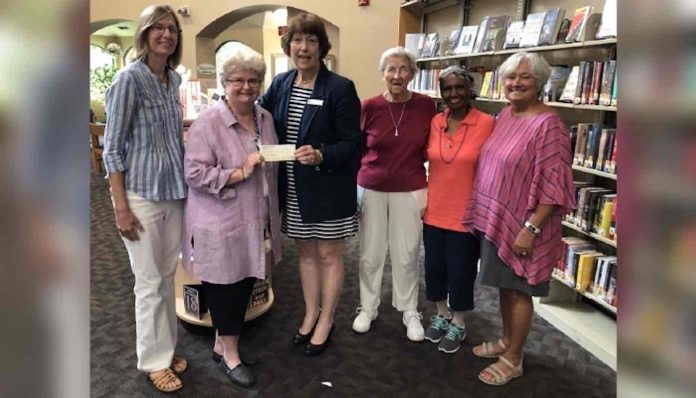
The St. Johns County Public Library System (SJCPLS) announced earlier this week that they had partnered with EnChroma—inventors of eyewear for color blindness—in order to offer EnChroma glasses to colorblind patrons at all six of the library’s branches.
The purchase of the EnChroma glasses was funded by a generous $13,000 grant award from the nonprofit Barbara A. Kay Foundation, which will also fund the library’s new “Color Your World” program with free oil pastel classes available to all of their patrons.
“The St. Johns County Public Library System is in the forefront of supporting accessibility and eager to serve the many needs of our community,” said Library Director Debra Rhodes Gibson of St. Johns County Public Library System. “EnChroma glasses will allow those who cannot see colors as well or vibrantly to enjoy and experience color as much as everyone else does. We are grateful to the Barbara A. Kay Foundation for helping to bring color accessibility to the people of St. Johns County.”
One in 12 men and 1 in 200 women are color vision deficient, amounting to about 13 million in the United States and 350 million worldwide. With a population of over 250,000, St. Johns County, Florida, has an estimated 11,000 people with color vision deficiency.
Nearly two years ago, the Johnson County Public Library in Indiana became the first library system in the nation to provide access to EnChroma glasses to those with color vision deficiency—and they are now delighted that other libraries are following suit.
“Having EnChroma glasses as part of JCPL’s Library of Things has given some of our color blind patrons the opportunity to see color for the first time in their lives,” said Elyssa Everling, Adult Services Librarian, Trafalgar Branch, Johnson County Public Library.
“Russell tries EnChroma Receptor glasses for the first time.” Photo by SJCPLS.
“One of my favorite memories is of a patron who experienced the beauty of a rainbow the first time he tried them on,” she recalled. “We love connecting our patrons with color blindness to this potentially life-changing resource at all four of our libraries.”
The program helps public venues, schools, state parks, libraries, museums and other organizations purchase and loan EnChroma glasses to color blind students and guests to help make schoolwork that involves color, colorful exhibits, attractions and/or experiences accessible to the color blind.
Red-green color blindness is caused by an excessive overlap in the signals from red- and green-sensitive retinal cone cells in the eye, which causes colors that are normally seen as distinct and different to appear highly similar and confusing. Common color confusions include green and yellow, gray and pink, purple and blue, and red can appear brown. People with color vision deficiency are estimated to see about 10% of the one million shades that a person with normal color vision can see.
EnChroma glasses are engineered for the most common forms of red-green color blindness. The company’s patented lens technology is engineered with special optical filters to remove wavelengths of light where the red and green cones in the eye of the color blind overlap excessively. This enhances the separation between color channels to help them see colors more vibrantly, clearly and distinctly, helping them to overcome everyday obstacles and access more of life’s colorful experiences.
“EnChroma glasses enable those with color vision deficiency to experience the world in colorful ways they never thought possible, from the seemingly mundane to the life-changing,” said Andrew Schmeder, Co-founder and CEO of EnChroma. “We hope that more libraries will join St. Johns in making EnChroma glasses available to their constituents.”
It’s Not Hard To See That You Should Share This Great Idea With Your Friends On Social Media…
Now, according to New Story, a nonprofit that pioneers solutions to end global homelessness, one of the world’s first 3D printed communities is officially underway with the first two homes already built in Mexico.
The resilient, 500-square-foot homes were each 3D printed in around 24 hours of print time across several days by ICON, a construction technologies company, and feature final construction build out by ÉCHALE, New Story’s nonprofit partner in Mexico.
The built-to-last homes located in rural Tabasco, Mexico will be granted to local families currently living in extreme poverty and makeshift, unsafe shelter. The community of 3D printed homes will contain 50 homes in total.
After 18 months in planning, New Story and ICON completed the first two printed homes using the Vulcan II, a massive 3D printer that is designed to work under the constraints that are common in rural locations.
This printer, designed to tackle housing shortages for vulnerable populations, is the first of its kind.
The 3D printed homes feature two bedrooms, a living room, kitchen and bath. Co-designed with feedback from the families who will live in them, the homes have been created to meet the specific needs of the community.
All Photos by New Story–Joshua Perez
“I think it’s important to remember what makes this project different, what makes it matter,” said Alexandria Lafci, the COO of New Story. “We’re not an R&D company just for the sake of innovation, and we’re not here to turn a profit. These homes are for real people, with real needs, and everything we do is for them, and includes them in the process.”
New Story is a nonprofit serving families in need of shelter. Since their founding just five years ago, the team has built more than 2,700 homes, serving over 15,000 people, using traditional construction methods across Haiti, El Salvador, Bolivia, and Mexico.
In the last two years, they’ve spent thousands of hours and millions of dollars developing innovative solutions and R&D to help build homes better and faster for the global social housing sector.
“Imagine if we could slash the cost and time it takes to build a home while improving quality and customization. This 3D home printer has that potential,” said Lafci. “Change is an open source pursuit so we are not working with ICON to bring this technology to only New Story projects, we are bringing it to the world. Our goal is to power our sector, every government and organization building homes for the poor, to do their best work.”
Photo by New Story–Joshua Perez
The partnership with ICON and use of the 3D printing technology allows New Story to impact more families faster, while simultaneously improving quality and design flexibility. The hope is that this catalytic R&D project will influence the sector as a whole.
Through the technology, software, and advanced material, the teams will learn, iterate, and then share the learnings with other nonprofits and governments to help everyone improve and reach families faster.
“Conventional construction methods have many baked-in drawbacks and problems that we’ve taken for granted for so long, that we forgot how to imagine any alternative,” said ICON co-founder Jason Ballard. “With 3D printing, you not only have a continuous thermal envelope, high thermal mass, and near zero-waste, but you also have speed, a much broader design palette, next-level resiliency, and the possibility of a quantum leap in affordability. This isn’t 10% better, it’s 10 times better.”
The families who will live in this community have been preselected and will move in upon community completion. Families are selected based on need; in this community, the median family income per month is $76.50—some of the lowest-income families in Mexico as a whole. Additionally, the majority of the families in this area are from an indigenous population that has historically been left out of government programs.
Photo by New Story–Joshua Perez
Through partnership with the local government, the 3D printed community is to be part of a larger community plan for the overall municipal area. The families will have access to green spaces, parks, community amenities, and basic utilities through this master plan provided by the local government.
“We are living a historic moment, having the first community of 3d printed homes being built,” said ÉCHALE Development Director Gretel Uribe. “But more than the technological accomplishment that this represents, which feels like science fiction meeting reality, I would like to point out that this technology is being developed and used to bring adequate housing to the most vulnerable families.
“I think this project is a lesson that if we come together to work, join talents and resources, and lead them to solve real problems, the dream of sustainability and social fairness is achievable.”
(WATCH the video below)
Build Up Some Positivity By Sharing The Fantastic News With Your Friends On Social Media…
Christmas came early for the children living in these low-income neighborhoods and housing complexes.
That’s because a former resident of the area returned to the streets where he grew up so he could hand out more than $12,000 worth of toys to the local children earlier this week.
Adam Armstrong grew up poor in a mostly government-subsidized apartment complex in Harrisonburg, Virginia. When he was just 18 years old, he was sent to jail to serve a 3-month sentence for marijuana possession. By the time he was released, he knew that it was time to turn his life around.
Armstrong, who is now the father of a 3-year-old girl, ended up moving to Baltimore and working a string of different jobs until he finally got into the mortgaging business.
As Armstrong became more and more financially comfortable, he felt more and more compelled to give back to people living in poverty—so he began donating heaps of toys to local charities every holiday season.
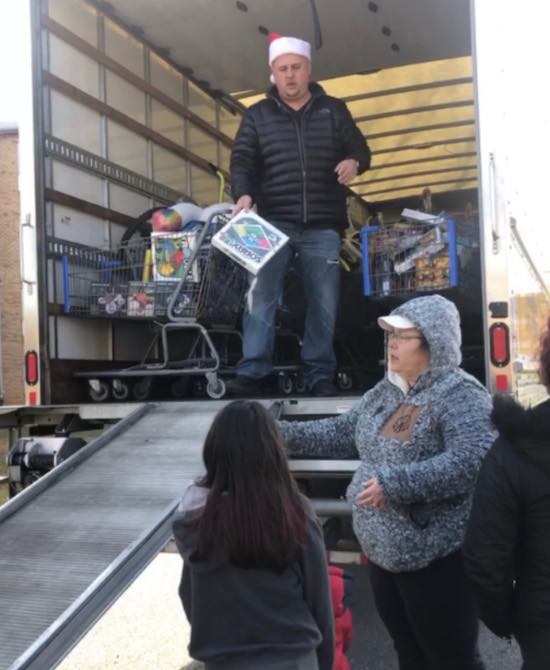
This week, the 35-year-old philanthropist drove to his former neighborhood in a 26-foot moving truck packed with 1,327 toys to give away to all of the children.
Sara Lewis-Weeks, the property manager of the complex, says that when Armstrong had approached her about the giveaway last week, she had been wary of his intentions.
Photo by Lauren Wilhelm
“He comes [into my office] and says, ‘What are you doing on Saturday? I’d like to give away a lot of toys’ and I’m like, ‘Yeaaah, I don’t know about that,’” Lewis-Weeks recounted to NBC News. “I’m very skeptical at that point.”
To her astonishment, however, Armstrong made good on his promise.
“It wasn’t like stuffed animals—he was giving away bikes, remote-controlled cars, real Barbie dolls—not Dollar Store Barbie dolls,” says Weeks. “He didn’t miss anybody. His heart was truly in this.
“They thought it was going to be a couple of stuffed animals, not, ‘And you get a bike, and you get a bike, and you get a bike,’—like an ‘Oprah’ for little kids,” she added.
Armstrong simply told The Washington Post that he was happy to bring joy to little kids for the holiday season.
“The kids were so innocent and sweet,” Armstrong told the news outlet. “You can’t put a price on looking at these kids’ happy faces. Some of them have nothing, and to be able to give them a small toy … the reward and the pleasure was mine.”
(WATCH the news coverage below)
Be Sure And Share The Sweet Story Of Holiday Cheer With Your Friends On Social Media…
Quote of the Day: “Whether you succeed or not is irrelevant, there is no such thing. Making your unknown known is the important thing.” – Georgia O’Keeffe
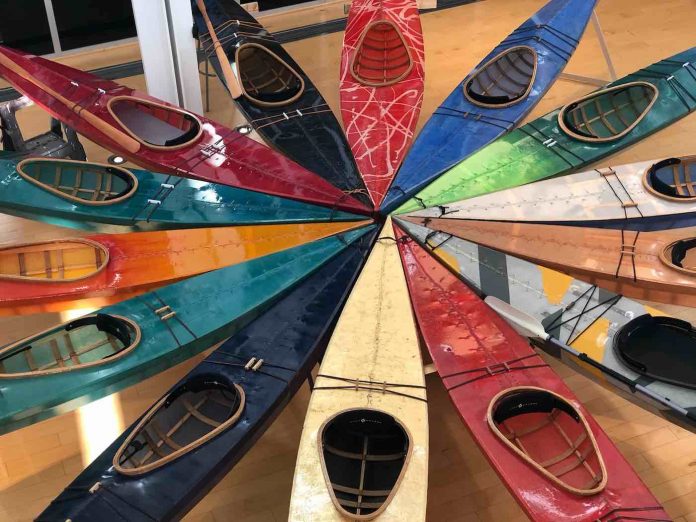
Photo: by Jerry Kollman (hand-made boats by students at James Madison University, VA)
With a new inspirational quote every day, atop the perfect photo—collected and archived on our Quotes page—why not bookmark GNN.org for a daily uplift?