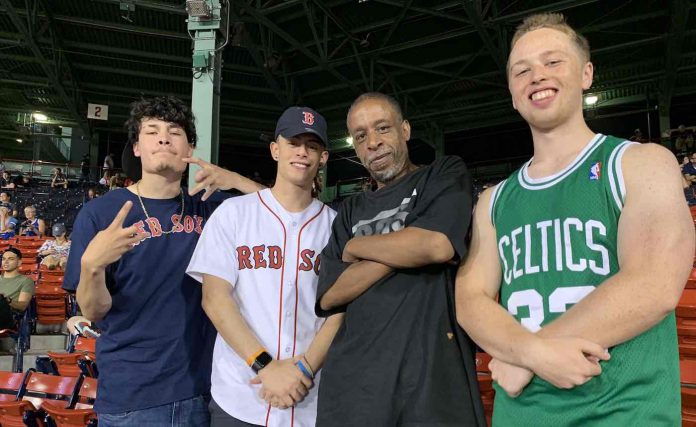
When three young men found themselves with an extra ticket to a Red Sox baseball game, they decided to give their ticket to a homeless man who was happy to be given the chance to relax.
Sean Wetzonis, Pedro Lugo, Francisco Rios, and another one of their friends had been preparing to see the Sox play against the Toronto Blue Jays at Fenway Park in Boston last week when a family emergency forced their fourth companion to cancel his plans for the game.
As the three young men were on their way to the park, they were trying to decide who they could invite to the game—and that’s when Lugo got an idea.
“I wanted to take someone who would appreciate the ticket and have the time of their lives,” Lugo told CNN.
Lugo eventually found the perfect recipient for the spare ticket after they passed a homeless man named John. In addition to offering the man some money, Lugo asked if he wanted the spare Red Sox ticket—to which John immediately said “Hell yeah, let’s go.”
The young men happily escorted John to his seat and bought him a beer to enjoy during the game. As they all sang songs and cheered from the stands, Lugo says that John seemed to greatly enjoy the atmosphere of the stadium.
Before John left the stands, he shook the hands of his three new friends and took a picture with them in front of their seats.
“He thanked us for everything and he expressed his gratitude,” Lugo told CNN. “Maybe [the game] helped alleviate the stressors that come with being homeless for the few hours at the game.”
Since posting the photos to Twitter, Lugo hopes that the pictures will help to show other people just how far a small good deed can go.
So we had an extra ticket to the @redsox game and didn’t want to waste it, so luckily we ran into our man John who unfortunately is homeless, but we got the opportunity to take him out to his first game, bless up Unc pic.twitter.com/T1TCa6fVcF
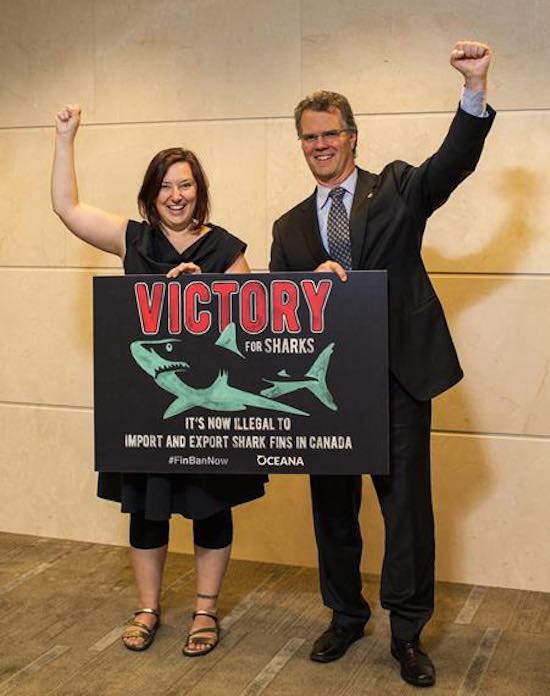
Oceana Canada Campaign Director Kim Elmslie and Fin Donnelly, Member of Parliament. (Photo by Oceana Canada)
Last month, a modernized Fisheries Act became law in order to set the stage for rebuilding the abundance of fish in Canada’s oceans.
For the first time since its inception in 1868, rebuilding plans are now required for depleted fish populations. The Act also ends the import and export of shark fins in Canada.
These changes, among others, unlock tremendous potential for renewed ocean health.
“Today is a great day for our oceans. The overhauled Fisheries Act has the potential to be one of the most transformative things that has happened for our oceans in many years,” says Oceana Canada Executive Director Josh Laughren. “We thank Fisheries Minister Wilkinson and former Fisheries Minister Dominic LeBlanc for prioritizing rebuilding fish populations. The Act now lays a strong foundation to support healthy oceans for generations to come.”
Around the world, the catalyst for fishery recovery—and the social, cultural and economic benefits that come along with it—has been a legally binding requirement to rebuild fish populations and prevent them from becoming depleted.
In Canada, only 34% of fish populations are healthy while more than 13% are critically depleted. Of 26 critically depleted stocks, only five have rebuilding plans. The Act’s new provisions should change this, mandating that rebuilding plans be created for all fish populations in the critical zone, with the target of rebuilding them to sustainable levels.
“Rebuilding fish populations can increase revenue and jobs in coastal communities. The United States has some of the most stringent and effective legislation in the world mandating fisheries rebuilding. It has successfully rebuilt a total of 45 fish stocks resulting in more resilient ecosystems and greater economic opportunities for the fishing industry,” says Laughren.
The Act also bans importing and exporting shark fins in Canada. Fins from as many as 73 million sharks end up in the global shark fin trade every year, including many endangered species. Canada has been the largest importer of shark fins outside of Asia.
“Billions of people worldwide depend on our oceans for their food and livelihood. By rebuilding its fisheries, Canada is helping lead the way toward healthier, more sustainable, and more resilient oceans,” said Michael Bloomberg, the UN Secretary-General’s Special Envoy for Climate Action.
Photo by Carlos Suarez/Oceana Canada
“This is a huge victory for sharks and for the many Canadians, advocacy groups and politicians who joined together to champion the ban of this cruel practice,” says Oceana Canada Campaign Director Kim Elmslie. “We applaud everyone’s efforts, including Senator Michael MacDonald and MP Fin Donnelly who initiated and championed the private members bill calling for a ban.”
The Act’s amendments also uphold the rights of Indigenous Peoples and recognize Indigenous knowledge; incorporate modern fisheries management practices, such as the precautionary and ecosystem-based approaches; restore important habitat protection measures; and feature a clear purpose to manage and control fisheries.
Oceana Canada worked closely with Fisheries and Oceans Canada, First Nations, advocacy groups, fishers and others to bring the changes to the Act to fruition and will continue to advocate for fisheries rebuilding in Canada.
It’s Not Hard To Sea That You Should Share The Good News With Your Friends…
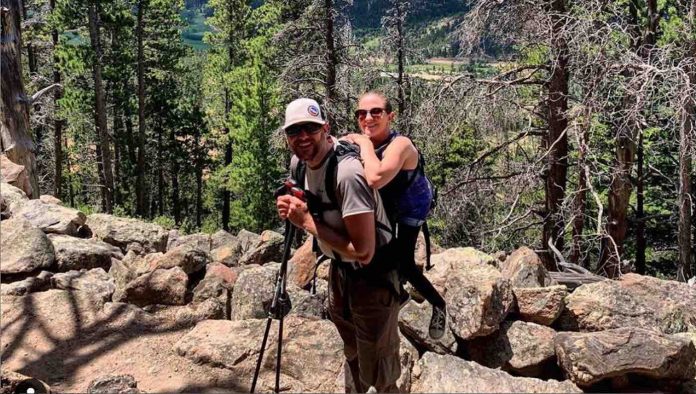
This Colorado pair brings new meaning to the word “determination”. When one couldn’t walk and the other couldn’t see, they teamed up to share their love of the great outdoors.
Melanie Knecht was born with spina bifida, so she uses a wheelchair to get around. Trevor Hahn only recently became blind after he contracted glaucoma five years ago. Both living in Fort Collins, Colorado, the two met at an adaptive boxing class—and they soon ran into each other again at an adaptive rock-climbing class.
They immediately bonded over Knecht’s lifelong hobby of camping and Hahn’s passion for outdoor sports. When she told him about her recent trip to Easter Island, where she got the opportunity to be carried on another person’s back, it was a “eureka” moment.
Even though his sight was gone, he’d been able to scale a Himalayan peak, using poles and spoken directions from his companions.
They started small, but next month—with her vision and his strength—they will trek to the top of a 14,000-foot mountain.
“It just seemed like common sense,” Knecht told Good Morning America. “He’s the legs, I’m the eyes — boom! Together, we’re the dream team.”
At the start of each hike, a friend lifts Knecht into a carrier on Hahn’s back. From that point on, she gives him verbal directions to navigate the trail. Since February, they have been sharing their hiking adventures on Instagram.
“It made me so happy to help someone experience what I’ve been able to experience my whole life,” Hahn told GMA. “The best part is being able to make her smile—that gives me purpose.”
In addition to this sense of purpose, the two share an understanding of how difficult it can be asking able-bodied or sighted people for assistance in everyday life. They get immeasurable satisfaction from being able to do this on their own.
“That’s the human spirit,” Hahn told Outside magazine. “If you want something bad enough, and you find the right people—who also want what you want—you can do anything.”
While the two accept that others appreciate what they’ve been able to do, they’re not looking for accolades—they just want others to encourage inclusive and adaptive solutions for their friends with disabilities.
“Don’t not include them because you think they won’t be able to do something.”
(WATCH a video from Good Morning America) – Photos from Hiking_with_Sight on Instagram
Quote of the Day: “Humanity has advanced, when it has advanced, not because it has been sober, responsible, and cautious, but because it has been playful, rebellious, and immature.” – Tom Robbins (87 years old today)
Photo: Copyright McKinley Claire, 2011
With a new inspirational quote every day, atop the perfect photo—collected and archived on our Quotes page—why not bookmark GNN.org for a daily uplift?
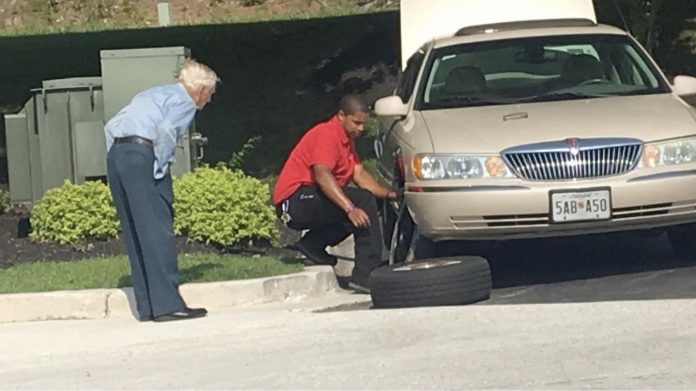
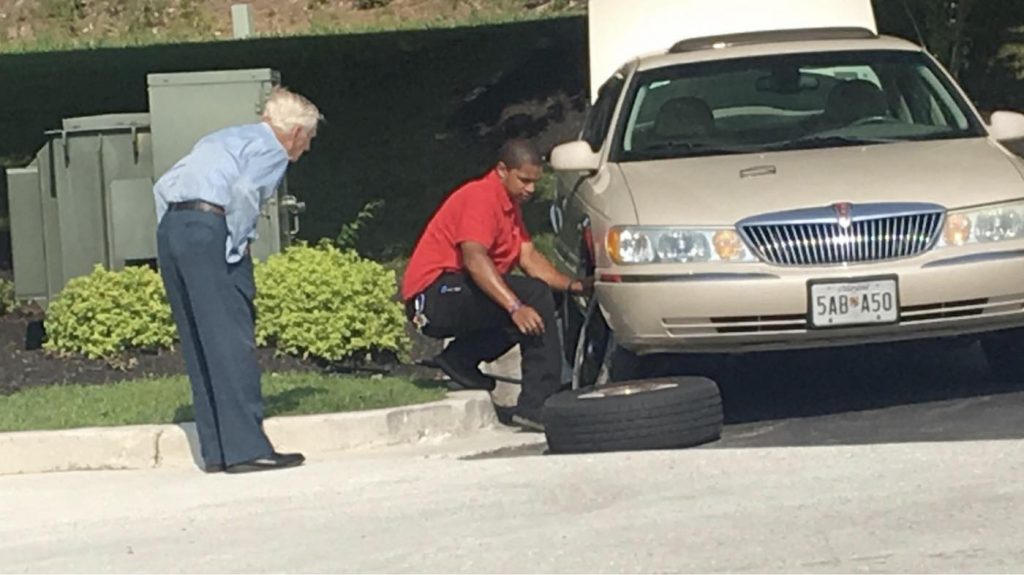
It happened again on July 11, when a manager at the fast food franchise in Severn, Maryland responded with a “beautiful” act of kindness for a 96-year-old World War II veteran who was “shaking” and “almost in tears.”
Mr. Lee came into the store saying he had a flat tire. That’s when a store manager Daryl Howard jumped into action.
“As soon as he finished his sentence, Daryl informed me he needed to help this gentleman right now,” another store manager, Rudy Somoza told CNN.
While the employee was changing the tire, which only took about 15 minutes, Somoza snapped a photo to capture the selfless act of service.
Both inventors of centuries past and scientists of today have found ingenious ways to make our lives better with magnets—from the magnetic needle on a compass to magnetic data storage devices and even MRI body scan machines.
All of these technologies rely on magnets made from solid materials. But what if you could make a magnetic device out of liquids?
Using a modified 3D printer, a team of scientists at the Department of Energy’s Lawrence Berkeley National Laboratory (Berkeley Lab) have done just that. Their findings, which were published earlier this week in the journal Science, could lead to a revolutionary class of printable liquid devices for a variety of applications—including artificial cells that deliver targeted cancer therapies.
This means that by applying an external magnetic field, scientists can control liquid devices made this way, “like waving Harry Potter’s wand.”
“We’ve made a new material that is both liquid and magnetic. No one has ever observed this before,” said Tom Russell, a visiting faculty scientist at Berkeley Lab and professor of polymer science and engineering at the University of Massachusetts, Amherst, who led the study. “This opens the door to a new area of science in magnetic soft matter.”
For the past seven years, Russell, who leads a program called Adaptive Interfacial Assemblies Towards Structuring Liquids, has focused on developing a new class of materials—3D-printable all-liquid structures. Russell and Xubo Liu, the study’s lead author, came up with the idea of forming liquid structures from ferrofluids, which are solutions of iron-oxide particles that become strongly magnetic in the presence of another magnet.
“We wondered: ‘If a ferrofluid can become temporarily magnetic, what could we do to make it permanently magnetic, and behave like a solid magnet but still look and feel like a liquid?’” said Russell.
To find out, Russell and Liu used a 3D-printing technique they helped to develop to print 1 millimeter droplets from a ferrofluid solution containing iron-oxide nanoparticles just 20 nanometers in diameter (the average size of an antibody protein).
Using surface chemistry and sophisticated atomic force microscopy techniques, staff scientists Paul Ashby and Brett Helms of Berkeley Lab’s Molecular Foundry revealed that the nanoparticles formed a solid-like shell at the interface between the two liquids through a phenomenon called “interfacial jamming.” This causes the nanoparticles to crowd at the droplet’s surface, “like the walls coming together in a small room jam-packed with people,” said Russell.
To make them magnetic, the scientists placed the droplets by a magnetic coil in solution. As expected, the magnetic coil pulled the iron-oxide nanoparticles toward it.
But when they removed the magnetic coil, something quite unexpected happened.
Like synchronized swimmers, the droplets gravitated toward each other in perfect unison, forming an elegant swirl “like little dancing droplets,” said Liu. (See video below…)
To make the iron-oxide nanoparticles permanently magnetic, the scientists placed the droplets by a magnetic coil in solution. As expected, the magnetic coil pulled the iron-oxide nanoparticles toward it. (Credit: Xubo Liu et al/Berkeley Lab)
Somehow, these droplets had become permanently magnetic. “We almost couldn’t believe it,” said Russell. “Before our study, people always assumed that permanent magnets could only be made from solids.”
All magnets, no matter how big or small, have a north pole and a south pole. Opposite poles are attracted to each other, while the same poles repel each other.
Through magnetometry measurements, the scientists found that when they placed a magnetic field by a droplet, all of the nanoparticles’ north-south poles, from the 70 billion iron-oxide nanoparticles floating around in the droplet to the 1 billion nanoparticles on the droplet’s surface, responded in unison, just like a solid magnet.
Key to this finding were the iron-oxide nanoparticles jamming tightly together at the droplet’s surface. With just 8 nanometers between each of the billion nanoparticles, together they created a solid surface around each liquid droplet.
Somehow, when the jammed nanoparticles on the surface are magnetized, they transfer this magnetic orientation to the particles swimming around in the core, and the entire droplet becomes permanently magnetic – just like a solid, Russell and Liu explained.
Changing Shape to Adapt to Their Surroundings
The researchers also found that the droplet’s magnetic properties were preserved even if they divided a droplet into smaller, thinner droplets about the size of a human hair, added Russell.
Among the magnetic droplets’ many amazing qualities, what stands out even more, Russell noted, is that they change shape to adapt to their surroundings. They morph from a sphere to a cylinder to a pancake, or a tube as thin as a strand of hair, or even to the shape of an octopus – all without losing their magnetic properties.
The droplets can also be tuned to switch between a magnetic mode and a nonmagnetic mode. And when their magnetic mode is switched on, their movements can be remotely controlled as directed by an external magnet, Russell added.
Liu and Russell plan to continue research at Berkeley Lab and other national labs to develop even more complex 3D-printed magnetic liquid structures, such as a liquid-printed artificial cell, or miniature robotics that move like a tiny propeller for noninvasive yet targeted delivery of drug therapies to diseased cells.
“What began as a curious observation ended up opening a new area of science,” said Liu. “It’s something all young researchers dream of, and I was lucky to have the chance to work with a great group of scientists supported by Berkeley Lab’s world-class user facilities to make it a reality,” said Liu.
In the largest ever study of real-life conflicts captured by CCTV, researchers found that bystanders will intervene in nine-out-of-ten public fights to help victims of aggression and violence.
The findings, which were published in the journal American Psychologist, overturn our long held beliefs from previous decades that victims are ignored by those in their vicinity.
Instead of confirming this common misperception, the international research team of social scientists discovered that at least one bystander (but typically several) did something to help—and when more people are nearby, there is even a greater likelihood that at least one person will intervene to help.
Researchers from the University of Copenhagen, the Netherlands Institute for the Study of Crime and Law Enforcement, and Lancaster University examined video recordings of 219 arguments and assaults in the inner cities of Amsterdam (Netherlands), Lancaster (UK) and Cape Town (South Africa).
“According to conventional wisdom, non-involvement is the default response of bystanders during public emergencies,” said lead author Dr. Richard Philpot of Lancaster University and University of Copenhagen. “Challenging this view, the current cross-national study of video data shows that intervention is the norm in actual aggressive conflicts.
“The fact that bystanders are much more active than we think is a positive and reassuring story for potential victims of violence and the public as a whole,” he added. “We need to develop crime prevention efforts which build on the willingness of bystanders to intervene.”
Using the three urban security cameras which captured aggressive public fights breaking out, 91% of the time, bystanders watching the incidents intervened to:
physically gesturing for an aggressor to calm down
physically blocking an aggressor or pulling an aggressor away
consoling the victim
The research further showed that a victim was more likely to receive help when a larger number of bystanders was present.
Dr Philpot said: “The most important question for the potential victim of a public assault is, ‘Will I receive help if needed?’ While having more people around may reduce an individual’s likelihood of helping (i.e., the bystander effect), it also provides a larger pool from which help-givers may be sourced.”
The study also found no difference in the rates of intervention between the three cities, even though inner city Cape Town is generally perceived to be less safe. Researchers suggest that it is not the level of perceived danger that sets the overall rate of helping, rather it is any signal that the situation is conflictual and requires intervention.
The consistent helping rate found across different national and urban contexts supports earlier research “suggesting that third-party conflict resolution is a human universal, with a plausible evolutionary basis”.
In contrast to the idea that we live in a “walk-on by society”—where people never get involved—the high levels of intervention found in this study across different national and urban borders suggests that intervention is the norm in real-life inner-city public conflicts.
Because religious freedom is a core American value, it is fitting that the U.S. Department of State presents an annual award for courageous acts in upholding religious freedom anywhere in the world.
This year, one of the five people honored with the International Religious Freedom Award is Imam Abubakar Abdullahi, the Muslim religious leader who selflessly risked his own life to save Christians who would have likely been killed without his intervention.
Violent attacks in the Barkin Ladi area of Plateau State between farmers in central Nigeria, who are predominantly Christian, and nomadic herders, who are mostly Muslim, dates back to 2013.
But, in June of last year, the herdsmen launched deadly coordinated attacks in 10 villages that killed hundreds of ethnic Berom farmers. Amidst the mayhem, the 83-year-old Imam showed “true courage, selflessness, and brotherly love” as he protected human lives, despite religious differences.
While Imam Abdullahi was finishing midday prayers, he and his congregation heard gunshots and went outside to see members of the town’s Christian community fleeing. Instinctively, the Imam ushered 262 of them into the mosque and into his personal home next door.
He then went outside to confront the gunmen and when the attackers asked him about their whereabouts, the cleric “refused to give them up.”
“He refused to allow them to enter, pleading with them to spare the Christians inside, even offering to sacrifice his life for theirs,” according to the State Department website.
Although more than 80 people were killed in Nghar village that day, Imam Abdullahi’s actions saved the lives of hundreds more.
Photo by US Embassy in Nigeria
After living in Nghar for 60 years and leading the Muslim community in a mosque that was built on land provided by the Christian community, Abdullahi’s courage in the face of imminent danger, and his history of outreach across religious divides, demonstrates his lifelong commitment to promoting interfaith understanding and peace.
Quote of the Day: “There is nothing noble in being superior to your fellow man; true nobility is being superior to your former self.” – Ernest Hemingway (born 120 years ago today)
Photo: by Gezy-Pics, CC license
With a new inspirational quote every day, atop the perfect photo—collected and archived on our Quotes page—why not bookmark GNN.org for a daily uplift?
It was a moment Jordan Kinyera had been waiting for all his life—23 years after his family’s land was taken during his childhood when he was just 6 years old.
The High Court of Uganda returned the land to them in April, after Kinyera studied to become a lawyer to ensure that justice would prevail.
Now, he is paying it forward by helping families like his, and by spreading the word about land disputes in his homeland.
Mr. Kinyera’s father had lived on the same property since his childhood, but lost it after being sued by neighbors in a 1996 dispute.
“He had a lot of emotional attachment to it, having buried many of his deceased relatives on it, including his brother, after whom I was named,” Mr. Kinyera told CNN.
When he called his 82-year-old father to give him the good news, “He was overjoyed. He broke down and cried.”
Mr. Kinyera worked through 18 years of school and legal training and now says that this knowledge, which his retired-father lacked, allowed him to adequately contest the case, and motivated him to press on all those years.
He was also inspired by the intention to help others in the same position.
Land disputes are common in Uganda, with 33-50% of landowners fighting for their rights at some point, according to the legal advocacy group Namati. This is mostly because so many Ugandans became displaced during war-torn years, then returned home to find their land hijacked.
A 21-year-old firefighter finally got to appreciate the vivid colors of his country’s flag after his colleagues pooled their money to buy him a pair of corrective glasses for colorblindness.
Spencer Caradine, who works as a firefighter in Douglas County, Georgia, didn’t know that he was red-green colorblind until his friend and co-worker Jordan Gardner took notice.
The two men had been out on a hiking trip when Gardner tried to point out a green object that stood next to a red barn – but Caradine said that he couldn’t tell the difference between the two.
Gardner later confirmed his friend’s colorblindness after he got Caradine to unknowingly take a vision test. He and the other firefighters then opened their wallets so they could get Caradine a pair of EnChroma glasses, which cost upwards of $300 on Amazon.com.
After his colleagues surprised him with the glasses, they positioned Caradine in front of the American flag so that it would be the first thing he saw in full color.
Once he put on the glasses, Caradine could barely contain his emotions.
“It was so much different from what I’ve ever seen,” he told WSB-TV. “It was more beautiful.”
Since Gardner published a video of his friend’s reaction to Facebook, it has been viewed thousands of times – and it’s not hard to see why.
The post read: “One of my best friends has never seen what the world really looks like until today. Spencer always said the first thing he wanted to see in color was the American flag so… we made it happen. None of us are emotional people but this morning got the best of all of us.”
(WATCH the heartwarming video below)
Share This Sweet Story Of Patriotism With Your Friends On Social Media…
Late night hospital visits, class cookouts in the mountains, and horse rides dressed as Shakespeare—these are just a few of the best memories Americans have of their favorite teachers.
Participants in a new survey said they owe much to their teachers. They reported every good deed they could remember, from teachers taking time to call students at home to check up on them after a bad day (39%) to staying at school late to help with homework (38%), compassionate educators have had a meaningful impact on a whopping 83% of survey respondents.
Conducted by OnePoll and commissioned by Staples, the survey asked 2,000 Americans about their favorite school teacher and the impact that teacher had on their lives after school. The results showed that 2 in 5 respondents said that they owed their career success to an old school teacher.
For instance, the founder of Good News Network, while attending a community college in Rockville, Maryland, vented to her physics professor, Dr. Don Day, that the Theater Department was too cliquish and she didn’t fit in. He suggested the TV/Radio department as a good alternative, and the rest is serendipitous history—great friends, great teachers, and jobs enough for every graduate in nearby D.C., straight out of college.
Survey results found 77% had a favorite teacher—yet nearly one-third have never thanked them, and wished they had.
America’s Favorite Teacher Memories (edited for length and/or clarity)
“A teacher offered to pay my school fees.”
“He visited me often after school hours when I was hospitalized.”
“He took our whole sixth grade class to his home in the mountains for a cookout picnic.”
“Holding class outside; and one time he rode in on a horse dressed in Shakespearean attire.”
“Everyone would go to her to pull out our loose teeth. She was gentle and we trusted her.”
“During my third grade, I got a high fever at school. My teacher sat with me and fed me my lunch.”
“My French teacher had me enter an essay contest for a study of Europe. Unbelievably, I won. She talked my very strict parents into letting me go.”
“I was afraid to be in school and so I hid behind a snow bank when I was six. My teacher saw me and put her arm around me and said she was so happy to see me and to have me in her classroom. I never forgot that.”
“My high school English teacher knew my parents were in the midst of a divorce. She knew I loved to write, and she would take her lunch to her classroom, and invite me to come and critique my work. I owe much of my University success to those sessions.”
“I don’t have a favorite memory really, but I am in contact still with my first grade teacher. She lives in a nursing home now. She never had any children of her own. I go and see her every chance I get.”
“I remember I was facing a challenge in math and my teacher spent his free time teaching me until I was able to understand everything. I am forever grateful.”
Americans have their teachers to thank for affecting large parts of their lives, such as their personal values and morals (49%) and their level of education (39%).
One respondent said that they had their teacher to thank for getting through the heartache of losing a parent; and collectively, one quarter of Americans polled also gave credit to teachers for impacting how they raised their own children.
Results also showed that Americans felt fondness for their teachers during their last two years of high school—with 26 and 31% reporting that their favorite teachers taught in their junior and senior years, respectively.
Often pulling from their own pockets, it comes as no surprise that 3 in 10 respondents reported a teacher had bought them school supplies if they couldn’t afford them, as well as bought them lunch if they didn’t have food or lunch money.
The memories didn’t stop at school, either; nearly three-quarters of Americans have stayed in touch with a past teacher. And thanks to the modern era, Americans stay in touch with an average of three teachers over social media.
Respondents aged 25 to 34 were the most likely to stay in touch with a past teacher, with 86% reporting they have kept in touch with at least one since leaving school.
AMERICA’S FAVORITE TEACHERS? SURVEY SAYS…
1. English 43%
2. Math 38%
3. Science 35%
4. History 25%
5. Music 21%
Almost half of respondents have met up with favorite teacher for lunch or dinner, or at a community event. 34% even invited a past teacher to meet their own children.
Staples’ New ‘Thank a Teacher’ Campaign
To express their gratitude, nearly 70% of participants have given a gift to a past teacher—with popular gifts being something handmade (35%), baked goods (32%), and bookstore gift cards (30%).
“This Back to School season, we wanted to give teachers the recognition they deserve,” said Shauna Marhafer, Director, Loyalty & Customer Development Marketing of Staples. “Now through September 15, 2019, parents can give 5 percent of in-store and online purchases back to a teacher or school of their choosing through the Staples Classroom Rewards program to help offset teacher expenses.”
You can also enter your teacher into a sweepstakes to win $10,000 in school supplies, simply by posting on Instagram and Twitter, including the name of your favorite teacher and add #ThankATeacher, #Sweepstakes and @StaplesStores. Click to get more details about the Thank a Teacher campaign.
It can be taxing to build a child’s Halloween costume while incorporating a wheelchair. That’s why Target has just released two new costumes that are specially designed for kids who are physically-challenged.
Earlier this week, the company’s Hyde and Eek! Boutique released designs for a pirate and a princess costume that have been adapted for children in wheelchairs.
The clothing have been designed for easy dressing with an opening in the back, and the pirate ship and fairytale carriage wheelchair covers are being sold separately.
Since the company offered the wheelchair covers available for pre-order at $45 each, the princess version has already completely sold out. No word yet on when they will become available again.
The boutique’s website says the items will be shipped to consumers on August 22nd.
Quote of the Day: “The biggest benefit of Apollo was the inspiration it gave to a growing generation to get into science.” – Astronaut Buzz Aldrin (walked on the moon 50 years ago today)
Photo: Buzz Aldrin on the moon, NASA
With a new inspirational quote every day, atop the perfect photo—collected and archived on our Quotes page—why not bookmark GNN.org for a daily uplift?
They say when life gives you lemons, you should make lemonade. Undeterred by a day of slow sales that ended in a robbery, that’s exactly what a girl in a Chicago suburb did. Now, the $348 dollars she raised will be used to feed the hungry.
It started as a typical story that many of us know from our own childhoods. 11-year-old Alizay Kashif wanted to try something new and set up a lemonade stand in a quiet cul-de-sac outside her home in Naperville, Illinois. Rather than keeping the money for herself, she planned to donate whatever she earned to Feeding America, a hunger relief organization based in Chicago.
After two and a half hours, she had taken in a meager $9. Feeling sorry for her, her father Kashif Zaman came outside and offered to buy some of her snacks and drinks. “I need some real customers,” she replied in frustration, according to the Chicago Tribune.
Shortly after, some customers arrived: or so she thought. Two teens asked Alizay what she was charging, and said they didn’t have any cash with them but would return to buy some lemonade. Soon after, they returned in a car with two other teens and drove off with Alizay’s $9.
Seeing how upset his daughter was, Zaman turned to the social media platform Nextdoor, which aims to facilitate connections between neighbors. In addition to urging Zaman to alert the police, 50 to 60 strangers encouraged Alizay to keep selling lemonade.
One of those strangers was Ben Hutchinson, a former television news reporter in Milwaukee. He invited Alizay to set up her lemonade stand in front of his house, in a part of town that has more traffic.
When she set up shop on Sunday morning, she was greeted by dozens of eager neighbors who had read her story on Nextdoor. Business was booming – and it got even better after some special guests arrived.
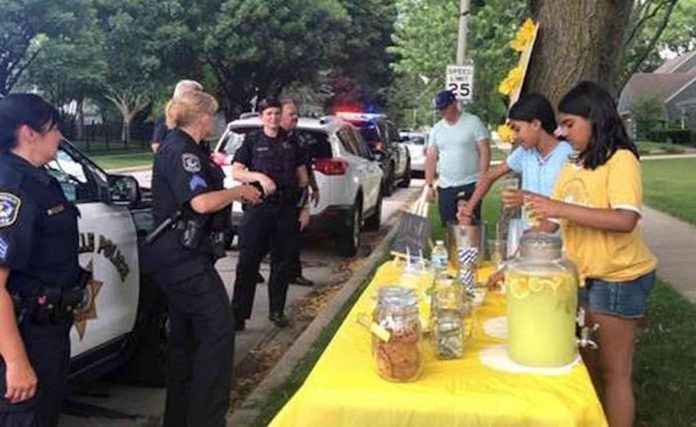
Upon catching wind of Alizay’s lemonade stand, a motorcade of Naperville police cars arrived, sirens blaring. They had taken up a collection at the station, and presented Alizay with an additional $170 to donate to her cause.
Last week, Alizay & Emaan set up a lemonade stand to raise money for @FeedingAmerica. Teens stole the jar w/$9 they made in 2.5 hours. I saw the post & told their dad they could set up on our corner. @NapervillePD showed up & donated $170! In total, they raised over $300 👍🚔🍋 pic.twitter.com/ju7CKL0qKE
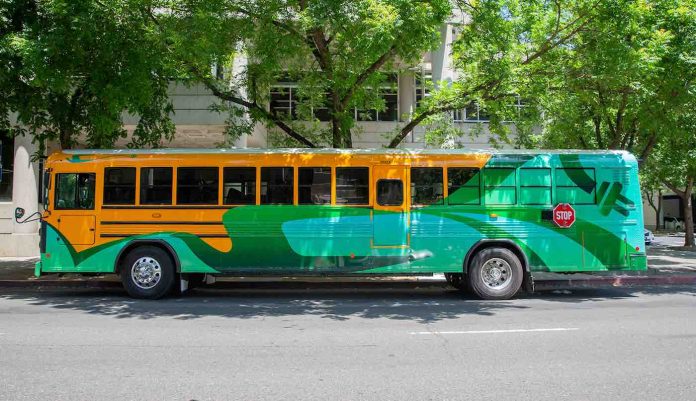
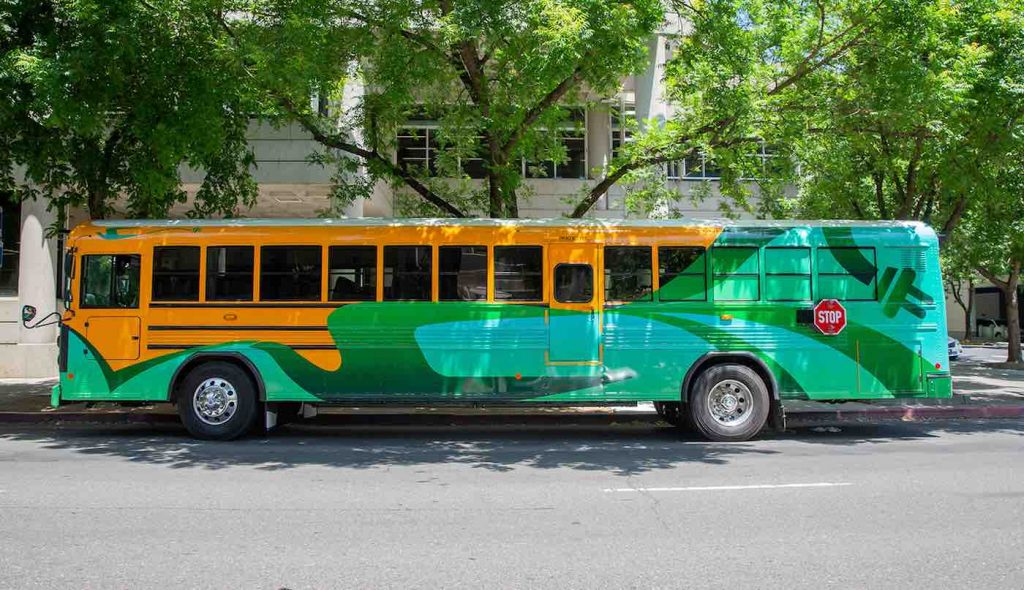
Hundreds of old diesel-powered school buses in California are set to be replaced with all-electric vehicles thanks to new funding from the state.
The California Energy Commission this week approved nearly $70 million in funding to replace more than 200 polluting school buses with all-electric buses that will reduce school children’s exposure to harmful emissions and help the state reach its climate and air quality goals.
“School buses are by far the safest way for kids to get to school – but diesel-powered buses are not safe for kids’ developing lungs, which are particularly vulnerable to harmful air pollution,” said Energy Commissioner Patty Monahan. “Making the transition to electric school buses that don’t emit pollution provides children and their communities with cleaner air and numerous public health benefits.
“The Energy Commission is proud to support this transition to protect the health of children throughout the state, something that will help all Californians breathe easier,” she added.
The Energy Commission’s School Bus Replacement Program is providing more than $94 million to public school districts, county offices of education, and joint power authorities to help transition from diesel school buses to zero- or low-emissions vehicles. Together with this week’s approved funding, the Energy Commission has awarded $89.8 million of the program’s funds to schools in 26 California counties.
The electric buses approved today will eliminate nearly 57,000 pounds of nitrogen oxides and nearly 550 pounds of fine particulate matter (PM2.5) emissions annually.
Photo by the California Energy Commission
Most of the Energy Commission’s awards support buses in disadvantaged, low-income communities, which are disproportionately affected by air pollution and health problems from poor air quality. 90% of the electric buses that will be distributed through the new program will be operating in disadvantaged communities.
In addition to the health benefits, the switch to electric will save schools money in fuel and repair costs. The Energy Commission estimates that schools will save nearly $120,000 in fuel and maintenance costs per bus over 20 years.
Diesel buses emit harmful pollutants, including fine particles that can lodge deep in the lungs and enter the bloodstream. Because children’s lungs are still developing, and due to their faster breathing rate and other factors, children are more susceptible to the adverse health effects linked to air pollution – including lung damage and asthma attacks. Scientists have even found that these fine particles can cause asthma in healthy children.
To help protect this vulnerable population, there are a number of state initiatives to replace diesel school buses – largely with electric buses.
These efforts include the statewide California Climate Investments (CCI) initiative that puts billions of cap-and-trade dollars to work reducing greenhouse gas emissions, strengthening the economy, and improving public health and the environment. Projects funded through the CCI initiative to put electric school buses on the road include the California Air Resources Board (CARB)’s Rural School Bus Pilot Project, Hybrid and Zero-Emission Truck and Bus Voucher Incentive Project, and Community Air Protection Program. CARB’s Carl Moyer Memorial Air Quality Standards Attainment Program also helps fund electric school buses.
The Energy Commission is using funds from the California Clean Energy Jobs Act, also known as Proposition 39, to provide schools with electric buses. Proposition 39 is a voter-approved initiative that adjusted the corporate income tax code and allocated revenues to school districts for energy improvements.
Over five years, the Energy Commission’s Proposition 39 K-12 Program awarded more than $1.7 billion to schools to plan and install energy efficiency upgrades and clean energy generation measures.
The Energy Commission’s Clean Transportation Program, also known as the Alternative and Renewable Fuel and Vehicle Technology Program, will provide the charging infrastructure to support the buses purchased through the School Bus Replacement Program. The Clean Transportation Program will also fund workforce training and development opportunities for drivers and maintenance technicians.
Power Up With Positivity By Sharing The Good News To Social Media…
College is stressful. Students have classes, papers, and exams. But they also often have work, bills to pay, and so many other pressures common in modern life.
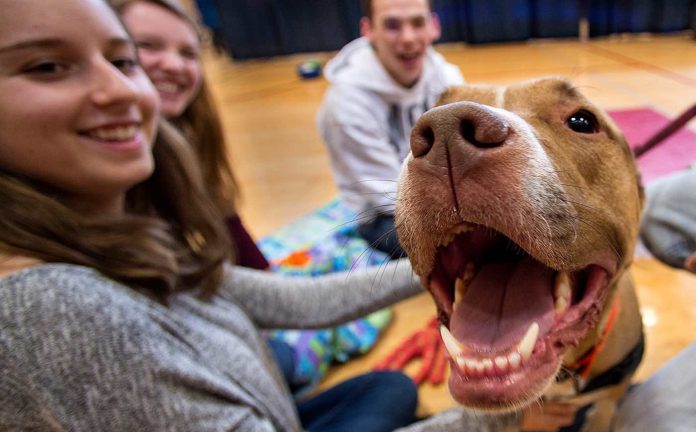
Many universities have instituted “Pet Your Stress Away” programs, where students can come in and interact with cats and/or dogs to help alleviate some of the strain.
Scientists at Washington State University have recently demonstrated that, in addition to improving students’ moods, these programs can actually get “under the skin” and have stress-relieving physiological benefits.
“Just 10 minutes can have a significant impact,” said Patricia Pendry, an associate professor in WSU’s Department of Human Development. “Students in our study that interacted with cats and dogs had a significant reduction in cortisol, a major stress hormone.”
Pendry published these findings with WSU graduate student Jaymie Vandagriff last month in AERA Open, an open access journal published by the American Educational Research Association.
This is the first study that has demonstrated reductions in students’ cortisol levels during a real‑life intervention rather than in a laboratory setting.
The study involved 249 college students randomly divided into four groups. The first group received hands‑on interaction in small groups with cats and dogs for 10 minutes. They could pet, play with, and generally hang out with the animals as they wanted.
To compare effects of different exposures to animals, the second group observed other people petting animals while they waited in line for their turn. The third group watched a slideshow of the same animals available during the intervention, while the fourth group was “waitlisted”. Those students waited for their turn quietly for 10 minutes without their phones, reading materials, or other stimuli, but were told they would experience animal interaction soon.
Several salivary cortisol samples were collected from each participant, starting in the morning when they woke up. Once all the data was crunched from the various samples, the students who interacted directly with the pets showed significantly less cortisol in their saliva after the interaction. These results were found even while considering that some students may have had very high or low levels to begin with.
“We already knew that students enjoy interacting with animals, and that it helps them experience more positive emotions,” Pendry said. “What we wanted to learn was whether this exposure would help students reduce their stress in a less subjective way. And it did, which is exciting because the reduction of stress hormones may, over time, have significant benefits for physical and mental health.”
Now Pendry and her team are continuing this work by examining the impact of a four-week-long animal-assisted stress prevention program. Preliminary results are very positive, with a follow‑up study showing that the findings of the recently published work hold up. They hope to publish the final results of that work in the near future.
Dale Schroeder didn’t go to college, didn’t get married or have children, and he didn’t even own more than two pairs of jeans—but what the Iowa native did do, at the end of his life, was incredible.
Born 100 years ago, Schroeder’s life reads like a promo for the skilled trades. He became a carpenter, worked 67 years at the same business in DesMoines, and put some of his money away while living frugally. He was quiet and shy, not often going against the grain.
During his retirement, Schroeder decided he wanted to use the tidy sum he stashed in the bank to help his community, so he consulted attorney Steve Nielsen on how he could make it happen.
“Finally, I kind of was curious,” said the lawyer. “I asked him, ‘How much are we talking about, Dale?’ And he said, ‘Oh, just shy of three million dollars’ and I nearly fell out of my chair,” Nielsen told KCCI News.
Schroeder grew up poor and didn’t have the chance to go to college, so he wanted to give “free rides” to Iowa kids whose grades qualified them, but who couldn’t meet the steep financial requirements.
“He wanted to help kids that were like him, who wouldn’t probably have an opportunity to go to college, but for this gift.”
Since Schroeder’s death in 2005, his scholarships have funded 33 people and their dreams for college—and recently, those people came together to remember him and the selfless way he reframed their lives.
His old lunch box sat on the table, as if to represent him, while the scholarship recipients shared stories of where they are now and what they’ve accomplished. And although Dale never had children, those 33 strangers now fondly refer to themselves as “Dale’s kids,” and that hits the nail right on the head.
We think Dale would be extremely proud.
(WATCH the video from KCCI-TV below) – Family photo via KCCI video
SHARE the LOVE on Social Media, and Brighten Someone’s Dreams of College…
Video released by Duran Duran on Youtube shows shows drone light show over Kennedy Space Center Wednesday.
Watching a spectacular drone light show under a full moon at the Kennedy Space Center, while listening to a hauntingly beautiful orchestral performance led by Duran Duran, synced with video of the moon landing… Maybe it’s the perfect way to celebrate the 50th anniversary of the Apollo 11 achievement.
The Amsterdam design firm Studio Drift launched the special edition of their spectacle—called Franchise Freedom—at the Kennedy Space Center Wednesday night.
The dynamic aerial sculpture features 300 glowing, autonomous Intel Shooting Star Drones. The unchoreographed display was accomplished thanks to finely-tuned algorithms. Each drone acts and reacts in real-time to its network.
The result is a spellbinding replica of starlings in slow-moving flight.
In front of a big-screen showing video highlights of the Apollo rocket lift-off and moon landing filmed a half century ago, Duran Duran, the British New Wave band best known for their hit single “Hungry Like the Wolf” performed an aptly-named composition “The Universe Alone,” backed by a string ensemble and choir.
The orchestral arrangements soared as high as the drones, making for an unforgettable evening.
“I was completely enchanted by what they had created. I’d never seen technology like this be used in such an emotional way,” says band founder and keyboardist Nick Rhodes.
(WATCH two clips of the performance below…)
Blast This Cool Story Off to Your Friends By Sharing It To Social Media…
Quote of the Day: “I’ve often said, there is nothing better for the inside of the man, than the outside of the horse.” – Ronald Reagan, paraphrasing Winston Churchill
Photo: by a_Valentine Photography, CC license on Flickr
With a new inspirational quote every day, atop the perfect photo—collected and archived on our Quotes page—why not bookmark GNN.org for a daily uplift?