All News - Page 725 of 1738 - Good News Network
Home Blog Page 725

“Encourage, lift and strengthen one another. The positive energy spread to one will be felt by us all, for we are connected.” – Deborah Day

Quote of the Day: “Encourage, lift and strengthen one another. The positive energy spread to one will be felt by us all, for we are connected.” – Deborah Day

Photo: by Karen Dorsett, CC license, via Flickr

With a new inspirational quote every day, atop the perfect photo—collected and archived on our Quotes page—why not bookmark GNN.org for a daily uplift?

Veteran Given 4 Months to Live Transforms Polluted Creek – and Gets 27 Additional Years Because of It (Podcast)

Disabled veteran Jon Beal dedicated himself to nursing a polluted creek back to health—and his passion ended up extending his own life decades beyond a doctor’s diagnosis.

Click above to hear The Good News Guru tell the amazing story (from the December 28, 2018 Ellen K. Morning Show on KOST-103.5 radio in Los Angeles).

READ the full story at GNN… (Based on a story by KUOW’s RadioActive Youth Media program)

Subscribe to our Good News podcast on iTunes, or for Android devices on Podbean.

Photo by John Hogg / World Bank, and Chesapeake Bay Program, CC license

New 4-Legged Concept Car Could Change the Game for Emergency Rescue and Handicap Transportation

SWNS
SWNS

A car with the ability to climb walls and step over holes using a set of robotic legs could transform the way rescue teams operate in disaster zones.

With millions of people from the world every year needing humanitarian assistance following natural disasters, the “Elevate” is a new concept vehicle that has been designed to cover terrain beyond the limitations of even the most capable off-road vehicle.

Elevate can be driven by first responders to locations like a traditional electric car – but when the terrain gets tough, it can use its “highly dexterous” robotic legs to move in any direction.

It can climb a 5-foot wall, step over a 5-foot gap, walk at 3 mph over tricky terrain, and achieve a 15-foot-wide wheelbase, all while keeping its body and passengers completely level.

LOOKStudent-Designed Electric Car Breaks World Record by Crossing Australia in 6 Days Using Only $50 of Power

The legs, which can ‘walk’ like a mammal or reptile, also fold up into a stowed drive-mode, in which it cuts off power to the joints and uses an integrated passive suspension system to maximize battery efficiency.

Since Hyundai unveiled the design for the car earlier this week, the company says that Elevate will not just benefit people in disaster zones, either – disabled people who don’t have access to a ramp outside their house could hail an Elevate taxi to walk up to their front door, level itself out, and allow the wheelchair to roll inside the home.

SWNS

Elevate is part of Hyundai’s Centre for Robotic-Augmented Design in Living Experiences (CRADLE), which aims to enhance transportation on and off the road.

MOREElon Musk’s First Ultra-Fast Underground Transit Tunnel Will Open to the Public in December

“When a tsunami or earthquake hits, current rescue vehicles can only deliver first responders to the edge of the debris field,” said John Suh, vice president and head of Hyundai Cradle. “They have to go the rest of the way by foot. Elevate can drive to the scene and climb right over flood debris or crumbled concrete.”

Elevate has been dubbed the world’s first ‘Ultimate Mobility Vehicle’ and is being revealed in concept form at this week’s Consumer Electronic Show in Las Vegas, Nevada.

SWNS

In a statement, the manufacturer added: “At CES 2019, Hyundai Cradle is presenting a totally new vehicle concept that combines the power of robotics and EV technology to take people where no vehicle has been before.

CHECK OUTAfter Becoming Largest European City to Offer Free Public Transit, They’re Enjoying a ‘Revolution’ From Their Buses

“The quadrupedal Hyundai Elevate will redefine the boundaries and perceptions of vehicular mobility. Its four highly dexterous and movable legs can be utilized in ways beyond the imagination to allow Hyundai’s inception of a new vehicle category – The Ultimate Mobility Vehicle (UMV).”

The manufacturer is also unveiling an electric concept car which can autonomously drive to an empty parking space to be charged up.

(WATCH the concept video below)

Be First to Share This Future Vision With Friends On Social Media

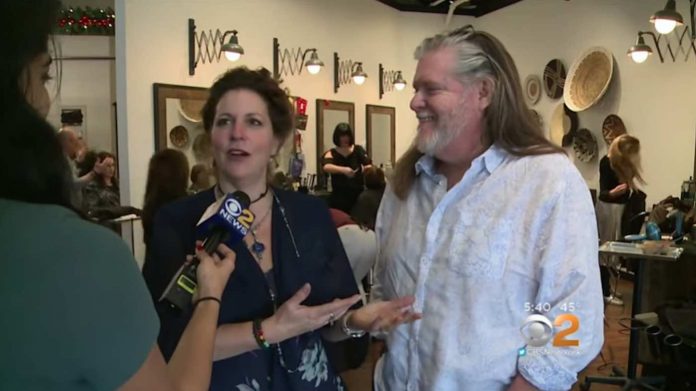
Salon Welcomes Their Rival Business With Open Arms, After Disaster Closed Their Doors

Some businesses might be tempted to take advantage of a rival store’s hardship and scoop up some extra customers, but this friendly neighborhood hair salon became a role model for its own style of competition.

Allendale Hair Studios was forced to temporarily close its doors after a fire damaged their building on Christmas Eve.

With a team of 15 stylists left high and dry, the salon’s owner, Doree Mortillo, did not know where to turn – so she called Charles Gilbride.

Gilbride is the co-owner of Willow and Edge Salon and Spa, the rival hair salon located just down the road from Allendale in New Jersey.

RELATEDCustomers Keep Buying Up All of Donut Shop’s Pastries So He Can Go Home Early to Be With Ailing Wife

Upon nervously explaining her predicament to Gilbride, he immediately insisted on welcoming her team into his facility.

They would run their businesses side by side out of the same building.

“Neighbors always help neighbors,” Gilbride told CBS News. “They’re our neighbors in town and when people are in trouble you help out.”

(WATCH the video below — NOTE for International Viewers: Watch the footage on the CBS News website)

Trim The Negativity — Share a Role Model With Your Friends On Social Media

Millions of Dollars Set to Benefit California Wildfire Relief After 1,500 Brewers Serve Up Special Beer

After wildfires tore through northern California in November, this brewing company was determined to help – but they never expected the flood of fellow-brewers who would quickly follow their lead.

Sierra Nevada Brewing Co. created a special IPA called Resilience—with the intention of donating all of its proceeds to benefit wildfire victims. The company, which is based out of Chico, near the devastated town of ‘Paradise,’ hoped to garner additional donations by asking other brewers to sell Resilience to their customers.

When the company launched the new India Pale Ale in November, they expected maybe 300-400 California brewers to participate. By the time the beer was made available to the public in mid-December, over 1,500 breweries across the United States volunteered to serve up the liquid love.

The initiative is expected to raise roughly $15 million for wildfire relief, all of which will be donated to the Golden Valley Community Bank Foundation dedicated to victims of the Camp Fire.

RELATEDIn Bid to Cut Food Waste, Kellogg’s is Using Their Rejected Cornflakes to Make Beer

“Our suppliers donated ingredients to every brewery nationwide,” said the brewer’s website. “Wholesalers and retailers agreed to carry the beer and donate every dollar they received. All of them agreed to do this for free to benefit people they had never met.”

17,000 barrels—or 4.2 million pints—of Resilience were produced, and the label design was stamped with the moniker: Butte County Proud.

Find Resilience IPA near you, using this list of participating brewers.

Brew Up Some Positivity — Share The Good News With Friends On Social Media – Photo by Sierra Nevada Brewing Co.

Year Might Have Begun Horribly for Disabled Vet Who Lost His Wallet—Now He’s Looking for Two Hero Kids

When Marc Walsh lost his wallet, he thought it was gone forever.

Because Walsh is a disabled veteran, it’s hard for him to find work – so when his wallet fell out of his pocket at the grocery store, he was understandably distraught.

His wallet, storing his credit cards and IDs, also contained hundreds of dollars in cash, which is why he was stunned when all of it was returned intact by two pint-sized Good Samaritans.

One day later, Walsh’s roommate called the Detroit veteran and told him the store’s security footage showed two kids earnestly returning the wallet with everything still inside.

RELATEDWhen ‘Homeless‘ Man Insists On Paying for Fancy Meal With His Hard-Earned Money, Restaurant Makes Special Offer

“I pulled over on the side of the road and started crying I was so happy,” Walsh told FOX 2. “When I went back to look at the video, I was just completely shocked to see two kids that age being the ones to return it. Honestly it’s just really truly heartwarming.”

Walsh is now searching for the kids so he can thank them and offer a reward for their honesty. 

UPDATE (24 hours later): Watch the reunion that happened on Saturday by the local news channel who found the 14-year-old Vincent sisters and set up a meeting between the overjoyed veteran and the delighted teens.

(WATCH the original news coverage) – Security Camera footage via FOX2

Spread The Word: Be Sure And Share The Story With Your Friends On Social Media

“Life is not about waiting for the storms to pass… it’s about learning how to dance in the rain.” – Vivian Greene

Quote of the Day: “Life is not about waiting for the storms to pass… it’s about learning how to dance in the rain.” –Vivian Greene

Photo: by Heather, CC license, via Flickr

With a new inspirational quote every day, atop the perfect photo—collected and archived on our Quotes page—why not bookmark GNN.org for a daily uplift?

Tiny Sponges in the Bloodstream Could Greatly Reduce Cancer Treatment Side Effects

Scientists have developed sponges that could drastically reduce the negative side effects induced by chemotherapy against deadly cancers.

By inserting the tiny sponges into the bloodstream, the devices can help to prevent the dangerous side effects of toxic chemotherapy agents by absorbing the excess chemicals. Doctors also hope that the sponges will allow them to deliver higher doses in order to knock back tumors, like liver cancer, that don’t respond to more benign treatments.

The “drug sponge” is an absorbent polymer coating a cylinder that is 3D printed to fit precisely in a vein that carries the blood flowing out of the target organ – the liver in liver cancer, for example. There, it would sop up any drug not absorbed by the tumor, preventing it from reaching and potentially poisoning other organs.

In early tests, the polymer-coated drug absorber took up, on average, 64% of a liver cancer drug – the chemotherapy agent doxorubicin – injected upstream.

RELATEDBlue Light Reduces Blood Pressure, Just as Effectively as Medication – UK Study

“Surgeons snake a wire into the bloodstream and place the sponge like a stent, and just leave it in for the amount of time you give chemotherapy, perhaps a few hours,” said Nitash Balsara, a professor of chemical and biomolecular engineering at the University of California, Berkeley.

“Because it is a temporary device, there is a lower bar in terms of approval by the FDA,” said Steven Hetts, an interventional radiologist at UC San Francisco who first approached Balsara in search of a way to remove drugs from the bloodstream. “I think this type of chemofilter is one of the shortest pathways to patients.”

Most anticancer drugs are poisonous, so doctors walk a delicate line when administering chemotherapy. A dose must be sufficient to kill or stop the growth of cancer cells, but not high enough to irreparably damage the patient’s other organs. Even so, chemotherapy is typically accompanied by major side effects, including nausea, vomiting, diarrhea and suppression of the immune system, not to mention hair loss and ulcers.

MOREUCLA Surgeons Develop Simple Spray Gel to Super-Charge Immunity and Prevent Cancer From Returning

“We are developing this around liver cancer because it is a big public health threat – there are tens of thousands of new cases every year – and we already treat liver cancer using intra-arterial chemotherapy,” Hetts said. “But if you think about it, you could use this sort of approach for any tumor or any disease that is confined to an organ, and you want to absorb the drug on the venous side before it can distribute and cause side effects elsewhere in the body. Ultimately we would like to use this technology in other organs to treat kidney tumors and brain tumors.”

The study results were published earlier this week in the journal ACS Central Science, an open-access publication of the American Chemical Society.

Hetts, the chief of interventional neuroradiology at the UCSF Mission Bay Hospitals, treats tumors of the eye and brain by threading catheters through the bloodstream to deliver chemotherapy drugs directly to the site of the tumor. This delivers the maximum dose to the tumor and the least dose to the rest of the body, minimizing side effects. It is a vast improvement over injecting chemotherapy drugs straight into the bloodstream, which allows the drugs to reach and poison every part of the body and gambles on the tumor succumbing before the patient. Nevertheless, typically more than half of the dose injected into the body escapes the target organ.

CHECK OUT: Scientists Develop Molecule That Can Finally Help Stop Arthritis From Wearing Down Joints

Several years ago, he started thinking about a major improvement: filtering the blood coming out of the targeted organ to remove excess chemo so that much less of the drug reaches the body as a whole.

Balsara, a chemical engineer who specializes in ionic polymers for batteries and fuel cells, is one of the people Hetts approached to find a suitable absorber to put in the bloodstream.

“An absorber is a standard chemical engineering concept,” Balsara said. “Absorbers are used in petroleum refining to remove unwanted chemicals such as sulfur. Literally, we’ve taken the concept out of petroleum refining and applied it to chemotherapy.”

That polymer led Balsara’s team to a commercial version of the absorbent polymer that was easier to obtain in large quantities. The group then spent more than a year perfecting a way to adhere the polymer to a 3D-printed cylinder with crisscrossing struts that could be placed inside a person’s vein.

MOREDrug That Can Stop a Dozen ‘Untreatable’ Cancers Gets Approval—And Company Vows to Help Every Patient Afford It

“Fitting the cylinder in the vein is important; if the fit is poor, then the blood with the dissolved drug will flow past the cylinder without interacting with the absorbent,” Balsara said.

“This is a first level in vivo validation that yes, this device will bind up drug in the bloodstream,” he added. “But extensive animal testing is not the next path; the next path is getting conditional approval from FDA to do first-in-human studies, because it is much more realistic to test these in people who have cancer as opposed to continuing to test in young pigs who have otherwise healthy livers.”

Hetts says that the technique is superior to another liver cancer treatment now undergoing testing, which requires major endovascular surgery to completely block the outputs from the liver with balloons and divert the outflowing blood to an external dialysis machine, where the drug is removed and the blood returned to the body.

RELATEDExciting New Study Shows That Zapping the Brain ‘Acutely’ Relieves Symptoms of Depression

“There is a lot of opportunity to develop less-invasive devices that will bind up the drug in a gentler manner,” he said.

Drug sponges could be applied to many types of tumors and chemotherapy drugs, Hetts said, and could potentially be used to sop up other dangerous drugs, such as high-powered antibiotics that are toxic to the kidneys but required to kill a pathogen.

“We think this is a generally applicable concept,” he said.

(Source: UC Berkeley)

Cure Your Friends Of Negativity By Sharing The Exciting News With Your Friends On Social Media – Photo by UC Berkeley

For First Time Ever, Renewables Overtake Coal As #1 Energy Source in ‘Europe’s Biggest Economy’

For the first time ever, renewable energy sources have overtaken coal as the leading source of power in Germany.

In 2018, studies show that wind, solar, biomass, and hydro power sources produced 4.3% more power than they did in 2017, accounting for 40% of the nation’s total energy output.

The increase marks an exciting improvement from renewables producing only 19.1% of their power in 2010.

Coal burning, on the other hand, accounted for only 38% of the nation’s energy in 2018.

RELATEDThe Best Environmental News of 2018 — Earth Seems to be in Good Hands After All

With a 5.4% increase, Reuters says that wind power contributed 20.4% of German power output, making it the second largest source of energy in the country at 111 terawatts of electricity.

The data reflects a milestone in Germany’s ambitious goal of having renewable energy sources account for 65% of their energy output by 2030.

Come February, the German coal commission will be presenting its plan to phase out coal energy for good.

Power Up With Positivity By Sharing The Good News With Your Friends On Facebook – Photo by Vince O’Sullivan, CC

Major League Baseball Pitcher Donates $9.4 Million Estate So It Can Bring Joy to Special Needs Kids

This Major League Baseball player is being hailed for hitting a philanthropic home run after he donated a $9.4 million property to help special needs children.

Cole Hamels, who has served as a pitcher for the Philadelphia Philles and the Texas Rangers prior to his current position with the Chicago Cubs, recently donated the estate to Camp Barnabas, a nonprofit that facilitates summer camps and exciting experiences for special needs children and kids with chronic illnesses, as well as their siblings.

The property includes 100 acres of land and a 32,000-square-foot mansion that is located on the shoreline of Table Rock Lake.

WATCHFederer Builds 50 New Preschools in Africa, Mobbed by Kids on First Visit

Hamels and his wife donated the property through their foundation, making it the largest donation that Camp Barnabas has ever received.

“Seeing the faces, hearing the laughter, reading the stories of the kids they serve; there is truly nothing like it,” Hamels said in the statement. “Barnabas makes dreams come true, and we felt called to help them in a big way.”

The Hamels had originally planned on making the property into their dream home, but after the World Series MVP was traded to the Rangers team, they moved to Dallas.

MOREUK Football Stars Buy Hotel, Invite Homeless to Stay For Winter

Based on the reactions of the charity workers, however, the property is certainly a dream come true for them.

“This gift is a game-changer,” said Barnabas director of marketing Andrea Harp. “The lives that will be changed as a result of this will have a ripple effect for years to come. Already, it’s so surreal seeing the Barnabas mission and the story covered on national outlets. That is the Barnabas mission being shared way beyond our corner in southwest Missouri. It’s incredibly rewarding. People who have never heard of Barnabas before, who don’t know who we are, now know who we are and know our passion.”

Score Big With Your Friends By Sharing The Good News To Social MediaPhoto by Realtor.com

20-Year-old Soldier Saves Driver’s Life Using a Hoodie and a Ballpoint Pen

UPDATE: January 19, 2019 – This story has come under scrutiny from the US military  since publishing, after the soldier admitted lying about the incident.

“The entire 1st Armored Division and Fort Bliss team sincerely apologize to the Texas Department of Public Safety, Texas Highway Patrol, the city of Sweetwater, Texas, the city of El Paso, the University of Texas at El Paso, the New Orleans Saints, the local and national media and the American people,” Payne said in a release.
___________

You might enjoy some other military stories:

KINDNESSWhen Mom is Whisked to Hospital After Kitchen Accident, Firefighters Stay Behind to Take Care of Things

SASSKidnapper Got More Than He Bargained for When He Chased Woman into Karate Dojo

INTEGRITYInstead of Running, These Inmates Rush to Aid Their Supervisor Who Collapsed From Stroke Along a Roadside

HERO: Fearless Uber Driver Stops Mid-Trip to Scoop Up Injured Hawk and Save It From the Highway

 Photo by Staff Sgt. Killo Gibson

When Beloved Local Crocodile Passes Away After 130 Years, 500 People Attend His Elegant Funeral

Though most people might be afraid of a giant crocodile, this particular reptile has always been considered a beloved part of his village.

So when he finally passed away of natural causes earlier this week at the age of 130, the village gave him a funeral fit for a king.

The ancient crocodile, named Gangaram, had grown to be almost 10 feet long (3 meters) at the time of his passing. Despite his intimidating size, the Indian residents of the Bawamohatra village in Chhattisgarh adored the scaly giant.

“Even the kids of the village could swim around him and Gangaram had never harmed or attacked anyone,” one of the villagers told Hindustan Times. “Gangaram was not a crocodile, but a friend and a divine creature.”

RELATEDWhen Student Accepts Stranger’s Accidental Invitation to a Funeral, She Becomes ‘Brightest’ Part of the Day

“He would even eat rice and dal which was served by the villagers and kids,” he added. “Gangaram was very understanding. If he saw anyone swimming near him, he used to go to the other side of the pond.”

Once local authorities were able to determine Gangaram’s cause of death, they respectfully gave his body back to the villagers so they could perform his last rites.

His body was carried to the river on a tractor adorned with garlands of flowers and decorations – and over 500 people attended his funeral.

(WATCH the news footage below below) – Photo by Hindustan Times

Be Sure And Share The Heartwarming Story With Your Friends On Social Media

“Humans are not ideally set up to understand logic; they are ideally set up to understand stories.” – Roger C. Schank, PhD

Getty museum garden maze – Credit: vgm8383, CC license

Quote of the Day: “Humans are not ideally set up to understand logic; they are ideally set up to understand stories.” – Roger C. Schank, PhD

Photo: by Vgm8383, CC license, via Flickr

With a new inspirational quote every day, atop the perfect photo—collected and archived on our Quotes page—why not bookmark GNN.org for a daily uplift?

US Cancer Death Rate Has Fallen by 27% in 25 Years – Study

More people are living longer and fuller lives thanks to a steadily declining cancer mortality rate.

According to a report from the American Cancer Society, the cancer death rate in the United States has declined by 27% over the course of the last 25 years.

As of 2016, the cancer death rate for men and women combined had fallen 27% from its peak in 1991. This decline translates to nearly 2.6 million deaths averted during this time period.

The drop in cancer mortality is mostly due to steady reductions in smoking and advances in early detection and treatment. “This new report reiterates where cancer control efforts have worked, particularly the impact of tobacco control,” said Otis W. Brawley, former chief medical officer of the American Cancer Society.

RELATEDSuicide Rates Plummet Among Members of Apache Tribe

“A decline in consumption of cigarettes is credited with being the most important factor in the drop in cancer death rates. Strikingly though, tobacco remains by far the leading cause of cancer deaths today, responsible for nearly 3 in 10 cancer deaths.”

Lung cancer death rates declined 48% from 1990 to 2016 among men and 23% from 2002 to 2016 among women. From 2011 to 2015, the rates of new lung cancer cases dropped by 3% per year in men and 1.5% per year in women. The differences reflect historical patterns in tobacco use, where women began smoking in large numbers many years later than men, and were slower to quit.

Breast cancer death rates declined 40% from 1989 to 2016 among women. The progress is attributed to improvements in early detection.

MOREBlue Light Reduces Blood Pressure, Just as Effectively as Medication – UK Study

Prostate cancer death rates declined 53% from 1993 to 2016 among men. Routine screening with the PSA blood test is no longer recommended because of concerns about high rates of over-diagnosis (finding cancers that would never need to be treated). Therefore, fewer cases of prostate cancer are now being detected.

Colorectal cancer death rates declined 53% from 1970 to 2016 among men and women because of increased screening and improvements in treatment.

Cure Your Friends Of Negativity By Sharing The News With Your Friends On Social Media – Photo by Airman Adam R. Shanks / U.S. Air Force

Cosmic Telescope Finally Captures Light From the Dawn of Time

Artist's rendering by SWNS
Artist’s rendering by SWNS

Light from the the brightest object ever discovered has reached Earth – and it is reportedly being “emitted from the dawn of time.”

The distant quasar – jets of energy powered by supermassive black holes – has the combined brilliance of about 600 trillion Suns, say astronomers.

It began its journey soon after the Big Bang created the universe almost 12.8 billion years ago – which was nearly 8 billion years before our solar system had even formed.

By chance, a galaxy in the foreground acted as a gravitational lens which magnified the ancient quasar.

RELATEDEx-NASA Engineer to Plant One Billion Trees a Year Using Drones

“If it weren’t for this makeshift cosmic telescope, the quasar’s light would appear about 50 times dimmer,” said study leader Professor Xiaohui Fan from Arizona University. “This discovery demonstrates strongly gravitationally lensed quasars do exist despite the fact we’ve been looking for over 20 years and not found any others this far back in time.”

This is a natural phenomenon in which the galaxies closer to Earth bend the light emitting from more distant ones.

Quasars are found at the centre of galaxies and powered by supermassive black holes. They are the brightest objects in the universe, outshining even the hottest burning stars.

The quasar – SWNS

The quasar, named J0439+1634, is believed to be fueled by a supermassive black hole at the heart of a young forming galaxy.

Before the cosmos reached its billionth birthday, some of the very first cosmic light set off through the expanding universe.

LOOKScientists Capture First Ever Confirmed Image of a Planet Being Born

One particular beam from J0439+1634 luckily passed near an intervening galaxy whose gravity bent and magnified the light and refocused it in our direction, allowing the twin Gemini telescopes in Hawaii and Chile to probe the quasar in great detail.

Dissecting a significant swath of the infrared part of the light’s spectrum revealed the tell-tale signature of magnesium. This is critical for determining how far back in time we are looking. The observations also led to a determination of the mass of the black hole powering the quasar.

Combining these with data from multiple observatories around the world – including the Hubble Space Telescope and other observatories around the world – painted a complete picture.

WATCHMan Brings Telescope to the Street and Invites People to Look at the Moon –Their Reactions Will Bring You to Tears

It showed the quasar is located extremely far back in time and space – back when the very first light emerged from the Big Bang.

“This is one of the first sources to shine as the Universe emerged from the cosmic dark ages,” said team member Dr Jinyi Yang, also of the University of Arizona. “Prior to this, no stars, quasars, or galaxies had been formed, until objects like this appeared like candles in the dark.”

The foreground galaxy that enhances our view of the quasar is especially dim, which is extremely fortuitous.

MOREBe Humbled By the 9 Most Breathtaking Photos of Saturn’s Cassini Voyage

“If this galaxy were much brighter, we wouldn’t have been able to differentiate it from the quasar,” added Professor Fan. “We don’t expect to find many quasars brighter than this one in the whole observable universe.”

The mass of the quasar’s supermassive black hole was calculated at 700 million times that of the Sun.

This is most likely surrounded by a sizable flattened disk of dust and gas. This matter – known as an accretion disk – is likely to be continuously spiraling inwards in order to feed the black hole powerhouse.

Observations at submillimeter wavelengths with the James Clerk Maxwell Telescope on Maunakea, Hawaii, suggest that the black hole is not only accreting gas but may be triggering star birth at a prodigious rate of 10,000 stars per year; by comparison, our Milky Way Galaxy makes one star per year.

LOOKHawaiian Volcano Erupts Into Smiley Face Just as its Flow Reaches the Sea

Because of their brightness and distance, quasars provide a unique glimpse into the conditions in the early Universe. This quasar has a redshift of 6.51 – which translates to a distance of 12.8 billion light years. The foreground galaxy which bent the quasar’s light is about half that distance away from Earth at a mere 6 billion light years.

The quasar is ripe for future scrutiny. Astronomers also plan to use the Atacama Large Millimeter/submillimeter Array, and eventually NASA’s James Webb Space Telescope, to look within 150 light-years of the black hole.

SWNS

This will directly detect the influence of the gravity from black hole on gas motion and star formation in its vicinity.

Any future discoveries of very distant quasars like J0439+1634 will continue to teach astronomers about the chemical environment and the growth of massive black holes in our early Universe.

(WATCH the video below)

Be Sure And Share This Far Out Story With Your Friends On Social Media

Stranger Drives 2,300 Miles So He Can Reunite Beloved Dog With Boy Recovering From Surgery

This young boy was recovering from cancer when he told news reporters how much he missed his dog back home – and without hesitation, a total stranger volunteered to reunite them.

8-year-old Perryn Miller and his parents had been visiting family members in Utah for Christmas when the youngster started having headaches. His parents brought him to the emergency room only to hear that their son had a brain tumor as a result of stage 4 glioblastoma multiforme, a rare and aggressive form of brain cancer.

The very next day, Perryn underwent a 7-hour surgery to have the tumor removed. Though the operation was successful, he now faces several months of chemotherapy and radiation – but his parents are unsure of where he will be receiving the treatment.

The Millers are originally from Wilmington, North Carolina. Since their home was destroyed by Hurricane Florence last year, they have been living with local family members while they rebuild.

WATCHTears Flow as 88-Year-old Finally Meets Biological Daughter She Thought Died At Birth

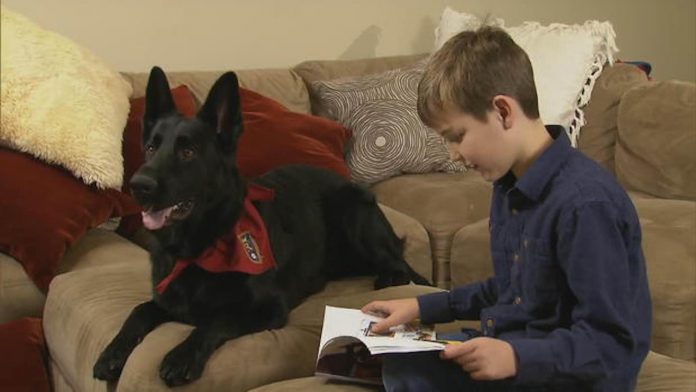
So while the Millers are staying in Utah for Perryn’s recovery, the boy expressed how much he missed his dog: an 8-month-old German shepherd named Frank.

News reports of Perryn’s longing for his canine companion traveled across social media until it caught the eye of former long-haul trucker Bob Reynolds.

Reynolds was so moved by the tale, he volunteered to drive Frank all the way from North Carolina to Utah. The trucker then traveled 2,300 miles across the country in just 52 hours so he could deliver the joyous pup into Perryn’s awaiting arms.

RELATEDWoman Realizes the Old Dog She Just Adopted Was Same One She Had as a Child

“It’s been a whirlwind. It’s been hard. But it’s been overwhelmingly awesome at the same time,” Perryn’s father Jacob Miller told CBS News.

Though Perryn still has a long road to recovery, his family is confident that having the beloved pup at his side will hasten the healing process. In the mean time, a family acquaintance has been raising money for the Millers’ medical bills on GoFundMe – and the page has already raised over $40,000.

They still don’t know if they will be returning to North Carolina for the rest of Perryn’s treatment, but Reynolds has already volunteered to repeat the entire road trip just to bring Frank home again in the future.

(WATCH the video below or our international viewers can watch the footage on the CBS News website) – Photo by CBS News

Drive This Heartwarming Story To Your Friends By Sharing It To Social Media

“Romance is the glamor which turns the dust of everyday life into a golden haze.” – Elinor Glyn

Quote of the Day: “Romance is the glamor which turns the dust of everyday life into a golden haze.” – Elinor Glyn

Photo: by Theo Crazzolara, CC license, via Flickr

With a new inspirational quote every day, atop the perfect photo—collected and archived on our Quotes page—why not bookmark GNN.org for a daily uplift?

UK Trains Will Run On Hydrogen Power Within Three Years and Produce Zero Emissions

For the first time ever, hydrogen-fueled trains will soon be running on UK railways.

The train, codenamed “Breeze”, will convert existing Class 321 trains, which will reengineer some of the UK’s most reliable rolling stock and create a clean train for the modern age.

These trains could run across the UK as early as 2022, emitting only water and zero harmful emissions.

The conversion will be carried out by French transit company Alstom in partnership with Eversholt Rail. The two companies have confirmed that their initial, comprehensive engineering study is now complete, and the train design concept finalized. The innovative technical solution defined is the first to allow a hydrogen train to fit within the standard UK loading gauge, and it will also create more space for passengers than the trains they are intended to replace.

MOREAfter Becoming Largest European City to Offer Free Public Transit, They’re Enjoying a ‘Revolution’ From Their Buses

“The Breeze will be a clean new train for the UK with a stylish, modern look,” said Nick Crossfield, Alstom UK & Ireland Managing Director. “In Germany, Alstom’s hydrogen trains are already transporting passengers in the comfort and quiet that is characteristic of these trains. The Breeze offers British rail users the opportunity to share in the pleasure that is a journey on a hydrogen train.”

“Hydrogen train technology is an exciting innovation which has the potential to transform our railway, making journeys cleaner and greener by cutting CO2 emissions even further,” said UK Rail Minister Andrew Jones MP in a press release. “We are working with industry to establish how hydrogen trains can play an important part in the future, delivering better services on rural and inter-urban routes.”

The Alstom facility in Widnes will manage the conversion of the Breeze trains, which will also create engineering jobs in the emerging sector.

Power Up With Positivity By Sharing The Good News With Your Friends On Social Media – Photo by Alstom

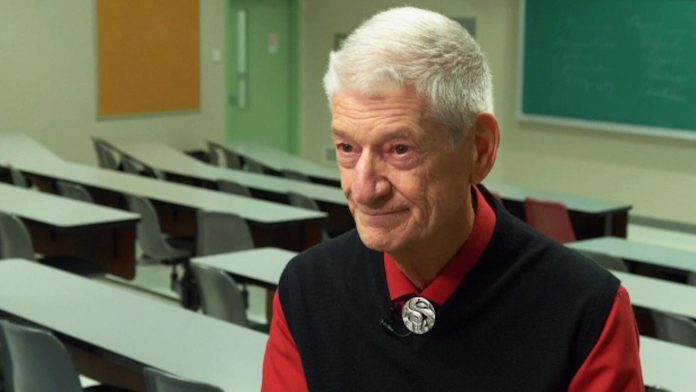
Senior Enrolls in University After Alzheimer’s Diagnosis: ‘It’s a good thing because I was bored being retired!’

Three years ago, Ron Robert was “shocked” and distressed over his Alzheimer’s diagnosis – but instead of letting the disease get the better of him, it has inspired a brand new chapter of his life.

As a means of keeping his mind sharp, the 81-year-old started taking classes at King’s University College in London, Ontario.

Enrolling in the school has not only helped the Canadian senior stay engaged, it is also helping to inspire his fellow dementia patients and raise awareness for what it’s like to live with the disease.

“Too many people, they get diagnosed with something like Alzheimer’s and they think somehow it’s the end,” Robert told CTV News in the video below. “Well, it’s not an end – it’s just a new beginning. It’s something you’ve got to work at. And actually, it’s a good thing because I was getting quite bored being retired! So this is all a new challenge for me.”

RELATED68-Year-old With Alzheimer’s Staves Off the Disease by Climbing the Same Mountain Every Day

Thus far, Robert says that his classes in political science and disability studies have been a tremendous help to his mental health.

“I feel really good,” he said. “The short-term memory is terrible; long-term memory has improved. I feel better mentally, and I think that’s a big important part too. You’ve got to be upbeat.”

Though his fellow students are young enough to be his grandchildren, they have been especially supportive of Robert’s mission. On the few occasions that Robert becomes disoriented in the university facilities, students are always quick to approach him and offer their assistance.

WATCHReal-Life ‘The Notebook’ Couple Weds Again After Husband Forgets They’re Married and Re-Proposes

Robert’s determination has now made him the face of the “Yes, I Live With Dementia” campaign: an initiative that was created by the Alzheimer Society of Canada as a means of combatting the stigma and misconceptions surrounding the neurodegenerative disease.

The senior hopes to continue his education until he can eventually graduate from the school alongside his peers, but until then, he has other aspirations for his fellow dementia-sufferers.

“I’m hoping I’m the beginning of a wave,” said Robert. “I hope that all those people out there listening that have given up on Alzheimer’s will just get off their butts and join me out here!”

(WATCH the video below) – Photo by CTV News

Be Sure And Help Your Friends See This Amazing Story By Sharing It To Social Media

Scientists Develop New Houseplant That Cleanses Your Home of the Worst Chemicals in the Air

Reprinted from the University of Washington

Most people don’t want to live in a home filled with airborne chemicals – which is why these researchers came up with an ingenious way of cleansing indoor spaces of contaminants.

Some people may use air filters to keep offending allergens and dust particles at bay, but some hazardous compounds are too small to be trapped in these filters. Small molecules like chloroform can be found in chlorinated water, and benzene, which is a component of gasoline, builds up in our homes when we shower, boil water, or when we store cars or lawn mowers in attached garages. Both benzene and chloroform exposure have been linked to cancer.

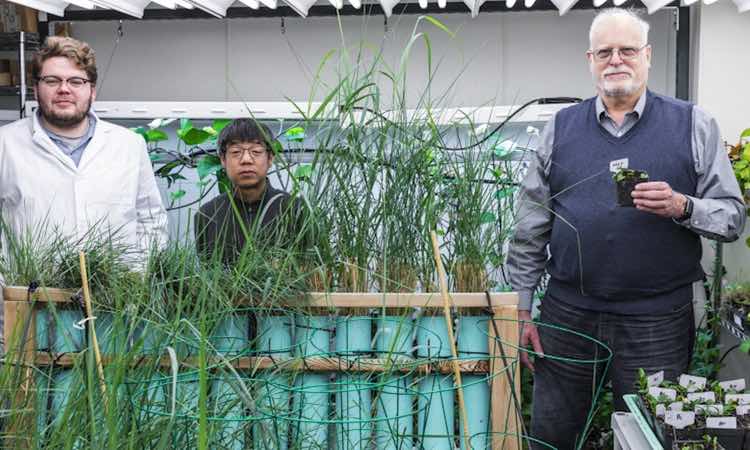
Now researchers at the University of Washington have genetically modified a common houseplant — pothos ivy — to remove chloroform and benzene from the air around it. The modified plants express a protein, called 2E1, that transforms these compounds into molecules that the plants can then use to support their own growth.

“People haven’t really been talking about these hazardous organic compounds in homes, and I think that’s because we couldn’t do anything about them,” said senior author Stuart Strand, who is a research professor in the UW’s civil and environmental engineering department. “Now we’ve engineered houseplants to remove these pollutants for us.”

MOREWant to Fight Air Pollution? New Study Says Planting Hedges is More Effective Than Planting Trees

The team modified the plant with a protein called cytochrome P450 2E1, or 2E1 for short. The protein is present in all mammals, including humans. In our bodies, 2E1 turns benzene into a chemical called phenol and chloroform into carbon dioxide and chloride ions. However, since the 2E1 is only located in our livers, it is only turned on when we drink alcohol – so it’s not available to help us process pollutants in our air.

“We decided we should have this reaction occur outside of the body in a plant, an example of the ‘green liver’ concept,” Strand said. “And 2E1 can be beneficial for the plant, too. Plants use carbon dioxide and chloride ions to make their food, and they use phenol to help make components of their cell walls.”

The researchers made a synthetic version of the gene that serves as instructions for making the rabbit form of 2E1. Then they introduced it into pothos ivy so that each cell in the plant expressed the protein. Additionally, since pothos ivy doesn’t flower in temperate climates, the genetically modified plants won’t be able to spread via pollen.

LOOKCity is Converting Highway Pillars into Vertical Gardens to Clean the Air

“This whole process took more than two years,” said lead author Long Zhang, a research scientist in the civil and environmental engineering department. “That is a long time, compared to other lab plants, which might only take a few months. But we wanted to do this in pothos because it’s a robust houseplant that grows well under all sort of conditions.”

The researchers then tested how well their modified plants could remove the pollutants from air compared to normal pothos ivy. They put both types of plants in glass tubes and then added either benzene or chloroform gas into each tube. Over 11 days, the team tracked how the concentration of each pollutant changed in each tube.

For the unmodified plants, the concentration of either gas didn’t change over time. But for the modified plants, the concentration of chloroform dropped by 82 percent after three days, and it was almost undetectable by day six. The concentration of benzene also decreased in the modified plant vials, but more slowly: By day eight, the benzene concentration had dropped by about 75 percent.

MORECheap ‘Plant Pods’ That Can Grow More Lettuce in a Room Than Half-Acre Plot May End Hunger

In order to detect these changes in pollutant levels, the researchers used much higher pollutant concentrations than are typically found in homes. But the team expects that the home levels would drop similarly, if not faster, over the same time frame.

Plants in the home would also need to be inside an enclosure with something to move air past their leaves, like a fan, Strand said.

“If you had a plant growing in the corner of a room, it will have some effect in that room,” he said. “But without air flow, it will take a long time for a molecule on the other end of the house to reach the plant.”

CHECK OUT: IKEA Releases Free Design For Garden Sphere That Feeds a Neighborhood

The team is currently working to increase the plants’ capabilities by adding a protein that can break down formaldehyde, another hazardous molecule commonly found in household air due to its presence in some wood products, such as laminate flooring and cabinets, and tobacco smoke.

“These are all stable compounds, so it’s really hard to get rid of them,” Strand said. “Without proteins to break down these molecules, we’d have to use high-energy processes to do it. It’s so much simpler and more sustainable to put these proteins all together in a houseplant.”

The team published its findings in the journal Environmental Science & Technology last month.

Plant Some Positivity Amongst Your Friends By Sharing The Good News To Social MediaPhotos by Mark Stone / University of Washington