Quote of the Day: “You are the sky. Everything else is just the weather.” – Pema Chödrön
Photo: by Capt_tain Tom – CC license on Flickr, cropped
With a new inspirational quote every day, atop the perfect photo—collected and archived on our Quotes page—why not bookmark GNN.org for a daily uplift?
Amazon has just placed an order for 100,000 electric delivery vans—a purchase that is now going down in history as the largest for electric vehicles in the world.
The first of the vans are set to hit the roads in 2021 with 10,000 new EVs purchased from Rivian, Tesla’s sustainable automotive rival. The full fleet is expected to hit public roads before 2030.
For perspective, WIRED says that FedEx uses 85,000 motorized vehicles while UPS uses 123,000 cars, vans, tractors, and motorcycles for their global deliveries—only 10,000 of which are reportedly “alternative fuel and advanced technology.”
The $440 million investment is expected to save 4 million metric tons of carbon per year by 2030.
The announcement comes as a byproduct of Amazon partnering with Global Optimism and their newly-established Climate Pledge: a commitment to meet the Paris Agreement 10 years early. This week, Amazon becomes the first signatory of this pledge, which calls on participants to achieve net zero carbon across their businesses by 2040—a decade ahead of the Paris Accord’s goal of 2050.
The initiative was applauded by UN officials who met last week in New York City for International Climate Week.
“Bold steps by big companies will make a huge difference in the development of new technologies and industries to support a low carbon economy,” said Christiana Figueres, the UN’s former climate change chief and founding partner of Global Optimism. “With this step, Amazon also helps many other companies to accelerate their own decarbonization. If Amazon can set ambitious goals like this and make significant changes at their scale, we think many more companies should be able to do the same and will accept the challenge. We are excited to have others join.”
Our fleet is Electrifying! Thrilled to announce the order of 100,000 electric delivery vehicles – the largest order of electric delivery vehicles ever. Look out for the new vans starting in 2021. pic.twitter.com/y5qYpuy2WP
Two years ago, Amazon made a long-term commitment to power its global infrastructure with 100% renewable energy. Amazon is now pledging to reach 80% renewable energy by 2024 and 100% renewable energy by 2030 on its path to net zero carbon by 2040.
To date, Amazon has launched 15 utility-scale wind and solar renewable energy projects that will generate over 1,300 MW of renewable capacity and deliver more than 3.8 million MWh of clean energy annually—enough to power 368,000 U.S. homes. Amazon has also installed more than 50 solar rooftops on fulfillment centers and sort centers around the globe that generate 98 MW of renewable capacity and deliver 130,000 megawatt-hours
of clean energy annually.
Amazon is also launching the Right Now Climate Fund, committing $100 million to restore and protect forests, wetlands, and peatlands around the world in partnership with The Nature Conservancy, which will help to mitigate millions of metric tons of carbon from the atmosphere over the lifetime of the project, and create economic opportunity for thousands of people.
Pass On The Positive News By Sharing It With Your Friends On Social Media…
Against all odds, a beloved border collie has miraculously been reunited with her owners who spent 57 days searching for her in a rural region of Montana.
Carole King and her husband Verne had traveled all the way to Kalispell from their home in Spokane, Washington so they could enjoy a relaxing 4-day getaway in the sprawling mountain wilderness.
However, their vacation turned into a harrowing search and rescue mission after they returned to their dog-friendly hotel on July 20th only to find that their 7-year-old border collie named Katie had disappeared from their room.
The Kings immediately canceled their return trip home so they could stay in Kalispell and search for Katie. For several weeks, they would stay out until 4AM calling her name; they distributed hundreds of fliers throughout the community; they published her picture on social media channels and Facebook groups; concerned local citizens helped them comb the countryside—but they still couldn’t find Katie.
After a few weeks with no success, they bought motion-triggered cameras and animal cage traps that were baited with Katie’s favorite food. They even bought night vision goggles after one of their newly-made friends in Kalispell suggested that Katie may be moving around at night—but still no luck.
At one point, Carole traveled back home to Spokane so she could go back to her job as a mail carrier; but when they declined her request to take additional time off to keep searching, she quit.
“Katie was just more important to me,” Ms. King told the New York Times. “I just said, ‘I’ll finish this week, and that’s it.’”
Upon returning to Kalispell once more, Verne took her place at their home in Washington so he could continue looking after their other pets. Thankfully, a local family in Montana had offered to host them until they found their dog, and Carole continued the search with the help of the friendly mountain community.
By the time September rolled around, Carole began to lose hope. She missed her home, husband, and pets, but Verne and the Kalispell residents encouraged her to continue looking for one more week.
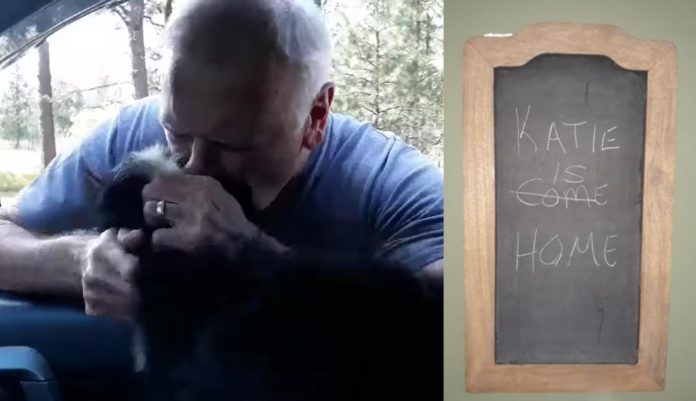
She then received a call from a resident who said that he had seen a border collie in his yard. Carole and her friend visited the property, but found nothing—until they ran into a pair of hikers who pointed out a border collie that had been resting under a nearby tree. When Carole called Katie’s name, the dog ran bounding into her arms.
“All I could think about was, ‘I’m done. I got her,’” Carole told The Times. “I was crying, I was holding onto her, wrapped her up in a bear hug. I couldn’t get her in the car fast enough to close her in so I wouldn’t lose her again.”
Though Katie had lost 15 pounds from her stint in the wild, she was in relatively good health—and she was overwhelmed with joy when she was finally reunited with Verne back in Washington.
Carole now hopes that their story will inspire other pet owners to never give up on their missing animals.
(WATCH the heartwarming reunion in the news coverage below)
Be Sure And Share This Pawesome Rescue Story With Your Friends On Social Media…
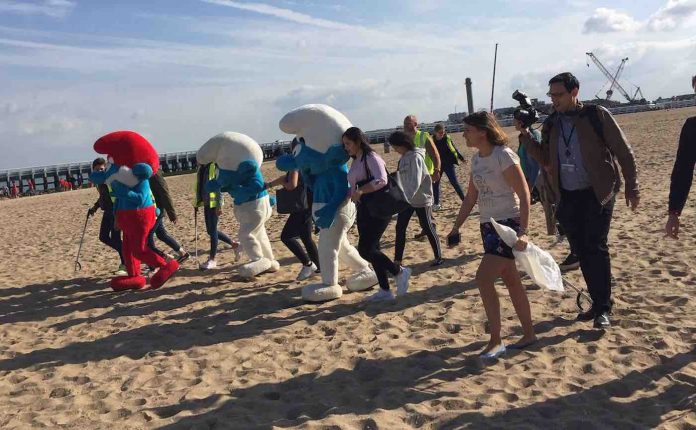
On a sunny morning last week, 1,200 students between the ages of 8 and 14 headed to the beach to undertake the biggest pollution clean up ever seen in the historic Belgian coastal city of Ostend.
A collective of teachers from 26 catholic schools launched the initiative with a commitment to providing their pupils with the tools and knowledge to help them live in a world where the environment is cared for.
A representative of the Flemish Minister of the Environment, Koen van den Heuvel, applauded their “Oceans of tomorrow” project, which was developed in partnership with the University of Antwerp to teach 8,000 local children about the importance of clean seas over the course of a year.
And, to make it fun, they brought along a support staff of blue Smurfs.
After a morning spent collecting litter from the city’s shore, the children enthusiastically welcomed a costumed mascot of Neptune, the Greek god of freshwater and the sea. Arriving with Emma Plasschaert, a Belgian World Sailing Champion, they spoke to the kids about plastic pollution that they have witnessed in the seas, and encouraged the children to adapt lifestyles that include reusable water bottles and textile bags.
“Youth play a lead role in the fight for our planet,” said a representative from the United Nations Regional Information Centre, Marian Blondeel, during a press conference in Ostend. “By joining their forces, youth, ministers, the European Union, the United Nations— and the Smurfs—can speak with a stronger, unified voice.”
Hunt Safrankova, head of the UN’s Environmental Protection office in Brussels, highlighted some positive signs that suggest we are moving in the right direction. For example, more than 60 countries have joined UNEP’s Clean Seas campaign to fight marine plastic and more than 100,000 people worldwide have taken the Clean Seas pledge, promising to reduce their own plastic footprints.
Some 127 countries (including coastal states like Australia, Bali, Kenya, Tanzania, Hawaii, and some parts of India) have adopted legislation regulating plastic bags. In the Belgian Flanders region, authorities recently set a target of reducing litter leakage to the marine environment by 75%—and the children’s volunteer clean-up serves as additional inspiration for businesses to minimize plastic packaging.
The Ostend beach clean-up action was part of the #EUBeachCleanUp public information campaign that culminated around 21st September, International Coastal Clean-up Day.
Quote of the Day: “You are capable of more than you know. Choose a goal that seems right for you… however hard the path. Aim high.” – Edward O. Wilson, biologist, author and humanist
Photo: in Colorado, by Sathish J – CC license on Flickr
With a new inspirational quote every day, atop the perfect photo—collected and archived on our Quotes page—why not bookmark GNN.org for a daily uplift?
Rather than spend her sixth birthday at an amusement park, this little girl abandoned her pre-planned birthday party so her and her father could assist a motorcyclist in need.
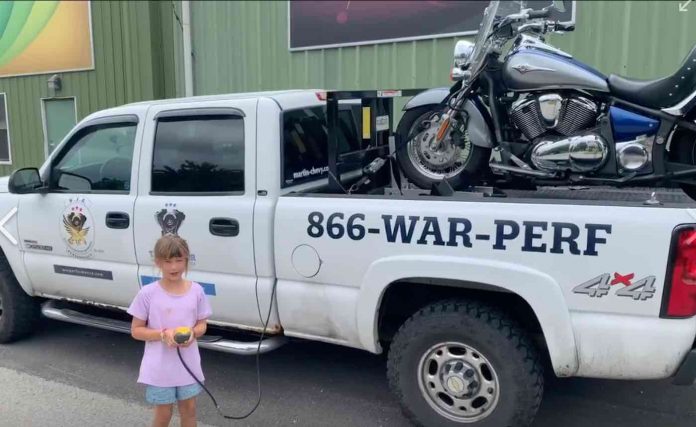
Sammy Flynn and her father Richard had been celebrating her special day at the Wild West Town theme park in Union, Illinois last month when he got a call about a biker whose motorcycle had broken down three hours outside of town.
This is not the first time that Richard has gotten an automotive call for help; he is one of the co-founders of WAR Performance, a motorcycle repair shop based out of Marengo.
“We have really tried to instill that we always help others and that is what our business is about,” Flynn told Good News Network.
So when Flynn got news that there was a biker in need of help, he worried about interrupting his daughter’s birthday at the theme park. Instead, the youngster insisted on continuing with the rescue operation.
“They had called everyone they could think of but no one would come out to help them. We had only been at the Wild West Town theme park for 10 or 15 minutes when I got the call,” Richard told GNN. “She said that we should never leave anyone behind and she was willing to miss her party.”
Sammy was repaid for her kindness only weeks later when the motorcyclist returned to her family’s repair shop to give her a thank you gift for her compassion—and all the motorcyclists in Marengo that heard about it came together to sing Happy Birthday to her. The organizers of the Wild West theme park even volunteered to throw her another birthday party free of charge.
Although the gifts have meant the world to Sammy and her family, Richard says he is ultimately grateful for this mishap so he could witness his daughter’s good deed.
“I was just so proud of my daughter that day—and since then, she always asks if she can come with on pickups to help people out,” says Richard. “She is learning early on that giving is so much better than receiving.”
Rev Up Your Biker Friends By Sharing The Sweet Story on Social Media…
Sales of plastic bags at the seven biggest retail chains in England have fallen by 90% since the nation’s 5-pence charge was introduced in 2015.
Just in the last year, Asda, Marks and Spencer, Morrisons, Sainsbury’s, The Co-operative Group, Tesco, and Waitrose sold 490 million fewer single-use plastic bags than over the previous year.
The data also reveals how 5p plastic bag sales have contributed around £169 million ($207 million) toward charities and other good causes since the charge was introduced, with more than £22 million ($27 million) raised in 2018/19 alone.
The average person in England now buys just 10 bags a year from the main supermarket retailers, compared with 140 bags in 2014 before the charge was introduced.
Environmental Secretary Theresa Villiers welcome the recently-published data by saying: “Our comprehensive action to slash plastic waste and leave our environment in a better state continues to deliver results, with our 5p charge reducing plastic bag sales by 90% in the big supermarkets.
“No one wants to see the devastating impact plastic waste is having on our precious wildlife. Today’s figures are a powerful demonstration that we are collectively calling time on being a throwaway society.”
The total for single-use plastic bag sales reported by all large retailers in 2018/2019 fell 37% compared with the previous year.
This is not the only initiative launched by the UK to tackle plastic waste: the government also approved a world-leading ban on microbeads in January 2018; and they only recently confirmed a ban on the supply of plastic straws, stirrers and cotton buds which will go into full effect in April 2020.
Th United Kingdom is also set to introduce a new world-leading tax on any plastic packaging that does not meet a minimum threshold of at least 30% recycled content from April 2022, subject to consultation, to encourage greater use of recycled plastic to tackle the problem of plastic waste and protect our environment.
Clean Up Negativity By Sharing The Good News To Social Media…
You don’t have to be a book lover to have an appreciation for libraries—the calm, nurturing venues where all the greatest ideas in the world lie in waiting.
Great Big Story has strung together a video reel of some of their favorite and unique book depositories. From displaying nature’s most diverse animal skeletons to cataloguing the world’s largest collections of scents and smells, there are dozens of astonishing libraries that were built to astound.
The video presents highlights from the Library of Congress (with 160 million different documents and artifacts) alongside more obscure places like Library of Smells in Berlin, which documents thousands of specific smells for people, places, and things around the world. (And, don’t miss the Chinese mirrored ‘Library of Reflection’—pictured in the photo— which starts at 5:30 in the reel.)
If you feel the need for more educational exaltation after watching the montage below, you can check out their earlier references on the Human Library—made for people to tell their most engaging and diverse stories of the world—to the free library that was created by a South American garbageman who was sick of seeing literature end up in the trash.
(WATCH the Great Big Story video below) – Photo by Great Big Story
Be Sure And Share This Enriching Reel With Your Friends On Social Media…
This emotional reunion between two WWII survivors has been 75 years in the making.
87-year-old Morris Sana and 85-year-old Simon Mairowitz are cousins who grew up together in Romania. The boys had been the best of friends until the Nazis invaded their country in 1940, which led to both families fleeing the country in separate directions.
Since the cousins had no way of communicating with each other after they fled their home nation, both of them assumed that the other had fallen victim to the war.
While Sana ended up settling down in Ra’anana, Israel, Mairowitz and his family found sanctuary in the UK.
Decades later, Sana’s daughter began using the internet to track down and befriend all of her father’s long-lost cousins and family members. When she told her dad that she’d found his beloved cousin, arrangements for a meeting between the two was set up in Tel Aviv.
Sana’s granddaughter Leetal Ofer recorded their emotional reunion in an Israeli hotel room and publish the footage to Facebook. In the video, Morris and Simon are tearfully hugging each other and expressing their gratitude for the meeting.
Quote of the Day: “Delicious autumn! If I were a bird I would fly about the earth seeking the successive autumns.” – George Eliot
Photo: by Jamie McCaffrey, CC license on Flickr, cropped
With a new inspirational quote every day, atop the perfect photo—collected and archived on our Quotes page—why not bookmark GNN.org for a daily uplift?
This real-life “Superman” has pulled off every courageous stunt in the books; he has rescued people from a burning car; served on the president’s security team; and he was one of the divers who saved the team of Thai soccer players last year.
Not only that, he had been on his way to receive a medal for his heroism earlier this month when he saved a choking baby on an airplane.
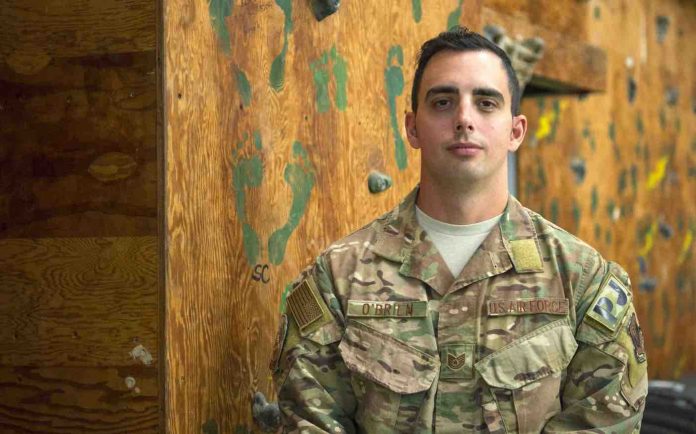
U.S. Air Force Technical Sgt. Kenneth O’Brien is always humble about his acts of heroism, but he was only recently recognized for his valor after he was selected as one of 12 other Airmen who were named the 2019 Outstanding Airmen of the Year.
“I was shocked and never thought I would win,” said O’Brien.
O’Brien had been on an airplane with his family from Okinawa to Dallas to receive the award when he noticed that a 1-year-old child had started to choke. After another passenger failed to clear the blockage in the baby’s throat, O’Brien quickly stepped in to perform CPR and back thrusts. One minute later, the baby had regained consciousness.
O’Brien, who returned to his seat and continued to check on the child throughout the flight, said: “I’m thankful that the child is ok and that I was able to help when the family needed support. I happened to be in the right place at the right time.”
Nevertheless, reporters and military officials have hailed the airman for his consistent talent for saving people’s lives.
“I can’t decide if he’s Superman or Mayhem (the guy on the insurance commercials),” joked Lieutenant General Jim Slife in a Facebook post.
“He’s on the President’s security detail during his summit with North Korea’s Kim Jong Un,” he continued. “He pulls a person from a burning car in Korea. He saves a Thai Navy SEAL during the Thai cave rescue mission. During that mission, he’s the furthest American in the cave, successfully rescuing the Thai [soccer players] who’d been trapped for days.
“So, he’s rightfully recognized as one of the Air Force’s 12 Outstanding Airmen of the Year. AND THEN… on his flight back to the states from Okinawa last weekend for the AFA Convention to be recognized, an infant starts choking and stops breathing. Our man OB leaps into action, clears the breathing passage, resuscitates the kid, hands him back to the parents, and then goes on about his business.
“Sheesh! I don’t know whether I want to be right next to him in case some bad stuff goes down, or whether I want to be as far away from him as possible because bad stuff always seems to go down around him,” concluded Slife.
Despite all of the dangers that O’Brien has endured over the course of his 12-year career in the Air Force, he says that he does not plan on stopping any time soon.
“If someone needs to go do something dangerous, I volunteer,” said O’Brien. “If someone needs a leader, I volunteer. I happened to be in the right place at the right time and that’s what helped me stand out because I sought out key positions or responsibilities.
“I want to keep doing this as long as I can or as long as my body can handle it,” he added. “Hopefully I can continue to do the big missions like this and continue to help people.”
Save Your Friends From Negativity By Sharing The News To Social Media — Feature photo by U.S. Air Force / Airman 1st Class Mandy Foster
Seven years ago, Jason Esterhuizen was in a horrific car crash that destroyed his eyes, plunging him into total darkness.
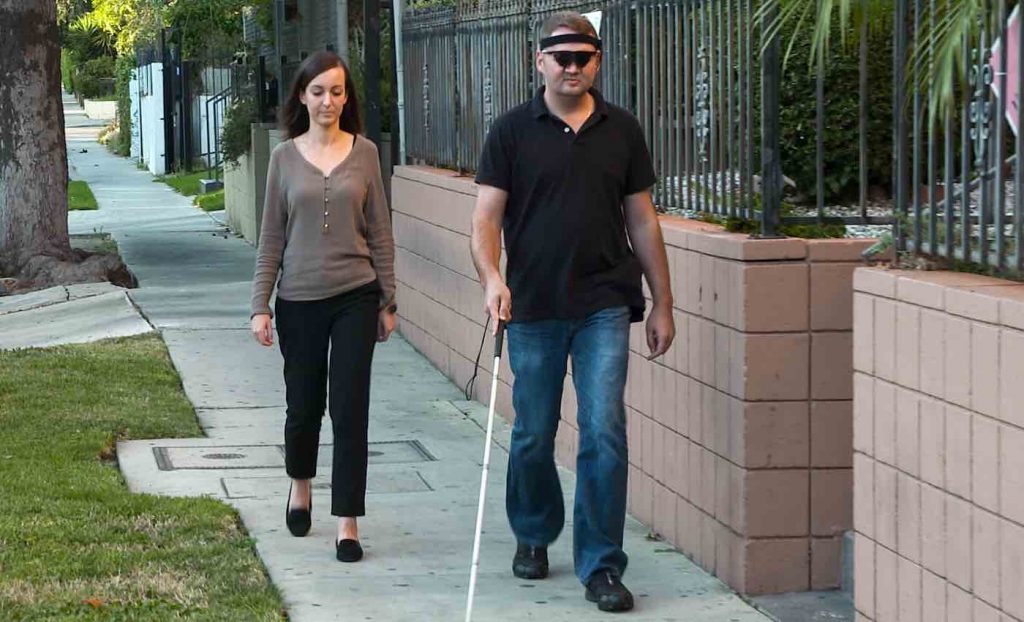
Today, he’s regained visual perception and more independence, thanks to an experimental device implanted in his brain by researchers at UCLA Health.
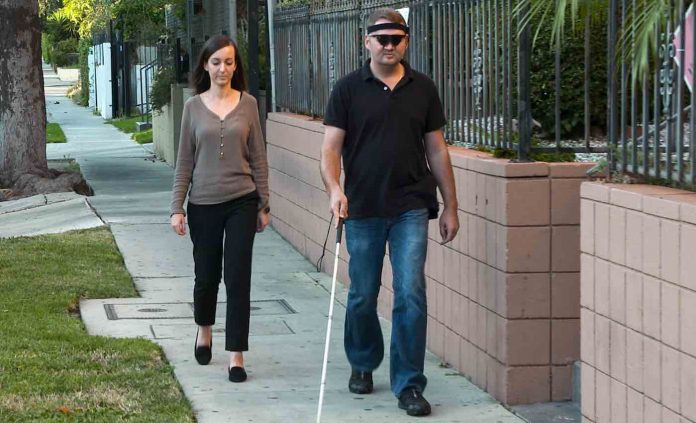
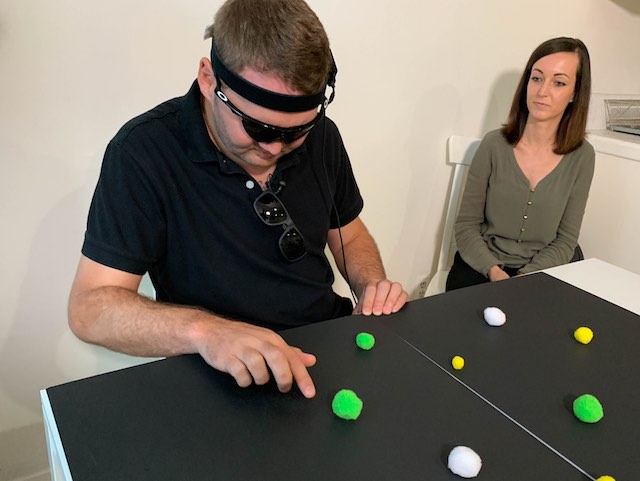
“Now I can do things that I couldn’t do before,” said 30-year-old Esterhuizen, who moved from his native South Africa to participate in the clinical trial at UCLA. “I can sort the laundry, find my way in lighted hallways without using a cane and cross the street more safely. It’s making my life much easier.”
The device is geared to people who used to be able to see but lost their vision to injury or disease. While it doesn’t provide normal sight, it enhances users’ ability to navigate the world by restoring their capacity to detect movement and distinguish light and dark.
“This is the first time we’ve had a completely implantable device that people can use in their own homes without having to be plugged into an external device,” said Dr. Nader Pouratian, a neurosurgeon at UCLA Health and principal investigator of the five-year study. “It helps them recognize, for example, where a doorway is, where the sidewalk begins or ends or where the crosswalk is. These are all extremely meaningful events that can help improve people’s quality of life.”
Designated by the U.S. Food and Drug Administration as a “Breakthrough Device,” the system wirelessly converts images captured by a tiny video camera mounted on sunglasses into a series of electrical pulses. The pulses stimulate a set of 60 electrodes implanted on top of the brain’s visual cortex, which perceives patterns of light and interprets them as visual clues.
“I’ll see little white dots on a black background, like looking up at the stars at night,” said Esterhuizen, the world’s second research subject to receive the device, called Orion. “As a person walks toward me, I might see three little dots. As they move closer to me, more and more dots light up.”
Along with the glasses, the system also includes a belt equipped with a button, which patients can press to amplify dark objects in the sun, and press again to visualize light objects in the dark, such as an oncoming car’s headlights at night.
Six people have received the implant: the first three at UCLA Health, two at Baylor College of Medicine and the sixth at UCLA. Recipients have expressed delight at once again being able to enjoy fireworks and blow out candles on a birthday cake.
Photo by UCLA Health
“It’s still a blast every time I turn it on,” Esterhuizen said. “After seeing absolutely nothing to all of a sudden seeing little flickers of light move around and figuring out that they mean something. It’s just amazing to have some form of functional vision again.”
The implant currently stimulates the left side of the patient’s brain. As a result, they perceive visual cues only from their right-side field of vision. Ultimately, the goal is to implant both sides of the brain to recover a full field of vision.
“This device has the potential to restore useful vision to patients blinded by glaucoma, diabetic retinopathy, cancer and trauma,” Pouratian said. With research subjects’ input, he and his colleagues hope to one day adapt the device to also assist people who were born blind or have low vision.
Nearly 39 million people worldwide are legally blind. Because the Orion, developed and marketed by Second Sight Medical Products, directly stimulates the visual cortex, it can help people like Esterhuizen who have suffered damage to their retinas and optic nerves.
Esterhuizen, an upbeat athlete and adrenalin junkie who skydives, bungee jumps and recently competed with his team in the 2019 World Series for beep baseball — a form of America’s pastime for people who are visually impaired — credits his accident and the device for changing his life in countless ways.
“The day of my car accident, I was 23 and studying to become an airline pilot,” he wrote in his blog. “Life didn’t end there, it just changed for the better. I would not have met the love of my life, Sumarie.”
The couple celebrates their first wedding anniversary on Septeptember 22nd.
“Normally when my wife is mad at me, she’ll be quiet, and I’ll be like, ‘Where are you? I want to speak to you,’” he said. “Now I can find her. She can’t hide from me anymore.”
A Texas bus driver is being praised for going above and beyond the call of duty for the comfort of his pint-sized passengers.
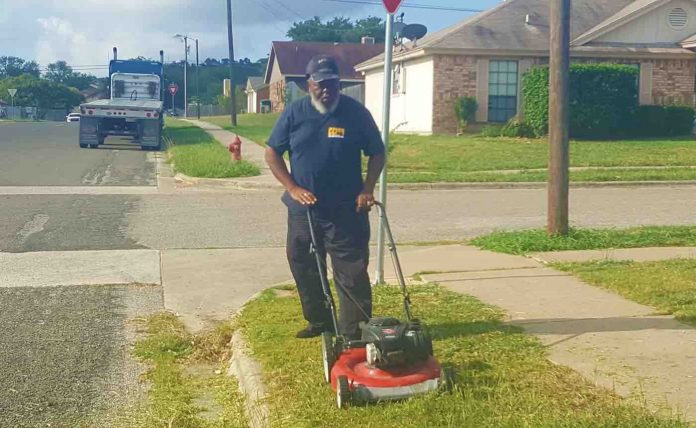
Jerry Martin, who is a bus driver for the Copperas Cove Independent School District in Texas, noticed that one of the bus stops on his route had become overgrown with tall grass.
Rather than allow his students to wait amongst the weeds, he grabbed a lawn mower and took it upon himself to trim the surrounding area.
According to the school district’s Facebook page, the yard had fallen into disrepair because the property had not been inhabited for several years—so the administrators were definitely impressed by Martin’s thoughtful gesture.
“PICTURE OF THE WEEK!” wrote the district. “Bus driver Jerry Martin cut the grass at one of his bus stops so the students don’t have to stand in the weeds while waiting for the bus. The home is vacant and the yard is not being maintained. Three cheers for Mr. Martin!”
Be Sure And Share This Sweet Story Of Kindness With Your Friends On Social Media…
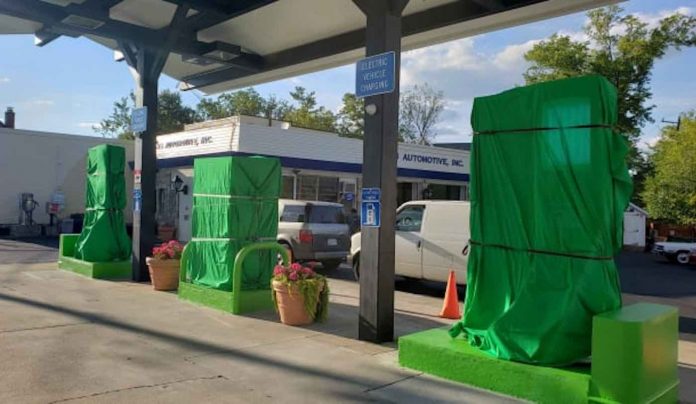
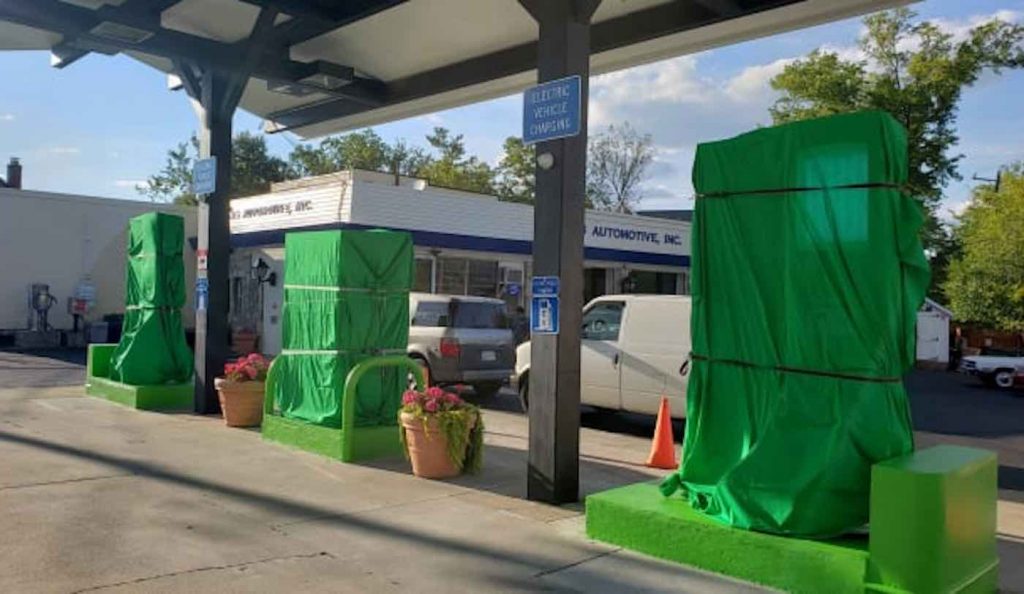
This is the first gas station in the United States that has completely transitioned away from offering petroleum to exclusively electric vehicle charging stations—and it’s all because the owner got sick and tired of the contracts from fossil fuel companies.
Depeswar Doley has been running the RS Automotive gas station in Takoma Park, Maryland for 22 years—although it has been around since 1958.
Prior to making the transition, Doley said that he had already been annoyed by the amount of complicated rules, requirements, and stipulations of the contracts that he maintained with the oil and gas companies, such as “limiting the use of multiple suppliers, including clauses that extend contracts when a certain volume of sales is not met, and limiting maintenance support,” according to CNBC.
When a local utility worker suggested that Doley approach the Electric Vehicle Institute about implementing to EV chargers, he was finally convinced to make the transition after his 17-year-old daughter encouraged his decision.
“It’s not something that I expect to become rich overnight or something like that, but it’s a good cause [and] good for the environment,” he told the news outlet.
Since there has been a shortage of EV charging stations in Maryland, the station’s transition was partially funded by the Electric Vehicle Institute and the Maryland Energy Administration. Its new 200kW electrical system will now be able to recharge up to four vehicles at a time as the drivers wait inside.
“Maryland is proud to be a national leader when it comes to clean and renewable energy, climate change and the promotion of electric infrastructure and vehicles,” said Maryland Gov. Larry Hogan in a release. “This fully converted gas-to-electric charging station is a prime example of our administration’s commitment to the environment and transportation.”
Photo by the Electric Vehicle Institute
Power Up With Positivity By Sharing The Good News With Your Friends On Social Media…
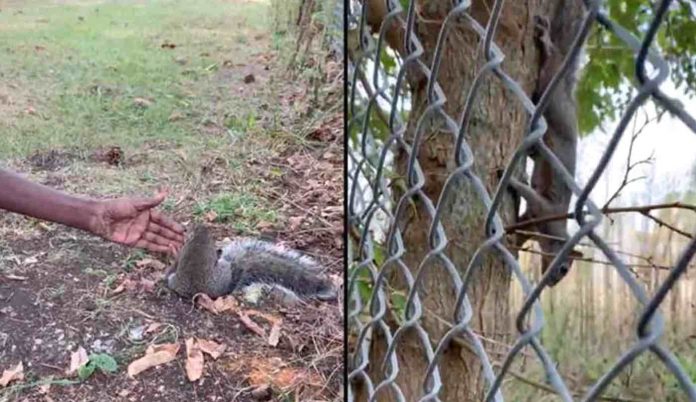
Tia Powell is now being called the “squirrel whisperer” after she was approached by a mother squirrel who asked for her help.
Powell had been walking down a trail in Kiwanis Park, Virginia when a squirrel appeared on the path and blocked Powell’s way. At first, she was hesitant about whether the squirrel was aggressive or not, but after she deemed it to be relatively harmless, she decided to continue on her way.
To her surprise, the squirrel did not want her to leave. As Powell was about to walk away, the critter ran up and tugged on her pant leg.
She then found that there was an injured baby squirrel near to the path. She suspected that it had sustained the injury from a local stray cat, so she decided to interpret the squirrel’s behavior as a plea for help.
Powell moved the baby squirrel off the path and into the foliage. After she tried to walk away a second time, she noticed that the squirrels were now following her, with the baby limping along on its injured leg.
Powell stopped once more and fed the squirrels a sandwich that she had tucked into her bag. After that, she watched them try to climb into a nearby tree—and when she saw the baby struggling to scale the bark, she decided to call for backup.
After dialing the number for the Pulaski Police Department, Powell also called her friend at the Humane Society for help.
“In their defense, I did sound like a crazy lady saying the squirrels wouldn’t let me leave,” Powell told CBS News. “But they showed up and assisted as much as they could.
“We were able to get the baby and mother to a different area with more trees and it was able to climb all the way up and they looked very happy.”
The Pulaski Police Department later published a video of the event saying that it was something “that you would’ve had to see to believe!”
“Had Tia not been willing to trust her instincts that something was wrong, this might have had a very different ending!” they added.
The department also mentioned that they had tried to call several wildlife rescue centers and rehabilitation facilities, but there had been “several issues at hand and the baby was unable to be transported.”
Regardless, Powell says that she returned to the same spot with her kids several days later so she could show them where the rescue had taken place—and she reportedly saw two squirrels staring at her from the safety of a nearby tree.
(WATCH the video below or our international viewers can watch the original coverage on the CBS News website)
Be Sure And Share This Sweet Story With Your Friends On Social Media…
Quote of the Day: “Unexpected travel suggestions are dancing lessons from God” – Kurt Vonnegut
Photo: by bambe1964, CC license on Flickr, cropped
With a new inspirational quote every day, atop the perfect photo—collected and archived on our Quotes page—why not bookmark GNN.org for a daily uplift?
Previous research has already shown that kindness can positively affect our biology, general health, and even our longevity.
There are countless other ways that different compassionate acts and lifestyle changes can affect one person, let alone society—and that is why the University of California in Los Angeles has just announced that they will be launching the world’s first interdisciplinary research institute on kindness.
Thanks to a $20 million gift from The Bedari Foundation, the newly-established UCLA Bedari Kindness Institute will support world-class research on kindness, create opportunities to translate that research into real-world practices, and serve as a global platform to educate and communicate its findings.
Housed in the division of social sciences, the institute hopes to use its research to empower citizens and inspire leaders to build more humane societies.
“Universities should always be places where we teach students to reach across lines of difference and treat one another with empathy and respect — even when we deeply disagree,” UCLA Chancellor Gene Block said. “The UCLA Bedari Kindness Institute will bring the best thinking to this vital issue and, I think, will allow us to have a real social impact on future generations.”
The institute, which will begin operating immediately, will take an interdisciplinary approach to understanding kindness—through evolutionary, biological, psychological, economic, cultural and sociological perspectives. It will focus on research about the actions, thoughts, feelings and social institutions associated with kindness and will bring together researchers from across numerous disciplines at UCLA and at external organizations.
Already, a range of researchers at UCLA are studying the types of questions that will be the basis of the institute’s work. For example, UCLA anthropologists are examining how kindness spreads from person to person and group to group; UCLA sociologists are analyzing how people who regularly act unkind might be encouraged to engage in kind acts instead; and UCLA psychologists are researching how kindness can improve people’s moods and reduce symptoms of depression. Others are pursuing research on changes in neurobiology and behaviors resulting from mindfulness, and how those changes can influence kindness and people’s mental, physical and social well-being.
“In the midst of current world politics, violence and strife, the UCLA Bedari Kindness Institute seeks to be an antidote,” said Darnell Hunt, dean of the UCLA division of social sciences. “Rooted in serious academic work, the institute will partner and share its research on kindness broadly in accessible formats.”
The Kindness Institute will provide seed funding for research projects that examine the social and physical mechanics of kindness and how kindness might be harnessed to create more humane societies. It also will provide mindfulness awareness training to students, faculty and staff and in underserved Los Angeles communities, and host an annual conference at which presenters will examine new discoveries in kindness research, among other activities.
The inaugural director of the institute is Daniel Fessler, a UCLA anthropology professor whose research interests include exploring how witnessing acts of remarkable kindness can cause an uplifting emotional experience that in turn motivates the observer to be kind. Studies by Fessler and his colleagues have shed light on why some people are open to that type of “contagious kindness” experience.
The Bedari Foundation is a private family foundation whose aim is to enable significant cultural shifts in the fields of health and wellness, community displacement and environmental conservation.
“Our vision is that we will all live in a world where humanity discovers and practices the kindness that exists in all of us,” said Matthew Harris, the foundation’s co-founder and a 1984 UCLA graduate. “Much research is needed to understand why kindness can be so scarce in the modern world. As we seek at Bedari to bridge the divide between science and spirituality, through the establishment of the UCLA Bedari Kindness Institute we hope to educate and empower more and more people in the practice of kindness.”
Be Sure And Share This Exciting News With Your Friends On Social Media…
Researchers have identified a new way for people to help keep plastic out of the ocean—and it’s as simple as changing the setting on your washing machine.
According to new research led by Newcastle University, delicate wash cycles in washing machines release more plastic microfibers than other cycles.
The study found that it is because of the volume of water used during the wash cycle, rather than the spinning action of the washing machine, which is the key factor in the release of plastic microfibers from clothes.
The team measured the release of plastic microfibers from polyester clothing for a range of cycles and water volumes. Counting the fibers released, the team found the higher the volume of water the more fibers released, regardless of the speed and abrasive forces of the washing machine.
In fact, they found that on average, 800,000 more fibers were released in a delicate wash than a standard cycle.
Publishing their findings this week in the academic journal Environmental Science and Technology, PhD student Max Kelly, who led the research, explained:
“Counterintuitively, we discovered that ‘delicate’ cycles release more plastic microfibers into the water, and then the environment, than standard cycles.
“Previous research has suggested the speed the drum spins at, the number of times it changes spinning direction during a cycle and the length of pauses in the cycle—all known as the machine agitation—is the most important factor in the amount of microfiber released.
“But we have shown here that even at reduced levels of agitation, microfiber release is still greatest with higher water-volume-to-fabric ratios.
“This is because the high volume of water used in a delicate cycle which is supposed to protect sensitive clothing from damage actually ‘plucks’ away more fibers from the material.”
Millions of plastic microfibers are shed every time we wash clothes that contain materials such as nylon, polyester and acrylic. Because these fibers are so small, they drain out of our washing machines and can ultimately pollute marine environments.
Laundry has been recognized as a major contributor of microplastics but until now, precisely measuring the release of these fibers has been difficult due to the fact that it’s almost impossible to accurately simulate the reality of what happens in people’s machines in a lab setting.
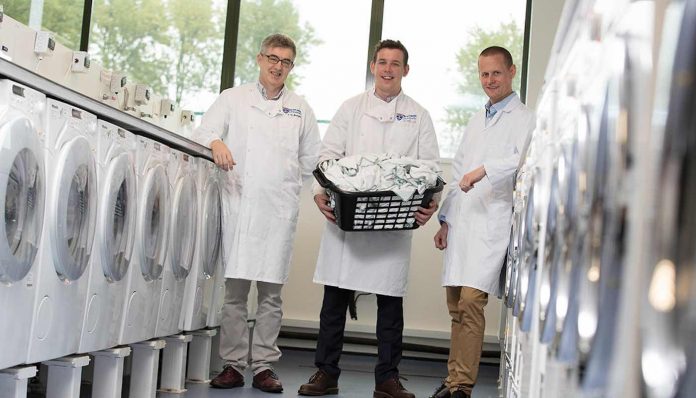
Using a tergotometer—a benchtop device comprising of eight (1,000 milliliters) washing vessels that simulate full-scale domestic washing—the team was able to carry out tests under different conditions, making changes to water volume, spin speed, temperature, and time. A DigiEye camera (digital color imaging system) was then used to accurately calculate the amount of microfibers released.
To test whether the observations made using the tergotometers were reflective of full-size domestic washing machines, the team then tested the fabrics on a delicate wash cycle using identical washing machines in the test center.
The team showed that previous recommendations by groups to move towards high water volumes and low levels of agitation as a way of reducing the amount of microfiber released was actually making the problem worse.
“The appliance industry has started to introduce microfiber filters in some new washing machines and the textile industry is looking to reduce the fiber shedding levels of new clothing,” said study co-author Neil Lant. “We hope that the issue will ultimately be solved by such actions, and our work on the mechanistic causes will help in the development of these solutions.”
Max Kelly adds: “Reducing the amount of plastic pollution is everyone’s responsibility and often it’s the small changes that make a huge difference.
“By avoiding high water-volume-to-fabric washes such as the delicate cycles and ensuring full wash loads then we can all do our bit to help reduce the amount of these synthetic fibers being released into the environment.
“Hopefully, these findings may also be used by manufacturers to influence the design of future washing machines and reduce our plastic footprint. Over time these changes could also see a global reduction in the amount of energy and water required to wash our clothes.”
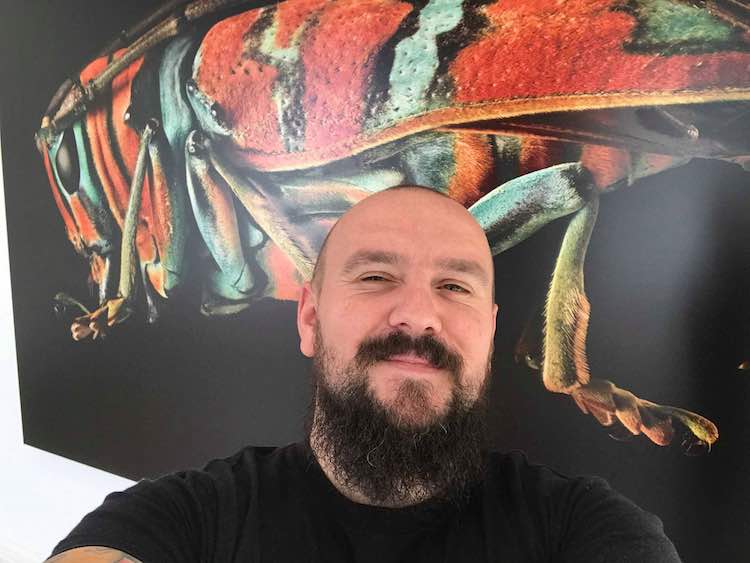
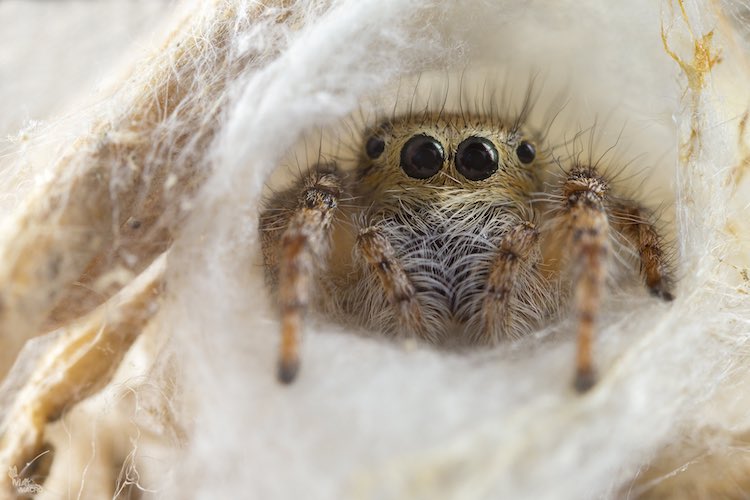
This 34-year-old nature photographer had been suffering from depression and suicidal thoughts when he first found his passion for taking pictures of insects—and his work is now featured in National Geographic.
SWNS
Matt Doogue says that he tried to take his own life nine years ago after hitting “rock bottom.”
“The moment is blurry. In the lead-up, I was so paranoid and angry that I couldn’t leave the house,” says Doogue. “When I attempted suicide I knew I needed to see someone.
SWNS
“I went to the doctors and got antidepressants and counseling, but I knew that I needed something more—and that’s when I started photography.”
Now a dad-of-two, Doogue found that looking at insects through a camera lens helped him in ways he could never have imagined—and it proved to be the lifeline he needed.
SWNS
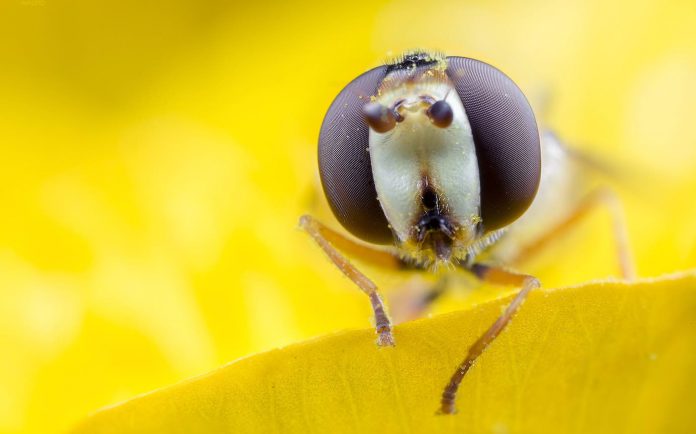
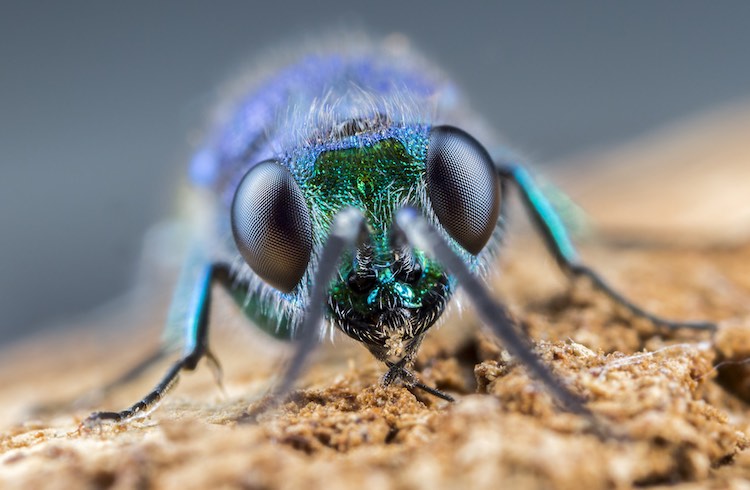
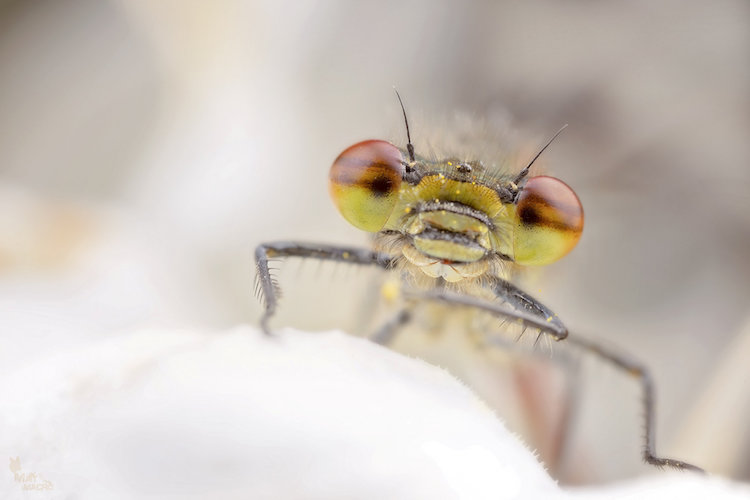
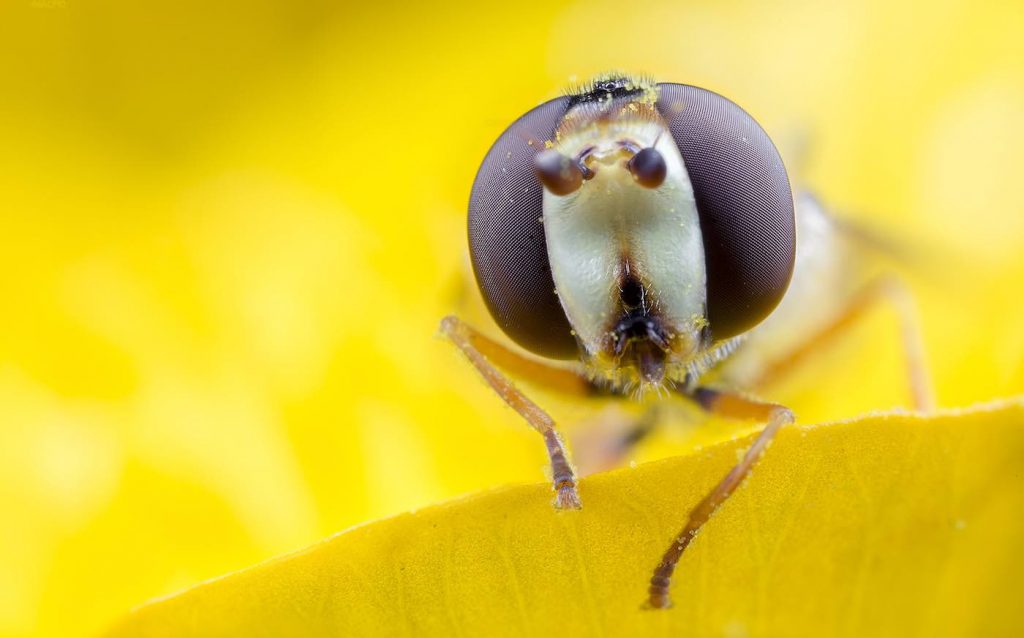
It had a “calming effect” that helped him to “disconnect” from stress; and his astonishing images, showing insects and spiders in stunning detail against brightly colored backgrounds, caught the eye of publishers at National Geographic.
“I ended up as [one of their] featured photographers,” recalled Doogue. “It was the pinnacle of my career. It felt incredible.”
SWNS
Originally from Salford, Greater Manchester, he now lives in Armadale, West Lothian. Though he fears that Scotland is in the grip of an “epidemic” of male suicide, he believes that sharing his love of nature photography can help others to cope with their mental health issues as well.
SWNS
“I think the problem is this ‘man-up’ approach; the idea that men need to be strong puts so much pressure on young males to be fine all the time,” says Doogue. “This is why I try and be so open about my own experience.
“Whenever I am out with my camera, I don’t think about my other worries. It is just me and the environment around me,” says Doogue. “You can lose yourself with a spider making their web.”
SWNS
Doogue, whose work can be found on Matt’s Macro Photography, is set to speak to students at Edinburgh Napier University about the impact nature photography can have on mental health on November 20th.
SWNS
Be Sure And Share The Inspirational Buzz With Your Friends On Social Media…
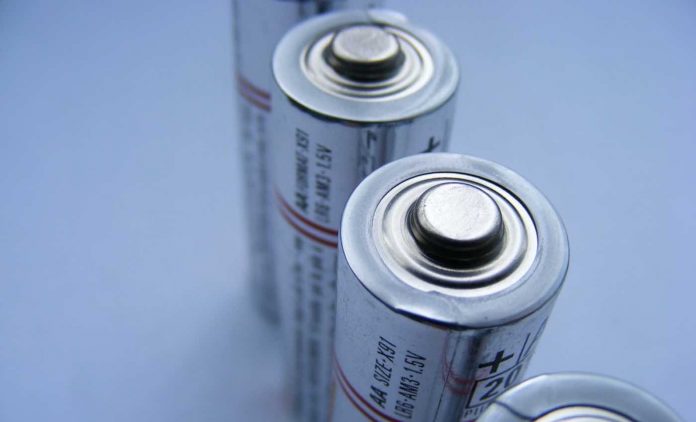
Lithium-carbon dioxide batteries are attractive energy storage systems because they have a specific energy density that is more than seven times greater than commonly used lithium-ion batteries. Until now, however, scientists have not been able to develop a fully rechargeable prototype, despite their potential to store more energy.
Researchers at the University of Illinois at Chicago are the first to show that lithium-carbon dioxide batteries can be designed to operate in a fully rechargeable manner, and they have successfully tested a lithium-carbon dioxide battery prototype running up to 500 consecutive cycles of charge/recharge processes.
“Lithium-carbon dioxide batteries have been attractive for a long time, but in practice, we have been unable to get one that is truly efficient until now,” said Amin Salehi-Khojin, associate professor of mechanical and industrial engineering at UIC’s College of Engineering.
Traditionally, when a lithium-carbon dioxide battery discharges, it produces lithium carbonate and carbon. The lithium carbonate recycles during the charge phase, but the carbon just accumulates on the catalyst, ultimately leading to the battery’s failure.
“The accumulation of carbon not only blocks the active sites of the catalyst and prevents carbon dioxide diffusion, but also triggers electrolyte decomposition in a charged state,” said Alireza Ahmadiparidari, first author of the paper and a UIC College of Engineering graduate student.
Salehi-Khojin and his colleagues used new materials in their experimental carbon dioxide battery to encourage the thorough recycling of both lithium carbonate and carbon. They used molybdenum disulfide as a cathode catalyst combined with a hybrid moneyslots electrolyte to help incorporate carbon in the cycling process.
Specifically, their combination of materials produces a single multi-component composite of products rather than separate products, making recycling more efficient.
“Our unique combination of materials helps make the first carbon-neutral lithium carbon dioxide battery with much more efficiency and long-lasting cycle life, which will enable it to be used in advanced energy storage systems,” Salehi-Khojin said.
This research was supported, in part, by the U.S. Department of Energy, Office of Energy Efficiency and Renewable Energy, and a grant from the National Science Foundation.