Quote of the Day: “Not all those who wander are lost.” – J. R. R. Tolkien
Photo: by Alessandro Malatesta, CC license via Flickr
With a new inspirational quote every day, atop the perfect photo—collected and archived on our Quotes page—why not bookmark GNN.org for a daily uplift?
Great news for anyone in the Los Angeles area—or for anyone willing to drive a few hours to experience a possible life-altering event: We have 10 FREE tickets for a fabulous empowerment conference being held May 17th-19th at the L.A. Convention Center! A special gift for GNN fans who are interested in learning and growing.
“The Powerful U Experience” is bringing together over 30 world-renowned influencers, visionaries, and entrepreneurs for a three-day transformative event to teach personal power through responsibility, controlling perceptions, understanding purpose, and harnessing emotions.
As the founder of GNN, I will be joined by my Good News Gurus radio host, Ellen K for a break-out session Friday at 12:10. We will be talking about how to be Powerful Women, the theme of the conference for Friday. (Together, Ellen and I broadcast the good news story of the week to syndicated radio audiences around the U.S. via KOST 103.5.)
The Powerful U weekend journey will include 45 unique sessions, meet and greets, and community breakouts covering entrepreneurship, health and fitness, diversity, relationships, and education —and a special self-defense workshop.
Keynote speakers include Lilian Garcia, Robin Sharma, Henry Ammar, Trent Shelton, Dean Graziosi, and Glennon Doyle, among many others.
The best thing about this conference is the price for the general public. These types of events always cost a thousand dollars or more, but the ‘Powerful U’ founders made it a point to keep the prices low, so that most people can afford it—and I love that.
Their website says: “General admission ($249), preferred seating ($449) and VIP ($1199). Powerful-U will not refuse entrance to anyone who cannot afford a ticket and believes all people should be able to attend a world-class event, gaining access to life-changing wisdom and experiences.”
I hope to see you there on Friday, where I will be speaking and answering questions at noon in one of the breakout sessions. I will also be around for the rest of the day (and likely on Saturday) signing books and chatting with fans. Visit the website for more info, and to get your tickets.
Courtney Lewis may only be 14 years old, but she is already well on her way to designing gowns for Hollywood starlets.
The teenage fashionista is quickly gathering social media steam after her family posted pictures of the prom dress she created for her 18-year-old sister Mikayla.
When Courtney first insisted on making the dress, her mother was skeptical – but after five months of hard work and some guidance from her fashion mentors at Duke Ellington School of the Arts in Washington DC, Courtney created a masterpiece.
Courtney’s mother Crystal told Good Morning America: “I’m especially proud of [Courtney] because she was really swamped at school… and instead of resting all weekend, she was working on the dress.”
Since Mikayla posted photos of the dress to Instagram, Courtney has received 50 requests for custom-made dresses.
Though the youngster is “flattered” by the outpouring of admiration and support, she says that she still has to finish school before embarking on her career as a top tier fashion designer.
That being said, Crystal said that she finally allowed Courtney to make an Instagram account for her fashion designs so her new fans could keep up with her work.
(WATCH the quick video below)
Be Sure And Share The Dazzling News With Your Friends On Social Media…
We asked our readers to tell us their favorite quirky “mom-isms” (using the hashtag #MyMomism) and the results were a rollicking romp down “Really?” lane. See if you find these as hilarious as we do…
“One day, I was talking with my mom, and used the expression ‘Don’t get your shorts in a knot.’ She had never heard it before and liked it, but when she tried to use it on a later occasion, she couldn’t remember the phrase, so she said, ‘Don’t get your underwear in an uproar.’ I like her version better, and use it myself.” –Karen Operabuffa
2. “When we would do something a little risky, like swing really high and jump off, she would say, ‘Are you tired of living?’” –Ellen Mocarski Bedford
3. “‘Who did it and ran?’ Her favorite thing to say when something got broken, disappeared, or generally went wrong in the house.” –Li-Anne Fiore
4. “‘Do you live in the Colosseum? Shut the door!’” –Pierina Bevilacqua
5. “‘Girls, I’m cold. Go put your sweaters on!’” –Noreen Noni Heikes
6. “Ha ha. All moms of young children can relate to this one: ‘Go to bed. I’m tired.’” –Li-Anne Fiore
7. “When my mom was really annoyed with us and wanted to get us out of the house she would tell us to ‘go play jacks on Grand River Ave’ in Detroit. LOL!” –Trisha Clow York
8. “‘What are you, helpless or hopeless?’ (As a kid, I’d think real hard and never could figure it out. No matter which one I chose, my Ma would always laugh.) –Sandi IneedCoffee
9. “‘Clear the table! This is why your father and I had kids, so we don’t have to clear the table.’” –Tracy Lynn Grillo
10. “My favorite momism is this random phrase that my mom made up called ‘toot toot shaboogie.’ Even though I have no idea what it means, I still love that little quirk about her.” –Anna Hamilton
11. Whenever I was feeling overwhelmed, mom would say, ‘How do you eat an elephant? One bite at a time.’” –Amy Littlefield Svanberg
12. “As a kiddo running out the door, I heard, ‘Put your manners in your pocket!’” –Amy Littlefield Svanberg
13. “When my brother and I would argue and yell for my mom – expecting her to step in and settle the argument – she’d sweetly yell back, ‘Just don’t get blood on the furniture!’ (We realized she had no intention of stepping in, and we learned how to work through our own disagreements.)” –Michele Boyd
14. “In response to our tall tales, mom always replied, ‘And another cow flew by.’” –Mary McNabb
15. “When she’s fed up with something or really tired, Mom always says, ‘I can’t go another further!’ Now it [sometimes] comes out of my mouth … lol.” –Marcia Whyte
16. “We were watching a John Wayne western, as we often did on Sundays, when suddenly my Mom looked at the TV and said: ‘He looks so good. He must have made that (film) before he died.’” –Karen Towey Sulprizio
17. “‘A lack of planning on your part is not an emergency on my part.’” –Maria Koshenina
18. “‘Some day you will understand, but I will be dead by then, so where’s the glory in that.’” –Maddy Brady
19. “Mom would always say that she had ‘champagne taste and beer pockets.’ –Sue Kelly Sunny
20. Mom: How are you feeling?
Me (with a 2 month old first child): I’m ok – just tired.
Mom: You’re gonna be tired for the rest of your life! –Francesca Avelleyra
21. “‘How can one mama take care of five children, but five children can’t take care of one mama?’” –Janelle Westerman Lirette
And that‘s a pretty good summary of motherhood, right there.
Be Sure And Share The Laughs With Your Friends On Social Media – Photo by JulienDucenne, CC
Construction workers in Des Moines, Iowa took some time off from their road work to become heroes to this adorable family of ducks.
14 of the babies became trapped beneath a storm drain, separated from their mother on Locust Street in the East Village neighborhood.
WHO-TV News reports that employees of nearby shops got help from the construction workers who got on their bellies and began plucking out the ducklings from the sewer.
Quote of the Day: “When I stopped seeing my mother with the eyes of a child, I saw the woman who helped me give birth to myself.” – Nancy Friday (today is Mothers Day)
Photo: by AmigosPhoto, CC license via Flickr
With a new inspirational quote every day, atop the perfect photo—collected and archived on our Quotes page—why not bookmark GNN.org for a daily uplift?
A nonprofit theater organization that pairs the works of Shakespeare with military veterans struggling to find relief, is proud to announce the first-ever National Veterans Theater Festival taking place May 23-26.
Audiences in Milwaukee, Wisconsin will get the chance to see performances by veterans who are using theater to explore the realities of returning home from war. The nonprofit group hosting the event, Feast Of Crispian, was founded in the lakeside city in 2012 to bring together professional actors with post-deployment veterans in order to teach and strengthen emotional resources.
Joining Feast of Crispian to perform at the festival will be veteran theater groups from Austin, Texas; Fayetteville, North Carolina; Miami, Florida; and New York City.
“The festival is an important cause for the health and well-being of our veterans who have put their lives on the line for us,” says Feast of Crispian’s Project Director Nancy Smith-Watson. “And it will also be a powerful showcase for the talent and the stories of these amazing performers.”
The festival was born as a result of Feast of Crispian’s year-long residency at the Milwaukee Repertory Theater, one of the largest professional theaters in the country.
“We at Milwaukee Rep are thrilled to provide an artistic home for Feast of Crispian and the National Veterans Theater Festival,” said the artistic director Mark Clements. (Watch the newsvideo below...)
Thursday, May 23 – Feast of Crispian(Milwaukee) kicks off the festival with And Comes Safe Home, which incorporates Shakespearean scenes with original material based on the veteran performers’ own experiences.
Friday, May 24 – Color of Courage(Fayetteville) is a series of scenes, using multi-media, to tell the stories of the 180,000 African-American soldiers who served in the Union Army in the Civil War.
Saturday, May 25 – She Went to War (Austin), by The Telling Project, is an autobiographical performance by four female veterans, all of whom experienced significant combat exposure on the battlefield.
Saturday, May 25 – AMAL (Miami) by Combat Hippies, an ensemble of Puerto Rican Veterans, was developed and directed by award winning theater artist Teo Castellanos and delves into the impact of war on both combatants and noncombatants adjusting to life afterward, using spoken word and hip-hop.
Sunday, May 26 – Military and New York theater veteran Stephan Wolfert wraps up the festival with Cry Havoc, a one-person play he wrote that seamlessly interweaves Shakespeare’s most famous speeches to help audiences understand the problems we face when we fail in reintegrating our veterans. Wolfert is the creator of DE-CRUIT – a program to reintegrate military veterans using Shakespeare, psychology and classical actor training.
All performances are 90 minutes or less and include a ‘Talk Back’ immediately following the performance.
Each of these theater outreach programs helps returning warriors to be heard and seen for their unique thoughts and feelings, which allows them to more easily hear, see and respect the thoughts and feelings of others, and reconnects them with their own sense of self-worth and with their communities.
“It allowed me to express myself better than I ever have with any of my psychologists, or anyone who was trying to help, because it was just pure openness—and yet at the same time we had fun,” said one Milwaukee veteran.
To purchase tickets for individual performances or festival packages, visit the website; call the ticket office at 414-224-9490; or visit in person at 108 E. Wells Street in downtown Milwaukee.
Feast of Crispian has served 100-150 veterans annually through three-day acting intensives in Milwaukee, and has delivered workshops and trainings across the country including the International Trauma Conference in Boston, MA; the National Shakespeare in the Prisons Conference at Notre Dame University; the National Symposium on Responsibility, Morality and the Costs of War at Ohio State University; and a Trauma and Synchrony workshop with internationally renowned trauma researcher Dr. Bessel van der Kolk at the Garrison Institute of New York.
They have begun satellite programs in Madison, WI and Seattle, WA; training practitioners to deliver Shakespeare intensives at two Veterans Administration hospitals—the Middleton Memorial VA and American Lake VA. The Seattle team has also ventured for the first time inside a military base, working with active duty service members at Lewis-McChord who may need help in their future transition to civilian life.
Feast of Crispian has performed both Othello and Julius Caesar on stage, and won the Footlights Outstanding Community Outreach Award in 2018.
SHARE With Veterans and Milwaukee Friends on Social Media…
Over 763,000 square miles of ocean are now protected from pollution, seabed mining, and overfishing thanks to one 48-year-old marine conservationist.
Jacqueline Evans is the hero behind the Marae Moana legislation that was passed in the Cooks Islands, protecting the ocean territory rich with stunning array of marine biodiversity—including whales, sea turtles, manta rays, seabirds, several threatened shark species, and migrating humpbacks.
Despite how traditional Polynesian cultures have come to rely on large-scale commercial fishing, Evans spent five years tirelessly persuading, traveling, and advocating for the legislation’s approval.
In July 2017 her conservation goals became enshrined in law, and now Evans is being honored with the 2019 Goldman Prize for Islands and Island Nations.
Two in five Americans dream about the day they can tell their boss they quit, according to a new survey—but it’s not necessarily because they hate their job. Instead, it’s because 67% have dreams of being an entrepreneur.
And, people really do feel their ideas could change the world – results show that, of those who aspire to open a business, 68 percent believe their idea would be revolutionary for the industry.
The international survey of 23,500 respondents – spanning 24 countries and including 2,000 Americans – looked at the entrepreneurship dreams of people around the globe, as well as their motivations and the challenges they face.
Across the globe, the top reason to start a business was found to be following a passion (64%).
For Americans, other reasons included being their own boss (59%), supporting their family (51%), and wanting to solve a problem/improve the world (36%).
Commissioned by Herbalife Nutrition and conducted by OnePoll, the survey found that 52% of aspiring American entrepreneurs have already taken steps to open their business.
But that doesn’t mean there’s any easy road in front of them: With all the barriers business owners face, 81% of Americans interested in starting a business feel overwhelmed by the prospect—and compared to those in other countries, more are anticipating failure before starting. Three-quarters (76%) feel they may never have the opportunity to follow their dream, compared to 69% globally.
The biggest barrier to entrepreneurship across the globe was found to be the initial cost of opening a business (65%). Other barriers to opening a business include fears of profitability (38%) and a lack of financing/marketing knowledge support (38%).
But, 3 in 10 aspiring American entrepreneurs were unsure even of which steps to take in order to start.
Of those who currently own a business, 41% took the leap after having a dream, listening to their gut, or being encouraged by family.
From the initial idea to actually starting the business, it took respondents an average of three years to implement their dream.
BENEFITS OF OWNING YOUR OWN BUSINESS
Ability to be my own boss – 66 percent
Flexibility in my work/life schedule – 58 percent
Ability to pursue my passion – 54 percent
Potential to grow my income – 51 percent
Increased job satisfaction – 45 percent
BARRIERS TO OPENING YOUR OWN BUSINESS
The initial cost to open a business – 64 percent
Worried it wouldn’t be profitable – 38 percent
Lack of financing/market knowledge support – 38 percent
Worried it wouldn’t be successful – 36 percent
Unsure what steps to take in order to start – 29 percent
WHAT MADE BUSINESS OWNERS TAKE THE LEAP?
Their dream – 41 percent
Listened to my gut/intuition – 37 percent
Encouragement from family – 37 percent
Encouragement from friends – 31 percent
Income changes (loss or gain) – 29 percent
Poll Your Friends On Social Media, Too – Photo by Virgo Group, CC license
A pair of desperate young swimmers were rescued from the sea just in the nick of time thanks to an aptly-named boat.
Tyler Smith and Heather Brown were hanging out at Vilano Beach in Florida last month when they decided to go for a swim in the ocean.
The high school teens from Christ’s Church Academy had been trying to swim towards an offshore island when the ocean’s current pulled them into a tricky spot. The youngsters tried to change course and swim towards a nearby lighthouse—but they eventually realized they were getting farther away from land, and began to panic.
The friends linked arms and floated in place so they wouldn’t expend any more energy on swimming. Exhausted and anxious, the teens prayed for rescue.
30 minutes after they cried out for divine intervention, they were stunned to see a boat sailing towards them.
“It came out of nowhere,” Brown told CBS News in the interview below. “When I saw it, I knew we were getting out of here.”
The boat had been en route from South Florida to New Jersey when it spotted the teens in the water. If that wasn’t surprising enough, the teens were shocked to see that the boat’s name was “Amen”.
(WATCH the coverage below or our international viewers can watch the footage on the CBS website) – Feature photo by Christ’s Church Academy
Save Your Friends From Negativity By Sharing The Story To Social Media…
These two Indian girls have been defying gender stereotypes in their village for years – and now they’re being rewarded for their hard work.
Neha and Jyoti are known as “The Barbershop Girls” of Banwari Tola village in Uttar Pradesh.
The youngsters earned their nickname back in 2014 when their father fell ill. Despite the fact that this career field is entirely dominated by men, the sisters took charge of their father’s barbershop so they could pay for his medical treatment — and their own education. The girls even disguised themselves as boys in order to avoid confrontation over working in a male-dominated profession.
Upon hearing the story of The Barbershop Girls, Gillette shaving company gave them scholarships to pay for their education.
The scholarships were presented by famed cricket player Sachin Tendulkar earlier this week. Not only that, he allowed the girls to give him a shave – which was apparently the first shave he’d ever received from another person.
The athlete posted a picture of the event to his Instagram page, saying: “You may not know this, but I have never gotten a shave from someone else before. That record has been shattered today. Such an honor to meet the Barbershop Girls.”
Gillette also published a video about the story of the Barbershop Girls – and it has racked up millions of views since it was posted at the end of April.
Tendulkar further emphasized the messaging of the #ShavingStereotypes video campaign by saying: “The blade that shaves, does not know whether a girl or a guy is using it.
“I think this is the most important line of the video, because if dreams do not discriminate then why do we?” says Tendulkar. “We should always remember the kids of today are watching and they learn from what they see. I hope lots of kids today will see how Neha and Jyoti and their village has shown great courage and right attitude to break stereotypes and move forward.”
(WATCH the #ShavingStereotypes ad below)
Shave Off The Negativity By Sharing The Good News To Social Media…
Quote of the Day: “The most forgiving thing I can do is to remember that my job is not to judge others, but to think and behave in a way that lets me feel good.” – Al-Anon Family Groups
Photo: by Ian D. Keating, CC license via Flickr
With a new inspirational quote every day, atop the perfect photo—collected and archived on our Quotes page—why not bookmark GNN.org for a daily uplift?
Chobani is coming to the rescue of hundreds of low-income families with unpaid lunch debts in Rhode Island.
The yogurt company is volunteering to pay $47,650 of the collective $77,000 in lunch debt that students have racked up amongst Warwick Public Schools.
As of last week, 1,653 students had unpaid account balances with debts ranging from $1 to $500.
Upon finding that they could not absorb further debt, the Warwick school district announced that they would only be serving cold sunbutter and jelly sandwiches to students with unpaid account balances.
After their announcement caused a backlash of criticism, Chobani CEO Hamdi Ulukaya posted a Twitter video saying that his company would be paying off the bulk of the debt.
Additionally, the company would be donating food and yogurt cups to the people of Warwick, according to CNN.
“For every child, access to naturally nutritious and delicious food should be a right, not a privilege,” Ulukaya said in a statement. “When our children are strong, our families are stronger. And when our families are strong, our communities are stronger. Business can and must do its part to solve the hunger crisis in America and do its part in the communities they call home.”
(WATCH Ulukaya’s video below)
as a parent, news of #WarwickPublicSchools breaks my heart. every child should have access to natural, nutritious & delicious food, so @Chobani is doing our small part to help pay this debt
business must do its part.. our responsibility as members of community. who will join us? pic.twitter.com/6HOTjDE4CX
Just days after the search began, the young boy whose awestruck “wow!” captured the hearts of classical music lovers has been identified.
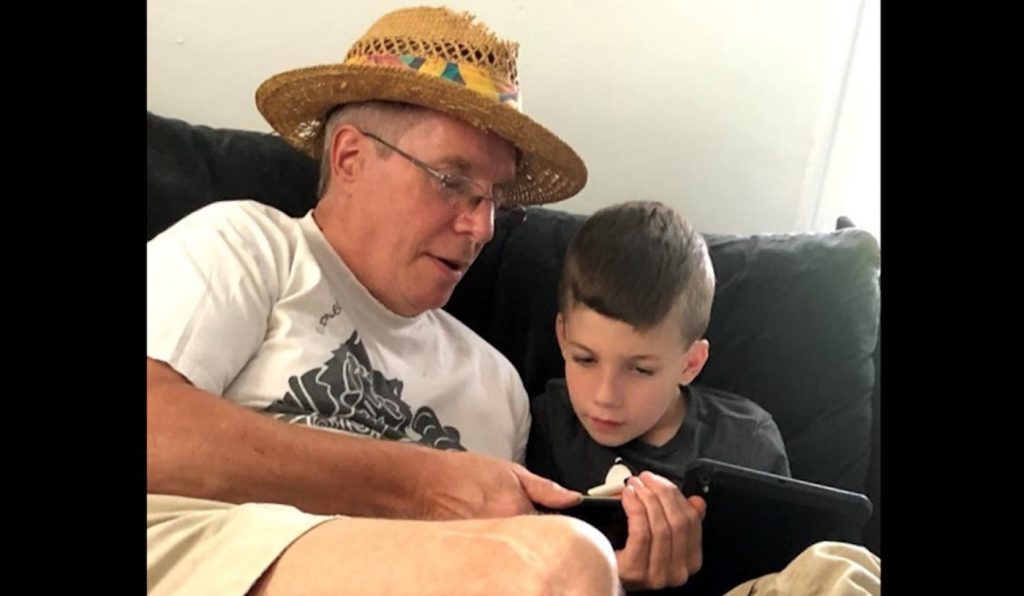
9-year-old Ronan Mattin had been attending the Handel and Haydn Society’s performance of Mozart’s Masonic Funeral Song in Boston this weekend with his grandfather Stephen Mattin when his charming reaction was recorded on tape.
Handel and Haydn Society President David Snead later published an open letter asking audience members to help him identify Ronan, saying that the youngster had helped to create “one of the most wonderful moments he had experienced in the concert hall.”
When Mattin saw that his grandson’s voice was being shared across news outlets and social media, he was happy that people were as delighted by Ronan’s reaction as he was.
He says that since Ronan is on the autism spectrum, the youngster is not often vocal about his feelings and appreciation for things – and that is just part of what makes the incident so special to the family.
“I can count on one hand the number of times that [he’s] spontaneously ever come out with some expression of how he’s feeling,” Mattin told WGBH. “You know, everybody’s different. Everybody has different ways of expressing themselves. I think people in general, society’s becoming more tolerant or understanding of the differences between people.”
The Mattin family is now working with society staffers to arrange a meet-and-greet between Ronan and the conductor in the fall.
(LISTEN to the magical moment below)
Be Sure And Share This Sweet Story With Your Friends On Social Media…
At left is the brain of a mouse genetically programmed to develop Alzheimer’s disease. At right, the brain of a mouse programmed to develop the disease, but treated with noninvasive visual stimulation, shows much less neurodegeneration.
Photo by Chinnakkaruppan Adaikkan / MIT News
Why visual stimulation may work against Alzheimer’s New findings help explain the surprising discovery that exposure to flickering light reduces amyloid plaques in mice.
Written by Anne Trafton MIT News
Several years ago, MIT neuroscientists showed that they could dramatically reduce the amyloid plaques seen in mice with Alzheimer’s disease simply by exposing the animals to light flickering at a specific frequency.
In a new study, the researchers have found that this treatment has widespread effects at the cellular level, and it helps not just neurons, but also immune cells called microglia. Overall, these effects reduce inflammation, enhance synaptic function, and protect against cell death, in mice that are genetically programmed to develop Alzheimer’s disease.
“It seems that neurodegeneration is largely prevented,” says Li-Huei Tsai, the director of MIT’s Picower Institute for Learning and Memory and the senior author of the study.
The researchers also found that the flickering light boosted cognitive function in the mice, which performed much better on tests of spatial memory than untreated mice did. The treatment also produced beneficial effects on spatial memory in older, healthy mice.
The new study results were published online in Neuron earlier this week. Tsai’s original study on the effects of flickering light showed that visual stimulation at a frequency of 40 hertz (cycles per second) induces brain waves known as gamma oscillations in the visual cortex. These brain waves are believed to contribute to normal brain functions such as attention and memory, and previous studies have suggested that they are impaired in Alzheimer’s patients.
Tsai and her colleagues later found that combining the flickering light with sound stimuli — 40-hertz tones — reduced plaques even further and also had farther-reaching effects, extending to the hippocampus and parts of the prefrontal cortex. The researchers have also found cognitive benefits from both the light- and sound-induced gamma oscillations.
At left is the brain of a mouse genetically programmed to develop Alzheimer’s disease. At right, the brain of a mouse programmed to develop the disease, but treated with noninvasive visual stimulation, shows much less neurodegeneration. Photo by Chinnakkaruppan Adaikkan / MIT News
In their new study, the researchers wanted to delve deeper into how these beneficial effects arise. They focused on two different strains of mice that are genetically programmed to develop Alzheimer’s symptoms. One, known as Tau P301S, has a mutated version of the Tau protein, which forms neurofibrillary tangles like those seen in Alzheimer’s patients. The other, known as CK-p25, can be induced to produce a protein called p25, which causes severe neurodegeneration. Both of these models show much greater neuron loss than the model they used for the original light flickering study, Tsai says.
The researchers found that visual stimulation, given one hour a day for three to six weeks, had dramatic effects on neuron degeneration. They started the treatments shortly before degeneration would have been expected to begin, in both types of Alzheimer’s models. After three weeks of treatment, Tau P301S mice showed no neuronal degeneration, while the untreated Tau P301S mice had lost 15 to 20 percent of their neurons. Neurodegeneration was also prevented in the CK-p25 mice, which were treated for six weeks.
“I have been working with p25 protein for over 20 years, and I know this is a very neurotoxic protein. We found that the p25 transgene expression levels are exactly the same in treated and untreated mice, but there is no neurodegeneration in the treated mice,” Tsai says. “I haven’t seen anything like that. It’s very shocking.”
The researchers also found that the treated mice performed better in a test of spatial memory called the Morris water maze. Intriguingly, they also found that the treatment improved performance in older mice that did not have a predisposition for Alzheimer’s disease, but not young, healthy mice.
To try to figure out what was happening at a cellular level, the researchers analyzed the changes in gene expression that occurred in treated and untreated mice, in both neurons and microglia — immune cells that are responsible for clearing debris from the brain.
In the neurons of untreated mice, the researchers saw a drop in the expression of genes associated with DNA repair, synaptic function, and a cellular process called vesicle trafficking, which is important for synapses to function correctly. However, the treated mice showed much higher expression of those genes than the untreated mice. The researchers also found higher numbers of synapses in the treated mice, as well as a greater degree of coherence (a measure of brain wave synchrony between different parts of the brain).
In their analysis of microglia, the researchers found that cells in untreated mice turned up their expression of inflammation-promoting genes, but the treated mice showed a striking decrease in those genes, along with a boost of genes associated with motility. This suggests that in the treated mice, microglia may be doing a better job of fighting off inflammation and clearing out molecules that could lead to the formation of amyloid plaques and neurofibrillary tangles, the researchers say. They also found lower levels of the version of the Tau protein that tends to form tangles.
A key unanswered question, which the researchers are now investigating, is how gamma oscillations trigger all of these protective measures, Tsai says.
“A lot of people have been asking me whether the microglia are the most important cell type in this beneficial effect, but to be honest, we really don’t know,” she says. “After all, oscillations are initiated by neurons, and I still like to think that they are the master regulators. I think the oscillation itself must trigger some intracellular events, right inside neurons, and somehow they are protected.”
The researchers also plan to test the treatment in mice with more advanced symptoms, to see if neuronal degeneration can be reversed after it begins. They have also begun phase 1 clinical trials of light and sound stimulation in human patients.
A 19-year-old Chinese construction worker is being hailed as a hero after he saved 14 people from a burning apartment building.
Lan Junze was working at a construction site in Fushun City, Liaoning Province when he heard screams and saw smoke coming from a nearby structure.
When he rushed over to investigate, he found that the apartment building had caught fire and there were over a dozen people trapped on the third floor.
Thanks to his skill with a crane, Lan was able to use his crane to save all 14 people from the fire.
(WATCH the video below)
Save Your Friends From Negativity By Sharing The Heroic Story To Social Media…
Quote of the Day: “Religion is a way of walking, not a way of talking.” – William R. Inge
Photo: by B.B. Wijdieks, CC license via Flickr
With a new inspirational quote every day, atop the perfect photo—collected and archived on our Quotes page—why not bookmark GNN.org for a daily uplift?
Germany has just launched its first public test system for using overhead lines to power electric trucks.
The 10-kilometer (6.2-mile) stretch of overhead lines, which runs through a crucial portion of the Hessen autobahn from Frankfurt airport, will be tested by a fleet of electrical trucks until late 2022.
The overhead line hybrid trucks (OH trucks) that are being tested on the road are equipped with electric motors, batteries, and diesel engines. When the trucks drive underneath of the power line at speeds of up to 90 kilometers per hour, the charging system automatically connects to the overhead lines for charging.
While the truck is connected to the overhead line, it drives with the help of its electric motor while simultaneously charging its battery. With the energy stored in the battery, the OH truck can continue past the overhead lines and move emission-free along the motorway.
In the event that the battery is empty, the OH truck still has a backup fossil fuel engine on board so the vehicle can continue drive.
The eHighway system, which was developed by Siemens and funded by the German Federal Ministry for the Environment, allows big rig transit vehicles to travel with the same amount of flexibility as electrical railways – all while dramatically reducing the amount of nitrogen oxides and CO2 emissions generated by the freight shipping industry.
The world’s first eHighway was launched in Sweden back in 2016. Upon successfully testing the technology, Siemens says that their eHighway systems are two times more efficient compared to conventional combustion engines.
Furthermore, their website claims that if just 30% of German trucks in highway traffic were electrified, it could prevent more than 6 million tons of CO2 from entering the atmosphere every year.
“The inauguration of the first German eHighway in Hesse marks a milestone in the decarbonization of road freight transport in Germany,” says Roland Edel, head of technology at Siemens Mobility GmbH. “Siemens Mobility innovation combines the advantages of electrified railways with the flexibility of road freight transport, thus offering an efficient, economical and environmentally friendly alternative to truck transport Internal combustion engines.”
Rita Schwarzelühr-Sutter, who is the Parliamentary State Secretary at the Federal Ministry for the Environment, added: “Electrified trolleybuses are a particularly efficient solution on the road to climate-neutral freight transport, which we have tested for many years on a non-public test track.
“The practical test on the A5 between Frankfurt and Darmstadt will start, and two more test tracks in Schleswig-Holstein and Baden-Württemberg will follow.”
(WATCH the trucks in action below) – Photo by Siemens
Power Up With Positivity By Sharing The Good News With Your Friends On Social Media…
Instead of being disciplined for his misdeeds, this unlikely shoplifter is being given more love and attention than ever before.
Last year, a stray dog was caught on camera sneaking into the Feevale University bookshop in Novo Hamburgo, Brazil. After managing to get past the front desk, the pup can be seen grabbing a book in its mouth and trotting out of the store.
But it wasn’t just any book – it was a book entitled “The Days of Abandonment”; a pretty relatable topic for stray animals.
Before the dog had a chance to read the pages, however, one of the campus students retrieved the book and gave it to the astonished cashier who was working the front desk.
Homeless families struggling to make ends meet are usually more concerned about providing food and shelter for their children – and that’s why this organization is working to take care of the little things along the way.
Alice’s Kids is a nonprofit that grants the smaller wishes and requests of homeless children and kids in need.
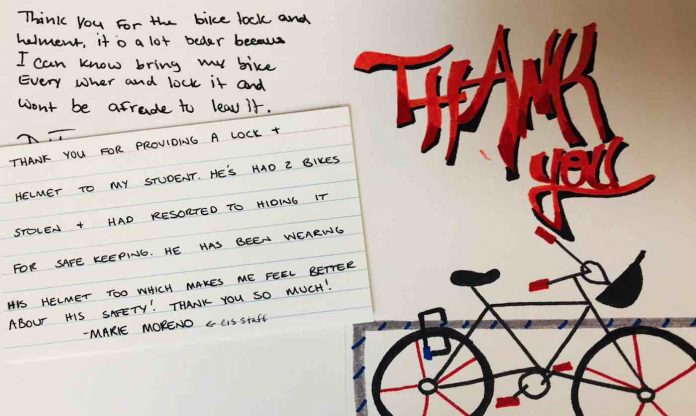
Sometimes it’s giving a new trumpet to a struggling music student; other times, it’s buying new shoes for a young athlete living in poverty – or it’s simply providing prom tickets, a bike lock, or new glasses to disadvantaged teenagers.
Regardless of the gift, the organization has found that fulfilling these small requests has a huge impact on the child’s self-esteem and happiness.
Today we made it possible for the daughter of her furloughed janitor mother to get new track shoes. We expect more requests like these very soon.
The organization was founded by Ron Fitzsimmons and his sister Laura in 2011 after they were motivated to start the nonprofit based on their own experiences growing up in a poor New York household during the 1960s.
After their father left, their mother worked tirelessly to pay for food and rent – but they were still living paycheck to paycheck.
Fitzsimmons told The Washington Post that he often skipped school because it was too “humiliating” to wear tattered clothing around his well-dressed peers.
He and his sister now believe that their organization is helping other children to avoid that very same social anxiety.
Her two girls had sensory disorders and we paid for Noise Cancelling Headphones. pic.twitter.com/qlw0Y1feis
Alice’s Kids grants wishes based on the requests that are submitted to them by teachers, social workers, counselors, and homeless shelter staffers.
The nonprofit then grants the wish by sending gift cards to the parents so they can purchase the gift themselves.
Since the child is unaware of the charitable exchange, parents are given an opportunity to feel supportive of their child’s additional needs – and the child may be given a chance to feel proud of their parent.
A challenged boy has been reading the first story of "Diary of a Wimpy Kid" over and over again. Today, we made it possible for him to get the entire set of books in that series!!
Since The Post published an article on Alice’s Kids in March, the organization is delighted to say that they have been flooded with donations – and they hope the financial support will continue.
“We’re not going to solve all the pains of all the children,” Ron told The Post. “But we just want to be part of the answer at least.”