All News - Page 638 of 1738 - Good News Network
Home Blog Page 638

“It is those who know little, not those who know much, who so positively assert that this or that problem will never be solved by science.” – Charles Darwin (The Origin of Species published 160 years ago today)

Quote of the Day: “It is those who know little, not those who know much, who so positively assert that this or that problem will never be solved by science.” – Charles Darwin, Descent of Man (160 years ago, On The Origin of Species was published)

Photo: by duckmackay – CC license on Flickr, cropped

With a new inspirational quote every day, atop the perfect photo—collected and archived on our Quotes page—why not bookmark GNN.org for a daily uplift?


Researchers Develop Basis for Oral Anti-Rabies Treatment That Could One Day Cull the Disease Entirely

Australian researchers have found a way to stop the rabies virus by shutting down the body’s immune defense against it. In doing so, they have solved a key scientific puzzle and have laid the foundation for the development of new oral anti-rabies vaccines.

Rabies kills an estimated 60,000 people a year, most of them in developing countries, overwhelmingly through dog bites.

Dr. Greg Moseley, from the Monash Biomedicine Discovery Institute (BDI), and Associate Professor Paul Gooley, from the Bio21 Institute at the University of Melbourne, were senior authors in the study published last week in Cell Reports.

“It’s been known for a long time that many viruses target the human protein STAT1 and related proteins to shut down the host’s immune defenses, and it’s also assumed that this is very important for diseases,” said Dr. Moseley, a long-term rabies researcher.

RELATED: Alzheimer’s Vaccine That Uses the Body’s Immune System Succeeds in Breakthrough Trials

However, it was not known exactly how P-protein—the main “immune antagonist” of lyssaviruses including the rabies virus—takes hold of STAT1, due to a lack of direct structural data on STAT1 complexes with viral proteins.

“The challenge was to produce the key proteins on the viral and host sides in a test tube and keep them stable so we could interrogate the interaction directly; this hadn’t been done before, at least for the full-size human protein,” Moseley said.

The researchers then brought the two proteins together and, using nuclear magnetic resonance spectroscopy, showed the precise regions where the viral protein sticks onto STAT1 and holds onto it to keep it away from locations in the cell where it needs to be to activate the immune response.

POPULAR: 30 Years of Research Shows Sauna Bathing is Game-Changer for Longevity and Heart Disease

“We were able to find new regions and new sites for mutations and so could target these in a virus, completely preventing it from being able to grab hold of STAT1,” said Associate Professor Gooley, an expert in nuclear magnetic resonance spectroscopy.

To the researchers’ knowledge, this was the first direct structural analysis of binding of full sized STAT1 to a viral protein, even though many viruses such as measles and Hendra target this protein.

Using a “wild” strain of rabies virus, collaborators at the Pasteur Institute in France showed that by disabling this binding they could strongly weaken even a highly pathogenic virus.

MORE: On a Hunch, Doctor Gives HPV Vaccine to Advanced Skin Cancer Patient and Dozens of Tumors Disappear

The findings of their five-year study are the subject of a recently lodged international patent.

A global drive is underway to find better ways to counter rabies, which is caused by the rabies virus and also other lyssaviruses including an Australian bat virus. Methods such as culling dogs have not worked to control rabies and while mass vaccination is effective, catching and injecting animals is problematic, Dr. Moseley said.

“The development of a new safe and highly-effective rabies vaccine that can be given orally or as ‘baits’ would be a major step forward,” he said.

Gooley added: “I’m not a virologist, but I’m excited to have been involved in a project that could lead to a safer oral vaccine for rabies to eliminate it, especially in developing countries. Like Greg, I’m a discovery scientist, driven by curiosity. I enjoy solving scientific problems,” he said.

“The state-of-the-art technological tools and methods used in the study could also be applied more broadly to counter other viruses that target STAT proteins.”

Reprinted from Monash University

Treat Your Friends To The Good News By Sharing It To Social MediaFile photo by Wonderlane, CC

Indonesia Looks to its Past to Solve Modern Energy Troubles

As a nation made up of 17,000 islands, one of Indonesia’s most challenging problems in the 21st century has been modernizing her electric grid.

But now on the island of Siberut, some electricity-starved hamlets are sustainably developing their own energy by relying on a material that has been part of their lives for thousands of years: bamboo.

According to Jaya Wahono, CEO of Clean Power Indonesia (CPI) there are around 50,000 villages that don’t have reliable access to electricity. But in 1,200 households in 3 villages on the remote Mentawai Islands where CPI has set up their test bio-electric plants, people are enjoying reliable power for the first time ever.

The Center for International Forestry Research continues saying that “bamboo harvesting provides jobs, and also allows farmers to diversify their income streams, reducing their vulnerability to crop failure and helping them adapt to climate change”.

An Ancient Technology

For the peoples of the Indo-Pacific, bamboo can truly be called the tree of life.

Young bamboo shoots are a local staple. Various structures like scaffolding are made of bamboo to protect them from earthquakes, the fibers can be woven together to make everything from clothing to baskets, and dry or dead bamboo is a ready source of firewood. Indigenous Indo-Pacific communities use bamboo for everything—including making spears, rafts, and even pipes.

RELATED: Toronto Garbage Trucks Will Soon Be Powered by Biogas From the Very Food Scraps That They Collect

According to early modeling on the viability and cost-benefit of these bio-electric power plants, merely 750 acres (300 hectres) of bamboo forest are needed to power one plant that provides 700 KW—the equivalent of 48 gallons per day of the expensive and unreliable diesel fuel many villages use currently.

Bamboo > Palm Oil

Biomass-energy production in Indonesia has had some success, but the main crop used until now has been palm oil. Though palm oil has contributed significantly to the economy of nations in the Indo-Pacific where the trees can grow best, the destructive effects of their cultivation are well-documented.

Bamboo grows well on land that has been degraded over time—especially peripheral land on the edge of roads and fields—and requires minimal water or fertilizer input.

MORE: New Power Plant Turns Waste into Energy—and Doubles as a Ski Slope and Climbing Wall

Rather than clear-cutting virgin tropical rainforest as has been generally required of palm oil plantations, local bamboo thrives alongside other crops in forestry and agroforestry systems, without overtaking them. Furthermore, bamboo grows fast; really, really, really fast. Some species can grow up to three feet a day (one meter); and as such there’s no need to chop whole forests down and start again when it’s harvest time.

Requiring brief trimming every season, bamboo can actually become more productive while preventing soil erosion, and ensuring wildlife habitat as well as energy production.

Looking Forward

Indonesia’s 2045 pledge for electrifying the country involves tripling the power output for their citizens and providing energy for the last 10% of the country that doesn’t have regular access to electricity.

CHECK OUT: First Fully Rechargeable Carbon Dioxide Battery is Seven Times More Efficient Than Lithium Ion

According to the cost-benefit-analysis from Indonesia Defense University, every $1 million investment by CPI in bamboo bioelectric plants will see 100% returns in 16 years, and 65% net earnings by the Indonesia national deadline of 2045.

While nations around the world plan how to equip their infrastructure for the changing climate, Indonesia might have found their path into the future by looking back into the past.

Power Up With Positivity By Sharing The Good News To Social Media – File photo by Joey Zanotti, CC

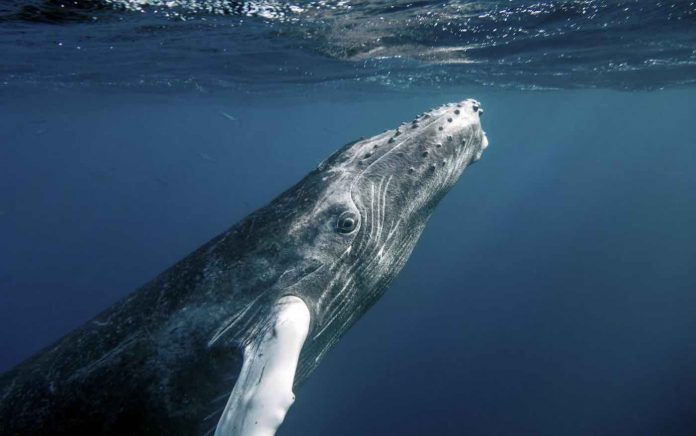
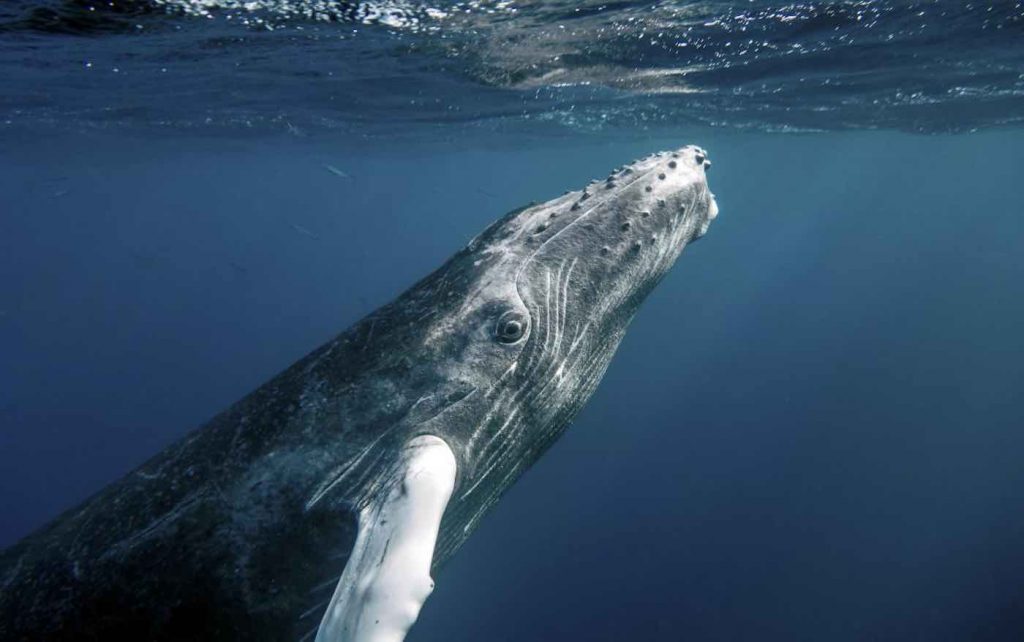
Humpback Whale Population Bounces Back From Near-Extinction—From Just 450, to Over 25,000

Photo by Christopher Michel, CC license

Conservationists are rejoicing after new research showed that whales in the South Atlantic have rebounded from the brink of extinction.

Intense pressure from the whaling industry in the early 1900s saw the western South Atlantic population of humpbacks diminish to only 450 whales, after approximately 25,000 of the mammals were hunted within 12 years.

Protections were put in place in the 1960s after scientists noticed worldwide that populations were declining. In the mid-1980s, the International Whaling Commission issued a moratorium on all commercial whaling, offering further safeguards for the struggling population.

A new study co-authored by Grant Adams, John Best and André Punt from the University of Washington’s School of Aquatic and Fishery Sciences revealed that the species’ population (Megaptera novaeangliae) has rebounded to 25,000. Researchers believe this new estimate is now close to pre-whaling numbers.

RELATED: Hope on Horizon for Escaped ‘Russian Spy Whale‘ After Video of Its Rugby Skills Goes Viral

“We were pleasantly surprised by the comeback; previous studies hadn’t suggested that humpback whales in this region were doing this well,” Best told Good News Network in an email.

The study, published last month in the journal Royal Society Open Science, refutes a previous assessment conducted by the International Whaling Commission between 2006 and 2015 which indicated the population had only recovered to about 30% of its pre-exploitation numbers. Since that assessment was completed, new data has come to light, providing more accurate information on catches, genetics, and life-history.

Photo by Christopher Michel, CC license

LOOK: This Woman and Her Pet Otters Have Spent the Last 40 Years Protecting the Species From Extinction in England

“Accounting for pre-modern whaling and struck-and-lost rates where whales were shot or harpooned but escaped and later died, made us realize the population was more productive than we previously believed,” said Adams, a UW doctoral student who helped construct the new model.

The study incorporated detailed records from the whaling industry at the outset of commercial exploitation, while current population estimates are made from a combination of air- and ship-based surveys, along with advanced modeling techniques.

The authors anticipate that the model built for this study can be used to determine population recovery in other species in more detail as well.

MORE: Bison Get 22,000 Acres of Additional Prairie Land to Roam Free – Watch The Spectacular Moment They Were Reintroduced After 150 Years

“We believe that transparency in science is important,” said Adams. “The software we wrote for this project is available to the public and anyone can reproduce our findings.”

Lead author Alex Zerbini of the UW’s Joint Institute for the Study of the Atmosphere and Ocean stressed the importance of providing population assessments without biases, but says these findings come as good news— an example of how an endangered species can come back from near extinction.

“Wildlife populations can recover from exploitation if proper management is applied,” said Zerbini, who completed this work at the NOAA Alaska Fisheries Science Center’s Marine Mammal Laboratory.

LOOK: McDonalds is Turning Dozens of Roadside Billboards into ’Bee Hotels’ in Sweden

The study also looks at how the revival of South Atlantic humpbacks may have ecosystem-wide impacts. Whales compete with other predators, like penguins and seals, for krill as their primary food source. Krill populations may further be impacted by warming waters due to climate changes, compressing their range closer to the poles.

SHARE This Whale Of A Positive Trend With Your Friends On Social Media…

After ‘Mountain Santa’ Dad Spent 42 Years Giving Away Gifts to Poor Families, His Son Decides to Do the Same

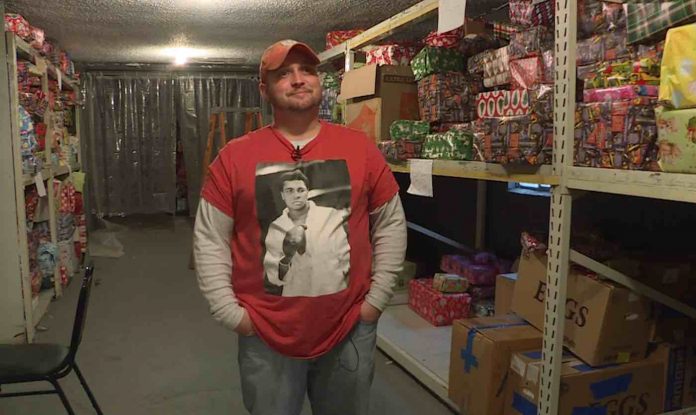
For 42 Christmas seasons, a man named Mike Howard would dress up as Santa Claus and spend the holiday delivering thousands of gifts to some of the poorest families in Kentucky.

After Howard lost his battle against cancer and passed away last year, his son decided to honor his father’s legacy by taking over the persona of ‘Mountain Santa’ — and continuing the holiday tradition in their beloved Harlan County.

Jordan has been wrapping and decorating Christmas gifts in his workshop near (the aptly-named) Santa Lane since October. With his ongoing fundraising efforts, he believes he will have about 4,000 presents to dole out over the holidays.

“I’d say we got over 1,000 right now—and it’s just midway through,” he told WYMT in the interview below. “It’s a feeling that you can’t describe. You don’t think that a community would come together like they have to keep doing this, but it’s just awesome. It’s just amazing.”

Jordan and his crew of community elves are aiming to embark on their first gift delivery run on December 14th.

(WATCH the heartwarming news coverage below) – Photo by WYMT

Deck The Halls With Positivity By Sharing This Sweet Story To Social Media…

“Waking up to a blanket of snow is like a morning lullaby, a soft dreamlike state that is almost magical.” – Nancy Hatch Woodward

Quote of the Day: “Waking up to a blanket of snow is like a morning lullaby, a soft dreamlike state that is almost magical.” – Nancy Hatch Woodward

Photo: by Corey Templeton – CC license on Flickr, cropped

With a new inspirational quote every day, atop the perfect photo—collected and archived on our Quotes page—why not bookmark GNN.org for a daily uplift?


Cameroon Man Uses Wasted Plastic Bottles to Build Canoes for Fishermen in Need

Photo by Madiba and Nature

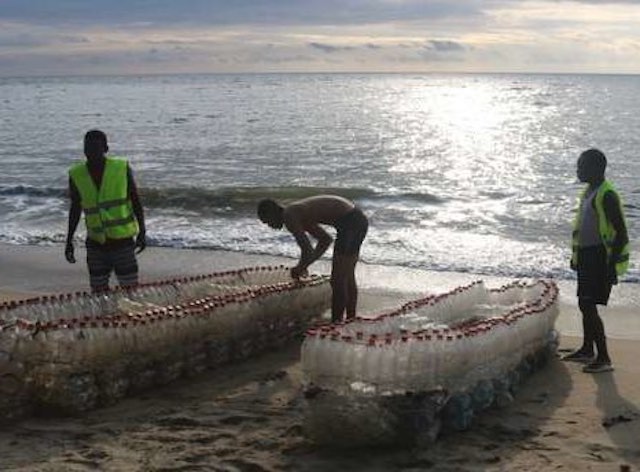
An innovative young man from Cameroon has been cleaning up pollution in his city by turning plastic bottles into boats.

Ismaël Essome Ebone was first inspired to build his “EcoBoats” as a student back in 2011. He had just taken shelter from a thunderstorm blowing through his neighborhood when he saw several plastic bottles floating by on some passing floodwaters.

He then built a boat from plastic bottles collected from around the town and waited to test it until another storm blew in. To the astonishment of the fishermen watching from the shore, Ebone’s boat worked like a dream.

LOOK: More and More People Are Swapping Out Plastic Straws for Coconut Leaves Thanks to Café’s Facebook Post

He then invested all of his money into launching his nonprofit Madiba & Nature: a charity dedicated to collecting plastic waste from around the region and turning it into boats for ecotourism and fishermen in need.

Thanks to the success of his venture, the Cameroonian organization recently installed the nation’s first ever EcoBin for collecting, sorting, and recycling waste materials.

“The EcoBin makes it easier to collect plastic bottles in a smart way and avoid polluting rivers and the ocean in Kribi and Douala!” reads the nonprofit’s Facebook page. “From plastic waste to EcoBoat and EcoBin, the revolution is on the way.”

(WATCH the 2017 news coverage below)

If This Story Floats Your Boat, Be Sure And Share It With Your Friends On Social Media…

Austrian Government to Turn Hitler’s Birth Home into Police Station to Deter Neo-Nazi Pilgrims

After a grueling decades-long legal battle, the birthplace of Adolf Hitler will soon be turned into a police station to repel potential neo-Nazi visitors.

The house, which has belonged to the family of Gerlinde Pommer for several generations, has been a subject of controversy for the Austrian government not only because of its dark historical context, but also because Pommer has refused to sell the building outright without a certain amount of financial compensation.

The Interior Ministry reportedly purchased the lease in 1972 in order to ensure that the building could be rented appropriately—but since Pommer also refused to renovate the space, it was particularly difficult to find tenants.

RELATED: Descendants of Slaves and Slave-Owners Are Bonding at South Carolina Plantation Where They Share Their Painful Past

Despite how Nazi support has waned over the years, police were also still forced to keep a close eye on the space in order to deter Nazi vandalism, pilgrimage, or interference.

This week, however, the Austrian Supreme Court ruled that Pommer would be compensated for the yellow house in Braunau am Inn with $908,000 in payment.

Wolfgang Peschorn, the interior minister of Austria, said that the government will now be holding an architectural competition for the future design of the building, which is marked by a memorial stone reading: “For peace, freedom and democracy. Never again fascism. Millions dead are a warning.”

WATCH: World’s Largest Holocaust Archive is Now Making Their Records Available to Everyone on the Internet

Until the winner of the competition is announced in 2020, designers from across Europe are encouraged to submit their plans for transforming the space.

“The future use of the house by the police should send an unmistakable signal that the role of this building as a memorial to the Nazis has been permanently revoked,” Wolfgang Peschorn, the interior minister of Austria, said in a statement reported by The New York Times.

Be Sure And Share The News With Your Friends On Social MediaPhoto by Anton Kurt, CC

Bagel Shop Manager Nonchalantly Drives for Seven Hours So He Can Return Customer’s Car Keys

The manager of a New York bagel shop is being hailed for going above and beyond the call of duty to help a customer in need.

Diana Chong had left her car engine running as she stopped at Bagels 101 in Long Island for some breakfast last week. She had been preparing for a three-and-a-half-hour drive to visit some friends in Pennsylvania.

Upon arriving at her friend’s house, however, she realized she had forgotten her car keys on the counter of the bagel shop.

Because her car has an electronic fob, Chong can drive her car without possessing the key—but without the fob, the car won’t turn back on.

RELATED: When Young Waffle House Worker Was Left Alone to Run Entire Restaurant, Empathetic Customers Jump In to Help

Chong called Bagels 101 and spoke to shop manager Vinny Proscia about her dilemma. When Proscia learned that she had indeed left her keys on the counter, he nonchalantly offered to drive them to her friends house in Pennsylvania.

Despite being forced to drive in rush hour traffic, Proscia hopped in his car and headed to Pennsylvania. Not only did he happily hand off the keys to an awestruck Chong several hours later, he immediately turned around and headed home so he could work the next morning.

“That is what I was always taught: if I am able to help — help,” he told Inside Edition.

(WATCH the news coverage below)

Be Sure And Share This Sweet Story Of Kindness With Your Friends On Social Media…

Discovery of Brain Circuit That Controls Compulsive Drinking Offers Hope for Alcoholism Cure

Although alcohol use is ubiquitous in modern society, only a portion of individuals develop alcohol use disorders or addiction. Yet, scientists have not understood why some individuals are prone to develop drinking problems, while others are not.

Now, Salk Institute researchers have discovered a brain circuit that controls alcohol drinking behavior in mice, and can be used as a biomarker for predicting the development of compulsive drinking later on. Furthermore, they were able to increase and also decrease rates of compulsive drinking simply by manipulating the brain circuit.

The findings were published in Science earlier this week, and they could potentially have implications for understanding human binge drinking and addiction in the future.

“I hope this will be a landmark study, as we’ve found (for the first time) a brain circuit that can accurately predict which mice will develop compulsive alcohol drinking weeks before the behavior starts,” says Kay Tye, a professor in the Systems Neurobiology Laboratory. “This research bridges the gap between circuit analysis and alcohol/addiction research, and provides a first glimpse at how representations of compulsive alcohol drinking develop across time in the brain.”

WATCH: ‘Sober Bars’ Are Giving More and More Recovering Alcoholics a Social Place for Fun Without Booze

The National Institutes of Health defines alcohol use disorder as a chronic brain disease in which an individual drinks compulsively, often with accompanying negative emotions. Previous research has focused on examining the brain after a drinking disorder develops. Tye’s team sought to discover the brain circuits that are responsible for a predisposition for compulsive drinking to develop in the first place, which had not been previously studied.

“We initially sought to understand how the brain is altered by binge drinking to drive compulsive alcohol consumption,” says Cody Siciliano, first author and assistant professor in the Department of Pharmacology at Vanderbilt University. “In the process, we stumbled across a surprising finding where we were actually able to predict which animals would become compulsive based on neural activity during the very first time they drank.”

In this study, the researchers created a test called a binge-induced compulsion task (BICT) to examine how susceptibility toward alcohol consumption interacts with experience to produce compulsive drinking in mice. The BICT allowed the researchers to examine alcohol consumption as well as consumption with negative consequences, such as a bitter taste added to the alcohol. Through a series of tests, the scientists observed that the mice could be sorted into three groups: low drinkers, high drinkers and compulsive drinkers. Unlike the first two groups, the compulsive drinkers showed insensitivity to negative consequences.

RELATED: Apples, Tea, and Moderation—The 3 Ingredients for a Long Life

The researchers then used an imaging technique called microendoscopic single-cell resolution calcium imaging to chart the cells and brain regions of interest prior to drinking, during drinking and after drinking alcohol. Specifically, they looked at neuron activity in two regions involved in behavioral control and responding to adverse events: the medial prefrontal cortex and the periaqueductal gray matter, respectively.

They found that the development of compulsive alcohol drinking was related to neural communication patterns between the two brain regions, and was a biomarker for predicting future compulsive drinking.

Further, the researchers used optogenetics to control the activity of the neural pathway using light. By turning the brain circuit on or off, the scientists were able to either increase compulsive alcohol drinking or reduce it.

MORE: Give Yourself a ‘Dry January’–You’ll Sleep Better, Save Money, and Lose Weight

“Now, we can look into the brain and find activity patterns that predict if mice will become compulsive drinkers in the future, before the compulsion develops,” says Tye. “We do not know if this brain circuit is specific to alcohol or if the same circuit is involved in multiple different compulsive behaviors such as those related to other substances of abuse or natural rewards, so that is something we need to investigate.”

Next, the scientists plan to sequence these cortical-brainstem neurons in order to identify targets that could be used for therapeutics.

Reprinted from the Salk Institute

(WATCH the explanatory video below) – File photo by M_Shipp22, CC

Be Sure And Share The Exciting News With Your Friends On Social Media…

Another Police Department Starts Collecting Canned Food in Lieu of Parking Ticket Fines

Rather than opening up your wallet to pay off a parking ticket, this Ohio police department is asking people to pay off their fines with canned food donations.

This is not the first time that police departments have used parking ticket fees to help fund important community initiatives. In addition to several North American law enforcement teams collecting donations for teachers, animals, and holiday toy drives, the Lexington Police Department opted to accept canned food for parking tickets back in 2017.

Now, the Bay Village Police Department is partnering with the Bay Food Ministry to collect food donations until December 25th.

RELATED: Kroger Donates $500,000 Facility to Rival Grocery Store So Community Won’t Be Left Without a Supermarket

According to the department’s Facebook page, the Bay Food Ministry was responsible for donating 47,392 pounds of food last year alone.

The department is accepting up to $25 worth of non-perishable food items for each individual parking violation—and they hope their “Food for Fines” initiative will help inspire other police departments to launch similar charity drives in their own cities.

“There is a regular need for cereal, cans of tuna or chicken, canned soup, and toilet paper,” wrote the department. “If you would like to donate (without the parking ticket!) donations will be accepted in the lobby of the police department 24/7.”

Serve Up Some Positivity By Sharing The Good News To Social MediaFile photo by Charleston’s TheDigitel, CC; Salvation Army USA West, CC

“The best and most beautiful things in the world cannot be seen or even touched. They must be felt with the heart.” – Helen Keller

Quote of the Day: “The best and most beautiful things in the world cannot be seen or even touched. They must be felt with the heart.” – Helen Keller

Photo: by Michell Zappa – CC license on Flickr, cropped

With a new inspirational quote every day, atop the perfect photo—collected and archived on our Quotes page—why not bookmark GNN.org for a daily uplift?


Kangaroo Has Been Hugging Her Rescuers Almost Every Day Since They Saved Her As an Orphan #TBT

View this post on Instagram

Queen Abi hugs are the best hugs 🤗 💖

A post shared by The Kangaroo Sanctuary (@thekangaroosanctuary) on


Queen Abigail—or “Abi”—was only five months old when she was rescued as a little orphaned kangaroo.

That being said, she still insists on starting each of her mornings by hugging her human family.

Abi was rescued and hand-reared by the wildlife specialists at the Kangaroo Sanctuary Alice Springs in Australia about 12 years ago—and she has consistently showed her love to the rescuers by giving them hugs almost every single day ever since.

WATCH: Baby Deer Refused To Leave Side of Man Who Rescued It

“Abi came to me as an orphan of 5 months old and was quite busted up with cuts and scrapes,” one of the sanctuary caretakers wrote on Facebook in 2013. “And [she] is my only kangaroo who comes up and gives a great big rugby tackle cuddle.”

You might recognize Abi’s hugs from a viral video that was published by the sanctuary back in 2016—and it’s not hard to see why it won the hearts of more than a million people.

Thankfully, the sanctuary’s more recent social media posts show that Abi is still just as happy—and snuggly—as she was several years ago.

(WATCH the adorable video below)

Be Sure And Share This Sweet Story With Your Friends On Social Media…

‘Sober Bars’ Are Giving More and More Recovering Alcoholics a Social Place for Fun Without Booze

Getting sober is already a challenge, but it can also be difficult to stay on the wagon when drinking and hanging out in bars is such a common social activity for adults.

Thankfully, “sober bars” like the Cherokee Recovery Village in Bastrop, Texas are providing recovered addicts and alcoholics with a space for community, fun, and sobriety support.

Instead of serving beer and liquor, the bar serves beverages like kombucha and coffee. Additionally, they host events like karaoke nights, fundraisers, and community dinners.

WATCH: ‘All my pain disappears’—South Korean Seniors Are Finding Healing in New Nightclub for the Elderly

Not only has the bar appealed to people undergoing the 12-step program, it has also appealed to people experimenting with the health benefits of sobering up for shorter periods of time.

Cherokee Recovery Village owner Paul French, who is a licensed chemical dependency counselor as well as a former addict, says the bar helps recovering alcoholics become adjusted to typical bar environments without feeling tempted to drink.

“This is exposing yourself to triggers intentionally to weaken those triggers,” he told KEYE in the interview below. “It will allow you to eventually go into establishments where there’s drinking and partying and craziness and it won’t affect you as strongly as it did.”

(WATCH the news coverage below) – Photo by Cherokee Recovery Village

Be Sure And Share The News With Your Own Friends On Social Media…

Coldplay to Put Off Touring New Album Until They Can Make Their Shows More Sustainable

Earlier this week, English rock band Coldplay announced that they will be not being touring their music until they could find a way to make their shows more sustainable.

Frontman Chris Martin told BBC in an interview that the band hoped to delay touring their new album for the next one or two years—at least until they could play their concerts without distributing single-use plastics or using excessive airplane fuel for international transportation

“Our next tour will be the best possible version of a tour like that environmentally. We would be disappointed if it’s not carbon neutral,” Martin told the news outlet. “The hardest thing is the flying side of things. But, for example, our dream is to have a show with no single use plastic, to have it largely solar powered.

RELATED: Pink Floyd’s David Gilmour Auctions Off 126 Guitars and Raises $21 Million for Climate Change Battle

“We’ve done a lot of big tours at this point,” he added. “How do we turn it around so it’s no so much taking as giving?”

The last time that Coldplay embarked on a world tour, they reportedly played 122 shows across 5 continents. With their new album Everyday Life set to be released on November 22nd, the band hopes the record and its eventual tour will help raise awareness for how musicians and individuals can fight the climate crisis.

Coldplay will be playing a show in London at the Natural History Museum later this week, although all of the proceeds from the concert will reportedly be donated to an environmental charity. Additionally, they will be celebrating the album’s release with two shows in Jordan, the entirety of which will be livestreamed on YouTube.

(WATCH the BBC interview below) – Photo by BBC

You Don’t Have To Be A Scientist To Share This Great News With Your Friends On Social Media…

Hyper-Realistic Replicas Finally Spare Students—and Declining Frog Populations—From Biology Class Dissections

Photo by PETA
Photo by Syndaver

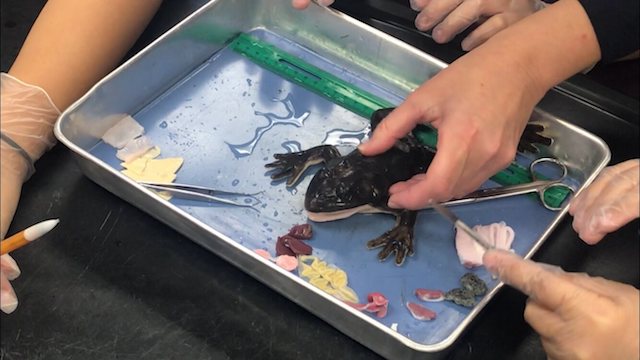
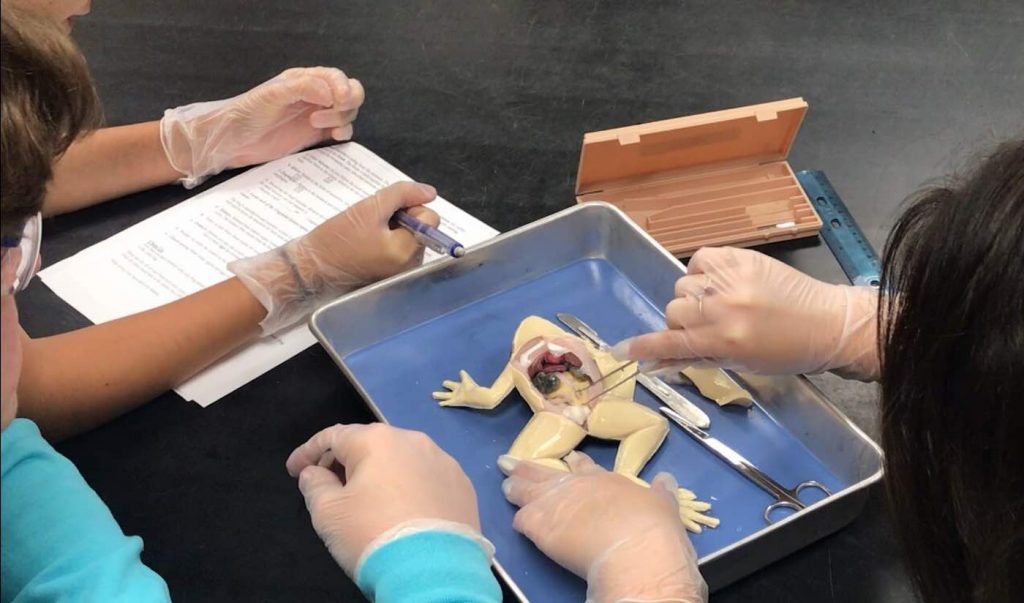
Dissecting frogs in science class may soon be a thing of the past thanks to these life-like replicas.

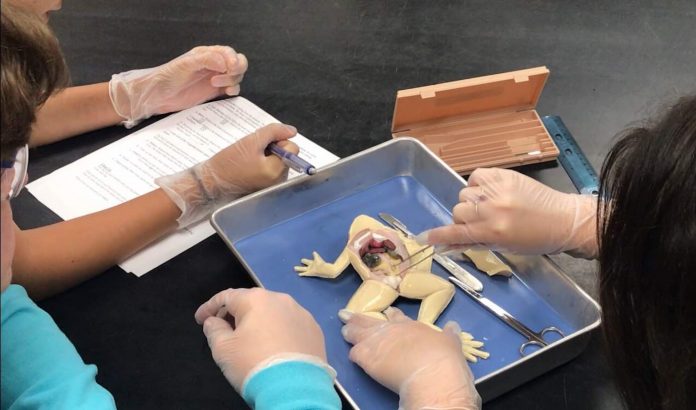
Earlier this week, nearly 100 students at J.W. Mitchell High School in New Port Richey, Florida were able to try a revolutionary new educational tool: the SynFrog, a hyper-realistic synthetic frog that can completely replace the use of frogs for dissection in K–12 and collegiate science classes.

At least 3 million frogs are killed annually for such lessons. In addition to contributing to declining frog populations, frog dissections can also discourage queasier students from taking more of an interest in science.

Photo by Syndaver

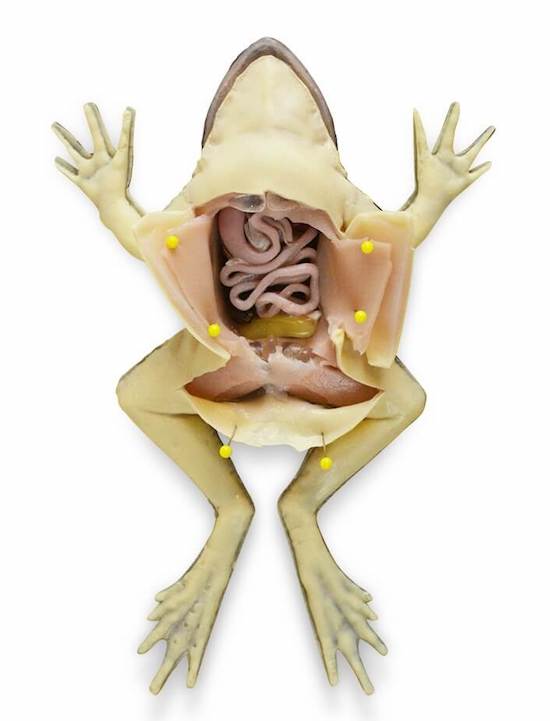
That’s why SynDaver—the world’s leading manufacturer of hyper-realistic, synthetic human and animal surgical trainers—partnered with PETA to create the true-to-life, hands-on dissectible frog so that it is almost indistinguishable from real ones.

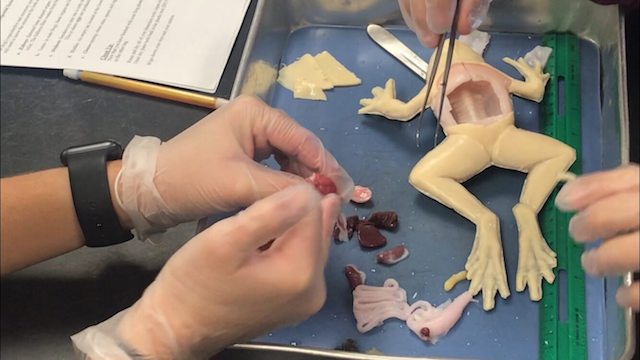
Unlike the preserved bodies of dead frogs, which are bathed in chemicals and have monochromatic organs that are difficult to differentiate, the SynFrog is free of formaldehyde and formalin and contains removable and anatomically correct organs that accurately mimic living tissue.

“PETA has promoted virtual dissection for years, but some teachers still request ‘hands-on’ teaching tools—and that’s where the SynFrog comes in,” says PETA Vice President of International Laboratory Methods Shalin Gala. “It’s safer, more effective, and more humane.”

Photo by SynDaver

The frogs are currently being sold for $150 apiece on the SynDaver website.

Despite how the replica is significantly more expensive than a real frog, its synthetic tissues—made out of water, fibers, and salts—means they are also reusable and chemical-free.

“With SynFrog, there’s no longer any need to harm real frogs for the sake of enhancing the educational experience,” reads the product bio. “In addition to eliminating the ethical concerns of sacrificing living animals to teach comparative anatomy, SynFrog is a better option for students because it does not expose them to hazardous chemicals, like formaldehyde and formalin.”

Photo by SynDaver

Be Sure And Share The News With Your Friends On Social Media…

“The most important decision you make is to be in a good mood.” – Voltaire (born 325 years ago today; inspired the French and American Revolutions)

Andrey, CC license

Quote of the Day: “The most important decision you make is to be in a good mood.” – Voltaire (born 325 years ago today; inspired the French and American Revolutions)

Photo: by Andrey – CC license on Flickr, cropped

With a new inspirational quote every day, atop the perfect photo—collected and archived on our Quotes page—why not bookmark GNN.org for a daily uplift?


Researchers Create AI System That Can Predict Epileptic Seizures One Hour Ahead of Time With 99.6% Accuracy

Photo by Doug Dugas / University of Louisiana at Lafayette

Researchers at the University of Louisiana at Lafayette have developed an artificial intelligence system that can predict epileptic seizures up to an hour before they occur.

The system will give people suffering from epilepsy warning that a seizure is imminent, enabling them to take medication—or alert a friend, relative or medical professional. It had an accuracy rate of 99.6% based on results of electroencephalogram, or EEG, tests that monitored brain signals of 22 patients at the Boston Children’s Hospital.

Epileptic seizures can currently be predicted with EEG tests conducted in hospitals or other medical settings, followed by predictive modeling, a process that relies on statistics. The artificial intelligence technology developed at UL Lafayette relies on EEG tests and predictive modeling simultaneously, resulting in earlier and more accurate detection.

Dr. Magdy Bayoumi and Dr. Hisham Daoud, researchers in the University’s Department of Electrical and Computer Engineering, led a team who developed the system.

LOOK: This Ingenious Solution Was Designed Specifically to Help People During Their Epileptic Seizures

Bayoumi said the next step in the process is developing a way to bring the system to people who have epilepsy. UL Lafayette researchers are developing a customized computer chip that could be placed inside a smartphone or wristwatch-like device and synchronized with sensors embedded in headgear similar to a swimmer’s cap. The chip would wirelessly predict epileptic seizures by monitoring brain seizures.

“Bringing this technology from a medical setting to everyday life would greatly improve quality of life for people who have epilepsy. There would be a medical benefit for them, and a significant psychological one as well,” he explained.

Read more about the project—and a similar project by University researchers to develop a brain chip that would enable a person to move a prosthetic limb via thought—in an article published in the Fall 2017 issue of La Louisiane, the magazine of the University of Louisiana at Lafayette.

Photo by Doug Dugas / University of Louisiana at Lafayette

Reprinted from the University of Louisiana at Lafayette

Pass On The Positive Story To Your Friends By Sharing It To Social Media…

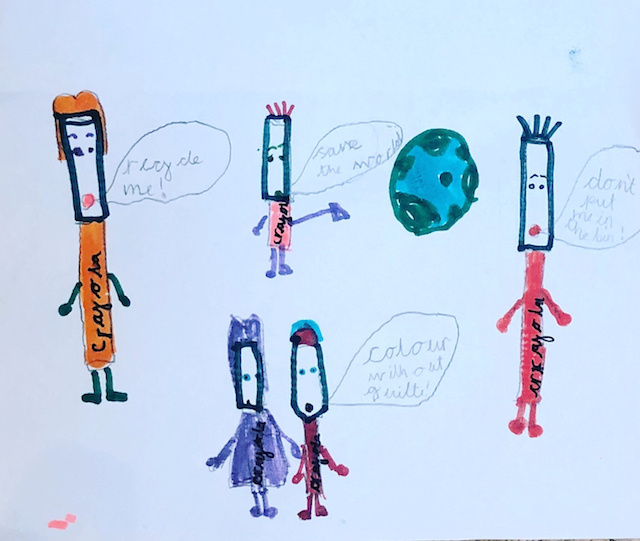
7-Year-Old Gathers 70K Signatures On Her Petition to Make Crayola’s Coloring Pens Recyclable

SWNS
SWNS

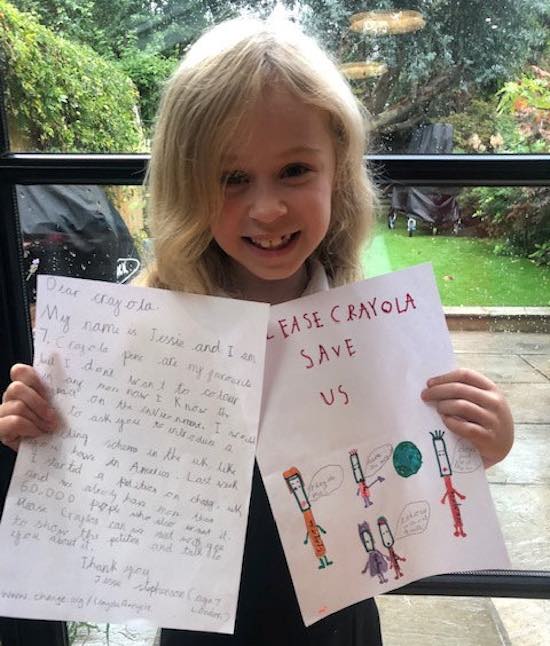
A 7-year-old eco-warrior has gathered almost 70,000 signatures on her petition to force Crayola to make their coloring pens recyclable.

Jessie Stephenson’s passion for art means she goes through a lot of felt-tip pens, but she was upset to learn that they could not be recycled—so she then started the petition asking Crayola UK to give its British customers a recycling scheme.

“I really love using Crayola pens but I don’t want to use them now that I know the impact on the environment,” reads the petition. “I care about the environment because we live here and if we wreck it, we won’t get a second chance.”

Crayola has a recycling scheme in America, but it has yet to have one in the UK. Since the petition has racked up thousands of signatures, Jessie’s mom Charlotte Stephenson said: “We never expected it go quite so crazy [but] Jessie is super keen on the climate change debate.”

MORE: German 12-Year-old Boy Plants 1Million Trees, Takes Over UN Program to Plant a Trillion More

Jessie and her 10-year-old brother are both pupils at John Stainer School in Brockley, south east London, where the little girl has a place on the “Eco-Council”. The family all live a green lifestyle by recycling and limiting their meat intake.

Her head, Sue Harte, said: “I am absolutely delighted that Jessie has been so motivated to do this petition to convince Crayola start recycling in the UK.

SWNS

“How wonderful that such a young child has the awareness and the drive to do something to make the world better and the support for her has been fantastic.

“We are very proud as a school to be totally supporting Jessie’s petition.”

Crayola has a recycling scheme in America, but it has yet to have one in the UK. After Jessie’s petition for a recycling scheme began picking up steam, she received a letter from Crayola UK describing how they would look into her request—but she was not happy with the company’s response.

RELATED: 11-Year-old Crocheting Prodigy is Raising Thousands of Dollars for Orphans–One Stitch at a Time

“Crayola said they would just talk about it and that’s not enough for us,” said Jessie. “We’re not going to give up.”

Jessie also asked people with leftover felt tips to save them so they could be deposited through the recycling scheme which she hopes will be implemented soon.

Incumbent MP Vicky Foxcroft has also given her support to Jessie’s campaign, saying: “Climate change is one of the main issues young people contact me about. It’s their future they are worried about and it’s great to see them lobbying for change.”

Crayola UK has been approached for a comment, although there has not yet been a published response.

Color Your News Feed With Positivity By Sharing The News To Social Media…
You Can Now Help Santa Deliver to Low-Income Kids By ‘Adopting’ Their Christmas Letters Through USPS

You don’t have to be an elf to help Santa during this year’s holiday season.

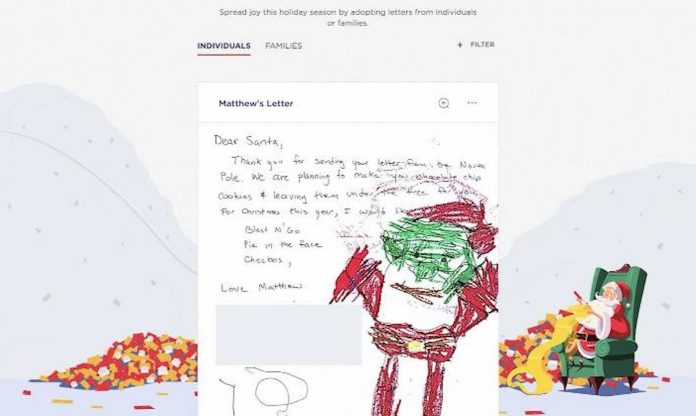
As the US Postal Service prepares to start mailing letters to the North Pole, they have launched their online service that allows users to “adopt” children’s letters to Santa in order to help deliver gifts for low-income families.

The USPS Operation Santa website has been publishing photos of Christmas wishes from children in 15 US cities whose parents may not be able to afford many gifts. Users can then volunteer to anonymously fulfill the Christmas wish on behalf of Santa.

This is the 107th year that Operation Santa has been running—except USPS expanded the service this year to include letters from 8 more cities.

RELATED: Dying 86-Year-old Bought 14 Years Worth of Christmas Gifts for His 2-Year-old Neighbor

All participants have to do is create an account on the Operation Santa website, select a letter that plucks at their heartstrings, fulfill the Christmas wish as desired, and ship it from a participating post office before December 21st.

Children from any of the cities listed on the USPS site who may want to send a letter to Santa can address their letters to:

Santa Claus
123 Elf Road
North Pole
88888

Deck The Halls With Good News By Sharing This With Your Friends On Social Media…