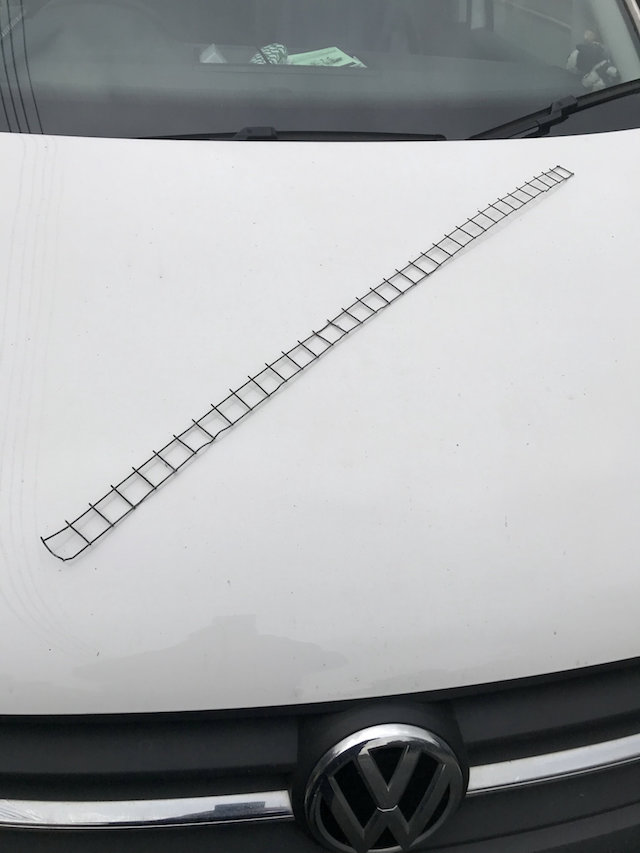
After six days of failed rescue attempts and dropping food down the pipe for Jamie, animal welfare charity RSPCA was finally called to the house in Bridgwater, Somerset – and animal welfare officer Alison Sparkes leapt to the rescue with a tiny handcrafted ladder, one-meter-long cut some from old wire mesh.
And sure enough, the trapped pet managed to clamber up the ladder to safety.
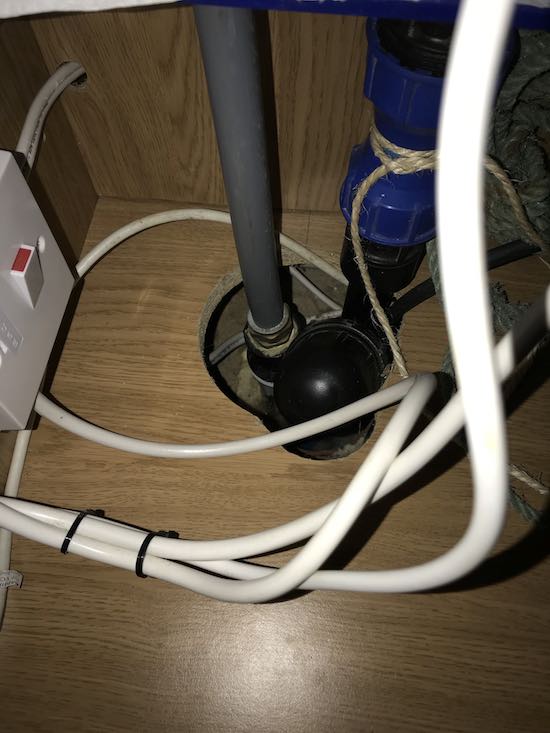
Alison said: “Jamie was being looking after by a friend of his owner when he escaped and went down a 10cm-wide pipe that housed the water pipes.
SWNS
“This vertical pipe was one-meter-deep.
“The gap between the water pipes he squeezed through was about 4cm wide and was impossible to look down the pipe due to the pipes inside it.
“They’d dropped a piece of thin rope down hoping he would climb up but after six days, still no luck so they called us.”
Alison added: “We knew he was ok as they’d been dropping food down and could hear him eating.
“So I went home and cut a one-meter-long ladder (pictured) from some old wire mesh, then went back, fitted it in the pipe and that night he emerged. Very thirsty, but ok.”
SWNS
Be Sure That You Share This Sweet Rescue Story With Your Friends On Social Media – Photos by SWNS
MIT engineers fly first-ever plane with no moving parts The silent, lightweight aircraft doesn’t depend on fossil fuels or batteries.
Written by Jennifer Chu MIT News
Since the first airplane took flight over 100 years ago, virtually every aircraft in the sky has flown with the help of moving parts such as propellers, turbine blades, and fans, which are powered by the combustion of fossil fuels or by battery packs that produce a persistent, whining buzz.
Now MIT engineers have built and flown the first-ever plane with no moving parts.
Instead of propellers or turbines, the light aircraft is powered by an “ionic wind” — a silent but mighty flow of ions that is produced aboard the plane, and that generates enough thrust to propel the plane over a sustained, steady flight.
Unlike turbine-powered planes, the aircraft does not depend on fossil fuels to fly. And unlike propeller-driven drones, the new design is completely silent.
“This is the first-ever sustained flight of a plane with no moving parts in the propulsion system,” says Steven Barrett, associate professor of aeronautics and astronautics at MIT. “This has potentially opened new and unexplored possibilities for aircraft which are quieter, mechanically simpler, and do not emit combustion emissions.”
He expects that in the near-term, such ion wind propulsion systems could be used to fly less noisy drones. Further out, he envisions ion propulsion paired with more conventional combustion systems to create more fuel-efficient, hybrid passenger planes and other large aircraft.
Barrett and his team at MIT have published their results today in the journal Nature.
Barrett says the inspiration for the team’s ion plane comes partly from the movie and television series, “Star Trek,” which he watched avidly as a kid. He was particularly drawn to the futuristic shuttlecrafts that effortlessly skimmed through the air, with seemingly no moving parts and hardly any noise or exhaust.
“This made me think, in the long-term future, planes shouldn’t have propellers and turbines,” Barrett says. “They should be more like the shuttles in ‘Star Trek,’ that have just a blue glow and silently glide.”
About nine years ago, Barrett started looking for ways to design a propulsion system for planes with no moving parts. He eventually came upon “ionic wind,” also known as electroaerodynamic thrust — a physical principle that was first identified in the 1920s and describes a wind, or thrust, that can be produced when a current is passed between a thin and a thick electrode. If enough voltage is applied, the air in between the electrodes can produce enough thrust to propel a small aircraft.
For years, electroaerodynamic thrust has mostly been a hobbyist’s project, and designs have for the most part been limited to small, desktop “lifters” tethered to large voltage supplies that create just enough wind for a small craft to hover briefly in the air. It was largely assumed that it would be impossible to produce enough ionic wind to propel a larger aircraft over a sustained flight.
“It was a sleepless night in a hotel when I was jet-lagged, and I was thinking about this and started searching for ways it could be done,” he recalls. “I did some back-of-the-envelope calculations and found that, yes, it might become a viable propulsion system,” Barrett says. “And it turned out it needed many years of work to get from that to a first test flight.”
The team’s final design resembles a large, lightweight glider. The aircraft, which weighs about 5 pounds and has a 5-meter wingspan, carries an array of thin wires, which are strung like horizontal fencing along and beneath the front end of the plane’s wing. The wires act as positively charged electrodes, while similarly arranged thicker wires, running along the back end of the plane’s wing, serve as negative electrodes.
The fuselage of the plane holds a stack of lithium-polymer batteries. Barrett’s ion plane team designed a power supply that would convert the batteries’ output to a sufficiently high voltage to propel the plane. In this way, the batteries supply electricity at 40,000 volts to positively charge the wires via a lightweight power converter.
Once the wires are energized, they act to attract and strip away negatively charged electrons from the surrounding air molecules, like a giant magnet attracting iron filings. The air molecules that are left behind are newly ionized, and are in turn attracted to the negatively charged electrodes at the back of the plane.
As the newly formed cloud of ions flows toward the negatively charged wires, each ion collides millions of times with other air molecules, creating a thrust that propels the aircraft forward.
The team flew the plane in multiple test flights across the gymnasium in MIT’s duPont Athletic Center — the largest indoor space they could find to perform their experiments. The team flew the plane a distance of 60 meters (the maximum distance within the gym) and found the plane produced enough ionic thrust to sustain flight the entire time. They repeated the flight 10 times, with similar performance.
“This was the simplest possible plane we could design that could prove the concept that an ion plane could fly,” Barrett says. “It’s still some way away from an aircraft that could perform a useful mission. It needs to be more efficient, fly for longer, and fly outside.”
The new design is a “big step” toward demonstrating the feasibility of ion wind propulsion, according to Franck Plouraboue, senior researcher at the Institute of Fluid Mechanics in Toulouse, France, who notes that researchers previously weren’t able to fly anything heavier than a few grams.
“The strength of the results are a direct proof that steady flight of a drone with ionic wind is sustainable,” says Plouraboue, who was not involved in the research. “[Outside of drone applications], it is difficult to infer how much it could influence aircraft propulsion in the future. Nevertheless, this is not really a weakness but rather an opening for future progress, in a field which is now going to burst.”
Barrett’s team is working on increasing the efficiency of their design, to produce more ionic wind with less voltage. The researchers are also hoping to increase the design’s thrust density — the amount of thrust generated per unit area. Currently, flying the team’s lightweight plane requires a large area of electrodes, which essentially makes up the plane’s propulsion system. Ideally, Barrett would like to design an aircraft with no visible propulsion system or separate controls surfaces such as rudders and elevators.
“It took a long time to get here,” Barrett says. “Going from the basic principle to something that actually flies was a long journey of characterizing the physics, then coming up with the design and making it work. Now the possibilities for this kind of propulsion system are viable.”
A couple from Louisiana has over a million more reasons to be thankful this year thanks to a little last-minute holiday cleaning.
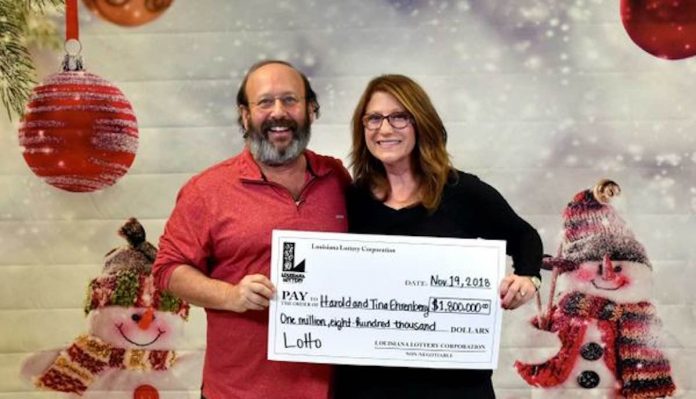
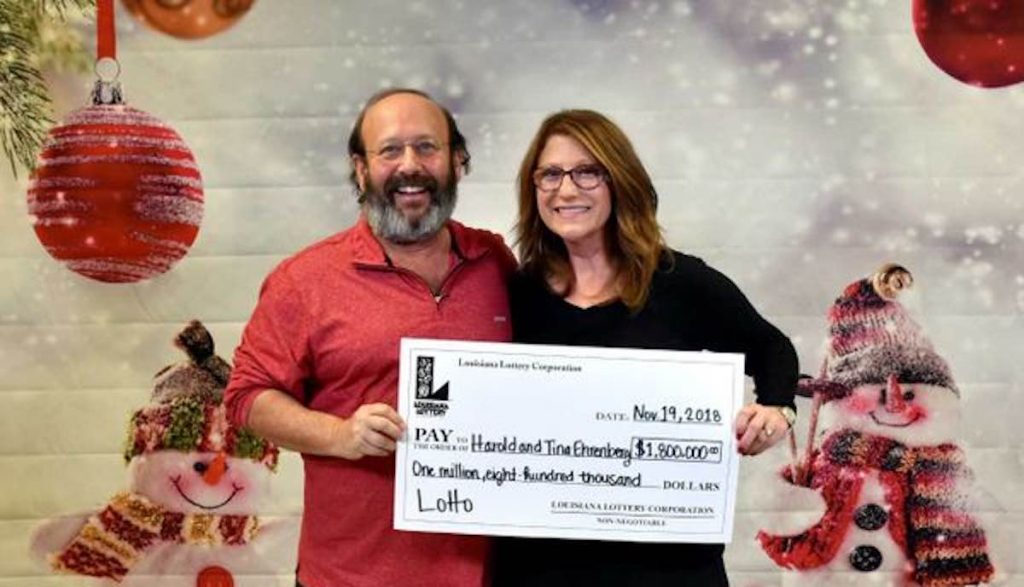
Harold and Tina Ehrenberg from Mandeville were tidying up their house in preparation for Thanksgiving guests when they found a few unchecked lottery tickets among some papers on their bedside table.
“We [had] family coming into town for Thanksgiving, so I was cleaning up the house and found a few lottery tickets on my nightstand that we hadn’t checked,” Tina recalled.
Upon checking the numbers on the lottery website, they found that they had a $1.8 million winning ticket from June.
It’s a good thing that they checked the numbers, too – since the prize needs to be claimed within 180 days of the drawing, the Ehrenbergs only had two weeks left to climb their prize.
Despite winning the staggering amount of money, the couple won’t be blowing all their cash on fancy cars. Instead, they will be putting the money into a retirement fund.
“We don’t have any plans to buy anything crazy or go on any big trips,” Tina explained. “The most fun is going to be depositing that check!” Harold added.
Inspire Your Friends With This Lucky Story By Sharing It To Social Media – Photo by Louisiana Lottery
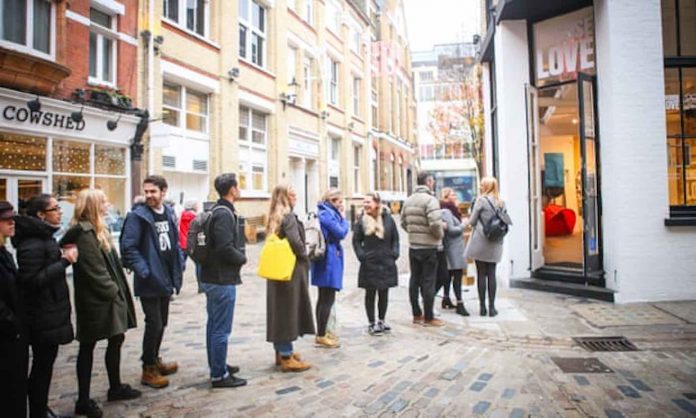
While some people might be lining up on Black Friday to jump on the latest holiday bargains, these people are lining up outside of a unique pop-up store so they can buy holiday gifts for refugees.
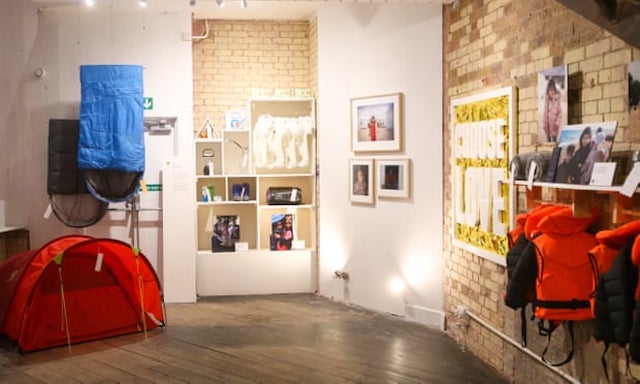
Choose Love is a shop that is stocked with important items and resources that customers can buy for refugees in need – or as the store puts it, customers can “shop your heart out, leave with nothing, and feel the love”.
The shop is stocked with everything from emergency blankets, tents, warm clothing, and hygienic supplies to educational materials and keys to a home. All of the items purchased at the Choose Love pop-ups are then distributed across Europe and the Middle East.
According to Help Refugees, the nonprofit behind the initiative, their charitable efforts in 2017 collectively raised the equivalent of $962,000 (£750,000).
The charity was so successful with its location in London last year, it also opened up a secondary location in New York City for 2018.
Additionally, the shops will now be stocked with sleeping bags and supplies that can be purchased for homeless groups in the UK and US.
“Christmas is a time of giving in abundance, but it makes you think about people who aren’t as lucky as we are,” Josie Naughton, the chief executive of Help Refugees, told The Guardian. “When you look at the stats of how much money is spent on Black Friday and compare that to the need in the world, it’s quite shocking.
“We just really wanted to show there was another way to look at consumerism and another way to look at Black Friday.”
Be Sure And Share The Inspiring New With Your Friends On Social Media – Photos by Alex Green / Help Refugees
A 6th grader is being hailed for their honesty after they saved a young college student from having to open his wallet for unintentional car damage.
Andrew Sipowicz, who is a senior student at Canisius College, was upset when he approached his car earlier this week and found that another vehicle had damaged his 2012 Ford Mustang.
But his mood changed when he found a note tucked under the windshield.
The note was written by a sixth grader from Houghton Academy in Buffalo, New York. The message detailed how the student had seen their school bus driver trying to pull out into the road when she hit Sipowicz’s car and fled the scene.
“Shoutout to the anonymous 6th grader for saving me a couple thousand (Bus not drawn to scale),” wrote Sipowicz. The photos later ended up being shared hundreds of thousands of times.
Sipowicz says that he has since been in touch with the school bus company to initiate the insurance process. The company will reportedly be paying for the car’s repairs and giving Sipowicz a loaner car while his Mustang is in the shop.
Be Sure And Drive This Story To Your Friends By Sharing It To Social Media
Quote of the Day: “In the absence of longing, in the absence of doubt, will be the solutions and abundance that you seek.” – Esther Hicks
Photo: by brentolson, CC license
With a new inspirational quote every day, atop the perfect photo—collected and archived on our Quotes page—why not bookmark GNN.org for a daily uplift?
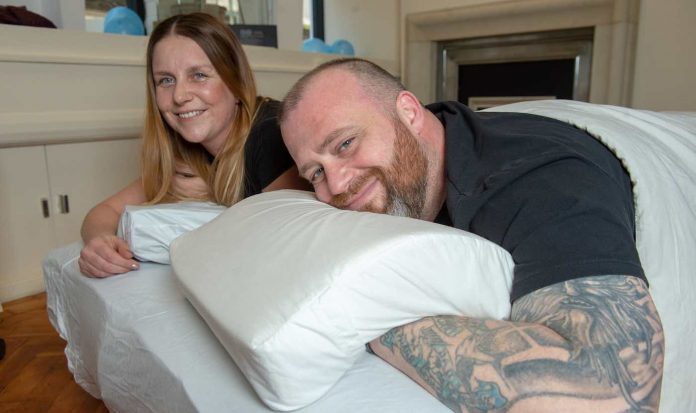
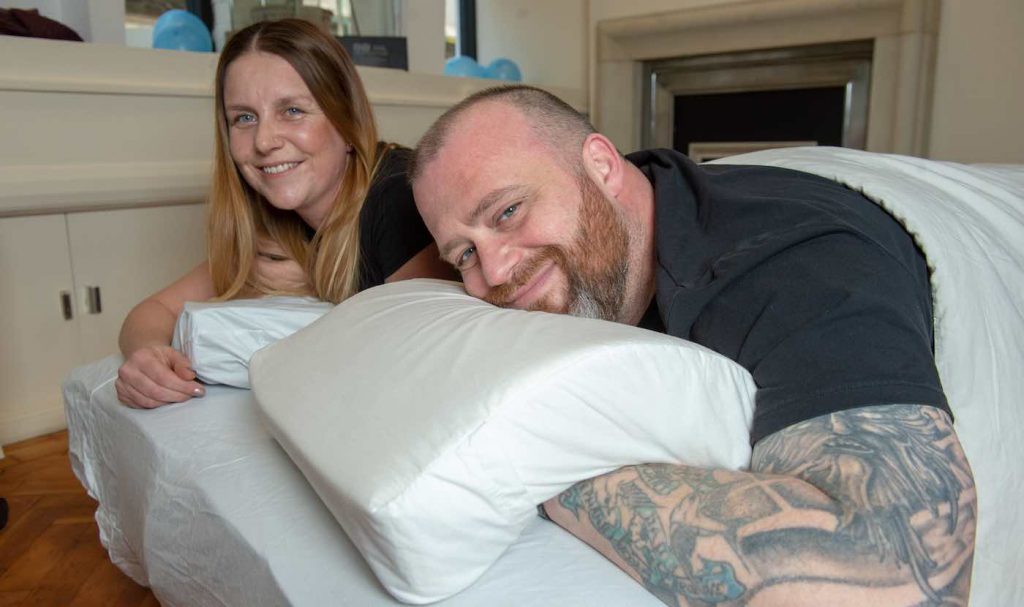
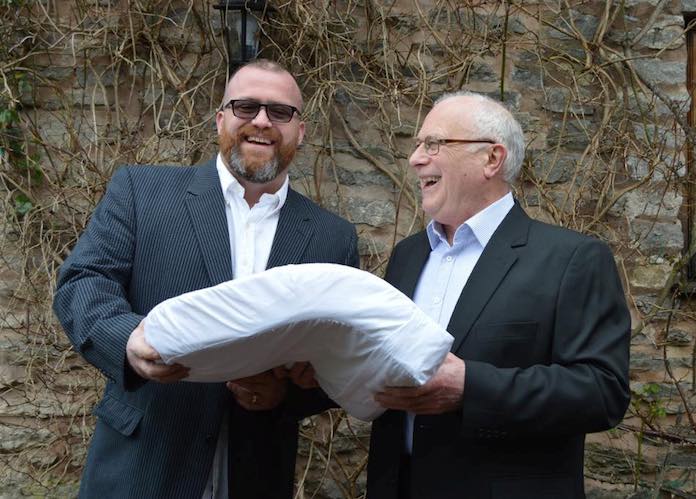
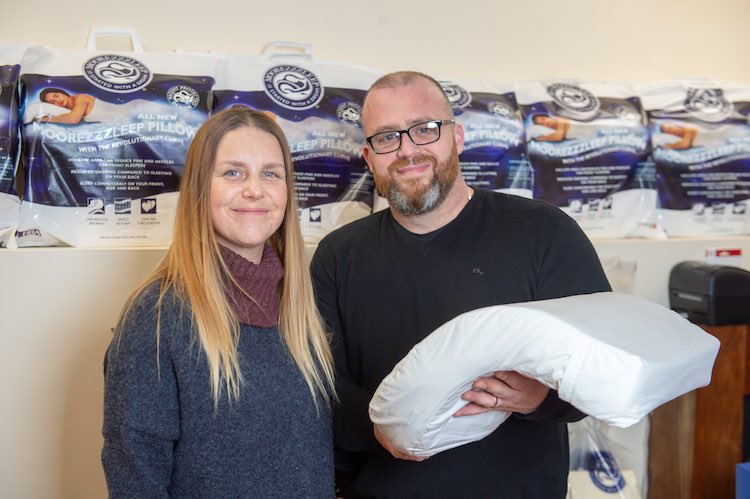
After years of strife, this cabbie says that he saved his marriage by inventing a pillow to stop himself from snoring.
42-year-old Phil Moore was forced to sleep alone for five years because his loud snoring was too much for his 43-year-old wife Stephanie, banished to nights on the living room sofa.
His loud wheezing and spluttering, which sounds like a “steam train”, caused a rift in the marriage – and left Stephanie in tears at the end of the bed.
But Phil had a revelation when he designed a pillow to stop the snoring – and ironically, the idea came to him in a dream.
And now, the pillow is hitting shop shelves after a chance encounter with a patent lawyer in the back of his cab.
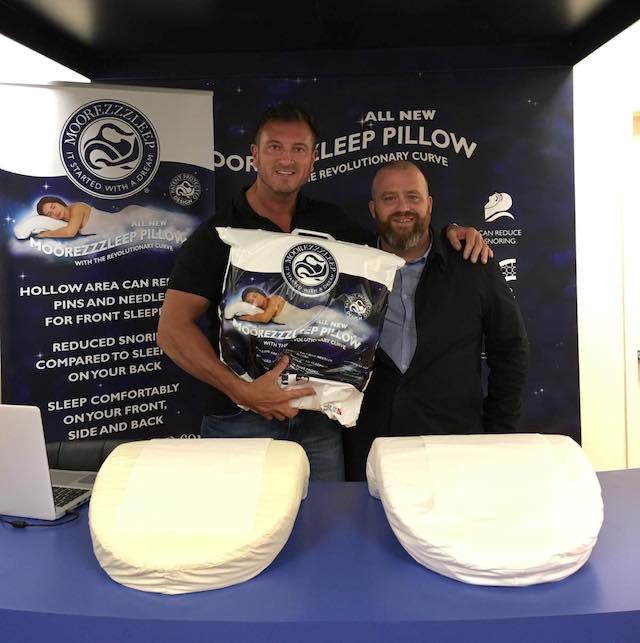
The special pillow, which costs £169 ($217), is flexible with a raised center so that people can sleep on their fronts and place their hands comfortably underneath.
Phil said: “My wife was at her wit’s end. I remember her sitting crying on the end of the bed. She’s been through a lot. It was putting so much strain on our marriage and became really difficult to cope with.
SWNS
“When our boy was born it was really tough. The baby would wake up in the night and then she wouldn’t be able to get back to sleep because of my snoring. Then one day I woke up with the idea – and I said to my wife, ‘here, I’ve dreamt of this thing’.
“It’s scientifically proven that sleeping on your front reduces snoring, but unfortunately, it’s the most uncomfortable position to sleep in. I used to wake up with pins and needles from lying on my arms.
“This way, you can lie on your front and reduce snoring.”
Phil and Stephanie, who live in Seaford, East Sussex., have three children: Rosaria, 21, Laila-Mae, 17, and Harrison, 10.
Stephanie, who helps run the pillow business, said: “Phil has snored for years. It sounds like a train – he had his mouth wide open and head back all through the night.
SWNS
“I would nudge him to roll onto his front, and he still snored, but not as a bad.
“I was sleeping downstairs on the sofa for five years. Not sleeping in the same room for years isn’t nice, [but] I just couldn’t bear it anymore. The living room became my bedroom.
“We would argue and it felt like were going out of sync even though we loved each other.
“I filmed him [snoring] on a few occasions and he was quite embarrassed,” says Stephanie. “Those videos won’t see the light of day.
“I would push my hand under his chin in the dead of night to see if it would help and it would stop for a few seconds. Imagine my relief to experience silence. Then when I removed my hand, he would start again.”
On the firm’s website, it is described as “the ideal pillow for side sleepers, front sleepers and back sleepers” and has a “flexible curved shape, with a distinctive hollow area for your arms”.
The description says it “enables you to lay comfortably on your front or side” and “keeps your head and neck supported when lying on your back”.
Pillowcases cost £19.99 and are available in cream or white.
(WATCH the video below)
Don’t Let Your Friends Sleep On This Story: Share It To Social Media
While some employers might be celebrating the season of giving by mailing out some greeting cards, this company founder is going above and beyond to show his employees how much he appreciates their work.
Mark Baiada, the chairman and founder of Bayada Home Health Care, was hosting a staff luncheon for his employees at the Bellevue Hotel in Philadelphia earlier this week when he said that he had a surprise for them.
“I’m taking $20 million, dividing it up and giving it to everybody,” Baiada tearfully told the crowd. “I wanted to show some gratitude to everybody for all the hard work you’ve done taking care of our clients.”
Needless to say, there was not a dry eye in the audience.
The Philly-based private-nursing company is worth $1.4 billion. It currently boasts a staff of 32,000 people who received varying amounts of money based on their seniority with the company. Some long-time staffers were given thousands of dollars, while new hires received more modest sums. Even former workers who retired from the company after 2010 reportedly received checks in the mail.
“I just want to say thank you to them all,” Baiada told CBS Philly. “Thanksgiving is a season of gratitude. You look around your life and say, ‘I’m so fortunate.’”
This will not be Baiada’s only gesture of compassion during the winter season, either – the 71-year-old says that he plans on converting his business into a nonprofit in January so they can start “putting mission over money”.
(WATCH the emotional interview below or our international viewers can watch it on the CBS website) – Photo by Bayada Home Healthcare
Be Sure And Share This Sweet Story Of Giving With Your Friends On Social Media
A Thanksgiving Day message from GNN Founder, Geri Weis-Corbley:
We have a new book coming out—a collection of 28 of the most inspiring stories published in the first 20 years of the Good News Network. (Sign up here and be notified about when and where to buy it!)
Happy Thanksgiving to all those around the world celebrating today the abundance of every moment on this planet… xxoo from the GNN team
Quote of the Day: “We often take for granted the very things that most deserve our gratitude.” (So, be thankful today!) – Cynthia Ozick
Photo: by Jim Choate, CC license
With a new inspirational quote every day, atop the perfect photo—collected and archived on our Quotes page—why not bookmark GNN.org for a daily uplift?
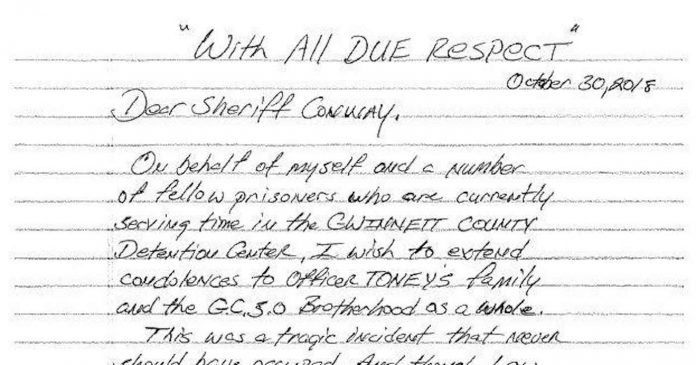
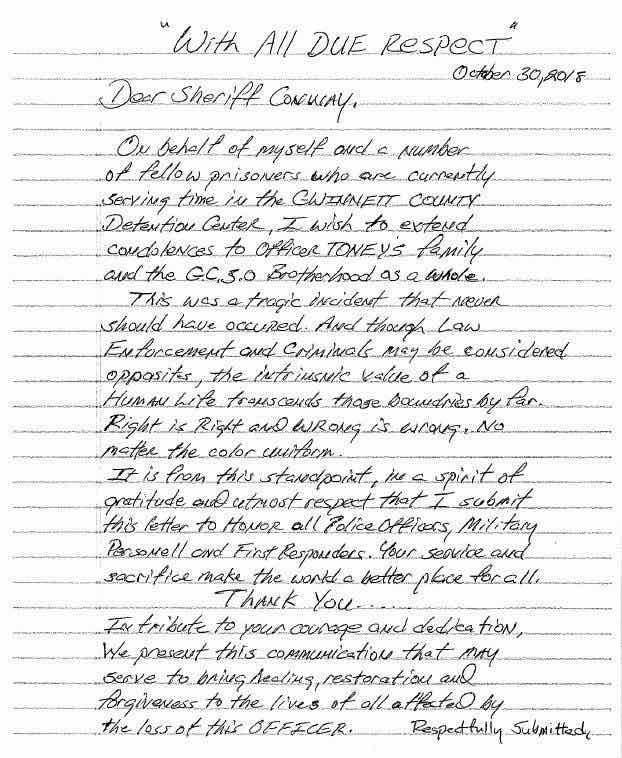
While it might seem that inmates wouldn’t have many positive things to say about the police officers guarding them, this emotional letter proves otherwise.
The Gwinnett community in Georgia has been mourning the loss of Officer Antwan Toney after he was shot and killed in the line of duty last month.
Though the Gwinnett County Sheriff’s Office says that they have received an overwhelming amount of amount of love and support from the community, they were particularly moved by a letter that they received from a group of inmates currently serving time in the county’s detention center.
The letter, which was signed by about 20 unnamed inmates, was sent to the police department three weeks after Toney’s death – and the writer offered up their sincerest condolences and gratitude to the law enforcement team “on behalf of myself and a number of fellow prisoners who are currently serving time.”
“Though law enforcement and criminals may be considered opposites, the intrinsic value of a human life transcends those boundaries by far,” the inmates wrote. “Right is right and wrong is wrong. No matter the color uniform.
“It is from this standpoint, in a spirit of gratitude and utmost respect that I submit this letter to honor all police officers, military personnel (sic) and first responders. Your service and sacrifice make the world a better place for all… THANK YOU.
“In tribute to your courage and dedication, we present this communication that may serve to bring healing, restoration and forgiveness to the lives of all affected by the loss of this officer.”
The police department later posted the photo to Facebook as a means of highlighting the compassionate gesture.
“Sheriff Butch Conway received a heartfelt letter from the most unlikely group of citizens expressing their sorrow at our loss and their support of law enforcement,” says the department.
“The return address on the envelope is our own because the letter was sent by a group of inmates currently housed in our jail.
“We’re not including their names to protect their privacy, but we’re deeply appreciative of this act of kindness from these men. We think that Officer Toney would also be appreciative of their actions and we hope you are, too.”
In a display of loving solidarity, thousands of Jews and Muslims rallied together to serve up some hot soup for the homeless.
As a means of celebrating Mitzvah Day – a day of social action for people of different faiths – Jews and Muslims met up at the East London Mosque last week to make 1,000 bowls of chicken soup.
Laura Marks, the founder and chair of Mitzvah Day, told The Guardian: “Mitzvah Day is about the common values that underlie both religions – the commitment to social action and social justice.
“We are both commanded by our faith to do good deeds and contribute to society. Most of the Jews here today won’t have been in a mosque before, and most Muslims won’t have Jewish friends. But here we are, chopping vegetables together.”
In the video below, one young participant told BBC that, “while doing this, I learned so much stuff that I didn’t know about Judaism,” while another girl laughingly chimed in, saying “we learned that there are neither Muslims or Jewish people in Harry Potter.”
For the soup, the organizers used halal chicken with a Jewish recipe in order to merge elements from both faiths – and they even made sure that some of the meals were made vegan.
“The interfaith is the fabric of our society. It’s what makes our British communities communities so rich, so diverse, and so beautiful,” said Jehangir Malik, CEO of Muslim Aid.
The “Chicken Soup Challenge” was not the only Mitzvah Day initiative taking place in Europe, either – according to the organizers, there were dozens of other compassionate interfaith campaigns for charity across Germany, Poland, Australia, South Africa, and the UK.
(WATCH the video below) – Photo by BBC
Be Sure And Serve This Sweet Story Up To Your Friends By Sharing It To Social Media
Israeli scientists have just developed a revolutionary new approach to regenerating and implanting any kind of organ without the human body rejecting it.
The researchers from Tel Aviv University are being hailed for inventing the first fully personalized tissue implant that is made from a patient’s own tissue and cells, rather than foreign sources.
Currently, in tissue engineering for regenerative medicine, tissues are created by isolating cells from the patient and culturing them in biomaterials that are always either synthetic or natural, derived from plants or animals.
After transplantation, they may induce an immune response that leads to rejection of the implanted tissue. Patients receiving engineered tissues or any other implants are treated with immuno-suppressors, which endanger the health of the patient.
“With our technology, we can engineer any tissue type, and after transplantation, we can efficiently regenerate any diseased or injured organ — a heart after a heart attack, a brain after trauma or with Parkinson’s disease, a spinal cord after injury,” says Professor Tal Dvir, the lead researcher of the study, which was published in Advanced Materials.
“In addition, we can engineer adipogenic (fatty tissue) implants for reconstructive surgeries or cosmetics. These implants will not be rejected by the body,” he added.
The researchers extracted a small biopsy of fatty tissue from patients, then separated its cellular and a-cellular materials. While the cells were reprogrammed into pluripotent stem cells — which are able to make cells from all three basic body layers, so they can potentially produce any cell or tissue the body needs to repair itself — the extracellular material was processed to become a personalized hydrogel. After combining the resulting stem cells and the hydrogel, the scientists successfully engineered the personalized tissue samples and tested the patients’ immune responses to them.
The team is currently engaged in regenerating an injured spinal cord and an infarcted heart with spinal cord and cardiac implants. They have also begun to investigate the potential of human dopaminergic implants to treat Parkinson’s disease in animal models.
The researchers plan to regenerate other organs, including intestines and eyes, using the patients’ own materials and cells. “We believe that the technology of engineering fully personalized tissue implants of any type will allow us to regenerate any organ with a minimal risk of immune response,” Dvir concluded.
Cure Your Friends Of Negativity By Sharing The Good News With Your Friends – Photo by Baluchis via Fotolia
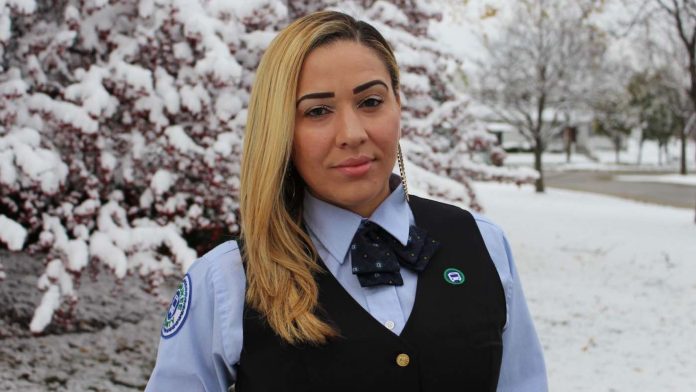
A video of a Wisconsin bus driver offering comfort and support to a homeless passenger last month is warming hearts across the internet.
Bus driver Natalie Barnes of the Milwaukee County Transit System was behind the wheel on a chilly Saturday night when a man named Richard boarded the bus.
Richard, who Barnes has met on her bus before, rode the transit line until they got to the end of her route. Barnes then used her break to strike up a conversation with Richard. As they chatted, Richard told her that the house he had been living in was condemned. For a week, he had been homeless and sleeping on the streets.
Heartbroken by his predicament, Barnes said he could ride her bus so he wouldn’t have to be out in the cold. When they reached one of her layover stops, she offered to get him something to eat.
“Now I don’t know what to say but to say thank you,” Richard told the compassionate driver, insisting that he would pay her back – but she declined, saying “I want to help you.”
At her next break, Barnes contacted a friend at Community Advocates to see if they could offer him some help. Thankfully, they were able to get Richard into temporary shelter and they are now working to find him permanent housing.
MCTS recently published video footage of the emotional exchange to their website, praising Barnes for her kindness. According to the transit group, this is Barnes’s third time being honored for exemplary behavior on the job. The mother-of-three often brings peanut butter and jelly sandwiches onto her bus so she can give them to passengers who might need something to eat.
“Natalie’s kindness, compassion and respect for this man in need are what MCTS Excellence is all about,” said County Executive Chris Abele.
“Across Milwaukee County, employees are focusing on empowering people and strengthening community, and we are investing resources throughout the County to reduce homelessness. Natalie demonstrated what we all need to do to fight homelessness: to look out for each other, to care for each other and to work together. I’m deeply grateful for Natalie’s actions.”
Barnes, however, is humble about the incident.
“At some point in our lives, everybody needs help,” said Barnes. “I wanted to do what I could to help Richard in some way.”
(WATCH the video below) – Photo by MCTS
Drive This Sweet Story To Your Friends By Sharing It On Social Media
Quote of the Day: “If you get tired, learn to rest, not to quit.” – Banksy
Photo: by Bill Dickinson, CC license; mural in Richmond, Virginia, by Andrew Hem
With a new inspirational quote every day, atop the perfect photo—collected and archived on our Quotes page—why not bookmark GNN.org for a daily uplift?
While it might sound odd, this family was “overjoyed” to be receiving tickets with the help of a New York City cop.
But it’s not because he was issuing parking tickets – he was helping them to get tickets for the hit Broadway musical “Hamilton”.
According to a Facebook post from the New York Police Department, Irish tourist Geraldine McKenna and her two daughters were visiting the Big Apple for the very first time back in October and they were determined to see the critically-acclaimed performance before their trip was over.
The family waited to get tickets for four days – only to get to the box office and discover that they were $20 short.
Without access to a debit card, the trio quickly became frantic when they were told that if they weren’t able to get money for the tickets within five minutes, then the tickets would be given to someone else.
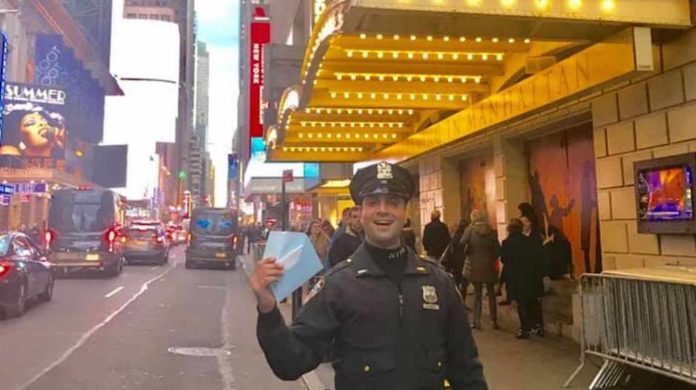
Fortunately, they ran into Officer Ricardo Dicandia.
After they explained their plight to the NYPD police officer, he immediately opened his wallet and handed over a $20 bill so they could get the tickets.
“When a first time visitor to NYC found out she was $20 short for tickets after standing in line for 4 days, she ran for help – and luckily met Officer Dicandia,” says the NYPD Facebook. “He understood the magnitude of the emergency and pulled a 20 out of his pocket so she didn’t have to throw away her shot.”
Dicandia didn’t think anything of his good deed until a few weeks later when a letter from McKenna arrived at Mayor De Blasio’s office containing a heartfelt note of praise for the officer.
“We were totally overjoyed and beyond grateful when he opened his wallet and just handed us $20,” read the letter. “My eldest daughter was crying when she was speaking to him. It was without doubt the best night that would not have been possible without Officer Dicandia’s generosity and kindness.”
Enclosed with the letter was a $20 bill along with an additional €20 for whenever the officer decided to take a vacation of his own.
(WATCH the sweet interview with Dicandia below) – Photo by NYPD
Be Sure And Share This Sweet Story Of Kindness With Your Friends On Social Media
Hosting for the holidays? Scented candles, fresh flowers and ensuring you splurge on quilted toilet paper are three of the biggest ways to impress your guests, according to new research.
With many an American expecting to host guests this holiday season, a new study examined just what it takes to ensure guests leave with a good impression and found bringing out the nice china really does pay off.
Having delicious treats and even going as far as to iron your linens all featured on the list of the ten things that make a guest like your home the most.
The study of 2,000 Americans, conducted by OnePoll in conjunction with Schlage, examined the time and effort it takes to welcome guests and create a wonderful first impression. Results showed it takes an incredible three hours of labor to get the average home ready for a guest visit.
Results also found that the way to impress guests is to spray a fresh scent around the house (60 percent), light scented candles (49 percent), and put out the best snacks (43 percent).
Americans will go all out in their attempt to impress their guests around the holidays. Three in ten have bought fresh flowers while another 23 percent tackled last-minute home improvement projects.
But what exactly goes into the typical routine to prepare your house for guests? It’s no surprise that cleaning the house topped the list of the things that go into a typical guest-ready routine.
Other routines included going grocery shopping (67 percent), decluttering (58 percent), and organizing (54 percent).
Americans go out of their way to make their house feel like home when anticipating guests. Seventy-seven percent reveal that a house most feels like home when it feels lived in and warm.
Another 72 percent find cleanliness to add to the homely feel of a place. Other distinguishing characteristics that people associate with a house feeling like home are a nice smell (71 percent), the ease of coming and going (45 percent), and plenty of soft furnishings like rugs and sofas (39 percent).
TOP 10 WAYS TO MAKE YOUR HOME GUEST READY
Clean the house 85%
Prepare food 69%
Declutter 58%
Restock toilet paper in bathroom 54%
Light scented candles 47%
Bake delicious treats 45%
Do the laundry 43%
Brew fresh coffee 38%
Put out fresh flowers 27%
Tackle last-minute home projects 24%
The reason people care so much about leaving a good impression with their guests is because nearly half (49 percent) have copied something they liked from someone else’s home when they were a guest.
Decoration ideas topped the list of the most commonly copied features of someone’s home – with 69 percent admitting to doing so.
But 63 percent have been at someone’s house, smelt a particular scent, candle or spray and then incorporated it into their own home.
Homeowners are proud of certain talking pieces in their home they love to show off. The kitchen was the most commonly discussed feature in a home – with 37 percent using the space as a talking point to share stories with guests.
Other notable talking pieces included a beautiful painting/picture (35 percent), a TV (31 percent), and a coffee table (25 percent).
TOP 10 THINGS THAT’LL IMPRESS GUESTS
Spraying a fresh scent around the house
Lighting scented candles
Bringing out the best snacks
Doing the laundry
Putting out flowers or plants
Tackling last-minute home improvement projects
Bringing out the nice dinnerware
Splurging for quilted/2-ply toilet paper
Ironing the linens
Hiring a professional to clean the home
But that doesn’t actually mean all homeowners are completely happy with the way things are. Forty-five percent have a desire to renovate at least one room in their home prior to the arrival of guests – with one in five admitting the current state of their home isn’t ready for their guests’ arrival.
Ted Roberts, Style and Design Chief at Allegion, maker of Schlage locks said: “Consider taking a smaller, but detailed approach to room updates and renovations. Sometimes a little paint, new rug or even swapping out the metals and room finishes can go a long way to revamping your space.”
Be Sure And Share This Handy Piece Of Research For Your Fellow Holiday Hosts On Social Media – Photo by Dnak, CC
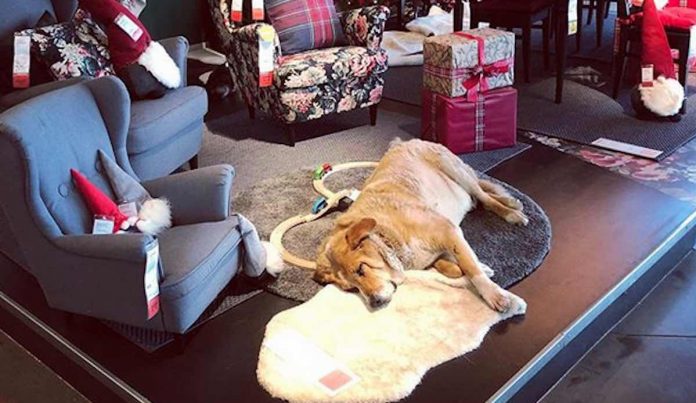
There are some popular furry fixtures inside of this Italian IKEA outlet – and they aren’t the shag rugs.
For years, the store in Catania has been welcoming stray dogs in off of the street so they can enjoy a nap with a roof over their heads.
Customers have often posted pictures of the pups lounging around the store to social media, praising the IKEA for opening their hearts and doors to the strays.
Martine Taccia recently published a video of some of the dogs to Facebook after she spotted them sleeping cozily by a living room furniture display – and the clip has already been viewed over one million times.
“My reaction was pure amazement,” Taccia told The Dodo about how she learned of the initiative. “It’s not a common thing.”
“The dogs receive daily food and pampering from IKEA’s employees and customers,” Taccia added. “Some dogs have even found a family, going home with customers.”
Linda Chartier Scala, an American woman who now lives in Italy, told Mother Nature Network that there is even a local team of animal workers who make sure that the pups are spayed and neutered.
“Dogs are there year-round,” she told the news outlet. “They love the air conditioning during the summer. They are sterilized and looked after by an animal welfare group. Fat and happy, they don’t wander from there.”
Another customer told MNN: “I know those dogs well. You find them at the entrance sleeping between the racks, or at the exit between the tables of their restaurant, always with their sweet eyes. I love them. They give me a sense of peace.”
This is not the first time that IKEA has done something kind for animals, either – back in 2017, the Swedish furniture company donated doll beds to animal shelters so that cats could have a comfortable place to sleep.
Though IKEA has not commented on their Italian store’s labor of love, customers hope that other businesses will follow their example in the future.
In what is being hailed as a “historic” gift for education, Michael Bloomberg is donating a whopping $1.8 billion to help low-income students attending Johns Hopkins University.
According to a press release from the school, it is the single largest donation that has ever been made to an American college or university. The money will be used to “to dramatically and permanently expand undergraduate financial aid,” which the school has previously struggled to do.
Bloomberg, who graduated from the Baltimore university in 1964 before going on to be mayor of New York City for three terms, has made dozens of donations to benefit underprivileged college students in the past – but with this most recent donation, his collective financial contributions to his alma mater exceed $3.35 billion.
“America is at its best when we reward people based on the quality of their work, not the size of their pocketbook,” Bloomberg wrote in an op-ed that was published in the New York Times.
“Denying students entry to a college based on their ability to pay undermines equal opportunity. It perpetuates intergenerational poverty. And it strikes at the heart of the American dream: the idea that every person, from every community, has the chance to rise based on merit,” he added.
Compared to similarly ranked American colleges, Johns Hopkins has maintained one of the lowest endowment funds for low-income students, and they have consistently struggled to accept applicants based on a “need-blind” basis, which accepts qualified students regardless of their ability to pay.
Starting in 2019, however, the school’s first actions as a loan-free institution will be replacing all undergraduate student loans with scholarships, reducing overall family contributions to financial aid, and offering immediate loan relief to every enrolled undergrad student whose financial aid package includes a federal need-based loan.
The university hopes that – with the help of the unprecedented contribution – at least 20% of their student body will be eligible for federal Pell grants by 2023.
“On behalf of the entire Johns Hopkins community, I express our heartfelt gratitude and appreciation to Mike Bloomberg, and reaffirm our sincere determination, in word and in deed, to vindicate the very substantial trust he has reposed in us,” Johns Hopkins University President Ronald J. Daniels wrote in a message to the university community earlier this week.
“I can think of no better way to begin this holiday season. We are profoundly grateful. We are truly blessed.”
Be Sure And Share This Incredible Story With Your Friends On Social Media
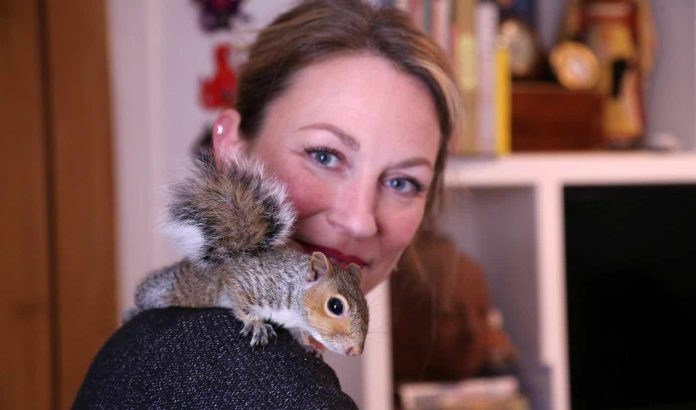
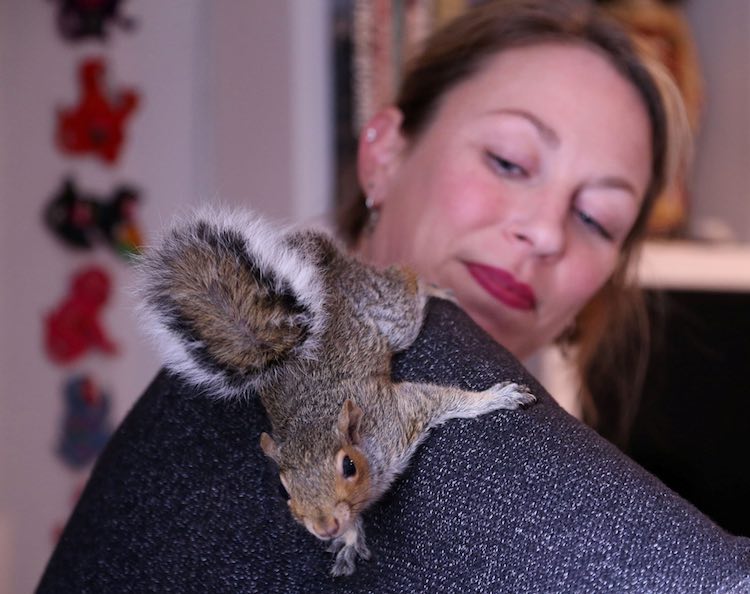
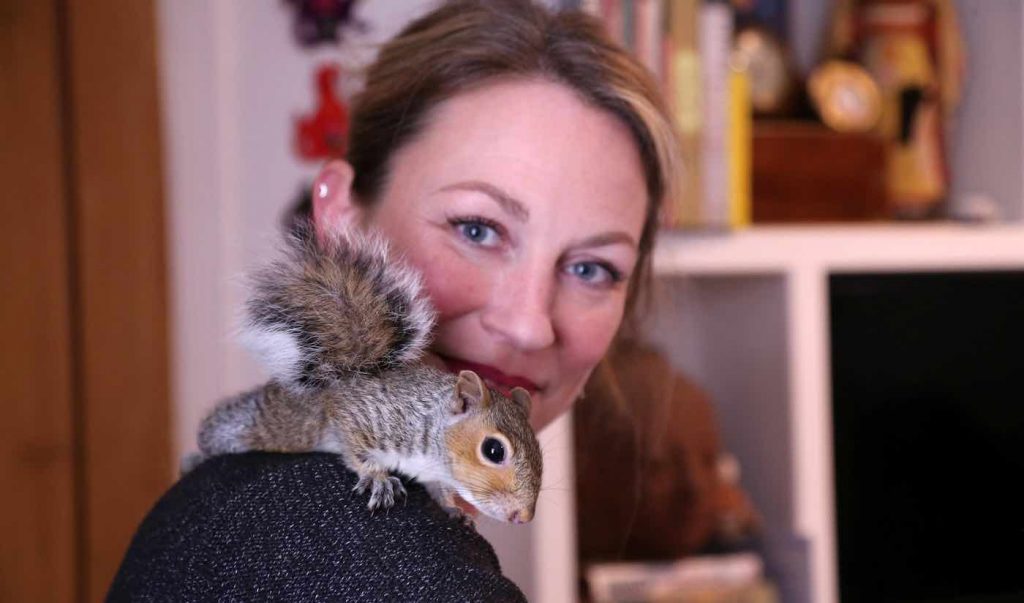
A woman lives with an injured squirrel she saved from the roadside – and he now hides nuts in her hair as he prepares for winter.
Mandy McKenna first rescued Horatio when she found him lying concussed on a verge. Not knowing whether he had been struck by a car or not, she took him into her home to rest – but rather than staying at her house for a few days to recover, he got attached to his new human companion and is now living with her permanently.
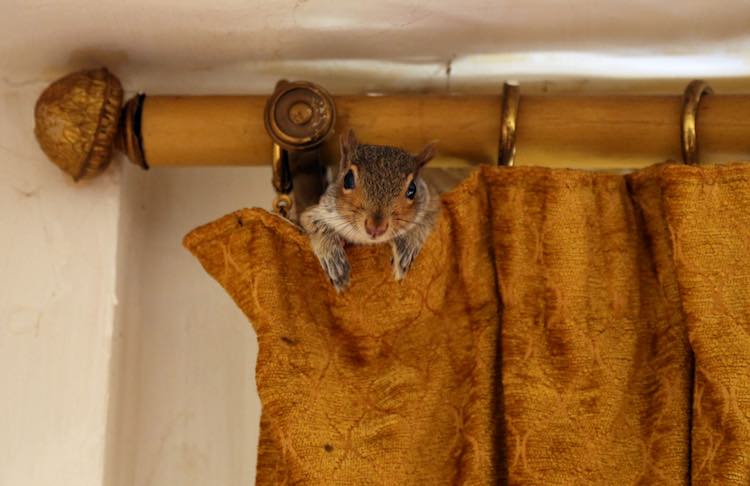
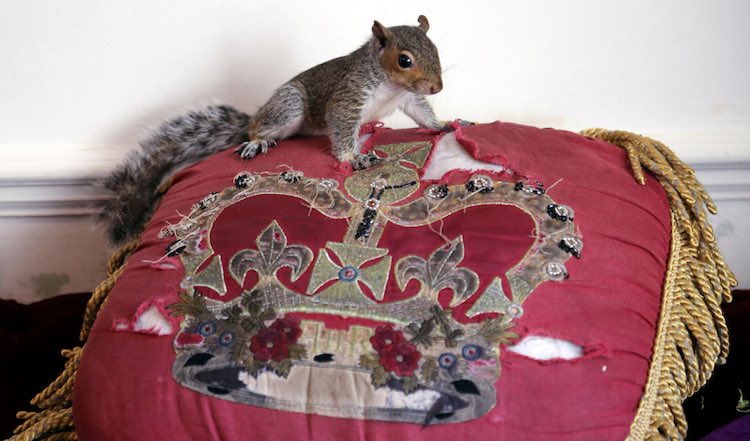
He travels around with her in her handbag, watches TV with her on the sofa – and he hides nuts all over the house.
But she’s also now discovered that Horatio stores nuts in her hair as he naturally prepares for hibernation.
Mandy, who is from Shepton Mallet, Somerset, recalled the rescue by saying: “I was coming back from work when I found him near the prison. He was concussed and giving out a distress noise and freaking out when a car came along.
“He spent the first week in my scarf or in my hair. I would just carry him around like that and he even came to Aldi with me; no one would notice, or only when they looked closely.
SWNS
“I don’t know if he got hit. They just need to have a safe place for a few days. But he imprinted really quickly and would come back when I tried to release him. He would endanger himself trying to come back.
“Now I take him to the shop where I work and when I go to friends’ houses. I have a handbag for him, so he can go inside if he wants to curl up and have a rest.
“At home he just puts you in a good mood … He is so cool, it’s impossible not to be in a good mood around him.
“When I watch TV he sits on the back of the sofa and hides nuts in my hair. Sometimes I move something in the house and find out he stashed nuts there.
SWNS
“He eats mostly vegetables and nuts, he likes ham, broccoli and corn on the cob, and I make him squirrel flapjacks for extra calcium.”
Horatio is not the first animal Mandy has rescued, but it is the first who has refused to leave.
“I am from a city, but I love living here and being closer to nature,” she said. “I have rescued injured birds and bats, but this is the only one that has stayed with me. I rescued a squirrel about ten years ago after he had fallen from a tree. He stayed with me for three days and then went back into the wild.
SWNS
“But Horatio imprinted quickly. He was too old to need his mother, but too young to make it alone.
“I’ve tried to release him, but he keeps coming back and endangering himself on the road.
SWNS
Your Friends Will Go Nuts For This Sweet Story – So Be Sure And Share It To Social Media