It was Jessica Rudeen’s first time flying with a toddler and baby in tow – and if it had not been for a compassionate stranger seated next to her, it may have been a complete disaster.
Due to “unforeseen circumstances”, Rudeen was unable to breastfeed her 4-month-old son before boarding the plane. As the hungry infant started to scream in distress, the mother’s 3-year-old daughter named Caroline started to kick and cry about how she wanted to get off the plane.
“I honestly thought we’d get kicked off the plane,” Rudeen wrote on Facebook. “So with two kids losing their minds, I was desperately trying to calm the situation.”
Thankfully, Rudeen was fortunate enough to be seated next to a man named Todd.
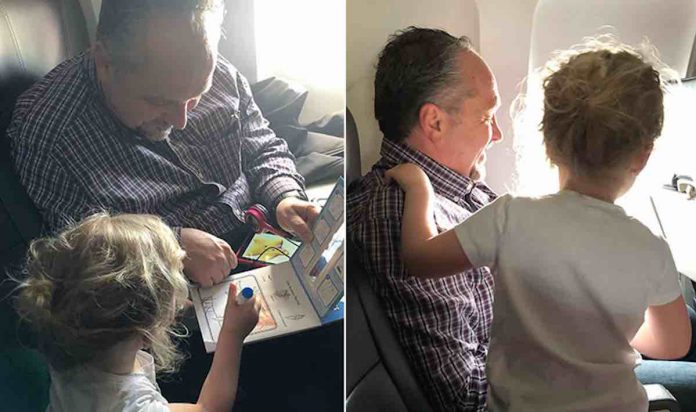
“(Todd) reached for the baby and held him while I forced a seatbelt on Caroline, got her tablet and started her movie. Once she was settled and relatively calmed, he distracted her so that I could feed Alexander,” says Rudeen. “Finally, while we were taxiing, the back of the plane no longer had screams.
“During the flight, he colored and watched a movie with Caroline, he engaged in conversation and showed her all the things outside. By the end of the flight, he was Caroline’s best friend. I’m not sure if he caught the kiss she landed on his shoulder while they were looking out the window.”
Not only that, but Todd was serendipitously booked for the same connecting flight from Charlotte, North Carolina to Wilmington – a flight that he “navigates frequently for work”.
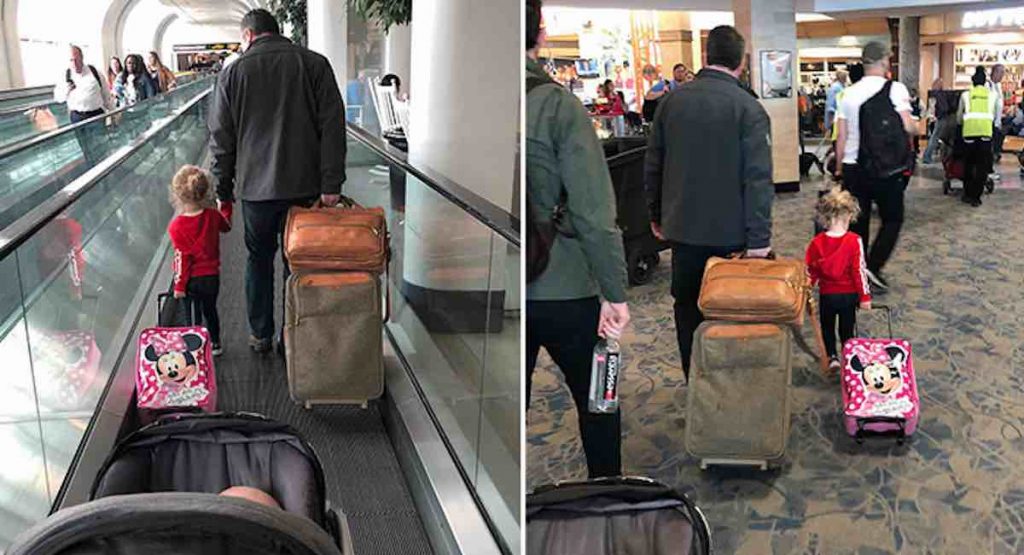
With his new toddler friend in hand, Todd guided the family through the airport to the right gate.
“If that wasn’t enough, he changed his seat on the next flight to sit in our row to help us,” says Rudeen.
She later posted photos of Todd and Caroline to Facebook so she could praise him for his extraordinary generosity.
“This guy, Todd, showed me kindness and compassion that I’ve never known from another person. His wife, he said, had a similar experience when their two boys were young and a stranger showed her the same kindness.
“I am blown away by God’s hand in this because we could have been placed next to anyone, but we were seated next to one of the nicest men I have ever met in my life.”
The post, which was shared over 4,500 times, connected Rudeen to Todd’s wife – and the two families are planning on “getting together soon” so they can pursue their blossoming friendship.
Fly This Sweet Story To Your Friends: Click To Share – Photos by Jessica Rudeen
As a means of overcoming the stigma behind STDs and sexual education, Chinese universities have started adding HIV test kits to their campus vending machines.
The kits, which are offered at $6 a pop (a heavily discounted rate from their original price of $62), can be anonymously completed online so that students don’t have to feel embarrassed about getting tested.
Upon getting a urine sample, the student can return the sample to a collection bin inside of the vending machine. After five days of processing, they can use the serial number on the kit to look up their test results online.
The program was first created by the Chinese Association of STD and HIV/AIDS Prevention and Control to curb HIV infection rates in 2016. The kits have since been rolled out in universities across the Heilongjiang, Sichuan, Yunnan, and Guangxi provinces. Additionally, they have been added to campus vending machines in Beijing and – as of this week – three universities in Shanghai.
(WATCH the video below)
Pass On The Positive News To Your Friends: Click To Share – Photo by CGTN
In a landmark turn of environmental diplomacy, the global shipping industry has taken a stance against climate change by pledging to reduce their greenhouse gas emissions by 50% by 2050 compared to 2008 levels.
The shipping and aviation industries have previously been excluded from climate talks because they range across international territories, rather than being nationally-based; but according to the BBC, the shipping industry could be called the world’s sixth biggest emitter of greenhouse gases, making it roughly equal with Germany.
Larger countries, such as Brazil and Saudi Arabia, were reluctant to enforce any emission cuts, while smaller countries in the European Union were keen on pursuing 70% to 100% emission cuts.
But the 50% pledge, which was established during the International Maritime Organization talks in London earlier this week, was considered a fair goal to set for all nations involved.
The environment minister of the Marshall Island said of the concluded talks: “To get to this point has been hard, very hard. And it has involved compromises by all countries. Not least by vulnerable island nations like my own who wanted something, far, far more ambitious than this one.
“This is history in the making… if a country like the Marshall Islands, a country that is very vulnerable to climate change, and particularly depends on international shipping, can endorse this deal, there is no credible excuse for anybody else to hold back.”
Kitack Lim, the secretary-general of the International Maritime Organization, reportedly said: “This initial strategy is not a final statement but a key starting point.”
Aoife O’Leary, who is a legal analyst for the Environmental Defense Fund Europe, said: “The shipping sector’s greenhouse gas emissions reduction target represents an important step forward. The [International Maritime Organization] has been talking about climate change for twenty years but the strategy agreed this week marks the beginning of a focused debate about the policies and measures that will help the shipping sector modernize and regain the status of a clean and efficient mode of transport.
“The target falls short on ambition, but should be sufficient to drive policy development and consequently investment in clean fuels and technology. EDF remains committed to working with stakeholders including those in the industry to find the ways that will work in order to peak shipping emissions as soon as possible.”
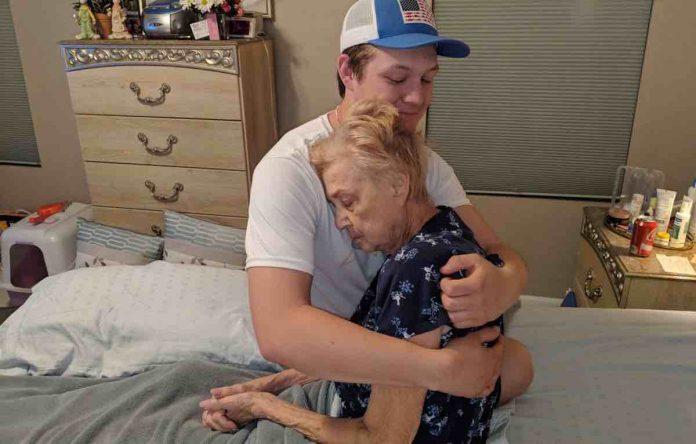
This 19-year-old college baseball player was heartbroken over his grandma’s inability to watch his game – so instead of allowing her to miss it, he and his team brought the game to her.
Due to the chemotherapy and radiation treatments that Marilyn Seavers had endured to fight her stage IV lung cancer, she was too weak to leave the house for her grandson’s game in March.
Zach, who was very close with his grandma before she died, was determined for her to see him play in a college uniform.
“She was more than a grandma for me and my sister,” he told Belleville News-Democrat. “We were like friends. We’d go to movies together, she took me shopping for homecoming, we played a lot of pranks on each other … [and] whenever we had a game, she was there.”
The student then asked his teammates on the Lewis and Clark College baseball team if they would play a game in his grandma’s backyard – and they agreed.
The next morning, Zach told his aunt to help his grandma into her wheelchair, position her in front of her bedroom window, and open the blinds.
The senior was stunned to see that a dozen young athletes had drawn a makeshift baseball diamond in her backyard for a game. Not only that, but Zach’s 16-year-old sister, who is also a talented softball player, was included in the game as well.
“She shed some happy tears and sat there in disbelief,” said Zach’s aunt. “I get choked up every time I think of it. What an amazing, loving gift these boys showed Zach and his grandma.”
“Every guy who was there came out without hesitation,” Zach told the online news outlet. “All of them are nice people, and it was really cool that they could come out and be with me and my family. Everybody had a lot of fun with it. I could see into her bedroom window, and there were smiles all around.”
Two weeks after the surprise game, Marilyn passed away in her Edwardsville, Illinois home surrounded by her loving family members. She was 78.
“It meant a lot to me to be able to pull that together for her,” says Zach.
(WATCH the interview below)
Score Big With Your Friends: Click To Share – Photo by the Seavers Family
Quote of the Day: “There is little difference in people, but that little difference makes a big difference. The little difference is attitude. The big difference is whether it is positive or negative.” – W. Clement Stone
Photo: by Hartwig HKD, CC
With a new inspirational quote every day, atop the perfect photo—collected and archived on our Quotes page—why not bookmark GNN.org for a daily uplift?
GNN.org is the exclusive media partner for the 2018 ‘Global Good Fund’ Fellows—12 extraordinary young social entrepreneurs who are making the world a better place. Chosen annually, the 12 Fellows are each matched with an executive mentor, leadership coach, and $10,000. Hand-selected from 2,400 applicants in 100 countries, these visionaries are being celebrated—one each day on GNN—leading up to the 6th Annual Global Good Fund Gala, on April 26.
Kids express their differences in India’s ’Schools of Equality‘
Ponder this: Do you feel equal to the world around you? In what ways are you different—and in what ways are you the same?
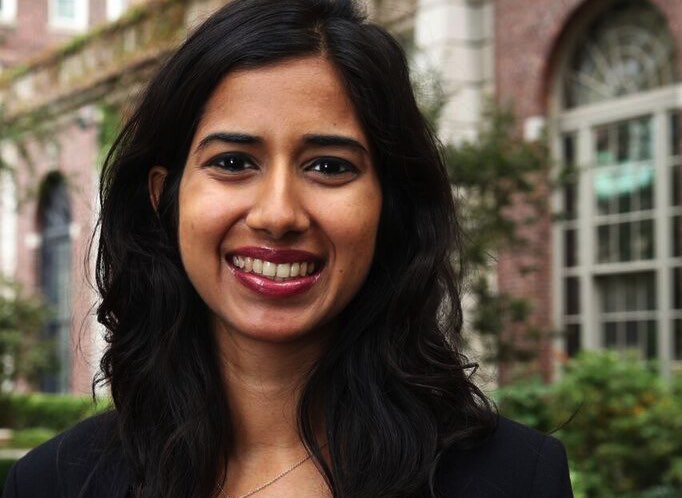
Rights of individuals and groups are often violated based on one or more aspect of their identity — such as race, gender, sexuality, class and religion. Growing up in India, Gulika Reddy experienced this first-hand. The normalization of identity-based discrimination filled her with anger, specifically the social acceptance of widespread gender-based violence.
With a mission to prevent and respond to this issue, and a belief that knowledge of the law is a powerful instrument, she set out to ‘be the change’.
As a human rights lawyer, Gulika knows good legislation alone does not guarantee justice. It needs to be supported by a number of fundamental enabling conditions including rights awareness and access to legal counsel.
To create these conditions, she spent time building partnerships between state and non-state actors to create rights awareness, and provide free legal services for indigent women. Despite receiving free legal assistance, women expressed reluctance to approach the legal system as they felt further victimized by law enforcement authorities.
Gulika conducted sensitization programs for these authorities and observed that they were unable to shift deeply entrenched attitudes towards women and gender roles.
Enter, Schools of Equality, a nonprofit that runs activity-based programs that reach young people to shift attitudes that perpetuate gender-based violence and other forms of discrimination. As Founder and Director, Gulika created this program to encourage students to reflect and examine their own attitudes and unconscious biases, question notions of power and privilege related to gender and its intersections, and foster diversity and inclusion by respecting each other’s rights.
The Global Good Fund selected Gulika as part of the innovative and inspiring 2018 cohort of Fellows to drive and multiply Schools of Equality’s impact, equipping students to be agents of change.
“I spoke my mind in these classes. I asked questions without fear.” -Thiruvanmiyur, student from Chennai Higher Secondary School.
Gulika is currently a Dubin Fellow at Harvard Kennedy School, and was previously a Human Rights Fellow at Columbia Law School and an International Bridges to Justice Fellow. In 2016, Columbia Law School’s Human Rights Institute awarded her a Commendation for Leadership and Commitment, and the World Economic Forum named her one of the Davos 50. She was also recognized with the TalentNomics Global Emerging Game-Changer award for exemplary dedication to the empowerment of women and girls.
A force to be reckoned with, Gulika has worked with lawyers, non-profits and academic institutions on the rights of women and children, climate refugees in the South Asian region, persons with disabilities, persons living with HIV/AIDS and slum-dwellers.
To date, Schools of Equality is found in 11 institutions, with 21 facilitators, having hosted 2,677 sessions, influencing and empowering 2,755 students.
A world full of children practicing freedom of expression and recognizing their ability to take action. That’s the kind of world we want to create for our kids, our grandkids and all generations to come thereafter.
Through its Fellowship program launched in 2012, The Global Good Fund invests in high potential leaders committed to social impact worldwide. It also created the 360 MIRROR – the first evidence-based leadership assessment for social entrepreneurs and CEOs.
Click To Share The Inspiring Story With Your Friends…
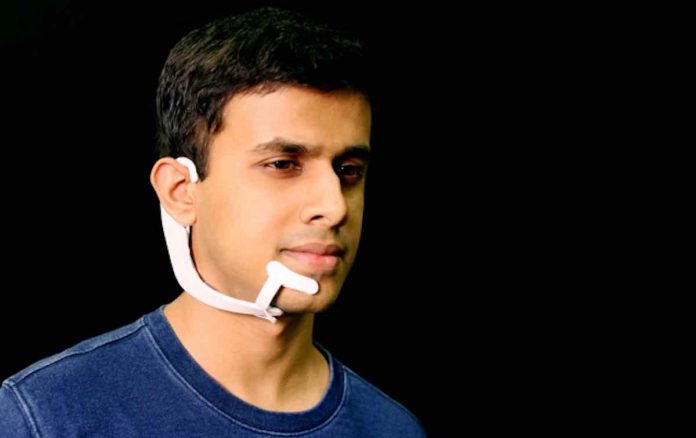
Computer system transcribes words users “speak silently” Electrodes on the face and jaw pick up otherwise undetectable neuromuscular signals triggered by internal verbalizations.
Written by Larry Hardesty MIT News
Imagine if you were in a situation where you weren’t able to speak out loud – but you could still have a conversation with the people around you? MIT researchers have developed a computer interface that can transcribe words that the user verbalizes internally but does not actually speak aloud.
The system consists of a wearable device and an associated computing system. Electrodes in the device pick up neuromuscular signals in the jaw and face that are triggered by internal verbalizations — saying words “in your head” — but are undetectable to the human eye. The signals are fed to a machine-learning system that has been trained to correlate particular signals with particular words.
The device also includes a pair of bone-conduction headphones, which transmit vibrations through the bones of the face to the inner ear. Because they don’t obstruct the ear canal, the headphones enable the system to convey information to the user without interrupting conversation or otherwise interfering with the user’s auditory experience.
The device is thus part of a complete silent-computing system that lets the user undetectably pose and receive answers to difficult computational problems. In one of the researchers’ experiments, for instance, subjects used the system to silently report opponents’ moves in a chess game and just as silently receive computer-recommended responses.
“The motivation for this was to build an IA device — an intelligence-augmentation device,” says Arnav Kapur, a graduate student at the MIT Media Lab, who led the development of the new system. “Our idea was: Could we have a computing platform that’s more internal, that melds human and machine in some ways and that feels like an internal extension of our own cognition?”
“We basically can’t live without our cellphones, our digital devices,” says Pattie Maes, a professor of media arts and sciences and Kapur’s thesis advisor. “But at the moment, the use of those devices is very disruptive. If I want to look something up that’s relevant to a conversation I’m having, I have to find my phone and type in the passcode and open an app and type in some search keyword, and the whole thing requires that I completely shift attention from my environment and the people that I’m with to the phone itself. So, my students and I have for a very long time been experimenting with new form factors and new types of experience that enable people to still benefit from all the wonderful knowledge and services that these devices give us, but do it in a way that lets them remain in the present.”
In current experiments, the researchers are getting comparable results using only four electrodes along one jaw, which should lead to a less obtrusive wearable device.
Once they had selected the electrode locations, the researchers began collecting data on a few computational tasks with limited vocabularies — about 20 words each. One was arithmetic, in which the user would subvocalize large addition or multiplication problems; another was the chess application, in which the user would report moves using the standard chess numbering system.
Then, for each application, they used a neural network to find correlations between particular neuromuscular signals and particular words. Like most neural networks, the one the researchers used is arranged into layers of simple processing nodes, each of which is connected to several nodes in the layers above and below. Data is fed into the bottom layer, whose nodes process it and pass them to the next layer, whose nodes process it and pass them to the next layer, and so on. The output of the final layer yields is the result of some classification task.
The basic configuration of the researchers’ system includes a neural network trained to identify subvocalized words from neuromuscular signals, but it can be customized to a particular user through a process that retrains just the last two layers.
Using the prototype wearable interface, the researchers conducted a usability study in which 10 subjects spent about 15 minutes each customizing the arithmetic application to their own neurophysiology, then spent another 90 minutes using it to execute computations. In that study, the system had an average transcription accuracy of about 92%.
But, Kapur says, the system’s performance should improve with more training data, which could be collected during its ordinary use. Although he hasn’t crunched the numbers, he estimates that the better-trained system he uses for demonstrations has an accuracy rate higher than that reported in the usability study.
In ongoing work, the researchers are collecting a wealth of data on more elaborate conversations, in the hope of building applications with much more expansive vocabularies. “We’re in the middle of collecting data, and the results look nice,” Kapur says. “I think we’ll achieve full conversation some day.”
“I think that they’re a little underselling what I think is a real potential for the work,” says Thad Starner, a professor in Georgia Tech’s College of Computing. “Like, say, controlling the airplanes on the tarmac at Hartsfield Airport here in Atlanta. You’ve got jet noise all around you, you’re wearing these big ear-protection things — wouldn’t it be great to communicate with voice in an environment where you normally wouldn’t be able to? You can imagine all these situations where you have a high-noise environment, like the flight deck of an aircraft carrier, or even places with a lot of machinery, like a power plant or a printing press. This is a system that would make sense, especially because oftentimes in these types of or situations people are already wearing protective gear. For instance, if you’re a fighter pilot, or if you’re a firefighter, you’re already wearing these masks.”
“The other thing where this is extremely useful is special ops,” Starner adds. “There’s a lot of places where it’s not a noisy environment but a silent environment. A lot of time, special-ops folks have hand gestures, but you can’t always see those. Wouldn’t it be great to have silent-speech for communication between these folks? The last one is people who have disabilities where they can’t vocalize normally. For example, Roger Ebert did not have the ability to speak anymore because lost his jaw to cancer. Could he do this sort of silent speech and then have a synthesizer that would speak the words?”
Temple Phipps’s serendipitous meeting with Samantha Snipes changed the course of their lives – and it’s all thanks to a missed airline flight. Hear the incredible tale told by The Good News Guru (from the April 13, 2018 Ellen K. Morning Show on KOST radio).
LISTEN to this Good News Guru story broadcast from the radio show with Ellen and Geri on KOST-103.5 (Subscribe to our new podcast on iTunes – or for Androids, on Podbean) — or Read the story below…
Almost two years ago, Samantha Snipes was a frightened 24-year-old worrying about the future of her unborn baby – but as fate would have it, a missed flight would provide the incredibly perfect ending.
Back in September 2016, the young woman, escaping an unhealthy relationship, missed the plane from Atlanta to Raleigh—8 months pregnant at the time.
She got the last standby seat on a Delta flight that placed her next to a woman named Temple Phipps.
Phipps, who was in her early 40s, had been married before, but never had children. She always dreamed of being a mother, but the opportunity had eluded her.
As she sat next to the young mother-to-be, the two women struck up a conversation. Snipes mentioned that she was debating whether to put her unborn baby up for adoption or allow a family member to raise it. Not having a plan, she was noticeably anxious.
Before departing, Phipps gave Snipes her phone number and said that if she ever needed anything while in Raleigh, she could give her a call.
Three days later, Samantha gave birth. Nervous and scared because she still didn’t know what to do, the new mom called Phipps and asked if she would visit them in the hospital.
She officially adopted Vaughn Preston Phipps last August. Not only that, Samantha moved to North Carolina to be part of the boy’s extended family and always be a guest at birthday parties.
She started a photography business in the city, and she and Phipps are considering writing a book about the serendipitous meeting that changed their lives forever.
Don’t Miss The Chance To Share The Inspiring Story With Your Friends – Photo by Temple Phipps
This letter from a fourth-grade elementary student is just another example of how it’s a small world, after all.
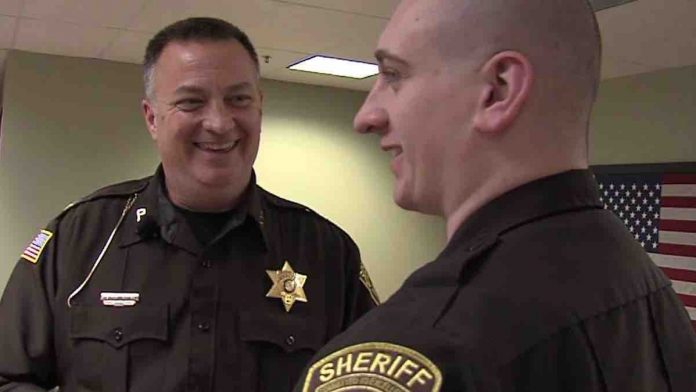
Before Jim Johnson became the sheriff of the Ozaukee County Police Department in Wisconsin, he was a soldier stationed in Iraq and Afghanistan.
While he was deployed, Johnson received dozens of letters from American school children – and he kept every single one of them as a reminder of the kids who cared about him while he was stationed overseas.
The police officer was recently going through his collection of heartwarming letters when he found one that had been written by a young student from Cedar Grove Belgium Elementary School in Wisconsin.
The letter read: “Dear soldiers. Thank you for what you all do and are doing for our country. Best wishes and have a Merry Christmas. From Chris Uselding.”
Johnson was immediately stunned by the letter: Chris Uselding, the young student who had written the reassuring note, had been working alongside Johnson at the police department for several years.
“It’s crazy to think about that this letter touched Sheriff Johnson and he was able to share that with me and keep it for all these years,” Uselding told WDJT.
The sheriff added: “It makes you realize how small the world is. It truly does.”
(WATCH the video below)
Click To Share The Serendipitous Story With Your Friends – Photo by WDTJ
Quote of the Day: “There are no guarantees. From the viewpoint of fear, none are strong enough. From the viewpoint of love, none are necessary.” – Emanuel Tanay
Photo: by Michael LoRusso, CC
With a new inspirational quote every day, atop the perfect photo—collected and archived on our Quotes page—why not bookmark GNN.org for a daily uplift?
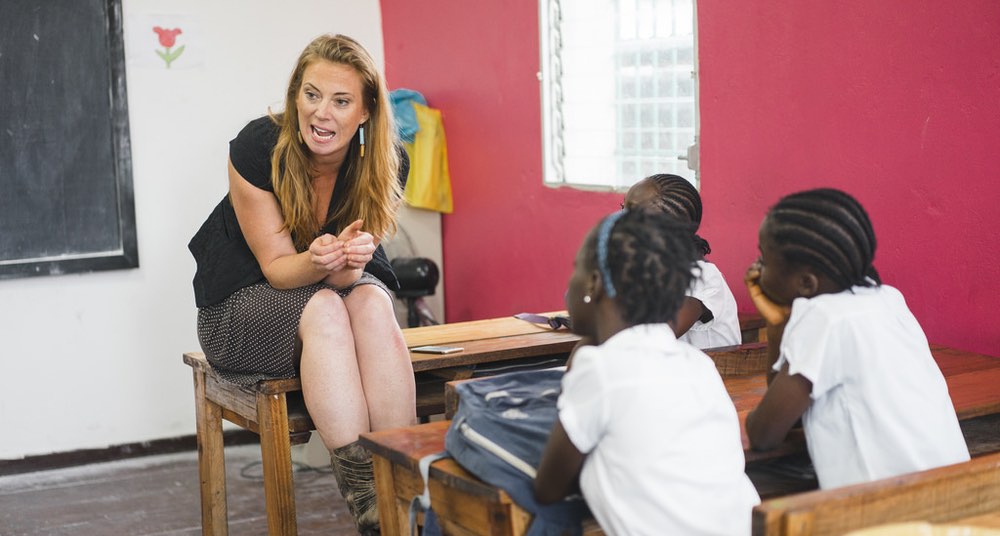
It all started with a little girl. At age eleven, Abigail was selling herself on the streets of Liberia in exchange for clean drinking water. Then, she met Katie Meyler, who had left her hometown of New Jersey twelve years earlier to volunteer overseas for Samaritan’s Purse, a Christian international relief organization that supports children.
At the time, Meyler knew the challenges the country faced. A 14-year brutal civil war had left the country in shambles, including destroying over 80% of its schools. Young girls seemed to bear the brunt of the damage, with more than 40% of those aged 10-14 never attending school, and, many of them like Abigail, falling prey to violence.
Seeing Katie as a potential lifeline, Abigail begged her to help her get into school. Desperate to help, Katie turned to a friend she met in Monrovia, Erica Noelle Duncan, who was a business consultant and coach. Erica knew immediately that Katie’s passion and drive gave her the ability to do something concrete. Soon after, More Than Me was born.
More Than Me (MTM) works in partnership with the Liberian Ministry of Education to rebuild the education system, and ensure girls like Abigail have access to basic human rights. The objective is that every child will attend and graduate primary school prepared to take their next step in life, which in turn, will bring stability to the country and grow the economy.
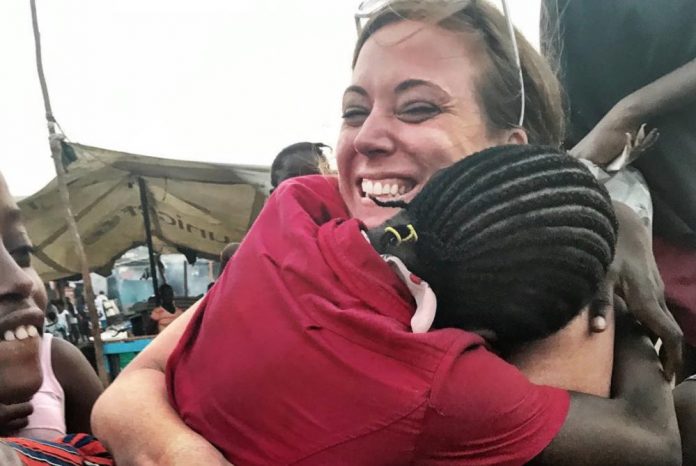
Through the MTM Academy, K-8 girls attend a tuition-free school that provides high quality education and holistic services like healthcare, family planning, psychosocial support, and a feeding program for the most vulnerable girls in Monrovia. The Academy also serves as an incubator for innovation and features a research and development center to test initiatives that, if proven successful, will be implemented in schools across Liberia. More Than Me Academy continues to pay the girls school fees onward through high school.
In its first year, MTM was able to send 5 girls to school, but that quickly grew and by 2017 they were schooling 1,500 children. Their goal is to be educating nearly 250,000 kids by the year 2020.
Consider the impact. When a girl in the developing world receives 7 or more years of education, she marries 4 years later and has 2.2 fewer children.
An extra year of primary school boosts girls’ eventual wages by 10-20%; an extra year of secondary school: 15-25%. When women and girls earn income, they reinvest 90% of it into their families, much more so than men.
Katie’s vision and achievements have not gone unnoticed. In 2014, she was named a 2014 TIME Person of the Year for her efforts on the front lines of Ebola, and recognized among People Magazine’s 25 Women Changing the World—next to Sheryl Sandberg and Oprah.
After years of gaining trust from the Liberian community, government and high-network donors around the world, MTM has been able to create lasting change in Liberia, with hopes that their model will be replicated to make a difference in the rest of the developing world.
According to Katie, “I’d rather die at 30 years old living for what I really believe in—from head to toe and in every single way possible, than to live to be 90 years old and not really fulfill what I was born to do.”
For girls in Liberia like the third-grade student Marka, their lives have been changed forever, with long lasting impact for generations to come. She remembers the happiest moment of her life as being the day when Katie’s academy “came to rescue me”.
Click To Share The Incredible Story With Your Friends – Photos by More Than Me
It was 3:30 AM when New York City subway operator Ernest McClain narrowly missed hitting an injured puppy that had made its way onto the train tracks – thankfully, he noticed the poor pup just in time.
McClain, who pilots the “L” line train for the Metropolitan Transportation Authority, says he was shocked to see the beige pit bull limping along the subway tracks near Bushwick.
in order to avoid hitting the dog, McClain slowed the train down to a 10-miles-per-hour crawl for over 3 miles. The journey lasted for nine stops over the course of 40 minutes.
According to MTA worker Edlin Cruz, the confused canine had a cut on its leg and it had been limping its way along the tracks when it was first spotted from the train. As the subway workers were anxiously keeping track of the dog’s location, it finally meandered into to the Graham Avenue station.
“[Cruz] jumped down, got the dog’s attention, grabbed the dog by its hind legs, and pulled it on the platform,” McClain told the New York Post. “I was beeping the horn and yelling at the track workers, ‘There’s a dog on the track!’” said McClain. “I didn’t want to see the dog die.”
Since it had no collar or identification, it was turned over to the NYC police.
Additionally, the workers were happy to hear that the dog was taken care of since they immediately rushed back to work so that they could address the delays.
MTA workers say that the dog, who was nicknamed “Lucky”, was fortunate to have gotten lost during the early hours of Monday morning because it only caused several delays behind McClain’s train.
(WATCH the video below – or, international viewers can watch the video at CBS News)
Click To Share The Pawesome Story With Your Friends
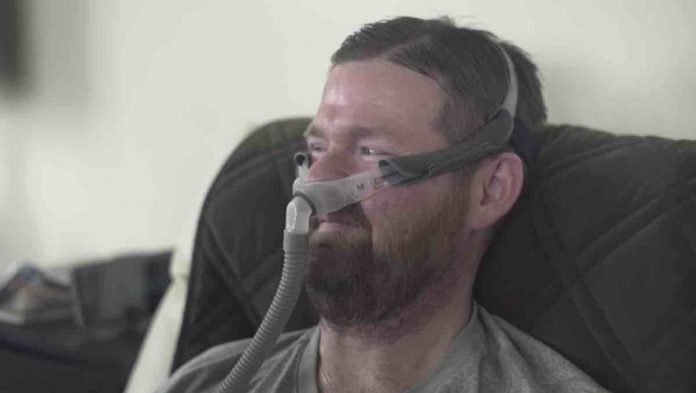
It has been several years since Pat Quinn was first diagnosed with ALS, a devastating neurodegenerative disease that causes the body to progressively lose all motor function.
Instead of becoming resigned to his life with the disease, however, Quinn became an outspoken advocate for ALS research, which eventually spurred the former athlete to co-found the Ice Bucket Challenge – a viral video fad that garnered a record amount of donations for ALS research. But as the disease continued to affect Quinn, he slowly lost his ability to speak.
While there is currently existing technology that allows ALS patients to speak via computer programming, many people are apprehensive about using the tech because they don’t like hearing themselves speak through the impersonal voice of a robot.
That’s why an international initiative known as Project Revoice is recreating the voices of ALS patients – such as Pat Quinn – so they can embrace the familiarity of their own voices once more.
“It’s a strange feeling saying your first words a second time,” says Quinn. “I’ve always loved making speeches, as you know, but this is a whole new experience. It’s like you don’t even realize how powerful, how personal, how unique your voice really is until it’s taken from you.”
“After my diagnosis, I began telling my story to people knowing that ALS would one day try and shut me up. Sorry I’m not going out that easy, cause guess what? My voice is back. I will make sure my voice is heard until ALS stops robbing people of their own voices. ALS has lost this round.”
(WATCH the inspiring video below)
Click To Share The Inspiring Story With Your Friends
Quote of the Day: “If you really want to do something, you’ll find a way. If you don’t, you’ll find an excuse.” – Jim Rohn
Photo: by Larry Darling, CC
With a new inspirational quote every day, atop the perfect photo—collected and archived on our Quotes page—why not bookmark GNN.org for a daily uplift?
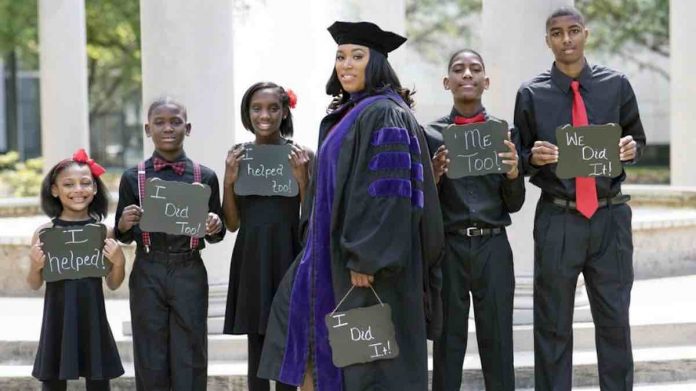
Ieshia Champs is a single mother of 5 who has overcome some of the most devastating losses – but thanks to a fateful phone call from her pastor, she is fulfilling her childhood dream of graduating from law school.
Champs has wanted to be a lawyer since she was 7 years old, but her rocky upbringing as a teenager stacked the odds against her.
“I really didn’t have any stable guidance at that time. My mom was addicted to drugs. My dad was deceased. And I was homeless,” Champs told CBS News. “I lived with friends or whoever would take me in. Then I got pregnant with the first of my five children, and things just went from there.”
Champs eventually found stability by dropping out of high school and landing a job at a call center. Then at the age of 24 when she was pregnant with her fourth child, she endured another devastating set of tragedies.
Champs’s house burned down; she lost her job; her mother died of a stroke; and the father of her children passed away from cancer.
The devastation eventually became too much for the Texas mother and she tried to take her own life.
Shortly after the suicide attempt, however, she received a serendipitous phone call from the pastor of her church, the Ministers for Christ Christian Center.
“Pastor Louise Holman called me one day and said that God told her to tell me to go back to school and get my GED, because that lawyer I wanted to be, I’ll be it!” Champs recalled. “I thought it was a little crazy because I was too old and I had three children with my fourth child on the way.”
Not only that, but Champs said that she had never told the pastor about her childhood dream of becoming a lawyer.
Despite her initial apprehension, she dutifully reenrolled in school and acquired her GED. Next, she took classes at Houston Community College before going on to attend the University of Houston–Downtown.
Finally after years of hard work, the 33-year-old mother is due to graduate Magna Cum Laude from the Texas Southern University’s Thurgood Marshall School of Law in May.
As a means of celebrating the exciting occasion, Champs posed for a series of photos with the five “mini-lawyers” to whom she credits her success.
“I took the pictures with my kids because they helped me through school. They’re graduating too!” Champs joked. “They would help me review with flash cards while I cooked. They would sit as a mock jury while I taught them what I learned that day. I would sit in my closet and pray and cry because I was overwhelmed and my oldest son, David, would gather his siblings, give them a snack, make them take a bath, gather their school clothes, all to make things easier for me. And I had no knowledge of him doing that until I went to do it!”
In order to curb rising housing prices and labor shortages, Home Depot has just announced that they will be making a huge donation towards an organization that will provide job training for the Americans who need it the most.
The Home Depot Foundation will be spending $50 million on job training for over 20,000 veterans, disadvantaged youth, high schoolers, and U.S. Army soldiers returning to civilian life.
The money will be given to the Home Builders Institute (HBI), an organization that educates and trains workers for the construction and labor industry.
“It’s important that we support the trades,” said Home Depot CEO Craig Menear, according to USA Today.
While HBI receives much of their financing from the Labor Department and similar state programs, the organization says that they are often struggling to maintain their grants. The partnership with Home Depot, however, will ensure that they will have an additional source of steady income over the course of the next decade.
“This is going to take us to a new level,” HBI CEO John Courson told the news outlet. “We’re going to have a partner” for stable funding.
The funding is expected to almost double the amount of construction workers who will receive training from HBI. More importantly, HBI has only trained about 120 ex-military members over the course of the last four years. Home Depot’s donation will raise the number of trained workers to 1,500 veterans and soldiers annually.
The partnership is especially beneficial since veterans and soldiers make ideal candidates for construction and carpentry.
“They love to work with their hands, they work well in a team, and they’re used to being outdoors [with] the elements,” says Courson.
Build Up The Positive News: Click To Share With Your Friends – Photo by the U.S. Army Corps of Engineers, CC
In a bid to combat climate change and spur cooler summer weather, Los Angeles city workers are painting their streets grey.
The ‘cool pavement’ project, which was first tested in Canoga Park back in May, prevents asphalt from retaining heat by using reflective gray sealant to create cooler temperatures in urban neighborhoods.
After ensuring that the sealant passed all state traction tests for wet surfaces, the mixture was shown to reduce street temperatures by up to 23 degrees.
This also combats the “heat island effect”: a phenomenon that occurs when city surfaces absorb heat so that urban areas can be hotter than the surrounding rural areas. Since the lighter streets will create a cooler neighborhood climate, residents are also expected to spend less money on air conditioning, which will benefit both the consumer and the environment.
“It’s awesome. It’s very cool — both literally and figuratively,” said Councilman Bob Blumenfield, according to the LA Daily News. “The downside: we won’t be able to fry eggs on the streets.”
The CoolSeal mixture that is currently being used to cover the streets comes with a hefty price tag of $40,000 per mile, but city officials hope to find ways to bring the cost down as the project progresses. Plus, the benefits could be priceless.
The initiative is also being utilized as part of the city’s plan to reduce greenhouse gas emissions by 45% below 1990 levels before 2025.
Click To Share The Cool News With Your Friends – Photo by LA Street Services
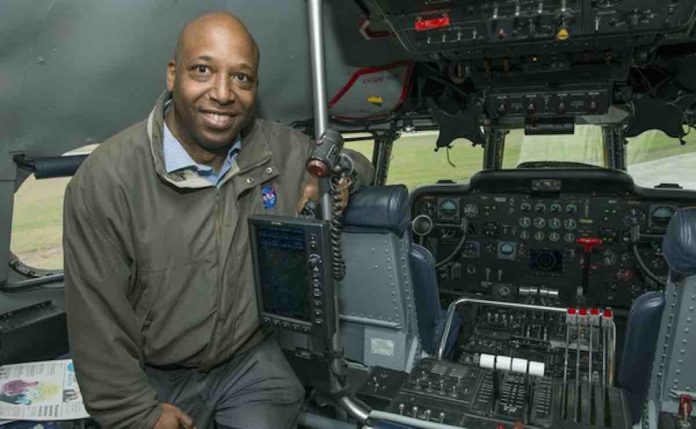
It can be easy to brush off certain events as trivial matters that don’t require attention – but when the safety of dozens of airplane passengers was on the line, this NASA engineer decided to speak up.
Rumaasha Maasha was preparing to fly from Huntsville, Alabama to Denver, Colorado back in January when he spotted a fluid leak from his window seat on the wing.
Maasha, who is an aerospace engineer at NASA’s Marshall Space Flight Center, was able to identify the leak as a malfunctioning vent valve.
“Normally, if it’s a humid day, you’ll see vortices, or circular patterns of rotating air, off the wing,” Maasha said in an interview with NASA. “About 1,000 feet off the ground, I started seeing something white and thought, ‘maybe we’re just hitting some humidity.’ Well, then we banked to turn cross-wind and it was still doing it, and that’s when I knew something was up. I looked closer and immediately realized that we were losing fluid.”
Maasha also knew that as the plane increased in velocity and altitude, the Venturi effect would increase suction on the fuel tank and worsen the leak.
“I quietly motioned to the flight attendant to come over and fortunately she was very attentive,” he said. “She called the crew and the key thing is that she did this as we were still climbing out. Within a minute or two, they reduced speed and leveled off. The fuel leak diminished immediately when they slowed down.”
Much to the irritation of the passengers, the plane returned to the Huntsville airport; but upon finding out the reason for the return – and the hero behind its occurrence – Maasha made quite a few new friends amongst his fellow passengers.
According to his employer, Maasha’s experience with NASA wasn’t the only thing that came in handy that day, either; the engineer first became obsessed with aviation as a teenager growing up near an airport in Monrovia, Liberia.
Determined to pursue his dream, Maasha started attending Columbia University at just 15 years old. Then, he got a master’s degree in aerospace engineering from the Georgia Institute of Technology in Atlanta.
Even though he wasn’t able to find a job in his field at the time, he got his pilot’s license and worked various jobs amongst different airlines and the FAA. In 2004, he was finally offered a job with NASA as a civil servant.
“Looking back, I guess I had the perfect sets of circumstances to recognize the issue that day,” he said. “Since I was a kid, I’ve always tried to sit in a window seat near the wing. That’s not the first time I’ve noticed something. I’m sure it won’t be the last.”
Pass On The Incredible News With Your Friends: Click To Share – Photo by Fred Deaton / NASA
When a missing dog was finally found by police officers, the owner said that there was a very easy way to determine the identity of the pup: by singing its favorite song.
The Siberian husky’s owner, who chose not to be identified, filed a police report saying that the dog had gone missing from his Southern Israeli home in Beer Sheva.
Police officers eventually spotted a dog with the same physical description while they were out on patrol. A group of teenagers had been watching over the malnourished pup after they said that they had found it in a field.
The officers then called the owner and asked if he wanted to come identify the dog. The man said that there was no need – all the cops needed to do was play the theme song from an Israeli sitcom called Shemesh; or the introduction to the children’s show Arthur.
Just as one of the officers started playing the theme from his phone, the husky looked up with unmistakable recognition and started howling along to the tune.
The husky later shared an emotional reunion with his owner who was delighted to be with his furry companion once more.
(WATCH the video below)
Click To Share This Pawesome Story With Your Friends
























 Through the MTM Academy, K-8 girls attend a tuition-free school that provides high quality education and holistic services like healthcare, family planning, psychosocial support, and a feeding program for the most vulnerable girls in Monrovia. The Academy also serves as an incubator for innovation and features a research and development center to test initiatives that, if proven successful, will be implemented in schools across Liberia. More Than Me Academy continues to pay the girls school fees onward through high school.